• Skip to primary navigation
  • Skip to main content
  • Skip to primary sidebar
  • Home
  • About Us
    • Privacy Policy
    • Comment Policy
    • Disclosures & Disclaimers
  • Resources
    • Links, Essays & Articles
    • Fandomology!
    • CLAMP Directory
    • BlogRoll
  • Features & Columns
    • 3 Things Thursday
    • Adventures in the Key of Shoujo
    • Bit & Blips (game reviews)
    • BL BOOKRACK
    • Bookshelf Briefs
    • Bringing the Drama
    • Comic Conversion
    • Fanservice Friday
    • Going Digital
    • It Came From the Sinosphere
    • License This!
    • Magazine no Mori
    • My Week in Manga
    • OFF THE SHELF
    • Not By Manga Alone
    • PICK OF THE WEEK
    • Subtitles & Sensibility
    • Weekly Shonen Jump Recaps
  • Manga Moveable Feast
    • MMF Full Archive
    • Yun Kouga
    • CLAMP
    • Shojo Beat
    • Osamu Tezuka
    • Sailor Moon
    • Fruits Basket
    • Takehiko Inoue
    • Wild Adapter
    • One Piece
    • After School Nightmare
    • Karakuri Odette
    • Paradise Kiss
    • The Color Trilogy
    • To Terra…
    • Sexy Voice & Robo
  • Browse by Author
    • Sean Gaffney
    • Anna Neatrour
    • Michelle Smith
    • Katherine Dacey
    • MJ
    • Brigid Alverson
    • Travis Anderson
    • Phillip Anthony
    • Derek Bown
    • Jaci Dahlvang
    • Angela Eastman
    • Erica Friedman
    • Sara K.
    • Megan Purdy
    • Emily Snodgrass
    • Nancy Thistlethwaite
    • Eva Volin
    • David Welsh
  • MB Blogs
    • A Case Suitable For Treatment
    • Experiments in Manga
    • MangaBlog
    • The Manga Critic
    • Manga Report
    • Soliloquy in Blue
    • Manga Curmudgeon (archive)

Manga Bookshelf

Discussion, Resources, Roundtables, & Reviews

Ash Brown

God’s Boat

April 22, 2015 by Ash Brown

God's BoatAuthor: Kaori Ekuni
Translator: Chikako Kobayashi
U.K. publisher: Thames River Press
ISBN: 9780857282491
Released: December 2012
Original release: 1999

One of my favorite books that I’ve read in the past few years is Kaori Ekuni’s debut and award-winning novel Twinkle Twinkle. Because I enjoyed it to such a great extent, I made a point to seek out more of Ekuni’s work to read. Sadly, God’s Boat is currently her only other major work to have been released in English. The novel was originally published in Japan in 1999. Later it was selected as a part of the Japanese Literature Publishing Project—an effort to promote the publication of modern Japanese works in translation across the globe. The English translation of God’s Boat by Chikako Kobayashi was released in 2012 by Thames River Press, a publisher based in the United kingdom. Ekuni is a respected author in Japan and has won several prestigious awards for her work. However, she doesn’t seem to be very well-known among English-reading audiences, which is a shame. I wish that more of Ekuni’s work was available in translation; her writing is excellent.

Yoko Najima lives alone with her young daughter Soko. She left her husband soon after Soko was born as the result of a passionate love affair. To make ends meet, Yoko teaches piano and works at bars and restaurants. There are three things that she counts as true treasures in her life: piano, Soko, and Soko’s father. But he has disappeared and has been gone for nearly a decade, promising that one day he will return for her. Without him by her side, Yoko feels like she doesn’t belong anywhere. Every few years she moves from one place to another with Soko in tow, afraid that if she gets too comfortable and begins to blend with her surroundings he will never find her. Yoko and Soko drift along together in life, but as Soko grows older she becomes weary of the process of moving and starting over again and again. She wants to make some lasting friendships, establish roots, and find stability. But her mother yearns for nothing more than to be reunited with Soko’s father. She is desperate to see him once more.

Much like Twinkle Twinkle, the narrative of God’s Boat alternates between two, not quite stream-of-consciousness, perspectives. The story gently progresses, at times seen through Yoko’s eyes and at others seen through Soko’s. God’s Boat paints a very intimate portrait of these two women and of their relationship with each other. A little at a time, their most private thoughts and personal memories are revealed, creating a framework from which Ekuni explores themes of love, family, grief, and loss. The novel begins in 1997, when Soko is nine years old, and ends in 2004, following them from Takahagi, to Sakura, to Zushi, and then finally to Tokyo. Yoko doesn’t change much as the novel progresses, but Soko grows significantly as she matures from a child into a young woman, which forces her relationship with her mother to evolve as well. In part, God’s Boat is Soko’s coming-of-age story as she learns to cope with her mother’s eccentricities while living under the shadow of a father she never knew.

In the epilogue, Ekuni states that while God’s Boat “is simple and quiet, the tale is one of madness. Even now I believe it to be the most perilous novel I’ve written thus far.” For the most part, God’s Boat is a very straightforward narrative about the everyday lives of its characters. The madness that Ekuni refers to is subtle, more obvious in retrospect but present from the very beginning of the novel. At first, God’s Boat is fairly unassuming, but tension slowly builds as Soko matures until the novel takes a sudden and devastating turn near its conclusion when the precarious state of Yoko’s mental and emotional stability is laid completely bare. Looking back, the developments aren’t so surprising—eventually reality must invade the romanticized existence that Yoko has created for herself and her daughter. Even so, I was not expecting God’s Boat to be nearly as hard-hitting and emotionally wrenching as it ends up being. The novel is one that will stick with me for quite some time, a testament to Ekuni’s skill as an author.

Filed Under: REVIEWS Tagged With: Kaori Ekuni, Novels

Pick of the Week: Too much manga

April 20, 2015 by Sean Gaffney, Ash Brown, Anna N and MJ Leave a Comment

potwSEAN: There’s a lot. Far, far too much. Railgun. Two SAO books. Intriguing debuts galore. Some of Viz’s most critically acclaimed series. Really, we are totally spoiled for choice here. I’ll go with the debut novel of Log Horizon, though. The manga was OK, but felt (as many adaptations do) like something that only readers of the original book would appreciate. I look forward to getting lost in yet another game world.

ASH: Oh, this is a tough week to choose! With so many great releases, it’s difficult to pick just one. In the end, I think I’ll go with Gyo. I’m always happy to see more of Junji Ito’s manga released (or in this case re-released) and the new deluxe edition should look great next to my copy Uzumaki.

ANNA: There’s plenty of manga coming out this week, but I have to go with the latest VizBig volume of Vagabond. That’s first on my to-buy list!

MJ: Okay, I’m definitely interested in all the SAO stuff coming out this week, but I gotta admit that the thing drawing me most strongly is the call of Zero-Sum. That is to say, Clay Lord: Master of Golems, gimme, gimme. The premise is a little questionable, in terms of my personal taste, but I need to see it to find out. That magazine pretty much has my number, and there’s no denying it.

What looks good to you this week?

Filed Under: PICK OF THE WEEK

My Week in Manga: April 13-April 19, 2015

April 20, 2015 by Ash Brown

My News and Reviews

Two more in-depth manga reviews were posted at Experiments in Manga last week, and once again they were both for manga. Though, unlike the week before which featured newer manga, last week’s reviews focused on a couple of older titles, one of which is actually out of print. That would be After School Nightmare, Volume 3 by Setona Mizushiro. This is the last volume in the series that I had previously read before embarking on my monthly horror manga review project, so I’m particularly curious to see where the manga goes from here. But, since next month’s horror manga review will be Mushishi, Volume 3, I’ll have to wait until June to find out. The other review posted last week was for Yak Haibara’s Sengoku Basara: Samurai Legends, Omnibus 1. Technically, it’s an adaptation of the Sengoku Basara 2 video game, but no familiarity with the games are needed and it stands alone as its own work. In addition to the incredibly over-the-top and badass characters and fight sequences, there’s actually some legitimate history mixed in as well. I find the series highly entertaining.

There wasn’t a lot in the way of manga news and announcements that I saw last week. (Granted, I was pretty busy paying attention to more pressing matters). If I missed something noteworthy, please do let me know! I would, however, like to mention Vertical’s ask.fm account, which continues provide a bit of fun in addition to excellent insight into the North American manga industry. I was particularly interested in the answer to a question about the impact of libraries on book sales since I happen to be a librarian. Also, Seven Seas has an ask.fm account, too, which I tend to forget about for some reason. Elsewhere online, Organization Anti-Social Geniuses has an interesting article about a used bookstore owner who nabbed more than 400 volumes of manga without even really knowing a thing about manga. Finally, two of Deb Aoki’s manga articles for Publishers Weekly were recently released from behind a paywall: Manga Publishing Update, Spring 2015 and Manga Publishers Try Games, Erotica to Grow Market.

Quick Takes

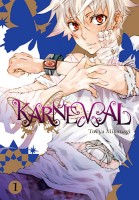
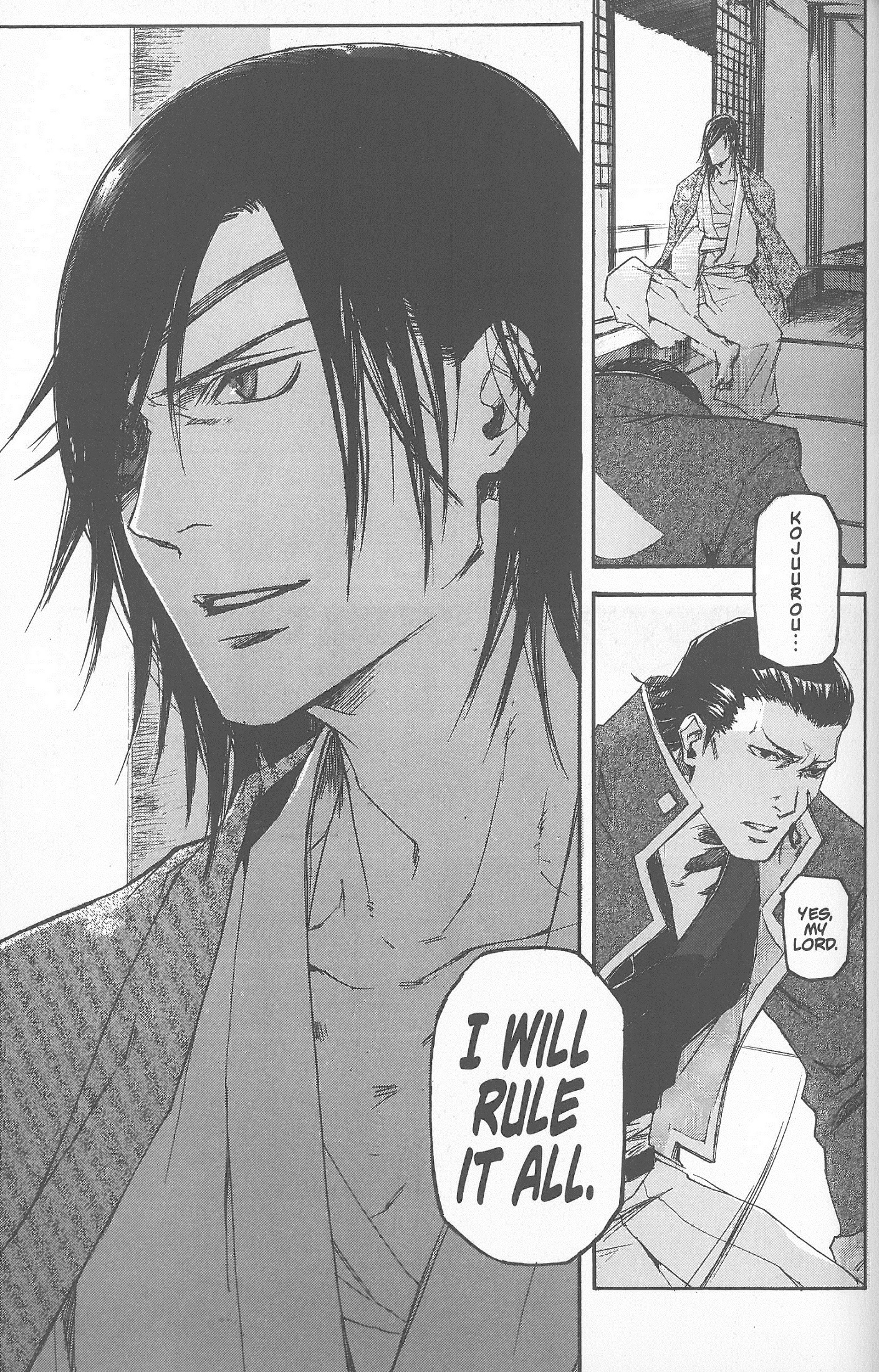
Karneval, Omnibus 1Karneval, Omnibus 1 (equivalent to Volumes 1-2) by Touya Mikanagi. Gareki is a fairly successful thief, but when a burglary doesn’t exactly go according to plan, he becomes the accidental protector of a strange young man called Nai and the both of them suddenly find themselves drawing the attention of Circus, a powerful association charged with dealing with criminals and situations regular law enforcement can’t handle. When Karneval was licensed, a resounding cry went up from its fans. I can definitely understand the appeal of the series. It has action and adventure, some sweetness as well as darkness, heroes with tragic backstories, mysteries and secret (and not-so-secret) organizations, quirky and attractive characters and designs (mostly men, but a few women as well), and so on. But although I thoroughly enjoyed parts of the first omnibus of Karneval, it didn’t quite grab my attention as much as I was hoping, or expecting, it would. I think this may be because the worldbuilding doesn’t feel as cohesive as I would like it to be. Mikanagi is smashing together some interesting and engaging elements and ideas, but they’re not quite meshing yet. However, I suspect the connections will become clearer as the series progresses.

Manga Dogs, Volume 3Manga Dogs, Volume 3 by Ema Toyama. The third volume of Manga Dogs is also its last. It’s an amusing gag manga, but I think three volumes is just about right for the series. If it was stretched out for too much longer, it would likely become tiresome. Manga Dogs requires a high-tolerance for shallow characters, foolish comedy, and general absurdity. Although there is something of an overarching storyline, Manga Dogs tends to be fairly episodic, relying on the jokes to carry the manga more so than the characters or plot. As for the plot, at this point in the series Tezuka’s manga Teach Me Buddha is unsurprisingly in danger of cancellation as is the school’s manga program. Tezuka and the three air-headed male students who have attached themselves to her must work together in order to stop that from happening. Anyone who has read the first two volumes of Manga Dogs probably already has a pretty good idea of how well that works. I find Manga Dogs to be funniest when the humor directly ties into the manga industry or the mangaka’s creative processes. Although it’s taken quite seriously by Tezuka and the others, I’d actually be interested in reading Teach Me Buddha as a parody of shoujo manga; it has the potential to be funnier than Manga Dogs manages to be.

Yamada-kun and the Seven Witches, Volume 1Yamada-kun and the Seven Witches, Volume 1 by Miki Yoshikawa. I first learned about Yamada-kun and the Seven Witches when it was added to Crunchyroll Manga. I heard very good things about it at the time, and it sounded like something that I would enjoy, so I was very pleased when Kodansha Comics picked it up for print release. I’ll admit, I tend to enjoy body-swap manga, especially when there is some gender-swapping involved. (Which, now that I think about it, is probably more often the case than not.) Yamada-kun and the Seven Witches is one of the most entertaining examples of that particular subgenre that I’ve read recently. At this point, the series is definitely being played as a comedy. The trigger for the body-swapping is kissing, and there certainly is plenty of that in the first volume. Girls kissing guys. Guys kissing other guys. (Perhaps later on in the series, there will even be girls kissing other girls.) There are kisses for everyone! Not unexpectedly, there is also a bit of fanservice. However, for the most part it doesn’t tend to be overly sexualized and generally makes sense within context of the manga. Yoshikawa used to be an assistant to Fairy Tail‘s Hiro Mashima; some of that influence can easily be seen in the artwork of Yamada-kun and the Seven Witches.

Filed Under: FEATURES, My Week in Manga Tagged With: Ema Toyama, Karneval, manga, Manga Dogs, Miki Yoshikawa, Touya Mikanagi, Yamada-kun and the Seven Witches

Sengoku Basara: Samurai Legends, Vol. 1

April 17, 2015 by Ash Brown

Sengoku Basara: Samurai Legends, Omnibus 1Creator: Yak Haibara
U.S. publisher: Udon Entertainment
ISBN: 9781926778334
Released: April 2012
Original release: 2007-2008

Sengoku Basara, an outrageous reimagining of the people and events of Japan’s Warring States period, is a franchise that started out as a series of video games but expanded to include manga, anime, and radio shows among other media. Although I have been aware of Sengoku Basara for quite some time, I’ve somewhat surprisingly never actually played any of the games. Instead, my first direct experience with the franchise was through Yak Haibara’s manga series known in English as Sengoku Basara: Samurai Legends, an adaptation of the second game, Sengoku Basara 2 (which is also the Japanese title of the manga). The first volume of Udon Entertainment’s Samurai Legends was released in 2012. It’s actually an omnibus collecting the first two volumes of the Japanese edition, published in 2007 and 2008 respectively. Normally, I tend to shy away from video game adaptations, often finding them to be less than satisfying, but I liked Haibara’s artwork and so made an exception for Samurai Legends. I’m glad that I did, because the manga is a tremendous amount of fun.

June 2, 1582. Akechi Mitsuhide leads a rebellion against Oda Nobunaga, setting fire to Honnou Temple and burning those inside alive. With Nobunaga dead, Japan’s temporary peace is disrupted as warlords once again battle to gain control over the country. The power vacuum is quickly filled by Hideyoshi Toyotomi with the aid of his impressively skilled strategist Hanbei Takenaka. Currently, they’re in the best position to seize complete control, but they aren’t the only ones taking advantage of the recent upheaval. In the east, the young and brash Masamune Date is itching to make his move, his chance encounter with Shingen Takeda’s protegé Yukimura Sanada spurring him on. Meanwhile, further to the west, Takeda is locked at an impasse with the “God of War” Kenshin Uesugi. While the balance of power is shifting swiftly and dramatically, the appearance of the vagabond Keiji Maeda on the field of war only seems to hasten events.

Sengoku Basara: Samurai Kings, Volume 1, page 87The Sengoku or Warring States period was an extremely tumultuous time in Japan, lasting from the fifteenth to seventeenth centuries. Conflict was nearly constant as alliances between military factions were repeatedly forged and broken, making for an exciting setting for a franchise like Sengoku Basara. While fairly loose with its interpretation of historical figures and events, one thing is for certain: the action and fighting in Samurai Legends is almost nonstop. It’s also ridiculously over-the-top and over-powered. Characters are incredibly strong and resilient. They each have their own style of fighting and distinctive weaponry that, frankly, are often absurd. I mean, Date fights with three swords in each hand and Takeda’s battle-axe is as big as a horse. And that’s only two examples. Samurai Legends includes anachronisms and is hardly realistic, but the manga’s badassery is bombastic, dynamic, and highly engaging as a result.

Surprisingly enough, there actually is some legitimate history mixed into the raucousness that is Samurai Legends, but the manga was never intended to be a primer or to be taken too seriously. Though I will admit, I do find it much easier to remember who was who historically having been exposed to their highly-fictionalized counterparts. The manga has a very large cast of important and memorable players. Though Date is arguably the lead in the series, every faction involved in the conflict has at least one moment in the series in which it takes precedence. Samurai Legends isn’t particularly subtle or nuanced with its story or characterizations—more often than not it’s just one spectacular fight scene after another—but the manga’s humor and intense drama, exciting action, and sheer audacity have their own charm and appeal. Honestly, I never expected that I would like series as much as I do, but I get a huge kick out of Samurai Legends and find it to to be extraordinarily entertaining.

Filed Under: REVIEWS Tagged With: manga, Sengoku Basara, Udon Entertainment, Yak Haibara

Manga the Week of 4/22

April 16, 2015 by Sean Gaffney, Michelle Smith, MJ, Anna N and Ash Brown 2 Comments

SEAN: I feel that the “Yen Press” week of every month is just going to be like this now, and we will simply have to accept it.

Before Yen, though, there’s also enough from other publishers to make it a big week anyway. Gantz is still not over, as the 35th volume from Dark Horse will attest.

Kodansha debuts two new series. The first, Let’s Dance a Waltz, is from shoujo master Natsumi Ando, and I reviewed it here.

MICHELLE: This was not on my radar, but I think from your review that I might give it a pass. Thanks for the warning about the “overweight girl transforms to find love” trope.

MJ: Yeah, that’s a deal-breaker for me, too.

ANNA: And me as well.

claylord

SEAN: There’s also Your Lie in April, whose anime recently finished. Will folks pick up the manga even though they know how it ends? Come on, how can you resist those adorable faces on the cover?

ASH: I’m a fan of music manga, so I’ll be following it. In fact, I’ve already reviewed the first volume!

MJ: Now, this I’ll give a try!

SEAN: Seven Seas’ A Certain Scientific Railgun has reached double digits, but can it last much longer with Misaka in this much trouble? Or will a certain guy come to her rescue again? I think we know the answer to that, but read it anyway, it’s good.

Clay Lord: Master of Golems is probably the debut with the least buzz this month, but it’s a Zero-Sum title, so I know MJwill be interested if no one else. It’s about, unsurprisingly, a young man who can create golems.

MJ: Yes. Yes, yes. “Zero-Sum” is pretty much all it takes. And it’s interesting to see this coming from Seven Seas, whom I generally count on to publish manga I would not like at all. So I’m anxious to be proven wrong about that.

SEAN: Udon is putting out another “Manga Classics”, this time of Dickens’ Great Expectations. Pip pip, cheerio!

MJ: I could get interested in this.

ANNA: I need to check out a Manga Classics one day!

SEAN: Vertical gives us the 4th volume of Witchcraft Works, which I’ve fallen 3 volumes behind on, alas.

It has been almost 5 years since the last Black Lagoon volume, and the author insists that it was not “put on hiatus” or anything like that. (The author is notorious for not finishing his series, and may be worried he can’t do the same here.) In any case, for those who forget, the last volume ended with Rock being reminded how far his moral sense has fallen. Can he recover? I talk about that here.

MICHELLE: Wow. I kind of forgot about Black Lagoon.

ASH: It’s been a long time!

SEAN: Viz is re-releasing the manga Gyo in a 2-in-1 omnibus, and I recommend it for all seafood lovers.

MICHELLE: But will it still include the amazing short story, “The Enigma of Amigara Fault”?!

SEAN: And there’s also the 4th Perfect Edition of Monster, which is not quite as body horror as Gyo but is disturbing enough anyway.

There are two flavors of Vagabond next week. We have Volume 37 for regular readers, and the 12th VizBIG edition for newbies.

ASH: I’m a VizBIG reader myself, but either way this is a great series.

ANNA: I also like the VizBig editions of this series very much.

loghorizon1

SEAN: Yen On has been trickling out new titles for some time now, but this is the biggest month yet, with 6 different novels all out next week. We start with The Devil Is a Part-Timer!, a comedic fantasy which seems to lean heavier on the comedy, at least so far.

ASH: The anime adaptation was surprisingly entertaining, so I’ll definitely be giving the original series a try.

SEAN: Just in time for the anime debut, we have the 2nd volume of Is It Wrong to Try to Pick Up Girls in a Dungeon? The first volume wasn’t terrible, but also didn’t knock me out. We’ll see how the 2nd fares.

MJ: I’ve been considering giving this one a try.

SEAN: Log Horizon is another light novel whose manga made its debut last month, but I understand the plots aren’t too similar. I’m interested in seeing how different this experience is from Sword Art Online.

No Game No Life seems like one of those titles that I will do much better with as a novel – the manga intrigued me, but man that fanservice was rampant. It’s easier to ignore in textual format if nothing else. I want to read this for the codependent heroes, really.

Spice & Wolf has no truck with these newbie Vol. 1 novels. It’s already at Vol. 14, a mature, fully developed title.

Lastly, Sword Art Online wraps up its Fairy Dance arc, which I’m sure will relieve many of its readers. Will Kirito defeat the world’s smuggest villain? What do you think?

MJ: I suspect he will, and I’ll be there to find out.

SEAN: Now on to Yen proper. Akame Ga KILL! has its second volume out, and I suspect will get even darker than it already began.

And on a slightly milder note there’s also the 4th Barakamon.

MICHELLE: I plan to get caught up on this soon.

ASH: Barakamon grows on me a little more with each volume.

MJ: Same here.

SEAN: I’ve been enjoying Inu x Boku SS quite a bit, so am sad to see that its author passed away recently. We have a few volumes to go still, though. Here’s the 7th.

soicantplayh1

Kagerou Daze is another ‘release the manga a month before the novel’ title, and I believe may be tangentially tied into the Vocaloid franchise, being based off a series of songs that tie together. Its plot is far more serious than you’d expect from that description, though.

If you ever wondered whether Joan of Arc was a magical girl, why not try new Puella Magi spinoff, Tart Magica? (Spoiler: it won’t end well. Is that even a spoiler for this franchise? Or this historical figure?)

If you enjoy busty shinigami, lecherous leads who are prevented by plot circumstances from actually doing anything, and more harem comedy than you can shake a stick at, then you’re the right audience for So I Can’t Play H!. Unlike many other recent titles from Yen, only the manga is licensed at this time.

The second Sword Art Online: Progressive manga should wrap up the first ‘arc’ of the novel, and give Kirito and Asuna fans a lot to be happy about.

Lastly, we get the 7th Tena on S-String, much quicker than we got the 6th volume.

What in this giant mound of manga and novels makes you most excited?

Filed Under: FEATURES, manga the week of

After School Nightmare, Vol. 3

April 15, 2015 by Ash Brown

After School Nightmare, Volume 3Creator: Setona Mizushiro
U.S. publisher: Go! Comi
ISBN: 9781933617244
Released: April 2007
Original release: 2005

After School Nightmare is a ten-volume manga series created by Setona Mizushiro which has prominent psychological elements and an unsettling atmosphere. The series is currently out-of-print in English, but fortunately most of the volumes are still relatively easy to find. I initially read the first few volumes of After School Nightmare after borrowing them from my local library and made a point to collect the entire series based on the impression left on me by the early part of the manga alone. However, I never actually read any further than the third volume, in part because I found the series to be so effectively disconcerting (which I don’t necessarily consider to be a bad thing, especially for what could be considered a horror manga) and because some of the themes in the series are pretty hard-hitting and true-to-life, even if they are explored in a fantastic way. After School Nightmare, Volume 3 was originally published in Japan in 2005. The sadly now defunct Go! Comi released the English-language edition of the volume in 2007.

Every Thursday, Mashiro and a small group of other students attend a special class after school required for their graduation. In it they enter one another’s dreams, taking on forms representative of their true selves and forced to face the darkness that resides in their hearts. Many of these forms are so unlike the students’ appearances in their waking lives that it’s often impossible to know for certain who is who. At least that was true before Itsuki Shinonome joined the class. The youngest student at the school and a genius with an incredible intellect, he is prepared to leverage that privileged information in any way that he can in order to leave high school behind as quickly as possible. Knowing that Mashiro is desperate to uncover the identity of the student who takes on the form of the Black Knight in the dreams, Itsuki makes him a deal. In return for Mashiro helping and protecting him, as well as closely following his orders, Itsuki will reveal the name of the student who is the Black Knight, but only after he is able to complete the class.

After School Nightmare, Volume 3, page 130Over the last few volumes of After School Nightmare Mashiro has become increasingly obsessed with the identity of the Black Knight, and with good reason. He was assaulted by the Black Knight within the dreams and suspects that the knight may be the same person as Sou, another student who has been very forceful about his feelings for Mashiro. Mashiro wants to confirm whether or not his suspicion is correct, but he hasn’t really completely thought through what he will do with that information once he knows the truth or fully considered exactly how having that knowledge will change him. Already Mashiro finds himself thinking more and more about Sou—the thin line between hate and love becoming blurred to an even greater extent—and this has had major impacts on Mashiro’s other relationships, particularly on the one with his girlfriend Kureha. Something that Mizushiro has done especially well in After School Nightmare is capture the complexities and turmoil of interpersonal relationships and how they affect one another.

Through the genre of dark, psychological fantasy, After School Nightmare touches upon issues related to identity, gender, and sexuality. Although all three can be closely intertwined, gender specifically is frequently at the forefront of Mashiro’s mind since his body has both male and female characteristics. He is so concerned about being seen as a man by others that he immediately rejects anything feminine about himself, blaming that side of him for all of his weaknesses instead of taking full responsibility for his actions and feelings. But as Itsuki points out, girls have to deal with plenty of challenges and unfair situations every day of their lives; simply existing within society requires and demands incredible strength from them. Mashiro’s attitude towards gender roles in the first two volumes of After School Nightmare was very traditional, so I’m glad to see his rigid assumptions and beliefs being shaken up a bit. Of course, this will force him to completely reevaluate who he is as a person, which will be a difficult and perhaps even traumatic process, especially as he was already struggling with establishing and accepting his own identity.

Filed Under: REVIEWS Tagged With: after school nightmare, Go! Comi, manga, Setona Mizushiro

Pick of the Week: Seki & more!

April 14, 2015 by Ash Brown, Michelle Smith, Sean Gaffney, Anna N and MJ Leave a Comment

potwASH: As usual, there are a few things that I’m looking forward to among this week’s manga releases, but choosing just one as my pick is surprisingly easy this time. The first volume of My Neighbor Seki was an absolute delight, and the second volume should be as well. Sometimes I just need to read a manga that makes me happy, and My Neighbor Seki is one of those series.
MICHELLE: I’m sure that I will love My Neighbor Seki when I read it, but the fact remains that I don’t love it quite yet. What I do love, however, is Shinobu Ohtaka’s Magi: The Labyrinth of Magic, so I’m happy to see volume eleven out already!

SEAN: Just a moment, have to get my Tatewaki Kuno mask on… (does so) SEKI?! MAGI?! I CANNOT CHOOSE! I MUST HAVE YOU BOTH!!!!!

ANNA: There’s a bunch coming out this week that’s on my to-read list, like My Neighbor Seki, but I haven’t even read the first volumes yet! Is there a newish volume of One-Punch Man out? I’m going to pick that because tax season makes me want to read about punching.

MJ: Okay, yeah, yeah, I’m into Seki, and I’ll admit I never really got into Junjo Romantica, but despite that (and despite the “scared uke“-style cover, I’m still irresistibly drawn to Shungiku Nakamura’s The World’s Greatest First Love. There’s just something about BL manga set in publishing that lure me in like no other. Definitely my pick this week.

What looks good to you this week?

Filed Under: PICK OF THE WEEK

My Week in Manga: April 6-April 12, 2015

April 13, 2015 by Ash Brown

My News and Reviews

I posted two reviews last week at Experiments in Manga that featured some of Kodansha Comics’ newest series: Masayuki Ishikawa’s Maria the Virgin Witch, Volume 1, released back in February, and Naoshi Arakawa’s Your Lie in April, Volume 1, which will be released later this month. The main reason I picked up Maria the Virgin Witch was because Ishikawa was the creator of Moyasimon. I really wasn’t expecting to like it as much as I did, but now I’m very interested in reading the rest of the series. Your Lie in April caught my attention because it’s a music manga. It has the potential to become rather melodramatic, but I did enjoy the first volume and plan on reading more.

Last week also saw the release of Gamon Sakurai’s Ajin: Demi-Human, Volume 4 from Vertical. I’m actually quoted on the back cover, a blurb taken from my review of the first volume. This is all very exciting, although my legacy will now probably be that of an ignorant reviewer who spouts nonsense about production values and the quality of paper. Although I thought it looked nice, it turns out Ajin is actually printed on one of the cheaper, thinner stocks used by Vertical. Anyway. Lesson learned! I also discovered that a much more flattering quote of mine from a quick take last year was used for the final volume of Tetsuya Tsutsui’s Prophecy, except that it was credited to Manga Bookshelf. So it goes!

Elsewhere online, Lori of Manga Xanadu has recently been putting together some interesting lists of manga. A few weeks ago she featured sewing and fashion manga and last week focused on manga which include books with great power. Organization of Anti-Social Geniuses posted the transcription of the panel with Abigail Blackman on manga editing, lettering, and Japanese nuance. from the Castle Point Anime Con. Geeks OUT! has an exclusive interview with Jiraiya (one of the creators featured in the Massive gay manga anthology) from his recent North American tour. And Zero Comprehension has a brief guide to the official releases of the Golgo 13 manga in English.

In licensing-ish news, Digital Manga has launched another Tezuka Kickstarter for Clockwork Apple and is making plans for its next yaoi Kickstarter. Unrelated, there’s also a Kickstarter project for an original-English boys’ love anthology that looks quite good—Boy, I Love You. Viz Media has licensed the Yo-Kai Watch manga series for its Perfect Square imprint. I don’t often mention anime licenses, but I was very excited to learn that Discotek Media will be releasing Library Wars and Dororo. Finally, Sparkler Monthly has added the reboot of Jennifer Doyle’s excellent webcomic Knights-Errant. (Also, the most recent Sparkler Podcast talks about josei manga and the differences between the Japanese manga industry and the North American comics industry, among other topics.)

Quick Takes

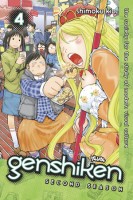
Genshiken: Second Season, Volume 4Genshiken: Second Season, Volumes 4-6 by Shimoku Kio. For some reason, I don’t find the second season of Genshiken to be as engaging as the original manga series. I haven’t quite been able to identify why yet, though I suspect it may be because most of the newer characters haven’t seen much development in the recent volumes and the characters from the first “season” feel like they’re invading the new series. I think Genshiken works best for me with an ensemble cast. While there are still plenty of characters in the manga as well as regular plot tangents, lately the story has primarily focused on just a few. Admittedly, the two characters who are getting the most attention, namely Madarame and Hato, happen to be my favorites in the series. Hato in particular is marvelous. He’s going through some significant personal turmoil over his cross-dressing and love of boys’ love, which has a tremendous impact on the rest of the story and characters. And apparently just about everyone is in love with Madarame. But as interesting as the increasingly convoluted relationships in the series are, at this point what I really want is to know more about the other club members.

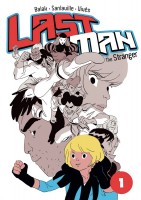
Last Man, Volume 1: The StrangerLast Man, Volume 1: The Stranger by Bastien Vivès, Michael Sanlaville, and Balak. Despite France being one of the world powerhouses of comics creation, relatively few French comics have been translated into English, especially when compared to the number of manga available. Last Man, which is in part inspired and heavily influenced by shōnen battle manga, has been very well received in France. And now, thanks to First Second, it’s available in English. (I believe Last Man may actually the first comic in translation that has been released by First Second.) Adrian is a young boy who has been training hard for his first fighting tournament, but when his teammate gets sick, it looks like he won’t be able to compete. Enter Richard, the titular stranger and a physically imposing man, who also needs a partner in order to compete. They make a peculiar pair: Adrian hasn’t quite mastered the magic and special techniques of his martial style, and Richard relies completely on his fists and strength. He also doesn’t appear to actually know the rules of the tournament, which poses a bit of a problem. So far, Last Man is delightfully engaging; I’m really looking forward to reading more of the series.

Missing RoadMissing Road by Shushushu Sakurai. Before quietly disappearing, DramaQueen released two final manga by Sakurai, Junk! and Missing Road. What particularly caught my attention about these two manga was the fact that they were science fiction—a genre that I’ve rarely seen in translated boys’ love manga. Missing Road specifically was described as “an epic sci-fi adventure of love, loss, and redemption.” Sadly, although some of Sakurai’s ideas certainly had great potential and I did like the setting, Missing Road doesn’t quite live up to that promise. The manga would have been more successful from a narrative standpoint if Sakurai could have expanded the story over the course of multiple volumes. As it is, she tries to cover too much ground in a single installment and many of the manga’s elements feel underdeveloped or truncated as a result. There are important close and intimate relationships, but Missing Road isn’t really a love story and is instead more about brutal war and revenge. Most of the sex is of a violent nature and rape occurs on several different occasions. The English-language edition was actually censored (with permission from Sakurai) for fear of United States child pornography laws.

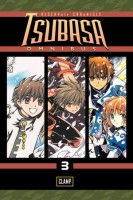
Tsubasa: Reservoir Chronicle, Omnibus 3Tsubasa: Reservoir Chronicle, Omnibus 3 by CLAMP. With this omnibus, I have entered into territory that I previously didn’t have the opportunity to read before Tsubasa originally went out-of-print in English. At this point, I’m still enjoying the series. It’s not always the most emotionally compelling manga (although admittedly it can sometimes be heart-wrenching), but Tsubasa is definitely a solid adventure tale. The manga’s premise allows CLAMP to very creative and develop world after world, each one different from the ones preceding and following it and each with its own challenges and dangers to be faced. Nods to other CLAMP manga and characters are still prevalent, and I assume this will likely be true for the entire series. This particular omnibus prominently features RG Veda, which I haven’t actually read, so I probably don’t appreciate the references as much as someone who has. It looks like the alternate version of Seishirō from Tokyo Babylon and X will be an important antagonist in Tsubasa as well. The series Tsubasa most directly crosses over with is xxxHolic. This connection actually works very well for Tsubasa, but I find it somewhat distracting when reading xxxHolic.

Filed Under: FEATURES, My Week in Manga Tagged With: Balak, Bastien Vivès, clamp, comics, Genshiken, Last Man, manga, Michael Sanlaville, Shimoku Kio, Shushushu Sakurai, tsubasa

Your Lie in April, Vol. 1

April 10, 2015 by Ash Brown

YourLieApril1Creator: Naoshi Arakawa
U.S. publisher: Kodansha
ISBN: 9781632361714
Released: April 2015
Original release: 2011
Awards: Kodansha Manga Award

Your Lie in April is the first and so far only manga series by Naoshi Arakawa to have been released in English. Arakawa is still fairly early on in his career—Your Lie in April was only his third major work—but the series earned him a Kodansha Manga Award in 2013 for Best Shōnen Manga. The first volume of the eleven-book series was originally published in Japan in 2011. In English, the manga was released by Kodansha Comics in 2015. The entirety of Your Lie in April was adapted into an anime series between 2014 and 2015, which is how I first learned about the manga. My interest in the series primarily stems from the prominent role that music has to play in the manga. Music is something that is incredibly important to me and continues to be a major part of my life. Probably unsurprisingly, I tend to enjoy music manga. And so, I was particularly happy to receive an early copy of Your Lie in April from Kodansha for review.

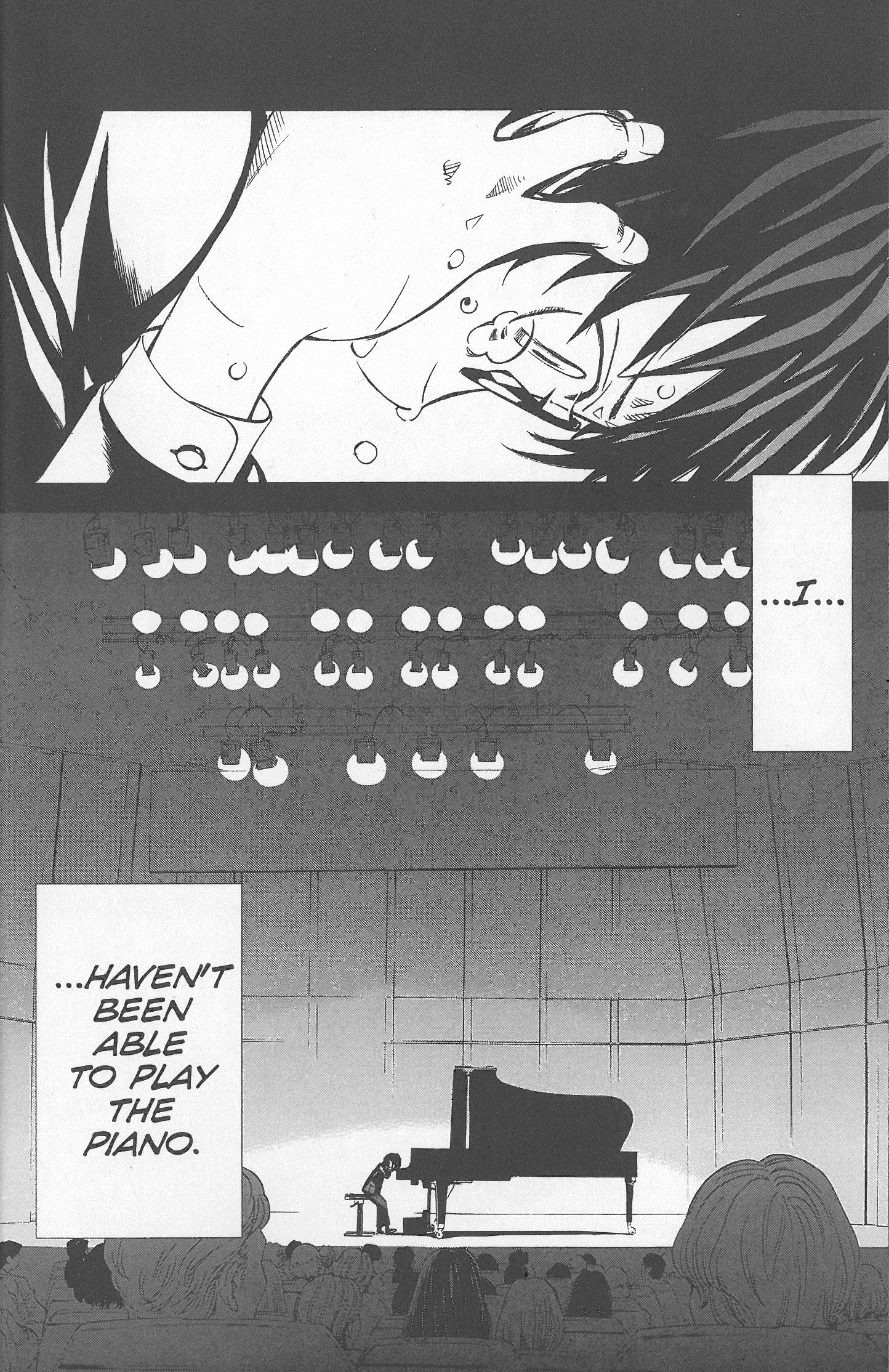
Kosei Arima was a child prodigy, admired for his skill and success as a pianist, winning competition after competition. But ever since his mother died and he had a breakdown in the middle of a performance on stage when he was eleven, he hasn’t been able to play the piano. Not for others and not even for himself. Piano was such an integral part of Kosei’s life that he seems to be somewhat lost without it and he hasn’t been able to completely let music go. Several years have passed since then, leaving Kosei a rather withdrawn and gloomy young man. But then he meets Kaori Miyazono, an extremely passionate violinist who attends the same middle school that he does. Kaori plays the way that she wants to play, disregarding traditional interpretations and technique to make the music her own. Though he is still reluctant and hesitant, watching Kaori’s enthusiastic, free-spirited performances has reignited something within Kosei and she and his friends are determined to see him play once again.

Your Lie in April, Volume 1, page 6A particular challenge faced by music manga like Your Lie in April is expressing sound in a visual medium. It takes more than simply throwing notes on the page to effectively convey the feeling of music in a comic. For the most part, Arakawa handles this aspect of the series quite well. The music itself isn’t heard, but the expressions and reactions of the listeners and musicians, the impact created by the music, can readily be seen. Perhaps the best example of this in Your Lie in April, Volume 1 is Kaori’s performance during a violin competition. The violinists before her are poised and fairly reserved in their playing, but Kaori uses her entire body to emote and express the music. This and the stunned faces of the audience members make it very clear that her invigorated style is drastically different and unexpected. But while music is obviously an important part of Your Lie in April, the real focus of both the artwork and the storytelling is on people’s experiences of that music.

Kosei’s relationship with music, and specifically with playing the piano, is a complicated one. He is struggling with intense psychological distress and it is revealed very early on in Your Lie in April that his mother physically, and very likely emotionally, abused him as well, trying to force her own dreams onto her son. Whether he is aware of it or not, Kosei’s feelings towards music and the piano are very much tied up with his feelings towards his mother. Underneath a relatively calm exterior is a turmoil of conflicting emotions that includes both love and hatred and even some fear. Deep down, Koesi does still seem to have the desire to continue playing the piano, though he denies it to himself and to others. It’s something that he will have to face head-on eventually, but Kaori’s influence threatens to make it something that he will have to deal with sooner rather than later, perhaps even before he’s really ready. I am very curious to see how Your Lie in April continues to develop and the steps Kosei may take to overcome his trauma.

Thank you to Kodansha for providing a copy of Your Lie in April, Volume 1 for review.

Filed Under: REVIEWS Tagged With: kodansha, Kodansha Comics, Kodansha Manga Award, manga, Naoshi Arakawa, Your Lie in April

Manga the Week of 4/15

April 9, 2015 by Sean Gaffney, Ash Brown, Anna N, Michelle Smith and MJ Leave a Comment

SEAN: Welcome to a wonderful week of manga here on Manga the Week of. For those of you who don’t like variety, there’s variety!

kuroneko

Dark Horse has the first volume of Oreimo spinoff Kuroneko, for those remaining fans who weren’t completely put off by the ending of the main series.

Does anyone remember Aquarion? Anyone? Anime, around 2005? Well, for those who yearned for a sequel in manga form, One Peace is giving us Aquarion Evol. It’s a Comic Gene title, so expect weirdness.

ASH: I like weirdness!

ANNA: I think I watched the first episode of the show and thought that there were too many orgasms when the robots combined.

SEAN: 12 Beast is a new Seven Seas series. It runs in Dragon Age. It’s from the creator of Monster Musume. It sounds radioactive to me, but I know others love this.

Gakuen Polizi is more up my alley, though I wish it was a bit less inconsequential. The 2nd and final volume is next week.

And if you don’t like ecchi fantasy or fluffy lesbians, well, there’s a third Magical Girl Apocalypse, which should at least give you gore.

The title The World’s Greatest First Love may not mean much to BL fans, but if I said it was Sekai-ichi Hatsukoi, I’m sure you’d know exactly the series I mean. SubLime has the long-awaited first volume.

MICHELLE: Ah, now this is one I’ve actually heard of!

ASH: As have I!

MJ: Count me in!

worlds1

SEAN: I loved My Neighbor Seki even more than I thought I would, and am delighted to see a 2nd volume next week from Vertical.

MICHELLE: I regret to say I haven’t gotten around to reading the first volume, but I definitely will one of these days!

ASH: You definitely should, My Neighbor Seki is absolutely delightful.

ANNA: This is on my list of things I need to read!

MJ: Mine, too!

SEAN: Case Closed still has more mysteries, and Shinich… sorry, Jimmy is still a little kid, even as we hit the 54th volume.

We’ve passed the halfway point in Deadman Wonderland, and Vol. 8 comes out from Viz next week.

And Itsuwaribito, a series that has a much longer run than I really expected, has Vol. 14.

Lastly, a new volume of Magi is always welcome. Next week we have Vol. 11.

MICHELLE: <3

ANNA: I have been stockpiling stray volumes of this here and there. One day I shall read them!

SEAN: And for those of you who don’t like manga… well, why are you reading this?

Filed Under: FEATURES, manga the week of

Maria the Virgin Witch, Vol. 1

April 8, 2015 by Ash Brown

Maria the Virgin Witch, Volume 1Creator: Masayuki Ishikawa
U.S. publisher: Kodansha
ISBN: 9781632360809
Released: February 2015
Original release: 2010

I’ll admit, when I first heard about the manga series Maria the Virgin Witch, I was more than a little skeptical. I’m not particularly interested in witches, which seem to be nearly as common as vampires in translated manga these days, and the emphasis placed on the heroine’s virginity seemed like it could be a little suspect. But then I realized that Maria the Virgin Witch was by Masayuki Ishikawa, the creator of Moyasimon, a quirky manga about microbes and fermentation that I enjoyed immensely. (Sadly, only two volumes of Moyasimon were ever released in English.) If for no other reason, I wanted to give Maria the Virgin Witch a chance because of my love for Moyasimon. I’m very glad that I did; the first volume turned out to be a very promising and intriguing start to the short series. Maria the Virgin Witch, Volume 1 was initially published in Japan in 2010 while the English-language edition was released by Kodansha Comics in 2015.

During the first half of the fifteenth century, England and France were still locked in the Hundred Years War, many of the battles being waged on French soil. Maria is a powerful but young witch living in France. She abhors the killing and senseless violence and so does what she can to disrupt the conflict and protect the villages and people who live near her woods. She has discovered one particularly effective method: by sending an owl familiar in the form of a succubus among the leaders of the armies on the eve of major battles, they often lose their will to fight or their interest in the impending confrontation. However, sometimes more direct action is required and Maria will summon great beasts to wreak havoc and chaos on the battlefield. But causing such a spectacle carries with it the danger of drawing the attention of Heaven and the risk of incurring the wrath of the Archangel Michael. There is a proper order to the world, and Maria poses a threat to it.

Maria the Virgin Witch, Volume 1, page 118 Maria’s outlook on life (as well as her and her familiars’ character designs) does tend to be more contemporary than the rest of the manga’s setting, but I really like her as a character. She has strong convictions, and she is prepared to act on them, doing what she can to right the injustices she sees in the world. Michael and others criticize her for her interference and audacity; Maria is very forthright with her feelings and opinions. She is young, and perhaps a little naive, but I admire her earnestness. Despite her anger and frustration, she has yet to become embittered by the world.  Maria honestly and wholeheartedly cares about people, especially those who are powerless or taken advantage of. Though some of her methods might not be considered to be particularly respectable by most, she and the people she protects believe her to be a force for good. Even so, Maria is considered to be a heretic by the Catholic Church, an institution for which she quite obviously holds no love.

Although Maria the Virgin Witch explores some fairly serious subjects—religion, morality, power dynamics, sexuality—the manga also includes a good deal of humor. Much of the comedy has to do with sex in one way or another, but some of it simply relies of the quirkiness of the characters. Maria, for example, is old enough to be curious about sex, but is still completely embarrassed at even the mere thought of seeing a man naked. As a result Priapus, the incubus she creates, is rather indistinct where it counts and is generally just put in charge of cooking and running errands. The first volume of Maria the Virgin Witch can be a bit crass at times (personally, I could have done without the repeated “cry for me like a little whore”-type comments), but overall the manga is a surprisingly layered work. The more I think about it, the more it grows on me, and the more I want to read the rest of the series. So far, Maria the Virgin Witch is a very interesting mix of historical fiction and fantasy that can be both entertaining and sobering.

Filed Under: REVIEWS Tagged With: kodansha, Kodansha Comics, manga, Maria the Virgin Witch, Masayuki Ishikawa

Pick of the Week: Shoujorama

April 7, 2015 by Sean Gaffney, Michelle Smith, Anna N, Ash Brown and MJ Leave a Comment

potwSEAN: There’s a lot I like this week, but Dengeki Daisy‘s final volume is absolutely my pick of the week.

MICHELLE: I am finding it insanely difficult to pick from amongst quite a few favorites with new volumes out this week. Skip Beat!, Food Wars! and Voice Over! are all must-buys, but I continue to be absolutely charmed by My Love Story!!, so I’ll award its fourth volume my pick of the week. Clearly, exclamation points are the way to my heart. Unless you are BTOOOM!.

ANNA: There are so many good manga coming out this week, but like Sean I’m going to have to go with Dengeki Daisy. It is a heartwarming story about a high school girl and her protective school janitor/hacker. There were plenty of high-stakes thrills along the way, but at the core this is a series about a found family. If you haven’t checked out this series yet, what are you waiting for?

ASH: Well, since Shojo Beat already has a strong showing (I’ll definitely be picking up Dengeki Daisy and My Love Story!), I’ll mix it up a bit with something completely different, the most recent volume of the dark, suspenseful, and and action-packed Ajin: Demi-Human.

MJ: Since I think I liked it better than a lot of other manga bloggers, I will take this opportunity to give a shout for the second volume of Chika Shiomi’s Yukarism. I’m a big fan of the author, and I found the first volume intriguing enough to keep me looking for more. That’s my pick out of this shoujo-heavy week!

What looks good to you this week?

Filed Under: PICK OF THE WEEK

My Week in Manga: March 30-April 5, 2015

April 6, 2015 by Ash Brown

My News and Reviews

An interesting variety of things was posted last week at Experiments in Manga. First of all, I had the privilege and opportunity to announce one of Sparkler Monthly‘s most recent additions, Kôsen’s Lêttera, a three-volume comic that was originally published in Spain. The winner of the Yukarism giveaway was announced last week as well. The post also includes a list of manga that feature reincarnation. As for reviews, I took a look at Akira Arai’s debut novel A Caring Man which shared the inaugural Golden Elephant Award grand prize with Fumi Nakamura’s Enma the Immortal. Whereas Enma the Immortal is historical fiction with fantastical elements, A Caring Man is a contemporary crime thriller that by and large is very believable. Finally, over the weekend I posted March’s Bookshelf Overload, which features a slightly less absurd amount of manga than most months.

Elsewhere online, Organization Anti-Social Geniuses has been posting some great manga-related content, including recording of a panel with manga editor and letterer Abigail Blackman from the Castle Point Anime Convention and a quick interview with editor Brendan Wright about Dark Horse’s upcoming release of Makoto Yukimura’s Planetes. (I’m very excited for this license rescue! I already own Tokyopop’s edition of the series, but Dark Horse’s sounds like it will be great, so I’ll most likely be double-dipping.) And speaking of Dark Horse, the final volume of Hiroaki Samura’s Blade of the Immortal was released last week. Robot 6 has an interview with Philip Simon reflecting on the manga’s end. Chic Pixel has a guide on how to import manga cheaply from Amazon Japan. Throughout March, the Comic Book Legal Defense Fund posted a series of articles, Women Who Changed Free Expression, the last of which focused on the influential 24 Nengumi, or the Year 24 Group, as the female progenitors of shoujo manga.

Anime Boston took place over the weekend. Both Yen Press and Kodansha Comics had some pretty exciting announcements to make. Yen Press has licensed thirteen new manga, some of which will be digital-only releases. The two print releases that particularly caught my attention were the omnibus edition of Yowamushi Pedal, particularly surprising since it’s a sports manga that’s nearly forty volumes lone and still ongoing in Japan, and the yonkoma Monthly Girls’ Nozaki-kun which, if it’s anywhere near as good as the anime adaptation, should be fantastic. As for Kodansha’s announcements, Attack on Titan, Volume 16 will have a special edition. New licenses include Ninja Slayer Kills, two video game-related manga—Persona Q and Devil Survivor—and Junji Ito’s Cat Diary, which is the one I’m personally most excited for. Also revealed was the status of Vinland Saga, which had temporarily been suspended. Basically, only two more volumes are guaranteed to be released unless sales for the series improve. Vinland Saga is magnificent; if you haven’t already given it a try, this would be the time to do it!

Quick Takes

Barakamon, Volume 2Barakamon, Volumes 2-3 by Satsuki Yoshino. While I largely enjoyed the first volume of Barakamon, I wasn’t particularly blown away by it. Still, I was interested in reading more of the series. I’m glad that I did, because it’s really starting to grow on me. Barakamon does have a little bit of a story to it—the once successful and respected calligrapher Seishuu has moved to a remote island to regain his composure and maybe find some inspiration—but mostly the series is about its characters and their interactions with one another. Even though he’s still a city-boy at heart, Seishuu has started to settle in on the island and isn’t nearly as out-of-place as he once was. The humor seems to now be a little less about the differences between country folk and people from more urban areas (although there still is plenty of that, especially when a couple of Seishuu’s friends and admirers from Tokyo show up) and more about the characters’ individuality and quirkiness. I am glad to see Seishuu relax somewhat and lose a bit of his arrogance from the first volume. In general he’s becoming a much more likeable character, which is probably part of the point of the series.

Cage of Eden, Volume 17Cage of Eden, Volume 17 by Yoshinobu Yamada. Finally! The monsters have returned! Well, technically it’s only one monster (not counting the absolutely terrible people), but it’s a pretty big deal. The dinosaurs and creatures are some of the only things I actually like about Cage of Eden; they’ve been largely missing from the last few volumes, so I was glad to see them back in such a dramatic way. Most of the seventeenth volume is devoted to an intense, and most likely deadly, battle against a man-made, genetic monstrosity. Probably best described as a chimera, the creature is formidable and extremely dangerous. The students make some extraordinarily bad decisions when it comes to confronting the beast, which really makes me wonder how they’ve managed to survive for so long. (Granted, the body count in Cage of Eden is pretty high.) The fight hasn’t concluded by the end of the volume, though I suspect it won’t last too much longer. One of the good things about Cage of Eden suddenly focusing on action is there is less opportunity for the more obnoxious fanservice to interrupt the story. Some of the girls even get to put up a decent fight. (At least at first.)

Lucifer and the Biscuit Hammer, Omnibus 2Lucifer and the Biscuit Hammer, Omnibus 2 (equivalent to Volumes 3-4) by Satoshi Mizukami. I wasn’t really sure what to expect from Lucifer and the Biscuit Hammer and reading the first omnibus didn’t help much with that, but I thoroughly enjoyed it. Sadly, I wasn’t nearly as taken with the second omnibus. I still enjoyed it, and I still plan on reading more of the series, but Lucifer and the Biscuit Hammer seems to have lost a little of its spark for me. Maybe I’ve just gotten used to its strangeness, but at the same time that’s also what I enjoy most about the series. Lucifer and the Biscuit Hammer is just so marvelously weird. At times the manga can be surprisingly dark, too, which I also appreciate. In the second omnibus, a slew of new characters are introduced as the identities of the rest of the Beast Knights are uncovered, although some of them are discovered to already be dead. All of them are rather eccentric with pasts that have some significant pain or sadness to them. The mage who plans on destroying the planet makes several appearances as well, and to some extent his motivations are explained, too. Much like the rest of the series, he’s not quite what one might expect.

Virtuoso di AmoreVirtuoso di Amore by Uki Ogasawara. I was primarily drawn to Virtuoso di Amore for two reasons, the role that music plays in the boys’ love manga and the fact that it was created by Ogasawara. I enjoyed parts of her short and very smutty series Black Sun, currently the only other manga of hers available in English. (Techincally, Chronicle of the Divine Sword was at one point licensed, but I don’t think it was ever actually published.) Virtuoso di Amore follows Kenzo Shinozuka, a failed classical pianist (mostly due to his volatile temper), who has been hired by an aristocrat to live in his manor and play for him every night. His patron is Lorenzo Carlucci who, it turns out, used to attend the same music school as Kenzo. Lorenzo is determined to help Kenzo remake is name as a musician. I really liked the basic premise of Virtuoso di Amore as well as its dark ambiance and fervent drama, but Ogasawara’s storytelling is unfortunately disjointed and occasionally difficult to follow. For example, Lorenzo and Kenzo fall in love, or at least in lust, very suddenly, which makes me think their relationship at school must have been much more involved than is implied elsewhere in the manga.

Filed Under: FEATURES, My Week in Manga Tagged With: Barakamon, Cage of Eden, Lucifer and the Biscuit Hammer, manga, Satoshi Mizukami, Satsuki Yoshino, Uki Ogasawara, Yoshinobu Yamada

Bookshelf Overload: March 2015

April 5, 2015 by Ash Brown

Compared to most other months, the number of manga that I had to find space for in March was relatively reasonable. I mostly stuck to preorders for manga, the major exception being the set of the now out-of-print City Hunter that I found. There were a few impulse buys when it came to novels and nonfiction, though. I did finally get my hands on Ajin: Demi-Human, Volume 3 by Gamon Sakurai. Technically released in February, my replacement copy arrived in March. (I’m pretty sure the first one that was sent to me was lost in a snow bank somewhere; I never saw it.) As for the manga that were actually released in March, I was particularly happy to see the third and final volume of Yaya Sakuragi’s boys’ love manga Hide and Seek. (I recently reviewed the first volume, which I enjoyed a great deal.) I’m always glad to see a new installment of Fumi Yoshinaga’s What Did You Eat Yesterday?, the seventh volume is the most recent addition to the series in English. But the manga I was most looking forward to in March was Aya Kanno’s Requiem of the Rose King, Volume 1. Actually, I was almost afraid to read it because I was worried that I would be disappointed. Fortunately, I loved the manga and can’t wait for the next volume.

Manga!
Ajin: Demi-Human, Volume 3 by Gamon Sakurai
Alice in the Country of Joker: Circus and Liar’s Game, Volumes 1-5 by Mamenosuke Fujimaru
Aquarion Evol, Volume 1 written by Shoji Kawamori, illustrated by Aogiri
Barakamon, Volume 3 by Satsuki Yoshino
Butterflies, Flowers, Volume 1 by Yuki Yoshihara
Cage of Eden, Volume 17 by Yoshinobu Yamada
Captain Ken, Volumes 1-2 by Osamu Tezuka
City Hunter, Volumes 1-5 by Hojo Tsukasa
The Drifting Classroom, Volume 8 by Kazuo Umezu
Hide and Seek, Volume 3 by Yaya Sakuragi
Knights of Sidonia, Volume 13 by Tsutomu Nihei
False Memories, Volume 1-2 by Isaku Natsume
Maria the Virgin Witch, Volume 1 by Ishikawa Masayuki
Master Keaton, Volume 2 written by Hokusei Katsushika, Takashi Nagasaki, illustrated by Naoki Urasawa
Manga Dogs, Volume 3 by Ema Toyama
Requiem of the Rose King, Volume 1 by Aya Kanno
Seraphim: 266613336 Wings by Mamoru Oshiii and Satoshi Kon
Tsubasa: Reservoir Chronicle, Omnibus 3 by CLAMP
What Did You Eat Yesterday?, Volume 7 by Fumi Yoshinaga
Yamada-kun and the Seven Witches, Volume 1 by Miki Yoshikawa

Comics!
100 Crushes by Elisha Lim
Grey Is…, Volume 1 by dee Juusan
In These Words, Volumes 1-2 by Guilt|Pleasure
Just So Happens by Fumio Obata
Last Man, Volume 1: The Stranger by Bastien Vives, Michael Sanlaville, and Balak
Only Words written by Tina Anderson, illustrated by Caroline Monaco
Sam Zabel and the Magic Pen by Dylan Horrocks
Stallion by Kôsen
Wayward, Volume 1: String Theory written by Jim Zubkavich

Novels!
Ascension by Jacqueline Koyanagi
Genocidal Organ by Project Itoh
I Want to Kick You in the Back by Risa Wataya
The Kappa Child by Hiromi Goto

Nonfiction!
The Book of Yokai: Mysterious Creatures of Japanese Folklore by Michael Dylan Foster
The Fall of Language in the Age of English by Minae Mizumura
How to Take a Japanese Bath written by Leonard Koren, illustrated by Suehiro Maruo
Miyamoto Musashi: His life and Writings by Kenji Tokitsu

Anime!
Dear Brother, Boxes 2-3 directed by Osamu Dezaki

Filed Under: Bookshelf Overload, UNSHELVED

A Caring Man

April 3, 2015 by Ash Brown

A Caring ManAuthor: Akira Arai
Translator: Marc Adler
U.S. publisher: Vertical
ISBN: 9781935654179
Released: 2011
Awards: Golden Elephant Award

A Caring Man is Akira Arai’s debut novel and his first book to be translated into English. The novel was brought to my attention primarily because it, along with Fumi Nakamura’s Enma the Immortal (which I absolutely loved), shared the inaugural Golden Elephant Award’s grand prize. A Caring Man and Enma the Immortal are two very different novels, but they are both engaging. Both novels were also released in English by Vertical. The purpose of the Golden Elephant Award was to “produce and publish promising entertainment stories in multiple languages in the global arena.” With that in mind, the jurors from the first award committee were from Japan, the United States, China, and Korea. It was this emphasis on global appeal that inspired Arai, who had previously worked in the music and film industries, to submit A Caring Man. After winning the award, the novel was simultaneously released in 2011 in Japanese and in English with a translation by Marc Adler.

On August 26, 2011, Japan fell victim to an unprecedented tragedy. Without any sort of warning, bombs strategically placed within Tokyo Tower were detonated, bringing the massive structure toppling down, killing and injuring a huge number of people. The special investigation team, a joint operation between the police force’s Criminal Investigation Department and the Public Security Bureau, is treating the incident as a terrorist attack. However, no group has emerged to claim responsibility for the bombing and the team quickly runs out of leads. There seems to be no concrete motive for the attack beyond a perverse desire to destroy for the sake of destroying. Mariko Amo is a freelance photographer working for scandal and gossip magazines who captured the fall of the tower on film, nearly losing her life in the process. Soon after she is given the opportunity to write a feature article on Yoshio Iizuka, a seemingly upstanding young man who recently established the Society of Victims of Abuse for the Prevention of Abuse. Little does she know that he is the very mastermind behind the Tokyo Tower attack.

A Caring Man deals with some very heavy subject matter. In addition to the attacks of terrorism and mass murder, personal killings and more intimate violence, such as child abuse, are also present in the novel. Yoshio himself was a victim of such abuse. Mutilated and abandoned as a newborn infant, he still carries scars on his body. He uses these and his story to gain empathy from others, employing his striking intelligence to manipulate them even further. Yoshio has an odd sort of intensity and charisma; he knows just what to say and how to act to exploit and control other people. A Caring Man, which takes its title from the characters used in Yoshio’s name, in part explores the mind and nature of a psychologically dark, twisted, and damaged young man. Yoshio’s plans are terrifying, and even more frightening is the fact that he has the abilities and influence needed to actually carry them out. The bombing of Tokyo Tower is only intended to be a dramatic prelude to even greater tragedies to come.

The story of A Caring Man is largely seen from three distinct perspectives, although they do intersect at various points in the novel when major players come into contact or become more deeply involved with one another. Those perspectives also reflect the prominent viewpoints of many modern-day crises. Yoshio and the cohort of young men aiding and in some cases nearly worshipping him form one faction as the perpetrators. The detectives, police, and other law enforcement officers are the investigators and protectors, while the third group consists of Mariko and other members of the media and press. They are the observers, chroniclers, and witnesses with the power to influence the opinions of the general public. Overall, A Caring Man is a well-written and engaging novel, particularly impressive as it is Arai’s debut. A few of the plot twists towards the end weren’t as believable or as effective as the rest of the novel, but otherwise A Caring Man is a solid crime thriller with an intense psychological component.

Filed Under: REVIEWS Tagged With: Akira Arai, Golden Elephant Award, Light Novels, Novels, vertical

  • « Go to Previous Page
  • Page 1
  • Interim pages omitted …
  • Page 103
  • Page 104
  • Page 105
  • Page 106
  • Page 107
  • Interim pages omitted …
  • Page 140
  • Go to Next Page »
 | Log in
Copyright © 2010 Manga Bookshelf | Powered by WordPress & the Genesis Framework