• Skip to primary navigation
  • Skip to main content
  • Skip to primary sidebar
  • Home
  • About Us
    • Privacy Policy
    • Comment Policy
    • Disclosures & Disclaimers
  • Resources
    • Links, Essays & Articles
    • Fandomology!
    • CLAMP Directory
    • BlogRoll
  • Features & Columns
    • 3 Things Thursday
    • Adventures in the Key of Shoujo
    • Bit & Blips (game reviews)
    • BL BOOKRACK
    • Bookshelf Briefs
    • Bringing the Drama
    • Comic Conversion
    • Fanservice Friday
    • Going Digital
    • It Came From the Sinosphere
    • License This!
    • Magazine no Mori
    • My Week in Manga
    • OFF THE SHELF
    • Not By Manga Alone
    • PICK OF THE WEEK
    • Subtitles & Sensibility
    • Weekly Shonen Jump Recaps
  • Manga Moveable Feast
    • MMF Full Archive
    • Yun Kouga
    • CLAMP
    • Shojo Beat
    • Osamu Tezuka
    • Sailor Moon
    • Fruits Basket
    • Takehiko Inoue
    • Wild Adapter
    • One Piece
    • After School Nightmare
    • Karakuri Odette
    • Paradise Kiss
    • The Color Trilogy
    • To Terra…
    • Sexy Voice & Robo
  • Browse by Author
    • Sean Gaffney
    • Anna Neatrour
    • Michelle Smith
    • Katherine Dacey
    • MJ
    • Brigid Alverson
    • Travis Anderson
    • Phillip Anthony
    • Derek Bown
    • Jaci Dahlvang
    • Angela Eastman
    • Erica Friedman
    • Sara K.
    • Megan Purdy
    • Emily Snodgrass
    • Nancy Thistlethwaite
    • Eva Volin
    • David Welsh
  • MB Blogs
    • A Case Suitable For Treatment
    • Experiments in Manga
    • MangaBlog
    • The Manga Critic
    • Manga Report
    • Soliloquy in Blue
    • Manga Curmudgeon (archive)

Manga Bookshelf

Discussion, Resources, Roundtables, & Reviews

Archives for April 2017

Bookshelf Briefs 4/3/17

April 3, 2017 by Michelle Smith and Sean Gaffney Leave a Comment

Cells at Work!, Vol. 3 | By Akane Shimizu | Kodansha Comics – Much to my surprise, Red Blood Cell takes a back seat in this volume, though she gets the entire first story to herself, in an amusing but predictable variation on “I protect her journey without her ever seeing me.” White Blood Cell is front and center, though, dealing with pranking cold germs, and a community of hair that has been beset by acne. There’s also Memory Cell, whose memory proves to be less amusing than his tendency to panic and overthink things, and Killer and Helper T Cell, who are vitriolic best buds who were once in Killer T boot camp together. The plots are the opposite of original, but the fun in Cells at Work! is seeing how the author meshes the cliches with genuine information. Great fun. – Sean Gaffney

Danganronpa: The Animation, Vol. 4 | By Spike Chunsoft and Takashi Tsukimi | Dark Horse – I’ve had issues with the rushed pacing during this entire adaptation, and it reaches a climax in this final volume, which is SO rushed it becomes almost a liability. And of course it’s compressing an anime that was already compressing a visual novel. That said, there are some striking visuals as you’d expect, particularly the revelation of the real villain and their final fate. Dark Horse hints at the end of the volume they may license more, and I’m vaguely interested, but honestly, this manga works better as an ad to get you to buy the game rather than as a story in itself. And as a vehicle for some truly wretched bear puns. – Sean Gaffney

Food Wars: Shokugeki no Soma, Vol. 17 | By Yuto Tsukuda and Shun Saeki | VIZ Media – This is not your usual volume of Food Wars!. In fact, most of it is fairly frustrating, as the restrictive regime of Erina’s father must be established before Yukihira presumably succeeds in triumphing over it. Azami Nakiri swiftly disbands all research societies and essentially outlaws creativity, mandating that all students be allowed to cook only approved recipes decided on by an elite group. Of course Yukihira rails against this, but when Polaris dormitory is threatened, he decides to challenge corrupt Eizan from the Council of Ten, even knowing that the judges are in his pocket. Alas, the reveal of Yukihira’s cooking waits until next time. The best part of the volume is runaway Erina being welcomed by the Polaris crew, but otherwise volume seventeen provides setup for a satisfying installment without really being one itself. – Michelle Smith

He’s My Only Vampire, Vol. 10 | By Aya Shouoto | Yen Press – With this volume, He’s My Only Vampire comes to an end. The details of Kana’s true origins are not belabored, but we do get some background on the origin of the stigmas and why Eriya is the way he is. As I expected (having previously read Shouoto’s Kiss of the Rose Princess, with its somewhat baffling finale), it doesn’t entirely make sense, but it makes enough sense for a reader like me, who doesn’t care enough anymore to quibble. The final confrontation is a bit rushed, but there’s a five-years-after epilogue that caps things off decently. In the end, this was an okay series—better than Kiss of the Rose Princess but not as good as The Demon Prince of Momochi House—but not one that I am likely to reread. – Michelle Smith

The Honor Student at Magic High School, Vol. 6 | By Tsutomu Sato and Yu Mori | Yen Press – Honoka’s status as girl with a crush who frets a lot is so ingrained that I was actually very surprised at seeing her crush her competition in her event that starts the fourth volume. It’s always nice to see characters like her succeed after all their hard work. The same cannot be said for Subaru and Nanami, two minor characters whose job is to show off how good the other school’s candidates are. And Honoka may be in trouble in future events, as she seems to have given away a secret to a new friend/spy. There’s also some amusing side stories, including showing that the two girls who kidnapped Honoka and Shizuku at the start of the series are in fact dating each other. Good stuff for Mahouka fans. – Sean Gaffney

UQ Holder, Vol. 10 | By Ken Akamatsu | Kodansha Comics – Last time we saw lots of unexplained Negima references, and this time we’re going back even further, as the start of this volume is nothing more than an extended riff on Love Hina—unsurprising given they’re all running an inn with an onsen at this point, but still, you can’t help but laugh. Kirie gets more focus and depth, and reminds me that Akamatsu loved to use Chisame more than the others as well. As for Kuromaru, she’s pretty much come down on the ‘she’ end of the equation with her growing chest, but her feelings for Tota are still causing her great difficulty. Oh well, it wouldn’t be Akamatsu without harem romance not going anywhere. Coming out slower, but still for for those who like Akamatsu. – Sean Gaffney

Filed Under: Bookshelf Briefs

Pick of the Week: April Goodies

April 3, 2017 by Sean Gaffney, Ash Brown, Anna N, Katherine Dacey and Michelle Smith Leave a Comment

SEAN: My non-manga pick of the week is the digital re-release of Louis Sachar’s Sideways Stories from Wayside School and its two sequels, aka MY CHILDHOOD TOUCHSTONE. But since it’s actually a manga site, I will pick the new volume of Assassination Classroom, aka “the one everyone has been waiting for”. I really love this series.

MICHELLE: I am all about the prose books, too, especially digital re-releases of favorites. But, yes, manga. This week I’m going with the debut volume of The Water Dragon’s Bride by Rei Toma, whose Dawn of the Arcana I enjoyed very much.

KATE: If I had to choose a title — and death was not an option — I’d vote for I Am a Hero. It’s a zombie manga for grown-ups, with adult characters, intense action sequences, and a protagonist who may or may not be going insane. If you’re a Walking Dead fan (comic or TV show), this might be in your wheelhouse.

ANNA: No surprise, I am torn between two great shoujo fantasy titles for my pick of the week. The Water Dragon’s Bride has an extremely strong first volume and the darker themes in the story really set it apart from typical shoujo fare. On the other hand, there’s the fifth volume of Yona of the Dawn, which is also an excellent fantasy series. I think the bickering, archery, and action puts Yona over the top for me, so that is my pick.

ASH: Oh, there are quite a few things that I’m interested in this week, so it’s hard to narrow it down to just one pick! Since it looks like the rest of the Manga Bookshelf crew has all the great shoujo fantasy well-represented, I’ll take this opportunity to mention Haikyu!! since it hasn’t been yet. I’m not especially interested in volleyball, but I’m enjoying the series’ positivity and energy immensely, and the characters are great, too.

Filed Under: PICK OF THE WEEK

My Week in Manga: March 27-April 2, 2017

April 3, 2017 by Ash Brown

My News and Reviews

As regular readers of Experiments in Manga know, on the last Wednesday of every month I host a giveaway of some sort (usually manga-related) for which participants have a week to submit their entries. This time around the monthly giveaway is for the first volume of Coolkyousinnjya’s surprisingly delightful Miss Kobayashi’s Dragon Maid. The winner will be announced this coming Wednesday, so you can still enter for a chance to win if you haven’t already. Also later this week, look for another guest review by my friend and fellow yuri manga fan Jocilyn. Elsewhere in the Manga Bookshelf sphere of blogs, The Manga Critic has started a monthly manga review index. There have been similar features in the past, perhaps most notably at MangaBlog, and I’ve always found them incredibly useful and valuable, so I’m glad to see Kate Dacey taking it on. Also in general, I highly recommend the content at The Manga Critic–Kate’s actually one of my major inspirations when it comes to manga blogging.

As for other interesting things I’ve come across recently: Chic Pixel’s Anne Lee has posted a really fantastic list of bibliographic resources for those curious about the academic study of boys’ love. (I’ve read quite a few books and articles myself, and even reviewed Jeffery Angles’ Writing the Love of Boys: Origins of Bishōnen Culture in Modernist Japanese Literature at Experiments in Manga a few years ago.) And if that’s not enough of BL studies for you, J. R. Brown has posted the slides from her Anime Boston panel “Boys’ Love, Otome Culture, and Gender” which covers everything from the origin of shoujo manga to gay comics and more. On their own the slides are fairly informative, but I’m looking forward to seeing the annotated version, too.

Also at Anime Boston, Viz Media made quite a few licensing announcements. Some were digital-only while others were digital-first or print-only. Here’s a quick list of the books that will eventually make their way into print: Kenta Shinohara’s Astra Lost in Space, Abi Umeda’s Children of Whales (I’m particularly curious about this series), an omnibus edition of Tsugumi Ohba and Takeshi Obata’s Death Note collecting the entire series and a bonus epilogue in a single volume, Nisioisin’s Hikaru Nakamura’s novel Juni Taisen: Zodiac Warriors (I’m not familiar with the novel, but the creators involved have certainly caught my attention), Kenji Taira’s Naruto: Chibi Sasuke’s Sharingan Legend, Kaiu Shirai and Posuka Demizu’s The Promised Neverland (which is supposed to be fantastic), a collection of nine Junji Ito stories and accompanying material selected by Ito himself called Shiver (always glad to see more Ito being released in English), Maki Enjoji’s SP Baby, and Sui Ishida’s artbook Tokyo Ghoul Illustrations.

A couple of Kickstarter projects recently launched which may be of interest as well: All the Anime/Anime Limited is joining forces with Studio 4°C to create a home video release of Masaaki Yuasa’s directorial debut Mind Game. Digital Manga has entered the fray again with a campaign to release more of Osamu Tezuka’s manga in print: Ambassador Magma, Dust 8, The Euphrates Tree, Metamorphose, Say Hello to Bookila, The Thief Inoue Akikazu, Wonder 3, and Yakeppachi’s Maria. It looks as though the print runs will be very limited and Kickstarter may be the only way to get a hold of some of the titles. (I have to admit, I certainly have my qualms about Digital Manga’s business practices in general and over-reliance on crowdfunding specifically. The quality of Digital Manga’s releases has really gone downhill over the last few years, too. Honestly, I’ve lost most of my confidence in the company as a publisher, but it’s managed not to completely go under yet.)

Quick Takes

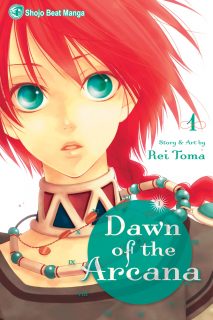
Dawn of the Arcana, Volume 1Dawn of the Arcana, Volumes 1-6 by Rei Toma. I generally enjoy epic fantasy of the shoujo variety, so I’m not entirely sure why it’s taken me so long to finally get around to reading Dawn of the Arcana. So far, I’m enjoying the manga tremendously. Nakaba is a princess who has been married off to a prince of the neighboring kingdom despite her questionable ancestry in a half-hearted attempt to secure peace between the two countries. But instead, gifted with the ability to see both into the past and into the future, Nakaba may find herself in the unlikely position of leading a revolution. Dawn of the Arcana does come across as a rather typical example of high fantasy–all the way down to the heroine’s fiery red hair–but even though it hasn’t really made itself stand out yet, the manga is a solid series. I greatly enjoyed the manga’s mix of court and political intrigue, action, and complicated interpersonal relationships. Much like the story, the artwork tends to be somewhat standard although attractive. Toma’s backgrounds are generally fairly sparse, but the details put into things like the characters’ clothing is lovely. I definitely look forward to reading more of Dawn of the Arcana in the very near future.

Hana & Hina After School, Volume 1Hana & Hina After School, Volume 1 by Milk Morinaga. I believe that Morinaga is currently the most well-represented yuri manga creator available in English. So far, five of Morinaga’s manga have been translated, the most recent being Hana & Hina After School. Interestingly, in Japan the manga was serialized in a magazine aimed at a general audience rather than one specifically catering to yuri fans. The titular Hana and Hina are two young women working part time at a store specializing in cute character goods even though their high school forbids its students from holding jobs. The story follows their relationship as they become friends and slowly realize that their feelings may evolve into something else. Like most of Morinaga’s other manga that I’ve read, Hana & Hina After School tends to be rather cute and sweet. The series is enjoyable and pleasant even if it is at times a little silly and somewhat unbelievable. However, the end of the first volume does introduce some sobering concerns when Hina is confronted by a few of her classmates homophobia, an unfortunate reality that many yuri manga tend to gloss over or ignore entirely in favor of pure fantasy. (Granted, that fantasy is important to have, too.)

Scum's Wish, Volume 1Scum’s Wish, Volumes 1-2 by Mengo Yokoyari. I wasn’t initially planning to pick up Scum’s Wish, but after reading a few positive reviews of the series I decided to give it a try after all. The cover art of the first volume is deliberately provocative, but the manga isn’t nearly as salacious as it might imply. In fact, the series can actually be surprisingly contemplative. Scum’s Wish is a manga about unrequited love. Almost every character in the series is pining for someone with whom an involved romance would seem to be impossible or at least inadvisable, resulting in a complex web of personal relationships fraught with loneliness and anguish. (There is one heck of a love polygon going on in Scum’s Wish and nearly everyone who is introduced is connected to it somehow.) Hanabi is in love with Narumi, her childhood friend who now also happens to be her homeroom teacher. Mugi is in love with Akane, a music instructor who used to be his tutor. Recognizing that they are suffering under very similar circumstances and hoping to ease some of the pain, Hanabi and Mugi agree to find comfort in a relationship together. Neither one of them is in love with the other, but they are both aware of and take advantage of that fact.

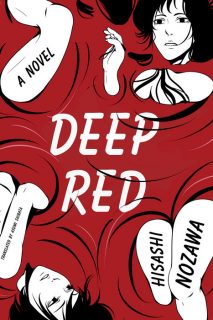
Deep RedDeep Red by Hisashi Nozawa. Although perhaps best known as a screenwriter, Nozawa was also recognized as an accomplished novelist. Deep Red, which earned Nozawa an Eiji Yoshikawa Prize in 2001, is his first novel to be released in English. Kanako is the only survivor of the mass murder of her family, simply because she happened to be away on a school trip when her parents and two younger brothers were killed. Understandably, their deaths have left a great wound, but Kanako isn’t the only one left troubled and hurt–the life of Miho, the daughter of the murderer, has also been irrevocably changed. At times, Deep Red is uncomfortably voyeuristic and there’s a peculiar fixation on Kanako’s body and sex life with her boyfriend. I was never entirely convinced by Kanako as a character, either. However, Deep Red does provide an interesting psychological exploration of hate, anger, and misplaced revenge. The novel is instantly engaging. However, the middle portion of the narrative is repetitive and does drag a fair bit; I admittedly started to lose my interest and patience with the story. But once Kanako becomes obsessed with and decides to pursue Miho, Deep Red picks up speed again and the novel’s ending is very satisfying.

Filed Under: FEATURES, My Week in Manga Tagged With: dawn of the arcana, Hana and Hina After School, Hisashi Nozawa, manga, Mengo Yokoyari, milk morinaga, Novels, Rei Toma, Scum's Wish

Blood Lad, Vol. 8

April 3, 2017 by Sean Gaffney

By Yuuki Kodama. Released in Japan by Kadokawa Shoten, serialized in the magazine Young Ace. Released in North America by Yen Press. Translated by Melissa Tanaka.

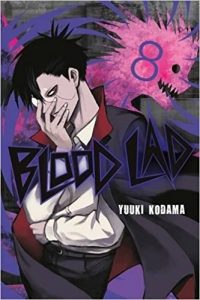
It’s been over a year since we last looked at the world of Blood Lad. Such is life when you’ve caught up to a series’ Japanese releases, even more so when Yen puts this out as an omnibus. But the manga has now finished in Japan, so we shouldn’t have quite as long to wait for the final volume. In the meantime, we get this new omnibus, which does exactly what I suspected it would, which is get taken up by a huge fight between the villain and everyone else, showing off all the minor and secondary characters to a decent degree, but putting the emphasis squarely where it’s been (more or less) since Day One: on the odd relationship between vampire leader Staz and busty newly dead ghost Fuyumi. It even gives Fuyumi something to do!… though that’s somewhat problematic as well.

If you look at my past reviews of Blood Lad, you’ll see that Fuyumi’s lack of character development has been a bit of a bugaboo for me. She’s improved, but still tends to be reactive rather than proactive. That doesn’t change here, much as I’d like it to. The solution to how to defeat the bad guy involves Staz fusing with Fuyumi’s body, effectively making her the action heroine, but since it’s really Staz in the driver’s seat, the effect is lost, no matter how often we hear ‘Super Fuyumi Kick!’. Her best moment in this volume may come in a ‘dreamscape’, as she yells at him for being tactless and not understanding her feelings while literally dressed up as a giant 50-foot bride. Fuyumi is ‘the love interest’, and sadly Blood Lad’s biggest lost opportunity.

Thankfully, we’ve got something that makes up for that: humor. A good deal of this volume is hilarious, especially towards the end. Much as I disliked the Staz/Fuyumi fusion as character development, as an homage to giant robots it’s wonderful, especially as more and more people end up getting added and Staz’s Fuyumi Gundam rapidly turns into a Fuyumi Yamato. And, let’s be honest, the sight of Fuyumi with Staz’s teeth and attitude is also highly amusing. It helps to distract a bit from the brutality of the villain, who I think we abandon all hope of ever turning back to the other villain he used to be here. He’s a good villain, but also a bit one-note. Still, he provides tension.

Blood Lad in the end works best if you view it as one of those summer action blockbusters you see in the theater. While you’re watching it you’re captivated by the cool fight scenes and great quips, but it tends to fall apart when you go home and think about the plot afterwards. So don’t think about it too hard. Just sit back and enjoy a manga written by an artist who is clearly enjoying the hell out of himself, and grin along with Staz as you pilot a giant robot version of the girl you like in order to defeat a madman.

Filed Under: blood lad, REVIEWS

Yona of the Dawn Vol. 5

April 2, 2017 by Anna N

Yona of the Dawn Volume 5 by Mizuho Kusanagi

Yona of the Dawn continues to be an absolutely delightful manga. Every time I finish a volume I feel extremely satisfied as a reader, having gotten just the right amount of plot, character development, humor, and action. The fourth volume was much more somber in tone as the intrepid adventurers led by Yona find the Blue Dragon in his mountain village. Entirely isolated due to his special abilities from a young age, the Blue Dragon seems a bit intrigued by the visitors, but still lost and on his own. A cave-in prompts some dramatic action, and when Yona invites him to join her again, he agrees. The first chapter ends on a wistful note as the Blue Dragon’s internal thoughts turn to the previous Dragon who trained him, reflecting that he doesn’t remember the face of the man who used to be his only family.

Yona of the Dawn doesn’t stay moody for long, as Gija attempts to sense the location of the next dragon, only to collapse. This gives Hak an excuse to intone “Rest in Peace”, but Gija is temporarily indisposed. The group heads to a seaside village next, where the Green Dragon is a sardonic pirate, determined to maintain his independence despite his destiny. Hak and the Green Dragon keep running into each other randomly as they save villagers from being oppressed.

This volume had some of my favorite character-driven moments so far, as Yona permits all of her entourage to call her by her fist name except for Hak. He’s horrified that she’s allowing herself to be addressed so casually, and when they are talking together separately, she asks him to always be sure to call her “your highness”, because she can’t forget where she came from, to preserve the memory of her former family. The scene shows Hak’s unwavering devotion, the closeness between Hak and Yona, and at the same time the distance that rank puts between them. Yona has come a long way from the frightened princess n the first volume, and she’s still determined to keep improving herself. I’m enjoying the pace of this manga as well. With three of the dragon guardians identified, I’m looking forward to seeing the fourth one tracked down and then seeing how the story unfolds once Yona has her mini army all gathered together.

Filed Under: Manga Reviews, REVIEWS Tagged With: shojo beat, shoujo, viz media, yona of the dawn

Twinkle Stars, Vol. 2

April 1, 2017 by Sean Gaffney

By Natsuki Takaya. Released in Japan as two separate volumes by Hakusensha, serialized in the magazine Hana to Yume. Released in North America by Yen Press. Translated by Sheldon Drzka.

One of Takaya’s stronger points is her ability to depict a character hiding their own emotional pain and despair, usually because they don’t want to make others worry or because it’s simply not the done thing to admit your feelings. We see more of that in this new omnibus, as we get more details on Sakuya’s depression and what led to her living away from her family with Kanade. Now to be fair, we’ve covered a lot of these sorts of situations in Fruits Basket – I mean, if you guessed emotional abuse from a parental figure, give yourself a nickel – but it can be argued that this sort of thing needs to be brought into the open as much as Takaya does. Sakuya’s repressed feelings – which she isn’t suite sure about, possibly as her new stepmother is pushing at her to hate her – are one of the highlights of the volume.

Of course, what makes Sakuya such a strong character is that it really isn’t entirely a mask to hide her emotional pain. Sakuya’s joy at being with her friends and seeing the stars is very real too, and so are her budding feelings for Chihiro, even if she finds them a bit terrifying. Chihiro is slightly less interesting in this second volume, mostly as he’s far less mercurial – he seems to have accepted Sakuya as a new friend, and therefore there’s not as much pushing back, though I suspect we’ll get that from a different angle in future volumes. Yuuri and Hijiri get the cover art, and Yuuri also gets a bit more backstory, which develops the reasons he’s fallen for Sakuya while also showing that he absolutely is not going to be the winner.

And then there’s Hijiri, who is perfect. I would like to say it’s rare I fall for a character so fast, but that’s not true, this happens all the time. But it’s always a pleasure when it does. Hijiri has a sharp tongue, but is looking out for her friends, and I am pleased to see that the very first page of this omnibus shows that she and Yuuri will not be set up into a ‘pair the spares’ romance. Of course, this also seems to be because she has a crush on her teacher, which makes me wary. Better is the amusing relationship she has with her masochistic manservant Saki, who is 100% devoted to her and has no trouble showing this in front of others, much to her dismay. Takaya’s comedy can be forced at times, but when she’s on a roll you will laugh your head off.

The preview for the next omnibus seems to show that we’ll be getting Chihiro’s backstory next – I keep thinking things are movign a bit fast, but then I recall that this series was less than half the number of volumes that fruits Basket had. That doesn’t make it any less good, though, and I look forward to intense emotional pain as only Takaya can give to readers next time around.

Filed Under: REVIEWS, twinkle stars

  • « Go to Previous Page
  • Page 1
  • Page 2
  • Page 3
  • Page 4
 | Log in
Copyright © 2010 Manga Bookshelf | Powered by WordPress & the Genesis Framework