• Skip to primary navigation
  • Skip to main content
  • Skip to primary sidebar
  • Home
  • About Us
    • Privacy Policy
    • Comment Policy
    • Disclosures & Disclaimers
  • Resources
    • Links, Essays & Articles
    • Fandomology!
    • CLAMP Directory
    • BlogRoll
  • Features & Columns
    • 3 Things Thursday
    • Adventures in the Key of Shoujo
    • Bit & Blips (game reviews)
    • BL BOOKRACK
    • Bookshelf Briefs
    • Bringing the Drama
    • Comic Conversion
    • Fanservice Friday
    • Going Digital
    • It Came From the Sinosphere
    • License This!
    • Magazine no Mori
    • My Week in Manga
    • OFF THE SHELF
    • Not By Manga Alone
    • PICK OF THE WEEK
    • Subtitles & Sensibility
    • Weekly Shonen Jump Recaps
  • Manga Moveable Feast
    • MMF Full Archive
    • Yun Kouga
    • CLAMP
    • Shojo Beat
    • Osamu Tezuka
    • Sailor Moon
    • Fruits Basket
    • Takehiko Inoue
    • Wild Adapter
    • One Piece
    • After School Nightmare
    • Karakuri Odette
    • Paradise Kiss
    • The Color Trilogy
    • To Terra…
    • Sexy Voice & Robo
  • Browse by Author
    • Sean Gaffney
    • Anna Neatrour
    • Michelle Smith
    • Katherine Dacey
    • MJ
    • Brigid Alverson
    • Travis Anderson
    • Phillip Anthony
    • Derek Bown
    • Jaci Dahlvang
    • Angela Eastman
    • Erica Friedman
    • Sara K.
    • Megan Purdy
    • Emily Snodgrass
    • Nancy Thistlethwaite
    • Eva Volin
    • David Welsh
  • MB Blogs
    • A Case Suitable For Treatment
    • Experiments in Manga
    • MangaBlog
    • The Manga Critic
    • Manga Report
    • Soliloquy in Blue
    • Manga Curmudgeon (archive)

Manga Bookshelf

Discussion, Resources, Roundtables, & Reviews

Archives for April 2017

The Water Dragon’s Bride, Vol. 1

April 14, 2017 by Sean Gaffney

By Rei Toma. Released in Japan as “Suijin no Ikenie” by Shogakukan, serialization ongoing in the magazine Cheese!. Released in North America by Viz Media. Translated by Abby Lehrke.

Holy catfish, this is dark. Don’t be thrown off by the cutesy picture of the heroine looking adorable on the cover, this is a fantasy that comes close to pure horror at times. Starting off with every parent’s worst nightmare, we move from crisis situation to crisis situation, and it’s a small miracle that Asahi (the aforementioned heroine) manages to be as strong as she does throughout. The water dragon in question is one of those “what are these strange things called human emotions” types, who has to be reminded of things like “humans eat in order to stay alive” She manages to find a good friend in a small village, but sadly Subaru’s mother comes from the School Of Evil Moms (TM) and Asahi ends up in probably worse trouble than if she’d just stayed hidden. There’s a lot going on here, so it’s a good thing you can’t tear your eyes from it.

We actually start off in modern times, as Asahi is a normal and seemingly somewhat spoiled girl who ends up being literally dragged into her family’s backyard pond by a wave of water and winds up in a fantasy-style world. (I have a sneaking suspicion the parents will never be seen again, and shudder to think of their reaction to their daughter literally vanishing when they turned away briefly.) Luckily, she meets Subaru, a nice young kid about her age. Sadly, she has pink hair and purple eyes, something that this world does not seem to have run across, and therefore must be EEEEEVIL. As a result, they perform a ritual to the local Water God and offer up Asahi, which is to say they tie a large rock to her ankle and throw her to the bottom of the lake. Then she meets the Water Dragon, who reminds me a bit of Ayame from Fruits Basket. Sadly, it’s Ayame before he grew up and wised up, so he’s pretty much a callous jackass.

Things move on from there, and I won’t keep describing the plot, but I will once again say that there’s some amazingly traumatic stuff in here, and the artist captures it beautifully. Asahi’s sacrifice, the starvation, the skeletons in the water, the hallucinations of each other that she and Subaru see… there’s a good reason this runs in shoujo/josei hybrid Cheese! and not, say, Ribon. That said, it’s not all doom and gloom, mostly thanks to Asahi’s basic spunky personality, as even when she’s despairing she still tries hard. And there are a few laughs in the book, mostly involving the Water God getting roundly mocked by the other nature gods for being, well, a petulant manchild. I have no doubt that his maturation, with the help of Asahi, is the point of this book. That said, Asahi is about 8-9 years old, so if it does end up being a romance I’m rooting for her kid friend rather than the God. I suspect a timeskip in the near future.

In short, I was somewhat blown away by this new series. Dark it may be, but I can’t wait to read more.

Filed Under: REVIEWS, water dragon's bride

Manga the Week of 4/19

April 13, 2017 by Sean Gaffney, Ash Brown, Anna N, Michelle Smith and MJ Leave a Comment

SEAN: It’s another one of those weeks next week. Hunker down.

We start off with J-Novel Club, which has the 3rd volume of Grimgar of Fantasy and Ash. This is the first book that wasn’t adapted to the anime (which stopped with Book 2), and is apparently even more grim than Grimgar normally is.

Kodansha has its usual plethora of digital-only license rescues next week. Alive 13, Gakuen Prince 11, Pumpkin Scissors 10, and Yozakura Quartet 9.

ANNA: I liked some of these when they were coming out, but probably not enough to snag them as digital only. Still, this is so nice for fans of these series who were left in limbo before!

SEAN: If you enjoy Attack on Titan’s anime adaptation, which has just started up again, Kodansha has Attack on Titan: The Anime Guide.

And Attack on Titan: Before the Fall has now reached double-digits, and still has more plot to go.

ASH: Overall, I do like the Before the Fall manga more than I like the original light novel; it seems more well-developed to me.

SEAN: Kodansha had some digital-only debuts THIS week, which I didn’t mention last week as Kodansha didn’t announce them till the day they came out, much to my frustration. The first is Domestic Girlfriend, a shonen romantic drama from the creator of fan-favorite GE Good Ending. It’s the shonen equivalent to those “shoujo potboilers” I talk about.

The second is a more familiar face: GTO: Paradise Lost has its first volume out. This has been running on Crunchyroll’s manga list for some time. It features Onizuka… in jail?

MJ: Hmmmm, I’m always a fan of GTO, so I may check this out.

SEAN: Back to next week: Kiss Him Not Me! has also reached double digits, and will likely go longer now that Kae has been reassured she doesn’t have to worry about stringing her guys along.

Maga-Tsuki has 13 volumes, and this is the 7th, so it’s the halfway point.

And there’s a 4th Welcome to the Ballroom, which I expect features our lead collapsing in exhaustion.

MICHELLE: Heh.

ANNA: Already behind on this series!

SEAN: One Peace has more than one title out this week! The first is the 4th volume of heartwarming, oddball, and sort of creepy Kuma Miko.

And there’s a 7th volume of Rise of the Shield Hero, for those who like isekai-style male power fantasies.

Seven Seas has an 11th Dragonar Academy.

Ghost Diary is the debut from Seven Seas, a supernatural fantasy from Dengeki Daioh that, at 3 volumes, is at least short. That said, it looks more on the Ancient Magus’ Bride end of the spectrum.

ASH: I’m really curious about this one! (Also, I didn’t realize it was only three volumes.)

ANNA: Huh, that sounds manageable.

SEAN: I missed a SuBLime title last week; they also have a 2nd volume of Spiritual Police.

MJ: Somehow I must have missed this first volume. But based on the title alone, I’m inclined to check it out.

SEAN: Vertical Comics gives us a 4th volume of Immortal Hounds.

Viz has a double dose of Tokyo Ghoul. Not only do we get the 12th volume, but we also get another novel based off the series, called Past.

And now let’s jump into Yen, starting with the light novels from Yen On. The Asterisk War has a 3rd volume of magical school battles.

Baccano! has a 4th volume the last one to be adapted to the anime. That said, the anime cut about half the novel from its adaptation, so there’s lots of new content for fans to get into here.

Black Bullet’s 6th volume wraps up another two-volume arc. Will it be depressing? Bet on it.

The Devil Is a Part-Timer! has a 7th volume that is composed of short stories set towards the start of the series.

Goblin Slayer’s 2nd volume promises a lot more… well, goblin slaying.

The Irregular at Magic High School’s 4th volume will wrap up its tournament arc, and is a very long book. It would be the longest out this month except…

Is It Wrong To Try To Pick Up Girls In A Dungeon? tops it, with this 8th volume (ALSO composed of short stories) hitting 400 pages or so.

KonoSuba rolls out its 2nd volume only two months after its first (I think the first was meant to be December), and hopefully will be as hilarious as that first volume was.

The debut novel is much anticipated. Rokka: Braves of the Six Flowers, a fantasy with heroes and stuff that… OK, I know extremely little about, but I look forward to finding out.

Sword Art Online has a 10th volume, and Kirito is still stuck in Alice-land. Will he and Eugeo be able to rescue her? And will our other regulars get mentioned at all?

MJ: i have fallen way behind in my SAO reading… going to have to fix that.

SEAN: As for Yen’s manga titles, there’s a 10th Akame Ga KILL!.

Alice in Murderland has a 6th volume of very very pretty looking murder.

Aoharu x Machinegun has a 4th print volume.

ASH: So far I’ve only read the first volume of Aoharu x Machinegun, but I found it entertaining and so plan on reading at least a few more volumes.

SEAN: And A Certain Magical Index’s 9th manga volume is adapting the 7th light novel.

Fruits Basket’s Collector’s Edition comes to an end with the 12th and final omnibus. Given the series only had 23 volumes, I expect there will be a lot of extra content at the end to fill it out.

ASH: I’m really glad that Fruits Basket is back in print again. I’ve been meaning to give it a re-read; looks like the time is right for that.

MICHELLE: There was at least one fan book, and maybe two. So I guess a bunch of that stuff will be at the end.

MJ: So much love for this. So much.

ANNA: Looking forward to fan books!

SEAN: Horimiya’s 7th volume will have great romantic comedy and hopefully not have the binding fall apart on me like the 6th volume did.

ASH: Oh, no!

MICHELLE: Yay, Horimiya!

SEAN: KonoSuba also has a 3rd volume of its manga adaptation.

Liselotte & Witch’s Forest has a 4th volume, for a double shot of Takaya.

And everyone’s favorite guilty pleasure, Scum’s Wish, has volume 3.

ASH: I was surprised by how much I enjoyed the first two volumes.

MICHELLE: Me, too.

SEAN: Taboo Tattoo has a 6th volume, and I’m sorry this is starting to sound like a broken record, but I have little to say about these titles.

And I believe this is the 3rd and final volume of survival game manga Tohyo Game.

Finally, Yowamushi Pedal gives us a 5th omnibus or this cycling manga and its desperately earnest hero.

ASH: Woo-hoo! I enjoy Yowamushi Pedal so much! I wish there wasn’t such a wait between omnibuses.

MICHELLE: Same! For a series so long, even the omnibus treatment is going to take forever.

SEAN: That’s a ridiculous amount of manga. Are you getting any?

Filed Under: FEATURES, manga the week of

Bookshelf Overload: March 2017

April 13, 2017 by Ash Brown

Well then, I managed to acquire a rather large number of books in March. Unexpectedly, most of them weren’t even manga. In part this was due to a bunch of comics that I had previously backed on Kickstarter showing up last month. I can also thank both online retailers and my local comic book store for offering some massive discounts throughout March. (On top of that, I have a tendency to buy books when I’m under stress. Seeing as I’m in the process of transferring from one job to another, there’s been a fair amount of added stress lately, too.) But as for the manga I picked up in March: I was particularly delighted to come across Mitsuru Adachi’s Short Program, which has been out of print for a while now. I also decided to give Kazune Kawahara’s High School Debut a try since I’ve been enjoying My Love Story!! so incredibly much. I was admittedly a little surprised to come across The Secret Devil-chan, Volume 1 by Emu, the first book to be released under Digital Manga’s new PeCChi imprint. The book has actually been available since September I think, but only directly from Digital Manga; I wasn’t sure if any of the publisher’s titles were still being released outside of it’s own web stores. And while 100 Manga Artists isn’t manga it certainly is manga-related. I didn’t realize it at first but it turns out the volume is actually a revised and updated edition of Manga Design which was released back in 2004 (and which I also own). I haven’t had a chance to closely compare the two, but 100 Manga Artists is nevertheless an interesting resource.

Manga!
Bungo Stray Dogs, Volume 2 written by Kafka Asagiri, illustrated by Sango Harukawa
Crimson Shell by Jun Mochizuki
Food Wars!: Shokugeki no Soma, Volume 16 written by Yuto Tsukuda, illustrated by Shun Saeki
Hana & Hina After School, Volume 1 by Milk Morinaga
High School Debut, Volumes 1-5 by Kazune Kawahara
Kaze Hikaru, Volume 24 by Taeko Watanabe
Kiss and White Lily for My Dearest Girl, Volume 1 by Canno
Maid-sama!, Omnibus 3 by Hiro Fujiwara
New Lone Wolf and Cub, Volume 8 written by Kazuo Koike, illustrated by Hideki Mori
One-Punch Man, Volume 11 written by One, illustrated by Yusuke Murata
The Prince in His Dark Days, Volume 3 by Hico Yamanaka
Persona 3, Volume 3 by Shuji Sogabe
Prison School, Omnibus 6 by Akira Hiramoto
The Secret Devil-chan, Volume 1 by Emu
Scum’s Wish, Volumes 1-2 by Mengo Yokoyari
Sherlock: A Study in Pink by Jay
Short Program, Volumes 1-2 by Mitsuru Adachi
Sweetness and Lightning, Volume 4 by Gido Amagakuure
That Wolf-Boy Is Mine, Volume 2 by Yoko Nogiri

Comics!
Ancestor by Matt Sheean and Malachi Ward
Arclight written by Brandon Graham, illustrated by Marian Churchland
The Best We Could Do by Thi Bui
Big Mushy Happy Lump by Sarah Andersen
Bones of the Coast edited by Shannon Campbell, Jeff Ellis, and Kathleen Jacques
Check Please!, Year 2 by Ngozi Ukazu
Crossed Wires, Volume 1 by Iris Jay
Compass South written by Hope Larson, illustrated by Rebecca Mock
Daughters by Bianca Bagnarelli
Extended Play by Jake Terrell
For the Love of God, Marie! by Jade Sarson
Hit: 1955 written by Bryce Carlson, illustrated by Vanesa R. Del Rey
Honor Girl by Maggie Thrash
Ignition Zero, Volume 1 by Noel Arthur Heimpel
Lafcadio Hearn’s The Faceless Ghost and Other Macabre Tales from Japan written by Sean Michael Wilson, illustrated by Michiru Morikawa
Larimar by Michael K
Last Man, Volume 4: The Show by Bastien Vivès, Michael Sanlaville, and Balak
Letters for Lucardo, Volume 1 by Noora Heikkilä
No Exit by Annie Mok
O Human Star, Volume 2 by Blue Delliquanti
Perfect Hair by Tommi Parrish
Power & Magic by Joamette Gil
Pretty Deadly, Volume 1 by Kelly Sue DeConnick and Emma Ríos
Princeless: Raven the Pirate Princess, Volume 1 written by Jeremy Whitley, illustrated by Ted Brandt and Rosy Higgins
Sakana, Volume 1 by Mad Rupert
Secure Connect by Carta Monir
Spacejinx, Volumes 1-2 by Ocicatsy and Wensleydale
Sprawling Heart by Sab Meynert
Sticks Angelica, Folk Hero by Michael DeForge
Wayward, Volume 4 by Jim Zubkavich and Steve Cummings
The Whipping Girl by Nuria Tamarit
Wilde Life, Volume 1 by Pascalle Lepas
Witchlight by Jessi Zabarsky
The Woods, Volume 1 by James Tynion IV and Michael Dialynas
The Worrier’s Guide to Life by Gemma Correll
The Worst by Molly Mendoza

Artbooks!
100 Manga Artists edited by Amano Masanao and Julius Wiedemann
Infecta by Michael K
Otomo: A Global Tribute to the Mind Behind Akira by Various

Novels!
Dream of Ding Village by Lianke Yan
The Graveyard Apartment by Mariko Koike
Orbital Cloud by Taiyo Fujii
Pachinko by Min Jin Lee
The Silent Dead by Tetsuya Honda

Anthologies!
Revenge: Eleven Dark Tales by Yoko Ogawa

Anime!
Kyousougiga directed by Rie Matsumoto

Filed Under: Bookshelf Overload, UNSHELVED

Skip Beat!, Vol. 38

April 13, 2017 by Anna N

Skip Beat! Volume 38 by Yoshiki Nakamura

Skip Beat! is always emotionally harrowing, but after 38 volumes, there are plenty of different character relationships and plot points that can be explored for maximum drama. This volume finally confronts Kyoko’s relationship with her mother. After seeing the ways Kyoko has been damaged by her abandonment as a child throughout Skip Beat! up until this point, this confrontation is a long time coming, and Kyoko’s reactions and resilience show just how far she’s come.

This volume of Skip Beat! starts out with Sho being an idiot, because a little bit of comic relief is useful before delving into childhood trauma. Kyoko and Ren are also firmly locked into the misunderstandings and delicate emotional balance that causes any interaction between them to be weighted down with layers of unspoken feelings, elements of comfort, and pure anxiety. Kyoko’s encounter with Ren is helping build up her up psychologically, and she comments “I’ll prepare myself body and spirit, since I’ll be fighting a psywar in a blizzard”.

As Kyoko heads towards meeting her mother, she’s keeps her “Love Me” stamp with an infinite number of points that she received from Ren close by, like a token to take into battle. Kyoko first has a conversation with one of her mother’s co-workers in leading up to the main event. Kyoko begins to wonder about her father, and if her mother Saena experienced something similar to the rejection that she experienced from Sho, that kicked off her desire for vengeance. Saena is caught up in biases and assumptions, thinking that Kyoko dropped out of school and that she had a physical relationship with Sho. Saena’s stubbornness and strong facade makes it difficult to communicate with her.

As Kyoko and Saena face off, Nakamura’s portrayal of demons lurking in the background of the conversation and dramatic micro-expressions shows the charged nature of the confrontation. Their conversation is interrupted by flashbacks of a younger Saena struggling to make her way as a lawyer, and seemingly torn between her job and the idea of love. While Saena’s backstory might place her actions in context, it doesn’t really the cruel way she abandoned her daughter. This storyline is obviously going to be stretched out over several volumes, and I have to admit I’m feeling more anxious about Kyoko than I have in awhile! I’m hoping that the maturity that she’s built up over time helps her deal with whatever emotional bombshell her mother is about to drop. Skip Beat! continues to be extremely rewarding for readers, and I’m happy it is still going so strong after 38 volumes.

Filed Under: Manga Reviews, REVIEWS Tagged With: shojo beat, shoujo, Skip Beat!, viz media

Assassination Classroom, Vol. 15

April 12, 2017 by Sean Gaffney

By Yusei Matsui. Released in Japan by Shueisha, serialized in the magazine Weekly Shonen Jump. Released in North America by Viz. Translated by Tetsuichiro Miyaki. Adapted by Bryant Turnage.

(This review talks about *that* spoiler, the one everyone already knows, but I thought I’d warn you anyway.)

Now that we have the North American Weekly shonen Jump magazine, serializing the popular series at the same time they come out in Japan, surprises are very difficult to hold on to. Doubly so here, as the anime has also aired. But at the time when the Kaede Kayano revelation came out, it was quite a surprise, trust me, and everyone went back to look at their previous volumes to see if this was something truly planned fro the beginning or something that the author came up with on the fly. He helpfully tells us that it’s the former, showing us tiny specs of art that hinted that Kayano was Not What She Seemed. And this extends forward as well, as Kayano is in reality the younger sister of the class’ former teacher, who she alleges that Koro-sensei killed. How that happened is apparently part of the next volume. Yusei Matsui really ties this together beautifully, making it one of the best volumes in this already excellent series.

I’ve complained a few times about how, given she’s the closest thing we get to a female lead among the students, Kayano’s character has been somewhat flat. Now it turns out that this was not only deliberate but engineered on her part, trying not to attract too much attention and therefore setting herself up as the cute but plain friend of the real “main character”, Nagisa. The flashbacks not only show the lengths she went to to engineer her attack on Koro-sensei (who, as she reminds us herself, she named in the first place), but also the tremendous pain that hiding her altered state has caused her over the past several months. It’s been the perfect acting job. That said, sometimes you can get too caught up in your role, and Nagisa sees what Kayano isn’t letting herself – that she really has had fun in this class, made true friendships, and most importantly, has seen that Koro-sensei is maybe not the sister-murdering monster she thought.

This leads to the funniest scene of the volume, where Nagisa has to stop a dying Kayano from burning out her brain due to overuse of her tentacled form. He does this by a callback to Irina’s ‘foreign language techniques’, essentially kissing her into submission. Not only is this great ship fodder for fans of this pairing (and no doubt very annoying to Nagisa/Karma fans), but we also see Irina saying that he could have done better, the other students muttering that *they* could have done better, and Karma and Rio getting pictures and video of the whole thing on their cellphones, because they are glorious assholes. The entire scene just calls out how well-written the whole series is.

There are other things going on here, mostly in the first half. We learn about the principal’s past, which shows – surprise! – that he’s a former idealist who had tragedy turn him to the dark side. And the Peach Boy play, which is hysterical and also features a glorious moment where they discuss Kayano acting in a lead role, and she quickly ducks and says she’ll be in charge of props. (Highlights of the play discussion also include Irina suggesting the student’s do a strip show, and Karma suggesting Nagisa act in drag as Sada Abe (which Viz, wisely probably, forces the curious to Google). If you avoided the series before because it looked too silly or the premise was sketchy, you should definitely catch up, as it’s top tier Shonen Jump. And if you already read the weekly chapters and saw the anime, buy this anyway, as the reread factor is high.

Filed Under: assassination classroom, REVIEWS

Pick of the Week: ‘Tis the Season to Be Jellyfish

April 11, 2017 by Sean Gaffney, Ash Brown, Anna N, Katherine Dacey, MJ and Michelle Smith Leave a Comment

MICHELLE: There are a lot of Kodansha releases that I’ll be picking up this week, both digitally and in print, but the one I look forward to the most is the fourth Princess Jellyfish omnibus. It’s always amusing, but offers character development, too!

SEAN: Yeah, out of everything here the thing I most want to read is definitely Princess Jellyfish, though I am intrigued by the new Fujishima title as well.

KATE: I don’t know if I can choose between the fourth volume of Princess Jellyfish and the second volume of Tokyo Tarareba Girls–that’s a little like being asked which of your kids you like best, y’know? Still, deciding between two Akiko Higashimura titles is a great dilemma to have. I’m also intrigued by Toppu GP, even if the title irresistibly reminds me of Ed Sullivan’s old mouse sidekick, so I’ll be checking that out, too.

ANNA: I am also going to throw in for Princess Jellyfish, although I need to read the 3rd volume too. Just more Princess Jellyfish to enjoy!

ASH: Princess Jellyfish is the obvious pick for me this week, too! Of course, I’m very happy to see the gorgeous new edition of Revolutionary Girl Utena finally make its way onto the shelves as well.

MJ: I’m rather torn this week, but I think I will also need to go with Princess Jellyfish. That Utena set is really alluring, though.

Filed Under: PICK OF THE WEEK

My Week in Manga: April 3-April 9, 2017

April 10, 2017 by Ash Brown

My News and Reviews

Last week at Experiments in Manga the winner of the Miss Kobayashi’s Dragon Maid manga giveaway was announced. The post also includes a list of some of the manga available in print in English which feature dragons. Also posted last week was a guest review by my friend Jocilyn. She was inspired to write about Canno’s Kiss & White Lily for My Dearest Girl, Volume 1, the most recent yuri manga to be released by Yen Press. As mentioned previously, I’m currently working on my own in-depth review of the first volume of The Girl from the Other Side: Siúil, A Rún by Nagabe. It looks like I should be on track to post it sometime next week.

Elsewhere online, Seven Seas has completely revamped its website, adding new features like browsing by genre, launching a newsletter, and so on. It looks great and what’s more, there will be a regular survey which provides readers an opportunity to give feedback and submit license requests. As part of the launch of the new website, Seven Seas also announced a few new licenses: Touki Yanagimi and Youhei Yasumura’s Anti-Magic Academy: The 35th Test Platoon, Shin Mashiba’s Yokai Rental Shop (I loved Mashiba’s Nightmare Inspector, so I’m really looking forward this one), and an omnibus of Fumiyo Kouno’s In This Corner of the World (Kouno is the creator of Town of Evening Calm, Country of Cherry Blossoms which is also excellent).

In other publishing news, some of Kodansha Comics digital-only titles were recently called digital-first, so there may yet be hope for print editions of some of the manga. I missed (or maybe forgot about) the initial announcement, but Titan Comics will be releasing Ravina the Witch? by Junko Mizuno in English later this year. (Ravina the Witch? was originally released in French in 2014.) In sadder news, Bruno Gmünder recently announced its bankruptcy (again). I’m not entirely sure what this will mean for the publisher’s past and future comics releases, including the Gay Manga line, but they might not stay in print long. (I’ve featured some of Bruno Gmünder’s releases here before; I’ll be sad to see them go if the publisher folds.)

As for a few of the interesting Kickstarters that I’ve discovered lately: Emily Cheeseman is raising funds to release the print edition of Gawain and the Green Knight, a beautiful webcomic that she’s been working on since 2015. I wasn’t previously familiar with the work of Elise Schuenke, but Living Space looks like it should be another great queer-themed comic. And speaking of queer-themed comics, the initial campaign for the Tabula Idem tarot anthology wasn’t successful but the creative team has revised and relaunched the project. Finally, anyone interested in Weird Al may be curious about Kelly Phillips’ comic memoir Weird Me about her experiences as the webmaster of a Weird Al fan site in her teens. (Weird Al’s music was a major touchstone for me growing up.)

Quick Takes

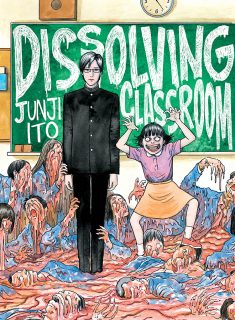
Dissolving ClassroomDissolving Classroom by Junji Ito. Lately there has been a resurgence in manga by Ito being released in English. In many cases they’ve actually been re-releases, but there have been a few newly-translated manga being published as well, Dissolving Classroom from Vertical Comics being the most recent example. I love Ito’s brand of horror manga and Dissolving Classroom was originally serialized in a josei magazine, so the volume was an obvious candidate for one of my most anticipated releases of the year. As expected, I thoroughly enjoyed the manga, but Dissolving Classroom didn’t end up leaving as strong of an impression on me as some of Ito’s earlier works. The loosely connected stories in Dissolving Classroom follow the demise of the people who meet Yuuma, a young man whose constant apologizing will literally make a person’s brain melt, and his incredibly creepy little sister Chizumi. Neither of the siblings are quite what they initially seem. Yuuma in particular comes across as a troubled but largely benign individual; very few people actually realize what’s going wrong before it’s too late. Dissolving Classroom is bizarre but certainly not the strangest manga that Ito has created. The visuals aren’t as shockingly memorable as some of Ito’s other series either, but they are still successfully disconcerting.

Everyone's Getting Married, Volume 1Everyone’s Getting Married, Volume 1 by Izumi Miyazono. While josei manga have recently become more common in translation (a trend that I would love to see continue), there still aren’t all that many to be found. I’ve generally enjoyed the josei manga that I’ve read in the past and I like to show my support for new releases, so I made a point to try Everyone’s Getting Married. Asuka is well-admired for her successful career, but what she really wants in life is to get married and become a housewife. When her boyfriend of five years unexpectedly dumps her, she suddenly finds herself looking for a new long-term relationship. That proves to be more difficult than she expected and unfortunately for her most likely candidate is Ryu, a man who has made it very clear that he has no interest in marriage. I’ve growing a little weary of high school romances, so I found Everyone’s Getting Married to be a wonderfully refreshing change of pace; I enjoyed reading about adults and their lives and relationships for once. I also like Asuka a great deal. She’s independent, knows what she wants out of life, and is willing to work hard for what is important to her. I’m looking forward to reading more about her and reading more of Everyone’s Getting Married.

Ghost in the Shell, Volume 1.5: Human-Error ProcessorGhost in the Shell, Volume 1.5: Human-Error Processor by Masamune Shirow. While I had previously read the first and second volumes of Ghost in the Shell, I had never actually read the manga’s third volume, something that I didn’t realize until Kodansha Comics recently re-released the entire series in a deluxe, hardcover edition. Even though it was the third volume of Ghost in the Shell to be collected and released, the events of Human-Error Processor take place between the first and second volumes (thus being numbered 1.5). The episodic chapters focus almost entirely Section 9 and the cases that group is investigating. A few intriguing new characters are introduced, but sadly the Major only makes the occasional guest appearance. Out of the three Ghost in the Shell volumes, Human-Error Processor is the most straightforward and easy to follow. While that’s something that I would generally welcome, the volume was somehow less interesting as a result even if it was more readable. As with the previous volumes in the series, some of the most interesting parts of the world-building in Human-Error Processor are actually only found in the footnotes instead of being directly incorporated into the manga.

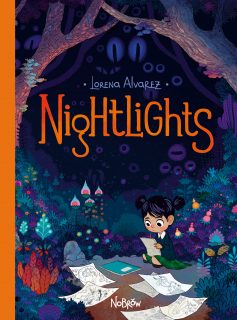
NightlightsNightlights by Lorena Alvarez. It was the bold, vibrant colors and gorgeous illustrations of Nightlights that initially caught my attention. Alvarez is a Columbian illustrator; Nightlights is her first comic and my introduction to her work. Nightlights is about a little girl, Sandy, whose imagination takes flight at night. She gathers together small, mysterious, glowing lights and uses them to create anything that she can dream of. Come the day, she spends her time alone drawing what she has seen. It’s an innocent enough premise, but Nightlights can actually be pretty dark and some of the comic’s themes are fairly heavy. Nightlights could be described as an all-ages comic, but some younger readers might find it scary in places. There is also a depth and nuance to the comic and its narrative that only more mature readers will likely pick up on. Although the stories are notably different, Nightlights actually reminded me a little bit of the animated film The Secret of Kells which I likewise greatly enjoyed. Each in their own way the works are fairytale-like, telling stories about imagination, creation, and the unknown. Nightlights was a beautiful comic and I sincerely hope to see more work from Alvarez in the future.

Gone: A Girl, a Violin, a Life UnstrungGone: A Girl, a Violin, a Life Unstrung by Min Kym. In 2010, Kym’s Stradivarius was stolen from her in a London cafe. The violin was an integral part of her identity, not just as a musician but as a person, and its loss was devastating. Her burgeoning career as a soloist came to a sudden halt. The violin was recovered three years later, but circumstances didn’t allow Kym to reclaim the instrument as her own. Ultimately she had to put it up for auction, losing it once again. In part, Kym’s memoir Gone was written in an attempt to process these traumatic events, rediscover who she is, and move forward with her life. Telling her side of the story she recounts growing up as a child prodigy–as the youngest daughter, her family’s devotion to her talent as a violinist was at odds with their South Korean heritage–her development as a musician, and her relationships with the Stradivarius and the people around her. Gone is an incredibly heartfelt and personal memoir but it can be somewhat discursive; Kym’s style of writing is very informal and at times even chaotic. Her voice as an author isn’t as clear as her voice as a violinist, but her passion and pain resonates throughout Gone. Complementing the release of Kym’s memoir is a companion album available from Warner Classics.

Filed Under: FEATURES, My Week in Manga Tagged With: comics, everyone's getting married, Ghost in the Shell, Izumi Miyazono, Junji Ito, Lorena Alvarez, manga, Masamune Shirow, Min Kym, Nonfiction

Bookshelf Briefs 4/10/17

April 10, 2017 by Michelle Smith and Sean Gaffney Leave a Comment

Black Clover, Vol. 6 | By Yuki Tabata | Viz Media – Most of this volume is taken up with one big fight, but the single focus is quite welcome, and it helps to give depth to another one of the Black Bulls, as Yami shows up to save our heroes and promptly shows off that his powers are (if you’ll pardon the cliché) on a completely different level from our heroes. He’s utterly cool, and I fully expect he will die tragically somewhere down the line, but that day is not today. Asta also does some leveling up, though, and we see that the Midnight Sun cult is after his grimoire—and is rather ticked off that he has it at all. Black Clover continues to remind me of various series mushed together (Magi stands out this time), but it’s fun and readable. – Sean Gaffney

Food Wars!: Shokugeki no Soma, Vol. 17 | By Yuto Tsukuda and Shun Saeki | Viz Media – I expected a more serious arc and I was right. Erina’s father has changed the rules so that all chefs are equal, but that just means that no one is allowed to express themselves in any way. The middle third of this book is like eating a bag of gravel, as smug snake Eizan is such an obvious villain that even one of his fellow Council members (Rindo, who is wonderful and appears to be siding with the enemy just because she’ll be more entertained by what follows) points it out. Meanwhile, the Polaris Dorm is due to be shut down… or at least it would be, but Megumi and company get out their riot gear and stand their ground. Hard to read in places, but excellent. – Sean Gaffney

Haikyu!!, Vol. 10 | By Haruichi Furudate | Viz Media – I tend to like the training parts of sports manga more than the actual matches, and that proves to be the case here, as this is a stellar volume. Everyone is watching the other teams to try to find ways to improve, and despite a fight over staying the course vs. risking failure with something new, Hinata and Kageyama are the same. The exception is Tsukishima, everyone’s favorite jerk, whose apathy is starting to concern everyone. Surprise, it stems from a tragic flashback that crushed his dreams. Can you really strive to improve yourself if you don’t really care all that much? How do you make something you’re good at fun? Haikyu!! is one of Jump‘s best pickups lately, and I am happy it’s a monthly concern. – Sean Gaffney

Honey So Sweet, Vol. 6 | By Amu Meguro | VIZ Media – Honey So Sweet is consistently cute and adorable, and this volume definitely offers up an assortment of heartwarming moments for our lead couple. That said, a fair amount of what happens here feels like something I’ve seen before. Even within this own series, in fact. It begins with Nao running into yet another wounded delinquent. This time it’s a guy named Nishigaki who, it turns out, idolized Onise in junior high and doesn’t think Nao is cool enough to be his girlfriend. When the new school term begins, he and his twin sister, Miyabi—yes, fraternal twin sibling firsties just like in Say I Love You.—begin attending school with the other characters, and Onise is very nice to socially clueless Miyabi, who seems to be developing feelings for him, which of course worries Nao. Still, I’m sure a happy ending awaits. – Michelle Smith

Honey So Sweet, Vol. 6 | By Amu Meguro | Viz Media – This was a stronger volume than the previous one, despite the fact that we’re introducing yet another love rival. Miyabi is a twin, and also very introverted, to the point that it takes her a minute or so to respond to anything someone has said to her. I appreciated that the solution was not “you just need to be more extroverted,” as it is in many other Japanese manga—the idea of telling people she responds slowly was good. That said, now we get to see how Nao deals with jealousy, though given that this is a pretty sweet manga, I think it will be fine. Taiga’s flashbacks were also quite good, showing off what drew him to Nao and the difficulty he has looking like a thug. Cute shoujo—not top-tier but definitely readable. – Sean Gaffney

In/Spectre, Vol. 3 | By Kyo Shirodaira and Chashiba Katase | Kodansha Comics – This volume has a large hurdle to get over, in that it’s almost entirely exposition, as our trio discuss what Nanase really is and how to deal with her, along with a heavy dose of Japanese urban legends. Luckily, Kotoko’s amazing pettiness and jealousy still livens things up, and despite her discussion of losing her virginity in the first book you sense she and Kuro haven’t gotten very far at all. We also get a discussion of how Kuro wins his fights—he can alter probabilities, to an extent. Of course, this tends to involve seeing a lot of bad futures. And he can’t be everywhere, as the cliffhanger shows another murder gumming things up. I still find this quirky mystery refreshing. – Sean Gaffney

Yona of the Dawn, Vol. 5 | By Mizuho Kusanagi | VIZ Media – It was a foregone conclusion that Yona would persuade the Blue Dragon—ostracized for his abilities—to join her, but despite the predictability, her acceptance of him is still touching. She names him Sinha, and with his awkward kindness, he instantly becomes my favorite character. Unfortunately, he’s promptly sidelined during the second half of the volume, as the gang ventures into a port town in search of the Green Dragon, a pirate named Jaeha who plans to fight to escape his fate. And then he sees Yona at the end of the volume. I hereby predict that he will be won over eventually, too. A little formulaic? Sure, but it’s still good fun, and I’m always a bit sad to see a volume end. – Michelle Smith

Filed Under: Bookshelf Briefs

My Big Sister Lives in a Fantasy World: Humanity’s Extinction Happens During Summer Vacation?!

April 10, 2017 by Sean Gaffney

By Tsuyoshi Fujitaka and An2A. Released in Japan as “Neechan wa Chuunibyou” by Hobby Japan. Released in North America digitally by J-Novel Club. Translated by Elizabeth Ellis.

After three volumes, I’m still not quite sure how seriously I should be taking this series. Based on the premise and what actually happens in the books, you’d think the answer would be ‘not seriously at all’. And that’s probably the right answer, given the sheer amount of ridiculous things going on here. This is a parody of a certain melancholic series, and as a result is going to be over the top. At the same time, this is also the “this was a success, please expand on the plot and backstory a bit” volume, so we start to try to understand why Mutsuko is the way she is, and why Yuichi woke up one day seeing ‘roles’ over people’s heads. It’s a worthy goal, I suppose, but does mean you get a lot of wordy exposition at the start of the book, and if you think about it too hard it doesn’t really explain much at all.

The story picks up where we left off, with the club (and younger sister, who is there just because) heading off to a remote island, where Mutsuko has planned survival training. The remote island is a bit blatant, to the point where the characters spend several pages discussing the Haruhi equivalent without actually naming it. Once they get there, after conveniently jettisoning the minor characters, they find themselves drawn into a cult conspiracy to sacrifice virgins in order to resurrect an alien who is being worshipped as a god by the local anthropomorphic villagers. Yuichi, along with Natsuki, his serial killer-turned-love interest, is sidelined from the sacrificing for the most part, which is likely a relief, as when he does arrive to confront the God, he ends up one-shot killing it. In between these events, we get Aiko worrying about her vampiric heritage, Yoriko vacillating about how incestuous she really is, and Mutsuko being both obnoxious and disturbing at the same time.

When the book is being as light and frothy as this synopsis makes it sound, it’s excellent. Yuichi’s deadpan “well, whatever” reaction to events is shared by others in the cast now, and makes the whole thing less ridiculous and overpowered than it would sound if it was written in a more grandiose manner. Much as the series is riffing on Haruhi (to the point where much of the exposition discusses the idea that certain people can influence the world so that it obeys their whims, with the implication that Mutsuko is one such person), Mutsuko and Yuichi are only superficially similar to Haruhi and Kyon. Where the book falters a bit for me is when it does try to take itself too seriously. Kanako’s discussion about why she likes isekai stories hints at a much darker take on her character than I’d expected, and given how little she matters in the books to date it feels like pure setup and nothing else. Also, if you’re going to mock the “the sacrifices have to be virgins” cliche, don’t follow through with the “the non-virgins were raped and killed” part of that. You can’t mock your cliche and eat it too. That left a bad taste in my mouth.

In the end, this is an enjoyable series of books, but I find I’m enjoying the metatext a bit more than the text. the series walks a fine line between deconstructing this sort of light novel schtick and just going along with it. So far it holds up, but it needs to realize that dropping more serious content into the middle of it may be harder than initially thought. We’ll see what happens next – judging by its subtitle, the fourth book looks to double down on the Haruhi comparisons.

Filed Under: my big sister lives in a fantasy world, REVIEWS

Species Domain, Vol. 1

April 8, 2017 by Sean Gaffney

By Shunsuke Noro. Released in Japan by Akita Shoten, serialization ongoing in the magazine Bessatsu Shonen Champion. Released in North America by Seven Seas. Translated by Krista Shipley, Adapted by Karie Shipley.

Monster Girl titles are here to stay, and have tended to come in two varieties. Thankfully, this is the second variety, and so fanservice and borderline content is not on the menu. Instead, this is something that should appeal to fans of series like My Monster Secret or Interviews with Monster Girls, as it has much the same flavor. It can be a bit odd and off kilter, though not so much that it reaches the out there weirdness of A Centaur’s Life. Its strongest qualities is its dialogue, of which there is a lot – this is a series with a group of classmates who talk and talk and talk, and it’s a relief we find the talk funny. And there are the usual manga cliches present within – the elf girl is a misunderstood tsundere, the angel girl is overenthusiastic and puppydog-ish, the dwarf girl is low key and stoic, etc. It’s solid and unassuming.

This is not a “I must hide my secret from the world” sort of book – there are several fantasy types at the school, and it’s accepted as simply being part of how the world works. That said, Kazamori, the elf girl on the cover, is battling the fact that everyone assumes she’s an elf who can use cool wind magic and has powers – except she’s been raised by humans, so has nothing of the sort. What’s worse, she feels the need to act haughty and proud as an elf should, even though the turmoil of emotions that stir within her is a more accurate read of her character. It also leads to most of the humor in the book, particularly when she collides with Ohki, a normal boy who denies that magic exists – everything can be explained with science. Which is fine, except all of the ‘science’ he demonstrates is ludicrously impossible to anyone but him.

This is the start, but refreshingly we also do focus on the other characters. It’s hard not to look at Unli the dwarf and not think of Terry Pratchett’s Cheery, as she’s essentially a cute small schoolgirl with a full beard and a penchant for meat. I was very amused at the relationship between her and her human classmate Tanaka, which everyone interprets as romantic and then when they find out it’s really not all hell breaks loose in terms of their suppositions. The title really seems to enjoy making fun of audience expectations – there’s an omake chapter that has Kazamori dream of what would happen if she was the cool girl with elf powers she wants to be, and Ohki was the fired up “I will prove it is science” shonen lead, and it’s hilariously boring.

Like many recent licenses these days, this will not win any awards for originality or surprises, but it’s fun and likeable, the sort of manga that you read with a smile on your face, even if it sometimes turns into a bit of a smirk. The translation and adaptation are excellent as well, which is key for a series that depends so much on its conversations. A good debut, recommended for fans of the ‘monster girl’ genre or comedic school manga in general.

Filed Under: REVIEWS, species domain

Kiss & White Lily for My Dearest Girl, Vol. 1

April 7, 2017 by Jocilyn Wagner

It’s been some time since Experiments in Manga has hosted a guest post, but my friend Jocilyn was once again inspired and is back to review one of the more recently released yuri manga, the first volume of Canno’s Kiss & White Lily for My Dearest Girl. (Also if you’re interested, you can find some of Jocilyn’s non-manga writings over at her delectable tea blog Parting Gifts!)

* * *

Kiss & White Lily for My Dearest Girl, Volume 1Seeing Canno’s name on the cover of a book in English feels like quite the sea change. Not only is she somewhat obscure with only one full manga series and a couple of one-offs and anthology contributions to her name, her writing style also leans heavily toward the heart-throbbingly romantic yuri (which English publishers have traditionally avoided as being too risky/niche). Also, although not an uncommon setting for yuri manga, Canno’s Kiss & White Lily for My Dearest Girl is the first genre title in English in a decade (i.e. Hakamada Mera’s Last Uniform and Hayashiya Shizuru’s Hayate X Blade, neither of which are exactly realistic), to give us a long look at dorm-life in a prestigious all-girls’ school. Finally, in case those weren’t enticing enough reasons, “Ano Kiss” has been translated by the matchless Jocelyne Allen, easily the most talented and enjoyable manga translator in the industry (and kind of my personal heroine). Hands down, Kiss & White Lily was my most anticipated manga of the year, and it has not disappointed.

To briefly summarize the plot, Ayaka Shiramine was told as a child that a 95/100 was an unacceptably low grade and ever since has never settled for anything less than no.1 in her class. Enter Yurine Kurosawa, a genius transfer student who can work academic and PE miracles with seemingly zero effort, who’s constantly seen sleeping in class. Indignant of the presumptuous upstart, Shiramine tries even harder than usual but still only manages second place on their midterms. In a fit of pique, Shiramine rips up her 98/100 test in front of Kurosawa declaring “It’s no good unless it’s perfect. If only you weren’t here, I would still be no.1” Kurosawa who had initially been impressed and quite smitten with Shiramine, amps up the rivalry and lords her superiority over Shiramine as a means to get closer to her. Before long Kurosawa has stolen Shiramine’s first kiss and being somewhat tsundere, Shiramine goes into total denial mode before being caught in a compromising position by her roommate cousin. Naturally, being a yuri manga, the cousin represents a B-story involving the boyish star of the track team and a hotly akogared sempai. Yada Yada Yada.

Kiss & White Lily for My Dearest Girl, Volume 1, Chapter 2I won’t belabor the obvious parallel to Kare Kano in overall plot. Kurosawa’s utter genius and complete ambivalence to nearly everything that doesn’t involve Shiramine is oddly cute and compelling. One scene that paints Kurosawa as particularly superhuman had me in stitches for a while the first time I read it, but I won’t spoil it for you here. Although Shiramine might be outwardly cool and dissembling toward Kurosawa, when they’re alone together she manages to unwittingly send all the right signals. As with its inspiration, the honor students’ relationship is all blushes and awkward but swoon-worthy and adorable.

Kiss & White Lily variously waxes exciting shoujo romance and lighthearted school girl fun in an enticing mixture. Although Canno does tend to use a lot of screen tones to the point of necromancing Kare Kano, her art style is very cute and emotive, moreso reminiscent of Shimura Takako. I very much enjoyed the gorgeous full-color introductory pages Yen was good enough to reproduce. Naturally Kiss & White Lily’s translation is nigh seamless perfection. I honestly cannot produce a single gripe this time. A thoroughly fabulous read!

Filed Under: FEATURES, Guest Posts Tagged With: Canno, Kiss and a White Lily for My Dearest Girl, manga, yen press

Manga the Week of 4/12

April 6, 2017 by Sean Gaffney, Ash Brown, Anna N, MJ and Michelle Smith 1 Comment

SEAN: Unlike Viz and Yen, Kodansha doesn’t usually pile it all on in one week. That said, hope you like Kodansha this week.

But first, J-Novel Club has a 2nd volume of Playing to Win in a VRMMO, the bulk of which is apparently a flashback to the time gap in the first book.

Kodansha continues to pump out digital-only series, both new and old Del Rey castoffs. For the former, we have the 2nd Ace of the Diamond, another Museum, and the second Tokyo Tarareba Girls. For the latter, new volumes of Gakuen Price, School Rumble, Yagyu Ninja Scrolls and the omnipresent Pumpkin Scissors.

MICHELLE: I kind of fell behind on keeping up with these, alas.

ANNA: I bought the first volume of Tokyo Tarareba Girls but haven’t read it yet, so far behind already.

ASH: I don’t know how much it really means, and I’m trying not to get my hopes up lest they be dashed, but Kodansha actually called some of these titles digital-first recently. I’d love to see more print editions!

SEAN: And there’s lots of print as well. Attack on Titan is so popular it’s not getting a Choose Your Own Adven… (cough) sorry, Choose Your Own Path Adventure, a totally not-litigious title, called Year 850: Last Stand at Wall Rose.

ASH: I’m really curious about this one; I loved gamebooks growing up. (And I have to admit, I still do.)

SEAN: Fairy Tail is up to Vol. 59, but I believe that this may be the final arc.

The Prince in His Dark Days is at Vol. 4. Are the days still dark?

MICHELLE: I believe this is the final volume, too.

SEAN: Princess Jellyfish’s 4th volume is probably the release I’m most excited about in this bunch.

MICHELLE: Me too.

ANNA: Indeed.

ASH: Still incredibly happy this series is being released!

MJ: Ack! I’m behind!

SEAN: But there’s also the debut of a new Kosuke Fujishima series. Toppu GP is the somewhat awkward title, and after combining fast bikes/cars with policewomen, goddesses and college kids, Kodansha is finally letting him actually do a racing manga. Should be fun.

MICHELLE: Huh. I suppose I should check it out.

SEAN: Seven Seas has a 5th volume of Not Lives, which I have Not Read in some time.

And a 7th volume of my “favorite” guilty pleasure (and by favorite I mean it makes me cringe so much but I read it anyway) Pandora in the Crimson Shell: Ghost Urn.

SuBLime has a 6th volume of The World’s Greatest First Love. (Spoil me, is it really that great?)

MICHELLE: No clue.

ASH: I find the series’ supposed romance much less compelling than its behind-the-scenes portrayal of the shoujo manga publishing industry.

SEAN: And Vertical gives us a 6th volume of Devil’s Line.

Lastly, there’s some more Viz. We have a 62nd volume of Case Closed. Catch up before you’re 63 volumes behind!

And a 20th Itsuwaribito, which I think may be nearing its end soon.

Magi reaches Vol. 23, and always makes me happy.

ANNA: So, so far behind on this title as well.

SEAN: And a 7th volume of Monster Hunter: Flash Hunter.

Lastly, the Revolutionary Girl Utena box set which got delayed at the last minute is now out in stores (unless Diamond shipped it to you early, like they did me). It’s the shoujo manga version of Utena, and I will leave it at that.

ASH: I actually haven’t read the series, but I have read the standalone manga The Adolescence of Utena which I loved and which is also included in this absolutely gorgeous box set.

SEAN: There’s a lot of variety this week. What appeals to you?

Filed Under: FEATURES, manga the week of

Manga Giveaway: Miss Kobayashi’s Dragon Maid Giveaway Winner

April 5, 2017 by Ash Brown

Miss Kobayashi's Dragon Maid, Volume 1And the winner of the Miss Kobayashi’s Dragon Maid manga giveaway is… Kate!

As the winner, Kate will be receiving the delightful Miss Kobayashi’s Dragon Maid, Volume 1 by Coolkyousinnjya as published in English by Seven Seas. At first I was a little hesitant about reading Miss Kobayashi’s Dragon Maid, but ultimately I couldn’t deny the allure of dragons. And so for this giveaway, I asked that participants tell me a little about their favorite dragons from manga. I’ve collected some of the manga mentioned in the list below (along with some others), but be sure to check out the giveaway comments for everyone’s detailed responses.

Some of the manga with dragons available in English:
Akame ga Kill! written by Takahiro, illustrated by Tetsuya Tashiro
The Ancient Magus Bride by Kore Yamazaki
The Betrayal Knows My Name by Hotaru OdagiriCirque du Freak by Takahiro Arai
A Certain Magical Index written by Kazuma Kamachi, illustrated by Chuya Kogino
Crimson Spell by Ayano Yamane
Delicious in Dungeon by Ryoko Kui
The Demon Prince of Momochi House by Aya Shouoto
Dragon Ball by Akira Toriyama
Dragon Drive by Kenichi Sakura
Dragon Half by Ryusuke Mita
Dragon Knights by Mineko Ohkami
Dragonar Academy written by Ran, illustrated by Shiki Mizuchi
Fairy Tail by Hiro Mashima
Fruits Basket by Natsuki Takaya
From Far Away by Kyoko Hikawa
Fushigi Yûgi by Yuu Watase
Gate: Where the JSDF Fought written by Takumi Yanai, illustrated by Satoru Sao
High School DxD by Hiroji Mishima
The Key to the Kingdom by Kyoko Shitou
Kiss of the Rose Princess by Aya Shouoto
The Legend of Zelda: Ocarina of Time by Akira Himekawa
Legendz written by Rin Hirai, illustrated by Makoto Haruno
Lord Marksman and Vanadis written by Tsukasa Kawaguchi, illustrated by Nobuhiko Yanai
Magic Knight Rayearth by CLAMP
Miss Kobayashi’s Dragon Maid by Coolkyousinnjya
Natsume’s Book of Friends by Yuki Midorikawa
Negima! by Ken Akamatsu
Petshop of Horrors by Matsuri Akino
Princess Mermaid by Junko Mizuno
Rave Master by Hiro Mashima
Read or Dream written by Hideyuki Kurata, illustrated by Ran Ayanaga
Record of Lodoss War: The Lady of Pharis written by Ryo Mizuno, illustrated by Akihiro Yamada
St. Dragon Girl by Natsumi Matsumoto
Tales of Zestiria by Shiramine
Tenryu: The Dragon Cycle by Sanami Matoh
That Time I Got Reincarnated as a Slime written by Fuse, illustrated by Taiki Kawakami
Time Stranger Kyoko by Arina Tanemura
Two Flowers for the Dragon by Nari Kusakawa
X by CLAMP
Übel Blatt by Etorouji Shiono
Yona of the Dawn by Mizuho Kusanagi
Zero’s Familiar written by Noboru Yamaguchi, illustrated by Nana Mochizuki

Well now, that ended up being a fairly lengthy list, and I know that it’s not comprehensive, but it’s certainly a start. Whether they’re familiars, sidekicks, primary characters, or the stuff of legend, all sorts of dragons can be found in all sorts of manga. Thank you to everyone who took the time to share your favorite dragons with me! I hope to see you all again for the next giveaway.

Filed Under: Giveaways, Lists, UNSHELVED Tagged With: Coolkyousinnjya, manga, Miss Kobayashi's Dragon Maid

Flying Witch, Vol. 1

April 5, 2017 by Sean Gaffney

By Chihiro Ishizuka. Released in Japan by Kodansha, serialization ongoing in the magazine Bessatsu Shonen Magazine. Released in North America by Vertical Comics. Translated by Melissa Tanaka.

Relaxed and easygoing titles have always been a thing in Japanese manga to some extent, but over the last ten years or so it really seems to look like they’re coming into their own, or at least coming to North America more often. Whether it’s school life, village life, or workplace life, there is a growing need for watching a cast of mild to strong eccentrics go about life at their own pace, usually with at last one “straight man” to boggle at their antics. And as you may have gathered, Flying Witch continues in this genre, showing us a young witch who moves out into the sticks in order to train, and her laidback adventures with a group of (mostly) normal villagers.

Makoto is the witch, and she’s a bit of an airhead, although not to the extremes that some of these series try to go. She wants to do her best to be a better witch, but is easily distracted, has a Ryouga Hibiki-like sense of direction, and also has absolutely no idea how to hide her identity as a witch, which is supposed to be a secret, from anyone at all. She’s moved in with her cousins, and on the very first day she’s trying out a new broom in front of the youngest one, not particularly noticing that she isn’t supposed to be floating in the air. The cousin, Chinatsu, is probably my favorite character in the book; at first shy and a little reluctant to like this new girl, she gradually warms up once she realizes Makoto is a witch, and is a nicely realistic young girl.

Less successful is Kei, the main male lead, who unfortunately is not straight-laced enough to be the main “tsukkomi” that this series needs. (That falls to his classmate Nao, who holds up her end of the bargain admirably, and is the recipient of the manga’s funniest and also possibly creepiest moment.) Kei is simply too laid back and relaxed, and as a result has a tendency to have no personality. He seems to be a ‘minder’ sort, like Yotsuba’s dad, but these girls are too old to really need to take charge of, so mostly he exists so that the series isn’t made up entirely of girls. I was pleased to see that the witch aspect was not forgotten – this felt like one of those series that would settle into slice-of-life and forget its roots, but each chapter does have a small element of the supernatural in it, from the terrifying mandrake root to the Harbinger of Spring (whose matter-of-fact introduction reminded me of some of the better Zetsubou-sensei chapters) to Makoto’s older and more accomplished sister, who arrives, makes chaos, and then leaves.

There’s not much to grab a hold of here, and I doubt a “real” plot will form. But who wants a real plot to form anyway? Flying Witch is filled with cute, nice, slightly weird girls living their everyday life and doing witchcraft. If you enjoy slice-of-life eccentricity, it’s right in your strike zone.

Filed Under: flying witch, REVIEWS

Altair: A Record of Battles, Vol. 1

April 4, 2017 by Katherine Dacey

Altair: A Record of Battles seems tailor-made for fanfic: it’s got a cast of achingly pretty men, a labyrinthine plot, and an exotic setting that freely mixes elements of Turkish, Austrian, and Bedouin cultures. Like other series that inspire such fan-ish activity — Hetalia: Axis Powers comes to mind — Altair is more interesting to talk about than to read, thanks to an exposition-heavy script and an abundance of second- and third-string characters; you’ll need a flowchart to keep track of who’s who.

The first volume begins promisingly enough. While visiting the Türkiye capitol, a diplomat from the neighboring Balt-Rhein Empire is assassinated in the streets, an arrow lodged in his back. Though the murder weapon suggests that someone in the Balt-Rhein military engineered the hit, Emperor Goldbalt’s mustache-twirling subordinate Louis Virgilio points the finger at Türkiye, insisting they produce the killer or face the ultimate consequence: war. Mahmut, the youngest member of the Türkiye generals’ council, impulsively decides to visit Goldblat’s court in an effort to prevent bloodshed and reveal the true culprit in Minister Franz’s death.

No matter how intensely the characters ball their fists or glower at each other, however, their drawn-out arguments over troop mobilization, international diplomacy, and rules of order are only moderately more entertaining than an afternoon of watching C-SPAN. Author Kotono Kato further burdens the script with text boxes indicating characters’ rank and title, and diagrams showing the distribution of power under the Türkiye “stratocracy,” details that add little to the reader’s understanding of why Balt-Rhein and Türkiye are teetering on the brink of war. Only a nighttime ambush stands out for its dynamic execution; it’s one of the few scenes in which Kato allows the pictures to speak for themselves, effectively conveying the ruthlessness of Mahmut’s enemies without the intrusion of voice-overs or pointed dialogue.

The characters are just as flat as the storytelling. Kato’s flair for costume design is symptomatic of this problem: she’s confused surface detail — sumptuous fabrics, towering hats, sparkling jewels — with character development. With the exception of Mahmut, whose passionate intensity and youthful arrogance are evident from the very first scene, the other characters are walking, talking plot devices whose personalities can be summed up in a word or two: “brash,” “devious,” “enthusiastic,” “mean.” (Also “hot” and “well dressed,” for anyone who’s keeping score.) The shallowness of the characterizations robs the Türkiye/Balt-Rhein conflict of urgency, a problem compounded by Kato’s tendency to wrap things up with epilogues that are as baldly worded as a textbook study guide. At least you’ll be prepared for the quiz.

The bottom line: History buffs will enjoy drawing parallels between the Türkiye and Balt-Rhein Empires and their real-life inspirations, but most readers will find Altair too labored to be compelling — unless, of course, they’re looking for fresh opportunities to ‘ship some handsome characters.

ALTAIR: A RECORD OF BATTLES, VOL. 1 • BY KOTONO KATO • KODANSHA COMICS • RATED T, FOR TEENS • DIGITAL ONLY

Filed Under: Manga, Manga Critic, REVIEWS Tagged With: Fantasy, Kodansha Comics, Kotono Kato

  • « Go to Previous Page
  • Page 1
  • Page 2
  • Page 3
  • Page 4
  • Go to Next Page »
 | Log in
Copyright © 2010 Manga Bookshelf | Powered by WordPress & the Genesis Framework