• Skip to primary navigation
  • Skip to main content
  • Skip to primary sidebar
  • Home
  • About Us
    • Privacy Policy
    • Comment Policy
    • Disclosures & Disclaimers
  • Resources
    • Links, Essays & Articles
    • Fandomology!
    • CLAMP Directory
    • BlogRoll
  • Features & Columns
    • 3 Things Thursday
    • Adventures in the Key of Shoujo
    • Bit & Blips (game reviews)
    • BL BOOKRACK
    • Bookshelf Briefs
    • Bringing the Drama
    • Comic Conversion
    • Fanservice Friday
    • Going Digital
    • It Came From the Sinosphere
    • License This!
    • Magazine no Mori
    • My Week in Manga
    • OFF THE SHELF
    • Not By Manga Alone
    • PICK OF THE WEEK
    • Subtitles & Sensibility
    • Weekly Shonen Jump Recaps
  • Manga Moveable Feast
    • MMF Full Archive
    • Yun Kouga
    • CLAMP
    • Shojo Beat
    • Osamu Tezuka
    • Sailor Moon
    • Fruits Basket
    • Takehiko Inoue
    • Wild Adapter
    • One Piece
    • After School Nightmare
    • Karakuri Odette
    • Paradise Kiss
    • The Color Trilogy
    • To Terra…
    • Sexy Voice & Robo
  • Browse by Author
    • Sean Gaffney
    • Anna Neatrour
    • Michelle Smith
    • Katherine Dacey
    • MJ
    • Brigid Alverson
    • Travis Anderson
    • Phillip Anthony
    • Derek Bown
    • Jaci Dahlvang
    • Angela Eastman
    • Erica Friedman
    • Sara K.
    • Megan Purdy
    • Emily Snodgrass
    • Nancy Thistlethwaite
    • Eva Volin
    • David Welsh
  • MB Blogs
    • A Case Suitable For Treatment
    • Experiments in Manga
    • MangaBlog
    • The Manga Critic
    • Manga Report
    • Soliloquy in Blue
    • Manga Curmudgeon (archive)

Manga Bookshelf

Discussion, Resources, Roundtables, & Reviews

Archives for October 2014

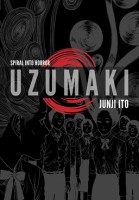
Uzumaki: Spiral into Horror

October 31, 2014 by Ash Brown

Uzumaki: Spiral into HorrorCreator: Junji Ito
U.S. publisher: Viz Media
ISBN: 9781421561325
Released: October 2013
Original run: 1998-1999

Junji Ito’s Uzumaki, originally released in Japan between 1998 and 1999, is one of the most well-known horror manga series to have been translated into English. Viz Media has actually published three different English-language editions of Uzumaki, not counting its initial serialization in the monthly manga magazine Pulp. The first edition, published as three individual volumes, was released between 2001 and 2002. These volumes were reissued in a second edition between 2007 and 2008. And then, in 2013, Uzumaki was released by Viz in a deluxe, single-volume hardcover omnibus complete with color pages and gorgeous production values and design. (Though I had previously read and enjoyed the series, it was the spectacular omnibus edition that finally convinced me that Uzumaki was a manga that I needed to own.) An emphasis should be placed on the “gore” of gorgeous–Uzumaki, while it has deservedly been called a masterpiece of horror, is most definitely not a work intended for the faint of heart or weak of stomach.

Kurouzu-cho is a small, quiet seaside village under a curse. It’s manifestation starts with the Saito family. First, Mr. Saito begins acting strangely, developing an unhealthy obsession with spirals. This leads to his demise and in turn his wife understandably becomes terrified of spirals as well, her complex becoming just as severe as her husband’s. In the end, their son Shuichi is the only one left in the family and his girlfriend Kirie Goshima is his only ally. Already uncomfortable with Kurouzu-cho, the fate of his parents convinces Shuichi that the town is contaminated with spirals, though most people believe this to be his own form of insanity. But stranger and stranger things begin to happen in Kurouzu-cho. Kirie becomes witness to so many bizarre occurrences and horrifying deaths that she can’t deny that something is very, very wrong with the town. Tragedy after tragedy befalls Kurouzu-cho, its inhabitants, and anyone unfortunate enough to enter the immediate area as events both figuratively and literally spiral out of control.

At first, Uzumaki seems as though it’s a series that is mostly episodic. Each chapter is largely told and seen from Kirie’s perspective and explores an individual incident involving spirals in some way. But as the manga continues, the stories become more and more closely tied to one another, eventually forming a single, coherent narrative. As previously mentioned, Uzumaki is very graphic, the images that Ito creates, while mesmerizing, can be extraordinarily disturbing and gruesome. But there is more going on in the manga than gore and body horror; there is also a very strong, and very dark, psychological element to Uzumaki which makes the entire series especially effective in its terror. Uzumaki is bizarre and surreal but at the same time is completely convincing in its unnatural horror. It’s hard to believe that something so benign as a simple shape–a spiral–could be so terrifying, but Ito accomplishes the seemingly impossible with Uzumaki. It’s an exceptionally disconcerting work.

Although the imagery in Uzumaki is frequently disturbing, grotesque, and even nauseating, almost as frightening are the characters’ reactions–or, in many cases, their non-reactions–to the terrible events surrounding them. Shuichi is one of the very few people who seem to be completely aware of what is happening in Kurouzu-cho, but he is barely able to maintain his own sanity and becomes increasingly haunted and withdrawn. Surprisingly, hidden within the nightmare that is Uzumaki, there is actually a love story of sorts, granted a tragic one considering the nature of the manga. Despite everything, Kirie is always there to support and look out for Shuichi and his well-being. And even when Shuichi is nearly catatonic and barely able to function within society, he repeatedly risks his life to save hers. But in the end, Uzumaki is ultimately an incredible work of horror. There are things that I’ve seen in the manga that I will never be able to unsee. And I will never be able to look at spirals in quite the same way again.

Filed Under: REVIEWS Tagged With: Junji Ito, manga, uzumaki, viz media

Manga the Week of 11/5

October 30, 2014 by Sean Gaffney, Ash Brown, Anna N, MJ and Michelle Smith 6 Comments

SEAN: November does not have quite as many books as October, but that’s only due to Thanksgiving week providing a minor break. The other three weeks try harder to drown us in books.

Dark Horse finishes off its Trigun re-release with the 5th Trigun Maximum omnibus, depriving me of additional attempts to mock Nightow’s art style, at least until the next Blood Blockade Battlefront comes along.

Attack on Titan 14 focuses more on Levi and Hange, for fans of those two (no, it doesn’t have any shipping fuel).

ASH: I found the thirteenth volume of Attack on Titan to be particularly good, so I’m looking forward to reading the fourteenth.

SEAN: The third and final volume of Alice in the Country of Clover: Knight’s Knowledge will no doubt see if Alice and Ace can resolve their respective psychoses and find peaceful happiness. God, I hope not. They’re far less interesting that way.

biscuithammer1

Seven Seas has been hyping their print release of Lucifer and the Biscuit Hammer, and with good reason: it’s an excellent series, with a nice take on ‘what if the superheroes who had to save the world wanted to destroy it instead?’ It’s come out digitally twice, but get it in print, it’s worth it.

ASH: I plan on checking this series out!

ANNA: Huh, this wasn’t on my radar before, but this sounds interesting!

MJ: What Anna said!

SEAN: The Sacred Blacksmith lost me with Vol. 5, so I have no further jokes to spend on Vol. 6.

And the penultimate volume of Zero’s Familiar Chevalier, which will hopefully be able to wrap things up nicely by the final volume, as the author has passed away, making more series unlikely.

Vertical has the 5th volume of seinen foodie manga What Did You Eat Yesterday?.

MICHELLE: Yay!

ASH: Yay, indeed!

ANNA: Triple yay!

MJ: There cannot possibly be enough YAY!

SEAN: The rest is all Viz. Black Rose Alice was pretty dark in its first volume. Will this second one lighten things up a bit, or continue on its gothic pace?

MICHELLE: I found this quite a unique take on vampire mythology, so I’m looking forward to volume two.

ASH: Although I was sad to see the story leave Vienna so soon, I loved the first volume of Black Rose Alice and am very curious to see how it continues to develop.

ANNA: I enjoyed the first volume too. It has an interesting take on vampires, which is quite tricky to pull off. Also the thematic tone of this series sets it apart from other supernatural manga.

MJ: I’m so happy to be reading this series, and I can’t wait to dig into the second volume!

SEAN: Bleach hits Vol. 62, and I think a person is fighting with another person somewhere in it. At points they brag about how they can’t be defeated, I’m guessing.

MICHELLE: Ha!

SEAN: Blue Exorcist looks like it was getting ready to head into a darker arc last time, and I think that’s what we’ll get here. Can’t wait, this is always good.

There’s also a 5th D.Gray-Man 3-in-1, speaking of shonen series with a high female readership. In fact, in North America I’d argue D.Gray-Man has an almost exclusively female readership…

Dengeki Daisy is almost over! Waaaah! Here’s the 15th, penultimate volume.

MICHELLE: I haven’t always loved this one, but I’ll miss it when it’s gone.

ASH: I’ll miss it, too.

ANNA: I love this series. This is one of those manga that’s going to have a permanent place on my bookshelves.

SEAN: High School Debut has its 4th 3-in-1 as well.

MICHELLE: Getting closer to the one with new material!

ANNA: There’s a volume coming out with new material? I am excited!

MJ: Wait, what? New material? Ooh.

MICHELLE: Yep! The fifth omnibus will contain volumes 14 and 15, which I believe will contain short stories published after the series officially ended.

roseprincess

SEAN: Kiss of the Rose Princess is this month’s new series, from Shojo Beat. It’s an Asuka series, so I expect it’s most likely fantasy, and also probably reverse harem. Am I right?

MICHELLE: I don’t know yet, but I’ll check it out.

ANNA: Surprising no one, so will I.

MJ: Surprising… also no one. Me too.

SEAN: And for non-reversed harems, here’s the 6th volume of romantic comedy Nisekoi.

Did you not pick up One Piece? Shame on you. Here’s a 2nd giant Box Set so you can catch up all at once. Now. I’ll wait here all night if necessary.

The 5th and final volume of Phantom Thief Jeanne should wrap everything up, though I’m not sure if it will be happy or bittersweet.

ANNA: The ending of Phantom Thief Jeanne is bonkers in the best possible way.

SEAN: The 5th Ranma 1/2 omnibus introduces Ukyou Kuonji, who is another character who invites controversy. Well, they all do, really. It’s that kind of fandom.

Have you had enough 3-in-1 omnibuses yet? No? Good, here’s Skip Beat! with its 9th.

Spell of Desire’s first volume was solid but didn’t wow me. I’m hoping for more wow in this second one.

MICHELLE: And more kittens!

ANNA: I’ve read this already and I continue to enjoy this series.

MJ: I talked about this a bit in Monday’s Off the Shelf. I’m not exactly *wowed*, but optimistic about this series.

SEAN: Tegami Bachi, you’ve hit Volume 17. As ever, I have no idea what to say about you. You seem to have caught up with Japan now.

Ultimo hits double digits even as it’s been announced it’s ending soon.

Lastly, if the One Piece box set wasn’t enough for you, here’s one for Vampire Knight.

If you were expecting the manga deluge to end, more fool you. What suits you from this tsunami of manga?

Filed Under: FEATURES, manga the week of

3 Things Thursday: Pretty Pictures

October 30, 2014 by MJ 4 Comments

Wow, this has been a weird week. I mean, really, seriously weird. Weird on levels I can’t quite talk about here. But whatever the weirdness, it is in times like these that I really just want to look at something pretty. No, seriously. That’s the only thing to be done. So today, that’s what we’re going to do. It’s Thursday. And these are…

3 manga spreads that are just freaking beautiful:

You’ve seen them here before… you’ll see them again.

1. The Heart of Thomas | by Moto Hagio | Fantagraphics

IMG_0241

2. Please Save My Earth | By Saki Hiwatari | Viz Media

rinfalling

3. xxxHolic | By CLAMP | Del Rey Manga

dream-2

I have more. So many more. But this will do for now. Got favorites of your own? Gimme!

Filed Under: 3 Things Thursday

Vampire Knight, Vol. 19

October 30, 2014 by Sean Gaffney

By Matsuri Hino. Released in Japan by Hakusensha, serialized in the magazine LaLa. Released in North America by Viz.

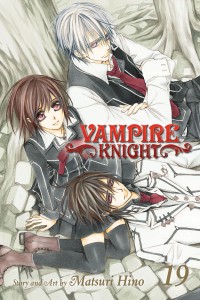
And so after 19 volumes, we come to the end of this particular journey. Yes, there’s a novel due out next month, but for the main manga, this is it. There’s even a limited edition, which has (in my opinion) a better cover art picture and a limited edition hardcover artbook, which features some lovely character pieces. Vampire Knight has always been a series that I’ve found to be of the moment. I may forget what’s actually going on the moment I put down the book, but while I’m reading the book, I’m swept along by the drama and emotions going on within. This last volume takes that and amps it up even further, as Yuki and Kaname compete to see who can out-self-sacrifice each other.

vknight19

This is not to say there aren’t some issues. The incestuous subtext that’s been bubbling under the entire series becomes text early in this volume, and while it’s not dwelled on, I can’t say I was all that happy with it. Most of the supporting players who had large roles earlier in the series are reduced to little more than cameos here, though again it was excellent to see Yuki’s human best friend, Sayori, pop up to remind us that the world isn’t entirely vampires. (Nice flashforward as well.) And of course the entirely of this volume seems to feature both Kaname and Zero trying their best to protect Yuki by removing any agency she might have to strike off on her own, which usually makes me growl, but…

Yuki isn’t having any of it. The series has balanced a knife edge as to whether Yuki will finally slip and become a princess who needs to be protected and rescued or a knight who does the rescuing, and it’s to Hino’s credit that the final decision is Yuki’s, and it’s to live up to the title. Possibly the best panel in the entire volume shows Yuki, in her school uniform and sword in hand, dragging Aido (who is literally flapping in the wind” while shouting “We’ve got an academy to protect!” It does a heart good to see this.

As for Kaname’s master plan, well, in the end there’s not much they can do about it, but they do manage to find a sort of deus ex machina that can be fired off after a thousand years. The epilogue shows that all of the hatred and political intrigue that has dominated vampire life (and the series in general) seems to have dissipated. And Yuki and Zero are together, though this is given really short shrift – in the end, it’s not about whether Yuki ends up with her brother or her classmate, it’s about Yuki working with others to save both vampires and humans. Romance is an afterthought.

Vampire Knight’s pleasures may be fleeting, but that doesn’t make them any less enjoyable. A lot of Vampire Knight’s covers have featured the main characters looking out at the reader, and the limited edition one does the same, with Yuki, Zero and Kaname lying exhausted yet satisfied (yes, yes, OT3), and saying to the reader, “We’re done. Is this enough?” It’s a very good conclusion.

Filed Under: REVIEWS

Bookmarked! 10/29/14

October 29, 2014 by Brigid Alverson

Welcome to another edition of Bookmarked, our weekly feature in which Kate and I, and an invited guest, discuss what we’re reading this week. These are not formal reviews—they are more like works-in-progress, and we totally claim the right to have opinions about manga we haven’t finished yet. Our guest this week is Justin S, founder of Organization Anti-Social Geniuses. Take it away, Justin!

Justin: Last week, Deb and Kate ended up choosing My Love Story!! as titles they’ve been reading recently. Brigid chose Barakamon. Both are titles I’ve also read in the past week and probably would have chosen for this column had they not been covered already. I’m only bringing this up because I just want to say you should definitely be checking out those works as they’re both pretty great.

But I think I have a fairly solid backup to those two titles, and while it’s been finished for a while now, it still manages to chill me every time I turn the page: Monster!

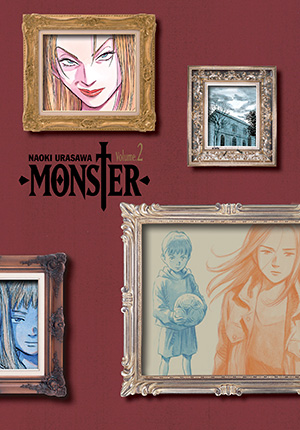
Monster 2

For Vol 2 of the Perfect Edition of Monster, the search for cold blooded killer Johan is on for Tenma and Anna, while they both have to deal with their troubles: Tenma’s been framed for murders he didn’t commit, while Anna has to delve into the seedy backgrounds of Frankfurt and avoid getting into unnecessary trouble. During their search, the past of Johan—how he got himself into the situations he did as a child, the people involved with him, his true personality, or personalities—are uncovered, and this discovery only leads the two to conclude one thing: They must stop him, at any cost.

Monster is always going to be a weird beast for me. I’ve read this story a couple of times, yet each and every time I read it again, it feels like something new happens and I’m taken aback. In this omnibus format, the experience of seeing seemingly minor characters like Heckel the thief and Schumann the doctor (who lives in a remote area) and how they influence the story this time around is exciting and fresh! Yeah, we know who the story really revolves around and those guys ultimately are the focus, but I find that in re-reading some works, sometimes the other things, like the supporting characters, take your attention that makes you appreciate the ongoing journey. In this case for example, just seeing a regular nurse treat a kid that Tenma, who is wanted for murder, gives to her and has to leave for some time, and then watch her give the kid to someone else—that someone else happened to be abusing the kid—even though rationally, she is supposed to give the kid up because he’s the guardian and has no knowledge of how he’s been treated, makes me angry. Predictable, probably, but being predictable can be a good thing if everything else is set up properly. That is one of the reasons Monster still continues to be so great even despite time passing by, and I can only thank Viz enough for re-releasing it in this brand new version.

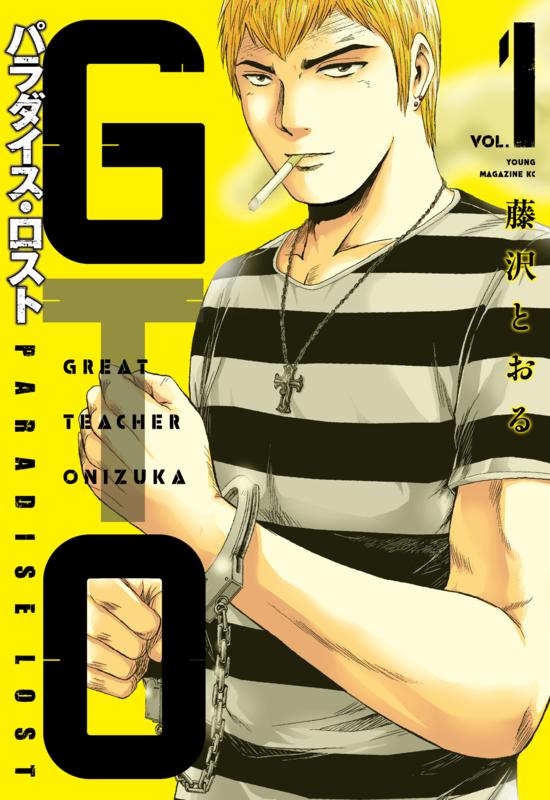
GTO Paradise Lost

Another manga that’s gotten my attention is on Crunchyroll. It has something to do with “delinquent, former gang leader” “Teacher” and “immature schoolkids with a host of problems.”

That practically sums up Fujisawa’s latest GTO iteration, Paradise Lost. As the sequel to GTO, it’s still grounded in the same roots that’s made the series popular: Onizuka is not the normal teacher, most of his co-workers are out to get him fired, and he has to deal with problem kids… that also are out to get him fired. This time however, he has to deal with students who are also idols, which means they bring their stardom (and their fans), along with their sense of superiority and arrogance, to the classroom. Needless to say, Onizuka doesn’t stand for that, especially if that means treating the lesser classmates that may not be stars but have an importance nonetheless, like trash.

I knew going in that I was probably going to like this new version of Onizuka, but I’m surprised I like it as much as I do. It’s still the same as all the others, but the angle of working with a former model, teaching a bunch of kids that are destined to be famous, and seeing how he does it considering how they act inside and outside of school has been neat. It’s gotten pretty crazy recently with one idol who can’t stand Onizuka, to the point where he decided it’d be cool to let one of his stalker fans kill Onizuka. But as always, Onizuka finds a way to survive it, though whether he’ll have success teaching him a lesson…well, he probably will eventually, but it’s still too early to say. Anyways, while the art still remains somewhat of a distraction, this is still classic GTO, and hard to turn down.

Well, the art does have its good moments.

Kate: I had a similar experience re-reading Monster this summer: I found myself more interested in the subplots and supporting characters than in Tenma’s quest to find Johann. I often feel like Urasawa does his best work on the periphery of the main story, populating it with memorable people who feel truer-to-life than his lead characters. He also does a better job of wrapping up these brief story arcs; much as I love Monster, Pluto, and 20th Century Boys, Urasawa can’t end a series to save his life.

Zipang

Speaking of older gems, I’ve been reading the first volumes of Kaiji Kawaguchi’s time-traveling thriller Zipang. Kodansha published a bilingual edition in 2002, and while they didn’t translate the whole series, it’s still a good read. The premise is uncannily similar to The Final Countdown (1980), a cheesy Martin Sheen-Kirk Doulgas flick in which an American aircraft carrier is accidentally transported back to 1941. The crew then must decide whether to use their superior weaponry to thwart the bombing of Pearl Harbor or allow history to follow its textbook course. Zipang tells a similar story from a Japanese perspective: the crew members of the Mirai, a state-of-the-art destroyer, find themselves deposited in the Pacific theater on the eve of Midway. You can guess what happens next: characters debate the ethics of altering the space-time continuum while engaging in some good old-fashioned sea battles. This time-traveling gimmick has been done to death, but I have a terrible fondness for hyper-serious manly-man manga, especially when the pacing and artwork are as crisp as Kawaguchi’s. I’m disappointed that I won’t be able to read the whole series–at 43 volumes, it’s easy to guess why no American publisher would touch it—but can’t help but wish that Crunchyroll would license it.

Brigid: I also have been reading My Love Story!!, and I especially enjoy the art and the way that Aruko uses patterns and screentones to express emotion—every time Yamato does something that Takeo finds unspeakably cute, his profile is filled with streaks of lightning. It’s totally over the top, but that’s what makes it so funny.

I’ll weigh in on Monster as well: I agree with Kate about Urasawa’s endings. The end of Monster made me want to throw the book across the room. It’s a shame, because Urasawa is a master storyteller, and I love following all the story threads, so it’s disappointing when the series just goes “pfft” at the end.

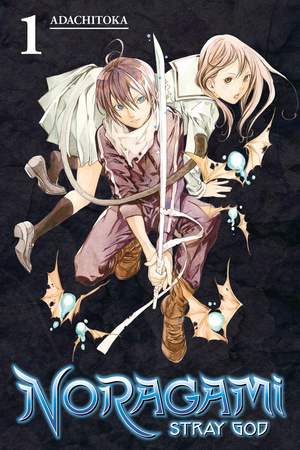
Noragami 1

I started a couple of promising series this week. One was Noragami, a comedy about a homeless god, Yato, who makes up in attitude for what he lacks in tact. The book begins with Yato somewhat reluctantly helping a bullied girl—as so often happens in manga, the chief culprits are not her jerky schoolmates but supernatural creatures called ayakashi. Yato slashes them to ribbons with the help of his shinki (“divine weapon”), a girl who becomes a knife at his command, but then his shinki leaves. Perhaps this is one of those manga that started as a one-shot chapter in a magazine, because this first chapter stands completely apart from the rest of the story.

What happens next is a bit confusing: A girl named Hiyori is hit by a bus and almost dies, or has some sort of near-death experience, and while she seems to have recovered, she keeps slipping out of her body. She attaches herself to Yato, and it looks like maybe she will become his new shinki, but noooo, some other dude shows up at the end. So I’m not sure where the Hiyori thing is going. There’s plenty to like about this book anyway, though, with lots of humor in this book (including the fact that Hiyori is a closet wrestling fan) and just enough action. Adachitoka lays on the screentones with a heavy hand (and not as skillfully as Aruko), which makes the art hard to look at sometimes, but the characters themselves are well drawn and well defined. I’ll be on board for at least one more volume of this one. Bonus points for the extensive translation notes in the back!

World Trigger 1

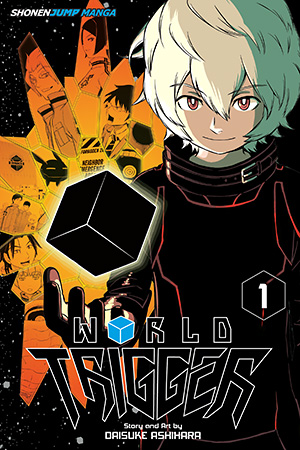
I thought that World Trigger might be something special, as Viz released the first two volumes at once, but it seems pretty average. It’s your basic Shonen Jump story about teenagers protecting the world (or in this case, Mikado City) from invaders from outer space, the Neighbors. The group of protectors is called Border, and they have the usual tightly fitted uniforms and cool weapons (they get a special battling body when they fight, which minimizes damage to the actual body). There are a couple of twists in the book: The main character, Osamu Mikumo, is a low-level trainee who isn’t much of a fighter. However, he is a very ethical guy who won’t allow a classmate to be bullied or allow one of the bullies to be eaten by a space monster that pops up out of nowhere. The bullied classmate is the new kid in town, who seems a bit more clueless than he ought to be. It’s hard to say more without giving the plot away, but there is a bit more to it than your average fighting-the-monsters story. If you like a book with a lot of battles, this is one to try, but by the beginning of volume 2, I had had enough.

Filed Under: MANGABLOG

Manga Giveaway: Sherlock Bones Giveaway

October 29, 2014 by Ash Brown

The end of October is fast approaching, which means it’s time for another manga giveaway at Experiments in Manga! I’m not entirely sure why, but my review of the first volume of Yuma Ando and Yuki Sato’s manga series Sherlock Bones is by far one of the most frequently visited posts at Experiments in Manga. It’s been more than a year since Kodansha Comics published the volume in English, but the review still gets plenty of page hits. And so, for this month’s giveaway, I decided that I would give people the chance to read the actual manga. As always, the giveaway is open worldwide!

Sherlock Bones, Volume 1

I was honestly surprised by how much I enjoyed Sherlock Bones. The premise is inherently silly–Sherlock Holmes reincarnated as a puppy–but perhaps in part because of that, the series can be a lot of fun. Sherdog is tremendously smart, despite occasionally being distracted by his more canine tendencies, and he’s cute, too. But probably most important for a detective and mystery series like Sherlock Bones, the crimes and how they are solved are consistently interesting. Additionally, readers who want to have a more interactive reading experience can actually search for and find the clues needed to solve the crimes within the pages of the manga.

So, you may be wondering, how can you win a copy of Sherlock Bones, Volume 1?

1) In the comments below, tell me a little about your favorite or the most unusual detective/crime-solver that you’ve encountered reading manga. (If you don’t have one, simply mention that.)
2) If you’re on Twitter, you can earn a bonus entry by tweeting, or retweeting, about the contest. Make sure to include a link to this post and @PhoenixTerran (that’s me).

There it is! Each person can earn up to two entries and has one week to submit comments for this giveaway. If preferred, entries can also be sent via e-mail to phoenixterran(at)gmail(dot)com. Your comments will then be posted in your name. The giveaway winner will be randomly selected and announced on November 5, 2014. Best of luck!

VERY IMPORTANT: Include some way that I can contact you. This can be an e-mail address in the comment form, a link to your website, Twitter username, or whatever. If I can’t figure out how to get a hold of you and you win, I’ll just draw another name.

Contest winner announced–Manga Giveaway: Sherlock Bones Giveaway Winner

Filed Under: FEATURES Tagged With: manga, Sherlock Bones, Yuki Sato, Yuma Ando

Morning Manga Spotlight: Paradise Kiss

October 28, 2014 by MJ 1 Comment

I pondered for a blatantly ridiculous amount of time over this week’s manga recommendation for my teen students. I considered another classic epic (Please Save My Earth), a couple of overlooked romances (Rasetsu, Crown of Love), or perhaps something for my pre-teens (Shugo Chara!). My most serious consideration, however, went to Ai Yazawa’s yet-unfinished (but totally glorious) romance/friendship epic NANA. As the subject of my first, and still most famous, “persuasion post,” Why You Should Read NANA, it’s pretty obvious that I’m a long-time fan, and recommending it seems like a no-brainer—at least for my older teens. But the more I thought about it, the more I found myself thinking about the things it lacks. NANA has a great deal to offer of interest to my teens… beautifully written characters (many of whom are pursuing an artistic field), complicated relationships, career angst, epic friendship, and (of course) gorgeous, gorgeous artwork. Things it doesn’t have, however, include genuine interaction/conflict with parental figures, anxiety over education, or queer characters of any kind—stuff that is important and relevant, particularly to my older teens.

parakiss2-vertFortunately, I don’t even have to stray outside the same artist’s catalogue to find all that, and more. Which brings us to Yazawa’s much-celebrated (at least here at Manga Bookshelf) josei series, Paradise Kiss. Originally serialized in the women’s fashion magazine Zipper, Paradise Kiss tells the story of a high school senior named Yukari, who finds herself recruited by a a group of college fashion design students to model for their senior project. The encounter is life-altering for Yukari, as it not only forces her to face some hard truths about her own future and academic prospects, but also sweeps her into a tumultuous romance with George, the group’s charismatic, mercurial designer.
With all that in place, if you’re expecting a standard romance, you’d be gravely mistaken. While Yukari and George’s relationship is certainly central to the story, its essential disfunction is really the point. And though it manages to heat up the pages pretty intensely at times, the story’s real stars are, to my mind, its supporting characters, particularly diminutive seamstress Miwako and trans pattern-maker Isabella, who regularly battle it out in my heart for the position of “favorite character.” I’ll admit that Isabella usually wins. From our Off the Shelf column on the series:

Isabella is my favorite character in the series by far. In fact, I even joked when this title was first chosen for the MMF that my contribution would be an essay entitled, “Why I love Isabella” (or something along those lines). Not only is she a wonderfully warm and nurturing character, as you mention here, but she’s also the one who is best able to see the truth about everyone else, unhindered by insecurity or personal bias.

Additionally, she’s just about 100% responsible for my ability to like George, which took a hell of a long time to develop, to be honest. It took me several times through the series to get over my deep intolerance of George’s refusal to take responsibility for his role in the lives of others, and it was only Isabella who was able to convince me that George’s unquestioning, immediate acceptance of her true self made him worth reconsidering.

You can read the rest of that article or my original review of the full series for more on my complicated feelings about George, but perhaps the better idea is simply to read the series yourself!

Originally published in North America by Tokyopop, the series was recently rescued by Vertical, who gave it a beautiful new visual treatment (larger trim size, high-quality paper, gorgeous new covers) and a new translation, which has some ups and downs. On the upside, Vertical’s translation removes some of Tokyopop’s mild censorship (particularly in terms of George’s sexual preferences and other similar topics). On the downside, the prose is noticeably more awkward in some spots, one of which I detailed in my review of the first volume. In any case, I own both versions of the series, so local students who are borrowing can consider these issues and choose their poison.

The truth is, no matter which print version you’re able to pick up, you’re in for a beautifully-drawn, emotionally complex story, told in a remarkably concise fashion. To quote myself, “I feel that I could go on forever and still fail to do justice to the sheer exquisiteness of this series, so I’ll wind things up here. Suffice it to say that Paradise Kiss, with its complex look at beauty, longing, and personal discovery, truly is a bit of manga paradise.”

Filed Under: Morning Manga Spotlight, UNSHELVED

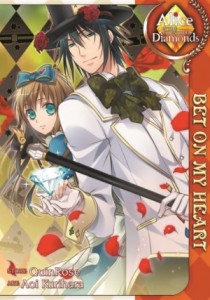
Alice in the Country of Diamonds: Bet on My Heart

October 28, 2014 by Sean Gaffney

By Sana Shirakawa, Quin Rose, and Nana Fumitsuki, based on the game by Quin Rose. Released in Japan by Ichijinsha. Released in North America by Seven Seas.

The Alice spinoffs, which is to say everything but the 6 main books that Tokyopop/Yen Press put out, have always had an issue to deal with which is to say that they’re made for readers in Japan who have played the original games that the series is based on. North America hasn’t really had that luxury, even though we do now have a somewhat machine-translated tablet version of the Hearts game. So there’s always a risk that you read something that requires, if not prior knowledge, at least passing familiarity with the game world you’re in. Or, as in the case of this light novel, you have a product that lots of times seems to read like an advertisement for a game you can’t get over here.

diamonds

That isn’t to say this isn’t a good novel, it’s quite well-written. The prose flows well (excellent translation by William Flanagan), and Alice and Blood, the main stars, sound like themselves. The premise, as you may have guessed, has Alice dropped in another world, a la Clover or Joker. But whereas Hearts had Alice looking for a passionate love, and Clover had Alice develop a relationship based on friendship turning to love, here she’s further in the past of Wonderland, no one knows who she is, and everyone starts out disliking her intensely. (Hence “Diamonds”.) Alice has her hands full trying to deal with this, and it’s not helped by ending up at Hatter Mansion with a Blood Dupre who’s far less adept at being aloof yet teasing than she remembers.

This book is drenched in the Blood/Alice ship, and fans of other ships won’t get much here. Eliot fans should particularly stay away, as he’s abused and beaten by Blood throughout, usually when he’s trying to shoot Alice. As for new characters, the White Queen and her Black Rabbit barely get a look, so most of what we get is Jericho Bermuda, the Gravekeeper, who seems to be based on Carroll’s dodo bird. He’s Alice’s oasis of calm in the excitement of dealing with Hatter mobster wars, and it’s frustrating that most of the hints we get about him being a “walking dead man” are not answered here.

There aren’t the sharp edges I like in some of the other Alice spinoffs – Alice doesn’t think of Lorina once, and most of her worries once she’s fallen in love come from a fear that she’ll switch countries again. The Hatter family are more battle ready and drenched in blood than the earlier games, as they’re still gaining power. But mostly I think this is a good book that makes a reader yearn to play the game. We want to see what’s up with the White Queen switching between child and adult form, like the Twins used to do. (They’re just adults here.) We’d like to see why the Black Rabbit seems to hate Alice (inverse of Peter, I expect.) Joker was mentioned to be here as well, but remains unseen. Jericho looks to be the author rewriting Mary Gowland to be less irritating, but who knows?

So this is a very good novel for Alice fans who want to dip into prose, or Alice/Blood shippers. But it also frustrated me, as it offers many questions without answers as well.

Filed Under: REVIEWS

Off the Shelf: The Return

October 27, 2014 by MJ and Michelle Smith 2 Comments

where-crop2

MJ: *tap* *tap* Is this thing on?

MICHELLE: What’s this strange noise?

MJ: It seems to be the sound of… AWESOMENESS. Or, y’know, typing. One of the two.

MICHELLE: Oh, it’s starting to come back to me now. You’re Belinda, right?

MJ: Yes, and you’re… Michael?

MICHELLE: More or less! And I’m feeling the strongest desire to tell a really stupid joke, for some reason…

MJ: And I feel the unexpected desire to listen to one. So, shoot!

MICHELLE: Let’s see…. how about… What did one lawyer say to the other lawyer?

MJ: I don’t know, what?

MICHELLE: “We are both lawyers.”

MJ: That was… actually kind of funny. Wow. And now I’m feeling the strange urge to ask you a question. Is it okay, Michael, if I ask you a question?

Wait, that was a question. Um. Er. Another question?

MICHELLE: Go right ahead, Belinda!

MJ: Okay, here goes: Have you been reading any manga lately?

MICHELLE: What a timely query! As a matter of fact, I have!

MJ: Do tell!

natsume17MICHELLE: Well, one of the things I read was the latest volume (17) of a much-beloved series, Natsume’s Book of Friends by Yuki Midorikawa. This has really become one of the few series where I have to read the new volume as soon as it comes out. It’s episodic, which is not normally my thing, but with this series, it’s just got such a languid fairy-tale feeling to it that I honestly hope it never ends. I am perfectly okay with the lack of urgency.

Possibly I have made the series sound dull, but it really isn’t. Natsume is eager to learn about yokai and their ways, so it’s more a tone of… respectful discovery? Something like that. Anyway, the first two chapters here involve a yokai who looks like a teenage human and the girl who loves him. It’s a classic case of immortal-guy-teen-girl love wherein the guy knows that it’s not going to end happily, but the girl is insistent upon pursuing it anyway. And Natsume can’t help but cheer them on. A third chapter finds Natsume drafted to join a yokai game of hide and seek while Nyanko-sensei is off getting drunk.

I was a little disappointed at first that there were only three chapters about Natsume and that other two delved into the past of Shuichi Natori, famous actor and exorcist, but I should’ve trusted Midorikawa more, because I ended up liking them quite a lot. It turns out that Natori originally became an exorcist to help assuage humans’ fear, so his intentions were good, but at the same time we know that Natsume will later have cause to question the practice of exorcism.

Sorry for rambling on there, Belinda. In short: I continue to love this series.

MJ: Despite the fact that I let this series go a while back, I find that I’m genuinely happy to hear that it is still lovely in the ways that it was always lovely. And maybe a little regretful that I did let it go… but maybe with its episodic nature, it would be possible to still peek in every once in a while. You make that sound very tempting.

MICHELLE: Oh, I’m really sad to hear you let it go. You probably could pop in without missing too much, though Natsume has slowly been growing more confident and social, interacting with his classmates a little more and seeming at peace with his new living situation. Other than that, things are pretty much the same.

What’ve you been reading, if not Natsume?

pandorahearts21MJ: Well, I’ve also been spending time with the latest volume of a beloved series, though in my case, the series is Jun Mochizuki’s Pandora Hearts. I’ve loved Pandora Hearts for a long time, for various reasons, particularly its endearing characters and its pretty, pretty artwork. Plotting, as you know, has had its ups and downs, at least in terms of coherence, but the tension has always been there. This has escalated dramatically in the past few volumes, and given everything that ultimately happens in volume 21, it’s kind of hilarious to note that it almost feels like a bit of a rest, at least to start.
After numerous betrayals, revelations, and deadly battles, this volume opens with most of the original gang (Oz, Alice, Gil) regrouping in a relatively secure location without much idea as to how to proceed. This state of affairs doesn’t last long, but it feels oddly peaceful, just for a moment, and even Oz, who has been through so much, seems rather like his childish self again, if irreversibly tinged with sadness.

This sense of quiet is short-lived, and soon the tension and new revelations start piling up again, but it’s to Mochizuki’s credit that this continues to feel fresh and exciting. The story’s many twists at this point read mainly as well-plotted and perfectly paced—and thank goodness, considering how quickly and frequently things change now in this series. Every time it feels like things are finally about to come clear, we discover that everything we thought we knew was wrong.

I’m sure you’ve noticed by now that I haven’t even mentioned my favorite character, Xerxes Break. He features heavily in this volume as well, but I think there’s almost nothing I can say that isn’t incredibly spoilerful, so I’ll leave it there for now. Needless to say, his fate holds my heart cruelly in its grip, and that grip is only getting tighter.

You know, I often find myself disoriented when I first start reading a new volume of Pandora Hearts, but even picking up this volume several months late, I was able to just right in, and now I can’t wait for more. Fortunately, the next volume is due out soon!

MICHELLE: I’m a few volume behind with Pandora Hearts, but I do know what you’re talking about with those calm-before-the-storm moments that Mochizuki sprinkles in there. I left off with a very Loveless-style cliffhanger involving Gil’s allegiance, and I thought he was my favorite character, but now you’ve got me worried about Break, so perhaps I was wrong about that. I clearly need to get caught up!

MJ: You have so much heartbreak and renewal (rinse, repeat) to come, my dear Michael. So much. And I suspect I do, still, as well.

So what else have you pulled off the shelf of late?

MICHELLE: Hey…. ‘Off the Shelf’… That’s got a nice ring to it.

MJ: I thought so!

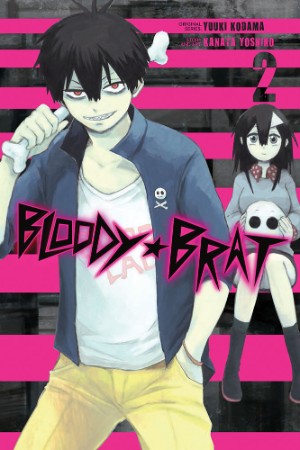
bloodybrat2MICHELLE: Well, I seem to recall that we both found Yuuki Kodama’s Blood Lad to be an unexpected delight. I’ve also been reading the related Bloody Brat, in which Kanata Yoshino replicates Kodama’s art style with eerie accuracy and basically offers up a series of four-koma comics and silly short stories starring the characters. The second volume has just been released.

I’ve gotta say, these are not fabulous jokes. You’re really not missing anything if you don’t read it, even if you’re a Blood Lad devotee. However, after initially thinking to myself how I wasn’t even being moved to smile, this volume really grew on me. It was just so unrelentingly doofy that I found myself enjoying it somewhat despite myself.

There are no deep themes here. There is absolutely no plot here. There are lots of jokes about crotches and wolfboys who can’t help but fetch sticks and catdudes experiencing the flehmen response in reaction to natto. I probably cannot stress enough how silly it is, but on the whole, it’s actually kind of charming.

MJ: You’ve left me feeling rather conflicted here, I admit. I do love Blood Lad with the fire of a thousand suns. But I’m not entirely sure my life is empty without four-koma silliness (which tends not to do well with me, in general). The crotch jokes aren’t helping to convince me. Should I be convinced? Will I actually find it charming?

MICHELLE: I find I cannot answer you with assurance either positively or negatively. I think this is probably one of those things where you just have to see for yourself. For me, it’s worth it to get another nugget of Blood Lad, especially since it’ll be a long time before we get another installment of the main series.

Read anything else this week?

spellofdesireMJ: I did indeed! Finally, this week, I caught up with the first two volumes of Tomu Ohmi’s Spell of Desire, the latest in Viz’s line of semi-trashy josei manga rebranded as shoujo for North American readers. To be clear, despite the description I just gave, there’s definitely a level on which I enjoy these series, but with the frequency of these newer releases I’ll admit that the standard tropes are beginning to wear.

In terms of these standard tropes, Spell of Desire is nearly indistinguishable from Ohmi’s earlier series, Midnight Secretary, which just finished its run with Viz earlier this fall. In both series, a supposedly plain, sexually inexperienced heroine is compelled by unexpected supernatural circumstances into a decidedly erotic but nominally utilitarian relationship with a handsome, mysterious, and emotionally unavailable man, whose obvious romantic feelings are apparently invisible to the heroine, who feels she must squash her own growing affection so as not to cause trouble for anyone. Add some varying details (the particulars of the supernatural circumstances, workplace, and clothing preferences) and this is pretty literally the premise of both series.

I can’t deny that I’m tired of this premise. I’m tired of the contrived supernatural relationship, the heroine’s persistent self-denial and low self-esteem, and the level of reverence given to mysterious, controlling men. I really could not be more tired of these things.

Fortunately, there’s still something about Spell of Desire that is keeping me interested. Maybe it’s the morally ambiguous animal familiars. Maybe it’s the ongoing mystery surrounding the heroine, Kaoruko’s, mother. Whatever it is, I’m grateful for it, and I expect I’ll keep going with this series, at least for the time being.

MICHELLE: Whenever mysterious, controlling men are deemed sexy, I always think about Kate Beaton’s Dude Watchin’ with the Brontes.

I haven’t yet read the second volume of Spell of Desire, but I too found something about the first volume that compelled me to recommend it. I especially appreciated that the lead male was at least kind to ailing kittens.

One of the things I liked about Midnight Secretary was that the heroine was extremely proud of her professional competence as a secretary and doesn’t relinquish that, so I have hope that Kaoruko will have a bit more spine than one expects, too.

MJ: I have such hopes as well. And as much as I cringe at certain popular josei tropes, I can’t help but be grateful when anything intended for adult female readers is released over here. Even when there are vampires. Or witches. Or anxious virgins in their twenties. (Wow are there a lot of those in josei manga.)

So, Michael… now that we’re wrapping up this column, how does it feel to be back together again? I, for one, am feeling kinda giddy.

MICHELLE: It feels pretty good! We should do it again sometime!

MJ: I agree! Until then…

Filed Under: OFF THE SHELF

Bookshelf Briefs 10/27/14

October 27, 2014 by Sean Gaffney and Michelle Smith 1 Comment

This week, Sean and Michelle look at recent releases from Viz Media, Seven Seas, and Kodansha Comics.

foodwars2Food Wars!, Vol. 2 | By Yuto Tsukuda and Shun Saeki | Viz Media – As I expected the fanservice that completely appalls me and causes my jaw to drop seems to be limited to one or two per volume. It just so happens that in Vol. 1 it was on Page 5. This means that most of this 2nd volume can show off its strengths, which are typical Jump: a collection of eccentrics who will become close friends, ridiculous food battles, and villains who will be humbled and no doubt end up siding with the heroes eventually. One of those villains gets the ‘I am having an exquisite orgasm’ art that’s de rigeur here, but as it’s at the end, I was prepared. I would like to see more of the supposed villain of the piece, who so far exists to be arrogant and not much else. But I’m sure that’s to come. – Sean Gaffney

haganai9Haganai: I Don’t Have Many Friends, Vol. 9 | By Yomi Hirasaki and Itachi | Seven Seas – The big gender reveal that’s in this volume is not likely to be a surprise to readers who have been paying attention, and is a nice double subversion. The main surprise is that everyone is ignorant of it – usually in series like this it’s just our harem hero who is blissfully unaware of such things. But then Kodaka has always been a bit more with it. More interesting than this, however, is Yozora’s reaction to all this, as she almost has a temper tantrum. I do think Kodaka has the most natural chemistry with Sena, but that rarely wins the harem game, and Yozora’s emotional issues may end up being more interesting in the long run. Oh yes, and there’s fanservice here too, but at least it serves the plot. – Sean Gaffney

happymarriage8Happy Marriage?!, Vol. 8 | By Maki Enjoji | Viz Media – There’s a definite feeling of “moving toward the endgame” in this volume, as various obstacles to Chiwa and Hokuto’s relationship begin to fall away. First, Hokuto addresses the presumption that their marriage is a sham by resigning from the CEO position that the arrangement secured him. Next, Chiwa’s coworker finally gives up on her—not because of anything she says about the validity of her marriage, but because Hokuto firmly stakes his claim. (Grr!) Lastly, Hokuto achieves a measure of peace with his estranged dad. And though each new chapter introduces drama, it’s resolved warmly by the final page. The final obstacle is Shitara, a meddling ex of Hokuto’s who apparently has set some kind of stalker after Chiwa because she’s unworthy of Hokuto’s love. Honestly, it’s all pretty sudsy and melodramatic, but it’s a fun read and I plan to finish out the series. – Michelle Smith

kamisama16Kamisama Kiss, Vol. 16 | By Julietta Suzuki | Viz Media – There are quite a few balls in the air here, as the ‘trip to the past’ arc continues beyond what I was expecting, and it’s to Suzuki’s credit that she keeps everything interesting. The swap we knew had to be coming in order to keep Tomoe and Nanami in their OTP status comes off without a hitch, and if Tomoe is a bit excessively violent towards Nanami, well, he’s meant to be reformed by this, after all, and we are reminded how much he’s mellowed in the present. Nanami has always spent this series being a god, but here she goes way beyond what you’d expect in order to preserve what’s precious to her – even if it means creating precious hairpin time paradoxes. Still an excellent fantasy romance. – Sean Gaffney

missions9Missions of Love, Vol. 9 | By Ema Toyama | Kodansha Comics – Toyama’s Manga Dogs series, which ran concurrently with this one for a period, has a lot of comedy, so it makes sense that it’s Missions of Love that gets to bring the melodrama. There’s lots of tortuous, heartfelt scenes here: the revelation of what drove Kirishima-sensei to say what he did to Yukina; Mami’s confession, the inevitable response, and her heartbroken aftermath. That said, the main pairing is ALMOST resolved here, Akira aside, and it would not take too much of a stretch to end it with Vol. 10. It’s 15+ volumes, though, so I’m pretty sure that the glasses-wearing villain we briefly see here will throw a giant monkey wrench into everything. Gotta keep the soap opera full of soap. – Sean Gaffney

Filed Under: Bookshelf Briefs

Pick of the Week: Old & New

October 27, 2014 by Ash Brown, Michelle Smith, Anna N, Sean Gaffney and MJ 1 Comment

potwASH: So many great manga are being released this week that it’s difficult to choose just one. There are debuting series, like Barakamon, that I’m intensely curious about. There are continuing series, like A Bride’s Story, that I will definitely be picking up. But if I have to choose just one manga this week, I must go with the penultimate volume of Blade of the Immortal. The series has been one heck of a ride, and there’s no way I’m going to miss finishing it.

MICHELLE: Although I had fun reading the latest volume of Bloody Brat, it kind of feels too insubstantial to be a pick of the week. Instead, I’ll go for Barakamon. I don’t know much about it, but it seems like it has potential to be my sort of thing.

ANNA: I’m a bit torn between A Bride’s Story and Barakamon, and I think I’ll have to go with Barakamon because new series are always exciting! The idea of a manga focusing on a fish out of water calligrapher sounds interesting to me.

SEAN: I’m getting far too much this week, but as for the pick, let’s make it one of my old favorites, Umineko When They Cry. These omnibuses are good value for money, and the story is getting clearer even as it also gets much darker. Always an excellent read, provided you don’t mind the omnipresent bullying and child abuse the title is throwing a light on.

MJ: I’m pretty much equal parts excited about Barakamon and the latest A Bride’s Story, but to satisfy my love of all things Makoto Shinkai, I’ll go for the manga adaptation of The Garden of Words, out this week from Vertical. I’ve enjoyed the manga adaptations of both Voices of a Distant Star and (especially) 5 Centimeters Per Second, so this release is a no-brainer for me. There is something about Shinkai’s inner world that always, always draws me in, and so far, I’ve had the same experience with manga adaptations of his work. Let’s hope my luck holds this time around!

What looks good to you this week?

Filed Under: PICK OF THE WEEK

My Week in Manga: October 20-October 26, 2014

October 27, 2014 by Ash Brown

My News and Reviews

I posted two reviews at Experiments in Manga last week. First up was my review of Baku Yumemakura and Jiro Taniguchi’s The Summit of the Gods, Volume 4. It’s the penultimate volume in one of my favorite manga series. It was also a particularly intense volume. The fifth and final book should be available sometime next year; I’m really looking forward to it. My second review last week was of Boogiepop Returns: VS Imaginator, Part 1, the second volume in Kouhei Kadono’s Boogiepop light novel series. I didn’t find it to be quite as dark as the first novel, but it still had an interesting mix of science fiction, horror, mystery, and even a bit of romance. I discovered Boogiepop late (the four novels and the four volumes of manga that were translated into English are now out of print) but I’m really enjoying the franchise so far. At this point I definitely plan on checking out the rest of the Boogiepop novels, manga, music, anime series, and live-action film.

On to other things online! Digital Manga has launched its most recent Tezuka Kickstarter project and it is…ambitious. At Manga Comics Manga, Deb Aoki has a nice roundup of some the concerns and criticisms fans have been expressing about the project. Justin has been busy posting more New York Comic Con content at Organization Anti-Social Geniuses, including interviews with Viz Media’s Andy Nakatani (editor-in-chief of Weekly Shonen Jump) and Leyla Aker (Vice President of Publishing). Also, in case you missed it (like I did), Brigid Alverson posted her NYCC interview of Takeshi Obata at Comic Book Resources a couple Fridays back. Ryan Holmberg’s most recent What Was Alternative Manga? column focuses on the proto-gekiga work of Masahiko Matsumoto. The post has great (and probably deliberate) timing–Matsumoto’s The Man Next Door is now available to order from Breakdown Press. Over at Manga Connection, Manjiorin is embarking on a new review project focusing on Crunchyroll’s digital manga. And speaking of manga reviews, Manga Blog’s inagural Bookmarked! feature was posted. I’m very happy to see Manga Blog so active again. Be sure to check it out for its link-blogging, too!

Quick Takes

The Dawn of LoveThe Dawn of Love by Kazuho Hirokawa. Masahiro is infatuated with his fellow law student Takane and so is very happy to discover that Takane, like him, is also gay. Takane has multiple partners which doesn’t bother Masahiro at first, but eventually he decides that he wants Takane to exclusively date him. My biggest issue with The Dawn of Love is that Masahiro uses sex to manipulate Takane, basically forcing Takane to choose monogamy regardless of his own feelings about the matter; it’s really not a good basis for a healthy, long-lasting relationship. I think Hirokawa was trying to going for a sort of “true love conquers all” take with the manga, but The Dawn of Love isn’t successful in achieving that, mostly because I was never convinced that Masahiro and Takane were actually in love to begin with. Even Masahiro doesn’t bother to ask himself why he loves Takane until well into the story, and he never really answers that question. It’s obvious that the two of them enjoy having sex with each other (and there’s a lot of sex in The Dawn of Love), but sexual desire isn’t the same thing as romantic love. The Dawn of Love had great potential and was even rather funny in places, but overall I didn’t end up enjoying it much at all.

Magical Girl Apocalypse, Volume 1Magical Girl Apocalypse, Volume 1 by Kentaro Sato. I can’t tell for certain yet, but by the end of the first volume of Magical Girl Apocalypse it seems as though the series might actually be a parody. If that’s true, it makes the manga a little more interesting to me. If not, Sato is going to need to do something else to keep my attention. I’m more frightened that Yoruka will have a horrifying back injury due to her ridiculously large breasts than I am of the series’ “zombies.” Despite the inclusion of the creepy-cute magical girls instead of more traditional zombie-like monsters, the manga doesn’t really set itself apart yet. At this point, it somehow feels like a pretty generic zombie story. There’s plenty of disturbing scenes and well-drawn gore, and I appreciate that Sato isn’t afraid to kill off characters who in other series would actually manage to live for more than one chapter, but otherwise I found Magical Girl Apocalypse to be a fairly typical zombie survival manga. The series should be an entertaining read for those fond of the subgenre, and there’s nothing wrong with that, but personally I find myself a little zombied-out these days and prefer my horror to have a little more substance.

Say I Love You, Volume 3Say I Love You, Volume 3 by Kanae Hazuki. One of the things that really impresses me about Say I Love You is Hazuki’s forthright portrayal of teenage sexuality. The characters exhibit both maturity and immaturity in their relationships; they can be surprisingly levelheaded, but they can also let their feelings get the best of them. There’s conflict and selfishness in addition to the beginnings of new love and developing respect for others. The characters and their relationships are believable and have depth to them. The more I read of Say I Love You the more and more like Mei. She, like so many of the other characters, has been hurt in the past, but despite her nervousness and anxiety she’s at a point in her life that she’s able to stand up for herself and for others. (Bullying and dealing with bullies is a recurring theme in Say I Love You.) Though Mei tends not to take crap from other people, she is still vulnerable and she still experiences pain, especially now that she is beginning to open herself up to others again. She’s learning to trust, but it doesn’t always come easily for her. It’s this sort of realistic and layered characterization that Say I Love You does particularly well.

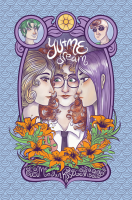
YU+ME: Dream, Omnibus 1YU+ME: Dream, Omnibuses 1-2 by Megan Rose Gedris. I only recently discovered YU+ME, a webcomic that was originally released online between 2004 and 2010. The comic is still freely available to read online, but the series has also now been collected into two omnibuses which include additional content. The first part of YU+ME comes across as a fairly standard girl-meets-girl high school love story. It’s certainly enjoyable, but not an exceptional story on its own. (Although it is noteworthy that the series may have been one of the earliest queer-focused webcomics.) What really makes the YU+ME outstanding is its second part, which places the first half within an entirely new context. Gedris wanted to turn the “but it was all a dream” trope on its head and she does so magnificently. Both the artwork and the storytelling are a bit rough in the beginning, but Gedris steadily improves and by the end the series has turned into something truly spectacular. The first part of YU+ME primarily uses a single art style while the second half explodes into a brilliant variety of design, color, and texture. YU+ME is an epic and surreal lesbian love story with a grand mythos to go along with it and a plot that is much more complex than it first appears.

Filed Under: FEATURES, My Week in Manga Tagged With: comics, Kanae Hazuki, Kazuho Hirokawa, Kentaro Sato, Magical Girl Apocalypse, manga, Megan Rose Gedris, Say I Love You, YU+ME

Margaret Turns 50; Alt-Manga Pioneers

October 27, 2014 by Katherine Dacey

news_large_margaret01To mark the fiftieth anniversary of Margaret and Bessatsu Margaret magazines, Shueisha helped organize an exhibit featuring its most popular series, from Riyoko Ikeda’s The Rose of Versailles to Io Sakisaka‘s Blue Spring Ride. Erica Friedman files a report from Tokyo.

Pour yourself a cup of coffee and block off an hour for manga scholar Ryan Holmberg’s essay on  the development of gekiga.

Over at the Hooded Utilitarian, Josselin Moneyron profiles Breakdown Press, a London-based company that specializes in alt-manga artists such as Sasaki Maki.

After DMP announced a Kickstarter campaign to fund six previously unlicensed manga by Osamu Tezuka, fans took to social media to voice concerns about the cost. DMP responded with a video explaining why this campaign was more ambitious than previous ones, but reaction was mixed. Alexander Hoffmann offers his own cost analysis.

Scholar Kathryn Hemmann examines the unconscious bias against female manga artists in Helen McCarthy’s A Brief History of Manga.

Tony Yao explores the connection between teen employment and the American manga market.

Aussie otaku take note: the University of Wollongong will be hosting Manga Futures: Institutional & Fan Approaches in Japan and Beyond, a three-day conference focusing on the current state of manga scholarship.

News from Japan: If you just can’t get enough Durarara!!, you’ll be pleased to hear that Sylph magazine will be launching a new spin-off series Durarara!! Relay in November. Also debuting next month: a new installment of Akiko Higashimura’s Princess Jellyfish, and a new Gakuen Heaven series penned by You Higuri.

Reviews: Jason Thompson embraces his inner guitar god with an in-depth essay on Detroit Metal City, while Seth Hahne reviews The Flowers of Evil.

Sakura Eries on vol. 6 of A Bride’s Story (The Fandom Post)
Anna N. on vols. 1-2 of The Clockwork Sky (Manga Report)
Kamen on The Flowers of Evil (trenchkamen)
James on vols. 1-10 of Ikigami: The Ultimate Limit (Kotaku)
Rebecca Silverman on In Clothes Called Fat (Anime News Network)
Mad Manga on vols. 2-8 of Knights of Sidonia (Cartoon Geek Corner)
Laura on vols. 1-7 of Midnight Secretary (Heart of Manga)
Khursten Santos on The Night Beyond the Tri-Cornered Window (Otaku Champloo)
Khrusten Santos on Nino no Mori (Otaku Champloo)
Sean Gaffney on vol. 1 of No Game, No Life (A Case Suitable for Treatment)
Danica Davidson on vol. 1 of Raqiya (Otaku USA)
Megan R. on vols. 1-6 of Reiko the Zombie Shop (Manga Test Drive)
Matthew Alexander on vol. 7 of Triage X (The Fandom Post)
Leroy Douresseaux on vol. 7 of Voice Over (Comic Book Bin)

Filed Under: MANGABLOG

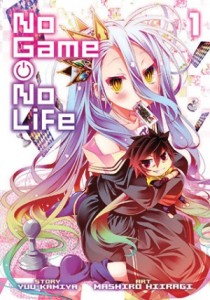
No Game No Life, Vol. 1

October 26, 2014 by Sean Gaffney

By Yuu Kamiya and Mashiro Hiiragi. Released in Japan by Media Factory, serialized in the magazine Comic Alive. Released in North America by Seven Seas.

Ah, Comic Alive, my old nemesis. We meet again. I see this time you’ve brought a title that I would probably find quite interesting were it not for the grotesque fanservice that is sprinkled throughout and unavoidable. Again. In fact, that seems to be your only weapon, really, though I was pleased by your one victory in the ‘yuri’ genre. Can’t we have more like Whispered Words and less like this? And so as ever, I’m left to figure out if there’s enough remaining in the title to pull me in, or if I’m going to be driven off by an excess of panty flashing, underage nudity, and boob groping. All of which No Game No Life has plenty of.

ngnl1

This is another in the increasingly popular genre of ‘gamers suddenly find themselves in a game world’, but with a slight twist. Our brother/sister heroes don’t find themselves in the game they were playing (and crushing everyone – they’re master gamers), but in a fantasy world where war has been replaced by games – any games, and the stakes can be quite high. As they struggle to figure out the history and rules of this new world, they meet the story’s designated victim, Princess Stephanie, who has just lost her kingdom due to being too naive, honest, and tsundere. Luckily for her, they’re not only master gamers, but total savants – with a few minor quirks.

Let’s break down the quirks, which are really the best and worst reasons to pick up this title. Sora is another overly perverse virgin whose first thought on winning a ‘ask anything of the pretty girl’ game is to ask the girl to fall in love with him. Shiro, while occasionally playing the jealous sister card, seems OK with him groping and assaulting said girl as long as it goes through her first. They are supposedly siblings (I will be very unsurprised if this turns out not to be true later on) but Sora professes he has no sexual desire towards Shiro… but that doesn’t stop them being all over each other anyway, thus gaining the best of both worlds for those who like that fetish.

So where’s the good? For all their smug confidence, much of which is justified, Sora and Shiro are two very broken teens (Shiro is 11, but whatever). If they’re apart from each other at all, they both have crippling breakdowns – we saw at the start they were a NEET (him) and a truant (her). Indeed, Shiro may actually have some sort of disorder – I’m not sure if her broken speech is meant to be a cute affectation or something more basic. And Ias I said earlier, they really do seem to be as good as they say they are – Shiro memorized a book almost instantly, and Sora, while not as good as that, is still said to be able to pick it up in a few hours.

So the question remains, what will the story do with these two? If it develops as a tale of how they deal with this world and its inhabitants while working to get over their social phobias, that’s quite a good possibility. That said, I expect the service is not going away and may even get worse. There is a light novel coming this spring, too. In the end, I suppose if you read Comic Alive stuff, you’ll enjoy this. If not, it might be interesting for the siblings, but I’d wait a few volumes to see if that pans out.

Filed Under: REVIEWS

The Clockwork Sky, Vols 1 and 2

October 25, 2014 by Anna N

The Clockwork Sky Volumes 1 and 2 by Madeline Rosca

I haven’t read Rosca’s series for Seven Seas, The Hollow Fields, but I remember being aware of it as one of the more positively reviewed English language manga series. So I was curious to check out Rosca’s recent series The Clockwork Sky.

The first volume establishes the world of Ember, along with a plucky heroine who has a habit of getting in trouble for being improper due to her need for speed. Sally has been sent to live with her Uncle Croach, who is a evil steampunk industrialist. His line of household robots is transforming the city, but where is he getting all the parts for his creatures from? Sally is basically locked up in her room and told to concentrate on being a proper lady, but she’s got plenty of ingenuity and manages to sneak out of her uncle’s house and comes across a race, which she promptly enters.

The other young protagonist of the story is Sky, a young mechanical police aide who resembles an adolescent Atro Boy a bit in his character design and powers. He’s assigned to track Sally down, but soon finds himself a bit sympathetic towards her. This conflicts with his orders. As Sally and Sky soon begin to discover, her Uncle’s scrapyard contains secrets and unexpected dangers.

While the first volume introduces the characters and world of The Clockwork Sky, the second volume is almost non-stop action as Sally and Sky learn that the missing children of the city are being recycled in unexpected ways. Croach makes an unconventional presentation to some powerful people in a desperate attempt at getting the raw materials needed to keep his factory going, while Sky begins to chafe at his programming and manifests even more self-awareness and independent thought. There are plenty of dynamic action sequences in Croach’s factory, and when Sky is able to bring in the authorities, Sally is able to build a new life for herself.

I appreciated the varied character designs and the clarity of Rosca’s art. In the second volume I sometimes wished for a bit more detail, as so many of the characters were yelling while being drawn in a slightly super deformed mode. Rosca touches on class issues with the clockwork underclass but there’s plenty of adventure and world building to keep a reader engaged. The story and art were well in synch, which made The Clockwork Sky easy to read. This would be a great comic for the upper range of elementary school, and a two volume series isn’t too much of a space commitment for most libraries. I’d definitely recommend this series for younger readers.

Filed Under: REVIEWS Tagged With: clockwork sky

  • Page 1
  • Page 2
  • Page 3
  • Interim pages omitted …
  • Page 5
  • Go to Next Page »
 | Log in
Copyright © 2010 Manga Bookshelf | Powered by WordPress & the Genesis Framework