• Skip to primary navigation
  • Skip to main content
  • Skip to primary sidebar
  • Home
  • About Us
    • Privacy Policy
    • Comment Policy
    • Disclosures & Disclaimers
  • Resources
    • Links, Essays & Articles
    • Fandomology!
    • CLAMP Directory
    • BlogRoll
  • Features & Columns
    • 3 Things Thursday
    • Adventures in the Key of Shoujo
    • Bit & Blips (game reviews)
    • BL BOOKRACK
    • Bookshelf Briefs
    • Bringing the Drama
    • Comic Conversion
    • Fanservice Friday
    • Going Digital
    • It Came From the Sinosphere
    • License This!
    • Magazine no Mori
    • My Week in Manga
    • OFF THE SHELF
    • Not By Manga Alone
    • PICK OF THE WEEK
    • Subtitles & Sensibility
    • Weekly Shonen Jump Recaps
  • Manga Moveable Feast
    • MMF Full Archive
    • Yun Kouga
    • CLAMP
    • Shojo Beat
    • Osamu Tezuka
    • Sailor Moon
    • Fruits Basket
    • Takehiko Inoue
    • Wild Adapter
    • One Piece
    • After School Nightmare
    • Karakuri Odette
    • Paradise Kiss
    • The Color Trilogy
    • To Terra…
    • Sexy Voice & Robo
  • Browse by Author
    • Sean Gaffney
    • Anna Neatrour
    • Michelle Smith
    • Katherine Dacey
    • MJ
    • Brigid Alverson
    • Travis Anderson
    • Phillip Anthony
    • Derek Bown
    • Jaci Dahlvang
    • Angela Eastman
    • Erica Friedman
    • Sara K.
    • Megan Purdy
    • Emily Snodgrass
    • Nancy Thistlethwaite
    • Eva Volin
    • David Welsh
  • MB Blogs
    • A Case Suitable For Treatment
    • Experiments in Manga
    • MangaBlog
    • The Manga Critic
    • Manga Report
    • Soliloquy in Blue
    • Manga Curmudgeon (archive)

Manga Bookshelf

Discussion, Resources, Roundtables, & Reviews

Archives for March 2014

Pick of the Week: What Did You Eat Yesterday?

March 24, 2014 by Sean Gaffney, Michelle Smith, Anna N, Ash Brown and MJ 7 Comments

whatdidyoueatyesterdaySEAN: There’s a lot of great things coming out this week – some of which I even forgot to put in my weekly post! (Sorry, Wolf Children, I’ll get to you next week.) That said, there’s only one title that’s *the* Pick of the Week, and that’s Vertical’s debut of long-awaited seinen manga What Did You Eat Yesterday?, from Fumi Yoshinaga. The story of a couple and their daily lives and meals, it’s a story with two gay men that isn’t “Boys’ Love” as we know it. Can’t wait to read this one.

MICHELLE: I think I’ve been pestering publishers to license this one for about seven years, so yes. Pick of the Week. Possibly Pick of the Decade.

ANNA: No argument from me, I’m also very much looking forward to this manga!

ASH: No arguments here, either. I’m very excited for the release of What Did You Eat Yesterday? and have been looking forward to it ever since the license was announced by Vertical. Actually, like Michelle, this is a series that I’ve been clamoring for for years. I’m thrilled that we’re finally getting it in English!

MJ: I honestly can’t think of a title I’ve wished for more than this one—and it’s obviously not just me! This title has inspired heartfelt pleas from both Manga Bookshelf columnist Travis Anderson and the Battle Robot’s much-missed left leg, David Welsh. I’ve waxed eloquent many times over Fumi Yoshinaga’s particular talents with slice-of-life dialogue, food, and gay characters, and given that this manga includes all three, my only occasional worry has been that I’ve built it up too much in my own head for even Yoshinaga to live up to. I can’t wait to find out. Thank you, Vertical, for bringing us this manga!

What looks good to you this week?
Filed Under: PICK OF THE WEEK

Kodansha announces The Heroic Legend of Arslan, digital Mushishi

March 24, 2014 by Brigid Alverson

Ben Applegate of Kodansha Comics had some announcements to make at Anime Boston this week: They will publish The Heroic Legend of Arslan, by Fullmetal Alchemist manga-ka Hiromu Arakawa, and they also announced a digital re-release of Mushishi. And that Attack on Titan: Colossal Edition will include 15 color pages that have never been collected in book form before; they only appeared in the magazine serialization.

License rescues! Well, sort of: Viz will be republishing Chibi Vampire and DN Angel in digital-only editions, available via their own digital service and e-book platforms. These two series were originally published by Tokyopop and Viz is using the Tokyopop translations. At the moment there are no plans to complete either series; there are two volumes of Chibi Vampire that were published in Japan but not in the U.S., and Viz has no plans to translate those. As for DN Angel, the creator left that series unfinished.

The Manga Bookshelf team discusses this week’s new releases.

Sean Gaffney takes a look at the new digital manga service Comic Walker.

Erica Friedman keeps us up to date with the latest edition of Yuri Network News.

A school board in Osaka Prefecture has removed Barefoot Gen from school libraries, at the behest of the mayor and over the protest of the school principals.

Jason Thompson devotes his latest House of 1000 Manga column to the works of Usamaru Furuya.

David Brothers writes about Shotaro Ishinomori and Cyborg 009 in the afterword to Archaia’s adaptation; this is a nice essay and a good introduction to the original.

Matt Emery at Sequential has a great interview with manga translator Kumar Sivasubramanian (Knights of Sidonia, Message to Adolf, Blade of the Immortal), who talks about how he got his first gig, how he approaches his work, and how page rates and demand have changed over the years. It’s an interesting insider’s take on the industry, sprinkled with fun anecdotes.

The first volume of Attack on Titan: Before the Fall tops the New York Times manga best-seller list.

It’s Manga Month at Diamond Previews, so Drawn and Quarterly pulls together a checklist of all their manga series.

News from Japan: Lots of farewells here: The long-running series Oh My Goddess is coming to an end. The 26th volume of The World God Only Knows will be the last. Btooom! is going into its final story arc. Feel Young has a new series by Yamaji Ebine. ANN has the latest Japanese comic rankings.

Reviews

Leroy Douresseaux on vol. 9 of 07-Ghost (The Comic Book Bin)
Ash Brown on vol. 1 of Attack on Titan: Junior High (Experiments in Manga)
Leroy Douresseaux on vol. 11 of Blue Exorcist (The Comic Book Bin)
AstroNerdBoy on vol. 23 of Hayate the Combat Butler (AstroNerdBoy’s Anime and Manga Reviews)
Leroy Douresseaux on vol. 23 of Hayate the Combat Butler (I Reads You)
Matthew Alexander on vol. 2 of Judge (The Fandom Post)
Leroy Douresseaux on vol. 4 of Midnight Secretary (The Comic Book Bin)
David Brothers on My Grandpa’s Stories Can’t Be This Weird (4thletter!)
Anna N on vol. 1 of One-Punch Man (Manga Report)
Leroy Douresseaux on vol. 16 of Oresama Teacher (The Comic Book Bin)
Lesley Aeschliman on vol. 1 of Phantom Thief Jeanne (Lesley’s Musings… on Manga)
Erica Friedman on vols. 3 and 4 of Pretty Guardian Sailor Moon (Perfect Edition) (Okazu)
Rebecca Silverman on vol. 1 of Ranma 1/2 (2-in-1 edition) (ANN)
Ash Brown on vol. 4 of Real (Experiments in Manga)
Lesley Aeschliman on the March 17 issue of Shonen Jump (Lesley’s Musings… on Manga)
Lesley Aeschliman on vol. 8 of Strobe Edge (Lesley’s Musings… on Manga)
Ken H on vol. 1 of Takasugi-San’s Obento (Comics Should Be Good)
Rebecca Silverman on vol. 1 of Umineko When They Cry, Episode 3: Banquet of the Golden Witch (ANN)
Sean Gaffney on vol. 1 of UQ Holder (A Case Suitable for Treatment)
David Brothers on World Trigger (4thletter!)

Filed Under: MANGABLOG

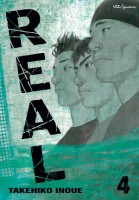
Real, Vol. 4

March 23, 2014 by Ash Brown

Real, Volume 4Creator: Takehiko Inoue
U.S. publisher: Viz Media
ISBN: 9781421519920
Released: April 2009
Original release: 2004
Awards: Japan Media Arts Award

I am a huge fan of Takehiko Inoue’s illustrations and manga. Everything that I have read by him has impressed me; his artistic skills and storytelling, as well as his complex characterizations, are fantastic. When I first began reading Inoue’s manga I fully expected to enjoy his series Vagabond the most. Vagabond is marvelous and I love it, but it was Inoue’s wheelchair basketball series Real that became my favorite. Real also happens to be the first manga by Inoue that I read. Since I don’t follow sports of any sort very closely, I was somewhat taken by surprise by how much I enjoyed Real. But the series is about so much more than basketball. Inoue adeptly portrays hard-hitting challenges and life-changing events in Real; basketball is just one part of the whole. The fourth volume of Real was published in Japan in 2004 while the English-language edition was released under Viz Media’s Signature imprint in 2009. Inoue received a Japan Media Arts Award Excellence Prize for Real in 2001, the same year the manga began serialisation.

After a violent falling-out with the captain of his wheelchair basketball team, Togawa has only recently returned to the game. There is still a fair amount of tension between the members of the Tigers, but with the Sunflower tournament coming up the team has started to pull together in a way that it hasn’t been able to in a long time. Togawa’s hard work and enthusiasm for basketball have served as an inspiration for some of his teammates. Unfortunately, some of the other players aren’t as appreciative of his attitude and the grueling practices that he leads. It is very likely that the Tigers forward momentum is only temporary and that the team will soon fall apart again. For Togawa, playing basketball and playing for the Tigers means everything to him. Having his right leg amputated as a middle school student because of bone cancer brought his dream of becoming a sprinter to an abrupt end. Togawa struggled immensely with this loss and it wasn’t until he discovered wheelchair basketball that he was able to find himself and his passion as an athlete again.

Just as the third volume of Real largely focused on the beginning of Takahashi’s rehabilitation, the fourth volume in the series delves more deeply into Togawa’s past, looking closely at the state of his life immediately following the amputation of his leg. It shows how the young track star, after having his ambitions crushed, came to play wheelchair basketball. The loss of his leg was devastating for Togawa. He became withdrawn, cutting himself off from his classmates and his friends, and his father unintentionally reinforced this isolation. Along with his leg, Togawa lost his sense of purpose, drive, and direction in his life. Even greater is the tremendous loneliness that he experiences. Togawa doesn’t want pity from others, he wants understanding. At the same time he is shunning contact and pushing people away, he is desperate to ease the loneliness that he feels. Togawa is extremely fortunate to meet a man by the name of Tora who helps drag Togawa back out of the shell he created for himself, serving as a much-needed role model–something that Takahashi has yet to find.

Despite all of the sweat and tears in Real, Volume 4, it tends to be slightly more ruminative and quiet than the volumes that precede it. One of the major themes that Inoue explores in the series–the meaning and purpose of a person’s life–becomes particularly prominent in the fourth volume. Both Togawa and Takahashi are faced with enormous challenges and changes in their lives which require them to completely reevaluate who they are as people. They are both struggling to rediscover and redefine their identities. Having lost something incredibly important to them, they anguish over the reasons why and what could have been done to prevent it. Ultimately, these are questions that don’t have an easy answer or solution. Over the course of the series, Takahashi frequently lashes out at those around him. In contrast, as seen in Real, Volume 4, Togawa tends to internalize his anger and despair. The similarities and differences in their situations and personalities are striking and an extraordinary effective part of the series. Real is a powerful and emotionally engaging work.

Filed Under: REVIEWS Tagged With: Japan Media Arts Award, manga, real, Takehiko Inoue, viz media, VIZ Signature

First Look at Comic Walker

March 22, 2014 by Sean Gaffney

Last month, Kadokawa announced a new online comic portal, Comic Walker, that would debut this week. It has 116 titles in Japanese, of which 18 are also available in English. It also has an iPad and Android app, though I was only able to access the English titles on that, whereas on the website I can also see the Japanese titles. The content is downloaded to your device, similar to Viz’s app store, rather than in a Cloud setting, so you should be able to read it offline (though I didn’t test this.)

The site has a bit of fractured English when you sign up/log in and look at the Contact Info. The translations I checked, however, seem reasonably fine. So what have we got? We get the first chapters (mostly, some had 2 or 3) of 18 titles, 8 of have been released over here in North America in some print form or other – or will be soon. They are:

Mobile Suit Gundam: The Origin (Vertical)
Neon Genesis Evangelion (Viz)
High School D&D (Yen, in May 2014)
Haganai: I Don’t Have Many Friends (Seven Seas)
Kyo Kara Maoh! (Tokyopop)
Takasugi-san’s Obento (DMP)
Sgt. Frog (Tokyopop)
The Melancholy of Haruhi-chan Suzumiya (Yen)

As you’ll notice, some of these already have digital editions over here from their respective companies. I spot-checked some of the titles, and they seem to be using the same text/translation that we’ve seen before. Fans of the Tokyopop titles will be interested, as both of those are out of print here now.

So, what’s as yet unlicensed over here?

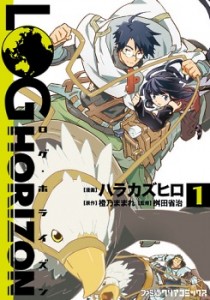
loghorizon

Anime fans will be familiar with Log Horizon, which is just finishing up and has already had a 2nd season announced. This is the manga version, which runs in Enterbrain’s Comic Clear. The ‘sucked into an RPG’ plotline may seem a bit over-familiar to folks, but I know it has fans.

There are two other Gundam titles from Kadokawa’s Gundam Ace. Mobile Suit Gundam The Origin: Special Edition seem to take place after a lot of the current origin comic, and I’ll warm you, there’s a spoiler that I was unaware of, though I imagine most Gundam fans knew it already. (It involves a romantic pairing.) It seems to be in the style of the original, and takes place in Japan (so far – remember, all these are just brief chapters.)

And for the wackier side of Gundam, there’s Gundam-san, the superdeformed 4-koma version, similar to Haruhi-chan. This is for Gundam fanatics only – I admit I didn’t get a lot of the otaku humor. But it looks funny, so I will pretend I get it. LOL!

Kagerou Days comes from Media Factory’s Comic Gene, a magazine I expect to see more titles from in the future. This intriguing title deals with a social shut-in who stays on his computer, who meets a cyber-girl named Ene. Can she convince him to go outside? This is apparently based on a series of songs by the artist Jin.

Tokyo ESP is a Shonen Ace title, and if Tokyopop was still around it would surely have licensed it by now. It features a girl who develops psychic powers after seeing a flying fish, and how she adapts to being telekinetic, especially as it transpires she’s not the only one to gain superpowers. This seems like something X-Men fans would enjoy.

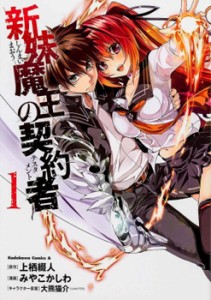
archfiend

The second-best title in terms of verbiage goes to New Sister Archfiend Testament, aka Shinmai Maou no Keiyakusha. It is also a Shonen Ace title, and is based on a light novel. Indeed, the premise SCREAMS light novel. Average high school student ends up with two new sisters, who are a demon lord and a succubus, and he invariably ends up as the master of one of them. Ecchi shenanigans no doubt ensue.

Fate/Kaleid Liner Prisma Illya Drei! is the sequel to two other Fate/Kaleid titles, which are themselves part of the giant Fate/Stay Night multiverse. This runs in Comp Ace and is also, I suspect, quite ecchi. It’s a pseudo magical girl title.

Nobunaga the Fool is a brand new title running in Kadokawa’s Niconico A, and also had an anime coming out this past winter. I wonder if this fool is anything like The Irresponsible Captain Tylor? Probably not.

Non Non Biyori runs in Media Factory’s Comic Alive, a magazine that you never know when you’re going to get pure fanservice or something really worth your time. (Usually, it’s the former – its fellow magazine Comic Flapper has the same problem, but reversed.) It’s the slice of life seinen manga that you KNEW a rollout like this had to have, involving an elementary school girl who moves to the country from Tokyo, and has to adapt to rural life.

Lastly, and by far the longest title, goes to Archenemy And Hero – “Be Mine, Hero” “I Refuse!”, a Comp Ace title based around a franchise called Archenemy and Hero (Maoyuu Maou Yuusha). This seems to be an alternate telling of the basic premise, so hopefully won’t be too obscure for those who don’t know the series. Similar to Spice & Wolf, this seems to mesh together high fantasy and business economics.

That’s it for now. I briefly looked at some of the Japanese titles. A few I’d love to see. Bodacious Space Pirates has a manga there, as does Full Metal Panic!. There’s also Tonari no Seki-kun, which may show up after Vertical releases it here.

How will this do? No idea. Unlike JManga, it seems geared more to Japanese readers. That said, the titles they have are pretty good, and there’s some actual bestsellers, as opposed to the all new series approach of Manga Box. What do you think, plan to give it a try?

Filed Under: NEWS, UNSHELVED

Random Musings: Spotlight on Kaita Murayama

March 21, 2014 by Ash Brown

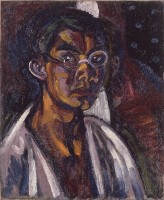
Kaita Murayama Self-Portrait, 1916Kaita Murayama, born in 1896, was a Japanese artist, poet, and author. He was best known for his work as an artist, and especially for the originality and vibrancy of his paintings. Although some of his writings were printed while he was alive, most of Murayama’s poetry and prose was collected and published by his friends after his death in 1919 of tuberculosis. Very little has actually be written about Murayama in English. Likewise, very little of his work has been translated. This is unfortunate because both Murayama and his writings are fascinating.


Writing the Love of BoysI had previously encountered a few of Murayama’s paintings, but it wasn’t until I read Jeffrey Angles’ academic work Writing the Love of Boys: Origins of Bishōnen Culture in Modernist Japanese Literature (released by the University of Minnesota Press in 2011) that I discovered Murayama as an author. This isn’t terribly surprising as only two of Murayama’s short stories have so far been released in English in their entirety–“The Bust of the Beautiful Young Salaino” and “The Diabolical Tongue”–both of which are discussed at length in Writing the Love of Boys and both of which were translated by Angles. Writing the Love of Boys is a particularly interesting examination of the portrayal of male-male desire in Japanese literature during the early twentieth century with a specific focus on Kaita Murayama, Edogawa Rampo, and Taruho Inagaki. After reading Angles’ translated excerpts and analyses of Murayama’s work, and because I wasn’t previously aware of Murayama’s writing, my curiosity was piqued; I wanted to experience his stories for myself.

ModanizumuThe first short story by Murayama to be translated and published in English was “The Bust of the Beautiful Young Salaino,” which was included in Modanizumu: Modernist Fiction from Japan, 1913–1938. The volume, edited by William J. Tyler and released by the University of Hawai’i Press in 2008, is the first major anthology of Japanese modernist short stories to be translated and analyzed in English. “The Bust of the Beautiful Young Salaino” isn’t a well-known story in Japan. However, it is the first work included in Modanizumu and is noted as being representative of early, experimental modernist prose. It incorporates themes of same-sex desire and the spectacular, both of which were not at all uncommon in modernist Japanese literature. Murayama wrote “The Bust of the Beautiful Salaino” between 1913 and 1914, soon before making the decision to leave Kyoto to study art in Tokyo, but it wasn’t actually published until 1921. The story is short, barely over two pages long, but it leaves a strong impression. In it a young man is wandering through a city at night when he has a vision of the head of Salaino, a beautiful youth whom he loves, after which he is confronted by an apparition of Leonardo da Vinci. Murayama’s writing is highly visual and descriptive, almost hallucinatory, and intensely erotic. This atmospheric quality can be seen beginning with the very first line–“It was a night thick with yearning, a yearning so viscous that it was as if dark purple and precious black liqueurs had replaced the air and covered the earth.”–and continues through to the very end. “The Bust of the Beautiful Young Salaino” is a lush, surreal, and dreamlike tale, but it can also be read as an allegory challenging the dominance of Western art.

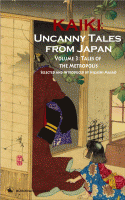
Kaiki: Uncanny Tales from Japan, Volume 3: Tales of the MetropolisThe second of Murayama’s stories to be translated into English was “The Diabolical Tongue.” It was included in Tales of the Metropolis, the third and final volume of Kurodahan Press’ series Kaiki: Uncanny Tales from Japan, released in 2012. Kaiki, which collects weird and supernatural Japanese short stories, is edited by Higashi Masao, who specializes in kaidan–tales of the strange and mysterious. “The Diabolical Tongue” was published in 1915 and was one of Murayama’s last works to overtly deal with male-male desire, though it is perhaps not as obviously homoerotic as “The Bust of the Beautiful Salaino.” It reminded me quite a bit of some of Edogawa Rampo’s stories, which makes sense as Murayama was one of Rampo’s direct inspirations. “The Diabolical Tongue” was a precursor of ero guro nonsense, a literary movement which came into prominence in Japan in the 1920s and 1930s. The story incorporates themes which are frequently found in ero guro–decadence, eroticism, mystery–as well as archetypal elements of the bizarre, grotesque, and taboo. Like “The Bust of the Beautiful Salaino,” an important part of “The Diabolical Tongue” focuses on a young man who wanders a city at night in search of his desires. He satisfies his unusual appetite and cravings by eating stranger and stranger things until he is finally driven to cannibalism. He is particularly drawn towards beautiful young men and women, imaging how exquisite they will taste. Unlike “The Bust of the Beautiful Salaino,” which ends in ecstasy, “The Diabolical Tongue” is fundamentally a tragic and horrifying tale that begins and ends in death. It is deliciously disconcerting, very much in the same vein as the ero guro literature which would soon follow.

Personally, I would love to see more of Murayama’s work translated into English and to read more of his poetry (examples of which can be found in Writing the Love of Boys) as well as his prose. I am aware and do understand how unlikely that is to happen. Poetry is notoriously difficult to translate and the demand for century-old short stories, as much as I and others would be interested in reading them, is generally low. However, I am glad that “The Bust of the Beautiful Salaino” and “The Diabolical Tongue” have been translated. The two stories share some commonalities but are ultimately very different from each other, exhibiting the versatility and range of Murayama’s creative output.

Filed Under: FEATURES Tagged With: Kaita Murayama

One Punch Man, Vol 1

March 21, 2014 by Anna N

I make no secret of my affection for shoujo manga, but occasionally even I want to read shonen manga featuring kicking or punching, preferably both. One Punch Man, as one might suspect, is centered on punching. This is available on the Viz Digital site for your various devices! One Punch Man provides an amusing twist on the typical shonen manga plot about a young protagonist who has to work hard to develop his extraordinary abilities. In this case the hero of the manga, formerly unemployed salaryman turned hero Saitama has already train to develop his powers with such intensity that all his hair has fallen out. He is called “One Punch Man” because he is so strong he can easily defeat any opponent with just one punch, and as a result is incredibly bored.

In One Punch Man, Saitama’s town seems to be an unfortunate focus of giant villains or monsters with satirical origin stories. One Punch Man punches Vaccine Man, who exists due to pollution, a crustacean made angry by graffiti, and a group of subterraneans. Throughout the manga, One Punch Man is vainly hoping for a non-boring battle, only to be disappointed every time. As drawn by Yusuke Murata, One Punch Man often resembles a slightly perturbed superhero with an egg-like head, which only serves to highlight the ridiculousness of his opponents. Towards the end of middle of the volume One Punch Man even takes on a sidekick Genos, “a lone cyborg fighting for justice.”

I found One Punch Man‘s send up of superhero conventions amusing, the art was well executed, and it perfectly fit in my desire to read goofy fighting shonen manga. The send-ups of villains and heroic origin stories mixed in with some spectacular punches made this manga fun to read, and I hope it does well for Viz as a digital first release. I’d buy the next volume, for sure.

Filed Under: REVIEWS Tagged With: one punch man, Shonen, viz media

Manga the Week of 3/26

March 20, 2014 by Sean Gaffney, Ash Brown, Anna N, Michelle Smith and MJ 9 Comments

SEAN: Lots of things to enjoy in the very busy final week of the month, from a variety of publishers.

I’m not entirely certain who Kintaro is or why he’s so incredible, but 801 Media’s The Incredible Kintaro is here to preach the good word to BL fans everywhere.

ASH: I have it on very good authority that The Incredible Kintaro is one of the most ridiculous BL manga to have been recently released in English.

ANNA: I am looking forward to seeing someone review this! How ridiculous is most ridiculous? Inquiring minds want to know!

SEAN: I have to think that Castle Mango is a very unthreatening name for a castle, and hope it’s not a really sexy yaoi euphemism. Vol. 2 is being released from DMP.

MICHELLE: Thanks for consistently making me giggle with this column, Sean!

ASH: I don’t think it’s a euphemism, but it is the name of a love hotel…

ANNA: That seems logical, I suppose.

SEAN: When Kodansha says they’re doing a speedup, they don’t mess around. Fairy Tail has been coming out so fast it’s almost too hard to keep up, and here’s Vol. 36.

seven1

There’s also a new shonen debut, the 4th one this month and the only one not connected with another Kodansha property. The Seven Deadly Sins is the new hot ticket in Japan, so it’s no surprise that it’s getting a release over here. A fantasy adventure manga with holy knights and fanservice, as you’d expect from Shonen Magazine, it should appeal to Fairy Tail fans.

ASH: I’ve heard good things about this one, so I’m interested in giving it a try.

SEAN: Readers may be surprised that I did not reserve the feature image for this post to Vertical’s What Did You Eat Yesterday?, the new seinen manga about a gay couple and the meals that they eat. The reason I did not is I have a sneaking suspicion the Pick of the Week will be unanimous, and therefore the image should be saved for that. As evidence, see the comments below.

MICHELLE: (incoherent “eeeeeeeeeeeee” noise)

ASH: Eeeeeeeeexcitement!!!

ANNA: Sooooooo Eeeeeeeeeexcited!

MJ: I am down with the flu, but I must perk up just a little to join in on this little celebration. Woooooo! *cough* Woo.

SEAN: And there’s a giant pile of Yen, starting with Vol. 4 of fantasy headtwister Are You Alice?

For those who enjoy Blood Lad but wish it was more of a 4-koma series, we bring you the first volume of spinoff Bloody Brat.

MICHELLE: Normally, this wouldn’t be my sort of thing, but I enjoy the humor in Blood Lad so much that I’m gonna give Bloody Brat a try.

SEAN: And if that’s not enough blood for you, have some more with Bloody Cross 2, along with a plethora of religious imagery.

MICHELLE: I was moderately intrigued by volume one, so I’d say it merits checking out the second installment.

differentstory1

SEAN: I keep forgetting about the Kingdom Hearts releases from Yen, so my apologies. This time around we have the 3rd volume of bafflingly named Kingdom Hearts 358/2 Days.

The new Madoka Magica spinoff, A Different Story, seems to star Kyouko and Mami, and ties into the movie. We shall see how different the story really is.

Soul Eater 19 promises a battle between Black*Star and the corrupted Death The Kid, and if I recall correctly will finally give us an origin story for Liz and Patti.

Lastly, Yen debuts Sword Art Online, a fantasy about MMORPGs based on a light novel series (which debuts from Yen next month). The 2 volumes of the debut arc, Aincrad, seem to have been combined into one omnibus for North America.

MJ: I’ll also mention, I guess, that I’ve seen some of this anime, so I’m actually a little excited about both the light novel and the manga.

SEAN: What manga are you discussing over the dinner table?

Filed Under: FEATURES, manga the week of

UQ Holder!, Vol. 1

March 20, 2014 by Sean Gaffney

By Ken Akamatsu. Released in Japan by Kodansha, serialization ongoing in the magazine Weekly Shonen Magazine. Released in North America by Kodansha Comics.

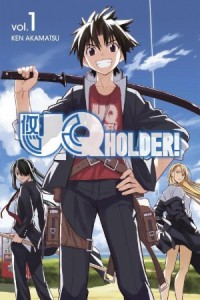
It’s pretty easy to tell that this is a sequel to Negima right off the bat – Evangeline appears on Page 1, talking about the difficulties inherent in immortality. It’s the following page that’s the gut-punch for all those who were hoping that this new series would see a lot of the Negima cast making cameos throughout – a metaphorical shot of Eva and the Negima cast slowly parting from one another as she continues on a solitary journey (not even Chachazero?), it’s also Ken Akamatsu telling us that this is 80 years after Negima proper, and most of the girls we loved are now dead. Is this the world that the shippers fought and died for in the “who is Negi’s wife?” wars?

uqholder

Luckily, this is not a grim ‘n gritty story of how the Negima cast dies over the years – at least not so far. No, it’s pure shonen adventure, a Akamatsu has resolved whatever the issues were with Kodansha that caused Negima to end so abruptly and has finally won what he’d been working towards for years – pure adventure, no harem comedy whatsoever. Now, this is not to say we won’t have a few love triangles or fanservice scenes down the road – there’s at least two bath scenes with naked people in this volume alone. But Negima was always held back, at least at first, by Kodansha demanding Akamatsu try to replicate Love Hina, and it’s good to see that this new series is not going to be doing the same.

By the way, I had mentioned Evangeline, and she is the exception to the dead cast list above, being an immortal vampire. Indeed, immortality is the point of this entire series, as our hero is a young man, Tota Konoe (note the last name), whose parents died in a war, who has no memories before he as twelve, and who Eva, under the guise of a schoolteacher, has been raising for the last two years. It’s quite a burden for a young man to bear, but luckily Tota is very much a traditional shonen hero, complete with nonsense about a man’s dreams. (I am pleased it’s immediately pointed out as the nonsense it is.) As for Eva, she goes by Yukihime now, and it’s striking how much she has mellowed out and gotten nicer. The Eva of Negima would never, ever have gotten as close to Tota as Yukihime has – or at least would keep up a facade of disinterest.

The other main character we meet here is Kuromaru, who is an intriguing Setsuna clone. Given this is a sequel to Negima, I’m not entirely sure how much of the character’s looks are down to the fact that Akamatsu can only draw a certain number of faces and how much of it is deliberate, but I will give him the benefit of the doubt here. Tota is not too far off from Kotaro, and earlier we met a young person who was a dead ringer for Shinobu from Love Hina (which took place in the same universe as Negima). Kuromaru not only looks exactly like what Setsuna and Asuna’s child would look like, but also appears to be from the Bird Tribe that Setsuna had so many difficulties with earlier… and Kuromaru is having similar difficulties. Possibly the most intriguing thing, however, is how Kuromaru’s gender is being withheld – not only from the cast but also the reader. It’s clearly being done on purpose, and I’m wondering what’s going on here. Is Kuromaru trans? Or genderless? If so, kudos to Ken, though I suspect that will just open up a lot more questions.

We wrap up UQ Holder with a statement of the premise, which is to find aliens, time travelers and espers… wait, wrong series. To find immortal being like Yukihime and Tota and make friends with them! Luckily Yukihime seems to have her own personal yakuza to help carry this off. UQ Holder is an excellent start for both Akamatsu fans and fans of shonen manga in general, and I have no doubt will be filled with adventure and heart.

(Also, my guess on Tota is that Konoka and Setsuna’s son (via Negi helping out, so to speak) and Kotaro and Natsumi’s daughter got married and had Tota. Because forget diamonds, ship wars are eternal.)

Filed Under: REVIEWS

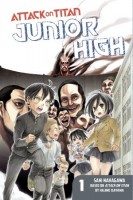
Attack on Titan: Junior High, Vol. 1

March 19, 2014 by Ash Brown

Attack on Titan: Junior High, Omnibus 1Creator: Saki Nakagawa
U.S. publisher: Kodansha
ISBN: 9781612629162
Released: March 2014
Original release: 2013

Attack on Titan: Junior High is one of several spin-off series inspired by Hajime Isayama’s hit manga Attack on Titan. Saki Nakagawa was selected to work on an Attack on Titan series after entering a manga contest. (Coincidentally, both Nakagawa and Isayama attended the same design school.) Although Nakagawa is the writer and artist for Attack on Titan: Junior High, Isayama has had some input into the series’ development. In fact, he was the one who suggested creating a manga along the lines of Tsutomu Nihei’s parody series Blame! Academy. And so Attack on Titan: Junior High was born–a comedy manga that somehow manages to combine Attack on Titan with contemporary Japanese school life. The manga began serialization in 2012 in Japan and the first two volumes were collected in 2013. Kodansha Comics is releasing Attack on Titan: Junior High in an omnibus edition. The first omnibus, collecting the first two Japanese volumes, was published in 2014 and Kodansha was kind enough to send me a review copy.

It has been five years since Eren was traumatized from an encounter with a Titan. Now that he’s in junior high he finally has the opportunity to seek revenge–both humans and titans are counted among the students and teachers of Attack Junior High. Of course Eren has other pressing matters to attend to even while his hatred of Titans remains at the forefront of his mind: making allies out of his classmates (which he’s not particularly good at), surviving epic games of dodgeball and choosing the perfect after-school club (which are both more dangerous than they might first appear), not to mention trying to stay on the upperclassmen’s good sides (which can actually be rather difficult). On top of all of that, Eren is a member of class four, a group of first years who all have their own quirks and issues to deal with. All together they’re a bunch of weirdos, but none of the other classes at Attack Junior High are much better. It’s really saying something when the Titans are the most normal ones at the school.

To really appreciate Attack on Titan: Junior High requires familiarity with the original Attack on Titan series and to some extent familiarity with Attack on Titan fandom as well. Some of Attack on Titan: Junior High will be funny, or at least amusing, even to those who haven’t read Attack on Titan, but the manga works best when it is directly parodying the original series and using it as its framework. All of Attack on Titan‘s most well-loved and reviled characters make an appearance in Attack on Titan: Junior High with some of their personality traits taken to a comedic extreme (although some were fairly over-the-top to begin with): Eren is a single-minded fanatic; Mikasa is overprotective of him to a fault; Sasha thinks about nothing but food; Jean is an arrogant ass; Hange succumbs to fits of ecstasy at the mere thought of Titans; Levi is obsessed with cleanliness, and so on. These characteristics were true of the original cast, too, but Nakagawa has stretched them to their limits in Attack on Titan: Junior High.

Nakagawa is clearly a fan of the original Attack on Titan series and is having a lot of fun with Attack on Titan: Junior High. In addition to using Isayama’s characters and taking them to their ludicrous yet logical conclusions, Nakagawa also uses pivotal and memorable scenes from Attack on Titan, giving them utterly ridiculous and absurd twists to emphasize their more comedic possibilities. The darkness, death, and destruction found in Attack on Titan is almost completely missing from Attack on Titan: Junior High. It can be just as frantic and frenetic, but as a parody the manga is much more lighthearted in tone. Even characters who have long been dead in the original series have an active role to play in Attack on Titan: Junior High; it seems as though no one really has to worry about dying in Nakagawa’s series. The worst thing that really happens in the first omnibus of Attack on Titan: Junior High is some stolen lunches. Granted, for students that can be an extremely tragic event, indeed.

Thank you to Kodansha for providing a copy of Attack on Titan: Junior High, Omnibus 1 for review.

Filed Under: REVIEWS Tagged With: attack on titan, kodansha, Kodansha Comics, manga, Saki Nakagawa

Kuroko’s Basketball suspect speaks

March 18, 2014 by Brigid Alverson

Hirofumi Watanabe, the suspect in the Kuroko’s Basketball case, admitted in court yesterday that he was the one who sent hundreds of threat letters to stores and convention centers and says the motive was jealousy of manga-ka Tadatoshi Fujimaki’s success. Watanabe said he was suicidal before he sent the letters and would attempt to kill himself once he was out of prison; “That way, society can rest assured that I won’t do anything stupid again.”

Crunchyroll has been adding a lot of new series to their digital manga service lately, including, most recently, Ajin Koe no Katachi, and Hiromu Arakawa’s adaptation of The Heroic Legend of Arslan.

Sean Gaffney rounds up the latest license announcements, with commentary.

Justin Stroman asks seven manga translators to talk about the joys and challenges of their jobs.

The Manga Bookshelf team chat about this week’s new releases and discuss their Pick of the Week.

Erica Friedman updates us on the world of yuri in her latest Yuri Network News post at Okazu.

At Gagging on Sexism, Erin discusses some shonen manga written by women.

Lori Henderson looks at manga that feature fairies in her latest Manga Dome podcast at Manga Xanadu.

Moyoco Anno is coming to TCAF!

Reviews: Ash Brown chronicles another week of manga reading at Experiments in Manga. The Manga Bookshelf team posts their short takes on new releases in the latest Bookshelf Briefs column.

Ken H on vol. 1 of Attack on Titan: Before the Fall (Comics Should Be Good)
Ash Brown on vol. 28 of Blade of the Immortal (Experiments in Manga)
Erica Friedman on Dare mo Korinai (Okazu)
Maggie on vol. 1 of Hitohira (Organization Anti-Social Geniuses)
Joan Li on Honey and Clover (The Harvard Independent)
Matt Cycyk on Insufficient Direction (Matt Talks About Manga)
Matthew Warner on vol. 7 of Is This a Zombie? (The Fandom Post)
Matthew Alexander on vol. 10 of Itsuwaribito (The Fandom Post)
Ash Brown on Kisses, Sighs, and Cherry Blossom Pink (Experiments in Manga)
Sean Gaffney on vol. 70 of One Piece (A Case Suitable for Treatment)
Sean Gaffney on vol. 1 of Phantom Thief Jeanne (A Case Suitable for Treatment)
Lori Henderson on Phantom Thief Jeanne (Good Comics for Kids)
Anna N on vol. 1 of Phantom Thief Jeanne (Manga Report)
Kristin on vol. 1 of Ranma 1/2 (Comic Attack)
Sean Gaffney on vols. 1 and 2 of Ranma 1/2 (A Case Suitable for Treatment)
Ash Brown on vol. 3 of Real (Experiments in Manga)
Derek Bown on the March 10 issue of Shonen Jump (Manga Bookshelf)
Lori Henderson on vols. 1 and 2 of Sickness Unto Death (Manga Xanadu)
Matt Cycyk on vol. 3 of Thermae Romae (Matt Talks About Manga)
Lori Henderson on vol. 2 of Until Death Do Us Part (Manga Xanadu)

Filed Under: MANGABLOG

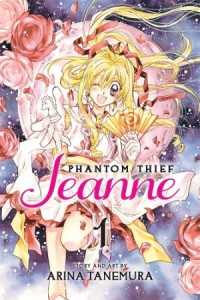
Phantom Thief Jeanne, Vol. 1

March 18, 2014 by Sean Gaffney

By Arina Tanemura. Released in Japan as “Kamikaze Kaitou Jeanne” by Shueisha, serialized in the magazine Ribon. Released in North America by Viz.

Having almost run out of Tanemura titles to release, Viz has gone back to the early days with this one and license rescued it from the clutches of CMX. And I’m very pleased that they did, because if you were to ask me to take only one Tanemura title with me to a desert island, this would be the one. Her first really big hit, Phantom Thief Jeanne is a magical girl manga that is not afraid to examine the core of darkness that lies at its heart – and yet still be a fun magical girl title for kids. Madoka Magica this is not.

jeanne1

The phantom thief subgenre of magical girls should be familiar to everyone by now – not only through Jeanne, but also via Saint Tail, which uses very similar stylings, and CLAMP School Detectives/Man of Many Faces, where Akira is the male version of this. Naturally, given the thief is a young girl, they are stealing FOR GOOD. Indeed, Maron Kusakabe, our heroine, is a descendant of Joan of Arc (hence the title), and the plot is set up as quite religious – she is using God’s Power to extract the evil from paintings, evil that is being used by Satan to gain human hearts. (This is definitely the French Joan of Arc – Shakespeare would stare in sheer horror at the myth of Joan Puzel today.)

It’s not just the religious themes that give this manga extra depth. Maron has more going on in her background than the usual chirpy magical girl. She’s living alone, her parents having split up and separately decided to leave for another country (suspicious), her magical familiar Finn dashes off her origin story in less than a page (suspicious… though it could just be I live in a post-Kyubey world), and while she does quickly fall for the boy destined to be her love interest (who is also a rival thief with a rival familiar), she absolutely does not want to deal with these feelings, her parents having convinced her that falling in love in a horrible thing to happen to someone. There’s a depth and solidity to Maron’s life that I really enjoyed here.

Of course, it’s not all sadness and broken homes. This is still a Ribon title. There’s lots of fun and silliness, mostly in the form of Maron’s best friend Miyako, whose father is a police officer and who is dedicated to capturing the thief who keeps stealing paintings (as always, the world itself is unaware of the supernatural part of things). There’s lots of love triangle shenanigans as well, with the shy kid in love with Maron leveling up due to demon possession, but amazingly staying leveled up afterwards and trying to become strong enough to court Maron properly. (He clearly doesn’t know what genre he’s in.)

Essentially, this takes the basic beats of the Phantom Thief genre and simply writes them really well. It’s paced well, the characterization is doled out at the right moments, and I can even get used to Tanemura’s trademark GIANT EYES. Anyone wanting to read this will find a cornucopia of details to enjoy, and it has excellent rereadability. Definitely worth buying, even if you already own the CMX version.

And, most importantly, the lead guy is a blond and the runner-up is a brunet! Do you know how little that happens in shoujo? More blond leads!

Filed Under: REVIEWS

Weekly Shonen Jump Recap: March 10, 2014

March 17, 2014 by Derek Bown Leave a Comment

Introductions are the hardest part of writing this column. And since most people skip them I might even be forgiven for just omitting them completely. Then again, that would be lazy, and the last thing I would ever want to be accused of is being lazy (I really do wish there was an easy way to express irony in written form). But I thought of something that might be fun, if perhaps I spend a moment talking about the other manga I’ve been reading for the week.

At the moment I’ve been catching up on Attack on Titan, well, to tell the truth I watched the anime and then read the manga from there in Crunchyroll, but I’ve been going back and buying the volumes the anime covers so I can get the story as it was originally told. The question always comes back to what is better, the original or the adaptation, and having read and seen both I have to say that I do think the anime is probably the better way for someone to experience the story the first time. The music ads a lot to the overall experience, and seeing the characters in motion is particularly impressive. The story was rearranged a bit to help the viewer grow attached to the characters before they started kicking the bucket. But I do find that the manga is somewhat easier to digest simply because it tells the pure story, without adjusting the timing to meet a certain runtime. And waiting until after the first slaughter of characters to then go back and get to know them also has a certain charm to it.

Nisekoi, for those that haven’t read it from the beginning, already has two volumes out. Definitely worth checking out and I just read them again this week for the first time in a while. Other than that, those were the only two major series that I read. I did take the time to pick up the new printing of Ramna 1/2 so I’ll probably talk about that after I get around to reading it. That’s been the week so far, now let’s get into the latest Jump chapters.

Nisekoi
March 10, 2014 Cover

World Trigger Ch. 051
Have I ever mentioned how much I hate fake cliffhangers? You know the type, the ones that make it seem like something shocking has happened, but then turn out to be not at all what we thought? This chapter only gets away with it because Kitora was absolutely badass the entire chapter through. And it’s at the end of this chapter that we get the true “they are so screwed” cliffhanger.

Kitora has easily become one of my favorite characters for the whole series. It would have been so easy to have her been an antagonistic kind of character, and in some ways she can be, but she also backs up her attitude with action. And even though she had to be saved by Yuma during her first battle of the series, this week we see how she takes that moment and uses it as motivation to win against the strongest type of trion soldier we’ve seen this entire arc. Too bad it took so much out of her to defeat just one of them, now that she’s left facing several I don’t see this ending well for anyone involved. I can only hope someone has the presence of mind to force a bailout for all the C Rank agents before they get captured.

World Trigger

One Piece Ch. 740
For a moment, as I skimmed through this chapter again to think of what to say, I found myself at a loss. Stuff happens this chapter, but none of it really stands out. Though I did enjoy Baby 5’s interaction with Law as a bit of comedy. Then I got to the last two pages, saw that Robin had been turned into a toy, and remembered exactly what I wanted to talk about this week.

As any fan of One Piece knows, Usopp’s character arc has always been about overcoming his fear. In fact he’s done it several times before. And as with all long form media stretching out character arcs can become problematic. In most cases writers will move on to a new character arc for anyone they keep around after their original character arc has completed. Only the worst writers will regress a character to a point where their character arc starts from the beginning.

Usopp’s reaction to being mistaken for some great hero was funny and all, but in the past he’s reacted like that but he’s always come through for his friends when they need him. Which is why the last page of this chapter pisses me off to the point where I am barely able to keep my language at a level appropriate for an all ages audience. Usopp running away this chapter is quite possibly the worst thing he has ever done in the entire series. It’s not like he’s even running to draw the enemy away. He is literally running because he’s too chicken-sh…cowardly, to stand up to his opponents. He’s not making a strategic withdrawal, he fully intends to abandon the Tontatas, and Robin (though he doesn’t remember her anymore). What happened to “I can’t laugh with my friends if I’m not willing to fight like them”?

This is character regression pure and simple. Now perhaps Oda has a plan, he usually does. And I’m willing to wait and see how this goes. But if Oda intends to just laugh it off later on then I will have to call bull…crap…on this most boneheaded of moves. If this is meant to be taken at face value, without any twists in Usopp’s actions later on, then it’s nothing but Oda showing that he can’t think of anything else to do with Usopp. It’s already annoyed me how he continues to be a coward despite his progress throughout the series. I feel that we’re at a point where the cowardly Usopp character just does not work anymore. After all he’s gone through, he can’t bother to man up at all?

Again, like I said, maybe Oda is going somewhere with this. So until then I will reserve judgement. I will just simmer in frustration, waiting for the tipping point where I either calm down or explode in a rush of fury and fanboy indignation.

One Piece

Nisekoi Ch. 113
While Raku playing the fake boyfriend again is amusing, I kind of wish this chapter had just been about Ruri and Shu. Just imagine how much funnier it would have been had she been forced to pretend to be the girlfriend of the one guy in the cast she completely despises. But, I suppose that will have to wait for my eventual fanfic, the story as we got it was excellent.

Ruri has always been one of my favorite characters of the series, even though she doesn’t get much focus. I just can’t help but enjoy the deadpan snarky characters. And seeing young Ruri’s pictures were particularly funny. And her grandfather, while following the typical goofy grandpa archetype, has a certain charm to his design that I haven’t seen before in any of the other manga I’ve read.

The sudden tone shift at the end I could have done without, but the way the scene is set suggests that I might just get a stronger focus on Ruri and Shu without Raku next chapter. Which would be much appreciated.

Nisekoi 2

Naruto Ch. 667
It is my opinion that it is a sign of a weak, unimaginative mind to always go for the sexual reference. But I mean come on!

Naruto

The imagery in this page is so phallic even the cover art of the Little Mermaid VHS Tape is thinking Kishimoto has gone overboard. Sure it’s coming from his stomach, and not his crotch, but I dare ANYONE to look at that and not immediately think “Penis!”. I can just see Orochimaru thinking, “Damn, Kabuto beat me to it!”

From there we get a pretty strong focus on Kabuto being a changed person, and I don’t care because Kabuto was never my favorite character.

On the other hand, Gai’s half of the chapter was great. Methinks next week we’ll get to see him go out in a blaze of glory, though I really was hoping to see Rock Lee jump in and save the day. Just randomly he shows up, beats up Madara, and becomes the new hero of the series. I wouldn’t even be mad if that happened it would be such a troll move by Kishimoto.

I imagine we’ll be seeing Samui and her brother making a return next chapter, since apparently TenTen is playing around with the Sage’s artifacts, so I can only imagine this is Kishimoto’s way of getting those characters back.

Stealth Symphony Ch. 003
It’s refreshing to see the old trope inverted this time around. Rather than having Jig automaticaly join V&V Security it turns out he’s actually not qualified. I imagine he’ll eventually join them, because one cannot escape tropes forever, but for now it shows a level of awareness on the part of the writer that will serve the series well.

Souya also appears to be an interesting character that I imagine will be around for quite a lot of the series, and the way the assassins guild operates in the city is in its own way quite intriguing. While we are only three chapters in I like how the story has been handled. Nothing groundbreaking yet, but in its own way it is shaping up to be a competent little story. Whether it can keep it up or will lose steam has yet to be determined.

Stealth Symphony

Bleach Ch. 571
Now this was the first chapter of Bleach in a long time that I can legitimately say I really enjoyed. Bleach has been in the limbo of not being terrible yet not being great either. It barely manages to be good most of the time instead opting for being dull and confusing. This time around it feels like Kubo is back to his old form. The power Gwenael Lee (whose name I refuse to remember, much like the names of any of the other Stern Ritter) is quite imaginative. Though it does have the problem a lot of the other Stern Ritter powers have in that I keep asking myself how exactly they still Qualify as Quincy.

But seeing Yachiru kick ass is entirely worth it. And her shikai release feels so nostalgic for Pre Hueco Mundo Bleach that I can’t help but enjoy this chapter entirely. I can only hope that we get to see the releases for all the other Soul Reapers that we haven’t seen yet.

Bleach

One-Punch Man Ch. 034
After seeing Saitama defeat so many enemies easily, I’m looking forward to what Boros can do. It’s pretty ridiculous, though that’s the joke, that nobody but Saitama can reach invincible status. But as the series has grown more and more serious it would have been a bit of a stretch to have every enemy be easily defeated by Saitama. I can only wait and see what happens next chapter, as One-Punch Man moves into what I can only describe as a new era. Can it keep up the quality even as it becomes a more generic battle series?

One-Punch Man

Toriko Ch. 269
Methinks Shimabukuro has been in a shippy mood, now with Komatsu interacting with Nono for the first time, though we’ve seen her express interest in him in the past. While personally the image of Komatsu hooking up with Melk the Second is more entertaining (I don’t know why, but for some reason short guys with tall women amuses me. Must be why I still like Tom Cruise despite his crazier antics in the past). And I find it odd that they are going back to the Gourmet World so soon. And while I don’t mean to focus so much on the relationship aspects of this series, I can’t help but wonder whether Toriko and Rin plan to get married before he goes to the Gourmet World, or if she’s planning to wait until they return which would make no sense since they don’t know if they’ll be back. Or maybe she’ll go with them, I don’t know. I’d prefer the latter, it would be more entertaining.

Blue Exorcist Ch. 055
And here I thought we weren’t going the Zombie route, since walking corpses were already a thing in this series. But I guess we’re playing the Fantasy Semantics game by having similar creatures that are actually quite different. I like to play the Fantasy Semantics game myself so I look forward to some more Zombie action.

Still, I wish for this arc to be over with. I’ve had more creepy pedo scientist than I can stand. And the more I see Shima playing the traitor the more I don’t buy it.


If you want to hear more, check out the Manga^3 Podcast Archives.

Filed Under: FEATURES & REVIEWS, WSJA Recaps Tagged With: bleach, blue exorcist, Dragon Ball Z, naruto, nisekoi, One Piece, one punch man, toriko, world trigger

Pick of the Week: Condition of the Heart

March 17, 2014 by Michelle Smith, Anna N, Sean Gaffney, Ash Brown and MJ Leave a Comment

potw-3-17MICHELLE: Probably I should pick something actually new, especially something as great as Vagabond, but as the cliché goes… the heart wants what the heart wants, and my heart wants xxxHOLiC to be back in print! In fact, my heart is even going “woo!” a bit at the prospect.
ANNA: I feel like it would be both a moral and ethical failing to not pick something as great as Vagabond, so that is my pick!

SEAN: I had issues with Negima ending, so I’m interested to see how it gets fixed, or indeed how much UQ Holder will mention Negima at all. In any case, I can’t quite quit Ken Akamatsu, so it’s my pick of the week.

ASH: I’m with Anna this week; Vagabond all the way!

MJ: I’ll bring things full circle, I guess, because though I’m looking forward to several of this week’s releases (okay, mostly March Story), my heart is decidedly with Michelle and the re-release of xxxHOLiC. On this rare occasion (and also for Michelle’s sake) I’ll even go along with the ridiculously random capitalization in the title. I’ve been a devoted fan of this series longer than I’ve been a manga blogger. In fact, it was the first CLAMP series I ever fell for, eventually leading me down a a path of no return. I can’t claim to love everything CLAMP has ever written—or even everything they wrote in xxxHOLiC, but without it (and them) my manga experience would be somehow lacking. I’m happy to see this series back in print!

What looks good to you this week?

Filed Under: PICK OF THE WEEK

My Week in Manga: March 10-March 16, 2014

March 17, 2014 by Ash Brown

My News and Reviews

I managed to post three in-depth reviews last week, and two of them were for manga! First up was my review of Mieko Kanai’s delightful novel Indian Summer. Technically, it’s the third book in her Mejiro series, following Oh, Tama!, which I also recently read and enjoyed. However, Indian Summer was actually her first novel to be translated in English. As part of my Year of Yuri review project, I took a look at the omnibus edition of Milk Morinaga’s manga Kisses, Sighs, and Cherry Blossom Pink. So far it has been my favorite yuri manga by Morinaga to have been released in English. It’s very cute, sweet, and romantic. And to wrap things up, over the weekend I posted the next review in my “Manga March Madness” project which focuses on Takehiko Inoue’s wheelchair basketball series Real. It was the third week in March, so I reviewed Real, Volume 3. I still think that Real is one of the best comics currently being released in English.

Quick Takes

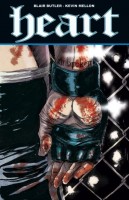
HeartHeart written by Blair Butler and illustrated by Kevin Mellon. At one point Oren “Rooster” Redmond was a run-of-the-mill office worker. Bored with his job, he decides to take control of his life. Following in the footsteps of his older brother he starts by becoming an amateur MMA fighter. After months of grueling training he finally has the opportunity to go pro, but that’s when the hard work really begins. Heart follows the rise and fall of Rooster and the sacrifices that he makes. There’s too much face punching, blood, and machismo to call Heart sentimental, but it is a very human story. Rooster’s fights both in the cage and internally with himself are also representative of anybody’s struggle to accept themselves for who they are. Sometimes, no matter how hard someone tries or how much they improve, it will simply never be enough. It’s how someone deals with that fact that really determines who they are as a person. Heart is a great comic and one that I personally found to be inspirational, and not just because I’m a martial artist.

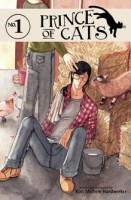
Prince of Cats, Issue 1Prince of Cats, Issues 1-4 by Kori Michele Handwerker. Prince of Cats is an ongoing webcomic that is free to read, however the print edition of the series includes some bonus content not available online. I knew going into Prince of Cats that the comic was a queer love story, but what I didn’t realize is that the series also features a transgender character, which I was rather pleased to discover. Handwerker hand paints each page of the comic and the watercolors are beautiful. The story itself is also lovely, focusing on the relationship between Lee and Frank who were once very close but who are starting to drift apart. Despite the high school drama, Prince of Cats tends to be quiet and subdued but very realistic (with the exception of talking cats, of course.) I could easily empathize with the characters and the portrayal of growing up in a conservative, rural area. It’s hard enough trying to fit in to begin with, let alone while also being a member of a minority (of any sort). I’m definitely looking forward to reading more of Prince of Cats.

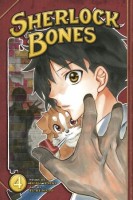
Sherlock Bones, Volume 4Sherlock Bones, Volume 4 written by Yuma Ando and illustrated by Yuki Sato. In previous volumes of Sherlock Bones the answer to the various mysteries were known from the beginning. The challenge was simply to find evidence to prove who was guilty. However, in the fourth volume Sherdog and Takeru actually have to do some legitimate investigation and sleuthing. Granted, in all but one case the readers are already aware who the culprit is. I’m still enjoying Sherlock Bones more than I expected I would. The silliness of the premise is a bit at odds with the seriousness of many of the crimes (homicide, accidental and otherwise, is the one that is most frequently encountered), but for the most part it somehow works; Sherlock Bones can be unexpectedly entertaining. I would like to say that I will be extremely disappointed if Meowriarty doesn’t make another appearance in the series. As if Sherlock Holmes as a small puppy wasn’t ridiculous enough, Moriarty as a bruiser of a cat is marvelously absurd. Also, Sherdog needs an arch-nemesis.

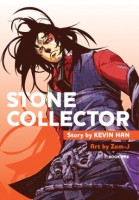
Stone Collector, Volume 1Stone Collector, Book 1 written by Kevin Han and illustrated by Zom-J. Stone Collector is Gen Manga’s first manhwa series, but it reads from right to left, which is a little odd. I was rather surprised when I saw the first volume of Stone Collector; I’m used to the smaller trim sizes used by Gen Manga and hadn’t realized that Stone Collector was going to be so much larger. The oversized format shows off Zom-J’s artwork, which is very clean and fairly dynamic with great facial expressions. Frequently, I found that I was vaguely reminded of Kohta Hirano and especially Hellsing. Some of the battle sequences in Stone Collector are a little difficult to follow, and the lack of backgrounds often made it seem more like a storyboard than a fully realized comic. More attention is given to the fights and monsters than is given to a completely comprehensible plot or well-developed characters. However, it is a quickly paced, action-packed series. I could see a film adaptation of Stone Collector actually doing quite well.

Filed Under: FEATURES, My Week in Manga Tagged With: Blair Butler, comics, Kevin Han, Kevin Mellon, Kori Michele Handwerker, manga, manhwa, Prince of Cats, Sherlock Bones, Stone Collector, Yuki Sato, Yuma Ando, Zom-J

Bookshelf Briefs 3/17/14

March 17, 2014 by Sean Gaffney, Anna N and Michelle Smith 3 Comments

This week, Sean, Anna, & Michelle look at recent releases from Kodansha Comics and Viz Media.

fairytail35Fairy Tail, Vol. 35 | By Hiro Mashima | Kodansha Comics – Leaving aside the fight between Natsu/Gajeel and Saber Tooth’s Natsu and Gajeel-alike’s that takes up half this book, what struck me most was how it’s trying to have a lot of humor but it feels more and more that this is due to the fact that there will be little opportunity for it soon. We see future Levy talking about everyone dying in 2 days (including her beloved… hrm, Gajeel shiptease there?), and Jellal runs into the mysterious hooded figure, who is clearly someone he knows. And of course there’s the opening scene with Lucy beaten so bad she’s hospitalized. Given that, I am more charitable to the giant fanservice scene that is Chapter 298, and am highly amused by Gildarts’ entire chapter that shows that just because one is middle-aged does not mean you stop being a big dumb shonen hero. – Sean Gaffney

happymarriage5Happy Marriage, Vol. 5 | By Maki Enjoji | Viz Media – With all the yaoi manga coming out, I feel like it is a tiny bit unfair that there are so few currently translated smutty manga for older ladies who enjoy stories about forced marriages and vampire bosses! But it is all the more reason to celebrate the few series like that which are translated! Volume 5 of Happy Marriage continues to document the growing relationship between Chiwa and Hokuto along with plenty of Machiavellian corporate machinations. Hokuto is finally showing his more vulnerable side to Chiwa, but not without plenty of misunderstandings along the way. Even though this manga is fairly predictable, it is still consistently enjoyable. – Anna N

kamisama14Kamisama Kiss, Vol. 14 | By Julietta Suzuki | Viz Media – The gap between the volumes for this series is getting fairly long, but that just makes me appreciate it even more. Suzuki’s world building and unique character designs make every volume a pleasure to read. In this volume Nanami throws herself into another adventure in order to save a dying Tomoe. The long-lost Mikage of the shrine returns for a visit and drops a few not very helpful hints about Tomoe’s conditions, leading to Nanami undertaking a dangerous trip through time in order to prevent the curse that threatens Tomoe. Along the way she meets Tomoe’s first love and sees a much more warlike and aggressive version of the fox ayakashi that she holds so dear. It’ll be interesting to see the fallout from the journey through time, especially if it changes Nanami and Tomoe’s relationship in the present. – Anna N

monster1My Little Monster, Vol. 1 | By Robico | Kodansha Comics – Neither Shizuku Mizutani nor Haru Yoshida has any friends, the former because she’s obsessed with studying and the latter because of his tendency toward violent and/or bizarre behavior. They somehow manage to strike up a friendship, however, and as Haru learns to relate to the world a little better, Shizuku begins to see the benefits of involving herself with other people. This perhaps makes My Little Monster sound like it’s a drama, but it really isn’t. I snickered quite a few times (even at the back cover, a promising early sign!) and basically loved every time Haru’s pet chicken appeared, which was frequently. Again, I’d stop short of calling this series profoundly great, but it was definitely enjoyable and a nice surprise, since I had no knowledge of it prior to its release here. I’ll be checking out volume two! – Michelle Smith

jeanne1Phantom Thief Jeanne, Vol. 1 | By Arina Tanemura | Viz Media – I am very seldom in the position of loving an Arina Tanemura series almost without reservation, but such is the situation I find myself in with Phantom Thief Jeanne. I suspect much of this reaction is due to nostalgia—I have fond memories of watching the anime back in the days of VHS fansubs—but I do honestly think Jeanne has much to recommend it. Maron is not your typical happy-go-lucky Magical Girl heroine, and is confident, to boot, with inner dialogue like, “I don’t need to be saved… I’m not a weak little girl.” Too, I really like how Tanemura paces the development of Maron’s relationship with neighbor/rival Chiaki, and how Maron learns he’s been deceiving her just as she’d decided she could trust him. True, the art can be distracting (those eyes!) and there are quite a few unfunny comedic gags, but on the whole this is a series I’m glad to see back in print! – Michelle Smith

sankarea5Sankarea: Undying Love, Vol. 5 | By Mitsuru Hattori | Kodansha Comics – Again, the cover tells the story, as things really aren’t going well with the whole ‘don’t eat people’ thing Rea’s trying to achieve. Luckily, the cavalry arrives in time, but now Rea and Chihiro are strangely embarrassed to be around each other. (Gosh, I wonder why?) What was more interesting to me was the Wanko subplot towards the end of the volume, where we see that her crush on Chihiro, and desperate realization that it’s not going to happen, is so bad that she ends up trying to turn herself into a zombie to get closer to him. Fortunately, the near-death experiment doesn’t take, and it seems to give her some sort of closure instead, which is a relief. Still, if you read Sankarea as a harem love comedy, I expect you may have run screaming by now. It’s the creepy horror that keeps things hopping. – Sean Gaffney

Filed Under: Bookshelf Briefs

  • « Go to Previous Page
  • Page 1
  • Page 2
  • Page 3
  • Page 4
  • Go to Next Page »
 | Log in
Copyright © 2010 Manga Bookshelf | Powered by WordPress & the Genesis Framework