• Skip to primary navigation
  • Skip to main content
  • Skip to primary sidebar
  • Home
  • About Us
    • Privacy Policy
    • Comment Policy
    • Disclosures & Disclaimers
  • Resources
    • Links, Essays & Articles
    • Fandomology!
    • CLAMP Directory
    • BlogRoll
  • Features & Columns
    • 3 Things Thursday
    • Adventures in the Key of Shoujo
    • Bit & Blips (game reviews)
    • BL BOOKRACK
    • Bookshelf Briefs
    • Bringing the Drama
    • Comic Conversion
    • Fanservice Friday
    • Going Digital
    • It Came From the Sinosphere
    • License This!
    • Magazine no Mori
    • My Week in Manga
    • OFF THE SHELF
    • Not By Manga Alone
    • PICK OF THE WEEK
    • Subtitles & Sensibility
    • Weekly Shonen Jump Recaps
  • Manga Moveable Feast
    • MMF Full Archive
    • Yun Kouga
    • CLAMP
    • Shojo Beat
    • Osamu Tezuka
    • Sailor Moon
    • Fruits Basket
    • Takehiko Inoue
    • Wild Adapter
    • One Piece
    • After School Nightmare
    • Karakuri Odette
    • Paradise Kiss
    • The Color Trilogy
    • To Terra…
    • Sexy Voice & Robo
  • Browse by Author
    • Sean Gaffney
    • Anna Neatrour
    • Michelle Smith
    • Katherine Dacey
    • MJ
    • Brigid Alverson
    • Travis Anderson
    • Phillip Anthony
    • Derek Bown
    • Jaci Dahlvang
    • Angela Eastman
    • Erica Friedman
    • Sara K.
    • Megan Purdy
    • Emily Snodgrass
    • Nancy Thistlethwaite
    • Eva Volin
    • David Welsh
  • MB Blogs
    • A Case Suitable For Treatment
    • Experiments in Manga
    • MangaBlog
    • The Manga Critic
    • Manga Report
    • Soliloquy in Blue
    • Manga Curmudgeon (archive)

Manga Bookshelf

Discussion, Resources, Roundtables, & Reviews

Archives for January 2014

Bookshelf Briefs 1/13/14

January 13, 2014 by Sean Gaffney and Michelle Smith Leave a Comment

This week, Michelle & Sean (okay, mostly Sean) look at recent releases from Viz Media, Kodansha Comics, Seven Seas, & Vertical, Inc.!


dengeki13Dengeki Daisy, Vol. 13 | By Kyousuke Motomi | Viz Media – Dengeki Daisy is at its best when focusing on the romance between its leads, Teru and Kurosaki. Unfortunately, the past several volumes have focused on the “code virus” that Kurosaki created back in his hacker days and the search for information on the nebulous baddies who sought to use it. Although I have the feeling that we’re supposed to find all this cyber espionage stuff very exciting, the details are so vague that it ends up being rather boring. It’s better than episodic randomness, though, and I have to give the series credit for its heroine being able to get herself out of tricky situations and for a central romance where the age gap is acknowledged as an issue. Plus, there are a few nice, quiet moments here that are almost enough to make me overlook the ridiculousness of the last couple of chapters. I’ll probably keep reading this one to the end. – Michelle Smith

fairytail32Fairy Tail, Vol. 32 | By Hiro Mashima | Kodansha Comics – The danger of telling a story where injustice happens to our heroes and they’re meant to be angry and frustrated with it is that the reader may end up being a little TOO angry and frustrated in sympathy, to the point where it affects their enjoyment of the volume. That’s where I ended up in this volume of Fairy Tail, which starts going though its tournament arc. I was expecting losses – after all, every hero/team has to come back from adversity. The combination of cheating from the other side and the extra dollops of humiliation felt a little too real, sadly, though you could argue that this is because I’ve come to care about these characters so much. I am hoping that Volume 33 (already out, I’m running behind) will help to balance the scales a bit. – Sean Gaffney

kimi18Kimi ni Todoke, Vol. 18 | By Karuho Shiina | Viz Media – The cover art pretty much describes the mood of this volume – it starts with a kiss, and doesn’t let up on being romantic and heartwarming for the entire length. Sawako and Kazehaya have resolved their lack of communication problem, Ayane and Kento are now officially a couple, and as for Chizu… well, she’s working on it. Slowly. I loved the fact that the majority of this was just given to telling everyone what’s been going on in their lives – after seeing Sawako and Kazehaya’s guessing games recently, it felt even more satisfying. Even her father seems to have finally admitted to the fact that Sawako is growing up and has a boyfriend. I expect the next volume will be more devoted to college and the future, so I will enjoy this for what it is: a celebration of how we got here. – Sean Gaffney

knights6Knights of Sidonia, Vol. 6 | By Tsutomu Nihei | Vertical, Inc. – The harem antics continue in Sidonia’s 6th volume – more and more characters are falling for Tanizake, and we even get ‘walking in on naked girls’ and ‘comedic choking of the hero’ here as well. However, this plotline exists, I think, to emphasize further the sense of wrongness that exists throughout this universe. There’s just so many things that already feel off about everything going on, even discounting the evil body horror antics of Kunato. The artwork, which I’m still getting used to, helps further by continuing to use characters who look a lot alike, particularly during battle. This can be annoying, but also contributes further to the sense of distance and otherness that emerges from this series. The goal is to do all this while still retaining reader interest, which Nihei has absolutely done. Also, poor Izana. – Sean Gaffney

midnight3Midnight Secretary, Vol. 3 | By Tomu Ohmi | Viz Media – Having set up the premise of this series over the previous two volumes, Ohmi now begins to tear it apart for dramatic effect, as first Erde, the company Kaya was reassigned to, asks her to stay permanently, and then Kyohei resigns from his own position, striking out on his own. All of this, of course, plays second fiddle to the real story here, which is that these two are falling deeply in love and cannot keep their hands off each other. I’m actually surprised that the vampire part of this story isn’t playing a larger role – this could be edited to be non-supernatural fairly easily. Also, this title is rated M and lets you know it – the sex is red hot, and at one point you see Kaya staggering down the street, barely able to walk straight after their intense lovemaking. Right now, this tops Happy Marriage?! as Viz’s spiciest title. – Sean Gaffney

natsume15Natsume’s Book of Friends, Vol. 15 | By Yuki Midorikawa | Viz Media – It struck me as I read this new volume how segmented Natsume’s relationships with all of his (human) friends are. For all that the series has shown Natsume starting to open up, trust and appreciate people again after so long being closed up, he still tends to keep everything to himself – and more importantly, take on everything himself. I fear this may get him in trouble soon, and not just him (there’s a suggestion in this volume that Taki’s spell circle is far more dangerous than it seems – and it’s seemed pretty dangerous). This is, however, balanced out by the 2nd half of the book, which is adorable, heartwarming, and shows the strengths of both humans and yokai. Darker tones may be arriving soon, but for now I will continue to enjoy this shoujo yokai manga’s relaxed and unhurried pace. – Sean Gaffney

zero6-7Zero’s Familiar, Vols. 6-7 | By Noboru Yamaguchi and Nana Mochizuki | Seven Seas – As you might expect, I enjoyed the dramatic plotline that wrapped up here more than the attempts at fanservice and wacky harem antics. The discovery of the Dragon’s Raiment is a nice tie-back to the start of this series, and it was also a relief to see what we knew would eventually happen – Louise finds the magic that she is truly suited for, and turns out to be terrific at it. (That said, an entire battleship VANISHED, but no loss of life? Keep telling yourself that, princess…) The pacing sometimes suffers here, and I find the art, particularly in dramatic moments such as the side story with the Princess and late Prince, does not always convey emotional turmoil very well. Still, as an adaptation, this is probably good enough, and we’ll get another portion of it later this spring. – Sean Gaffney

Filed Under: Bookshelf Briefs

Pick of the Week: Spreadsheets FTW

January 13, 2014 by Sean Gaffney, Michelle Smith, Anna N, Ash Brown and MJ 2 Comments

excel27SEAN: My Pick of the Week is obvious to anyone who reads this site at all. It is Excel Saga. The final Excel Saga. You should all BASK IN ITS GLORY! BOW, FOOLISH MORTALS! BOW TO THE FINAL VOLUME OF EXCEL SAGA!

MICHELLE: Huh. I somehow feel this strange compulsion to choose Excel Saga. Weird. Anyway, my pick of the week is Excel Saga. No, wait, I meant to say NightS. Quite frankly, I don’t really know what it’s about, but I liked Kou Yoneda’s No Touching At All so much that I’m willing to bet it’ll be good.

ANNA: Actually there isn’t much that really excites me this week, but I recently went to my public library and picked up a ton of manga! So my pick of the week is the manga selection at your local public library!

nightsASH: Public library manga are always a great choice! But I think I’m with Michelle this week. The manga I’m most looking forward to is NightS. I really enjoy Kou Yoneda’s work, so I’m happy to see more of it being released in English. Though, I guess there’s some manga called Excel Saga being released this week, too?
MJ: In reality, I’m most likely with Michelle and Ash. I’ll be picking up NightS for sure. But in the interest of extending Sean’s giddy mood for at least another day, I’ll say only this: Save a manga critic. Buy Excel Saga.

What looks good to you this week?

Filed Under: PICK OF THE WEEK

My Week in Manga: January 6-January 12, 2014

January 13, 2014 by Ash Brown

My News and Reviews

Two reviews were posted at Experiments in Manga last week! The honor of the first in-depth manga review of the month (and of the year, for that matter) goes to Tetsu Kariya and Akira Hanasaki’s Oishinbo, A la Carte: Fish, Sushi & Sashimi. I love food, I love manga, and so I love Oishinbo, too. I happen to really like fish and sushi as well, so I particularly enjoyed this volume. I also posted a review for Edogawa Rampo’s mystery adventure The Fiend with Twenty Faces which is the first novel in his series The Boy Detectives. I’ve read some of his stories and essays written for adults, but this was his first work for younger audiences that I read. It’s a lot of fun.

As for news and other interesting things found online: The English translation of Toh EnJoe’s Self-Reference Engine (one of my most notable release of 2013) has been nominated for a Philip K. Dick Award. The University of Michigan will be hosting an international conference on Natsume Sōseki from April 18 through April 20. (If you happen to be in Michigan around then, it’s be free and open to the public!) After months of no news, it looks like those who supported the Kickstarter for Osamu Tezuka’s The Crater may actually receive their rewards. And finally, Joe McCulloch takes a look at some of Suehiro Maruo’s most recent work over at The Comics Journal. Now if only more of his manga would be licensed in English!

Quick Takes

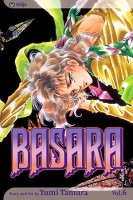
Basara, Volume 6Basara, Volumes 6-10 by Yumi Tamura. I love this series so much! It really is a shame that Basara is going out-of-print in English, but at least Viz has begun to release it digitally as well. The story is epic and engaging and the characters are complex and multi-layered. These particular volumes of Basara include the Okinawa story arc, which I especially enjoyed. It’s very interesting to see how Tamura is using events and politics from throughout Japan’s history to inform her post-apocalyptic world and culture. There are definite echos from the Warring States period, World War Two, and so on. Just as it was historically, in Basara Okinawa is a separate country from Japan that maintains its own traditions, relies heavily on trade, is largely at the mercy of foreign military influence, and is beset by natural disasters. Also, it’s the homeland of karate, which plays a part in some of the battles. (As a karateka myself, I couldn’t help but appreciate this.) I’m really looking forward to reading more of the series.

Entangled CircumstancesEntangled Circumstances by Kikuko Kikuya. I ended up enjoying Entangled Circumstances much more than I thought I would. I found the first chapter or so to actually be a little boring, but by the end of the volume Entangled Circumstances had managed to turn itself into a rather funny, and even a little sweet, boys’ love story. Actually, bonus chapters after the main story were the funniest and probably the favorite part of the manga for me because of that. Shibui and Himeko were once college classmates, but now they work at the same advertising agency. Himeko’s been in love with Shibui for a while now, but after a past awkward love confession, things have been strained between the two men. Often they seem to act like high schoolers rather than full-grown adults, so it’s difficult to take Entangled Circumstances completely seriously. It’s a lighthearted and fluffy sort of manga. The manga is nothing extraordinary, and I don’t know that I will necessarily need to read it again, but it was quite enjoyable.

ZooZoo by Andy MacDonald. I haven’t read the original novel Zoo, a science fiction thriller written by James Patterson and Michael Ledwidge, but MacDonald’s graphic novel adaptation somehow came into my possession, so I figured I’d give it a try. Since I haven’t read the original, I can’t definitively say how the graphic novel works as an adaptation, but I get the impression that MacDonald has been very faithful to the source material. The Zoo graphic novel can be somewhat text-heavy and some of the plot lines are a little compressed (though not exactly rushed) but I was never confused as to what was going on. Even so, I may have rolled my eyes a bit at the plot’s development and some of the rather predictable “twists.” Unfortunately, Zoo just doesn’t have that original or great of a story to begin with and I had a difficult time suspending my incredulity. The ending in particular was rather disappointing. Zoo starts out as a fairly action-packed, and bloody, doomsday scenario, but its heavy-handed moral can be a bit much.

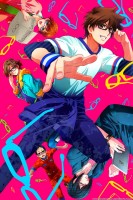
MeganebuMeganebu! directed by Soubi Yamamoto. I already knew that I enjoyed Yamamoto’s visual style from her previous work and so I wasn’t disappointed by Meganebu!‘s brightly colored and slightly eccentric animation. Even so, it took a few episodes for the series to really grow on me. There’s not really much of a plot to Meganebu!. There are the members of the Glasses Club and their continuing efforts to create a pair of glasses with X-Ray vision (with some very unexpected and explosive results) but mostly the series just follows their daily lives and the trouble they all get into. Once I got over the fact that Meganebu! is fairly pointless, I could sit back and enjoy its peculiar sense of fun. As a glasses wearer myself, I could particularly appreciate all of the humor surrounding eyeglasses. To the members of the Glasses Club, glasses are more than just a fashion accessory. Neither are they simply used to correct vision. Glasses have the power to change the world. Meganebu! is an absurd anime, but I’ll admit to enjoying it.

Filed Under: FEATURES, My Week in Manga Tagged With: Andy MacDonald, anime, basara, comics, Kikuko Kikuya, manga, Meganebu, Yumi Tamura

Ciao, zombies and Attack on Titan

January 13, 2014 by Brigid Alverson

Information is finally starting to come out about the new Sailor Moon anime; it will begin airing in July and will be streamed worldwide by NicoNico and subtitled in 10 languages. The anime is not a remake of the original anime but will be a new adaptation of the manga, according to the producer. Erica Friedman has some thoughts on all this.

The Manga Bookshelf team discusses this week’s new releases and their Pick of the Week.

Erica Friedman updates us on all the latest yuri news in her latest Yuri Network New post at Okazu.

Lori Henderson rounds up some end-of-the-year manga news in her latest Manga Dome podcast at Manga Xanadu.

Erica Friedman looks at Ciao, the top-selling shoujo manga magazine in Japan.

Jason Thompson looks at ten zombie-themed manga in his latest House of 1000 Manga column at ANN.

Five volumes of Attack on Titan made this week’s New York Times best-seller list, including volume 10, which tops the list.

News from Japan: Wandering Son manga-ka Takako Shimura is working on a new series, a sequel to the 2012 one-shot “Musume no Iede.”

Reviews: The Manga Bookshelf team files their latest set of Bookshelf Briefs. Ash Brown looks back at a week’s worth of manga reading at Experiments in Manga.

Harry Edmundson-Cornell on vol. 3 of 20th Century Boys (Sequart)
Alex Hoffman on vols. 1-4 of 7 Billion Needles (Manga Widget)
Justin on vol. 1 of All Purpose Chemistry Club (Organization Anti Social Geniuses)
Sean Gaffney on vol. 11 of Attack on Titan (A Case Suitable for Treatment)
Carlo Santos on vol. 9 of Bokurano: Ours (ANN)
Erica Friedman on vol. 1 of Fate/Zero (Okazu)
Lesley Aeschliman on vol. 12 of Fullmetal Alchemist (Lesley’s Musings… on Manga)
Steve Bennett on vol. 1 of Kingdom Hearts 358/2 (ICv2)
Anna N on vol. 1 of Nisekoi: False Love (Manga Report)
Ash Brown on Oishinbo A La Carte: Fish, Sushi, and Sashimi (Experiments in Manga)
Lori Henderson on vols. 8-10 of Pandora Hearts (Manga Xanadu)
Michael Buntag on vol. 5 of Sailor Moon (NonSensical Words)
Rebecca Silverman on vol. 12 of Sakura Hime: The Legend of Princess Sakura (ANN)
Kate O’Neil on vol. 17 of Soul Eater (The Fandom Post)
Ash Brown on vol. 1 of SS Astro (Experiments in Manga)
Sakura Eries on vol. 1 of Summer Wars (The Fandom Post)
Sean Gaffney on vol. 1 of Takasugi-san’s Obento (A Case Suitable for Treatment)
Kristin on Tropic of the Sea (Comic Attack)
Lori Henderson on vol. 1 of Voice Over! Seiyu Academy (Manga Xanadu)

Filed Under: MANGABLOG

Nisekoi: False Love Vol 1

January 12, 2014 by Anna N

Nisekoi: False Love Vol 1 by Naoshi Komi

I don’t tend to track trends in English releases of shonen manga as much as I do shoujo manga, but it certainly seems like it has been some time since we’ve seen a shonen romantic comedy set in high school. Raku is the typical shonen protagonist who (say it together with me!) “just wants a normal high school life.” Unfortunately while Raku has set his goal as becoming a reliable civil servant, his desire to be boring and normal is foiled by the fact that he’s the heir to a yakuza clan. Raku also is dealing with the aftermath of an encounter in his youth, when he exchanged vows of love with a girl he cannot remember. He has a special pendant in the shape of a lock, and his faceless beloved is holding on to the key. But Raku doesn’t remember her name!

Raku starts school awkwardly failing to ask out the nicest and prettiest girl in school, Ondera. His romantic ambitions are foiled when a new girl appears in his class. Chitoge is cute, athletic, and brash and she and Raku naturally start bickering immediately. They are assigned desks next each other as well as duties after school and they spend most of their time arguing so much, their classmates start to wonder if they are especially close. Things get even worse for Raku when he agrees to pretend to be romantically involved with the daughter of a rival gang boss in order to preserve peace, only to find out that his new “girlfriend” is Chitoge. Under the watchful eyes of retainers from both families, Raku and Chitoge go through the motions of a weekend date, only to find out that their romantic status has been announced at school as well, leaving them no rest from their charade.

There’s plenty of humor in this title even though it doesn’t reach the laugh out loud heights of Oresama Teacher. Komi frequently draws rictus-like facial expressions when his characters are in the grips of strong emotions. While the love triangle in this book is predictable, it certainly isn’t more derivative than the typical shoujo title. Chitoge and Raku’s similar backgrounds and tendencies to freak out often make them seem like natural friends with something in common, whereas Ondera’s more retiring personality makes her someone that Raku can easily admire from afar even though he doesn’t know her very well. While I didn’t connect with this title the same way I do my treasured shoujo romances, for anyone looking for shonen romantic comedy I think this will be an enjoyable manga to read. The art is well-executed, the personalities of the characters are interesting if a bit broadly drawn, and random yakuza thugs make everything more fun.

Filed Under: REVIEWS Tagged With: nisekoi, Shonen, viz media

Romeo And Juliet

January 12, 2014 by Sean Gaffney

By William Shakespeare. First published in Britain in 1597 by John Dexter (Q1), then in 1599 by Cuthburt Burby (Q2). Review copy from ‘The Arden Shakespeare: Third Series’, edited by René Weis.

This actually came out in printed format a couple of years ago, but I never reviewed it, mostly as I don’t have much to say about Romeo And Juliet as a play. It’s sort of like giving your opinion on Hamlet – I’m not sure where to begin, or if my opinion is even relevant. I’d really never gotten as attached to it as I had to, say, Measure for Measure or Troilus and Cressida, though I can recognize its greatness. However, it coincidentally happened to be the first Arden Shakespeare release to come out as an ebook – I got mine on Kindle via Amazon – and so I thought I’d take a look, seeing what the ebook version can give to me, and also reassessing the play.

romeo

I generally prefer Shakespeare’s comedies to his tragedies, so it helps that this one is structured very much like a comedy till the deaths start happening, with lots of back and forth between servants and comedic sexual banter from Mercutio. But where in Much Ado the characters might get a bit angry at times, here almost everyone is constantly on edge – the first scene has the two families come to blows pretty much because they walk past each other – and therefore even comedic situations can ignite a spark. This is not helped by Mercutio (again), who practically goads Tybalt into killing him. Mercutio is much beloved as a character, mostly as he’s a more ‘modern’, with it guy compared to soppy Romeo and raging Tybalt, but he’s just as bad at keeping his temper and not doing dumb things.

And so tragedy does happen, as the crazy scheme to feign Juliet’s death till Romeo can come spirit her away goes soup. Juliet is one of the great female characters created by Shakespeare (which yes, was created for a young boy to perform), and it’s not just to avoid scandal that the actresses are usually much older than the ‘about to turn 14’ Juliet is. The audience is willing to suspend disbelief in order to see a truly stellar piece of acting, and Juliet gives a lot of fuel to burn there. Not to sell Romeo short – he starts off as a callow youth going through the motions of being lovestruck, but the way Shakespeare changes his vocabulary once he meets Juliet is one of the best parts of the play.

I actually found it easier to read this as an ebook – the printed version has the annotations (telling you what this Elizabethan term meant, etc.) on the bottom of the page, but your eyes still bounce up and down constantly as you track when the next note is. With the ebook you can tap to the endnote, then tap right back, making it flow better. The endnotes and annotations are positioned well – some ebooks have issues with endnotes, meaning you have to wait 30 seconds for the book to ‘catch up’ to you before you can return to the text, but not here. The only issue I had was with the facsimile of Q1 being too small to read on my phone, but larger ebook devices shouldn’t have that problem.

The scholarship here is good – Weis’ introduction is informative without overstaying its welcome, and the text fuses together Q1 and Q2 in ways that make sense (and are explained throughout), making this a very readable Romeo And Juliet. I suspect it was chosen to debut the ebook editions simply as it was one of the more recent books – formatting books like these doesn’t come quickly – and would not be surprised if Coriolanus, which came out in 2013, is the next one we see. In any case, those looking to dip their toes into Critical Editions of Shakespeare’s plays or just wanting a good readable ebook Romeo and Juliet should greatly enjoy this edition.

Filed Under: REVIEWS

The Fiend with Twenty Faces

January 10, 2014 by Ash Brown

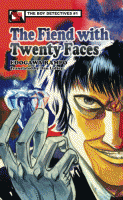
The Fiend with Twenty FacesAuthor: Edogawa Rampo
Illustrator: Tim Smith 3

Translator: Dan Luffey
U.S. publisher: Kurodahan Press
ISBN: 9784902075250
Released: March 2012
Original release: 1936

Edogawa Rampo, the pen name of Tarō Hirai, was one of Japan’s preeminent authors of the erotic grotesque nonsense movement. However, he was also well-known for his detective and mystery stories. Later in his career he even wrote a series for children called The Boy Detectives. The first and possibly best-known novel in this series was The Fiend with Twenty Faces, originally serialized in the boys adventure magazine Shōnen Club in 1936. The English translation of The Fiend with Twenty Faces by Dan Luffey was published by Kurodahan Press in 2012 with illustrations by Tim Smith 3. Although Rampo was a prolific and extremely influential author in Japan, relatively few of his works have been translated into English. So far, The Fiend with Twenty Faces is the only example of Rampo’s stories for a young audience to have been made available. As a fan of Rampo’s ero guro works, I was curious to read something a little different of his.

Terrorizing the wealthy of 1930s Tokyo is a criminal known only as Twenty Faces, a master of disguise who can change his appearance with such ease that no one has been able to uncover his true identity. Using his skills of disguise and his tremendous intellect, he steals whatever suits his fancy–priceless jewels, family heirlooms, works of art–nothing is safe. He has even been known to resort to kidnapping. To make things even worse, Twenty Faces announces exactly what it is he intends to steal and when. But even armed with this knowledge, no one has yet been able to put an end to his crime spree. The only person who might be a match for Twenty Faces is the famous detective Akechi Kogorō. Unfortunately, he is currently overseas working on an important case. However, he has left behind Kobayashi Yoshio, his young assistant and protégé, to attend to his affairs. Kobayashi may be extremely clever, but Twenty Faces is cleverer still. With Akechi away, there is little hope that the criminal can be stopped, but maybe Kobayashi can at least make things a little more difficult for him.

Rampo very clearly draws from other great mystery writers in his creation of The Boy Detective series in general and in The Fiend with Twenty Faces specifically. Influences from Maurice Leblanc’s series featuring the infamous gentleman thief Arsène Lupin and Arthur Conan Doyle’s mysteries with the master detective Sherlock Holmes can particularly be seen in The Fiend with Twenty Faces. Twenty Faces shares similarities with Lupin and Akechi exhibits many of the same skills that Holmes possesses. Having previously read many of Rampo’s short stories (at least those available in English), I was already familiar with Akechi from his mysteries aimed at adult audiences. I’m actually rather fond of Akechi and so was quite pleased when he made his appearance in The Fiend with Twenty Faces, even if it did take nearly half of the novel before he finally returns from overseas.

The Fiend with Twenty Faces was highly entertaining and a tremendous amount of fun. Despite being a mystery, the novel is a fairly straightforward adventure story written for a younger audience. As someone who is fairly well-read, I was able to anticipate most of the twists and turns in the plot of The Fiend with Twenty Faces. If something seemed to be too convenient or unlikely to be a coincidence, it’s most likely because it was. However, I still enjoyed the story a great deal. The characters are also fairly engaging. Twenty Faces himself is a bit of an arrogant bastard and his rivalry with Akechi is marvelous to watch unfold. I could easily imagine reading the novel aloud; Rampo’s writing addresses the reader directly and would be well-suited for performance with very little modification needed. I’m not sure if any more of the novels in The Boy Detectives series will be translated, but I’m glad to have had the opportunity to discover firsthand one of the other reasons why Rampo’s influence has been so enduring in Japan.

Filed Under: REVIEWS Tagged With: Boy Detectives, Edogawa Rampo, Kurodahan Press, Novels

Manga the Week of 1/15

January 9, 2014 by Sean Gaffney, MJ, Ash Brown, Michelle Smith and Anna N 2 Comments

excel27

SEAN: This is it, folks! The 27th and final volume of Excel Saga ships next week! There will be laughs! Romance! Resolution! … Perhaps less resolution than we would like, but hey! Everyone in the entire world will be buying this volume!

MJ: Or we will at least pretend to, in order to keep you smiling.

SEAN: So, what are you reading this week?

…

Oh right, there are other releases as well, which are being nice enough to share their release date with the majesty that is the final volume of Excel Saga, so I suppose I should discuss them.

Kodansha has the 6th volume of Missions of Love, which keeps riding the edge between trashy good and trashy bad, but as long as it keeps riding that edge, I’ll keep reading.

ASH: As will I!

MICHELLE: I read the first couple of volumes last year and just never went back to it.

SEAN: There’s also the 3rd Sherlock Bones volume, combining mysteries and cute dogs as only Japan can.

And for those who enjoyed Tokyo Mew Mew and wish it had a followup, well, here’s Tokyo Mew Mew A La Mode in one omnibus. It is not controversial at all, and is beloved by all TMM fans. Really. Trust me.

SubLime has the 6th volume of His Favorite, whose cover is slightly less silly looking than previous ones, but which hopefully is still just as much fun for BL fans. I’ve heard good things about this series.

MJ: I’ll be looking forward to see how well this series wears, six volumes in.

SEAN: A brief reminder that NONE of these series are Excel Saga. Ask your local bookseller for EXCEL SAGA 27 by name. Accept no imitations!

nights

SubLime also gives us a short story collection with the oddly capitalized title NightS. The S stands for… who knows. Seme? Sadist? Saucy?

ASH: I have no idea, but I do know I love Kou Yoneda’s work. I’ve been looking forward to this release.

MICHELLE: Me, too. I really liked No Touching At All.

MJ: Apparently, it stands for $. I’ll be picking it up, too.

SEAN: Vertical has the 3rd volume of Medieval manga Wolfsmund, which I have no doubt will continue to be depressing as hell, but I know some others on the Bookshelf enjoy it.

ASH: Yeah, that would be me. The first two volumes were extremely dark and intense to say the least.

SEAN: Viz has the 8th volume of 07-Ghost, still packed with ghosts, gods, and bishops, and still featuring heavily in my “I need to catch up with that” list.

MICHELLE: And mine, as well.

MJ: And mine!

ANNA: Mine too. I need to schedule a catch up with 07-Ghost day, because I did really enjoy the first few volumes, and the subsequent volumes keep piling up.

SEAN: And there’s Vol. 49 of Case Closed, which began in Japan in 1994, and thus manages to be the only series on this list older than Excel Saga. It is also 22+ volumes longer than Excel Saga. And it also has some very well written mystery and suspense… which, by the way, Excel Saga also had, to the surprise of those expecting what the anime gave them.

So, to sum up, Excel Saga. Final Volume. Get It. And some other stuff. What are you getting next week (hint: Excel Saga)?

MICHELLE: *snerk*

MJ: Yep. Totally Excel Saga. Yep.

ANNA: What is this about? I’m assuming it is about office workers and spreadsheets.

SEAN: You will all be first against the wall when Il Palazzo conquers the world. Hrmph.

Filed Under: FEATURES, manga the week of

Takasugi-san’s Obento, Vol. 1

January 9, 2014 by Sean Gaffney

By Nozomi Yanahara. Released in Japan by Media Factory, serialization ongoing in the magazine Comic Flapper. Released in North America by Digital Manga Publishing.

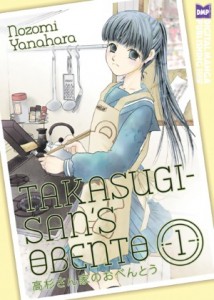
I must admit, as I got further and further into this series, it kept reminding me of a Hakusensha shoujo. The art style and tendency towards tinny textual comments in particular, not to mention that one of the characters is a straight up Expy of Shinobu from Teru Teru x Shonen. And sure enough, the author worked for Hakusensha for years doing one-volume short series for LaLa and LaLa DX before starting this series, her longest, for Comic Flapper. Flapper is sort of a seinen title, but in practice tends to be ‘shoujo for adult males’ a lot of the time. And for this title, the adult male is also the star of the show, as the titular Takasugi takes in his 12-year-old cousin after her mother dies.

obento1

(The cover art has been slightly changed for the print edition, but this is the only image I could find.)

It’s honestly really hard not to compare this to Bunny Drop. Takasugi-san’s Obento has an awkward single male, around 31, who ends up being the relative who takes in a quiet and closed-off child still grieving for the death of her parent. Things are awkward but they slowly begin to bond and forge a life together, with the help of his workplace friends, one of whom begins to have a major crush on him. Takasugi seems to be somewhat bad at reading people’s hearts, despite having a Ph.D in Geography (I agree with Anna from Manga Report, by the way, clearly Cultural Anthropology is what’s implied here). Luckily, he improves over the course of the volume to a certain extent.

The interesting thing here is that he and Kururi, his cousin, end up bonding over their shared love of bentos, which his aunt made for him when he was growing up and then continued to make for Kururi when she was growing up. Kururi really comes alive when she’s comparison shopping and stressing over food prices, which are really important to her (to an extent her obsession with food almost reads like a function of her grief, but I think a lot of it was there to begin with). This is not a foodie manga by any means – you get no recipes, and will have to google to see what Kimpira Burdock is, as there are no translation notes – but the food seems to help tie everything together, both with Takasugi’s new family and with his friends and colleagues.

The series is seven volumes and still going in Japan. It’s also, unlike Bunny Drop, not scanlated and spoilered to hell and back. Which makes it all the more awkward that the first volume ends by showing us that 12-year-old Kururi has a giant crush on her 31-year-old cousin, and is drawing charts to see if they can get legally married. I’m hoping the series backs away from this pairing eventually – there is a running gag of everyone thinking Takasugi is a horribly creepy pervert that I had thought was there to show people the title wouldn’t go that way, and Kosaka (the colleague who has a crush on him) is adorable and I really want to see that relationship develop instead. But I can’t deny that this is Japan, and it’s possible that the manga might go down that road eventually. So if Bunny Drop burned you, consider yourself warned.

Overall, though, this was cute and adorable, and I managed to like all the characters quite a bit. I want to see Kururi grow and open up to others, and of course I want to see them eat more food. I will be checking out the next volume of this series (Due out in May, theoretically).

Filed Under: REVIEWS

Oishinbo, A la Carte: Fish, Sushi & Sashimi

January 8, 2014 by Ash Brown

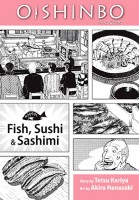
Oishinbo, A la Carte: Fish, Sushi & SashimiAuthor: Tetsu Kariya
Illustrator: Akira Hanasaki

U.S. publisher: Viz Media
ISBN: 9781421521428
Released: July 2009
Original release: 2005
Awards: Shogakukan Manga Award

With over one hundred volumes, it is very unlikely that the award-winning food manga Oishinbo will ever be licensed in its entirety in English, especially considering that the series is still ongoing at this point. However, seven volumes of Oishinbo, A la Carte have been released by Viz Media under its Signature imprint. These volumes are thematic collections which select stories from throughout the series proper. Fish, Sushi & Sashimi was the fourth Oishinbo, A la Carte collection to be published by Viz and was released in 2009. However, in Japan Fish, Sushi & Sashimi was actually the fifth volume in the series and was published in 2005. As a lover of both food and manga, it probably shouldn’t be too surprising that I enjoy Oishinbo immensely. And I’m not the only one. The series, written by Tetsu Kariya and illustrated by Akira Hanasaki, has been in serialization since 1983 and in 1987 the creators received a Shogakukan Manga Award for their work.

Because Oishinbo, A la Carte is a selection of stories from Oishinbo, the overarching story of the original series is obscured. Instead of the ongoing plot, the focus of Oishinbo, A la Carte is very much on the food itself. Fish, Sushi & Sashimi collects eight different stories centered around fish. Sushi rolls are probably one of the first things that come to many people’s minds when considering Japanese fish dishes, but not a single one will be found in Fish, Sushi & Sashimi. Generally, the fare tends to be simpler and fish the primary ingredient. The fish specifically featured in Fish, Sushi & Sashimi include white trevally, chub mackerel, sweetfish, tiger blowfish, freshwater goby, flounder, salmon, and shinko, many of which are considered to be some of the best and most desirable or delectable fish in Japan. There is also a wide variety of preparations shown, everything from raw sashimi to fried tempura.

When dealing with fish as a source of food, freshness is key. This is true for most seafood, too, and is something that most people probably know. However, Fish, Sushi & Sashimi shows that there is much more involved in the freshness of fish than just how long it has been since it has been caught. Fish are very sensitive to changes in the environment in which they live. Simply put, quality fish come from quality waters. The healthier and less polluted those waters, the better the fish. Additionally, the same fish can taste significantly different due to seasonal changes, where it is caught (and how far it has traveled afterwards), or when in its life-cycle it is eaten. As is often the case in the Oishinbo, A la Carte stories that I have so far read, Fish, Sushi & Sashimi emphasizes the importance of locally sourced and sustainable foods, which is particularly true of fish.

One of the highlights of Oishinbo, A la Carte is Hanasaki’s artwork. The people tend to be stylized but the food is always realistically drawn. The catching and cleaning of the fish, the steps in the various dishes’ preparations, and the skilled knife-work employed are all important to Fish, Sushi & Sashimi. Because Fish, Sushi & Sashimi focuses on aquatic life both in and out of its natural environments, Hanasaki also has the opportunity to beautifully illustrate Japan’s oceans, rivers, and other waterways. Another thing that particularly struck me about this volume of Oishinbo, A la Carte was how many young people were included in the stories. Family drama has always been a part of Oishinbo with the intense father-son rivalry between Kaibara Yūzan and Yamaoka Shirō. It’s extremely entertaining to watch them battle it out over and with food, but it’s also nice to see some more wholesome family relationships in the series, too.

Filed Under: REVIEWS Tagged With: Akira Hanasaki, manga, Oishinbo, Shogakukan Manga Award, Tetsu Kariya, viz media, VIZ Signature

Crunchyroll adds three new titles; Attack on Titan 1 on sale

January 7, 2014 by Brigid Alverson

If you have been curious about Attack on Titan and want to check out the first volume, Amazon has it on sale as of this writing for $2.99. Their prices change frequently, so I don’t know how long this will last.

This week’s issue of Shonen Jump (which is being released early, on Saturday) will be dedicated to Takeshi Obata’s adaptation of the novel All You Need Is Kill; the issue will include the first chapter of the manga, the first chapter of the novel, and some other Obata previews.

Crunchyroll has added three new titles to its digital manga service: Inside Mari, Silver Nina, and Love Theory. All three are from Futabasha.

The Manga Bookshelf team looks over this week’s new releases and discusses their Pick of the Week.

Shaenon Garrity takes a look at the long-running series Case Closed (she’s the English-language editor) in her latest House of 1000 Manga column at ANN.

Dave Ferraro lists his picks for the best manga of 2013 at Comics-and-More.

Alex Hoffman looks back on the manga news of 2013 at Manga Widget. Lori Henderson looks back on the past year as well in her latest Manga Dome podcast, and she devotes another podcast to a retrospective on Yen Plus, the digital manga magazine that recently ceased publication.

Lori also looks at some older manga that are getting a new life in digital format.

This was announced last month but it sort of got washed away with all the other news: Manga-ka est em, creator of Seduce Me After the Show and Red Blinds the Foolish, will be a guest at the Toronto Comic Arts Festival (TCAF) this spring.

News from Japan: Shueisha’s Margaret magazine will publish a new Rose of Versailles one-shot story by Riyoko Ikeda in May. The new Rurouni Kenshin spinoff manga will focus on the enemies in the original, according to the wife of manga-ka Nobuhiro Watsuki. Satoru Hiura will launch a new Hotaru no Hikari series in Kiss magazine. Miwa Ueda (Peach Girl) is bringing her Ariute Ikō manga to an end.

Reviews: Ash Brown looks at the past week’s manga reading at Experiments in Manga.

Johanna Draper Carlson on vol. 5 of A Bride’s Story (Comics Worth Reading)
Johanna Draper Carlson on vol. 4 of Btooom! (Comics Worth Reading)
AstroNerdBoy on vol. 5 of Love Hina (omnibus edition) (AstroNerdBoy’s Anime and Manga Blog)
Sean Gaffney on vol. 4 of Mobile Suit Gundam: The Origin (A Case Suitable for Treatment)
Matthew Warner on vol. 69 of One Piece (The Fandom Post)
Erica Friedman on Yuri☆Koi Girls Love Story (Okazu)

Filed Under: MANGABLOG

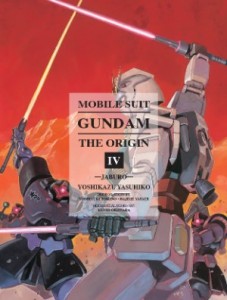
Mobile Suit Gundam: The Origin, Vol. 4

January 7, 2014 by Sean Gaffney

By Yoshikazu Yasuhiko; Original Story by Yoshiyuki Tomino and Hajime Yatate; Mechanical Design by Kunio Okawara. Released in Japan by Kadokawa Shoten, serialized in the magazine Gundam Ace. Released in North America by Vertical, Inc.

There are spoilers in this review for this volume of Gundam, though not future ones.

As you might imagine by the subtitle of this particular volume, our heroes finally reach Jaburo and are able to have the ship refitted. What’s more, surprise, everyone decides to enlist… though not everyone is happy about this. In the meantime, though, this is still Gundam, which means we get to experience the horrors of war, the death of beloved crew, and the ‘good guys’ behaving in a way that makes them look just as bad as the ‘bad guys’.

gundam4

I dpo wonder sometimes how much Yasuhiko is writing for new readers unfamiliar with things (like me), and how much of this is paced towards folks who know what’s going to happen from having watched the TV series. I ask this because Lieutenant Matilda, who walks around White Base with every male salivating around her, is basically a perfect soldier, and chose a job in the supply corps as it’s the best way she can serve in this time of need, is just walking around wearing a sign saying “Hi, I am going to die”. (One can argue that Ryu is as well, but he’s been around from the start. Indeed, Ryu and Matilda’s deaths being so close together was rather startling to me, and felt oddly paced.) I do wonder if Matilda’s foreshadowing was done deliberately as the author knew it wouldn’t be a surprise. In any case, she is a terrific character.

Speaking of which, I liked the differing reactions to the deaths of Matilda and Ryu. After Ryu dies, Hayato has a bit of an emotional breakdown, and Amuro tries to snap him out of it with a rousing speech and a “snap out of it” punch. Unfortunately, Amuro is still really emotional himself, so the whole thing degenerates into a fight. Later on, we meet Lt. Woody, who is in charge of the refit at Jaburo, and also Matilda’s fiancee. After Amuro tries to apologize for being unable to save her, Woody gives him the rousing speech he should have given to Hayato, with the backing of more maturity and experience. It was nice to see.

Not that experience means everything here. I had wondered why the kids were being SO horrible and obnoxious throughout the first half of this volume, then I got to Part Two, where they essentially save the day. These are war orphans, and they’re also little brats, but they’re smart as whips, and I will take a little unrealism in my story for the sake of them being awesome and getting rid of almost all those bombs within just a few minutes. This allowed Jaburo to get the jump on the Zeon attack, headed by Char (who is fantastic, and fails only due to a combined effort from Woody and Amuro) and Garcia (who is a cartoon villain who gets his cartoon villain comeuppance, though it’s worth noting that the series shows how dangerous cartoon villains can be when ordering actual troops to their deaths).

It will be interesting to see where things go from here. There’s several open plot threads, and not just in regards to the war. Amuro clearly has some type of PTSD, and getting psychotropic drugs from the medical crew at Jaburo so they can try and see if he’s a Newtype isn’t helping. Meanwhile, Bright and Mirai continue to get closer, despite her having a fiancee (something Bright reacts poorly too). At one point it looks as if he’s reading her thoughts, and I’m not sure if that’s deliberate or not. Volume 5 is called Char & Sayla, though, so I expect it will build on the revelation we got at the end of this volume. In any case, this is a series that everyone should be reading, and each volume builds on the last to make a real epic.

Let’s not talk Yokusaru Shibata dressing Sayla up as a buxom maid in the extras, though, which merely served to remind me why 81Diver isn’t licensed over here.

Filed Under: REVIEWS

Pick of the Week: Wandering Son & More!

January 6, 2014 by Ash Brown, Michelle Smith, Sean Gaffney, Anna N and MJ Leave a Comment

potw-1-7-14ASH: Well, as Sean put it, I hope you like manga! Seems like there is a ton of guilty pleasures and other great manga being released this week. But even though there are plenty of titles that I’m interested in reading, my heart belongs to the most recent volume of Takako Shimura’s Wandering Son. It’s such a beautifully written and drawn series and I love the deluxe treatment that Fantagraphics has given it. Wandering Son is an incredibly important series to me personally; I’m still thrilled that it’s being released in English at all.

MICHELLE: I’m so behind on Wandering Son that I feel like a hypocrite picking it, so instead I’m going to pick a shoujo favorite: Natsume’s Book of Friends, now in its 15th volume. This series doesn’t come out too frequently, as we’re almost caught up to Japan, so each new installment is like a treasured gift. The series is warm and lovely, but not without its dramatic moments. I recommend it most highly!

SEAN: And I too will go with a shoujo favorite, as I pick the 18th volume of Kimi ni Todoke. Seeing the character development of the five other main leads (yes, yes, even Kento, though I admit it grudgingly) has been excellent, but seeing Sawako’s growth has been positively sublime. Every new volume of this series always gets devoured the day I get it, and this one will be no exception.

ANNA: I’m going to have to go with DMP’s Takasugi-san’s Obento. Food manga is one of those underrepresented genres for translation, so I always feel compelled to highlight it. This slice of life story centered around bento is sure to entertain anyone who enjoys the demonstration of care that goes into a well-designed lunch.

MJ: To bring this column full-circle, I’m going to go back to Ash’s pick, because it’s mine too. Though I’m thoroughly enjoying a number of the series whose latest volumes are being released this week, including Strobe Edge, Midnight Secretary, and the shoujo favorites mentioned by my colleagues, nothing comes close to my feelings for Shimura’s Wandering Son. Not only is it lovingly translated and produced, but I find it very personally gratifying—perhaps differently than Ash does, but with similar strength. This series made my list of best continuing series in 2012, and you can count on it appearing in 2013’s list as well.

What looks good to you this week?


In case you missed it, check out our Pick of the Year – 2013!

Filed Under: PICK OF THE WEEK

My Week in Manga: December 30, 2013-January 5, 2014

January 6, 2014 by Ash Brown

My News and Reviews

Last week I announced the 4-Koma for You Winner. In case you’re looking for something to read, the post includes a list of yonkoma manga that have been released in print in English, too. I also posted December’s Bookshelf Overload last week, for those of you interested in following my adventures in buying way too much manga and other media. Finally, over the weekend I posted a review of Delavier’s Mixed Martial Arts Anatomy. This is one of the most tangentially related reviews I’ve written at Experiments in Manga. Why is it here? Simply because I’m a karateka and found it to be a useful book. It’s a great strength training resource for any martial artist. Plus, it has lots of illustrations.

I’ve more or less been on vacation for the last two weeks, so I haven’t been online much except to make sure that things were updated here at Experiments in Manga. Even so, there were two things in particular that caught my eye recently. First and foremost, the Massive anthology of gay manga originally scheduled to be published by PictureBox has been picked up by Fantagraphics! Right now, it looks like we should see the release sometime in October 2014. The other news that I was excited to hear about is that we’ll be getting a second season of the Mushishi anime nearly ten years after the first season aired. I loved Yuki Urushibara’s original manga (which is now unfortunately out-of-print in English) and I loved the first anime series so I’m looking forward to the second season a great deal.

Quick Takes

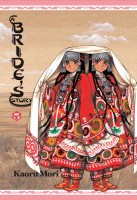
A Bride's Story, Volume 5A Bride’s Story, Volume 5 by Kaoru Mori. The art in A Bride’s Story always blows me away. Mori’s illustrations are so beautiful and detailed that it’s no surprise that there’s such a long wait in between each volume’s release. Most of the fifth volume of the series is devoted to the wedding between the twins and their husbands-to-be. The best word that I can think of to describe this volume is “joyous.” Mori shows the preparations that both families make for the happy occasion–a celebration that lasts an entire week. There’s dance and song, levity, plenty of food, and numerous guests. It’s extremely satisfying to see the entire community’s participation in the event. The manga as a whole is a gorgeous work, but the wedding itself is quite lovely. I enjoyed seeing the twins’ story develop. Their outgoing personalities might be annoying for some readers, but in the end I found the two of them to be quite endearing. Now begins the long wait for the next volume of A Bride’s Story.

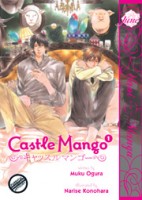
Castle Mango, Volume 1Castle Mango, Volume 1 written by Narise Konohara and illustrated by Muku Ogura. Despite what the cover and title page of Digital Manga’s release indicate, Konohara wrote Castle Mango while Ogura was responsible for the artwork. Konohara is the same author who wrote About Love, which I quite enjoyed, so I was interested in reading Castle Mango. Both manga are slightly atypical boys’ love stories. Instead of being straightforward man-meets-man romances, the stories are more layered. There is an emphasis on well-developed characters and actual plot; it’s not just about getting guys into bed with each other. The leads of Castle Mango are rather unusual as well. Yorozu’s family owns and runs a love hotel while Tagame is a well-known porn director. Yorozu more or less blackmail’s Tagame into a relationship in order to keep him away from his brother, but he doesn’t even really like the older man. Their story is concluded in the second and final volume of Castle Mango. I’m very curious to see how things unfold, so I’ll definitely be picking it up.

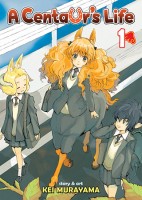
A Centaur's Life, Volume 1A Centaur’s Life, Volume 1 by Kei Murayama. One of several “monster girl” manga recently released by Seven Seas, A Centaur’s Life is far less ecchi than the other titles. Plus, this one includes plenty of monster boys in addition to the monster girls, which I greatly appreciate. The manga is definitely centered around the series’ young women, though. The titular centaur is Kimihara Himeno; the manga is mostly a slice-of-life story which follows her and her other high school friends. (As a side note, I adore Himeno’s wild mass of hair on the cover.) Some people might find reading the first chapter a little uncomfortable as the story revolves around the girls’ privates, but following chapters are much less questionable. Overall, the manga was rather charming. And I am interested in learning more about the world that Murayama has imagined; it seems that some significant thought has been put into it. Although not the focus of the series, politics, law, cultural differences, disputes between races, and history have all been taken into consideration.

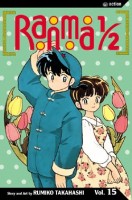
Ranma 1/2, Volume 15Ranma 1/2, Volumes 15-20 by Rumiko Takahashi. It’s been so long since I’ve read any of Ranma 1/2 that I had forgotten how much I love the series. After the main characters and basic premise are established, the manga becomes fairly episodic so it’s easy to pick up part way through the series and still know what’s going on. I find Ranma 1/2 to be hilarious and particularly enjoy the absurd martial arts that Takahashi comes up with. These particular volumes feature martial arts based around eating food extremely quickly and cheerleading, just to give two examples. I like the characters and I like the story, as silly and superfluous as it can be. Akane and Ranma seem to be no closer to getting married than they were at the beginning of the series. They argue quite a bit, but there are moments of genuine affection, too. Granted, those moments are frequently interrupted and don’t tend to last very long. The series’ off-the-wall comedy won’t be to everyone’s taste, but for me Ranma 1/2 is highly entertaining and a lot of fun.

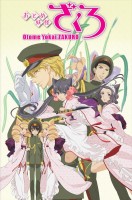
Otome Yokai ZakuroOtome Yokai Zakuro directed by Chiaki Kon. The Otome Yokai Zakuro anime is based on an ongoing manga series by Lily Hoshino (which hasn’t been licensed in English.) The story takes place in an alternate version of Japan’s Meiji Era in which yokai and humans coexist. The office of Spirit Affairs is created in order to improve relations between the two groups. It’s made up of a small contingent of military officers and half-spirit girls who team up to work together. I’ll admit, I liked the first part of the series which explored the concerns over Japan’s Westernization and loss of traditions through the conflicts between humans and yokai much more than I did its end. Seeing as the opening has a bit of a spoiler in it, the series’ major plot twist was clearly planned well in advance, but it just didn’t seem to flow well as a whole as the narrative suddenly changes direction. The romantic subplots are broadcast from the very first episode–it’s obvious who will be falling in love with who–so none of those developments were particularly surprising or unexpected, either.

Filed Under: FEATURES, My Week in Manga Tagged With: anime, Bride's Story, Castle Mango, Centaur's Life, Kaoru Mori, Kei Murayama, manga, Muku Ogura, Narise Konohara, Otome Yokai Zakuro, Ranma 1/2, Rumiko Takahashi

Delavier’s Mixed Martial Arts Anatomy

January 4, 2014 by Ash Brown

Delavier's Mixed Martial Arts AnatomyAuthor: Frédéric Delavier and Michael Gundill
Illustrator: Frédéric Delavier

U.S. publisher: Human Kinetics
ISBN: 9781450463591
Released: October 2013
Original release: 2012

Delavier’s Mixed Martial Arts Anatomy was released by Human Kinetics in 2013. The volume is a translated and revised edition of Frédéric Delavier and Michael Gundill’s Musculation Pour le Fight et les Sports de Combat, originally published in France in 2012. Delavier and Gundill have collaborated with each other on many works focusing on strength training, bodybuilding, and anatomy, several of which have been released in English by Human Kinetics. I was particularly interested in Delavier’s Mixed Martial Arts Anatomy since I myself am a martial artist. I have had some cross-training in other styles (namely tai chi, aikido, and hung gar), but my primary focus in the martial arts has been on traditional Okinawan karate, specifically Shōrin-ryū and Shūdōkan, as well as kobujutsu. Even though I’m not currently active in mixed martial arts, I anticipated that Delavier’s Mixed Martial Arts Anatomy would still be applicable to my own martial arts training. I was very pleased when I was selected to receive a review copy of the work through LibraryThing’s Early Reviewers program.

After a short introduction that establishes why martial artists should pursue strength training, Delavier’s Mixed Martial Arts Anatomy is divided into three major parts: “Principles of Strength Training,” “Strength Training Exercises for Fighting,” and “Training Programs.” The first part covers the basics of strength training and how it can be applied by martial artists to complement their martial arts training. The section specifically focuses on techniques used to increase strength, power, and flexibility, to improve conditioning and endurance, and to prevent injury and support recovery. The strength training exercises are arranged by their practical applications: strengthening the neck, jaw, and core, improving punches, strikes, and kicks, and developing better grabs, pulls, chokes, and throws. The section devoted to training programs provides examples of basic, specialized, and customized strength training programs and circuits.

Delavier’s Mixed Martial Arts Anatomy could have just as easily, and perhaps more accurately, been called Strength Training for Martial Artists. The book outlines strength training principles, exercises, and programs that have been modified for use within any martial arts or combat sports context, and not just specifically in mixed martial arts. Traditional bodybuilding exercise have been modified to mimic fighting conditions to more effectively develop muscle strength and endurance for practical rather than simply aesthetic applications. There is also an emphasis on compound exercises over isolation exercises since martial arts require the use and engagement of the entire body instead of individual muscle groups. Delavier’s Mixed Martial Arts Anatomy focuses on five goals: increasing muscle mass and weight, increasing strength, increasing power, improving isometric endurance, and improving muscular endurance.

Fighters and martial artists who are just beginning to supplement their regular practice with strength training will benefit the most from Delavier’s Mixed Martial Arts Anatomy. However, those who are more experienced should also be able to find useful information and valuable recommendations in the volume. Delavier and Gundill do assume at least some basic familiarity with the use of weights, bands, and other equipment, but for the most part the book is suitable for beginners. All of the exercises described include variations which allow them to be adjusted to better suit a martial artist’s particular fighting style, body type, or current level of experience or strength. The risks and martial benefits of each exercise are also included which further helps to customize and tailor a program for a martial artist’s individual needs. Delavier’s Mixed Martial Arts Anatomy is a fantastic volume–accessible, well-organized, as well as practical. I know that my own training has already benefited from what I’ve learned by reading it.

Thank you to Human Kinetics for providing a copy of Delavier’s Mixed Martial Arts Anatomy for review.

Filed Under: REVIEWS Tagged With: Frédéric Delavier, Michael Gundill, Nonfiction

  • « Go to Previous Page
  • Page 1
  • Page 2
  • Page 3
  • Page 4
  • Go to Next Page »
 | Log in
Copyright © 2010 Manga Bookshelf | Powered by WordPress & the Genesis Framework