• Skip to primary navigation
  • Skip to main content
  • Skip to primary sidebar
  • Home
  • About Us
    • Privacy Policy
    • Comment Policy
    • Disclosures & Disclaimers
  • Resources
    • Links, Essays & Articles
    • Fandomology!
    • CLAMP Directory
    • BlogRoll
  • Features & Columns
    • 3 Things Thursday
    • Adventures in the Key of Shoujo
    • Bit & Blips (game reviews)
    • BL BOOKRACK
    • Bookshelf Briefs
    • Bringing the Drama
    • Comic Conversion
    • Fanservice Friday
    • Going Digital
    • It Came From the Sinosphere
    • License This!
    • Magazine no Mori
    • My Week in Manga
    • OFF THE SHELF
    • Not By Manga Alone
    • PICK OF THE WEEK
    • Subtitles & Sensibility
    • Weekly Shonen Jump Recaps
  • Manga Moveable Feast
    • MMF Full Archive
    • Yun Kouga
    • CLAMP
    • Shojo Beat
    • Osamu Tezuka
    • Sailor Moon
    • Fruits Basket
    • Takehiko Inoue
    • Wild Adapter
    • One Piece
    • After School Nightmare
    • Karakuri Odette
    • Paradise Kiss
    • The Color Trilogy
    • To Terra…
    • Sexy Voice & Robo
  • Browse by Author
    • Sean Gaffney
    • Anna Neatrour
    • Michelle Smith
    • Katherine Dacey
    • MJ
    • Brigid Alverson
    • Travis Anderson
    • Phillip Anthony
    • Derek Bown
    • Jaci Dahlvang
    • Angela Eastman
    • Erica Friedman
    • Sara K.
    • Megan Purdy
    • Emily Snodgrass
    • Nancy Thistlethwaite
    • Eva Volin
    • David Welsh
  • MB Blogs
    • A Case Suitable For Treatment
    • Experiments in Manga
    • MangaBlog
    • The Manga Critic
    • Manga Report
    • Soliloquy in Blue
    • Manga Curmudgeon (archive)

Manga Bookshelf

Discussion, Resources, Roundtables, & Reviews

Archives for April 2012

New Licenses include Thermae Romae, Oreimo

April 9, 2012 by Brigid Alverson

This was a busy weekend, with Sakura Con on the West Coast and Anime Boston out East, and publishers at both cons had some new licenses to announce. Sean Gaffney has a good roundup; here are the highlights:

As we noted on Friday, Vertical announced it had rescued Ai Yazawa’s Paradise Kiss, originally published by Tokyopop.

Yen Press announced Thermae Romae, Kaoru Mori’s Anything and Something (a book of short stories), Umineko When They Cry (a sequel to Higurashi When They Cry), Blood Lad, Alice in the Country of Hearts: My Fanatic Rabbit, The Misfortune of Kyon and Koizumi (a Haruhi spinoff), and Triage X, by the creator of Highschool of the Dead.

Dark Horse’s new announcements included Oreimo/My Little Sister Can’t Be This Cute, Blood-C (based on the anime), Evangelion: Comic Tribute, Emerald and Other Stories (by Blade of the Immortal manga-ka Hiroaki Samura), and a novel by Yoshitaka Amano, Deva Zan.

For those who are fascinated by process, MJ describes her work as an editor for the Digital Manga Guild. MJ is very articulate, so I’m sure she is a good editor, but Digital has is no managing editor supervising her work, nor is there a proofreader checking it, which is troubling.

Kristin picks the manga highlights from the April Previews at Comic Attack.

Connie puts the artist spotlight on BL manga-ka Toko Kawai.

Lori Henderson celebrates Easter with some manga that feature eggs.

Reviews

Johanna Draper Carlson on vol. 10 of Bakuman (Comics Worth Reading)
Leroy Douresseaux on vol. 10 of Bakuman (The Comic Book Bin)
Leroy Douresseaux on vol. 39 of Bleach (The Comic Book Bin)
Drew McCabe on Dororo (Comic Attack)
Johanna Draper Carlson on vol. 12 of Kurosagi Corpse Delivery Service (Comics Worth Reading)
Lesley Aeschliman on vol. 4 of Sailor Moon (Blogcritics)
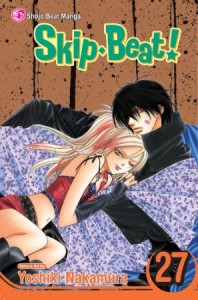
Sean Gaffney on vol. 27 of Skip Beat! (A Case Suitable for Treatment)

Filed Under: MANGABLOG

Pick of the Week: Cross Game & More

April 9, 2012 by Michelle Smith, Sean Gaffney, Katherine Dacey and MJ 4 Comments

There’s plenty to choose from at Midtown Comics this week. Check out the Battle Robot’s picks below!


MICHELLE: Decisions, decisions. I will definitely be picking up the latest volumes of Arisa and Itazura Na Kiss, and I’m tempted by the second volume of Countdown 7 Days, as well. But really, the one absolutely can’t miss release for next week is volume seven of Cross Game. This, the penultimate volume of VIZ two-in-one release, contains volumes fourteen and fifteen of the original series, and is sure to be chock full of baseball and slice-of-life relationship goodness. I shamelessly implore everyone to buy Cross Game so that we may see more Adachi released here in future!

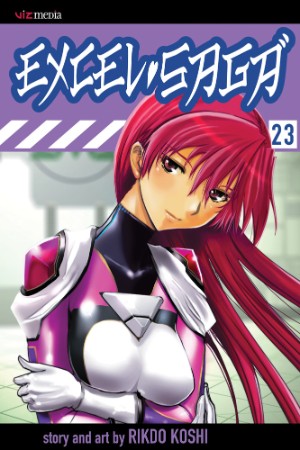
SEAN: For those of you who might have been living in a cave for the past couple of years, I will tell you that my pick this week is Volume 23 of Rikdo Koshi’s bubble economy sentai satire Excel Saga. It only comes out once a year now (and the liner notes indicates that isn’t going to change even now that it’s done in Japan, as it says “see you in 2013”), but that just makes it an event, and in the past few volumes we’ve seen the author pull out all the stops and keep developing the actual plot he’s had going. (Yes, anime fans, the manga has a plot. I realize that may be off-putting to you.) An incredibly underrated series, buy it today and make Carl Horn smile. You want to see Carl smile, right?

KATE: I heartily second all of Michelle’s selections, but ultimately cast my vote for Rohan at the Louvre. Like Glacial Period, Sky Over the Louvre, and On the Odd Hours, this manga takes the famous museum’s immense collection as its starting point, building a story around a mysterious, 200-year-old painting. The author is Hirohiko Araki — he of JoJo’s Bizarre Adventure — and the lead character a minor character from the JoJo universe. From the summary at the NBM site, I don’t think prior knowledge of JoJo is a prerequisite for enjoying the story, which makes this a great, commitment-free way to get acquainted with Araki’s work.

MJ: I’ll admit that my top choice this week is probably the same as Kate’s, Rohan at the Louvre, and my second is Michelle’s, Cross Game (and yes, I do want to see Carl Horn smile), but since these have already been praised, I have the chance to throw my vote elsewhere. So with that in mind, I’ll name volume two of Dark Horse’s omnibus edition of Magic Knight Rayearth. Though I’m certainly a CLAMP fan, I’ll admit this is one series I’ve never actually read, and with the CLAMP MMF looming up in July, it’s time for me to study up! The fact that Kate chose this edition as a runner-up in her Best Manga of 2011 gives me a lot of confidence that catching up with Magic Knight Rayearth will be worth my while. I look forward to discussing it in July!


Readers, what looks good to you this week?

Filed Under: PICK OF THE WEEK

Bookshelf Briefs 4/9/12

April 9, 2012 by Sean Gaffney, Katherine Dacey and Michelle Smith 1 Comment

This week, Sean, Michelle, and Kate look at recent releases from JManga, Viz Media, Dark Horse, and Vertical, Inc.


Ekiben Hitoritabi, Vol. 2 | By Jun Hayase | JManga – If you read volume one of Ekiben Hitoritabi, then you know what to expect from volume two. In this volume, middle-aged bento shop proprietor Daisuke Nakahara continues to travel around Japan by rail, acquiring two new companions who are initially reserved but eventually succumb to his relentless enthusiasm for railway facts and train station bentos. It’s fairly formulaic, but the panoramic vistas and detailed food drawings are still enjoyable, and dialogue like, “This whole shrimp is pretty lavish! It’s large and filling” inspires indulgent amusement rather than mean-spirited snickering. I even got a little verklempt during the chapters where Daisuke takes a boy on the train journey promised by his now-deceased father. It may not be the most exciting manga ever published, but it’s certainly got its own unique, leisurely charm. Thank you, JManga! – Michelle Smith

GTO: 14 Days in Shonan, Vol. 2 | By Toru Fujisawa | Vertical, Inc. – After unexpectedly enjoying the first volume of GTO: 14 Days in Shonan, I was really looking forward to the second. Happily, it did not disappoint. In fact, I liked it even better than the first as, aside from a gag wherein our protagonist’s nether-regions are the target of a swarm of ants, it’s more serious, focusing on Onizuka’s attempts to not only rescue Miki Katsuragi, the rebellious teen who’s caused him so much trouble, from a kidnapper but to get her police chief dad to realize that she’s been acting out in a desperate bid for his attention. Because we are privy to Onizuka’s more bumbling moments, his clear-eyed, rule-defying pursuit seems even more impressive and heroic by comparison. Okay, maybe there’s a little blatant heartstring-pulling here, with the whole “all of us worked as one” search party, but you know what? I don’t care. It’s effective. Bring on volume three! – Michelle Smith

GTO: 14 Days in Shonan, Vol. 2 | By Toru Fujisawa | Vertical, Inc. – For all that GTO can be moralistic in its “life isn’t as bad as you think it is” ways, there’s no denying that it shows life can be pretty damn bad. These kids aren’t just cynical teenagers with no worries – they deal with abuse, gang culture, and as we see here, kidnappers drugging them into online prostitution. That said, the basic theme of “children act up as the adults have abandoned them” reappears here, and we see how “The Girl Who Cried Wolf” isn’t as much fun when taken seriously. Luckily we have Onizuka, who can be a complete idiot much of the time but has the strength to back it up, both physically and mentally. Gang culture is so omnipresent in Onizuka’s world as it’s the closest thing to family for most of these kids, and seeing that family rally to save one of their own is heartwarming. Plus, car chases! –Sean Gaffney

Kamisama Kiss, Vol. 8 | By Julietta Suzuki | Viz Media – The beauty of Karakuri Odette was twofold: it was a medium length series of six volumes, and its romantic focus was small. These end up being a weakness, unfortunately in her new series. Much of the recent volumes of Kamisama Kiss have been taken up with wondering how long we can drag out the on-again, off-again romance/servant relationship between Nanami and Tomoe. It can be frustrating. On the up side, we do see Nanami’s cleverness here in escaping the World of the Dead, and she has improved greatly as a God. The big emotional drama in this volume, though, is saved for the end, where Nanami meets Mikage once more, who shows us why Tomoe has gaps in his memory – and why he wants Nanami to fill them. If you accept this is taking forever, it’s a good fantasy romance series.-Sean Gaffney

Kurosagi Corpse Delivery Service, Vol. 12 | Story by Eiji Otsuka, Art by Housui Yamazaki | Dark Horse – In the latest volume of KCDS, the Embalming Gang — as I like to call them — enter Second Life in search of a corpse, match wits with a girl who can leave her own body, and help a dollmaker say good-bye to the sister he lost during the 1945 Tokyo Fire Raids. The first story is the weakest of the three. Though Eiji Otsuka makes a game effort to explain how the gang’s powers work in virtual reality, the material never gels; the story feels like an grab bag of plot points from The Matrix, Invasion of the Body Snatchers, and a furry snuff film. The other two, however, are more successful, offering just the right mixture of morbid jokes, spooky surprises, and poignant moments between the living and the dead. As always, Carl Horn’s exhaustive editorial notes are a boon to the curious reader, explaining cultural references, in-jokes, and sound effects in detail. –Katherine Dacey

The Story of Saiunkoku, Vol. 6 | By Kairi Yura and Sai Yukino | Viz Media – As you would expect, just because Shurei has passed the exam to become a civil servant (which she does, in a quickly elided few pages) doesn’t mean that she gets accepted by one and all. Resented for being female, she is quickly assigned to the worst tasks in the ministry go to her (we’re talking cleaning the toilets here), and those who were bullied in school may find this volume disquieting. Like most Japanese manga dealing with bullying, it rides a fine line between “she must get stronger on her own” and “why aren’t we stopping this?”. On the bright side, I like the relationship between her and the Emperor more and more, and his sneaking off to ‘be her bodyguard’ is very clever – especially since it’s becoming harder and harder to see her otherwise. With this series, the long, drawn-out romance is justified by history and events.-Sean Gaffney

Filed Under: Bookshelf Briefs

Skip Beat!, Vol. 27

April 9, 2012 by Sean Gaffney

By Yoshiki Nakamura. Released in Japan by Hakusensha, serialization ongoing in the magazine Hana to Yume. Released in North America by Viz.

We left off last time with Ren and Kyoko posing as siblings – and all of the awkwardness that comes from this, including having to share a room. Volume 27 does now pull back on this at all, but makes things a whole lot worse, as we get to see, for once, Ren lose control rather than Kyoko.

Before that, though, we have some highly amusing scenes in which Kyoko finds, once again, it’s hard to act method when you have no idea what something is like – in this case, being spoiled. You can tell Ren is having an absolute ball with this, and Kyoko’s faces throughout as a picture – especially as she realizes that seeing Cain acting like a petulant child is actually sort of a turn-on for her/Setsu.

This cuteness is just a setup, though. The real meat of the volume is what happens next, where Kyoko is accosted by a gang of young guys looking for “a good time”. She, naturally, sics her “brother” on them, which is fine, as Ren is quite good at dodging, and these thugs are nothing special. At least until they start pulling out weapons. When one of them knocks Kyoko to the ground, the sight of Ren losing control is rather scary. If not for us (we’ve had flashbacks spoiling us for Ren’s traumatic past for some time), then certainly for Kyoko, who is stunned. It’s made worse by the fact that she can’t break character, but has to break up the fight. Strong stuff here.

Afterwards, in the hotel room… well, we’ve done comedy. We’ve done drama. Now it’s time for some romance. Well, quasi-romance, that is – it’s only Vol. 27, after all, you shouldn’t expect any real development just yet. But Kyoko gets into character too easily, which means that if she’s worried about her brother drowning in a tub, she’s gonna walk in on him. What follows is both hilarious and sexy, showing the depth of feeling Ren has for Kyoko (and his complete misinterpretation of her reaction), as well as Kyoko’s growing love for Ren – which she’s oblivious to, of course. The highlight here has to be Kyoko upset that she didn’t see “all” of Ren… so that she could make her doll more realistic.

Meanwhile, just because Kyoko’s doing Setsu doesn’t mean she’s not also still involved in Box R. Indeed, her two roles are bleeding into each other, and it can be hard to switch. I like the way that Skip Beat! shows us that, even though Ren and Kyoko are prodigies, acting is still a difficult profession – and that even if you’re method acting, you still have to keep your head in the game. Which is definitely something Ren is having trouble doing. He begs Lory to have Kyoko “fired” as Setsu, as he worries he won’t be able to control himself around her. Lory agrees – provided Ren fires her himself, saying he “doesn’t need her”. Oh Lory, you’re such a wonderfully manipulative ass. XD

I mentioned this volume is Number 27, so it seems appropriate that it ends with everyone realizing just how much Kyoko has grown up recently – and how gorgeous she’s becoming. Poor Ren. He’ll have rivals before you know it. In the meantime, one of North America’s longest shoujo series continues to show why it’s so popular. Lots of fun.

Filed Under: REVIEWS

Inside the DMG: Process, process, process (Part 1)

April 8, 2012 by MJ 40 Comments

Now that you’ve all read the saga of my second group’s adventures with a disappearing editor, I’m going to take you through the DMG process from an editor’s perspective (or at least mine). Then in part two of this article, I’ll take a look at how this process might compare with that of an industry professional.


Before signing on as an editor with the Digital Manga Guild, I had exactly no experience editing manga. While I think it’s clear that DMG’s targeted labor pool was the scanlation community (perhaps specifically the BL scanlation community), I came in with no background as either a professional or a hobbyist. With that in mind, it my be unsurprising to hear that my first major realization as a new DMG editor (with four deadlines suddenly looming near) was just how little I knew what I was doing.

My second realization was that I was really on my own. There was no managing editor to go to with questions or to catch my mistakes. There was no one to mentor me through my first manga editing job. Translated scripts were simply filling up my inbox, and I had to figure out something to do with them. It reminded me of the stereotypical theater dreams that haunted me (and every young actor) for years, in which I’d find myself opening a brand new show, though I’d never learned my lines or attended a single rehearsal. Only now, the clock was ticking and the consequences were real.

The first book I was assigned to work on (before the group’s original editor vanished completely) was Keiko Kinoshita’s A Lovely Day With Yuri Sensei. The translator on these books, Aaron, worked from raw pages to provide me with a translated script, which I then edited and (when necessary) rewrote while working side-by-side with the raws.

As an example, here’s a fairly simple, straightforward page (#163) from that manga, as delivered to us by DMG.

Aaron translated this page and put it into script format, thusly:

Another thing I learned pretty early on in this process, is that every translator scripts a little differently. While Leighann (translator on Career Gate and What? Sensei) usually makes a large number of editorial choices as she translates (inserting punctuation and so on) Aaron tends to leave those things up to the editor, only inserting things like punctuation when they are specifically included in the Japanese. Though this gives me a lot of leeway for interpretation as an editor, I actually found it pretty intimidating when working on my very first manga script. As I developed my own process, I eventually made a habit of doing an initial “punctuation pass” before looking at any other aspects of the script, so that when I came back to it for rewriting, I felt like I was standing on sturdier ground.

After doing my “punctuation pass,” my next real concern with this page was dealing with gender issues. Though the Japanese language allows for discussion of an individual person without indicating gender, we have no such luxury in English. And though using plural pronouns like “them” and “they” has certainly become part of the common vernacular, in this case, I felt that keeping those in place detracted from the impact of the scene, and that it would be much more effective if we chose a gender for Yuri-sensei’s old friend. After a brief discussion with Aaron, we concluded that given the military context coupled with Yuri’s sexuality, it was probably fair to assume that the person was male, so I chose to use male pronouns in the scene.

Next, there were a couple of sentences I wanted to clean up, just for cadence and flow.

Yuri’s lines in the second panel, “It’s one of those sappy songs they used to play before the war. Someone I knew used to sing it all the time,” felt awkward with the repetition of “used to.” Furthermore, I worried that the dialogue as a whole might be too long for the speech bubbles provided. To resolve my issue with flow (and at least help the issue of length) I rewrote the first sentence as, “It’s one of those sappy songs they played before the war.”

Even after this, I feared that both bubbles would be too crowded. In some instances, I’d have included one or two alternate versions, so that our letterer (Morgan) could choose which fit best, but in this case, I was really fond of the wording as it stood, so I decided to leave it to Morgan to let me know if further shortening/rewording was necessary. I also felt that the lines in the last panel were a bit awkward, and that they’d pack more of an emotional punch with a little simplification.

I submitted the following to the group’s letterer, Morgan:

As it turned out, Morgan was able to fit the longer lines in easily. Here is the final version we submitted to DMG:

Again, this is a fairly simple example, though it required at least one pretty drastic editorial decision on my part. Other pages might require lots of back-and-forth regarding SFX, continuity, translator’s notes, discussion of word length, background text, and so on and so forth.

Once Morgan and I have finalized each chapter, we ask the group’s second editor and letterer (and sometimes the second translator) to go through for proofreading and any other questions they may have, though it’s ultimately up to me to accept or reject their changes. I also do a final re-read of the entire finished volume before submission, at which point I may request small changes in my edited adaption, usually for the purposes of consistency or flow. It’s important to note here that because of the way DMG contracts groups on individual books, members doing proofreading only are not compensated for their work. They are doing it entirely out of the kindness of their hearts, and for the benefit of the group as a whole. We do this in an attempt to decrease the chances that our books are being released with errors (see Erica Friedman’s recent article for insight on how common these errors are). For though there is some kind of QC being done at the DMG level, the evidence isn’t especially reassuring.

While lighter, uh.. porny-er books like Career Gate and (even more so) the upcoming What? Sensei contain a lot of small, crowded panels crammed with as much dialogue, aside text, and sound effects as they can hold, as you can see from the page provided here, the Yuri Sensei books tend to be quieter and a bit more sparse overall. Though it was certainly necessary at times to rewrite sentences for space purposes in these books, I could more often focus on things like tone, cadence, and characterization. And while I was much, much more nervous about editing a (relatively) serious period piece like Yuri Sensei than I was about editing our other titles, the process was also significantly more enjoyable for me, and I found myself eager to do any research or extra work necessary to be sure I was doing right by the series.

However, and I can’t possibly stress this enough, no matter how much extra work and research I was willing to put in (and this was a lot), there was no real way for me to know if I was doing right by the series, because I simply am not qualified to do so.

Though I read a lot of period manga, my knowledge of Japanese history (including this period after World War II and the American occupation) is limited to what little I learned as an American high school student (where WWII and its aftermath are taught almost exclusively from an American point of view) plus whatever I’ve read on my own over the years (more than the average American, but far less than a real student of the period). My knowledge of Japan’s cultural history during this period is even less robust. Furthermore, my Japanese language skills are nonexistent, so regardless of whatever ability I possess as a writer and editor of English, I am not capable of supplementing what is given to me by the translator with any nuances of my own—at least none that are grounded in the original Japanese. And though, luckily, Morgan does have some background in Japanese and I have industry friends to whom I may pose questions from time-to-time, without another fluent professional overseeing our work, there is every possibility that some of my editorial decisions were just plain wrong. I’ve never been a control freak, by any means, but I’ll be honest—I found this prospect terrifying while working on these books and I still do, now that they are up for sale.

As if simply to enhance my terror, a couple of chapters in to Lovely Day, we began noticing some strange things… flashbacks to incidents we’d never seen, quoted dialogue that hadn’t appeared in the previous chapters. Eventually, as the translator worked ahead, he realized that we’d been assigned the books out of order, and that these were references to Yuri Sensei is in a Good Mood Today as Well. Though our deadlines required that we finish the books out of order (Lovely Day‘s deadline was a full month before Good Mood‘s), we requested that DMG wait to release both until Good Mood was finished, so as not to confuse readers in the same way. I still worry that editing the second book first may have caused me to miss some nuances in the text. Reading the final versions, now in order, the second book reads very differently to me than it did originally. I can only hope that I didn’t miss anything vital while editing Aaron’s scripts.


A Lovely Day With Yuri Sensei – Yuri Sensei To Itoshiki Hibi © Keiko Kinoshita. All rights reserved. Original Japanese edition published in 2009 by Taiyoh Tosho Publishing, Co., Ltd. All other material © 2012 by DIGITAL MANGA, Inc., All rights reserved.

Check back soon for part two of “Process, process, process”!

Filed Under: UNSHELVED Tagged With: digital manga guild, dmg, Inside the DMG

New Manga Licenses from Sakura Con and Anime Boston

April 8, 2012 by Sean Gaffney

Been a while since I did a licenses post, but this weekend had two conventions bringing us three publishers announcing a whole bunch of titles. So what exactly is coming soon?

First off, from Vertical, a redone, re-translated, deluxe omnibus version of Ai Yazawa’s fashion romance Paradise Kiss, which first came out, not in Shodensha’s josei magazine Feel Young, but in a fashion magazine for young women, Zipper. I’ve reviewed it before for the Manga Moveable Feast, and it’s a great pick up. Yazawa went on to the even more popular Nana, of course, and fans of that series should like this as well.

Dark Horse announced several licenses that seemed obvious for them, but the one that stood out was the one that didn’t. Ore no Imōto ga Konna ni Kawaii Wake ga Nai (better known as OreImo, and translated as My Little Sister Can’t Be This Cute) started life as a light novel, then (as with most moe light novels) quickly became a franchise, spawning two manga series, two anime series, a web animation series, two games… In any case, Dark Horse has licensed the first manga series, which is four volumes and ran in ASCII Mediaworks’s Dengeki G’s magazine. The series is best described as ‘not quite incest’, and is staggeringly popular among fans of ‘moe’ and ‘little sister’ type anime/games.

The rest of Dark Horse’s announcements look more like something we’d expect from them. Blood-C is a manga adaptation of the anime of the same name, from the Blood the Last Vampire/Blood+ series also licensed by Dark Horse. This current incarnation runs in Kadokawa Shoten’s Shonen Ace. Evangelion: Comic Tribute is a one-volume doujinshi collection featuring popular mangaka doing takes on Evangelion (I imagine it’s similar to Bandai’s Code Geass Knight and Queen anthologies). Emerald and Other Stories is a collection of several short stories written by Blade of the Immortal author Hiroaki Samura, most of which I believe ran in Kodansha’s Afternoon magazine, home of BotI. Lastly, Yoshitaka Amano is doing a new illustrated novel, Deva Zan, which like much of Amano’s recent work seems to be written for the Western market, i.e. Dark Horse will publish it first.

Then there’s Yen Press, who made several announcements as well, and like Dark Horse it was a mix of surprising and obvious. The surprise was the announcement of Thermae Romae, an award-winning manga from Enterbrain’s Comic Beam about a Roman bath designer who time-travels to various places to see what modern bathing is like. The very definition of ‘better than it sounds’, it will be coming out in omnibus hardcover editions.

Kaoru Mori’s A Bride’s Story has done pretty well for Yen, so they’ve decided to license Anything and Something, a collection of short stories that only just came out in Japan a couple of months ago from Enterbrain. Again, hardcover.

Also in an oversized omnibus is a license that many fans had been begging for. Umineko no Naku Koro ni is not so much a direct sequel to Higurashi as it is a thematic one. A group of people gather on a secluded island, and bad things start to happen. Generally thought to be deeper than Higurashi, it’s also more cynical and bittersweet. (For those who missed it, the final two ‘arcs’ of the main Higurashi series, which were 6 and 8 volumes in Japan, will be coming out in omnibus format here as well, starting in September with the Massacre Arc.)

Blood Lad comes from Kadokawa’s Young Ace, and is 5+ volumes. It’s a comedic take on vampires, demons and werewolves, which makes it an obvious choice for licensing over here in the West, where the mere word vampire grants a certain number of sales.

Yen is re-releasing Alice In The Country Of Hearts this June, and they’re picking up the sequels that Tokyopop originally had before they went under. My Fanatic Rabbit ran in Mag Garden’s shoujo magazine Comic Blade Avarus, and seems to focus on Elliot, the “March Hare” of the series.

Another Haruhi spinoff, The Misfortune of Kyon and Koizumi, seems to be another ‘doujinshi anthology’ similar to Dark Horse’s Evangelion one. Needless to say, Kyon and Koizumi will feature. It also seems to be another ‘alternate universe’, similar to that of the also licensed Disappearance of Nagato Yuki.

Lastly, the author of High School of the Dead also has another title, Triage X. It runs in Fujimi Shobo’s Dragon Age (meaning it’s another Kadokawa title), and is filled with high school assassins, violence, and fanservice. But fewer zombies.

So, what has you the most excited? (Also, anyone else noticing that 2-volume omnibuses are the new 1-volume paperback?)

Filed Under: UNSHELVED

Comic Conversion: The Wonderful Wizard of Oz

April 7, 2012 by Angela Eastman 10 Comments

The Wonderful Wizard of Oz| Novel: L. Frank Baum / W. W. Norton Norton & Company | Graphic Novel: Eric Shanower and Skottie Young / Marvel Comics

When Dorothy’s dog, Toto, hides under a bed during a twister, she follows in an attempt to save him. As a result, both are trapped in the house as it’s carried away by the storm. Dorothy wakes up to find herself in a new land, and discovers that she has just killed a Wicked Witch. She’s a hero to the Munchkins, but Dorothy only wants to go home—and the only person who can help her do that is the Wizard of Oz. As she travels to see the wizard she meets a talking scarecrow, a man made of tin, and a lion who’s afraid of everything, but when they reach the end of the road will they all be able to get what they wish for?

L. Frank Baum published the first Oz book in 1900, and it became a success almost immediately. He went on to write 13 more novels in the series, and even produced a stage adaptation of the original book. And we all know that Oz has inspired movies, including one written and directed by Baum and, even more famously, the MGM movie starring Judy Garland.

It’s safe to say that The Wonderful Wizard of Oz is universally recognized as a classic novel and a staple of American culture, but Baum’s great aspiration was simply to create an enjoyable story for children: “The Wonderful Wizard of Oz … aspires to being a modernized fairy tale, in which the wonderment and joy are retained and the heart-aches and nightmares are left out.” And that’s just what Baum created. With simple—but still lovely—language, Baum has carried generations of children through his rich, fantastical world full of characters that are entertaining as well as deep and real.

Baum’s story is pretty straightforward, but Dorothy and her friends experience a number of adventures both before and after they meet the Wizard (certainly many more than in the MGM film). Shanower and Young manage to find a way to fit all the adventures from Baum’s novel into the comic—but that’s not necessarily a good thing. Dorothy’s three friends are given more room to expand as characters in the side adventures, but in context of the comic, these feel like wasted time. Bits like the Lion jumping a gorge feel unnecessary, taking up little enough time to seem unimportant, but enough page space to disrupt the flow.

The comic also fails to escape the problem of using too much of the book’s original narration. Much of it is helpful for establishing the setting, but sometimes the narrative is contradictory to the illustrations, such as when Dorothy and the Scarecrow are described as walking through a “dismal country” while the art shows a bright, friendly-looking forest. Luckily the comic doesn’t rely as heavily on the narration as other, less well-crafted adaptations, such as when we first see Dorothy’s home in Kansas. Baum aptly describes the monotony of the scenery in the original novel: “Dorothy … could see nothing but the great gray prairie on every side … The sun had baked the plowed land into a gray mass … Even the grass was not green, for the sun had burned the tops of the long blades until they were the same gray color …” As imagistic as that prose is, Shanower wisely chooses not to put any of the description in his novel. Instead, Young and colorist Jean-Francois Beaulieu give us a sweeping view of the gray plains with Dorothy in her pink dress as the only spot of color.

The art works in favor of the characters as well. Adding his own touches, like a mustache on the Tin Woodman, Young inserts his own vision into the designs rather than simply copying Denslow’s original art or redrawing the actors from the movie. The personality Baum gave his characters shines through, like his roly-poly lion and his viciously cruel Wicked Witch. Young’s illustrations also increase the intensity in some scenes, such as one in which the Scarecrow and Tin Woodman fend off the Wicked Witch’s beasts. Wolves are given bright red eyes, and we see the sketchy shadows of their heads flying as the Woodman chops them apart. A silhouette of the Scarecrow snatches descending crows and crushes their necks.

It seems almost impossible to escape the over-narration problem with comic adaptations, at least those of classic novels, but Shanower manages to reduce it enough so that you’re not constantly wincing at artwork clogged with text. Shanower may have also kept a few too many of the off-shooting scenes, but he does offer those with no Oz experience outside the MGM movie a glimpse of the true depths of Baum’s characters. Young’s art is what really makes this adaptation worthwhile. His illustrations enhance the whimsical fairy tale feel of the original book, giving the comic its own life and a leg to stand on amongst the many adaptations Baum’s work inspired. Baum’s book is a classic that all fans of children’s literature should read at some point (I’m ashamed to say I didn’t read it until adulthood), but Shanower and Young’s adaptation is still a fine means for jumping into the world of Oz.

Have any graphic novel adaptations you think do a good job? Or a comic you want me to check out for you? Leave suggestions for future columns in the comments!

Filed Under: Comic Conversion Tagged With: Eric Shanower, L. Frank Baum, Marvel Comics, Skottie Young, The Wonderful Wizard of Oz

Vertical rescues Paradise Kiss

April 6, 2012 by Brigid Alverson

Big licensing news today: Vertical announced they will be publishing Ai Yazawa’s Paradise Kiss. The five-volume series was originally published in the U.S. by Tokyopop, and marketing director Ed Chavez Tweeted that Vertical will publish it as three 300-page volumes with color plates, new covers, and a new translation.

JManga announced a number of new releases for next week, including three by est em that have already been published in English: Age Called Blue, Red Blinds the Foolish, and Seduce Me After the Show. They are also having a big Takao Saito promotion, with six new volumes up this week and a 100-point rebate on all purchases of works by the Golgo 13 creator.

Jason Thompson checks out Osamu Tezuka’s Black Jack in his latest House of 1000 Manga column at ANN:

In a manga world where every artist tries hard to create the most memorable character with the craziest hair, Black Jack is an icon among icons. That scar. That hair (too bad it’s often concealed under a surgical cap). That suit. That job. It’s nothing special to have a hero that looks like a villain, but it’s incredibly rare to have a hero whose power doesn’t involve killing; the opposite, in fact. Black Jack, the outlaw doctor, has waded through as much blood as anybody, but he only cuts people open to make them better.

Erica Friedman reports in from Yaoi and Yuri Con (YaYCon) in the Netherlands.

Feast your eyes on Morgan’s wonderful, and wonderfully organized, manga collection at The Manga Critic.

Sara K. has some more lovely manhua goodness from The Condor Trilogy at Manga Bookshelf.

News from Japan: Manga-ka Oh! Great is winding up Air Gear after just five more chapters. Yumeiro Pâtissière returns for a one-shot in Ribon magazine.

Job board: Viz is looking for interns.

Reviews

Kelakagandy on vol. 7 of Arisa (kelakagandy’s ramblings)
Anna on vols. 1-3 of Cousin (Manga Report)
Kate Dacey on vol. 1 of The Earl and the Fairy (The Manga Critic)
Milo on vols. 1 and 2 of The Monkey King (Blog of the North Star)
Snow Wildsmith on vol. 1 of Skip Beat! (omnibus edition) (ICv2)
Leroy Douresseaux on vol. 21 of Slam Dunk (The Comic Book Bin)
Lissa Pattillo on Sun Fish Moon Fish (Kuriousity)
TSOTE on Tousei Gensou Hakubutsushi (Three Steps Over Japan)

Filed Under: MANGABLOG

Show Us Your Stuff: Morgan’s Reading Rainbow

April 6, 2012 by Katherine Dacey 20 Comments

Apologies for the late posting — yesterday was very hectic! This week’s featured collector is Morgan, a.k.a. ZepysGirl, a manga lover whose tastes run the gamut from CLAMP to Akira Toriyama. She attributes the size of her impressive library to her nose for deals; as she explains below, she rarely spends more than $5.40 on a volume of manga, even though she usually buys her books new or slightly used. Read on for her excellent shopping and organizational tips! – Katherine Dacey

Hi! I’m Morgan, aka ZepysGirl, and this is my manga collection. I’m a senior in college, planning to graduate soon and enter the industry. I’m kind of “in it” already: I work as a typesetter for the Digital Manga Guild group Purple Prose Killers. I would really love to spend all of my days surrounded by manga, and that’s reflected in my room. When we moved into this house, I declared that I would have a “Manga Wall” — and now I have two! My favorite genres are definitely fantasy and comedy, and I tend to skew more toward shojo than anything else.

How long have you been collecting manga?
I’ve been collecting since near the end of my freshman year in high school, so that would make it spring of 2005. So, about seven years! And everyone thought I would grow out of it…

What was the first manga you bought?
I was somewhere online when I came across a picture of the main characters from DN Angel. I couldn’t get the picture or the name out of my head, so I went on the hunt. At that point in time, I had no idea what manga or even anime was (I knew I liked Digimon, but had no idea it came from Japan. The search for DN Angel led me to a Waldenbooks, where I found a whole wall of manga! I bought up everything of DN Angel that was out at the time, then started moving through other series. I was so cute in those days; for a while, I honestly believed the only place you could buy manga was Waldenbooks!

There’s something ironic about the first series I ever started being one of the ones least likely to actually finish here any time soon…

How big is your collection?
I’m over 2,000 volumes; I’m edging into the territory where I just say “a lot” whenever people ask me.

What is the rarest item in your collection?
I tend to avoid looking up my out-of-print series on Amazon, but it’s probably a volume from one of those. I’d rather not know how expensive a book is on the secondary market, because I have no intention of selling any of them. The ones I like, I want to keep. Oh, and it’s not manga, but the “rarest” item is probably an art book I have for RG Veda. It’s a really nice hardcover book — complete with obi! — and it’s all in Japanese. I looked it up on Amazon once and it was going for $80. I bought it at a Half Price Books for $20!

What is the weirdest item in your collection?
Probably my German edition of Wild Rock. I honestly didn’t know it was German when I ordered it (you have to watch out for that with The Book Depository), and so the first time I opened it was quite a shock. A hilarious shock. I can’t even be annoyed with myself, it’s so entertaining.

How has your taste in manga evolved since you started your collection?
Not much. The series that I loved when I was younger are still some of my favorites now. One thing I have noticed, though, is that I tend to be more discriminating when deciding whether or not to continue/pick up a series (I know it might not seem like it, but it’s true!). A big factor of this is that I know my own tastes better now, and I’ve broken myself of the “But I already have the first volume… maybe it gets better!” mindset. Back in the beginning, I was buying almost at random because I was in love with the medium. Nowadays, I know the difference between “I like it” and “it’s okay” and adjust my buying habits accordingly.

Who are your favorite comic artists?
So many! So first, the people with their own shelves: Fumi Yoshinaga (love her stories!), You Higuri (love her art!), and CLAMP (love the stories AND art!).

There’s also Matsuri Hino, Yoshihiro Togashi, Sakura Tsukuba, Julietta Suzuki, Mizuho Kusanagi, Kaori Yuki (who really should have her own shelf), Karakara Kemuri, Matsuri Akino, Natsuki Takaya, Nari Kusakawa, Bisco Hatori, Yun Koga, Kyousuke Motomi, Svetlana Chmakova, Wann, Arina Tanemura, Usamaru Furuya, and Kazuya Minekura!

Okay! I… I think that’s all of them? You can see why I end up with so much manga, when I have so many manga-ka that I like…

What series are you actively collecting right now?
Ah heck, this is going to be even longer than the last list. Get ready, y’all: 13th Boy, Air Gear, Alice in the Country of Hearts/Clover, Arata: The Legend, Arisa, Black Butler, Blue Exorcist, Bride of the Water God, Countdown 7 Days, D.Gray-man, Dawn of the Arcana, Dengeki Daisy, The Drops of God, Fairy Tail, Fushigi Yugi: Genbu Kaiden, Gate 7, Goong, Hunter x Hunter, the InuYasha VIZBIGs, Itsuwaribito, Jack Frost, Kamisama Kiss, Kekkaishi, Kimi ni Todoke, La Corda d’Oro, Loveless, Maoh: Juvenile Remix, Mardock Scramble, the Maximum Ride manga, Naruto, Natsume’s Book of Friends, Nura: Rise of the Yokai Clan, Oresama Teacher, Ouran High School Host Club, Pandora Hearts, Psyren, Replica, Sailor Moon, Sakura Hime, Shugo Chara Chan, Skip Beat!, Soul Eater, Tegami Bachi, Tenjo Tenge, The Melancholy of Haruhi Suzumiya, The Story of Saiunkoku, Vampire Knight, and The Wallflower.

So… around 50 series? And that’s not counting the new series I’m most likely going to start (A Devil & Her Love Song, Durarara!!, etc…) or the older ones I’m finishing up (The Antique Gift Shop, Gimmick!). See, this is the main reason why I have this many manga: I like too many series!

Out of all that I’m collecting at the moment, my favorites are Skip Beat, Dengeki Daisy, and Oresama Teacher! I read new volumes of those as soon as I get them, which is unusual for me; normally I wait until I have a big chunk before diving back in. My favorite “new” series (well, new to ME) is Gimmick! — and no, that’s not Hot Gimmick. Gimmick! is the type of series that I want to throw at anyone and everyone! It’s rare that I get this in love with a series, but I am definitely in the honeymoon stage with Gimmick! I can’t even think about it critically because my brain just keeps stuttering “WOW. I did not even KNOW I wanted this!” Yes, boys and girls, read Gimmick!: it will reduce you to a blathering fangirl/fanboy in the best possible way. I dare you not to squee.

Do you have any tips for fellow collectors (e.g. how to organize a collection, where to find rare books, where to score the best deals on new manga)?
Oh gosh, I could talk forever about how to find the cheap stuff!

Finding good deals on manga is what I live for. It’s almost to the point where I’ve been thinking about asking to guest-blog somewhere about how to shop for manga. More people should know the tricks to getting $2 manga, I say! Seriously, though: I only have so many manga because I’m very good at shopping for them. My average price per volume is $4.50, so it’s no joke when I say I’d only have half of what I do if I’d paid full price. Sales and coupons are very important, young Manga Padawan.

This is entirely too abbreviated, but:

  • General Organization & Deals: Amazon.com
  • Used Manga: GoHastings.com (sometimes Amazon as well)
  • New Manga: Right Stuf & Midtown Comics (and GoHastings, but only if there’s a book I have to have RIGHT THIS SECOND!)
  • Yaoi: Akadot Retail
  • Honorable Mentions: PaperbackSwap.com, The Book Depository

As far as rare books go, I’ve actually had some success finding them in physical stores, so check out your local half-price bookstore or comic shop. The comic shops ESPECIALLY because those guys never seem to realize what they have! As far as online shops go, I’ve had some luck finding OOP books at both The Book Depository and Midtown Comics.

And for organizing… there are many ways to organize, so just choose what works best for you. My manga are currently alpha-by-title, with a few exceptions. CLAMP is separate to ease lending those books out to other people. I’ve met a lot of people who have only read the popular CLAMP series and haven’t even heard of some of the shorter stuff. The yaoi is off by itself because most of them are one-shots and would get lost in the library otherwise. Oversized books get their own shelf because they simply don’t fit on half of the shelves (the wall-shelves are custom designed for normal manga size). And Fumi Yoshinaga and You Higuri only got their own space because I am severely lacking room in the over-sized bookshelf. I kind of have a shelf of what I need to read next, but that gets oft neglected and I end up reading something completely different. Also: rainbow-order looks really awesome, but you can’t find anything that way. It was short-lived.

To view Morgan’s entire album of pictures, click here.

Show Us Your Stuff is a regular column in which readers share pictures of their manga collections and discuss their favorite series. If you’d like to see your manga library featured here, please follow the directions on this page.

Filed Under: Manga Critic Tagged With: Awesome Manga Collections

The Earl & The Fairy, Vol. 1

April 6, 2012 by Katherine Dacey

Meet Lydia Carlton: she’s a so-called “fairy doctor,” a healer who acts as an intermediary between the spirit and human worlds. The rapid advance of technology in Victorian England has made Lydia’s job obsolete; most people no longer seek magical remedies for their ailments, and view Lydia as a relic of a less enlightened time, someone who steadfastly clings to the belief that she can see and talk to these mischievous folk. Lydia knows better: not only are fairies real, but they continue to wreak havoc with humans, even in an age of railroads, telegraphs, and steam-powered ships.

Lydia’s predicament would make a swell basis for a manga, but her abilities are more a plot contrivance than a central element of the drama — at least in volume one of The Earl & The Fairy. The initial chapters focus on Lydia’s fraught relationship with Edgar Ashenbert, a dashing young man who claims to be descended from the Blue Knight, a legendary warrior. Edgar enlists kidnaps Lydia because he needs someone to help him find the Blue Knight’s sword, the location of which is inscribed on a coin that can only be read by a fairy doctor.

If you’ve read more than five or six shojo manga — or, for that matter, five or six Harlequin romances — you can guess what sort of chap Edgar is: he’s handsome, possessive, and smug, with a tender side that the heroine’s beauty and decency helps reveal. Lydia is a similarly predictable character: she’s feisty and conflicted, simultaneously drawn to and repelled by her captor. Lydia also happens to be one of the duller knives in the Shojo Beat drawer, placing her trust in anyone who approaches her; she’s kidnapped not once but twice in the very first chapter of the story.

For a grumpy old lady like me, stale, silly lead characters would usually be a deal-breaker. The lively supporting cast and lovely artwork, however, drew me into the story, even when Edgar and Lydia’s conversations inspired eyeball rolling and hair pulling. (In later chapters, Edgar narrates his tortured personal history in comic detail — it’s courtship by information dump.)

The best character in The Earl & The Fairy — so far, at least — is Nico, a magical being who assumes the form of a fussy talking cat. On one level, Nico is a standard animal sidekick, providing much-needed comic relief: in one running joke, for example, he bristles with indignation every time he’s served a bowl of milk. (He prefers wine.) On another level, however, Nico is a reader stand-in, giving voice to our frustration with Lydia’s naivete; in essence, it’s like watching a horror movie in which one of the characters says, “Don’t open that door, dude, the killer’s in there.” You don’t say.

Ermine and Raven, a sister-brother duo in Edgar’s employ, also add depth to the cast. Their backstory is pure manga: both were enslaved by a wicked “prince” working out of the sewers of an unnamed American city. After Edgar rescued them, Ermine and Raven became his most devoted servants, waiting on him hand and foot, defending him against enemies, and wooing Lydia on his behalf. To be sure, henchmen/servants are a standard manga type, but Ermine and Raven have enough idiosyncrasies to make them interesting; Ermine, in particular, is an unusual figure, a melancholy cross-dresser who seems caught between the male and female worlds.

The Earl & The Fairy‘s other saving grace is the artwork. The character designs are crisply executed; though none of the characters are especially distinguished looking, artist Ayuko draws elegant, well-proportioned figures that are pleasing to the eye. The settings are rendered with even greater care, capturing the technology and landscapes of mid-nineteenth century England in convincing detail. (Well, minus the ships: when viewed from a distance, they appear to be eighteenth-century sailing vessels, while their interiors suggest a Cunard ocean liner.) Ayuko pays similar attention to lighting; in several nocturnal scenes, she does a fine job of suggesting the meager, irregular quality of candlelight, using delicate crosshatching to mark the boundary between light and shadow.

If the parts of Earl are greater than the whole, it’s still an entertaining series. I don’t know if moody landscapes and talking cats are enough to justify my investment in all four volumes, but I’m certainly willing to read another before declaring this nice-looking romance a dud.

THE EARL & THE FAIRY, VOL. 1 • STORY AND ART BY AYUKO, ORIGINAL CONCEPT BY MIZUE TANI • VIZ MEDIA • 186 pp. • RATING: TEEN (13+)

Filed Under: Manga, Manga Critic, REVIEWS Tagged With: Romance/Romantic Comedy, shojo, shojo beat, VIZ

The Earl & The Fairy, Vol. 1

April 6, 2012 by Katherine Dacey 1 Comment

Meet Lydia Carlton: she’s a so-called “fairy doctor,” a healer who acts as an intermediary between the spirit and human worlds. The rapid advance of technology in Victorian England has made Lydia’s job obsolete; most people no longer seek magical remedies for their ailments, and view Lydia as a relic of a less enlightened time, someone who steadfastly clings to the belief that she can see and talk to these mischievous folk. Lydia knows better: not only are fairies real, but they continue to wreak havoc with humans, even in an age of railroads, telegraphs, and steam-powered ships.

Lydia’s predicament would make a swell basis for a manga, but her abilities are more a plot contrivance than a central element of the drama — at least in volume one of The Earl & The Fairy. The initial chapters focus on Lydia’s fraught relationship with Edgar Ashenbert, a dashing young man who claims to be descended from the Blue Knight, a legendary warrior. Edgar enlists kidnaps Lydia because he needs someone to help him find the Blue Knight’s sword, the location of which is inscribed on a coin that can only be read by a fairy doctor.

If you’ve read more than five or six shojo manga — or, for that matter, five or six Harlequin romances — you can guess what sort of chap Edgar is: he’s handsome, possessive, and smug, with a tender side that the heroine’s beauty and decency helps reveal. Lydia is a similarly predictable character: she’s feisty and conflicted, simultaneously drawn to and repelled by her captor. Lydia also happens to be one of the duller knives in the Shojo Beat drawer, placing her trust in anyone who approaches her; she’s kidnapped not once but twice in the very first chapter of the story.

For a grumpy old lady like me, stale, silly lead characters would usually be a deal-breaker. The lively supporting cast and lovely artwork, however, drew me into the story, even when Edgar and Lydia’s conversations inspired eyeball rolling and hair pulling. (In later chapters, Edgar narrates his tortured personal history in comic detail — it’s courtship by information dump.)

The best character in The Earl & The Fairy — so far, at least — is Nico, a magical being who assumes the form of a fussy talking cat. On one level, Nico is a standard animal sidekick, providing much-needed comic relief: in one running joke, for example, he bristles with indignation every time he’s served a bowl of milk. (He prefers wine.) On another level, however, Nico is a reader stand-in, giving voice to our frustration with Lydia’s naivete; in essence, it’s like watching a horror movie in which one of the characters says, “Don’t open that door, dude, the killer’s in there.” You don’t say.

Ermine and Raven, a sister-brother duo in Edgar’s employ, also add depth to the cast. Their backstory is pure manga: both were enslaved by a wicked “prince” working out of the sewers of an unnamed American city. After Edgar rescued them, Ermine and Raven became his most devoted servants, waiting on him hand and foot, defending him against enemies, and wooing Lydia on his behalf. To be sure, henchmen/servants are a standard manga type, but Ermine and Raven have enough idiosyncrasies to make them interesting; Ermine, in particular, is an unusual figure, a melancholy cross-dresser who seems caught between the male and female worlds.

The Earl & The Fairy‘s other saving grace is the artwork. The character designs are crisply executed; though none of the characters are especially distinguished looking, artist Ayuko draws elegant, well-proportioned figures that are pleasing to the eye. The settings are rendered with even greater care, capturing the technology and landscapes of mid-nineteenth century England in convincing detail. (Well, minus the ships: when viewed from a distance, they appear to be eighteenth-century sailing vessels, while their interiors suggest a Cunard ocean liner.) Ayuko pays similar attention to lighting; in several nocturnal scenes, she does a fine job of suggesting the meager, irregular quality of candlelight, using delicate crosshatching to mark the boundary between light and shadow.

If the parts of Earl are greater than the whole, it’s still an entertaining series. I don’t know if moody landscapes and talking cats are enough to justify my investment in all four volumes, but I’m certainly willing to read another before declaring this nice-looking romance a dud.

THE EARL & THE FAIRY, VOL. 1 • STORY AND ART BY AYUKO, ORIGINAL CONCEPT BY MIZUE TANI • VIZ MEDIA • 186 pp. • RATING: TEEN (13+)

Filed Under: Manga Critic Tagged With: Romance/Romantic Comedy, shojo, shojo beat, VIZ

The Condor Trilogy in Manhua: The Legendary Couple

April 6, 2012 by Sara K. 9 Comments

To see an example scene, please refer to the second post in this series, The Condor Trilogy in Manhua: Fighting.

The Legendary Couple is Tony Wong’s version of the second novel, Shēn Diāo Xiá Lǚ. Even though it’s the second novel, Tony Wong adapted this novel before he adapted the first novel.

Art

Yang Guo, passed out, is about to be attacked by a giant snake.

The style of The Legendary Couple, unsurprisingly, has a lot in common with Tony Wong’s Eagle-Shooting Heroes, but is less spectacular than the latter. The fights in The Legendary Couple are simpler and shorter—yet they are more confusing. There is less contrast to help readers quickly distinguish the various elements. That’s a pity, because I generally find the fights in Shēn Diāo Xiá Lǚ to be more engaging than the fights in Shè Diāo Yīngxióng Zhuàn.

Yang Guo and Xiaolongnu fight the master of the Passionless Valley - with swirling swords used by all parties

Sure, there are lots of swirls—but they are not as pretty as the ones in Tony Wong’s The Eagle-Shooting Heroes. There are also visual metaphors, but they are not as abundant or exciting as the visual metaphors in The Eagle-Shooting Heroes. There are diagonals and slanted views, but not nearly as much as in The Eagle-Shooting Heroes. There are also some sweeping vistas … but they are not as plentiful as in The Eagle-Shooting Heroes.

Xiaolongnu weeps with a sunset in the background

Almost everything in this manhua seems to happen at sunset or in the early evening. That’s rather appropriate. More than the other two parts of the trilogy, the second part is about things falling apart. Song China is collapsing under the weight of Mongol invasion. The main characters’ personal lives are constantly tottering on the brink of collapse, more so than in the other parts of the trilogy. The sunset and evening colors do help pull out the angst and melancholy.

Xiaolongnu, Wan Botong, and the Jade Bees (the Jade bees are attacking Wan Botong, and while Xiaolongnu offers to help him, he actually likes being stinged by them)

Something that really comes through in this adaptation is how well Tony Wong can express characters through art. Comparing this with The Eagle-Shooting Heroes, I don’t think the characters are actually drawn better in The Legendary Couple … but because the other elements of the art draw less attention, there is much more focus on the characters. Their movements are lively, but most importantly, the drawings clearly expose the characters’ feelings.

As soon as Huang Rong has finished giving birth, Xiaolongnü prompty kidnaps her newborn daughter. If that's not melodrama, I do not know what is.

What Tony Wong really does better in The Legendary Couple than in The Eagle-Shooting Heroes is hitting the high notes of the drama through art.

Ouyang Feng remembers his son, Ouyang Ke

I particularly like the collages Tony Wong draws when characters are remembering earlier events.

Yang Guo and Xiaolongnu see each other in color, and everything else in rendered in black and white.

And there are various visual gems throughout the manhua—for example, this use of color vs. black and white to show how these two characters only see each other and are unaware of their surroundings.

The Tibetans have captured Guo Fu.  Her mother and sweethearts are watching the Tibetans.  Yang Guo and Xiaolongnu watch everybody.

And this is one of my favourite pages in the entire manhua because it really lets the reader put the scene together—but first, this page needs some labels.

Same as the previous image, just with the characters labelled.

This page so perfectly captures the tension of this moment. The captive’s mother and sweethearts want to rescue her … but they also do not want her to get hurt, which is why they are staring at the Tibetans instead of attacking them. The Tibetans know that they are being stared at, but are confident that they have the upper hand. Everybody is too preoccupied to notice the people in the top-left corner of the page … but the wildcard characters are watching everything, unsure of what they want. Suffice to say, when the tension reaches a breaking point and the weapons come out, it’s the wildcard characters who decide the outcome.

While I prefer the art of Tony Wong’s The Eagle-Shooting Heroes for its sheer majestic sweep, I have to admit that the art in The Legendary Couple does a better job of supporting the story itself.

Adaptation

Whereas I was not able to quite lose myself to the story again in Tony Wong’s Eagle-Shooting Heroes, I did get involved in the story of Legendary Couple. It’s still a streamlined version, with some parts of the story changed and many bits removed. Some of the changes bother me (I cannot describe them without spoiling), but most of my quibbles are minor. Overall The Legendary Couple is a more complete version of second novel than Tony Wong’s The Eagle-Shooting Heroes is of the first novel. And I think that makes the difference.

It’s still not nearly as rich an experience as reading the original novel. The details left out in The Legendary Couple often come at the cost of the pathos and the depth of the characters. This adaptation is generally quite good at conveying the melodrama itself, but it is often not so good at conveying the other aspects of the story. The soft moments do not feel so soft, the quiet sad moments do not seem so quiet and sad, and in the joyful moments the joy feels a little muted. To be fair, the silly moments—at least the silly moments which were not cut out—are still quite silly in this adaptation. I think it is not the lack of drama which makes this adaptation feel a little thin—it’s the lack of the things which nuance the drama. Nonetheless, Shēn Diāo Xiá Lǚ is such a passionate novel that even a watered-down version of it can still hold its own against, say, 70s shoujo manga.

Availability in English

ComicsOne published 7 volumes of The Legendary Couple in English. They are now out of print, but apparently not hard to acquire. I do not know how the ComicsOne edition corresponds to the Hong Kong or Taiwan editions, so I am not sure how far into the manhua it goes. Based on the covers, the ComicsOne edition seems to cut off somewhere in the Hong Qigong/Ouyang Feng arc. There is another manhua adapted from Shēn Diāo Xiá Lǚ which has been fully published in English—not to mention that the 1983 live-action drama, the 2006 live-action drama, and the anime are all available with English subtitles—so it is certainly possible to continue the story in English after the ComicsOne edition cuts off.

Conclusion

If you want a good comic to read, I would definitely recommend The Legendary Couple over Tony Wong’s The Eagle-Shooting Heroes. This manhua can definitely stand on its own, whereas I am not sure Tony Wong’s The Eagle-Shooting Heroes would work for anybody who was not already familiar with the story.

Yet, I personally prefer Tony Wong’s The Eagle-Shooting Heroes. While The Legendary Couple is much better at capturing the spirit of the original and certainly has its moments, I feel that I did not get much from The Legendary Couple which I could not get from Shēn Diāo Xiá Lǚ—and the novel Shēn Diāo Xiá Lǚ has much more to offer. Tony Wong’s The Eagle-Shooting Heroes, in spite of its flaws, stretched my imagination. The Legendary Couple, for the most part, did not.

Discussion Question:

Which would you rather read, Tony Wong’s The Eagle-Shooting Heroes or The Legendary Couple?


Sara K. has been travelling for the past few days (these blog posts are canned), so she has not been terribly responsive. She is now back in Taoyuan county, and should finally be replying to whatever comments people left. Currently, she is reading Demi-Gods and Semi-Devils (the novel, not the manhua, which also happened to be drawn by Tony Wong).

Filed Under: FEATURES Tagged With: condor trilogy

Eisner nominations and new releases

April 5, 2012 by Brigid Alverson

The big news of the week is that the Eisner nominations are out. I won’t have too much to say about this because I was one of the judges who helped choose them this year, except to say that it was an honor to serve and that the manga category was exceptionally strong this year. Of course, the real reason such awards exist is for people to argue about what is and isn’t on the list, and which book should be the winner, and Kate Dacey is offering a manga-focused open thread for just that at The Manga Critic. At About.com, Deb Aoki notes that this year marks the third nomination for 20th Century Boys and the sixth year that Naoki Urasawa has been nominated.

Lissa Pattillo makes her recommendations from this week’s new manga releases in her On the Shelf column at Otaku USA. Sean Gaffney looks at next week’s new manga but he has to work hard to see anything beyond vol. 23 of Excel Saga.

Yen Press is having a Black Butler giveaway; “like” their Facebook page and you could win a copy of the Black Butler anime or manga.

News from Japan: A magazine is born: Akita Shoten’s Shonen Champion magazine announced the launch of Bessatsu Shonen Champion on June 12.

Reviews

Matthew Warner on vol. 13 of Black Bird (The Fandom Post)
Zack Davisson on Breathe Deeply (Japan Reviewed)
Paige McKee on vol. 4 of Deltora Quest (Sequential Tart)
Anna on vol. 9 of Dengeki Daisy (Manga Report)
James Bacon on vol. 1 of Soulless (Forbidden Planet)

Filed Under: MANGABLOG

Manga the Week of 4/11

April 4, 2012 by Sean Gaffney

THERE IS ONLY ONE MANGA OUT THIS WEEK. BUY EXCEL SAGA 23. THAT IS ALL.

…OK, there are a *few* other manga besides Excel Saga. Hrmph.

Dark Horse has the sequel to Magic Knight Rayearth, with our heroines returning to a Cephiro much changes. Expect ship wars between Ascot and Clef fans, lots of cute fluffy romance between Fuu and Ferio, and one of the few workable threesomes in all of manga with Hikaru. Guaranteed to be good CLAMP-y fun! In the genuine way, not the postmodern ironic CLAMP fun way

DMP seems to finally be releasing the 8th volume of Itazura na Kiss, with … did Vol. 7 ever come out via Diamond? They skipped it, didn’t they? God. Anyway, enjoy your favorite shoujo couple be prickly and worried at each other. There’s also another mini-manga of Moon and Blood. And for yaoi fans, Vol. 2 of Countdown 7 Days and Vol. 2 of Replica.

Kodansha has the 7th volume of shoujo thriller Arisa, and the 14th – and possibly final – volume of Sayonara, Zetsubou-sensei. Please don’t Gintama this series on me, Kodansha. I will nag you hard.

NBM is releasing a single volume manga called Rohan at the Louvre, which I know nothing about but which I hear has some amazing art.

Udon is releasing the first volume of Sengoku Basara Samurai Legends, which sounds like it’s related to the series of video games based around feudal Japan.

Aside from EXCEL SAGA 23, Viz is releasing a bunch of other stuff. We get the penultimate volume of Cross Game, which I understand may have some baseball in it. A new Case Closed, a new Itsuwaribito, a new Kekkaishi. The final volume of Maoh: Juvenile remix (this last volume remixed by Junior Vasquez) (hey, if you’re going to tell a joke, tell it all). Vol. 8 of Nura, which did not ship last week for some weird reason. And Vol. 20 of 20th Century Boys, which no doubt will confuse some bookstores.

So, yeah, some other stuff. But mostly EXCEL SAGA 23.

Filed Under: FEATURES

Battles and cats

April 4, 2012 by Brigid Alverson

This is a really good week for new manga releases, and I picked the best of the best at MTV Geek.

Also at MTV Geek, check out Battle Arena Otaku Fight! Fight, which pits your favorite characters of manga, anime, and film against each other in a bracket-style tournament—it’s like March Madness only interesting. Mameshiba or Totoro? Speed Racer or Kamen Rider? Sailor Moon or Hatsune Miku? (Is that even a contest?) Only the strong will survive, so go check it out and vote for your favorites.

Blue Exorcist was the top pick in Deb Aoki’s Readers Choice Manga Awards; click through to see the winners in all the categories.

Shaenon Garrity is calling for more cat manga, and she has put together her own catalog for the publishers’ convenience.

Chris Sims looks at some ersatz Batman manga created for the animated cartoon Batman: The Brave and the Bold. Check it out, it’s pretty good!

At Manga Bookshelf, Sara K. is looking at manhua adaptations of the Condor Trilogy. Up this week: Tony Wong’s The Eagle Shooting Heroes. Click for some cool art!

News from Japan: Excel Saga manga-ka Koushi Rikoudou has a new series, Kimi to Batsu (Kari), that will run in Young King Ours starting with the April 28 issue.

Reviews

Connie on Abandoned Cat’s House (Slightly Biased Manga)
Connie on vol. 6 of Dorohedoro (Slightly Biased Manga)
Sean Gaffney on vol. 3 of The Drops of God (A Case Suitable for Treatment)
Kristin on vols. 1 and 2 of Gate 7 (Comic Attack)
Connie on vol. 2 of Kiss Blue (Slightly Biased Manga)
Connie on vol. 1 of Scent of Apple Blossoms (Slightly Biased Manga)
Connie on vol. 5 of Tenjho Tenge (omnibus edition) (Slightly Biased Manga)
Connie on vol. 7 of Toriko (Slightly Biased Manga)

Filed Under: MANGABLOG

  • « Go to Previous Page
  • Page 1
  • Page 2
  • Page 3
  • Page 4
  • Page 5
  • Go to Next Page »
 | Log in
Copyright © 2010 Manga Bookshelf | Powered by WordPress & the Genesis Framework