• Skip to primary navigation
  • Skip to main content
  • Skip to primary sidebar
  • Home
  • About Us
    • Privacy Policy
    • Comment Policy
    • Disclosures & Disclaimers
  • Resources
    • Links, Essays & Articles
    • Fandomology!
    • CLAMP Directory
    • BlogRoll
  • Features & Columns
    • 3 Things Thursday
    • Adventures in the Key of Shoujo
    • Bit & Blips (game reviews)
    • BL BOOKRACK
    • Bookshelf Briefs
    • Bringing the Drama
    • Comic Conversion
    • Fanservice Friday
    • Going Digital
    • It Came From the Sinosphere
    • License This!
    • Magazine no Mori
    • My Week in Manga
    • OFF THE SHELF
    • Not By Manga Alone
    • PICK OF THE WEEK
    • Subtitles & Sensibility
    • Weekly Shonen Jump Recaps
  • Manga Moveable Feast
    • MMF Full Archive
    • Yun Kouga
    • CLAMP
    • Shojo Beat
    • Osamu Tezuka
    • Sailor Moon
    • Fruits Basket
    • Takehiko Inoue
    • Wild Adapter
    • One Piece
    • After School Nightmare
    • Karakuri Odette
    • Paradise Kiss
    • The Color Trilogy
    • To Terra…
    • Sexy Voice & Robo
  • Browse by Author
    • Sean Gaffney
    • Anna Neatrour
    • Michelle Smith
    • Katherine Dacey
    • MJ
    • Brigid Alverson
    • Travis Anderson
    • Phillip Anthony
    • Derek Bown
    • Jaci Dahlvang
    • Angela Eastman
    • Erica Friedman
    • Sara K.
    • Megan Purdy
    • Emily Snodgrass
    • Nancy Thistlethwaite
    • Eva Volin
    • David Welsh
  • MB Blogs
    • A Case Suitable For Treatment
    • Experiments in Manga
    • MangaBlog
    • The Manga Critic
    • Manga Report
    • Soliloquy in Blue
    • Manga Curmudgeon (archive)

Manga Bookshelf

Discussion, Resources, Roundtables, & Reviews

Archives for August 2011

43 Old Cemetery Road, Books 1-3 by Karen and M. Sarah Klise

August 28, 2011 by Michelle Smith

43 Old Cemetery Road is a quirky illustrated series for children that tells its ghostly story using letters, newspaper clippings, drawings, et cetera. There are three books in the series so far—Dying to Meet You (2009), Over My Dead Body (2009), and Till Death Do Us Bark (2011)—with a fourth (The Phantom of the Post Office) due in May 2012.

Dying to Meet You

What with the illustrations and the fact that the story is told through correspondence rendered in a large font, Dying to Meet You is a very quick read. And yet, for all that, it’s got some nuance!

Ignatius B. Grumply is a famous children’s author who hasn’t written anything for twenty years. Seeking to overcome his writer’s block, he rents a Victorian house in Ghastly, Illinois and is decidedly miffed to discover a boy and his cat living there. The boy, Seymour Hope, has been left behind by his parents, the owners of the home, who are on a lecture tour of Europe. They’re paranormal experts, and had moved into Spence Mansion hoping to confirm the existence of its rumored spectral resident. When Seymour could see her, but they couldn’t, they became convinced that a) ghosts don’t exist and b) their son is delusional.

But Olive C. Spence, the ghost of the woman who originally built the house, is indeed real! She sets out to drive Ignatius away at first, but after an incident with a chandelier causes more injury than she had intended, she begins to feel sorry for him and decides to help him with his book. It turns out that all of them have been rejected in one form or another: Seymour by his parents, Olive by the publishers who would never give her graphic epistolary mysteries a chance, and Ignatius by the woman he loved and upon whom he squandered his fortune.

Olive encourages “selfish and crabby” Ignatius to feel and care about others again, and thus achieves a warm and fuzzy ending where each of them gets something they want while drawing together into their own little family. It’s quite sweet, really. About the only complaint I could make is that some of the punny names are not funny—Paige Turner, Frank N. Beans, Shirley U. Jest—but I did have to snicker at Fay Tality and her dog, Mort, so they’re not all clunkers.

Over My Dead Body
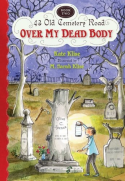
Life at 43 Old Cemetery Road has been great since Ignatius, Olive, and Seymour began collaborating on a series of ghost stories. When a letter from Dick Tater, head of the International Movement for the Safety & Protection of Our Kids & Youth, arrives, however, everything is turned upside down. Tater objects to their living arrangements, especially the fact that custody of eleven-year-old Seymour was seemingly transferred via a rental lease, and his investigation results in Ignatius being committed to an asylum and Seymour being sent to an orphanage until his opportunistic parents deign to claim him.

The majority of the book is comprised of letters to and from Olive as everyone ponders how to escape confinement and satisfy the customers who have prepaid for the next three installments of their story. Dick Tater does various nefarious things, like canceling Halloween and instructing libraries to burn books that meet with his disapproval, and the book has a very pro-reading, pro-free thinking vibe as a result.

The book also features the second “just go with it” moment of the series. I assume this is going to be a recurring thing. In the first book, readers had to “just go with” the stipulation that sales of the trio’s stories (at $3 a pop, if I recall rightly) were sufficient to raise the $250,000 Seymour needed to buy Spence Mansion from his parents. Here, Ignatius and Olive (a ghost, mind you) are able to adopt Seymour simply by proving his parents don’t love him.

To this I say, “Whatever.” I am willing to go with it because it results in (nicely illustrated) passages like this, which I confess made me a bit verklempt. (Best attempted after you remind yourself of Seymour’s last name.)

And so, in a sense, we end where we began… in a 32½-room house built by a woman who, in her lifetime, never married or had children… and rented by a man who never married and always thought he disliked children… and purchased by a boy whose parents abandoned him. And so, even though one member of the family might still get grumpy now and then… and another might become cranky when she misplaces her glasses… neither would ever, could ever, abandon Hope.

Sniff.

Till Death Do Us Bark
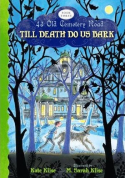
One day, a shaggy dog follows Seymour home from the library. He has always wanted a dog, and so he asks his new parents, Ignatius and Olive, if he can keep him. They have reservations, and insist that he first attempt to find the dog’s owner, since he has a collar and everything. Seymour soon learns that the dog formerly belonged to Noah Breth, a wealthy man who recently died and whose children (Kitty and Kanine) are bickering over their presumed inheritance. But he doesn’t tell his parents this.

I must say that I did not like this book as well as the others. I like that Seymour admits that his goal was to be a perfect son, but that very quickly he was keeping secrets and running away. What I don’t like was how he was so passionately dog crazy when his best friend up ’til now has been his cat, Shadow. He didn’t show much concern that Shadow had seemingly run away after the dog showed up. And Ignatius, who is allergic to cats, suddenly had a flare-up and pledged to “get rid” of the cat once it was found. This is not the way to endear me to your characters, Klise sisters.

Of course, everything works out fine in the end and Shadow is nearby and well. The Breth siblings, who have been following a series of limericks devised by their late father on the hunt for his fortune, are shamed into suddenly becoming nicer people. A rare coin that everyone’s been looking for turns out to be exactly where it was telegraphed to be at the beginning of the story.

As a result, more than the other books, this one feels like something only children would enjoy. I hope the upcoming fourth book represents a return to form.

Filed Under: Books, Children's Fiction, Supernatural Tagged With: Karen and M. Sarah Klise

Butterflies, Flowers Volume 8

August 28, 2011 by Anna N

Butterflies, Flowers Volume 8 by Yuki Yoshihara

This is the final volume! I’ve enjoyed this series, which I tend to think of as “stealth josei” because even though it was released under the Shojo Beat imprint it skews a lot older. This series about a rich woman working in an office under the direction of a former servant to her family who she winds up dating might seem incredibly frivolous, but it ends up being enlivened by Yoshihara’s offbeat sense of humor and the caring exhibited in the relationship between Choko and Masayuki.

After dating for some time, Choko and Masayuki face the ultimate test when Choko goes on an arranged marriage meeting and Masayuki appears to be doing nothing to stop it. Of course he reveals his objections in a dramatic and hilariously crude manner, but will this odd couple be able to take the next step in their relationship? Choko resorts to hiding marriage registration papers around the office, trying to get Masayuki to sign the documents in a moment of distraction. When Masayuki finally comes around and asks her to marry him, he’s unable to call her by her first name because he’s so fully internalized their master/servant relationship. Choko wants a relationship of equals, and wants to move forward but Masayuki seems pathologically unable to see her as his equal. There isn’t really any doubt that the couple will get together, but despite all the weird master servant jokes, otaku Gundam references, and random crossdressers, there’s a certain level of sweetness present when Choko and Masayuki are able to move on from their roles as lady and servant.

I wish more series like Butterflies, Flowers would be published over here. I don’t mind plenty of high school romance shojo, but it is nice to have a little bit of variety in the settings of romance manga. I hope Viz licenses more Yoshihara manga because her quirky sensibility makes this series unique and weirdly endearing.

Review copy provided by the publisher

Filed Under: UNSHELVED

Saturday Spotlight: Stormy Sea

August 27, 2011 by MJ 1 Comment

It’s a tense weekend here on the east coast, but an impending storm provides a great excuse to stay inside and read manga, or at least read about manga, as long as the electricity holds. For my part, stormy seas put me in mind of Daisuke Igarashi’s melancholy beauty, Children of the Sea, published here in English on Viz’s SigIKKI imprint.

I’m a big fan of Children of the Sea, my first impressions of which can be found here, but my favorite discussion of the series’ first volume came from our own Kate Dacey, whose review is consistently the first thing to spring to my mind whenever I think of this title.

From her review:

The ocean occupies a special place in the artistic imagination, inspiring a mixture of awe, terror, and fascination. Watson and the Shark, for example, depicts the ocean as the mouth of Hell, a dark void filled with demons and tormented souls, while The Birth of Venus offers a more benign vision of the ocean as a life-giving force. In Children of the Sea, Daisuke Igarashi imagines the ocean as a giant portal between the terrestrial world and deep space, as is suggested by a refrain that echoes throughout volume one:

From the star.
From the stars.
The sea is the mother.
The people are the breasts
Heaven is the playground.

If you happened to miss this the first time around, do yourself a favor and check out this week’s Saturday Spotlight: Children of the Sea, Vol. 1 at The Manga Critic!

Filed Under: Saturday Spotlight

BL Bookrack: August 2011

August 26, 2011 by MJ 11 Comments

Welcome to the August installment of BL Bookrack! This month, MJand Michelle take a look at three offerings from Digital Manga Publishing’s Juné imprint, Butterfly of the Distant Day, I Give to You, and A Liar in Love.


Butterfly of the Distant Day | By Tooko Miyagi | Published by Digital Manga Publishing | Rated Mature (18+) – As a fan of Miyagi’s Il Gatto Sul G., I was looking forward to reading this spin-off/sequel, in which Riya Narukawa, one of the main characters of Il Gatto and a gifted violinist now studying in New York, accompanies his pianist cousin Saki to the swanky Berkshires to perform in a concert for young musicians. There, Saki unexpectedly reunites with Irving Russell, a British man with whom he’d had a two-year fling, and ends up renewing this arrangement in an effort to prevent Irving from seducing Riya, which Saki has somehow convinced himself is bound to happen.

Those looking for more about Riya and his boyfriend Atsushi will likely be disappointed; aside from the opening chapter, Atsushi doesn’t appear at all, and Riya is mostly used in a supporting capacity. Instead, the story focuses on Saki and Irving. As Saki falls back into the same pattern of sleeping with Irving in the evening and being dismayed by his detachment the following day, he remembers more about their time together—how it began, how it ended, how he treated Irving—and eventually comes to realize that it was his own insecurity about Irving’s first love that made him defensively insist that what was going on in the present was merely a fling. Afraid to be hurt, Saki had denied the possibility that something real could grow between them and had instead kept Irving at arm’s length while pursuing a series of brief relationships with women. Now that he’s finally realized what Irving means to him, he wants to break this pattern.

There’s a lot to like about Butterfly of the Distant Day. First and foremost, the issues keeping the two leads apart are complicated, leading to the expression of some fairly complex emotions. Secondly, both of these men are adults, so we’re not dealing with a first-love BL scenario but rather a situation where one of the leads has already loved and lost. Miyagi-sensei has also done her homework where music is concerned—Riya and Saki are performing legitimately impressive compositions for the concert (notably a Fauré sonata for violin and piano) and when possible solo options for Saki are discussed, all of the composers mentioned genuinely did write suitable pieces for that instrument. The only glaring error occurs in a key signature; it’s too bad no one told Miyagi about the order of flats!

I did find it a little hard to get into at first and, looking back, the opening chapter with Riya and Atsushi doesn’t really fit with the rest, but overall, it’s quite an enjoyable one-shot.

-Review by Michelle Smith


I Give To You | By Maki Ebishi | Published by Juné | Rated YA (16+) | Buy at Akadot – I have a confession to make: I totally judged I Give to You by its cover. I didn’t know anything at all about the story, but the cover was so interesting and so unlike typical BL covers that I had to check it out. One of the characters has a kitty snoozing on his lap, for example, and there are a couple of cat toys on a nearby coffee table. How could I resist?!

In this case, it turns out that the atypical cover was indicative of the contents, because I Give to You eschews common BL artistic and story tropes. Instead, with its stark, high-contrast art and moody yakuza themes, it almost reads like a seinen series.

Ryoichi Iinuma is on the run. He cosigned a loan for his lover, Hiroshi, and when Hiroshi defaults, the debt collectors come looking for Ryoichi. He ends up at a tea house run by Ren Shirakawa, who allows him to work for room and board. Gradually, Ryoichi begins to learn more about Ren and his helper, Ritsu, like the fact that they’re both former yakuza who are shunned by their neighbors. In fact, the only customer the tea house has is a former detective who drops by periodically to keep an eye on the proprietors.

Ryoichi is openly gay, and that fact plays a big part in his choice to accept Ren, since he has been ostracized himself both for his sexual preference and his indebted status. He takes it upon himself to try to rehabilitate Ren’s reputation in the neighborhood, and though he soon recognizes that his feelings for Ren (whom he believes is straight) are romantic in nature, only gradually does he learn exactly why Ren is purposefully subjecting himself to the scorn and animosity of “civilians.”

I Give to You nicely balances dark and light elements—the story of Ren’s past, for example, is full of despair, but Ryoichi’s optimistic personality helps steer the story in a hopeful direction. (The occasional comic relief provided by the kitty helps, too.) One negative is that some lines of dialogue were difficult to comprehend; this may be a translation issue. On the positive side, I’ve never seen any other BL story depict the moment in childhood in which its protagonist realized he was different from others, and I loved how this experience enables Ryoichi to deflect Ren’s attempts to send him away to pursue a normal life.

Ultimately, I Give to You is unique, interesting, and definitely recommended.

-Review by Michelle Smith


A Liar in Love | By Kiyo Ueda | Published by Juné | Rated Mature (18+) | Buy at Akadot – When smooth operator Tatsuki gets a call from his younger brother seeking dating advice for a gay coworker, things seem pretty simple. Accustomed to letting his looks do all the heavy lifting, Tatsuki falls into his usual pickup routine, ready to love ’em and leave ’em as always. So what’s a jaded player to do when he finds he’s fallen in love?

Reading that description (or the even more generic official blurb) A Liar in Love sounds like nothing special, and in terms of premise, it’s not. Things progress exactly as you might imagine. Tatsuki reacts predictably to the discovery of his own feelings, pushing his lover further away, though there’s never even a moment’s doubt that we’ll eventually get our “happily ever after.” The story’s characters, too, are more of the same. There’s no shortage of beautiful playboy seme or quiet uke in BL manga, and mangaka Kiyo Ueda doesn’t stray much from type. What she does do, however, is bring enough real nuance into those types to remind us that they’re actually based on real, honest-to-goodness people, whom we probably all know or can relate to on some level.

Tatsuki is a typical playboy, confident in his ability to pick up whomever he wants, and dismissive of concepts like love and commitment. He makes his living translating romance novels, and seems content to live as someone who constantly pursues romance without ever dealing with the real-life stuff that follows.

Miura, his target, initially appears to be the typical shy, gullible uke and little else, but as the story goes on, he displays real maturity and insight, particularly concerning Tatsuki’s well-meaning younger brother who, at one point, imagines himself in love with Miura, though he’s never felt attracted to men. It’s a scene between Miura and the brother, in fact, where Ueda begins to display real brilliance, as she carefully exposes the brother’s feelings–sentiments that would pass for true love in most BL manga–for what they actually are: a childish crush with no meaningful connection to romantic love or grown-up sexuality.

Ultimately, A Liar in Love is a kind of rare gem, in that it manages to be a genuinely thoughtful, mature romance between grown-ups with jobs, while completely adhering to established BL tropes, and all in a single volume. Perhaps it actually is possible to please everyone?

-Review by MJ


Review copies provided by the publisher.

Disclosure: MJ is currently under contract with Digital Manga Publishing’s Digital Manga Guild, as necessitated for her ongoing report Inside the DMG. Any compensation earned by MJin her role as an editor with the DMG will be donated to the Comic Book Legal Defense Fund.

Filed Under: BL BOOKRACK Tagged With: a liar in love, butterfly of the distant day, i give to you, yaoi/boys' love

Anesthesiologist Hana, Vol. 1

August 26, 2011 by Sean Gaffney

By Kappei Matsumoto and Hakua Nakao. Released in Japan by Futabasha, serialization ongoing in the magazine Manga Action. Released in the United States by Futabasha on the JManga website.

Sometimes you buy a manga for a striking cover, or because of good word of mouth, or because you enjoyed the works of the author previously. And sometimes you simply have to buy a manga because of the title. That was definitely the case with Anesthesiologist Hana, one of Futabasha’s seinen offerings that, true to its word, is the story of a young doctor named Hana and her days working at a local hospital as an anesthesiologist.

While the precise genre of anesthesia manga may be unfamiliar, it becomes apparent on reading this manga that it’s the latest in a long line of workplace seinen, the sort of story that shows our everyman (or woman, in this case) hero and their struggles as they strive to do their thankless job. There are times when it seems to get overwhelming, or they think about quitting, but that never happens, because they grow to understand the importance of their job, and learn to take happiness in it.

And that’s pretty much what you get here. Hana is a young doctor who’s been with her hospital for about three years, and has come to learn the thanklessness that comes with it. In the first chapter, she even tries to resign, though can’t quite follow through with it. The surgeons she works in the operating room with are either obnoxious jerks who call her incompetent or sexist boors who try to cop a feel. The hours are mind-numbing and they’re constantly short-staffed. She rarely sees the sky, eats cup ramen for most meals, and her love life is zero. Most importantly, the job is thankless; everyone loves the surgeons who perform the operation, or doctors in other fields such as ophthalmology, but an anesthesiologist is only singled out if something goes wrong and a patient is lost.

Nevertheless, Hana manages to keep herself going – mostly. She has a grumpy, cynical older sister friend and a bubbly, more naive younger sister type who are her two fellow female anesthesiologists. Her boss is stern but overall a good-hearted guy. And one of her fellow doctors, though a bit weird and suspicious, is even quite handsome – and seems to notice the good qualities in her, possibly as he feels he’s lost them in himself (he has a somewhat sad backstory). The chapters are mostly episodic, but as the series goes on we do see the cast all banding together to help each other out, much like any good workplace.

There is a lot of focus on the actual ins and outs of anesthesia. Sometimes a bit too much – the manga can get a little dry at times, and it has to be careful not to look like a textbook, a la Stone Bridge Press’s ‘Manga Guide To’ series. I have no medical education, so have no idea how accurate everything really is. But it seems accurate. This isn’t a fantasy comic book world where you can always tell the psychics by their nosebleeds. The manga goes into great detail about exactly hat Hana has to do and watch out for, and the inherent dangers involved. There’s even a chapter discussing drug use, and how it’s not just using drugs properly for anesthesia, but keeping an eye out for drug takers among the staff that can be a problem.

Despite being a seinen title, there’s surprisingly little fanservice – Hana takes a shower in the first chapter, and is quite busty, though not overly so; she’s also groped a couple of times. The author’s notes make it clear that they had an original idea of making the hero a male doctor, but the editors told them to change it to a busty female. Not unsurprising; this kind of story, with all its exposition, earns more charm points by having a cute young woman as our viewpoint character.

Overall, I enjoyed this first volume. It can be very dry at times, and is never going to be incredibly exciting. But I feel I’ve learned an awful lot about anesthesiology, and I want to know more about Hana and her ongoing adventures (is she going to hook up with sexy doctor? Or is he just a mentor figure?). If you like workplace medical shows, give this a try.

Filed Under: REVIEWS

Cage of Eden, Vol. 1

August 25, 2011 by Katherine Dacey

Stop me if you’ve heard this one before: a trans-Pacific flight encounters turbulence, and before any of the passengers can shout “J.J. Abrams!” — or “William Golding!” for that matter — the plane crash-lands an uninhabited tropical island, far from civilization’s reach. In some variations of the story, the island itself poses the greatest danger to survivors, harboring monsters or malevolent spirits. In other versions, the survivors’ own fear and narcissism proves more deadly than any jungle-dwelling creatures, as the rude wilderness strips away the survivors’ veneer of humanity.

In Cage of Eden, Yoshinobu Yamada combines these two survival narratives to tell the story of a high school holiday gone horribly wrong. Cage’s teen heroes crash-land in a prehistoric forest populated by long-extinct animals: saber-toothed tigers, horse-sized birds. These big, hungry predators aren’t the only threat to the students’ safety, however. Yarai, the class delinquent, seizes the opportunity to act on his darkest impulses, terrorizing his peers and the doomed flight’s captain. Only Akira, a small, self-described loser, and Mariya, a bespectacled, anti-social genius, have the skills and the smarts to outwit both enemies.

Though the story unfurls at a good clip, the execution is a little creaky. The opening chapter is a choppy information dump, as Yamada introduces the principal characters, delineates their relationships, and reveals the purpose of their plane trip. Once on the island, Mariya’s computer proves shockingly durable — it boots up without protest, despite plunging 35,000 feet — and helpfully equipped with a searchable database of extinct animals. (“Even without internet, I can still access program files,” Mariya solemnly informs an incredulous Akira.) The characters speak fluent exposition, frequently explaining things to one another that are readily obvious from Yamada’s crisply executed drawings. Worse still, the intelligent dialogue is reserved for the male characters; the few female characters’ primary role is to be menaced, rescued, and ogled, though not necessarily in that order.

However obvious the script or ubiquitous the cheesecake — and yes, the fanservice is executed with all the subtlety of a tap-dancing hippopotamus — Cage of Eden has a cheerful, B-movie vibe that’s hard to resist. The monsters are rendered in loving detail, down to their sinews and feathers and claws; as they tear across the page, it’s not hard to imagine how terrified the characters must be, or how fast they need to run in order to escape. The setting, too, is a boon, offering Yamada numerous places to conceal a dangerous animal or booby trap. Even the characters are effective. Though drawn in broad strokes, Akira is a sympathetic lead; he’s prone to self-doubt after years of being a bench warmer, an academic failure, a mama’s boy, and a second banana to the most popular student in his class. That the island provides him a chance to prove his worth isn’t surprising — that’s de rigeur for the genre — but Akira’s mixture of humility and bravery is refreshing, helping distract the reader from the absurdity of his action-movie heroics.

I won’t make any grand claims for Cage of Eden: on many levels, it’s dumber than a peroxide blonde, with characters doing and saying things that defy common sense. Yet Yoshinobu Yamada demonstrates a genuine flair for writing popcorn-movie manga, populating the island with scary-looking monsters and staging thrilling action sequences that temporarily erase the memory of the clumsy dialogue and panty shots. Cage of Eden is the perfect beach read for the final days of August: it’s fun and fast-paced, placing few demands on the sun-addled reader.

CAGE OF EDEN, VOL. 1 • BY YOSHINOBU YAMADA • KODANSHA COMICS USA • 200 pp. • RATING: OLDER TEEN (16+)

Filed Under: Manga, Manga Critic, REVIEWS Tagged With: Cage of Eden, Horror/Supernatural, Sci-Fi, yen press

Cage of Eden, Vol. 1

August 25, 2011 by Katherine Dacey 10 Comments

Stop me if you’ve heard this one before: a trans-Pacific flight encounters turbulence, and before any of the passengers can shout “J.J. Abrams!” — or “William Golding!” for that matter — the plane crash-lands an uninhabited tropical island, far from civilization’s reach. In some variations of the story, the island itself poses the greatest danger to survivors, harboring monsters or malevolent spirits. In other versions, the survivors’ own fear and narcissism proves more deadly than any jungle-dwelling creatures, as the rude wilderness strips away the survivors’ veneer of humanity.

In Cage of Eden, Yoshinobu Yamada combines these two survival narratives to tell the story of a high school holiday gone horribly wrong. Cage’s teen heroes crash-land in a prehistoric forest populated by long-extinct animals: saber-toothed tigers, horse-sized birds. These big, hungry predators aren’t the only threat to the students’ safety, however. Yarai, the class delinquent, seizes the opportunity to act on his darkest impulses, terrorizing his peers and the doomed flight’s captain. Only Akira, a small, self-described loser, and Mariya, a bespectacled, anti-social genius, have the skills and the smarts to outwit both enemies.

Though the story unfurls at a good clip, the execution is a little creaky. The opening chapter is a choppy information dump, as Yamada introduces the principal characters, delineates their relationships, and reveals the purpose of their plane trip. Once on the island, Mariya’s computer proves shockingly durable — it boots up without protest, despite plunging 35,000 feet — and helpfully equipped with a searchable database of extinct animals. (“Even without internet, I can still access program files,” Mariya solemnly informs an incredulous Akira.) The characters speak fluent exposition, frequently explaining things to one another that are readily obvious from Yamada’s crisply executed drawings. Worse still, the intelligent dialogue is reserved for the male characters; the few female characters’ primary role is to be menaced, rescued, and ogled, though not necessarily in that order.

However obvious the script or ubiquitous the cheesecake — and yes, the fanservice is executed with all the subtlety of a tap-dancing hippopotamus — Cage of Eden has a cheerful, B-movie vibe that’s hard to resist. The monsters are rendered in loving detail, down to their sinews and feathers and claws; as they tear across the page, it’s not hard to imagine how terrified the characters must be, or how fast they need to run in order to escape. The setting, too, is a boon, offering Yamada numerous places to conceal a dangerous animal or booby trap. Even the characters are effective. Though drawn in broad strokes, Akira is a sympathetic lead; he’s prone to self-doubt after years of being a bench warmer, an academic failure, a mama’s boy, and a second banana to the most popular student in his class. That the island provides him a chance to prove his worth isn’t surprising — that’s de rigeur for the genre — but Akira’s mixture of humility and bravery is refreshing, helping distract the reader from the absurdity of his action-movie heroics.

I won’t make any grand claims for Cage of Eden: on many levels, it’s dumber than a peroxide blonde, with characters doing and saying things that defy common sense. Yet Yoshinobu Yamada demonstrates a genuine flair for writing popcorn-movie manga, populating the island with scary-looking monsters and staging thrilling action sequences that temporarily erase the memory of the clumsy dialogue and panty shots. Cage of Eden is the perfect beach read for the final days of August: it’s fun and fast-paced, placing few demands on the sun-addled reader.

CAGE OF EDEN, VOL. 1 • BY YOSHINOBU YAMADA • KODANSHA COMICS USA • 200 pp. • RATING: OLDER TEEN (16+)

Filed Under: Manga Critic Tagged With: Cage of Eden, kodansha, Shonen

An Introduction to Feel Young Magazine

August 25, 2011 by Erica Friedman 9 Comments

If you’re an average American reader of manga, you have probably never heard of Shodensha Publishing’s Feel Young Magazine. For one thing, it’s Josei, the genre of manga least represented on American manga shelves. Nonetheless, many of the artists featured in the pages of Feel Young have made it over our to shores and so, while the magzine itself lives a life of near-complete anonymity here, it’s practically glows with talent.

Yumi Unita (Bunny Drop,) Moyoco Anno (Happy Mania), Tomoko Yamashita (Dining Bar Akira,) Mitsukazu Mihara (The Embalmer,) Kiriko Nananan (Blue,) Mari Okazaki (Suppli,) Erica Sakurazawa (Between the Sheets,) have all at one time or another penned stories for the adult, female audience that makes up the readership of Feel Young. For this reason, as I perused the piles of magazines that live in my house, I chose to take a look at Feel Young as my first josei magazine.

Feel Young was first launched in 1989, as a sister magazine to the now-suspended FEEL magazine. Its intended audience is adult women and, based on the comments it receives and publishes, it is indeed reaching women 18-45 years of age. Based on the a JMPA’s magazine sales data, Feel Young has a circulation of 45,542 (and one overseas reader….)

While stories in Feel Young often star women in their early 20s, juggling careers and romantic relationships, as in Suppli, stories of women in their 30s and 40s attempting to maintain work-life balance are not uncommon. Recently more stories about one-parent or alternative families, such as Bunny Drop and Ohana Holoholo have been serialized in its pages. When the popular series from the 1980s, Hana no Asuka-gumi was re-started after an 18-year hiatus, it was run in Feel Young to try to attract those women who had been fans of the original series when they were in middle and high school. New Hana no Asuka-gumi ran for an additional 8 volumes, so I think we can say that approach worked. The magazine also occasionally runs stories with Boy’s Love motifs, for an overall feeling of “a little of everything that might appeal to women.”

Other than Bunny Drop, currently running in Feel Young is Mari Okazaki’s new series, &, which combines the popular “young woman making her way in the world” with a stong strain of suspense. If  Suppli is re-licensed and sells well, I would be surprised not to see & licensed. Personally, I’d love to see Yamashita Tomoko’s work, HER be licensed – her current series in the magazine is another set of short character profiles that dig surprisingly deeply into people’s live in a short story format.

I currently read the magazine for Shimano Shino’s Ohana Holoholo, a story about an alternative family made up of a single mother, her former female lover, her child, and the child’s late father’s former male lover. (It sounds more dire than it is. It’s quite cute.) Finally, Shinobu Nishimura’s RUSH is something that I am constantly sure must *certainly* be licensed already, but never is. I know of two companies that were, at some point in time, interested in Yamaji Ebine’s Love My Life – which had a live-action movie based on it come out just a few years ago – but neither company managed to get the book over here.

It would be easy to dismiss Feel Young as something filled with soap operas and daytime dramas, but…it’s not. Feel Young is a consistantly excellent women’s manga magazine, with less of an oppressive “style” than many magazines have. The stories vary in temperment, in tone, in art style and often in levels of reality. Stories of meals at home with the family live right next to dramatic stories of pretty boy detectives tracking down Goth-Loli fantasy figures, gang girls roam the streets of Tokyo right next to a well-meaning hospital staff Office Lady trying to figure out what it means when the Doctor who kissed her also tries to kill her. And these live cheerfully next to stories of raising children and having careers. Of the josei magazines I’ve read, Feel Young stands out as a platform for some of Japan’s best josei talent.

This article was originally published at Mangacast.net.

Filed Under: Magazine no Mori Tagged With: Josei, Manga Magazine, Shodensha

The Lying Game by Sara Shepard

August 25, 2011 by Michelle Smith

From the front flap:
The worst part of being dead is that there’s nothing left to live for. No more kisses. No more secrets. No more gossip. It’s enough to kill a girl all over again. But I’m about to get something no one else does—an encore performance, thanks to Emma, the long-lost twin sister I never even got to meet.

Now Emma’s desperate to know what happened to me. And the only way to figure it out is to be—to slip into my old life and piece it all together. But can she laugh at inside jokes with my best friends? Convince my boyfriend she’s the girl he fell in love with? Pretend to be a happy, carefree daughter when she hugs my parents good night? And can she keep up the charade, even after she realizes my murderer is watching her every move?

Review:
The Lying Game is the second collaborative effort between Sara Shepard and Alloy Entertainment (the team that brought you Pretty Little Liars) to be made into a TV series for ABC Family. I thought that this time I’d try reading the book before starting the show, so here we are.

Emma Paxton was raised by her unstable mother Becky until the age of five, when Becky skipped town while Emma was at a friend’s house. After Becky could not be located, Emma entered the foster care system, where she developed the ability to hold her tongue and become “whatever type of girl the situation needed [her] to be.” Now two weeks shy of her eighteenth birthday, Emma is hoping to make it through her senior year of high school and even dreams of attending USC and becoming an investigative journalist. Her skeevy foster brother has other plans, however, and Emma is soon accused of theft and told she must go when she turns eighteen.

Skeevy also shows Emma a video of a girl who looks just like her engaging in what looks like asphyxiation-for-kicks. From the video, Emma gleans that the girl is called Sutton and lives in Arizona. Googling leads to a Facebook page, and Emma’s message yields an invite from Sutton, who confirms that she was adopted. Without hesitation, Emma packs her bags and heads to Tucson.

Sutton fails to show for their appointed rendezvous, however, and when Sutton’s friends show up to whisk her off to a party, Emma finds herself using her adaptability skills to assume her sister’s role. Conveniently, Emma’s bag containing her cash and ID are stolen at this point. The next morning, she gets a note informing her that Sutton’s dead and that she’d better play along or she’ll be next. Emma tries various times to tell people what’s going on—Sutton’s parents, the police—but because Sutton was such a notorious prankster (more in a malicious way than a fun way) nobody believes her. Soon, Emma grows to suspect Sutton’s circle of friends may have offed their leader, and by the end of the book she’s learned the truth about the video but isn’t any farther along in discovering who killed her sister.

The Lying Game is definitely a guilty pleasure, and I already have the second volume in the series (Never Have I Ever) checked out from the library. Still, there are a couple of things about it that bugged me. The major issue for me is the choice to have Sutton stick around as an unseen-by-Emma ghostly presence. Conveniently, she has access to Emma’s thoughts, and so takes narrative duties, but in a really strange way. She’ll be narrating along omnisciently, referring to herself as “Sutton” or to things that belonged to her as “Sutton’s,” just like Emma might, and then all of a sudden she’ll switch into first person narration, using “me” and “mine.” It’s pretty distracting.

It’s also highly convenient that Sutton can’t remember many details of her past or see anything if Emma can’t see anything. She is, therefore, little use if Emma is in peril, though her timely recollections of snatches of memory do serve to heighten the dramatic tension when readers know something that Emma doesn’t. Mostly, however, I have the inkling that Sutton is there to react remorsefully when Emma discovers some of the horrible things she has done. Is Ghost!Sutton just a ploy to try to get us to care about her? In life, Sutton was a thoroughly nasty and entitled person, which makes this the second Shepard/Alloy series that focuses on the death of a girl so odious one wonders why she had any friends at all.

And that’s the second problem I had with The Lying Game: it’s too much like Pretty Little Liars. Granted, maybe that’s what fans of PLL want, but as I watched the action build towards a social event (a party, naturally) and watched Emma jump to conclusions I had the distinct feeling that I had been through all this before. There’s somewhat less focus on brand name fashions, at least.

Still, as mentioned, I will keep reading. And I’ll check out the show, too. Shepard is good at injecting twists into the story to hook a reader, and I like that Emma is beginning to have feelings for Ethan (a broody, poetry-reading boy) and seems poised to have an ally in her efforts going forward. Then they can jump to conclusions together, just like the girls in PLL!

Filed Under: Books, Supernatural, Suspense, YA Tagged With: Sara Shepard

Ai Ore!, Vol. 2

August 25, 2011 by Sean Gaffney

By Mayu Shinjo. Released in Japan as “Ai wo Utau Yori Ore ni Oborero!” by Shogakukan, serialized in the magazine Shoujo Comic (“Sho-Comi”). Released in North America by Viz.

Another volume of the meant to be fun but mostly incredibly frustrating Ai Ore, where you keep waiting for the heroine to embrace her inner prince and tell Akira where to stick it. But that’s not what’s going to happen here, and instead we’re going to get more and more of Mizuki getting in touch with her inner feminine emotions and learning what love really is. Which, honestly, is mostly fine. As long as Akira’s not being a horrible jerk.

No, really, it’s true. There’s a sequence of about 100 pages or so midway through this volume where Mayu Shinjo stops focusing on how possessive and stifling Akira wants his love to be, and how he will destroy everything about Mizuki’s life in order to make her his. Instead, we get actual fun plots featuring our heroes interacting with the other characters. Mizuki has to pretend to be a yakuza girlfriend. Akira gets sick and Mizuki has to take care of him. Mizuki goes to Akira’s culture festival, and finds him dressed as a catboy. This is really fun stuff. Mayu Shinjo has been writing manga for years, and has none of the newbie’s issues with pacing or padding. And since Akira isn’t being a brat, his relationship with Mizuki is actually enjoyable.

Then there’s the rest of the manga. As I noted in my review of Volume 1, he’d be a perfect horrible shoujo male lead if he weren’t so immature about it. We see here that he comes from a very overprotective family, and was no doubt spoiled rotten. This helps to explain a lot of his behaviors, but doesn’t necessarily make them any better to watch. To be fair, he is a little better here, especially when he finds he has competition in the form of Mizuki’s old childhood friend Shinnosuke, who has returned from university and is (needless to say) smoking hot. And also manly, something which sets Akira’s teeth on edge.

As for those wondering how seriously Shinjo is taking this manga, I would like to point to the helicopter, the boxing match, the shopping trip, the entirety of the yakuza omiai and culture festivals… there’s a lot in here that’s just a hoot, provided you remember to turn off your brain a bit. The humor here is a bit more subtle than Butterflies, Flowers, so it’s not as easy for me to throw off the casual sexism the way it is for that title. But I have to admit it, even if I do want to strangle Akira half the time, Ai Ore! remains a complete page-turner. It’s pretty much exactly what you want from a potboiler – the inability to put it down. Let’s hope the next volume continues that trend, and I’ll try to stop complaining about things that I would rather the author be writing about.

Filed Under: REVIEWS

Manga the week of 8/31

August 24, 2011 by Sean Gaffney

Regarding Kodansha: I surrender. This week’s Midtown list, my own comic shop’s list, what the REST of the country is getting from Diamond, and what’s already out in stores are so different… that’s it. So here’s most of what should be out from Kodansha…

Oh wait, other companies first. Alphabetical and all. Besides, Dark Horse has a big debut.

Yes, Hellsing may be over, but the author has a new series with a new badass! No vampires here, though, as this takes place in the Sengoku period, and is a samurai manga. Which apparently ends up getting a bit fantastical. It’s running right now in Shonen Gahosha’s Young King OURS. And oh yes, it’s not just that. Dark Horse also has their annual release of a new volume of Eden: It’s an Endless World! Yes, still not cancelled! Go get it, it’s gripping. It ran in Kodansha’s Afternoon.

There’s some new yaoi from Digital Manga Publishing. They’re still mining Taiyo Tosho, and so we get An Even More Beautiful Lie, from the magazine HertZ; Sky Link, from the same company, the same magazine, and honestly almost the same synopsis; Volume 4 of the yaoi thriller Finder, which runs in Libre Shuppan’s Be x Boy Gold; and Warning Whispers of Love runs in Taiyo Tosho’s other yaoi magazine Craft, and at least has a cover that looks different from the yaoi norm, which puts it a big step ahead in my book. And for those who want more old-school shoujo than modern BL, there’s Volume 6 of Itazura Na Kiss. Which hopefully will resolve the cliffhanger from 5.

Now, on to Kodansha. Midtown actually, amazingly, lists two titles. The second volume of Monster Hunter Orage, from the Fairy Tail author. And the second of Capcom’s seinen Phoenix Wright tie-ins, which will no doubt (shudder) feature more spiders, if only to resolve the case. My own shop is getting in Volume 10 of twisted gag comedy Sayonara, Zetsubou-sensei, which should feature even more Chiri than usual. Literally. And other volumes that may trickle into comic shops include the 19th volume of roller-blading action series Air Gear and the first volume of the reissue of Until The Full Moon, a BL series which originally ran in Be x Boy back in the Biblos days, but which Kodansha now has the rights to, and 4 new series.

Bloody Monday is a blood-filled thriller, one that I suspect should appeal to fans of Del Rey’s Code:Breaker… or, since that apparently didn’t sell well enough for Kodansha to continue it here, of Death Note. Cage of Eden has a Lord of the Flies vibe to it, along with Battle Royale, and everyone loves a good Survivor series, especially if there’s fanservice. Animal Land, a series about a kid raised by a tanuki, from the author of Zatch Bell. And Mardock Scramble, based off of a novel (which is already out here via Viz) that is, and I quote, a pulse-pounding cyperpunk noir adventure. And possibly a desert topping, haven’t read it yet.

So after a week of virtually nothing, we’re back in business, even if the horrors of Diamond delivery and split shipping (Diamond sometimes ships to different Coasts on different weeks) means we may not all see it on the 31st. What are you getting?

Filed Under: FEATURES

Dengeki Daisy Volume 6

August 24, 2011 by Anna N

Dengeki Daisy Volume 6 by Kyousuke Motomi

I have to admit after six volumes, the storylines in Dengeki Daisy are getting a bit predictable. Fortunately Motomi is such a skilled author that I don’t really care! The slowly developing relationship between plucky orphan high school student Teru and grumpy janitor/hacker Kurosaki is still moving forward at a glacial pace. Teru and Kurosaki are both pretending that she hasn’t discovered that he’s her mysterious guardian known as Daisy. I think one of the reasons why I tolerate the slower plot developments in Dengeki Daisy is that Teru and Kurosaki’s inaction about their relationship is tied in to their emotional states. In more predicatable shoujo manga, there would be plenty of outside forces popping up to prevent a couple getting together such as the sudden appearance of a long-lost fiance or an evil male model. Teru and Kurosaki both aren’t in an emotional place to deal with being honest with their feelings, so everything goes unsaid even as they face danger yet again.

I have learned now through this manga that school nurses are even more dangerous than male models. Teru investigates the possible guilt of Arai in a stabbing incident centered around the ex-school nurse Ms. Mori. It turns out that while Arai is guilty of some things, he’s really being set up as a patsy. Teru places herself in danger yet again, but she trusts that Daisy will be able to save her. While this scenario might make it seem like Teru’s a typical captive heroine, she does actually fight back and continues to use her cell phone strategically in summoning help. When I was reading this I was struck again by how well Motomi conveys the vastly different moods of the characters. There’s cynicism, playfulness, repressed emotion, and gloom. Teru and Kurosaki seem to go through so much in this volume, but their relationship is summed up in a scene where she’s perched on the monkey bars at school and he coaxes her to jump down in to his arms. Kurosaki thinks about the guilt he bears over her brother’s death and how much better off his life is with Teru in it. She thinks he’s acting strangely and wonders if he’s drunk, and he makes a crude joke about her youthfulness. So in just a few panels we go from reflection and intimacy to reinforcement of the teasing that keeps a safe distance between the couple. Scenes like this, with so much packed into a few panels are why I continue to enjoy reading Dengeki Daisy.

Review copy provided by the publisher.

Filed Under: UNSHELVED

Elsewhere update

August 23, 2011 by David Welsh

The daily-life mayhem continues to prevent me from being a productive blogger. (We just had a very mild earthquake. In West Virginia. Seriously. This is getting ridiculous.) But I am still holding forth in other venues!

I joined the Manga Bookshelf crew to discuss Fumi Yoshinaga’s ceaselessly wonderful Flower of Life (DMP) for the recently concluded Manga Moveable Feast.

I also make my pitch for the jManga title that interests me most… at the moment. I may soon be distracted by something sparklier.

I contribute a review of a smart and suspenseful horror comic for the latest Not By Manga Alone column, too.

And, if you’re curious as to what I like the look of from the current ComicList, you need only look to last week’s Pick of the Week.


Filed Under: DAILY CHATTER, Link Blogging

Bookshelf Briefs pointer

August 23, 2011 by Sean Gaffney

For those who read my reviews by category (like me), I have reviews of Blue Exorcist 3, Nura: Rise of the Yokai Clan 4 and Kamisama Kiss 4 in this week’s Bookshelf Briefs.

Filed Under: REVIEWS

The Melancholy of Haruhi Suzumiya-chan, Vol. 3

August 23, 2011 by Sean Gaffney

By Nagaru Tanigawa and Puyo. Released in Japan as “Suzumiya Haruhi-chan no Yuutsu” by Kadokawa Shoten, serialization ongoing in the magazine Shonen Ace. Released in North America by Yen Press.

It always amuses me when I try to review one of these volumes, as one would thinks that a review is designed to tell people whether they would be interested in a book or not, and these Haruhi-chan manga are by definition so narrow in audience scope that I have to add “the only reason you should buy this is if you’ve bought it already.” And yet here I am, reviewing the 3rd volume. Because, as a huge Haruhi fan and someone who loves 4-koma type humor, I continue to find these a hoot.

Given that this is a gag comic, it’s always interesting when I find bits of character development in it. You would think by definition there could be no character development, as the author is constrained by the boundaries of his parent series. Yet this leaves a surprisingly large canvas for building on what has come before. Thus Tsuruya and Mori’s friendly martial-arts rivalry continues, and Nagato’s addiction to games becomes so bad that when forced to give them up by Haruhi (for an eating contest, to give her ‘fighting spirit’), she nearly ends up dead. The manga is also well past the animated episodes as well, so no longer has to worry about the anime outdoing it.

The beginning of this volume is also, I suspect, important for another reason. It’s based off of Disappearance, and so we see the cast briefly styled in the characterizations of that movie. Seeing a rather hapless Yuki, overprotective Ryouko and clueless yet polite Kyon all having hotpot together, you can almost see the lightbulb go on in the author’s head. And now we have The Disappearance of Yuki Nagato, running in Kadokawa’s Young Ace, a spinoff which seems designed to take Disappearance and hit the ‘heartwarming’ button as much as it can. I will be completely unsurprised if Yen licenses this soon as well.

Haruhi gets a bit more to do here as well, not being confined by Kyon being the narrator. She still doesn’t get to participate in anything supernatural, but she still manages to come up with the weird ideas she’s famous for. My favorite chapter was likely the one where she tells everyone to try their hand at drawing a manga, with herself as the editor… then ends up spinning in a chair, bored out of her skull, while everyone else is doing things and she has to wait for them. There’s also some lovely ship tease between her and Kyon during Setsubun, when an argument about bean-tossing ends up turning into a tickle fight, which is innocent but doesn’t look that way. “I don’t think you should be doing sexy things!”

Mikuru probably gets the least to do here, but honestly, that’s true of the source material as well. And it’s lampshaded in a fantastic intro (in color) by Asahina’s older self. Bitter about the fact that she only gets to appear once in the entire volume, she sets about recasting the entire Haruhi franchise with herself in all the lead roles. Including Koizumi. Kyon is the exception, probably so he can make the tsukkomi response. Poor Asahina! Hang in there!

The drawbacks to this series are the same as prior volumes – it’s entirely dependent on its humor, so when it’s not funny there’s nothing else. Likewise, if you don’t like Osaka-style 4-koma gags, you’ll hate it. But I’m pleased to see the Haruhi-chan spinoff has become a world of its own, one where Taniguchi can turn into a giant 50-foot demon, Halloween can feature Haruhi wearing an eye mask straight out of 20th Century Boys, and Asakura can spend over an hour trying to kill Yuki and Kimidori-san with knives. OK, that last sounds like it might actually work in the real continuity. But in context, it’s extra goofy. As always, recommended highly to those who would get it anyway.

Filed Under: REVIEWS

  • « Go to Previous Page
  • Page 1
  • Page 2
  • Page 3
  • Page 4
  • Interim pages omitted …
  • Page 7
  • Go to Next Page »
 | Log in
Copyright © 2010 Manga Bookshelf | Powered by WordPress & the Genesis Framework