• Skip to primary navigation
  • Skip to main content
  • Skip to primary sidebar
  • Home
  • About Us
    • Privacy Policy
    • Comment Policy
    • Disclosures & Disclaimers
  • Resources
    • Links, Essays & Articles
    • Fandomology!
    • CLAMP Directory
    • BlogRoll
  • Features & Columns
    • 3 Things Thursday
    • Adventures in the Key of Shoujo
    • Bit & Blips (game reviews)
    • BL BOOKRACK
    • Bookshelf Briefs
    • Bringing the Drama
    • Comic Conversion
    • Fanservice Friday
    • Going Digital
    • It Came From the Sinosphere
    • License This!
    • Magazine no Mori
    • My Week in Manga
    • OFF THE SHELF
    • Not By Manga Alone
    • PICK OF THE WEEK
    • Subtitles & Sensibility
    • Weekly Shonen Jump Recaps
  • Manga Moveable Feast
    • MMF Full Archive
    • Yun Kouga
    • CLAMP
    • Shojo Beat
    • Osamu Tezuka
    • Sailor Moon
    • Fruits Basket
    • Takehiko Inoue
    • Wild Adapter
    • One Piece
    • After School Nightmare
    • Karakuri Odette
    • Paradise Kiss
    • The Color Trilogy
    • To Terra…
    • Sexy Voice & Robo
  • Browse by Author
    • Sean Gaffney
    • Anna Neatrour
    • Michelle Smith
    • Katherine Dacey
    • MJ
    • Brigid Alverson
    • Travis Anderson
    • Phillip Anthony
    • Derek Bown
    • Jaci Dahlvang
    • Angela Eastman
    • Erica Friedman
    • Sara K.
    • Megan Purdy
    • Emily Snodgrass
    • Nancy Thistlethwaite
    • Eva Volin
    • David Welsh
  • MB Blogs
    • A Case Suitable For Treatment
    • Experiments in Manga
    • MangaBlog
    • The Manga Critic
    • Manga Report
    • Soliloquy in Blue
    • Manga Curmudgeon (archive)

Manga Bookshelf

Discussion, Resources, Roundtables, & Reviews

Archives for March 2011

Random Sunday question: worker bees

March 20, 2011 by David Welsh

I’ve ticked off a gruesome number of errands and chores this morning, from rolling change to bathing dogs, and it got me to thinking: while many manga characters are known for their domestic sloth, there are some who seem to live by the motto “If you can lean, you can clean.” (I’m more partial to “Why stand when you can sit, and why sit when you can lie down?”)

One of my favorites from this category has to be Yukari from Sakura Tsukuba’s Penguin Revolution (CMX). Her career goal — “I want to be… a CIVIL SERVANT!” — remains one of the funniest dream declarations I can recall in manga.

Who are some of your favorite, fictional worker bees?


Filed Under: DAILY CHATTER

Manga Bookshelf talks Sailor Moon

March 19, 2011 by MJ, Michelle Smith, Katherine Dacey and David Welsh 21 Comments

Join the Manga Bookshelf bloggers and special guest Michelle Smith in our spontaneous Sailor Moon squee roundtable!


MJ: As most of our readers probably have heard, the big news yesterday in the manga blogosphere was that Kodansha USA is re-releasing Naoko Takeuchi’s Sailor Moon. I was pretty excited when I got the press release (there may have been a caps-locked e-mail), but I admit when I examine that, I’m not exactly sure why.

I’m thrilled at the prospect of being finally introduced to a series that was so key in bringing shoujo manga to the US, but beyond that I’m a little bit lost. My only personal experience with the series is a couple of episodes of the anime adaptation that Michelle showed me last year, and from that alone, I don’t feel like I have any real basis for understanding why the series means so much to its American fans.

I think Kate may be in a similar position, so I’m hoping that our squeeful cohorts can shine some light on the subject. Why do you love Sailor Moon, and why will we?

DAVID: I should jump in and admit that my familiarity with the series is entirely based on the anime, though I was quite charmed by it. This was decades ago when it would just randomly be aired on those third-tier non-networks, and I was always game for a half an hour with these girls. This might have been because I was a huge fan of super-hero teams at the time and had a particular weakness for super-heroines who also had rich emotional lives.

While I always loved comics like The Avengers and The Uncanny X-Men, part of me always muttered about the fact that there were too many boys hogging the glory. Every team had its own version of “the girl,” and sometimes they’d even have two, but it was always clear that she was “the girl.” Sailor Moon was such a nice change of pace for that reason — all of the really important, powerful characters were girls, and they had lives outside of the big battles.

MICHELLE: It seems I’m the only one of us, then, who’s read the manga before (albeit with the help of fan-made translations). I was introduced to the anime first, specifically the third or ‘S’ season, and though I probably thought it was a little silly and episodic at first, I was new at the time to the concept of gender-bending characters, so fell hard for the allure of the older sailor senshi, Uranus and Neptune. Perhaps because it was one of the first shoujo anime I ever saw, it holds a very special place in my heart, and really exemplified—especially in its dramatic conclusion, at which all Sailor Moon seasons excel—how different that genre is from American cartoons.

The manga is fun, too, and definitely worth squeeing about, but in some ways I prefer the anime, especially as it allows more time with some of my favorite characters, like Fish-Eye (a villain from Super S) and the Sailor Starlights, and also plays up the flirtatious angle between Uranus and Neptune.

Rereading this response, it seems that I may love Sailor Moon primarily for its gender hijinks, but the drama really is the best part.

KATE: My interest in Sailor Moon is the same as MJ’s — as a historically important shojo manga that introduced a generation of female readers to Japanese comics. What little I’ve seen of the art suggests that I’ll probably be reading the manga as a historian more than a fan, as it’s the kind of wide-eyed, sparkle-riffic style that doesn’t really speak to me. I’m keeping an open mind, however, as the series’ gender politics sound genuinely subversive.

I’m glad that Kodansha decided to re-issue the series. The nostalgia factor will undoubtedly fuel sales, especially among women who want to share Sailor Moon with daughters and nieces, but I also think there’s a new audience for Sailor Moon as well. As David points out, there’s still a dearth of stories about super-powered women (or girls) banding together to save the day. When I was eight or ten years old, that kind of fantasy would have had irresistible appeal, as it was never much fun to fight with female friends over who got to play the token female character when we re-enacted the latest Superfriends episode or favorite scenes from Star Wars.

MJ: I’d love to hear more about the gender politics, actually, should anyone care to elaborate. Squee optional.

MICHELLE: Jason Thompson talks some about that in his excellent piece on Sailor Moon for his House of 1000 Manga column. To quote him:

“But amazingly, years later, when I reread Sailor Moon, I realized it’s actually not even that shojo. Oh sure, it’s got hearts and kisses and accessories, but it’s also got a heavy dose of shonen manga, from the melodramatic fights and deaths and reincarnations to the earth-shattering explosions to the touching friendships. Sailor Moon is shojo for the era of Dragon Ball Z and Saint Seiya. The heroines of series like Wedding Peach and Tokyo Mew Mew can’t match the Sailor Scouts for self-discipline and steely fighting power. By the standards of magical girl manga, that ever-popular genre of manga which is part girl power and part short skirts and pink things, Sailor Moon is butch.”

Plus, in this case it’s the “hero” of the piece, Sailor Moon’s boyfriend, who is chiefly there to look handsome and be rescued.

KATE: That low, throaty sound you just heard? That’s me squeeing. Sign me up!

MJ: I’m with Kate!

Though, interestingly, as a big fan of 1980s & 90s shoujo, I have to say I already associate things like melodramatic fights, deaths, reincarnations and so on with shoujo manga. I guess those things are less common now (at least in the titles we see coming over), but when I think of the stuff that defines “shoujo” for me, those things are a big part of it. Glancing at the section of my bookshelf that is populated with titles from Viz’s old shôjo imprint (Banana Fish, Basara, Please Save My Earth, X/1999), they’re filled with elements like that.

All of you are more knowledgeable about manga history than I am–where does Sailor Moon fall in terms of the evolution of shoujo in Japan?

DAVID: I don’t know that it broke any new ground, but Paul (Manga: Sixty Years of Japanese Comics) Gravett credits it with revitalizing the magical-girl genre, which is pretty significant when you consider how much of a staple that genre is, especially in terms of the kind of books that got licensed in the early wave of manga in translation. And it’s generated an enduring franchise, with all kinds of spin-offs and a merchandising empire. Again, that’s not unique, but properties that manage that are always worth noting.

MJ: That’s a great point, David.

Let’s talk magical girl for a moment… I admit it isn’t my favorite shoujo genre. In fact, I can only think of one manga title in that vein I genuinely love. In some ways, I think that is probably what makes Sailor Moon a tougher sell with me (outside of its historical significance) than other older shoujo might be. Do I have a skewed view of the genre?

MICHELLE: I don’t think so, at least given what’s been made available here. Compared to something saccharine like Tokyo Mew Mew, for example, Sailor Moon is by far the better series. Compared to something like Cardcaptor Sakura, though… That’s a tougher choice.

I will say that, while in other series the whole “donning the costume” bit is usually cheesy, I kind of love it whenever it happens in Sailor Moon. I can’t really explain why. In this series, I like their different-colored costumes and various powers, whereas in other series I couldn’t possibly care less. Is some of this nostalgia speaking? Quite possibly. I’m not sure how this would play to a seasoned manga reader who is encountering it for the first time.

DAVID: I think those transformations are so important, like the ones in the Lynda Carter Wonder Woman. Instant, empowering makeover, style plus power.

KATE: For me, my reluctance to embrace magical-girl manga is a direct reflection of the advanced age at which I started reading comics. I found tough, adult women more appealing as avengers, enforcers, and butt-kickers than teenage girls because they were a lot closer to me in age than the heroines in Sailor Moon and Cardcaptor Sakura.

MICHELLE: If you want tough, determined enforcer types, then you will probably like Sailor Uranus. I mean, these aren’t just a bunch of girls in cute, matching outfits. They have individual personalities, though I do think these are probably more fully explored in the anime. Some of the girls are more frivolous (Minako is actually more serious in the manga, if I recall rightly), but the older senshi in particular are pretty poised and mature. One of them is a college student studying physics, for example.

KATE: That’s good to hear, Michelle! The few magical girl manga I’ve read just made me feel hopelessly old, you know?

MJ: I’m glad you mentioned age, Kate, because though I find I still personally identify with my long-gone teenaged self much more than a woman my age should, I think my age might have something to do with my reaction to most magical girl manga. I’m ashamed to say, though, that even more of it may have to do with the point Michelle and David brought up, and that would be… the clothes. Heh.

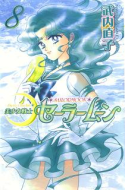
This is something I’m struggling to reconcile in myself, actually. I look at this cover, for instance, and I have two negative reactions immediately. One is to seeing a character I know is supposed to be a warrior of sorts in a tiny little skirt, and the other is to the use of the word “pretty.” There’s a part of me that really hates for these things to be important. I know none of this is unique to magical girl manga (or even manga in general) and it’s not that I have a problem with style. I just want it to be less important than other things. Yet, I know that when I was a young girl, I would have loved that little skirt and thought it was the prettiest thing in the world! I also actually quite like the color pink. I’m a mess of contradictions, really. But is it just me?

DAVID: Obviously not. I contradict myself constantly. And I’ll do so again by saying I’d love to see a josei take on this genre.

KATE: Oh no — me, too, MJ! I love me a nice dress and pair of shoes as much as the next gal, but my inner warrior chafes at popular entertainment that unironically packages strength, intelligence, and competence in frills and sparkles. At the same time, however, I’d have to concede that looking good can be a powerful confidence-booster. Even though I dress like a slob when I go for a run, I always make an effort to look smartly coordinated when I participate in a road race.

I guess I’m a confused hypocrite, too.

MICHELLE: Does it help if I say these girls aren’t sexualized at all even though they wear these outfits? And it’s Sailor Moon who declares herself pretty. It’s kind of empowering, actually.

MJ: Michelle, that does help a bit. And David and Kate, I’m grateful to hear I’m not the only self-contradictory soul in the room. David, I love the idea of a josei “magical woman” series. That’s something we really haven’t seen over here have we? Would you put Wonder Woman in the western version of that category? Or is she too much written for male readers?

MICHELLE: Oh, I’d love to see a josei magical woman series. There’d be so many extra complications. I think Fumi Yoshinaga should write it.

KATE: I love the idea of josei Wonder Woman — I would totally read that!

Actually, Wonder Woman’s costume is just as absurd as the Sailor Moon girls’, though I loved Jim Lee’s recent WW makeover. Her new outfit is sleek and sexy, but still conveys WW’s physical strength. Plus it actually looks like something that a real female athlete could wear while she was running or jumping, something I can’t say for most superhero or magical-girl costumes.

MJ: I think one of the things that always gets me about these types of costumes is all the bare flesh. And I don’t mean that in terms of how revealing they might be. I just keep thinking how horribly scraped and bloodied up a person would get, fighting with bare legs. Human skin is so fragile!

MICHELLE: I seem to recall them getting scraped up a little, but most of the enemies’ attacks are of the energy-draining variety, so there’s very little close combat going on.

DAVID: I have to admit that I always found the battles in the anime to be amusingly baffling. Maybe it’s because I didn’t watch it from start to finish in a coherent order, but the combat moves, the announcing of everything that was happening, the sparkly visual effects… I’m obviously used to that sort of thing now, but back then, it was almost hallucinogenic.

KATE: Switching gears a bit, do you agree with me that there’s a new audience out there just waiting to discover Sailor Moon, or is its appeal strictly nostalgic? If there is a new audience for Sailor Moon, do you think the series will play a critical role in bringing new readers to the medium again, or will it be a blip on the manga radar?

DAVID: I was wondering the same thing, but one thing I’ve noticed in the responses I’ve seen to the news is excitement over the chance to give it to a new generation of readers. It seems like there’s an army of Sailor Moon fans from its original run waiting to hand it off to their daughters and nieces and little sisters and so on. I don’t know if that guarantees commercial success, but I think it will help. And the fact that this is a different, by all accounts more attractive package with a sure-to-be-excellent translation from William Flanagan suggests to me that the original audience will also be going back to the well.

kATE: I also wonder if Sailor Moon will look too dated to teens — the artwork in Sailor Moon isn’t as radically different from what VIZ and Tokyopop are licensing now as, say, Swan or From Eroica With Love, but it definitely has its own look and feel. Teens tend to be pretty ruthless critics when it comes to judging manga artwork, especially if the characters’ clothing or hairstyles obviously belong to another era.

MJ: I’d like to think there could be a new audience. Tween girls in particular I think would be less turned off by the series’ dated look than teens might. I know I never noticed things like that when I was their age. Those girls would be its best chance of bringing new readers to the medium, I think. The other new audience is perhaps readers like you and me, Kate, who missed out on the manga when it was released by Tokyopop, and would be looking at it as a significant historical specimen. But we’re already manga readers, of course.

DAVID: I know I pick on her a lot, but Arina Tanemura’s manga seems to do okay with a contemporary audience, and I don’t think her aesthetic is that far away from Naoko Takeuchi’s, though Takeuchi’s seems to possess more clarity. (It would have to.) It does raise the good question of whether or not to brand the book as a classic, relatively speaking. “Your mom loved it when she was your age” may not be the best incentive for certain consumers.

KATE: Good point — a lot of Tanemura’s hardcore fans love her primarily for her distinctive artwork and elaborate costume designs, so maybe the art will be a selling point for Sailor Moon.

MICHELLE: Somehow I missed the fact that William Flanagan is doing the translation! Now I’m even more excited!

I, too, would hope that the influence of mothers and other fans upon the younger generation will help guide them in that direction. The beautiful new covers, too, ought to help temper the more dated interior artwork, and make the series something that beckons from the shelf.

MJ: I know when I was young, the secret to “classics” for me was to discover them myself. I might not have loved something that adults were actively pushing on me, but if I found it in the library or a box in the basement, that was pure gold. Obviously these books aren’t going to be in the basement, but if just a few tweens and teens discovered them on their own, they’d be the best ambassadors to other girls their age.

Before we wrap up, I’d like to open the floor for any general squee that’s been suppressed here in this very orderly, grownup conversation. Got any?

MICHELLE: I think I pretty much exhausted my supply of squee yesterday, like when I proposed marriage (bigamy, really) to Kodansha on Twitter, but I admit that I am really looking forward to how others are going to react to this manga. I hope I haven’t hyped it up too much because, again, it’s not flawless or anything, but it really is fun. I’m especially keen to see the reaction to those incantations David mentioned, because some of them are… special. My own beloved Seiya has a doozy in “Star Serious Laser,” but there is one that surpasses that which I will allow you two to discover on your own.

Okay, in thinking about that, I found a hidden reserve of squee. Here goes: OMG, THE SAILOR STARLIGHTS!

MJ: Okay, given what I’ve already said in this discussion, I am definitely not supposed to love those outfits. BUT I DO.

MICHELLE: I love the Starlights so much that even when I thought I had calmed my squee, they proved me wrong.

DAVID: I just want to say that I was uninspired by Kodansha’s initial announcements, but this gives me reassurance that they’re going to be ambitious from time to time, and that makes me squee.

KATE: I’m not much for squeeing, but I’m also delighted that Kodansha is digging into its back catalog; it gives me hope that they’ll take a risk on even older material like Haikara-san ga Toru.

MICHELLE: And, actually, maybe Sailor Moon will help fund some less commercially successful titles, like a continuance of Nodame Cantabile, perhaps! And I’ll still hold out hope for Hataraki Man.

MJ: I share all your hopes, indeed. Thanks everyone, for joining me in this conversation today!

Filed Under: FEATURES Tagged With: kodansha usa, roundtables, sailor moon

Why I'm so happy about Sailor Moon returning

March 19, 2011 by Anna N

It was funny seeing all the manga bloggers explode into a twittergasm yesterday, and I was among them because when the news broke that Kodansha was going to bring back Sailor Moon into print I was absolutely delighted . I’m glad that I never tried to assemble a complete collection through the exorbitant prices the old Tokyopop editions go for on ebay – I bought a few used copies of Sailor Moon when I could find them reasonably priced, and ended up selling them in a more reasonably priced bundle on ebay myself.

I have an erratic history with manga. I started buying it in the first wave, when Mai the Psychic Girl, Area 88, and Nausicaa were coming out in small monthly editions instead of the larger books that are ubiquitous today. The entire comics market in the 90s really turned me off comics in any form, including manga. I was still interested in Japanese culture, and managed to study Japanese in college and go over there on a study abroad program, and I read absolutely no manga while I lived there. I stopped reading comics and manga regularly and only started again when I was in graduate school. I actually rediscovered manga when I was house sitting for a librarian who had a teenage daughter who was crazed for Sailor Moon and Rurouni Kenshin. There were volumes of manga scattered around the house, and when I picked up and read them I was reminded of why I enjoyed manga so much in the first place. Sailor Moon was so wonderfully goofy, with its magical girl incantations, Tuxedo Mask running around with a rose clenched between his teeth, and Usagi the ditsy yet powerful heroine.

Sailor Moon might have silly moments, but it combines them with a surprising number of fights. The story grows more complex as the series progresses. The cultural impact of Sailor Moon was huge in Japan and here, where it was a gateway manga for many girls. I’m not sure if those girls will pick up these new deluxe editions or if new readers will be picking up the series. I’m just selfishly happy that I’ll be able to read this series again.

Filed Under: UNSHELVED

I Am All Asquee

March 18, 2011 by Michelle Smith

KODANSHA USA ANNOUNCES THE RETURN OF SAILOR MOON
I don’t ordinarily post publicity announcements, but when it’s something this awesome, I simply must. Thank you a million times, Kodansha Comics. You may look forward to a lot of my money.

Update: Kodansha USA Publicity confirms that there will be a new translation, although they can’t comment on specifics just yet.

NEW YORK, New York – March 18, 2011 – Kodansha USA Publishing, a subsidiary of Kodansha, announced today the exciting return of Naoko Takeuchi’s SAILOR MOON, one of the most significant names in comics and manga, to US publishing. Brand new deluxe editions of the acclaimed series will be released by Kodansha USA’s Kodansha Comics imprint in September 2011. Out of print for six years, SAILOR MOON re-launches along with Takeuchi’s two-volume prequel series CODENAME: SAILOR V, in print in the US for the first time—making this one of the most highly anticipated manga releases in years.

The SAILOR MOON manga, which originated in Japan in 1992 and debuted in the US in 1997, follows Usagi Tsukino, a young girl who transforms into super heroine Sailor Moon to combat evil and fight for love and justice in the name of the Moon and the mysterious Moon Princess. The first successful shôjo (girls’) manga release in the US, SAILOR MOON changed the book landscape and helped establish the foundation for the manga craze; in particular drawing attention to the popularity of comics among female readers.

Prequel series CODENAME: SAILOR V, the first of Takeuchi’s “magical girl” manga, will make its highly anticipated debut in the US alongside the SAILOR MOON re-launch. In CODENAME: SAILOR V, teenager Minako Aino fights as Sailor V against the villains of the Dark Agency before she discovers Sailor Moon.

The Kodansha USA editions of SAILOR MOON will be published on a bi-monthly schedule and follow the 2003 Japanese re-release format of the classic series. The original 18 volumes have been condensed into 12 volumes covering the main storyline, and two volumes dedicated to short stories. Each volume has gorgeous new cover art, retouched interior art and dialogue along with extensive bonus material from Takeuchi, and detailed translation notes.

One of the most recognized manga and anime properties in the world, SAILOR MOON took American pop culture by storm, with mentions in music (“One Week” by Barenaked Ladies), bestselling books (The Princess Diaries by Meg Cabot) and more. In Japan, over 15 million copies have been sold and the series has generated everything from animated features to live action musicals, a live action television series and countless merchandise.

“I’m very excited to reintroduce Ms. Takeuchi’s work to her American fans,” said Yoshio Irie, president and CEO of Kodansha USA Publishing. Irie is also the former chief editor of Nakayosi magazine in which the SAILOR MOON manga was serialized. “As we continue to build the Kodansha Comics manga list, a title like SAILOR MOON is the jewel in our crown. As the former chief editor of the work in Japan, I’m especially thrilled to finally release the prequel, CODENAME: SAILOR V, to the many fans who have been asking for it at long last.”

About Kodansha USA Publishing
Kodansha USA Publishing, LLC, a subsidiary of Kodansha Ltd. aims to bring the best names in manga to the North American market, and partners with Random House Publisher Services for distribution. www.kodanshacomics.com

About Kodansha Ltd.
Kodansha Ltd. is Japan’s largest publisher, with its headquarters in Tokyo. Originally established in 1909 by Seiji Noma, the company is still a family-run business. Under the leadership of Sawako Noma, company president since 1987, Kodansha continues to play a dominant role in the media world, producing books and magazines in a wide variety of genres including literature, fiction, nonfiction, children’s, business, lifestyle, art, manga, fashion, and journalism. Recently, the company has ventured into digital distribution of content as well. www.kodansha.co.jp/english

Filed Under: NEWS Tagged With: Kodansha Comics, Naoko Takeuchi

Fulfillment

March 18, 2011 by David Welsh

It was just this morning that I was feeling grouchy and envious that the French have the first volume of Saint Young Men in their spoiled little hands. Who would have thought that ill will would be washed away a few hours later? What is the cause of this renewal of my normally sunny disposition, you ask?


Yup. She’s coming back, courtesy of Kodansha Comics. I love it when I can type “Fulfilled” onto the license request roster.

Updates: Deb (About.Com) Aoki delivers a terrific round-up of coverage and reactions. So many exclamation points! And the Manga Bookshelfers form our battle robot to discuss this joyous news.

Here’s the press release, which I’m sure you’ll also see in full seventy other places:

KODANSHA USA ANNOUNCES THE RETURN OF SAILOR MOON

Never-before-published Enhanced Editions of the Groundbreaking Manga SeriesShare Long-Awaited US Publishing Debut with CODENAME SAILOR V

NEW YORK, New York – March 18, 2011 – Kodansha USA Publishing, a subsidiary of Kodansha, announced today the exciting return of Naoko Takeuchi’s SAILOR MOON, one of the most significant names in comics and manga, to US publishing. Brand new deluxe editions of the acclaimed series will be released by Kodansha USA’s Kodansha Comics imprint in September 2011. Out of print for six years, SAILOR MOON re-launches along with Takeuchi’s two-volume prequel series CODENAME: SAILOR V, in print in the US for the first time—making this one of the most highly anticipated manga releases in years.

The SAILOR MOON manga, which originated in Japan in 1992 and debuted in the US in 1997, follows Usagi Tsukino, a young girl who transforms into super heroine Sailor Moon to combat evil and fight for love and justice in the name of the Moon and the mysterious Moon Princess. The first successful shôjo (girls’) manga release in the US, SAILOR MOON changed the book landscape and helped establish the foundation for the manga craze; in particular drawing attention to the popularity of comics among female readers.

Prequel series CODENAME: SAILOR V, the first of Takeuchi’s “magical girl” manga, will make its highly anticipated debut in the US alongside the SAILOR MOON re-launch. In CODENAME: SAILOR V, teenager Minako Aino fights as Sailor V against the villains of the Dark Agency before she discovers Sailor Moon.

The Kodansha USA editions of SAILOR MOON will be published on a bi-monthly schedule and follow the 2003 Japanese re-release format of the classic series. The original 18 volumes have been condensed into 12 volumes covering the main storyline, and two volumes dedicated to short stories. Each volume has gorgeous new cover art, retouched interior art and dialogue along with extensive bonus material from Takeuchi, and detailed translation notes.

One of the most recognized manga and anime properties in the world, SAILOR MOON took American pop culture by storm, with mentions in music (“One Week” by Barenaked Ladies), bestselling books (The Princess Diaries by Meg Cabot) and more. In Japan, over 15 million copies have been sold and the series has generated everything from animated features to live action musicals, a live action television series and countless merchandise.

“I’m very excited to reintroduce Ms. Takeuchi’s work to her American fans,” said Yoshio Irie, president and CEO of Kodansha USA Publishing. Irie is also the former chief editor of Nakayosi magazine in which the SAILOR MOON manga was serialized. “As we continue to build the Kodansha Comics manga list, a title like SAILOR MOON is the jewel in our crown. As the former chief editor of the work in Japan, I’m especially thrilled to finally release the prequel, CODENAME: SAILOR V, to the many fans who have been asking for it at long last.”

About Kodansha USA Publishing

Kodansha USA Publishing, LLC, a subsidiary of Kodansha Ltd. aims to bring the best names in manga to the North American market, and partners with Random House Publisher Services for distribution. www.kodanshacomics.com

About Kodansha Ltd.

Kodansha Ltd. is Japan’s largest publisher, with its headquarters in Tokyo.  Originally established in 1909 by Seiji Noma, the company is still a family-run business.  Under the leadership of Sawako Noma, company president since 1987, Kodansha continues to play a dominant role in the media world, producing books and magazines in a wide variety of genres including literature, fiction, nonfiction, children’s, business, lifestyle, art, manga, fashion, and journalism.  Recently, the company has ventured into digital distribution of content as well.

www.kodansha.co.jp/english


Filed Under: DAILY CHATTER, Link Blogging

Manga Artifacts: Memories

March 18, 2011 by Katherine Dacey

Given the speed with which DC Comics shuttered CMX Manga last year, it’s easy to forget that both DC and Marvel actually wanted to publish manga back in the day. Marvel’s manga output paled in comparison with DC’s, but is notable nonetheless, as Marvel helped introduce American readers to one the most influential manga-ka of the last thirty years: Katsuhiro Otomo. Like Dark Horse, Eclipse Comics, and other companies who dabbled in manga publishing in the 1980s and 1990s, Marvel licensed work that it believed would appeal to the direct market. Marvel’s first acquisition was Katsuhiro Otomo’s dystopian epic AKIRA. Between 1988 and 1995, Marvel published the story in thirty-eight issues, each colorized and flipped in a calculated bid to woo American sci-fi fans. Though Marvel never finished collecting the original issues into bound editions, AKIRA proved important nonetheless, offering many American readers their first exposure to Japanese comics.

Marvel licensed work from other countries as well — including Airtight Garage and Blueberry, both by French artist Moebius — but never developed a substantial manga catalog; aside from AKIRA, the only manga it published were two short, stand-alone stories from early in Otomo’s career: “Memories” and “Farewell to Weapons.” “Memories” was issued in two forms: the first, in 1992, was a standard, thirty-two-page pamphlet with flipped, colorized artwork. The second, in 1995, was only released in the UK; Mandarin Books re-printed “Memories” and “Farewell to Weapons” as part of a longer anthology of Otomo’s short stories. (That anthology is called Memories and is out-of print; the ISBN is 0749396873.)

Plot-wise, “Memories” is simple but effective: a three-man salvage crew accepts a job clearing the “Sargasso Sea,” a debris field in deep space. They begin receiving a mysterious transmission from a large, rose-shaped ship inside the field, and decide to investigate. Once aboard, the crew makes an astonishing discovery: the interior resembles an English manor house with a formal dining room, an immense library, and a mysterious hallway guarded by robot sentries. As the men begin searching the ship for clues to the owner’s identity, a constellation of forces — including a fierce magnetic storm — threaten to compromise their mission.

It’s a tried-and-true sci-fi plot that’s enlivened by the efficiency of the set-up and the specificity of the art. Otomo wastes few pages establishing the crew members’ personalities and reasons for accepting the assignment. Though he teases the reader with hints about what awaits the men aboard the ghost ship, Otomo doesn’t belabor the introduction, swiftly transferring the action from the salvage vessel to the “magnetic rose.” The contrast between the ships is arresting; the Disposer is cramped, with plain steel walls and banks of computers, while the ghost ship is opulent and cavernous, festooned in elk heads, gilt-framed oil paintings, mirrors, and the kind of expensive bric-a-brac one might expect to find at Thornfield or Chesney Wold.

Normally, I’m a purist about black-and-white imagery, but Steve Oliff’s expert coloring brings clarity and emotion to the work that might otherwise be absent. Many of Otomo’s finer details — the pattern in an elaborate rug, for example, or the grain in a wood panel — pop with the judicious use of color, giving the ghost ship’s interior a more palpable feel. The use of rich reds, purples, and golds colors further reinforces strangeness of the environment; we, too, want to know why this lavish ship is adrift inside a cloud of metal, glass, and machine parts. Most importantly, however, Oliff uses color to underscore the characters’ emotional state, using an intense, disturbing green backdrop in the final pages of the story to suggest their growing state of panic as they discover the ship’s true purpose.

Readers curious about “Memories” won’t have any difficulty scaring up inexpensive copies on eBay; I paid less than a dollar for a bagged and boarded one in great condition. Anime fans may prefer to seek out the big-screen adaptation, which is longer and more detailed than the source material. (More information about the anime can be found here.) In either format, this short story is surprisingly eerie and graceful, proof that even the most familiar plot lines can acquire new power in the hands of an expert storyteller.

Manga Artifacts is a monthly feature exploring older, out-of-print manga published in the 1980s and 1990s. For a fuller description of the series’ purpose, see the inaugural column.

MEMORIES • BY KATSUHIRO OTOMO • EPIC COMICS (MARVEL) • 32 pp. • NO RATING

Filed Under: Manga, Manga Critic, Recommended Reading, REVIEWS Tagged With: Classic, Katsuhiro Otomo, Marvel Comics

Manga Artifacts: Memories

March 18, 2011 by Katherine Dacey 20 Comments

Given the speed with which DC Comics shuttered CMX Manga last year, it’s easy to forget that both DC and Marvel actually wanted to publish manga back in the day. Marvel’s manga output paled in comparison with DC’s, but is notable nonetheless, as Marvel helped introduce American readers to one the most influential manga-ka of the last thirty years: Katsuhiro Otomo.

Like Dark Horse, Eclipse Comics, and other companies who dabbled in manga publishing in the 1980s and 1990s, Marvel licensed work that it believed would appeal to the direct market. Marvel’s first acquisition was Katsuhiro Otomo’s dystopian epic AKIRA. Between 1988 and 1995, Marvel published the story in thirty-eight issues, each colorized and flipped in a calculated bid to woo American sci-fi fans. Though Marvel never finished collecting the original issues into bound editions, AKIRA proved important nonetheless, offering many American readers their first exposure to Japanese comics.

Marvel licensed work from other countries as well — including Airtight Garage and Blueberry, both by French artist Moebius — but never developed a substantial manga catalog; aside from AKIRA, the only manga it published were two short, stand-alone stories from early in Otomo’s career: “Memories” and “Farewell to Weapons.” “Memories” was issued in two forms: the first, in 1992, was a standard, thirty-two-page pamphlet with flipped, colorized artwork. The second, in 1995, was only released in the UK; Mandarin Books re-printed “Memories” and “Farewell to Weapons” as part of a longer anthology of Otomo’s short stories. (That anthology is called Memories and is out-of print; the ISBN is 0749396873.)

Plot-wise, “Memories” is simple but effective: a three-man salvage crew accepts a job clearing the “Sargasso Sea,” a debris field in deep space. They begin receiving a mysterious transmission from a large, rose-shaped ship inside the field, and decide to investigate. Once aboard, the crew makes an astonishing discovery: the interior resembles an English manor house with a formal dining room, an immense library, and a mysterious hallway guarded by robot sentries. As the men begin searching the ship for clues to the owner’s identity, a constellation of forces — including a fierce magnetic storm — threaten to compromise their mission.

It’s a tried-and-true sci-fi plot that’s enlivened by the efficiency of the set-up and the specificity of the art. Otomo wastes few pages establishing the crew members’ personalities and reasons for accepting the assignment. Though he teases the reader with hints about what awaits the men aboard the ghost ship, Otomo doesn’t belabor the introduction, swiftly transferring the action from the salvage vessel to the “magnetic rose.” The contrast between the ships is arresting; the Disposer is cramped, with plain steel walls and banks of computers, while the ghost ship is opulent and cavernous, festooned in elk heads, gilt-framed oil paintings, mirrors, and the kind of expensive bric-a-brac one might expect to find at Thornfield or Chesney Wold.

Normally, I’m a purist about black-and-white imagery, but Steve Oliff’s expert coloring brings clarity and emotion to the work that might otherwise be absent. Many of Otomo’s finer details — the pattern in an elaborate rug, for example, or the grain in a wood panel — pop with the judicious use of color, giving the ghost ship’s interior a more palpable feel. The use of rich reds, purples, and golds colors further reinforces strangeness of the environment; we, too, want to know why this lavish ship is adrift inside a cloud of metal, glass, and machine parts. Most importantly, however, Oliff uses color to underscore the characters’ emotional state, using an intense, disturbing green backdrop in the final pages of the story to suggest their growing state of panic as they discover the ship’s true purpose.

Readers curious about “Memories” won’t have any difficulty scaring up inexpensive copies on eBay; I paid less than a dollar for a bagged and boarded one in great condition. Anime fans may prefer to seek out the big-screen adaptation, which is longer and more detailed than the source material. (More information about the anime can be found here.) In either format, this short story is surprisingly eerie and graceful, proof that even the most familiar plot lines can acquire new power in the hands of an expert storyteller.

Manga Artifacts is a monthly feature exploring older, out-of-print manga published in the 1980s and 1990s. For a fuller description of the series’ purpose, see the inaugural column.

MEMORIES • BY KATSUHIRO OTOMO • EPIC COMICS (MARVEL) • 32 pp. • NO RATING

Filed Under: Manga Critic Tagged With: Classic, Katsuhiro Otomo, Marvel Comics

I Wish I Wrote That!

March 18, 2011 by MJ 1 Comment

Is it really Friday already? Assuming my calendar’s not lying, that means it’s time for new installment of I Wish I Wrote That!, a monthly feature in which I provide links to a articles about comics that I’ve especially envied as a writer.

First off, I’d like to point you to Khursten Santos’ Spotlight on Fumi Yoshinaga at her website, Otaku Champloo. In it, Khursten chronicles Yoshinaga’s career and the evolution of her work, writing from the perspective of both a journalist and a fan.

A quote from Khursten’s introduction to the article:

My journey in writing this spotlight was nothing but enlightening. My rule of thumb is to try to read the artist’s work in sequence and try to see their development as a mangaka, both in art, their themes, their interests, and their stories. Strangely though, I have read Yoshinaga-sensei in various points in my life that when I started to look back, I couldn’t exactly pin-point where she started. When I started asking if she had grown as a writer, in the back of my head, I was thinking… she had always felt mature as a writer.

Khursten’s insights are valuable not only for their personal touch, but for the rich knowledge they reveal. I admire Khursten particularly for her background in manga and her understanding of visual storytelling, both of which are demonstrated in this piece. I wish I had even half her expertise!


There are a couple of pieces I’ve appreciated this month involving Tsugumi Ohba and Takeshi Obata’s shounen series Bakuman, namely this thoughtful review by Chris Mautner at the newly-revamped Comics Journal, and this charming look at the third volume by Manga Curmudgeon David Welsh.

Also from The Comics Journal, Ken Parille offers up a detailed discussion of Moto Hagio’s short manga “Bianca,” as published in A Drunken Dream and Other Stories last year by Fantagraphics. Whether or not I agree with all of Parille’s points, I simply love reading his analysis of the piece. It’s one of the most thought-provoking essays on the subject I’ve seen, and it’s made me anxious to re-read the story as well. I wish I wrote that!

Lastly, Manga Critic Kate Dacey held me in her thrall this month with her write-up of Aki Shimizu’s Quan. Filled with scans of the series’ artwork and Kate’s brilliant prose, this article not only made me envy her skill, but also her manga library!


That’s all from me this month! Readers, what do you wish you wrote?

Filed Under: I WISH I WROTE THAT!, UNSHELVED

Sing me an Opera

March 18, 2011 by David Welsh

Last year, Digital Manga released Reversible, an anthology of short boys’-love comics. It was a terrific idea, to provide a sampler of work by relatively unknown talents. Unfortunately, I found the reality of the book to be a bit tepid. The notion of the book has stuck with me, though, so I would like to propose that someone else take a crack at it, using Akaneshinsha’s edgy yaoi anthology Opera as its source.

I don’t have a ton of Japanese-language comics on my groaning bookshelves, but I do have a copy of an issue of Opera, thanks to Christopher (Comics212) Butcher. I can’t read a symbol of it, but I flip through it all of the time, always marveling at the sheer variety of styles it encompasses. There seem to be a range of character types and story tones, from slice-of-life to comedy to heavy drama to period pieces and even some fantasy.

It’s one of the magazines where Natsume Ono’s yaoi (created under the pen name “Basso”) has been published, including Amato Amaro. Looking at the anthology’s roster of titles at Baka-Updates, it seems like there are several one shots that could be included in an Opera sampler. Titles that reach volume length could even be published under some kind of subsequent “Opera presents…” label, but maybe I’m getting ahead of myself. (Of course, getting ahead of one’s self is what license requests are all about.)

I’ve made no secret of my fascination with comics that fall under what Erica (Okazu) Friedman has described as “the fifth genre.” I could be wrong about this, but I get the sense that Opera is very much fifth-genre yaoi, at least in the sense that it doesn’t seem at all concerned with conventional, commercial concerns of its category, taking a more inclusive and experimental approach. And the possibilities of that excite me very much.

I also think it’s smart (and generous) when publishers give you a low-risk taste of what might be considered higher-risk material. I don’t know how much of a market there is for the kind of yaoi Opera publishes, but I’d certainly relish the opportunity to explore it in depth in the form of a licensed, translated sampler. A similar approach seems to be working for Viz with SigIKKI, so maybe Akaneshinsha could partner with someone to try and expand horizons. And the magazine has a blog, so you know they’re at least a little bit down with this whole internet outreach thing.

Filed Under: LICENSE REQUESTS, Link Blogging

Five Children and It by E. Nesbit: B+

March 17, 2011 by Michelle Smith

From the back cover:
‘It’ is a Psammead, an ancient, ugly and irritable sand fairy the children find one day in a gravel pit. It grants them a wish a day, lasting until sunset. But they soon learn it is very hard to think of really sensible wishes, and each one gets them into unexpected difficulties. Magic, the children find, can be as awkward as it is enticing.

Review:
After reading and really enjoying The Railway Children, I decided that I definitely needed to read more by E. Nesbit. Five Children and It was my first pick, because I’ve been curious about the book for ages. Expect to see more Nebsit after this one!

Five Children and It (1902) actually has some things in common with The Railway Children (1906). It’s obvious from the titles that both feature kids, but more specifically these kids are siblings from the city who are moving into a new house in the country. Both stories are told by a companionable and amusing narrator. In the case of the latter book, the kids meet and help a lot of new people, and a warm, feel-good tone is the result. There is, alas, less of that feeling in Five Children and It, though it’s still an imaginative and entertaining tale.

Cyril, Anthea, Robert, Jane, and “the Lamb” (the nickname for the youngest, a two-year-old boy whose given name is Hilary) have just moved into their new house, and are keen to explore. One day, when their mother has gone off to tend to her ailing mother, their wanderings take them to a nearby gravel pit, where they dig and find a strange creature called a psammead, or sand-fairy. The psammead agrees to grant the children one wish per day, the results of which will disappear at sunset, and the majority of the book is made up of their wishes and the usually unpleasant repercussions thereof.

Nothing ever seems to turn out like they hope. When they wish for money, it comes in a form unrecognizable and unaccepted by local merchants. When they wish for wings, they fail to account for how hungry the exertion of flying will make them, and end up stranded on a rooftop after stealing someone else’s dinner. When they wish they lived in a castle, it’s ill-defended and in the midst of a siege. Each time, they attempt to learn from what went wrong and get the best from their next wish, but by the time their mother returns home they’re quite ready to quit with the wishing altogether. If I had to pick a theme for the book, I’d say it’s “be content with your lot.”

What’s really nice about the story is that the kids aren’t idealized at all. In fact, Nesbit says up front that they can be tiresome, and they’re shown being disagreeable often enough. They’re also, however, shown being clever and level-headed, particularly Anthea, the oldest girl. It takes a while for them to emerge as individual characters, though, and I’m still not really sure how to describe Jane, the youngest girl. This is another aspect in which The Railway Children is the superior book, since each of those characters is memorable and distinct. I do think, though, that Anthea and Railway‘s Roberta would like each other very much. In fact, now I kind of want to read fanfic in which they hang out and are sensible together.

In the end, I definitely enjoyed Five Children and It and look forward to reading its two sequels, but it doesn’t supplant The Railway Children as my favorite Nesbit so far.

Filed Under: Books Tagged With: E. Nesbit

3 Things Thursday: White Day, at last!

March 17, 2011 by MJ 36 Comments

Just last month, on the Thursday before Valentine’s Day, I presented virtual chocolate to my manga dream boys, or at least to those who might have been, were I still a schoolgirl in my teens.I promised then that I’d share my dream girls for White Day, and that week has finally come!

So, let’s get right to it, shall we?

3 manga Dream Girls for teen MJ:

1. Nana Osaki | NANA | Ai Yazawa | Viz Media – This one just seems obvious, doesn’t it? Anyone who identifies as strongly with Nana Komatsu as I do is going to be hung up on Nana Osaki. That’s just a given, right? Nana is badass enough to fight for what’s yours, and fragile enough to need your care–just the ticket for a softhearted girl like me. Her ambition is inspirational (or at least catching), and her presence is dazzling. I’d fall under her spell in a heartbeat. If I could only choose one dream girl for my attention on White Day, Nana Osaki would be the one!

2. Yamane | Flower of Life | Fumi Yoshinaga | Digital Manga Publishing – I suppose Yamane’s a strange choice, given that I don’t even know her first name, but anyone who read my recent ‘shipping post shouldn’t be too surprised. I’m definitely the sloppy Sakai in that pair-up, and I’m not ashamed to admit it! Similar to my Valentine’s Day Doumeki pick, I see Yamane as the mature, silent type, only with an extra dollop of politeness that goes a long way with me. She’s both thoughtful and circumspect as a teenager in ways I’ll never achieve in my whole lifetime. And after reading Not Love But Delicious Foods, I have to imagine that Yoshinaga would crush on her the same way I do. Thanks for the dream girl, Fumi!

3. Orihime Inoue | Bleach | Tite Kubo | Viz Media – Though she’s clearly set up to be this series’ ditsy, big-boobed babe (and she is in a way, though “ditsy” is really missing the point), two things draw me to Orihime, her hidden strength and her flights of fancy, particularly the latter. Like Tara in Joss Whedon’s Buffy the Vampire Slayer (and, actually, Willow before season five or so), Orihime is someone whose rich inner life spills out into the “real world” in ways that make every day simply fun, for others as well as herself. Yet under all that gentle whimsy, she’s got a will of pure steel. I’d always wish for an Orihime in my life. Her love for very strange food is a bonus as well!


Even more so than with my Valentine’s Day post, I had difficulty paring this down to just three! Both Fullmetal Alchemist‘s kickass mechanic, Winry, and Paradise Kiss‘s elegant Isabella vied powerfully for spots on the list, and it was painful to have to turn them down. Why didn’t I name this column “30 Things Thursday”?? It’s a good thing I didn’t include anime characters as well. I’d have had to do a whole entry on the title character from Kino’s Journey. And the list just goes on and on.

Response for Valentine’s Day was fantastic, and though I was a bit disappointed by how few men were willing to divulge their crushes, I expect plenty of men and women will come through for me today.

So readers, you’ve waited patiently for a month to tell me about your dream girls. Comment away!

Filed Under: 3 Things Thursday

From the stack: Dengeki Daisy vol. 1

March 17, 2011 by David Welsh

When running through the winners of this year’s About.Com Manga Readers’ Choice Awards, I realized I hadn’t actually reviewed the first volume of Kyousuke Motomi’s Dengeki Daisy (Viz). Since I expressed puzzlement over its win in the shôjo category over two very superior titles, I thought I should go into more detail. To be honest, I can’t muster much. It’s solid enough, but I find it lacking in some essential ways.

It’s about an orphan named Teru whose older brother has died. She finds solace in communication with a mysterious person named “Daisy” who texts her via a cell phone Teru’s brother left her. Teru gets grief from her well-to-do classmates, but she holds her own. She does wind up in service to the school’s weird handyman when she breaks a window, but the handyman, Kurosaki, is concealing a protective streak towards his indentured minion. Could this jerky loner be the mysterious Daisy?

I was surprised at how little mileage Motomi got out of that question, to be honest. She seems more interested in moving into a narrative groove where Teru acts impulsively, gets into trouble, is saved by Daisy, and doesn’t realize that her taskmaster is also her text-message angel. It’s sad that Teru’s spunk only goes so far and that she’s so prone to requiring rescue. It’s also one of my pet peeves when a character withholds knowledge that could empower another and enable them to make better choices but doesn’t.

It’s conceivable that Kurosaki could have a persuasive reason to keep Teru in the dark, but it feels very by-the-numbers by volume’s end. I admit I would find it a tough sell under any circumstances. It’s hard to invest much in the series when the driving relationship is unsatisfying and, in my opinion, badly constructed.

But I’d love to hear from Dengeki Daisy partisans, especially if they feel the problems I have with the series are mitigated in later volumes. What say you?

Filed Under: REVIEWS

Off the Shelf: The Lost Hour

March 16, 2011 by MJ and Michelle Smith 5 Comments

MICHELLE: It’s started! It’s started! No, I don’t mean Off the Shelf, I mean Daylight Savings Time! DST, I <3 you so! MJ: I’d like to share your enthusiasm, but the fact is, it’s now dark in the morning when I walk my dog. I hate getting up in the dark. Also, I am sleepy. So I am Daylight Savings Time’s March Scrooge. I’m recover in a month or so.

MICHELLE: I admit getting up in the dark is no fun, but I just love the height of summer when it’s almost 9 and still light out!

Anyway, if you can’t share my enthusiasm for DST, is there anything else you *can* feel enthusiastic about?

MJ: Well, if we’re talking about manga, mostly yes. Wanna hear about what I’ve been reading?

MICHELLE: Of course!

MJ: I’ll start with my debut manga for the week, volume one of Oresama Teacher by Izumi Tsubaki, author of The Magic Touch, a series I mostly loathed. I was quite pleasantly surprised, then, to find this volume rather to my liking.

After being expelled from her high school for repeated fighting, Mafuyu is ready to turn over a new leaf at her new school in the country. Unfortunately, she gets off to a rough start by unknowingly getting into a fight right in front of her soon-to-be homeroom teacher! Furthermore, when she tries to befriend a tough classmate, Hayasaka, he reads her energy as bloodlust, setting her up in his mind as pretty much her old, badass self. As her friendship with Hayasaka progresses (against all odds) and new truths about her teacher begin to come to light, Mafuyu finds herself struggling to reconcile who she was with who she wants to be.

That sounds a bit serious and angsty as I type it all out, but the truth is, this manga is just great fun. Unlike The Magic Touch, which I once accused of having “all the crucial elements of a fun shojo romance” while going out of its way to focus on their least interesting aspects, Oresama Teacher has got fun down pat. Its hijinks are genuinely amusing (especially Hayasaka’s consistent misreading of Mafuyu’s friendly overtures), its characters genuinely odd (I won’t even go into the deep issues of the homeroom teacher, Saeki), and its heroine genuinely spunky, which is always a winner with me.

I’m even enjoying Tsubaki’s artwork quite a bit, which I characterized as “serviceable” in my review of The Magic Touch‘s first volume. I’m finding her work here to be energetic and expressive, words I never would have used to describe her earlier series.

I should mention, too, that this is one of the few manga I’ve read where I’ve found a potential romantic pairing between a teacher and a teenaged student to be even remotely palatable. It’s still got its creepy aspects (hell, there’s not much about Saeki that’s not creepy), but the characters’ mutual backstory sets them up in a fairly unusual relationship that sort of supersedes their current circumstances. Don’t get me wrong, if I’m ‘shipping, I’ll be all about Mafuyu and Hayasaka, but the dynamic with her teacher is pretty interesting on its own.

Overall, I just really had a good time with this. It was an unexpected pleasure.

MICHELLE: That’s great to hear! I never did brave The Magic Touch, but I really like stories wherein a problem teen seizes the chance to turn over a new leaf (like Very! Very! Sweet). Plus, I have to give points for the name Mafuyu, which I don’t think I’ve run across in manga before!

MJ: Oddly, I feel this series has the potential to go kinka dark, which I doubt it actually will, but even just the fact that it could gives it a bit of oomph, in my book.

So what about you? Anything to get enthusiastic about, manga-wise this week?

MICHELLE: Mm, not exactly enthusiastic, no, but definitely optimistic.

I’ve got a debut manga of my own to discuss this week, which is Clean Freak, Fully Equipped. (Note: The volume offers no fewer than three variants on this title, punctuation-wise. Two of them are incorrect (no hyphens are required), so I’ve gone with the version that appears at the end of each chapter.) I must admit I didn’t have very high hopes for this weird little series, but it actually surprised me by eliciting a few giggles.

The basic premise is that Sata Senda was a normal little kid until an encounter with a wanton booger-squisher prompted him to develop an extreme phobia for germs. He’s able to conquer his fears when it matters, though, like when the girl he likes gets motion sickness on the bus, or when his new, equally odd friend in middle school attempts to use a precious raincoat to keep some potato plants from drowning in the rain (I am not making this up.) Gradually, he makes a few more new friends, who are accepting of his quirks.

It’s a little irksome watching Senda make progress only to have him relapse at the start of the next chapter, and the crowded and inconsistent art is certainly nothing to write home about, but the silly sense of humor goes a long way in making this series a fun read. For example, Senda’s parents find him hilarious, and they enjoy laughing at him and taking pictures of the elaborate defensive garb he’s devised for himself. Also, when the girl he likes moves away to “New York,” there’s a running gag where she keeps sending him pictures in which she’s accompanied by wild animals like lions and polar bears. Lastly, I never thought a picture of a sad bunny could be funny, but Clean Freak, Fully Equipped manages it.

In the end, it’s far from perfect, but it’s much better than I expected!

MJ: I’ve been interested in this title since it arrived in my mailbox, but I admit my first thought was… how will this go over with people who suffer from real germ phobia? Is the protagonist’s plight taken seriously enough to be relatable for them, or does it just poke fun?

MICHELLE: It is not taken even the littlest bit seriously. It’s always the source of a gag, and even to me, it seemed that Senda didn’t really have it, if he was able to get past it so easily when his friends needed him. Realism, this is not.

MJ: Good to know, good to know.

MICHELLE: What else have you got this week?

MJ: Well, this week I also checked out the second volume of the manga adaptation of My Girlfriend’s a Geek, based on the novels by Pentabu. I liked the first volume better than a lot of manga bloggers did, and I’m definitely still having fun with it, with really just a single caveat.

In this volume, our hero, Taiga, is deep into writing a BL novel for his new fujoshi girlfriend, and though he’s clearly embarrassed, he’s also pretty serious about the writing (which is damn charming, if you ask me). A trip to a school-uniform-themed cafe with Yuiko and her like-minded friends is a bit more than he can take. And an encounter with Yuiko’s elegant boss (nicknamed “Milan”) incites a sudden sense of rivalry in Taiga, causing him to foolishly proclaim his determination to become a “moe seme,” despite the fact that he’s not entirely sure what that is.

What’s charming about this series is that it winks equally at the Taigas and Yuikos of this world, making affectionate fun of both but never crossing over into satire, which would be far too cutting in this context. Pentabu actually manages to realistically evoke both the fun of being a fujoshi (or any other kind of intense fan) and the ways in which it can become isolating from those on the outside. Taiga’s experience in the cafe paints this perfectly, for instance, rendering the girls both adorable and obnoxious in their fandom, as Taiga swings between feelings of appreciation and alienation. There are some potentially deep things lurking here under the surface, and I find I’m eager to read the novels to see what’s really in there.

As a veteran of slash fandom, I find the series both genuinely amusing and a tiny bit humiliating. Fortunately, the characters are charming enough to keep the latter to a minimum.

Now to the caveat. The one thing that strikes me as odd through this entire series so far, is that though Taiga is clearly into Yuiko, and Yuiko has quite a few fantasies that involve Taiga, the two of them together actually don’t seem to have much of a sex life at all. And while I guess this could be played for humor, you’d think there would be some actual frustration on the part of our POV character, at least. I find that really strange.

MICHELLE: I’ve been considering reading the novels first, actually, especially since the second and final one just came out. That’s very interesting about the perspective on fandom; I find I experience something similar with my enthusiastic friends on occasion. Your last paragraph makes me wonder, though, whether Yuiko really likes Taiga for himself, or if she just likes the idea of him.

MJ: That’s a very good question. And though the series’ light tone makes me doubt it’ll leave Taiga ultimately heartbroken, I guess we never know!

So, what else have you got for us?

MICHELLE: The cutingest cute that ever cuted! Well, actually, maybe that’s Chi’s Sweet Home, but the second volume of Eensy Weensy Monster comes close.

Nanoha Satsuki and Hazuki Tokiwa got off on the wrong foot, when Hazuki’s shallow ways irritated Nanoha to the point where she yelled at him for being so empty-headed. Awesomely, this serves as a wake-up call to Hazuki, who realizes that he is pretty worthless. He begins spending more time with Nanoha, and by the second volume he’s developed feelings for her. He eventually confesses, which is followed by a cute period wherein he attempts to wait patiently for Nanoha to figure out how she feels about him.

This doesn’t sound like much plot, but that’s because the emphasis is entirely on the characters and their evolving feelings, something at which creator Masami Tsuda (of Kare Kano fame) excels. She’s especially good at showing how each characters’ perspective of the same moment differs, and at eventually bringing them together in a believable way. Too, I love how Nanoha, who is usually drawn in a simple, cute style, becomes lovelier when seen through Hazuki’s eyes. It’s a subtle difference, but makes a big impact.

This two-volume series is also unique for its twelve-chapter structure, which follows the couple over a year of their acquaintance, with each chapter representing a month. The story never gets too bogged down in details as a result, but still charts a satisfying path. I might wish for more, especially about their unique cast of friends, but it isn’t really necessary.

MJ: Oh, that does sound like the cutingest cute! What a great way to wrap up the evening here. I might even forget for a moment about my precious Lost Hour.

So it’s just two volumes, eh? I feel sad about this, even though you’ve already said it’s satisfying as-is.

MICHELLE: Yes, only two volumes, but, in my opinion, the first two volumes of Kare Kano were the best in that series, so it’s probably a good thing that she stopped here. Heck, maybe she agrees with me about Kare Kano. And I bet she agrees about DST, too!

MJ: Perhaps! :D

Okay, the Lost Hour has killed me. I must collapse in a heap.

MICHELLE: Collapse away!

MJ: ‘Night-‘night. *clunk*

Filed Under: OFF THE SHELF Tagged With: clean freak fully equipped, eensy weensy monster, my girlfriend's a geek, oresama teacher

Beast Master Volume 1

March 16, 2011 by Anna N


Beast Master Volume 1 by Kyousuke Motomi

Motomi’s Dengeki Daisy is one of my favorite new shoujo series, so I thought I’d check out the earlier series Beast Master. I think often mangaka’s earlier series tend to suffer in comparison when compared with the manga that become hits. But while Beast Master doesn’t have the more stylish illustrations and emotional depth that Dengeki Daisy does, it does share the same quirky sensibility that makes it stand out from more run-of-the mill shoujo series.

Yuiko is a typical teen girl with a passion for animals. Unfortunately she has an uncontrollable tendency to smother any animal she meets with too much affection, causing them to flee from her. Leo is an animalistic boy whose demonic eyes and strange mannerisms cause him to be misunderstood by everybody he meets. Leo transfers into Yuiko’s school, and she is the first and only person to make friends with him. She treats him a little bit like a stray pet at first, but as they get to know each other a real friendship develops. Where Beast Master stands out is in its depiction of Leo. While he is handsome, his animal-like rage is contrasted with a playful mode where he’s drawn to look a little bit like a playful giant cat. It is unusual to see the male lead of the series being portrayed in an unhandsome way so many times. Although there’s a little bit of a Jane taming Tarzan dynamic in Yuiko and Leo’s relationship, seeing how she was gradually able to integrate him into school life was fun. Leo’s tendency to watch over Yuiko saves her from some sticky situations. I’m not feeling as invested in this story as I am with Dengeki Daisy, but since there’s only one more volume in this series, I’m going to finish reading Beast Master. After trying both of Motomi’s series that are available in English, I’m hoping that more from this creator gets released over here.

Filed Under: UNSHELVED

The Josei Alphabet: G

March 16, 2011 by David Welsh

“G” is for…

Glass no Isu, written and illustrated by Mariko Nakamura, originally serialized in Kodansha’s Be Love, eight volumes. There seems to be a vocational trend with the letter “G.” This one’s about a woman who becomes a great furniture maker and wants to reconnect with her estranged older brother.

Gokusen, written and illustrated by Kozueko Morimoto, originally serialized in Shueisha’s You, 15 volumes plus three specials. A teacher who comes from a Yakuza family tries to help her class of delinquents learn valuable life lessons, though grandpa wants to groom her for mob leadership.

Gold, adapted from Ann Major’s novel, Secret Child, by Kazuko Fujita, originally serialized in Shogakukan’s Josei Seven, eight volumes. It’s got characters named Mars, Chantal, and Mischief, and people faking their own deaths. Seriously, if I was trying to keep a low profile, I wouldn’t become a super-model named Mischief.

Gozen 3-ji no Kikenchitai, written and illustrated by Youko Nemu, currently serialized in Shodensha’s Feel Young, two volumes so far. It’s about a shy and inexperienced woman who goes to work for an office full of freaks who design pachinko parlors. It’s a sequel to Gozen 3-ji no Muhouchitai, which ran for three volumes in Feel Young.

Green, written and illustrated by Tomoko (Nodame Cantabile) Ninomiya, originally published by Kodansha, four volumes. A city girl falls in love with a farmer. Simple as that sounds, I’m sure Ninomiya did a lot of charming things with the concept.

Licensed josei:

  • Gorgeous Carat, written and illustrated by You Higuri, originally serialized in Gentosha’s Web Spica, four volumes, published in English by Tokyopop.

What starts with “G” in your josei alphabet?

Reader recommendations and reminders:

  • Gal Boy! written and illustrated by Mariko Nakamura, originally serialized in Kodansha’s Be Love, 33 volumes.

Filed Under: FEATURES

  • « Go to Previous Page
  • Page 1
  • Page 2
  • Page 3
  • Page 4
  • Page 5
  • Page 6
  • Go to Next Page »
 | Log in
Copyright © 2010 Manga Bookshelf | Powered by WordPress & the Genesis Framework