• Skip to primary navigation
  • Skip to main content
  • Skip to primary sidebar
  • Home
  • About Us
    • Privacy Policy
    • Comment Policy
    • Disclosures & Disclaimers
  • Resources
    • Links, Essays & Articles
    • Fandomology!
    • CLAMP Directory
    • BlogRoll
  • Features & Columns
    • 3 Things Thursday
    • Adventures in the Key of Shoujo
    • Bit & Blips (game reviews)
    • BL BOOKRACK
    • Bookshelf Briefs
    • Bringing the Drama
    • Comic Conversion
    • Fanservice Friday
    • Going Digital
    • It Came From the Sinosphere
    • License This!
    • Magazine no Mori
    • My Week in Manga
    • OFF THE SHELF
    • Not By Manga Alone
    • PICK OF THE WEEK
    • Subtitles & Sensibility
    • Weekly Shonen Jump Recaps
  • Manga Moveable Feast
    • MMF Full Archive
    • Yun Kouga
    • CLAMP
    • Shojo Beat
    • Osamu Tezuka
    • Sailor Moon
    • Fruits Basket
    • Takehiko Inoue
    • Wild Adapter
    • One Piece
    • After School Nightmare
    • Karakuri Odette
    • Paradise Kiss
    • The Color Trilogy
    • To Terra…
    • Sexy Voice & Robo
  • Browse by Author
    • Sean Gaffney
    • Anna Neatrour
    • Michelle Smith
    • Katherine Dacey
    • MJ
    • Brigid Alverson
    • Travis Anderson
    • Phillip Anthony
    • Derek Bown
    • Jaci Dahlvang
    • Angela Eastman
    • Erica Friedman
    • Sara K.
    • Megan Purdy
    • Emily Snodgrass
    • Nancy Thistlethwaite
    • Eva Volin
    • David Welsh
  • MB Blogs
    • A Case Suitable For Treatment
    • Experiments in Manga
    • MangaBlog
    • The Manga Critic
    • Manga Report
    • Soliloquy in Blue
    • Manga Curmudgeon (archive)

Manga Bookshelf

Discussion, Resources, Roundtables, & Reviews

Archives for December 2009

Holiday Special Round-Up!

December 18, 2009 by MJ 2 Comments

antbake‘Tis the season for holiday sales and manga is no exception! Since it would be a shame for anyone to miss out on the fairly fabulous deals I’ve seen floating around over the past week, I thought I’d gather some links all in one place along with a few recommendations. These are the sales I know about, featuring titles from Viz Media, Yen Press, Aurora Publishing, and Digital Manga Publishing. If there are any I’ve missed, please drop me a comment!

Viz Media: Buy 3 manga, get 1 free on all manga priced at $9.99 or less at the Viz Store. Truthfully, the selection is pretty limited, but there are good deals to be found on popular titles like selected volumes of Naruto and Vampire Knight. Here are a few recommendations from me:…

Read More

Filed Under: NEWS

Beast Master 1 by Kyousuke Motomi: B+

December 18, 2009 by Michelle Smith

beastmaster1From the back cover:
Leo Aoi looks like a crazy animal with wild eyes—and no one at his new high school will go near him! He does seem to have a special connection with animals, though, which intrigues overzealous animal lover Yuiko Kubozuka. In reality, Leo isn’t as frightening as he appears, but Yuiko finds out that he goes berserk whenever he sees blood! Will Yuiko be able to get through to Leo during these violent fits? Or will Leo’s ferocious side eventually devour her?

Review:
I initially didn’t expect much from Beast Master but, like other reviewers before me, I found it to be surprisingly adorable.

It’s the story of an enthusiastic animal lover named Yuiko Kubozuka whose attempts to hug and squeeze various furry friends all end in disaster. One rainy day, after her attentions have driven her pet cat up a tree, a bloodstained boy with wild eyes rescues the kitty then runs off. As always happens in shoujo manga, the boy, named Leo Aoi, turns up as a transfer student in her class the next day. The other students are all frightened of him, save Yuiko, and when some thugs arrive to seek retribution for a fight in which Leo thrashed several of their compatriots, it’s Yuiko who explains his circumstances and, with her natural ability to get along with anyone, handily converts the main thug, referred to simply as “Boss,” into a recurring ally and resource. She’s less successful in deflecting the violent intentions of another gang, though, and Leo ends up going into a berserker mode and nearly biting a classmate until Yuiko soothes him.

What follows from there is a series of chapters in which Yuiko is threatened and Leo’s bloodlust is triggered. Simultaneously, she uses her social skills to introduce him to others and show that he’s not really a bad guy, despite what his appearance may indicate. What makes this different than other series in which “heroine requires rescue” is a common theme is that sometimes Yuiko is able to take down the suspicious person herself, even if that person is actually Leo’s guardian, Toki. Sometimes, unfortunately, she’s a liiiiitle stupid, like when she decides that she’s capable of calming a violent stray dog despite much evidence to the contrary and a sincere warning from Leo. I found this lapse in reasoning especially disappointing, because up until then Yuiko had seemed competent and quick-thinking.

Leo himself is completely endearing, much more like a kitten than a wild beast and transparently overjoyed to have met a kind person who isn’t afraid of him. His plight actually reminds me a lot of Sawako from Kimi ni Todoke: he looks frightening until he smiles, at which point he’s utterly transformed. In fact, Leo in chibi mode bears a striking resemblance to Sawako in the same state; is this a case of long-lost manga siblings?! My very favorite moment in the volume comes in a rooftop scene when Leo, wanting to cheer up a depressed Yuiko, puts his arms around her so that birds will land on her like she’s always wanted. It’s very, very sweet.

Overall, Beast Master is adorable and, though it employs a few shoujo clichés, unique. It’s not quite a romance yet, but I have no doubt that the second and final volume will take care of that!

Review copy provided by the publisher.

Filed Under: Manga, Shoujo Tagged With: Kyousuke Motomi, shojo beat, VIZ

We Were There, Vol. 8

December 17, 2009 by MJ Leave a Comment

By Yuki Obata
Viz, 200 pp.
Rating: T+ (Older Teen)

As Yano’s mother prepares for her move to Tokyo, it becomes painfully clear that her financial plans are far from sound, forcing Yano to confront the possibility of leaving Nana behind to join her, something he swore he’d never do. Meanwhile, with things still shaky between Yano and Nana, Takeuchi’s sister urges him to take advantage of the situation, but, unwilling to be a consolation prize, Takeuchi instead confronts Nana to let her know what’s going on, in hopes she’ll convince Yano to stay. Though the news shocks Nana out of her most recent bout of insecurity, she is determined to support him regardless of whether he stays or goes and tells him so, a declaration she ultimately regrets.

Though it’s quite a relief to see Nana finally released from the excruciating indecision that has plagued her for several volumes, it is decision that ends up hurting her most, regardless of whether she’s doing the right thing. One of this series’ greatest strengths, of course, is its refusal to pretend that there is a “right thing,” regardless of established romantic conventions. Obata’s characters make grand declarations in one breath and waffle in the next, ringing more true in their inconsistency than a hundred shojo heroines “doing their best.” Even as the story falls into familiar scenarios of rivalry and forced partings, it does so with a level of nuance so rarely brought to this type of manga that it manages to feel genuinely fresh, even in its most dramatic moments.

Even eight volumes in, this series has lost none of the emotional ambiguity that has characterized it since the beginning, while gaining a romantic momentum that has only enhanced its likability, at least for this reviewer. Its depth and poignancy, matched by very few titles in the current lineup of translated shojo (only Sand Chronicles immediately springs to mind), should be more than enough to place We Were There at the top of anyone’s must-read list.

Review copy provided by the publisher. Review originally published at PopCultureShock.

Filed Under: MANGA REVIEWS Tagged With: we were there

Crimson Hero 12 by Mitsuba Takanashi: B

December 17, 2009 by Michelle Smith

crimsonhero12From the back cover:
With one of their ace players injured, Nobara and the Crimson Field girls must fight harder than ever. Their challenge is the Newcomers’ Tournament, and their performance in this venue will determine just how far the team can go. But Nobara’s distracted when she learns that one of her not-so-secret admirers seeks to crush Yushin and destroy the boys’ team!

Review:
The girls’ team has done fairly well in the Newcomers’ Tournament, but losing Tomo to injury means they’ve got to hurriedly train a stand-in just to have the minimum number of members required to play. Meanwhile, when Nobara is injured during one of those “locked in the gym storage room” scenes followed by a “creepy stalker tries to corrupt me but I’m protected by my virtuous true love” rescue, this puts them at enough of a disadvantage that they end up finishing in 13th place, though they’re not entirely out of the running as far as their dream of reaching the Spring Tournament goes.

Despite the fact that the finals round of a tournament is underway, most of the volume actually centers on the love triangle of the series. Haibuki’s solicitude after Nobara’s incident with the stalkery guy makes her feel even more guilty for not telling him about her proto-relationship with Yushin, and she begins to think it wouldn’t be so bad if he knew. Yushin decides to handle things himself and, after the boys win their tournament and Haibuki both compliments Yushin on his captainship and the team on their general awesomeness, Yushin judges that the time is right.

I’ve never really liked Haibuki much, but the way he reacts to this news makes me want to smack him. I mean, nobody would react well to finding out they’ve been duped for months, but he plays the role of the wounded party to the hilt, moving out of the dorm in a huff and considering an offer to transfer to another school. I would’ve been more sympathetic, perhaps, if Takanashi-sensei hadn’t depicted him so woodenly during crucial scenes; an opportunity to really make us feel the horrible pain of betrayal was squandered there. Still, even had she done a better job, I still would’ve ended up hating him for immediately ringing up Tomo, whom he knows still has feelings for him. Don’t mess with her heart, you ass! I could get behind the storytelling decision to transition Haibuki into more of a villainous role, but I have a feeling we’re supposed to believe his actions are the result of profound heartbreak and not simply self-pity.

Crimson Hero may not be the best Shojo Beat has to offer, but I do still like it enough to want to follow the story, even if I can’t really get invested in the romantic plotline. I think I’d like it more if it were simply about Nobara and Yushin trying to strike a balance between loving each other and simultaneously pursuing their goals of volleyball greatness. If I’m lucky, Haibuki really will transfer out and leave the two of them alone, but I don’t think that’s very likely.

Review copy provided by the publisher.

Filed Under: REVIEWS Tagged With: Mitsuba Takanashi, shojo beat, VIZ

We Were There, Volume 8

December 17, 2009 by MJ 2 Comments

wwt8For today’s review, I’ll point you to Manga Recon’s On The Shojo Beat column, where I reviewed volume eight of Yuki Obata’s We Were There. When I go into a new volume of We Were There, it’s always with a bit of trepidation. I know that the writing is likely to be extraordinary–thoughtful and unusually nuanced for high school-based shojo–beautifully enhanced by the author’s wispy, sparse artwork (re-reading my review of volume one, I can’t believe I thought then that the art was weak). What I’m also expecting, however, is that I’ll be an emotional wreck by the end of the volume and, true to form, that was certainly the case yesterday evening. It was almost a relief to be constrained by the column’s style and word limit, which restricted me from spewing my emotional responses all over the page as I have occasionally done in the past.

That said, this is an exceptionally moving series that provokes strong responses, not through the use of practiced formula or calculated emotional manipulation, but by the power of good writing and genuine insight. This is a series that constantly compels me into introspection and confession, even in a review. Part of that is due, I think, to my own life choices, which have resulted in a state of perpetual vulnerability more typically associated with a teen than an adult. While other readers my age may view this series as something that hearkens back to the trials of their youth, I’m frequently identifying with it in a more immediate way. On the other hand, the realities that Obata’s characters face–the ambiguity of concepts like “truth” and “love,” and the contradictory nature of the human heart–are not confined to youth by any means. They loom over us throughout our lives, no matter how earnestly we strive to construct secure walls around us. If there is a truth in this world, it can be found in the wavering heart of a lonely teen, something that Obata has captured with stunning accuracy.

If my rambling personal monologue has still left you in doubt about the emotional impact of We Were There, I urge you read it for yourself. Meanwhile, you can check out my review.

Filed Under: REVIEWS Tagged With: manga, we were there

The Best Manga of 2009: The Manga Critic’s Picks

December 17, 2009 by Katherine Dacey

I pity the poor critic who panned Up — it’s not fun to buck the tide of critical approbation, especially when it seems like everyone else is wholeheartedly embracing the film or book in question. I say this because my best-of-2009 list is missing two titles that I’ve seen on many others: Yoshihiro Tatsumi’s A Drifting Life and Fumi Yoshinaga’s Ooku: The Inner Chambers. The first, I’ll admit, is a beautifully crafted book, proof that manga can be a great medium for biography. Yet for all its artistry, I found A Drifting Life oddly uninvolving; too many chapters read more like historical pageants than personal drama. The second title I found more problematic. Yoshinaga starts from a humdinger of a premise, inverting the social order of Tokugawa Japan by placing women in charge of everything. Yoshinaga never fulfills the promise of her idea, however, saddling her narrative with long-winded conversations that are both tin-eared and dull, two adjectives I never thought I’d be applying to Yoshinaga’s work.

So what manga *did *I like this year? Read on for the full list.

oishinbo110. Oishinbo a la Carte
Story by Tetsu Kariya • Art by Akira Hanasaki • VIZ Media
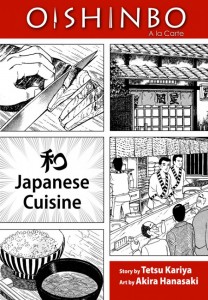
Equal parts Iron Wok Jan, Mostly Martha, and The Manga Cookbook, this educational, entertaining series explores Japanese cuisine at its most refined — sake, seabream sashimi — and its most basic — rice, pub food. The stories fall into two categories: stories celebrating the important role of food in creating community, and stories celebrating the culinary expertise of its principal characters, newspaperman Yamaoka Shiro and his curmudgeonly father Kaibara Yuzan. (Fun fact: Yuzan is such a food snob that he drove Yamaoka’s mother to an early grave, causing an irreparable break between father and son.) Though the competition between Yamaoka and Yuzan yields some elegant, mouth-watering dishes, Oishinbo is at its best when it focuses on everyday food in everyday settings, shedding light on how the Japanese prepare everything from bean sprouts to ramen. Warning: never read on an empty stomach! (Click here for my review of Oishinbo A la Carte: Japanese Cuisine; click here for my review of Oishinbo A la Carte: Vegetables.)

dmc39. Detroit Metal City
By Kiminori Wakasugi • VIZ Media
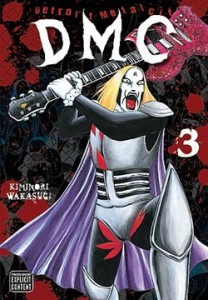
Satirizing death metal is a bit like shooting fish in a barrel: how hard can it be to parody a style associated with bands named Cannibal Corpse or Necrophagia? Poking fun at death metal while respecting the sincerity of its followers, however, is a much more difficult trick to pull off. Yet Kiminori Wakasugi does just that in Detroit Metal City, ridiculing the music — the violent lyrics, the crudely sexual theatrics — while recognizing the depth of DMC fans’ commitment to the metal lifestyle. Though the musical parodies are hilarious, the series’ funniest moments arise from classic fish-out-of-water situations: Negishi driving a tractor on his parent’s farm while dressed as alter ego Lord Krauser (complete with make-up, fright wig, and platform boots), Negishi bringing a fruit basket to a hospitalized DMC fan while dressed as Krauser… you get the idea. Rude, raunchy, and quite possibly the funniest title VIZ has licensed since Even a Monkey Can Draw Manga. (Click here for my review of volume one; click here for my review of volumes two and three.)

itazura18. Itazura Na Kiss
By Kaoru Tada • Digital Manga Publishing
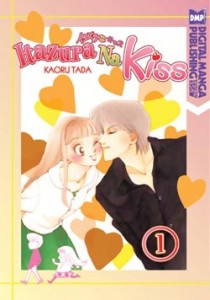
In the twenty years since Itazura Na Kiss first appeared in Margaret, Kaoru Tada’s breezy romantic comedy has been widely imitated, but seldom surpassed. The story is as basic as they come: an airhead falls in love with a genius, is rebuffed by him, and is eventually pursued by him when he realizes just how sincere and kind she is. Tada manufactures a ridiculous situation to bring her characters together under the same roof — earthquake ahoy! — yet the story never devolves into brainless sitcom territory, thanks to her large supporting cast of characters, brisk comic timing, and strategic use of humor to reveal the characters’ true natures. Pure shojo bliss. (Click here for my review of volume one.)

7. Gogo Monster (VIZ Media)
By Taiyō Matsumoto • VIZ Media
Every elementary school has a kid like Yuki, a smart, odd student who says things that unsettle classmates and teachers alike. In Yuki’s case, it’s the matter-of-fact way he reports seeing monsters that leads to his social isolation. Newcomer Makoto doesn’t share Yuki’s vision, but he admires Yuki’s nonchalant attitude, and struggles mightily to understand what makes his friend tick. It’s to Taiyo Matsumoto’s credit that we’re never entirely sure what aspects of the story are intended to be real, and which ones might be unfolding in the characters’ heads; Yuki’s monsters remain largely unseen, though their presence is felt throughout the story. Matsumoto’s stark, primitive style suits the material perfectly, inoculating Gogo Monster against the sentimentality that imaginary friends and childhood fears inspire in so many authors.

nameflower26. The Name of the Flower
By Ken Saito • CMX Manga
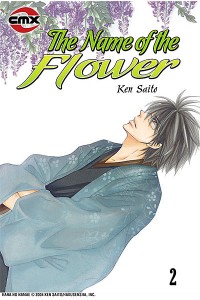
Had the Bronte sisters been born in twentieth-century Japan instead of nineteenth-century England, they might have penned something along the lines of The Name of the Flower, a tear-jerker about a young woman who falls in love with her guardian. Ken Saito employs many favorite Victorian tropes — muteness, garden imagery, orphans — in service of the plot, creating an atmosphere of palpable yearning that will be familiar to anyone who’s read Jane Eyre or Wuthering Heights. For all of its Victorian window-dressing, however, The Name of the Flower favors a slice-of-life approach over crazy-wives-in-the-attic melodrama. (Well, almost; the main love interest is a misanthropic — but hot! — novelist who favors yukatas over jeans, is prone to fits of anger, and writes dark, pessimistic fiction.) Saito’s elegant, understated art is the perfect complement to this delicate drama, making good use of floral imagery to underscore the heroine’s emotional state. For my money, the best new shojo manga of 2009.

distant_neighborhood25. A Distant Neighborhood
By Jiro Taniguchi • Fanfare/Ponent Mon
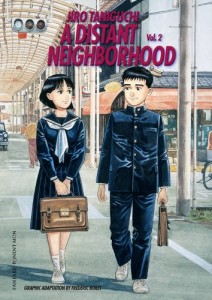
A Distant Neighborhood is a wry, wistful take on a tried-and-true premise: a salaryman is transported back in time to his high school days, and must decide whether to act on his knowledge of the past or let events unfold as they did before. We’ve seen this story many times at the multiplex — Back to the Future, Peggy Sue Got Married — but Taniguchi doesn’t play the set-up for laughs; rather, he uses Hiroshi’s predicament to underscore the challenges of family life and the awkwardness of adolescence. (Hiroshi is the same chronological age as his parents, giving him special insight into the vicissitudes of marriage, as well as the confidence to cope with teenage tribulations.) Easily one of the most emotional, most intimate stories Taniguchi’s ever told.

pluto4. Pluto: Urasawa x Tezuka
By Naoki Urasawa • VIZ Media
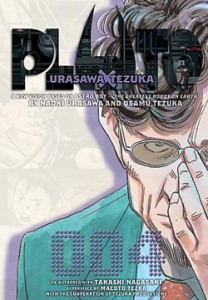
What amazes me the most about Naoki Urasawa is his ability to transform a tried-and-true genre like the whodunnit into a vehicle for exploring deeper questions about human nature, morality, and identity. As he did with the equally compelling Monster, Urasawa starts in familiar territory — in this case, a murder investigation — but quickly takes the story in unexpected directions, pausing to fill us in on the interior lives of both the principal and secondary characters — no mean feat, given that many cast members are, in fact, robots. Though Pluto takes its inspiration from “The Greatest Robot on Earth,” a short story within Osamu Tezuka’s long-running Astro Boy series, you don’t need to know anything about the original to appreciate the smart pacing, crisp artwork, or intelligent dialogue. In almost any other year, Pluto would have been my #1 pick; it’s a testament to the depth and breadth of 2009’s new releases that it isn’t.

pelu13. Little Fluffy Gigolo Pelu
By Junko Mizuno • Last Gasp
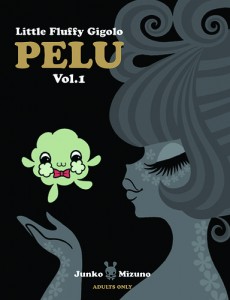
Poignant is a word I seldom use to describe Junko Mizuno’s work, given the frequency with which her characters pop pills, wield chainsaws, and whip each other. But Little Fluffy Gigolo Pelu is poignant, a perversely sweet and sad meditation on one small, sheep-like alien’s efforts to find his place in the universe. In richly detailed images — if one can use the phrase “richly detailed” to describe artwork that draws its inspiration from Hello Kitty, My Little Pony, and Faster, Pussycat! Kill! Kill! — Mizuno offers one of the most bizarre, most original variations on that chick-lit staple, the quest to find a mate before one’s biological clock runs out. It’s not entirely clear how Mizuno expects her audience to react to Little Fluffy Gigolo Pelu — as a social satire? a tragedy? a Sanrio promotion? — but the clarity and appeal of her vision is undeniable. (Click here for my review of volume one.)

redsnow2. Red Snow
By Susumu Katsumata • Drawn & Quarterly
Through a series of ten vignettes, Red Snow depicts life in pre-industrial Japan, when men depended on the sea, the forest, and the field for their survival. Kappa and kitsune mingle freely with humans in Susumu Katsumata’s world, their presence treated as a matter of fact, rather than something extraordinary — a reflection of man’s close relationship with the natural world. Though Katsumata employs a self-consciously primitive style, the stories are neither bleak nor condescending towards their subjects; if anything, Katsumata’s drawings of farmers, woodcutters, and drunken monks have a rude vigor that reflects the resilience of his characters.

1. Children of the Sea
By Daisuke Igarashi • VIZ Media
Children of the Sea defies easy categorization; it’s a high-seas adventure, an exploration of pan-Asian mythology, a cautionary tale about the environment, and a meditation on the ocean as a life-giving force. Though Children of the Sea could easily devolve into mystical hoo-ha — two of its characters were raised by dugongs, for Pete’s sake — Igarashi embeds a coming-of-age story within the main narrative that grounds Children of the Sea in everyday experience, even as the plot takes a turn for the fantastic. (See “raised by dugongs,” above.) Igarashi’s naturalistic art captures the beauty and strangeness of the ocean settings, as well as the sheer diversity of undersea life; you won’t soon forget the site of a sea turtle leaving a starry trail in its wake or the image of a young boy hitching a ride on a humpback whale. Eerie and poetic. (Click here for my review of volume one.)

HONORABLE MENTIONS
Done because there are too menny… great manga, that is, to confine myself to a traditional top ten list. With apologies to Thomas Hardy, here are some of the other manga that tickled my fancy in 2009:

  • Best Continuing Series: Black Jack (Vertical, Inc.) and Real (VIZ Media)
  • Best Dressed Characters: The History of the West Wing (Yen Press)
  • Best Final Volume: Emma (CMX)
  • Best Guilty Pleasure: Cat Paradise (Yen Press)
  • Best Kid-Friendly Title: Dinosaur Hour (VIZ) and Leave it to PET! The Misadventures of a Recycled Super-Robot (VIZ)
  • Best License Rescue: Yotsuba&! (Yen Press)
  • Best Manhwa: Small-Minded Schoolgirls (NETCOMICS)
  • Best New Manga That’s Already on Hiatus: The Manzai Comics (Aurora)
  • Best Prose Novel Released by a Manga Publisher: The Cat in the Coffin (Vertical, Inc.)
  • Best Reprint Edition: Clover (Dark Horse)
  • Best Substitute for Television: Fire Investigator Nanase (CMX)
  • Best Translation of a Dense, Culturally-Specific Text: Sayonara, Zetsubou-Sensei: The Power of Negative Thinking (Del Rey)
  • Best Use of Wagner in a Manga: Ludwig II (DMP)
  • Best Yaoi: Future Lovers (Aurora/Deux)

Filed Under: Manga, Manga Critic, Recommended Reading Tagged With: cmx, DMP, Drawn & Quarterly, Fanfare/Ponent Mon, Jiro Taniguchi, Junko Mizuno, Last Gasp, Naoki Urasawa, VIZ

The Best Manga of 2009

December 17, 2009 by Katherine Dacey

I pity the poor critic who panned Up — it’s not fun to buck the tide of critical approbation, especially when it seems like everyone else is wholeheartedly embracing the film or book in question. I say this because my best-of-2009 list is missing two titles that I’ve seen on many others: Yoshihiro Tatsumi’s A Drifting Life and Fumi Yoshinaga’s Ooku: The Inner Chambers. The first, I’ll admit, is a beautifully crafted book, proof that manga can be a great medium for biography. Yet for all its artistry, I found A Drifting Life oddly uninvolving; too many chapters read more like historical pageants than personal drama. The second title I found more problematic. Yoshinaga starts from a humdinger of a premise, inverting the social order of Tokugawa Japan by placing women in charge of everything. Yoshinaga never fulfills the promise of her idea, however, saddling her narrative with long-winded conversations that are both tin-eared and dull, two adjectives I never thought I’d be applying to Yoshinaga’s work.

So what manga *did *I like this year? Read on for the full list.

…

Read More

Filed Under: Manga Critic Tagged With: cmx, DMP, Drawn & Quarterly, Fanfare/Ponent Mon, Jiro Taniguchi, Junko Mizuno, Last Gasp, Naoki Urasawa, VIZ

2009 Best/Worst Picks at Manga Recon!

December 16, 2009 by MJ 1 Comment

nabarinoouThe big news in my world today (and what kept me working down to the wire last night) is Our Favorite Manga of 2009, a list of the worst/best manga of the year as perceived by those of us on the Manga Recon staff. As I reflect on my list this morning, I’m mainly struck by all the fantastic series I was unable to find room for, both continuing series like NANA, Nodame Cantabile, We Were There, Goong, and Fullmetal Alchemist, as well as new series like Children of the Sea and Detroit Metal City. If only I could have mentioned Flower of Life, which finally concluded its short run this year, charming me at every moment!

The best thing about these lists, however, is how greatly they vary. Sure, there are a few titles that appear over and over but there are more that don’t, and some on which we quite pointedly disagree. Take Yen Press’ Nabari No Ou, for example, listed by me as “Best Manga That You Thought You Would Hate” and by Michelle as “Biggest Disappointment.” Wanna watch us duke it out? Check out the list for yourself!

Filed Under: NEWS Tagged With: manga, manhwa

NANA Project 4!

December 15, 2009 by MJ 2 Comments

Nana-7For those who have been following The NANA Project or those who’d like to start, please join Danielle Leigh, Michelle Smith, and me over at Comics Should Be Good for our discussion of NANA volumes 7 & 8! Due to the events in these volumes, discussion revolves heavily around Hachi, Takumi, Nobu, and Nana, with just a teeeensy rant from Danielle on the subject of Ren and Yasu. These are a couple of pretty intense volumes encompassing events that range from euphoric to absolutely devastating, so you can imagine that the three of us have quite a bit to say. Fans of Takumi will enjoy Michelle’s near-defection to their side. Anti-fans will prefer my stubborn refusal to go along with. Either way, there is plenty to dig into, so please join us in comments!

For previous discussions, see Projects one, two, and three!

Filed Under: NEWS Tagged With: nana, nana project

Oishinbo A la Carte: Vegetables

December 14, 2009 by Katherine Dacey

I mean no disrespect to Tetsu Kariya or Akira Hanasaki when I say that the Vegetables volume of Oishinbo A la Carte irresistibly reminded me of 1970s television. Back in the day when there were only three networks, hour-long dramas doggedly followed the same formula: they dramatized a problem — say, drinking and driving, or falling in with a bad crowd — then resolved it with a little action and a lot of talking, culminating in a freeze-frame shot of the entire cast laughing at corny situational humor. Oishinbo follows this template to a tee, using hot-button issues such as bullying and pollution to preach the healing power of vegetables. The stories are as hokey and predictable as an episode of CHiPs or Little House on the Prairie, but entertaining in their sincerity.

Take “The Joy of a New Potato,” for example. The story begins with big-shot executive Misaki Hacho treating the Ultimate Menu team to an expensive meal. Shortly afterwards, Yamaoka discovers that Misaki has fallen on hard times, selling his business interests and trading his lavish home for a two-room flat. Kurita and Yamaoka invite Misaki’s family on a country outing, teaching his children how to harvest and cook potatoes. Though the denouement of the story is predictable and a little credulity-straining — Misaki’s son declares the potato outing “a hundred times better” than the extravagant birthday party that dad threw him the previous year — the message is heartfelt: doing things with your children is more important than doing things for them. Other stories in this vein include “The Bean Sprout Kid,” in which Yamaoka defends a quiet, frail boy from his classmates; “Good Eggplant, Bad Eggplant,” in which Tomio’s son overcomes his lifelong hatred of aubergines; “The Story of Vegetables, Now and Then,” in which a wealthy industrialist learns an important lesson about pesticides; “The Breath of Spring,” in which a cook woos her estranged lover with an asparagus dish; and “The Taste of Chicken, The Taste of Carrots,” in which a grandmother’s homemade chicken soup inspires a picky eater to add veggies to her diet.

No volume of Oishinbo would be complete with at least one epic food battle, and Vegetables opens with a doozy: a three-part contest revolving around cabbage and turnips. For most of the showdown, Yuzan appears to have the upper hand, preparing simple dishes that emphasize the unique flavors of the star ingredients. Yamaoka’s fortunes change, however, when Arakawa’s mother comes to the city for a visit, bringing wild grape juice and walnuts with her. The bold flavors of the grapes and walnuts inspire Yamaoka to take a page from his father’s book, trading elaborate preparations for straightforward ones that enhance the “muddiness” of the turnip.

As I noted in my review of the first volume, the structure of the A la Carte edition of Oishinbo is both its strength and weakness. On the one hand, organizing each volume around a particular kind of food makes for a fun, educational introduction to Japanese cuisine; a better title for the US edition would be Oishinbo: Beyond Pocky and California Rolls, given the sheer diversity of the food described in each volume. On the other hand, the series’ thematic organization robs the series of its continuity; we never have a chance to see Kurita and Yamaoka’s relationship evolve from co-workers to spouses, as we’re constantly seeing them at different stages of their courtship, nor do we have any sense of how the Ultimate Menu vs. Supreme Menu contest is unfolding.

Still, it’s difficult to deny Oishinbo‘s appeal. Imagine Iron Chef crossed with Mostly Martha, and you have some idea of why this sincere, somewhat hokey, series is as addictive as gyoza: it reminds us that food is an essential ingredient in all human relations, the glue that binds friends, families, and lovers in times of joy and crisis alike. The best of the A la Carte series.

Review copy provided by VIZ Media, LLC.

OISHINBO A LA CARTE: VEGETABLES • STORY BY TETSU KARIYA, ART BY AKIRA HANASAKI • VIZ • 266 pp. • RATING: TEEN

Filed Under: Manga, Manga Critic, REVIEWS Tagged With: Cooking and Food, VIZ, VIZ Signature

Oishinbo A la Carte: Vegetables

December 14, 2009 by Katherine Dacey

oishinbo_veggiesI mean no disrespect to Tetsu Kariya or Akira Hanasaki when I say that the Vegetables volume of Oishinbo A la Carte irresistibly reminded me of 1970s television. Back in the day when there were only three networks, hour-long dramas doggedly followed the same formula: they dramatized a problem — say, drinking and driving, or falling in with a bad crowd — then resolved it with a little action and a lot of talking, culminating in a freeze-frame shot of the entire cast laughing at corny situational humor. Oishinbo follows this template to a tee, using hot-button issues such as bullying and pollution to preach the healing power of vegetables. The stories are as hokey and predictable as an episode of CHiPs or Little House on the Prairie, but entertaining in their sincerity.

Take “The Joy of a New Potato,” for example. The story begins with big-shot executive Misaki Hacho treating the Ultimate Menu team to an expensive meal. Shortly afterwards, Yamaoka discovers that Misaki has fallen on hard times, selling his business interests and trading his lavish home for a two-room flat. Kurita and Yamaoka invite Misaki’s family on a country outing, teaching his children how to harvest and cook potatoes. Though the denouement of the story is predictable and a little credulity-straining — Misaki’s son declares the potato outing “a hundred times better” than the extravagant birthday party that dad threw him the previous year — the message is heartfelt: doing things with your children is more important than doing things for them. Other stories in this vein include “The Bean Sprout Kid,” in which Yamaoka defends a quiet, frail boy from his classmates; “Good Eggplant, Bad Eggplant,” in which Tomio’s son overcomes his lifelong hatred of aubergines; “The Story of Vegetables, Now and Then,” in which a wealthy industrialist learns an important lesson about pesticides; “The Breath of Spring,” in which a cook woos her estranged lover with an asparagus dish; and “The Taste of Chicken, The Taste of Carrots,” in which a grandmother’s homemade chicken soup inspires a picky eater to add veggies to her diet.

…

Read More

Filed Under: Manga Critic Tagged With: Seinen, VIZ

DMP BL Giveaway Winners Announced!

December 14, 2009 by MJ 1 Comment

brilliantblue1We’ve gone a couple of days past the promised date, I realize, but the results are finally here! Better late than never, I hope? In any case, the winners of my Digital Manga BL giveaway (drawn randomly from a tupperware bowl by a visiting friend) are as follows:

Iris Sipos has won a copy of Brilliant Blue, Vol. 1!
Judi Weierhauser has won a copy of Tricky Prince!
The Moon In Autumn has won a copy of Love Knot!

Winners should e-mail mj@mangabookshelf.com with their names and mailing addresses in order to receive their books.

A post listing everyone’s fantastic BL recommendations is forthcoming, sometime in the next couple of weeks. Meanwhile, congratulations to the winners! Also, many thanks to Digital Manga Publishing for providing books for this giveaway!

Filed Under: NEWS

Manhwa Monday: A Moment of Self-indulgence

December 14, 2009 by MJ 2 Comments

1001nights9Welcome! Today I’m featuring one of my own reviews, mainly as an excuse to talk more about one of the most enjoyable manhwa series I’m reading right now, One Thousand and One Nights from Yen Press. Last week, I reviewed volume nine, which features fourteenth-century Chinese novel The Romance of the Three Kingdoms as its story-within-a-story. “Though what appears here is obviously just a tiny fragment of the original Chinese epic (which stands at 800,000 words and 120 chapters) it is more than enough to entice readers to seek out the source material for more. This was, apparently, a strong motivation for its inclusion in the story, as the volume’s endnotes reveal writer Jeon JinSeok’s desire to introduce the testosterone-heavy novel to a new generation of female readers who may not have been otherwise encouraged to check it out.” …

Read More

Filed Under: Manhwa Bookshelf Tagged With: manhwa, Manhwa Bookshelf

Guest Review: Dystopia, Volume 1

December 13, 2009 by Megan M. 1 Comment

Guest Review: Dystopia, Vol. 1
By Judith Park
Published by Yen Press

Review by Megan M.

dystopia
Buy This Book

Seventeen-year-old Dionne has always been extremely close to (and even emotionally dependent upon) her older brother Lyon. Lyon is their parents’ favorite, while Dionne herself has never gotten along with them. When Dionne’s best friend, Shikku, confesses to a crush on Lyon, Dionne is happy to play matchmaker. Everything seems perfect for the trio until tragedy strikes and Dionne learns of a secret about her family that her parents have kept hidden since Lyon was two.

This is a very rough book and in the end I’m not entirely certain if it’s intended to be a complete story or the start of one. The first two-thirds are devoted to a rather awkward teen drama, and things only really pick up when some minor science fiction elements and a character named Gabriel are introduced in the last third. Emotionally, the series is very difficult to track. Dionne’s conflict with her parents reads as typical, but exaggerated to a point where the natural conflict feels forced and its eventual explanation makes little sense. In addition, I couldn’t tell what precisely attracted Shikku and Lyon to each other beyond hormones and I was never certain whether or not I was meant to view the relationship between the three leads as a (potentially incestuous) triangle. It’s only Gabriel, who seeks an identity of his own rather than that which was forced upon him, who really makes much sense to me as a character.

The art is rough but competent. The layouts are easy to follow and the designs are decent, but they’re also fairly uninspired and more styled to character types than individual characters. It also seems to be trying to blend several styles into one, something that I don’t think quite works. In addition, there’s an unfinished feeling to it, as if someone forgot to apply the finishing touches that would give it a needed crispness.

Park has some interesting ideas here, but I don’t think they ever really come off. The story might benefit from a creator who would wallow in the melodrama of it or take various elements to the extreme. Park chooses to instead focus on things like the serious nature of humanity and identity, but her characters and their relationships lack the “oomph” needed to really pull that off. Given more time to develop, it could work, but as executed here, it really doesn’t. While I cannot truly recommend this, I also can’t condemn it, as the potential is there, if unfulfilled. Unfortunately, though this volume is not bad, it is not good enough to stand out either, and I can’t help but think about what a more experienced creator might have done with the same material.

Review copy provided by the publisher.

Filed Under: REVIEWS Tagged With: dystopia, global manga, manga

801 Media acquires Under Grand Hotel!

December 11, 2009 by MJ Leave a Comment

UGHprimgGardena, CA (December 7, 2009)-801 Media, Digital Manga Publishing’s adult yaoi imprint, is excited to announce the acquisition of the heavily fan-requested title: Under Grand Hotel by Mika Sadahiro (creator of Pathos)! Controversial, explicit, yet ultimately fascinating, Under Grand Hotel takes place in a prison that the prisoners have nicknamed the “Under Grand Hotel”. A two-part series, the story revolves around two inmates, Sen and Swordfish, and the power politics involved to survive a prison that houses the most dangerous inmates around!

…

Read More

Filed Under: REVIEWS

  • « Go to Previous Page
  • Page 1
  • Page 2
  • Page 3
  • Go to Next Page »
 | Log in
Copyright © 2010 Manga Bookshelf | Powered by WordPress & the Genesis Framework