• Skip to primary navigation
  • Skip to main content
  • Skip to primary sidebar
  • Home
  • About Us
    • Privacy Policy
    • Comment Policy
    • Disclosures & Disclaimers
  • Resources
    • Links, Essays & Articles
    • Fandomology!
    • CLAMP Directory
    • BlogRoll
  • Features & Columns
    • 3 Things Thursday
    • Adventures in the Key of Shoujo
    • Bit & Blips (game reviews)
    • BL BOOKRACK
    • Bookshelf Briefs
    • Bringing the Drama
    • Comic Conversion
    • Fanservice Friday
    • Going Digital
    • It Came From the Sinosphere
    • License This!
    • Magazine no Mori
    • My Week in Manga
    • OFF THE SHELF
    • Not By Manga Alone
    • PICK OF THE WEEK
    • Subtitles & Sensibility
    • Weekly Shonen Jump Recaps
  • Manga Moveable Feast
    • MMF Full Archive
    • Yun Kouga
    • CLAMP
    • Shojo Beat
    • Osamu Tezuka
    • Sailor Moon
    • Fruits Basket
    • Takehiko Inoue
    • Wild Adapter
    • One Piece
    • After School Nightmare
    • Karakuri Odette
    • Paradise Kiss
    • The Color Trilogy
    • To Terra…
    • Sexy Voice & Robo
  • Browse by Author
    • Sean Gaffney
    • Anna Neatrour
    • Michelle Smith
    • Katherine Dacey
    • MJ
    • Brigid Alverson
    • Travis Anderson
    • Phillip Anthony
    • Derek Bown
    • Jaci Dahlvang
    • Angela Eastman
    • Erica Friedman
    • Sara K.
    • Megan Purdy
    • Emily Snodgrass
    • Nancy Thistlethwaite
    • Eva Volin
    • David Welsh
  • MB Blogs
    • A Case Suitable For Treatment
    • Experiments in Manga
    • MangaBlog
    • The Manga Critic
    • Manga Report
    • Soliloquy in Blue
    • Manga Curmudgeon (archive)

Manga Bookshelf

Discussion, Resources, Roundtables, & Reviews

yen press

Bunny Drop, Vols. 1-2

December 8, 2010 by Katherine Dacey

Fictional bachelor dads come in two flavors. The first is easily flummoxed by diapers, sippy cups, tantrums, and stomach aches, reacting in abject horror to bodily functions and extreme emotions (see Three Men and a Baby), while the second behaves more like a stand-up comedian than an engaged parent, commenting wryly on his charges’ behavior without doing much to guide or correct them (see Yotsuba&!). Daikichi, the singleton hero of Bunny Drop, is a pleasant corrective to these familiar stereotypes: he’s a sensitive, well-meaning thirty-year-old who steps up to the plate when his grandfather dies, leaving behind an illegitimate six-year-old daughter.

What begins as an impulsive decision — Daikichi is offended by his family’s reluctance to accept responsibility for gramps’ kid — quickly evolves into a serious commitment. Daikichi is humble enough to realize his limitations as a father, enlisting help from co-workers, friends, and family members in his efforts to find day care for Rin and impose some structure on her life, even though he isn’t entirely certain what kind of boundaries and routines are appropriate for a six-year-old. Yumi Unita wrings some humor out of Daikichi’s attempt to understand Rin’s unique point of view, but steers clear of easy laughs and easy victories. The early moments of rapport between Daikichi and Rin feel earned, not contrived, while Rin’s quirks reflect the bizarre circumstances of her early upbringing, as well as her deep fear of being abandoned.

Though Unita’s character designs are highly stylized and her panels free of busy detail, the spare, unfussy quality of her artwork is deceptive; her seemingly simple faces and bodies actually speak volumes about each character’s personality and history. The few lines on Daikichi’s face, for example, not only establish his age and his homeliness, they also give readers a window into his relationship with Rin. We see his growing attachment to the girl through the softening of his brow and jawline, and note the tension in his face when trying to negotiate new office hours for himself. (His co-workers are puzzled and angered by Daikichi’s decision to take care of Rin. “Just because it’s a relative’s child,” one underling complains, “why must you be the sacrifice, Kawachi-San?”)

With Rin, Unita focuses as much on the character’s body language as on her facial expressions. In the first volume, Rin appears closed off from everyone: rounded shoulders, downcast eyes, pursed lips, and folded arms. As Rin begins to trust Daikichi, however, her face and posture change: her limbs unfurl and her eyes brighten, and her repertory of faces soon includes pouty defiance and bravado. That same attention to detail extends to supporting cast members as well. Rin’s mother, whom Daikichi meets in volume two, comes across as impossibly young, swimming in an outfit too big for her slight frame, and fidgeting throughout her conversation with Daikichi, twisting her hair and avoiding eye contact in the manner of a sullen teenager.

The introduction of Rin’s mother suggests that future installments of Bunny Drop will continue to focus complex issues — what constitutes a family? who has the right to call himself a parent? what’s in the best interest of a damaged child? — in lieu of sitcom ones. (See sippy cups, bad dreams, and the stomach flu, above.) That Unita can take such potentially overwrought material and fashion a thoughtful, funny, and honest look at child-rearing is testament to her skill as a storyteller and — one suspects — as a parent. Easily one of 2010’s best new titles.

BUNNY DROP, VOLS. 1-2 • BY YUMI UNITA • YEN PRESS • RATING: TEEN (13+)

Filed Under: Manga, Manga Critic, REVIEWS Tagged With: Drama, yen press

The Best Manga of 2010: The Manga Critic’s Picks

December 6, 2010 by Katherine Dacey 16 Comments

For all the upheaval within the manga industry — the demise of CMX, Del Rey, and Go! Comi, the layoffs at VIZ — 2010 proved an exceptionally good year for storytelling. True, titles like Black Butler, Naruto, and Nabari no Ou dominated sales charts, but publishers made a concerted effort to woo grown-ups with vintage manga — Black Blizzard, A Drunken Dream and Other Stories — edgy sci-fi — Biomega, 7 Billion Needles — underground comix — AX: A Collection of Alternative Manga, The Box Man — and good old-fashioned drama — All My Darling Daughters, Bunny Drop. I had a hard time limiting myself to just ten titles this year, so I’ve borrowed a few categories from my former PCS cohort Erin Finnegan, from Best New Guilty Pleasure to Best Manga You Thought You’d Hate. Please feel free to add your own thoughts: what titles did I unjustly omit? What titles did I like but you didn’t? Inquiring minds want to know!

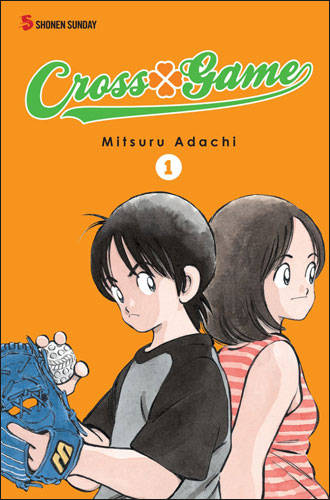
10. CROSS GAME (Mitsuri Adachi; VIZ)

In this sometimes funny, sometimes melancholy coming-of-age story, a family tragedy brings teenager Ko Kitamura closer to neighbor Aoba Tsukishima, with whom he has a fraught relationship. Though the two bicker with the antagonistic gusto of Beatrice and Benedict, their shared love of baseball helps smooth the course of their budding romance. To be sure, Cross Game can’t escape a certain amount of sports-manga cliche, but Mitsuri Adachi is more interested in showing us how the characters relate to each other than in celebrating their amazing baseball skills. (Not that he skimps on the game play; Adachi clearly knows his way around the diamond.) The result is an agreeable dramedy that has the rhythm of a good situation comedy and the emotional depth of a well-crafted YA novel, with just enough shop-talk to win over baseball enthusiasts, too.

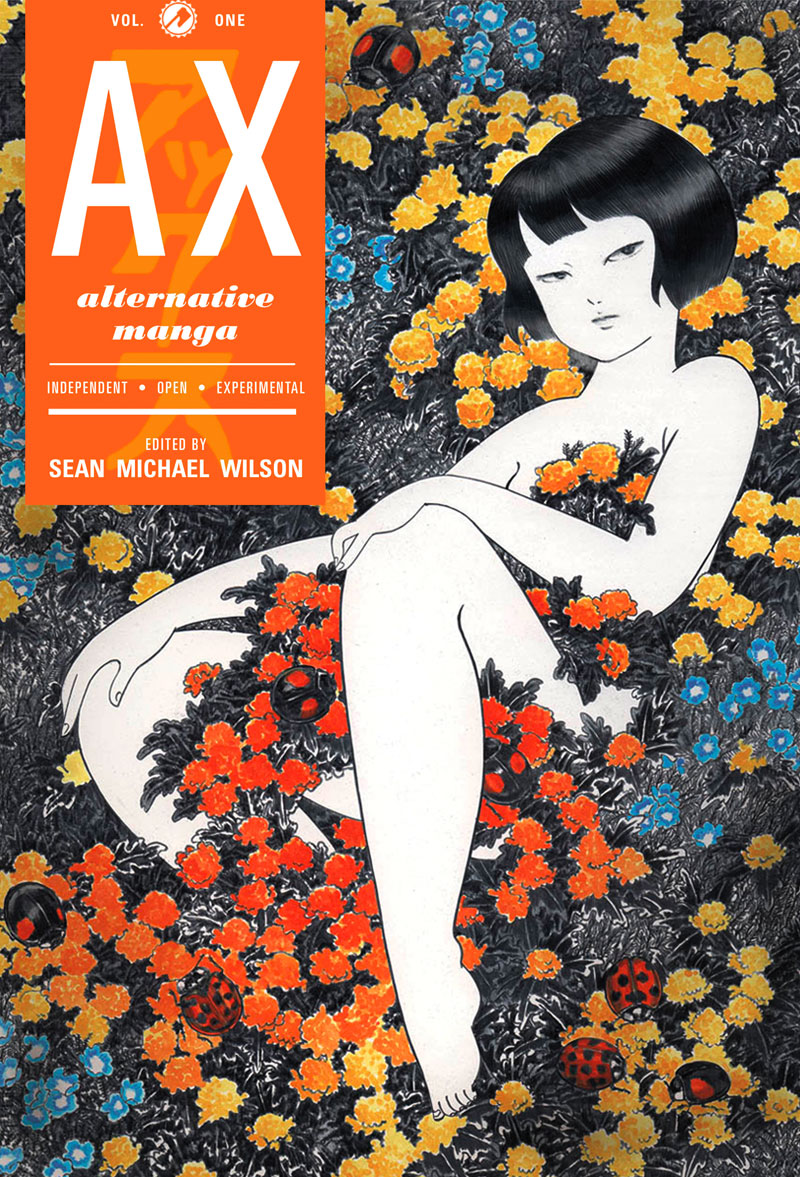
9. AX: A COLLECTION OF ALTERNATIVE MANGA (Various Artists; Top Shelf)

The next time someone dismisses manga as a “style” characterized by youthful-looking, big-eyed characters with button noses, I’m going to hand them a copy of AX, a rude, gleeful, and sometimes disturbing rebuke to the homogenized artwork and storylines found in mainstream manga publications. No one will confuse AX for Young Jump or even Big Comic Spirits; the stories in AX run the gamut from the grotesquely detailed to the playfully abstract, often flaunting their ugliness with the cheerful insistence of a ten-year-old boy waving a dead animal at squeamish classmates. Nor will anyone confuse Yoshihiro Tatsumi or Einosuke’s outlook with the humanism of Osamu Tezuka or Keiji Nakazawa; the stories in AX revel in the darker side of human nature, the part of us that’s fascinated with pain, death, sex, and bodily functions. Like all anthologies, the collection is somewhat uneven, with a few too many scatological tales for its own good, but the very best stories — “The Hare and the Tortoise,” “Push Pin Woman,” “Six Paths of Wealth,” “Puppy Love,” “Inside the Gourd” — attest to the diversity of talent contributing to this seminal manga magazine. –Reviewed at The Manga Critic on 5/21/10

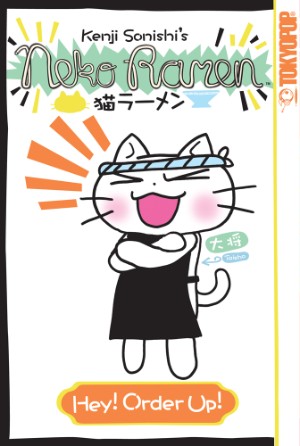
8. NEKO RAMEN (Kenji Sonishi; Tokyopop)

If you’ve ever lived with a cat or dog, you know that no meal is complete without a pet hair garnish. Now imagine that your beloved companion actually prepared your meals instead of watching you eat them: what sort of unimaginable horrors might you encounter beyond the stray hair? That’s the starting point for Neko Ramen, a 4-koma manga about a cat whose big dream is to run a noodle shop, but author Kenji Sonishi quickly moves past hair balls and litter box jokes to mine a richer vein of humor, poking fun at his cat cook’s delusions of entrepreneurial grandeur. Taisho is the Don Quixote of ramen vendors, dreaming up ludicrous giveaways and unappetizing dishes in an effort to promote his business, never realizing that he is the store’s real selling point. The loose, sketchy artwork gives the series an improvisational feel, while the script has the pleasant, absurdist zing of an Abbott and Costello routine. –Reviewed at The Manga Critic on 6/2/10

7. AYAKO (Osamu Tezuka; Vertical, Inc.)

Combining the psychological realism of Dostoevsky with the social consciousness of Tolstoy and Zola, Osamu Tezuka uses conflicts within the once-powerful Tenge clan to dramatize the social, political, and economic upheaval caused by the American occupation of post-war Japan. No subject is off-limits for Tezuka: the Tenge commit murders, spy for the Americans, join the Communist Party, imprison a family member in an underground cell, and engage in incest. It’s one of Tezuka’s most sober and damning stories, at once tremendously powerful and seriously disturbing, with none of the cartoonish excess of Ode to Kirihito or MW. The ending is perhaps too pat and loaded with symbolism for its own good, but like Tezuka’s best work, Ayako forces the reader to confront the darkest, most corruptible corners of the human soul. As with Apollo’s Song, Black Jack, and Buddha, Vertical has done a superb job of making Tezuka accessible to Western readers with flipped artwork and a fluid translation.

6. BUNNY DROP (Yumi Unita; Yen Press)

Stop me if you’ve heard this one before: a thirty-something bachelor unexpectedly becomes a parent to a cute little girl, leading to hijinks, misunderstandings, and heart-tugging moments. That’s a fair summary of what happens in Bunny Drop, but Yumi Unita wisely avoids the pitfalls of the single-dad genre — the cheap sentiment, the unfunny scenes of dad recoiling in horror at diapers, runny noses, and tears — instead focusing on the unique bond between Daikichi and Rin, the six-year-old whom he impetuously adopts after the rest of the family disavows her. (Rin is the product of a liaison between Daikichi’s grandfather and a much younger woman.) Though Daikichi struggles to find day care, buy clothes for Rin, and make sense of her standoffish behavior, he isn’t a buffoon or a straight man for Rin’s antics; Unita portrays him as a smart, sensitive person blessed with good instincts and common sense. Clean, expressive artwork and true-to-life dialogue further inoculate Bunny Drop against a terminal case of sitcom cuteness, making it one of the most thoughtful, moving, and adult manga of the year.

5. BLACK BLIZZARD (Yoshihiro Tatsumi; Drawn & Quarterly)

Written in just twenty days, this feverish pulp thriller plays like a mash-up of The Fugitive, The 39 Steps, and The Defiant Ones as two convicts — one a hardened criminal, the other a down-on-his luck musician — go on the lam during a blinding snowstorm. The heroes are more archetypes than characters, drawn in bold strokes, but the interaction between them crackles with antagonistic energy; they’re as much enemies as partners, roles that they constantly renegotiate during their escape. Evocative artwork — slashing lines, dramatic camera angles, images of speeding trains — infuses Black Blizzard with a raw, nervous energy that nicely mirrors the characters’ internal state. Only in the final, rushed pages does manga-ka Yoshihiro Tatsumi falter, tidily resolving the story through an all-too-convenient plot twist that hinges on coincidence. Still, that’s a minor criticism of a thoroughly entertaining story written during a crucial stage of Tatsumi’s artistic development. –Reviewed at The Manga Critic on 9/9/10

4. HOUSE OF FIVE LEAVES (Natsume Ono; VIZ)

Timid ronin Akitsu Masanosuke can’t hold a steady job, despite his formidable swordsmanship. When a businessman approaches him with work, Masanosuke readily accepts, not realizing that his new employer, Yaichi, runs a crime syndicate that specializes in kidnapping. Masanosuke’s unwitting participation in a blackmailing scheme prevents him from severing his ties to Yaichi; Masanosuke must then decide if he will join the House of Five Leaves or bide his time until he can escape. Though Toshiro Mifune and Hiroyuki Sanada have made entire careers out of playing characters like Masanosuke, Natsume Ono makes a persuasive case that you don’t need a flesh-and-blood actor to tell this kind of story with heartbreaking intensity; she can do the slow-burn on the printed page with the same skill as Masaki Kobayashi (Hara Kiri, Samurai Rebellion) and Yoji Yamada (The Twilight Samurai) did on the big screen. –Reviewed at The Manga Critic on 8/20/10

3. TWIN SPICA (Kou Yaginuma; Vertical, Inc.)

Asumi Kamogawa is a small girl with a big dream: to be an astronaut on Japan’s first manned space flight. Though she passes the entrance exam for Tokyo Space School, she faces several additional hurdles to realizing her goal, from her child-like stature — she’s thirteen going on eight — to a faculty member who blames her father for causing a fiery rocket crash that claimed hundreds of civilian lives. Yet for all the setbacks she’s experienced, Asumi proves resilient, a gentle girl who perseveres in difficult situations, offers friendship in lieu of judgment, and demonstrates a preternatural awareness of life’s fragility. Twin Spica follows Asumi through every stage of training, from physics lectures to zero-G simulations, showing us how she befriends her fellow cadets and gradually learns to rely on herself, rather than her imaginary friend, Mr. Lion. Though Twin Spica was serialized in a seinen magazine, it works surprisingly well for young adults, too, an all-too-rare example of a direct, heartfelt story that’s neither saccharine nor mawkish.  –Reviewed at The Manga Critic on 5/3/10

2. ALL MY DARLING DAUGHTERS (Fumi Yoshinaga; VIZ)

The five vignettes in All My Darling Daughters depict women negotiating difficult personal relationships: a daughter confronts her mother about mom’s new, much younger husband; a college student seduces her professor, only to dump him when he tries to court her properly; a beautiful young woman contemplates an arranged marriage. Like all of Yoshinaga’s work, the characters in All My Darling Daughters love to talk. That chattiness isn’t always an asset to Yoshinaga’s storytelling (see Gerard and Jacques), but here the dialogue is perfectly calibrated to reveal just how complex and ambivalent these relationships really are. Yoshinaga’s artwork is understated but effective, as she uses small details — how a character stands or carries her shoulders — to offer a more complete and nuanced portrait of each woman. Quite possibly my favorite work by Yoshinaga.

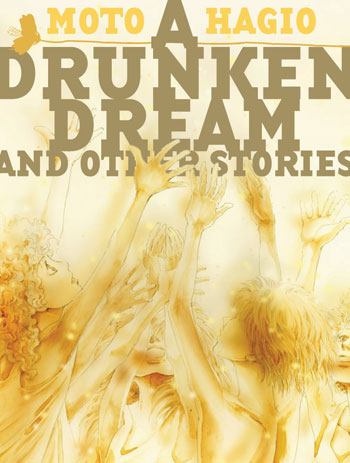
1. A DRUNKEN DREAM AND OTHER STORIES (Moto Hagio; Fantagraphics)

Not coincidentally, A Drunken Dream and Other Stories was my nomination for Best New Graphic Novel of 2010 as well. Here’s what I had to say about the title over at Flashlight Worthy Books:

Moto Hagio is to shojo manga what Will Eisner is to American comics, a seminal creator whose distinctive style and sensibility profoundly changed the medium. Though Hagio has been actively publishing stories since the late 1960s, very little of her work has been translated into English. A Drunken Dream, published by Fantagraphics, is an excellent corrective — a handsomely produced, meticulously edited collection of Hagio’s short stories that span her career from 1970 to 2007. Readers new to Hagio’s work will appreciate the inclusion of two contextual essays by manga scholar Matt Thorn, one an introduction to Hagio and her peers, the other an interview with Hagio. What emerges is a portrait of a gifted artist who draws inspiration from many sources: Osamu Tezuka and Shotaro Ishimonori, Ray Bradbury and Isaac Asimov, Frances Hodgson Burnett and L.M. Montgomery.

For the complete list — including nominations from David “Manga Curmudgeon” Welsh, Brigid “MangaBlog” Alverson, Lorena “i heart manga” Ruggero, and Matthew “Warren Peace Sings the Blues” Brady — click here. To read my full review of A Drunken Dream, click here.

HONORABLE MENTIONS

Done because there are too menny… great manga, that is, to confine myself to a traditional top ten list. With apologies to Thomas Hardy, here are some of the other titles that tickled my fancy in 2010:

  • OTHER AWESOME DEBUTS: Not Love But Delicious Foods Make Me Happy (Yen Press), Saturn Apartments (VIZ), 7 Billion Needles (Vertical, Inc.)
  • BEST CONTINUING SERIES: Itazura na Kiss (DMP), Ooku: The Inner Chambers (VIZ), Suppli (Tokyopop), 20th Century Boys (VIZ)
  • BEST NEW ALL-AGES MANGA: Chi’s Sweet Home (Vertical, Inc.)
  • BEST NEW SERIES THAT’S ALREADY ON HIATUS: Diamond Girl (CMX), Stolen Hearts (CMX)
  • BEST NEW GUILTY PLEASURE: Demon Sacred (Tokyopop), Dragon Girl (Yen Press)
  • BEST REPRINT EDITION: Cardcaptor Sakura (Dark Horse), Little Butterfly Omnibus (DMP)
  • BEST MANGA I THOUGHT I’D HATE: Higurashi When They Cry: Beyond Midnight Arc (Yen Press)
  • BEST FINALE: Pluto: Tezuka x Urasawa (VIZ)

Filed Under: Manga Critic Tagged With: cmx, Dark Horse, DMP, Drawn & Quarterly, fantagraphics, fumi yoshinaga, moto hagio, Naoki Urasawa, Osamu Tezuka, SigIKKI, Tokyopop, Top Shelf, vertical, VIZ, yen press, Yoshihiro Tatsumi

The Best Manga of 2010: The Manga Critic’s Picks

December 6, 2010 by Katherine Dacey

For all the upheaval within the manga industry — the demise of CMX, Del Rey, and Go! Comi, the layoffs at VIZ — 2010 proved an exceptionally good year for storytelling. True, titles like Black Butler, Naruto, and Nabari no Ou dominated sales charts, but publishers made a concerted effort to woo grown-ups with vintage manga — Black Blizzard, A Drunken Dream and Other Stories — edgy sci-fi — Biomega, 7 Billion Needles — underground comix — AX: A Collection of Alternative Manga, The Box Man — and good old-fashioned drama — All My Darling Daughters, Bunny Drop. I had a hard time limiting myself to just ten titles this year, so I’ve borrowed a few categories from my former PCS cohort Erin Finnegan, from Best New Guilty Pleasure to Best Manga You Thought You’d Hate. Please feel free to add your own thoughts: what titles did I unjustly omit? What titles did I like but you didn’t? Inquiring minds want to know!

10. Cross Game
By Mitsuri Adachi • VIZ Media
In this sometimes funny, sometimes melancholy coming-of-age story, a family tragedy brings teenager Ko Kitamura closer to neighbor Aoba Tsukishima, with whom he has a fraught relationship. Though the two bicker with the antagonistic gusto of Beatrice and Benedict, their shared love of baseball helps smooth the course of their budding romance. To be sure, Cross Game can’t escape a certain amount of sports-manga cliche, but Mitsuri Adachi is more interested in showing us how the characters relate to each other than in celebrating their amazing baseball skills. (Not that he skimps on the game play; Adachi clearly knows his way around the diamond.) The result is an agreeable dramedy that has the rhythm of a good situation comedy and the emotional depth of a well-crafted YA novel, with just enough shop-talk to win over baseball enthusiasts, too.

9. AX: A Collection of Alternative Manga
Edited by Sean Michael Wilson • Top Shelf
The next time someone dismisses manga as a “style” characterized by youthful-looking, big-eyed characters with button noses, I’m going to hand them a copy of AX, a rude, gleeful, and sometimes disturbing rebuke to the homogenized artwork and storylines found in mainstream manga publications. No one will confuse AX for Young Jump or even Big Comic Spirits; the stories in AX run the gamut from the grotesquely detailed to the playfully abstract, often flaunting their ugliness with the cheerful insistence of a ten-year-old boy waving a dead animal at squeamish classmates. Nor will anyone confuse Yoshihiro Tatsumi or Einosuke’s outlook with the humanism of Osamu Tezuka or Keiji Nakazawa; the stories in AX revel in the darker side of human nature, the part of us that’s fascinated with pain, death, sex, and bodily functions. Like all anthologies, the collection is somewhat uneven, with a few too many scatological tales for its own good, but the very best stories — “The Hare and the Tortoise,” “Push Pin Woman,” “Six Paths of Wealth,” “Puppy Love,” “Inside the Gourd” — attest to the diversity of talent contributing to this seminal manga magazine. —Reviewed at The Manga Critic on 5/21/10

8. Neko Ramen
By Kenji Sonishi • Tokyopop
If you’ve ever lived with a cat or dog, you know that no meal is complete without a pet hair garnish. Now imagine that your beloved companion actually prepared your meals instead of watching you eat them: what sort of unimaginable horrors might you encounter beyond the stray hair? That’s the starting point for Neko Ramen, a 4-koma manga about a cat whose big dream is to run a noodle shop, but author Kenji Sonishi quickly moves past hair balls and litter box jokes to mine a richer vein of humor, poking fun at his cat cook’s delusions of entrepreneurial grandeur. Taisho is the Don Quixote of ramen vendors, dreaming up ludicrous giveaways and unappetizing dishes in an effort to promote his business, never realizing that he is the store’s real selling point. The loose, sketchy artwork gives the series an improvisational feel, while the script has the pleasant, absurdist zing of an Abbott and Costello routine. —Reviewed at The Manga Critic on 6/2/10

7. Ayako
By Osamu Tezuka; Vertical, Inc.
Combining the psychological realism of Dostoevsky with the social consciousness of Tolstoy and Zola, Osamu Tezuka uses conflicts within the once-powerful Tenge clan to dramatize the social, political, and economic upheaval caused by the American occupation of post-war Japan. No subject is off-limits for Tezuka: the Tenge commit murders, spy for the Americans, join the Communist Party, imprison a family member in an underground cell, and engage in incest. It’s one of Tezuka’s most sober and damning stories, at once tremendously powerful and seriously disturbing, with none of the cartoonish excess of Ode to Kirihito or MW. The ending is perhaps too pat and loaded with symbolism for its own good, but like Tezuka’s best work, Ayako forces the reader to confront the darkest, most corruptible corners of the human soul. As with Apollo’s Song, Black Jack, and Buddha, Vertical has done a superb job of making Tezuka accessible to Western readers with flipped artwork and a fluid translation.

6. Bunny Drop
By Yumi Unita; Yen Press
Stop me if you’ve heard this one before: a thirty-something bachelor unexpectedly becomes a parent to a cute little girl, leading to hijinks, misunderstandings, and heart-tugging moments. That’s a fair summary of what happens in Bunny Drop, but Yumi Unita wisely avoids the pitfalls of the single-dad genre — the cheap sentiment, the unfunny scenes of dad recoiling in horror at diapers, runny noses, and tears — instead focusing on the unique bond between Daikichi and Rin, the six-year-old whom he impetuously adopts after the rest of the family disavows her. (Rin is the product of a liaison between Daikichi’s grandfather and a much younger woman.) Though Daikichi struggles to find day care, buy clothes for Rin, and make sense of her standoffish behavior, he isn’t a buffoon or a straight man for Rin’s antics; Unita portrays him as a smart, sensitive person blessed with good instincts and common sense. Clean, expressive artwork and true-to-life dialogue further inoculate Bunny Drop against a terminal case of sitcom cuteness, making it one of the most thoughtful, moving, and adult manga of the year.

5. Black Blizzard
By Yoshihiro Tatsumi • Drawn & Quarterly
Written in just twenty days, this feverish pulp thriller plays like a mash-up of The Fugitive, The 39 Steps, and The Defiant Ones as two convicts — one a hardened criminal, the other a down-on-his luck musician — go on the lam during a blinding snowstorm. The heroes are more archetypes than characters, drawn in bold strokes, but the interaction between them crackles with antagonistic energy; they’re as much enemies as partners, roles that they constantly renegotiate during their escape. Evocative artwork — slashing lines, dramatic camera angles, images of speeding trains — infuses Black Blizzard with a raw, nervous energy that nicely mirrors the characters’ internal state. Only in the final, rushed pages does manga-ka Yoshihiro Tatsumi falter, tidily resolving the story through an all-too-convenient plot twist that hinges on coincidence. Still, that’s a minor criticism of a thoroughly entertaining story written during a crucial stage of Tatsumi’s artistic development. —Reviewed at The Manga Critic on 9/9/10

4. House of Five Leaves
By Natsume Ono • VIZ Media
Timid ronin Akitsu Masanosuke can’t hold a steady job, despite his formidable swordsmanship. When a businessman approaches him with work, Masanosuke readily accepts, not realizing that his new employer, Yaichi, runs a crime syndicate that specializes in kidnapping. Masanosuke’s unwitting participation in a blackmailing scheme prevents him from severing his ties to Yaichi; Masanosuke must then decide if he will join the House of Five Leaves or bide his time until he can escape. Though Toshiro Mifune and Hiroyuki Sanada have made entire careers out of playing characters like Masanosuke, Natsume Ono makes a persuasive case that you don’t need a flesh-and-blood actor to tell this kind of story with heartbreaking intensity; she can do the slow-burn on the printed page with the same skill as Masaki Kobayashi (Hara Kiri, Samurai Rebellion) and Yoji Yamada (The Twilight Samurai) did on the big screen. —Reviewed at The Manga Critic on 8/20/10

3. Twin Spica
By Kou Yaginuma • Vertical, Inc.
Asumi Kamogawa is a small girl with a big dream: to be an astronaut on Japan’s first manned space flight. Though she passes the entrance exam for Tokyo Space School, she faces several additional hurdles to realizing her goal, from her child-like stature — she’s thirteen going on eight — to a faculty member who blames her father for causing a fiery rocket crash that claimed hundreds of civilian lives. Yet for all the setbacks she’s experienced, Asumi proves resilient, a gentle girl who perseveres in difficult situations, offers friendship in lieu of judgment, and demonstrates a preternatural awareness of life’s fragility. Twin Spica follows Asumi through every stage of training, from physics lectures to zero-G simulations, showing us how she befriends her fellow cadets and gradually learns to rely on herself, rather than her imaginary friend, Mr. Lion. Though Twin Spica was serialized in a seinen magazine, it works surprisingly well for young adults, too, an all-too-rare example of a direct, heartfelt story that’s neither saccharine nor mawkish.  —Reviewed at The Manga Critic on 5/3/10

2. All My Darling Daughters
By Fumi Yoshinaga • VIZ Media
The five vignettes in All My Darling Daughters depict women negotiating difficult personal relationships: a daughter confronts her mother about mom’s new, much younger husband; a college student seduces her professor, only to dump him when he tries to court her properly; a beautiful young woman contemplates an arranged marriage. Like all of Yoshinaga’s work, the characters in All My Darling Daughters love to talk. That chattiness isn’t always an asset to Yoshinaga’s storytelling (see Gerard and Jacques), but here the dialogue is perfectly calibrated to reveal just how complex and ambivalent these relationships really are. Yoshinaga’s artwork is understated but effective, as she uses small details — how a character stands or carries her shoulders — to offer a more complete and nuanced portrait of each woman. Quite possibly my favorite work by Yoshinaga.

1. A Drunken Dream and Other Stories
By Moto Hagio • Fantagraphics
Not coincidentally, A Drunken Dream and Other Stories was my nomination for Best New Graphic Novel of 2010 as well. Here’s what I had to say about the title over at Flashlight Worthy Books:

Moto Hagio is to shojo manga what Will Eisner is to American comics, a seminal creator whose distinctive style and sensibility profoundly changed the medium. Though Hagio has been actively publishing stories since the late 1960s, very little of her work has been translated into English. A Drunken Dream, published by Fantagraphics, is an excellent corrective — a handsomely produced, meticulously edited collection of Hagio’s short stories that span her career from 1970 to 2007. Readers new to Hagio’s work will appreciate the inclusion of two contextual essays by manga scholar Matt Thorn, one an introduction to Hagio and her peers, the other an interview with Hagio. What emerges is a portrait of a gifted artist who draws inspiration from many sources: Osamu Tezuka and Shotaro Ishimonori, Ray Bradbury and Isaac Asimov, Frances Hodgson Burnett and L.M. Montgomery.

For the complete list — including nominations from David “Manga Curmudgeon” Welsh, Brigid “MangaBlog” Alverson, Lorena “i heart manga” Ruggero, and Matthew “Warren Peace Sings the Blues” Brady — click here. To read my full review of A Drunken Dream, click here.

HONORABLE MENTIONS
Done because there are too menny… great manga, that is, to confine myself to a traditional top ten list. With apologies to Thomas Hardy, here are some of the other titles that tickled my fancy in 2010:

  • Other Awesome Debuts: Not Love But Delicious Foods Make Me Happy (Yen Press), Saturn Apartments (VIZ), 7 Billion Needles (Vertical, Inc.)
  • Best Continuing Series: Itazura na Kiss (DMP), Ooku: The Inner Chambers (VIZ), Suppli (Tokyopop), 20th Century Boys (VIZ)
  • Best New All-ages Manga: Chi’s Sweet Home (Vertical, Inc.)
  • Best New Series That’s Already on Hiatus: Diamond Girl (CMX), Stolen Hearts (CMX)
  • Best New Guilty Pleasure: Demon Sacred (Tokyopop), Dragon Girl (Yen Press)
  • Best Reprint Edition: Cardcaptor Sakura (Dark Horse), Little Butterfly Omnibus (DMP)
  • Best Manga I Thought I’d Hate: Higurashi When They Cry: Beyond Midnight Arc (Yen Press)
  • Best Finale: Pluto: Tezuka x Urasawa (VIZ)

Filed Under: Manga, Manga Critic, Recommended Reading Tagged With: cmx, Dark Horse, DMP, Drawn & Quarterly, fantagraphics, fumi yoshinaga, moto hagio, Naoki Urasawa, Osamu Tezuka, SigIKKI, Tokyopop, Top Shelf, Vertical Comics, VIZ, yen press, Yoshihiro Tatsumi

Run, Bong-Gu, Run!, Dokebi Bride, Time and Again

July 30, 2010 by MJ Leave a Comment

At Manga Bookshelf’s Off the Shelf, Michelle Smith and I discuss three manhwa series, Byun Byung-Jun’s Run, Bong-Gu, Run! from NBM/Comics Lit, Marley’s Dokebi Bride from NETCOMICS, and JiUn Yun’s Time and Again from Yen Press.

Here’s an excerpt from our discussion:

MICHELLE: How about with Run, Bong-Gu, Run! by Byun Byung-Jun? I’ve spent a lot of time thinking about this one since I finished it. For those who aren’t familiar with it, this is a simple story of a boy and his mother who travel from a seaside town to Seoul in search of the father/husband who went to the city in search of work and who hasn’t been heard from in some time. While there, they meet a kindly old man and his granddaughter, rescue a bird from a building, and bemoan the difficulties of life in the city.

While low on plot, Run, Bong-Gu, Run is high on atmosphere, with a dreamy yet deliberate way of portraying the actions of our protagonists as opposed to the near faceless mob of Seoul-ites who go whizzing past them. Our smalltown heroes have not lost the ability to see others in pain, be they homeless humans or endangered pigeons. They manage to do a fair amount of good on their visit simply by noticing those around them and providing what help they can offer.

MJ: It’s true there isn’t much to the plot of this little manhwa, and for me that’s definitely part of its charm. I love the simplicity of the story and its characters, and Byun’s manner of presenting them. I like, too, that it’s not just the smalltown visitors doing good, either.

The old man they meet there is as kind and helpful as they are, and obviously has been helping out the woman’s husband while he’s been in the city. There’s this big, faceless city, but once you get down to the individuals, they are just people like anyone else, and I love that about this story. I think it’s significant that the old man is first seen in the story panhandling on the subway. That person–a begger on the subway–is the easiest for most of us to brush off in our lives as someone on the outskirts of our own experience. Yet he turns up later as a fully-realized character.

In a way, Byun portrays Seoul exactly as I think of big cities in general. They can seem intimidating–as though they might swallow your individuality whole–but when you really spend time in one, maybe even live in it, you realize that a neighborhood is a neighborhood, no matter where you live in the world. A city is just a dense collection of small towns with no official dividers between them.

I like your description of the atmosphere as “dreamy yet deliberate.” That’s the perfect way to describe Byun’s artwork and writing style. And it’s nice to see it used for a warm, simple story like this one. Run, Bong-Gu, Run! lacks the sheer bleakness of Byun’s melancholy anthology, Mijeong, and though some of those stories perhaps have more to them, this one is much more soothing for the soul.

Read more here!

Filed Under: Manhwa Bookshelf, MANHWA REVIEWS Tagged With: NBM/Comics Lit, netcomics, run bong-gu run! dokebi bride, time and again, yen press

Himeyuka & Rozione’s Story

July 9, 2010 by Katherine Dacey

HIMEYUKAAnthologies serve a variety of purposes. They provide established artists an outlet for experimenting with new genres and subjects; they introduce readers to seminal creators with a representative sample of work; and they offer a window into an early phase of a manga-ka’s development, as he or she made the transition from short, self-contained works to long-form dramas. Himeyuka & Rozione’s Story serves all three purposes, collecting four shojo stories by prolific and versatile writer Sumomo Yumeka, best known here in the US for The Day I Became A Butterfly and Same Cell Organism. (N.B. “Sumomo Yumeka” is a pen name, as is “Mizu Sahara,” the pseudonym under which she published Voices of a Distant Star and the ongoing seinen drama My Girl.)

If the stories in Himeyuka & Rozione aren’t groundbreaking — one focuses on a yakuza princess falling in love with a commoner, another on an inept witch trying to increase her magical mojo in the human world — they are full of nicely observed moments and subtle but effective twists. In “The Princess of Kikouya in District 1,” for example, a feisty young woman tries to delay a marriage intended to consolidate two crime families’ power, only to discover that the qualities she admires in her regular-guy paramour are, in fact, the result of his long involvement with the mob, while in “My Very Own Shalala,” a young witch tries to trick a brusque young man into crying (his tears will enhance her magical power), only to discover that he’s perfectly capable of expressing genuine sadness. The best story of the bunch, “Himeyuka & Rozione,” takes another common shojo trope — the emancipated teen trying to make it on her own — and turns it into a thoughtful parable about the value of maintaining your ties to the past, even as you move into the world of adult responsibility.

…

Read More

Filed Under: Manga Critic Tagged With: shojo, yen press

Hissing, Vols. 1-6

June 27, 2010 by MJ 1 Comment

Hissing | By Kang EunYoung | Published by Yen Press | Rated T (Teen) – High school freshman Da-Eh is an aspiring manhwa artist who carefully ignores constant cries for attention from her doting younger brother. Fellow freshman Sun-Nam, the youngest of three boys, is bound and determined to become a “bad guy.” Finally, senior Ta-Jun, the school hottie, finds himself drawn to the one girl who can’t stand him, Da-Eh. If this is where the story stopped, there would be nothing at all remarkable about it, and over the course of the first volume or so, that’s seemingly where things stand. Fortunately, both the story and Kang’s method of telling it soon become more complex.

Read the rest at Brigid Alverson’s MangaBlog, where it’s been posted as a guest review! This series gets off to a very slow start, but for patient readers it is well worthwhile. This is my second guest appearance at MangaBlog. I hope you’ll let me know what you think! Check it out here.

Filed Under: Manhwa Bookshelf, MANHWA REVIEWS Tagged With: Hissing, yen press

13th Boy, Vols. 1-4

June 8, 2010 by Katherine Dacey

13thboy_1Like Water for Kimchi — that’s how I would describe 13th Boy, a weird, wonderful Korean comedy with a strong element of magical realism.

The plot is standard sunjong fodder: Hee-So, a teen with a flair for the dramatic, believes that the handsome Won-Jun is destined to be her twelfth and last boyfriend, the man with whom she’ll spend the rest of her life. Though Won-Jun accepts her initial confession of love — she drags him on television to ask him on a date — he dumps her just one month later, sending Hee-So into a tailspin: how could her destiny walk away from her? She then resolves to take fate into her own hands, launching an aggressive campaign to win him back: she stalks Won-Jun, looking for any opportunity to be alone with him; she joins the Girl Scouts so that she can go on a camping trip with him (he’s a Boy Scout); she even befriends her romantic rival Sae-Bom, defending Sae-Bom from bullies and risking her life to rescue Sae-Bom’s beloved stuffed rabbit from a burning building. In short: Hee-So is a girl on a mission, dignity be damned.

…

Read More

Filed Under: Manga Critic Tagged With: yen press

13th Boy, Vols. 1-4

June 8, 2010 by Katherine Dacey

Like Water for Kimchi — that’s how I would describe 13th Boy, a weird, wonderful Korean comedy with a strong element of magical realism.

The plot is standard sunjong fodder: Hee-So, a teen with a flair for the dramatic, believes that the handsome Won-Jun is destined to be her twelfth and last boyfriend, the man with whom she’ll spend the rest of her life. Though Won-Jun accepts her initial confession of love — she drags him on television to ask him on a date — he dumps her just one month later, sending Hee-So into a tailspin: how could her destiny walk away from her? She then resolves to take fate into her own hands, launching an aggressive campaign to win him back: she stalks Won-Jun, looking for any opportunity to be alone with him; she joins the Girl Scouts so that she can go on a camping trip with him (he’s a Boy Scout); she even befriends her romantic rival Sae-Bom, defending Sae-Bom from bullies and risking her life to rescue Sae-Bom’s beloved stuffed rabbit from a burning building. In short: Hee-So is a girl on a mission, dignity be damned.

Our first clue that 13th Boy isn’t just another dreary comedy about a girl going to extremes to nab a cute boy is the introduction of Beatrice, Hee-So’s sidekick. Beatrice is a talking cactus (no, really, a talking cactus) who transforms into a handsome, if somewhat androgynous, teen whenever there’s a full moon. I don’t know too many storytellers who could make something as cracky as a lovelorn saguaro work, but SangEun Lee presents Beatrice matter-of-factly, as if every self-respecting girl had a walking, talking man-plant living in her bedroom. If anything, Beatrice functions as a nifty surrogate for the reader, voicing concern about Hee-So’s fanatical commitment to Won-Jun and urging Hee-So to focus her attention elsewhere.

Our second clue is the revelation that one of Hee-So’s classmates has magical powers: Whie-Young can change the weather, make himself invisible, walk through walls, and bring inanimate objects to life. Though Whie-Young’s mother and grandmother have warned him not to use his abilities, he persists, hoping to prove the depth of his feelings for Hee-So. (Yes, 13th Boy is one of those comedies in which every character is head-over-heels for the wrong person.) Those rescues and romantic acts come at a steep price, as each spell shortens Whie-Young’s life; if he doesn’t stop playing Hee-So’s guardian angel, he’ll die a very young man.

If the fantasy elements enliven a tepid premise, the story’s more down-to-earth aspects — especially Hee-So’s relationship with her female friends — give 13th Boy some real emotional heft. Hee-So’s best buddy, Nam-Joo, is a welcome addition to the cast, a tough tomboy who’s fiercely loyal to Hee-So yet takes a dim view of her pal’s romantic obsession. Their squabbles and pep talks have a ring of truth to them, even if Lee contrives some ridiculous scenarios for the girls to resolve their differences. (I don’t know about you, but I never settled a score with anyone by challenging them to a dodge ball game or judo match.) Sae-Bom, too, turns out to be a more interesting, complicated character than she first appears; as the story unfolds, we realize that she has the emotional IQ of a grade schooler but the physical appearance and intellect of a teenager, making her an object of scorn among the class alpha girls. If Hee-So’s motivation for defending Sae-Bom was initially less-than-pure (a fact she readily concedes), she develops a genuine sense of empathy for Won-Jun’s friend — one of our first clues that Hee-So’s boy-crazed exterior belies a more compassionate, less narcissistic nature.

Lee’s crisp layouts and cute character designs are an excellent complement to her storytelling. She uses bold, strong lines to define her characters, shying away from heavy use of screentone; the white of the page plays just as important a role in defining space and volume as the ink, making her designs pop. (Beatrice is a notable exception, as his cactus skin is toned dark grey.) Though Hee-So and Won-Jun have enormous, doll-like eyes, Lee’s grasp of anatomy is solid; her characters have the rangy, slightly awkward bodies of fifteen-year-olds, rather than the hyper-stylized physiques of the Bring It On! gang. Only the backgrounds disappoint, a mish-mash of traced architectural elements and Photoshopped images that seem a little too generic for such a whacked-out story. (Or maybe that’s the genius of the bland background art? I can’t decide.)

I’ll be honest: I went into 13th Boy knowing about Beatrice, which predisposed me to overlook some of the first volume’s groan-worthy moments. And as much as I love Beatrice — and really, what’s not to like about a chatty cactus? — what really won me over was the deft way in which SangEun Lee balanced the series’ magical elements with its more realistic ones, creating a unique story in which magical acts reveal character and everyday acts affect change.

Review copy of volume 4 provided by the publisher.

13TH BOY, VOLS. 1-4 • BY SANG-EUN LEE • YEN PRESS • RATING: TEEN

Filed Under: Manga Critic, Manhwa, REVIEWS Tagged With: manhwa, Romance/Romantic Comedy, yen press

You’re So Cool, Vols. 1-6

June 1, 2010 by MJ 1 Comment

You’re So Cool | By YoungHee Lee | Published by Yen Press | Rated T (Teens) – My big news for the afternoon is the event of my guest review of YoungHee Lee’s You’re So Cool (full series) over at Brigid Alverson’s MangaBlog. This is a series that began on weak footing with me, setting itself up to be another Hot Gimmick or Black Bird or any number of other girls’ comic series dedicated to romanticizing smug, controlling men.

Fortunately, by the time I got around to this series, there was enough of it released for me to avoid being turned off by just the first couple of volumes. It’s not a perfect series by any means, but the romantic content is surprisingly satisfying (thanks mainly to the series’ secondary romance) and its heroine is the most endearing little tomboy you’ll ever meet. The artist doesn’t go crazy prettying her up in the later volumes, either, which is a refreshing choice indeed.

This is also my very first guest review at MangaBlog, so if you like it, be sure to say so! Click here for more!

Filed Under: Manhwa Bookshelf, MANHWA REVIEWS Tagged With: yen press

13th Boy, Vol. 2

June 1, 2010 by MJ 1 Comment

13th Boy, Vol. 2 | By SangEun Lee | Published by Yen Press – Still determined that Won-Jun is her destined true love, Hee-Soo campaigns to join the Girl Scouts so that she can attend the joint scouts camping trip along with him. The scouts are reluctant to accept Hee-Soo into their ranks since she is applying well after the deadline (and they suspect her motives are far from pure) but when Hee-Soo miraculously passes their impossible test for membership they are unable to refuse. Meanwhile, more is revealed about Whie-Young’s supernatural powers and the long-standing romantic triangle between him, Won-Jun, and Sae-Bom which Hee-Soo has complicated further. Most importantly, however, talking cactus Beatrice has a mysterious secret which provides this volume’s greatest shock!

What was charming but incoherent in the first volume of this unusual supernatural romance has become simply charming in its second volume now that the story has apparently hit its stride. Without losing any of the elements that made the first volume so perfectly whimsical (strange teenagers, hints of magic, talking plant life), the relationships between the characters are finally taking shape, though much mystery still remains. What is the true nature of Whie-Young’s magic? Why doesn’t Hee-Soo remember her childhood friendship with him? What on earth is the deal with Beatrice? These questions linger on, but there is enough solid ground to stand on to make this story’s foundation comfortably secure.

Though Hee-Soo’s unwavering pursuit of Won-Jun could easily become too strident to bear (the heroine of Sarasah comes to mind) her sincerity and determination to remain smiling as he repeatedly (but not unkindly) rejects her make her too sympathetic to dislike. It is quite painful to watch the four-way tangle of unrequited love between Hee-Soo, Won-Jun, Sae-Bom, and Whie-Young, but there is enough real affection between them all–even Hee-Soo who is the outsider of the group–to render each of them likable in his/her own way. It is especially refreshing to see them take steps to save each other from pain and public humiliation, including those who are rivals. There is real kindness in each of these characters, no matter how hard they work to hide it.

With its nuanced relationships, idiosyncratic characters, supernatural themes, quirky art, and sense of true whimsy, 13th Boy is a real winner with me. Let’s hope it continues to build on this new strength!

Review copy provided by the publisher.

Filed Under: Manhwa Bookshelf, MANHWA REVIEWS Tagged With: 13th boy, yen press

13th Boy, Vol. 3

June 1, 2010 by MJ Leave a Comment

13th Boy, Vol. 3 | By SangEun Lee | Published by Yen Press – A volunteer outing with the Scouts gives Hee-So a new opportunity to get close to Won-Jun, but a blatant demonstration of Won-Jun’s devotion to Sae-Bom gets things off to a painful start. It would seem that revelation is the theme of the day, as Whie-Young finally forces Hee-So to remember the details of their childhood together. Later on, the full moon offers cactus Beatrice to the chance to seek out some answers about his supernatural origins, leading to some shocking truths for him as well as for his unwitting creator.

Love parallelograms are all well and good but there is no question that this volume’s real excitement is The Truth About Beatrice, possibly the weirdest and most wonderful bit of manhwa eccentricity I’ve encountered so far. Even as no more than a talking cactus, Beatrice was an undeniable highlight of my comics experience, but with the stakes raised and secrets peeling away rapidly, it’s hard to imagine what could top him. Also, though the series has positioned Whie-Young as Hee-So’s destined love since the very beginning, I really can’t help myself. I’m rooting for the cactus.

Fabulous whimsy aside, what really makes this series work is Hee-So. Though she is self-centered, pushy, and occasionally conniving, unlike some other boy-crazed manhwa heroines (Sarasah‘s Ji-Hae springs immediately to mind), she is also funny, oddly practical, and above all, immensely likable. Her most attractive characteristics are also her most contradictory, which is honestly half the fun. She is incredibly stubborn, yet open-minded enough to accept some fairly outrageous realities. She believes deeply in fated true love but has been through twelve boyfriends on her way to find it. Even in her most self-involved moments (and there are many of them), she’s able to consider questions such as whether or not her cactus might be going through puberty. She’s a complete mess, but she’s a mess with a mission and I find it impossible not to love her.

Just three volumes in, this series has become a real favorite for me. With its mix of supernatural oddities and quirky romance, 13th Boy offers something for both fans of cracktastic ’80s shojo manga and modern romantic manhwa. Highly recommended.

Review copy provided by the publisher.

Filed Under: Manhwa Bookshelf, MANHWA REVIEWS Tagged With: 13th boy, yen press

Comic, Vol. 6

June 1, 2010 by MJ Leave a Comment

Comic, Vol. 6 | By Ha Sihyun | Published by Yen Press – Volume five ended with turmoil for both protagonist and aspiring manhwa-ga Alice Song and her love interest, established manhwa-ga Patrick Kang. Having not quite escaped the clutches of manipulative queen bee Daria, Patrick lied to Alice about it, only to be shocked by a furious slap in the face from Alice who (unbeknownst to him) spotted them together in the physics classroom at the very worst time possible. Volume six opens with the reintroduction of the infamous piano room “pervert” whom Alice caught dancing half-naked back in volume four. …

Read More

Filed Under: Manhwa Bookshelf, MANHWA REVIEWS Tagged With: comic, yen press

Comic, Volume 7

June 1, 2010 by MJ Leave a Comment

Comic, Vol. 7 | By Ha SiHyun | Published by Yen Press – Now that Patrick realizes that the girl Neil has fallen for is his own estranged girlfriend, Alice, he is filled with jealousy as Neil and Alice prepare for the school festival’s three-legged race together. Patrick’s partner in the race is a real surprise as well. Later, Alice is mesmerized when she sees Neil dance but is flustered when he confesses his feelings for her. Both Patrick and Alice experience wavering feelings throughout the volume–Alice for Neil and Patrick (shockingly) for ice queen Daria–but by the end they are both drawn back to each other, even if their timing is astoundingly unfortunate.

I have to admit that I just can’t seem to let go of my disappointment over the fact that this series seems to have entirely dropped its original premise–Alice’s pursuit of a career as a manhwa-ga–in favor of becoming just another high school romance. Don’t get me wrong. It’s a very charming high school romance but it is the story of an aspiring young artist that really made it stand out in the first place, and it is a real shame to have (apparently) lost that for good. This volume did not include even the slightest mention of Alice’s artistic dreams or Patrick’s current profession as a manhwa-ga, as though that had never been part of the story at all. That said, I’m as anxious as anyone to find out what happens in the Alice-Neil-Patrick-Daria love quadrangle and I’ll be counting the days until I’m able to read the next volume.

Neil has become an especially appealing character in this volume and I admit I even considered that it might be nice if Alice actually fell for him, since he would be much less complicated to love than Patrick is. It was especially gratifying to discover that his feelings for Alice hold up even after hearing the truth about their original meeting in the music room. On the other hand, Neil obviously has her propped up on a pedestal and that can rarely end well. Oddly, even Daria comes off well in this volume. Okay, “well” might be an exaggeration but she at least shows some of who she actually is and evokes some real sympathy at long last. Patrick and Alice remain as volatile and dense as all girls’ manhwa couples seem destined to be, which is perfectly fine with me.

Though there isn’t enough forward motion in this volume to satisfy my quest for a romantic conclusion, it is fun, fiery, and emotionally fraught, just as I have come to expect from this type of manhwa, and I mean that in a good way. Though the artwork isn’t as stunning as something like One Thousand and One Nights or even Goong, it has its very nice moments, and the visual storytelling flows quite well.

Though it has lost some of the charm and particular draw of its initial volumes, Comic is still a solid choice for fans of girls’ manhwa.

Review copy provided by the publisher.

Filed Under: Manhwa Bookshelf, MANHWA REVIEWS Tagged With: comic, yen press

Comic, Vol. 8

June 1, 2010 by MJ Leave a Comment

Comic, Vol. 8 | By Ha SiHyun | Published by Yen Press – Picking up immediately where volume seven left off, Patrick and Alice impulsively seek each other out in a last-ditch effort to rescue their relationship. Unfortunately for Patrick, it is in this crucial moment that he discovers just how much his single lie has cost him. Despite her desperate desire for Patrick, when Alice finds herself stranded in the rain with only enough change for one phone call, it is Neil she banks on as the reliable choice. Truthfully, she’s not wrong. Neil turns out to be the ideal boyfriend—attentive, affectionate, playful, kind—all the things Patrick never was, even at his best.

As Alice’s new relationship goes public, Daria seizes the the chance to reprise her play for Patrick, this time yielding more satisfying results. The most significant development in this installment, however, is that after four frustrating volumes, both Alice and Patrick remember that they are manhwa-ga.

Does that last line sound sarcastic? It might be just a little. For the most part though, it’s just plain gratifying to see even the slightest hint of the story’s original premise creeping its way back to the page. And though the manhwa-ga plotline is hardly front-and-center, it is actually responsible for a few of the volume’s most amusing bits. It is fairly hilarious to watch, for instance, as Neil, filling in as an assistant on Patrick’s manhwa, cluelessly asks his best friend for advice on kissing his new girlfriend—a request Patrick ultimately fulfills by handing him an armful of sunjeong and shojo comics.

What works less well in this volume are some of the standard romance scenarios, like a tedious chapter near the end of the volume in which Neil’s plans for an intimate evening with Alice are relentlessly interrupted by his meddling sister. Yet, while scenes like this play out too obviously to be believed, others sparkle with joyful sunjeong goodness, though they tend to weigh heavily against the main romantic pairing.

“I feel full even when I don’t eat. I have fun even when we don’t do anything,” Alice muses to herself in the midst of a giddy afternoon date with Neil. “The guy I used to like never made me feel this good. Ever.” Reading something like that, it’s hard to feel enthusiastic about the prospect of a break-up, fated romance be damned!

Regardless of this volume’s minor shortcomings, it’s really nice to see this series finally back on track as something just a little more interesting than a standard high-school romance. Let’s hope volume nine continues the trend!

Review copy provided by the publisher.

Filed Under: Manhwa Bookshelf, MANHWA REVIEWS Tagged With: comic, yen press

Goong, Volume 5

May 31, 2010 by MJ Leave a Comment

Goong, Vol. 5 | By Park So Hee | Published by Yen Press – Goong is set in an alternate version of modern Korea in which the monarchy survived and continues on as in England or Japan. Chae-Kyung is an ordinary girl who happens to attend the same high school as the country’s current crown prince, Shin Lee. Though the prince is much admired and fairly dreamy, Chae-Kyung discovers early on that he is also a real jerk. Unfortunately for both of them, the royal family has decided that it is Shin Lee’s time to marry and after the only girl he proposes to turns him down, he’s bound to follow his family’s wishes and marry the granddaughter of his deceased grandfather’s best friend–a commoner who “treated him like a normal human being and not a king.” The granddaughter is, of course, Chae-Kyung.

…

Read More

Filed Under: Manhwa Bookshelf, MANHWA REVIEWS Tagged With: goong, yen press

  • « Go to Previous Page
  • Page 1
  • Interim pages omitted …
  • Page 5
  • Page 6
  • Page 7
  • Page 8
  • Page 9
  • Page 10
  • Go to Next Page »
 | Log in
Copyright © 2010 Manga Bookshelf | Powered by WordPress & the Genesis Framework