• Skip to primary navigation
  • Skip to main content
  • Skip to primary sidebar
  • Home
  • About Us
    • Privacy Policy
    • Comment Policy
    • Disclosures & Disclaimers
  • Resources
    • Links, Essays & Articles
    • Fandomology!
    • CLAMP Directory
    • BlogRoll
  • Features & Columns
    • 3 Things Thursday
    • Adventures in the Key of Shoujo
    • Bit & Blips (game reviews)
    • BL BOOKRACK
    • Bookshelf Briefs
    • Bringing the Drama
    • Comic Conversion
    • Fanservice Friday
    • Going Digital
    • It Came From the Sinosphere
    • License This!
    • Magazine no Mori
    • My Week in Manga
    • OFF THE SHELF
    • Not By Manga Alone
    • PICK OF THE WEEK
    • Subtitles & Sensibility
    • Weekly Shonen Jump Recaps
  • Manga Moveable Feast
    • MMF Full Archive
    • Yun Kouga
    • CLAMP
    • Shojo Beat
    • Osamu Tezuka
    • Sailor Moon
    • Fruits Basket
    • Takehiko Inoue
    • Wild Adapter
    • One Piece
    • After School Nightmare
    • Karakuri Odette
    • Paradise Kiss
    • The Color Trilogy
    • To Terra…
    • Sexy Voice & Robo
  • Browse by Author
    • Sean Gaffney
    • Anna Neatrour
    • Michelle Smith
    • Katherine Dacey
    • MJ
    • Brigid Alverson
    • Travis Anderson
    • Phillip Anthony
    • Derek Bown
    • Jaci Dahlvang
    • Angela Eastman
    • Erica Friedman
    • Sara K.
    • Megan Purdy
    • Emily Snodgrass
    • Nancy Thistlethwaite
    • Eva Volin
    • David Welsh
  • MB Blogs
    • A Case Suitable For Treatment
    • Experiments in Manga
    • MangaBlog
    • The Manga Critic
    • Manga Report
    • Soliloquy in Blue
    • Manga Curmudgeon (archive)

Manga Bookshelf

Discussion, Resources, Roundtables, & Reviews

VIZ

The Best Manga You’re Not Reading: Blue Spring

January 11, 2011 by Katherine Dacey 5 Comments

As depicted in most shojo and shonen manga, the Japanese high school is the epitome of order, with students in neat, military-style uniforms diligently studying for exams, tidying up classrooms, staging plays, and participating in cultural festivals. Students who don’t fit into the school’s established pecking order — social, athletic, or academic — quickly find themselves ostracized by their peers for lack of purpose.

Taiyo Matsumoto, however, offers a very different image of the Japanese high school in his anthology Blue Spring. His subjects are the kids with “front teeth rotten from huffing thinner,” who “answer to reason with their fists and never question their excessive passions” — in short, the delinquents. Kitano High School, the milieu these kids inhabit, is a crumbling eyesore with graffiti-covered walls, trash-filled stairwells, and indifferent faculty. Students cut class and fill their after-school hours with girlie magazines, petty crime, and smack-talk at the local diner, marking time until they join the world of adult responsibility.

Gangs, bullies, disaffected teens playing at thug life — it’s familiar territory, yet in Matsumoto’s hands, these potentially cliche stories acquire a new and strange quality. Matsumoto eschews linear narrative in favor of digressions and fragments; as a result, we feel more like we’re living in the characters’ heads than reading a tidy account of their actions. Snatches of daydreams sometimes interrupt the narrative, as do jump cuts and surreal imagery: sharks and puffer fish drift past a classroom window where two teens make out, a UFO languishes above the school campus. Even the graffiti plays an integral part of Matsumoto’s storytelling; the walls are a paean to masturbation, booze, and suicide, cheerfully urging “No more political pacts–sex acts!”

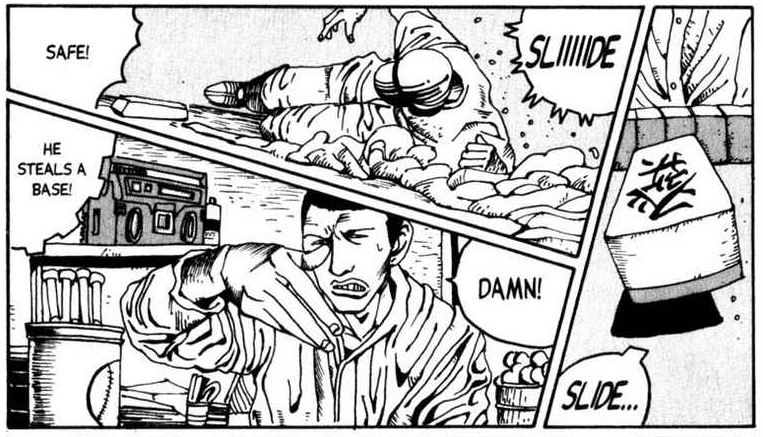
One of the most arresting aspects of Blue Spring is Matsumoto’s ability to manipulate time. In one of the book’s most visually stunning sequences, for example, Matsumoto seamlessly blends two events — a baseball game and a mahjong game — into a single sequence:

Matsumoto makes it seem as if the gambler’s action precipitated the slide into second base. It’s an elegant visual trick that establishes the simultaneity of the two games while suggesting the intensity of the mahjong play; the discarding of a tile is portrayed with the same explosive energy as stealing a base.

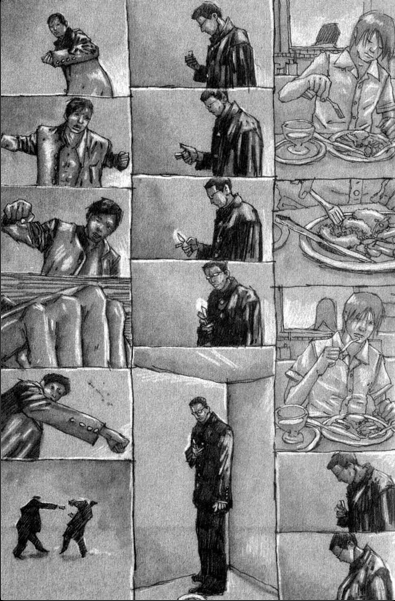
Some of Matsumoto’s time-bending sequences are more cinematic, evoking the kind of split-screen technique popularized in the 1960s by filmmakers like John Frankenheimer and Richard Fleischer. The prologue, for example, contains a series of short, vertical strips in which we see unnamed teenagers preparing for a day at school. Matsumoto deliberates re-frames the activity in each panel, drawing back to show the full scene in some, and pulling in close to reveal the blankness of a characters’ face in another:


It’s an effective montage, largely for the way it juxtaposes the banal with the violent; the fist-fight is presented in the same, matter-of-fact fashion as the student eating breakfast, suggesting that conflict is as routine for some of Blue Spring‘s characters as catching the train to school. The transitions, too, are handled deftly; the eye can process these little vignettes in a sequence while the brain grasps the entire prologue as a simultaneous collage of events, a representative cross-section of high school students going about their business on a typical day.

Matsumoto’s stark, black-and-white imagery won’t be to every reader’s taste; I’d be the first admit that many of the kids in Blue Spring look older and wearier than Keith Richards, with their sunken eyes and rotten teeth. But the studied ugliness of the character designs and urban settings suits the material perfectly, hinting at the anger and emptiness of the characters’ lives. Matsumoto offers no easy answers for his characters’ behavior, nor any false hope that they will escape the lives of violence and despair that seem to be their destiny. Rather, he offers a frank, funny and often disturbing look at the years in which most of us were unformed lumps of clay — or, in Matsumoto’s memorable formulation, a time when most of us were blue: “No matter how passionate you were, no matter how much your blood boiled, I believe youth is a blue time. Blue — that indistinct blue that paints the town before the sun rises.”

This is an expanded version of a review that appeared at PopCultureShock on 4/30/07.

BLUE SPRING • BY TAIYO MATSUMOTO • VIZ • 216 pp. • RATING: MATURE (18+)
Filed Under: Manga Critic Tagged With: Seinen, Taiyo Matsumoto, VIZ

The Best Manga You’re Not Reading: Blue Spring

January 11, 2011 by Katherine Dacey

As depicted in most shojo and shonen manga, the Japanese high school is the epitome of order, with students in neat, military-style uniforms diligently studying for exams, tidying up classrooms, staging plays, and participating in cultural festivals. Students who don’t fit into the school’s established pecking order — social, athletic, or academic — quickly find themselves ostracized by their peers for lack of purpose.

Taiyo Matsumoto, however, offers a very different image of the Japanese high school in his anthology Blue Spring. His subjects are the kids with “front teeth rotten from huffing thinner,” who “answer to reason with their fists and never question their excessive passions” — in short, the delinquents. Kitano High School, the milieu these kids inhabit, is a crumbling eyesore with graffiti-covered walls, trash-filled stairwells, and indifferent faculty. Students cut class and fill their after-school hours with girlie magazines, petty crime, and smack-talk at the local diner, marking time until they join the world of adult responsibility.

Gangs, bullies, disaffected teens playing at thug life — it’s familiar territory, yet in Matsumoto’s hands, these potentially cliche stories acquire a new and strange quality. Matsumoto eschews linear narrative in favor of digressions and fragments; as a result, we feel more like we’re living in the characters’ heads than reading a tidy account of their actions. Snatches of daydreams sometimes interrupt the narrative, as do jump cuts and surreal imagery: sharks and puffer fish drift past a classroom window where two teens make out, a UFO languishes above the school campus. Even the graffiti plays an integral part of Matsumoto’s storytelling; the walls are a paean to masturbation, booze, and suicide, cheerfully urging “No more political pacts—sex acts!”

One of the most arresting aspects of Blue Spring is Matsumoto’s ability to manipulate time. In one of the book’s most visually stunning sequences, for example, Matsumoto seamlessly blends two events — a baseball game and a mahjong game — into a single sequence:

Matsumoto makes it seem as if the gambler’s action precipitated the slide into second base. It’s an elegant visual trick that establishes the simultaneity of the two games while suggesting the intensity of the mahjong play; the discarding of a tile is portrayed with the same explosive energy as stealing a base.

Some of Matsumoto’s time-bending sequences are more cinematic, evoking the kind of split-screen technique popularized in the 1960s by filmmakers like John Frankenheimer and Richard Fleischer. The prologue, for example, contains a series of short, vertical strips in which we see unnamed teenagers preparing for a day at school. Matsumoto deliberates re-frames the activity in each panel, drawing back to show the full scene in some, and pulling in close to reveal the blankness of a characters’ face in another:


It’s an effective montage, largely for the way it juxtaposes the banal with the violent; the fist-fight is presented in the same, matter-of-fact fashion as the student eating breakfast, suggesting that conflict is as routine for some of Blue Spring‘s characters as catching the train to school. The transitions, too, are handled deftly; the eye can process these little vignettes in a sequence while the brain grasps the entire prologue as a simultaneous collage of events, a representative cross-section of high school students going about their business on a typical day.

Matsumoto’s stark, black-and-white imagery won’t be to every reader’s taste; I’d be the first admit that many of the kids in Blue Spring look older and wearier than Keith Richards, with their sunken eyes and rotten teeth. But the studied ugliness of the character designs and urban settings suits the material perfectly, hinting at the anger and emptiness of the characters’ lives. Matsumoto offers no easy answers for his characters’ behavior, nor any false hope that they will escape the lives of violence and despair that seem to be their destiny. Rather, he offers a frank, funny and often disturbing look at the years in which most of us were unformed lumps of clay — or, in Matsumoto’s memorable formulation, a time when most of us were blue: “No matter how passionate you were, no matter how much your blood boiled, I believe youth is a blue time. Blue — that indistinct blue that paints the town before the sun rises.”

This is an expanded version of a review that appeared at PopCultureShock on 4/30/07.

BLUE SPRING • BY TAIYO MATSUMOTO • VIZ • 216 pp. • RATING: MATURE (18+)
Filed Under: Manga, Manga Critic, Recommended Reading, REVIEWS Tagged With: Seinen, Taiyo Matsumoto, VIZ

Tidbits: Sports Manga for the Win!

January 2, 2011 by Michelle Smith

Welcome to another installment of Tidbits! This time I turn my attention to sports manga, a genre for which I nurture an inexplicable adoration. First up is Crimson Hero, a shoujo tale that attempts to balance volleyball and romance, followed by six early volumes of Eyeshield 21 and four later ones from The Prince of Tennis, in which the Seishun Academy tennis team finally makes it to the semifinals of Nationals.

Crimson Hero 14 by Mitsuba Takanashi: B
I’m not entirely sure it’s accurate to classify Crimson Hero as sports manga. Ostensibly, it’s about Nobara Sumiyoshi and the rest of the girls on the volleyball team at Crimson High as they pursue their goal of winning the Spring Tournament. In reality, there are only a dozen pages of volleyball in this volume, and only half of those feature the girls.

When last we left off, Haibuki, one of the aces on the guys’ team, had run off because he learned that Nobara was secretly going out with his teammate, Yushin. Also, some other guy named Kaz was spreading rumors about Nobara that caused her to break up with Yushin. It was really a mess, which I ranted about in more detail here.

Thankfully, Takanashi almost immediately addresses all of the things I found so annoying! Kaz abruptly apologizes and disappears. It was totally random, but whatever; I’m glad he’s gone. Yushin and Nobara discover where Haibuki is and both implore him to return. When Yushin goes to great lengths to win Haibuki back from another school that’s been attempting to recruit him, Haibuki realizes that Yushin kept his relationship with Nobara a secret only because he thought it would be best for the team and finally stops being a petulant brat. Hooray!

Though I mock some of the emotional moments in this volume, the truth is that when done well, it’s honestly very entertaining. It’s not the most original story in the world—earnest but academically challenged girl is sought after by two boys with contrasting personalities—but I like it. I still wish they would just play some volleyball already, though.

Eyeshield 21 4-9 by Riichiro Inagaki and Yusuke Murata: B
In addition to his fearsome talent for gathering information and blackmailing others to get his way, Hiruma, the demonic captain of the Deimon Devil Bats football team, also excels at motivation and promotion. It’s through his efforts that a crowd of Deimon students turns out to watch the Devil Bats defeat the Zokugaku Chameleons, which in turn leads to a record turnout at the next recruitment meeting.

A handful of new players joins the team, including the absolutely adorable Komusubi, who looks like a muppet and idolizes Kurita, and the Devil Bats proceed to a tie game against their next opponent, which earns them a spot in a televised face-off against a visiting American team. A summer training trip to America soon follows, with the all-important fall tournament season only a few weeks away.

At this point, Eyeshield 21 is following the sports manga formula pretty closely: the team gets better, important positions are filled, and everyone tries hard to get stronger as they face increasingly more formidable opponents. Just because it’s formulaic, though, doesn’t make it any less good. There’s a certain amount of satisfaction to be derived from watching someone earnestly work hard to achieve their goals, and even if much of what happens in this series is completely over-the-top, it’s still a fun read.

My favorite aspect of the story, though, is how those with less inate talent are not forgotten. This is best exemplified by what’s going on with “The Hah?! Brothers.” These three thugs were originally blackmailed into playing by Hiruma, but have gradually become genuinely invested in the team’s goals. Jumonji, their leader, was particularly upset to see his friends’ contributions belittled in an article, and works hard to help them improve themselves. I’m not sure why, but I find the idea of a former delinquent finally finding something to care about and strive for really moving. A scene in which the crowd cheers them for the first time actually made me teary-eyed!

Now if only there were fewer poop jokes…

The Prince of Tennis 36-39 by Takeshi Konomi: C+
When one is a long-time fan of The Prince of Tennis, as I am, one becomes accustomed to and can forgive a lot of the ridiculousness that goes on in the series. For example, it’s a given now that characters will be introduced who are supposed to be in junior high, even though they look thirty, and who have at their disposal an arsenal of highly improbable shots with silly names like “Super Ultra Delicious Swinging Mountain Storm.” Sets will also almost always end at 7-6, after a grueling tie-break, and characters frequently are one point away from defeat when they suddenly “evolve” and rally valiantly. It’s repetitive, but hey, how much variation can one really expect?

For the National Tournament, mangaka Takeshi Konomi kicks things up a notch with the introduction of a technique so eyeroll-inducing that even I can’t refrain from snerking. It’s called “the selfless state,” and manifests as a glowing aura that spectactors can detect instantly. “There it is!!” cries the peanut gallery, “The selfess state!!” It enables the player to instinctively recreate any opponent’s move that he’s ever seen, which results in even more shouting from the sidelines as familiar shots are recognized by the crowd. Our hero Ryoma Echizen can do it, naturally, but he’s been doing so for ten volumes or so now so it’s time to tweak it still further.

Volumes 36 through 39 of the series focus on Seishun’s semifinal match-up against a school from Osaka called Shitenhoji. After Fuji loses the first singles match, Seishun retaliates with a doubles victory followed by a singles win via forfeit. If they win the next doubles match, they’re going to the finals. Enter Seishun’s captain, Kunimitsu Tezuka, who not only can achieve the selfless state, but a special variation thereof called “the pinnacle of mastery.” Not to be outdone, Shitenhoji puts up Senri Chitose, whose ability to access “the pinnacle of brilliance” makes him go all sparkly.

Stoic Tezuka is my favorite character, so I don’t begrudge him the opportunity to be a badass, particularly since he missed most of the Kanto Tournament due to injury, but there’s only so much ridiculousness I can take. I mean, there’s one two-page spread where these guys just stand there and glow at one another! Tezuka ultimately wins, of course. After a brief interlude provided by a yakiniku eating contest, the finals begin, but Ryoma is nowhere to be found and Tezuka seems poised to reinjure himself in pursuit of victory.

These volumes make me sigh heavily. And yet… for all my complaining, I will eagerly buy the last three volumes of the series and be bummed out if the sequel isn’t licensed soon.

Review copy for volume 39 of The Prince of Tennis provided by the publisher.

Filed Under: Manga, Shoujo, Shounen, Tidbits Tagged With: Mitsuba Takanashi, Riichiro Inagaki and Yusuke Murata, shojo beat, Shonen Jump, Takeshi Konomi, VIZ

The Best Manga You’re Not Reading: Gun Blaze West

December 31, 2010 by Katherine Dacey 6 Comments

Let me begin this review with a disclaimer: Ken Burns would not approve of the historical liberties taken by Gun Blaze West creator Nobuhiro Watsuki. The dialogue, for example: the characters speak in a distinctly modern patois, filled with phrases never uttered by Sitting Bull or General Custer. The scenery, for another: verdant Eastern forests abut rugged desert canyons, even though the story begins in Illinois. (I particularly liked Watsuki’s rendering of Saint Louis as a kind of Budapest on the Mississippi, complete with majestic buildings.) Even the saloon names feel a little off-kilter, as one group of outlaws patronize a joint called Bella Donna. Such incongruities may offend Mr. Burns, but they’re just part of this boisterous series’ charm. (Did I mention the knife-throwing samurai girl? Oh, Mr. Burns, the horror!)

Gun Blaze West focuses on Viu Bannes, a ten-year-old boy who dreams of visiting Gun Blaze West, a mythical city populated by the world’s greatest gunslingers. (On the map, it appears to be located in Seattle, making me wonder if Gun Blaze West is, in fact, populated by the West’s most caffeinated gunslingers.) When a down-on-his-luck cowboy wanders into town, Viu pesters him for shooting lessons. Marcus reluctantly agrees to show Viu the gunslinging ropes, but before Viu can complete his training, the notorious Kenbrown gang arrives in Winston Town, terrorizing the citizens and threatening Viu’s older sister. Viu and Marcus’s standoff with the Kenbrown gang ends with an unexpected turn of events — one that sets the stage for Viu’s subsequent cross-country odyssey.

As in many shonen adventure series, the hero is the least interesting member of the cast. Viu seems to have been ordered straight from the SJ catalog: he’s fast, strong, and so single-minded in pursuit of his dreams that he often comes across as stupid. He also spends a lot of time declaring that he’ll “do his best” and extolling the value of friendship — two other perennial Shonen Jump themes.

In spite of the numerous capitulations to formula, however, Gun Blaze West is one of the most enjoyable shonen titles that VIZ has published. The Western setting proves a welcome change of pace from feudal Japan, modern-day Tokyo, and fantasy realms where teens go mano-a-mano with demons and undead souls. Though the characters possess exaggerated skill and strength, there’s nothing supernatural about Viu and his friends; they come by their talents honestly, through practice, hard work, and mistakes. The story, too, proves surprisingly adult at times, exploring the consequences of violence and rash behavior more realistically than many titles in the Shonen Jump canon.

What really makes Gun Blaze West tick, however, is its playful intermingling of shonen and Western tropes. Gun Blaze West actually feels like a Western, minus some of the obvious anachronisms and geographical gaffes. Marcus is a classic oater type, the gunslinger who’s developed a strong distaste for violence; he’s reluctant to participate in a shoot-out of any kind, adopting a foolish persona to camouflage his skill. When the bullets start flying — and there several lengthy gun battles sprinkled throughout the series — the tone shifts dramatically to underscore Marcus’ abhorrence of fighting. The supporting cast, too, is filled with familiar Wild West archetypes: salty saloon keepers, feisty young women, straight-arrow lawmen, sadistic villains, and traveling circus performers. Even the plots stick closely to the John Ford playbook, whether a small town is under siege from criminals or a local business owner is being harassed by a rival’s private army of thugs.

If you’re a fan of Buso Renkin or Rurouni Kenshin, you know what to expect from Watsuki’s art: dynamic fight scenes, villains with memorable mugs, and nonstop sight gags. The art’s relentless, antic quality wears a little thin towards the end of the series; I found myself wishing that Watsuki would pause to savor the landscape or linger at the sight of a lonely gunslinger’s tombstone instead of uncorking another fart joke or chase scene. Yet for all the artwork’s implied dynamism, the images themselves are never too busy; like Eiichiro Oda and Akira Toriyama, Watsuki relies primarily on lines and evocative shapes to convey the physicality of the people and objects in his stories, rather than heavy patches of screentone. Watsuki isn’t quite Oda or Toriyama’s peer when it comes to backgrounds and peripheral characters — his repertory of towns and bit players is more limited — but his pages exude the same boisterous energy as theirs do.

Best of all, Gun Blaze West is short, clocking in at just three volumes. Given how many shonen titles overstay their welcome with repetitive, drawn-out story arcs, that kind of brevity is admirable; that Gun Blaze West finishes on a high note makes its brevity seem like a stroke of creative genius.

This is an expanded version of a review that originally appeared at PopCultureShock on 3/31/08.

GUN BLAZE WEST, VOLS. 1-3 • BY NOBUHIRO WATSUKI • VIZ • RATING: TEEN (13+)

Filed Under: Manga Critic Tagged With: Shonen, Shonen Jump, VIZ, Western

The Best Manga of 2010: The Manga Critic’s Picks

December 6, 2010 by Katherine Dacey 16 Comments

For all the upheaval within the manga industry — the demise of CMX, Del Rey, and Go! Comi, the layoffs at VIZ — 2010 proved an exceptionally good year for storytelling. True, titles like Black Butler, Naruto, and Nabari no Ou dominated sales charts, but publishers made a concerted effort to woo grown-ups with vintage manga — Black Blizzard, A Drunken Dream and Other Stories — edgy sci-fi — Biomega, 7 Billion Needles — underground comix — AX: A Collection of Alternative Manga, The Box Man — and good old-fashioned drama — All My Darling Daughters, Bunny Drop. I had a hard time limiting myself to just ten titles this year, so I’ve borrowed a few categories from my former PCS cohort Erin Finnegan, from Best New Guilty Pleasure to Best Manga You Thought You’d Hate. Please feel free to add your own thoughts: what titles did I unjustly omit? What titles did I like but you didn’t? Inquiring minds want to know!

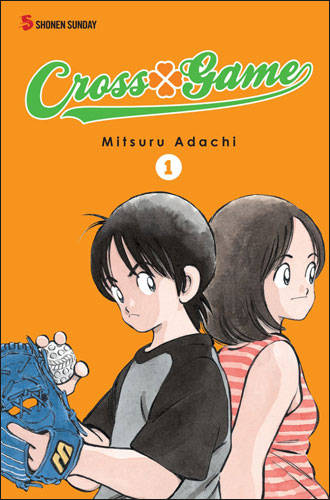
10. CROSS GAME (Mitsuri Adachi; VIZ)

In this sometimes funny, sometimes melancholy coming-of-age story, a family tragedy brings teenager Ko Kitamura closer to neighbor Aoba Tsukishima, with whom he has a fraught relationship. Though the two bicker with the antagonistic gusto of Beatrice and Benedict, their shared love of baseball helps smooth the course of their budding romance. To be sure, Cross Game can’t escape a certain amount of sports-manga cliche, but Mitsuri Adachi is more interested in showing us how the characters relate to each other than in celebrating their amazing baseball skills. (Not that he skimps on the game play; Adachi clearly knows his way around the diamond.) The result is an agreeable dramedy that has the rhythm of a good situation comedy and the emotional depth of a well-crafted YA novel, with just enough shop-talk to win over baseball enthusiasts, too.

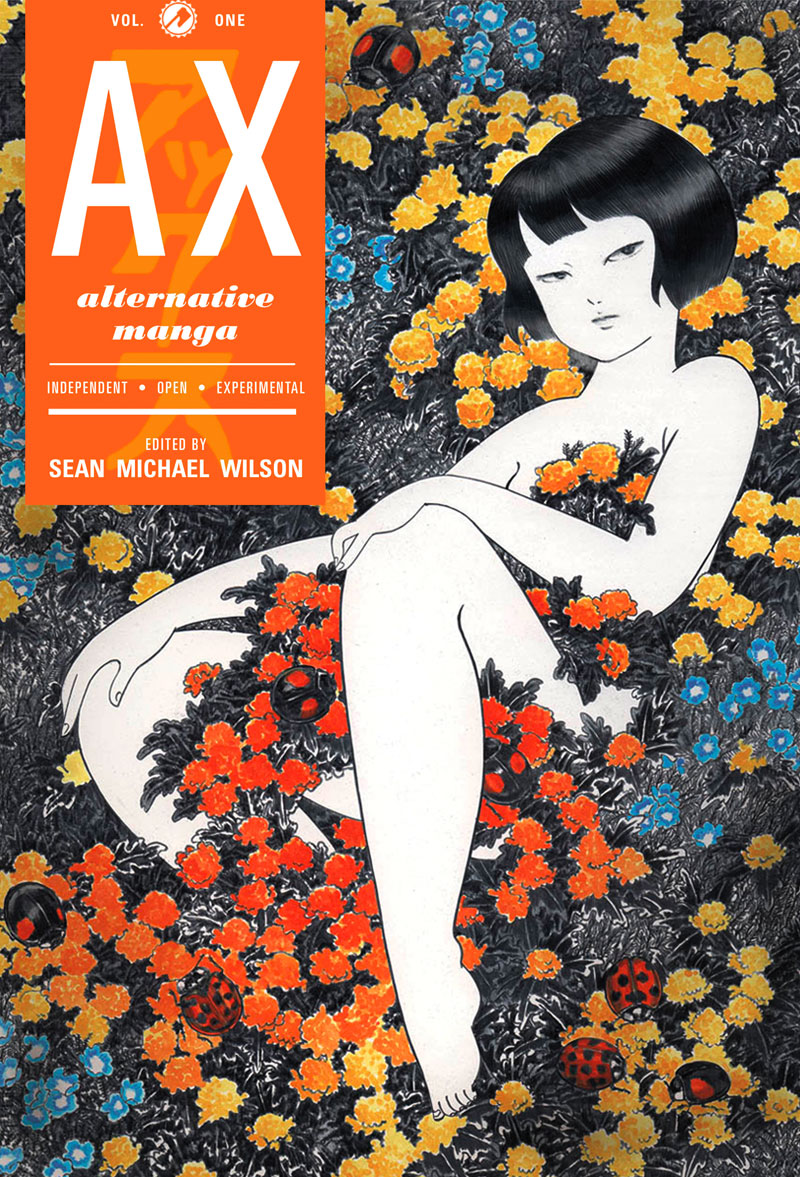
9. AX: A COLLECTION OF ALTERNATIVE MANGA (Various Artists; Top Shelf)

The next time someone dismisses manga as a “style” characterized by youthful-looking, big-eyed characters with button noses, I’m going to hand them a copy of AX, a rude, gleeful, and sometimes disturbing rebuke to the homogenized artwork and storylines found in mainstream manga publications. No one will confuse AX for Young Jump or even Big Comic Spirits; the stories in AX run the gamut from the grotesquely detailed to the playfully abstract, often flaunting their ugliness with the cheerful insistence of a ten-year-old boy waving a dead animal at squeamish classmates. Nor will anyone confuse Yoshihiro Tatsumi or Einosuke’s outlook with the humanism of Osamu Tezuka or Keiji Nakazawa; the stories in AX revel in the darker side of human nature, the part of us that’s fascinated with pain, death, sex, and bodily functions. Like all anthologies, the collection is somewhat uneven, with a few too many scatological tales for its own good, but the very best stories — “The Hare and the Tortoise,” “Push Pin Woman,” “Six Paths of Wealth,” “Puppy Love,” “Inside the Gourd” — attest to the diversity of talent contributing to this seminal manga magazine. –Reviewed at The Manga Critic on 5/21/10

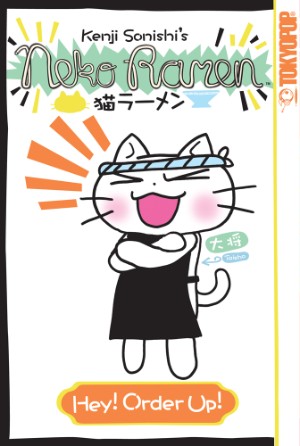
8. NEKO RAMEN (Kenji Sonishi; Tokyopop)

If you’ve ever lived with a cat or dog, you know that no meal is complete without a pet hair garnish. Now imagine that your beloved companion actually prepared your meals instead of watching you eat them: what sort of unimaginable horrors might you encounter beyond the stray hair? That’s the starting point for Neko Ramen, a 4-koma manga about a cat whose big dream is to run a noodle shop, but author Kenji Sonishi quickly moves past hair balls and litter box jokes to mine a richer vein of humor, poking fun at his cat cook’s delusions of entrepreneurial grandeur. Taisho is the Don Quixote of ramen vendors, dreaming up ludicrous giveaways and unappetizing dishes in an effort to promote his business, never realizing that he is the store’s real selling point. The loose, sketchy artwork gives the series an improvisational feel, while the script has the pleasant, absurdist zing of an Abbott and Costello routine. –Reviewed at The Manga Critic on 6/2/10

7. AYAKO (Osamu Tezuka; Vertical, Inc.)

Combining the psychological realism of Dostoevsky with the social consciousness of Tolstoy and Zola, Osamu Tezuka uses conflicts within the once-powerful Tenge clan to dramatize the social, political, and economic upheaval caused by the American occupation of post-war Japan. No subject is off-limits for Tezuka: the Tenge commit murders, spy for the Americans, join the Communist Party, imprison a family member in an underground cell, and engage in incest. It’s one of Tezuka’s most sober and damning stories, at once tremendously powerful and seriously disturbing, with none of the cartoonish excess of Ode to Kirihito or MW. The ending is perhaps too pat and loaded with symbolism for its own good, but like Tezuka’s best work, Ayako forces the reader to confront the darkest, most corruptible corners of the human soul. As with Apollo’s Song, Black Jack, and Buddha, Vertical has done a superb job of making Tezuka accessible to Western readers with flipped artwork and a fluid translation.

6. BUNNY DROP (Yumi Unita; Yen Press)

Stop me if you’ve heard this one before: a thirty-something bachelor unexpectedly becomes a parent to a cute little girl, leading to hijinks, misunderstandings, and heart-tugging moments. That’s a fair summary of what happens in Bunny Drop, but Yumi Unita wisely avoids the pitfalls of the single-dad genre — the cheap sentiment, the unfunny scenes of dad recoiling in horror at diapers, runny noses, and tears — instead focusing on the unique bond between Daikichi and Rin, the six-year-old whom he impetuously adopts after the rest of the family disavows her. (Rin is the product of a liaison between Daikichi’s grandfather and a much younger woman.) Though Daikichi struggles to find day care, buy clothes for Rin, and make sense of her standoffish behavior, he isn’t a buffoon or a straight man for Rin’s antics; Unita portrays him as a smart, sensitive person blessed with good instincts and common sense. Clean, expressive artwork and true-to-life dialogue further inoculate Bunny Drop against a terminal case of sitcom cuteness, making it one of the most thoughtful, moving, and adult manga of the year.

5. BLACK BLIZZARD (Yoshihiro Tatsumi; Drawn & Quarterly)

Written in just twenty days, this feverish pulp thriller plays like a mash-up of The Fugitive, The 39 Steps, and The Defiant Ones as two convicts — one a hardened criminal, the other a down-on-his luck musician — go on the lam during a blinding snowstorm. The heroes are more archetypes than characters, drawn in bold strokes, but the interaction between them crackles with antagonistic energy; they’re as much enemies as partners, roles that they constantly renegotiate during their escape. Evocative artwork — slashing lines, dramatic camera angles, images of speeding trains — infuses Black Blizzard with a raw, nervous energy that nicely mirrors the characters’ internal state. Only in the final, rushed pages does manga-ka Yoshihiro Tatsumi falter, tidily resolving the story through an all-too-convenient plot twist that hinges on coincidence. Still, that’s a minor criticism of a thoroughly entertaining story written during a crucial stage of Tatsumi’s artistic development. –Reviewed at The Manga Critic on 9/9/10

4. HOUSE OF FIVE LEAVES (Natsume Ono; VIZ)

Timid ronin Akitsu Masanosuke can’t hold a steady job, despite his formidable swordsmanship. When a businessman approaches him with work, Masanosuke readily accepts, not realizing that his new employer, Yaichi, runs a crime syndicate that specializes in kidnapping. Masanosuke’s unwitting participation in a blackmailing scheme prevents him from severing his ties to Yaichi; Masanosuke must then decide if he will join the House of Five Leaves or bide his time until he can escape. Though Toshiro Mifune and Hiroyuki Sanada have made entire careers out of playing characters like Masanosuke, Natsume Ono makes a persuasive case that you don’t need a flesh-and-blood actor to tell this kind of story with heartbreaking intensity; she can do the slow-burn on the printed page with the same skill as Masaki Kobayashi (Hara Kiri, Samurai Rebellion) and Yoji Yamada (The Twilight Samurai) did on the big screen. –Reviewed at The Manga Critic on 8/20/10

3. TWIN SPICA (Kou Yaginuma; Vertical, Inc.)

Asumi Kamogawa is a small girl with a big dream: to be an astronaut on Japan’s first manned space flight. Though she passes the entrance exam for Tokyo Space School, she faces several additional hurdles to realizing her goal, from her child-like stature — she’s thirteen going on eight — to a faculty member who blames her father for causing a fiery rocket crash that claimed hundreds of civilian lives. Yet for all the setbacks she’s experienced, Asumi proves resilient, a gentle girl who perseveres in difficult situations, offers friendship in lieu of judgment, and demonstrates a preternatural awareness of life’s fragility. Twin Spica follows Asumi through every stage of training, from physics lectures to zero-G simulations, showing us how she befriends her fellow cadets and gradually learns to rely on herself, rather than her imaginary friend, Mr. Lion. Though Twin Spica was serialized in a seinen magazine, it works surprisingly well for young adults, too, an all-too-rare example of a direct, heartfelt story that’s neither saccharine nor mawkish.  –Reviewed at The Manga Critic on 5/3/10

2. ALL MY DARLING DAUGHTERS (Fumi Yoshinaga; VIZ)

The five vignettes in All My Darling Daughters depict women negotiating difficult personal relationships: a daughter confronts her mother about mom’s new, much younger husband; a college student seduces her professor, only to dump him when he tries to court her properly; a beautiful young woman contemplates an arranged marriage. Like all of Yoshinaga’s work, the characters in All My Darling Daughters love to talk. That chattiness isn’t always an asset to Yoshinaga’s storytelling (see Gerard and Jacques), but here the dialogue is perfectly calibrated to reveal just how complex and ambivalent these relationships really are. Yoshinaga’s artwork is understated but effective, as she uses small details — how a character stands or carries her shoulders — to offer a more complete and nuanced portrait of each woman. Quite possibly my favorite work by Yoshinaga.

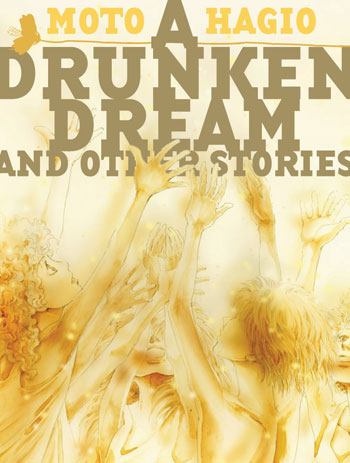
1. A DRUNKEN DREAM AND OTHER STORIES (Moto Hagio; Fantagraphics)

Not coincidentally, A Drunken Dream and Other Stories was my nomination for Best New Graphic Novel of 2010 as well. Here’s what I had to say about the title over at Flashlight Worthy Books:

Moto Hagio is to shojo manga what Will Eisner is to American comics, a seminal creator whose distinctive style and sensibility profoundly changed the medium. Though Hagio has been actively publishing stories since the late 1960s, very little of her work has been translated into English. A Drunken Dream, published by Fantagraphics, is an excellent corrective — a handsomely produced, meticulously edited collection of Hagio’s short stories that span her career from 1970 to 2007. Readers new to Hagio’s work will appreciate the inclusion of two contextual essays by manga scholar Matt Thorn, one an introduction to Hagio and her peers, the other an interview with Hagio. What emerges is a portrait of a gifted artist who draws inspiration from many sources: Osamu Tezuka and Shotaro Ishimonori, Ray Bradbury and Isaac Asimov, Frances Hodgson Burnett and L.M. Montgomery.

For the complete list — including nominations from David “Manga Curmudgeon” Welsh, Brigid “MangaBlog” Alverson, Lorena “i heart manga” Ruggero, and Matthew “Warren Peace Sings the Blues” Brady — click here. To read my full review of A Drunken Dream, click here.

HONORABLE MENTIONS

Done because there are too menny… great manga, that is, to confine myself to a traditional top ten list. With apologies to Thomas Hardy, here are some of the other titles that tickled my fancy in 2010:

  • OTHER AWESOME DEBUTS: Not Love But Delicious Foods Make Me Happy (Yen Press), Saturn Apartments (VIZ), 7 Billion Needles (Vertical, Inc.)
  • BEST CONTINUING SERIES: Itazura na Kiss (DMP), Ooku: The Inner Chambers (VIZ), Suppli (Tokyopop), 20th Century Boys (VIZ)
  • BEST NEW ALL-AGES MANGA: Chi’s Sweet Home (Vertical, Inc.)
  • BEST NEW SERIES THAT’S ALREADY ON HIATUS: Diamond Girl (CMX), Stolen Hearts (CMX)
  • BEST NEW GUILTY PLEASURE: Demon Sacred (Tokyopop), Dragon Girl (Yen Press)
  • BEST REPRINT EDITION: Cardcaptor Sakura (Dark Horse), Little Butterfly Omnibus (DMP)
  • BEST MANGA I THOUGHT I’D HATE: Higurashi When They Cry: Beyond Midnight Arc (Yen Press)
  • BEST FINALE: Pluto: Tezuka x Urasawa (VIZ)

Filed Under: Manga Critic Tagged With: cmx, Dark Horse, DMP, Drawn & Quarterly, fantagraphics, fumi yoshinaga, moto hagio, Naoki Urasawa, Osamu Tezuka, SigIKKI, Tokyopop, Top Shelf, vertical, VIZ, yen press, Yoshihiro Tatsumi

The Best Manga of 2010: The Manga Critic’s Picks

December 6, 2010 by Katherine Dacey

For all the upheaval within the manga industry — the demise of CMX, Del Rey, and Go! Comi, the layoffs at VIZ — 2010 proved an exceptionally good year for storytelling. True, titles like Black Butler, Naruto, and Nabari no Ou dominated sales charts, but publishers made a concerted effort to woo grown-ups with vintage manga — Black Blizzard, A Drunken Dream and Other Stories — edgy sci-fi — Biomega, 7 Billion Needles — underground comix — AX: A Collection of Alternative Manga, The Box Man — and good old-fashioned drama — All My Darling Daughters, Bunny Drop. I had a hard time limiting myself to just ten titles this year, so I’ve borrowed a few categories from my former PCS cohort Erin Finnegan, from Best New Guilty Pleasure to Best Manga You Thought You’d Hate. Please feel free to add your own thoughts: what titles did I unjustly omit? What titles did I like but you didn’t? Inquiring minds want to know!

10. Cross Game
By Mitsuri Adachi • VIZ Media
In this sometimes funny, sometimes melancholy coming-of-age story, a family tragedy brings teenager Ko Kitamura closer to neighbor Aoba Tsukishima, with whom he has a fraught relationship. Though the two bicker with the antagonistic gusto of Beatrice and Benedict, their shared love of baseball helps smooth the course of their budding romance. To be sure, Cross Game can’t escape a certain amount of sports-manga cliche, but Mitsuri Adachi is more interested in showing us how the characters relate to each other than in celebrating their amazing baseball skills. (Not that he skimps on the game play; Adachi clearly knows his way around the diamond.) The result is an agreeable dramedy that has the rhythm of a good situation comedy and the emotional depth of a well-crafted YA novel, with just enough shop-talk to win over baseball enthusiasts, too.

9. AX: A Collection of Alternative Manga
Edited by Sean Michael Wilson • Top Shelf
The next time someone dismisses manga as a “style” characterized by youthful-looking, big-eyed characters with button noses, I’m going to hand them a copy of AX, a rude, gleeful, and sometimes disturbing rebuke to the homogenized artwork and storylines found in mainstream manga publications. No one will confuse AX for Young Jump or even Big Comic Spirits; the stories in AX run the gamut from the grotesquely detailed to the playfully abstract, often flaunting their ugliness with the cheerful insistence of a ten-year-old boy waving a dead animal at squeamish classmates. Nor will anyone confuse Yoshihiro Tatsumi or Einosuke’s outlook with the humanism of Osamu Tezuka or Keiji Nakazawa; the stories in AX revel in the darker side of human nature, the part of us that’s fascinated with pain, death, sex, and bodily functions. Like all anthologies, the collection is somewhat uneven, with a few too many scatological tales for its own good, but the very best stories — “The Hare and the Tortoise,” “Push Pin Woman,” “Six Paths of Wealth,” “Puppy Love,” “Inside the Gourd” — attest to the diversity of talent contributing to this seminal manga magazine. —Reviewed at The Manga Critic on 5/21/10

8. Neko Ramen
By Kenji Sonishi • Tokyopop
If you’ve ever lived with a cat or dog, you know that no meal is complete without a pet hair garnish. Now imagine that your beloved companion actually prepared your meals instead of watching you eat them: what sort of unimaginable horrors might you encounter beyond the stray hair? That’s the starting point for Neko Ramen, a 4-koma manga about a cat whose big dream is to run a noodle shop, but author Kenji Sonishi quickly moves past hair balls and litter box jokes to mine a richer vein of humor, poking fun at his cat cook’s delusions of entrepreneurial grandeur. Taisho is the Don Quixote of ramen vendors, dreaming up ludicrous giveaways and unappetizing dishes in an effort to promote his business, never realizing that he is the store’s real selling point. The loose, sketchy artwork gives the series an improvisational feel, while the script has the pleasant, absurdist zing of an Abbott and Costello routine. —Reviewed at The Manga Critic on 6/2/10

7. Ayako
By Osamu Tezuka; Vertical, Inc.
Combining the psychological realism of Dostoevsky with the social consciousness of Tolstoy and Zola, Osamu Tezuka uses conflicts within the once-powerful Tenge clan to dramatize the social, political, and economic upheaval caused by the American occupation of post-war Japan. No subject is off-limits for Tezuka: the Tenge commit murders, spy for the Americans, join the Communist Party, imprison a family member in an underground cell, and engage in incest. It’s one of Tezuka’s most sober and damning stories, at once tremendously powerful and seriously disturbing, with none of the cartoonish excess of Ode to Kirihito or MW. The ending is perhaps too pat and loaded with symbolism for its own good, but like Tezuka’s best work, Ayako forces the reader to confront the darkest, most corruptible corners of the human soul. As with Apollo’s Song, Black Jack, and Buddha, Vertical has done a superb job of making Tezuka accessible to Western readers with flipped artwork and a fluid translation.

6. Bunny Drop
By Yumi Unita; Yen Press
Stop me if you’ve heard this one before: a thirty-something bachelor unexpectedly becomes a parent to a cute little girl, leading to hijinks, misunderstandings, and heart-tugging moments. That’s a fair summary of what happens in Bunny Drop, but Yumi Unita wisely avoids the pitfalls of the single-dad genre — the cheap sentiment, the unfunny scenes of dad recoiling in horror at diapers, runny noses, and tears — instead focusing on the unique bond between Daikichi and Rin, the six-year-old whom he impetuously adopts after the rest of the family disavows her. (Rin is the product of a liaison between Daikichi’s grandfather and a much younger woman.) Though Daikichi struggles to find day care, buy clothes for Rin, and make sense of her standoffish behavior, he isn’t a buffoon or a straight man for Rin’s antics; Unita portrays him as a smart, sensitive person blessed with good instincts and common sense. Clean, expressive artwork and true-to-life dialogue further inoculate Bunny Drop against a terminal case of sitcom cuteness, making it one of the most thoughtful, moving, and adult manga of the year.

5. Black Blizzard
By Yoshihiro Tatsumi • Drawn & Quarterly
Written in just twenty days, this feverish pulp thriller plays like a mash-up of The Fugitive, The 39 Steps, and The Defiant Ones as two convicts — one a hardened criminal, the other a down-on-his luck musician — go on the lam during a blinding snowstorm. The heroes are more archetypes than characters, drawn in bold strokes, but the interaction between them crackles with antagonistic energy; they’re as much enemies as partners, roles that they constantly renegotiate during their escape. Evocative artwork — slashing lines, dramatic camera angles, images of speeding trains — infuses Black Blizzard with a raw, nervous energy that nicely mirrors the characters’ internal state. Only in the final, rushed pages does manga-ka Yoshihiro Tatsumi falter, tidily resolving the story through an all-too-convenient plot twist that hinges on coincidence. Still, that’s a minor criticism of a thoroughly entertaining story written during a crucial stage of Tatsumi’s artistic development. —Reviewed at The Manga Critic on 9/9/10

4. House of Five Leaves
By Natsume Ono • VIZ Media
Timid ronin Akitsu Masanosuke can’t hold a steady job, despite his formidable swordsmanship. When a businessman approaches him with work, Masanosuke readily accepts, not realizing that his new employer, Yaichi, runs a crime syndicate that specializes in kidnapping. Masanosuke’s unwitting participation in a blackmailing scheme prevents him from severing his ties to Yaichi; Masanosuke must then decide if he will join the House of Five Leaves or bide his time until he can escape. Though Toshiro Mifune and Hiroyuki Sanada have made entire careers out of playing characters like Masanosuke, Natsume Ono makes a persuasive case that you don’t need a flesh-and-blood actor to tell this kind of story with heartbreaking intensity; she can do the slow-burn on the printed page with the same skill as Masaki Kobayashi (Hara Kiri, Samurai Rebellion) and Yoji Yamada (The Twilight Samurai) did on the big screen. —Reviewed at The Manga Critic on 8/20/10

3. Twin Spica
By Kou Yaginuma • Vertical, Inc.
Asumi Kamogawa is a small girl with a big dream: to be an astronaut on Japan’s first manned space flight. Though she passes the entrance exam for Tokyo Space School, she faces several additional hurdles to realizing her goal, from her child-like stature — she’s thirteen going on eight — to a faculty member who blames her father for causing a fiery rocket crash that claimed hundreds of civilian lives. Yet for all the setbacks she’s experienced, Asumi proves resilient, a gentle girl who perseveres in difficult situations, offers friendship in lieu of judgment, and demonstrates a preternatural awareness of life’s fragility. Twin Spica follows Asumi through every stage of training, from physics lectures to zero-G simulations, showing us how she befriends her fellow cadets and gradually learns to rely on herself, rather than her imaginary friend, Mr. Lion. Though Twin Spica was serialized in a seinen magazine, it works surprisingly well for young adults, too, an all-too-rare example of a direct, heartfelt story that’s neither saccharine nor mawkish.  —Reviewed at The Manga Critic on 5/3/10

2. All My Darling Daughters
By Fumi Yoshinaga • VIZ Media
The five vignettes in All My Darling Daughters depict women negotiating difficult personal relationships: a daughter confronts her mother about mom’s new, much younger husband; a college student seduces her professor, only to dump him when he tries to court her properly; a beautiful young woman contemplates an arranged marriage. Like all of Yoshinaga’s work, the characters in All My Darling Daughters love to talk. That chattiness isn’t always an asset to Yoshinaga’s storytelling (see Gerard and Jacques), but here the dialogue is perfectly calibrated to reveal just how complex and ambivalent these relationships really are. Yoshinaga’s artwork is understated but effective, as she uses small details — how a character stands or carries her shoulders — to offer a more complete and nuanced portrait of each woman. Quite possibly my favorite work by Yoshinaga.

1. A Drunken Dream and Other Stories
By Moto Hagio • Fantagraphics
Not coincidentally, A Drunken Dream and Other Stories was my nomination for Best New Graphic Novel of 2010 as well. Here’s what I had to say about the title over at Flashlight Worthy Books:

Moto Hagio is to shojo manga what Will Eisner is to American comics, a seminal creator whose distinctive style and sensibility profoundly changed the medium. Though Hagio has been actively publishing stories since the late 1960s, very little of her work has been translated into English. A Drunken Dream, published by Fantagraphics, is an excellent corrective — a handsomely produced, meticulously edited collection of Hagio’s short stories that span her career from 1970 to 2007. Readers new to Hagio’s work will appreciate the inclusion of two contextual essays by manga scholar Matt Thorn, one an introduction to Hagio and her peers, the other an interview with Hagio. What emerges is a portrait of a gifted artist who draws inspiration from many sources: Osamu Tezuka and Shotaro Ishimonori, Ray Bradbury and Isaac Asimov, Frances Hodgson Burnett and L.M. Montgomery.

For the complete list — including nominations from David “Manga Curmudgeon” Welsh, Brigid “MangaBlog” Alverson, Lorena “i heart manga” Ruggero, and Matthew “Warren Peace Sings the Blues” Brady — click here. To read my full review of A Drunken Dream, click here.

HONORABLE MENTIONS
Done because there are too menny… great manga, that is, to confine myself to a traditional top ten list. With apologies to Thomas Hardy, here are some of the other titles that tickled my fancy in 2010:

  • Other Awesome Debuts: Not Love But Delicious Foods Make Me Happy (Yen Press), Saturn Apartments (VIZ), 7 Billion Needles (Vertical, Inc.)
  • Best Continuing Series: Itazura na Kiss (DMP), Ooku: The Inner Chambers (VIZ), Suppli (Tokyopop), 20th Century Boys (VIZ)
  • Best New All-ages Manga: Chi’s Sweet Home (Vertical, Inc.)
  • Best New Series That’s Already on Hiatus: Diamond Girl (CMX), Stolen Hearts (CMX)
  • Best New Guilty Pleasure: Demon Sacred (Tokyopop), Dragon Girl (Yen Press)
  • Best Reprint Edition: Cardcaptor Sakura (Dark Horse), Little Butterfly Omnibus (DMP)
  • Best Manga I Thought I’d Hate: Higurashi When They Cry: Beyond Midnight Arc (Yen Press)
  • Best Finale: Pluto: Tezuka x Urasawa (VIZ)

Filed Under: Manga, Manga Critic, Recommended Reading Tagged With: cmx, Dark Horse, DMP, Drawn & Quarterly, fantagraphics, fumi yoshinaga, moto hagio, Naoki Urasawa, Osamu Tezuka, SigIKKI, Tokyopop, Top Shelf, Vertical Comics, VIZ, yen press, Yoshihiro Tatsumi

3 Reasons to Read One Piece

December 2, 2010 by Katherine Dacey 19 Comments

Why would any sane person commit to reading a series that’s still going strong after sixty volumes? I can think of three compelling reasons why you should set aside your shonophobia — that’s Latin for “fear of incredibly long series with interminable fight scenes and characters who do their best” — and give Eiichiro Oda’s One Piece a shot.

1. THE ARTWORK

Though many shonen manga-ka love to populate their stories with flamboyantly ugly villains, Eiichiro Oda’s character designs are more memorable than his competitors’. That’s because Oda doesn’t just add a few scars and a crazy hairdo to distinguish the bad guys from the good; he creates every villain from scratch, making each garment, prop, tattoo, wart, and weapon a direct reflection of the character’s personality and personal history. The same goes for other supporting players: Oda emphasizes the greenness of one pirate’s kiddie followers by giving them vegetal hairdos, and the isolation of a pirate castaway by stuffing the character’s body into an empty treasure chest, with only Gaimon’s unkempt hair and feet poking out. (Gaimon gets one of the series’ best lines: “I used to have two eyebrows!” he exclaims, musing on his twenty years stranded on a remote island.)

Oda’s entire approach to drafting shows a similar thoughtfulness: his pirate ships, tropical islands, and sea coast villages are rendered in clean lines, with a minimum of screen tone. Oda relies instead on playful shapes to help set the stage, from a sea-going restaurant that looks like a cross between a carp and a Hong Kong dim sum parlor, to an island populated by rabbit-cobras, pig-lions, and rooster-foxes.

The only blind spot in Oda’s artwork is his female characters. Though he can draw a marvelous, gnarled pirate queen, as gloriously repulsive as any of the series’ other villains, his young, attractive girls are blandly interchangeable. Even as more female characters are introduced in later story arcs, their appearance seems more calculated to satisfy the male gaze than reveal much about their personality — besides, of course, the near-universal tendency among shonen artists to make a girl’s bust- and neckline a reliable predictor of her villainy.

2. THE LOVING SEND-UPS OF SHONEN CLICHES

One of the reasons I don’t read more shonen manga: I find the characters’ compulsion to shout the name of their fighting techniques kind of silly. (OK, a lot silly.) If anything, it brings back memories of the old Super Friends TV show in which the Wonder Twins clinked rings and announced that they’d be taking “the form of an ice sled!” or “the form of a green-striped tiger!” (If that was meant to be comedy and not a complete abdication of imagination on the writer’s part, I missed it.) Granted, InuYasha and Naruto boast cooler-sounding and more effectual powers, but the minute InuYasha yells “Wind Scar!”, I’m ripped out of the scene, pondering the need for such verbal displays.

In One Piece, however, Oda pokes fun at the practice by assigning his characters goofy powers with goofy names that are fun to say. Monkey D. Luffy’s Gum-Gum attacks are the most frequent and obvious example, as he pretzels himself into a Looney Tunes assortment of weapons and shields, but his crew mates also have a few tricks up their sleeves. The best of them, by far, is Tony Tony Chopper, a blue-nosed reindeer who also happens to be the ship’s doctor. His Human-Human powers enable him to assume a variety of forms, including a gargantuan were-reindeer that wouldn’t be out of place in the pages of Lycanthrope Leo.

Oda also walks a fine line between openly mocking his hero and using him to exemplify the “friendship, effort, and victory” motto that undergirds every Shonen Jump title. Monkey is, to put it nicely, one of the dumbest shonen heroes in the canon — and that’s part of his charm. Unlike, say, Naruto or Lag Seeing (of Tegami Bachi fame), Monkey’s single-minded pursuit of treasure is portrayed as a kind of insanity, not a sign of a stellar character. Monkey goes to extreme lengths to prove himself — not unusual for a shonen hero — but his behavior is clearly meant to be ridiculous. (In the very first pages of the series, he stabs himself in the face with a knife to demonstrate his imperviousness to pain, much to the horror of the assembled pirates.) Yet for all his ill-advised bravado, he’s a kind-hearted goof; anyone who demonstrates valor or integrity is invited to join his crew, regardless of the original circumstances under which they met Monkey. Again, those qualities don’t make Monkey unique, but they do make him appealing; he’s an indestructible hero who’s utterly fallible.

3. THE EXCELLENT ADAPTATION

Any text as thick with puns and pirate-speak as One Piece runs the risk of falling flat in translation, but the English-language adaptation is fluid, funny, and eminently readable. I can’t gauge how faithfully the VIZ edition adheres to the original Japanese, but the script’s buoyant, goofy tone complements the artwork perfectly, leading me to think that VIZ’s editorial team has given American audiences a reasonable approximation of the Japanese-language reading experience. Heck, they’ve even made Oda’s reader correspondence sound like a real, mischievous person answered those fan letters. Now that’s a good adaptation.

Filed Under: Manga Critic Tagged With: Comedy, One Piece, Pirates, Shonen, Shonen Jump, VIZ

3 Reasons to Read One Piece

December 2, 2010 by Katherine Dacey

Why would any sane person commit to reading a series that’s still going strong after sixty volumes? I can think of three compelling reasons why you should set aside your shonophobia — that’s Latin for “fear of incredibly long series with interminable fight scenes and characters who do their best” — and give Eiichiro Oda’s One Piece a shot.

1. THE ARTWORK

Though many shonen manga-ka love to populate their stories with flamboyantly ugly villains, Eiichiro Oda’s character designs are more memorable than his competitors’. That’s because Oda doesn’t just add a few scars and a crazy hairdo to distinguish the bad guys from the good; he creates every villain from scratch, making each garment, prop, tattoo, wart, and weapon a direct reflection of the character’s personality and personal history. The same goes for other supporting players: Oda emphasizes the greenness of one pirate’s kiddie followers by giving them vegetal hairdos, and the isolation of a pirate castaway by stuffing the character’s body into an empty treasure chest, with only Gaimon’s unkempt hair and feet poking out. (Gaimon gets one of the series’ best lines: “I used to have two eyebrows!” he exclaims, musing on his twenty years stranded on a remote island.)

Oda’s entire approach to drafting shows a similar thoughtfulness: his pirate ships, tropical islands, and sea coast villages are rendered in clean lines, with a minimum of screen tone. Oda relies instead on playful shapes to help set the stage, from a sea-going restaurant that looks like a cross between a carp and a Hong Kong dim sum parlor, to an island populated by rabbit-cobras, pig-lions, and rooster-foxes.

The only blind spot in Oda’s artwork is his female characters. Though he can draw a marvelous, gnarled pirate queen, as gloriously repulsive as any of the series’ other villains, his young, attractive girls are blandly interchangeable. Even as more female characters are introduced in later story arcs, their appearance seems more calculated to satisfy the male gaze than reveal much about their personality — besides, of course, the near-universal tendency among shonen artists to make a girl’s bust- and neckline a reliable predictor of her villainy.

2. THE LOVING SEND-UPS OF SHONEN CLICHES

One of the reasons I don’t read more shonen manga: I find the characters’ compulsion to shout the name of their fighting techniques kind of silly. (OK, a lot silly.) If anything, it brings back memories of the old Super Friends TV show in which the Wonder Twins clinked rings and announced that they’d be taking “the form of an ice sled!” or “the form of a green-striped tiger!” (If that was meant to be comedy and not a complete abdication of imagination on the writer’s part, I missed it.) Granted, InuYasha and Naruto boast cooler-sounding and more effectual powers, but the minute InuYasha yells “Wind Scar!”, I’m ripped out of the scene, pondering the need for such verbal displays.

In One Piece, however, Oda pokes fun at the practice by assigning his characters goofy powers with goofy names that are fun to say. Monkey D. Luffy’s Gum-Gum attacks are the most frequent and obvious example, as he pretzels himself into a Looney Tunes assortment of weapons and shields, but his crew mates also have a few tricks up their sleeves. The best of them, by far, is Tony Tony Chopper, a blue-nosed reindeer who also happens to be the ship’s doctor. His Human-Human powers enable him to assume a variety of forms, including a gargantuan were-reindeer that wouldn’t be out of place in the pages of Lycanthrope Leo.

Oda also walks a fine line between openly mocking his hero and using him to exemplify the “friendship, effort, and victory” motto that undergirds every Shonen Jump title. Monkey is, to put it nicely, one of the dumbest shonen heroes in the canon — and that’s part of his charm. Unlike, say, Naruto or Lag Seeing (of Tegami Bachi fame), Monkey’s single-minded pursuit of treasure is portrayed as a kind of insanity, not a sign of a stellar character. Monkey goes to extreme lengths to prove himself — not unusual for a shonen hero — but his behavior is clearly meant to be ridiculous. (In the very first pages of the series, he stabs himself in the face with a knife to demonstrate his imperviousness to pain, much to the horror of the assembled pirates.) Yet for all his ill-advised bravado, he’s a kind-hearted goof; anyone who demonstrates valor or integrity is invited to join his crew, regardless of the original circumstances under which they met Monkey. Again, those qualities don’t make Monkey unique, but they do make him appealing; he’s an indestructible hero who’s utterly fallible.

3. THE EXCELLENT ADAPTATION

Any text as thick with puns and pirate-speak as One Piece runs the risk of falling flat in translation, but the English-language adaptation is fluid, funny, and eminently readable. I can’t gauge how faithfully the VIZ edition adheres to the original Japanese, but the script’s buoyant, goofy tone complements the artwork perfectly, leading me to think that VIZ’s editorial team has given American audiences a reasonable approximation of the Japanese-language reading experience. Heck, they’ve even made Oda’s reader correspondence sound like a real, mischievous person answered those fan letters. Now that’s a good adaptation.

Filed Under: Manga, Manga Critic, Recommended Reading, REVIEWS Tagged With: Comedy, One Piece, Pirates, Shonen, Shonen Jump, VIZ

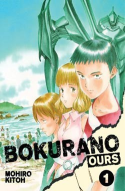
Bokurano: Ours 1-2 by Mohiro Kitoh: B

November 22, 2010 by Michelle Smith

Fifteen kids—most of them, except for one boy’s kid sister, in 7th grade—are taking part in a summer program called “Seaside Friendship and Nature School.” Chafing at the instruction to go out and observe nature, the kids decide to explore a nearby cave, where they inexplicably discover a computer lab and a strange guy who calls himself Kokopelli.

Kokopelli tells the kids he’s working on a game in which the “chosen heroes” will pilot a giant robot as it faces off against alien invaders, and offers them the chance to play. Of course, they’re all interested and when he asks them to seal their contract before explaining the rules, they comply. It’s only when Kokopelli’s subsequent demonstration claims the life of a fighter pilot that they begin to grasp that the battle—and the damage it causes—is real.

Over the course of these first two volumes, the kids begin to learn exactly what they’re in for. After the disappearance of Kokopelli, “assistance” is provided by (possibly untrustworthy) Koyemshi, a floating creature almost cute enough to be a plushie if not for his menacing set of pointed teeth. He doles out information sparingly, and it’s not until two of their comrades have died that the kids learn the truth: the giant robot will fight to defend humanity from the invaders, but derives the power to do so from the life force of its pilot.

Obviously, the kids want to quit, but Koyemshi points out that they signed a contract and warns that if they should refuse to fight, Earth will be destroyed within 48 hours. The same fate awaits if they should lose a battle. As he puts it, “Win, save the planet and die… or lose and die when your planet is destroyed. Those are your options.” Believing that they really are helping to save the world, the kids soldier on.

At this point, the feel of the story reminds me a lot of another VIZ Signature title, Ikigami. For those unfamiliar with the story, Ikigami envisions a Japan in which the government attempts to encourage its citizens to lead a more productive life by instilling in them the fear of death. Anyone could receive a death notice (an ikigami) at any time informing them that they have 24 hours left to live, and the series follows each recipient in turn as they deal with the news.

Bokurano is structured similarly, focusing on each pilot as he or she “gets the call.” There are merits and flaws to this approach: obviously, the current pilot receives a lot of attention, and it’s interesting to see how each approaches the responsibility differently. One boy cares nothing for human casualties while another carefully takes the battle out into the harbor to minimize damage. One girl uses her final hours to sew morale-boosting uniforms for the group. Unfortunately, this also means that at any given time there are about a dozen characters relegated to the background, waiting for their turn to contribute to the story.

Because of lack of time spent with individual characters, it’s hard to care about them much, despite their awful predicament. I might realize I like someone based on how he handles his turn as pilot, but I know the opportunity to see things from his perspective will be brief. The most compelling aspect of the story to me is the notion of where these invaders came from in the first place, and what the human population as a whole thinks about giant monsters in their midst.

During Kokopelli’s demonstration, as he occupies the sole chair in a circle of many, he admits that he’s as much a pawn as the kids are and that he isn’t from our planet. It would appear, then, that he is the final pilot from a previous incarnation of this “game” who was sent to Earth to find a new set of players. Is this “invasion” real? Why are there precisely fifteen enemies and no more? This may not be a game for the young pilots or the humans threatened by these monsters, but is it a game for someone, somewhere?

Dark, grim, and mysterious, Bokurano is probably not for everyone, but I’ll definitely be reading more.

Bokurano: Ours is published in English by VIZ. The series is complete in Japan with eleven volumes.

This review was originally published at Comics Should Be Good.

Review copy for volume two provided by the publisher.

Filed Under: Manga, Sci-Fi, Seinen Tagged With: VIZ, VIZ Signature

Short Cuts and Genkaku Picasso

November 18, 2010 by Katherine Dacey

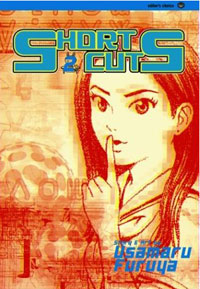
Short Cuts has the unique distinction of being one of the first manga I ever loathed. In fairness to Usamaru Furuya, I read it early in my relationship with manga, when the only titles I knew were Lone Wolf and Cub, Tokyo Babylon, InuYasha, Mermaid Saga, and X/1999. I found Short Cuts bewildering, frankly, as I knew very little about ko-gals — one of Furuya’s favorite subjects — and even less about the other cultural trends and manga tropes that Furuya gleefully mocked. Then, too, Furuya’s fascination with teenage girls, panties, casual prostitution, and incest grew tiresome: how many times can you play the am-I-shocking-you card before the shtick gets old? With the release of Genkaku Picasso, however, I thought it was a good time to revisit Short Cuts and see if I’d unfairly dismissed a great artist or correctly judged him as an unrepentant perv.

What I found was a decidedly mixed bag, a smorgasbord of jokes about girl cliques, lecherous salarymen, Valentine’s Day gift-giving, travel guides for foreigners, and, yes, sex. Some of the best strips tackle obvious targets in unexpected ways. Mr. Pick-on-Me, a recurring character, is one such example: he’s a robot whose sole job is to endure harassment from school kids, providing them a more attractive target for bullying than each other. He proves so effective, however, that the school administrators begin bullying him, too, necessitating the purchase of more robots. Another recurring character, Mitsu Cutie, is an assassin who assembles lethal weapons from bento boxes and Hello Kitty paraphernalia. Though Furuya is hardly the first person to wring laughs from a sweet-faced character’s degenerate behavior, the gag is surprisingly funny, not least for the way in which it carefully filters spy thriller conventions through the lens of shojo manga; it’s as if Takao Saito and Arina Tanemura teamed up to produce a story about a twelve-year-old hit girl.

Furuya is also a first-class mimic, capable of channeling just about any other artist’s style in service of a good joke. In one gag, for example, he twists a TV-addled teen’s face into a perfect imitation of Hitoshi Iwaaki’s parasite aliens, while in another, he shows a woman with ridiculously long eyelashes performing her daily grooming routine, revealing her true identity only in the final panel: she’s Maetel, the heroine of Leiji Matsumoto’s Galaxy Express 999. Even Tezuka take his lumps: in Furuya’s version of Astro Boy, the iconic robot looks like the rotund, bespectacled Dr. Ochanomizu, while his maker resembles Astro, though in Furuya’s telling, the mad scientist likes baggy knee socks, a hallmark of ko-gal fashion.

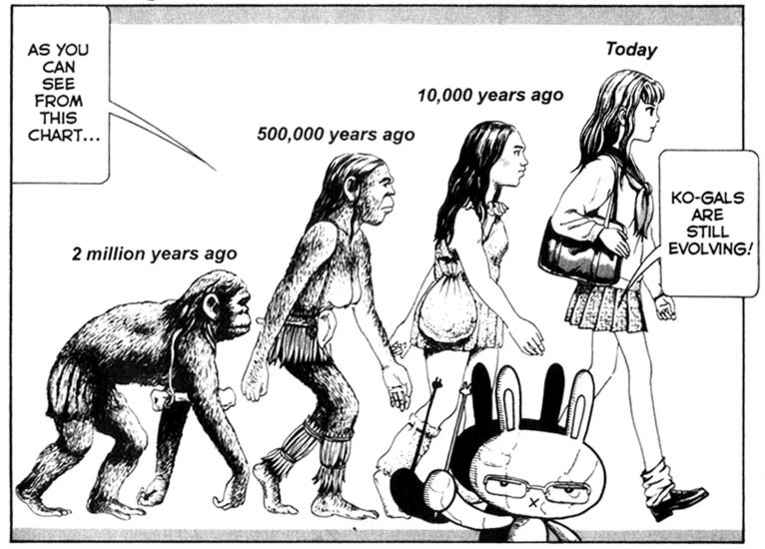
The Astro Boy strip is one of many poking fun at ko-gals, Japan’s own answer to the Valley Girl. Like their Orange County counterparts, kogals are an easy target: their speech and attire are distinctive and easily parodied, as are their devotion to shopping, brand names, and hanging out in the Shibuya district. That’s not to say that Furuya’s jokes are bad; to the contrary, there are some genuinely inspired panels. In one strip, for example, we see a shrine featuring monumental sculptures of ko-gals attended by elderly male priests in short skirts and baggy socks, while in another, a balding, middle-aged man apprentices himself to become a ko-gal, applying himself with the steely resolve of a samurai or geisha-in-training.

A lot of the ko-gal humor is rather mean-spirited, however, portraying girls as hopelessly dim, materialistic, and uninterested in sex unless it comes with a financial reward. Though the male characters are ridiculed for their willingness to pay teenage girls for sexual favors, Furuya allows the reader to have his cake and eat it, too, laughing with recognition at his weakness for panty flashes while being treated to… panty flashes. From very cute girls. Furuya even pokes fun at himself, punishing one of his female characters for her dawning awareness of his “Lolita complex.” (He first attempts to white her out, then resorts to drawing her as a monster.) In the final panel of the “cut,” he’s asserted control over the character again, blackmailing her into silence. The whole sequence is done with a nudge and a wink, as if to make us complicit in Furuya’s predilection for teenage girls; it’s a classic non-apology, the equivalent of saying, “No offense, but sixteen-year-olds are hawt, dude!”

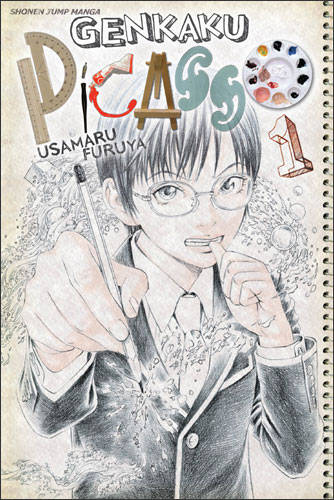
In many ways, Genkaku Picasso seems like one of the two-page “cuts” dragged out to epic lengths. The story focuses on Hikari Hamura, a weird, asexual twit who becomes so involved with his sketch book that he finds a beautiful girl’s attention a nuisance. While sitting on the bank of a river with his classmate Chiaki, a bizarre disaster kills them both. She’s reincarnated as a pocket-sized angel; he’s reborn with a new supernatural gift, the ability to draw other people’s dreams. The central joke of the series is that Hikari is a terrible dream interpreter, reading even darker intent into other students’ nightmares than is implied by the imagery.

The need to show where Hikari’s interpretations go astray proves Genkaku Picasso‘s biggest weakness. Consider “Manba and Kotone,” the third story of volume one, in which one of Hikari’s classmates is plagued by images of a teenage girl being tortured and tied up. As Ng Suat Tong points out in his review of Genkaku, the punchline is squicky: these images aren’t a dark fantasy, but pictures from a magazine shoot in which the girl volunteered to pose for her father, a professional photographer. Handled in two panels, the joke would hit like a nasty rim shot, but as the driving force behind the chapter’s storyline, it becomes… well, seriously creepy, pushing the material into the decidedly unfunny territory of incest and parent-child power dynamics.

I actually liked Genkaku Picasso more than Tong did, partly because I think Furuya is having a ball subverting shonen cliches; it’s the kind of series in which doing your best means staving off body rot, not winning a tournament, and a quiet, philosophical moment between two teens is interrupted by a fiery helicopter crash. I also liked some of the dream sequences, which showcase Furuya’s incredible versatility as an artist. However pedestrian the script may be in explaining the images’ meaning — and yes, there are some borderline Oprah moments in every story — the dreams are nonetheless arresting in their strange specificity.

After reading Short Cuts and Genkaku Picasso, I’m convinced of Usamaru Furuya’s ability draw just about anything, and to tell a truly dirty joke. I’m not yet persuaded that he can work in a longer form, but perhaps if he’s adapting someone else’s story — say, Osamu Daizi’s No Longer Human — he might find the right structure for containing and directing his furious artistic energy.

Review copy of Gengaku Picasso provided by VIZ Media, LLC.

SHORT CUTS, VOLS. 1-2 • BY USAMARU FURUYA • VIZ • NO RATING (MATERIAL BEST SUITED FOR MATURE READERS)

GENKAKU PICASSO, VOL. 1 • BY USAMARU FURUYA • VIZ • 192 pp. • RATING: OLDER TEEN (16+)

Filed Under: Manga Critic Tagged With: Shonen, Shonen Jump, Usamaru Furuya, VIZ

Short Cuts and Genkaku Picasso

November 18, 2010 by Katherine Dacey

Short Cuts has the unique distinction of being one of the first manga I ever loathed. In fairness to Usamaru Furuya, I read it early in my relationship with manga, when the only titles I knew were Lone Wolf and Cub, Tokyo Babylon, InuYasha, Mermaid Saga, and X/1999. I found Short Cuts bewildering, frankly, as I knew very little about ko-gals — one of Furuya’s favorite subjects — and even less about the other cultural trends and manga tropes that Furuya gleefully mocked. Then, too, Furuya’s fascination with teenage girls, panties, casual prostitution, and incest grew tiresome: how many times can you play the am-I-shocking-you card before the shtick gets old? With the release of Genkaku Picasso, however, I thought it was a good time to revisit Short Cuts and see if I’d unfairly dismissed a great artist or correctly judged him as an unrepentant perv.

What I found was a decidedly mixed bag, a smorgasbord of jokes about girl cliques, lecherous salarymen, Valentine’s Day gift-giving, travel guides for foreigners, and, yes, sex. Some of the best strips tackle obvious targets in unexpected ways. Mr. Pick-on-Me, a recurring character, is one such example: he’s a robot whose sole job is to endure harassment from school kids, providing them a more attractive target for bullying than each other. He proves so effective, however, that the school administrators begin bullying him, too, necessitating the purchase of more robots. Another recurring character, Mitsu Cutie, is an assassin who assembles lethal weapons from bento boxes and Hello Kitty paraphernalia. Though Furuya is hardly the first person to wring laughs from a sweet-faced character’s degenerate behavior, the gag is surprisingly funny, not least for the way in which it carefully filters spy thriller conventions through the lens of shojo manga; it’s as if Takao Saito and Arina Tanemura teamed up to produce a story about a twelve-year-old hit girl.

Furuya is also a first-class mimic, capable of channeling just about any other artist’s style in service of a good joke. In one gag, for example, he twists a TV-addled teen’s face into a perfect imitation of Hitoshi Iwaaki’s parasite aliens, while in another, he shows a woman with ridiculously long eyelashes performing her daily grooming routine, revealing her true identity only in the final panel: she’s Maetel, the heroine of Leiji Matsumoto’s Galaxy Express 999. Even Tezuka take his lumps: in Furuya’s version of Astro Boy, the iconic robot looks like the rotund, bespectacled Dr. Ochanomizu, while his maker resembles Astro, though in Furuya’s telling, the mad scientist likes baggy knee socks, a hallmark of ko-gal fashion.

The Astro Boy strip is one of many poking fun at ko-gals, Japan’s own answer to the Valley Girl. Like their Orange County counterparts, kogals are an easy target: their speech and attire are distinctive and easily parodied, as are their devotion to shopping, brand names, and hanging out in the Shibuya district. That’s not to say that Furuya’s jokes are bad; to the contrary, there are some genuinely inspired panels. In one strip, for example, we see a shrine featuring monumental sculptures of ko-gals attended by elderly male priests in short skirts and baggy socks, while in another, a balding, middle-aged man apprentices himself to become a ko-gal, applying himself with the steely resolve of a samurai or geisha-in-training.

A lot of the ko-gal humor is rather mean-spirited, however, portraying girls as hopelessly dim, materialistic, and uninterested in sex unless it comes with a financial reward. Though the male characters are ridiculed for their willingness to pay teenage girls for sexual favors, Furuya allows the reader to have his cake and eat it, too, laughing with recognition at his weakness for panty flashes while being treated to… panty flashes. From very cute girls. Furuya even pokes fun at himself, punishing one of his female characters for her dawning awareness of his “Lolita complex.” (He first attempts to white her out, then resorts to drawing her as a monster.) In the final panel of the “cut,” he’s asserted control over the character again, blackmailing her into silence. The whole sequence is done with a nudge and a wink, as if to make us complicit in Furuya’s predilection for teenage girls; it’s a classic non-apology, the equivalent of saying, “No offense, but sixteen-year-olds are hawt, dude!”

In many ways, Genkaku Picasso seems like one of the two-page “cuts” dragged out to epic lengths. The story focuses on Hikari Hamura, a weird, asexual twit who becomes so involved with his sketch book that he finds a beautiful girl’s attention a nuisance. While sitting on the bank of a river with his classmate Chiaki, a bizarre disaster kills them both. She’s reincarnated as a pocket-sized angel; he’s reborn with a new supernatural gift, the ability to draw other people’s dreams. The central joke of the series is that Hikari is a terrible dream interpreter, reading even darker intent into other students’ nightmares than is implied by the imagery.

The need to show where Hikari’s interpretations go astray proves Genkaku Picasso‘s biggest weakness. Consider “Manba and Kotone,” the third story of volume one, in which one of Hikari’s classmates is plagued by images of a teenage girl being tortured and tied up. As Ng Suat Tong points out in his review of Genkaku, the punchline is squicky: these images aren’t a dark fantasy, but pictures from a magazine shoot in which the girl volunteered to pose for her father, a professional photographer. Handled in two panels, the joke would hit like a nasty rim shot, but as the driving force behind the chapter’s storyline, it becomes… well, seriously creepy, pushing the material into the decidedly unfunny territory of incest and parent-child power dynamics.

I actually liked Genkaku Picasso more than Tong did, partly because I think Furuya is having a ball subverting shonen cliches; it’s the kind of series in which doing your best means staving off body rot, not winning a tournament, and a quiet, philosophical moment between two teens is interrupted by a fiery helicopter crash. I also liked some of the dream sequences, which showcase Furuya’s incredible versatility as an artist. However pedestrian the script may be in explaining the images’ meaning — and yes, there are some borderline Oprah moments in every story — the dreams are nonetheless arresting in their strange specificity.

After reading Short Cuts and Genkaku Picasso, I’m convinced of Usamaru Furuya’s ability draw just about anything, and to tell a truly dirty joke. I’m not yet persuaded that he can work in a longer form, but perhaps if he’s adapting someone else’s story — say, Osamu Daizi’s No Longer Human — he might find the right structure for containing and directing his furious artistic energy.

Review copy of Gengaku Picasso provided by VIZ Media, LLC.

SHORT CUTS, VOLS. 1-2 • BY USAMARU FURUYA • VIZ • NO RATING (MATERIAL BEST SUITED FOR MATURE READERS)

GENKAKU PICASSO, VOL. 1 • BY USAMARU FURUYA • VIZ • 192 pp. • RATING: OLDER TEEN (16+)

Filed Under: Manga, Manga Critic, REVIEWS Tagged With: Shonen, Shonen Jump, Usamaru Furuya, VIZ

Two by Natsume Ono

November 8, 2010 by Michelle Smith

For my latest column at Comics Should Be Good, I reviewed the debut volumes of two (relatively) new Natsume Ono series: House of Five Leaves and Gente: The People of Ristorante Paradiso. I really loved House of Five Leaves, with its story of a hapless samurai drawn into the schemes of a fascinating criminal. Gente is more a collection of low-key short stories than a single narrative, which means it’s slightly less awesome but still very entertaining.

You can find those reviews here.

Both House of Five Leaves and Gente are published in English by VIZ. The former is still ongoing in Japan, where it is up to eight volumes, but the latter (a “delightfully whimsical continuation” of Ristorante Paradiso) is complete with three volumes.

Review copy for Gente provided by the publisher.

Filed Under: REVIEWS Tagged With: Natsume Ono, VIZ

Millennium Snow 1-2 by Bisco Hatori: B-

October 29, 2010 by Michelle Smith

Millennium Snow is the first series by Bisco Hatori (of Ouran High School Host Club fame), one of those that began as a stand-alone but eventually achieved serialization. It’s been on hiatus for some time, but now that Ouran has wrapped up, some fans are hoping that Hatori will return to it. I’m not so sure that’s a worthy endeavor.

Chiyuki Matsuoka has had a weak heart since birth, and wasn’t expected to live past the age of fifteen. She’s managed to make it to seventeen, but spends most of her time in the hospital. One day, as she is gazing out the window, she spots a boy fall from a building and dashes out of the hospital to check on him. He is Toya, the very personification of the seemingly gruff hero who actually has a heart of gold. He’s also a vampire, weak from his refusal to drink blood.

Toya is exceedingly abrasive to begin with, but eventually demonstrates he’s not such a bad guy by doing things like accompanying Chiyuki on an afternoon outing (vampires have overcome their aversion to sunlight) and catching a little kid’s loose balloon. Chiyuki falls for him pretty quickly and offers to become his partner. Having a human to feed upon will cure the exhaustion he suffers from abstaining and the arrangement will also allow Chiyuki to share his 1000-year lifespan. Toya refuses, because if his partner should ever despair of their unending life, he would be the one to blame—he’s watched humans he cared for die, and wouldn’t want to wish the same on his partner.

It’s an interesting dynamic, and the first chapter—which I assume constituted the original one-shot—is quite good. Unfortunately, one the story gets serialized, Hatori seems hard-pressed to come up with plots. First, she introduces Satsuki, a werewolf boy whose transformation is limited to fangs and clawed hands and feet in order to best preserve his bishounen appearance. When the story focuses on his desperate attempts to be normal, he’s a fairly compelling character, but he quickly becomes dim-witted and entirely too glomp-happy, existing only to incite Toya’s perturbation. Their incessant squabbling means that on practically every page someone’s yelling or getting kicked in the back of the head.

To demonstrate the dearth of plot ideas, in volume two the trio is suddenly lost in the Alps in Switzerland, where they stumble upon a deserted mansion. It is incredibly random, and brings home the point that while you may have two likable leads—plus a completely adorable talking bat!—you may find yourself without sufficient material to sustain a longer story.

I’m not sure how it can be salvaged at this point, honestly. I think I’d rather see Hatori embark upon something new and leave this one unfinished. When the romantic tension between Toya and Chiyuki takes center stage, the story’s potential is obvious, but the directionless plotting and constant bickering makes for a frustrating reading experience.

Millennium Snow is published in English by VIZ. The series is currently on hiatus in Japan.

Filed Under: REVIEWS Tagged With: Bisco Hatori, shojo beat, VIZ

Gyo 1-2 by Junji Ito: B+

October 26, 2010 by Michelle Smith

Walking fish aren’t the usual sort of monsters one associates with Halloween, but their invasion makes for creepy reading nonetheless!

Tadashi and his high-maintenance girlfriend, Kaori, are vacationing in Okinawa when Kaori begins complaining of putrid smells. Soon after, a chase ensues between Tadashi and a barely glimpsed, fast-moving creature, culminating with the discovery that said critter is actually a fish with four spindly mechanical legs. This is just the tip of the fishberg, though, as Okinawa is soon overrun by walking fish, which quickly spread to mainland Japan and eventually the rest of the world.

Despite the attempts of the back cover to induce me to regard the series as “horrifying,” the primary adjective I’d use to describe it is “weird.” The scenes of walking fish—and sharks, squids, and whales—swarming down city streets are alarming but fun in a disaster movie kind of way. For most of the first volume, I actually smiled as I read. Things get more serious in the second volume, with revelations about what the creepy legs will do once they run out of fish bodies to use as fuel, but the weird only gets weirder—there’s a critter circus, for example—and the series never loses its page-turning momentum.

While I’d primarily classify Gyo as something fun that’s not too deep, it does offer some commentary on scientific ethics, particularly in the person of Tadashi’s uncle, who immediately begins trying to create a walking machine of his own. Some will be put off by the lack of a finite ending, but I find it interesting. If this were a disaster movie, we’d probably be given the opportunity to cheer on our battered heroes as they figure out the creatures’ vulnerability and blow them all to smithereens, but Gyo stops short of that point. Will mankind prevail? Will the world be overrun? We’ll never know.

Two short stories are included in volume two. “The Sad Tale of the Principal Post” is short and random, but I liked “The Enigma of Amigara Fault” a lot. In it, an earthquake has revealed a rock formation riddled with human-shaped holes that go farther back into the rock than researchers are able to measure. People have flocked to the site after seeing it on TV, somehow drawn to holes that seem to have been tailor-made for them. A young man named Owaki tries to keep his new female friend, Yoshida, from entering her hole, and suffers some vivid (and way more horrifying than the fish-monsters!) nightmares about what could happen to a person who enters. The final page suggests he was right.

In the end, I wouldn’t classify Gyo as amazing, but it—and “The Enigma of Amigara Fault”—are certainly entertaining and memorable. I may have to check out more from Junji Ito, like the spooky spiral menace of Uzumaki!

Gyo is published in English by VIZ and is complete in two volumes.

Filed Under: Books Tagged With: Junji Ito, VIZ, VIZ Signature

My 10 Favorite Spooky Manga

October 24, 2010 by Katherine Dacey 38 Comments

Whether by accident or design, the very first manga I read and liked were horror titles: “The Laughing Target,” Mermaid Saga, Uzumaki. I’m not sure why I find spooky stories so compelling in manga form; I don’t generally read horror novels, and I don’t have the constitution for gory movies. But manga about zombies? Or vampires? Or angry spirits seeking to avenge their own deaths? Well, there’s always room on my bookshelf for another one, even if the stories sometimes feel overly familiar or — in the case of artists like Kanako Inuki and Kazuo Umezu — make no sense at all. Below is a list of my ten favorite scary manga, which run the gamut from psychological horror to straight-up ick.

10. LAMENT OF THE LAMB

KEI TOUME • TOKYOPOP • 7 VOLUMES

Kei Toume puts a novel spin on vampirism, presenting it not as a supernatural phenomenon, but as a symptom of a rare genetic disorder. His brother-and-sister protagonists, Kazuna and Chizuna, begin exhibiting the same tendencies as their deceased mother, losing control at the sight or suggestion of blood, and enduring cravings so intense they induce temporary insanity. Long on atmosphere and short on plot, Lament of the Lamb won’t be every vampire lover’s idea of a rip-snortin’ read; the manga focuses primarily on the intense, unhealthy relationship between Kazuna and Chizuna, and very little on blood-sucking. What makes Lament of the Lamb so deeply unsettling, however, is the strong current of violence and fear that flows just beneath its surface; Kazuna and Chizuna may not be predators, but we see just how much self-control it takes for them to contain their bloodlust.

9. SCHOOL ZONE

KANAKO INUKI • DARK HORSE • 3 VOLUMES

In this odd, hallucinatory, and sometimes very funny series, a group of students summon the ghosts of people who died on school grounds, unleashing the spirits’ wrath on their unsuspecting classmates. School Zone is as much a meditation on childhood fears of being ridiculed or ostracized as it is a traditional ghost story; time and again, the students’ own response to the ghosts is often more horrific than the ghosts’ behavior. Inuki’s artwork isn’t as gory or imaginative as some of her peers’, though she demonstrates a genuine flair for comically gruesome thrills: one girl is dragged into a toilet, for example, while another is attacked by a scaly, long-armed creature that lives in the infirmary. Where Inuki really shines, however, is in her ability to capture the primal terror that a dark, empty building can inspire in the most rational person. Even when the story takes one its many silly detours — and yes, there are many WTF?! moments in School Zone — Inuki makes us feel her characters’ vulnerability as they explore the school grounds after hours. —Reviewed at The Manga Critic on 10/29/09

8. MAIL

HOUSUI YAMAKAZI • DARK HORSE • 3 VOLUMES

If you like you horror neat with a twist, Mail might be your kind of manga: a meticulously crafted selection of short, spooky tales in which a handsome exorcist goes toe-to-toe with all sort of ghosts. The stories are a mixture of urban legend and folklore: a GPS system which directs a woman to the scene of a crime, an accident victim who haunts the elevator shaft where he died, a possessed doll. Through precise linework and superb command of light, Hosui Yamakazi transforms everyday situations — returning home from work, logging onto a computer — into extraordinary ones in which shadows and corners harbor very nasty surprises. Best of all, Mail never overstays its welcome; it’s the manga equivalent of the Goldberg Variations, offering a number of short, trenchant variations on a single theme and then wrapping things up neatly.

7. AFTER SCHOOL NIGHTMARE

SETONA MITZUSHIRO • GO! COMI • 10 VOLUMES

Masahiro, a charming, popular high school student, harbors a terrible secret: though he appears to be male, the lower half of his body is female. At a nurse’s urging, he agrees to visit the school infirmary for a series of dream workshops in which he interacts with classmates who are also grappling with serious problems, from child abuse to pathological insecurity. The students’ collective dreams are vivid and strange, unfolding with the peculiar, fervid logic of a nightmare; buildings flood, stairwells lead to dead ends, and characters undergo sudden, dramatic transformations. Making the dream sequences extra creepy is the way Setona Mizushiro renders the students, choosing an avatar for each that represents their true selves: a black knight, a faceless body, a long, disembodied arm that grasps and slithers. Attentive readers will be rewarded for their patient observation with an unexpected but brilliant twist in the very final pages.

6. THE DRIFTING CLASSROOM

KAZUO UMEZU • VIZ • 11 VOLUMES

It’s sorely tempting to compare The Drifting Classroom to The Lord of the Flies, as both stories depict school children creating their own societies in the absence of adult authority. But Kazuo Umezu’s series is more sinister than Golding’s novel, as Classroom‘s youthful survivors have been forced to band together to defend themselves from their former teachers, many of whom have become unhinged at the realization that they may never return to their own time. (Their entire elementary school has slipped through a rift in the space-time continuum, depositing everyone in the distant future.) The story is as relentless as an episode of 24: characters are maimed or killed in every chapter, and almost every line of dialogue is shouted. (Sho’s petty arguments with his mother are delivered as emphatically as his later attempts to alert classmates to the dangers of their new surroundings.) Yet for all its obvious shortcomings, Umezu creates an atmosphere of almost unbearable tension that conveys both the hopelessness of the children’s situation and their terror at being abandoned by the grown-ups. If that isn’t the ultimate ten-year-old’s nightmare, I don’t know what is. —Reviewed at PopCultureShock on 10/15/06

5. MERMAID SAGA

RUMIKO TAKAHASHI • VIZ • 4 VOLUMES

This four-volume series ran on and off in Shonen Sunday for nearly ten years, chronicling the adventures of Yuta, a fisherman who gained immortality by eating mermaid flesh. Desperate to live an ordinary existence, Yuta spends five hundred years wandering Japan in search of a mermaid who can restore his mortality, crossing paths with criminals, immortals, and “lost souls,” people reduced to a monstrous condition by the poison in mermaid flesh. Though the stories follow a somewhat predictable pattern, Takahashi’s writing is brisk and assured, propelled by snappy dialogue and genuinely creepy scenarios. The imagery is tame by horror standards, but Takahashi doesn’t shy away from the occasional grotesque or gory image, using them to underscore the ugly consequences of seeking immortality. –Reviewed at The Manga Critic on 10/29/09.

4. DORORO

OSAMU TEZUKA • VERTICAL, INC. • 3 VOLUMES

The next time you feel inclined to criticize your parents, remember Hyakkimaru’s plight: his father pledged Hyakkimaru’s body parts to forty-eight demons in exchange for political power, leaving his son blind, deaf, and limbless at birth. After being rescued and raised by a kindly doctor, Hyakkimaru embarks on a quest to reclaim his eyes and ears, wandering across a war-torn landscape where demons take advantage of the chaos to prey on humans. Some of these demons have obvious antecedents in Japanese folklore (e.g. a nine-tailed fox), while others seem to have sprung full-blown from Tezuka’s imagination (e.g. a shark who paralyzes his victims with sake breath). Though the story ostensibly unfolds during the Warring States period, Dororo wears its allegory lightly, focusing primarily on swordfights, monster lairs, and damsels in distress while using its historical setting to make a few modest points about the corrosive influence of greed, power, and fear. For my money, one of Tezuka’s best series, peroid. —Reviewed at The Manga Critic on 7/27/09

3. PARASYTE

HITOSHI IWAAKI • DEL REY • 8 VOLUMES

Part The Defiant Ones, part Invasion of the Body Snatchers, Parasyte focuses on the symbiotic relationship between Shin, a high school student, and Migi, the alien parasite that takes up residence in his right hand after failing to take control of Shin’s brain. The two go on the lam after another parasite kills Shin’s mother — and makes Shin and Migi look like the culprits. If the human character designs are a little blank and clumsy, the parasites are not; Hitoshi Iwaaki twists the human body into some of the most sinister-looking shapes since Pablo Picasso painted Dora Maar. The violence is graphic but not sadistic, as most of the action takes place between panels, with only the grisly aftermath represented in pictorial form. The best part of Parasyte, however, is the script; Shin and Migi trade barbs with the antagonistic affection of Oscar Madison and Felix Unger, revealing Migi to be smarter and more objective than his human host. Shin and Migi’s banter adds an element of levity to the story, to be sure, but their heated debates about survival are also a sly poke at the idea that human beings’ intellect and emotional attachments place them squarely atop the food chain. –Reviewed at The Manga Critic on 7/2/10

2. THE KUROSAGI CORPSE DELIVERY SERVICE

EIJI OTSUKI AND HOUSUI YAMAKAZI • DARK HORSE • 13+ VOLUMES

The Kurosagi Corpse Delivery Service is comprised of five members: Karatsu, a monk-in-training; Numata, a hipster with an encyclopedic knowledge of pop culture; Yata, an odd duck who communicates primarily through a puppet that he wears on his left hand; Makino, a chatty embalmer; and Sasaki, a hacker with an entrepreneurial streak. Working as a team, the quintet helps the dead cross over, using their myriad talents to locate bodies, speak with ghosts, and resolve the spirits’ unfinished business. The set-up is pure gold, giving the episodic series some structure, while allowing Eiji Otsuka and Housui Yamakazi the flexibility to stage grisly murders and discover corpses in a variety of unexpected places. Think Scooby Doo with less wholesome protagonists and scarier spooks and you have a good idea of what makes this offbeat series tick. And yes, the gang even has their own van. —Reviewed at The Manga Critic on 6/24/09

1. GYO

JUNJI ITO • VIZ • 2 VOLUMES

From the standpoint of craft, Uzumaki is a better manga, but it’s hard to top the sheer creepiness factor of Gyo, which taps into one of the most primordial of fears: being eaten! Here’s how I explained its appeal to David Welsh at The Comics Reporter:

Like many other children of the 1970s, Jaws left an indelible impression on me. I wasn’t just terrified of swimming in the ocean, I was reluctant to immerse myself in any standing body of water — swimming pools, bathtubs, ponds — that might conceivably harbor a shark. That irrational fear of encountering a great white somewhere it’s not supposed to be even led me to wonder what it might be like to bump into one on land — could I outrun it?

I’m guessing Junji Ito also suffers from icthyophobia, because Gyo looks like my worst nightmare, a world in which hideously deformed fish crawl out of the sea on mechanical legs and terrorize humans, spreading a disease that quickly jumps species. As horror stories go, many of Gyo‘s details aren’t terribly well explained — how, exactly, the fish acquired legs remains unclear despite talk of military experiments gone awry — but the imaginative artwork appeals on a visceral level. Gyo‘s highpoint comes midway through volume one, when a great white shark chases the hero and his girlfriend through a house, even scaling the stairs (no pun intended) in pursuit of its next meal. The scene is utterly ridiculous, but it works — for a few terrible, thrilling pages I learned the answer to my long-standing question, What would it be like to be chased by a shark on land? In a word: scary.

In other words, this is my worst nightmare:

So those are ten of my favorite spooky manga! What horror manga are on your top-ten list? Inquiring minds want to know!

Filed Under: Manga Critic Tagged With: Dark Horse, del rey, Eiji Otsuka, Go! Comi, Hitoshi Iwaaki, Horror/Supernatural, Housui Yamakazi, Junji Ito, Kanako Inuki, Kazuo Umezu, Kei Toume, Osamu Tezuka, Rumiko Takahashi, Setona Mizushiro, Tokyopop, vertical, VIZ

  • « Go to Previous Page
  • Page 1
  • Interim pages omitted …
  • Page 8
  • Page 9
  • Page 10
  • Page 11
  • Page 12
  • Interim pages omitted …
  • Page 26
  • Go to Next Page »
 | Log in
Copyright © 2010 Manga Bookshelf | Powered by WordPress & the Genesis Framework