• Skip to primary navigation
  • Skip to main content
  • Skip to primary sidebar
  • Home
  • About Us
    • Privacy Policy
    • Comment Policy
    • Disclosures & Disclaimers
  • Resources
    • Links, Essays & Articles
    • Fandomology!
    • CLAMP Directory
    • BlogRoll
  • Features & Columns
    • 3 Things Thursday
    • Adventures in the Key of Shoujo
    • Bit & Blips (game reviews)
    • BL BOOKRACK
    • Bookshelf Briefs
    • Bringing the Drama
    • Comic Conversion
    • Fanservice Friday
    • Going Digital
    • It Came From the Sinosphere
    • License This!
    • Magazine no Mori
    • My Week in Manga
    • OFF THE SHELF
    • Not By Manga Alone
    • PICK OF THE WEEK
    • Subtitles & Sensibility
    • Weekly Shonen Jump Recaps
  • Manga Moveable Feast
    • MMF Full Archive
    • Yun Kouga
    • CLAMP
    • Shojo Beat
    • Osamu Tezuka
    • Sailor Moon
    • Fruits Basket
    • Takehiko Inoue
    • Wild Adapter
    • One Piece
    • After School Nightmare
    • Karakuri Odette
    • Paradise Kiss
    • The Color Trilogy
    • To Terra…
    • Sexy Voice & Robo
  • Browse by Author
    • Sean Gaffney
    • Anna Neatrour
    • Michelle Smith
    • Katherine Dacey
    • MJ
    • Brigid Alverson
    • Travis Anderson
    • Phillip Anthony
    • Derek Bown
    • Jaci Dahlvang
    • Angela Eastman
    • Erica Friedman
    • Sara K.
    • Megan Purdy
    • Emily Snodgrass
    • Nancy Thistlethwaite
    • Eva Volin
    • David Welsh
  • MB Blogs
    • A Case Suitable For Treatment
    • Experiments in Manga
    • MangaBlog
    • The Manga Critic
    • Manga Report
    • Soliloquy in Blue
    • Manga Curmudgeon (archive)

Manga Bookshelf

Discussion, Resources, Roundtables, & Reviews

Shonen

Kuroko’s Basketball, Vols. 1 and 2

August 30, 2016 by Anna N

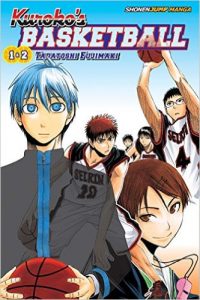
Kuroko’s Basketball Volumes 1 and 2 by Tadatoshi Fujimaki

I enjoy a good sports manga, and this omnibus of the first couple volumes of Kuroko’s Basketball was entertaining, due to a unconventional protagonist.
kb1

The manga opens with a bit of a prologue discussing an unbeatable team at Teiko Middle School that was split up and scattered as the team members, known as “The Miracle Generation”, all went to different high schools. While five players were the superstars, there were rumors of a shadowy sixth man who was actually the key to the team’s success. Flash forward to the present day at Seirin High School, all the clubs are out in force trying to recruit new members. Taiga Kagami is an intense first-year student with a superior attitude because he played basketball in the United States who signs up for the club. Tetsuya Kuroko, an unassuming student who formerly attended Teiko signs up for basketball as well.

Taiga is drawn to look a bit like Hanamichi from Slam Dunk, and while both characters share a brash personality and an abundance of natural talent, Taiga isn’t as idiotic as Slam Dunk’s protagonist. The fact that the manga is called Kuroko’s Basketball is a signal that the stereotypical idea of who the hero is in sports manga is going to be subverted a little bit. It turns out that Kuroko has a unique talent of appearing invisible when he’s playing basketball, which turns into an incredible advantage for the Seirin team, as he’s constantly overlooked and underestimated, only to make key passes and plays for all the other players on his team.

Kuroko’s unassuming nature is often played for laughs, as he frequently seems to pop out of nowhere when he’s just overlooked. His talent doesn’t come without a lot of hard work, as when he’s actually playing a game he is paying such close attention to everyone around him and adjusting in response to opposing players, that he can’t log a significant amount of minutes devoted to basketball invisibility without becoming exhausted. The first couple volumes shows the Seinen team coming together under their bossy girl coach Riko. She begins to get a sense that with Kuroko and Taiga on the team, she may be able to build the Seirin team into something special.

I feel like after reading Slam Dunk, the art for any other basketball manga is going to suffer in comparison, especially because as Slam Dunk wrapped up the art was so glorious. But comparing other manga artists to Inoue is like comparing people to Kirby, just fundamentally unfair. So I suffered a few involuntary pangs of wanting some mindblowing basketball action paneling in Kuroko’s Basketball, but on the whole, it was easy to follow all the action in the basketball games, and Kuroko’s deadpan expression is used effectively to provoke a variety of reactions in his teammates.

As this omnibus volume was wrapping up, a tournament style struggle is set up, with the Seiran team placed in a position where they are going to have to face off against other high school teams, each with a standout player from the Miracle Generation. Kuroko is now playing only for the love of the game, he comments that he didn’t want to play with anyone from his former team because they were so focused on winning at all costs, they weren’t truly appreciating basketball. The dynamic that will be explored in future volumes is if Kuroko’s abilities combined with his new team will actually mean that the sixth man will emerge triumphant. I have to say I’m very happy that with Kuroko’s Basketball, Haikyuu!!, and Yowamushi Pedal (which I haven’t read yet), there is a bumper crop of sports manga coming out in English right now.
Filed Under: REVIEWS Tagged With: Kuroko's Basketball, Shonen, viz media

Haikyu!!

June 30, 2016 by Anna N

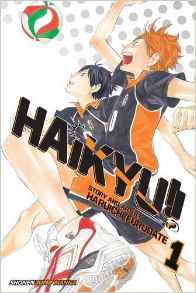
Haikyu!! Volume 1 by Haruichi Furudate

I’m always curious to check out new sports manga, mostly because we tend to get so few licensed over here. Haikyu!! is a shonen volleyball title. I still have fond memories of the shoujo series Crimson Hero, so I was curious to see the world of volleyball manga yet again.

Shoyo Hinata saw a volleyball tournament when he was younger, where a shorter than average player made up for his height with some wonderful athleticism. Shoyo is determined to become an elite volleyball player, and he’s not going to let the fact that he’s the only member of his volleyball club in middle school stop his dreams. Eventually by his third year, Shoyo manages to put together a small team and play in a tournament, where he faces down Tobio Kageyama. Tobio is a star player, and he knows it, yelling at his teammates constantly and trying to win on his own. Shoyo loses, but displays a ton of heart in the process and manages to score some great points.

Fast forward to the following year, and it is no surprise that Shoyo and Tobio are starting on the same volleyball team in high school. The captain Daichi Sawamura immediately sees a problem with the two new rookies and tells them that they can’t even practice until they can work as a team. While undisciplined enthusiasm and athletic snobbery might not be the best thing for the disgraced former champion team of Karasuno High, Daichi thinks that they could be an unstoppable team if they are able to work together. Shoyo and Tobio have to earn their way back to the team by facing off against the other first-years.

hai1

The art in Haikyu!! uses plenty of action and unconventional angles to display the tension of the volleyball game. Shoyo leaps all over the place for the ball, and Tobio tends to lurk around in a gloomy manner, then suddenly strike like a snake. The character designs are well-executed, with a large supporting cast all given distinct looks and personalities, making it easy to navigate the mass introductions that come with reading the first book of every series. I enjoyed getting a glimpse of the upperclassmen on the team, who range from being able to give wise volleyball philosophical advice, to being knuckleheads. The dynamic between Shoyo and Tobio is interesting, because it is so antagonistic but it is clear that there’s a lot they can learn from each other. This first volume mainly served to set up the characters and their long road to a possible championship, but it was definitely entertaining.

Filed Under: REVIEWS Tagged With: Haikyu!!, Shonen, viz media

My Hero Academia Vol 1

April 17, 2016 by Anna N

My Hero Academia Volume 1 by Hohei Horikoshi

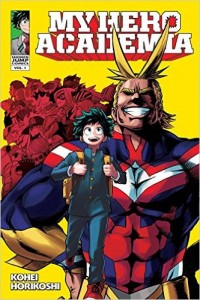
So Viz has one hilarious send-up of the superhero genre in One-Punch Man. I was curious to see how the more mainstream and shonen take on the superhero genre would read. My Hero Academia seems to be gunning more for traditional western superhero genre, with the issue numbering rectangle on the top left of the cover just as you would expect from an American comic.

The set-up for My Hero Academia also reminded me of Tiger & Bunny a bit, in the way that super villains and superheroes are treated like an extension of celebrity culture. Over 80 percent of the world’s population has unusual abilities, or “quirks”. Like most shonen heroes, Izuku Midoriya is nothing special. He’s unusual in his ordinariness, as he is one of the few kids in his class at school who has no abilities. He’s picked on and bullied by the other kids in his class, but he’s determined to get into the hero training program somehow. Izuku has a fateful encounter with the superhero All Might, who looks like a slightly better proportioned Rob Liefeld character.

mh1

It turns out that after All Might uses his power, his muscles deflate and he becomes a skeletal creature who suffers from a variety of physical problems. He can only sustain his power for three hours a day before he reverts into his normal form. All Might decides that it is time to pass along his power to a new person, and he picks Izuku, after witnessing Izuku take on a super villain with nothing but the determination to save someone else. Izuku is a pretty typical shonen hero in his determination to become a hero, but his immediate reaction when he sees someone in danger is to sacrifice himself. Although Izuku might have All Might’s power as a legacy, he has no idea how to control it.

Ikuzu winds up going to hero training school along with his school bully, and meets some other kids who are also determined to be heroes. Izuku’s lack of control of his new powers causes him to perform heroic acts with just his fingertip, because the power is too much for him. There’s a lot of set-up and story packed into this first volume, so I’m actually interested to see what happens next once all the characters and background are established. Horikoshi switches between different styles of characture with ease, and the contrast between All Might’s heroic and ordinary form is funny. Ikuzu spends most of this volume looking either incredibly hopeful and enthusiastic or absolutely terrified. The action scenes were for the most part easy to follow, but some of the paneling was a bit cluttered at times, and I think occasionally the art suffered a bit from being shrunk down from the original magazine format it was serialized in. My Hero Academia was quirky enough to appeal to me, and I’m generally picky about shonen series. I’ll see if the next few volumes continue to hold up well.

Filed Under: REVIEWS Tagged With: My Hero Academia, Shonen, viz media

The Manga Revue: Prison School and Twin Star Exorcists

July 24, 2015 by Katherine Dacey

This week, I take a look at two new releases: Prison School, a hotly anticipated series about five boys trying to break out of an all-girls’ school, and Twin Star Exorcists, a shonen manga about two teenage onmyoji who hold the fate of the world in their hands. (Let’s hope they do their best–otherwise, we’re toast!)

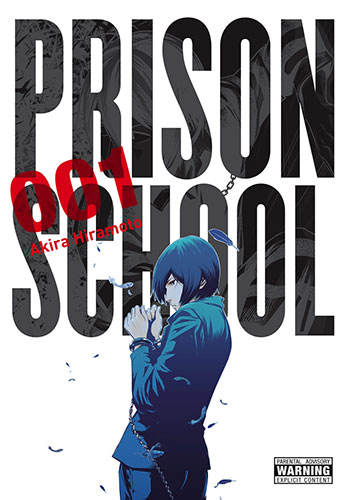
Hiramoto_PrisonSchoolV1Prison School, Vol. 1
By Akira Hiramoto
Rated M, for mature readers (18+)
Yen Press, $20.00

Paging Russ Meyer! Prison School is a veritable parade of big-bosomed, wasp-waisted women brandishing whips, kicking ass, and eschewing bras. The target of their scorn: Kiyoshi, Kingo, Gackt, Joe, and Andre, the first five men to enroll at the Hachimitsu Private Academy in its fifty-year history. These hapless souls want nothing more than to “catch glances of breasts and panties,” but their efforts to spy on their classmates incur the wrath of the school’s Shadow Student Council, a secret organization whose primary role is to “crack down on illicit sexual relationships.” After a dramatic show trial in the school’s courtyard, Kiyoshi and friends are sentenced to hard time in the school penitentiary.

I’d be the first to admit that the premise has potential: what woman or girl hasn’t fantasized about coolly administering a karate chop to a lecherous jerk on the subway or in the street? What prevents Prison School from rising above grindhouse fare is Akira Hiramoto’s complete dehumanization of his characters. The Student Council members are portrayed as ball-busting man-haters, intent on humiliating the boys for their sexual proclivities, while the prisoners are depicted as sniveling pervs. The only genuinely sympathetic pair are Kiyoshi and Chiyo, a cute girl who shares Kiyoshi’s passion for sumo wrestling. Kiyoshi’s desire to have a normal relationship with Chiyo provides the story’s few emotionally authentic moments; by contrast, most scenes revel in the lurid, psychosexual relationship between the boys and their jailers.

Though all of the characters are objectified, no one fares as poorly as Meiko Shiraki, the Shadow Council’s Vice President. Hiramoto always draws her from an extreme angle–upskirt is one of his favorites–that emphasizes her monstrously distended breasts and reveals her penchant for wearing thongs. Perhaps a fifteen-year-old boy would find her terrifyingly sexy, but an older reader who’s seen actual breasts would have a hard time viewing Meiko as anything but a fetishist fantasy.

All of which is to say: Prison School could have been a sly riff on Escape from Alcatraz, The Great Escape, or even Caged, but Hiramoto’s strenuously raunchy scenarios overwhelm the other elements of the story, stopping it dead in its tracks.

The verdict: Prison School is an all-or-nothing proposition: you’ll either love it or hate it.

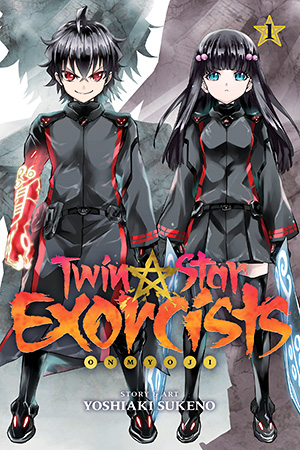
twin_starTwin Star Exorcists, Vol. 1
By Yoshiaki Sukeno
Rated T, for teens
VIZ Media, $9.99

Twin Star Exorcists is a love story dressed up as an action-packed supernatural adventure. At the beginning of volume one, the principal characters have a meet-cute that establishes their personalities in broad strokes: Rokuro is gifted but reluctant to use his exorcism skills, while Benio is gifted but trigger happy, nuking monsters at the slightest provocation. Making their Darcy-and-Elizabeth dynamic more complicated is that Rokuro and Benio are destined to marry and have a child who will save the world from the Kegare, a demonic race that lives in a parallel universe. (Rokuro and Benio are also fourteen, a point underscored by their endless bickering.)

Although the fight scenes are competently executed, the beats are so familiar that the combat feels superfluous. And therein lies Twin Star Exorcists‘ biggest problem: it’s boring. The plot lines, characters, and demon lore are so familiar that the story lacks a distinctive personality; even the setting is cliche. (Rokuro and Benio attend an exclusive academy for onmyoji in training.) Just two days after finishing the volume I couldn’t remember the principal characters’ names–a sure sign that the author treated each element of the story as something to be checked off a list, rather than an integral part of the narrative.

The verdict: Zzzzzz…..

Reviews: GC4K contributor Mike Pawuk praises Svetlana Chmakova’s Awkward, just out from Yen Press. Over at Heart of Manga, Laura posts brief reviews of He’s My Only Vampire, The Ancient Magus’ Bride, and Let’s Dance a Waltz. Joe McCulloch dedicates his latest TCJ column to CoroCoro magazine.

Lesley Aeschliman on vol. 17 of 07-Ghost (WatchPlayRead)
Connie on Alice in the Country of Clover: Nightmare (Slightly Biased Manga)
Alice Vernon on Awkward (Girls Like Comics)
Connie on vol. 29 of Blade of the Immortal (Slightly Biased Manga)
Sheena McNeil on vol. 7 of Deadman Wonderland (Sequential Tart)
Allen Kesinger on vol. 1 of The Devil is a Part-Timer! (No Flying No Tights)
Chris Randle on Fragments of Horror (The Guardian)
Frank Inglese on vol. 6 of Gangsta (Snap30)
Sarah on Kitaro (nagareboshi reviews)
Matthew Alexander on vol. 13 of Knights of Sidonia (The Fandom Post)
Leroy Douresseaux on vol. 1 of Love Stage!! (Comic Book Bin)
Johanna Draper Carlson on vol. 1 of Love Stage!! (Comics Worth Reading)
Marissa Lieberman on vol. 1 of Midnight Secretary (No Flying No Tights)
Thomas Maluck on vols. 1-3 of My Love Story!! (No Flying No Tights)
ebooksgirl on vol. 3 of My Neighbor Seki! (Geek Lit Etc.)
Helen and confused muse on Natsume’s Book of Friends (Organization Anti-Social Geniuses)
Sean Gaffney on vol. 2 of No Game No Life (A Case Suitable for Treatment)
Erica Friedman on Okujou no Yuri Yurei-san Side B – Nakayoshi Quiz (Okazu)
A.J. Adejare on vol. 2 of Oreimo: Kureneko (The Fandom Post)
Connie on vol. 1 of Paradise Kiss (Slightly Biased Manga)
Connie on vol. 3 of Phantom Thief Jeanne (Slight Biased Manga)
Sheena McNeil on vol. 3 of Pokemon X.Y (Sequential Tart)
Lostty on vols. 1-4 of Princess Jellyfish (Organization Anti-Social Geniuses)
Lesley Aeschliman on vol. 17 of Rin-ne (WatchPlayRead)
Ash Brown on vol. 2 of Sengoku Basara: Samurai Legends (Experiments in Manga)
Frank Inglese on vol. 6 of Terra Formars (Snap30)
Sheena McNeil on vol. 9 of Voice Over! Seiyu Academy (Sequential Tart)
Lesley Tomsu on vols. 1-2 of Witch Buster (No Flying No Tights)
Ken H. on vol. 2 of Your Lie in April (Sequential Ink)

Filed Under: MANGABLOG, REVIEWS Tagged With: Manga Review, Prison School, Seinen, Shonen, Twin star Exorcists, viz media, yen press

JoJo’s Bizarre Adventure: Part 1 Phantom Blood Vol 1

February 4, 2015 by Anna N

JoJo’s Bizarre Adventure: Part 1 Phantom Blood, Volume 1 by Hirohiko Araki

I read this volume without much background in this series other than knowing that it was a huge and long-running series in Japan, has a bit of a cult following in Japan, and the books that Viz had been releasing under the shonen jump line started midway through the series. This volume goes back to the earliest story arc in the series, kicking things off with the English nobility, bloodthirsty Aztec masks, and people beating the crap out of each other.

The story kicks off in old school shonen fashion, where a scantily clad woman is sacrificed to the wearer of a mysterious stone mask who proclaims that his accessory drinks the blood of the living. Bones from the mask pierce his skull, but he’s still alive and taking on even more blood sacrifices, not worried about staining his stylish leopard skin pelt cape because he has found the secret to eternal life!

The story then skips over to England, where an evil red-haired young man offers his dying father some medicine. Dio’s father tells him a story about how he accidentally saved the life of a nobleman named Joestar when he came across the wreckage of carriage he was intending to scavenge. Brando tells Dio to go to the Joestars when he becomes orphaned, and Dio does, thus starting the torture of poor young Jonathan Joestar. Dio is immediately adopted as a second son by the Joestar family, but since he is basically the spawn of Satan and Jonathan Joestar is like a friendly naive puppy, things do not go well with the new brothers.

Dio is basically a human form of a cancer, undermining the heir to the Joestar family whenever he gets a chance. It has been a long time since I’ve read a shonen manga this manly! There are speed lines and yelling on almost every page. Jonathan and Dio engage in fistfights and boxing matches, where one blow will end up knocking a half dozen teeth into the air. Towards the end of the book the legacy of the blood drinking Aztec mask is further explored, and Jonathan finally begins to get proof of Dio’s nefarious deeds. The art is really dynamic although the proportions are often a bit off. Often one of the muscular bodies of the main characters will look like it is supporting a shrunken head. If Rob Liebefeld and Tetsuo Hara of Fist of the North Star mashed up their styles you might end up with something like JoJo’s Bizarre Adventure, except Araki can actually draw feet. I’m sure the art gets much better in subsequent volumes, and even though it wasn’t always to my taste I couldn’t deny the effectiveness of the energy of the many battle scenes in the manga.

As a main character, Jonathan Joestar lets himself be taken advantage of for far too long, but he does manage to battle back as shonen heroes always do. The hardcover edition is really nicely designed, with color pages shifting to further tonal pages where the black and white art is enlivened by shades of orange. This volume ends on a cliffhanger, and I do want to know what happens next, as I assume it will involve more stone mask blood drinking and face punching. I can certainly see why this is such a long-running and popular series in Japan. Recommended for those who want a major dose of testosterone in their manly manga.

Filed Under: REVIEWS Tagged With: JoJo's Bizarre Adventure, Shonen, viz media

Assassination Classroom Vol 1

December 26, 2014 by Anna N

Assassination Classroom Volume 1 by Yusei Matsui

To be perfectly honest, I would have bought this manga for the title alone. The fact that it is a story about a mysterious tentacled alien teacher looking after a classroom of misfit teenage assassins is just a bonus. The premise of the manga is set up in an effective way, with some elements explained and others just left for the reader to simply accept and move on with the story. The manga opens as the happy face octopus stands in front of the classroom wearing an academic hood and gown. As the day opens the entire class leaps up from their desks with guns and begins to fire away. Their assassination attempts are fruitless, because their teacher can move at super speed and has amazing healing abilities. The assassination classroom is a room full of misfits held in the annex of a normal middle school. One day their teacher showed up, disintegrated a large portion of the moon and said that he would do the same to Earth in one year. Kuro Sensei inexplicably wants to spend a year educating the youth of Earth before he destroys it. The government has offered up a bounty to the member of class 3-E who succeeds in killing their teacher.

Assassination Classroom is filled with humorous elements interspersed with dynamic scenes of assassinations being foiled with ease. For poetry class, Kuro Sensei requires everyone to end their poem with the word “tentacles” and he is always using his supersonic flying power to randomly buy himself treats from around the world. The standout student is Sugino, who spends his days making careful observations of his teacher, slowly gathering intelligence that might eventually lead to a successful assassination. As the volume progresses, more members of the class 3-E are introduced, all of whom have unique abilities. The most amusing aspect of the volume is the fact that for all Kuro Sensei plans on wiping out all of humanity in a year, he is really dedicated to being an excellent teacher. He intervenes in the lives of his troubled students and actually does manage to teach them some useful life lessons. The uplifting aspects of the manga contrast with Earth’s imminent doom in an interesting way. The art is well-executed but somewhat generic. It is amusing to see the variety of expressions on Kuro Sensei’s face, and the unexpected ways his alien powers manifest. I think this series would really appeal to fans of Death Note. So far, Assassination Classroom seems like an ideal pick for people who enjoy manga with a healthy side of dark cynicism on the side.

Filed Under: REVIEWS Tagged With: assassination classroom, Shonen, Shonen Jump, viz media

Seraph of the End: Vampire Reign Vol 3

December 8, 2014 by Anna N

Seraph of the End Volume 3 by Takaya Kagami, Yamato Yamamoto, and Daisuke Furuya

One of the reasons why I like this shonen vampire dystopian series so much is that each volume propels the hero forward to a different stage of development and a different setting. In the third volume, brash yet unexpectedly capable hero Yuichiro has his demon possessed weapon, and now he’s about to become an official vampire hunter when he heads out with his squad to aid other soldiers in Shinjuku. Yuichiro’s new squad consists of the sarcastic and subversive Shinoa, earnest Yoichi, and his cranky new friend Shiho. The balance in the group is upset a bit with the arrival of Mitsuba, an abrasive girl who doesn’t understand why she’s been saddled with a rookie unit.

Yuichiro’s habit of rushing into battle causes tension with the group, since he doesn’t respect the standard tactical formations they are supposed to hold in order to make sure that the entire team is protected. They have a few skirmishes with vampires and survive more due to individual luck than coordinated effort. I have to say, I enjoy Shinoa’s leadership style because she makes pronouncements like “Let us be off on another fun-filled, vampire-slaughtering excursion!” While Yuichiro might be reckless, he’s also just as likely to risk himself to save one of his teammates as he is to charge ahead to fulfill his desire for revenge against vampires.

The reader gets a further glimpse into the life of Yuichiro’s adopted brother turned vampire Mikaela, and it seems like he will be meeting Yuichiro very soon. The combination of good world building, dynamic action scenes, and sarcastic quips makes me confident that Seraph of the End will continue to be very entertaining.

Filed Under: REVIEWS Tagged With: Seraph of the End, Shonen, viz media

World Trigger, Vols 1 and 2

October 7, 2014 by Anna N

World Trigger Volumes 1 and 2 by Daisuke Ashihara

World Trigger starts out with a very Attack on Titanesque set-up, expressed simply in one page. Monsters from another dimension are invading the earth. A paramilitary force shows up to fight the monsters. Daily life for the rest of humanity is often interrupted by these “Neighbors” who look a bit like giant eels and the humans who fight back against the invasion.

Osamu is a bit of an unassuming student, but he finds his life complicated when a mysterious new transfer student named Yuma shows up. Yuma seems to not know very much about basic human behavior. When a Neighbor attacks outside of the usual boundaries, Osamu reveals that he’s actually a trainee for the Border Defense Agency, with a small amount of power that he’s determined to use to protect everyone in his city. Yuma turns out to have some extraordinary powers himself. He claims to also be a Neighbor, from the dimension where the monsters come from. He also has the ability to use a trigger, the weapon/body exchange protocol that allows users to fight off the monsters.

In the ensuing battle, Yuma fends off a powerful monster after Osamu proves not to have the level that he needs in order to destroy his enemy. Osamu turns to helping out however he can, by evacuating residents and helping everyone stay safe. Members of the Border Protection Agency turn up, suspicious of the recent events and determined to follow correct bureaucratic procedure. The cast of the book gradually expands beyond Osamu and Yuma to include many of the typical foils for a shonen protagonist. There’s a cool older male mentor, a type A overachiever warrior girl, and a host of bureaucrats in the Border Protection Agency that will surely make life difficult for Osamu.

The Border Protection Agency seems more chaotic than a force for either good or evil, as a squad starts to hunt down Yuma. Osamu tries to intercede, but Yuma’s level of power is such that he’s able to evade attack from multiple agents at once with only some slight injuries. One interesting aspect of the story is that Osamu keeps getting promoted within the Border Protection Agency simply because he is often in the right place at the right time and occasionally forced to take credit for some of Yuma’s actions in order to maintain his new friend’s cover. Osamu’s leveling up though being an unassuming nice guy who is incredibly lucky is a bit unexpected for a reader expecting a more typical brash shonen hero, and this was one aspect of the book that I found intriguing.

There’s a fair amount of world building as the characters go into details about the alien tech infused battle system, but I didn’t find this very interesting. The art is workmanlike and easy to follow, but it doesn’t have that extra bit of style or distinct quality that would make me want to pick up the manga just to see some fabulously paneled battle scenes. The story is solid, but there isn’t much that’s surprising about it so far. The anime for this series is starting to air, so I imagine that will fuel interest for this title. I didn’t find myself inspired to keep reading the series, simply because there are other titles out there that are much more entertaining. I can read One Punch Man if I want something funny, Attack on Titan if I want to read about a dystopian future where humanity is fighting off giant invaders, or Seraph of the End for more attractive art and interesting world building. Overall, this is a solid if not super compelling shonen title, and I imagine that someone less picky about shonen manga than me will enjoy it.

Filed Under: REVIEWS Tagged With: Shonen, Shonen Jump, viz media, world trigger

Food Wars, Vol 1

August 6, 2014 by Anna N

Food Wars Volume 1 by Yuto Tsukudo and Shun Saeki

This is a potentially engaging battle style foodie manga that I found myself having a difficult time getting into due to the copious amounts of fan service. I do realize that in shonen manga, one has to expect some boobs and miniskirts, just as one might expect scenes of shirtless vampires chained to the wall in supernatural shoujo manga, but I thought the sexual elements in Food Wars didn’t really enhance what might otherwise be a fun food battle manga.

Soma has grown up cooking for his father’s neighborhood restaurant. He’s trying to battle his father for supremacy but still falling short of the mark. The third page of the manga contains a reference to tentacle rape, as Soma pops a bite of a squid food experiment into a girls mouth, only for her to feel horrifically molested by the terrible combination of flavors. The first chapter in the book is a prolog, as representatives of a hostile corporation try to move in on the restaurant, Soma’s father decides to take off and cook in America, and Soma is promptly sent to try out for an elite cooking school called the Totsuki Saryo Culinary Institute.

The female antagonist of Food Wars is Erina Nakiri, a student with an incredibly refined palette, and a gift for metaphor, as she likens an unsatisfactory dish to the sensation of visiting a hot springs only to find out that there is a gorilla staring at her. Full visuals for this scene are of course provided, and it is actually much more funny than some of the other fanservicey scenes that just seem to involve food blowing away peoples’ clothes. Erina judges Soma’s dish and finds it extraordinary despite the fact that he’s making everyday Japanese food instead of something more fancy. She fails him, but he’s let into the school after all when a school administrator tears up the test results after tasting the dish.

I do enjoy food manga, and ordinarily I’d be totally up for reading a few volumes of food battling set in an elite high school. I also liked the theme of contrasting Soma’s expertise in making everyday food with the snobby pretensions of his fellow students. The fan service elements were just a bit too much for me, and there are certainly other examples of food manga that manage to show the transformative experience of eating an excellent dish without resorting to upskirt shots. So for funny food manga, I’d probably recommend that someone with similar tastes as me go with Yakitate Japan or the ridiculous Toriko.

Filed Under: REVIEWS Tagged With: food wars, Shonen, viz media

One Punch Man, Vol 1

March 21, 2014 by Anna N

I make no secret of my affection for shoujo manga, but occasionally even I want to read shonen manga featuring kicking or punching, preferably both. One Punch Man, as one might suspect, is centered on punching. This is available on the Viz Digital site for your various devices! One Punch Man provides an amusing twist on the typical shonen manga plot about a young protagonist who has to work hard to develop his extraordinary abilities. In this case the hero of the manga, formerly unemployed salaryman turned hero Saitama has already train to develop his powers with such intensity that all his hair has fallen out. He is called “One Punch Man” because he is so strong he can easily defeat any opponent with just one punch, and as a result is incredibly bored.

In One Punch Man, Saitama’s town seems to be an unfortunate focus of giant villains or monsters with satirical origin stories. One Punch Man punches Vaccine Man, who exists due to pollution, a crustacean made angry by graffiti, and a group of subterraneans. Throughout the manga, One Punch Man is vainly hoping for a non-boring battle, only to be disappointed every time. As drawn by Yusuke Murata, One Punch Man often resembles a slightly perturbed superhero with an egg-like head, which only serves to highlight the ridiculousness of his opponents. Towards the end of middle of the volume One Punch Man even takes on a sidekick Genos, “a lone cyborg fighting for justice.”

I found One Punch Man‘s send up of superhero conventions amusing, the art was well executed, and it perfectly fit in my desire to read goofy fighting shonen manga. The send-ups of villains and heroic origin stories mixed in with some spectacular punches made this manga fun to read, and I hope it does well for Viz as a digital first release. I’d buy the next volume, for sure.

Filed Under: REVIEWS Tagged With: one punch man, Shonen, viz media

Nisekoi: False Love Vol 1

January 12, 2014 by Anna N

Nisekoi: False Love Vol 1 by Naoshi Komi

I don’t tend to track trends in English releases of shonen manga as much as I do shoujo manga, but it certainly seems like it has been some time since we’ve seen a shonen romantic comedy set in high school. Raku is the typical shonen protagonist who (say it together with me!) “just wants a normal high school life.” Unfortunately while Raku has set his goal as becoming a reliable civil servant, his desire to be boring and normal is foiled by the fact that he’s the heir to a yakuza clan. Raku also is dealing with the aftermath of an encounter in his youth, when he exchanged vows of love with a girl he cannot remember. He has a special pendant in the shape of a lock, and his faceless beloved is holding on to the key. But Raku doesn’t remember her name!

Raku starts school awkwardly failing to ask out the nicest and prettiest girl in school, Ondera. His romantic ambitions are foiled when a new girl appears in his class. Chitoge is cute, athletic, and brash and she and Raku naturally start bickering immediately. They are assigned desks next each other as well as duties after school and they spend most of their time arguing so much, their classmates start to wonder if they are especially close. Things get even worse for Raku when he agrees to pretend to be romantically involved with the daughter of a rival gang boss in order to preserve peace, only to find out that his new “girlfriend” is Chitoge. Under the watchful eyes of retainers from both families, Raku and Chitoge go through the motions of a weekend date, only to find out that their romantic status has been announced at school as well, leaving them no rest from their charade.

There’s plenty of humor in this title even though it doesn’t reach the laugh out loud heights of Oresama Teacher. Komi frequently draws rictus-like facial expressions when his characters are in the grips of strong emotions. While the love triangle in this book is predictable, it certainly isn’t more derivative than the typical shoujo title. Chitoge and Raku’s similar backgrounds and tendencies to freak out often make them seem like natural friends with something in common, whereas Ondera’s more retiring personality makes her someone that Raku can easily admire from afar even though he doesn’t know her very well. While I didn’t connect with this title the same way I do my treasured shoujo romances, for anyone looking for shonen romantic comedy I think this will be an enjoyable manga to read. The art is well-executed, the personalities of the characters are interesting if a bit broadly drawn, and random yakuza thugs make everything more fun.

Filed Under: REVIEWS Tagged With: nisekoi, Shonen, viz media

Kekkaishi, Vols. 10-15

January 23, 2013 by Anna N

I absolutely adored the first few volumes of Kekkaishi. It is rare for me to find a shonen series that I like that features art that is both clear and visually arresting combined with plenty of character development, adventure, and the occasional bit of humor. But even though I liked what I’d read when I started reading the series back in 2010, the length of the series at 35 volumes made me a bit hesitant to commit to collecting it. I’ve had volumes 20-25 stockpiled for future reading for some time now, but the Viz digital sale during the holidays and my rapidly diminishing bookshelf space prompted me to pick up 10-19 for my iPad.

These volumes feature Yoshimori in the middle phases of his shonen hero journey. He’s a little bit more self-assured and more confident and slightly less goofy around girl next door and fellow Kekkaishi Tokine. There are glimmerings of great power that make the suggestion that he’s “the chosen one” seem plausible, but he hasn’t yet fully grown into his abilities. Tanabe does a good job fitting in more episodic adventures into the larger mystery that Yoshimori is pursuing as he tries to find out the truth behind the mystical Karasumori site he is sworn to protect.

Volumes 10 and 11 deal with a powerful attack and the aftermath when powerful opponents visit the Karasumori site. Gen, Yoshimori’s new ally who is uneasy in his skin due to his half akashi nature, but he tries to help out Yoshimori as best he can. A fox princess and her retainers are visiting the site so she can gain power, which gives Tanabe the chance to create some lovely scenes where a pavilion is transported via gianty dragonfly ships, piloted by a spider-like woman, and accompanied by ninjas who drop out of the black clouds filling the sky.

Yoshimori’s brother is away on Night Troops business, casually flying through the air on a translucent Kekkai cube, talking strategy to Gen on his cell phone. Yoshimori, Tokine, and Gen band together to defend their site, with more strategy and skill than their opponents expect. Gen finds more acceptance than he anticipates from Yoshimori when he reveals his true powers, but he’s surprised by a sneak attack. The Fox Princess, expecting to find rejuvenating power, starts getting sick instead from the site. One of the reasons why I enjoy Kekkaishi so much is that it is able to portray a variety of emotional states in just a few pages, without ever feeling rushed. Yoshimori grieves the loss of his friend, then decides that he’s determined to exact revenge and become stronger. There’s a funny sequence where he tries to join forces with Tokine’s grandmother, and since she’s trying her best to dodge him, he brings a secret weapon – not a new mystical power but a skateboard. Tanabe’s akashi designs are always interesting – one of the foes the Night troops fight when they attack Kokuboro is a giant blobby monster baby.

Yoshimori’s unique powers cause him to be kidnapped and taken hostage by the Kokuboro, something that he doesn’t seem to mind all that much because he wants to destroy the akashi who took out Gen. Volumes 12 and 13 center on the battle with Kokuboro, as Yoshimori travels through his enemy’s castle in search of Kaguro. Yoshimori runs into Sen and an old friend of his grandfather’s along the way. Kaguro likes to toy with his opponents and play mind games with them. While he taunts Yoshimori, the young hero manifests a new power of destruction – a zekkai. The Night Troops come to the rescue just as the world of Kokuboro begins to crumble, and Masamori has to help deal with the aftermath of the odd power his younger brother suddenly manifested. In Kekkaishi each battle prompts moments of emotional revelation, and a big one occurs when Tokine confronts Yoshimori about his actions when he finally returns home. There are then a few stolen moments of normalcy, as Tokine goes back to her usual lectures while the friends walk to school, and Yoshimori escapes into the kitchen once again for his dessert experiments.

In volumes 14 a new ally named Takeshi appears, on the hunt for an evil spirit named Jaren who destroyed his master. Takeshi’s enthusiasm and explosive personality almost make him a parody of a shonen hero, but things quickly turn serious when the new friends confront Jaren, whose proclivities towards psychological manipulation make battle difficult. Things can’t be all doom and gloom and angsty battles, so when Yoshimori is visited by a crow goblin seeking help because his master has grown overly flirtatious, Yoshimori finds himself drawn into an odd adventure. Things take a turn for the surreal when odd black boxes start popping up that serve as portals to the home of a very disturbed man. A young, timid member of the night troops is trapped, but she ends up being remarkably resourceful with her very specific powers.

Revisiting this series reminded me of just how enjoyable shonen manga can be when it is really well done. The pacing in Kekkaishi is excellent, as Tanabe swings back and forth between epic battles and shorter episodic encounters. The fights in Kekkaishi are rarely just for the sake of fighting, as each confrontation generally leads Yoshimori into a little bit more knowledge about either the nature of the site he is protecting or how best to manage his own powers. There are plenty of manga that sacrifice clarity for looking cool – producing action scenes that are difficult to follow or overly detailed panels that end up distracting from the story. Kekkaishi’s art is easy to follow, but many of the character designs and scenes remain in my mind after I’ve finished reading a volume. I’m a little annoyed at myself for waiting so long to continue reading this series, but I’m glad that have so many volumes waiting on my to read stack now.

Filed Under: REVIEWS Tagged With: kekkaishi, Shonen, viz media

A First Look at Cross Manage

October 13, 2012 by Katherine Dacey 3 Comments

For a series whose plot hinges on a mammary collision, Cross Manage is better than it has any right to be: it’s interesting, funny, and populated with appealing characters who rise above type.

The collider and the collidee are, respectively, Sakurai, an aimless second-year student, and Misora, captain of the girls’ lacrosse team. Though Sakurai has joined and quit twelve clubs, he has yet to discover an activity at which he excels; he scoffs at the idea that anyone would play a sport or pursue a hobby simply for enjoyment. Misora is his diametric opposite, an enthusiast who can describe the history of lacrosse in voluminous detail, but can’t make a shot to save her life. When Sakurai accidentally grabs Misora’s chest during an impromptu coaching session, she offers him a choice: become the manager of the girls’ lacrosse team, or risk public humiliation.

Yikes! The “whoops-I-touched-your-boob!” gag is one of the most overused and least amusing “comic” bits in shonen manga, not least because it portrays boys as the victims of mammary collisions, rather than the other way around. I admit that my heart sank a little when I read that scene: surely Kaito could have found a more creative way to set the plot in motion, perhaps one that didn’t scream Love Hina: The Lacrosse Years. But I soldiered on for another chapter, and was pleasantly surprised to discover that Cross Manage wasn’t evolving into a panty-fest or a string of lecherous, Benny Hill-style gags, but an amusing character study of two charmingly screwed-up teens.

Anyone who’s read more than two shonen rom-coms will recognize Sakurai and Misora as familiar types, but artist/author Kaito has invested them with more personality than is called for by the genre. Misora, for example, is a classic Shonen Spaz Dream Girl, but she’s an interesting variation on the type; though she’s utterly incompetent at everything, she’s clearly knowledgeable about lacrosse. She freely admits that she’s terrible, but she doesn’t care because playing the game gives her a sense of accomplishment and purpose.

Sakurai embodies another classic type, the Cool Reader Surrogate. As portrayed in the first two chapters of Cross Manage, Sakurai is a natural at everything — photography, shogi, sports — even though he never practices. Sakurai is a sympathetic character nonetheless, one who’s both moved and puzzled by Misora’s dedication to a sport at which she… well, sucks. And while Misora has a lot to learn from Sakurai about how to handle the stick and pass the ball, Sakurai clearly has a lot to learn from Misora as well — not the least of which is how to enjoy doing things at which he’s not an expert. (Also how to comport himself around girls, of whom he has a deep, unnatural phobia that’s sure to be explained in a future chapter.)

As with many Shonen Jump titles, the artwork is crisp if not terribly distinctive; I’d have a hard time picking Sakurai and Misora out of a line-up of recent Jump characters, though both are memorable enough within the context of the story. Kaito has the artistic chops to populate Cross Manage with a diverse supporting cast — a key skill in a series that promises to have a bumper crop of comic relief characters. Though he hasn’t had many opportunities to showcase this skill just yet, a throwaway scene involving the “prince” of the shogi club hints at Kaito’s ability to establish personality through a few well-chosen details.

If Kaito can steer clear of excessive fanservice, and provide both Sakurai and Misora room for personal growth, I could see myself following Cross Manage; if not, it will join the large pile of shonen romantic comedies that I’ve abandoned after the fifth — or fifteenth — “misunderstanding” involving groping, nudity, or panties. Stay tuned.

CROSS MANAGE, CHAPTERS 1-2 • BY KAITO • VIZ MEDIA • CURRENTLY RUNNING IN WEEKLY SHONEN JUMP ALPHA

Filed Under: Manga Critic Tagged With: Lacrosse, Shonen, Shonen Jump, Sports Manga, VIZ

A First Look at Cross Manage

October 13, 2012 by Katherine Dacey

For a series whose plot hinges on a mammary collision, Cross Manage is better than it has any right to be: it’s interesting, funny, and populated with appealing characters who rise above type. The collider and the collidee are, respectively, Sakurai, an aimless second-year student, and Misora, captain of the girls’ lacrosse team. Though Sakurai has joined and quit twelve clubs, he has yet to discover an activity at which he excels; he scoffs at the idea that anyone would play a sport or pursue a hobby simply for enjoyment. Misora is his diametric opposite, an enthusiast who can describe the history of lacrosse in voluminous detail, but can’t make a shot to save her life. When Sakurai accidentally grabs Misora’s chest during an impromptu coaching session, she offers him a choice: become the manager of the girls’ lacrosse team, or risk public humiliation.

Yikes! The “whoops-I-touched-your-boob!” gag is one of the most overused and least amusing “comic” bits in shonen manga, not least because it portrays boys as the victims of mammary collisions, rather than the other way around. I admit that my heart sank a little when I read that scene: surely Kaito could have found a more creative way to set the plot in motion, perhaps one that didn’t scream Love Hina: The Lacrosse Years. But I soldiered on for another chapter, and was pleasantly surprised to discover that Cross Manage wasn’t evolving into a panty-fest or a string of lecherous, Benny Hill-style gags, but an amusing character study of two charmingly screwed-up teens.

Anyone who’s read more than two shonen rom-coms will recognize Sakurai and Misora as familiar types, but artist/author Kaito has invested them with more personality than is called for by the genre. Misora, for example, is a classic Shonen Spaz Dream Girl, but she’s an interesting variation on the type; though she’s utterly incompetent at everything, she’s clearly knowledgeable about lacrosse. She freely admits that she’s terrible, but she doesn’t care because playing the game gives her a sense of accomplishment and purpose.

Sakurai embodies another classic type, the Cool Reader Surrogate. As portrayed in the first two chapters of Cross Manage, Sakurai is a natural at everything — photography, shogi, sports — even though he never practices. Sakurai is a sympathetic character nonetheless, one who’s both moved and puzzled by Misora’s dedication to a sport at which she… well, sucks. And while Misora has a lot to learn from Sakurai about how to handle the stick and pass the ball, Sakurai clearly has a lot to learn from Misora as well — not the least of which is how to enjoy doing things at which he’s not an expert. (Also how to comport himself around girls, of whom he has a deep, unnatural phobia that’s sure to be explained in a future chapter.)

As with many Shonen Jump titles, the artwork is crisp if not terribly distinctive; I’d have a hard time picking Sakurai and Misora out of a line-up of recent Jump characters, though both are memorable enough within the context of the story. Kaito has the artistic chops to populate Cross Manage with a diverse supporting cast — a key skill in a series that promises to have a bumper crop of comic relief characters. Though he hasn’t had many opportunities to showcase this skill just yet, a throwaway scene involving the “prince” of the shogi club hints at Kaito’s ability to establish personality through a few well-chosen details.

If Kaito can steer clear of excessive fanservice, and provide both Sakurai and Misora room for personal growth, I could see myself following Cross Manage; if not, it will join the large pile of shonen romantic comedies that I’ve abandoned after the fifth — or fifteenth — “misunderstanding” involving groping, nudity, or panties. Stay tuned.

CROSS MANAGE, CHAPTERS 1-2 • BY KAITO • VIZ MEDIA • CURRENTLY RUNNING IN WEEKLY SHONEN JUMP ALPHA

Filed Under: Manga, Manga Critic, REVIEWS Tagged With: Lacrosse, Shonen, Shonen Jump, Sports Manga, VIZ

The Flowers of Evil, Vol. 2

July 10, 2012 by Katherine Dacey

Do you remember the first time you tried to impress someone on a date? I do: I was fifteen, and thrilled that an older boy had invited me to dinner. (He drove a Mazda two-seater and quoted lines from Wim Wenders’ Wings of Desire, which, in 1988, made him a god.) My strategy for wooing him was to describe, in excruciating detail, the nuances of Igor Stravinsky’s Petrushka, from the opening tableau to the final notes. I was convinced that if he could see my passion for something as dark and powerful as that ballet, he’d understand who I really was, and fall in love with that person. (Needless to say, we didn’t go on a second date.)

Kasuga, the earnest hero of The Flowers of Evil, finds himself in a similar situation at the beginning of volume two: Saeki, the classmate whom he’s loved from afar, has finally consented to go on a date with him. As they wander the aisles of his favorite bookstore, Kasuga confesses to Saeki that Baudelaire’s Fleurs du Mal “changed how I see the world. I felt as though I’d been an ignorant fool my whole life.”  It’s a cringe-inducing moment — not because Saeki mocks Kasuga, or recoils from him, but because Kasuga has exposed himself in such a clumsy, sincere, and godawful manner.

That sincerity is nearly his undoing. Throughout the volume, Nakamura goads Kasuga about Saeki, reacting with fury when Kasuga asks Saeki to enter into a “pure, platonic relationship” with him: how dare he pretend to be normal? Nakamura then redoubles her efforts to reveal Kasuga’s “perversion,” currying favor with Saeki while pouring poison in Kasuga’s ear. But to what end? The final scene of the manga offers some interesting, and surprising, hints at Nakamura’s true agenda while suggesting that Kasuga might, in fact, have more in common with her than he’d care to admit. I won’t reveal what happens, but will venture to say that “orgiastic” is an apt description of those last glorious, frenzied pages.

Review copy provided by Vertical, Inc.

THE FLOWERS OF EVIL, VOL. 2 | BY SHUZO OSHIMI | VERTICAL, INC. | 168 pp.

Filed Under: Manga, Manga Critic, REVIEWS Tagged With: Flowers of Evil, Shonen, Shuzo Oshimi, vertical

  • « Go to Previous Page
  • Page 1
  • Page 2
  • Page 3
  • Page 4
  • Page 5
  • Interim pages omitted …
  • Page 7
  • Go to Next Page »
 | Log in
Copyright © 2010 Manga Bookshelf | Powered by WordPress & the Genesis Framework