• Skip to primary navigation
  • Skip to main content
  • Skip to primary sidebar
  • Home
  • About Us
    • Privacy Policy
    • Comment Policy
    • Disclosures & Disclaimers
  • Resources
    • Links, Essays & Articles
    • Fandomology!
    • CLAMP Directory
    • BlogRoll
  • Features & Columns
    • 3 Things Thursday
    • Adventures in the Key of Shoujo
    • Bit & Blips (game reviews)
    • BL BOOKRACK
    • Bookshelf Briefs
    • Bringing the Drama
    • Comic Conversion
    • Fanservice Friday
    • Going Digital
    • It Came From the Sinosphere
    • License This!
    • Magazine no Mori
    • My Week in Manga
    • OFF THE SHELF
    • Not By Manga Alone
    • PICK OF THE WEEK
    • Subtitles & Sensibility
    • Weekly Shonen Jump Recaps
  • Manga Moveable Feast
    • MMF Full Archive
    • Yun Kouga
    • CLAMP
    • Shojo Beat
    • Osamu Tezuka
    • Sailor Moon
    • Fruits Basket
    • Takehiko Inoue
    • Wild Adapter
    • One Piece
    • After School Nightmare
    • Karakuri Odette
    • Paradise Kiss
    • The Color Trilogy
    • To Terra…
    • Sexy Voice & Robo
  • Browse by Author
    • Sean Gaffney
    • Anna Neatrour
    • Michelle Smith
    • Katherine Dacey
    • MJ
    • Brigid Alverson
    • Travis Anderson
    • Phillip Anthony
    • Derek Bown
    • Jaci Dahlvang
    • Angela Eastman
    • Erica Friedman
    • Sara K.
    • Megan Purdy
    • Emily Snodgrass
    • Nancy Thistlethwaite
    • Eva Volin
    • David Welsh
  • MB Blogs
    • A Case Suitable For Treatment
    • Experiments in Manga
    • MangaBlog
    • The Manga Critic
    • Manga Report
    • Soliloquy in Blue
    • Manga Curmudgeon (archive)

Manga Bookshelf

Discussion, Resources, Roundtables, & Reviews

manga

Clover

July 27, 2012 by Ash Brown

Creator: CLAMP
U.S. publisher: Dark Horse
ISBN: 9781595821966
Released: May 2009
Original release: 1997-1999

Technically, Clover is one of CLAMP’s incomplete works. Originally planned to be at least six volumes, the series prematurely ended at four when the magazine it was being serialized in, Amie, ceased publication. Clover was initially released in Japan between 1997 and 1999. Tokyopop first published the series in English in four volumes between 2001 and 2002 before Dark Horse released a deluxe omnibus edition of Clover, using the same translation but including additional color artwork, in 2009. CLAMP is an all-female creative group that had its beginnings as a dōjinshi circle in the 1980s before emerging as a highly successful professional group. It’s four main members, who are also the members who worked on Clover, include Satsuki Igarashi, Mokona, Tsubaki Nekoi, and Nanase Ohkawa. (Ohkawa was primarily responsible for Clover‘s story while Mokona was primarily responsible for its artwork.) Clover happens to be one of my personal favorites of CLAMP’s works. Although there are things about the series that annoy me, I enjoy its futuristic and vaguely dystopic setting and its experimental artwork. I thought the CLAMP Manga Moveable Feast was a great opportunity for me to give the manga a closer look.

After being court-martialed six times, ex-special operative Kazuhiko Fay Ryu is trying to lead a normal civilian life when the government calls him back to duty for one last mission–one that only he can complete. Charged with transporting a strange girl to an undisclosed location, there’s plenty about the mission that Kazuhiko doesn’t know. And what he doesn’t know may very well end up getting him killed. He isn’t even aware of the special connection that she shares with him. Sue, the girl, is a Clover–a child with extraordinary abilities far surpassing those of a normal psychic. Considered both extremely valuable and extremely dangerous, she has been kept alone in captivity by the government for most of her life. All she really wants is a moment of true happiness, no matter how fleeting. But now that the closely guarded secret of her existence is out, both Sue and Kazuhiko are being pursued by well-armed renegade forces who want her power for their own.

The most striking thing about Clover is its artwork. The style itself is similar to those used in other works by CLAMP, but what makes it stand out from other manga (and not just other CLAMP manga) is the group’s use of innovative and unusual panel layouts and page designs. The individual panels tend to focus closely in on a particular element; these fragments are then gathered together as a whole on the page in interesting and varied ways. CLAMP isn’t afraid of overlap or white space and relatively few panels are used on a page, giving the overall presentation of Clover a minimalist feel. CLAMP’s artwork revels in the small details, moments, and movements without becoming overly complicated. Less successful in Clover is CLAMP’s constant use of song lyrics. I can see this being used to good effect in another medium such as film, but it becomes tedious and repetitive in the manga. Eventually, I stopped reading them entirely. I suspect that the overused lyrics worked better in serialization than they do now that the manga has been collected.

The primary story is contained by the first two volumes of Clover. The third and fourth volumes serve as prequels, each going back a little further in time, which delve into the characters’ histories. Although there is still plenty of room for development, and I would love to see what CLAMP had in mind for the rest of Clover, the volumes that currently exist are more or less complete in and of themselves. In tone, Clover tends to be very melancholic bordering on and even crossing over into angst. However the future shown in Clover came to pass, it is not a particularly happy one. Very little is actually known about the world of Clover; many of the details of the setting and of the characters backstories and relationships are only hinted at or implied rather than being explicitly stated. CLAMP provides just enough information for readers to run with and to ignite their imaginations as they speculate on the series’ possibilities. Clover might not be the best of CLAMP’s works, but I think it is one of the most interesting. Even considering its faults, with an engaging setting and fantastic artwork, Clover remains a personal favorite of mine.

Filed Under: REVIEWS Tagged With: clamp, Clover, Dark Horse, manga, Manga Moveable Feast

Adventures in the Key of Shoujo: X, Vol. 1

July 26, 2012 by Phillip Anthony 2 Comments

X, Vol. 1: 3-in-1 | By CLAMP | Published by VIZ Media | Rated: T, Ages 13+

CLAMP might be the first manga artists I became aware of back in the day. While Sailor Moon and its risable dub didn’t interest me, the dubbed version of Cardcaptor Sakura, or Cardcaptors as it was known, was interesting. Knowledge that was based on a Japanese manga sent me to the old MIXX edition of the book. So I knew they existed. A few years go by and I own smatterings of Legal Drug, xxxHolic, Tsubasa Chronicle, Magic Knight Rayearth and a few others. But strangely, it was the discovery of an anime version of one of CLAMP’s bigger properties that would start over ten years of frustration. The title? X.

X tells the story of Kamui, a young high school-going boy who returns to Tokyo after the violent death of his mother. Childhood friends, Fuma and Kotori, are of course delighted to see him again. However, things cannot be as they once were. Kamui seems to be pursued by people who want to possess him and his psychic powers. One one side, Princess Hinoto who only wants Kamui for noble purposes and on the other, Kanoe, her sister, who only wants Kamui for destructive reasons. Every physical conflict in the story is settled by psychic battles that take place inside barriers. No battle can damage the real world while it happens inside the barrier but once a combatant dies, the damage becomes real. Now the countdown is on to 1999 and the day of reckoning.

Wow, CLAMP’s serious stuff always reads like a 70’s disaster movie starring Cary Grant and Ava Gardner. It sounds goofy as anything but once into the nuts and bolts, it really has legs to run with. X, I’ve known about since watching the Rintaro-directed movie from the mid-90’s. And of course, the TV series from Yoshiaki Kawajiri, I’ve not seen but heard about. But you see, the most famous thing about one of CLAMP’s biggest titles is that it was never finished. The team just stopped working on it (for particulars, see the Wikpedia article on it) and have never gone back to it. I guess being successful means you don’t have to be consistent. The movie and the TV show had to craft their own endings so your milage will seriously vary. But the manga is good, I have to say. After reading about the books for a while, I picked up the VIZ omnibus edition of volume 1. I’ll try not to spoil the other versions too much for you.

Kamui might be the most annoying CLAMP creation I’ve seen. He’s the lead, the hero, the chosen one—but by God, he’s so confident in his own abilities, it borders on arrogance. He fights anyone at the drop of a pin, which since he’s a psychic warrior, means the bar repair bill is going to be high. He’s angry, moody and pushy. He’s haunted by his last night in Tokyo before he and his mother had to flee. It’s so hard to see into his character in this volume. I get the sense that the manga version of Kamui cares about his childhood friends and normal people but psychic fighters, he couldn’t care less about, like they are fair game since he’s the king of the junkyard dogs. This is inconsistent with his promise to his mother to live long enough to see the year 1999. He’s fighting anybody without regard for his safety. What does this mean? The authors aren’t saying. Kotori is a typical non-leading female character from CLAMP in that she’s a frail, fragile girl who just wishes, darn it, can’t we all just get along? She clearly has fuzzy feelings for Kamui but he’s shutting her out to protect her. Fuma, well, is a nice guy who loves his sister Kotori and tries to shield her from the childhood trauma of finding their mother butchered, together. He loves his friend Kamui and would never hurt him but he’s being pushed to choose whom to protect. I’m not talking about the rest of the characters because you should find out yourself.

I like the set up of this first volume. You get a sense that something is coming from Hinoto’s apocalyptic visions to the way in which Kanoe is moving and maneuvering her own players. Kamui knows, just knows, something bad is after him and he tries shutting out Fuma and Kotori to protect both of them from whatever it is that pursues him. There are unintended fights between him and Hinoto’s people but the real fight is yet to happen. Another thing is, and this is one of CLAMP’s major strengths, that all the cast get a chance to explain themselves to the audience, and in doing so engage in exposition. It’s a really interesting technique to observe. If anyone else did it, I’d roll my eyes but CLAMP always make it seem natural. Even the antagonists get a chance to do this. It’s doesn’t make them any nicer people but at least I understand their motivations a bit better now. Finally, there seems to be a conscious choice to set the fights during the night. Nothing bad really happens in the day and in this volume the daytime is associated with Kamui’s arrival in school, and public, for the first time when he arrives in Kotori’s field of vision out of a school window as if heaven sent. Interesting concept, since later in the day, Kamui tries to coldy dismiss Kotori (of course we know he’s trying to protect her). Dining on ashes at the end of the day, before the eternal night, perhaps?

Talking about a CLAMP book means talking about artwork and this work benefits from VIZ selecting a larger format book size. Every ink brush stroke, every pencil line is detailed and prominent, every character is clear. The work in here has an almost dream-like quality with long elegant lines and weird tilted camera angles. CLAMP aren’t really urban or technological artists, but when they do decide to do that type of work, it’s always refreshing to see it on display. Trying to pin down their technology style is a bit difficult. It’s one part Shirow Masamune, one part Michael Okuda, how’s that? And the character designs are, as always, varied and function oriented. Everyone looks like what they wear suits them.

I have never liked the anime ending to the X movie. But while I’m resigned to the fact that CLAMP might never finish their popular series, at least it looks good, is written smartly and has enough steam to see me through to X Omnibus vol.2. For newcomers to CLAMP, it’s a good place to start and a good book to own. For veterans, well. You’re already trapped in the hole, so keep going, huh?


To submit your contributions to the CLAMP MMF for inclusion in this month’s archive, please send your links by email to mj@mangabookshelf.com or via Twitter to @mjbeasi. If you would like your contribution(s) to be hosted at Manga Bookshelf, please email them to MJ, along with any included images.


Filed Under: Adventures in the Key of Shoujo Tagged With: clamp, manga, shojo, VIZ

Adventures in the Key of Shoujo: Sakura Hime, Vol. 2

July 2, 2012 by Phillip Anthony Leave a Comment

Sakura Hime: The Legend of Princess Sakura Volume 2 | By Arina Tanemura | Published by VIZ Media | Rated: T, Ages 13+

“Faint hearts never won fair maidens.”

This statement works in the case of both lead characters in Arina Tanemura’s Sakura Hime: The Legend of Princess Sakura. Aoba, a prince in the Japanese imperial court, is betrothed to Sakura, a princess of the moon (run with me here). But Sakura is now in danger of becoming a Youko (demon), and Aoba is charged with killing her. When last we left our leads, Sakura had to flee Aoba and his courtiers who were trying to kill her. After being betrayed by her retainer, Oumi, Sakura found sanctuary with Kohaku, a female ninja in the employ of Aoba’s family, and had finally confronted Aoba after being lured into a trap by him.

Well, things certainly have improved since last I wrote about this manga. A lot of the problems from the first volume have been addressed, if not corrected.

First up, the court intrigue hinted at now comes to the fore with not one or two but three groups with their own agendas working in the court. First is Aoba, who now is completely conflicted over his love for Sakura. She’s the enemy but she’s not at the same time. He has to kill her because of her exposure to the Youko. She is a demon so his course is clear. But when Lord Fujimarusaki (Aoba’s brother) offers a deal that allows Sakura to live in exchange for killing a local Youko that has been concerning the Togu (guy in charge) and his advisors, Aoba is stuck. Now that the reason for hating her has been put on hold, Aoba finds himself trying to fight his own brother for possession of her love.

Lord Fujimarusaki states his affection for Sakura both to her and to Aoba. But he also sees how important Sakura has become since Aoba rejected her. Suitors hoping for nothing more than political influence will try to gain her hand. So Fujimarusaki moves first. But is he doing this for noble reasons? Aoba doesn’t know, but doesn’t tip his hand.

Finally, an awesome new character has been introduced who has insiders in the Royal court working for them. This new character is definitively not human, has no trouble sacrificing others for the goal, and gets the cliffhanger moment at the end. Brilliant timing, and I hope this character will be staying around as more than just a villain of the week.

Poor Sakura’s position first gets better and then worse. After being betrayed by Oumi and then by Aoba, everything would be easier if she simply gave in and became a complete Youko. But her temperament (and I suspect her love for Aoba) is keeping her anchored, though I enjoy the fact that she, too, can’t get past either Aoba or his betrayal. They have a heated argument in this volume and you can see her wanting to tell him something—to tell him everything that she has in her heart and mind. But the fact is that he …I don’t know, has to be seen in a certain way with the court. Or perhaps she’s scared to tell him everything and risk losing him. Hmm, interesting bind to be in.

Also we finally learn why Oumi betrayed Sakura. On one hand, it’s predictable, and on the other it’s heartbreaking. Oumi isn’t strictly a bad person and she technically has good reasons for doing what she did. Still, no misguided person’s fall from grace stops at a single mistake, and sadly Oumi’s arc gets worse in tone. Sakura herself confronts the issue with Oumi at the same time, and Tanemura handles it well. If nothing else, the author seems to know where she’s going in this volume and sets up an excellent final act with tragedy, pathos, and heart.

My personal favourite moment in the volume comes when Sakura protects Aoba from a snake attack. Aoba thinks she did it for self-serving reasons but Sakura did it for the right reasons in her own mind. In doing so, it’s revealed that these near fatal wounds she receives are not as painless as people believe. When Aoba realises he’s hurt Sakura more than he imagined, he tries to console her as she sleeps. It’s a nice, poignant moment and it’s handled with care and no overload of emotion.

I think I’m still reading this story because of the setting in ancient Japan. This doesn’t allow for outward displays of affection, so everything is supposed to be low-key. Despite this, Tanemura lifts the constant downer material with great comedic spats between the characters. If they were in a modern setting, this story wouldn’t appeal all that much to me. It’s bubbly and effervescent but not overbearing. If I could single out anything, I’d say that there isn’t too much action going on for the most part. But not every apple has to be rosy red so I’m asking too much of the book. I’m still hanging in for a crack at volume three.

Filed Under: Adventures in the Key of Shoujo Tagged With: hime, manga, MANGA REVIEWS, sakura, sakura hime, shojo, shoujo

Adventures in the Key of Shoujo: Sailor Moon Vol. 4

May 14, 2012 by Phillip Anthony Leave a Comment

Pretty Guardian Sailor Moon, Vol. 4 | By Naoko Takeuchi | Published by Kodansha Comics USA | Rated: T, Ages 13+

After my aggravation over volume 3, in this volume, things start taking on a more serious angle with the remains of the team trying to make sense of new villains (Black Moon), and the kidnappings of Sailors Mars and Mercury. Chibiusa’s backstory begins to be fleshed out and Usagi starts to buckle under the stress of having all her friends snatched away from her. I was really frustrated by the previous story’s lack of tension despite all the danger they were in, but Takeuchi re-applies the pressure by bringing more people in on the fact that the Sailor Senshi are missing. So now things are moving faster, and this is better for the narrative in my humble opinion.

I find that despite Usagi discovering her royal lineage, she proves she’s still a teenager with her jealousy over Chibiusa hanging out with Mamoru so much. But as we learn more about Chibiusa, we discover that Usagi and she are more alike than they realize. Turns out Chibiusa and Usagi are related to each other and Chibiusa is from the thirtieth century. Using the two girls as a sounding board, I often wonder what would happen if I met my future descendants. Would I have anything in common with them? Or more importantly, if they were in trouble, would I fight for them? It’s interesting to speculate, especially since I had previously derided Usagi’s somewhat childish behaviour towards Chibiusa. Does this completely absolve Usagi? No, she can still go over her boundaries into somewhat irrational territory but I’ll give her a pass from now on, within reason.

A little window gets opened in relation to Sailor Jupiter. Since she was introduced, I haven’t seen sight nor hair of the poor girl, except when she’s needed to defeat evil, blah, blah, blah. But I get an teeny tiny window into her thoughts and how important the others have become to her, and she then perfectly articulates why the rest of the girls and Mamoru don’t look (on the surface at least) to be all that concerned about their missing comrades. Also, we see her and Motoki have a tender, quiet moment only to have it snatched away without Motoki knowing it’s happened. Is this a comment on the attrition of war and its effect on its soldiers? It would be interesting if I could confirm this. The manga runs its usual wire-thin line between tragedy and comedy, so all bets are off in this volume as to where Takeuchi takes this.

In my quest to understand what theories you could derive from Sailor Moon, I’m looking at the concept of Black Moon as villains. For the most part, the individuals fall into the Dark Kingdom’s mold of villainy for villainy’s sake. But the overarching idea behind them (and I’m trying to stay out of spoiler zones here) is they are rebelling against the established order. They don’t want to simply accept that this is how society has gone and they won’t agree with it. The problem for them is, like all rebellions, there’s nothing inherently wrong with not wanting to go with the rest of society, just that once you get out of talking and protesting about your ideals, you reach an impasse. You can either accept that change will take time and get into the trudge of eventually changing things, or you decide more drastic measures are required. Black Moon falls into the latter category. So they murdered and maimed their way to the top of Chibiusa’s world and now want to do the same to the present. So in this way, I would surmise, the lesson here is you can get what you want, the only thing you’ve got to do is not mind stepping on people to do it. It would be fantastic to think Takeuchi was trying to say something about the manga industry but I fear I’m grasping at straws here.

Another thing that pops up is the idea of pre-destiny. For those who do not know, predestiny is the idea that all the major events in your life were pre-ordained before you ever existed and continue after you’re gone. Two people suffer this problem: Chibiusa and Mamoru. Mamoru is in a brief (and I’m stumbling for the next word) spiritual conference with his dead lieutenants—the ones who were Queen Beryl’s resurrected minions but who later came to see the folly of their ways. He wonders why he was even reincarnated if he can’t protect Usagi. Was he fated to fail? No, say his lieutenants, because you’re here means that Usagi will be Queen and you King. While Mamoru begins to understand from that point on, it’s not decided or explained by the author whether Mamoru’s men know this truth about him because it is a truth or because they have advanced knowledge. Is it predestiny if it’s imparted by a person outside the need for a personal destiny? On Chibiusa’s side, was she always fated to find Usagi and the Sailor Senshi? Is the fact that she’s related to Usagi a deciding factor in her arrival in our present? Again, no answers, just concepts.

I have to say this volume has me thinking, rethinking and over-thinking the plot and concepts it brings with it. We haven’t even talked about the amount of pressure Usagi—that she alone finds herself under by the end of the volume. Things get very grim for our heroes—decidedly so. While I’m sure there’s an inner light or a new spell to call upon, I find myself hammering away at the cogs of the machine rather than the machine itself.

Hey, I’ve a homework assignment for all of you, if you’re interested. Can you tell me what part of Sailor Moon got you thinking beyond the page? What ideas or theories did it throw up? If not Sailor Moon, you can use any shoujo manga you like. I’ll print whatever you send me in next month’s Sailor Moon post. If your comment has spoilers for SM, then I’ll ask MJto post them for me so I don’t read them ^-^!

After my blood pressure problems with dealing with volume 3, I should be equally angry with this volume, but that one conversation with Sailor Jupiter took the wind right out of my sails. So is the series getting better for me? Certainly, and my initial hangups about the series (it’s too girly, the villains are wishy-washy) have largely evaporated due to Takeuchi’s layering of plot on plot, dialogue over dialogue as we start to see the whole thing start to coalesce into something close to a concept in motion. This series, despite the occasional landmine, continues to shine and hold my attention.

Filed Under: Adventures in the Key of Shoujo Tagged With: kodansha, Kodansha Comics, kodansha usa, manga, MANGA REVIEWS, shojo, shoujo

Blade of the Immortal, Volume 8: The Gathering

April 20, 2012 by Ash Brown

Blade of the Immortal, Volume 8: The GatheringCreator: Hiroaki Samura
U.S. publisher: Dark Horse
ISBN: 9781569715468
Released: August 2001
Original release: 1997-1998
Awards: Eisner Award, Japan Media Arts Award

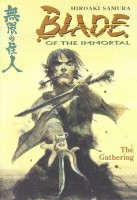
The Gathering is the eighth volume of the English edition of Hiroaki Samura’s award-winning manga series Blade of the Immortal. Published in 2001 by Dark Horse Comics, The Gathering is most closely equivalent to the seventh volume of the Japanese edition of the series, published in 1997, although it also includes a chapter from the eighth volume which was first released in 1998. Blade of the Immortal has been the recipient of both an Eisner Award and a Japan Media Arts Award. Critically acclaimed in both the East and the West, the series is also one of my personal favorites. The Gathering marks the approach of the end of the second major story arc in Blade of the Immortal. The volume picks up almost immediately after the events in the previous volume, Heart of Darkness. Since there were some pretty major developments in that volume, I was particularly looking forward to reading The Gathering.

After their violent falling out with Shira, Manji and Rin’s tenuous alliance with the Mugai-ryū assassins dissolves. Anotsu has successfully left Edo without being caught and is now well on his way to Kaga and out of the Mugai-ryū’s reach. They do, however, have an idea where Anotsu is heading. But they’re not about to tell Manji without getting something in return. Rin, still determined to pursue Anotsu, realizes that she is the only one who even has a chance of passing through one of Edo’s checkpoints and leaves Manji behind without telling him where she is going. It doesn’t take much for him to figure it out and Manji is ready to do anything it takes to follow her. But to complicate matters further, both Rin and Manji are now wanted for murder. It will be extremely difficult for either of them to leave Edo, let alone find Anotsu.

Rin is no longer as naive as she once was, although this doesn’t stop her from making decisions she knows are foolish. She has seen some terrible things on her path of revenge against Anotsu and it has changed her. The journey has changed Manji as well. He has become more open in showing his concern for Rin. While he has become quite attached to the younger girl and is very protective of her, he is not overprotective. But as soon as she disappears Manji doesn’t hesitate for a moment to try to find her again. It’s been a while since Manji has really let loose in a fight (it’s also been quite some time since he’s really needed to) but he is given ample opportunity to in The Gathering. He is at a distinct advantage because of his near immortality, but this also means he has a lot more pain and suffering in store for him. Still, Manji is able to employ in very dramatic and effective ways techniques and strategies that other swordsmen would only resort to out of desperation (if at all).

While Rin and Manji are attempting to leave Edo, the members of the Mugai-ryū are trying to make the best out of the situation. Manji and the Mugai-ryū may no longer be allies but they are all ready to use one another for their own benefit. Although the assassains’ backgrounds are still mostly a mystery, The Gathering reveals a few more hints about their employers. The assassins may be ruthless and violent, but at least for the moment it’s in their interest that Manji and Rin are alive. On the other hand the Ittō-ryū—Anotsu’s sword school—is itching to take down the man who has single-handedly killed so many of their own. Anotsu has already proven himself to be a formidable opponent, but many of the other members of the Ittō-ryū are crafty and skilled fighters, too. Even if they don’t particularly get along, Manji has given them a common goal for the time being. The Ittō-ryū is most definitely made up of the individuals with their own ways of doing things. The Gathering leaves off in the middle of an intense fight and I’m looking forward to seeing how it concludes in The Gathering, Part II.

Filed Under: REVIEWS Tagged With: Blade of the Immortal, Dark Horse, Eisner Award, Hiroaki Samura, Japan Media Arts Award, manga

Adventures in the Key of Shoujo: Sailor Moon Vol. 3

April 19, 2012 by Phillip Anthony 4 Comments

Pretty Guardian Sailor Moon, Vol. 3 | By Naoko Takeuchi | Published by Kodansha Comics USA | Rated: T, Ages 13+

Escalation and dissipation could be the by-words of this volume of Sailor Moon and oh, Lordy, is it interesting! To illustrate my point, I use science, specifically stellar physics. In some stars, after a star has used up its fuel, which it burns through Hydrogen to produce a nuclear fusion reaction, it will start to bloat as the star fuses helium to carbon and oxygen. The pressure within this star has been building since fusion stopped and now it’s reached its breaking point. Solar layer upon layer will violently blow itself off until all that is left is a white dwarf, a smaller, brighter version of the original, full of its own mysteries.

It is this analogy that works for me in my attempt to explain the events of this volume. We have the conclusion of the fight with the Dark Kingdom. Queen Metalia and Queen Beryl (how many queens can you have?) are in the ascendant. The team is desperately trying to save Usagi from a brainwashed Mamoru, who has grabbed her in an attempt to get the Legendary Crystal. Their attempts cause the team to travel to the frozen wastes of the Arctic circle.

For her part, Usagi is trapped inside the Legendary Crystal. After sacrificing herself to free Mamoru, Usagi finds herself in possession of a newfound energy with which to defeat the rulers of the Dark Kingdom. I have to say I like how it’s resolved—not in a rush nor ponderous fashion, just somewhere in between. Takeuchi ties up most of the elements from this arc, sets them into motion for the next arc, all while allowing fans who’ve wanted a resolution to get it without going “OK, show’s over folks! Goodnight!”

Now, I have problems with the next arc’s beginning. We are introduced to the new villains, Black Moon, who’s plan is to… I don’t have a clue. (Really, the villains in this series sometimes give the appearance of “Bwa-ha-ha-ha! Champions of Justice, fear me, for I am…!” being villainous just for the sake of being villainous) During a battle with the Senshi, they kidnap Sailor Mars. And then don’t do anything remotely villainous with her. Or attack the team again. Wait, what? I don’t mind the idea of dissipation, it’s just that the team lose all momentum. Even with Mars missing, they don’t seem that pushed, at least in my mind. They even deflect questions in school as to where Mars is. Doesn’t this girl have friends or family outside of the Sailor Senshi? Has anyone filed an APB or what? Am I being too critical? Am I only one who feels that this kind of dissipation after such an epic fight is kind of a letdown? I understand that we have a change of pace after the Dark Kingdom’s “Bwa-ha-ha-ha!” methodology but there’s no reason to suspect or even hint that the bad guys are mistreating Mars for their own purposes. At least, Beryl brainwashes Mamoru.

But the most glaring problem I have got is with Chibi-Usagi (or Chibiusa as she’s later to be know as). She’s a smaller version of Usagi who appears out of, literally, thin air, holding a gun (!) to Usagi’s head and demanding the Legendary Crystal from her. To top things off, she’s clingy towards Mamoru, brainwashes Usagi’s parents into letting her stay with them, has a magical key to something that nobody knows anything about. Luna says she’ll investigate but that she doesn’t suspect that Chibiusa is dangerous. Wait, what? Luna was intensely distrustful of Mamoru when he first appeared as Tuxedo Mask, and tried to stop Usagi from seeing him. But Chibiusa is just fine, no trouble. Oh, my brain hurts so badly. If Takeuchi’s plan was to confuse and annoy me, she’s been successful. Is this confusing to anyone else? What is the point of introducing a new adversary, knocking out a member of the team and then introducing a (frankly) baffling new character, inside half a tankoban? How does this help anyone? I am prepared to suspend judgement until I read the next volume but something has to give. I am starting to fray at the edges and I can only give so much leeway.

On a more positive note, the deranged second half also allows me to get some perspective on the overall view of the series. We’re nearly a quarter into the book’s run and we’re still no closer to even a hint at where the series is headed. I like this insofar as I can understand if Takeuchi wants to take time out to set up the next chess battle. Where I think the series’ strength lies is in the backstory. We now know that the Senshi and Mamoru are reincarnations of the People of the Moon and the Prince of Earth (Prince Endymion) respectively. But even after learning all that, we still don’t know their origins as Moon citizens (I never thought I would write that outside of a Gerry Anderson review). But the nicest part of the whole Moon Kingdom is when Usagi chooses to send all of them back to Earth instead of living on the now rebuilt Royal Castle grounds. They’ve got family who love them, back on Earth, so Usagi doesn’t want then to give that up. So it’s back to the only life they’ve known. It’s a nice touch, I like it.

It’s frustrating to read such excellent character development in one part and be baffled by another. I know Takeuchi isn’t doing it deliberately but I’m left asking why she makes her cast take on near insurmountable obstacles then act like total dopes the minute things hit easy street. And by the bye, things haven’t hit easy street because Sailor Mars is still missing!

Artwise, I still am impressed by Takeuchi and her ability to mix the sublime with the ordinary. Even if I don’t like Chibiusa, she’s an interesting character from a design point of view. She looks like a younger version of Usagi, naturally. But unlike more modern young characters in anime/manga, she’s not done from a fetish view. Maybe I’m just seeing what I want to see, but it’s nice to see someone have a higher sense of decorum (God, when did I start sounding like my parents?). Also, I’m happy to report that I finally am starting to be able to tell the difference between the Senshi! Maybe it’s me becoming accustomed to Takeuchi’s art style or maybe it was the handy inside pages at the beginning of the manga telling us who everyone is. I think Sailor Venus and Sailor Jupiter gave me the most trouble as they have similar hairstyles. But it’s becoming clearer—I’m starting to learn the importance of sticking with a series and its inherent value of having names to the faces.

Sailor Moon is great but this volume was trying for me, more specifically the second half with its stop-start-stop plotting. But that’s the nature of the beast, it seems. I’m learning pacing structure within a multi-volume series (something I could never be bothered to do before) and also that for every step you take forward as a reader you must be prepared to take a few steps back, occasionally, (or a lot, if you’re a person who has ever read Stephanie Meyer) at the behest of the author. With a few gripes, minor ones given my overall enjoyment of the series, I will recommend to you, Sailor Moon Volume 3.

In some respects, a white dwarf’s life is more interesting then its previous one. As a normal star it’s only concern is keeping itself going. But as a white dwarf, it faces an eternity as it burns brightly. It will fade one day as all things do. But until it does it will be a shining beacon in space, drawing in people as they gaze at it in wonder.

Filed Under: Adventures in the Key of Shoujo Tagged With: kodansha, Kodansha Comics, kodansha usa, manga, MANGA REVIEWS, shojo, shoujo

My Week in Manga: March 19-March 25, 2012

March 26, 2012 by Ash Brown

My News and Reviews

Last week was the Jiro Taniguchi Manga Moveable Feast and so I made a point to take advantage of that fact. I posted my second in-depth manga review for March, taking a closer look at Taniguchi’s most recent work to be released in print in English, A Zoo in Winter. I also borrowed and read all of the Taniguchi manga that my library had, resulting in Library Love: Jiro Taniguchi. It’s been a few months since there has been a Library Love post. I’m planning on continuing the feature on a bimonthly basis, so look for the next one sometime in May.

Last year I reviewed the first issue of Monkey Business and I’ve been looking forward to the next volume ever since. It looks like the release date has been pushed back from mid-March to sometime in April. In the meantime, the Monkey Business website is now available and the second issue can be preordered! Completely unrelated, someone pointed out Symphony of the Blood to me. From what I can tell, it’s fan created concept art for an Osamu Tezuka fighting game. It is awesome and I would totally play it if it actually existed.

This past week I also came across a few interesting articles about the state of the manga industry. I always enjoy reading Dan Kanemitsu’s work; this time he has a great piece Analysizing the State of the Anime and Manga industry in 2012, specifically in Japan. Over at ICv2 there were two articles focusing on the US side of the industry: Manga after Borders and an interview with Dark Horse’s Carl Horn. (It also sounds like Dark Horse will be releasing more manga from Blade of the Immortal‘s Hiroaki Samura, which I’m very excited to hear!)

Quick Takes

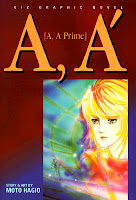
A, A′ by Moto Hagio. The problem with reading Hagio’s science fiction is that it makes me want to read more of Hagio’s science fiction, and I’ve already read everything that’s currently available in English. I loved A, A′. Originally published in Japan in 1981, it is a collection of three stories, two of which are somewhat related. All three stories feature “unicorns,” a race of humans initially bio-engineered for space travel in the 21st century who have since become increasingly rare. The back cover calls A, A′ “science fiction with a romantic twist,” which is fairly accurate. Hagio incorporates themes of love, gender, sex, and sexuality into her stories. The relationships between people, romantic and otherwise, are very important.

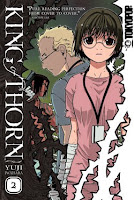
King of Thorn, Volumes 2-6 by Yuji Iwahara. Having previously read Iwahara’s Cat Paradise, I can’t say that I was particularly surprised by the somewhat convoluted plot of King of Thorn. This is not to say that I don’t like the series. In fact, I am quite fond of it. I also happen to really like Iwahara’s artwork. It’s just that he never seems content with a simple story and tends to introduce plot twist after plot twist. King of Thorn ended up going in some very unexpected directions, but the ride is thrilling. King of Thorn may not always be particularly original (even Iwahara states that many of the story elements are “ripped off” from elsewhere), but it’s still a lot of fun. Plus, the series gives one of the characters, Marco Owen, plenty of opportunities to run around being a badass.

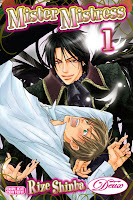
Mister Mistress, Volume 1 by Rize Shinba. I have no idea why this series is called Mister Mistress other than being a silly title for a silly boys’ love manga. Rei is an incubus who feeds of the sexual vitality of young men. And what better source of energy than a horny, sex-obsessed teenager who’s constantly masturbating? At first Rei only appears in Fujimaru’s dreams, but eventually he amasses enough energy from Fujimaru to physically manifest. Although Fujimaru is understandably disconcerted by this development, his sexual fantasies continue unabated, heightened by Rei’s magical powers. Shinba’s artwork is attractive and the series has a sense of humor. I mean, even Fujimaru’s penis gets a character page.

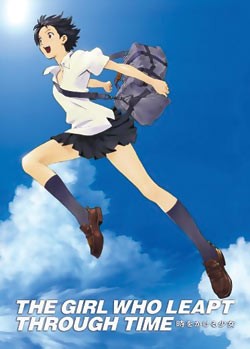
The Girl Who Leapt Through Time directed by Mamoru Hosoda. The Girl Who Leapt Through Time is a lovely film. It’s more or less a sequel to the 1967 novel of the same name by Yasutaka Tsutsui. Although likeable, Makoto isn’t the smartest or most coordinated person in her class. Instead of thinking about her future, she’d rather just play catch with her two best friends Chiaki and Kousuke. But she soon finds herself thinking a lot about time when she discovers she has the ability to travel back into the past. And so she does, trying to change events to make things better for her and her friends or to avoid conversations and confrontations that she’d rather not have. The Girl Who Leapt Through Time has both a lighthearted and a serious side which are balanced nicely.

Filed Under: My Week in Manga Tagged With: anime, Girl Who Leapt Through Time, King of Thorn, manga, Mister Mistress, moto hagio, Rize Shinba, Yuji Iwahara

Adventures in the Key of Shoujo: Sailor Moon, Vol.2

March 20, 2012 by Phillip Anthony Leave a Comment

Pretty Guardian Sailor Moon, Vol. 2 | By Naoko Takeuchi | Published by Kodansha Comics USA | Rated: T, Ages 13+

“Pretty Guardian of Love and Justice in a Sailor Suit! Sailor Moon has arrived!!”

I would be lying if i said I haven’t been looking forward to this review. Specifically, because around fifty pages into this volume we are introduced (reintroduced?) to Sailor Venus, aka Minako Aino, the first Sailor Senshi. Her adventures are chronicled in two volumes of Codename: Sailor V. When she popped up, I had only started on the first volume of Sailor V, so on the advice of a friend, I stopped reading Sailor Moon until such time as I finished Sailor V. Well, I’m glad I did, but I would caution that you don’t need to do the same in order to enjoy the second volume of Sailor Moon. Returning to my original point, the reason I’m looking forward to this volume is that the team building is over, the villains are known, and now we are ready for the real fights to begin.

This volume explores the concept of pre-destiny, particularly in regards to the finding of the Princess and the Legendary Crystal. Turns out that our heroes have done this sort of work before. I will endeavour to explain without ripping the lid off the plot. Usagi finally understands why she’s been thinking the way that she has about Tuxedo Mask, and her worldview is shattered as a result. The team is in the middle of a battle with the Dark Kingdom’s latest flunky, Zoisite, when one of their allies is injured. This causes the Moon Kingdom’s Princess Serenity to appear at which time she displays an enormous amount of energy. When the dust has settled, the team is changed forever and only a trip to the moon with Luna’s and Artemis’ (Sailor Venus’ familiar) help will answer their questions. But even after that clarification, the team is still fighting above their weight. I like how they stay together inside and outside the battlefield. They might be reeling from the blows, but they’re still standing. I can’t help feeling that this is a different fight they face due to Sailor V’s warnings and her emphatic statement that this evil must be destroyed for good. This theory is backed up by what the team learns on the moon. It’s a lot to take in, but Takeuchi keeps things moving fast. About two-thirds into the book there’s a brief respite, but it’s short-lived.

Looking at this from a guy perspective, I would say that I feel for Usagi and Mamoru so badly. They are tentatively trying to find their way toward how they feel about one another, but their intertwined destines keep being thwarted. I get now why people used to say to me that I was too dismissive of the series. For me, as someone who likes to write creatively, I think I understand where Takeuchi might be going with this. The path to true love is never easy in real life, harder in the realm of fiction, and almost impossible when it involves the fate of the world in the balance. So is Mamoru and Usagi’s love doomed to the void? Possibly, but I think the idea behind this volume might be that true love cannot be stopped, merely diverted. Also, if I’m going for broke, I would say the idea behind the first volume would be that big things start with something small and/or you are not as unimportant as you believe yourself to be. But, returning to the story, Takeuchi seems to be saying in this volume that not only are the Senshi going to have to deal with setbacks but also, potentially, casualties as well.

I wonder, though, how meaningful it is for me to write about Sailor Moon, given that I’ve been aware of the title for ten plus years but never really got into it. I am trying to imagine how young girls (and indeed guys) reading this in Japan at the time might have felt. Add to that my differing cultural heritage and the gulf gets wider by the minute. But my quest is not in vain, I hope. Alexandre Dumas wrote more than 150 years ago of the value of friendship with comrades in arms, Gandhi wrote and spoke of the fact that tyrants, while invincible for a time, always fall, and a Canadian filmmaker once commented that there is no fate but what we make for ourselves. The Sailor Senshi face a difficult task but the battles they face are universal and common. They have happened before in reality and fiction, they are happening now, and they will happen again.

Nearly seventy years ago, my grandfather’s brother stood on the beaches of France. He was fighting in a foreign army for a cause he believed in. When the ramps dropped and his squad ran onto the beach, he did so knowing what was asked of him. At a critical moment, however, the enemy directed a heavy machine gun at his squad mates. Without any thought for himself, he stood and took the hail of bullets. I presume that afterwards his squad returned fire. As to how accurate that account is, I have to trust the report my grandfather’s family received. In Sailor Moon, Usagi stands in front of the enemy protecting Tuxedo and her friends and laying down a burst of energy at her opponent. She does so because the thought of losing her friends and the one she loves is too much to bear. It is there that she discovers her inner light and does what it is her heart requires—much like a soldier taking the brunt for his team because the thought of losing his friends and failing his loved ones is too much for him to bear.

It’s funny how 200 pages of printed paper with drawings and letters can stir things in you that you had never considered. The weaknesses of this volume, such as the massive amounts of exposition, the somewhat Jason and the Argonauts-esque level of “Kill! Kill! Kill them all!!” of Queen Beryl and the Dark Kingdom, and the fact we still haven’t seen much character development for the other girls can be negated by the fact this is (or feels like) the opening salvo for the war that’s coming. I suspect it will be fought with the population being unaware, and that makes me appreciate Takeuchi even more as a writer. To fight for people and have them know of your achievement is one thing. It is another to do so without the issuing or request of acknowledgement. The question I pose myself is: would I do the save if the situation called for it? Would you?

As I’ve said, I love the artwork and I can’t fault it. If these pages were pastels or watercolours, I would happily have them on my wall. Just as the first volume has a lot of serene moments this one does too, but now they are happening within the story-building moments and the action scenes. It’s a hard act to follow. The Internet continues to punish me for not discovering Sailor Moon sooner, as original art books by Takeuchi-sensei command higher than normal prices. Even if I weren’t broke, I would still be unable to afford some of them.

There aren’t as many liner notes from the translator this time around. I chalk this up to the pace of the story. Thanks for the crisp job, Kodansha. This volume maintains my high opinion of the series and moves into a new direction. If proof is required of my enjoyment of the series, I start volume three tonight and have ordered volumes four and five. So far my experiment at this shoujo malarkey seems to be working.

Filed Under: Adventures in the Key of Shoujo Tagged With: kodansha, Kodansha Comics, kodansha usa, manga, MANGA REVIEWS, shojo, shoujo

Comic Conversion: Soulless

March 9, 2012 by Angela Eastman 2 Comments

Soulless | Novel: Gail Carriger / Orbit Books | Manga: REM / Yen Press

Twenty-five-year-old spinster Alexia Tarabotti has a a few problems. First, she’s a spinster, and being a half-Italian in Victorian England isn’t helping. Second, she’s a preternatural, a human without a soul. And third, a vampire has just died–and it might be her fault! Alexia finds herself in the middle of a mystery involving vampire hives, royalty, and scientists, as rove vampires and lone werewolves are disappearing. In the midst of it all, Lord Maccon, the werewolf pack leader and head of the Bureau of Unnatural Registry, is taking a decided interest in her, and not just because of her preternatural powers. It’s enough to overwhelm any lady–but Alexia is out to prove that she’s much more formidable than that.

Soulless, written by Gail Carriger, is the first novel in the Parasol Protectorate, a paranormal romance/mystery series from Orbit Books. The story takes place in a Victorian England where werewolves, vampires and ghosts are not only real, but are a part of every day society. Last July, Yen Press debuted the manga adaptation of this series in Yen Plus magazine, and has just recently released the first volume in the series, trusting the artist REM (Vampire Kisses) to bring Carrriger’s steam punk supernatural romance to life.

Two pages into the Soulless novel I found myself utterly delighted with the prose. Taking on a distinct Victorian tone, Carriger uses the slight sarcasm you get from a Jane Austen novel to describe a surprise vampire battle. This creates some hilariously fancified lines (“For his part, the vampire seemed to feel that their encounter had improved his ball experience immeasurably.”) and amusing quips (“to put the pudding in the puff”) that plastered a grin on my face from the start. Of course, it pretty quickly feels like Carriger’s laying it on too thick, but luckily she seems to find a happy medium, and the tone evens out.

Soulless is a pretty steamy book, and while like most romances the “amorous activities”, as Alexia calls them, can get out of hand (making out in a jail cell? Really?) the love story never completely overshadows the mystery. The characters themselves are a treat: Alexia is smart and sharp-tongued, and despite the historical and cultural hindrances is a pretty inspiring female character. Lord Maccon is a little more one-dimensional as a gruff werewolf with a soft spot for a certain spinster, but it’s adorable to watch him fumble with human vs. werewolf courting. Members of Alexia’s immediate family fall flat: her sisters are foolish, her step-father is disconnected, and her mother is arrogant (by the end I don’t see why she would stoop to marrying an Italian in the first place). But other side characters liven up the story, with the flamboyant-but-formidable vampire Lord Akeldama, Alexia’s mildly eccentric friend Miss Hisselpenny, and Maccon’s perceptive Beta Professor Lyall, allowing our main pair to vent their thoughts while still showing plenty enough personality to make them interesting on their own.

The characters are just as appealing in the manga, with REM’s art style helping to enhance that. Akeldama is still exceptionally flamboyant, with outfits and mannerisms just as fancy and theatrical as I imagined. His exuberant, italicized dialogue is cut down a bit, but his sly smiles and occasional shift to a super-deformed look gives him the energetic feel of a mischievous child. Lord Maccon maintains his roughness in dialogue, though REM gives him a cleaner look than I would have pictured. Still, his care and interest in Miss Tarabotti is both more amusing (an arrow leads his gaze right down Alexia’s cleavage), and more endearing. REM also seems to know enough not to let text boxes overwhelm the art. Because of this, the occasional heavy-handedness of Carriger’s Victorian prose is eliminated, leaving us only with the delightful bits (“I say!” says Alexia as a vampire tries to kill her. “We have not been introduced!”).

The pacing of the comic is generally very even, with a good balance between the supernatural mystery and the romantic plot. On a couple of occasions REM chose to cut scenes out. Much of the deletion has little affect on either the flow or understanding of the story, like when Alexia’s mother and half-sisters return from a shopping trip: while it’s interesting in that it deepens the reasons for Alexia’s dislike of her own family, all this scene does is emphasize her sisters’ frivolousness and her mother’s condescension, things we’ve picked up on well enough. This scene is not missed, but another, when pudgy scientist Mr. MacDougal takes Alexia on a carriage ride, is a little more noticeable. While the book has him taking her around town as he explains his scientific theories, the comic only shows the end of the ride, when he drops Alexia off, and she merely comments that he had some “interesting theories on the soul.” Readers may be able to guess the conversation based on the dinner from a few pages earlier, but the main problem lies in the abruptness of the scene, giving the distinct feeling of something having been hacked out.

Both versions of Soulless had a couple of missteps in pacing that momentarily jarred me out of the story, and the romance scenes didn’t always have the best timing, considering the other tensions going on. But I easily jumped right back into the flow, and the romance is sexy enough to make up for the occasional poor placement. Soulless could have gone the route of many a paranormal romance novel, making the supernatural plot nothing more than a cheap gimmick, but Carriger manages to create not only an enticing romance but also an engrossing mystery and a fleshed out, believable fantasy world. REM’s art style and sense of panel layout gives us an adaptation that’s just as enjoyable, so in this case I say pick your favorite medium – you can’t go wrong either way.

Filed Under: Comic Conversion Tagged With: Grace Carriger, manga, Orbit Books, Rem, Soulless, yen press

Adventures in the Key of Shoujo: Codename: Sailor V, Vol.1

March 9, 2012 by Phillip Anthony 1 Comment


Codename: Sailor V, Vol. 1 | By Naoko Takeuchi | Published by Kodansha Comics USA | Rated: T, Ages 13+

“Champion of Justice! The Pretty Guardian in a Sailor Suit! Sailor Venus has arrived!!”

Did you ever have that dream with the sensation that you’re falling, but you’re just not sure in which direction, and yet you’re perfectly safe doing so? The is the feeling I get from Codename: Sailor V, coupled with a curious feeling that I’m being led somewhere familiar, yet I’ve never been there. After diving into Pretty Guardian Sailor Moon, I also picked up Codename: Sailor V as well, as I had heard it was a prequel to Sailor Moon. But while it was published at roughly the same time as Sailor Moon and it IS set in the same universe, tonally, this is a different tempo.

First of all, while it does have a girl becoming a magical champion of justice, the difference here is that Minako Aino is on her own. She has a familiar (a male cat named Artemis) and she answers to someone called “Boss.” However, there is no team to help her, so Mina must face all the agents of evil alone. In many ways, that makes this first outing both flat and exciting. It’s flat because if you didn’t like the formula of “Girl gains magical powers, fights a villain every chapter, overcomes and adapts, then triumphs” espoused by Sailor Moon, this is more of the same. So we are there for all the blundering Mina does, every goofy joke, every stock bad guy, and every cliché. While this might be bad for some, I’m glad of it, as it means I don’t have to keep remembering every chapter and can focus on the narrative (Confession: as I recently came into Sailor Moon, a lot of characters’ names and faces didn’t stick right away, thus I have to keep rereading to imprint the important stuff).

Secondly, I don’t get a sense of an impending apocalypse with Codename: Sailor V that I got with Sailor Moon. In that, there’s a goal: finding the princess, finding the crystal. In Codename: Sailor V, there are the main villains (the Dark Agency) but we don’t know what they want, save to take over the world. And while we know the agency is being controlled by a higher intelligence, we’re just not told who that is. This fog is either Takeuchi being sly or she really doesn’t know what she’s doing. Now, I could buy that last point except both Sailor Moon and Codename: Sailor V were published at around the same time. I’d like to know what the frequency of the chapters for both were, but I don’t have that information. Since there are only two volumes of Codename: Sailor V and there are twelve plus volumes of Sailor Moon, I am curious to say the least.

Using Sailor Moon as a guide, while there are much the same types of characters, as there’s not such a large cast, I can focus on the them better. Mina’s relationship with Artemis is much more antagonistic than Usagi’s and Luna’s, but this is borne for the most part out of the fact that Mina is a complete slacker who does well in athletics but is poor at academics. Even her mother can’t stand the fact that she bunks off her responsibilities whenever she feels like it! Equally her friends, including her bezzie mate Hikaru, just roll with it. Though the background characters in this are so-so, I do like the police Inspector General who is in love with “V-Chan,” as she keeps calling her. If I had a gripe, it would be that the villains get whipped senseless in this. Unlike Sailor Moon, here the villains just turn up, take over and then get belted by Sailor V, who usually gets shoujo-medieval on their rump. Full marks every time Mina turns them into crispy critters.

Mina is even more of a girly-girl (is there such a thing, really?) than Usagi. She has all the problems that go with being a pubescent, amplified due to her identity as Sailor V. She wants her first love, first kiss, first crush, first holiday, and so on to be just so. But sometimes, I feel that she could do with someone like Tuxedo Mask in her life. Tuxedo gives Sailor Moon something to look forward to as a goal. And Mamoru gives Usagi’s heart a fluttery feeling whenever he’s around. Mina has no such person in her life. It would be interesting to see what she would do if such was the case. But that doesn’t detract from her character—far from it. It makes me wonder if she’s holding back her potential because she doesn’t seem to feel the same peril that Usagi and Co. get into. Would this make her a more flawed character, and therefore more sympathetic to us? Maybe, but I have a hunch that there’s enough of this coming down the pipeline for Sailor Moon, and if it happened to Mina in the same way, I would feel a cloning issue arise.

Artwork-wise, Takeuchi gives her characters an energy that is hard to define. If I had to place a finger on it, I would say they look alive in the sense that they are animated, lively and effervescent. Mina has a smile that goes through different stages. Her carefree one (used mostly for her friends), her dreamy one when she’s thinking about a boy, and finally her smile that only the readers get to see. This is a special kind of smile—one that shows the confidence of someone who could, literally, move mountains if she tried. The smile I refer to is the one she wears when she defends the characters and us, the audience, from all the nasties in the world, whether it be a sexist git who doesn’t want girls in his electronic man-cave or the Iago-like Dark Agency who would steal our lifeforce energy for its own nefarious uses. This smile will protect anyone or anything standing behind it. This smile would die rather than admit defeat. It’s amazing how much enjoyment you can derive from a smile. Maybe I’ve uncovered another of Takeuchi’s talents? Or is it one of Sailor Venus’?

Translation-wise, William Flanagan keeps it quick, coherent and easy to read. I’ve never read any scanlations or the first TOKYOPOP versions, so I will withdraw from speaking as to their accuracy. All I will say is Mr. Flanagan has a lot of text to deal with and manages to make sense of it and put it into a kind of literary tempo. He and Kodansha have their usual liner notes at the back of the book. Thanks are extended for the explanations.

As an aside, since I keep bringing up Sailor Moon in this review, I’ve got one or two wee problems. You see, in Codename: Sailor V, Mina runs by—is drawn running by or whatever—next to Usagi and Ami, leading us to believe that the events of Sailor Moon can’t be far behind. My confusion is that I don’t know within what time frame this story takes place. Is it at the same time as Sailor Moon? Before or after it? This perplexes me and I can only hope there’s some clarification soon. Another thing I’ve noticed is that the characters that Mina is friends with don’t get nearly enough time to develop on their own. I realise that Mina is the focus, but still I can’t help feel that I’m running out of time to get to know them. Other than that, this is a great first volume, and if you are wary of getting into Sailor Moon because of its length, there are only two volumes of this, so you should be fine.

This last point is also a source of sadness for me. In this single volume I’ve grown to like Mina, Artemis and even the Inspector General and the fact that the next volume will be the last that focuses on these characters is an unhappy one for me. Don’t get me wrong, I know that Mina plays a part in Sailor Moon but still, I’m going to miss them. Oh well, one more volume to go, I suppose. But knowing Takeuchi-sensei, she’ll have them go out in a blast. Oh, I cannot wait!

On a personal note, I wanted to say thanks to everyone who emailed me or left comments on Manga Bookshelf in regards to the column. I really appreicate the thoughts and suggestions and while I can’t say I will pick up all the titles suggested, I enjoyed getting such an enthusiastic response. Also, I wanted to thank MJ, Kate Dacey and all the people on their own blogs and on Twitter who mentioned the column.

Review copy bought by reviewer

Filed Under: Adventures in the Key of Shoujo Tagged With: kodansha, Kodansha Comics, kodansha usa, manga, shoujo

Usamaru Furuya Manga Moveable Feast: A Final Farewell

February 5, 2012 by Ash Brown

© Usamaru Furuya

A week ago today marked the end of the Usamaru Furuya Manga Moveable Feast. Quite often, posts continue to trickle in even after a Feast is technically over. Here are a couple for your enjoyment.

Connie of Slightly Biased Manga reviews the second volume of Furuya’s No Longer Human, noting that the series is powerful, but hard to read:

You know that Yozo isn’t going to have a happy ending. There’s nobody left to help him. And he alienates those that try. It’s a self-destructive circle, and both the story and art do a good job of portraying the utter despair that permeates absolutely everything in this story.

Over at Otaku Ohana, Jason S. Yadao provides “a between-MMF snack” and takes a look at Genkaku Picasso:

The sketches Hikari draws of the scenes he sees within people’s hearts are the perfect canvas for Furuya’s imagination to run wild, whether it’s something as simple as a mecha standing over a crystal, as complex as a giant rabbit keeping watch over a melancholy baby, or as mind-numbingly surreal as a giant rose hovering over Tokyo Tower in the rain with a rapidly rising sea.

Thank you again to everyone who did their part to make the Usamaru Furuya Manga Moveable Feast a success!

Filed Under: UNSHELVED Tagged With: manga, Manga Moveable Feast, Usamaru Furuya

Usamaru Furuya Manga Moveable Feast: An Epilogue

January 29, 2012 by Ash Brown

© Usamaru Furuya

The Usamaru Furuya Manga Moveable Feast is drawing to a close. It’s been a great week with some great contributions. Here are the most recent submissions.

At Experiments in Manga, I posted a review of No Longer Human, Volume 1. Furuya’s adaptation of Osamu Dazai’s original novel was one of my most anticipated releases for 2011. I wasn’t disappointed.

Connie of Slightly Biased Manga brings us a license request for Palepoli, which includes great examples from the manga showing off the tremendous range in Furuya’s artwork:

Every single one of his books is interesting to look at. He’s constantly using unusual imagery and a plethora of styles to convey the story visually, and there’s nobody quite like him when it comes to this. It’s fine art in manga form, and I wish like nobody’s business that more of his work would be licensed.

Manga Connection participates in the Manga Moveable Feast for the very first time and uses the opportunity to take a look at Furuya’s No Longer Human, noting how easy it is to dislike Yozo and yet still relate to him:

Yozo is a manipulator and takes advantage, no doubt, but how many of us acknowledge it like he does? Does that make him any better or worse that us — no longer human? These are questions I could mull over a long time.

Terry Hong of BookDragon, a part of the Smithsonian Asian Pacific American Program, only recently discovered the Manga Moveable Feast and joins in for the first time, reviewing the final two books of Genkaku Picasso:

Picasso’s closer friends finally begin to wonder how he knows so much about their lives. Questions, then accusations fly, sending Picasso off on a soul-search of his own … and Chiaki must guide him through one more challenging adventure.

Genkaku Picasso is also the subject of All About Manga‘s Daniella Orihuela-Gruber’s delightful article Usamaru Furuya’s Genkaku Picasso & Why It’s Currently the Only Shounen Manga on My Shelves which looks at the series from the perspective of someone who’s not generally a fan of shōnen manga:

Genkaku Picasso, on the other hand, has enough creativity to attack unconventional issues and goes so far as to mock the generic shounen formula it does take. Not to forget the manga’s shounen roots, the ending will probably make you cry a single, manly tear. I couldn’t think of a better shounen title to read right now.

As always, if I’ve missed something relating to the Feast, please let me know so that I can add it to the archive. While today was the official end of the Feast, I know there are still some contributions out there being written. Maybe you wanted to participate but for one reason or another weren’t able to during the Feast. Don’t let that hold you back! I will be posting one last, final farewell sometime later this week. Please let me know if you plan on submitting something and I’ll be sure that you are included.

I have already mentioned this several times during the Feast, but this was the first time that Experiments in Manga hosted the Manga Moveable Feast. It was a lot of work, but it was a great experience for me. I’m very glad that I volunteered. I sincerely hope that I was able to serve an adequate host. (Actually, I really hope that I was good host, but I’ll settle for adequate.) But, more importantly, I hope that you enjoyed the Feast.

I would like to thank everyone who participated in the Usamaru Furuya Manga Moveable Feast, especially those who contributed reviews and articles. I would also particularly like to thank everyone who helped spread the word about and link to the Feast; Experiments in Manga is a newer and not particularly well-known manga and Japanese literature blog, so I really appreciated the assistance. Thank you also to everyone who took time to comment on the various posts. And all of you lurkers who wandered around reading but not saying anything? I’d like to thank you, too. The Feast would have been unrewarding if no one showed up to appreciate it. Thank you all for making the Usamaru Furuya Manga Moveable Feast a success.

I hope you’ll all join us again for February’s Feast, hosted by the magnificent Kate Dacey of The Manga Critic. Scheduled for February 19-February 25, we’ll be celebrating Osamu Tezuka and exploring his works together. Bring a friend!

Filed Under: UNSHELVED Tagged With: manga, Manga Moveable Feast, Usamaru Furuya

Genkaku Picasso, Volume 1

January 27, 2012 by Ash Brown

Creator: Usamaru Furuya
U.S. publisher: Viz Media
ISBN: 9781421536750
Released: November 2010
Original release: 2009

After a seven year drought, Genkaku Picasso became the first in a (very small) flood of new titles by Usamaru Furuya to be translated into English. The first volume of Genkaku Picasso was released in Japan in 2009; the entire series was originally serialized in the manga magazine Jump SQ between 2008 and 2010. The English edition of Genkaku Picasso started publication in 2010. Once again, it was Viz Media that brought Furuya’s work to English-reading audiences, having previously published Short Cuts and excerpts from his debut manga, Palepoli. I’ve had Genkaku Picasso sitting on my shelf for quite some time, but it’s only now for the Usamaru Furuya Manga Moveable Feast that I’ve finally gotten around to reading it. Furuya is well known for his work in underground and alternative manga, but Genkaku Picasso is one of his more mainstream series.

Hikari Hamura, nicknamed Picasso by his classmates (much to his frustration), would much prefer that everyone would just leave him alone to his drawing. However, after a strange accident leaves him with the even stranger ability to visualize the contents of another person’s heart, Picasso must learn to use his artistic talents to help others or else he’ll rot away. Drawing what he sees, he can dive into the artwork and their subconscious. The problem is that the visions aren’t particularly straightforward. That and Picasso doesn’t really feel like reaching out to others and is much more comfortable keeping to himself. It’s not easy, and there tends to be quite a few misunderstandings, but Picasso doesn’t seem to have much of a choice. He might not want to, but he has to get to know his classmates better even if he does find them and the prospect terribly annoying.

One of the things that impresses me the most about Furuya’s work as whole is that he deliberately creates a particular aesthetic to fit an individual manga and story. In the case of Genkaku Picasso, Furuya primarily uses two different art styles. The first, representing reality, is a more mainstream, slightly stylized manga style which utilizes screentone and such. The other is based on the approach of pencil sketches and includes hand shading techniques and crosshatching. Used for Picasso’s artwork and the characters’ subconsciouses, it is also a reflection of Furuya’s own fine arts background. I find it interesting that the more realistic style is used to capture the unreal in Genkaku Picasso while the comic style is used to show the ordinary. Granted, even Picasso’s “ordinary” is slightly off-balance and surreal, which the artwork helps to show.

I wouldn’t exactly say that I was disappointed with the first volume of Genkaku Picasso, but I didn’t find it nearly as captivating or compelling as the other works of his that I have read. I really like the premise of the series, but after one volume I haven’t been convinced by the manga itself, yet. I feel like it wants to be deep and profound, but the first volume somehow comes across as superficial, even when Picasso is delving into the supposed darkness of other people’s hearts. The problems are resolved too quickly and easily. Still, there are plenty of elements in Genkaku Picasso that I enjoy. Although there hasn’t been much real development yet, I do like the characters. Picasso and his classmates Sugiura and Akane make an amusing trio (quartet if you count Chiaki). Genkaku Picasso also has a quirky sense of humor that shows up frequently. Picasso’s social awkwardness (mostly self-imposed) and bluntness is delightfully endearing. So while I may not have been overwhelmed by the first volume of Genkaku Picasso, it does intrigue me and I do want to continue on with the series.

Filed Under: REVIEWS Tagged With: genkaku picasso, manga, Manga Moveable Feast, Shonen Jump, Usamaru Furuya, viz media

Usamaru Furuya Manga Moveable Feast: Roundup Two

January 26, 2012 by Ash Brown

© Usamaru Furuya

We’re about halfway through the Usamaru Furuya Manga Moveable Feast, so it’s time for the second roundup!

Here at Experiments in Manga I posted a review for Secret Comics Japan, a manga anthology that includes excerpts from Furuya’s debut manga Palepoli. The review is for the volume as a whole, but I do briefly mention Palepoli in it. The last Wednesday of every month I run a manga giveaway. In order to coordinate with the Feast, January’s giveaway is for Genkaku Picasso, Volume 1. All you have to do to enter is tell me how you were introduced to Usamaru Furuya and his work. My giveaways are always open world-wide, so I hope you’ll enter! I also made a (shocking!) confession: I volunteered to host the Usamaru Furuya Manga Moveable Feast before I had even read any of his manga.

Jim Hemmingfield was kind enough to contribute a guest post for the Feast at Experiments in Manga. (This is a first for the site, so I was particularly excited about it.) Jim provides a terrific overview of Furuya’s manga, including works that have yet to be licensed in English. Furuya is one of Jim’s favorite mangaka. It’s a long post, but worth reading. To quote briefly the end of the article:

Usamaru Furuya is a unique and visionary artist; probably one of the finest artists you will find working in comics today and I hope this feast helps to spread the word.

Over at Manga Xanadu, Lori Henderson reviews the first two volumes of No Longer Human. Lori didn’t originally plan to read the series, but found it to be a manga worthy of recommendation:

I wasn’t going to read No Longer Human. I’m one of those people who hears “literary classic”, and my brain shuts down. I’ve never been big on the drama and tragedy that usually permeates these kinds of books, but I’m making an effort to “expand my horizons”, so I decided to at least give the first volume a chance. What I found was a compelling human drama that didn’t feel like homework at all.

Linda of Animemiz’s Scribblings takes time to reflect on having a limited exposure to Usamaru Furuya and his works. Linda briefly looks at Lychee Light Club and Sion Sono’s film Love Exposure, in which Furuya plays the role of the leader of the Zero Church cult. In the post, Linda makes the following comment, which I couldn’t agree with more:

If there were any live action movies adaption that would reflect the vision from my limited exposure to Furuya works, then Shion Sono should be the right candidate.

At Completely Futile, Adam Stephanides reviews the first two volumes of Furuya’s The Children’s Crusade which just recently finished serialization in Japan. It hasn’t been licensed in English yet, but I sincerely hope that it will be!

The characters’ lively, expressive faces as drawn by Furuya contribute substantially to the characterizations. And the art in general is excellent, both in visual storytelling and page design, and is frequently cinematic in scope and detail. Furuya isn’t particularly well known for his action scenes, but the ones here are dynamic.

The Feast is well under way and there have been some wonderful contributions. If you can’t wait for the next roundup, be sure to keep an eye on the archive page—I update it as soon as I learn about a new article or review. And if I’ve missed something, please let me know!

Filed Under: UNSHELVED Tagged With: manga, Manga Moveable Feast, Usamaru Furuya

Guest Post: An Examination and Appreciation of the Works of Usamaru Furuya

January 25, 2012 by Ash Brown

As the host of the Usamaru Furuya Manga Moveable Feast, I am delighted to welcome Jim Hemmingfield to Experiments in Manga as a guest writer. I am absolutely thrilled that Jim agreed to contribute to the Feast!

Jim Hemmingfield is a manga fan who lives in London. He’s been collecting manga since the early 90s and is mainly interested in the more alternative artists. He would like to blog more but hardly has any time. Occasionally he posts to the Same Hat Tumblr. You can also find him on Twitter @jimhemmingfield.

* * *


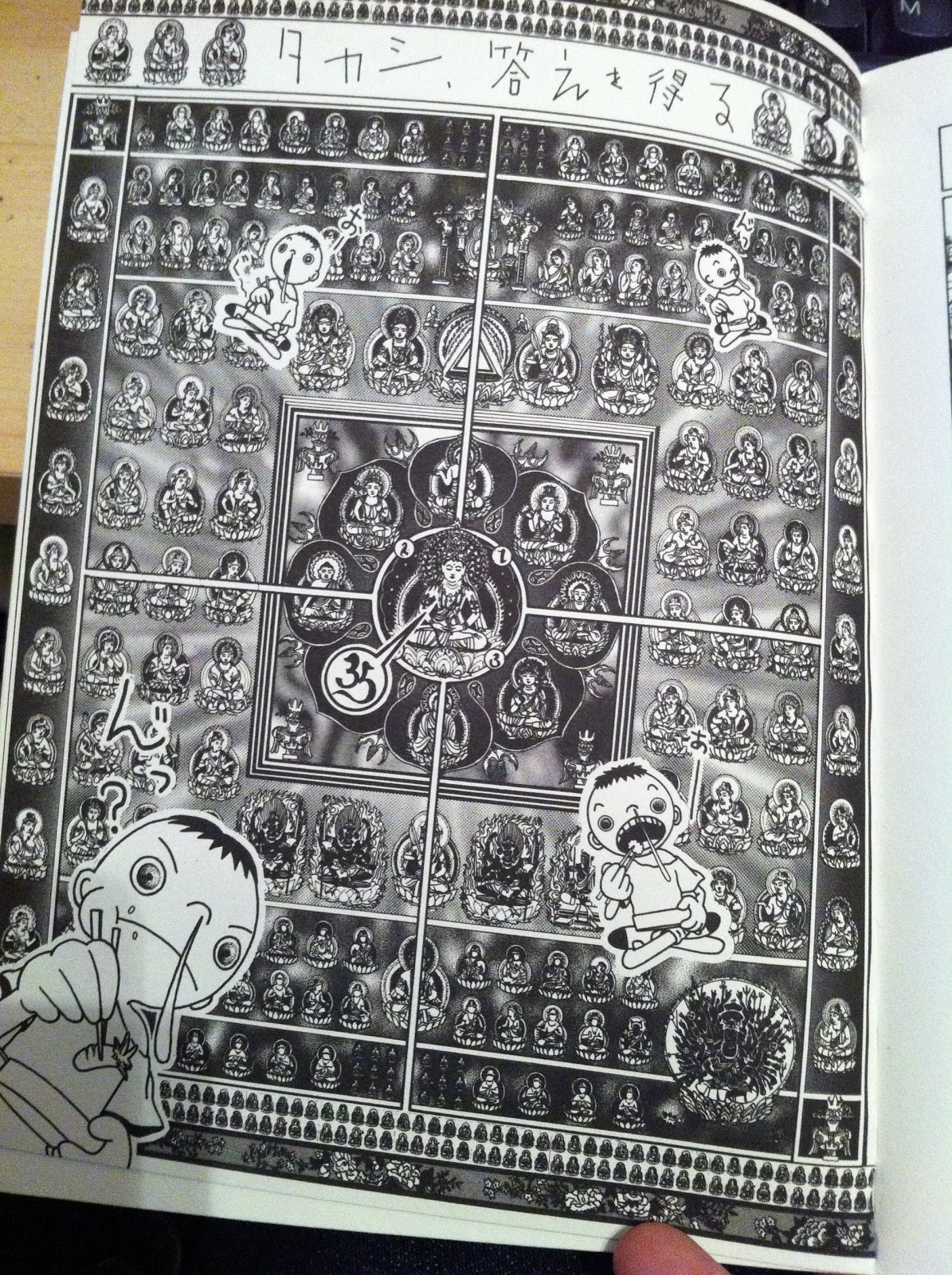
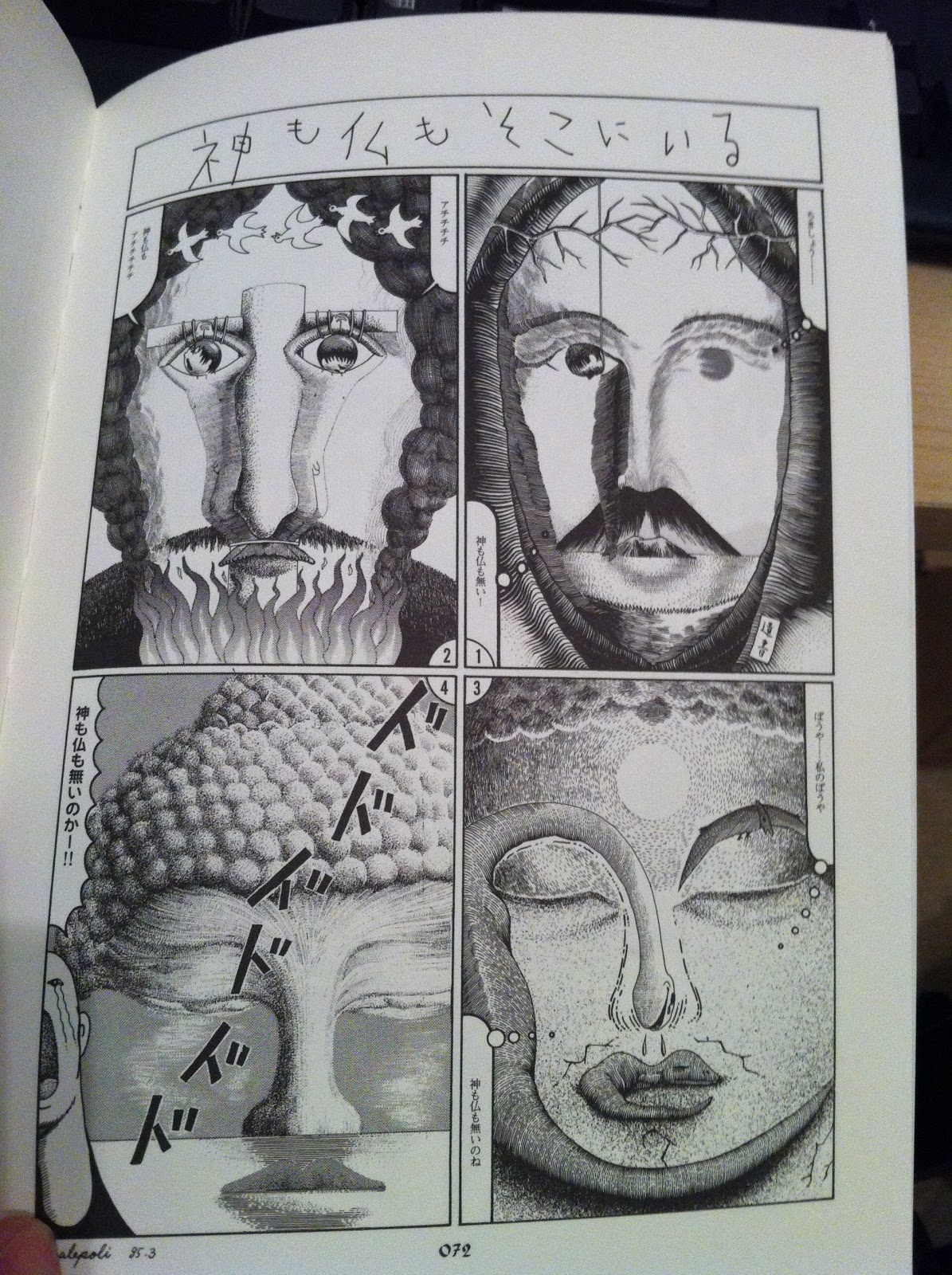
A page from Palepoli

Out of all the manga-ka to see the light of day in the US, Usamaru Furuya is certainly the most idiosyncratic; or, at least, the most versatile in his idiosyncrasies. He also seems to be one of the more successful of the alt-manga crowd in the US due to a recent resurgence of titles being released. It would, however, be an injustice to simply tag Furuya as an alt-manga artist. Instead, Usamaru Furuya is a unique creator, as happy to work in the mainstream as he is in the underground. It’s fairly common for manga-ka to produce works for different demographics (Shonen, Shojo, Seinen etc.) but I’m not sure that many have pushed the boundaries like Furuya; and, if they have, they haven’t made it to our shores. I’d go so far as to say, without learning Japanese (or possibly French?) you would be hard pressed to find such a versatile and individual manga-ka as Furuya. The only travesty is that we still haven’t had a chance to witness some of his finest moments.

A bit of background on Furuya is necessary to understand how he managed to achieve this standing. In the book Manga (published by Taschen, edited by Julius Wiedemann and Masanao Amano) there is a DVD which includes an interview with Furuya, detailing both his background and career. Whilst at Elementary School and Junior High, Furuya enjoyed drawing manga and began to submit illustrations to magazines. Unlike so many manga-ka’s stories who begin cartooning early and never stop, Furuya’s interest in manga dwindled throughout High School and College. Furuya states at this stage became less interested in manga and had little exposure to it.

Instead, he developed an interest in fine arts and theatre. He majored in oil painting at College and began to act in theatre at the same time. From here he became interested in dance, taking his inspiration from Saburo Teshigawara. His interests at this point, he says, were using his body to express. He also became interested in mono-ka, an art movement that I can find no information about online, which Furuya says is similar to the Italian Arte Povera. This is a type of 3D art, such as installations, and that was the type of art Furuya was most interested in creating around that time.

These interests continued after College. Furuya would continue to perform experimental dances which would incorporate less and less movement, to the point that they could hardly be described as dance. He would also display 1 or 2 3D pieces per year in galleries. As creating these pieces took such a long time, Furuya began to take on additional work, doing illustrations for text books, such as drawings of insects and plant photosynthesis. When he started doing this Furuya’s love of drawing was reignited. He believes that when he went to college drawing is what he really wanted to do but he was distracted by the new ways of expression he discovered and was possibly influenced by peers and tutors to pursue them leading him away from illustration. Whatever the cause, if not for the uncommon path Furuya travelled, his manga would probably not be as unique and interesting as they are.

Furuya was 24 when he began producing his first manga, Palepoli, which was serialised in the seminal underground manga anthology Garo. Palepoli was my second exposure to Furuya’s work, in the sadly now out of print Secret Comics Japan (published in 2000 by Viz). Palepoli is a Yonkoma style manga, generally a gag strip, always consisting of four panels. Furuya started with this format as he was only starting out and was nervous about creating a longer narrative. He says that he also tried to take the fundamentals of art to create a manga and that he would take an entire day to draw one frame, meaning each page would take four days to complete. Unlike traditional Yonkoma, which consist of four horizontal panels that read top to bottom, Furuya had Palepoli set out like a four panel grid. Furuya’s art background, coupled with the amount of time he spent on each page, meant that, although some strips would ape traditional manga styles, most of the strips had a unique, highly detailed and stylised look. The gags, although funny, dealt with a variety of dark, disturbing and occasionally grotesque subject matter. Also, some of the formalism on display, such as the trick drawings which look like one thing close up but another from further away, makes for some breathtaking artistry. I’m surprised one of these strips didn’t make it into Secret Comics Japan. A lot of Palepoli has a very unique Japanese-ness to it but the surreal-ness and artistry of the work overall makes me think it would be accepted and appreciated by both mature manga readers and the art comix crowd. Out of all of Furuya’s unpublished works Palepoli is the one I would like to see the most. I’m lucky enough to own a Japanese copy which, although I don’t understand, gives me tremendous enjoyment to look through but the idea of owning a fully translated copy would really make my day.

Another of Furuya’s earlier experimental pieces was Plastic Girl, which is also high on my list of Furuya titles I would love to see licensed. Plastic Girl is unlike any other manga I’ve seen and, like Palepoli, would go down well with the alternative, art comix crowd. Unlike most manga, Plastic Girl is a full colour book, published in a large size and clocking in at a slender 46 pages. Again, Furuya employs his art background to craft an amazingly beautiful book, using a variety of different styles and utilising different materials for each section including painting on wood, cloth and canvas. The book has 23 different chapters, each spread over two pages and Furuya employs different styles for most (occasionally some are repeated). My personal favourite is one that is painted to look like 2 stained glass windows. All of it is gorgeous and, from what I can gather, the narrative is symbolic, surreal and occasionally disturbing, like many of Furuya’s works. (There is a review from someone who can read Japanese at Completely Futile). Unfortunately, though the imagery is fairly tame for the most part, I can see this being a hard sell in the west as it differs so much from the general perception of manga. I definitely can’t see it being picked up by any of the major manga publishers.

“Emi-chan” from Garden

Palepoli and Plastic Girl are probably Furuya’s most artistic and experimental books, but that’s not to say his other works aren’t also worth exploring. There are several unlicensed works that look like they would be far more interesting than the majority of manga licensed in the US. His short story collection Garden, which contains several stories of differing length, collected from alternative publications Comic Cue and Manga Erotics, is possibly more conventional in terms of the art and layout overall, although Furuya continues to switch up his style for each story. He also continues to explore the darker side of the human psyche as well as inserting comical stories and ones that look as though they are more fantasy orientated. The last story in particular, although I have only seen it in its original Japanese, plumbs some of the darkest depths of Furuya’s mind. It makes for a disturbing read (even without being able to understand the dialogue) but the shaky line Furuya uses fits the mood perfectly. The story is so extreme that in the original tankobon the pages are sealed together. The reader has the choice as to whether or not they wish to cut open the pages in order to read it. It is broke up into several sections so if it gets to extreme you do not need to continue. I’m unsure if this was Furuya’s choice or the publishers but it is an interesting choice. I have actually seen this in one other book, King Terry’s Heta-Uma Dictionary, although the sealed pages are no more shocking than the rest of the book (i.e. not really shocking at all) unlike the work in Garden. All in all, there are at least three stories in Garden that make it un-publishable in English which is a real travesty. A review of Garden can also be found at Completely Futile.

After Garden (and another short story collection called Wsamarus 2001 that I have no information on) Furuya began to work on slightly longer form narratives and began to work for more varied magazines. Saying this, Short Cuts, one of Furuya’s series that has been published in English (out of print but fairly cheap to get hold of) was serialized in Young Sunday not long after Palepoli and around the same time the stories in Garden were appearing in much more underground/niche publications. In the DVD interview, Furuya gives his reasons for working for a variety of publishers. He states that he wants to create a wide variety of works and that each one is dependent on certain rules and regulations. In other words, Furuya likes the restrictions that will be placed on him by some publishers, allowing him to create something within those set boundaries. This is why he is happy to work for a broad spectrum of magazines. Two of his more recent works, Genkaku Picasso and Lychee Light Club were published in Jump SQ (part of Shuiesha’s Jump line of Shonen magazines) and Manga Erotics F respectively, two distinctly different publications (both titles are available in English from Viz and Vertical), showing Furuya is still happy to take his work to wherever it is best suited.

Out of all of Furuya’s works I believe his longest is called Pi. At nine volumes long it could still be seen as a fairly short series in comparison to many manga. Pi was published in Shogakukan’s Big Comic Spirits, a fairly popular Seinen anthology. I know little about this title except that it revolves around a man obsessed with finding the perfect breasts. Along with Genkaku Picasso (I’m not a big Shonen reader), this is the Furuya title that appeals the least but, artistically, it is up to Furuya’s high artist standard.

Along with the titles mentioned earlier, the Furuya works I would most like to see are his darker ones like the recently released Lychee Light Club (published in US by Vertical). This is Furuya’s adaption of the Tokyo Grand Guignol play so it combines two of Furuya’s interests. In style and content it is similar to another one of my favourite manga artists Suehiro Maruo. Furuya has acknowledged by dedicating the book to Maruo as well as the TGG troupe leader Norimizu Ameya. I would say that Furuya incorporates more black humour in Lychee Light Club than I have seen in Maruo’s work. Still it is treads fairly dark territory and has several gory moments. Furuya is currently working on a prequel to Lychee Light Club which he is serialising online.

Trick drawing from Palepoli

Another title I would be eager to read, that does not seem to mine the darker side of Furuya’s psyche, is The Music of Marie. This title is described as a fantasy epic that revolves around a world where men are watched over by a mechanical goddess in the sky called Marie who brings them contentment with her music. It sounds like an enchanting story that seems to evoke early Hayao Miyazaki works, especially Nausicaa. At only 2 volumes long I would see it being an ideal choice for Vertical if they wish to publish more Furuya after they have finished No Longer Human, which I would highly recommend. I have also heard many people say that Furuya’s art in The Music of Marie is arguably his best. For those of you lucky enough to be able to read French, the series has been published by Casterman.

These are only a short selection of Furuya works that deserve some more attention. There are many more fascinating titles by Usamaru Furuya, all of which I feel would easily find an audience in the west and this is without mentioning those already available, all of which are worth your time and money. As I said to begin, Usamaru Furuya is a unique and visionary artist; probably one of the finest artists you will find working in comics today and I hope this feast helps to spread the word.

Filed Under: UNSHELVED Tagged With: manga, Manga Moveable Feast, Usamaru Furuya

  • « Go to Previous Page
  • Page 1
  • Interim pages omitted …
  • Page 35
  • Page 36
  • Page 37
  • Page 38
  • Page 39
  • Interim pages omitted …
  • Page 60
  • Go to Next Page »
 | Log in
Copyright © 2010 Manga Bookshelf | Powered by WordPress & the Genesis Framework