• Skip to primary navigation
  • Skip to main content
  • Skip to primary sidebar
  • Home
  • About Us
    • Privacy Policy
    • Comment Policy
    • Disclosures & Disclaimers
  • Resources
    • Links, Essays & Articles
    • Fandomology!
    • CLAMP Directory
    • BlogRoll
  • Features & Columns
    • 3 Things Thursday
    • Adventures in the Key of Shoujo
    • Bit & Blips (game reviews)
    • BL BOOKRACK
    • Bookshelf Briefs
    • Bringing the Drama
    • Comic Conversion
    • Fanservice Friday
    • Going Digital
    • It Came From the Sinosphere
    • License This!
    • Magazine no Mori
    • My Week in Manga
    • OFF THE SHELF
    • Not By Manga Alone
    • PICK OF THE WEEK
    • Subtitles & Sensibility
    • Weekly Shonen Jump Recaps
  • Manga Moveable Feast
    • MMF Full Archive
    • Yun Kouga
    • CLAMP
    • Shojo Beat
    • Osamu Tezuka
    • Sailor Moon
    • Fruits Basket
    • Takehiko Inoue
    • Wild Adapter
    • One Piece
    • After School Nightmare
    • Karakuri Odette
    • Paradise Kiss
    • The Color Trilogy
    • To Terra…
    • Sexy Voice & Robo
  • Browse by Author
    • Sean Gaffney
    • Anna Neatrour
    • Michelle Smith
    • Katherine Dacey
    • MJ
    • Brigid Alverson
    • Travis Anderson
    • Phillip Anthony
    • Derek Bown
    • Jaci Dahlvang
    • Angela Eastman
    • Erica Friedman
    • Sara K.
    • Megan Purdy
    • Emily Snodgrass
    • Nancy Thistlethwaite
    • Eva Volin
    • David Welsh
  • MB Blogs
    • A Case Suitable For Treatment
    • Experiments in Manga
    • MangaBlog
    • The Manga Critic
    • Manga Report
    • Soliloquy in Blue
    • Manga Curmudgeon (archive)

Manga Bookshelf

Discussion, Resources, Roundtables, & Reviews

manga

Manga Giveaway: Arisa Giveaway Winner

October 2, 2013 by Ash Brown

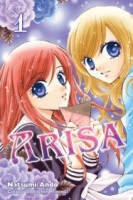
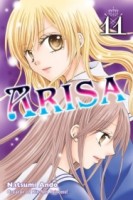
Arisa, Volume 1Arisa, Volume 11And the winner of the Arisa manga giveaway is…Ana Death Duarte!

As the winner, Ana will be receiving copies of the first and most recent volumes of Natsumi Ando’s manga series Arisa to be released in English. (Namely, the first and eleventh volumes.) Because Arisa features a set of twins, for this giveaway I asked that entrants tell me a little about the twins that they’ve encountered while reading manga. Do check out the giveaway comments for all of the responses. And thank you to everyone who shared and participated!

Now, because I use giveaways as an excuse to compile lists, here are some of the manga licensed in English that feature twins:

Another written by Yukito Ayatsuji, illustrated by Hiro Kiyohara
Arisa by Natsumi Ando
Ax: Alternative Manga by Various
Basara by Yumi Tamura
Black Lagoon by Rei Hiroe
Blue Exorcist by Kazue Kato
Bond of Dreams, Bond of Love by Yaya Sakuragi
A Bride’s Story by Kaoru Mori
Cage of Eden by Yoshinobu Yamada
Deadman Wonderland written by Jinsei Kataoka, illustrated by Kazuma Kondou
Chobits by CLAMP
Clover by CLAMP
D.N. Angel by Yukiru Sugisaki
A Drunken Dream and Other Stories by Moto Hagio
Fushigi Yûgi: Genbu Kaiden by Yuu Watase
Ghost Hunt by Shiho Inada
Goth written by Otsuichi, illustrated by Kendi Oiwa
Grand Guignol Orchestra by Kaori Yuki
GTO: 14 Days in Shonan by Tohru Fujisawa
Hayate X Blade by Shizuru Hayashiya
Higurashi: When They Cry written by Ryukishi07
Jiu Jiu by Touya Tobina
Jyu-Oh-Sei by Natsumi Itsuki
King of Thorn by Yuji Iwahara
Knights of the Zodiac by Masami Kurumada
Mars by Fuyumi Soryo
Miracle Girls by Nami Akimoto
Monster by Naoki Urasawa
MW by Osamu Tezuka
No. 5 by Taiyo Matsumoto
Ouran High School Host Club by Bisco Hatori
Pandora Hearts by Jun Mochizuki
Papillon by Miwa Ueda
Pretty Face by Yasuhiro Kano
Revolutionary Girl Utena by Chiho Saito
Tokyo Babylon by CLAMP
Tsubasa: Reservoir Chronicle by CLAMP
The Twin Knights by Osamu Tezuka
Utahime by Aki
Utsubora by Asumiko Nakamura
Vampire Knight by Matsuri Hino
Vassalord by Nanae Chrono
xxxHolic by CLAMP
Zatch Bell by Makoto Raiku
Ze by Yuki Shimizu

The above list is mostly made up of manga that I have either read or that were mentioned by those participating in the giveaway. Although lengthy, it is by no means comprehensive; there are many, many more manga with twins (licensed and unlicensed) that could have been named. Thank you again to everyone who entered the giveaway! I hope you’ll stop by again when it’s time for the next one.
Filed Under: UNSHELVED Tagged With: arisa, manga, Natsumi Ando

My Week in Manga: September 23-September 29, 2013

September 30, 2013 by Ash Brown

My News and Reviews

There were a few different things going on at Experiments in Manga last week. First off is the Arisa manga giveaway. The winner will be announced on Wednesday, so you still have a little time to enter for a chance to win the first and eleventh volumes of Natsumi Ando’s Arisa. The most recent Library Love feature was posted last week, too, which is basically a collection of quick takes of manga that I’ve borrowed from my local library. My quest to read all of Edogawa Rampo’s material available in English also continued. This time I took a look at The Edogawa Rampo Reader, which is a nice introduction to his life and work. The volume collects eighteen of his short stories and essays from over a span of thirty years.

A few interesting things found online: Brigid Alverson interviewed Charles Brownstein of the Comic Book Legal Defense Fund about its new manga guide which will be released later this year. (I reviewed Manga: Introduction, Challenges, and Best Practices not too long ago and found it to be a great resource.) And speaking of the CBLDF, Keiji Nakazawa’s Barefoot Gen was recently highlighted as part of the Using Graphic Novels in Education feature. Finally, Vertical made some licensing announcements at Anime Weekend Atlanta: Tetsuya Tsutui’s manga Prophecy (interestingly enough, Tsutui approached Vertical directly about the license) and Shinobu Hashimoto’s biographical novel Compound Cinematics: Akira Kurosawa and I.

Quick Takes

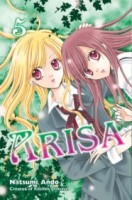
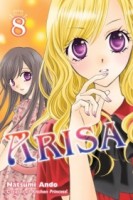
Arisa, Volume 8Arisa, Volumes 8-11 by Natsumi Ando. The true King has been revealed! As has that person’s motivations and back story, which are suitably dark and dramatic. Arisa and its characters are all pretty twisted–the King isn’t the only one with serious issues. The most stable character in Arisa is probably Tsubasa, but sometimes I wonder about her, too. It’s not just anyone who would pretend to be someone else, after all. At times Arisa can be extraordinarily over the top with its action and melodrama, but that’s probably one of the reasons I find the series so absorbing. Some of it comes across as unintentionally ridiculous, though. But for every development that’s laughable, there’s another that is effectively disturbing. Arisa is a series that’s really easy to tear through. Despite all of the twists and turns in its plot (or maybe because of them) the manga reads very quickly. With only one volume left to go in the series, I’m very curious to see how things will play out.

Black Jack, Volume 7Black Jack, Volumes 7-9 by Osamu Tezuka. Every once in a while I get the urge to read a bunch of Black Jack. Since the series is fairly episodic, it’s easy to pick up even if it’s been a while since I’ve read any of the manga. There were a couple of things that particularly struck me about these volumes. First of all, Black Jack should really stay away from cliffs as he seems to have a habit of falling off of them. Secondly, since Black Jack is an unlicensed doctor, it probably shouldn’t be too surprising that he would have a tendency to become involved with criminals. Often this works out quite well for him–he is able to demand his high prices and the other parties want to keep things quiet, too. However, on occasion Black Jack’s association with organized crime comes back to bite him and he ends up a little worse for wear. As always, I adore Black Jack as a character. I enjoy how much of a bastard he can be while still maintaining a strong sense of integrity.

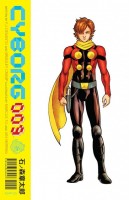
Cyborg 009Cyborg 009 written by F. J. DeSanto and Bradley Cramp and illustrated by Marcus To and Ian Herring. Working closely with Ishimori Productions, Cyborg 009 is a single-volume, hardcover graphic novel adapting Shotaro Ishinomori’s Cyborg 009 manga with a Western audience in mind published by Archaia. The comic is in full-color with updated character designs closer to some of the more recent anime adaptations than the original manga. Actually, the artwork was one of my favorite things about the Cyborg 009 graphic novel. Story-wise it would have benefited from either being a little more focused or a little bit longer. As it is, the graphic novel is very compressed and not all of the plot lines introduced are adequately developed. But it is fun and quickly paced, not to mention beautifully presented; hopefully it will encourage readers to seek out the original material. Also of note: the back cover indicates that Cyborg 009 is “Ishimori Universe Book 1.” I know that I’d be very interested in seeing more collaborations between Archaia and Ishimori.

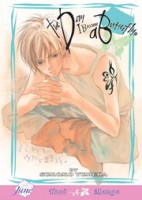
The Day I Become a ButterflyThe Day I Become a Butterfly by Sumomo Yumeka. Although The Day I Become a Butterfly was released under Digital Manga’s Juné imprint, two of the six collected stories aren’t at all boys’ love and a few of the others could be argued not to be as well. Yumeka describes the short manga in The Day I Become a Butterfly as inexplicable (she also admits to not liking them), but I think I would call them poetic. Instead of being straightforward narratives, the stories are quiet and almost impressionistic. They tend to be fairly introspective and melancholy; the desire for acceptance from others is a recurring theme throughout the volume. Yumeka’s artwork is lovely, although some of the character designs seem to be reused from one story to the next. Normally this might not be much of a problem, but because some of the stories in The Day I Become a Butterfly are interrelated it was sometimes confusing when the characters from an unrelated story looked like some of the recurring characters.

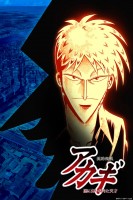
AkagiAkagi, Episodes 1-13 directed by Yuzo Sato. I love mahjong and Akagi is one of the mahjong series. I was thrilled when Crunchyroll picked up the anime for streaming. (I hold no illusions–mahjong manga and anime is very niche and unlikely to ever receive a physical release in North America.) Watching Akagi has actually improved my game a bit. It has also taught me how to cheat…not that I would. People who are at least vaguely familiar with mahjong will probably get more out of Akagi than those who aren’t, but it’s not necessary to understand the minutia of mahjong to enjoy the anime. The series can be surprisingly brutal at times and the games are intense–high stakes, crooked cops, yakuza, violence, manipulation. A huge emphasis is put on the psychological elements of the game. Akagi is a brilliant player and absolutely ruthless, both at the table and away from it. He seems to be afraid of nothing and is extremely ballsy. I’m really looking forward to watching the series’ second half.

Filed Under: FEATURES, My Week in Manga Tagged With: Akagi, anime, arisa, black jack, Bradley Cramp, comics, Cyborg 009, F. J. DeSanto, Ian Herring, manga, Marcus To, Natsumi Ando, Osamu Tezuka, Sumomo Yumeka

Library Love, Part 17

September 27, 2013 by Ash Brown

Support manga, support your library!

Here’s what I’ve been reading:

Arisa5Arisa, Volumes 5-7 by Natsumi Ando. As ridiculous and unbelievable as Arisa can be, I’ll have to admit that I actually am rather enjoying the series. The number of plot twists that Ando works into the manga is astounding. I know that they’re coming, but I have no idea where Arisa is going. I’ve learned not to stress out about it and just sit back and enjoy the absurdity as it develops. However, I can’t help but wonder where all the adults are in all of this. Occasionally a teacher, parent, or guardian is seen, but none of them seem very involved in the students’ lives at all. But then again, that might be part of the point of the series. The students in class 2-B have issues (they have a lot of issues) and King Time began in part because their needs and concerns weren’t being addressed elsewhere. More and more of their secrets are being revealed, but I’m not sure we’re any closer to actually learning who the King really is. Arisa continues along its dark and twisted path and I can’t help but be oddly mesmerized by the whole thing.

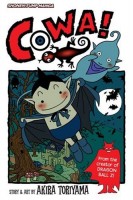
Cowa!Cowa! by Akira Toriyama. Cowa! had completely slipped under my radar until just recently. It’s a shame that I didn’t read it sooner because it is a terrific and highly enjoyable manga appropriate for kids as well as adults. The first few chapters are fairly episodic and start out with Paifu, a young half-vampire/half-werekoala, and his best friend and ghost José Rodriguez getting into all sorts of trouble. But then the manga develops a continuing story–Paifu’s hometown of Batwing Ridge is suffering from an epidemic of the Monster Flu. It’s up to Paifu, José, their not exactly friend Apron, and Maruyama, a grumpy ex-sumo wrestler, to save the day. Together they travel in search of the cure and it ends up becoming quite an adventure. There’s action and danger, bad guys and monsters. The interactions between Maruyama and the youngsters are simply marvelous. The manga is a lot of fun and funny, too. It may be silly at times, but it’s also heartwarming and has a good message. Cowa! is an absolute delight and definitely worth a look.

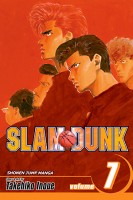
Slam Dunk, Volume 7Slam Dunk, Volumes 7-10 by Takehiko Inoue. I am a huge fan of Inoue’s manga. While Slam Dunk isn’t my favorite of his series, I still find it to be a great manga. Slam Dunk was Inoue’s breakthrough work and is immensely popular and influential. The basketball games in Slam Dunk are extremely well done, but so far what appeals most to me about the series is the characters. I particularly enjoy all of the delinquents that show up in the series and on Shohoku’s basketball team. The guys are just as capable in a fist fight as they are on the court. Granted, Sakuragi still has a lot to learn about basketball. He has some natural ability and potential, but I’m not sure anyone has actually taken the time to explain all the rules to him. Realistically, this is somewhat unbelievable, but it does provide a certain amount of humor. In general, Slam Dunk is much more comedic than Inoue’s other manga available in English. However, there’s still some seriousness and plenty of heartfelt passion in the series, too.

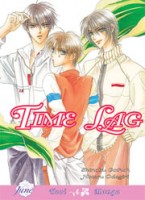
Time LagTime Lag written by Shinobu Gotoh and illustrated by Hotaru Odagiri. I didn’t realize it at first, but Odagiri is also the artist for Only the Ring Finger Knows, which I quite enjoyed. Time Lag is a slightly older work, and not quite as memorable, but still enjoyable and rather sweet. Satoru and Shirou used to be very close growing up, but after junior high they’ve grown apart despite Satoru repeatedly professing his love for the other young man. Satoru can’t seem to figure out what went wrong, but when a letter from Shirou arrives three years late he may have one last chance at setting things right. However, complicating matters even further is a love-triangle involving Seichii, another classmate. Plots that revolve around a giant misunderstanding often annoy me, but in the case of Time Lag I think it was handled very well. Some of the smaller misunderstandings were still frustrating, though. Granted, those deliberately created by Seichii and his jealousy make a fair amount of sense in the context of the story and the resulting drama is understandable.

Filed Under: FEATURES Tagged With: Akira Toriyama, arisa, Hotaru Odagiri, manga, Natsumi Ando, Shinobu Gotoh, slam dunk, Takehiko Inoue

Manga Giveaway: Arisa Giveaway

September 25, 2013 by Ash Brown

It’s just about the end of the month, which means it’s time for another manga giveaway here at Experiments in Manga! This month’s giveaway is for not one, but two volumes of Natsumi Ando’s manga series Arisa–both the first and the most recent volumes published in English. (I’ll explain my odd thought process for this below.) As always, the contest is open worldwide!

Arisa, Volume 1Arisa, Volume 11

Okay, so why the first and eleventh volumes? Because Arisa has a set of twin sisters. Volume 1, because it’s the first volume. (In general, I like to give away first volumes.) And what do you get when you have two 1s? 11. And there you have it. (I told you I’m a bit odd.) Anyway.

People are fascinated by twins. It’s probably not too surprising that twins, both fraternal and identical, make frequent appearances in manga, often with an important role to play in the story. Naoki Urasawa’s Monster, Yumi Tamura’s Basara, and Rei Hiroe’s Black Lagoon are just a few examples off the top of my head. It wouldn’t take me long to come up with even more. (And I will next week.) In Arisa we have Tsubasa Uehara and Sonoda Arisa, identical twin sisters who have been separated by their parents’ divorce. Tsubasa takes Arisa’s place at school to try to discover why her sister would attempt to commit suicide, uncovering some very disturbing goings-on in Arisa’s class in the process.

So, you may be wondering, how can you win a copy of Arisa, Volumes 1 and 11?

1) In the comments below, tell me a little about a set of twins that you have encountered in manga and in which manga they appear. (If by chance you’ve never come across twins, simply mention that.)
2) If you’re on Twitter, you can earn a bonus entry by tweeting about the contest. Make sure to include a link to this post and @PhoenixTerran (that’s me).

It’s as easy as that. For this giveaway, each person can earn up to two entries. As usual, there is one week to submit comments. If you have trouble leaving comments, or if you would prefer, you can e-mail me your entries at phoenixterran(at)gmail(dot)com and I will post them in your name. The giveaway winner will be randomly selected and announced on October 2, 2013.

VERY IMPORTANT: Include some way that I can contact you. This can be an e-mail address (which if you submit through the comment form won’t be publicly displayed), a link to your website, Twitter username, or whatever. If I can’t figure out how to get a hold of you and you win, I’ll just draw another name.

Contest winner announced–Manga Giveaway: Arisa Giveaway Winner

Filed Under: FEATURES Tagged With: arisa, manga, Natsumi Ando

My Week in Manga: September 16-September 22, 2013

September 23, 2013 by Ash Brown

My News and Reviews

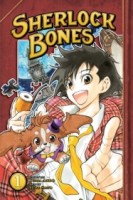
Well, I somehow managed to post three reviews last week. This is a little unusual for me as normally I only have one or two ready to go. The first review was for Hinoki Kino’s No. 6, Volume 2. The pacing, characterization, and world-building improves on the first volume, which I was very glad to see. (I’m really hoping that the manga will have a better ending than the anime.) The second review was for Yoshiyuki Tomino’s Mobile Suit Gundam: Awakening, Escalation, Confrontation, an omnibus of a trilogy of early Gundam novels–the first part of the Gundam franchise to be officially released in English. (To be honest, though, I much prefer Yoshikazu Yasuhiko’s manga series Mobile Suit Gundam: The Origin.) I also reviewed Sherlock Bones, Volume 1 by Yuma Ando and Yuki Sato. I was very skeptical going into the series, but found the first volume of the manga to be surprisingly entertaining.

As for a few interesting things found online: Comic Natalie has announced the winners of its first annual manga awards. If you don’t read Japanese and can’t identify manga by their covers, Vertical compiled a list of the winners currently avilable in English (in addition to posting a hint for an as of yet unannounced Vertical license.) As reported by the Business Standard, Viz Media is apparently entering the market in India–Top Manga publisher set to make India entry. And if the relationship between Kodansha Comics, Del Rey/Del Rey Manga, and Random House has you confused, Kodansha posted a brief explanation/clarification of the situation on its Tumblr account.

Quick Takes

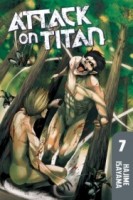
Attack on Titan, Volume 7Attack on Titan, Volume 7 by Hajime Isayama. The terror in Attack on Titan has started to shift. At the beginning of the series the fear was much more about the unknown–the titans were these terrifying creatures beyond comprehension. But now the fear is coming from the knowledge that other humans may very well have a hand in what is happening. There have been plenty of deaths in Attack on Titan, but when those deaths involve characters who you’ve gotten a chance to know instead of just being nameless faces, suddenly the casualties carry even more weight. It makes the terror, frustration, and utter despair experienced by the characters even more palpable. Attack on Titan is dark, and it has been from the start, but the developments in the seventh volume pack quite a punch. I’ve had my doubts about the series in the past, and the artwork is still terribly inconsistent and occasionally difficult to follow, but I am hooked on it.

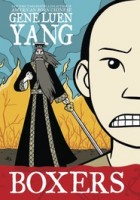
BoxersBoxers & Saints written and illustrated by Gene Luen Yang, colors by Lark Pien. Boxers & Saints is easily one of the best comics that I’ve read this year. The two graphic novels that make up the duology can be read separately, but together they are even more powerful. The work is a retelling of the Boxer Rebellion–a violent uprising against foreign and Christian influence in northern China that took place at the turn of the 20th century. Boxers follows the life of a young man who becomes one of the leaders of the rebellion while Saints shows the conflict from the perspective of a young Chinese woman who converted to Christianity. Although very different in their details and narrative style, the two volumes follow a similar story arc as the characters come of age and find something to believe in, but are then challenged by those beliefs and conflicted over their decisions and actions. The Boxer Rebellion was a complicated and tragic event for both sides of the dispute. Boxers & Saints is a fictional account, but Yang put in a tremendous amount of research into the work. Highly, highly recommended.

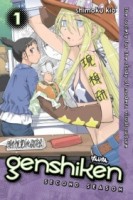
Genshiken: Second Season, Volume 1Genshiken: Second Season, Volumes 1-3 by Shimoku Kio. The Genshiken has turned into a fujoshi club. This doesn’t really bother me (I also enjoy BL and yaoi), but to an extent I do miss the greater variety of otaku that were represented in the original series. Still, even the fujoshi have their quirks and differences–the Genshiken has always attracted weirdos. And then there’s the cross-dressing Hato-kun, who for me is really stealing the show in the second season of Genshiken. The only male first-year to join the club, he’s created a very complete and convincing female persona. I find him to be the most interesting new character in the new series and he seems to be the focal point for much of the drama. I’m also particularly enjoying Yajima’s character development. She is uncomfortable with Hato’s cross-dressing but becomes very protective of him. As for the older characters, I was very happy to see Madarame return as he remains one of my favorites. Put him and Hato together in a scene and it’s just perfect.

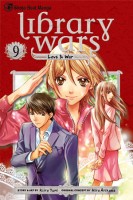
Library Wars, Volume 9Library Wars: Love & War, Volumes 9-10 by Kiiro Yumi. Perhaps it’s because I’m a librarian, but I can’t help but be fond of Library Wars even when it’s not always the strongest series. Sometimes the characters and their interactions are fantastic, and sometimes it seems as if they’re all acting like a bunch of high school students when they’re supposed to be mature, capable adults. Granted, there are some delightfully awkward scenes now that Iku has come to the realization that Dojo is her “prince.” He’s known for quite a while, but he doesn’t know that she knows, yet. It’s all rather amusing. I am very glad that Iku seems to be more competent now than she was at the beginning of the series. I don’t care how enthusiastic a person is, if they don’t have the needed skills for the job there’s not much hope for them. Library Wars is a fantasy, but it actually does address some real issues encountered in the library world. Censorship is the biggest one and at the core of the series, but things like sexual harassment and dealing with inappropriate patron behavior come up, too.

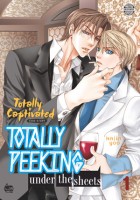
Totally Peeking Under the Sheets, Volume 1Totally Peeking Under the Sheets, Volumes 1-2 by Hajin Yoo. Totally Peeking Under the Sheets is a collection of side stories relating to Yoo’s boys’ love manwha Totally Captivated. It’s definitely intended for those who have read and enjoyed the original series. The first volume contains quite a few short manhwa, some of them only a few pages long. Many of these stories emphasize the more humorous aspects of Totally Captivated and its characters. And as might be expected from the title Totally Peeking Under the Sheets, several stories are also rather racy–what little plot there is is used to get Ewon and Mookyul into bed with each other. (Not that that’s very difficult.) The focus of the second volume is a much longer sequel manhwa called “The Final Chapter.” Although there were some great character moments, the story felt forced to me. Ewon suddenly has to deal with his family, particularly the mother who abandoned him. I’m not sure the situation would have really played out in the way that Yoo presents it. Overall, I much preferred the first volume.

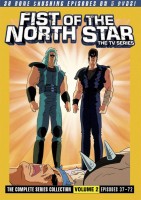
Fist of the North Star, Collection 2Fist of the North Star: The TV Series, Volume 2 (Episodes 37-72) directed by Toyoo Ashida. While the first collection of the Fist of the North Star anime series had quite a bit of filler, the second collection starts to really dig into the plot and characters. The series is much better for it. Plus, the anime has now reached a point in the story beyond the manga that was released in English. Some of the fights do still get to be a little repetitive, especially when the protagonists face off against large groups of unnamed bad guys and minions, but there’s always something about each battle that makes it stand out from the rest. The best fights, though, are those that occur between two martial arts masters. But Fist of the North Star isn’t just about power, skill, and strength (although that’s certainly an important part of it). The series is also about destiny, loyalty, friendship, and love. Kenshiro is a tragic hero who continues to lose those who are close to him. Fist of the North Star is a post-apocalyptic martial arts epic, and I’m loving it.

Filed Under: FEATURES, My Week in Manga Tagged With: anime, attack on titan, Boxers and Saints, comics, Fist of the North Star, Gene Luen Yang, Genshiken, Hajime Isayama, Kiiro Yumi, Lark Pien, library wars, manga, manhwa, Shimoku Kio, totally captivated

Sherlock Bones, Vol. 1

September 21, 2013 by Ash Brown

Sherlock Bones, Volume 1Author: Yuma Ando
Illustrator: Yuki Sato

U.S. publisher: Kodansha
ISBN: 9781612624440
Released: September 2013
Original release: 2012

Sherlock Bones is currently a seven-volume manga series written by Yuma Ando and illustrated by Yuki Sato. The first volume was originally released in Japan in 2012 while the English-language edition was published by Kodansha Comics in 2013. I didn’t realize it at first, but I was already familiar with Sato and Ando’s previous works in English. Sato is the creator of Yokai Doctor and Ando (one of many pen names used by Shin Kibayashi) worked on Bloody Monday and Drops of God. More thematically relevant, Ando was one of the original creators of The Kindaichi Case Files. Sir Arthur Conan Doyle’s Sherlock Holmes is a well-loved and well-known detective worldwide and this is no exception in Japan. Sherlock Bones is only one Japanese work among many that is directly inspired by Doyle’s stories. I was vaguely curious about the series when it was licensed, but it wasn’t high on my list of manga to acquire. Happily, Kodansha sent me a review copy of Sherlock Bones, Volume 1, so I was able to give the series a try sooner rather than later.

When Takeru Wajima adopted a puppy from the local animal shelter, he had no idea what he was getting into. Most new pet owners have to worry about things like house and obedience training, but Takeru has an entirely different problem to deal with–Sherdog is the reincarnation of none other than the brilliant detective Sherlock Holmes. Oh, and Sherdog can speak (at least to Takeru, that is) and he is certain that his new owner is the reincarnation of his dear friend and faithful assistant Dr. John H. Watson. It’s not as if the two of them go out looking for mysteries to solve, but Sherdog and Takeru seem to be drawn into criminal investigations. When one of Takeru’s classmates is killed, and Sherdog is the only witness to the crime, they must find a way to prove the guilt of the murderer. Sherdog may have the brains to determine a solution, but it will be up to Takeru to do all of the legwork. After all, who else would belive, let alone understand, a dog.

I’ll admit, I was more than a little skeptical going into Sherlock Bones. I thought that the premise–Sherlock Holmes reincarnated as an adorable puppy–would be silly at best. And it is silly, but it also ends up being a good deal of fun. I was honestly surprised by how much I enjoyed the first volume of Sherlock Bones. Its mix of goofiness and seriousness is entertaining even if it is rather ridiculous. So far, though, it seems to work. There’s Sherdog himself–appalled that he’s a canine, though on occasion he will deign to use it to his advantage–and then there’s Takeru, who seems to be a good kid even if he’s understandably a bit befuddled by the whole situation and less than convinced that he’s Watson’s reincarnation. I also like that the entire Wajima family is made up of police officers and investigators–father, mother, and sister–so Takeru’s poking around into various criminal goings-on doesn’t seem too out-of-place.

As for the central case in Sherlock Bones, Volume 1, the mystery doesn’t lie within who killed the unfortunate student. Even why the murder took place can be fairly easily deduced. The trick is in how the culprit establishes an alibi and then carries out the deed. In part this is where Sato’s artwork plays an important role–the major clues that help Sherdog and Takeru crack the cases in Sherlock Bones, Volume 1 can be found right there on the page even before they solve the mysteries, waiting for observant readers to notice. I appreciate this sort of potential for engagement in the mystery fiction that I read, and so was happy to see it included in Sherlock Bones. Granted, not all of the clues are revealed in this way, especially when things like color come into play, but overall I was pleased with how the story and art worked together to form a cohesive whole. Sherlock Bones was a pleasant surprise for me and I look forward to reading more of the series.

Thank you to Kodansha for providing a copy of Sherlock Bones, Volume 1 for review.

Filed Under: REVIEWS Tagged With: kodansha, Kodansha Comics, manga, Sherlock Bones, Yuki Sato, Yuma Ando

No. 6, Vol. 2

September 18, 2013 by Ash Brown

No. 6, Volume 2Creator: Hinoki Kino
Original story: Atsuko Asano

U.S. publisher: Kodansha
ISBN: 9781612623566
Released: August 2013
Original release: 2011

My introduction to Atsuko Asano’s No. 6 was through the anime adaptation of the original novels. I enjoyed the setting and characters, but was disappointed in the anime’s rushed, original ending. Asano’s No. 6 novels are unlikely to be released in English, so I was glad when Kodansha licensed Hinoki Kino’s manga adaptation of the series. The second volume of the No. 6 manga, originally published in Japan in 2011, was released in English in 2013. Although Kino’s character designs are based on the same ones used for the anime and many of the underlying elements are the same (they are both adaptations of the No. 6 novels after all), Kino’s version of the story is different. The first volume of the manga was a little too quickly paced for my taste, but for the most part I still enjoyed it. However, I did have hopes that the second volume would slow down a bit after the first volume‘s rush to establish the characters, story, and setting.

After barely escaping from the holy city of No. 6, Shion is now a fugitive hiding in West Block, a dangerous area outside of the city walls and No. 6’s dumping grounds. Although he is out of immediate danger, he still has a lot to learn about West Block if he hopes to survive there. The violent and bleak conditions outside the city are very different from the peaceful and pampered life that Shion led in No. 6. The only reason he’s made it this far is thanks to the help of Rat, the young man whose life Shion once saved as a boy. The two make an unusual pair. Shion is altruistic and slow to doubt people, characteristics which could get him into big trouble in West Block, while Rat only looks out for himself and is much more wary of others. Saving Shion’s life was a way for Rat to repay his debt, but in the process he has begun to open up to another person. For the time being Rat persists in watching over the other young man, but he is also capable of turning on Shion at any moment.

One of my favorite things about the No. 6 anime was the relationship between Rat and Shion. I’ve happily found this to be the case with the manga as well. Even though it’s only the second volume, there has already been some very nice character development. Both Shion and Rat are beginning to change due to the circumstances surrounding Shion’s escape from No. 6 and their continued association with each other. As Shion is faced with the harsh realities of living in West Block and Rat’s seemingly uncaring attitude, he is learning to stand up for himself and what matters to him. In turn, Shion is also influencing Rat to a much greater extent than either of them at first realize. When it comes to Shion, Rat finds himself acting out of character and letting his guard down. It understandably bothers and worries him, but it’s also rather touching from an outsider’s perspective. I’m really enjoying watching their relationship evolve in No. 6.

In addition to character development, the second volume of the No. 6 manga also reveals more about No. 6 and West Block. As Shion experiences West Block first hand, nearly getting killed in the process, the readers are also introduced to the world in which he now lives through the people he meets–the children who are starving, the marketplace vendors who are quick to pull guns on thieves, the prostitutes and pimps. Everyone is struggling to get by in any way that they can. It also reveals in part why Rat has the personality that he does. To survive in West Block requires people to place their own needs above those of others. Simply trusting another person means taking a huge risk. It’s a hard lesson for Shion with his innocent nature and privileged upbringing. The second volume of No. 6 does build and improve on the first in its pacing, characterization, and world-building. I can honestly say that I’m looking forward to the next volume of Kino’s adaptation.

Filed Under: REVIEWS Tagged With: Atsuko Asano, Hinoki Kino, kodansha, Kodansha Comics, manga, no. 6

My Week in Manga: September 9-September 15, 2013

September 16, 2013 by Ash Brown

My News and Reviews

I posted two reviews here at Experiments in Manga last week. The first was for Yusuke Kishi’s novel of horror and survival The Crimson Labyrinth. Currently The Crimson Labyrinth is the only work by Kishi available in English, but Vertical will begin releasing the manga adaptation of his novel From the New World later this year. (The same From the New World recently had an anime adaptation, too.) I also posted my latest Blade of the Immortal review–Blade of the Immortal, Volume 25: Snowfall at Dawn. The last few volumes of Blade of the Immortal have been building up to the showdown between Shira and Manji; finally the time has arrived when they face each other.

There were a couple of interesting things that I came across online last week. First, there was an interview with Annaliese Christman, a freelance letterer for Viz Media. I didn’t know much about lettering, so I found it to be a very interesting read. The other item I wanted to mention was Dan Kanemitsu’s examination of the impact the upcoming Tokyo Olympics may have on censorship in Japan–Fear and Loathing in the Bold New Olympic Era. (Too long, didn’t read? CBLDF has a nice overview of the article with some additional commentary–Tokyo Olympics Emboldens Censors.)

Quick Takes

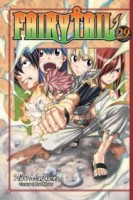
Fairy Tail, Volume 29Fairy Tail, Volume 29 by Hiro Mashima. This is only the second volume of Fairy Tail that I’ve had the opportunity to read in its entirety. At this point my general impression is that it’s a fun, but rather generic series. I just can’t seem to shake the feeling that I’ve seen it all before. I do like the variety of magic styles, though. Most of the twenty-ninth volume focuses on the battle between five young members of the Fairy Tail guild and Hades, the guild’s former grandmaster. Although not entirely unexpected, there were some great moments during fight that really show off the group’s teamwork. Fairy Tail moves along quickly with plenty of battles and action sequences. For the most part, Mashima’s art works nicely. However, all of the cuts and scratches that the characters end up with over the course of their fights make them look like they all have scales, which is a little odd. Although for some characters, like Natsu with his dragon abilities, it’s rather appropriate.

Nana, Volume 16Nana, Volumes 16-18 by Ai Yazawa. The more of Yazawa’s manga that I read, the more I am impressed by it. Nana is a fantastic series. The characters are complex and multilayered; the story is dramatic and absorbing without being overwrought. These particular volumes deal just a little less with the music industry and the bands as a whole. Instead, they delve more into the characters’ personal lives. Particularly important is the revelation of Nana and Shin’s pasts as well as their less than ideal family circumstances–something that proves to be very problematic. Also included in these volumes are two lengthy side stories. One shows Nobu and Nana’s relationship back when they were in school together. Similarly, Takumi’s complicated feelings for Reira is the focus of the other. The side stories are a really nice addition to Nana, giving the story even more depth. They show the importance of the characters’ relationships and how they developed over time to become what they are in the series proper. I’m really looking forward to reading the rest of Nana.

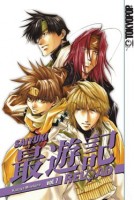
Saiyuki Reload, Volume 7Saiyuki Reload, Volumes 7-9 by Kazuya Minekura. While the early part of the series seemed directionless, by the end of Saiyuki Reload Minekura has a great narrative drive going. Some of the plot elements and storylines do unfortunately seem to have been dropped or forgotten (though perhaps she pulls them all back in for the finale) but the manga does benefit from having a stronger focus. What is particularly interesting about these volumes is that the yokai’s side of the conflict is shown in more detail. Although there have been exceptions, for the most part the yokai have simply been the series’ monsters. Minekura makes it very clear here that the yokai are really not all that different from humans and that it is the humans who are sometimes the real monsters. Looking back, this has actually been one of the recurring themes in the series. Although Saiyuki Reload is ten volumes long, only nine volumes were ever released in English. It’s particularly tragic since the ninth volume ends on one heck of a cliffhanger.

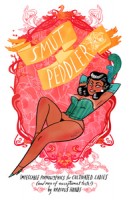
Smut PeddlerSmut Peddler by Various. Smut Peddler had its beginnings as a three-issue indie minicomic series back in 2003. In 2012, Smut Peddler returned as a full-length anthology collecting twenty-six short erotic comics. Smut Peddler is a phenomenal collection of sex-positive, lady- and queer-friendly comics. I was particularly happy to see the diversity included in the anthology, not only in terms of the characters’ various identities but in genre as well. Smut Peddler contains science fiction and fantasy as well as reality-based works, both historical and contemporary. The stories are short, sexy, and sweet. Some are more serious and others are more humorous, but they are all heartfelt. I was previously familiar with and already follow the work of many of the creators included in the anthology, but there were plenty of artists and writers who I was encountering for the first time. (I now have even more creators I want to seek out.) Work has already begun on a second Smut Peddler anthology, currently scheduled for release in 2014. I can’t wait.

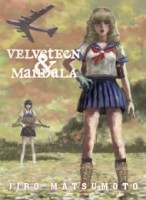
Velveteen & MandalaVelveteen & Mandala by Jiro Matsumoto. Reading Velveteen & Mandala was a rather odd experience for me. I was consistently engaged while I was reading it, but I wasn’t sure that I actually liked it. But after finishing Velveteen & Mandala I couldn’t seem to get it out of my head which to me is a sign of a good manga. The more I think about it, the more I want to read it again–it’s like a lingering and intense fever-dream (or nightmare.) Velveteen & Mandala is a very strange horror manga with strong psychological elements, extremely black humor, frequent pop culture references, and characters who all seem to be at least slightly insane. The ending’s big twist was something that I suspected from the very beginning of Velveteen & Mandala but that doesn’t make it any less effective. Velveteen & Mandala easily earns it’s 18+ rating–it’s gruesome, violent, and sexually explicit. The manga’s off-beat, weird, and bizarre horror and humor definitely aren’t for everyone, but if you can stomach it Velveteen & Mandala is a strangely intriguing work.

Filed Under: FEATURES, My Week in Manga Tagged With: Ai Yazawa, comics, Fairy Tail, Hiro Mashima, Jiro Matsumoto, kazuya minekura, manga, nana, Saiyuki, Smut Peddler

Blade of the Immortal, Volume 25: Snowfall at Dawn

September 13, 2013 by Ash Brown

Blade of the Immortal, Volume 25Creator: Hiroaki Samura
U.S. publisher: Dark Horse
ISBN: 9781595828835
Released: August 2012
Original release: 2009
Awards: Eisner Award, Japan Media Arts Award

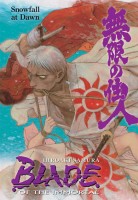
Snowfall at Dawn is the twenty-fifth volume in the English-language release of Hiroaki Samura’s award-winning manga series Blade of the Immortal. Published by Dark Horse in 2012, Snowfall at Dawn collects the same chapters as the twenty-fourth volume of the original Japanese edition of Blade of the Immortal released in 2009. Blade of the Immortal first began serialization in 1993 and has covered a lot of ground since then. Starting as a story of revenge with a touch of the supernatural, the series mixes historical reality with the fantastic and later on even a healthy dose of horror. Snowfall at Dawn is part of the fifth and final major story arc of the series. With morally complex characters, dynamic artwork, and an engaging story, Blade of the Immortal continues to be one of my favorite manga series.

After their daring assault on Edō Castle, Baro Sukezane provides the diversion needed to allow his comrades Magatsu Taito and Anotsu Kagehisa, the leader of the Ittō-ryū sword school, to escape. They aim to rejoin the rest of the Ittō-ryū as quickly as possible while avoiding their pursuers. Among those trying to locate Anotsu are Asano Rin and Manji, her bodyguard and companion. Little do the pair know, but they are also being pursued. Shira, a sadistic murderer who holds a particularly intense grudge against Manji, is steadily getting closer to exacting his revenge. Accompanying Shira is Kawakami Renzō, a broken young man with his own reason for hating Manji. It’s only a matter of time before the four of them meet once again. The encounter is one that Shira has been preparing for and fantasizing about, taking great pleasure in anticipating and contemplating the pain and torment his plans will bring Manji and Rin.

The last few volumes have been building up to the confrontation between Shira and Manji. Unsurprisingly, their battle is the focus of Snowfall at Dawn. What did surprise me, however, is how comparatively tame it is physically when considering the perverse and barbaric nature of Shira’s past exploits and misdeeds. The potential for extreme physical violence between Shira and Manji is great. Shira is an unapologetic and twisted sadist while Manji is a man who is extraordinarily difficult to kill, making him an ideal victim and target. But Shira isn’t only interested in Manji’s physical suffering, he also takes great joy in causing mental anguish. Although there is still plenty of bodily harm and pain inflicted during the battle in Snowfall at Dawn, the psychological impact and agony caused by Shira’s attack on Rin and Manji is just as crucial to the fight. Out of all of the characters in Blade of the Immortal, Shira is easily the most unquestionably villanous and terrifying.

In addition to the showdown between Shira and Manji, Snowfall at Dawn also reveals Shira’s whereabouts during the long prison story arc as well as his involvement in the immortality experiments. Shira may be an utter bastard, but he’s had some unspeakable things done to him as well. As part of this, there is also a lengthy discourse in Snowfall at Dawn about the nature and limitations of Manji’s bizarre regenerative abilities. While vaguely interesting, it is largely unnecessary. Anyone who has been reading Blade of the Immortal should be well aware by this point that Manji’s immortality is imperfect; ample evidence can be found throughout the series. However, Samura hasn’t previously gone into such specific detail about it as he does in Snowfall at Dawn. Unfortunately, he has to interrupt the flow of the story in order to do so. Still, Samura soon returns to what really matters in Snowfall at Dawn–Manji and Shira’s battle, which will reach its conclusion in the next volume, Blizzard.

Filed Under: REVIEWS Tagged With: Blade of the Immortal, Dark Horse, Eisner Award, Hiroaki Samura, Japan Media Arts Award, manga

My Week in Manga: September 2-September 8, 2013

September 9, 2013 by Ash Brown

My News and Reviews

Last week I announced the Blood Lad Giveaway Winner. The post also includes a list of manga licensed in English that feature vampires, too, if you’re looking for something to sink your teeth into. I posted two reviews last week in addition to the giveaway announcement. The honor of the first in-depth manga review for September goes to Shigeru Mizuki’s Kitaro. The manga collects stories from the first three volumes of Mizuki’s yokai classic GeGeGe no Kitaro. I absolutely loved it. I also reviewed Manga: Introduction, Challenges, and Best Practices, edited by Manga Bookshelf’s own MJ and presented by the Comic Book Legal Defense Fund. It’s a great resource and recommended for anyone wanting to learn a bit more about manga. The book’s general release is in December, but it is possible to purchase an early copy directly from CBLDF.

Elsewhere online, Vertical’s licensing and reader survey is now open and will close on September 25. It’s a great way to let Vertical know what you’re reading. If you want you can even suggest manga you’d like to see Vertical publish in English. Related to Vertical manga, Matt Cycyk at Matt Talks About Manga has a nice post about Knights of Sidonia and why fans of Attack on Titan might want to check the series out–Attack on Sidonia: Selling Knights of Sidonia to Attack on Titan Fans. And speaking of manga, I was amused to come across the article Attack on Titan’s author causes a stir with his less-than-stellar sketches at RocketNews24. (Amused since I’m used to hearing complaints about the artwork in Attack on Titan and didn’t realize it was something so shocking.)

Quick Takes

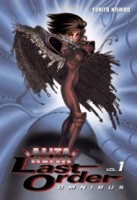
Battle Angel Alita: Last Order, Omnibus 1Battle Angel Alita: Last Order, Omnibus 1-2 (equivalent to Volumes 1-6) by Yukito Kishiro. Although I have been aware of Battle Angel Alita for quite some time I haven’t read any of the manga until now. Last Order is the original series’ immediate successor, serving as a sort of alternate ending. It’s still ongoing in Japan. The manga is a little difficult to jump into without already having some familiarity with the franchise; I frequently found myself confused why certain characters were important to the story and what their motivations were. But by the time I reached the second omnibus I had started to settle into the series and even began to enjoy myself. I like Last Order best when Kishiro isn’t trying to be too serious with the story and focuses more on the action–cyborg battles, ancient Martian martial arts, space karate, and so on. Alita is an appealing lead, but at the moment I think I like the more erratic and unruly supporting character Sechs even better.

Chi's Sweet Home, Volume 10Chi’s Sweet Home, Volume 10 by Konami Kanata. I can always count on Chi’s Sweet Home to bring a smile to my face. Kanata’s color work is lovely and Chi is adorable. I grew up around a lot of cats and continue to be surrounded by them, so I can particularly appreciate Chi’s antics. And with the tenth volume of Chi’s Sweet Home, there are even more kittens romping around–Cocchi and Chi have befriended a pair of sibling kittens. Kanata captures the attitudes and behavior of cats perfectly. Chi has finally come to the realization that she’s a not a human, but she still has a far way to go before mastering all the skills expected of a feline. In many ways Chi’s Sweet Home is very episodic, but there’s also the underlying story of Chi being separated from her original family. By the end of the tenth volume it looks as though she may be getting closer to finding her mother. (She’s easily distracted, though.) Generally the series is funny and sweet, but there’s a bit of sadness and drama, too.

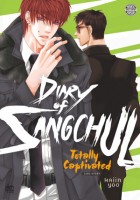
Diary of SangchulDiary of Sangchul by Hajin Yoo. Two side stories from Yoo’s Totally Captivated boys’ love manhwa were released in English. One of those is Diary of Sangchul, which is a prequel to the main series. It’s not absolutely necessary to have read Totally Captivated in order to enjoy Diary of Sangchul, but the manhwa will probably appeal most to those who have. The majority of the volume is devoted Sangchul’s story through which is shown Mookyul’s rise to power and how he earns the respect of the men who work under him. Dairy of Sangchul also reveals more about Mookyul’s relationship with the Chairman (who looks a lot younger here than he does in the original series.) Diary of Sangchul dovetails quite nicely with Totally Captivated. There is also a short manhwa about Mookyul and the Chairman’s first meeting included in the volume. In the epilogue Yoo goes on to outline the rest of their story. I’m not sure if she ever drew it, but I’m okay if she didn’t–it’s extraordinarily melodramatic.

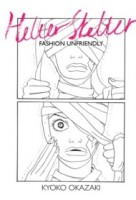
Helter Skelter: Fashion UnfriendlyHelter Skelter: Fashion Unfriendly by Kyoko Okazaki. I’m always happy to see more josei released in English, but I was especially excited for Okazaki’s debut. Okazaki is a particularly influential josei artist. (The marvelous Moyoco Anno even once worked as her assistant.) The award-winning Helter Skelter is a harsh and brutal tale about the darker side of the entertainment industry. Thanks to drastic and repeated plastic surgery, Liliko is enjoying the height of her career as a celebrity but the operations can only take her so far. As her body begins to deteriorate her life begins to spin out of control. Her obsessions and society’s unrealistic expectations drive her to extremes; in the end she isn’t the only one ruined. Helter Skelther is an startling work. Even though the characters are often unlikeable, the manga is extremely engaging; it’s hard to look away from their unraveling. Helter Skelter works simply as fiction, but it can also be read as a deeper criticism of celebrity culture.

Filed Under: FEATURES, My Week in Manga Tagged With: Battle Angel Alita, chi's sweet home, Hajin Yoo, Konami Kanata, Kyoko Okazaki, manga, manhwa, totally captivated, Yukito Kishiro

Manga: Introduction, Challenges, and Best Practices

September 8, 2013 by Ash Brown

Manga: Introduction, Challenges, and Best PracticesEditor: MJ
Publisher: Dark Horse
ISBN: 9781616552787
Released: December 2013

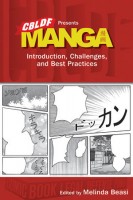
The Comic Book Legal Defense Fund (CBLDF) is an organization based in the United States devoted to the protection of the freedoms to read, create, and provide access to comics. Manga: Introduction, Challenges, and Best Practices is a part of its education initiative funded by the Gaiman Foundation and was published by Dark Horse in 2013. Manga was edited by MJ and includes contributions from Katherine Dacey, Shaenon Garrity, Sean Gaffney, Ed Chavez, Erica Friedman, and Robin Brenner. It’s an excellent lineup of manga critics, scholars, and those who have worked in the manga industry in both Japan and North America. Being familiar with their work, in addition to being a card-carrying member of the CBLDF, I was very excited when I learned about the upcoming release of Manga. And because I also happen to be a librarian, I was able to snag an early copy of the guide.

Manga consists of nine chapters and a list of recommended resources. The first chapter, “What Is Manga?” provides a brief history of manga both in Japan and in the West, distinguishes manga from comparable comics traditions such as manhua, manhwa, OEL manga and other manga-influenced comics, and provides suggested resources for further reading. The following chapters survey the four major demographics of manga–shōnen, shōjo, seinen, and josei–as well as two additional categories–yuri and boys’ love. These chapters cover history, commonly found genres, special issues, and (except for the chapter devoted to yuri) notable artists. Another chapter, “Untranslated and Fan Translated,” addresses dōjinshi and scanlations. The final and longest chapter, “Challenges,” focuses on the collection and defense of manga by libraries and summarizes a few major North American court cases dealing with manga.

As is always the danger when writing about popular culture, some of the information in Manga–specifically some of the references to what has or hasn’t been licensed in English–is already out of date. That doesn’t make Manga any less valuable as a resource, though. It is, however, something to keep in mind while reading the guide. Manga is a fantastic introduction to and overview of manga and manga history, especially as it applies to the North American market. The book seems to be particularly geared towards libraries and schools which may be developing or maintaining a manga collection, but Manga should also be interesting and useful to already established fans of manga as a whole as well to as people who are unfamiliar with the form but who would like to learn more about it. Manga packs a lot of information into a slim volume but remains very accessible throughout.

The only thing missing that may have made Manga even more useful for the uninitiated would be a glossary of terms. More information about the contributors themselves would have also been beneficial. I knew who they were but someone less familiar with the subject area wouldn’t necessarily recognize them. Overall, Manga is short and to the point and is an excellent resource. The guide eases readers into the subject and avoids overwhelming them with too much information. There were a couple of generalizations that gave me pause and may have been overly broad, but Manga is meant as an introduction and so shouldn’t (and doesn’t) get bogged down in technicalities and exceptions. Manga is consistently accurate and informative for the audience it’s intended. The book may not be incredibly in-depth, but it is a great place to start learning about manga, its history, and its challenges. Manga is very easy to recommend not only to library professionals, but to general manga enthusiasts as well.

Disclosure: Experiments in Manga is a member blog of Manga Bookshelf; many of those who worked on Manga are also associated with Manga Bookshelf.

Filed Under: REVIEWS Tagged With: Dark Horse, manga, Melinda Beasi, Nonfiction

Kitaro

September 6, 2013 by Ash Brown

KitaroCreator: Shigeru Mizuki
U.S. publisher: Drawn & Quarterly
ISBN: 9781770461109
Released: August 2013
Original release: 1967-1969

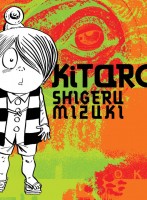
Over the last few years I have become increasingly interested in yokai–Japan’s supernatural beings and monsters of myth and legend. When it comes to yokai manga the most influential creator in Japan is Shigeru Mizuki. His most famous series GeGeGe no Kitaro is considered a classic and continues to inspire others. I was absolutely thrilled when Drawn & Quarterly announced that GeGeGe no Kitaro had been licensed in English. Kitaro, released in 2013, collects stories from the first few volumes of Mizuki’s GeGeGe no Kitaro published in Japan between 1967 and 1969. Also included in Drawn & Quarterly’s Kitaro is an excellent introduction by Matt Alt (one of the co-authors of Yokai Attack!) and a yokai glossary by Zach Davisson, both of which are particularly useful for readers who aren’t familiar with Kitaro or yokai, but which should also be interesting for those who are more knowledgeable.

“It is said that when the crow caws thrice, and the frog responds twice, the appearance of Kitaro is imminent.” Kitaro of the Graveyard, a one-eyed yokai in the form of a young boy whose ways are mysterious and who wields great spirit powers. Generally a friendly sort of fellow, Kitaro helps protect people from more malicious yokai although unscrupulous humans might find themselves on the losing end of an encounter with him as well. Sometimes working alone and sometimes enlisting the help of other yokai, Kitaro’s adventures take him all over Japan, everywhere from its most densely populated cities to its most remote islands and beyond. It is part of Kitaro’s mission to defeat evil yokai. The spirits and monsters that he faces will take all of the esoteric knowledge and supernatural skills he has to vanquish them, not to mention a little luck.

The stories in Kitaro tend to be episodic and vary in length–most are around fifteen pages while the longest could easily be collected as their own graphic novels. Although the stories aren’t directly related, many share recurring characters. The most notable are Kitaro himself, his father Medama Oyaji–an eyeball with a body who resides in Kitaro’s empty eye socket and enjoys a good teacup bath–and Nezumi Otoko–a half-human, half-yokai troublemaker and sometimes friend. Mizuki was inspired by more than just Japanese folklore when creating Kitaro. In addition to traditional yokai and his own imagination, popular culture and more modern kaiju were also important influences. Even monsters from Western literature, film, and mythology make an appearance. As a result, Kitaro is a lively amalgamation of sources.

I found Kitaro to be utterly delightful. Although it is a horror manga dealing with powerful supernatural creatures and featuring some legitimately creepy scenarios, Kitaro is also very funny and even cheerful in tone. Kitaro does seem to gain abilities as is convenient to the story, but it is still amusing to see how he manages to get out of precarious situations. It can be a bit silly at times, and on occasion deceptively simple and straightforward, but Kitaro is also a great deal of fun. Because of its episodic nature there isn’t much plot or character development, but Mizuki’s creations are still memorable. I particularly appreciate all of the different traditions he draws from to create a tale that is distinctly his own. I loved Kitaro and enjoyed the volume immensely. I sincerely hope that Drawn & Quarterly will be able to release more of the series.

Filed Under: REVIEWS Tagged With: Drawn and Quarterly, Kitaro, manga, Shigeru Mizuki

Manga Giveaway: Blood Lad Giveaway Winner

September 4, 2013 by Ash Brown

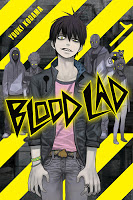
Blood Lad, Omnibus 1And the winner of the Blood Lad Giveaway is…Olivia!

As the winner, Olivia will be receiving a new copy of the first volume of Yuuki Kodama’s Blood Lad as published by Yen Press. For this giveaway, I was interested in learning about people’s favorite vampires from manga. Be sure to check out the Blood Lad Giveaway comments for all of the details. There was a great turn out and a great variety in the responses–everyone from Hellsing‘s Alucard and Seras to the half vampire/half were-koala Paifu from Cowa! were mentioned.

And now, here is a select list of manga featuring vampires of different sorts that have been licensed in English at one time or another:

Blood Alone by Masayuki Takano
Blood Lad by Yuuki Kodama
Blood Honey by Sakyou Yozakura
Blood Sucker: Legend of Zipangu written by Saki Okuse, illustrated by Aki Shimizu
Blood+ by Asuka Katsura
Blood-C by Ranmaru Kotone
Bloody Kiss by Kazuko Furumiya
Canon by Chika Shiomi
Chibi Vampire by Yuna Kagesaki
Cirque du Freak by Takahiro Arai
Cowa! by Akira Toriyama
Crescent Moon by Haruko Iida
Crimson Cross written by Sakae Maeda, illustrated by Kyoko Negishi
Dance in the Vampire Bund by Nozomu Tamaki
Devil by Torajiro Kishi
Gantz by Hiroya Oku
Hellsing by Kouta Hirano
Hipira written Katsuhiro Otomo, illustrated by Shinji Kimura
How to Seduce a Vampire by Nimosaku Shimada
Jojo’s Bizarre Adventure by Hirohiko Araki
Lament of the Lamb by Kei Toume
Midnight Secretary by Tomu Ohmi
Millennium Snow by Bisco Hatori
Pathos by Mika Sadahiro
The Record of a Fallen Vampire written by Kyou Shirodaira, illustrated by Yuri Kimura
Rosario + Vampire by Akihisa Ikeda
Trinity Blood by Kiyo Kyujyo
Until the Full Moon by Sanami Matoh
Vampire Game by Judal
Vampire Hunter D by Saiko Takaki
Vampire Knight by Matsuri Hino
Vampire Princess Miyu by Narumi Kakinouchi and Toshiki Hirano
Vampire’s Portrait by Hiroki Kusumoto
Vassalord by Nanae Chrono

The above list is by no means comprehensive. Vampires are very popular and make frequent appearances in manga; the list could have gone on for quite a while. But, if you’re looking for some vampire manga to read, it’s probably a pretty decent place to start. Thank you to everyone who shared their favorite manga vampires with me. I hope to see you again for the next giveaway!

Filed Under: UNSHELVED Tagged With: blood lad, manga, Yuuki Kodama

My Week in Manga: August 26-September 1, 2013

September 2, 2013 by Ash Brown

My News and Reviews

I only posted one review last week, but that wasn’t the only thing going on at Experiments in Manga. The review was for Yoshikazu Yasuhiko’s Mobile Suit Gundam: The Origin, Volume 2: Garma. The third volume is scheduled to be released later this month and I realized that I hadn’t reviewed the second one yet. If you enjoy science fiction manga the series is definitely worth checking out, even if you’re not a Gundam fan. What else was going on at Experiments in Manga? I posted August’s Bookshelf Overload for those interested in the absurd amounts of manga I manage to collect. My most recent manga giveaway is currently in progress as well; there’s still time to enter for a chance to win the first Blood Lad omnibus. Since Experiments in Manga is now part of the Manga Bookshelf team, I’ve also started to participate in some of the group features: Pick of the Week and Manga the Week of.

Elsewhere online, Dan Kanemitsu wrote an opinion piece for CBLDF about the recent ban of Keiji Nakazawa’s Barefoot Gen manga in Japan–The Inconvenience of Barefoot Gen. Happily, the ban has since been lifted. (In the past I reviewed both the first volume of Barefoot Gen and Nakazawa’s autobiography for the Barefoot Gen Manga Moveable Feast.) Sean Kleefeld at Kleefeld on Comics has put together some pie charts based on Alex Woolfson’s survey of the readers of his Young Protectors comic–Who Reads Yaoi Webcomics?. I found the results and demographics to be very interesting. Finally, Ng Suat Tong posted Island of Sex, Panorama of Empire at The Hooded Utilitarian, an in-depth analysis of Suehiro’s Maruo’s The Strange Tale of Panorama Island manga and Edogawa Rampo’s original novella. (In the past, I reviewed the manga and the novella separately.)

Quick Takes

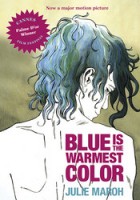
Blue Is the Warmest ColorBlue Is the Warmest Color by Julie Maroh. Originally published in French in 2010, Blue Is the Warmest Color has only recently been released in English. The graphic novel has won several awards as has its film adaptation. It’s a beautiful comic and a beautiful love story. Maroh’s artwork is wonderful. I particularly liked her use of color; much of the graphic novel is illustrated with muted tones with blue as an accent color.Clementine is in high school when she completely falls for Emma. She must come to terms with her identity and sexuality–something that is at first difficult for her to fully embrace and something even more difficult for many of her friends and her family to accept. Although the ultimate ending of Clementine and Emma’s story is known from the very beginning of Blue Is the Warmest Color, Clementine’s death still seems to come rather suddenly. Blue Is the Warmest Color is tragic and bittersweet, but it is also a lyrical exploration of love and desire.

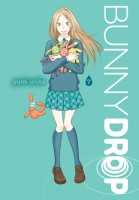
Bunny Drop, Volume 7Bunny Drop, Volumes 7-9 by Yumi Unita. Parts of Bunny Drop were spoiled for me early on but I wanted to see how things played out and how Unita handled it all. These volumes actually do a great job showing Rin’s developing relationship with her mother as well as her struggle with her feelings for Daikichi and his response to them. But then along comes a huge plot reveal in the fifty-fourth chapter that attempts to smooth everything over and make it okay. (Honestly, I was kind of pissed off about it.) It’s as though Unita was trying to find an easy way out after backing herself into a corner. Unfortunately it doesn’t really work, contradicts earlier parts of the story, and even negates previous character developments. In part due to poor planning, the twist is neither satisfying nor believable. Perhaps if Unita had taken the time to show the intervening two years and how Daikichi’s feelings evolved it would have been more convincing. Even though I found the ending of Bunny Drop to be disappointing, I still plan on picking up the final volume of short stories.

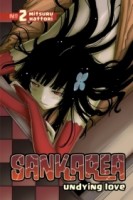
Sankarea: Undying Love, Volume 2Sankarea: Undying Love, Volume 2 by Mitsuru Hattori. I’m a little surprised by how much I’m liking Sankarea. At least I can say that I enjoyed the second volume more than the first. I even chuckled out loud a few times while reading it. I hope the series continues to improve. At this point Sankarea is definitely more of a romantic comedy than it is a horror story. The horror elements are still there though, as are the nods to zombies in popular culture. But it’s Rea’s father who remains the creepiest part of the series. In one delightful scene, Chihiro even calls him out on it directly to his face. And even though Sankarea is a comedy, I’m glad to see that Danichiro’s disturbingly unhealthy relationship and obsession with his daughter isn’t seen as funny. On the other hand, Rea’s relationship with Chihiro–as weird as it is and as weird as they both are as individuals–is almost charming. Sankarea is kind of a strange series, but then so are hydrangea zombies.

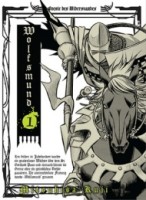
Wolfsmund, Volume 1Wolfsmund, Volume 1 by Mitsuhisa Kuji. Very few historical manga with a European setting have been licensed in English, and so I was intrigued by Vertical’s acquisition of Wolfsmund. I was even more interested when I learned that Kuji was once an assistant for both Kentaro Miura and Kaoru Mori, whose work I love. (I particularly noticed Mori’s influence in how Kuji draws many of the character’s eyes in Wolfsmund.) Wolfsmund takes place in 14th-century Switzerland and is a retelling of sorts of the legend of William Tell. So far the story has focused on those attempting to illicitly cross through the Sankt Gotthard Pass, generally unsuccessfully but not without putting up a fight. While Wolfsmund isn’t overly graphic–most of the gorier moments are implied rather than actually seen–it is a violent and brutal manga. Very dark and very intriguing, I’m looking forward to the next volume of Wolfsmund a great deal.

Filed Under: FEATURES, My Week in Manga Tagged With: bunny drop, comics, Julie Maroh, manga, Mitsuhisa Kuji, Mitsuru Hattori, Sankarea, Wolfsmund, Yumi Unita

Mobile Suit Gundam: The Origin, Vol. 2: Garma

August 30, 2013 by Ash Brown

GundamOrigin2Creator: Yoshikazu Yasuhiko
Original story: Yoshiyuki Tomino and Hajime Yatate

U.S. publisher: Vertical
ISBN: 9781935654889
Released: June 2013
Original release: 2006

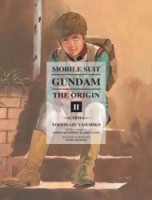
Though I wouldn’t consider myself to be a fan of or even particularly knowledgeable about the massive Gundam franchise, at this point I would consider myself to be a fan of Yoshikazu Yasuhiko’s manga series Mobile Suit Gundam: The Origin. The manga is a retelling of the original 1979 Mobile Suit Gundam anime series from one of the artists who was heavily involved in its creation and visual design. Garma is the second volume in the collector’s edition of Yasuhiko’s The Origin manga, originally released in Japan in 2006. The English-language edition of the volume, published by Vertical in 2013, is a beautiful, high-quality release. This particular volume includes a small illustration gallery of Yasuhiko’s color work as well as a roundtable and special illustration from CLAMP. I was quite impressed with Activation, the first volume of The Origin, so I was looking forward to reading Garma a great deal.

After an eight-month armistice, the forces of the Earth Federation and the Principality of Zeon have once again come into conflict. The Federation’s colony Side 7 was attacked and destroyed when Zeon discovered the Federation military was secretly developing a highly advanced mobile suit there. White Base, the supply ship carrying the new weapon as well as hundreds of refugees from the colony, has reached Earth but Zeon’s pursuit has pushed it far off course. Trapped behind enemy lines and commanded by a young and inexperienced crew, White Base may have survived the initial confrontation with Zeon but the threat is far from over. The Zeon forces are determined to prevent White Base from breaking through to Jaburo; if they can’t capture the new technology, they are more than happy to destroy it. In particular, Colonel Garma Zabi, leader of the Zeon’s North American forces and the youngest son of its reigning family, is interested in the recognition, prestige, and military honor that successfully accomplishing such a feat would bring.

While in Activation the fighting primarily took place in space, the battles and skirmishes in Garma are surface based, occurring on Earth’s land, in its air, and even within a demolished urban center. Both Yasuhiko and the characters must make adjustments because of this. They must take into consideration and use the terrain and topography as part of their strategy. The battles in Garma literally, figuratively, and visually have weight. Even during the aerial maneuvers, Yasuhiko is constantly aware of the forces and gravity in play. The way he draws the battles makes them feel very different from those in Activation and they should be different–tactics and equipment change depending on the environment. Fighting on a planet is very different from fighting in space and he captures that remarkably well. The battles in Garma are engaging. Yasuhiko’s excellent pacing and layout combined with his color work result in some exceptionally stunning, cinematic sequences.

While the military aspect of The Origin is certainly important, perhaps even more important are the more personal human dramas of the story. As can be inferred by the volume’s title, Garma plays a particularly critical role at this point in the manga. Introduced at the very end of Activation, Yasuhiko quickly reveals Garma to be an arrogant and privileged young man. His relationship and association with Char, one of Zeon’s most formidable and calculating commanders, is crucial to the development of the story. Perhaps Garma’s complete opposite is Amuro Ray, the young pilot of the Federation’s new Gundam mobile suit. Drawn into war more by chance than by choice, at the age of fifteen he’s already seen more of battle than he ever wanted. He’s understandably terrified and struggling with the grave responsibility that has been thrust upon him. I’m very interested in seeing how the two sides of the conflict react to the events in Garma because they will have some major consequences.

Filed Under: REVIEWS Tagged With: Gundam, Hajime Yatate, manga, vertical, Yoshikazu Yasuhiko, Yoshiyuki Tomino

  • « Go to Previous Page
  • Page 1
  • Interim pages omitted …
  • Page 32
  • Page 33
  • Page 34
  • Page 35
  • Page 36
  • Interim pages omitted …
  • Page 60
  • Go to Next Page »
 | Log in
Copyright © 2010 Manga Bookshelf | Powered by WordPress & the Genesis Framework