• Skip to primary navigation
  • Skip to main content
  • Skip to primary sidebar
  • Home
  • About Us
    • Privacy Policy
    • Comment Policy
    • Disclosures & Disclaimers
  • Resources
    • Links, Essays & Articles
    • Fandomology!
    • CLAMP Directory
    • BlogRoll
  • Features & Columns
    • 3 Things Thursday
    • Adventures in the Key of Shoujo
    • Bit & Blips (game reviews)
    • BL BOOKRACK
    • Bookshelf Briefs
    • Bringing the Drama
    • Comic Conversion
    • Fanservice Friday
    • Going Digital
    • It Came From the Sinosphere
    • License This!
    • Magazine no Mori
    • My Week in Manga
    • OFF THE SHELF
    • Not By Manga Alone
    • PICK OF THE WEEK
    • Subtitles & Sensibility
    • Weekly Shonen Jump Recaps
  • Manga Moveable Feast
    • MMF Full Archive
    • Yun Kouga
    • CLAMP
    • Shojo Beat
    • Osamu Tezuka
    • Sailor Moon
    • Fruits Basket
    • Takehiko Inoue
    • Wild Adapter
    • One Piece
    • After School Nightmare
    • Karakuri Odette
    • Paradise Kiss
    • The Color Trilogy
    • To Terra…
    • Sexy Voice & Robo
  • Browse by Author
    • Sean Gaffney
    • Anna Neatrour
    • Michelle Smith
    • Katherine Dacey
    • MJ
    • Brigid Alverson
    • Travis Anderson
    • Phillip Anthony
    • Derek Bown
    • Jaci Dahlvang
    • Angela Eastman
    • Erica Friedman
    • Sara K.
    • Megan Purdy
    • Emily Snodgrass
    • Nancy Thistlethwaite
    • Eva Volin
    • David Welsh
  • MB Blogs
    • A Case Suitable For Treatment
    • Experiments in Manga
    • MangaBlog
    • The Manga Critic
    • Manga Report
    • Soliloquy in Blue
    • Manga Curmudgeon (archive)

Manga Bookshelf

Discussion, Resources, Roundtables, & Reviews

manga

My Week in Manga: October 23-October 29, 2017

October 30, 2017 by Ash Brown

My News and Reviews

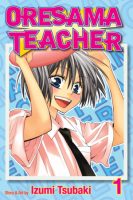
In addition to the usual My Week in Manga, two other features were posted at Experiments in Manga last week. First up was the most recent monthly giveaway. The winner won’t be announced until Wednesday, so there’s still a little time left to enter for a chance to win the first volume of Oresama Teacher by Izumi Tsubaki. (I finally got around to reading Oresama Teacher because I love Tusbaki’s other manga series Monthly Girls’ Nozaki-kun so much. I am delighted to report that Oresama Teacher is great, too.) I also posted my review of the first omnibus of Sweet Blue Flowers by Takako Shimura last week. The manga was one of the debuts that I was most excited for this year and I was not at all disappointed. Like Shimura’s earlier series Wandering Son (which is an extremely important manga to me personally), Sweet Blue Flowers is a beautiful work. I’m so glad that it’s finally getting the print release it deserves and look forward to reading the rest of the series. (Now if only the rest of Wandering Son could be published, too! My fantasy is that Sweet Blue Flowers will be so successful that more of Shimura’s work will be translated.) Once again, I wasn’t actually online much last week and I worked on Sunday so I’m sure there’s plenty of news that I’ve missed. However, I did catch that Thomas Baudinette posted a translation of “Painting the essence of gay erotic art”–an interview with Gengoroh Tagame from a 2014 issue of the art magazine Bijutsu Techo.

Quick Takes

Fairy Tail: RhodoniteFairy Tail: Rhodonite by Kyouta Shibano. At first I was a little confused by the “2” emblazoned upon the cover of Rhodonite since it’s not in fact the second volume of Rhodonite. Instead, it’s the second volume in Shibano’s Fairy Tail Gaiden manga, one of a multitude of series spinning off from Hiro Mashima’s Fairy Tail that have recently been translated into English. Despite retaining the volume designations, the Fairy Tail Gaiden manga are being released as independent works by Kodansha Comics. Shibano’s three spinoff volumes, while relying very heavily on the original series, largely stand alone from one another. Rhodonite collects two side stories featuring Gajeel Redfox, one of the Dragon Slayers associated with the Fairy Tail Guild. Since I’m not especially well-versed in the Fairy Tail franchise, I’m not exactly sure where the first story, from which the volume gains its name, fits in. However, it does reveal more of Gajeel’s past and backstory as the guild is investigating the magic drug trade. The second story takes place while Gajeel is a member of the Magic Council during Fairy Tail’s disbandment. In this story he temporarily teams up with Cobra to rescue a group of children who were kidnapped to be sold as slaves. Already intended for those already familiar with Fairy Tail, Rhodonite will even more specifically appeal to those who are fans of Gajeel.

Spirit Circle, Volume 1Spirit Circle, Volume 1 by Satoshi Mizukami. I rather enjoyed Lucifer and the Biscuit Hammer, currently the only other manga series by Mizukami to be licensed in English. I would have been interested in Spirit Circle for that reason alone, but I’ve also been hearing great (and well-deserved) things about the manga beyond that. Like it’s predecessor in English (which is actually briefly referenced in passing), Spirit Circle is a manga that’s a little strange and quirky but that also has a great deal of heart and soul. Fuuta Okeya has the ability to see ghosts. That by itself would generally be enough to form the basic premise of a series, but thanks to a new transfer student, Fuuta must now also confront his past lives. Though meeting Fuuta for the first time in this life, Kouko Ishigami is very familiar with his previous incarnations. Historically, their encounters haven’t always gone so well, though. In the first volume of Spirit Circle, Fuuta is made to relive two of his pasts to the point of his deaths and parts of a third life are revealed as well. So far, I’m loving Spirit Circle. Fuuta and Kouko’s past lives are filled with heartbreaks and joys, echoes of which are apparent in the teenagers’ current existences. Taken separately, the stories are interesting, but together they’re marvelous. I’m very curious to see where Mizukami takes the series next.

Sweet Bean PasteSweet Bean Paste by Durian Sukegawa. The 2015 film adaptation of Sukegawa’s novel An has been released internationally under several different titles–Sweet Red Bean Paste, An, and Sweet Bean–and now the original work has been translated into English with yet another title variation, Sweet Bean Paste. I’ve not seen Naomi Kawase’s film, but it seems to have been generally well-received. As for Sukegawa’s original novel, it makes for a fairly quick and light read despite some of the story’s more tragic undercurrents and philosophical musings. Sentaro is a man with a criminal past, out of prison but still working off his debt by making and selling dorayaki in a confectionery shop owned by the widow of his boss. He’s not particularly invested in the job, but that begins to change when an elderly woman named Tokue, her hands disfigured from a childhood illness, convinces him to let her join him at the shop. Bringing a unique perspective on life along with a recipe for sweet bean paste more delicious than any other Sentaro has tasted, Tokue has a huge influence upon the younger man as their unexpected friendship blossoms. Although much about Tokue’s past is unfortunate and she continues to deal with the stigma associated with leprosy, she has still found a way to live on in the face of prejudice and discontent. Sentaro has much to learn from Tokue, even if the lessons are bittersweet.

Filed Under: My Week in Manga Tagged With: Durian Sukegawa, Fairy Tail, Kyouta Shibano, manga, Novels, Satoshi Mizukami, Spirit Circle

Sweet Blue Flowers, Vol. 1

October 27, 2017 by Ash Brown

Sweet Blue Flowers, Omnibus 1Creator: Takako Shimura
Translator: John Werry
U.S. publisher: Viz Media
ISBN: 9781421592985
Released: September 2017
Original release: 2005-2006

Takako Shimura is probably best known for two manga series. The first, and my introduction to her work, is Wandering Son, a series which sympathetically explores some of the challenges faced by transgender and gender non-conforming youth. (Wandering Son is an incredibly important manga to me personally and I will forever lament the fact that it will likely never be released in English in its entirety.) The second manga is Sweet Blue Flowers, another series with queer themes, this time focusing on bisexual young woman and lesbian teenagers. While the anime adaptation of Sweet Blue Flowers has been readily available in English for years, the publication history of Shimura’s original manga has been more fraught. Originally translated in 2012 as part of the failed JManga digital initiative, the first volume was subsequently released by Digital Manga in a less than stellar ebook version after which the series languished unfinished. Surprisingly, Sweet Blue Flowers would be rescued by Viz Media, making it one of the first yuri manga to ever be released by the publisher. The first print omnibus of the Viz Signature edition of Sweet Blue Flowers, collecting the first and second volumes of the series originally published in Japan in 2005 and 2006, was easily one of my most anticipated debuts of 2017.

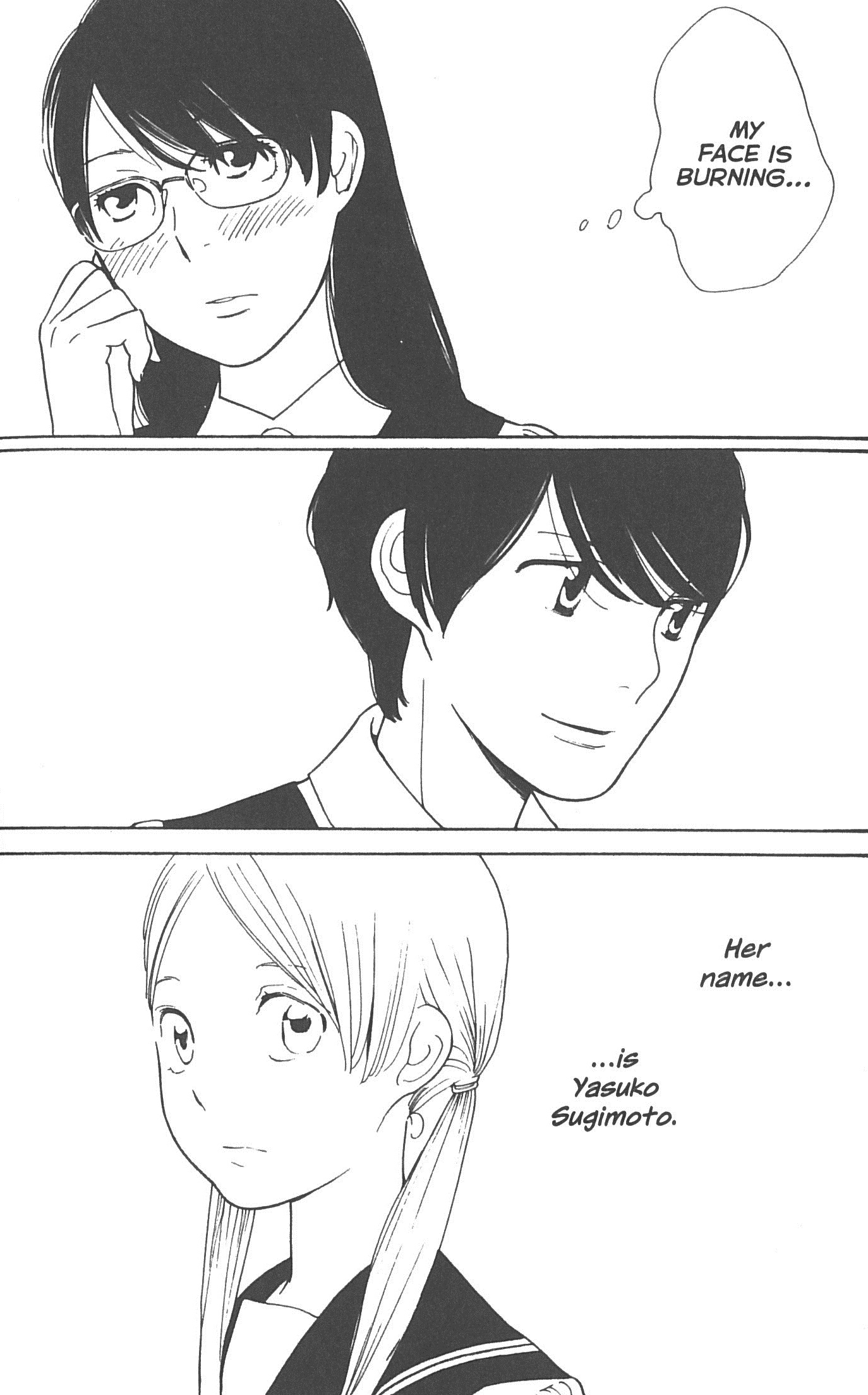
Fumi Manjome and Akira Okudaira were very close as children but the two girls fell out of touch after Fumi’s family moved away. Many years later they meet again by chance while commuting by train on the way to their first day of high school. They don’t actually realize who the other one is at first, but soon Fumi and Akira’s friendship is rekindled and their relationship blossoms once more. Since they attend different all-girls schools they don’t get a chance to see each other as much as they might like, though. Even so, both Akira and Fumi are faced with some similar trials which bring them together–making friends at their new schools and finding an extracurricular club to join that interests them among other things–but not everything is the same for them. Although complimentary, the two young women have strikingly different personalities, resulting in drastically different experiences and interactions. And while Akira doesn’t seem to have put much thought into romance, Fumi has recently had her heart broken. But now Fumi has fallen for an older student at her school, Yasuko Sugimoto, a young woman who is interested in Fumi but who is also dealing with an unrequited love of her own.

Sweet Blue Flowers, Omnibus 1, page 92Shimura’s artwork in Sweet Blue Flowers is simple and refined, but is still able to carry the emotional weight and expressiveness of the story. The focus of the manga’s illustrations is almost entirely on the characters themselves. Except for when the actual setting is intended to make an impact, such as the hallowed halls of a prestigious school or the imposing home of a distinguished family, backgrounds are minimalistic and sometimes even non-existent. Just enough is implied to give readers an impression of place and location. This technique, along with Shimura’s use of light and shadow, is reminiscent of intentionally minimal set design used in some theatrical performances which in turn nicely echoes the high school stage production of Wuthering Heights featured prominently in the first omnibus of Sweet Blue Flowers. The characters’ involvement with the play is an important part of the series both aesthetically and thematically. The connections to theater and creative performance arts present in Sweet Blue Flowers can also be found in Shimura’s other work, including but not limited to Wandering Son.

Sweet Blue Flowers is a wonderful series. The manga is emotionally resonate, with a realistic portrayal of the experiences of young women who love other young women. The characterizations and character development in Sweet Blue Flowers in particular are marvelous. Shimura effectively captures the nuances of a multitude of personalities and how they interact with one another, showing both individuals and their relationships as believably layered and convincingly complex. Sweet Blue Flowers is a relatively quiet story, but the emotional drama is powerful and the manga conveys a compelling sense of authenticity and honesty. I am loving the series and find that I am completely invested in the lives and well-being of Fumi, Akira, and the other characters as they navigate their adolescence. Life and relationships can be challenging and messy, something that Shimura does not shy away from in the manga. The young women in Sweet Blue Flowers grow and change, gaining maturity through their mistakes and missteps as well as personal clarity as they slowly discover their own identities. Sweet Blue Flowers is a worthwhile and lovely work; I’m so glad that it’s finally receiving a proper release in English.

Filed Under: REVIEWS Tagged With: manga, Sweet Blue Flowers, Takako Shimura, viz media, VIZ Signature

Manga Giveaway: Oresama Teacher Giveaway

October 25, 2017 by Ash Brown

The end of October is quickly approaching which means it’s time for another monthly giveaway at Experiments in Manga! For this month’s giveaway, everyone participating will have the chance to win Oresama Teacher, Volume 1 by Izumi Tsubaki as published in English by Viz Media. Oresama Teacher isn’t the newest series, but it is one that I recently started reading and quickly fell in love with. Since these giveaways are in part meant to help me spread my love of manga, it made since to me to include Oresama Teacher in the fun, too. Oh, and as usual, the giveaway is open worldwide!

Oresama Teacher, Volume 1

I’m not sure exactly why it is, but I really enjoy manga about delinquents. There’s just something about ruffians with hearts of gold that warms my own heart. Granted, not all delinquents in manga are so benevolent, and some series can be quite brutal, but I tend to enjoy those as well. Whether a manga takes a more comedic or more dramatic approach the the pervasive delinquent character type there’s usually some sort of well-deserved ass-kicking involved which, in general, is something that I can appreciate. All that being said, I’m a little uncertain why it took me so long to give Oresama Teacher a try considering the prominence of delinquents and ex-delinquents in the story, but now that I have I am completely hooked. And I am completely okay with that.

So, you may be wondering, how can you win a copy of Oresama Teacher, Volume 1?

1) In the comments below, tell me a little about your favorite manga delinquent. (If you don’t have a favorite, or haven’t encountered any, simply mention that instead.)
2) If you’re on Twitter, you can earn a bonus entry by tweeting, or retweeting, about the contest. Make sure to include a link to this post and @PhoenixTerran (that’s me).

It’s as easy as that. Giveaway participants can earn up to two entries and have one week to submit comments. If needed or preferred, comments can also be sent to phoenixterran(at)gmail(dot)com which I will then post here in your name. The giveaway winner will be randomly selected and announced on November 1, 2017. Best of luck to you all!

VERY IMPORTANT: Include some way that I can contact you. This can be an e-mail address in the comment form, a link to your website, Twitter username, or whatever. If I can’t figure out how to get a hold of you and you win, I’ll just draw another name.

Contest winner announced–Manga Giveaway: Oresama Teacher Giveaway Winner

Filed Under: FEATURES, Giveaways Tagged With: Izumi Tsubaki, manga, oresama teacher

My Week in Manga: October 16-October 22, 2017

October 23, 2017 by Ash Brown

My News and Reviews

Well, it was a very quiet week at Experiments in Manga last week. I was hoping to post my review of the first omnibus of Takako Shimura’s Sweet Blue Flowers, but a variety of things came up–little dude’s preschool open house, helping family members with their cross-country move, spending most of a day on the road for an out-of-state taiko performance, to name just a few. But never fear! I’ll almost certainly be posting the review later this week instead. I haven’t been online much recently either, but I did catch a couple of thing of interest last week. The first was an announcement from Dark Horse, which will be releasing Kentaro Miura’s official Berserk guidebook in March of next year. The second was Brigid Alverson’s discussion with Akira Himekawa, the two-person creative team behind most of the manga adaptations of The Legend of Zelda.

Quick Takes

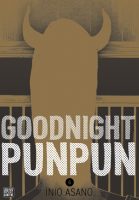
Goodnight Punpun, Omnibus 6Goodnight Punpun, Omnibus 6-7 (equivalent to Volumes 11-13) by Inio Asano. It feels like it’s been forever since I’ve read the fifth omnibus of Goodnight Punpun, but in reality it’s only been a few months. Perhaps it seems so long since Goodnight Punpun can be such a hard-hitting, exhausting experience which requires time to fully recover between volumes. (At least, that tends to be the case for me.) Goodnight Punpun is a surreal and extremely dark coming-of-age story. The series is intense, easily earning its explicit content warning with the manga’s portrayal of emotional, psychological, and physical violence. But while much of Goodnight Punpun is incredibly bleak, there are also moments of hope. Granted, that hope can also be extremely painful. Goodnight Punpun worked best for me when it was exploring the inner turmoil of its titular protagonist. I was actually frequently reminded of Osamu Dazai’s No Longer Human as the series approached its conclusion. The manga’s second major plot involving the cult wasn’t nearly as compelling or convincing, coming across as superfluous and tangential to me. But having now reached the end of Goodnight Punpun, I find that I want to read it again. The manga has multiple layers to it and I’m fairly certain there are elements that I either missed entirely or didn’t fully appreciate my first time through the series.

Waiting for Spring, Volume 1Waiting for Spring, Volume 1 by Anashin. Although the basic premise of Waiting for Spring makes it seem like the manga’s setup could easily slip into a reverse harem territory, after reading the first volume I don’t think that’s the direction Anashin will be taking with the series. However, it does still look like there will be at least some romantic rivalry involved. If there’s one thing that Mitsuki wants from high school, it’s to finally make some friends. She’s having a difficult time of it, though. The other young women in her class aren’t really hostile towards her, but she hasn’t been able to really connect with them, either. But things start to change when she gets mixed up with and is unexpectedly befriended by the four stars of the men’s basketball team. In general, most of the relationships in Waiting for Spring are very well done. The blossoming romance between Mitsuki and one of the basketball players is very sweet, but I’m particularly enjoying the friendships in the first volume. Mitsuki treats all of the guys like they’re real people. She isn’t blinded by their good looks and athletic talent (though she can still appreciate them) and doesn’t hesitate to give them what for when needed. This is actually something of a novelty for them, but it’s what allows their friendships with her to naturally develop. The already well-established relationships between the four young men are also very entertaining.

Attack on Titan Adventure: Year 850: Last Stand at Wall RoseAttack on Titan Adventure: Year 850: Last Stand at Wall Rose written by Tomoyuki Fujinami and illustrated by Ryosuke Fuji and Toru Yoshii. Growing up, I was a huge fan of the Choose Your Own Adventure series and other types of gamebooks. (I’ve even held onto a few particularly well-loved volumes from my youth.) And so I was very curious about Last Stand at Wall Rose, an interactive novel set during the Battle of Trost which takes place early on in Hajime Isayama’s original Attack on Titan manga. The mechanics of Last Stand at Wall Rose are interesting, incorporating elements of roleplaying games. Since I’m used to standard branching-plot stories, the book wasn’t as linear as I was expecting and in some ways was even more interactive than I thought it would be. Keeping pencil and paper nearby while reading can be very useful. Last Stand at Wall Rose was fun, but I did find some of the formatting and gameplay to be annoying. The most egregious issue was the amount of unnecessary flipping of pages which made the narrative more disjointed than it otherwise would have been. I also almost wish that page numbers hadn’t been included since the novel’s navigation is based on a system of independently numbered story sections rather than pages. (Also of note: Readers of the first printing of Last Stand at Wall Rose will want to refer to the errata posted online.)

Filed Under: FEATURES, My Week in Manga Tagged With: Anashin, attack on titan, Goodnight Punpun, Inio Asano, manga, Ryosuke Fuji, Tomoyuki Fujinami, Toru Yoshii, Waiting for Spring

My Week in Manga: October 9-October 15, 2017

October 16, 2017 by Ash Brown

My News and Reviews

Last week at Experiments in Manga I posted the Bookshelf Overload for September which includes lists of some of the manga and other books that I picked up last month (along with some brief commentary). Looking forward to future manga releases, Vertical Comics recently announced two new titles: Pop Team Epic by Bkub Okawa and The Delinquent Housewife! by Yoko Nemu. Seven Seas also had an interesting announcement to make. In addition to two licenses–Yuuna and the Haunted Hot Springs by Tadahiro Miura and World’s End Harem by Link and Kotaro Shono–Seven Seas is launching Ghost Ship, a new imprint for the publishers’ more mature titles.

Quick Takes

Captain Harlock: Dimensional Voyage, Volume 1Captain Harlock: Dimensional Voyage, Volume 1 written by Leiji Matsumoto, illustrated by Kouiti Shimaboshi. Although I immediately recognize the name of Captain Harlock, Dimensional Voyage is actually the first incarnation of his story that I’ve read or watched except for the short crossover manga  included in Kodansha Comics’ recent release of Queen Emeraldas. (Emeraldas actually makes a brief appearance in the first volume of Dimensional Voyage, too.) My understanding is that Dimensional Voyage is either a reboot or retelling of Matsumoto’s original Captain Harlock manga, written by Matsumoto himself but illustrated by a different artist. The series is completely accessible to readers who are unfamiliar with Harlock though I suspect that established fans will find the manga to be appealing as well. Shimaboshi’s designs are obviously based on Matsumoto’s though many of the main characters are much more conventionally attractive in this version. Both the dialogue and the artwork of Dimensional Voyage tends to be very dramatic and at times even melodramatic, but I don’t at all consider that to be a bad thing. As for the story itself, the manga is just getting started. The first volume establishes the basic setting and premise, but much of it is spent introducing the legends surrounding Harlock, the series’ titular space pirate.

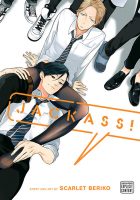
Jackass!Jackass! by Scarlet Beriko. I forget exactly how Beriko’s work as a whole was first brought to my attention, but my curiosity was immediately piqued by Jackass! when SuBLime announced that it would be publishing the manga. It’s not a terribly uncommon trope in boys’ love for two friends to ultimately fall deeply in love with each other, so Jackass! isn’t particularly surprising in that way. However, it is the first manga that I’ve read in the genre in which women’s stockings provide the initial impetus for a relationship to take that particular turn. Keisuke’s best friend Masayuki has a leg fetish. In a rather awkward turn of events, and much to Keisuke’s embarrassment, Masayuki catches a glimpse of him wearing his sister’s pantyhose. Masayuki is instantly smitten with Keisuke’s perfect legs, which understandably complicates their relationship somewhat. At times Jackass! can be unexpectedly sweet and even touches on more sobering subject matter like homophobia, but for the most part it reads as a comedy not to be taken too seriously. Jackass! includes a strong supporting cast, including Keisuke’s older sister and his confidently gay cousin, which add a great deal to the manga; the entertaining and occasionally ridiculous character interactions are the highlight of the story. I enjoyed Jackass! and would certainly be interested in reading more of Beriko’s work.

Kiss Me at the Stroke of Midnight, Volume 1Kiss Me at the Stroke of Midnight, Volume 1 by Rin Mikimoto. Hinana is known for her seriousness so most of her friends and classmates are unaware that she’s also a romantic hoping to find a fairy tale-like love. Kaede is a celebrity and rising star, admired for both his talent and incredibly good looks. The two of them meet, somewhat by chance, when Kaede is shooting on location at Hinana’s high school for an upcoming film and they end up hitting it off. Mikimoto’s artwork in Kiss Me at the Stroke of Midnight comes across as attractive but a little generic overall except for the hilariously exaggerated reaction shots drawn for comedic effect. And there is plenty of humor in the series. Kaede, idolized by his fans, does not at all have the personality that they would expect. He can be kind but, despite how he generally presents himself professionally, Kaede’s not exactly a refined gentleman. He’s also really into butts, and isn’t ashamed of that fact. Most people would probably be slightly taken aback by this, but Hinana finds his candidness refreshing. (I appreciated that aspect of his personality as well.) I was a little surprised by how much I enjoyed the first volume of Kiss Me at the Stroke of Midnight. I’m not overly interested in manga about celebrities, but Kaede is such a weirdo and Hinana is likeable, so I’m curious to see what turns their relationship might take from here.

Filed Under: FEATURES, My Week in Manga Tagged With: Captain Harlock, Kiss Me at the Stroke of Midnight, Kouiti Shimaboshi, Leiji Matsumoto, manga, Rin Mikimoto, Scarlet Beriko

My Week in Manga: October 2-October 8, 2017

October 9, 2017 by Ash Brown

My News and Reviews

Last week at Experiments in Manga I announced the winner of the Assassin’s Creed manga giveaway. The post also includes a list of manga published in English that feature pirates of various types, including historical pirates, fantasy pirates, space pirates, and others. Then New York Comic Con (which is still going on) and Yaoi Con were held last week as well. I didn’t attend either event, but there were some announcements made by Kodansha Comics, Viz Media, and SuBLime Manga (which is technically Viz Media, too). Kodansha revealed plans to release Kenji Inoue and Kimitake Yoshioka’s Grand Blue Dreaming, Mitsurou Kubo’s Again!!, and Akiko Higashimura’s Tokyo Tarareba Girls in print. Among other things, Viz will be adding Hidenori Kusaka and Satoshi Yamamoto’s Pokémon Sun & Moon and Tenya Yabuno’s Pokémon Horizon: Sun & Moon and will be re-releasing Naoki Urasawa’s 20th Century Boys and 21st Century Boys in a hardcover edition in addition to speeding up the release of Kōhei Horikoshi’s My Hero Academia. SuBLime announced a few new digital titles, but Ranmaru Zariya’s Coyote and Ogeretsu Tanaka’s Escape Journey will receive print runs, too.

Quick Takes

Aho-Girl, Volume 1Aho-Girl, Volume 1 by Hiroyuki. I only realized it after I finished the first volume of Ah0-Girl, but I’ve actually read another of Hiroyuki’s four-panel manga, Dojin Work, which was never released in its entirety in English. It’s been a long while since I’ve read Dojin Work, but I get the sense that in general I prefer that earlier series over this more recent one. Aho-Girl, while it did legitimately make me laugh on multiple occasions, tends to rub me the wrong way and I personally could have done without all of the sexual harassment being used as the basis for comedy. The dirty jokes I don’t particularly mind, though. As defined by first volume’s cover, “aho-girl” is Japanese for a clueless girl. Yoshiko Hanabatake, the series’ titular character, is indeed an astonishingly dense airhead. Oh, and she really, really likes bananas. Other major characters in the first volume of the manga include Akuru Akutsu, her long-suffering next door neighbor and supposed childhood friend (who doesn’t seem to have many friends in part due to his own unfortunate personality), her mother Yoshie, who would like nothing more than to see the two of the together, and Sayaka Sumino, a genuinely kind girl, classmate, and friend. As may safely be assumed, most of the humor of Aho-Girl revolves around Yoshiko’s sheer stupidity, for better and for worse.

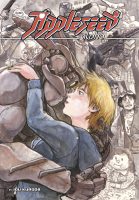
Appleseed AlphaAppleseed Alpha by Iou Kuroda. An adaptation of sorts of the Appleseed Alpha anime, which itself is a spinoff of sorts of Masamune Shirow’s Appleseed manga, Kuroda’s Appleseed Alpha manga forms a prequel to the original story. Although to be completely honest, I’m not entirely sure exactly how the Appleseed Alpha fits into the larger Appleseed franchise since I’m not familiar with any of the other manga or anime. What drew me to the Appleseed Alpha manga was Kuroda’s involvement. It’s been a few years since I’ve read it, but I remember enjoying Kuroda’s alternative manga Sexy Voice and Robo, so I was glad to see more of the creator’s work with its distinctive illustration style released. Kuroda’s Appleseed Alpha was longer than I originally thought it was–Kodansha Comics’ hardcover edition is in fact an omnibus collecting the entire two-volume series, but somehow manages to look much shorter than it actually is. Appleseed Alpha is not a quick read although the plot and action moves at a fairly steady pace. The story follows Deunan, a very competent ex-SWAT officer, and her combat cyborg boyfriend Briareos as the couple makes their way through a dystopic cyberpunk Western version of the United States. Previous knowledge of Appleseed is not needed to enjoy Kuroda’s somewhat quirky contribution.

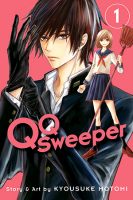
QQ Sweeper, Volume 1QQ Sweeper, Volumes 1-3 by Kyousuke Motomi. I greatly enjoyed Motomi’s earlier manga series Dengeki Daisy, so I was looking forward to giving another of the creator’s series a try, which is what ultimately led me to QQ Sweeper. (A few of the characters from Dengeki Daisy actually happen to make quick cameo appearances in the series, too.) Fumi’s dream in life is to find a prince charming to sweep her off her feet. Instead, she finds Kyutaro who has a fixation on literally sweeping. He has a pretty good reason for it, though. Kyutaro and his family are responsible for ridding the local area of dangerous infestations of malicious thoughts and psychological torment which manifest as bugs and physical cleanliness can go far to help with spiritual cleanliness. Of course, sometimes the bugs really are just bugs. For as seemingly silly and charmingly goofy as QQ Sweeper can often be–it can essentially be summed up as a supernatural cleaning manga–the series quickly becomes surprisingly dark. QQ Sweeper ends somewhat suddenly with the third volume and doesn’t really provide much of a satisfying conclusion, but fortunately the sequel series Queen’s Quality has been licensed as well. The series’ humor and seriousness occasionally seems a little off-balance, but I really liked QQ Sweeper and certainly plan on continuing with the story.

Filed Under: FEATURES, My Week in Manga Tagged With: Aho-Girl, Appleseed, Hiroyuki, Iou Kuroda, Kyousuke Motomi, manga, QQ Sweeper

Manga Giveaway: Assassin’s Creed Giveaway Winner

October 4, 2017 by Ash Brown

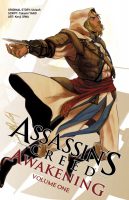
Assassin's Creed: Awakening, Volume 1And the winner of the Assassin’s Creed: Awakening manga giveaway is… Sean Kleefeld!

As the winner, Sean (who does some great writing about comics) will be receiving a copy of the first volume in Takashi Yano and Kenji Oiwa’s Assassin’s Creed: Awakening as published in English by Titan Comics. Since pirates feature very prominently in the series, I wanted to learn about some of the giveaway participant’s favorite pirates from manga. Perhaps unsurprisingly considering the popularity of the series characters from Eiichiro Oda’s One Piece were mentioned several times, but some lesser-known pirates can be found in the giveaway comments, too.

Some of the manga released in English featuring pirates:
Assassin’s Creed: Awakening written by Takashi Yano, illustrated by Kenji Oiwa
Basara by Yumi Tamura
Berserk by Kentaro Miura
Black Lagoon by Rei Hiroe
Bodacious Space Pirates: Abyss of Hyperspace by Chibimaru
Captain Harlock by Leiji Matsumoto
Captain Harlock: Dimensional Voyage written by Leiji Matsumoto, illustrated by Kouiti Shimaboshi
Cirque du Freak by Takahiro Arai
Elemental Gelade by Mayumi Azuma
The Legend of Zelda: Phantom Hourglass by Akira Himekawa
One Piece by Eiichiro Oda
Princess Knight by Osamu Tezuka
Queen Emeraldas by Leiji Matsumoto
Stone by Sin-ichi Hiromoto
Vinland Saga by Makoto Yukimura
Wanted by Matsuri Hino
Yona of the Dawn by Mizuho Kusanagi

I’m certain that the above list isn’t comprehensive, but I was a little surprised by how few series I was able to easily come up with that feature pirates! Still, it’s an interesting mix which includes historical pirates, fantasy pirates, space pirates, and more. Thank you to everyone who participated by sharing your personal favorites with me! I hope to see you all again for the next monthly giveaway.

Filed Under: Giveaways, Lists, UNSHELVED Tagged With: Assassin's Creed, Kendi Oiwa, manga, Takashi Yano

My Week in Manga: September 25-October 1, 2017

October 2, 2017 by Ash Brown

My News and Reviews

September has ended and October has begun, but there’s still a little time left to enter the most recent manga giveaway at Experiments in Manga! The results will be announce on Wednesday, so be sure to get your comments in for a chance to win the first volume (actually, I think it may even be the first half) of Takashi Yano and Kenji Oiwa’s Assassin’s Creed: Awakening. For this giveaway, I’m interested in learning more about everyone’s favorite pirate characters in manga. Otherwise, it was once again a fairly quiet week here at the blog. It’s been a while since I’ve last mentioned any of the Kickstarter’s that have caught my eye, but Matthew Meyer’s campaign to continue his series of illustrated yokai guides launched last week. The Book of the Hakutaku: A Bestiary of Japanese Monsters will be the third volume following The Night Parade of One Hundred Demons: A Field Guide to Japanese Yokai (which I’ve previously reviewed) and The Hour of Meeting Evil Spirits: An Encyclopedia of Mononoke and Magic. I really love these books, and the artwork is fantastic.

Quick Takes

Love and Lies, Volume 1Love & Lies, Volume 1 by Musawo. In general, I don’t tend to gravitate towards high school romances, but I am a sucker for utopian and dystopian fiction, so when those two genres mix I can’t help but want to give the resulting story a try. Love & Lies is set in Japan in the near future. In response to the crisis of an extreme decline in population, the government has implemented a program which assigns marriage partners based on their genetic makeup and social circumstances so that any children born will be healthy, skilled, contributing members of society. Once both partners have turned 16, they receive a notice from the government revealing their identities to each other for the first time. Who they may or may not truly love isn’t really taken into consideration, but it also seems that program may be susceptible to corruption. I find the premise of Love & Lies to be very interesting; it has great potential to explore the nature of love and personal relationships in a dramatic and engaging way. When the entire purpose of marriage has become a government-funded reproduction program, the impact on society and its people will be tremendous. I also especially appreciate that Love & Lies includes at least one character who isn’t heterosexual seeing as a marriage program of this type would have particularly drastic social implications for a person who is queer in some way.

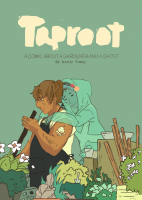
TaprootTaproot: A Comic about a Gardener and a Ghost by Keezy Young. I first encountered Young’s work through the ongoing webcomic Yellow Hearts which joined Sparkler Monthly‘s lineup of online comics relatively recently. Part of what I love about Yellow Hearts is Young’s gorgeous illustrations and use of color as well as the natural inclusion of queer characters in the story. Taproot is Young’s debut graphic novel and it, too, has what I’ve come to love and expect from the creator’s other comics. The graphic novel has a great amount of depth to it, more than the rather simple, straightforward subtitle would seem to imply. Hamal is young man who can see ghosts, an ability which has made it difficult for him to find acceptance from others. At least from those who are living. Many of the ghosts, on the other hand, are drawn to and quite like Hamal; Blue has even fallen in love with him, although being incorporeal presents a few challenges. But there’s an even greater problem that the two of them must face–the very existence of the local ghosts is being threatened by a frighting supernatural disturbance. There is a sense of loneliness and melancholy to be found in Taproot, but the comic is also incredibly heartwarming and endearing. Taproot is a sweet and touching queer romance with beautiful artwork, making it something that’s extremely easy to recommend.

That Time I Got Reincarnated as a Slime, Volume 1That Time I Got Reincarnated as a Slime written by Fuse and illustrated by Taiki Kawakami. There seems to be a preponderance of manga series right now with the underlying conceit of a person dying and then being reincarnated in some sort of fantasy world. I have read a few of these series, so I haven’t been completely avoiding them, but I’ve not really been seeking them out, either, having experienced genre-fatigue by proxy. However, That Time I Got Reincarnated as a Slime still managed to pique my interest simply because it sounded like such a ridiculous spin on what has become such a well-worn story. And I’ll admit, the first volume of the That Time I Got Reincarnated as a Slime manga is surprisingly entertaining. The protagonist of the series also happens to be a 37-year-old man, which isn’t the most common in translated manga. Of course, as can be safely assumed from the title, he soon dies only to start life again as a slime, one of the lowliest monsters there is. Mikami accepts this turn of fate pretty quickly and focuses his attention on gaining the ability to verbally communicate with the adventurers and other creatures he encounters. What he doesn’t realize is that he’s essentially been leveling up the entire time he’s been trying to find a way to talk and has unintentionally become one of the most powerful monsters in the area, inadvertently gaining a large following in the process.

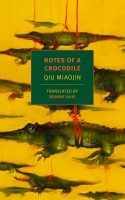
Notes of a CrocodileNotes of a Crocodile by Miaojin Qiu. So far, only two of Qiu’s long-form works have been translated into English. Last Words from Montmarte, originally published posthumously after the author’s suicide at the age of twenty-six, was released in translation in 2014 and the English-language edition of Notes of a Crocodile, described as a cult classic of queer Taiwanese literature, was more recently released in 2017. Notes of a Crocodile is also one of Qiu’s most highly acclaimed and well-known works. The novel is about a small group of lovesick and psychologically troubled queer college students coming of age in Taipei in the late 1980s. The narrative unfolds as a series of notebooks which contain a combination of diary-like entries, letters between friends and lovers, and fragments of a surreal story about crocodiles posing as humans, in part a metaphor for those who have to live hidden lives. The narrator of Notes of a Crocodile is nicknamed Lazi, a young lesbian woman with self-destructive tendencies who is struggling to come to terms with her sexuality. The women she falls obsessively in love with and their doomed romances feature prominently as do the tumultuous and fraught relationships between her and her small group of extremely close friends. Notes of a Crocodile is a beautiful work but it is also filled with pain, desperation, and longing–the novel resonated very strongly with me and I hope to read more of Qiu’s work.

Filed Under: FEATURES, My Week in Manga Tagged With: comics, Fuse, Keezy Young, Love and Lies, manga, Miaojin Qiu, Musawo, Novels, Taiki Kawakami, That Time I Got Reincarnated As a Slime

Manga Giveaway: Assassin’s Creed Giveaway

September 27, 2017 by Ash Brown

The month of September brings a number of things along with it, such as the autumnal equinox (for us in the Northern Hemisphere, at least) and yet another manga giveaway at Experiments in Manga. For some, other September delights include International Talk Like a Pirate Day. As such, a manga about pirates would seem to be thematically appropriate for a giveaway, and so this month you all have a chance to win the first trade volume of Takashi Yano and Kenji Oiwa’s Assassin’s Creed: Awakening as published in English by Titan Comics. As usual, the giveaway is open worldwide!

Assassin's Creed: Awakening, Volume 1

Pirates, noble or otherwise, are a fairly popular character type in all sorts of media. The presence of pirates in a story generally brings along with it a promise of action, adventure, and sometimes even a bit of romance. Often their portrayal in fiction tends to be fairly glamorized when compared with historical and modern-day realities although there are certainly some stories that favor a more gritty approach.  When it comes to manga, there’s one particularly successful series that most people probably immediately think of when considering pirates (Eiichiro Oda’s One Piece), but there are plenty of other, lesser-known manga that feature pirates of one ilk or another as well. Part of Assasin’s Creed: Awakening, for example, takes place on the high seas during the early eighteenth century and, yes, there are most certainly pirates to be found.

So, you may be wondering, how can you win a copy of Assassin’s Creed: Awakening, Volume 1?

1) In the comments below, tell me a little about your favorite pirate from a manga. (If you don’t have a favorite, or haven’t read any, simply mention that instead.)
2) If you’re on Twitter, you can earn a bonus entry by tweeting, or retweeting, about the contest. Make sure to include a link to this post and @PhoenixTerran (that’s me).

And there you have it! Anyone participating in the giveaway has one week to submit comments and can earn up to two entries. Comments can also be sent to me directly at phoenixterran(at)gmail(dot)com if either needed or preferred. Those comments will then be posted here in your name. The giveaway winner will be randomly selected and announced on October 4, 2017. Good luck!

VERY IMPORTANT: Include some way that I can contact you. This can be an e-mail address in the comment form, a link to your website, Twitter username, or whatever. If I can’t figure out how to get a hold of you and you win, I’ll just draw another name.

Contest winner announced–Manga Giveaway: Assassin’s Creed Giveaway Winner

Filed Under: FEATURES, Giveaways Tagged With: Assassin's Creed, Kendi Oiwa, manga, Takashi Yano

My Week in Manga: September 18-September 24, 2017

September 25, 2017 by Ash Brown

My News and Reviews

I was running a little behind my intended schedule last week (and today for that matter–this seems to be somewhat par for the course lately), but over the weekend I was finally able to post my review of the ninth omnibus of Vinland Saga, an award-winning historical manga by Makoto Yukimura which has become one of my favorite series currently being released in English. Last week I also attend a talk by Hiroshi Yoshioka, a professor at Kyoto University’s Kokoro Research Center, called Hiroshima, Fukushima, and Beyond: Borders and Transgressions in Nuclear Imagination. Yoshioka’s research addresses the portrayal of nuclear power within popular culture, whether that be manga like Keiji Nakazawa’s Barefoot Gen, Sunao Katabuchi’s In This Corner of the World anime adaptation, other visual arts, or even Giant Baba’s “atomic drop” in professional wrestling. I won’t be doing a full write-up of the talk (although perhaps I should), but I did find it to be fascinating. A couple of other interesting things that I’ve come across recently include Ryan Holmberg’s two part article “Yokoyama Yuichi and Audiovisual Abstraction in Comics” as well as an edited version of a talk by Tyran Grillo, the translator working on the Legend of the Galactic Heroes novels, about the series and its author Yoshiki Tanaka.

Quick Takes

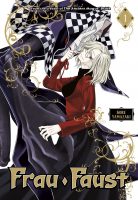
Frau Faust, Volume 1Frau Faust, Volume 1 by Kore Yamazaki. The German legend of Faust, a scholar who sells his soul to the Devil in order to gain great knowledge and worldly delights, has had numerous interpretations over the centuries. (Considering my background in music, I’m personally most familiar with the various operatic and symphonic renditions of the tale.) Faust being the subject of a manga would be enough for me to take an immediate interest, but the fact that Frau Faust is by Yamazaki, the creator of The Ancient Magus’ Bride which I greatly enjoy, made it a series that I absolutely knew I needed to read. One volume in, not only am I intrigued, I am completely on board with Yamazaki’s reimagining of the classic tale. As can be gathered from the title, Faust in this case is a woman. Johanna is strikingly enigmatic, the complexity of her true nature slowly revealed over the course of the first volume of the manga. The pacing of Frau Faust is excellent. Plenty of mystery remains by the first volume’s end, but rather than the story feeling like it’s being unnecessarily drawn out, it simply makes me want to read more. The only real complaint I have about the manga, and it’s a relatively minor one at that, is Johanna’s eyeglasses which tend to inexplicably appear and disappear from one panel to the next and I can’t tell if it’s meant to be intentional or not.

Kiss of the Rose Princess, Volume 1Kiss of the Rose Princess, Volumes 1-2 by Aya Shouoto. Since I’ve been enjoying The Demon Prince of Momochi House I’ve been making a point to try some of the other manga by Shouoto available in English. Sadly, I haven’t been nearly as taken with Kiss of the Rose Princess, one of Shouoto’s earlier series. I think that part of my lack of interest in the series stems from the fact that there’s not much of a plot even hinted at until the second volume. It’s almost as if the first volume, and much of the second, is devoted to a side quest before really getting to the meat of the story. Anise is a high school student who quite unexpectedly finds herself in command of a quartet of knights (who are also her classmates) that she can magically summon, a situation that hasn’t been fully explained. More than anything else, the setup comes across as a convenient excuse for the series’ heroine have a number of young men who are in some way bound to her if not vying for her attention. There’s nothing inherently wrong with that, but at this point most of the characters come across as “types” and any convincing romantic tension is nearly nonexistent. Everyone is very prettily drawn, however. Shouoto seems to be favoring silliness over seriousness in Kiss of the Rose Princess, which again isn’t necessarily bad, but a satisfying balance between the tones hasn’t been reached yet.

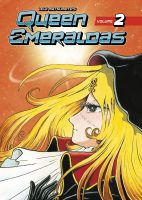
Queen Emeraldas, Volume 2Queen Emeraldas, Volume 2 by Leiji Matsumoto. In addition to being a classic manga, which I’m always happy to see more of in translation, I found the first half of Queen Emeraldas to be wonderfully engrossing, so I was looking forward to reading the conclusion of the series. One of the things that particularly appeals to me about the Queen Emeraldas is the mood that Matsumoto is able to create–the melancholic atmosphere of the manga as well as the portrayal of the great expanse and loneliness of the universe. (I also adore Matsumoto’s illustrations of space.) Emeraldas is a woman traveling the stars, her ship her only constant companion. However, her destiny still frequently crosses paths with those of others. Hiroshi Umino repeatedly finds himself drawn into her orbit as he tries to establish a life of freedom in space. The chapters of Queen Emeraldas are loosely-connected stories with the presence of Emeraldas as the uniting factor. She herself is frequently the narrator of the tales, but the focus is often on the follies and arrogance of the men she meets. I was actually hoping to learn more about Emeraldas and her personal story, but by the end of the series very little has been explicitly stated about her past. Even so, Emeraldas is a marvelously charismatic character, capable of great empathy and compassion but dedicated to justice.

Filed Under: FEATURES, My Week in Manga Tagged With: Aya Shouoto, Frau Faust, kiss of the rose princess, Kore Yamazaki, Leiji Matsumoto, manga, Queen Emeraldas

Vinland Saga, Vol. 9

September 24, 2017 by Ash Brown

Vinland Saga, Omnibus 9Creator: Makoto Yukimura
Translator: Stephen Paul
U.S. publisher: Kodansha
ISBN: 9781632364456
Released: June 2017
Original release: 2016
Awards: Japan Media Arts Award, Kodansha Manga Award

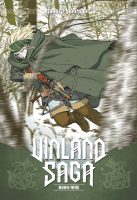
Having read and greatly enjoyed Makoto Yukimura’s near-future science fiction series Planetes, I was very curious to see how he would apply his character-driven approach to Vinland Saga, a manga with a historical setting. The resulting work is phenomenal–in addition to earning multiple awards, including a Japan Media Arts Award and a Kodansha Manga Award, Vinland Saga quickly became and remains one of my favorite manga series currently being released in English. The ninth hardcover omnibus of Vinland Saga was published in 2017 by Kodansha Comics with a translation by Stephen Paul. It collects the seventeenth and eighteenth volumes of the original Japanese series, both of which were released in 2016, in addition to the continuation of “Ask Yukimura,” a section of questions and answers providing further insight into the series and its creation which is exclusive to the English-language edition of Vinland Saga. “Ask Yukimura” was absent from the eighth omnibus, so I was very happy to see its return.

Hild, a skilled hunter, may have saved Thorfinn’s life as he and his companions were accosted by a man-eating bear, but now that she knows exactly who he is, she is determined to take that life from him. Thorfinn has killed countless people during his time employed as a mercenary in pursuit of his own revenge, drastically altering the lives of the victims’ surviving family members and loved ones. It’s a past that continues to haunt him and Hild isn’t the only person to have come to harm due to his actions or who he will have to confront once again. Thorfinn hopes to atone for the death, violence, and destruction he has helped to bring down upon others by establishing a new nation of peace away from the wars, conflict, and struggles for power that plague Europe. But it is a very difficult thing to try to put a stop to a cycle of systemic retribution condoned by society. Thorfinn has convinced others of the worthiness of his cause, but now he must convince Hild who has every right to want him dead.

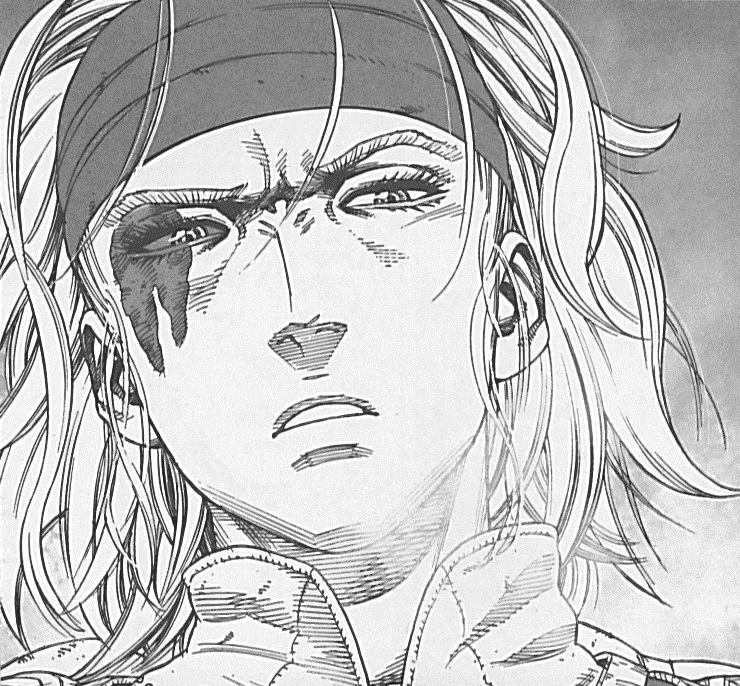
Vinland Saga, Omnibus 9, page 191All-consuming revenge is one of the major themes of Vinland Saga. Yukimura explores how such a single-minded pursuit can dramatically change a person, impacting them on a deep, psychological level, and examines how that internalized violence is reflected in and perpetuated by the world at large. Much of Vinland Saga up until this point has been devoted to Thorfinn’s private struggles and growth as he has tried to come to terms with the irrevocable damage that he has wrought not only upon others but upon himself. With the introduction of Hild, Vinalnd Saga turns its focus outward, delving into the long-lasting and increasingly far-reaching effects of Thorfinn’s past misdeeds. Although this isn’t the first time that the series has shown this sort of tragedy, never before has it been made so cuttingly personal in the manga. Hild isn’t some nameless character met passing; Yukimura shows the entirety of Hild’s story–her life before her family was killed in front of her eyes and how she grew to become the fierce opponent who Thorfinn has no option but to face.

The parallels between Hild and Thorfinn’s individual quests for revenge are numerous although there are still significant differences and Thorfinn is much further along on his personal journey–while he’s chosen a path of peace, it remains to be seen what choices Hild will ultimately make fore herself. But even though Thorfinn is pursuing pacifism, he continues to be drawn into violent confrontations. A large part of why I find Vinland Saga such a tremendous series is due to the compelling character development that it exhibits, but another reason the manga is so incredibly engaging is the result of Yukimura’s spectacular action and fight sequences. They are exciting as well as meaningful, serving not only to move the plot along but frequently to provide an external expression of the characters’ internal struggles. How they fight and what they are willing to risk goes far to reveal who they truly are and what they value most. Vinland Saga continues to greatly impress me; I’m so glad that it’s being translated and look forward to future volumes with immense anticipation.

Filed Under: REVIEWS Tagged With: Japan Media Arts Award, kodansha, Kodansha Comics, Kodansha Manga Award, Makoto Yukimura, manga, Vinland Saga

My Week in Manga: September 11-September 17, 2017

September 18, 2017 by Ash Brown

My News and Reviews

Last week at Experiments in Manga I posted August’s Bookshelf Overload which lists the manga, comics, and other media that found their way into my home last month. Otherwise, it was fairly quiet here at the blog, but I did come across some great interviews elsewhere online: Paul Semel interviewed author Kazuki Sakuraba whose novel A Small Charred Face will be released in translation this week. (I actually recently reviewed the book; it’s well-worth picking up.) Susannah Greenblatt interviewed Motoyuki Shibata, one of the cofounders of the Monkey Business literary magazine, discussing translation and Japanese literature among other things. (I’ve previously reviewed some of the early issues of Monkey Business.) And for something a little more manga-centric, Brigid Alverson interviewed manga editor Yumi Sukimune who works with Akiko Higashimura on Princess Jellyfish (which I greatly enjoy) in addition to other series.

And then there’s the licensing news from last week. Udon Entertainment, for example has plans to release Yuztan’s Dragon’s Crown manga adaptation. Most of last week’s manga and light novel licensing announcements came from another Seven Seas’ sprees, though: Accomplishments of the Duke’s Daughter manga by Reia and Suki Umemiya; two companion volumes to Kore Yamazaki’s The Ancient Magus’ Bride (which I’ll definitely be picking up); Arifureta: From Commonplace to World’s Strongest manga by Ryou Hakumai and RoGa; the original Cutie Honey manga by Go Nagai; The Dungeon of Black Company manga by Youhei Yasumura; Didn’t I Say to Make My Abilities Average in the Next Life?! light novels and manga by FUNA, Itsuki Akata, and Neko Mint; Go For It, Nakamura! manga by Syundei (probably the one I’m personally most excited about); Himouto! Umaru-chan manga by Sankaku Head; How Not to Summon a Demon Lord manga by Yukiya Murasaki and Naoto Fukuda; How to Treat Magical Beasts manga by Kajiya; Hungry For You: Endo Yasuko Stalks the Night manga by Flowerchild; If It’s for My Daughter, I’d Even Defeat a Demon Lord manga by CHIROLU and Hota; Little Devils manga by Uuumi; Mushroom Girls in Love, a one-volume manga by Kei Murayama; Precarious Woman Executive Miss Black General by Jin; Satan’s Secretary manga by Kamotsu Kamonabe; The Voynich Hotel manga by Seiman Doumanv. It’s an interesting mix!

Quick Takes

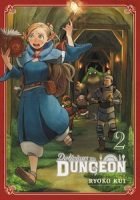
Delicious in Dungeon, Volume 2Delicious in Dungeon, Volume 2 by Ryoko Kui. I absolutely loved the first volume of Delicious in Dungeon and after reading the second volume my opinion of the series hasn’t changed–I still find it tremendously entertaining. The conceit of Delicious in Dungeon is fairly simple and straightforward. Basically, Kui has taken a dungeon-crawling adventure and turned it into a food manga. It’s a brilliant combination of subgenres with endless possibilities when it comes to the sheer variety monsters that could end up as a meal for the manga’s protagonists. While this alone could carry the series a fair distance (especially considering the immense creativity Kui exhibits in how fantasy creatures might be used to either directly or indirectly support an adventurer’s diet), Delicious in Dungeon also benefits from having a main cast that largely consists of a bunch of endearing goofballs. Kui has also started to expand on the actual worldbuilding of the series, too. While the manga still relies fairly heavily on the well-established tropes of fantasy role-playing games, small details are being introduced that make the setting of Delicious in Dungeon a little less generic. Of course, part of the series’ humor and charm is firmly based on Kui taking familiar fantasy elements and twisting them just a bit. It’s all great fun.

Sweetness & Lightning, Volume 6Sweetness & Lightning, Volumes 6-7 by Gido Amagakure. Although I love food manga, I never generally read a particular title thinking that I’ll actually make any of the recipes that might be contained within it. If I ever did, though, Sweetness & Lightning is probably the series that I would turn to. Since the main characters are in the process of learning to cook (and one of them is a preschooler about to start kindergarten), the dishes that they tackle typically tend to be within the reach of a beginner and aren’t usually overly-complicated. The fact that Sweetness & Lightning is a food manga is what initially brought the series to my attention, but at this point it’s really the characters which keep me coming back for more. I’m particularly impressed by the portrayal of the father-daughter relationship between Inuzuka and Tsumugi. Amagakure is also incredibly successful in depicting little kids in a convincing way. Sweetness & Lightning is in turns adorable and bittersweet, and these two volumes have some especially poignant and heartbreaking moments. Since Tsumugi is so young she still doesn’t entirely understand the death of her mother and Inuzuka still grieves the loss of his wife. But the sixth and seventh volumes also introduce more members of their extended family which was lovely.

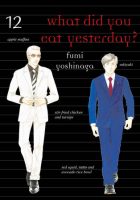
What Did You Eat Yesterday?, Volume 12What Did You Eat Yesterday?, Volume 12 by Fumi Yoshinaga. The English-language edition of What Did You Eat Yesterday? has essentially caught up with the original Japanese release so the individual aren’t published as frequently as they once were, but I’m always very happy to get my hands on the latest installment in the series. The food in What Did You Eat Yesterday? is beautifully illustrated from start to finish. The individual ingredients, the techniques used, and the resulting dishes are wonderfully and realistically rendered. Visually, the people in What Did You Eat Yesterday? aren’t nearly as detailed as the food they are eating, but the believably complex and nuanced characterizations in the series is exceptional. The characters certainly have their personal flaws and Yoshinaga isn’t afraid to reveal them; rather than portraying some sort of romanticized ideal, Yoshinaga captures the messiness of real-life relationships in the series. It’s an approach that I particularly appreciate. What Did You Eat Yesterday? follows the day-to-day lives of two adult men who are in a committed, long-term relationship with each other which of course is something that I also greatly value. At times the food aspects of What Did You Eat Yesterday? seem tangential to everything else going on, but it’s still a great series.

Filed Under: FEATURES, My Week in Manga Tagged With: Delicious in Dungeon, fumi yoshinaga, Gido Amagakure, manga, Ryoko Kui, Sweetness and Lightning, what did you eat yesterday?

My Week in Manga: September 4-September 10, 2017

September 11, 2017 by Ash Brown

My News and Reviews

Last week I took a short family vacation so I wasn’t really online much, but I did announce the winner of the Vertical Comics giveaway before disappearing to the land of limited Internet. The post also includes a list of the manga that have been released (or will soon be released) by Vertical’s manga- and anime-related imprint, Vertical Comics. I’ve been pretty busy over the last few weeks, so I’m sure that I’ve missed out on plenty of news and announcements. Do let me know if there’s something that I should really be paying attention to or need to catch up on!

Quick Takes

Kigurumi Guardians, Volume 1Kigurumi Guardians, Volume 1 by Lily Hoshino. I actually haven’t read very many of Hoshino’s manga despite a fair number of them having been translated into English. Hoshino is probably best known as a creator of boys’ love manga, although she was also notably the character designer for Manwaru Penguindrum and her seinen series Otome Yokai Zakuro received and anime adaptation in 2010. Kigurumi Guardians is Hoshino’s most recent series, a prettily drawn but rather strange shoujo manga when it comes down to its story. Hakka Sasakura is a pure-hearted middle school student who, along with two of her schoolmates, has been paired off with a living, breathing, giant stuffed animal which transforms into a beautifully handsome man and back when kissed. This, of course, is all in order to save, or at least protect, the world from creatures from another dimension which steal the hearts of humans. The charm of Kigurumi Guardians is largely derived from the fact that the series’ doesn’t take itself or its weird humor very seriously at all. On the other hand, it doesn’t seem to have much depth to it either. Or at least not yet. The ending scene of the first volume would seem to imply that there’s much more going on than might be initially assumed from the series’ inherent and deliberate goofiness.

Oresama Teacher, Volume 1Oresama Teacher, Volumes 1-6 by Izumi Tsubaki. I absolutely adore Monthly Girls’ Nozaki-kun, so while waiting for new volumes in that series to be released I figured it was about time that I finally gave another of Tsubaki’s manga a try. And because as far as I know Tsubaki only has three series (all of which are available in translation), my choices came down to The Magic Touch and Oresama Teacher. Although I’ll probably still read The Magic Touch at some point, ultimately I decided to pursue Oresama Teacher first, mostly because I have a huge soft spot for delinquents in Japanese popular culture. I really should have picked up the series much sooner; I’m loving the manga and its tremendous heart. I find Tsubaki’s sense of humor in Oresama Teacher to be similar to that in Monthly Girls’ Nozaki-kun–played fairly straight while still being completely ridiculous with a cast filled with incredibly endearing characters. Granted, some of them can be pretty asshole-ish at times, too. The plot wanders around a fair bit, mostly for comedy’s sake, but the series generally follows Mafuyu Kurosaki, an ex-gang leader who is attempting to clean up her act by transferring schools and trying to become a “normal” high school girl. This proves to be rather difficult when her homeroom teacher and newfound friends all have pasts as troublemakers, too.

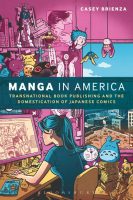
Manga in AmericaManga in America: Transnational Book Publishing and the Domestication of Japanese Comics by Casey Brienza. Relatively few academic writings have been specifically devoted to the North American manga industry; so far, Manga in America is both the first and only book-length work to tackle the subject. Although it was published in 2016, Manga in America was originally written in 2012. There have been some significant changes and developments in the United States manga industry since then, but the book is still an informative and valuable ethnographic study. A significant portion of the volume and Brienza’s research was informed by a series of confidential, in-depth interviews that were conducted with seventy people who had experience working within the industry. Manga in America is undoubtedly the most comprehensive look at the North American manga industry that I’ve seen in a single volume, providing insight into all aspects of what Brienza terms the “domestication” of manga. Licensing, translation, editing, sales, design, and more are all addressed as is the historical context of the industry and possible future developments. Overall, Manga in America is accessible to a general audience although some sections will likely be more interesting or meaningful to readers with some familiarity with sociology.

Filed Under: FEATURES, My Week in Manga Tagged With: Casey Brienza, Izumi Tsubaki, Kigurumi Guardians, Lily Hoshino, manga, Nonfiction, oresama teacher

Manga Giveaway: A Variety of Vertical Comics Winner

September 6, 2017 by Ash Brown

Devils' Line, Volume 1Flying Witch, Volume 1
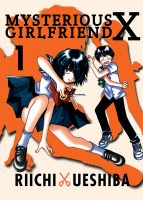
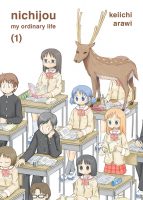
Mysterious Girlfriend X, Omnibus 1Nichijou: My Ordinary Life, Volume 1

And the winner of the Variety of Vertical Comics manga giveaway is… Michelle Gauthier!

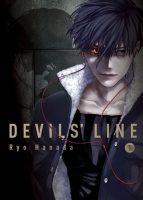
As the winner, Michelle will be receiving the first volume of four manga series released by Vertical Comics: Ryo Hanada’s Devils’ Line, Chihiro Ishizuka’s Flying Witch, Riichi Ueshiba’s Mysterious Girlfriend X, and Keiichi Arawi’s Nichijou: My Ordinary Life. Since this giveaway focused on Vertical Comics, I asked participants to tell me a little about their favorite Vertical manga, too. Check out the giveaway comments for everyone’s detailed responses, and check out below for a list of some of Vertical’s manga.

Manga from Vertical Comics:
Arakawa under the Bridge by Hikaru Nakamura
Blame! by Tsutomu Nihei
Chi’s Sweet Home by Konami Kanata
Devil’s Line by Ryo Hanada
Dissolving Classroom by Junji Ito
Dream Fossil by Satoshi Kon
Flying Witch by Chihiro Ishizuka
The Flowers of Evil by Shuzo Oshimi
FukuFuku: Kitten Tales by Konami Kanata
The Garden of Words written by Makoto Shinkai, illustrated by Midori Motohashi
A Girl on the Shore by Inio Asano
The Gods Lie by Kaori Okazaki
Helvetica Standard Bold by Keiichi Arawai
Immortal Hounds by Ryo Yasohachi
Imperfect Girl written by Nisioisin, illustrated by Mitsuru Hattori
Mobile Suit Gundam Wing written by Katsuyuki Sumizawa, illustrated by Tomofumi Ogasawara
My Neighbor Seki by Takuma Morishige
Mysterious Girlfriend X by Riichi Ueshiba
Nichijou: My Ordinary Life by Keiichi Arawi
Ninja Slayer written by Yoshiaki Tabata, illustrated by Yuuki Yogo
Prophecy by Tetsuya Tsutsui
She and Her Cat written by Makoto Shinkai, illustrated by Tsubasa Yamaguchi
To the Abandoned Sacred Beasts by Maybe
Tokyo ESP by Hajime Segawa
Witchcraft Works by Ryu Mizunagi

The above list only includes the manga that have been released (or will be released very soon) under the Vertical Comics imprint which was launched in 2014, but Vertical began publishing manga well before then. (I’m fairly certain that Vertical’s first manga was Osamu Tezuka’s Buddha back in 2003, but I could be wrong.) Even before specifically devoting an imprint to manga and anime-related titles, Vertical has always had a strong catalog of titles which are well-worth reading. Thank you to everyone who shared your particular Vertical favorites with me! I hope you’ll all participate in the next giveaway, too.

Filed Under: Giveaways, Lists, UNSHELVED Tagged With: Chihiro Ishizuka, Devils' Line, Keiichi Arawi, manga, Mysterious Girlfriend X, Nichijou, Riichi Ueshiba, Ryo Hanada

My Week in Manga: August 28-September 3, 2017

September 4, 2017 by Ash Brown

My News and Reviews

Last week saw the end of one month and the beginning of another, which means the most recent monthly giveaway is currently underway at Experiments in Manga! Partially in honor of the seventh anniversary of Experiments in Manga (but largely just because I feel like it) this is a giveaway for four volumes of manga rather than just one. The winner will be announced on Wednesday, so there’s still time to enter for a chance to pick up a Variety of Vertical Comics: the first volumes of Ryo Hanada’s Devils’ Line, Chihiro Ishizuka’s Flying Witch, Riichi Ueshiba’s Mysterious Girlfriend X, and Keiichi Arawi’s Nichijou: My Ordinary Life. (I tried to make sure there was a good assortment of the types of manga currently being released by Vertical.)

Quick Takes

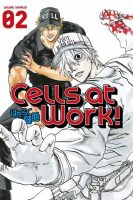
Cells at Work, Volume 2Cells at Work, Volumes 2-4 by by Akane Shimizu. I enjoyed the first volume of Cells at Work tremendously, but I did wonder just how long Shimizu would be able to carry the series’ conceit without it becoming tedious. I’m still not entirely sure, but apparently for at least four volumes because I still find myself highly entertained by Cells at Work. I’ve even learned a few things about the human immune system that I either didn’t previously know or had forgotten. (It’s been a long time since I’ve taken an anatomy or physiology class.) While there are a number of recurring characters–the anthropomorphized personifications of the various types of cells and organisms found in the human body–there’s not much of an overarching story or any real character development. Cells at Work is an episodic series with each chapter’s plot generally following some variation of the same theme: the body becomes compromised and an immune response is triggered because of it. Shimizu’s approach to the subject matter is to make it as epic and frequently as comedic as possible. The artwork is great, too. Cells at Work can be spectacularly violent, but it can also be surprisingly endearing. I continue to enjoy the series a great deal and look forward seeing more of Shimizu’s mayhem.

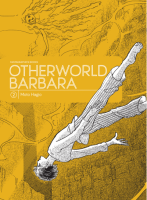
Otherworld Barbara, Omnibus 2Otherworld Barbara, Omnibus 2 (equivalent to Volumes 3-4) by Moto Hagio. It’s been around a year or so since the first half of the award-winning manga series Otherworld Barbara was released in English, long enough for me to have forgotten some of the nuances of the story. Granted, I’m not sure that I was necessarily picking up on all of the nuances to begin with. I definitely enjoyed Otherworld Barbara, and am very glad that it has been released in English, but I will admit that the manga can be frustratingly confusing and difficult to follow at times. (Perhaps I should try reading the series all in one go.) Otherworld Barbara is a very strange series and there’s a lot going on in it. Arguably a bit too much. Among many other things genetic experimentation, the search for immortality, Martian wars, dreams which impact reality and influence the future, existential crises, psychic confrontations, disastrous relationships, and precarious family dynamics all contribute to the narrative’s chaos and occasional lack of cohesiveness. In the end everything does successfully come together in a way that largely makes sense, but it does take some seemingly convenient plot twists for it all to happen. Even so, I found Otherworld Barbara to be immensely intriguing.

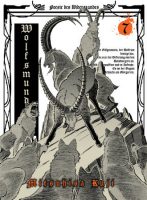
Wolfsmund, Volume 7Wolfsmund, Volumes 7-8 by Mitsuhisa Kuji. While it seemed like Wolfsmund had reached a natural ending point in the sixth volume, apparently Kuji had always intended the manga to be longer than that; with eight volumes, Kuji was able to reach the series’ conclusion as it was originally envisioned. Wolfsmund is an incredibly violent and frequently gruesome manga based on the historical conflict between the Swiss Confederacy and the Habspurg-led Austrian occupying forces in the early fourteenth century. The series culminates with the Battle of Morgarten, a pivotal moment in the history of Switzerland. That battle and the various skirmishes that lead up to it are brutal and legitimately gut-wrenching. Kuji does not at all shy away from showing the blood and gore associated with pre-modern warfare. The atmosphere that Kuji creates is exceptionally dark, heavy, and oppressive, the few moments of hope overshadowed by desperation and despair. However, the members of the Confederacy’s peasant army show astounding devotion to their cause even when faced with overwhelming odds. I can’t say that I was ever emotionally invested in Wolfsmund, but it was a gripping retelling.

Filed Under: FEATURES, My Week in Manga Tagged With: Akane Shimizu, Cells at Work, manga, Mitsuhisa Kuji, moto hagio, Otherworld Barbara, Wolfsmund

  • « Go to Previous Page
  • Page 1
  • Page 2
  • Page 3
  • Page 4
  • Interim pages omitted …
  • Page 60
  • Go to Next Page »
 | Log in
Copyright © 2010 Manga Bookshelf | Powered by WordPress & the Genesis Framework