• Skip to primary navigation
  • Skip to main content
  • Skip to primary sidebar
  • Home
  • About Us
    • Privacy Policy
    • Comment Policy
    • Disclosures & Disclaimers
  • Resources
    • Links, Essays & Articles
    • Fandomology!
    • CLAMP Directory
    • BlogRoll
  • Features & Columns
    • 3 Things Thursday
    • Adventures in the Key of Shoujo
    • Bit & Blips (game reviews)
    • BL BOOKRACK
    • Bookshelf Briefs
    • Bringing the Drama
    • Comic Conversion
    • Fanservice Friday
    • Going Digital
    • It Came From the Sinosphere
    • License This!
    • Magazine no Mori
    • My Week in Manga
    • OFF THE SHELF
    • Not By Manga Alone
    • PICK OF THE WEEK
    • Subtitles & Sensibility
    • Weekly Shonen Jump Recaps
  • Manga Moveable Feast
    • MMF Full Archive
    • Yun Kouga
    • CLAMP
    • Shojo Beat
    • Osamu Tezuka
    • Sailor Moon
    • Fruits Basket
    • Takehiko Inoue
    • Wild Adapter
    • One Piece
    • After School Nightmare
    • Karakuri Odette
    • Paradise Kiss
    • The Color Trilogy
    • To Terra…
    • Sexy Voice & Robo
  • Browse by Author
    • Sean Gaffney
    • Anna Neatrour
    • Michelle Smith
    • Katherine Dacey
    • MJ
    • Brigid Alverson
    • Travis Anderson
    • Phillip Anthony
    • Derek Bown
    • Jaci Dahlvang
    • Angela Eastman
    • Erica Friedman
    • Sara K.
    • Megan Purdy
    • Emily Snodgrass
    • Nancy Thistlethwaite
    • Eva Volin
    • David Welsh
  • MB Blogs
    • A Case Suitable For Treatment
    • Experiments in Manga
    • MangaBlog
    • The Manga Critic
    • Manga Report
    • Soliloquy in Blue
    • Manga Curmudgeon (archive)

Manga Bookshelf

Discussion, Resources, Roundtables, & Reviews

manga

After School Nightmare, Vol. 8

February 26, 2016 by Ash Brown

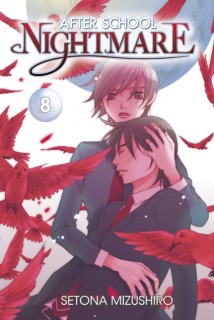
After School Nightmare, Volume 8Creator: Setona Mizushiro
U.S. publisher: Go! Comi
ISBN: 9781933617633
Released: August 2008
Original release: 2007

I first started reading Setona Mizushiro’s manga series After School Nightmare several years ago. I was specifically drawn to it due to the series’ exploration of gender and identity, but it was also those themes that caused me to hesitate to finish reading the work. After School Nightmare is fairly dark and heavy, in many ways hitting very close to home for me, and so I’ve only recently been able to bring myself to read beyond the first few volumes. After School Nightmare, Volume 8 was originally published in Japan in 2007. The English-language edition of the volume was released by Go! Comi in 2008. It, like the rest of the manga, is now out-of-print, but I had previously collected the series in its entirety based upon my impression of the early volumes alone. My initial feelings have so far carried through to the later volumes as well—I continue to find After School Nightmare to be oddly compelling, chilling, and disconcerting.

Mashiro has been living as a man for his entire life, but his gender identity has been something that he has always struggled with. Born with a body that was neither entirely male nor female, he’s constantly fighting the feelings of his own inadequacy and lingering self-doubt. Mashiro along with several other students have been participating in a special after school class which, through shared dreams, forces them to confront their most personal troubles and fears. Slowly things are changing. Mashiro has been able to begin to accept himself, realizing that the feminine side that he’s been trying to suppress is closer to his true self than the masculine persona he’s created. Along with his personal identity, Mashiro has also admitted to his romantic interest in Sou—another student dealing with a difficult past, traumatic secrets, and conflicted feelings—which only serves to complicate matters even further for the both of them.
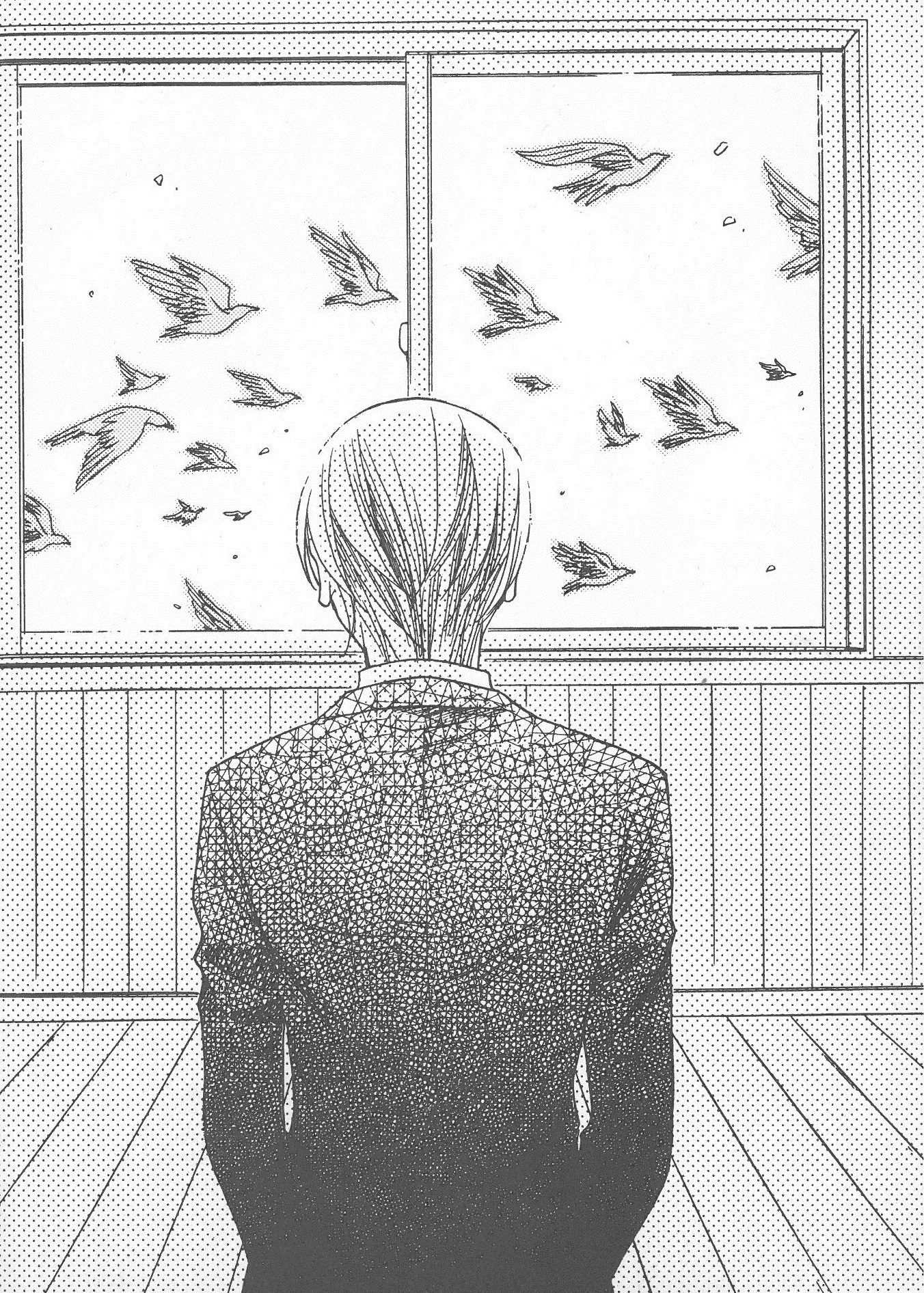
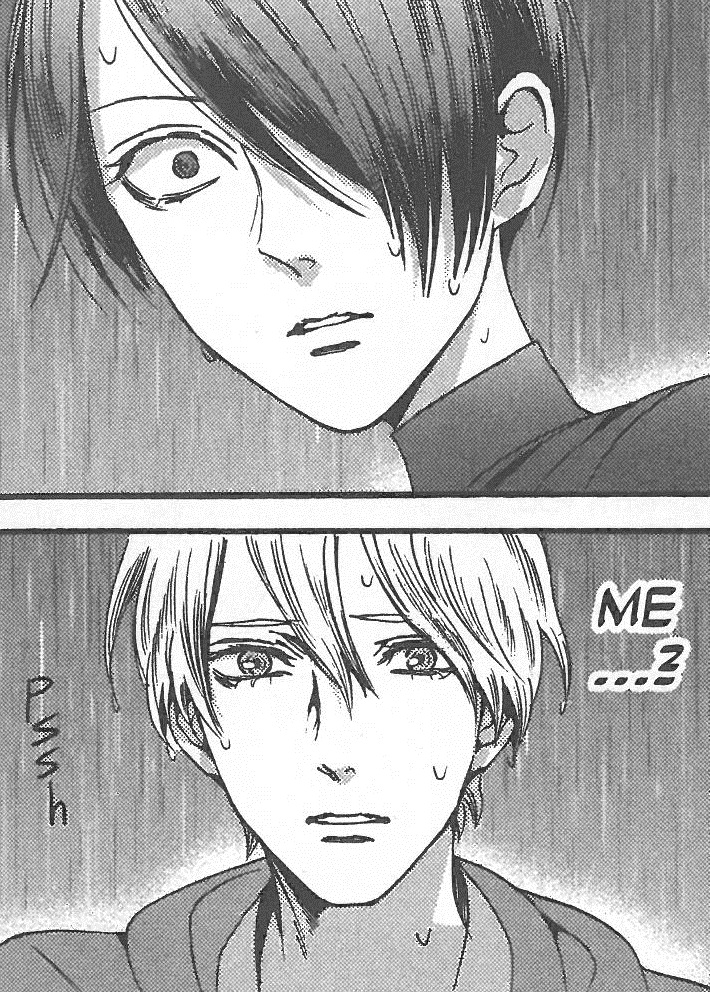
After School Nightmare, Volume 8, page 50The events, revelations, and realizations that occur in After School Nightmare, Volume 8 are momentous, not only for Mashiro but for many of the other characters as well. Intense feelings and emotions that have been churning under the surface, largely hidden from the view of others, finally erupt as Mashiro and several others reach their breaking points in a dramatic and chilling fashion. After struggling for so long trying to live up to the expectations set for themselves either personally, by their families, or by society at large, they can no longer contain their apprehension, anger, and distress. The masks that they publicly wear are beginning to disintegrate, for better and for worse. The eighth volume is a turning point in the development of many of the characters as they claim or reclaim their identities along with all of the good and bad that comes with recognizing and admitting to themselves and to others who they really are as people.

The psychological drama of After School Nightmare is tremendous and the subject matter that Mizushiro explores can be hard-hitting as the characters deal with a wide range of traumas. As slow as some of their personal growth has been, and as unlikeable as some of the characters can be at times, I am glad to see them coming to terms with themselves, what they’ve been through, and what they continue to experience. Mizushiro effectively conveys the turmoil of young adulthood and through the characters’ nightmares brings it to the forefront to the series. The nightmares are heavily symbolic, the emotional and metal states of the characters directly impacting and influencing the dreamscapes. The consequences of their behaviours both within the dreams and outside of them can be devastating. While the eighth volume of After School Nightmare grants some relief from the mounting tension, it also reveals just how long-lasting and damaging the effects of one person’s actions on another can be.
Filed Under: REVIEWS Tagged With: after school nightmare, Go! Comi, manga, Setona Mizushiro

Manga Giveaway: World Trigger Giveaway

February 24, 2016 by Ash Brown

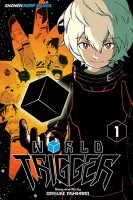
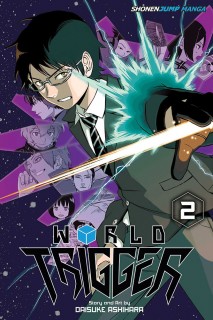
February’s a short month, so it’s already time for another manga giveaway at Experiments in Manga! For this giveaway, participants will have the chance to win not one, but two volumes of Daisuke Ashihara’s World Trigger as published in English by Viz Media. Why? Because it’s the second month of the year, or something. (Really, it’s mostly because I just felt like it.) Anyway, as always, the giveaway is open worldwide!

World Trigger, Volume 1World Trigger, Volume 2

Parallel worlds, dimensions, and universes provide interesting narrative opportunities for creators to explore. In some instances the worlds remain parallel and separate, allowing for multiple realities to exist simultaneously. But in some stories, like World Trigger, those separate realities end up crashing together. Either approach can be equally fascinating, though invasion scenarios like those found in World Trigger do perhaps lend themselves to more action-oriented tales.

So, you may be wondering, how can you win the first two volumes of World Trigger?

1) In the comments below, tell me a little about your favorite manga that makes use of parallel worlds. (If you don’t have one, or haven’t read one, simply mention that.)
2) If you’re on Twitter, you can earn a bonus entry by tweeting, or retweeting, about the contest. Make sure to include a link to this post and @PhoenixTerran (that’s me).

It’s as easy as that! Each participant has one week to submit comments and can earn up to two entries for this giveaway. Comments can also be emailed directly to me at phoenixterran(at)gmail(dot)com if preferred or if you have difficulty with the form. The comments will then be posted here in your name. The giveaway winner will be randomly selected and announced on March 2, 2016. Good luck!

VERY IMPORTANT: Include some way that I can contact you. This can be an e-mail address in the comment form, a link to your website, Twitter username, or whatever. If I can’t figure out how to get a hold of you and you win, I’ll just draw another name.

Contest winner announced–Manga Giveaway: World Trigger Giveaway Winner

Filed Under: FEATURES, Giveaways Tagged With: Daisuke Ashihara, manga, world trigger

My Week in Manga: February 15-February 21, 2016

February 22, 2016 by Ash Brown

My News and Reviews

Last week was another one-review week at Experiments in Manga, but I should hopefully be back to the normal swing of things again soon. (Though it does seem as though one review per week is the new normal… ) As for the review itself, I took a look at the first omnibus of Planetes, an excellent series about space exploration and development by Makoto Yukimura. I don’t tend to double-dip when it comes to manga (Planetes was originally released in English by Tokyopop), but Dark Horse has done such a nice job with the new edition that I couldn’t help myself. I really enjoy Planetes and am very glad to see it back in print.

In licensing news, Jay’s manga adaptation of the BBC’s television series Sherlock will be released in English by Titan. Elsewhere online, Kodansha Comics posted an interview with Hiro Mashima and Viz Media’s Shonen Jump posted an interview with Kohei Horikoshi. The OASG hosted an interesting light novel roundtable in which my Manga Bookshelf cohort Sean Gaffney participated. And the Toronto Comic Arts Festival announced its second wave of featured guests, which includes Shintaro Kago and Faith Erin Hicks among other great artists.

Quick Takes

Chiro: The Star Project, Volume 1Chiro: The Star Project, Volume 1 by HyeKyung Baek. I picked up Chiro mainly for two reasons. The first was that the manhwa is one of Netcomics most recent releases. (Technically, it could even be considered a license rescue; Udon Entertainment published a few volumes of the series back in the day, which I also counted in its favor.) The second reason was that at some point Chiro apparently begins to play with gender in interesting ways. Unfortunately, this doesn’t happen in the first volume and there is nothing else that does happen in the first volume that would convince me to read any further. No matter what directions the series might eventually take, I really did not like the beginning of Chiro at all. The lead is incredibly self-conceited and self-absorbed and her actions frequently make no logical sense whatsoever. The plot, too, seems to be lacking any real direction at this point and ends up being a mess of unfortunate cliches and tropes. At times I think Baek is intentionally attempting to be off-the-wall and absurd, but the humor and the series as a whole just isn’t working for me.

Food Wars!: Shokugeki no Soma, Volume 5Food Wars!: Shokugeki no Soma, Volumes 5-8 written by Yuto Tsukuda and illustrated by Shun Saeki. I tend to enjoy food manga, so it doesn’t really surprise me that I find Food Wars! to be entertaining. The fanservice is admittedly and purposefully ridiculous. People frequently lose their clothing not only figuratively but literally as their reactions to tasting exquisite food are nearly orgasmic. And there are plenty of delectable dishes to go around—these particular volumes bring to a conclusion the challenges of the school’s cooking camp and the beginning of the Fall Classic competition. One danger of a tournament-style manga like Food Wars! is the sheer number of characters that are introduced over the course of the series. Fortunately, Tsukuda and Saeki have so far managed to create a cast made up of characters who, while not necessarily being particularly nuanced or deep, are distinctive in their personalities and designs. Perhaps even more important is that they each have their own dramatic and over-the-top style of cooking. It’s especially interesting seeing the different approaches to cuisine pitted against one another.

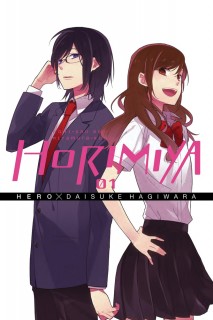
Horimiya, Volume 1Horimiya, Volume 1 written by Hero, illustrated by Daisuke Hagiwara. Because I knew quite a few people who were very excited when Horimiya was first licensed I wanted to make a point to give the manga a try even though I didn’t really know much about it except for the fact that it was adapted from a webcomic. They were right to be excited—Horimiya is a delightfully sweet and charming series. The basic premise is similar to any number of other manga featuring a high school romance with quirky characters, but both the leads and Hagiwara’s execution of the story are so wonderful that I didn’t at all mind. At school, Hori presents herself as fashionable and upbeat, but she’s a bit frustrated with her family situation which requires her to be something of a homebody. Miyamura is a classmate whose reserved nature and social awkwardness hides the fact that he’s liberally tattooed and pierced. Neither of them are quite like the other expected but they fall into an easy and natural friendship with each other. I’m really looking forward to reading more of Horimiya. It’s cute, funny, and has a ton of heart.

Filed Under: FEATURES, My Week in Manga Tagged With: Chiro, Daisuke Hagiwara, food wars, Hero, Horimiya, Hyekyung Baek, manga, manhwa, Shun Saeki, Yuto Tsukuda

Planetes, Vol. 1

February 18, 2016 by Ash Brown

Planetes, Omnibus 1Creator: Makoto Yukimura
U.S. publisher: Dark Horse
ISBN: 9781616559212
Released: December 2015
Original release: 2001-2003
Awards: Seiun Award

Makoto Yukimura’s Planetes, a realistic, near-future science fiction manga series about space exploration and development, was originally released in English by Tokyopop. It’s a great series, and one that I’ve made a point to hold onto over the years. I was very pleased to learn that the manga was going to be brought back into print by Dark Horse—this time in a larger trim size, with more of the color pages, and with artwork that has been better reproduced. Dark Horse’s edition of Planetes consists of two omnibus volumes and it’s production quality makes it well-worth the upgrade. The first omnibus, released in 2015, contains the first and second volumes of the original Japanese edition as well as a small part of the third volume, which were published between 2001 and 2003. In 2002, Planetes earned Yukimura a Seiun Award for best manga. Planetes was also adapted into an anime which happens to be one of my favorite and most frequently rewatched series.

The year is 2074. Humankind has established numerous bases on the moon and has sent multiple expeditions to Mars. The next major goal in space exploration is to successfully man a mission to Jupiter in the hopes of harnessing the planet’s resources to support the ever-increasing energy needs of the solar system’s human populations. However, with the continued development of space comes a significant problem—the creation of vast amounts of waste. Junked and outdated satellites, exhausted fuel cells, and other debris orbit the Earth, endangering the lives of anyone who would attempt to leave the atmosphere. Hachimaki is a debris hauler, one of the unsung heroes who makes space travel possible. Along with the rest of the crew of the Toy Box, a decades-old ship that’s falling apart itself, Hachimaki either retrieves the debris drifting in space or drops it into the atmosphere to burn. It’s important and demanding work, not to mention dangerous, but the thankless job rarely receives any recognition.

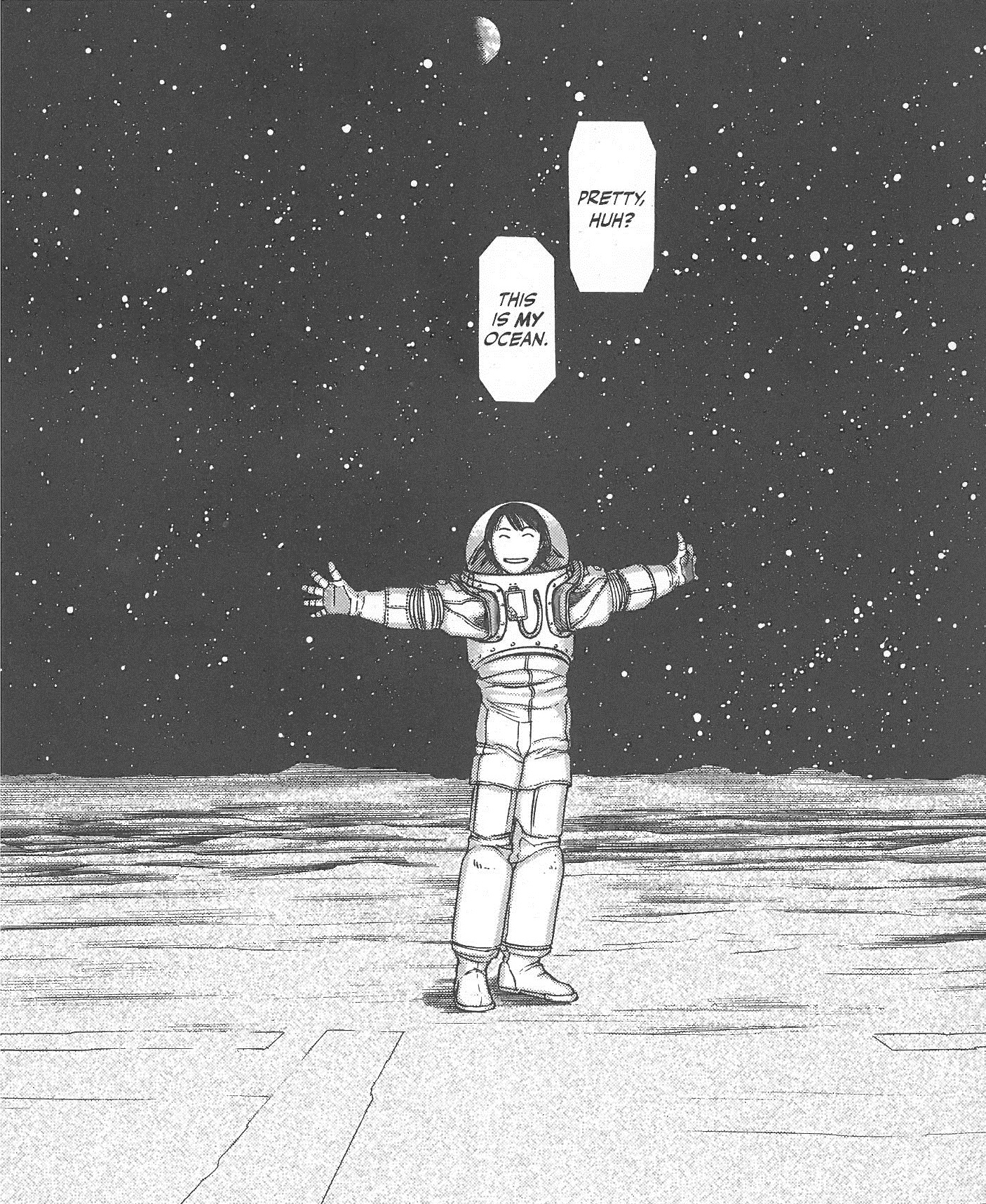
Planetes, Omnibus 1, page 93Planetes is a manga about many different things—scientific progress, socioeconomic tensions, geopolitical discourse, and so on—but more importantly it’s a series about many different kinds of people. It’s about the dreamers who are inspired and compelled to reach for the stars, the scientists and engineers who are focused on advancing technology above all else, the medical researchers who are developing treatments and cures for space-caused disorders, and the people for whom leaving Earth is simply a way of making a living. But it’s also about all of the loved ones the spacefarers leave behind, the families and friends who can do little but hope and wait for their safe return. While incorporating into the story all of the basic, mundane, and day-to-day requirements necessary for life in space, Planetes explores the complex human relationships that support and make that life possible.

Planetes spends a fair amount of time delving tin the psyches of its characters. This is most obvious with the manga’s treatment of Hachimaki, who goes through an extreme psychological crisis and transformation after a traumatic accident, but the other characters have their own struggles, too. Their evolving relationships with one another and their changing attitudes towards space are critical components of Planetes, lending an additional sense of realism to the series. Yukimura doesn’t just limit himself to the personal aspects of the characters’ lives in the series, he also addresses wider societal issues and concerns such as inequality, terrorism, and war. It takes a few chapters for Yukimura to fully settle into the tone and art style for the series, but from the very beginning Planetes is an excellent work of science fiction, balancing humor and pathos while maintaining a largely optimistic outlook on the future believably punctuated by some of the harsher realities of life.

Filed Under: REVIEWS Tagged With: Dark Horse, Makoto Yukimura, manga, Planetes, Seiun Award

My Week in Manga: February 8-February 14, 2016

February 15, 2016 by Ash Brown

My News and Reviews

Life has gotten to be rather hectic again for me, though hopefully things should settle back down soon. In the meantime, I’ve returned to a reduced posting schedule for a little bit. Last week I only posted one in-depth review, but it was for the most recent installment in one of my favorite series currently being released—Aya Kanno’s Requiem of the Rose King. In this volume a tenuous peace has been established while the story moves away from the battlefield to delve into the dangerous political intrigue of the court.

Elsewhere online, The Organization of Anti-Social Geniuses (which has moved, by the way), posted a short interview with Casey Brienza, the author of the recently released Manga in America (which I hope to review in the not too distant future). The wonderful folks behind MASSIVE have launched a Kickstarter campaign to help fund The Queer Japan Project documentary, which should be phenomenal. In manga news, Kodansha Comics has announced that its release of the final volume of My Little Monster will include an additional sixty pages of content. Over the weekend, Vertical announced the addition of a few more titles: the Bakemonogatari novels by Nisioisin, the manga Immortal Hounds by Ryo Yasohachi, the master edition of Tsutomu Nihei’s manga Blame!, and (the one I’m most excited about) the josei horror manga Dissolving Classroom by Junji Ito. Not to be left out, Seven Seas snuck in a license announcement on Sunday as well—Nakatani Nio’s yuri manga Bloom Into You.

Quick Takes

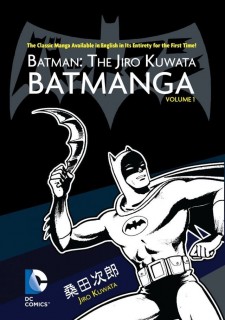
Batmanga, Volume 1Batmanga, Volume 1 by Jiro Kuwata. Back in the 1960s, Kuwata was commissioned to create a manga series featuring the iconic American masked vigilante Batman specifically tailored for a Japanese audience. This series was nearly forgotten in the United States but was rediscovered and introduced in translation relatively recently. DC Comics is now releasing the entire series in English. Although I do enjoy Batman and grew up with the franchise, I don’t really consider myself to be a huge fan or aficionado. But I was very interested in the publication history of Batmanga, and it’s not very often that an older manga is licensed. Kuwata’s Batmanga is understandably most reminiscent of the 1960s television series starring Adam West than any of Batman‘s more recent incarnations (the sixties apparently saw a Batman craze in Japan). The manga is a lot of fun with plenty of ridiculous action, camp, and wordplay. I believe that all the villains are unique to the manga, their origin stories often having something to do with devious scientific innovations or experiments gone awry.

False Memories, Volume 1False Memories, Volumes 1-2 by Isaku Natsume. A few of Natsume’s boys’ love manga have been released digitally, but I believe False Memories is only the second one to be released in print. It’s been a while since I’ve read any of Natsume’s manga, so I was surprised by how charming and touching False Memories ended up being. Nakano and Tsuda drifted apart soon after they slept together in high school. Ten years have passed since their graduation, but they suddenly find themselves assigned to work together on the same project by their respective companies. The misunderstandings surrounding their high school days continue to prove problematic, though. The two men will at least need to pretend to be friendly, but old feelings can be difficult to ignore. I enjoyed False Memories more than I expected I would, largely because I found the characters to be so likeable and relatable. Nakano’s insecurities are understandable, having unintentionally been hurt by Tsuda in the past. As for Tsuda, he’s a well-meaning goofball. The two of them do honestly care for each other, it just takes them a little while to figure that out.

Firefighter! Daigo of Fire Company M, Volume 1Firefighter! Daigo of Fire Company M, Volume 1 by Masahito Soda. I recently happened across the first volume of Firefighter! and so picked it up. It’s been out-of-print for some time now, but the entire series is now available digitally from Viz Media. When Daigo Asahina was a child, he almost died in a fire but was rescued by a heroic local firefighter. Ever since then, it has been his dream to become a firefighter himself. Fresh out of training he’s eager to prove himself, only the station that he’s been assigned to deals with very few major fires. While this would normally be considered to be a good thing, for Daigo it’s frustrating, especially when his rival at another company has already seen plenty of action. Despite the seemingly relaxed atmosphere of Company M, Firefighter! quickly ramps up the excitement. Only one volume in and Daigo’s had to rescue a cat, help prevent a potential gas explosion, fight multiple fires, and face the fact that he’s not nearly as well-prepared as he thought he was. The veterans of Company M know their stuff, though, and are very good at what they do.

Filed Under: FEATURES, My Week in Manga Tagged With: Batmanga, False Memories, Firefighter, Isaku Natsume, Jiro Kuwata, manga, Masahito Soda

Requiem of the Rose King, Vol. 3

February 11, 2016 by Ash Brown

Requiem of the Rose King, Volume 3Creator: Aya Kanno
U.S. publisher: Viz Media
ISBN: 9781421582597
Released: January 2016
Original release: 2015

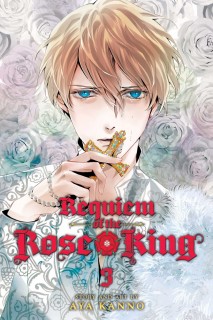
Aya Kanno’s manga series Requiem of the Rose King has quickly become one of the releases that I most look forward to from one volume to the next. I’m not particularly surprised by this, though—I’ve enjoyed many of Kanno’s past works, and she has proven to be quite versatile when it comes to genre and style. In the case of Requiem of the Rose King, Kanno has taken direct inspiration from the historical plays of William Shakespeare, more specifically the Wars of the Roses cycle consisting of Henry VI and Richard III. Even if Kanno hadn’t been involved with the manga, this would have been more than enough to catch my attention. But Kanno is involved and she brings her own touches to the story, giving it a dark fantasy-tinged atmosphere in addition to exploring gender and identity in an interesting and engaging way. With all of that and more, I have been completely taken with Requiem of the Rose King, and so was glad when the third volume of the series, originally released in Japan in 2015, was published in English by Viz Media in 2016.

The battle has been won and the House of York reigns victorious, but the struggle for the English crown continues; the war is far from being over. The deposed King Henry seems content to wander the countryside, the weight of rulership lifted from his shoulders, but the rest of the Lancasters are plotting to return their family to power and reclaim the throne. The hold that the newly established King Edward has on the England is in more peril than he realizes. In addition to the threat that the Lancasters pose, there are others among the nobility who are againt the House of York’s usurption of the throne. The widowed Elizabeth Woodville is prepared to take advantage of Edward’s womanizing ways in order to bring about his and his family’s downfall; besotted with Elizabeth, he puts his own desires before the security of the kingdom, risking the loss of the support of France. His younger brother Richard is one of the few people to recognize the danger, but Richard isn’t yet in a position to avert the potentially calamitous outcome.

Requiem of the Rose King, Volume 3, page 68I continue to be fascinated by Kanno’s interpretation of Richard, a young man who has been irrevocably harmed by the the rejection and hatred of his mother who sees him and his body as imperfect and demonic. He has a difficult time connecting with people because of the anxiety surrounding his self-identity, an issue made even worse by the recent death of his father on the battlefield. Henry is a perfect foil for Richard and is in many ways his opposite, which throws Richard’s perception of himself and of the world into confusion. Richard has resigned himself to loneliness and darkness, even while Henry seeks his company. The two men spend a fair amount of time together in Requiem of the Rose King, Volume 3, neither of them knowing who the other truly is and that their families are enemies. Much as Edward and Elizabeth’s relationship may doom the kingdom, Richard and Henry’s awkward friendship can only result in tragedy with far-reaching consequences.

Personal strife is mixed with political turmoil in Requiem of the Rose King, each feeding into the other as events unfold. With multiple people expressing interest in obtaining the crown, whether in jest or in all seriousness, the social structures and relationships among the English nobility have become extraordinarily precarious during a time of tenuous peace. This underlying chaos is also reflected in how Kanno approaches the story of Requiem of the Rose King. Many times several scenes overlap with one another, tied together thematically rather than chronologically. Pasts, presents, and possible futures all intertwine and are simultaneous revealed. This can be somewhat disconcerting at first and at times challenging to follow, but I do like the overall effect and drama that it brings to the series, emphasizing the individual characters’ experiences as memories, reality, and visions merge together. Requiem of the Rose King has an almost dreamlike quality to it and I find that I fall more deeply under its thrall with each passing volume.

Filed Under: REVIEWS Tagged With: Aya Kanno, manga, requiem of the rose king, viz media

My Week in Manga: February 1-February 7, 2016

February 8, 2016 by Ash Brown

My News and Reviews

I posted a few different things at Experiments in Manga last week. For starters, the Love at Fourteen Giveaway Winner was announced. The post also includes a list of some of the manga available in English which feature a bit of romance. Last week I also reviewed Tokyo Decadence: 15 Stories by Ryu Murakami which in some ways is about love, or at least lust. Due to be published later this year, the collection is engaging but definitely not for everyone as some of the stories are quite disturbing. Over the weekend January’s Bookshelf Overload was posted for those of you curious about what made it onto my shelves last month. I also had a taiko gig over the weekend that took up a fair amount of time. As a result of that and other some other life stress, I’ve fallen a bit behind on my writing (just when I thought I’d finally gotten ahead!), so there’ll likely only be one review coming this week instead of the two that were originally planned.

Quick Takes

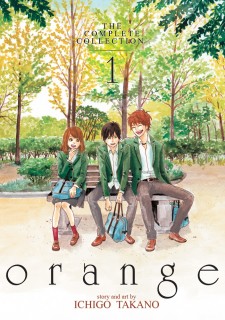
Orange, Omnibus 1Orange, Omnibus 1 by Ichigo Takano. I had heard very good things about Orange and so was greatly looking forward to reading the manga, but I honestly didn’t anticipate that the series might become one of my favorite releases of the year. (It all depends on exactly how the story plays out in the second and final omnibus.) Orange sensitively deals with some fairly heavy subject matter, including suicide and crippling regret, but at the same time the manga also has a lighter sweetness to it. The manga is both heartwrenching and heartwarming, a melancholic story about close relationships and human connection. Admittedly, Naho is incredibly dense when it comes to recognizing other people’s feelings for her, even when they basically come right out and tell her, which can be a bit exasperating. But overall, the feelings and emotions in Orange ring true, especially as the series progresses and it’s revealed just why everyone is behaving in the ways that they are. I can see Orange ending either in tragedy or in happiness and I’m very curious to see which it will be.

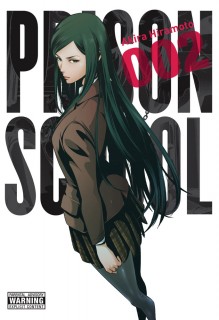
Prison School, Omnibus 2Prison School, Omnibus 2 by Akira Hiramoto. The first omnibus of Prison School established the manga as a series that is simultaneously appalling and strangely engaging. This of course assumes that readers aren’t immediately offended by its highly sexualized and incredibly vulgar nature to begin with. Prison School is definitely not a series for everyone even if, surprisingly, it has its sweet moments. The second omnibus very much continues in the same vein, so the initial shock caused by the manga’s obscenity, over-the-top fanservice, and ridiculous premise has diminished some. Even so, Prison School is a page-turner. The series has been building up to Kiyoshi’s escape attempt, resulting in a situation that gets progressively worse as time goes by. Seeing just how bad things can possibly get (which is pretty bad) is one of Prison School‘s major draws. That and Hiramoto’s impressive skills as an artist. The manga’s content will certainly not be to everyone’s taste, but it’s hard to deny Hiramoto’s talent.

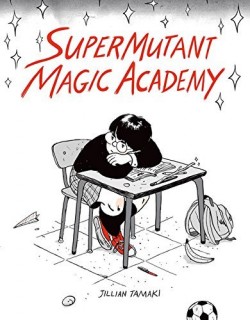
SuperMutant Magic AcademySuperMutant Magic Academy by Jillian Tamaki. Originally a webcomic, the best of SuperMutant Magic Academy has now been collected into a single volume along with newly-created content. I hadn’t actually read any of the comic while it was being released online, but I was obviously missing out—SuperMutant Magic Academy is great stuff. The comic takes place in a high school where students study magic and learn to control their superpowers (sort of an odd mix between Harry Potter and X-Men that bizarrely works), all while dealing with the more normal sorts of teenage angst and anxiety. Except for the series’ lengthy finale, created specifically for the collected volume, most of SuperMutant Magic Academy consists of single-page, and in some cases single-panel, gag comics.There’s no real overarching plot, but there are recurring characters and running jokes. Some of the social commentary can be fairly biting, but SuperMutant Magic Academy is very funny, frequently absurd, and wholly enjoyable.

Filed Under: FEATURES, My Week in Manga Tagged With: Akira Hiramoto, comics, Ichigo Takano, Jillian Tamaki, manga, Orange, Prison School

Manga Giveaway: Love at Fourteen Giveaway Winner

February 3, 2016 by Ash Brown

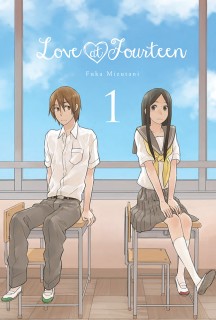
Love at Fourteen, Volume 1And the winner of the Love at Fourteen Giveaway is… wandering-dreamer!

As the winner, wandering-dreamer (whose writing I happen to follow at both Narrative Investigations and TheOASG) will be receiving a copy of Fuka Mizutani’s Love at Fourteen, Volume 1 as published in English by Yen Press. Love at Fourteen features a sweet story of first love, so for this giveaway I asked participants to tell me a little about some of their favorite romantic manga. Be sure to check out the giveaway comments for the detailed responses!

Some favorite manga love stories released in English:
Apothecarius Argentum by Tomomi Yamashita
Black-Winged Love by Tomoko Yamashita
A Bride’s Story by Kaoru Mori
Emma by Kaoru Mori
Hide & Seek by Yaya Sakuragi
Horimiya written by HERO, illustrated by Daisuke Hagiwara
Kare Kano: His and Her Circumstances by Masami Tsuda
Kamisama Kiss by Julietta Suzuki
Love at Fourteen by Fuka Mizutani
My Love Story written by Kazune Kawahara, illustrated by Aruko
Nana by Ai Yazawa
Orange by Ichigo Takano
Sand Chronicles Hinako Ashihara
Strobe Edge by Io Sakisaka
Tramps Like Us by Yayoi Ogawa

So, if you’re looking for something a little romantic to read, the above manga may give you a good place to start. Thank you to everyone who shared your favorites with me; I hope to see you all around again for the next giveaway!

Filed Under: Giveaways, UNSHELVED Tagged With: Fuka Mizutani, Love at Fourteen, manga

My Week in Manga: January 25-January 31, 2016

February 1, 2016 by Ash Brown

My News and Reviews

A couple of different things were posted at Experiments in Manga last week in addition to the usual My Week in Manga feature. First up was the first manga giveaway of the year, and there’s still time to enter for a chance to win Fuka Mizutani’s Love at Fourteen, Volume 1. Last week I also reviewed the first omnibus of Hiroaki Samura’s Die Wergelder, which is brutal and intense to say the least. The manga is greatly influenced by violent, erotic Japanese films from the 1970s and it shows. And speaking of explicit manga, Digital Manga’s Project-H imprint is currently running a Kickstarter campaign to publish Yamatogawa’s Vanilla Essence hentai collection. It seems like Digital Manga is now relying on Kickstarter projects for just about everything, and I have no idea how long the publisher will be able to last like that; it’s a bit concerning.

Quick Takes

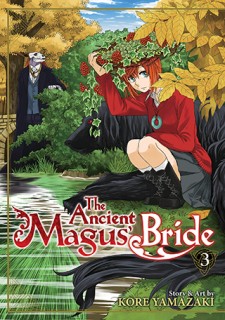
The Ancient Magus' Bride, Volume 3The Ancient Magus’ Bride, Volume 3 by Kore Yamazaki. I continue to love The Ancient Magus’ Bride and look forward to future volumes a great deal. The series has this sort of atmospheric melancholy to it that I really like along with touches of horror and darkness that have yet to become overwhelmingly bleak. In large part, The Ancient Magus’ Bride seems to be dealing with loneliness and the intense longing and need to belong somewhere. It’s only after being purchased by Elias that Chise feels as though she’s actually wanted and that is a dangerously enticing feeling to have. Their relationship is a peculiar one, but it is also compelling. For better or for worse, Chise still knows very little about Elias. He seems very reluctant to reveal his true nature to her, whether out of fear that he will be rejected or for some other reason entirely. What is clear is that Elias is very powerful, very dangerous, and not entirely honest. Despite this and despite the warnings of others, Chise remains devoted to him. She, too, is powerful and dangerous, though she has yet to learn how to completely control and claim that power for her own.

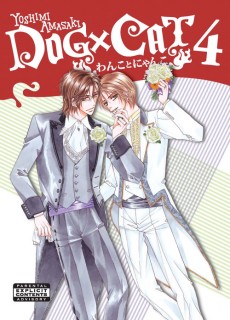
Dog X Cat, Volume 4Dog X Cat, Volume 4 by Yoshimi Amasaki. I believe Dog X Cat is up to six volumes or so and still ongoing in Japan, but it seems unlikely that more of the series will be released in English any time soon if ever. It’s been a few years since I read the first three volumes of the boys’ love series, but it didn’t take very long to get reoriented with the manga. The fourth volume is actually a fairly self-contained story, too. Atsu and Junya used to only be best friends but now they’re also well-established lovers. Junya is the more adventurous and demanding when it comes to sex to the point of ignoring Atsu’s needs and desires which is unfortunate; otherwise their relationship is quite good and they obviously love each other. Keeping with the rest of the series, Amasaki finds plenty of opportunities to include sex scenes. However, their vacation-cum-research trip to the mountains takes an extremely unfortunate turn when an earthquake traps them under a burning building. Though there are sweet moments, most of the forth volume of Dog X Cat deals with this traumatizing event and its lasting aftermath.

Library Wars: Love & War, Volume 11Library Wars: Love & War, Volumes 11-14 by Kiiro Yumi. I’ll readily admit to enjoying Library Wars and its dramatic and fantastical portrayal of librarianship. I don’t think that librarians will militarize themselves any time soon in the fight for freedom of expression and information, but it does make for an interesting story that does actually explore some of the complexities of the debates surrounding censorship. Library Wars has two sides to it that don’t always mesh with each other very well, but I do like them both. There’s the romantic and comedic side of things as many of the characters come to terms with their evolving feelings for their colleagues and then there’s the more action-oriented part of the story, complete with shootouts and attempted kidnappings. These particular volumes have some pretty exciting developments on both fronts. Although Iku’s ineptitude is often emphasized, which is something that I dislike about the series, she continues to prove her reliability in dangerous situations when it really counts. I didn’t realize that there is only one more volume left in this series, but I’m really looking forward to it; it should be a good one.

Filed Under: FEATURES, My Week in Manga Tagged With: Ancient Magus' Bride, Dog X Cat, Kiiro Yumi, Kore Yamazaki, library wars, manga, Yoshimi Amasaki

Die Wergelder, Omnibus 1

January 29, 2016 by Ash Brown

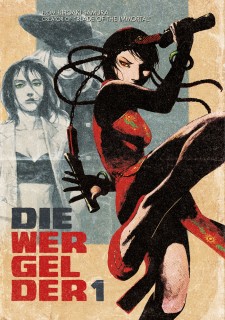
Die Wergelder, Omnibus 1Creator: Hiroaki Samura
U.S. publisher: Kodansha
ISBN: 9781632361950
Released: December 2015
Original release: 2013-2015

I was very excited when Kodansha Comics announced that it would be releasing Die Wergelder in English. At the time, I actually didn’t know much about the manga series beyond the fact that it was created by Hiroaki Samura, but that was more than enough to capture my attention—Samura’s long-running, award-winning series Blade of the Immortal was one of the first manga that I ever read and it remains a personal favorite. I’ve also throughly enjoyed Samura’s two short manga collections that have been translated, Ohikkoshi and Emerald and Other Stories. As Blade of the Immortal was drawing to a close in Japan, Die Wergelder was just beginning, the first volume being published in 2013. The second volume was released two years later in Japan in 2015. The first installment of Kodansha’s English-language edition of Die Wergelder, also published in 2015, collects both of those volumes.

Shinobu has made a mistake that may very well cost her life. After attempting to run way with a low-ranking yakuza member, along with a rather large sum of his syndicate’s money, the two of them are caught and Ro’s boss isn’t particularly happy with them. Normally Shinbou would likely have been killed without a second thought, but her background happens to make her uniquely qualified for a job that Ro’s boss needs done. She’s more or less forced into accepting and so suddenly finds herself embroiled in the schemes and rivalries of multiple groups. The world of organized crime is fraught with danger and made even more so with the appearance of Träne, an assassin hellbent on revenge against those who have done her tremendous wrong. And then there’s Jie Mao, an opposing bodyguard whose deadly combat skills make her a formidable foe. Shinobu does have the guts and brash attituded needed to survive, but that’s also a large part of why she’s in such trouble to being with.

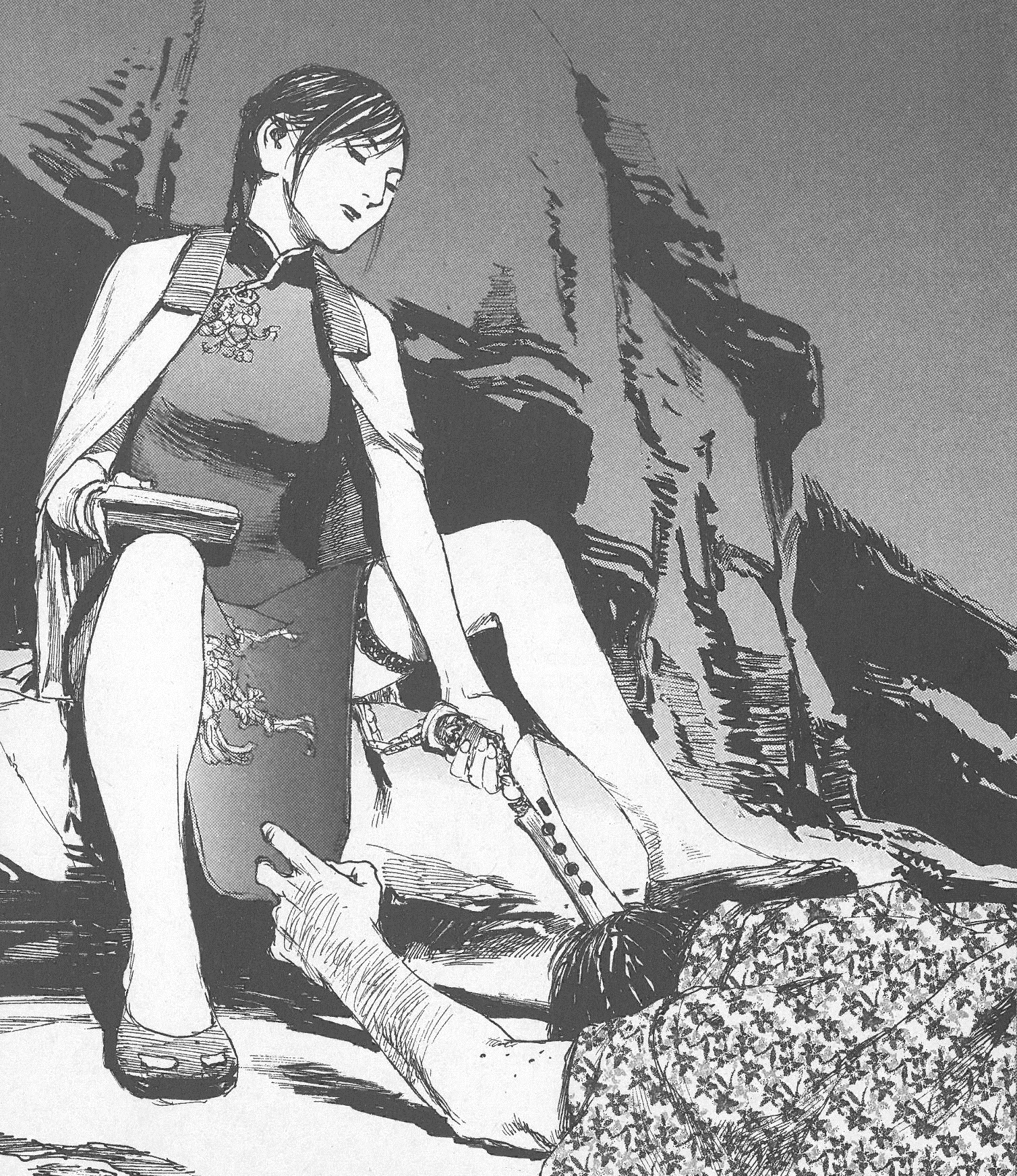
Die Wergelder, Omnibus 1, page 64Die Wergelder is heavily inspired by or at least influenced by 1970s Japanese pink films—theatrical releases steeped with eroticism, nudity, and sex. More specifically, Samura is taking cues from Toei’s Pinky Violence series of films. (Träne’s dark long coat, wide-brimmed hat, and tale of vengeance would appear to be a direct reference to the Female Convict Scorpion films in particular.) Likewise, Die Wergelder contains fairly extreme content, including gratuitous sex and explicit violence. Women and men, although to a somewhat lesser extent, are brutalized and degraded both sexually and physically throughout the story. Die Wergleder is true to its lurid and exploitative roots and the series seems to be self-aware of that. With an additional heavy dose of sadism, it’s certainly not a manga to be lightly recommended to just anyone, though what it does it does well.

By far the most interesting and compelling characters in Die Wergelder are the women. They are easily the most sexualized and objectified as well, but they’re also powerful and terrifying forces to be reckoned with. In comparison, the men of Die Wergelder aren’t particularly memorable, even when they are impressively powerful their own right. Träne and Jie Mao are stunning to watch as they fight. As I’ve come to expect, Samura’s action sequences are dramatic and dynamic. The martial skills shown may frequently be unbelievable, but they are devastatingly effective. With all its brutality and torture, Die Wergelder can be exceptionally violent and gruesome even while being beautifully drawn. It’s a deliberately uncomfortable series, Samura pushing the boundaries of acceptability. Rape, murder, abuse, and unethical medical experimentation are all regular occurrences, and that’s just scraping the surface of the despicable, thrilling, disturbing, titillating, and vicious world that Samura explores in Die Wergelder.

Filed Under: REVIEWS Tagged With: Die Wergelder, Hiroaki Samura, kodansha, Kodansha Comics, manga

Manga Giveaway: Love at Fourteen Giveaway

January 27, 2016 by Ash Brown

January is almost over so here it is, Experiments in Manga’s first manga giveaway of the year! Let’s get right to it: For this giveaway you will all have the opportunity to enter for a chance to win Love at Fourteen, Volume 1 created by Fuka Mizutani and published in English by Yen Press. And, as always, the giveaway is open worldwide!

Love at Fourteen, Volume 1

Had I been thinking about it thematically, a giveaway for Love at Fourteen—a sweet and somewhat nostalgic story of first love—would have been nicely suited for a February or March giveaway because of Valentine’s Day or White Day, respectively. Then again, my love of manga and my love of spreading that love cannot be contained or limited to a single month! Looking at it that way, and following a peculiar train of logic, a manga giveaway featuring a love story would be more than appropriate any time of the year. Thus, Love at Fourteen! Because, why not?

So, you may be wondering, how can you win Love at Fourteen, Volume 1?

1) In the comments below, tell me a little about your favorite manga love story. (If you don’t have one, simply mention that!)
2) If you’re on Twitter, you can earn a bonus entry by tweeting, or retweeting, about the contest. Make sure to include a link to this post and @PhoenixTerran (that’s me).

And there you have it! Each giveaway participant can earn up to two entries and has one week to submit comments. Entries can also be emailed directly to me at phoenixterran(at)gmail(dot)com if needed or preferred. I will then post the comments here in your name. The giveaway winner will be randomly selected and announced on February 3, 2016. Best of luck to you all!

VERY IMPORTANT: Include some way that I can contact you. This can be an e-mail address in the comment form, a link to your website, Twitter username, or whatever. If I can’t figure out how to get a hold of you and you win, I’ll just draw another name.

Contest winner announced–Manga Giveaway: Love at Fourteen Giveaway Winner

Filed Under: FEATURES, Giveaways Tagged With: Fuka Mizutani, Love at Fourteen, manga

My Week in Manga: January 18-January 24, 2016

January 25, 2016 by Ash Brown

My News and Reviews

Two in-depth reviews were posted at Experiments in Manga last week. The first was of The Fall of Language in the Age of English by Minae Mizumura, a fascinating and immensely readable work of nonfiction about literature and language. (Mizumura’s A True Novel also greatly impressed me, so at this point I’ll basically read anything written by her; if only more would be translated!) The second review was of KaiJu’s Mahou Josei Chimaka, one of Chromatic Press’ most recent paperback releases and a delightfully entertaining parody of and a loving homage to the magical girl genre. The comic is playful, humorous, and a lot of fun.

Elsewhere online: The Toronto Comic Arts Festival has announced its first round of featured guests. The list includes Rokudenashiko, whose manga What Is Obscenity? will be making its English-language debut at the festival. Bruno Gmünder will be bringing The Passion of Gengoroh Tagame back into print later this year in a newly revised and expanded edition. Ryan Holmberg’s most recent What Was Alternative Manga? includes a translation of a discussion between Hayashi Seiichi and Sasaki Maki. And on Twitter, Digital Manga is hinting at a launch of another classic manga Kickstarter, only this time it won’t be Tezuka.

Quick Takes

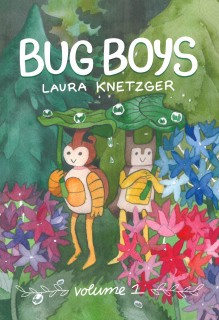
Bug Boys, Volume 1: Welcome to Bug VillageBug Boys, Volume 1: Welcome to Bug Village by Laura Knetzger. Although I’ve read and enjoyed a few of Knetzger’s short autobiographical comics, I picked up Bug Boys more by chance than anything else. I’m so glad that I did, because I’m absolutely loving this comic. Originally a series of self-published mini-comics, the first book was recently released by Czap Books. The hefty volume collects all of the previously released Bug Boys comics in addition to new, never-before-seen content. The comics are mostly black-and-white, but Knetzger also occasionally uses color. The story follows Rhino-B and Stag-B, two young beetles and best friends living in Bug Village, as they grow up, go on adventures, and explore their world. It’s all incredibly cute and touching, even when the two of them are dealing with some fairly big, weighty issues. Friendly enough for children, but also thoroughly enjoyable for adults, Bug Boys is one of the most wonderfully delightful and charming comics that I’ve read in a very long time. I’ll definitely be keeping an eye out for more of the series and for more of Knetzger’s work.

Butterflies, Flowers, Volume 1Butterflies, Flowers, Volume 1 by Yuki Yoshihara. Once wealthy aristocrats, the members of the Kuze family have fallen on hard times. They no longer have any servants and have instead become the masters of a soba noodle shop. Choko is now searching for separate employment, only discovering after the fact that her new boss, Masayuki Domoto, is the son of the family’s old chauffeur. Butterflies, Flowers is a somewhat peculiar romantic comedy that’s hard to take seriously. Granted, I don’t think that the manga is really intended to be taken seriously. And I’ll admit, the first volume of the manga made me laugh on several occasions. The power dynamics in Butterflies, Flowers are all over the place, so it’s difficult to know what to expect from one page to the next, especially where Choko and Domoto are involved. At first Choko doesn’t have much confidence—working in an office is a new experience for her—but every once in a while she’ll take charge of the situation. As for Domoto, he frequently switches from being an overbearing and demanding boss to being completely subservient to the woman and family that used to employ his father.

Terra Formars, Volume 5Terra Formars, Volumes 5-8 written by Yu Sasuga and illustrated by Ken-ichi Tachibana. It’s been a while since I’ve read any of Terra Formars, but it wasn’t too difficult to pick it up again where I left it—even considering the various plot twists, the series is pretty easy to follow and tends to be fairly action-oriented. By far the best thing about Terra Formars for me are the over-the-top battles between super-powered combatants. Not only have humans been crossed with insect genetics, there are examples of those who have been crossed with birds, mammals, aquatic creatures, plants, and even bacteria, giving the individuals a wide variety of incredible abilities. Realistic? Perhaps not, but the resulting battles are epic. (Surprisingly, Terra Formars has actually taught me quite a few things about plants and animals.) The political maneuvering back on Earth, while being portrayed in a very dramatic fashion, frankly doesn’t interest me that much. However, it is that drama that largely propels what little story the series has. It also means that the modified humans end up having to fight each other in addition to the Martian inhabitants.

Filed Under: FEATURES, My Week in Manga Tagged With: Bug Boys, butterflies flowers, comics, Ken-ichi Tachibana, Laura Knetzger, manga, Terra Formars, Yu Sasuga, Yuki Yoshihara

My Week in Manga: January 11-January 17, 2016

January 18, 2016 by Ash Brown

My News and Reviews

It was entirely unintentional, but last week was apparently the week for sevens—both of my in-depth manga reviews last week were for the seventh installment of their respective series. They both happen to be manga currently licensed by Kodansha Comics, as well, which was also a coincidence.  On Wednesday, I reviewed the seventh omnibus of Vinland Saga by Makoto Yukimura. The series continues to be magnificent. The seventh omnibus might be the last of the series to be released in English, which would truly be a shame. The volume does bring to a close one of the series’ major story arcs, but I really hope more of Vinland Saga will be able to be translated. The second review, part of my monthly horror manga review project, was of Yuki Urushibara’s Mushishi, Volume 7. Mushishi continues to be one of my favorite manga. I’m really enjoying my reread of the series and the opportunity to write about it in more detail. One other thing I wanted briefly to mention was a Kickstarter project to help Yamakiya Taiko, a wonderful youth taiko ensemble from Fukushima, raise money to defray the cost of their upcoming trip to the United States in March. I’ll actually be playing with the group a bit while they’re in Michigan, so I especially hope that the campaign succeeds.

Quick Takes

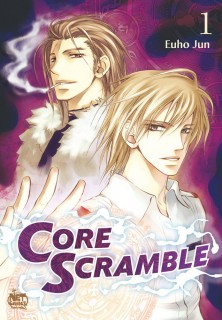
Core Scramble, Volume 1Core Scramble, Volume 1 by Euho Jun. I’ve been slowly making my way through Netcomics’ new series which is what brought Core Scramble to my attention. That and the promise of boys’ love mixed with science fiction, fantasy, and action. At this point, romance doesn’t seem to be the priority of Core Scramble, though there is some sexual harassment thrown in. Chaeun is a fairly average soldier—one of many fighting in a war against swarms of extra-dimensional monsters invading the planet—but he has developed a knack for surviving situations that many seasoned veterans would consider hopeless. His tenacity has impressed his comrades as well as those who would like to take advantage of the invasion for their own purposes. The first volume of Core Scramble spends quite a bit of time establishing the series’ setting, explaining how the world’s magic, science, and inter-dimensional portals function and interact. Infodumps are a regular occurrence and break up the flow of the story itself, but I suspect that this shouldn’t be as much of an issue for the series’ later volumes. Granted, there are only two more.

Deep Dark FearsDeep Dark Fears by Fran Krause. What started out as a project to illustrate all of his irrational fears eventually evolved into an ongoing series of  online comics in which Krause would not only draw his own fears but the fears submitted by his readers as well. Just over a hundred of those comics have now been brought together in the print collection of Deep Dark Fears, about half of them being newly published while the other half were selected by Krause as some of his favorites from online. While the subject matter can be disturbing and occasionally even grotesque, the comics themselves are actually quite charming. Krause doesn’t comment on or judge any of the fears but simply presents them as they are, irrational but still discomfiting whether they be based on known falsehoods learned as children or overactive imaginations as adults. Deep Dark Fears is a great collection of short comics about strange and bizarre fears. Some are only a single panel long while others may be a few pages, but they all leave an impression. I’m not sure if Krause has plans for additional print collections, but the series continues to grow online.

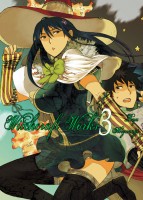
Witchcraft Works, Volume 3Witchcraft Works, Volumes 3-7 by Ryu Mizunagi. Although I quite enjoyed the first two volumes of Witchcraft Works, I recently realized that I had fallen behind in actually reading the series. After catching up I can say that there are still things that I like about the manga, but I also find myself slightly less enamored with it than I once was. Primarily, I continue enjoy the reversal of stereotypical gender roles. If it wasn’t for that, I think the series would have bored me fairly quickly, even despite its other entertaining quirks. With the seemingly endless of author’s notes, it’s obvious that Mizunagi has put plenty of thought into the world of Witchcraft Works, but it isn’t always incorporated well into the story itself which is unfortunate. This seems to especially be a problem during the series’ battle and action-oriented story arcs where it feels like the characters spend more time explaining things they already know to one another rather than fighting, though they do eventually get around to that, too. Witchcraft Works is a great looking manga, though, Mizunagi’s visual style working wonders with all of the magic and mayhem. But ultimately, I think what I want is a little more substance to accompany all the spectacle.

Filed Under: FEATURES, My Week in Manga Tagged With: comics, Core Scramble, Euho Jun, Fran Krause, manga, manhwa, Ryu Mizunagi, Witchcraft Works

Mushishi, Vol. 7

January 15, 2016 by Ash Brown

Mushishi, Volume 7Creator: Yuki Urushibara
U.S. publisher: Del Rey
ISBN: 9780345505590
Released: May 2009
Original release: 2006
Awards: Japan Media Arts Award, Kodansha Manga Award

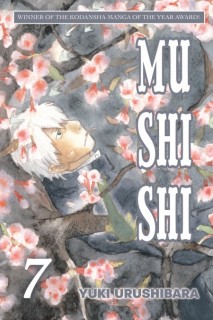
Mushishi, Volume 7 by Yuki Urushibara was originally published in Japan in 2006. It was the first volume of the award-winning manga series to be released after the first of several anime adaptations began airing. 2006 was also the year that Mushishi earned Urushibara a Kodansha Manga Award, having previously won a Japan Media Arts Award in 2003. In English, the seventh volume of Mushishi was initially published in print in 2009 by Del Rey Manga and then was later re-released in a digital edition by Kodansha Comics in 2014 along with the rest of the series. Mushishi is one of my favorite manga and one of the first series that I made a point to follow and collect as it was being released in translation. I love the manga’s atmosphere, subtle horror, and the obvious influence that traditional Japanese folklore and legends have had on Urushibara’s storytelling in the series.

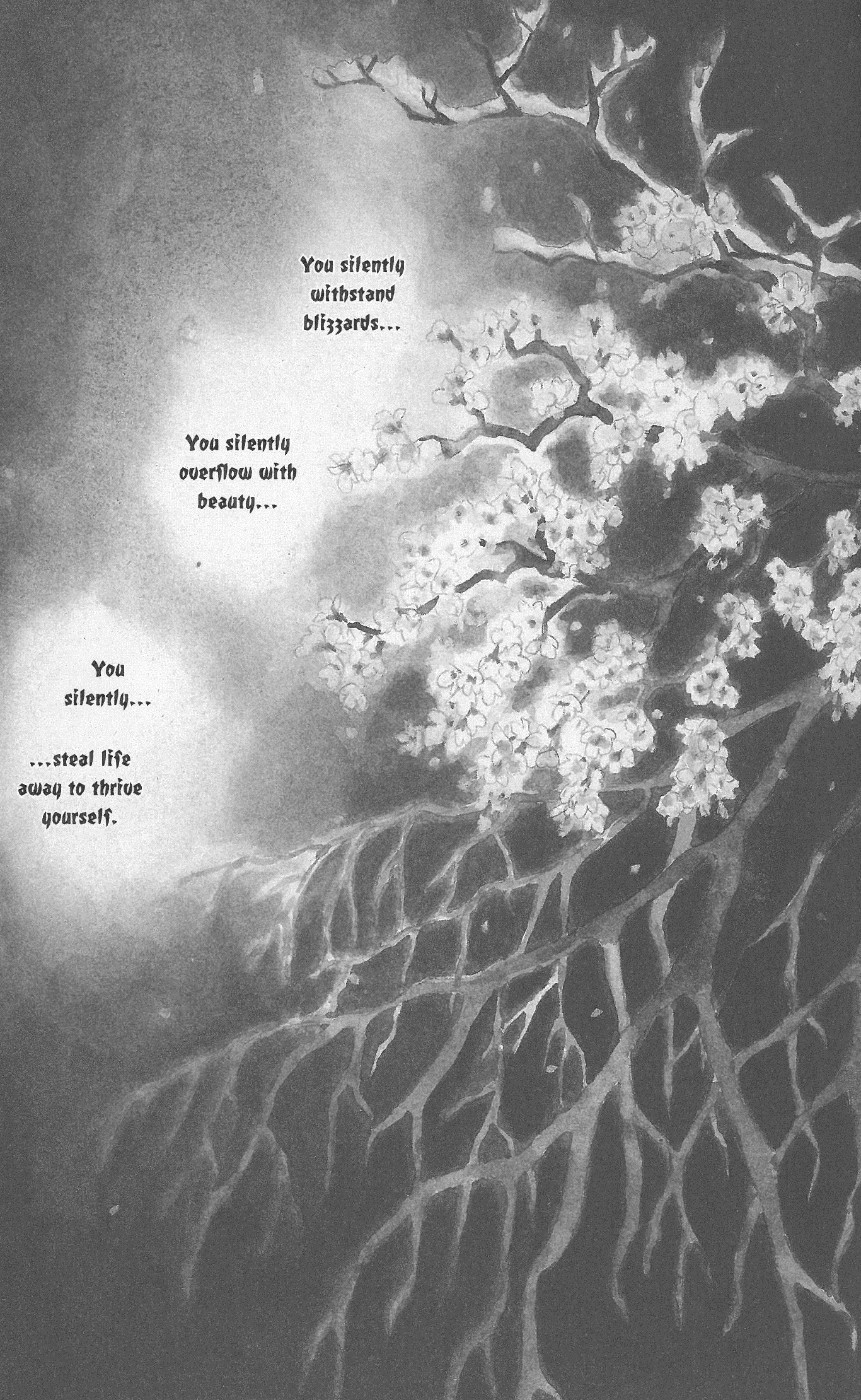
The seventh volume of Mushishi collects four stories. Interestingly, the mushi in these particular chapters tend to be somewhat tangential to the real issues that the characters are struggling with. While the mushi have an impact on the way events unfold and develop, it is the interaction between people that forms the core of the individual stories. “Lost in the Blossoms” is about several generations in a family of skilled landscapers who obsessively care for the embodiment of a peculiarly beautiful and ancient cherry tree. In “The Mirror in the Muck,” a young woman falls ill after the man she loves leaves her behind, her love sickness putting her life in real danger. A young boy has become a host to a mushi that attracts lightning in “At the Foot of Lightning,” but the even greater problem is the nearly nonexistent relationship between him and his mother. The volume concludes with the series’ first multi-part story, “The Ragged Road,” about the head of the Minai, a clan of mushishi responsible for investigating forbidden mushi no matter what the personal cost.

Mushishi, Volume 7, page 3While Mushishi generally tends to be episodic, “The Ragged Road” directly ties in with an early story, “The Sea of Brushstrokes,” collected in Mushishi, Volume 2. The Minai family serves under the Karibusa family which is responsible for recording and protecting information about mushi; the fate of both families is intertwined with that of the forbidden mushi. I especially like “The Ragged Road” because it further develops the world of Mushishi. The other three stories in Mushishi, Volume 7 technically do as well, but because they’re only loosely connected to previous chapters their contributions to the series’ lore generally add more breadth rather than depth. Still, bits of the characterization of Ginko, the manga’s protagonist, continue to be revealed with the telling of each story, showing just how much of an outsider he is even within the community of mushishi.

Although the plots of the individual stories collected in Mushishi, Volume 7 aren’t directly connect to one another, they do all share some similar themes. In some ways, the manga feels more horror-like than some of the previous installments of the series. Mushi in the case of this volume are creatures that can steal away a person’s senses, identity, life, or even soul. But as terrifying as that can be, the most chilling thing that Ginko encounters aren’t mushi but failed human relationships. I find these four stories to be some of the most heartbreaking in the series for that reason. Ginko is faced with situations where, while he can deal with the mushi, he is powerless to completely ease the distress of the people involved and their troubled families. However, as sad and tragic as some of the stories in Mushishi can be, there’s still an underlying sense of hope that in time people will be able to heal and move forward through their pain.

Filed Under: REVIEWS Tagged With: del rey, Japan Media Arts Award, Kodansha Manga Award, manga, mushishi, Yuki Urushibara

Vinland Saga, Omnibus 7

January 13, 2016 by Ash Brown

Vinland Saga, Omnibus 7Creator: Makoto Yukimura
U.S. publisher: Kodansha
ISBN: 9781612628035
Released: September 2015
Original release: 2013-2014
Awards: Japan Media Arts Award, Kodansha Manga Award

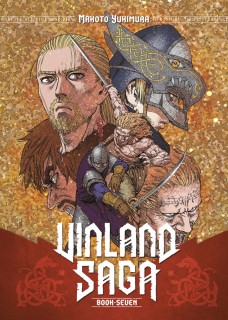
I honestly believe Makoto Yukimura’s Vinland Saga to be one of the best manga series currently being released in English. An epic tale of revenge, idealism, and the tremendous cost of violence, Vinland Saga is an incredibly engaging work with impressively compelling characters. In addition to being a personal favorite of mine, over the course of its publication the series has also won a Japan Media Arts Award and a Kodansha Manga Award among other honors. Kodansha Comics has been releasing Vinland Saga in English as a series of hardcover omnibuses. The seventh omnibus, released in late 2015, collects the thirteenth and fourteenth volumes of the manga originally published in Japan in 2013 and 2014 respectively. The seventh omnibus of Vinland Saga also includes two exclusives: the continuation of “Ask Yukimura,” where Yukimura responds to questions about the series, and a four-panel tribute comic by Faith Erin Hicks, another creator whose work I greatly admire.

After years of hard labor, Thorfinn’s freedom was near at hand until he and his fellow slave Einar became involved in an escape attempt. They helped Arnheid, Ketil’s favorite slave and mistress, aid her enslaved husband as he tried to run away from another farm. The attempt failed, resulting in multiple deaths. Now the three of them—Thorfinn, Einar, and Arnheid—must face the terrible consequences of their actions. Meanwhile, Ketil and his sons are returning from Jelling with King Canute and his finest warriors following close behind. In addition to dealing with his slaves, Ketil must also prepare for Canute’s inevitable attack before the farm falls into chaos. Canute plans on taking Ketil’s farm and wealth for his own in order to expand his kingdom, determined to create a paradise on earth for all who suffer from war and violence. Although he would prefer a peaceful resolution, Canute is more than prepared to stake his claim through questionable political maneuvering and force.

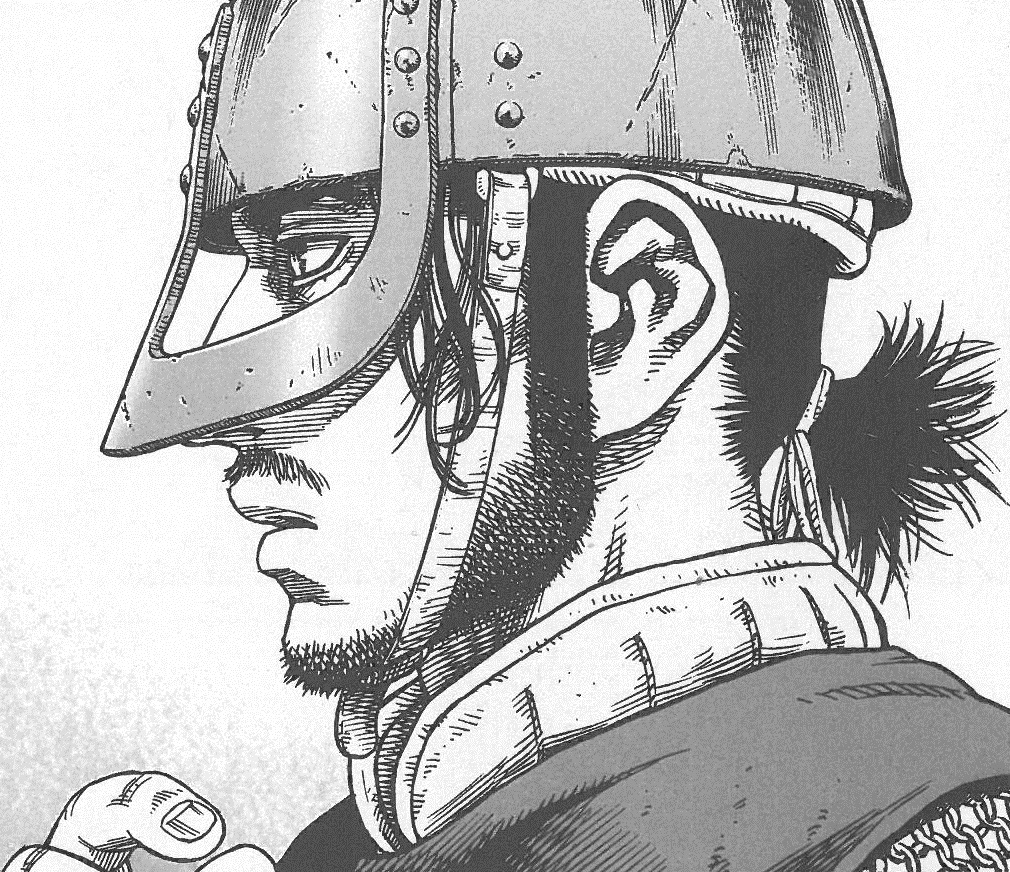
Vinland Saga, Omnibus 7, page 92Like so many of the other omnibuses of Vinland Saga, the seventh is brutal and at times even gruesome. The artistic detail and research that Yukimura has applied to the portrayal of the day-to-day lives of eleventh-century nobility, warriors, merchants, and slaves has also been applied to the battles and wars they wage. Men and women are beaten to the brink or point of death; limbs are severed; skulls are crushed; eyes are gouged out—Vinland Saga is an intense and violent series. But that violence isn’t idealized or glorified by Yukimura. Even while an individual’s martial skill and battle prowess are respected and admired, violence is shown to be the truly terrible and destructive force that it is, not just physically, but mentally and emotionally as well. Some of the most important themes in Vinland Saga revolve around violence, how it impacts people and society, and whether it can be avoided or whether humanity is trapped in a never-ending cycle of bloodshed.

In addition to the plot of Vinland Saga as a whole, violence and its effects are also crucial to the development of the individual characters. Many of them are trying to break free from the violence that pervades their lives, facing moral quandaries over how to enact their ideals. The characters of Vinland Saga aren’t safely philosophizing over what is ethical, they are literally risking their lives for what they believe in. But even when their ultimate goals are the same, they approach them differently. Canute is now in a position of power as king and will use any method necessary to ultimately achieve his earthly paradise. Thorfinn, on the other hand, is reluctant to use violent force in order to gain peace. And there are plenty of other characters in the series who fall somewhere between these two perspectives. Seeing the realistic interplay among all of these different worldviews in the series has been immensely engrossing. Vinland Saga is well-worth reading even in part, but I sincerely hope to see the rest of the series translated as well.

Filed Under: REVIEWS Tagged With: Japan Media Arts Award, kodansha, Kodansha Comics, Kodansha Manga Award, Makoto Yukimura, manga, Vinland Saga

  • « Go to Previous Page
  • Page 1
  • Interim pages omitted …
  • Page 10
  • Page 11
  • Page 12
  • Page 13
  • Page 14
  • Interim pages omitted …
  • Page 60
  • Go to Next Page »
 | Log in
Copyright © 2010 Manga Bookshelf | Powered by WordPress & the Genesis Framework