• Skip to primary navigation
  • Skip to main content
  • Skip to primary sidebar
  • Home
  • About Us
    • Privacy Policy
    • Comment Policy
    • Disclosures & Disclaimers
  • Resources
    • Links, Essays & Articles
    • Fandomology!
    • CLAMP Directory
    • BlogRoll
  • Features & Columns
    • 3 Things Thursday
    • Adventures in the Key of Shoujo
    • Bit & Blips (game reviews)
    • BL BOOKRACK
    • Bookshelf Briefs
    • Bringing the Drama
    • Comic Conversion
    • Fanservice Friday
    • Going Digital
    • It Came From the Sinosphere
    • License This!
    • Magazine no Mori
    • My Week in Manga
    • OFF THE SHELF
    • Not By Manga Alone
    • PICK OF THE WEEK
    • Subtitles & Sensibility
    • Weekly Shonen Jump Recaps
  • Manga Moveable Feast
    • MMF Full Archive
    • Yun Kouga
    • CLAMP
    • Shojo Beat
    • Osamu Tezuka
    • Sailor Moon
    • Fruits Basket
    • Takehiko Inoue
    • Wild Adapter
    • One Piece
    • After School Nightmare
    • Karakuri Odette
    • Paradise Kiss
    • The Color Trilogy
    • To Terra…
    • Sexy Voice & Robo
  • Browse by Author
    • Sean Gaffney
    • Anna Neatrour
    • Michelle Smith
    • Katherine Dacey
    • MJ
    • Brigid Alverson
    • Travis Anderson
    • Phillip Anthony
    • Derek Bown
    • Jaci Dahlvang
    • Angela Eastman
    • Erica Friedman
    • Sara K.
    • Megan Purdy
    • Emily Snodgrass
    • Nancy Thistlethwaite
    • Eva Volin
    • David Welsh
  • MB Blogs
    • A Case Suitable For Treatment
    • Experiments in Manga
    • MangaBlog
    • The Manga Critic
    • Manga Report
    • Soliloquy in Blue
    • Manga Curmudgeon (archive)

Manga Bookshelf

Discussion, Resources, Roundtables, & Reviews

Reviews

Seiho Boys’ High School!, Vol. 7

August 11, 2011 by Sean Gaffney

By Kaneyoshi Izumi. Released in Japan as “Men’s Kou” by Shogakukan, serialized in the magazine Bessatsu Comic (“Betsucomi”). Released in North America by Viz.

We’ve almost finished with this short and enjoyable shoujo series. As we hit the penultimate volume, the main boys (well, the main straight boys) all have girlfriends of some sort or another. So we’re left with doing plots on side characters we haven’t seen much of till now, and working on seeing how well those relationships with the girls are being maintained. As always, communication is the key.

The first chapter shows us a girl who goes through guys like kleenex, and her platonic best friend who has tried going to Seiho to get away from the drama that is her life. Of course, ‘platonic’ in this case turns out to be as platonic as most other shoujo manga cute friendships. Maki manages to step in and show the two what everyone but them can see (and honestly, the girl gets it too), with that special blend of being a complete jerk for the right reasons that he does so well. Given that it’s all too easy to peg Maki into the ‘sweet’ hole, I like seeing him when he’s a bit of an asshole.

Next we’re back to Kamiki, with what was likely my favorite chapter of the volume. He’s come down with a bad cold, and is starting to lose the image that he projects so hard under a feverish glare of ‘you know what? I just don’t care anymore’. We see some shots of him as a child dealing with his somewhat scatterbrained mother. He acts the strong, always in control boy so he can please her… but then she worries he’s too stoic. Finding a happy medium is tough, especially when you’re busy burying most of your emotions. (Suddenly it’s easier to see why he might have fallen for his stepsister.)

It’s even harder when your girlfriend is acting a bit too clingy, and your best friend is trying to get a bit too involved in your life as always. Kamiki and Maki’s brief fistfight is not as startling as what he says, and despite it being due to a fever, I think Kamiki with the filter off is great at telling those little annoying truths. Maki’s dating a girl with the same name and a similar personality as his dead crush. Why wouldn’t anyone be wary of that? Heck, I’ve mentioned myself I keep waiting for it to blow up in my past reviews. Still, Maki’s rationalization is a good one, and I’m starting to think I may not get the full confession I was hoping for.

There then follows a weak chapter with a student teacher inspiring Maki to be an idiot. The chapter after that, however, tells Miyaki and Erika’s side of the Kamiki chapter, and shows how the two, despite being dissimilar, have become such good friends. It shows both of them not at their best – Miyaji overreacts to everything, and is constantly fretting, which Erika’s ‘I don’t need anyone or anything’ persona sometimes blinds her to when Miyaji needs a hug more than a kick in the pants – but the dynamic is excellent. I like that Miyaji, during their fight, can immediately tell that she hurt Erika, and how it gnaws at her. It makes her less of a giant flake, which she’s had a tendency to be in this series.

There’s another cliffhanger ending, this time playing on Miyaji’s insecurities, but given Vol. 6’s ending didn’t apparently do much I’m not sure if this one will either. Still, it’s another great volume of an underrated shoujo series, and with the next volume being the final one I hope that all our leads find some measure of happiness. Bittersweet endings can be nice, but I like sugary sweet better.
Filed Under: REVIEWS

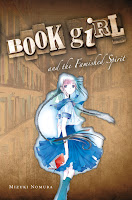
Book Girl and the Famished Spirit

August 10, 2011 by Ash Brown

Author: Mizuki Nomura
Illustrator: Miho Takeoka

Translator: Karen McGillicuddy
U.S. publisher: Yen Press
ISBN: 9780316076920
Released: January 2011
Original release: 2006

Book Girl and the Famished Spirit is the second book in Mizuki Nomura’s sixteen-volume light novel series Book Girl, illustrated by Miho Takeoka. Originally published in Japan in 2006, the book was released in English in 2011 by Yen Press. Once again, Karen McGillicuddy serves as the translator for the series. I read the first volume, Book Girl and the Suicidal Mime not too long ago and absolutely loved it. The book more or less made me an instant fan and so there was no question that I would be picking up Book Girl and the Famished Spirit. I am still quite fond of the premise of a “book girl,” a yōkai that devours the written word instead of food. Even though this story element is often relegated to the background, it is still important and I find it to be utterly delightful. Because I enjoyed Book Girl and the Suicidal Mime so much, I was really looking forward to reading Book Girl and the Famished Spirit.

Despite insisting she doesn’t believe in them, Tohko, the self-proclaimed “book girl,” is afraid of ghosts. Normally this wouldn’t be such a problem, but someone has been leaving encoded messages in the literature club’s mailbox. Messages that seem to be similar to the ones rumored to be left all over the school by a wandering ghost. But whether a prank pulled by a classmate or a legitimate spirit (book girls exist after all, so why not ghosts?), one thing is clear—the notes are asking for help. Tohko intends to investigate the incidents, assuming that Konoha, her underclassman and the only other member of the literature club, will be willing to assist her. But he’s reluctant, especially as the notes become more threatening. He hopes that she will just leave the whole matter alone.

While Book Girl and the Suicidal Mime was heavily influenced by Osamu Dazai’s No Longer Human, Book Girl and the Famished Spirit takes its inspiration from Emily Brontë’s Wuthering Heights. In some ways the story is actually more cruel than the original. If you’ve never read Wuthering Heights, don’t worry. If there’s one thing that Tohko likes to do besides eating literature, it’s talking about it and she provides a very nice summarization of the novel. Throughout the series she frequently launches into tirades about books, even at seemingly inappropriate moments. This is part of her charm although it can come across as tangential. Nomura is constantly dropping references to various works and authors, some more well known than others. But my favorite thing about Book Girl and the Famished Spirit was the introduction of Ryuto. I almost hope that he also turns out to be some sort of yōkai, but I’d still be happy even if it turns out he’s just simply a masochist.

For the most part, Book Girl and the Famished Spirit can stand fairly well on its own and it’s not absolutely necessary to have read Book Girl and the Suicidal Mime. The main mystery is almost completely separate with only a few minor references to the previous one. However, more information is given about Konoha and Tohko. To be honest, it is their backgrounds that intrigue me the most at this point. Konoha’s past in particular is slowly being introduced, piece by piece, within the context of the incidents he and Tohko get caught up in. It’s an interesting but effective technique. Although I enjoyed Book Girl and the Famished Spirit, I didn’t like it nearly as well as I did the first book. I’m not really sure why; maybe it’s just that I happen to prefer No Longer Human over Wuthering Heights. Regardless, I still intend to continue the series with the next volume, Book Girl and the Captive Fool.

Filed Under: REVIEWS Tagged With: book girl, Light Novels, Miho Takeoka, Mizuki Nomura, Novels, yen press

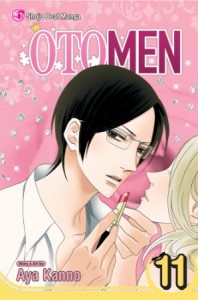
Otomen, Vol. 11

August 8, 2011 by Sean Gaffney

By Aya Kanno. Released in Japan by Hakusensha, serialization ongoing in the magazine Bessatsu Hana to Yume (“Betsuhana”). Released in North America by Viz.

Well, in my review of Volume 10 I asked for an end to these ‘minor villains’ coming in to try to de-Otomen our hero, and do a degree I got that. But that’s because the series main villain makes her big return. Asuka’s mother is back, and she is not about to let her boy do anything girly whatsoever. But that’s not till 2/3 of the way through this volume. First we have to finish off the cycle of teachers who were brought in to clean up the school.

When we left our heroes, they were on a field trip to learn to become perfect samurai and geisha. Unfortunately, a landslide has destroyed the only way out to get food and supplies, and trapped them. Luckily, our heroes are not content to let gender stereotypes get in their way! Asuka creates festival decorations to distract the class, while Ryo goes hunting for giant fish, having earlier proven that she can’t be trusted with mushroom gathering. She also rescues an injured Tonomine, and in general is pretty badass. (Given I’ve whined about her so much in the past, I will grant her this.) She also cleans up nicely when she goes dancing with Ryo later.

The best chapters in the manga are the ones back at school dealing with Valentine’s Day, which naturally leads to another Otomen challenge, this one disguised as it’s based around punishing an anonymous person who wrote soppy romantic poetry. Asuka steps in to stop the punishment, and finds himself battling the school nurse, Oji, who is not only handsome and sexy, but also exudes pheromones to make all the girls fall for him. Asuka has merely his natural charm, handsomeness, and politeness to fall back on.

It’s a tough battle, especially as Ryo has seemed distant and keeps brushing him off. (If you’ve guessed what she’s doing, you’re right – this is Otomen. Surprises in the plot are for other manga.) But in the end, Asuka realizes that the shallowness of this competition is not for him, and throws it by giving all the chocolates back (notes he grabs each chocolate from a huge pile and remembers who gave it to him exactly), as the only ones he can accept are from Ryo, who of course has spent the last few days making her lethal chocolate for him. Awwwwww.

Unfortunately, after this we hit our Worst Case Scenario – Asuka’s mother is back, taking over the school as Kasuga and his squad of teachers failed. So Asuka is back to desperately hiding everything, which is even more unfortunate given there’s a class in teaching men how to bake cakes going on! This is the most cliched of the chapters, but does continue to lean on some heavy foreshadowing, and of course I can’t hope for his mother to give in right away, as otherwise where would the plot tension be?

The manga ends with a sample of the first chapter of Love Chick, Juta’s manga based on Asuka and Ryo only gender reversed. It’s a good thing it’s only fictional, as I found it quite dull. Oh well. More importantly, Otomen has now caught up with Japan, which mean we won’t get another volume for 6 months. So I hope you didn’t mind the cliffhanger. As ever, I want slightly more out of Otomen than what it gives, but an reasonably happy with it regardless.

Filed Under: REVIEWS

Monthly Comic Alive

August 7, 2011 by Sean Gaffney

I’ve spent the past few days down with a nasty cold, one of the worst I’ve had in years. Nausea, coughing, slight fever, weakness, the works. As a result, reviews have been thin on the ground. So I figured that, since I’m *already* ill, what better time to take a look at the August issue of Monthly Comic Alive, from the folks at Media Factory?

Usually whenever I go into NYC I try to get a different manga magazine to try out. Lately I’ve been limited as they’ve stopped carrying some of the really obscure ones, and the choices seem to be limited to the old classics – all the big 3 shonen, Morning/Afternoon/Evening, Big Comic/Original/Superior/Spirits, and Young ______. The remainder, down on the bottom shelf of Kinokuniya’s seinen section, tend to be what I call ‘media tie-in boobie magazines’, where the manga caters to people who like franchises and fanservice. Here you’ll find Kadokawa’s Shonen and Young Ace, for example, or Shonen Gahosha’s Young King Ours. And Champion Red goes here, despite its lack of tie-ins, by its sheer skeeziness.

Media Factory is in general known as an anime company first and foremost. In 1999 they started to put out a manga magazine Comic Flapper, which is still running, and was the home of Dark Horse’s incomplete series Translucent. In 2006 they noted the growing otaku market and started Comic Alive, which oozes otaku from its every pore. I picked up the August issue with trepidation. I mean, look at this cover.

So, knowing I was in for a rough ride, I started to glance through the contents. Let’s see…

It needs to be said, if you want to know what the current otaku kinks are, Comic Alive is a great place to go. Catgirls are in here, of course. As are maids. A lot of maids. Panties, of course. Gotta have lots of underwear. And of course lots of nudity as well. There’s also witches, mainly as half the magazine seems to be fantasy of some sort. Fans of current anime series will find a lot of this familiar, as many of these are current animes, past animes, or future animes. Sacred Blacksmith. Zero no Tsukaima. Sasameki Koto. Boku wa Tomodachi ga Sukunai. MM! Maria Holic. Stein’s Gate. In addition, a good number of those I just mentioned are based off of light novels or games, making it even more franchise bait. And a few of them have ‘side stories’ running in other magazines from other companies.

As I wrote short notes about each chapter I read, one thing kept coming up over and over. ‘Ecchi fantasy’. Not porn, of course, as that would require anyone actually getting lucky, which isn’t going to happen here. But… well, I could probably write a synopsis that would fit 75% of Comic Alive’s stories.

“Kenji, a nondescript ordinary guy, is going to school at Elite Academy, where he finds he is one of only 10 boys in a school almost entirely populated by girls. One day, he discovers that he is the bearer of an awesome power (magic/swordsmanship/being really nice, delete where appropriate), but one that can only be used if he gains power by earning the love and/or affection (really, rubbing against him will do) of at least five different 13-16 year old girls of varying personalities and body types, as long as you have one girl who’s flat-chested and angry and one who is buxom and seductive. Of course, Kenji is a nice guy, so these girls have nothing to fear. As the series goes on, he will come up against bigger villains and more girls, all of whom fall for him and most of whom he meets when he walks in on them changing, or in the shower, or hell, when they wake up naked in his bed. What’s Kenji going to do? How can he possibly decide which girl is his true love and which he just needs to use their affection to power himself up? Especially as he represents so many readers, none of whom will agree. (He’ll probably end up with the angry girl, but let’s hedge our bets and do a side-story in Shonen Ace where he doesn’t.) Soon to be a new anime in the Fall of 2012!”

There are a few bright spots. Sasameki Koto may be a bit more serious than it once was, but its relatively realistic look at a budding yuri couple is a breath of fresh air amidst all the panty shots elsewhere in the magazine. Likewise Himawari-san, another low-key series with a dash of yuri. I was also quite pleased with Suugaku Girl, which is apparently in its third incarnation, and is designed to teach difficult math concepts through the power of moe cat-eared girls. It has some service, but not a lot, and seems to be pretty dedicated to teaching its math (at least from the one chapter I read).

But really, the thing that struck me most about Comic Alive, a magazine devoted to being the go-to point for otaku who like to read more of the same, it’s that there were 4 different series that had 4-koma comedy spinoffs later in the magazine. Zero no Tsukaima, Mayo Chiki, Infinite Stratos, an Aria the Scarlet Ammo *all* have cutesy superdeformed 4-koma series to keep milking the same thing. Presumably as if they had to rely on series that weren’t part of a light novel/manga/anime/game franchise, it would be a very short magazine indeed.

Filed Under: REVIEWS

Manga on the Big Screen: Love*Com, NANA, and Ping Pong

August 5, 2011 by Katherine Dacey

As anyone who’s seen Green Lantern or Captain America can attest, adapting a comic for the silver screen is an art, not a science. Done poorly, comic book movies alienate fans with the omission of favorite characters and glossing of seminal plotlines, or confuse newcomers with in-jokes and choppy storytelling. Done well, however, comic book movies can appeal to just about anyone who’s receptive to the genre and the characters. VIZ Pictures may not have released as many comic-book movies as DC or Marvel, but its catalog includes adaptations of several popular manga, including Aya Nakahara’s Love*Com, Ai Yazawa’s NANA, and Taiyo Matsumoto’s Ping Pong. These three films make an instructive case study, as they illustrate the pitfalls and potentials of bridging the gap between page and screen.

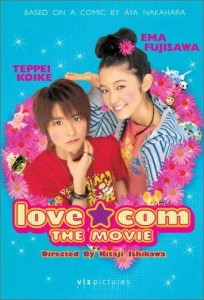
Love*Com: The Movie
VIZ Pictures • 100 minutes • No Rating
Risa, the tallest girl in the seventh grade, develops a crush on Otani, the shortest boy in her class. Though superficial opposites, the two are really kindred spirits, sharing an enthusiasm for Umibozu (a Japanese rap artist that their classmates detest), swapping good-natured insults, and bonding over memories of rejection for being too tall and too short, respectively.

Whether you’ve read Aya Nakahara’s charming manga or not, you won’t have too much difficulty guessing how the story will end. The problem, however, is that Risa and Otani’s journey from bickering classmates to boyfriend and girlfriend seems utterly contrived. The scriptwriter borrows two romantic rivals from different volumes in the series’ run, but only succeeds in making Mr. “Mighty” Maitake, Risa’s handsome homeroom teacher, an integral part of the story. Even then, Mighty’s arrival is a bolt from the blue, and is never satisfactorily explained; he’s simply inserted into the final act of the story so that he and Otani can compete for Risa’s affections. (And when I say “compete,” I mean it: the two play a pick-up basketball game in front of the entire school.)

The other major drawback to Love*Com is its superficial treatment of the principal characters. Though Aya Nakahara’s manga charts the ups and downs of Risa and Otani’s friendship in minute detail, the movie’s frantic pace never allows us to get to know the characters or understand why they’re drawn to each other; we simply see them walk through a variety of stock scenes — cultural festivals, school trips — without actually seeing the evolution of their feelings dramatized.

It’s a pity that the Love*Com script feels so hastily assembled, as the film has the potential to appeal to both long-time fans and newcomers. The button-cute leads have some chemistry, even if the script doesn’t give them much to do. And the script shows flashes of inspiration; a “director” surrogate periodically interrupts the proceedings to explain certain peculiar-to-manga conventions (most notably the nosebleed-as-sign-of-arousal), intoning this information over strains of Beethoven’s Moonlight Sonata. These digressions occur just a few times, but add some much-needed humor to a film that lacks the wit and honesty of the source material.

The verdict: Skip it. This flat, uninspired retelling of Risa and Otani’s courtship will bore all but the most devoted Love*Com fans.

This review originally appeared at PopCultureShock on 3/24/08.

Nana
VIZ Pictures • 114 minutes • No Rating
I admire Kentaro Otani’s chutzpah in bringing NANA to the big screen, as it’s the kind of story that inspires intense devotion to the characters; make a poor casting decision or cut a beloved character and you run the risk of angering the manga’s most devoted fans. Otani steers clear of those hazards, however, assembling an appealing cast that look and sound like their cartoon doppelgangers. The movie offers a somewhat streamlined account of the manga’s first five volumes, beginning with the two Nanas’ fateful encounter on a Tokyo-bound train and ending with Trapnest’s first visit to the girls’ apartment. Most of the dramatic juice is supplied by Hachi’s relationship with the feckless art student Shoji, and by Nana O.’s relationship with Trapnest bassist Ren.

As much as I enjoy the manga, I’ve always found Hachi’s relentless enthusiasm and boy-crazy antics irritating and couldn’t imagine why the fierce, scornful Nana O. didn’t feel the same way about her. As portrayed by Aoi Miyazaki, however, the character makes more sense. Miyazaki does a superb job of convincing us that Nana O. would befriend someone who seems too ditzy, too dependent, and too femme to hang with an up-and-coming punk act. Mika Nakashima, as Nana O., also turns in a solid performance, playing her character as a believable mixture of belligerence, determination, and vulnerability.

The other great advantage of the movie is its soundtrack. All of the rock-n-roll shoptalk and song lyrics seemed a little preposterous on the page; I had a hard time imaging why Trapnest or Black Stones commanded loyal followings, as they seemed like pallid imitations of Siouxsie and the Banshees. Seeing and hearing these acts in the film, however, transported me back to my college years, reminding me how passionately I felt about certain musicians, and how much their songs felt like an expression of my own identity. The film’s two lengthy concert scenes are highpoints of the film, offering us a window into both girls’ complicated emotional lives — their dreams, their disappointments, their improbably close relationship.

I had a few small bones to pick with the scriptwriters — what happened to Junko and Kyosuke? — but on the whole, I found NANA immensely entertaining. The true measure of the film’s appeal, however, is that my sister, who isn’t a manga maven, loved it too, and wanted to know if there was a sequel. Thank goodness the answer is yes.

The verdict: Rent it. Some die-hard fans may take issue with the casting and script, as the film isn’t as faithful to the manga as the anime adaptation is.

This review originally appeared at PopCultureShock on 3/24/08.

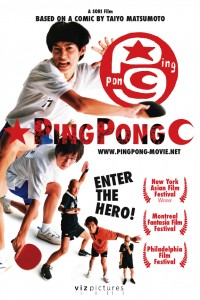
Ping Pong
VIZ Pictures • 114 minutes • No Rating
Based on Taiyo Matsumoto’s manga of the same name, Ping Pong focuses on a pair of friends: Peco (Yosuke Kubozuka), a flamboyant table tennis star who’s obsessed with the game, and Smile (Arata), a reticent young man whose primary motive for playing is to spend time with Peco, whom he quietly regards as a hero. Peco’s swaggering style — complete with acrobatic leaps, trash talk, and frequent dives — makes for good theater, but he’s trounced in a tournament by long-time rival Demon (Koji Ohkura). Despondent over the loss, Peco quits the team and burns his paddle. The coach, himself a former champion known as “Butterfly Joe” (Naoto Takenaka), then turns to Smile to lead his peers to victory in the next major competition, a responsibility Smile is reluctant to accept.

Like Hoosiers, Rocky, Rudy, or A League of Their Own, Ping Pong sticks close to the sports movie playbook, delivering epiphanies with clockwork precision. Smile discovers his inner competitor. Peco discovers that he can’t live without ping pong. “Butterfly Joe” imparts wisdom to Smile. And so on.

Yet for all its sports-movie posturing, Ping Pong is weirdly thrilling, thanks, in large part, to the colorful cast of supporting characters: there’s Peco’s chain-smoking grandmother (Mari Natsuki), a fierce devotee of the sport who runs a table tennis dojo; China (Sam Lee), a washed-up Chinese champion seeking a fresh start in Japan; and Dragon (Shidou Nakamura), a competitor who shaves his eyebrows in an effort to look more intimidating. The other key to Ping Pong‘s success is its fidelity to Taiyo Matsumoto’s original vision. Director Fumihiko Sori’s painstaking efforts to recreate the look and feel of the manga are evident throughout the film, from the casting decisions to the extreme camera angles, jump shots, and fleeting fantasy sequences; Sori manages to capture Ping Pong‘s heightened reality without becoming too arch or mannered.

Fans wanting a behind-the-scenes look at the table tennis action or a few pointers for their own game will want to view the omake on this two-disc set, which includes a 54 minute “making of” documentary, a short “how to” feature reviewing ping pong techniques, and the usual assortment of trailers, tv spots, and cast profiles. All in all, Ping Pong makes a great addition to your library, especially if you still have dog-eared copies of No. 5 kicking around the attic.

The verdict: Rent or buy it. The film captures the arch, surreal quality of Taiyo Matsumoto’s writing even better than the animated version of Tekkonkinkreet.

This review originally appeared at PopCultureShock on 8/28/07.

Filed Under: Manga Critic, Movies & TV, REVIEWS Tagged With: Ai Yazawa, love*com, nana, Ping Pong, Taiyo Matsumoto, VIZ Pictures

Now You’re One of Us

August 3, 2011 by Katherine Dacey

Noriko, the young heroine of Asa Nonami’s Now You’re One of Us, initially thinks she’s hit the marriage jackpot. Not only are her in-laws wealthy and well regarded by their neighbors, they’re also quick to embrace her as a member of the family. Her husband Kazuhito is handsome and utterly devoted; her mother-in-law Kimie, generous and uncritical; and her sister-in-law Ayano, solicitous to everyone in the household, including Kazuhito’s oddly child-like brother Takehami. Even the Shito matriarch, ninety-eight-year-old Ei, welcomes Noriko to the clan by declaring her the family’s “treasure” and “future.”

Shortly after Noriko arrives at the Shitos’ Tokyo home, a strange, slightly disheveled neighbor approaches her while she works in the garden. Though Kimie is quick to dismiss him as a troubled tenant who’s fallen on hard times, Noriko can’t shake the feeling that the neighbor was about to divulge something damning — a feeling intensified by his mysterious death in a fire several days later. The Shitos’ oddly muted, impersonal response to his death further arouses Noriko’s suspicion, as do the family’s clandestine midnight meetings. Though the Shitos offer reasonable, measured responses to Noriko’s inquiries, she begins wondering if the Shitos run an illicit business… or worse.

Thanks to a fluid translation by Michael and Mitsuko Valek, Asa Nonami’s simple, unfussy prose draws the reader into Noriko’s insular world, showing us how a simple girl from a working class family is lured into the Shitos’ web. In this passage, for example, Nonami reveals Kazuhito to be a deft manipulator, appealing to Noriko’s vanity by suggesting that Ei’s endorsement carries special significance:

“Great Granny’s been watching people for ninety-eight years — she can see through them at a glance, so lots of people in the neighborhood come to ask her for advice.” He explained how delighted he was that Great Granny had taken a liking to her; it showed that he hadn’t been blinded by attraction. He felt like the luckiest man in the world for having found someone of whom his family approved.

Unfortunately, Nonami is never content to let a passage like this one stand alone; she feels compelled to explain how Kazuhito’s words swayed Noriko by telling us exactly what Noriko is thinking at the moment he gives this speech. The obviousness of Noriko’s interior monologues is especially frustrating; Nonami does a competent job of revealing her characters’ motivations and feelings through their actions without resorting to such editorial interventions.

The other drawback to Nonami’s storytelling is that she begins telegraphing the ending just a few chapters into the book. Savvier readers will quickly figure out what the Shitos’ secret is — and it’s a doozy — though they probably won’t mind wading through another hundred pages to have their ickiest suspicions confirmed, especially since Nonami manages a few surprises in the final pages.

The bottom line: Now You’re One of Us is an entertaining, atmospheric potboiler that’s probably best read in the privacy of one’s own home.

This review originally appeared at PopCultureShock on 2/8/08.

NOW YOU’RE ONE OF US • BY ASA NONAMI, TRANSLATED BY MICHAEL AND MITSUKO VALEK • VERTICAL, INC. • 240 pp.

Filed Under: Books, Manga Critic, REVIEWS Tagged With: Mystery/Suspense, Novel, Vertical Comics

Negima! Magister Negi Magi, Vol. 30

August 1, 2011 by Sean Gaffney

By Ken Akamatsu. Released in Japan as “Mahou Sensei Negima!” by Kodansha, serialization ongoing in the magazine Weekly Shonen Magazine. Released in North America by Kodansha Comics.

Everyone has heard of the phrase “it’s always darkest before the dawn”, and that proves to be true of Negima as well. Sadly, the dawn is not in this volume, which mostly brings our cast closer and closer to ‘the darkest’. Things fall apart, the center cannot hold…

When we left our heroes, we were in the middle of a big flashback telling the rest of the story of Negi’s mother and father. Having saved as many people as possible from a crushing death at the hands of the faceless bad guys, Arika is rewarded by being turned into a scapegoat and accused of the murder of her father and others in the name of ambition. It’s up to the others to rescue her… that is if she wants to be rescued. It has to be said that her rescue, and Nagi and Arika’s subsequent confessions, are one of the most heartwarming bits of the series, something which Akamatsu is clearly milking for all it’s worth, as he has several characters, including our current villain, tear up at it.

As a villain, Goedel’s not up to much. Sure, he can hold back Negi for a bit, but his crypticness just serves to annoy, and he reckons without the powers of Negi’s friends. Indeed, Chisame, Asakura and Nodoka all get great spotlights here, as we see that intelligent use of powers can get you far even if you aren’t a fighter. And, of course, we get the fighters as well, as Ku Fei shows up with her Monkey King Staff of Awesome.

And then the villains decide to attack… all of them. This means we have the palace guards coming to arrest Negi’s girls as conspirators (they don’t last long, especially once they start threatening Konoka in front of her protector…), as well as what appears to be Cthulhu. No, really, even Paru notes it. This proves much harder to battle as it starts ripping the palace into bits. So the new strategy is to get to the bottom of the palace and meet up there… but the goal is to avoid getting to the bottom the hard way.

Luckily, we have a few old friends showing up to help, who we knew were around but hadn’t actually seen for about 10 volumes. Takamichi manages to finish off the beatdown of Goedel, and notes that while he finds Negi’s desire to continue his father’s work dangerous, it also makes him quite happy. And then there’s Mana, who manages to be almost ludicrously good as she battles the random faceless Lovecraft monsters. Of course, that’s because fake!Asuna offers to pay her to do it… she had no interest in the innocents being killed otherwise (or so she says). Once again, Mana’s mercenary aspect is both amusing and disturbing. And Misora’s right, how DID she pull that bazooka from out of her cleavage? ^_-

Meanwhile, Negi Party are split further when a building cracks in half. Asakura almost falls to her death, but is saved by a surprisingly strong Nodoka… who’s then saved by her dungeon-crawling friends Craig and Aisha, who were worried about her and came back to help. (Asakura is quick to poke at Nodoka for attracting suitors, and also notes her new toughness.) So they’re safe! … for about 6 pages. Then The Lifemaker shows up. As with the rest of Fate’s team, he’s perfectly happy to fight any number of physically powerful types like Kaede or Setsuna, but wants Nodoka and her mind-reading removed from the board. So he attacks her, and Craig tries to defend… and gets vaporized into a spray of white feathers.

Now, given that he’s mysteriously vaporized into white feathers rather than, say, crushed into a pulpy mess, I suspect this is one of those many handy reversible deaths you seen in shonen all the time. Still, it’s plenty shocking given we haven’t really had ANY deaths in present-time Negima, and the last shot of the volume is Nodoka’s stunned face. After the relaxing kiss kiss carnival and political shenanigans of Volume 29, this one’s an action packed brawl, and it’s only going to get worse in Volume 31.

And there’s not even any fanservice this time! Well, not much…

Filed Under: REVIEWS

Kobato., Vols. 1-3

July 31, 2011 by Michelle Smith

By CLAMP | Published by Yen Press

The plot of Kobato. sounds like a typical shoujo magical girl story. A dim-witted and clumsy heroine, who also happens to be guileless and compassionate, is tasked with filling a magic bottle with wounded hearts so that her dearest wish can be granted. But Kobato. isn’t shoujo.

If anything, it’s seinen, as it ran for seven chapters in Sunday GX before going on hiatus and reemerging in Newtype magazine. I’m guessing that the target audience, presumed to be young men with an appreciation for moe, is the reason why Kobato commences flailing, chibified panic mode on page two and falls down approximately fifteen times per chapter. (I may be exaggerating there, but honestly not by much.) The latter gag is run into the ground so relentlessly that I refuse to consider that anyone finds it funny, so CLAMP must be trying to inspire feelings of “Aww, she’s so cute and/or hopeless.”

The first volume of Kobato. is not very good. Kobato’s incompetency grates as does the constant browbeating she receives from Ioryogi, some sort of supernatural being currently dwelling in the form of a stuffed dog, who is testing her ability to “act according to the common-sense rules of this place.” If she passes, she earns the magic bottle. These tests—mainly centered around holidays—include taking out the trash, making nabe, and spending New Year’s day playing traditional games with an elderly woman.

Things improve somewhat in the second volume. Kobato’s got her bottle now and is ready to heal some wounded hearts. After moving into the same apartment building seen in Chobits, she starts work as a helper at Yomogi Kindergarten. The head of the school, Sayako-sensei, seems to have a heart in need of some healing, as does her hard-working part-time employee, Fujimoto. With Ioryogi’s assistance, Kobato tries to discover how best to help them, and gradually learns that Sayako is working to pay off a debt her father was tricked into incurring, that Sayako’s soon-to-be-ex husband is threatening harm to the school unless she pays up, and that Fujimoto is working himself to the point of exhaustion to earn money to contribute. They seem suspicious of Kobato at first, but her genuine sincerity eventually wins over even grumpy Fujimoto.

This is definitely an improvement over the first volume, but the kindergarten-in-peril storyline still seems to be occupying a great deal of space in what looks to be only a six-volume series. (Kobato. just recently came to an end.) There is a lot of room left in Kobato’s bottle, so I wonder how she will end up filling it after spending so much time working on these two hearts in particular.

Now that I’ve finished my litany of complaints, there are some intriguing questions about Kobato. that leave me inclined to stick with the series until the end. Where is Kobato from, exactly? What is her wish? How did she and Ioryogi meet? What is Ioryogi? (We’ve learned already that if he helps Kobato grant her wish, he may be able to get his original body back.) And, most peculiarly of all, why is it that Kobato is not allowed to take off her hat?

Kindergarten peril I can do without, but I really do want to know what’s up with the hat thing.

Review copies provided by the publisher.

Filed Under: REVIEWS Tagged With: clamp, yen press

Fruits Basket, Vols. 21-23

July 28, 2011 by Michelle Smith

As I recounted in this week’s Off the Shelf column, I have been a fan of Fruits Basket for nearly a decade now. I followed the end of the series in Japanese, and because I knew how it ended, I was able to postpone reading the final English volumes and delay the sad moment when the series really would be over. This week’s Manga Moveable Feast, however, prompted me to finally take the plunge.

Volume 21 is extremely tense, with Kyo continuing the story of how he redirected his feelings of guilt regarding the death of Tohru’s mother into a hatred of Yuki (just like his father redirected his own guilt in the death of his wife onto Kyo). Meanwhile, an ominous, knife-wielding Akito creeps up on their location. After Kyo seems to reject her feelings, Tohru runs off and crosses paths with Akito. A vitally important scene occurs between them in which Akito, weakened by lies and uncritical kindness perpetuated by various Sohma family members, is finally receptive to the kind of acceptance and sympathy Tohru offers. I’m a little disappointed that Tohru immediately falls off a cliff at this point, because that’s rather meloramatic, but I adore how urgently Akito attempts to summon help.

All of the Sohmas are worried, but none more so than Yuki (in cold fury mode) and Kyo (deeply grieving), who eventually have it out and end up finally confessing that they each aspired to be like the other. I love how this plays out, and I love that Yuki continues to nudge Kyo when necessary to ensure that Tohru ends up happy. Are they super pals by the end of the series? Not exactly, but they’ve definitely made their peace and come to an understanding. I’d say they’re closer than mere friends, actually, because they’ve gone through so much together, treasure the same person so much, and have finally realized that, despite appearances and insults, the person they are is valued by the other.

While Tohru recovers in the hospital, Kyo realizes that she’s given him something worth fighting his “fate” for. A visit to his father leads to paternal hysterics, but Kyo’s resolve is unshaken: he is going to live “outside,” no matter what. Meanwhile, Akito has made plans to demolish the isolation room. In the aforementioned Off the Shelf column, I wondered whether Akito’s actions might partly be due to some unconscious influence by the God who originally created the bond, as we later learn that he laments that something forged in love has now become a source of pain. He’s grateful to those who “shouldered that exhausted promise” for so long, and willingly lets them go. So, did he convince Akito in some way? Did Akito convince him? The latter would be more in line with the themes of the series, actually.

Uotani and Hanajima keep Kyo away from the hospital while Tohru is recuperating, since the mere mention of her name prompts her to start crying (she still believes he is disillusioned by her confession of love), but he’s finally tipped off regarding her release date and goes to see her. It’s an amazing scene: as Kyo heads there, he’s full of doubts and uncertainty regarding his own feelings, but the moment he sees her, everything is clear as day. “I love her.” I can’t help getting a bit choked up even discussing it, because it seems like I’m watching cherished friends finally find each other. They talk and work things out, and it is as lovely as can be. “I really do love you,” quoth Tohru, when Kyo warns he’ll probably cause her pain because the curse is still between them. “And that feeling is invincible.” They embrace and are profoundly shocked when Kyo does not transform. His curse is broken.

A wonderful chain-reaction montage ensues as the members of the Zodiac are freed in turn, with Yuki the last of all. “You’re the last,” says God. “Thank you. For keeping the very distant promise.” This happens just in time for Yuki, who had been on the verge of telling Machi about the curse, to embrace her in tears.

Loose ends are wrapped up in the final volume, more loose ends than I actually realized needed wrapping up, making for a very thorough and satisfying conclusion. It’s a little convenient that nearly everyone ends up romantically paired off by the end, with the exceptions of Momiji and Kagura, who are still not over their respective unrequited loves. Other things, however, aren’t wrapped up so neatly, with Rin unable to forgive Akito just yet, long-time family servants unable to adjust to the dissolution of the curse, and many painful feelings still remaining.

But, as a certain image reminded me, Takaya-sensei maintains the idea that “there is no such thing as a memory that’s okay to forget” to the end. The formerly cursed Sohma don’t need to forget what happened to them in the past in order to be happy in the future. Tohru believes this fully, collecting each of the beads from Kyo’s broken bracelet and displaying them as precious items alongside family portraits even until the day she and Kyo are lovey-dovey grandparents.

I cannot express enough how wonderful this series is. I feel so fortunate that I was able to witness the growth and transformation of such a memorable cast of characters, many of whom I dearly love.

Filed Under: REVIEWS Tagged With: natsuki takaya, Tokyopop

Basic Anatomy for the Manga Artist

July 26, 2011 by Katherine Dacey

Billed as “Everything You Need to Start Drawing Authentic Manga Figures,” Basic Anatomy for the Manga Artist helps artists apply what they learned in life drawing class to character design.

The book is divided into six sections. In the first, “Basic Head Elements,” author Christopher Hart shows readers how to draw eyes, ears, noses, and mouths, stressing the importance of correct placement and symmetry in rendering the face. The next three sections, “The Foundation of the Body,” “Topographical Anatomy,” and “Body Symmetry and Asymmetry,” focus on the skeleton and musculature, offering readers clear strategies for representing bones, tendons, and muscles in their figure drawings. The final two sections, “How Movement, Light, and Perspective Affect the Body” and “Putting It All Together,” build on insights from the earlier chapters, leading readers through the process of drawing dynamic poses and creating original character designs.

Though the book is filled with useful illustrations and helpful advice, Hart’s approach is inconsistent. In some chapters, he breaks down tasks into discrete steps, using simple shapes and guidelines to show readers how to draw a mouth in three-quarters view or render a well-toned leg. Other chapters assume more experience on the part of the reader; a novice would have a hard time re-creating some of Hart’s character designs, as even the preliminary sketches are very polished. (Hart also presumes familiarity with illustration software, instructing readers to add shading to their finished drawings without offering tips for doing so.)

The book’s other problem is in the way that it frames manga as a style, not a storytelling medium. “Basic Anatomy for Manga Artists contains instructions specifically designed for drawing idealized heads and bodies in the authentic Japanese style of manga,” Hart declares in the introduction. But what, exactly, is “the authentic Japanese style of manga”: Naruto? Fruits Basket? 20th Century Boys? Lone Wolf and Cub? Instead of defining manga as a style, it would have been more useful for Hart to show how manga artists use a common set of techniques to achieve different results; after all, Goseki Kojima used the same shortcuts for rendering faces and bodies as Hiromu Arakwa and CLAMP, a point that’s glossed over in the text.

Despite its conceptual flaws, Basic Anatomy for the Manga Artist is still a useful reference. Hart’s cutaway illustrations of the muscular and skeletal systems are particularly helpful for the artist who wants a better understanding of how the body moves. Hart also does a fine job of showing readers how to represent muscles, bones, and facial features using a few well-placed lines — an invaluable skill for any sequential artist, regardless of style.

Review copy provided by Watson-Guptill Publications.

BASIC ANATOMY FOR THE MANGA ARTIST: EVERYTHING YOU NEED TO START DRAWING AUTHENTIC MANGA CHARACTERS • BY CHRISTOPHER HART • WATSON-GUPTHILL PUBLICATIONS • 160 pp.

Filed Under: Books, Classic Manga Critic, Manga Critic, REVIEWS Tagged With: Christopher Hart, How-To, Watson-Gupthill

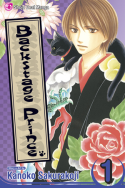
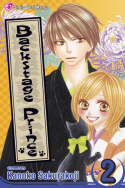
Backstage Prince 1-2 as viewed on VIZmanga.com

July 26, 2011 by Michelle Smith

One of the more exciting manga-related announcements to come out of San Diego Comic-Con was the debut of VIZ’s new online manga portal, which syncs user accounts between the web browser and various supported devices. This is great news for me: since I don’t own any of those supported devices, I’ve been hoping a site like this would come along.

Of the assortment of shoujo, shounen, and seinen series available on the site, the two-volume Backstage Prince by Kanoko Sakurakoji—whose smutty supernatural series Black Bird is currently being published by VIZ—caught my eye, and being both short and something I didn’t already own in print, seemed like the perfect vehicle through which to test out the VIZmanga interface. (For MJ’s thorough report on both the VIZ and Square Enix online initiatives, click here.)

I had an utterly hassle-free experience creating an account and browsing the manga available on the site. There are two options for paying for one’s purchases: Paypal and Amazon. Since most people already have payment information saved in at least one of these places, this makes for a convenient checkout experience. My one complaint is that I had to go through the payment process separately for each volume, which I’m sure would get really annoying if one were buying more than just two volumes. It would be nice if there were an “add to cart” function so multiple volumes could be purchased simultaneously.

The web viewer requires no software installations and defaults to a two-page layout in a size I’d describe as “mostly readable.” To resize to full screen (“perfectly readable”) or to set a bookmark, users must hover their mouse pointer over the top of the image until a taskbar appears. (I discovered this by accident, and would recommend that VIZ make the option much clearer somehow.) When you set a bookmark and return to the manga later, you’re still taken to the beginning initially, but clicking on the bookmark icon by the progress bar underneath the viewer will quickly take you where you want to go. Aside from the taskbar hiccup, navigation is intuitive and easy.

Moving on to Backstage Prince itself!

Akari is a thoroughly ordinary girl with no interest in kabuki, but when she accidentally bruises the distinguished son of a famous kabuki family, she agrees to become his assistant until he heals up. Ryusei Horiuchi is bad around people—his only friend is his cat, Mr. Ken—but gradually warms up to Akari, who does not approach him with expectations only to be disappointed when he turns out to be so stiff and unfriendly. They’re a couple by the end of the first chapter.

Various challenges to their relationship appear in subsequent chapters. A pretty costar for Ryusei, possessive fangirls, Ryusei’s disapproving father… Most disruptive is Naoki, a kabuki understudy who finds it extremely easy to undermine Akari and Ryusei’s confidence in their relationship, so is always inspiring angst and insecurity in the former and anger and jealousy in the latter. All of this opposition is supposed to be making them a stronger couple, but if you think it grows tiresome to read, you are correct!

On the surface, Backstage Prince is a lot more tame than Black Bird. Akari isn’t sought after by demons who want to devour and/or ravish her and Ryusei isn’t controlling or purposefully cruel to her, but the series is still guilty of some backwards gender politics, and perhaps in an even more insidious manner.

You see, Ryusei needs Akari in order to do his job well. Whenever he gets stressed out from dealing with all those people, he rushes back to his dressing room to be with Akari, with whom he is able to relax. This might not sound so bad, but the end result is that he expects her to be there all the time while he is working. And she’s apparently just sitting there, staring into space, waiting for her man to come and give her purpose, because at one point her grades take a nosedive (any sensible girl would at least use the time to study!) and she’s dismissive of her parents’ concern. Akari quite literally has no goals in her life other than being near Ryusei. I find this far more depressing than romantic.

The bottom line: if you’re open to the idea of reading manga online, VIZ’s new site provides a clean, simple, and legal way to do so. I can definitely see myself using the site again in the future and recommend it without reservation. But maybe you should read something other than Backstage Prince.

Filed Under: REVIEWS Tagged With: Kanoko Sakurakoji

Naruto Volumes 4-6

July 25, 2011 by Sean Gaffney

By Masashi Kishimoto. Released in Japan by Shueisha, serialization ongoing in the magazine Weekly Shonen Jump. Released in North America by Viz.

And this is why everyone should give Jump series about 5-6 volumes before they give up on them. This omnibus is definitely a big step up from the first, with the leads being slightly more likeable, lots of interesting new characters introduced, and a new arc that promises to be much more thrilling – and possibly more deadly.

First, however, we have to finish up the cliffhanger from last time, with Naruto and company defending the bridge and its creator from the evil ninja and the mob boss who hired him. Once again, we are reminded that small, petty villains are always MUCH WORSE than noble yet evil guys in the Shonen Jump world, and while Zabuza spends a lot of time showing us what a horrible person he is, he does manage to get some redemption, as does his gender-malleable assistant. I was rather startled at the death of Haku here – it’s quite gory, and from a blow by Kakashi, no less (if accidentally). Clearly ‘nobody dies in Naruto’ is not a meme that’s going to take hold. Well, not yet anyway.

Once that’s over with, we head back to the village and begin our next big arc – the exams are coming up for journeyman ninja, and despite only having worked together for a short time, Kakashi recommends that they all do it. This is a huge exam with over a hundred ninja apprentices from all walks of life, most of whom we meet in this book. I have no idea who will be important later or not – the only ones that really stuck with me are Hinata, who clearly has a crush on Naruto that’s a mile wide; Ino, who has some sort of rivalry/friendship with Sakura; and Gaara, who gives off the appearance of being one of the next big villains, so must not be one.

And then there’s Rock Lee, who really deserves a paragraph of his own. Even though I’d never read Naruto before this, I still knew of Rock Lee – how could I not? Amazingly, he’s exactly as I anticipated, being a larger than life Sylvester Stallone type bruiser in the midst of all these tricky ninjas. His master Guy looking pretty much like him only older also amuses me, and I was rather startled to note that Guy can apparently hold his own with Kakashi – even the comedy characters here are tough cookies.

As for the exam itself, it’s a ninja exam, so naturally there’s lots of secret cheating, given they all assume the point of the exam is to see how good they are at not getting caught. The final question is psychological, something that works on many of the exam takers but not on Naruto, who is far too stubborn for such tactics. (Note: not dense – Naruto seems to fully understand what he’s sacrificing. It’s the principle of the thing that bothers him.) And then we get Round 2, featuring a survival match through a deadly forest – one that has been infiltrated by one of the villains, Orochimaru.

This last third of the omnibus is far more serious than the volume before it, and once again shows that the author is not afraid to laughter its minor cast members in the way of drama. There’s lots of good stuff here – Sasuke shows that he’s not all smug jerk, though unfortunately seems to get infected (possessed?) by the enemy anyway. Even better is Sakura, who while she doesn’t accomplish much does show a plucky streak that’s very endearing, and is at least clever enough to not fall for the minor mook’s traps. The three leads are all coming along, and I’m interested in seeing how they get out of all this.

This still hasn’t reached the heights of One Piece for me – the battles still have trouble keeping my attention, for one, and introducing 25-30 new cast members in 2 volumes is over the top even if you *aren’t* meant to remember who they all are. But it’s definitely come along from the first omnibus, and this new Exam Arc is indeed as exciting as people said it would be. I’m looking forward to seeing how things go from here on.

Filed Under: REVIEWS

Magic Knight Rayearth, Vol. 1

July 22, 2011 by Katherine Dacey

Shonen manga in drag — that’s my quick-and-dirty assessment of CLAMP’s Magic Knight Rayearth, a fantasy-adventure that adheres so closely to the friendship-effort-victory template that it’s easy to forget it ran in the pages of Nakayoshi. A closer examination reveals that Rayearth is, in fact, a complex, unique fusion of shojo and shonen storytelling practices.

If you missed Rayearth when it was first released by Tokyopop, the story goes something like this: three schoolgirls are summoned to defend the kingdom of Cefiro from the wicked priest Zagato, who’s imprisoned Cefiro’s regent, Princess Emeraude, in a watery dungeon. In order to rescue Emeraude, Fuu, Umi, and Hikaru must endure a series of trials that will reveal whether the girls are equal to the task. As the girls advance towards their goal of becoming Magic Knights, however, they begin to realize that Clef Guru, their guide and protector, has misrepresented the true nature of their assignment.

On a moment-to-moment basis, Rayearth reads like shojo. The girls bicker and complain about school; they chibify whenever they’re flustered or frustrated; they cluck and fuss over cute animals; and they share a collective swoon over the series’ one and only cute boy. (He makes a brief but memorable cameo early in the story, as the girls struggle to escape The Forest of Silence.) The girls’ fights, too, are tempered by shojo sentiment; “heart” and compassion play as important a role in defeating many of their enemies as strength and speed.

What sets Rayearth apart from so many other shojo fantasies, however, are the lengthy battle scenes. Fuu, Umi, and Hikaru prove just as adept at repelling surprise attacks and killing monsters as their shonen manga counterparts; though all three girls experience pangs of self-doubt, they show the same steely resolve in combat that Naruto, Ichigo, and InuYasha do. Equally striking is their fierce loyalty to one another; each girl is willing to sacrifice herself so that her friends might live to complete their mission. Though shojo manga can and does stress the importance of female friendship, Rayearth places unusual emphasis on the girls’ shared sense of purpose and commitment to one another. From the very earliest pages of the story, Fuu, Umi, and Hikaru characterize their bond as “sisterhood,” and believe that their love for one another is crucial to their success — a belief that’s systematically tested and proven throughout their journey.

And if you need further proof of Rayearth‘s shonen manga influence, look no further than the Mashins, a trio of anthropomorphic battle robots that Fuu, Umi, and Hikaru awaken in their quest to become Magic Knights. The Mashin are towering, sleek, and lupine, reminiscent of Yoshiyuki Tamino’s iconic mecha designs. Most importantly, the Mashin are fundamental to the story; they’re not an afterthought, but an essential element of the third act, providing the girls with the firepower necessary to combat Zagato.

Yet for all its shonen swagger, Rayearth has some of the most graceful, feminine artwork in the CLAMP canon. The girls’ physical transformations have the same sensual quality as Bernini’s The Ecstasy of St. Theresa, while their magical spells are depicted as undulating waves of energy that envelop their enemies, rather than jagged bolts of light that pierce and slice. Even small, seemingly inconsequential details — Princess Emeraude’s hair, Zagato’s robes — are infused with this same graceful sensibility — the visual antithesis of the spiky, angular aesthetic that prevails in shonen manga.

I only wish Rayearth was as satisfying to read as it is to critique. For all its genre-bending bravado, the script is so painfully earnest that it verges on self-parody. (Sample: “In Cefiro, the heart controls everything. The power of my belief can change the future!”) The girls, too, lack distinctive personalities. Fuu, Umi, and Hikaru are defined primarily by their magical powers and hairstyles, with only superficial differences in behavior and attitude to help readers distinguish them from one another. Perhaps most disappointing is the conclusion, in which we finally grasp the true cause of Emeraude’s imprisonment. For a brief moment, Emeraude seems poised to break free of an onerous responsibility that demands her complete self-abnegation to fulfill. Yet CLAMP’s desire for a dramatic ending demands that Emeraude be punished for even desiring her freedom, making Emeraude the umpteenth female character to be taken out to the woodshed for resisting such a fate.

That said, Magic Knight Rayearth‘s historical importance can’t be denied. Not only was it CLAMP’s first big commercial hit, it was also the title that demonstrated just how effortlessly they could cross genre boundaries. The resulting hybrid of shonen and shojo, sci-fi and fantasy, RPG and classic adventure story is as unique today as it was when it first appeared in the pages of Nakayoshi eighteen years ago, even if some of the visual details and dialogue haven’t aged well. Recommended.

MAGIC KNIGHT RAYEARTH, VOL. 1 • BY CLAMP • DARK HORSE • 640 pp. • RATING: TEEN (13+)

Filed Under: Manga, Manga Critic, REVIEWS Tagged With: clamp, Dark Horse, Magic Knight Rayearth, shojo

Kekkaishi Volumes 4-6

July 21, 2011 by Sean Gaffney

By Yellow Tanabe. Released in Japan by Shogakukan, serialized in the magazine Shonen Sunday. Released in North America by Viz.

The second omnibus edition of Kekkaishi continues the demon hunting plotline of the first, and adds such popular shonen tropes as the elite older brother who the hero looks up to but is also jealous of, as well as the grumpy new guy who insists he can do everything himself. Both are in the ‘I will not be nice to you as you are TOO WEAK’ school of characters, so Yoshimori is having an especially difficult time.

Of course, Yoshimori is NOT actually too weak, he’s simply too inexperienced and too eager to use his power as a blunt object. Many times throughout the volume, characters are impressed with how long he can keep his kekkai going, and how powerful they are. Of course, Masamori, his elder brother, really is pretty awesome in his own right, and demonstrates several times in this omnibus his coolness under fire. Judging by how he deals with both his little brother and Yomi, the minor villain from an earlier arc, he seems to favor the carrot and stick approach to learning.

One thing that intrigued me greatly throughout these three volumes was Yoshimori’s decision to seal off the Karasumori site. Given it’s what’s attracting all the demons they have to keep fighting, it’s a good idea at its core, but the 87 billion things wrong with it also make themselves known. To his credit, Yoshimori knows this, and spends a lot of the next couple of volumes trying to figure out the secrets of the site and how he can possibly accomplish such a thing. Seeing him deep in thought is also quite amusing, as he tends to squat down with this constipated look on his face – it’s no wonder Tokine figures out he’s hiding something right off the bat.

And then there’s Gen, who would appear to be the new regular character. He has ties with Yoshimori’s brother, and would appear to be there to be the ‘darker’ version of the hero, especially as we see the classic ‘he’s a wastrel who’s absolutely nothing like me – oh wait, except that we’re a lot alike after all’. I liked what his fighting revealed about Yoshimori, and how he’s the sort who thunders ahead without thinking, but as the battle rages gets craftier and more tactical. As for Gen’s own issues, briefly seen here, clearly they’re going to become more important in future arcs.

There’s more to talk about, like all the politics and rivalries going on around the land, and Tokine, who is a presence throughout the book, even if I don’t have as much to say about her this time. But as with Volume 1, Kekkaishi is a good example of solid, well-written shonen manga. It’s not breaking any new ground, but it’s exciting and fun to read. It also features one of the creepiest ‘retired professor’ types I’ve ever seen. He’s probably evil. (Remember, kids, always judge by appearances!)

Filed Under: REVIEWS

Wandering Son Volume 1

July 19, 2011 by Sean Gaffney

By Shimura Takako. Released in Japan by Enterbrain, serialization ongoing in the magazine Comic Beam. Released in North America by Fantagraphics.

I will admit I sometimes get intimidated by manga that are ‘important’ or ‘worthy’ in some way. Given a choice between discussing the latest gegika masterpiece from Drawn and Quarterly and the seventeenth volume of shoujo series X, I’m going to take the easy route every time. It’s the sort of book that reminds you that you’re actually meant to be reviewing, not just rambling on. And I felt a bit like this while seeing Wandering Son’s fancy, well put-together hardback sitting on my pile. Which is amusing, of course, as the manga itself is quite unassuming and easy to read.

Wandering Son is about a time in life when every single interaction with anyone is fraught with awkwardness. Especially for a shy kid like Nitori. Things are in flux, and you start to get a sense that even though you really want to do something, that doesn’t necessarily solve the problem if it will just lead to laughter and being thought of as ‘weird’. Yoshino is more self-confident, both in her general personality and in her feelings regarding how she wants to be seen, but her own body is the one reminding her that things aren’t simply cut and dry.

And then there’s Saori, who winds up driving much of the plot in this first volume. Saori interested me quite a bit, if only as she made my skin crawl at times with her trying to force things onto people. The combination of the dress and suggesting the play was interesting enough, but then there’s her reaction after Nitori returns the dress. Christianity is growing in Japan, but I think for a young girl such as herself, the appeal of penance and forgiveness is what’s drawing her more than the faith itself. I’ll be interested to see how this pans out.

The mood of the manga itself is sort of ‘slice-of-life’, but the plot really doesn’t follow the same format as your typical school 4-koma. The basis of this story is transgender issues, and that’s what you get for these first eight chapters. It just so happens that the issues are part of Nitori and Yoshino’s lives, so they aren’t presented with a huge amount of heft the way they would in an after school special. The other classmates have not made much of a name for themselves (indeed, the author admits she hasn’t yet come up with a name for Nitori’s perky friend yet), but I expect that will change.

As for the art style, it’s handled with an amazing deftness. The characters are subdued much of the time, but not in a way that, say, Adachi’s Cross Game characters are. We do see a lot of emotion here, particularly towards the end where Yoshino’s growing up gets thrown back in her face by the class troublemaker (via a proxy, another thing I found quite true to life). But what I liked best was seeing the looks on Nitori’s and Yoshino’s faces when they did try to dress as the other gender. Nitori’s look of bashful happiness as he wears the hairband. Yoshino’s stunned joy and pride after she’s ‘hit on’ by a woman at a fast-food place. They’re expressions you remember, and make for a stronger work.

Fantagraphics has done a great job with this. It’s a handsome volume, well-bound and with sturdy paper. Matt Thorn’s translation and adaptation are seamless, and his essay on the use of honorifics is both enlightening and amusing, inasmuch as he wouldn’t want to use them for most titles, but this is an exception.

So intimidation aside, in the end this is simply a well-crafted story, well-told. You want to read Volume 2 right away to find out how Nitori, Yoshino and Saori continue to deal with these feelings as they grow older. I’m very pleased that it was brought over here, and hope that it sells well enough so that we might see other titles in a similar vein. Not necessarily transgender, but handling difficult issues with such a light touch.

Filed Under: REVIEWS

  • « Go to Previous Page
  • Page 1
  • Interim pages omitted …
  • Page 295
  • Page 296
  • Page 297
  • Page 298
  • Page 299
  • Interim pages omitted …
  • Page 346
  • Go to Next Page »
 | Log in
Copyright © 2010 Manga Bookshelf | Powered by WordPress & the Genesis Framework