• Skip to primary navigation
  • Skip to main content
  • Skip to primary sidebar
  • Home
  • About Us
    • Privacy Policy
    • Comment Policy
    • Disclosures & Disclaimers
  • Resources
    • Links, Essays & Articles
    • Fandomology!
    • CLAMP Directory
    • BlogRoll
  • Features & Columns
    • 3 Things Thursday
    • Adventures in the Key of Shoujo
    • Bit & Blips (game reviews)
    • BL BOOKRACK
    • Bookshelf Briefs
    • Bringing the Drama
    • Comic Conversion
    • Fanservice Friday
    • Going Digital
    • It Came From the Sinosphere
    • License This!
    • Magazine no Mori
    • My Week in Manga
    • OFF THE SHELF
    • Not By Manga Alone
    • PICK OF THE WEEK
    • Subtitles & Sensibility
    • Weekly Shonen Jump Recaps
  • Manga Moveable Feast
    • MMF Full Archive
    • Yun Kouga
    • CLAMP
    • Shojo Beat
    • Osamu Tezuka
    • Sailor Moon
    • Fruits Basket
    • Takehiko Inoue
    • Wild Adapter
    • One Piece
    • After School Nightmare
    • Karakuri Odette
    • Paradise Kiss
    • The Color Trilogy
    • To Terra…
    • Sexy Voice & Robo
  • Browse by Author
    • Sean Gaffney
    • Anna Neatrour
    • Michelle Smith
    • Katherine Dacey
    • MJ
    • Brigid Alverson
    • Travis Anderson
    • Phillip Anthony
    • Derek Bown
    • Jaci Dahlvang
    • Angela Eastman
    • Erica Friedman
    • Sara K.
    • Megan Purdy
    • Emily Snodgrass
    • Nancy Thistlethwaite
    • Eva Volin
    • David Welsh
  • MB Blogs
    • A Case Suitable For Treatment
    • Experiments in Manga
    • MangaBlog
    • The Manga Critic
    • Manga Report
    • Soliloquy in Blue
    • Manga Curmudgeon (archive)

Manga Bookshelf

Discussion, Resources, Roundtables, & Reviews

Reviews

Tidbits: A Trio of Kodansha Shoujo

January 21, 2012 by Michelle Smith

I’m catching up on three of Kodansha’s currently running shoujo series, so I thought I’d group them all together here for a Tidbits post! First up are volumes four and five of Natsumi Ando’s suspenseful Arisa, followed by the second and final volume of Naoko Takeuchi’s Codename: Sailor V, with the second volume of Pretty Guardian Sailor Moon bringing up the rear. Tidbit power, make up!

Arisa, Vols. 4-5 by Natsume Ando

Tsubasa Uehara continues to attend school in the guise of her sister, Arisa, as she endeavors to find the identity of the King who is fulfilling wishes from chosen students in dangerous ways. Her spirits flag when it seems she’s been unsuccessful in protecting the latest target, but when it turns out her efforts actually prevented the girl from sustaining permanent injury, her spirits rise. Alas, a friend’s betrayal is followed by an explanation of divided loyalties and the introduction of a pivotal new character with kind feelings towards Tsubasa but a burning hatred for Arisa.

So, there are several characters at this point who could be the King, but the strongest possibility seems to be Kudo, a transfer student who I had forgotten about entirely after reading volume three, so that tells you how memorable of a guy he is. Manabe doesn’t seem like the culprit, and neither does Arisa’s boyfriend, Midori, but it’s not out of the question. Mostly we see the King as a shadowy figure, grinning in a dastardly fashion as he does things like arrange for Tsubasa to fall off a cliff. (Side note: any time the female lead of a shoujo manga goes out into the woods at night, she is going to fall off a cliff. It’s, like, the law.) New character Shizuka seems like a potential candidate, until it’s revealed that the King is manipulating her into making wishes that will harm Arisa/Tsubasa.

All of this makes for a fast-paced and suspenseful read, but it does cause me to wonder whether Ando’s just making up all of this as she goes along. Does she really have a plan for who the King is, or is she keeping readers suspicious of everyone until inspired to take the story in a specific direction? I’m not exactly complaining—because, again, it is a fun read—but the lack of any kind of permanent gain is a little bit frustrating. I just hope there’s a satisfying and dramatic payoff in the end!

Codename: Sailor V, Vol. 2 by Naoko Takeuchi
It’s rather hard to like Minako for the majority of this volume, as several of the stories play up her shallow side. First she gets fat by eating too much evil chocolate, then she must contend with a trio of animal-themed siblings who unleash energy-sucking cats, dogs, and mosquitoes upon the populace. Minako slacks off frequently and makes various unkind comments to her long-suffering feline companion, Artemis. She also meets the latest idol sensation, handsome and mysterious Phantom Ace, and becomes one of his biggest fans.

There’s not really a whole lot to recommend these chapters except more of Sailor V’s amusing speeches, like this one, which occurs as she’s foiling the enemy’s scheme to collect energy via blood donation:

You have used clever words to abscond with a precious tribute of blood from weakened hospital patients! That is your crime!

And to add to it, you have sullied a woman’s simple joy of collecting stamps!

Worse, you forgot to give me my reward for donating blood to the tune of 800cc! And that crime is grave!

Luckily, though the premise of the final two chapters is just as silly as what’s come before—Minako is ordered to win the part of Ace’s leading lady in his latest project, filming in China, so that she can observe his potentially evil production company—it doesn’t preclude genuine dramatic impact. Though Minako entertains fantasies of marrying Ace and retiring, when he professes his to love her, she realizes that it’s not what she wants. She loves being Sailor V and, furthermore, remembers making a promise to protect an important person. Eventually, her memories fully awaken and her Sailor V costume is replaced by one matching the design of the other senshi. It’s kind of goosebump-inducing.

Though I’ve read this series before (with translations), I had completely forgotten that Ace had any connection at all to Minako’s past life, so was pleasantly surprised by that revelation as well as by this awesomely grim quote:

Your love will never be granted, for all eternity… Your love or your duty… now you can live the rest of your life never having to worry about the tortures of deciding between them. Your fate is to battle on. Because your true battle starts now.

How could I have forgotten that?! Minako is a girl who is always falling (if superficially) in love, so she can’t welcome this news, but neither does she shirk from her destiny. Ever irrepressible, she ends the series on an upbeat note, poised to show (if I recall rightly) greater maturity and determination when she joins the others in the main series.

Ultimately, Codename: Sailor V is worthwhile despite its flaws. We never learn what the enemy was hoping to achieve, nor the identity of “Boss” (though the second volume of Pretty Guardian Sailor Moon provides some insight on the matter), but we do meet a special, spunky girl as she comes to accept her unique destiny, and that can never be a bad thing.

Pretty Guardian Sailor Moon, Vol. 2 by Naoko Takeuchi
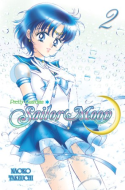
A lot happens in this volume, which I shall attempt to quickly summarize. When facing off against Zoisite, the girls are rescued by the timely arrival of Sailor Venus. Minako is now in her second year of middle school and comes across as very mature, competent, and serious about her duty. She’s been monitoring Usagi through the Sailor V game and has also been researching the enemy. She provides all sorts of information about the Dark Kingdom and also claims (well, Artemis claims) that she is Princess Serenity. Her proximity triggers some past-life memories in the others, as well.

However, Usagi starts having dreams that suggest that she was actually Serenity, and when Mamoru is injured protecting her from one of Kunzite’s attacks, one of her tears transforms into the Legendary Silver Crystal and her true identity is revealed. (The bit with Venus was evidently a ruse to direct enemy attacks onto a more experienced Guardian.) Mamoru is subsequently kidnapped by the Dark Kingdom and eventually used as Queen Beryl’s pawn, securing the crystal for her by volume’s end.

So, all of this is very dramatic and shoujo-tastic while it occurs and I honestly loved every minute of it. There are a couple of things that I found especially interesting, though. The first is how much information we get on the enemy compared to the dearth of intel provided in Codename: Sailor V. We see, for example, a flashback to the moment in which Beryl was “irresistibly drawn to” the North Pole, where she discovered the remains of the Dark Kingdom. This made me wonder… was Beryl reborn on Earth as a regular human, just like the Guardians? And did she waken to her past memories as the seal imprisoning Metalia faded?

We also learn a bit about the Four Kings of Heaven, who were generals to Endymion (Mamoru’s past identity) that were swayed into becoming Metalia’s devotees. I’m not exactly sure about this, but it seems as if their bodies had been converted into crystals and recently awakened into human form at Metalia’s whim, and that they can be revived as many times as necessary. Somehow this is sadder and more sympathetic than if they had just been some regular guys suddenly remembering their previous lives.

The second thing that struck me was how much certain elements of the story remind me of Please Save My Earth. Usagi and friends living on the moon in their past lives is the most obvious resemblance, but there’s also the fact that Usagi is troubled by questions of identity brought on by these recollections (“Am I becoming the princess? It’s like I’ve stopped being me…”) and that the residents of the Moon Kingdom were tasked with fondly watching over Earth and helping it to evolve in the best manner possible. They actually travel to the moon to listen to a computerized incarnation of Queen Serenity tell them about the tragic events of the past and how Metalia must be sealed away for good. (She was also responsible for waking Artemis and Luna from the stasis they entered after the destruction of the Moon Kingdom, which makes me suspect that she is “Boss.”)

I could probably go on for another five hundred words, which just goes to show how engaging this story is. It wouldn’t be a Kodansha review if I didn’t complain about the typos—seeing the word “it’s” used instead of “its” is even more painful when it’s part of genius Ami’s dialogue—but even their irksome presence does not detract from the enjoyment I derive from reading this series.

Filed Under: REVIEWS Tagged With: Kodansha Comics, Naoko Takeuchi

Adventures in the Key of Shoujo: Sailor Moon, Vol.1

January 19, 2012 by Phillip Anthony 4 Comments


Pretty Guardian Sailor Moon, Vol. 1 | By Naoko Takeuchi | Published by Kodansha Comics USA | Rated: T, Ages 13+

“I’m… the pretty guardian in a sailor suit! Guardian of love and justice! Sailor Moon!”

Working on a simple premise… (Follow my logic, would you?) If you took a squad of girls, magical powers, tokusatsu-style fighting, and a viciously unassuming story arc and threw them into a blender, what would you get? My-Hime, that’s what. But before My-Hime—before all that—there was Sailor Moon, an archetypal series that influenced the entire genre of magical girls within manga and anime. To this day, Fred Patten states that it introduced the idea of the magical girl team into the medium’s subconscious. The brainchild of artist Naoko Takeuchi, the sheer weight of its importance leans heavily on everything that came after it.

Simply put, the Great Ruler of the Dark Kingdom wants energy leeched from humans and the Legendary Silver Crystal that goes with it. With that, they can rule the world. All that stands between them and success is a small, black cat called Luna (who can talk and has a mark on her head in the shape of a crescent moon) and a team of fourteen-year-old girls who wear exaggerated versions of Japanese school sailor outfits and have magical powers, and whose code names are taken from the names of the planets in the solar system. Leading the team is a complete klutz named Usagi Tsukino who takes on the persona of Sailor Moon. Also into the mix goes Tuxedo Mask, a young man who dresses in a gentleman’s evening attire and wears (you guessed it) a mask. He likes to help Sailor Moon, but he has his own reasons as well. The girls are soldiers (or senshi) in a war against the enemies of love, truth and justice. And so the board is set, the players are moving, and the game can begin.

So why has it taken this long to write the review, seeing as I received the manga over two weeks ago? I think it’s the awe in which the series is held. Sailor Moon has a fanbase that rivals even Dragonball or Evangelion. Dragonball is an interesting title to compare, in terms of its Western audience. For the most part, the perception is that Dragonball found a large male audience and Sailor Moon, a large female audience. I say “perception” because market analysis can only tell you so much. But it’s unfair to label Sailor Moon as Dragonball for girls, as I once did. The two series are worlds apart in their execution, tone and setting. Yet, I cannot discount the idea that each gender can find something in both stories that resonates with them.

My failing was that I decided that girls could like Dragonball but boys couldn’t like Sailor Moon, because there was nothing there for them to latch onto. I think what set me on that foolish path was the God-awful treatment that Sailor Moon received at the hands of DIC Entertainment when the animated version of the story came to European English-speaking shores. DIC made it sound like the most girly of enterprises (something no self-respecting angsty teenager would be caught dead liking), where the girls were all airheads and the villains were dead simple. The show was never going to attract a boy who had grown up with He-Man. It was not going to happen for me. And so, I ignored it.

But the fanbase, as I’ve said, is relentless. Every time you look at cosplayers, someone is dressed as Sailor Moon. So I would speak with people who talked about the story as if it was manna from Heaven. They ranged from cosplayers who said the series was their gateway into anime, to those who had been reading the manga since the 1990s TOKYOPOP editions. Interestingly, the anime breaking into North America is credited by many as the event that destroyed the grip the male, 15-25 demographic had on driving anime sales in America since the 1980s. Today, the market leans more heavily toward female fans than male fans of anime, manga, and J-Culture, so it’s a testament to the series that it had and still has that effect on the fans.

Still, I’m confused about Sailor Moon. Mostly because I cannot figure out where Takeuchi is going with it in this first volume, or indeed if she’s got some kind of plan going even here in the opening act. On the surface, Usagi is a airhead more concerned with being a girly girl, hanging out with her friends, and playing video games at the local arcade than entertaining the notion that she should be doing anything to save the world. Even when she accepts being Sailor Moon, she still doesn’t want to be put into scary situations by Luna. It makes for a nice intro to the character for whom we will ostensibly be rooting for the next however many volumes. The spoken-diary entries that Usagi has are something to behold. She tells us every single time a new chapter starts who she is, where she is from, what recently happened, and what is happening now. I know that this is because of the fact that Sailor Moon was serialized in Nakayoshi Magazine—to keep new readers in the loop, Takeuchi wrote those in—but the aftereffect is that Usagi comes across as even more bubbly, and this is a good thing.

The tone of the fight that the Sailors are in and the opposition that the author sets is one of innocence that can only be derived from a teenager’s perspective. When I was 14, the people who had it in for me in school wanted to beat me up and throw water over me, but they didn’t want me dead. For all the Dark Kingdom’s mwah-ha-ha-ha and general evilness, I cannot take them seriously. They are defeated by a dunderhead every single time. Then the dunderhead gets her own team of crack commandos and the bad guys get trounced, again and again, by a bunch of fourteen-year-olds who only got their powers recently. Even when they are vanquished, the villains treat it like “Bah! Another setback!”

Some people would argue that Sailor Moon has a lot of evidence of plot conveniences for the sake of convenience; I counter the argument because the same evidence is rather exculpatory in nature. To explain, while I want to say that the whole “You are destined to become a team of magical fighting girls!” thing is a little too convenient, the truth is that’s how all good quest stories start and since I don’t really have a problem with them, I don’t have a really big problem with Sailor Moon doing it, either. So the girls are destined to be a team of superheroes not because they were destined to be so, but because Luna had been keeping an eye on all of them. The same can be said for the items that the senshi use to defeat the forces of darkness. Usagi, we have established, plays video games at the arcade. She gets prizes every time she gets a high score. These items look very suspicious and don’t look like the usual tat, if you get my meaning. However, throughout this smoke-and-mirrors routine I can see a kind of epic gathering of heroes (the girls being recruited) and figures of cruelty and infamy (Dark Kingdom’s minions) moving around and cannot wait to see what happens next.

Artwork-wise, I cannot say enough good things about it. From Usagi’s transformation sequence to Luna’s little interstitial at the start of one of the chapters telling us who’s in the team, its biographical details and any allies and enemies, the art is really sweet and genuine to look at. Graceful and elegant, it still has its quick thumbnail drawings of our heroes and heroines to speed us through a page. There are real examples in the pages that Takeuchi is using mise-en-scène* to build a colorful and coherent stage that her actors are moving around. The whirling fog that surrounds our heroes when the enemy has the upper hand or when the senshi reveal to the villain (and, by extension, the audience) their power and become light-filled are but two such examples. The moments of tranquility when Tuxedo Mask dances with and around Sailor Moon are wonderful. Even as a battle-hardened, knowledgeable young man of 30, I can understand the feeling of falling for someone and feeling like the whole world stopped for that moment. Takeuchi gives her leads a distinctive look and you’d never confuse one Sailor Senshi for another, even in their uniforms. Plus, she never makes the fact that they dress in sailor outfits into something crass. With the supporting cast it’s a little more difficult to keep an eye on who’s who but I don’t mind that so much at this point, as they don’t contribute much.

It’s interesting, both in terms of storytelling and, of course, artwork, to see the different types of girls who get recruited into being Sailor Senshi become staples of magical girl stereotypes. There’s the ditzy girl, the smart girl, and the girl who works at the shrine. I don’t doubt that I’ll see even more types emerge as the series goes on. While Sailor Moon didn’t invent these types for the most part, it perfected them. The chief bad guys are also designed this way: they have been around before but never in this context and setting. The more I reread this volume, the more I wonder if I’ve been wrong about a great number of shows and manga that I’ve passed by simply by having a prejudiced opinion. As an aside, the translation by William Flanagan is spot-on and I’m, as always, grateful for the liner notes at the back to make sense of the nuances within Japanese culture.

Ultimately, Sailor Moon works because you get swept up by the story. The idea of battling evil-doers over rooftops or in exotic locations with brave allies and with nothing more than the power you have inside of you is something we know from when we were little and read fairy tales. Later we dismiss such stories as mere whimsy. Usagi and her friends are living in a fairy tale and I can and will wholeheartedly continue to embrace this whimsy for as long as it lasts.

* Mise-en-scène is a French term which literally means “placing on stage” and refers to the art of placing elements (actors, props, sets, lighting) in front of the viewer in order to immerse them in the story. Where the actors are placed within a scene and how they move in the scene are also elements within mise-en-scène.

Review copy bought by reviewer

Filed Under: Adventures in the Key of Shoujo, MANGA REVIEWS, REVIEWS Tagged With: kodansha, Kodansha Comics, kodansha usa, manga, shojo

Dorohedoro, Vol. 5

January 17, 2012 by Sean Gaffney

By Q Hayashida. Released in Japan by Shogakukan, serialization ongoing in the magazine Ikki. Released in North America by Viz.

For a volume with as much plot going on as this Dorohedoro has, it’s interesting how much I found myself drawn to the little things going on in the background. Not just the art itself, which continues to be absolutely amazing, but the things you don’t always notice first time around. Hayashida tends to have any long, detailed exposition in her work contrasted with someone else doing something stupid in the background while it’s going on. Ebisu’s search for her fake breasts (and subsequent use of Judas’ Ear as a replacement) in the midst of En telling the story of how Shin and Noi became partners is priceless, and shows a real love of craft – the conversation is static, so *something* else has to be going on.

Speaking of Noi, she gets the cover this time around, and we get a glimpse into some of her backstory with Shin. The fact that Noi was in training to become a demon is not nearly as surprising to me as seeing that Noi was originally a fairly normal-sized high school girl. Now yes, En said she was training with 150-kilo armor, but the fact of the matter is that she failed her training, and at the end of the flashback still seems to be fairly lithe. How on earth did she bulk up to the huge, muscular Noi we know and love? That being said, the story with her and Shin is short and sweet, and shows Noi’s protective instincts and healing powers off. Noi is probably my favorite character in the manga, so I loved seeing this.

Then there’s Caiman, who’s down in the sorcerer’s world trying to get more info on his head, this time without Nikaido there to back him up. Naturally he gets into trouble, but he manages to get rescued. Much of Dorohedoro seems to revel in showing us hideous creatures in terrifying masks, and then later revealing that they’re just typical people trying to earn a living and stay alive. Even if they *do* have magic powers and/or mutations. Fukuyama is the author’s second “surprise! really a female!” character, and her “magic ability” is both disgusting and hilarious, but Tanba’s the really impressive one here, and I hope we see more of him.

There is a plot here, believe it or not, mostly centering around the “Blue Night” festival, where partnerships are formed and current partnerships are kept and/or broken up. Frequently by force. It becomes apparent that a good way to form partnerships is apparently by knocking your intended unconscious. Hopefully Shin and Noi will be able to reunite and work things out in Vol. 6. (Noi’s outfit, by the way, is yet another example of the odd sense of fanservice that Hayashida has.) En, meanwhile, is still obsessed with finding the sorcerer who can control time… and has finally narrowed it down to our heroine. Indeed, the volume ends with Nikaido literally “dropping in” on En and company. Much to her displeasure.

Things seem to be picking up speed in this volume, and there’s less emphasis on world building and more on the plot. That’s good, because the plot is compelling. You find yourselves rooting for both “sides” to work things out, even if you know it’s unlikely. Heck, even En is fairly sympathetic, even as he tries to bring Nikaido under his control. This continues for me to be one of the most addictive series around, and I cannot wait for Vol. 6. Apparently Viz can’t either, as it’s out in April. Slightly sped up schedule? Win!

Filed Under: REVIEWS

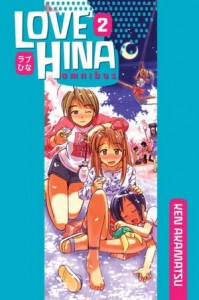
Love Hina Omnibus, Vol. 2

January 16, 2012 by Sean Gaffney

By Ken Akamatsu. Released in Japan by Kodansha, serialized in the magazine Weekly Shonen Magazine. Released in North America by Kodansha Comics.

At the end of the last Love Hina omnibus, we left our hero and heroine having just failed their entrance exams. We open this second volume with Keitaro depressed. This is his third straight failure, and the pressure is on him to find something else to do with his life besides apply to Todai. What’s more, a dashing (if eccentric) young man has arrived in town. This is Seta, Naru’s crush, and Keitaro completely fails to measure up to him. Seta also brings along a young girl, Sarah, who like many bratty young girls in manga proceeds to abuse and belittle our hero at every turn. Is it any wonder Keitaro decides to give up?

I’ll be honest, I still find Keitaro a weakness in this series. Searching for a purpose in life is all very well and good, and god knows we’ve all done it. The trouble is that we haven’t all had six different women all find they have feelings for us. Keitaro is still mostly defined by his failures and his bad luck, and occasionally being polite. He needs to have a better goal than ‘get into university so I can meet my mysterious promised girl’. We actually do start to see the first hint of that here, but I only know this because I’ve read the series before. For a new reader who is unaware that Keitaro’s gluing pots together is foreshadowing, it’s just 3 more volumes of him accidentally walking in on women naked.

Speaking of the women, aside from Naru and Mutsumi, they’re once again given short shrift here. It amazes me that Negima has a cast of 31 main girls, as Akamatsu has enough trouble handling the 6 he has here. Shinobu, Motoko and Su continue to get a focus about every 15 chapters, and Kitsune gets even less than that. That said, Kitsune’s focus chapter was actually a high point of the volume, as we see her love of alcohol and mischief is tempered by a genuine desire to see Naru and Keitaro get over themselves. We also see that one should not try to play mind games with her unless one is prepared to face the consequences – she’s quite cunning. As for the others, Shinobu continues to worry about immaturity (and first kisses), and Motoko about being a samurai yet having romantic feelings. Su gets a brief chapter where we see what she might be like as an adult, but this doesn’t really change her personality noticeably.

The exception is Mutsumi, who gets her largest role here (she sadly appears less often as the series goes on, the curse of not actually living at the Inn). Mutsumi is a lot of fun, and the revelation that she’s actually quite intelligent and only failed one entrance exam as she forgot to put her name down is unsurprising. There are bigger revelations, however, as it becomes increasingly apparent to Naru that Mutsumi is the girl Keitaro made him promise to. This leads to a situation where Naru has to make a decision to give up on Keitaro in order to let him find his destiny. His destiny, of course, has spent the entire manga showing that she already knows that Keitaro and Naru are destined to be together. And once again true feelings end up getting buried (at least on Naru’s side – Mutsumi honestly seems OK with letting Keitaro go).

Love Hina continues to show the strengths that Akamatsu had at this time. Lots of physical comedy, lots of fanservice, and the ability to develop a cliched yet likeable romantic plot. It also shows off many of his weaknesses, which he would improve on with Negima. In the end, though, the big drawback is that I’m not a 22-year-old guy anymore, and Love Hina is a title that’s very rewarding for 22-year-old guys but very frustrating for ones who are older and more mature. For pure nostalgia reasons, this is worth a buy, however. And I seem to recall the next volume should be more interesting.

Filed Under: REVIEWS

A Devil and Her Love Song, Vol. 1

January 15, 2012 by Katherine Dacey

Maria Kawai, heroine of A Devil and Her Love Song, is a cool customer. Not only is she beautiful, talented, and smart, she’s also tough — so tough, in fact, that she was expelled from a hoity-toity Catholic school for beating up a teacher. Her blunt demeanor further cements her bad-girl impression; within minutes of enrolling at a new high school, she antagonizes all the girls in her class with a few sharp observations about their behavior. Only two boys — Yusuke, a cheerful, popular student who avoids conflict at all costs, and Shin, a moody outsider — try defending Maria from her peers’ nasty comments and pranks.

So far, so good: Maria is spiky and complicated, a truth-teller who lacks the ability to censor herself, even though she’s aware of the potential consequences of speaking her mind. Throughout volume one, there are some wonderful comic moments as Maria struggles to put a “lovely spin” — Yusuke’s term — on her acid comments. Alas, Maria’s sideways head-tilt and doe-eyed gaze look more sinister than cute; not since Kazuo Umezu’s Scary Book has a manga-ka made a doll-like character look so thoroughly menacing, even when superimposed atop a backdrop of flowers and sparkles.

Having created such a vivid character, however, Miyoshi Tomori isn’t sure where to go with the story. In several scenes, Maria does things that contradict what we know about her: would someone as perceptive as Maria willingly attend a party hosted by the class mean girls, especially after they’d harassed her on a daily basis? And why would someone as outspoken as Maria refrain from pointing out her teacher’s judgmental behavior — especially when it’s plainly obvious to both the characters in the story and the reader? These kind of abrupt reversals might make sense if we knew more about Maria’s past, but at this stage in the story, they feel more like authorial floundering than a conscious revelation of character.

From time to time, however, Tomori convincingly hints at Maria’s softer side. Midway through volume one, for example, Maria makes tentative overtures towards Tomoya “Nippachi” Kohsaka, a fellow bullying victim. (“Nippachi” means “twenty-eight,” and is a mean-spirited reference to Tomoya’s poor academic performance.) That scene is both sad and real; anyone who’s ever seen two ostracized kids turn their classmates’ scorn on one another will immediately appreciate the dynamic between Maria and Nippachi. Maria’s exchanges with Shin, too, reveal a different side of her personality; though the pair frequently engage in the kind of rapid, antagonistic banter that’s de rigeur for romantic comedies, their quieter conversations suggest a grudging mutual respect.

Maria’s interactions with Nippachi and Shin fill me with hope that A Devil and Her Love Song will find its footing in later chapters. If Tomori can find a way to reveal Maria’s fundamental decency without compromising her heroine’s tart, outspoken personality, A Devil and Her Love Song will be a welcome addition to the Shojo Beat catalog, an all-too-rare example of a story in which the heroine isn’t the least bit concerned with being nice or popular. If Tomori can’t, Devil runs the risk of devolving into a YA Taming of the Shrew, with Shin (or, perhaps, Yosuke) playing Petruchio to Maria’s Katherina.

Review copy provided by VIZ Media, LLC. Volume one will be released February 7, 2011.

A DEVIL AND HER LOVE SONG, VOL. 1 • BY MIYOSHI TOMORI • VIZ MEDIA • 200 pp. • RATING: TEEN (13+)

Filed Under: Manga, Manga Critic, REVIEWS Tagged With: shojo, shojo beat, VIZ

Durarara!!, Vol. 1

January 14, 2012 by Michelle Smith

Story by Ryohgo Narita, Art by Akiyo Satorigi, Character Design by Suzuhito Yasuda | Published by Yen Press

Here is the sum total of my Durarara!! knowledge prior to reading volume one of the manga:

1. It is based on light novels.
2. There is an anime.
3. People were really excited about the license.

It turns out that those light novels are by the creator of Baccano!, another exclamatory property with an anime that I’ve never seen, but which has been praised by various reputable sources. So, even though I knew nothing about Durarara!! itself, I was definitely curious.

In the space of six pages, three concepts and one narrative conceit are efficiently introduced. Time for another list!

1. Inside a pharmaceutical laboratory, a speaker (presumably male) promises a girl in a tank that he will “get us out of here.”
2. A trio of anonymous hands chat about the Tokyo neighborhood of Ikebukuro and the twenty-year-old urban legend of the Black Rider.
3. Timid fifteen-year-old Mikado Ryuugamine moves to Ikebukuro to reconnect with a childhood friend and attend high school.

Each of these threads will be developed and expanded upon in the volume to come, with some slight overlap but so far not much. Because of that, I’ll address them separately.

1. We learn the least about this subplot in this volume, but it appears to have something to do with Seiji, a boy in Mikado’s class, who lives with his possibly evil sister. Seiji briefly has a stalker who sees something she shouldn’t, and I wonder if that doesn’t tie in with the next item on our list.

2. We see the anonymous chatters a few times throughout the volume and it soon becomes clear that Mikado is one of them and I’m pretty sure the Black Rider is another. Seriously, the Black Rider is the most awesome thing about the volume. A competent fighter with a body seemingly comprised of shadows, the Black Rider takes courier jobs around Ikebukuro, dispatches thugs efficently, and lives with a “shut-in doctor” who would not be averse to a romantic relationship even though the Black Rider has no head.

3. Mikado, alas, is not so interesting, though the fact that he came to town because he wanted something strange and exciting to happen to him is at least somewhat encouraging. He reconnects with his friend, Kida, meets some of Kida’s otaku friends, and is warned against associating with various unsavory people, including someone named Shizuo, who hasn’t really appeared yet but looks kind of awesome, and Izaya, an informant with bleak ideas about the afterlife who extorts money from those who intend to kill themselves.

There are some series that bombard one with so much information that one ends up frustrated. If I were more astute, I might be able to pinpoint how, exactly, the creators of Durarara!! manage to avoid this pitfall, but they do. Granted, there is a lot going on, but the exposition is sure-handed, leaving one with the expectation that all will eventually make sense. Perhaps it’s the light-novel foundation that inspires this confidence, though that is certainly no guarantee of quality.

“Weird but intriguing” is my ultimate verdict for this volume, and I look forward to the second volume very much. It’s a stylish title, one that’s more cool than profound at this stage, and I realize that won’t be everyone’s cup of tea, but it pushed the right buttons for me so I’ll definitely be back for more.

Durarara!! is published in English by Yen Press. The series is complete in Japan with four volumes.

Review copy provided by the publisher.

Filed Under: REVIEWS Tagged With: yen press

Yakuza Moon: The True Story of a Gangster’s Daughter

January 11, 2012 by Katherine Dacey

In the popular imagination, the yakuza are modern-day samurai, observing a rigid code of honor, decorating their bodies with elaborate tattoos, and meting out swift punishments to anyone who encroaches on their territory. When women appear in yakuza stories, they are usually unwitting victims of clan warfare or temptresses whose sexual allure threatens the established order; they are seldom leaders or soldiers in their own right.

Small wonder, then, that Shoko Tendo’s Yakuza Moon: Memoirs of a Gangster’s Daughter (2007) caused a mild sensation in Japan when it was first published, as Tendo gave a voice to all the women who had been relegated to the margins of yakuza stories. In direct, unembellished prose, she described the devastating impact of her father’s criminal activities on his family. She cataloged her father’s drunken rages and dalliances with hostesses; recounted his subordinates’ unwanted sexual advances; and recalled the taunts and gossip that swirled around her family after her father’s incarceration.

Tendo turned an equally unsparing eye on herself, documenting her increasingly self-destructive behavior. At twelve, she joined a gang and skipped school; by her sixteenth birthday, she’d been arrested and imprisoned for fighting, and by her nineteenth birthday, she’d become addicted to speed and enmeshed in several violent relationships with married men. Only after a string of near-death experiences was Tendo able to break the cycle of abuse and addiction that had reduced her to a eighty-seven pound skeleton with scars and false teeth.

From this blunt, vivid narrative, Sean Michael Wilson and Michiru Morikawa have fashioned a curiously flat graphic memoir, Yakuza Moon: The True Story of a Gangster’s Daughter. Wilson, the script writer, hews closely to the structure of Tendo’s book, preserving the chapters and the major events of Tendo’s narrative. Yet for all his fidelity to the original, the results are uneven. Most of Tendo’s siblings and lovers, for example, are reduced from major characters to walk-on roles. To judge from Wilson and Morikawa’s adaptation, for example, Tendo’s older sister Maki was a casual acquaintance, yet in Tendo’s memoir, Maki occupied an important place in her sister’s life: first as an idol, someone Tendo emulated, then as a cautionary tale, someone Tendo feared becoming. Tendo’s other family members fare worse than Maki; readers could be excused for wondering how many siblings Tendo has, as her older brother and younger sister are mentioned only in passing late in the book, with little discussion of how their father’s lifestyle affected them.

Equally frustrating are the layouts: Yakuza Moon looks more like an illustrated novel than comics, with words carrying the burden of the storytelling and pictures playing an ancillary role. Only in Tendo’s sexual encounters does the artwork take a more prominent role; through nuanced facial expressions and body language, Morikawa speaks volumes about Tendo’s complicated relationships with men. We immediately sense which partners were bullies, and which were kind; which used physical intimidation to control Tendo, and which used emotional manipulation; and which she feared, and which she loved. There’s a frankness to these scenes that’s missing elsewhere in the book; Morikawa never shies away from depicting ugly or uncomfortable moments, but shows us what’s happening from Tendo’s point of view, rather than her partner’s.

And that, perhaps, is this graphic novel’s greatest strength: whatever compromises Wilson and Morikawa made in translating Tendo’s prose into images, the focus of the story remains squarely on Tendo. Yakuza activities — drug dealing, loansharking, beatings — take place off camera; we only see the terrible consequences, reminding us that no matter how elaborate the yakuza code of conduct may be, there’s no real honor among thieves.

YAKUZA MOON: THE TRUE STORY OF A GANGSTER’S DAUGHTER • BASED ON THE BOOK BY SHOKO TENDO, ADAPTED BY SEAN MICHAEL WILSON, ILLUSTRATED BY MICHIRO MORIKAWA • KODANSHA USA • 192 pp. • RATING: MATURE

Filed Under: Manga, Manga Critic, REVIEWS Tagged With: Biography, Shoko Tendo, Yakuza, Yakuza Moon

Oresama Teacher, Vol. 6

January 9, 2012 by Sean Gaffney

By Izumi Tsubaki. Released in Japan by Hakusensha, serialization ongoing in the magazine Hana to Yume. Released in North America by Viz.

It’s the rare manga that can make me laugh when I open the front cover and look at the title page, but that’s what Oresama Teacher does here. Shinobu not only lampshades one of the more obvious faults of this series (a lack of other female characters), he also suggests Mafuyu is trying to create a “reverse harem”. Though there are a few guys here that are falling for her, I’d argue that he’s incorrect. This isn’t a reverse harem as this series is simply not focused on romance – mostly as the leads are too dense to understand what they’re feeling. How can you recognize love if simple friendship is beyond you?

Likewise, the first chapter of this volume is simply top comedy, as we meet yet another cast member with no common sense. Shinobu is simply a flake, albeit a skilled one, and therefore matches up well with “Super Bun”, who gets trotted out here again to my delight. It’s interesting to note that Shinobu flat out worships the series’ main villain, Miyabi. In fact, it almost borders on BL, without ever quite going there (just in case both are needed later to have feelings for Mafuyu). The fight itself, meanwhile, shows how clever Mafouyu can be when she’s strategic – thinking on her feet about how best to defeat a ninja and even using some pseudo-ninja techniques.

The rest of the volume is not nearly as funny, but that’s not a bad thing – we’re finally getting a pile of plot and backstory that has been hidden from us. Shinobu ends up joining the Public Morals Squad (as the world’s most obvious mole), and the three club members start to analyze exactly why the bet the school principal has with Saeki is so weird – why does the administration WANT delinquency in the school? Mafuyu thinks that she now has enough that she can get Saeki to tell her the rest, but he proves surprisingly cold, pushing her away by pushing on one of her biggest buttons – the “I want to stop being a delinquent” button. But is that really what she wants?

Having also been abandoned by Hayasaka (whose reasons are far more teenage boy-oriented than Saeki’s), we then get a wonderful scene of her opening up to the other girls in the class, and trying to be friends with them. It’s wonderful not only because her desperation and tomboyishness is amusing, but also because the other girls in class genuinely seem to like her, even if they find her incredibly strange. You could argue this is because they’ve never seen her fighting, but it’s rather nice, and makes me hope that one day we will see more female presence in this manga. It’s not going to be today, though – after defending Hayasaka, who still has his horrible reputation, Mafuyu runs off, realizing that hanging out with the other guys is where she wants to be.

Then there’s Saeki. If you recall, he’s the title character (though France actually changed the title to “Girl Fight”, putting the emphasis more on Mafuyu). His reasons for pushing Mafuyu away are entirely predictable, but this doesn’t make them poorly written, and the scenes with his grandfather are both touching and intriguing. A telling point comes towards the start of the book, when Mafuyu is running off to fight Shinobu, and Saeki asks her why she fights. Note that she doesn’t give a typical manga reason like “to defend the weak” or “to battle injustice”. She fights because she was challenged, and that’s it. She is Saeki’s reminder of what he once was, and that’s why he tries to get rid of her. Of course, she’s made of sterner stuff, which he knows but would rather not admit.

We end on a cliffhanger, with Saeki starting to tell Mafuyu the real reason for the bet, and what the bet actually involves. It’s going to be a long wait till the next volume, but when it comes I’m willing to bet there will be lots of fights, stupidity, and shoujo cliches. Just the way I like it.

Filed Under: REVIEWS

Fluffy, Fluffy Cinnamoroll, Vol. 1

January 6, 2012 by Katherine Dacey

Critic proof: that’s my two-word assessment of Fluffy, Fluffy Cinnamoroll, a new all-ages manga starring one of Sanrio’s lesser-known characters. The story is a mixture of sincere sentiment and calculated product placement that’s been carefully designed to appeal to the under-ten crowd; an adult can practically hear the cha-ching of the cash register every time a new character or magical object is introduced.

The Cinnamaroll of the title is described in the introduction as a “boy puppy” with a tail like a bun. Unhappy among his litter mates — all of whom are big, puffy clouds — he finds his calling at a terrestrial bakery that specializes in breakfast treats. There he befriends an assortment of other dogs: Mocha, a “stylish chatterbox” who accessorizes with ribbons and flowers; Cappuccino, an easygoing pup who likes to nap and eat; Chiffon, a high-energy dog with ears that faintly resemble a chiffon cake; Espresso, a talented know-it-all who boasts a “distinguished Mozart hairstyle”; and Milk, a baby whose entire vocabulary consists of the all-purpose word “baboo.”

Volume one features a dozen or so stories involving picnics, treasure maps, trips to the beach, and letters to Santa Claus. Though there’s a strong element of fantasy in the gang’s adventures, there’s an even stronger whiff of didacticism: in one chapter, for example, Cinnamoroll must set aside his fear of the dark to rescue his friends, who are being held captive in a haunted house, while in another, Cinnamoroll learns to embrace the fact he’s different from the other “cloud kids.” Every conflict is neatly resolved in a few pages, with Cinnamoroll learning an important lesson about friendship, loyalty, or selflessness; only Cavity, a dark cloud with a devil’s tail, seems impervious to the other characters’ warmth and energy.

As an adult reader, it’s impossible not to feel a little jaded reading Fluffy, Fluffy Cinnamoroll. The stories have predictable scripts that have been carefully designed to stimulate the reader’s awwwww reflex at regular intervals. The artwork, too, lacks personality; though no one would deny its fundamental cuteness, the art looks prefabricated, as if each character had been assembled from interchangeable parts from the Sanrio plant. More puzzling still is that none of the pups look particularly canine; the artist could easily have described all of them as long-eared rabbits without compromising the story.

Yet for all the cynicism a project like Fluffy, Fluffy Cinnamoroll might inspire, I also understand its appeal: it looks like someone took the contents of my childhood sticker album and turned it into a story featuring puppies, unicorns, sweets, and rainbows. The stories, like the character designs, have a definite child logic to them, as the plots touch on a variety of pre-teen fantasies: being rich and famous, eating a diet of sweets, spending all your time playing with friends (no one goes to school), and learning that yes, indeed, you were born into the wrong family. If those stories aren’t executed with the grace or imagination of the best kids’ comics, they’ll still please the under-ten crowd with their whimsical settings and earnest characters. Just don’t be surprised when they ask the inevitable question: where can I get a Cinnamoroll doll?

Review copy provided by VIZ Media, LLC.

FLUFFY, FLUFFY CINNAMOROLL, VOL. 1 • STORY AND ART BY YUMI TSUKIRINO, ORIGINAL CONCEPT BY CHISATO SEKI • VIZ MEDIA • 160 pp. • RATING: ALL AGES


Filed Under: Manga, Manga Critic, REVIEWS Tagged With: All-Ages Manga, Cinnamoroll, Sanrio, VIZ, VIZ Kids

Ouran High School Host Club, Vol. 17

January 5, 2012 by Sean Gaffney

By Bisco Hatori. Released in Japan as “Ouran Koukou Host Club” by Hakusensha, serialized in the magazine LaLa. Released in North America by Viz.

It’s the second to last volume of Ouran, and things really aren’t getting any funnier. Not that there isn’t humor in this, especially towards the end, but the main thrust of this volume remains the family drama surrounding Tamaki and how it gets resolved. We’re in full soap opera mode here, and the tension is so high that even Kyoya loses it and starts screaming.

I was rather surprised at how well all of this holds together considering that so much of it is a giant infodump that’s hurled at us. The huge, convoluted plan that Tamaki’s father has would seem completely ridiculous until you remember that it’s Tamaki’s father, who has proven before to be as overdramatic as his son. Of *course* he would use the convoluted, overcomplicated plan! Actually, the family dynamics here are one of the best parts of the volume. Haruhi remarks how Tamaki, his father and his grandmother all share a bullheaded stubbornness, and we certainly see that here. I was quite p;leased with the depth that the grandmother got in particular, and I hope the final volume gives us some more resolution.

We also get some more of Tamaki’s mother. Given how she’s been presented as this beautiful-yet-weak fragile woman, it makes complete sense that she seems to suffer from the Ouran version of Love Story Disease, where one grows more beautiful the sicker one gets. That said, what little we see of her shows she’s not merely a potted plant – I loved her casual beating up of Tamaki’s father over what he did – it’s meant to remind us of Haruhi, I think. I suspect that Haruhi and Tamaki’s mother will get along swimmingly after the series ends.

Haruhi mostly has it easy here, getting to see Tamaki’s serious, stubborn yet noble side. It’s the side that’s easiest to fall in love with, and she has far fewer issues with it. Of course, she’s fallen in love with *all* of Tamaki, which also means you get his goofy, over the top side as well. And she *does* love that side, and not merely tolerate it. There is a wonderful inner monologue right towards the end of the volume where Haruhi reflects on joining the Host Club. Just as Haruhi keeps Tamaki grounded and attempts to tone down the worst of his excesses, so Tamaki shows Haruhi a world that she would never have otherwise experienced. I know this is a reverse harem manga, and there are many Ouran fans who would have preferred that Haruhi end up with Hikaru or Kyoya. But I think Hatori-san did an excellent job of showing why Tamaki is the real winner here.

And at the end of the volume those feelings are finally admitted in the open. After the catharsis of seeing Tamaki and his mother reunite, even if only for three minutes, Haruhi finally takes all the emotions that she’s felt over the past 17 volumes and tells Tamaki that she loves him. We don’t hear his response, of course – there’s still one volume to go. Somehow I’m going to guess he’ll overreact. Now that almost all the drama of Ouran has been resolved, I’m expecting a return to high comedy for the final one. Sadly, it’s another six-month wait. The curse of being caught up in Japan!

Filed Under: REVIEWS

Higurashi: When They Cry, Vol. 16

January 3, 2012 by Sean Gaffney

Story by Ryukishi07; Art by Karin Suzuragi. Released in Japan as “Higurashi no Naku Koro ni: Tsumihoroboshi-hen” by Square Enix, serialized in the magazine Gangan Powered. Released in North America by Yen Press.

As the Higurashi series has gone on, the descent into murder and gore has seemingly come faster and faster, with far less build-up. This is, of course, because the audience is well aware of what’s going to happen and needs less setup. Of course, just because the first volume ended with Rena committing bloody murder doesn’t mean things get to wrap up quickly. What’s going to happen in Volume 2?

Well, another murder. Right away. The first images we see are of Rena luring Satoko’s uncle out to the trash heap and killing him brutally with an axe. Of course, this leaves her with two corpses she has to get rid of. And it doesn’t help that she killed them in the one place that everyone who knows her well would go if they wanted to find her. So it does not take long for her to be discovered. This is where much of the horror comes in this volume – Keiichi and the others are determined to cheer Rena up, and the discovery of her hacking the corpses to pieces with her billhook… it’s chilling. As is Rena’s desperate response, asking why they had to show up *now* when she was almost finished covering everything up?

And so the next half of the manga deals with Rena’s confrontation with the rest of her friends. It’s an interesting examination of guilt, with Keiichi and company all feeling the exact same way – “why didn’t we notice how badly Rena was hurting before?” This is not helped by Rena slowly sinking back into paranoia and madness, and accusing them of the same thing. Here, though, is where Keiichi really steps up. In my previous reviews, I tended to call him an idiot a lot, and indeed he was. But in this arc, where he’s not the main character, he shows amazing insight and strength – I particularly liked him noting that Rena was crying “in her heart” this whole time, which helps lead to Rena finally shedding actual tears.

There’s an examination of “inaction” as a whole here, and in fact all of the others – Keiichi, Mion, Satoko and Rika – all apologize to Rena for various things they could have noticed and taken action about, but didn’t. And then they all choose to forgive each other – including Rena, the murderer here – and help her take care of her problems. Which, yes, means helping her chop up and hide the bodies. It’s amazing how heartwarming this is given what’s actually going on. But that’s Higurashi for you.

Of course, things have only just begun. Just as Rena is getting back to her regular school life, along comes the school nurse, Miyo Takano, with her notebook filled with Hinamizawa analysis. I’m really getting to dislike her – yes, she keeps getting killed off, but she manages to be quite creepy regardless, in a skin-crawling way. What’s more, she gets Rena reading about Hinamizawa’s past, including the three families. Is everything that’s gone on before a giant conspiracy? And why is Rena being followed all the time now? She does try to confide in Keiichi, but can she even trust him?

This book starts out very gore-laden, but quickly becomes an examination of what trust is – and what people can be forgiven for. The cast are very quick to blame themselves for what Rena did, and forgive her for the murders – but was that really the right thing to do? Moreover, if everyone is involved in a townwide conspiracy, is there anyway to trust someone without overanalyzing everything until you draw the inevitable conclusions? For all that the cast descends into paranoia in this series, it’s not as if they don’t have help. And oh look, there’s Oishii as well, the police officer who means well, but tends to make everything worse. So we’re now halfway through, and not any closer to Atonement. Will this all end as badly as Shion’s arc did?

Filed Under: REVIEWS

Stargazing Dog

December 23, 2011 by Katherine Dacey

Few things can reduce me to a puddle of tears as quickly as a dog story, especially if the canine subject is lost, abused, or sacrificed for the well-being of his owner. Yet for all my sentimentality, I am particular about my dog stories. Too often, authors allow extreme displays of loyalty or mischievousness to stand in for a thoughtful portrayal of the dog’s own personality; the author is so intent on showing the redemptive power of canine ownership that the ostensible subject of the book feels more like a walking metaphor than an actual presence in the narrative.

Takashi Murakami largely avoids this trap in Stargazing Dog by granting his canine protagonist a voice. In less capable hands, Happie’s narration might be precious or manipulative, prompting the reader to feel unearned sympathy for him. Murakami, however, finds just the right words for Happie, expressing his point of view with a simplicity and directness that seem appropriate for a dog.

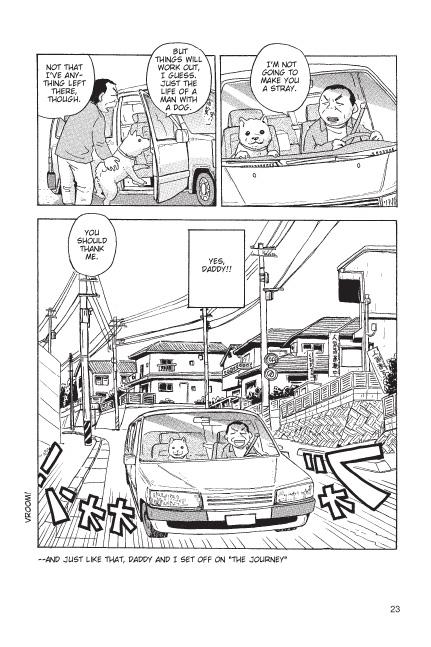
Early in Stargazing Dog, Happie forms a strong attachment to a character identified only as “Daddy,” a father who gradually becomes estranged from his wife and teenage daughter. With the dissolution of his family, Daddy packs Happie and a few possessions in his car, and begins driving towards the sea. The outcome of their journey is never in doubt — we learn Happie and Daddy’s fate in the very opening pages of the book — yet Murakami draws the reader into the story with a nuanced depiction of the master-dog relationship.

Daddy and Happie take to the road.

Murakami has two fundamental insights into that dynamic. The first is routine: Happie’s devotion to Daddy stems from many hours of walking, sitting, and eating together. These rituals consume Happie’s thoughts until the very end of the story; Happie eagerly anticipates their daily walks, adapting to changes in Daddy’s schedule with heartbreaking alacrity. (“We used to go for a walk in the evening,” Happie observes. “These days, Daddy takes me out in the daytime.”)

The second is communication: though Happie and Daddy clearly share a special emotional connection, there’s a fundamental gap between them that can’t be bridged. Happie never fully grasps what’s happening to him and his master, perceiving the changes in their routine without understanding their cause. Daddy, for his part, never acknowledges the degree to which he views Happie as an extension of himself; as his circumstances deteriorate, he continues to rely on Happie for companionship, putting his own emotional needs before the dog’s.

Murakami never romanticizes Happie and Daddy’s relationship, though he honors the sincerity and warmth of their bond. The roughness of the art — the human characters’ clumsy hands and round heads, the crude use of perspective — further inoculates the story against mawkishness, while the exaggerated facial expressions and child-like rendering of space and objects echo the naivete of Happie’s narration. Only a few poorly chosen fonts and backwards signs mar the design, reminding the reader that the artwork has been flipped for English-speaking audiences.

Perhaps the best compliment I can pay Murakami is to acknowledge just how much Stargazing Dog moved me. Not in a cheap, dog-in-peril sort of way, but in the same way that Vittorio de Sica’s Umberto D. touched me: as a beautiful meditation on the human-canine bond, one that acknowledges the complexity and inequality of that relationship, as well its enduring power. One of 2011’s best new manga.

STARGAZING DOG • BY TAKASHI MURAKAMI • NBM/COMICSLIT • 128 pp. • NO RATING

Filed Under: Manga, Manga Critic, REVIEWS Tagged With: Animals, NBM/Comics Lit, Seinen

Sayonara, Zetsubou-sensei, Vol. 10

December 22, 2011 by Sean Gaffney

By Koji Kumeta. Released in Japan by Kodansha, serialization ongoing in the magazine Weekly Shonen Magazine. Released in North America by Kodansha Comics.

It can be difficult to do full reviews of this title, no matter how much I enjoy it. It’s one of my favarites, but does not have “plot” or “characterization” per se. It’s a gag manga that revels in its gag manganess, its characters are stereotypes by design, and sometimes people get killed and then show up again the next chapter as if nothing’s wrong. One thing it does have, however, is references. Each chapter has more than 35-40 obscure references to Japanese pop culture, something that your average Japanese fan will pick up a heck of a lot easier than North American ones. Kodansha’s release of Vol. 10, meanwhile, has 12 endnotes. For the entire book.

My previous reviews of the post-Joyce Aurino Zetsubou volumes have discussed this in great detail. So for this volume, I wanted to try something different. There is a Japanese wiki page, run by Kumeta fans, devoted to picking out every single reference in his chapters. It is amazing, and the people who write it are gods. I wanted to use my knowledge of written Japanese – wait, that’s wrong. I don’t read any Japanese at all. I wanted to use my ability to cut and paste things into a translate program, combined with my ability to then plug things into Wikipedia and Google, to see if I could create a working list of the references in Volume 10 of Zetsubou-sensei.

I started to do this in August. And just finished it.

Can I say that I have a healthy new respect for both David Ury and Joshua Weeks, the adapters of this particular manga? This is *hard*. Really hard, even if you have an encyclopedic knowledge of every Morning Musume member in existence. Kumeta is a giant pop culture nerd, and every bulletin board, door and shop sign in this manga is plastered with discussions of political scandals, celebrity scandals, or Yes! Precure 5. There is no way I would ever do something like this again for free, and I totally get that they are picking and choosing the references they feel need to go into the North American release.

At the same time, my mind reels on how many levels of comedy Kumeta is working on here. We only get the top layer of jokes, missing perhaps 3-4 others per page. It’s fantastic to look through this and see even a glimpse of what we’re missing.

So, in lieu of a review, I give you this. I didn’t put page or panel numbers, so you’ll have to follow along with your books. Also, I would like to reiterate, in case it was missed the first time, I don’t read Japanese. So some of these are just guesses. And some references have me saying “I don’t know what this is.”.

One last thing, because it’s not a Zetsubou review without it: Kodansha, your copy editing is still shoddy. There were pages missing here for no good reason, and two characters had their bios on the character list flipped for no real reason. I’m starting to move from “it’s an editorial policy for Kodansha not to credit their editors” to “Kodansha’s editors want to remain anonymous for fear of reprisal.” Though to be fair, I did not spot anything as gratuitous as “Nodoka56…” from Negima 31.

Having said that, I hope they don’t kill me for this. :)

VOLUME 10: ANCILLARY MATERIAL

Back cover: Harumi’s doujinshi is a parody of the Arabian Nights. There are only 801 nights here, as 801 = yaoi.

Story So Far:
— John Mazzo is a typo, it’s actually John Ken Nuzzo, an American tenor who sings in Japan.
— Piano no Mori is a manga title running in Weekly Morning, about a bullied child and a supposedly broken piano in the middle of the forest. It’s 19 volumes and counting.
— UFO Robo Grendizer is a Go Nagai giant robot anime from the mid-1970s, and is known to be one of the most popular giant robot shows ever in Europe.
— Shiina Takashi is a manga artist for Shogakukan, best known for Ghost Sweeper Mikami and the current series Zettai Karen Children.
— note the illustration is filled with Zetsubou’s ‘hidden gags’ – Matoi, dog with stick, Taro Aso, Sakurai Yoshiko, the stork, etc.

Zetsubou Literary Compilation (at the back):
— this is all basically a riff on Crime and Punishment, only with manga popularity.

Kiri Komori’s “Don’t Open It!”
— completely missing in the English edition, though it’s uncertain if it’s censored or just the usual horrible editorial practices. It features a nude Kiri covering herself in front of a bath. There’s a box labeled SHAFT at the top of a locker in the bathroom, the first of many, many references to the anime in this volume.

Chiri’s Magical Shovel
— this whole thing is a parody of the anime Bludgeoning Angel Dokuro-chan, including mocking the theme song. It’s also riffing on Chiri’s name, as it can also be read as ‘to bury’.

Contents page:
— Harumi reading yaoi doujinshi, this apparently from Comiket 72 (2007). The doujinshi is a parody of Yes! PreCure 5, though I’m not sure who the actual BL pairing is.

Character Intros:
— another mistake, as they have Kafuka’s name and description under Maria. And no, it wasn’t the same way in the Japanese.

Kaere’s lawsuit:
— referring to the events in Chapter 96

Fanart
— as always, excluded from the Kodansha Edition here. This is not exclusive to Zetsubou, however. Kodansha Comics only includes it in their Negima and Fairy Tail editions. There’s 5 pages of it, including some highly questionable shotacon art. >_>

Paper Blogs
— as always, some references to current events here, with the “Did I reach my goal?” bit referring to race walker Yuki Yamazaki.
— discussion here of the Wii, and the practice of buying them to resell them later for inflated prices.
— possible riffing on the manga Suzuka, which was ending right about this period. Definitely making fun of Hayate the Combat Butler again, another constant in Kumeta’s works.
— the manga artist talking about drawing manga for himself at 15 is Eiichiro Oda, author of One Piece.
— “when that voice actor tells me that Kaizo was actually funnier” is apparently Ryoko Shintani, the voice of Nami, referring to his previous work for Shonen Sunday, Katteni Kaizo. Shintani is apparently a big Kumeta fan. :)

Animage parody
— Also a parody of Newtype and other media magazines of that ilk. Apparently when Zetsubou’s first anime debuted, Hayate the Combat Butler got the magazine covers instead. (As I said, it’s very hard to tell what the relationship between Kumeta and Hata is, aside from Hata being Kumeta’s old assistant. A lot of the jealousy does seem genuine… though then again that’s part of Kumeta’s basic persona.)
— Animes parodied on the cover: Kekkaishi, Mononoke/Higurashi: When They Cry, Sky Girls, Oh! Edo Rocket, Doujin Work, Gundam 00, Crayon Shin-chan, Big Windup!, Familiar of Zero, and Dennou Coil.
— Nozomu is drawn here to look like Lelouch from Code Geass.
— the 2-page special following this is Zetsubou-sensei reimagined as a magical girl show called “Lilycure!”, and would be used in the 2nd anime season, complete with its own theme song. The whole thing is obviously a parody of Pretty Cure and Magical Girl Lyrical Nanoha, but ‘Masked Teacher Zetsubou” has a Kamen Rider feel to it, and “An effective medicine for despair” is riffing on the manga Zetsubou ni Kiku Kusuri – One on One, which ran in Young Sunday at the time of publication.

(Note: I will skip the references which were already noted by Joshua Weeks in the back of the Kodansha Comics edition.)

Chapter 91, “If you work by reason, you grow rough-edged; if you choose to oar into sentiment’s stream, it will sweep you away. Demanding your own way only serves to constrain you However you look at it, the human world is a three-way standoff”

— The title is a parody of the beginning of the Japanese novel Kusamakura, by Natsume Soseki.
— Released April 18, 2007.
— Cover pic has Kafuka in a kimono, along with various interpretations of three-way standoffs.
— Bikkuriman was a popular Japanese franchise based off of stickers found in a snack. They were divided into Devil, Angel, and Charm.
— Fire, Water and Grass is talking about Pokemon.
— Block/Attack/Throw is referring to Street Fighter III.
— Sword/Spear/Axe is referring to Fire Emblem.
— The discussion of standoffs in bands could be any number of groups. Deep Purple in particular are known for hating each other.
— You can see a copy of the Famicom game “Mother” in the rubble on page 10.
— Rin being described as having God’s Touch (and the obvious fakery involved) is referring to disgraced archaeologist Shinichi Fujimura.
— Kumeta loves making fun of the 2006 World Cup team (which had high expectations, but came in last in their group). Former player Takashi Fukunishi is mentioned by name.
— Weekly Shonen Jump’s three principles are Friendship, Determination and Victory. Harumi and Nozomu’s discussion refers to the large number of BL fans that have come to be reading the magazine, and whether Weekly Jump is catering to them by providing more ’emotional friendship’ moments between young men.
— That’s Death Note, Prince of Tennis, and Naruto yaoi doujins there.
— The “Hoodlums, Moe, Sports” is referring to Akita Shoten’s Shonen Champion magazine, and the creation of its moe-oriented spinoff Champion Red.

–Despair list:
–Yoko Ando, Christel Takigawa and Yoshiko Sakurai are all famous female TV news presenters. You’ve seen Sakurai’s face hidden in each Zetsubou-sensei chapter since Vol. 4 or so, and she also appeared in Maria’s boke/tsukkomi chapter.
— I’m sure you all know who Caspar, Melchior, and Balthazar are, but I’ve no doubt this is actually referring to the Evangelion computers that bear their name.
— Chunichi, Hanshin and Hiroshima are all teams in the Central League of Professional Baseball. Chunichi won the league, but lost to Hokkaido in the World Series in 2006.
— A reference to Morning Musume (a j-pop girl group), their first “leader” Yuko Nakazawa, and their producer/writer, Tsunku.
— Lee, Cullen, and Hirayama are all J-League soccer players.
— Raizen, Yomi and Mukuro are the Three Kings of the Demon realm in the manga Yu Yu Hakusho.
— Yasuo Tanaka is a Japanese politician known for his opposition to public development projects that saddle Japan with more debt.
— Tsundere is explained in the volume. Kuudere is someone who is stoic and ‘cool’ towards people, then gradually warms to them – Nico Robin from One Piece might be a good example. Tennen is short for Tennen boke, and refers to a type who is naturally a boke – saying dumb things that deserve whacks – but is not trying to be – they’re naturals. All 3 types are very ‘moe’.
— Pet stores are notorious for being less regulated than they should be – there’s a reason they’re called “puppy mills”.
— “Dreams, copyright and time” is a reference to the pop singer Mackey and his ‘borrowing’ of passages from Galaxy Express 999 author Leiji Matsumoto – Matsumoto was quite displeased.

— Saitama/Chiba/Ibaraki lists:
— Kei Igawa grew up in Ibaraki, and is far more beloved in Japan than he is by Yankee fans like me. Grr. His decline is noted here.
— Zico, aka the “God of Soccer”, is a Brazilian player and coach who moved to Japan.
— The Ibaraki Golden Golds are an amateur baseball team.
— Natto is a specialty of Ibaraki
— Makuhari Messe is a convention center in Chiba, which hosts many game and anime events.
— Chiba is known for its rolling hills, its pricey real estate, and its many real estate scandals. See: bubble economy.
— Mother Farm is a famous entertainment farm in Chiba.
— Fuuta-kun is a baby panda at Chba Zoo.
— Suzu Chiba is a freestyle swimmer, and is actually from Yokohama, but is on the list due to her name.
— The Urawa Red Diamonds are a J-Jeague soccer team from Saitama, known as the Reds.
— Teletama is a Saitama TV broadcasting company.
— The Saitama baseball team, the Seibu Lions, were found to have been bribing amateurs.
— Saitama Super Arena, a multi-purpose arena for sporting events.
— Saita Manzo is a comic singer whose lyrics take inspiration from Saitama.

— Yuko Ogura, aka “Yukorin”, is a gravure idol in Japan, and was seen in an earlier Zetsubou chapter telling Maria her ‘boke act’ was a facade.
— Lots of incredibly famous mangaka have written for all three major shonen magazines. There are even a few who have hit all four, counting Champion: Osamu Tezuka, Go Nagai, George Akiyama, Takumi Nagayasu, and Kimio Yaganisawa. Koji Kumeta has had major works in both Shonen Sunday and Shonen Magazine. Kafuka’s remark here is showing both Kumeta’s typical self-loathing as well as Kafuka’s epic sense of trolling. BTW, for shoujo artists, there’s only two who have done the “grand slam” of publishers (Shueisha, Kodansha, Shogakukan and Akita Shoten): Moto Hagio and Keiko Takemiya.

Can you spot them?
–Matoi Tsunetsuki – at the bottom of page 11, behind Nozomu.
–Kaere’s panty shot – Page 10, as everyone is falling
–Emperor Penguin – Page 7, sitting in the river
–Yoshiko Sakurai, top of page 15, in her triangle
–Stork with baby – Page 7, 2nd panel, on the far left
–Dog with stick in its butt – Page 16, bottom corner, as the girls enter the ruin
–eye with a black tear – Harumi is drawing one on Page 7
–Taro Aso – page 14, a bust of him reading a book in the background

Chapter 92, “Time to celebrate, though in this world there’s nothing worth celebrating”

— The title is a reference to the last words of samurai Takasugi Shinsaku, “It takes a great spirit to live an interesting life in a world without fun”.
— Released April 25th, 2007.
— This was one of the rare Zetsubou-sensei chapters to feature color pages, in order to celebrate the anime release. They were, of course, cut from the tankobon, and aren’t here either, but that’s typical of color pages in magazines.
— Cover features Nozomu surrounded by Daruma dolls, in a New Year’s celebration pose.
— The magazines featured in the newsstand are all variations on anime media magazines, a la Newtype and Animage.
— I admit I’ve no idea about the Kentucky ref. Or the Doraemon-esque boy getting the GPS adaptation.
— That’s the obi for the 8th Zetsubou tankobon that Nozomu is suggesting have the “Anime… how about it?” reference.
— Shonen Magazine didn’t turn 50 until 2009, but note the date on the magazine Nozomu is mocking. I believe that’s meant to be American-born Japanese singer/model Leah Dizon on the cover.
–the obi celebrating 10 million copies is, of course, around Negima, another frequent target of Kumeta.
— “Some people buy three.” One to read, one to shelve, and one to give out to people. Lucky Star also noted this otaku behavior.
— This is TV Oja Manbou (Sunfish), which is a variety show.
— The JSDF training film, designed to bring in young people, was apparently controversial and rather out of touch. It didn’t work.
— the man on the bike is wearing a helmet based around Char from Gundam.
— Maria’s enka performance might be a reference to the un-retirement of legendary Japanese idol Masako Mori, who divorced her husband of 20 years and came out of retirement right around the time of this chapter.
— Hidetoshi Nakata is a former World Cup player, who retired after the 2006 World Cup, about 2 months after this chapter came out.
— That cardboard box labeled SHAFT is back again. Once more referring to the anime production house.
— The kid asking for a Wii is using a phrase generally associated with Sadako of The Ring…

–Despair List:
— The politicians shaking hands in rice paddies sounds like a reference to politician Kakuei Tanaka, the Richard Nixon of his day (in fact, scandals removed him from office right after Nixon). See “Lockheed bribery scandals” for more info.
— Awkwardly translated, this refers to manager Marty Brown getting angry at a Japanese umpire’s ball/strike counts and kicking dirt all over home plate.
— The pro-Japanese, anti-Japanese statement is a reference to South Korean actress Yoon Son-ha, who was very popular in Japan till she married a Korean man and talked about disliking Japanese food compared to Korean.
— “playing soccer with kids in the slums” – Hidetoshi Nakata again. See previous note.
— I think this is talking about Eriko Sato (Japanese actress) breaking up with Ichikawa Ebizou (Japanese kabuki actor) and going into great detail about it on her blog.
— Kago Ai, an actress/singer (and inspiration for Zetsubou’s Kaga Ai) was photographed smoking while underage in 2006. She was placed under house arrest for a year, and apparently forced to serve tea at her talent agency as penance.
— Shōzō Hayashiya IX is a Japanese voice actor and rakugoka, but the reference escapes me, sadly.
— Hichori Morimoto is a Japanese baseball player, who tends to be “wacky” in the best Jay Johnstone tradition.
— Akihibara recently has been sold to tourists as a mecca for otaku to get Americans to spend more money there.
— Not sure who this is referring to. Ken Akamatsu?

— That is one of the worst Winnie the Pooh’s I have ever seen. Winnie the hamster? Also note the Kiri/Matoi rivalry pops up again.
— the receipt is a parody of the real-life Japanese drug store Matsukiyo, combining it with a Comedy Team.
— The total, 2943, can be read as “Hate”.
— lots of references in the shot of Kiri and Matoi “taking over” Nozomu’s room. Pinky House is a takeoff on fashion store Pink House. CanCam (with an m) is a Japanese fashion magazine. The Nana manga should be obvious. Deep Love is a J-Drama from 2004 about a Japanese prostitute trying to make good, and the reference to Matoi’s “deep love” is no doubt deliberate. The balance ball is used by many young women to keep fit in Japan. And oh look, I guess Pooh *is* a hamster.
— 60 Minutes of Women in Charge was a Japanese show targeted to housewives that ran in the 1970s and 1980s.
— Not sure about the returned copy boxes. Zetsubou manga?

Can you spot them?
–Matoi Tsunetsuki – has a role in the story, so is easily spotted.
–Kaere’s panty shot – Page 28, behind Manami as Usui shows off his shaved head.
–Emperor Penguin – Page 24, in the window of the store advertising the lottery
–Yoshiko Sakurai – Page 27, on Harumi’s Be Beautiful magazine she’s using to cover her face after being “late”.
–Stork with baby, dog with stick in butt, adn the eye crying black tear are all in the examples on Page 24 of signs.
–Taro Aso is right under the despair list on Page 29

Chapter 93, “I’m telling you, I’m not myself these days. Every little thing makes me so mad”

— The title is a parody of the 1942 short story by Osamu Dazai, Seigi to Bisho.
— Released May 9, 2007.
— The cover features Maria, along with her fellow illegal immigrants.
— The untranslated poster behind Nami on Page 36 is a reference to a feud between Kōhan Kawauchi and his protege, Shinichi Mori, about lyrics.
— Amusingly, the eye we normally see crying a black tear has a white tear here, possibly as this is an unnatural reserve.
— The poster behind Kafuka on Page 39 referring to a hunting ban being indefinite is about the constant hiatuses of ‘Hunter x Hunter’ in Japan.
— The map Nozomu is holding shows the location of eternal rivals Shueisha and Shogakukan. Note the eternal rivals are across the street from each other – that’s true in real life.
— The museum’s roof resembles the pyramid of the Louvre courtyard.
— The round windows of the museum are a reference to the 2007 election campaign of architect and wannabe politician Kisho Kurokawa, who ran for governor to highlight the environment. He drove a car that had red stylized bulletproof windows that looked like the ones seen here.
— the Hand of God is another reference to Shinichi Fujimura – see Chapter 91 for details
— The poster for “An Unnatural Truth” is a parody of Al Gore’s “An Inconvenient Truth”.
— Given most of the girls in Zetsubou are drawn without noses (except in profile), the hypocritical humor is obvious here.
— The poster for Greenpeace behind Nozomu at the bottom of page 40 is referring to the rise of “Eco-terrorists”.
— The poster partially hidden by Nozomu on Page 40 (left bottom) is talking abgout the divorce of husband/wife musicians “Le Couple”.

–All the following is on the top of Page 41:
— Here’s Shōzō Hayashiya IX again – the present saying “empty congratulatory money” is a reference to his tax evasion.
— “Nutrition Costs” (the poster in front of Kaere) is about giving money to baseball teams to keep their athletes well fed and in good health. Frequently they are bribes.
— “Fake Email Evidence” refers to the founder of Livedoor, Takafumi Horie, and his security fraud. His sentence to 2 1/2 years in prison had begun right as this was published.
— “Clone” in front of Nami refers to Hwang Woo-suk, a professor who claimed to have succeeded in cloning stem cells. It was fraud.
— The bag of money labeled Fuji refers to the enka singer Keiko Fuji, who tried to bring $400,000 cash with her on a flight to Vegas. The DEA confiscated it, saying she would use it to buy drugs. It took 3 years to sort out (she got the money back). She’s the mother of popular singer Hikaru Utada.
— the windchime in front of Mayo is referring to a study a Japanese show did about high-frequencies and wind chimes that turned out to be phony.
— the cardboard box labeled “Memories” is a reference to gravure idol Abiru Yuu and her cheerful admission of theft when she was a teengager, to the point where the store she and her friends stole from went out of business. It’d be a bigger scandal if she didn’t have 80 other scandalous stories about her. Abiru Kobushi’s name might be taken from her.
— “Depressed Country” is mocking the Shinzo Abe book “Towards a Beautiful Country”.
— untranslated behind Abiru’s head is a sign reading “Tamiflu”. More about this in Kafuka’s Positive List.
— “Structural Calculation Sheets” – another architect who falsified information, Hidetsugu Aneha. He got 5 years in prison and to this day, shoddy buildings in Japan are called “Aneha”.
— I think the hand mirror in front of Harumi refers to Kazuhide Uekusa, the Japanese economist and sex offender, known as “Mirrorman” for using a hand mirror to look up skirts on the escalators.
— I believe the hot spring sign is referring to bath salts, but am unsure.
— O.J. Simpson – This one should be obvious.
— Child’s bruises – Sadly, this one is also obvious.
— “Birthing Machines” refers to Japanese Minister Hazuo Yanagisawa, who blamed women for the low birth rate in Japan and called them “Birthing Machines” and “Baby Making Devices”. Even in Japan, this got him in trouble.
— The NASA videotape refers to those who think the first moon landing was faked.
— The TV noting “I drank alcohol 6 hours ago” refers to kabuki actor Shido Nakamura, arrested for DUI earlier that year.

— The angry woman beating a rug under Rin’s ass on Page 41 is a reference to Miyoko Kawahara, who got upset when her new neighbor did not greet her after she moved in so spent the next 4 years playing loud music, honking a horn, shining lights in the neighbor’s house, and beating a rug while screaming at them. No, really. She eventually got 20 months in prison. She even became a meme – “Miyoco”.
— The unnatural apology behind Nami at the bottom of Page 41 refers to the president of NHK, Katsuji Ebisawa, about embezzlement.
— There’s Takafumi Horie of Livedoor again (as well as a generic stock trader) behind the girls all staring in horror at Chiri’s boobs.
— The guy behind Chiri at the top of Page 43 is controversial businessman Kazuyoshi Miura, arrested for shoplifting earlier that year.
— The “Unnatural marriage” refers to actor Ken Matsudaira and his first wife, former Takarazuka actress Mao Daichi. Ken’s image and films feature prominently in gay festivals, and Mao is, well, a Takarazuka actress. Many thought they were “beards” for each other. Nozomu is yelling at Rin because the rumors appear to be unfounded.
— The ad on the back of Harumi’s Jump is advertising those memory enhancement games.
— Behind Harumi at the magazine stand: The poster at the top refers to Kou Shibasaki’s reaction to the video game Mother 3 in an advertisement. She is visibly holding back tears.
— Elementary School Student F-Cup is a reference to gravure idol Saaya.
— Yumi Mama nude refers to the mother of actress Yumi Adachi, Yuri Adachi. The mother debuted as a porn actress at age 51, to the surprise of, well, everyone.
— Harumi’s discussion of “unnatural endings” is referring to two recently ended Jump series, Shaman King and Waqwaq. Both were cancelled, and told to wrap up their plot in the next couple of chapters or so. This led to very contrived endings for both series. Shaman King got to come back 5 years later with a slightly better ending when it was republished in Japan.
— The shoes thing mostly baffles me, but may have something to do with North Korea’s rocket launch.

–Despair List:
— Unnatural priest is actor and Buddhist priest Naoki Hosaka.
— Unnatural replacement of voice actors could refer to any number of shows – Saint Seiya, Ai Yori Aoshi, ZZ Gundam…
— Hachi’s unnatural retirement – the actress in the first live-action Nana, Aoi Miyazaki, did not reprise her role in the sequel.
— Unnatural candidacy of architects – see earlier note on Kisho Kurokawa.
— Unnatural study abroad and return to Japan – refers to Japanese singer/actor Jin Akanishi, who left Japan for 6 months to study English in Los Angeles, and had just returned 3 weeks earlier.
— The unnatural swap is about a baseball trade. Tamura was injury prone and many thought the trade was unbalanced.
— Kase-kun is actor Ryo Kase, and this refers to his film “I Just Didn’t Do It”, where he plays a man accused of groping a woman on a train.
— Refusal to pay insurance after unnatural deaths is about suicide victims, and how insurance companies would not pay off if they’d bought a policy right before they killed themselves.
— Natsuko Toda has been in Zetsubou-sensei before, and is famous as a translator. She hadn’t read Tolkien, though, and her translation of the Lord of the Rings movies was bad enough to get international attention.
— I think this refers to commercials with Tokyo actors speaking in bad Kansai accents.
— The unnatural anime adaptation in question is the 1985 film Angel’s Egg, which bombed at the time but is now a cult classic. Many accuse the creators of Wall-E from stealing from it.

— I think the two ‘political corruption’ examples Kafuka uses speak for themselves.
— The TV Station one seems to be referring to mixed martial-artist Yoshihiro Akiyama, who was filmed applying grease to himself before a fight. Which, is, of course, illegal.

–Super-Positive List:
— Unnatural ODA seems to be about anti-Asian slurs hurled about at football games, but I’m not positive.
— Unnatural interest is, of course, about the horrible rules governing interest rates around the world.
— Unnatural bankruptcy is also fairly self-explanatory these days.
— Unnaturally 17 – women lying about their age, usually to secure jobs that normally go to teens. Kikuko Inoue, the voice of Manami in Zetsubou (as well as Kasumi Tendo, Belldandy, etc.) is currently celebrating her 17th birthday for the 29th time.
— Unnatural deals is about the sumo wrestling scandal, with the discovery that the matches were fixed.
— Unnatural resumption of imports: American beef.
— Unnatural auction prices: referring to the fun of “low bidding” for contracts.
— Unnatural high-profile selection of directors: Goro Miyazaki being asked to direct Tales of Earthsea, though he only joined the production as a consultant. This caused a row with his father Hayao, who felt he was too inexperienced. It could also be talking about the father-son soccer coaches Ivica and Amar Osim.
— Again, corrupt talent scouts is something that’s universal, I’m pretty sure.
— Adult video games: self-explanatory again. Sure, she looks 6, but she’s really 19!
— Unnatural certification process for drugs: We saw Tamiflu before on page 41. It was thought to be a miracle drug for influenza and H1N1, but many say that it did not really get the rigorous testing it needed before being approved for use.
— The Entertainment industry cash-out system is discussing pachinko legislation.

— The 10,000 yen photos of Arisugawa that’s under Maria on Page 46 is referring to an elaborate sting in 2004 where people were invited to what was thought to be a wedding with the Royal Family as guests, then bilked out of as much money as they could get.
— Kaiyodo are a producer of figures and “garage kits” in Japan. This no doubt refers to the popularity of bootleg figures that can look so bad it’s hilarious – ‘Sader’ from Fate/Stay Night being the most infamous example.
— Apparently one station mixed up Episodes 11 and 12 of the first season of Zetsubou. Which was a shame, as they were the only two that actually had any continuity between each other.

Can you spot them?
–Matoi Tsunetsuki: Page 37, behind Nozomu’s speech bubble saying “We have to protect him!”. Also Page 45, where he says “Those things shouldn’t be pampered!”
–Kaere’s panty shot: Top of page 43, as the others decide to avoid discussing Chiri’s fake breasts.
–Emperor Penguin: In the reservoir on Page 35.
–Yoshiko Sakurai: Page 46, in the news article about Nozomu’s disappearance.
–Stork with baby: Same article, different picture.
–Dog with stick in butt: Bottom of Page 45, as Chiri threatens Nozomu.
–Eye with black tear – Page 38 top, though as noted, the tear is unnaturally white.
–Taro Aso: Same page, behind Chiri and Nozomu as she reminds him of “their” plan for marriage.

Chapter 94, “When the Fruits of Exposure Ripen”

— The title is a parody of the 1919 novel by Toson Shimazaki, Sakura no Mi no Jukusuru Toki (When the Cherries Ripen).
— Released May 16, 2007.
— Cover is Harumi running a sprint. The doujin she’s holding is another Yes! PreCure 5 reference. There’s also some Girl Who Leapt Through Time in the pic as well. Stopwatch says SHAFT, more anime company refs.
— Of note, the expression “April Flowers bring May Showers” had to be explained in the Japanese Zetsubou fan wiki. :)
— The girl on the T-shirt of the hoodlum previously appeared in Chapter 56, as a supposed “new character”. She’s not based on any specific series, just otaku fetishes in general.
— The riverside sign saying “beware of sparring” refers to any number of cliched boxing mangas showing fighters running along a riverbank; Hajime no Ippo is merely one of the more obvious.
— the reference to Tominaga when discussing dojos is talking about an old variety show from the 1970s called “Cartoon Comedy Dojo”. A famous manga gag artist, Ichiro Tominaga, was a regular.
— the “comedian” is wearing a Bambino! T-shirt. Bambino! is a long-running cooking manga from Shogakukan’s Big Comic Spirits. A young chef comes to Tokyo to perfect his skills at Italian cuisine… and finds that Tokyo is not Fukuoka, the small-time city he made his name in.
— The Sharp X68000 is a home computer released in Japan between 1987 and 1993. It would be like telling your boss you can only work on an Apple II GS.
— Harumi’s referring to the Weekly Jump series Zan. It ran for only 2 volumes before being cancelled.
— Abiru, deadpan as always, notes that Zertsubou starting in an April double-issue (Golden Week holiday) means there was less time for it to get going before it became May and fans got tired of it.
— The Yomiuri Giants had started the 2007 season strong, then went on a big losing streak in May.

–Despair list:
— Plastic surgery, an obvious reference.
— What a surprise, those dollar-store items suck. And yes, there are many 100 yen stores in Japan.
— This is another Yomiuri Giants reference.
— Besides school starting in April in Japan, many businesses schedule yearly health checks then.
— Oh no, now my friend knows I’m an otaku! Obvious reference.
— Cable and satellite company bait-and-switching viewers, not unique to Japan
— New schools, new terms, new girls, old boyfriends.
— Again, watch for hidden fees, “New Life Campaign” or no.
— Pyramid schemes are called “multilevel marketing” in Japan, and are quite lucrative. They’re not TECHNICALLY pyramid schemes, and not TECHNICALLY illegal, but they basically are filled with dirty tricks. Once we get to Volume 17, we’ll meet two new characters who will bring this point home – pyramid schemes are their schtick.
— Some religious cults apparently gained members through school clubs – such as Aum Shinrikyo.
— Commercial Dating sites are not always pure and innocent either.
` — I think this speaks for itself, and is quite an issue in a suicide-prone nation such as Japan.
— Kusumi Koharu joined Morning Musume at a young age, and revealed she had been captain of her school’s volleyball team before joining the idol group. A big deal was made of this. My guess is someone challenged her.
— There was a leak of forthcoming manga chapters on Winny a couple of weeks earlier, including a rough draft of Zetsubou Chapter 92.
— Pure cynicism here. As we expect from this manga.

— Satsuki Katayama is a Japanese politician, who was Deputy Minister of Economy around when this was written. She was a financial expert, and much was expected of her. Unfortunately, various scandals and leaks (including military secrets leaked on Winny – see, and you thought it was just raw manga!) led to falling expectations for her.
— Satsuki Arida is a Japanese TV personality and the former wife of Fuji TV commentator Kei Wada. Her reasoning when asked about the divorce is pretty much what’s stated in this panel.
— This refers to the theory that My Neighbor Totoro is the God of Death, and that the reason the children can see him is they are near to death. It states Mei drowned in reality. No, really, this is an actual theory. Ghibli had to debunk it on their site.
— As noted in the footnote, Rin chose these examples merely as the names matched with the topic.
— Harumi’s athletic abilities come to light again. Both of those distances noted would be close to a record for high school females.
— OK, I admit it, I can’t really make out what that poster behind Harumi as she’s dragged off is meant to be about.
— The bottom of Page 56 is referencing two manga. The baseball one is Captain by Akio Chiba (Monthly Shonen Jump, 1972-1979), and the soccer manga is Whistle!.
— “The dam incident” is likely referring to the events in the backstory of sound novel/manga/anime/franchise Higurashi: When They Cry. Chiri would fit right into that cast.
— The Balalaika poster is another reference to Kusumi Koharu and Morning Musume.
— Manami is making paper flowers, a cliched job for housewives and people with no money, of which she is both.
— Kino Kuniya hasn’t had much of a part in the manga at all till this chapter, but now that he gets his reprehensible fashion sense, he will pop up far more often. The girl with the buns is named Marui, and generally only pops up to have a crush on Kino but be horrified by his taste in clothes. Sadly for her, he has a crush on Ai Kaga, which begins later in this volume.
— The one telling kids not to run in the halls (poster behind Marui on page 58) is Duke Saraie, a Japanese doctor famous for advocating walking.
— the sign partially obscured at the top of Page 59 might be referring to “Relaxed Education”, an alternative method of learning in Japan different from the usual cram schools and nervous breakdowns.
— sign lower down on the same page: SHAFT pops up again. “Barebare Pleasure” is likely a reference to Hare Hare Yukai, the ED theme from The Melancholy of Haruhi Suzumiya. Forming groups to dance the ending was very popular at this time.
— R-25 is a free newspaper. Its contents are not explicit, so it is not worse than R-18, the Japanese XXX rating.
— Given Meru’s overprotective father and general build, I am sadly unsurprised she wears little girl’s clothes at home.
— Likewise, Kaere’s secret surprises absolutely no one.
— The untranslated sign above Nami at the bottom of page 59 is congratulating Hitomi Yoshizawa, who had recently retired from Morning Musume after a long stint as leader. Kumeta seems to have had Morning Musume on the brain this chapter.
— Tab Clear was sold internationally, and was a failure, mostly as it only came in cans – when you couldn’t see it was clear.
— I suspect the comments about Nozomu being a womanizer with a blond hair complex are referring to the chapter where he goes to a high-rise, has sex with a blond model then tries to drown himself in Dom Perignon. Likely Matoi is the accuser.
— Babel was a film that had ‘flashing blinking lights’, like the Pokemon controversy.
— Kinoko no Yama are chocolate cookie snacks.
— Hi-chew is a chewy Japanese candy.

Can you spot them?
–Matoi Tsunetsuki: Bottom of page 59, behind Nozomu as Nami berates him.
–Kaere’s panty shot: Behind Rin’s head in the center of Page 55. Very hard to make out.
–Emperor Penguin: Page 60, as part of Nozomu’s chart. Also next to Maria at the bottom of the same page.
–Yoshiko Sakurai: Page 60, as part of Nozomu’s chart.
–Stork with baby: On page 52, flying low over the river.
–Dog with stick in butt: Page 60, as part of Nozomu’s chart. Notice him taking it out. Mayo will beat him up for that.
–Eye with black tear: Behind Harumi at the bottom of Page 55, in the textbook of the sleeping guy.
–Taro Aso: Page 59, as Nozomu asks everyone to come clean with their secrets.

Chapter 95, “You must profit from disaster at Kinkaku”

— The title is a parody of Yukio Mishima’s 1956 novel Kinkaku-ji (The Temple of the Golden Pavilion). It’s (fictionally once removed) about the burning of a famous Japanese reliquary in 1950 by a disturbed acolyte. It was Mishima’s international breakthrough.
— Released May 23, 2007.
— The cover silhouette goes to Mikoto Itoshiki, a rarity. it seems to be a takeoff on the title parody.
— the untranslated poster behind Kafuka’s head on page 63 is mixing together the politician Taizo Sugimura and the Ultraman actor Taiyo Sugiura.
— the impossible to make out things sitting next to Mikoto on page 4 (to the right of Kumeta’s self-portrait) are all manga references: The Young Sunday title “An Effective Remedy For Despair”, which I think Kumeta noticed for obvious reasons; Team Medical Dragon, a medical manga from Shogakukan’s Big Comic Superior; Otanko Nurse, a mid-90s medical manga from Big Comic Spirits; Say Hello to Black Jack, which was at the time running in Kodansha’s Morning; and Dr. Koto’s Clinic, a long-running medical manga which began in Young Sunday and after that folded moved to Big Comic Original. Naturally these are Mikoto’s reference books. :)
— A reminder that Mikoto likes being called Dr. Death about as much as Nozomu likes being called the Despair teacher.
— This is apparently a genuine thing in Japan, with many restaurants feeling that bad publicity is better than no publicity, and trying to get people to come see how bad their ramen/curry/noodles/dango are. It works quite well.
— The 1904の79662 poster on the phone pole behind Nozomu is another Higurashi ref.
— This is the home of the manga’s resident gross otaku, Wataru. In Chapter 63, we saw it burn to the ground (you can see his sister in the newspaper article), and saw him rescuing his anime girl body pillows. Clearly his family took advantage of the insurance money to build a swank house.
— The CD sales line is referring to DJ OZMA, a pop singer who had his female dancers wear unitards that made them appear nude on a TV performance.
— This particular celebrity scandal ref is referring to Mona Yamamoto, a Japanese announcer, and her affair with a baseball player which rocked the scandal websites (he was the one married).
— Sumo magazine sales went way up (including Kodansha’s) after the sumo scandal led to many lawsuits against the press.
— The Den-En-Chofu ref Matoi makes is not only footnoted well by Joshua Weeks, but actually works as an English pun, sort of.
— This first man is Koichi Toyama, a street musician and fringe politician. He became famous for an inflammatory speech when running for Governor in 2007. He denounced voters as his enemies and gave them the finger. Needless to say, this became wildly popular, Youtube’d, ringtoned, and was used by M.I.A. to open her 2008 tour.
— The man walking about corporate takeovers is Warren Lichtenstein, the head of hedge fund Steel Partners, who made a hostile bid for condiment juggernaut Bull Dog Sauce.
— The moviemaker is referring to “Battle Royale”, which pretty much went as he says.
— This is actor Shiro Kishibe, who made his name as part of the cast of Saiyuki in the late 70s. He went bankrupt in the late 90s and was reclusive for years, but staged a comeback selling himself as a laughing stock. It worked.
— The guy with the sparkles around his head at the bottom of 68 is a singer from the group Something ELse, who had a #1 hit with the song “Last Chance”. No doubt it fits the examples in some way I can’t understand.

–Despair list:
— This is the TV drama Oniyome Nikki, starring Alisa Mizuki and Gori. It’s about a shrewish wife and her timid husband.
— Another TV drama, Konshu Tsuma ga Uwaki Shimasu. A man finds his wife is planning an affair and turns to chatrooms for advice on how to fix things.
— The boxer is Masayuki Koguchi, who had his wig knocked off in a fight and became known as “the Wig boxer” afterward. He gained fame, and also started using a product that brought back some of his hair.
— The dog was in Tokushima, and became a news story as rescuers tried to rescue it from the concrete grid it had gotten stuck in. Needless to say, the dog became a celebrity. The endnotes refer to this, but not here. :)
— The Chilean wife is Anita Alvarado, one of Japan’s most famous prostitutes. She married Yuji Chida, a wealthy accountant, for his money. He then got busted for embezzlement, so she wrote a book about the whole thing. She’s notorious in Chile.
— EE Jump was a J-pop band in the early 00s. It featured a teen boy/girl duo. the boy kept acting out, and eventually the girl, Sonim, started recording under her own name. She did much better as a solo performer.
— I believe this refers to actor Hayami Mokomichi, but am not sure why it’s here.
— Bubka is a slimy gossip rag published by Core Magazine. It leaked photos of Japanese singer/idol Manabu Oshio that caused him some trouble. It also gained him fame. (He’s currently serving 30 months in prison for giving a club girl Ecstasy and then failing to do anything for her as she died, but that came after this chapter.)
— Abashiri was one of Japan’s most notorious and terrifying prisons. It’s now been turned into a museum that draws tourists wanting to hear about how notorious and terrifying it was.
— The Yubari melon is a very pricey cantaloupe that routinely sells for a million yen – and higher – for the first ones of the season.
— The teams demoted from J1 (the top soccer league) to J2 tend to have the more interesting games, as they get in fights a great deal more.
— Haru Urara, a race horse, became famous for losing race after race. The media discovered her after she’d lost 80 in a row. She ended up with 113 losses and 0 wins before she semi-retired in 2004.
— This is about NHK’s subscription fees, which come up a lot in Zetsubou-sensei. They’re similar to the TV license fees in England.
— This is Japanese TV personality and actress Akiko Matsumoto, but I can’t find details of the incident.
— Hiromi Go is a Japanese singer who did a cover version of Livin’ La Vida Loca called Goldfinger ’99. Known for loving publicity, he’s even had Hard Gay do stuff with him.
— I think the record company thing is about the collapse of the bubble economy and VATs.
— Sayonara Zetsubou-sensei had just won (along with Dear Boys part 2, it was a tie) the shonen category of the annual Kodansha Manga Award.

— The poster “W in concert” behind Abiru is referring to the breakup of the band W, as Ai Kago was dating a man 20 years older than her and smoking again, which is frowned upon in the Japanese pop idol world.
— Apparently Harumi’s ‘huge losses in that mutual fund’ comment drew a rare protest to Kodansha over this chapter, as Konami was not particularly happy with it. They got over it – they later sponsored the anime. (Possible I got this wrong).
— The poster behind Harumi is about plagiarism, but I can’t figure out the details.
— Kafuka’s telling Kaere to show her boobs is a reference to DJ OZMA, see above.
— The Mixi thing refers to Takami Akai, who had just resigned from Gainax after disparaging Japanese fans on a Mixi blog.
— This is one of the very, very few times in the manga we ever see Kafuka without a smile on her face. It’s utterly jarring. Naturally, she’s doing it deliberately.
— Speaking of which, is that a marijuana plant behind her dejected self?

–Getting burned list:
— Bad reviews of restaurants on blogs can lead to lawsuits… and courts have found against the reviewer.
— The mirror refers to disgraced economist Kazuhide Uekusa. See previous note.
— An arsonist who compared herself to gravure idol Toko Kumada was busted after talking about it too much on her blog. Kumada’s popularity also dropped as a result of the publicity.
— “Machine for Giving Birth” – see earlier comments on Hakuo Yanagisawa.
— Actress Akiko Yada, who married the notorious Manabu Oshio. See previous note.
— The city of Yubari (famous for its melons, see above) filed for bankruptcy in 2007, and the government refused to help it. Its government resigned en masse, saying they felt no obligation to help the city.
— Yuki-kun – see EE Jump above. He was the male half.
— A moth was found inside a Fujiya chocolate in 2003. They still haven’t really recovered.
— Dreamtime Battle – see note above about Leiji Matsumoto and the plagiarism lawsuit he started.
— Deep * Breath is referring to the Gainax/Gurren Lagann scandal mentioned above.
— Underage – Ai Kago again.

— R-15 is indeed the equivalent of an R rating in Japan.
— the poster behind the class as they turn from Nozomu refers to the famous 1971 single by Saori Minami, ’17 years old’.
— the sign (untranslated) behind Meru’s head now appears to call for “cram education”. See previous chapter.
— Nozomu is watching his own anime, the Mikoshi episode with various people being carried on shrines (Chapter 26).

Can you spot them?
–Matoi Tsunetsuki: fairly easy this time, though note she disappears almost as fast.
–Kaere’s panty shot: Behind Rin at the bottom of page 71.
–Emperor Penguin: Top of Page 74, turning away with the rest of the class.
–Yoshiko Sakurai: Bottom of Page 74, next to Chie.
–Stork with baby: Page 67, above the fancy neighborhood.
–Dog with stick in butt: Page 71, on top of the concrete wall with Nozomu, as well as in the newspaper photo.
–Eye with black tear: Page 68, on the baseball cap of the movie director.
–Taro Aso: Page 71, where everyone is gossiping about Nozomu.

Chapter 96, “I will not return to Japan, I could not make that promise”

— The title is a parody of a line from the 1947 novel Harp of Burma, written by Michio Takeyama. It was also made into 2 well-known Japanese movies.
— Released May 30, 2007
— the cover silhouette features Manami shopping while surrounded by choices. The signs are all adverts for various types of curry.
— fitness guru Billy Blanks had toured Japan earlier in the year, and was a big sensation. You can see his Boot Camp posters at the top of the video store ceiling.
— yes, Prison Break is the FOX TV drama.
— The “Yes! Smile 5” poster is a parody of both Yes! Precure 5 and a Morning Musume song.
— the clerk is wearing an apron which has Neo Yuumu written on it. This may be a reference to the early 1990s manga Yuumu, by Fujiko F. Fujio of Doraemon fame.
— the titles in the right-hand row are all of various movies. One shelf is decicated to Death Note parodies. And yes, there is a movie called Udon.
— these are both thinly disguised parodies of Clint Eastwood’s two WWII movies, Flags of Our Fathers and Letters from Iwo Jima. The latter had come out in Japan about 5 months earlier.
— and the movie Nozomu decides to get is a parody of the 2006 movie Check It Out, Yo!, which is indeed a rap love comedy.
— the shop Nami is in front of is named after a song by idol broup Berryz Kobo.
— Hitoe Fast Service is a parody of idol singer Hitoe Arakaki, who was a member of the group SPEED.
— Chichibu Ramen is a gag in that the name is associated with ramen (and oden) from vending machines.
— And Super-Kamiokande is not a Super K, but a neutrino detector.
— “We have Nobels” is a reference to said neutrino detector, as well Nobel is also a candy maker in Japan, so it’s a double-layer joke.
— The Pana Wave cleaners is a dark reference to the Pana Wave laboratory religious cult, known for their white uniforms and masks.
— I presume we all know Scott bathroom tissue. The other one seen is a takeoff on a mid-90s gag manga, Dr. Toilet.
— We discussed TAB Clear before. Coco Cola should be obvious, though the kanji makes it “Juku girl Coco Cola”, a reference to the Harajuku Girl subculture. Aquarius is a grapefruit flavored sports drink put out in Japan by Coca-Cola.
— the mineral water briefly seen at the end of Meru’s choices is a VERY dark joke, referring to Toshikatsu Matsuoka, the former Misister for Agriculture and Fisheries. He was found to have spent 5 million yen in utilities, which he claimed to have spent on mineral water, as he couldn’t drink tap water. After being grilled by the Diet for hours, he went home and committed suicide. 2 days later, this Zetsubou-sensei chapter appeared.
— what Meru eventually buys is a parody of the energy drink Dekavita C, described as “the poor man’s Red Bull”. The parody name is a takeoff on sentai show Tokusou Sentai Dekaranger.
— that TV looks suspiciously old for being a 19-inch screen TV…
–the 4 choices in the quiz: a) is a Gundam reference, b) is another religious cult, c) is the name of the Liberal Democratic Party in Japan, and d) refers to martial arts actor Kane Kosugi.
— Bodansha is a thin parody of Kodansha, of course.
— C-ute is another Japanese idol group. Love La Dor is a pun on Labrador Retriever. Both mangas are typical – one sports, one romance.
— as one can see by the tagline “a romance about a man and woman with dog hair”, Kumeta is making fun of the light novel franchise Inukami!.
— needless to say, Kumeta is mocking his own receipt of the Kodansha manga award here. The fact that he tied with Dear Boys Part 2 apparently led him to feel he’d lost by default – not that it takes much to get Kumeta depressed.
— Trying to choose between the Toyota Mark X and the Nissan Skyline, both real Japanese brands, you end up getting a Honda Civic instead.
— Harajuku is a neighborhood based around the station of the same name, and I can only imagine apartments there would be tiny, given how packed with goth lolis it is every day. it’s the fashion center of Tokyo. Hoya, now known as Nishitokyo, is within the city but very suburban (by Tokyo standards). Nishiogi (not Nishioka) is a 3rd neighborhood in Tokyo, known for its antiques shops and used book stores.
— trying to decide whether to get his girlfriend a schoolgirl uniform or an iPod for her birthday… he gets her Umaibo, which are corn stick snacks, and sell for 10 yen. I suspect he’s getting dumped soon.
— The cast, already mocking Nozomu’s catch phrase, join in with him here. There’s another Bambino! reference on the sign behind the “We’re in despair” speech bubble.
— The Coca Cola cigarettes sign is, I believe, another reference to Ai Kago smoking.
— Tokyo-fu is an old Japanese city that became part of Tokyo proper in the 1940s. Given Zetsubou-sensei takes place in a fluid timeframe where the previous emperor never died, who knows, Tokyo-fu might still be around.
— Nakata Travel is another reference to soccer player Hidetoshi Nakata.
— Third Alternative City is footnoted, but it’s also an Evangelion reference (Tokyo-3).
— Third Sake is a parody of Third Beer, a soybean-based beer that is not make the way the two other beers in Japan, beer itself (which by law has to have at least 67% malt), and happoshu (lower malt brews). Third Beer is lower still.
— The sign behind Nozomu as he is saying “It’s neither yes or no” is conflating Steve Jobs and Jolt Cola.
— The third sector sign behind Nami at the top of page 86 is talking about the “Public” and “Private” Sectors, and how there is now a third sector of bureaucrats.
— Kino almost picked a Jaws T-Shirt, which would also have looked horrible on him.
— I’m not certain about the empty prayer bags reference.
— The game Harumi is discussing is Tokimeki Memorial Girl’s Side 2nd Kiss, the second in Konami’s spinoffs of Tokimeki Memorial designed to appeal to female gamers.

–Super-Positive list:
— this is NOT about Qatar’s World Cup win, which didn’t happen till 2010. It’s about the soccer player Márcio Emerson Passos, who had played in Japan a few years earlier and then changed to Qatar in 2005.
— the player development contract thing is about Norihiro Nakamura, a baseball player who has had many financial difficulties.
— this is another reference to Earthsea and the fact that Miyazaki’s son directed it.
— this is about the 2004 baseball strike in Japan, which began with the idea of two teams merging and ended with interleague play.
— this last one sounds like Kumeta himself

— DoCoMo and au are both Japanese telecom brands.
— Morumoru is better known as MolMol, the island where Su from Love Hina was born.
— Tamayo Marukawa is a former TV announcer and current Japanese politician. She was elected around the time this chapter ran.
— Japan had recently announced (one month before this chapter) that it was setting up a ‘baby drop off hatch’ at select hospitals for unwanted infants, mostly as so many were getting abandoned in parks and shopping centers.
— The ‘Demon Mail’ slot is a reference to Gegege no Kitaro.
— Diary No. 326 is not only referring to Chiri’s epic precision, but also the author 326.
— Chiri is seeing if a name change would give her a better fortune. See Chapter 1 for more details.
— the signs behind Chiri and Nami are referring to the 1st Zetsubou-sensei opening theme and the anime ef – A tale of Memories.
— Chiri has used this knife on Nozomu before, in Chapter 53.
— Nami doesn’t know Chiri very well – the other choices were likely the shovel and a metal bat, both of which she has used as murder weapons in the past.

Can you spot them?
–Matoi Tsunetsuki – again, fairly easy to spot on Page 83, and disappears just as fast.
–Kaere’s panty shot – bottom of 84, behind Kafuka’s speech bubble.
–Emperor Penguin – Page 87 in the middle, with Nozomu sunk into the earth.
–Yoshiko Sakurai – Page 77, on the left hand shelf
–stork with baby – Page 88, as the sign for the baby drop-off
–dog with stick in butt – top of 83, as Nami finds she cannot escape.
–eye with black tear – as part of the logo of the Iwojima DVD, page 77
–Taro Aso – Page 80, behind Ikkyu on the quiz show.

Chapter 97, “Concealment in the Ranks”

— title is a reference to the book “One Soldier” by famous author Katai Tayama, based on his experience in the Russo-Japanese war.
— Released June 6, 2007
— the anime had started to be televised, so throughout this chapter Kumeta subtitles the character with the seiyuu portraying them. Kiri is the lone main cast exception; her seiyuu was revealed at the end of Volume 9. The anime episode adapting this chapter went one step further and had the seiyuu swap roles throughout.
— the cover silhouette features Nami with a toothache. Spot the Katteni Kaizo cameo!
— one of the dentist’s anesthetic bottles is labeled ‘Dream’ – another reference to the Mackey/Matsumoto plagiarism controversy.
— Nami’s father is reading a paper talking about raiding the “Yagushi Group” a reference to former Morning Musume singer Mari Yaguchi.
— the hoodlum on Page 93 is wearing a shirt saying “Miyabi”, which may be a reference to Visual Kei star Miyavi.
— by now we all know about Kago Ai, right? Nozomi Tsuji is a idol singer whose announcement of her engagement and pregnancy had just occurred when Kumeta was writing this. Tsunku is a producer and lyricist for several idol singers.
— in case you missed the Katteni Kaizo reference before, here it is again, on the dental poster.
— the poster on the left references Warau Salesman, a Fujiko Fujio manga.
— the wall is cracked and plastered due to Chapter 90, where the otaku guy burst through the wall on hearing that Chiri was an “imouto” type.
— Osamu Mizutani is a famous Child Welfare activist in Japan.
— the pubs seen at the top of Page 95 are all parodies of Japanese izakayas. There’s another Morning Musume ref in there somewhere too.
— likewise, Hotel Love Machine is a Mornimg Musume song reference. The other love hotel signs are also various idol project singles.
— more fixed sumo match jokes…
— the cardboard boxes have a lot of references. Death Note, Appleseed, Secom (the security company), another Fujiko Fujio manga called “Q-taro the ghost”, and 090, the area code for cell phones in Japan.

— Maria and Majiru’s collection:
— the book with ’48’ on it in the top left is likely a sex position manual done up as Ukiyo-e.
— the cardboard box is referencing Amway, believe it or not.
— Comic Rakuten can be seen next to the box. It’s a pornographic manga magazine from Wani Books.
— the bag with mushrooms is a drug reference. Cultivating ‘magic mushrooms’ is illegal in Japan.
— High School Teacher (aka Kou Kou Kyoushji) was a staggeringly popular live-action drama in 1993, remade as another very popular one in 2003. It’s about forbidden love between a teacher and student, and also featured lesbians and sexual assault. Don’t watch it with your parents.
— Q2 (under Majiru’s chin) references the bluetooth headset.
— Next to the bag of mushrooms is a medicine bottle, containing speed.
— Ai Miyazaki is a porn actress in Japan. I believe that’s meant to be a pregnancy test with her name on it.
— Surgery Clinic refers to breast enhancement and other cosmetic surgery.
— back in the 70s and 80s, Coke and Pepsi gave cash back equivalent to the number on the bottom of the bottlecap as a promotion. Naturally, kids went into stores and stole the bottlecaps but left the soda.
— The zeroes on all the test papers should be obvious.
— Emmanuelle should be familiar to most by now (famous 1974 softcore film from France), but I doubt it had an artbook. :)
— Book:”The Lottery Winner”, a booklet that tries to tell people who have just had such windfalls not to be idiots and spend it all.
— various how-to sex manuals, credit fraud schemes, porn videos, drugs, cigarette packs (called Lucky Stars, natch), religious cult manuals… honestly, this is getting exhusting. ^^;;
— Maria is sitting on a cushion that was awarded as a vocabulary prize in the variety show Bokyabura Heaven.

— that’s the Cream Lemon series of adult anime videos behind Maria. And Nozomu is right, she’s really flaunting her orphan status here.
— the poster being put up is for the 2004 movie Nobody Knows, about 4 kids trying to survive without parents.
— Hey, it’s that PreCure 5 pairing Harumi likes… and there she is! (And honestly, how surprised should Harumi really be, given how obvious she is about her BL doujins? Also, Chiri is her best friend, and is EVIL.)
— the Scandinavian porn should be obvious. Sorry, Ukranian porn. (Hetalia?)
— the Zuizui math is a reference to an NHK educational program, I think, but I’m not sure why it’s Oya Shirazu.

— Despair List:
— Parents who give kids adorable nicknames… if school bullies find out, bullying ensues.
— Scribbling on the jacket is another bullying reference.
— fees for getting school lunches are increasingly common in Japan.
— Fanroad is an anime and manga info magazine, geared for 10-15 year olds.
— Many shoujo manga now have explicit sexual scenes, particularly Shogakukan’s Shocomi and Betsucomi (home of Black Bird!).
— Wall hangings are generally NOT $100, but if it’s woven rather than printed, it might go that high.
— No example needed here, I think.
— referring to the cuckoo’s habit of giving birth in the nest of another bird.
— The second son of actress Mita Yoshiko was convicted in 2000 of having a ‘Speed party’ in his basement.
— another reference to actor Shōzō Hayashiya IX.
— This is a Gundam reference.
— And this is a very obvious Death Note reference.
— were Kumeta’s parents aware Zetsubou-sensei was being made an anime?
— the anime and manga can diverge quite a bit. Zetsubou’s 2nd season was known for this. In fact, the 3rd season was criticized for NOT diverging enough. Negima is a more obvious example, though.

— Rin backing into the fort is another reference to her voice actress also doing Crayon Shin-chan.
— “Please come home sometime” is another reference to the “shotgun wedding” of Nozomi Tsuji and Taiyo Suguira.
— Megumi Okina is an actress whose marriage to CyberAgent president Susumu Fujita had ended in divorce recently.
— ‘I didn’t do it’ is a reference to the film of the same name. See previous references.
— Kazuo Tokumitsu is a Japanese TV presenter.
— The building on page 102 is the main auditorium of Tokyo University. Most of this page is referencing the bitter student strike of 1969.
— the framed character in Itoshiki-papa’s study is … well, just go here: http://yasu-kichi.com/
— poor Chiri, she’s easily the most psycho of the characters, yet Mayo always wins in the ‘inflicting pain’ sweepstakes.
— Maeda is Kumeta’s asistant, who has been roundly mocked in the pages to date. He plays himself in the anime adaptation. (Kumeta does not play himself; when he appears, he’s voiced by Hiroshi Kamiya, the voice of Nozomu.)

Can you spot them?
–Matoi Tsunetsuki – getting easier to spot as she does more (as she will from about here on)… she’s also barely visible In the second panel of Page 95, where her feet can be seen behind the man giving a payoff. More obvious on page 99.
–Kaere’s panty shot isn’t as visible as usual – you can barely see them on Page 94, in her page spread.
–Emperor Penguin – 3 of them. Behind Nami yelling about dumb puns on page 92; behind Majiru on page 97; drinking from the coke bottle at the top of 98.
–Yoshiko Sakurai – poster on page 99, 5th panel
–stork with baby – bottom of page 99, behind Rin
–dog with stick in butt – Page 97, on the outside of Maria’s fort.
–eye with black tear – Above Chiri’s head on page 96, panel 2
–Taro Aso – on the Tokyo University building, left side, page 102.

Chapter 98, “The serene realm beyond entitlement”

— the title is a parody of a short story by Japanese author Kan Kikuchi, Onshū no Kanata.
— Released June 13, 2007
— there was another color page in the magazine with more anime announcements; again, this was not included in either the Japanese or North American release.
— the cover page shows Ai running away from a number of Jizo Buddha statues. Her hand is posed in a typical tsundere fashion.
— “the same prices for 30 years” is a very cliched phrase with Japanese shops.
— this is a horrible, horrible pun about a) the Mazda Rotary Engine, and b) Matsuda, a music and voice actress producer who had recently been arrested for allegations of sexual misconduct with a 16-year-old girl.
— the peach can is a reference to the single ‘Momoiro Kataomoi’ by pop idol Aya Matsuura.
— this is Taro Sekiutsu, who sold his name to Maria back in Volume 1.
— the cardboard box says ‘cabbage’ on the bottom of 106. This is likely a reference to the game/anime Yoake Mae yori Ruriiro na, where a poorly animated cabbage started a meme.
— Nozomu’s story sounds suspiciously like the beginning of the song “Coffee Rumba” by Sachiko Nishida.
— Tsubohachi is an Izakaya chain in Japan. The tag line is apparently condescending.
— the wine bottle labels are all anime references. Gundress, Musashi Gun, and Yoake Mae yori Ruriiro na.
— the sign by the register is yet ANOTHER Yes Precure 5 reference, as well as a pun on a Tokyo Mew Mew character.
— the face on the beer sign is that of Monta Mino, a TV presenter.
— that’s Shinzo Abe at the top of page 111 (Kumeta draws him as a dog).
— smiles being free is a McDonald’s thing.
— the employee here seems to be Kei Yasuda, a Hello! Project singer.
— the Happy Meal is called the Happy Set in Japan, it would seem. Makes sense…
— Puchiko’s store is, of course, a Digi Charat ref. By the way, Puchiko and Maria share a voice actress.
— The barber shop owner’s surname is Yoshida, a very popular surname for barbers in Japan.
— Chiri and Harumi are sharing a sherbet snack called Papico.
— Bone conduction headphones are being sold at the store, it would seem.
— the shop name apparently references the J-drama Keitai Deka Zenigata.
— the character on the Family Plan card is a parody of DoCoMo’s mascot.
— And the W plan is apparently a parody of Softbank.
— the sign behind Nozomu, which seems to say “Is it all right to fight back?”, is a reference to the DoCoMo 2.0 campaign, which had debuted in April.
— “works with Skype” is self-explanatory.
— The ‘Take ’em! 0 Yen’ sign is referencing the ‘Take It! Sailor Uniform!’ OP for Lucky Star.
— The movie that premiered in Japan before the rest of the world was Spider-Man 3. This was just due to the International Date Line.
— “For the customer!” seems to be talking about a campaign for leasing company Apamanshop.
— Chiri’s anger is referring to the fares for Tokyo cabs, which do indeed get higher after 11pm.

— Despair List:
— The nuclear weapons quote is referring to North Korea.
— I think everyone knows what the Iraq reference is.
— I honestly don’t know what the Magazine/Sunday ref is. Special issues, perhaps?
— “Be intoxicated by my play” is a reference to the manga Prince of Tennis (Atobe Keigo specifically).
— This is regarding claims of doctors extorting money from patient in exchange for care.
— The cell phone company saying they’re doing you a favor when it is, in fact, their job.
— Hosts are not generally supposed to be jerks like that. Unless, of course, that’s the “character” they’re playing…
— Beaujolais Nouveau is best drunk right after it’s ben harvested, so has to be sold fast.
— The panda thing is regarding economic relations between Japan and China.
— Smokers are not smoking so they can help the government with taxes. They’re addicts.
— The Italian carmaker is Enzo Ferrari, who apparently said this after splitting from Alfa Romeo.
— Lastly, Kumeta’s typical self-deprecation.

— the name of the temple is a reference to the song Let’s Go! Onmyouji, sung by Buddhist monks as part of the insane fighting game Shin Goketsuji Ichizoku: Bonno Kaiho.
— one of the men leaving the temple is wearing a T-shirt referencing a singer in SMAP.
— the switch from Analog to Digital was not due to customer demand at all.
— Let me just quote Wikipedia straight out: “The Social Insurance Agency computerized their records in 1979 and in 1997 the SIA attempted to integrate three different databases together. Numerous problems resulted from this and in May 2007 it was exposed by the then-opposition party, the Democratic Party of Japan that 50 million pre-1997 premium payers could not be matched to any citizen enrolled in the system. The then-ruling party, the Liberal Democratic Party, subsequently suffered a loss in the 2007 election, which was partly attributed to the pension scandal.”
— sports scholarship scandals are rife in Japan, usually involving Koshien teams.
— see the above reference regarding Matsuda’s sexual misconduct.
— the Zetsubou anime had end cards after the credits drawn by other famous mangaka (Rumiko Takahashi, etc.). Two of Kumeta’s former assistants, Hikawa Hekiru (Paniponi) and Kenjiro Hata (Hayate the Combat Butler), drew cards for the 2nd season, but not the first one. They’re also both male. Perhaps he’s referring to someone who turned him down?
— this note would take too long. Basically, Kafuka is correct: read about the history of religion in Japan.
— Ai’s notes reference the Education Rebuilding Council, and their attempt to introduce better morals into Japanese education. It had begun the previous year.
— Ironically, shortly after this chapter came out Ai Kaga’s popularity *did* skyrocket in fandom, and she does very well in character polls. There’s even an “Ai Kaga is My Wife” website. I doubt it has much to do with her acting like a tsundere here, though.
— This is also where Kino’s crush on Ai begins, and it becomes a small running gag.

Can you spot them?
–Matoi Tsunetsuki: Page 110, behind Nozomu saying “You’re a gratitude thief!”
–Kaere’s panty shot: Page 114, on Kumeta’s T-Shirt.
–Emperor Penguin: Page 106, under Nozomu’s balloon saying “You did a good thing.”
–Yoshiko Sakurai: barely visible on the jacket of the man at the bottom of 114.
–Stork with baby: Page 115, on the school’s establishing shot.
–Dog with stick in butt: Page 107, where Nozomu is telling his story.
–Eye with black tear – it’s a white tear here, on the cell phone in the middle of page 112
–Taro Aso: Behind Ai on Page 115, with ‘Nobel Prize’ above him. He had called the International Manga Award the “Nobel Prize of Manga” recently.

Chapter 99, “A landing amply rewarded”

— the title is a reference to the novel “Juliette, or Vice Amply Rewarded” by the Marquis de Sade.
— first published June 27, 2007
— the cover features Chiri dressed as a stewardess, ad the stork with baby is really easy to spot this time, mostly as it’s a parody of Japan Air Lines’ old logo.
— I’m not too sure about the signs behind the class on page 120, except they have something to do with a Hayate the Combat Butler guide book that had come out recently.
— the Kumetan wiki has a long section on defining hard landings and the history thereof, which I’m not going to bother with as Nozomu explains it perfectly well here.
— the telephone pole has a sign saying Junjo Kirari, a TV drama starring Miyazaki Aoi as a girl who wants to be a jazz pianist.
— the shirt the dieting girl is wearing is a parody of Tokyo Tower’s mascot.
— the name of the company refers to the larger numbers of retired people who are part of the post-war baby boom, which happened in Japan too.

— Despair List:
— total volume controls refers to the regulation of real estate prices in the early 90s, which led to the collapse of Japan’s economic bubble.
— Genki Sudo is a former mixed martial artist and kickboxer. His retirement 6 months earlier was a huge shock.
— This is talking about Hidetoshi Nataka, a former Japanese soccer player. See previous entries above. I’m not sure about the odd nickname.
— Referring to Hello! Project. We’ve discussed Kago Ai before; she’d just been fired. Asami Konno, who had graduated a year before, then announced she was returning.
— Tamayo Marukawa is a politician who joined the Diet in 2007. See above.
— this refers to the anachronistic order of the Haruhi anime’s first broadcast.
— no doubt this is referring to Capsaicin in chili peppers, very popular in Beijing.
— recent headlines about the “Ecole de Paris” closure.
— the plugsuit from Evangelion is form-fitting. If you cosplay in it, you’d better have a body to match.
— Spitz is a Japanese rock band. They did not get popular and really find their sound till their third album.
— you’re debuting with expensive Vivienne Westwood ballerina shoes? Too high a level for a beginner gothloli.
— this is referring to Toshihiko Tahara, an idol singer and actor. This is referring to his hairstyle in a famous late 80s TV series.
— lots of choices, but I suspect this is referring to the director change in “Lucky Star”. The series started very slow, and had a replacement after the first 4 episodes.
— don’t you think technology is moving too fast these days? Kids today with their smartphones and their Kindles…
— Bulgaria and Romania had joined the EU in 2007.
— more self-deprecation – Shonen Magazine’s sales have been in decline.

— The simulator looks a lot like the Sega game Afterburner. Note it seems to have been built by the Itoshiki family themselves.
— Given Chiri is Harumi’s best friend, you’d think she’d have picked up how to do a soft landing in manga…
— Civil Service retirements tend to be lucrative in Japan.
— Note that Matoi is a horrible stalker – she didn’t do a soft landing when she began stalking Nozomu at all!
— This is likely referring to Kumeta’s own path – his prior 26-volume series, Katteni Kaizo, only got an anime this year (2011).
— And this is North Korea again.
— The alien, of course, first arrives in Area 51.
— This is a fairly well-known scenario… “The Puppet Masters”, “They Live”, “V”…
— Kafuka is referencing the Peter Jackson movie Bad Taste here, where aliens harvest humans as fast food.
— And star system 64 is related to the “Aim for the Top!” Gunbuster anime.
— Usui landing on his face – his desk says “Bombardier”, a reference to a Canadian aerospace company that had had an accident in Japan recently.
— Kino developed his crush on Ai last chapter, and is now trying to seduce her with his bad taste in clothing. Perhaps he heard she likes crab? (She has mentioned this before.)
— the sign over the blackboard says “Konkon Pavilion”, this is yet another Asami Konno reference.
— Kumeta’s pop quiz. He’s already done a sports manga, “Go! Southern Ice Hockey Club”. He’s done romantic comedy too, “Sodatte Darling!!”. Fantasy series? Yup. “Taiyou no Senshi Pokapoka”. Drama about overcoming illness likely refers to the controversial ending of Katteni Kaizo, where the story was revealed to be the product of the hero and heroine’s mental illness. Story where the heroine dies is probably the novel Socrates in Love. Story where the heroine gets pregnant… see Chapter 101 for why this is unlikely to happen. It’s one of the last big taboos of shonen manga. The battle manga ending after 10 volumes could be any one of 87 Jump series.

Can you spot them?
–Matoi Tsunetsuki: Page 121, behind Nozomu as he reveals his schedule.
–Kaere’s panty shot is right next to Matoi, over by the desk.
–Emperor penguin is peering over the edge of Chiri’s torture wheel on page 130.
–Yoshiko Sakurai: Page 125, on the instruction manual.
–Stork with baby: The cover shot.
–Dog with stick in butt: behind the telephone pole on 123.
–eye with black tear: on book being read by the guy at the bottom of 125
–Taro Aso: Not paying any attention to Kaede’s tits on Page 127.

Chapter 100, “A roadside artist”

— The title is a parody of the famous Yuzo Yamamoto novel, A Stone by the Roadside.
— First published July 4, 2007.
— the cover page has Nozomu and Rin watching as 50-foot Chiri rampages. They’re in Akihibara. The stores are all various generic Akihibara stores. Watch for the guy wearing the “new character” from Chapter 56 on his shirt.
— it’s another Tanabata chapter, so we get various wishes on the bamboo. Yoshiko Sakurai’s is referring to her brand new book, “Be Noble, Strong, and Beautiful!”, a political work for the Japanese people.
— Giga Zombie is the monster antagonist of the 1989 Doraemon movie “Doraemon: Nobita and the Birth of Japan”. He wants to conquer the world.
— Colette Nightmare is, yes, another Yes! PreCure 5 reference. Try to contain your surprise. Bet Morning Musume’s in here somewhere too.
— This is another Koichi Toyama reference, the fringe politician. “Scrap and scrap” was his proposal for Japan, which he felt was beyond saving in its present form.
— The demand for iron coming from China (most of it asking Japan) was likely about the Beijing Olympics and the need for materials.
— “I hope nothing happens.” – Ah, there it is. Morning Musume reference, there had been a number of scandals and controversies with the group recently, most of which are mentioned above.
— The ex-koala thing is about the divorce of actress/singer/politician Junko Mihara and her husband, media personality Happy Happy.
— the barely readable strip behind Kafuka is NHK asking for fees.
— As I stated earlier, Zetsubou-sensei, as a gag manga, rarely gets color pages in the magazine. However, to celebrate the anime coming out, it had recently gotten two (which were not included in the volume). Apparently they were supposed to have one for this 100th chapter, but the creator was too busy with the anime.
— More references to Japan’s “bubble economy” collapse.
— the wish almost completely obscured behind Nozomu is referring to actress and spokesperson Makiko Esumi, who in 2003 did a campaign telling people to donate salary to a pension fund. It was later revealed she didn’t actually do this herself, and there was a minor scandal.
— the cigarette shop might be another Kago Ai reference. Lucky Strikes are a cigarette brand, and may be conflated here with the anime Lucky Star.
— Bimbo is a Mexican baking company, the largest one in the world. They are well-known for sponsoring soccer teams.
— Kimutaku is SMAP member and actor Takuya Kimura; the movie in question is 2006’s Love and Honor, which is the final film of Yoji Yamada’s famous Samurai Trilogy. It won three Japanese Academy Awards, hence Chiri’s disbelief.
— Sorata, despite what X fans might tell you, seems to be an uncommon name in Japan.
— The untranslated sign behind Nozomu refers to Katokichi, a frozen food company embroiled in scandals in 2007 for using falsely labeled minced meat.
— Note the TV ste is a call back to jokes in Chapter 96.
— given the criminal being searched for killed a police officer with a shovel, I think we can take an accurate guess at who it is…
— the fan the man is waving as he stares at the TV says ‘Depression’, which is a poke at Shinzo Abe.
— There is indeed Asahi Z beer. It’s a dry lager.
— OK, I surrender on the Happiness Concert thing. Something to do with Hiragana Mama, a Sesame Street-esque program, or the housewife show Minna no Uta. It also implies that woman is Harumi’s mother, with reasoning I can’t really translate enough to understand.
— Keiko and Marc, in the English problem Chiri is showing us, are Keiko Yamada and Marc Panther from the band Globe.
— Kumeta’s wish to be reincarnated, as well as Nozomu bitching about the anime, are both typical of this series.
— The Nobel prize reference may have something to do with the International Manga Award that had just been created that year.
— The Szechuan sign is no doubt referring to the Chinese province, one may assume it’s a restaurant.
— The July 7th reference I believe refers to the anime as well, it debuted that date.
— The voice actresses mentioned at the funeral as possibilities for the widow are: Mika Kanai (who had just gotten a divorce that year from Koichi Yamadera – they’d been married 13 years), who is best known for “cute” voices such as Mimete in Sailor Moon and Satoko in Higurashi; and Satomi Korogi, who also does very ‘cute’ voices, such as Chi in Chi’s Sweet Home and Menchi in Excel Saga. The joke, I suspect, is that the widow’s voice was very high-pitched and squeaky.
— The liquor store behind Abiru is named Shido Liquor after Shido Nakamura. Who had recently been arrested for druink driving. Hence the irony of the sign.

— Despair List:
— The obvious wig line refers to Hidetsugu Aneha, mentioned above, who was arrested for horrible crimes against architecture. Literally. Presumably he wore a wig.
— The Oricon chart placing has indeed gotten more chatter than the anime lately. Lucky Star, Negima and Haruhi Suzumiya are good examples.
— This next one is fairly self-explanatory, I think, and not limited to Japan.
— Chiaki Mukai is a Japanese astronaut who went aboaard Columbia and Discovery in the 1990s. Her husband is a doctor, Makio Mukai, and he presumably has an impressive moustache.
— The bento must be dull if one is drawn to the newspaper it’s wrapped in.
— Ichikawa Ebizo is a kabuki actor, the latest in a long line of actors with the same name. News reports at the time tended to focus more on his celebrity than his roles.
— Yuki Saito, a Japanese baseball pitcher named The Handkerchief Prince because of his habit of using one to wipe his brow during games. He’s been mentioned in the manga before.
— Ryo Ishikawa is a very famous professional golfer, who had just started his career when this chapter came out. He was nicknamed “The Bashful Prince” for his shyness.
— Not sure about the exact reference, but NEWS was a famous Japanese boy band who did a single that was used for the World Volleyball Championship. Johnny’s is the agency that promoted them.
— The Beckham reference speaks for itself.
— This refers to a 2006 movie, Sugar & Spice, starring Yuya Yagira.
— another self-explanatory reference.
— This would be Korea, of course.

— If you want to know what happens to the rest of the cast after Kumeta cuts back to Kiri and Majiru, you can watch the anime, which animated this all the way through and showed Chiri growing to hundreds of feet tall to defeat an alien. Which admittedly sort of ruins the entire joke Kumeta is making here, but hey, it was exciting.
— The mailing label on Kiri’s package is apparently from Yamato Transport.
— The book next to the TV is, I believe, a history book about Hikikomoris.
— Kaori Manabe is a Japanese TV personality. Note Majiru has already thrown out items he had bought of her roles, just because it was rumored she was dating. And you thought it was just moe 2-D girls who had this problem…
— The baseball player next to Harumi is Norihiro Nakamura.
— The two pages with Kiri showing off her bathing suit were added for the tankobon, and were not in the original chapter. A little extra Kiri service in a chapter that is just a blatant excuse for it anyway. (Kiri is one of the most popular characters in Japan, likely due to her yamato nadeshiko behavior and hikikomori persona hitting the right buttons.)
— Kiri’s makeup on her sink is a parody of a real Japanese makeup, Shiseido Kesho Wakusei. It’s marketed to be sold only at convenience stores.
— SHAFT, Zetsubou’s anime company, gets another reference here.
— I believe that is a candy company (white chocolate) that the alien meteor is about to plow into.
— Kiri worrying about her weight is a joke in itself – she’s probably the lightest of the whole cast, with the possible exceptions of Maria and Meru.
— The poster on the wall there is referring to Boku no Piko, a shotacon series of H-games. Kumeta tends to waffle between Kiri having a thing for Majiru (i.e. a shota complex) and being obsessed with Nozomu. Usually it’s whatever is funnier at the time.
— The other poster is, I believe, another reference to the Zetsubou anime.
— The CD being listened to seems to be Yutaka Ozaki, a Japanese singer who died young.
— Majiru’s entire rant about boring conversations, and indeed possibly the entire chapter, are a parody of the first episode of Lucky Star. It began with a long discussion about how to eat a chocolate cornet (adding a lot of stuff not in the original), and the slow pace and pointlessness was so controversial the first director was fired. After the replacement, the pace of the show picked up significantly.
— 50-Foot Chiri is standing over a building called Meat Hope. This company was in a scandal about mislabelling their meat at the time of this chapter.
— Apropos of nothing, I’d love to see an AMV of this anime scene with PJ Harvey’s 50 Foot Queenie.
— The joke about the survey spiking for this chapter is obvious. The 3 main magazines do popularity polls constantly, with Jump’s being the most famous, as the order in the magazine allegedly depends on them. The ‘increase’ on the bulletin board probably refers to the 2 extra pages we got in the tankobon version.

Can you spot them?
–Matoi Tsunetsuki: Page 145, behind Nozomu and Nami gaping at 50-Foot Chiri.
–Kaere’s panty shot: page 144, right at the top.
–Emperor penguin: Next to Kafuka on page 133, as a mosquito catcher.
–Yoshiko Sakurai: Same page, with the “Be Beautiful” tag.
–Stork with baby: Page 139, in the panel where Nozomu says “normal”. It’s in shadows, look closely.
–Dog with stick in butt: back on page 133, between Chiri and Kafuka.
–eye with black tear: Page 137, above Chiri’s head in panel 3
–Taro Aso: on the TV screen on page 145.

That’s it. Yay!

Filed Under: REVIEWS

One Piece, Vol. 59

December 18, 2011 by Sean Gaffney

By Eiichiro Oda. Released in Japan by Shueisha, serialization ongoing in the magazine Weekly Shonen Jump. Released in North America by Viz.

First of all, a warning: this review talks about that spoiler. You know the one. The one One Piece fans have been patiently waiting TWO YEARS to be able to talk about. It’s been out for months via the Shonen Jump magazine, but that’s still not good enough. And so now, Vol. 59 is out, and we can discuss it. I’ll put the spoilers after the image, just so you don’t see them by accident.

And so. The title of this volume, as well as the first chapter, is The Death Of Portgaz D. Ace. And for once – finally, in fact – Oda’s not messing with us. Yes, folks have died before in flashbacks, but for the most part, like Bleach, One Piece was well-known for having characters almost but not quite die. The classic example of this is Pell during the Alabasta arc, who flew into the air carrying a bomb, which then exploded in the air, and still managed to survive. One wondered what a person had to do to get killed in Oda’s universe. Well, here we have a one-two punch of death. First, Ace dies. This was implied at the end of Vol. 58, and it’s heartbreaking, though at least it gives Ace time to bid his brother farewell. Then, two chapters later, Whitebeard falls, having taken so many mortal wounds it boggles the mind. Oda knows how significant these two deaths are, and the weight they get is entirely appropriate.

Unfortunately, their deaths do not end the battle. Akainu is quite happy to keep killing until he runs out of things to kill, and the marines and pirates are almost all filled with bloodlust. (The ones who aren’t are notably the ‘good’ marine characters: Smoker, Tashigi, and Koby.) And for those who’ve been complaining that we’ve only had Luffy from our main cast for the last few volumes… now we don’t even have him. He’s so far gone after his brother’s death that his straw hat falls off and gets left behind. It’s shattering seeing Luffy simply frozen in catatonia. Instead, we get 4-5 chapters of pure chaos, not helped by the arrival of Blackbeard and his crew, who are there to gloat and declare a war of their own.

Honestly a lot of the first half of this book reads almost incoherently at times. I’m not entirely sure if this is deliberate. It’s hard to tell what’s going on, but it certainly gives the feel of being in the midst of a battle like this, where it would indeed be chaotic and incoherent and most soldiers or pirates would be just staring blankly at one event after another while trying not to die. It becomes less of a battle and more of a “rumble”, just with superpowers and a lot more death. To everyone’s surprise, putting a brief stop to it… is Koby! Yes, somehow Koby has found his inner volume control (or is this related to the Haki we saw Luffy use earlier?), and points out how they’ve achieved their objective and are only adding to the pile of bodies. It’s a great moment.

And if you’re going to have one legend go down in defeat, it makes sense to have the fight ended by another legend. Red-Haired Shanks arrives and not only stops a rabid Akainu from killing Koby, but declares the war over, and says anyone who wants to keep going can take on him. Shanks finishes what Koby started – everyone pauses, realizes what they’re doing, and the battle finally stops. As I said in my review of the last volume, it’s a battle that read better in weekly installments than it does in a big volume chunk, but either way it’s hard not to feel relief – this was exhausting.

Lastly, we finally get a flashback telling us the story of Luffy’s past – the one crewmember who had never had one. Needless to say, it’s not a happy and fun one, especially as his “new brother” Ace is acting like a complete asshole towards him. But Luffy is nothing but not stubborn, and we see him starting to win over Ace and his friend Sabo, who hasn’t been mentioned till this point and who screams “dead meat” to me. Of course, no doubt Oda knows this as well. In any case, the flashback will end in Volume 60, and perhaps we’ll finally see the rest of the crew again? They’re doing another speedup, so you can either find it online now for $4.99, or wait a month and get it in January. Still great stuff no matter what you choose, though.

Filed Under: REVIEWS

Game Review: Sutakku

December 17, 2011 by Paul Beasi Leave a Comment

Your wish is heard; a rich man you shall be!
Bits & Blips: Manga Bookshelf Edition

Once upon a time there lived a stonecutter, who went every day to a great rock in the side of a big mountain and cut out slabs for gravestones or houses. He understood very well the kinds of stones wanted for the different purposes, and as he was a careful workman he had plenty of customers. For a long time he was quite happy and contented, and asked for nothing better than what he had.

But we all know that kind of thinking won’t make you the 1%.

So says the Japanese folklore story, “The Stonecutter” which was the inspiration for this game.

Sutakku (スタック: stack) is a push-your-luck dice rolling game from Smirk & Dagger for one or more players of all ages. The game plays in five rounds, at the end of which the player with the highest score is the winner. It’s a quick game with very simple rules that anyone can learn.

Components:

Sutakku comes with 12 gorgeous 19mm (3/4”) dice, a dice bag, a score pad, a small deck of bonus cards, and a two-piece gameboard which players can use for building their dice stacks. The board also serves as a translator since the dice use Japanese kanji instead of pips which adds to the flavor of the game.

I can’t praise the dice in this game enough. I love both the size and the debossed Japanese numbers. They are quite heavy and hit the table with a satisfying “thunk” when you roll them. For me, this is important stuff for a dice game and Smirk & Dagger doesn’t disappoint here.

The rules also include the complete tale of “The Stonecutter”.

Gameplay:

The goal is to make a stack of dice that’s worth as many points as possible without “busting”, which means getting a “0” score for that round. When creating your stack, each die added to the stack must be the same or higher value than the die below it. This is not a dexterity game, so if the stack falls over there is no penalty; simply rebuild it.

On your turn, you’ll roll three dice. Two dice must then be added to the stack (or start a new stack if this is your first roll). If you cannot add two dice, you’ve busted! If you can add two, you do so and then it’s decision time: do you roll again or do you stop? If you stop, you score your dice (see “Scoring”). If you decide to continue, you’ll again roll three dice and will have to add two of them to the top of stack. As the number on the top of the stack gets higher, it becomes less likely that you’ll roll successfully. But the points…!

Once per round, a player may take a “mulligan” to attempt to get better results. However, only two dice are rerolled and both of them must be able to be added to the stack.

If you roll doubles and the doubles are higher than the third die, you can stack all three dice (assuming the third die is at least as high as the die on the top of the stack). If you roll legal triples, you may stack all three dice. If you roll a triple which can’t be played, you get a free reroll.

Scoring:

If a player stops rolling without busting, their score for the round is calculated. The score is equal to the number of dice in the stack multiplied by the number on top of the stack. So a stack of four dice with a 6 showing on top is worth 6 × 4 = 24 points.

There are bonuses available for living dangerously. If you continue rolling when the top die of your stack is a 5 and you succeed, then you get 50 bonus points. If you do this with a 6 at the top of your stack, you get 100 bonus points.

A real challenge is to try and create a tower of all twelve dice. Doing this successfully will net you 200 points in addition to any other bonuses you earned. There are special rules for what to do when you only have one or two dice left to roll which will help. It’s still a fairly unlikely but magnificent feat if pulled off.

At the end of the fifth round, the scores are totaled and the player with the highest score wins.

But wait, there’s more:

Smirk & Dagger games are generally known for having a “take that” aspect to them. Sutakku didn’t originally have anything like this in the game, and apparently during pre-release plays the fans and reviewers were disappointed in this oversight. Personally, I don’t understand the mentality that a game company should be required to live up to some sort of reputation for a specific mechanic in all of their games, but regardless the call for player screwage was answered and some bonus cards were added to the game.

When playing with the optional cards, the player who wins the right to go first gets one automatically. Subsequently, any player who busts while attempting to build on a stack of only two or three dice will gain a card. The cards are usually meant to be played on another player, but some may be played on yourself if you like. Most of them are pre-roll challenges where the player who gets the card played on her has to meet stricter criteria in order to avoid busting. There are also after-roll challenges and counter action cards. Often there is a risk associated with the cards in the form of a bonus if the roller manages to meet the challenge. Only one card may be played on a player at a time.

My test group played several games both with and without the cards. We found the game enjoyable either way. If you’re playing with any sensitive players in the group, leave the cards out. They are good, but not good enough to warrant making a player feel targeted if that’s not the kind of game they are into.

Conclusion:

Sutakku is a good addition to the field of push your luck dice rolling games. If you enjoy Farkle, Cosmic Wimpout, or Can’t Stop then this game will probably fit well in your collection. Plus, the dice alone are worth the price of admission.

If you’re looking for strategy, well, there really isn’t any here short of understanding odds and honestly if you’re putting that much thought into this game then you’re probably over-thinking it. This is a quick filler or a “Hey, I think I’m not too drunk to count and stack dice” kind of game.

Sutakku retails for $24.99 but the street price is around $17.00.

Age: All
Length: 15 mins
# of players: 1+
Designer: Curt Covert
Artist: Chiyo Nagahara Romei, Curt Covert
Pubisher: Smirk & Dagger Games

Filed Under: Bits & Blips, Game reviews, REVIEWS Tagged With: board games, dice games, games, sutakku

  • « Go to Previous Page
  • Page 1
  • Interim pages omitted …
  • Page 287
  • Page 288
  • Page 289
  • Page 290
  • Page 291
  • Interim pages omitted …
  • Page 346
  • Go to Next Page »
 | Log in
Copyright © 2010 Manga Bookshelf | Powered by WordPress & the Genesis Framework