• Skip to primary navigation
  • Skip to main content
  • Skip to primary sidebar
  • Home
  • About Us
    • Privacy Policy
    • Comment Policy
    • Disclosures & Disclaimers
  • Resources
    • Links, Essays & Articles
    • Fandomology!
    • CLAMP Directory
    • BlogRoll
  • Features & Columns
    • 3 Things Thursday
    • Adventures in the Key of Shoujo
    • Bit & Blips (game reviews)
    • BL BOOKRACK
    • Bookshelf Briefs
    • Bringing the Drama
    • Comic Conversion
    • Fanservice Friday
    • Going Digital
    • It Came From the Sinosphere
    • License This!
    • Magazine no Mori
    • My Week in Manga
    • OFF THE SHELF
    • Not By Manga Alone
    • PICK OF THE WEEK
    • Subtitles & Sensibility
    • Weekly Shonen Jump Recaps
  • Manga Moveable Feast
    • MMF Full Archive
    • Yun Kouga
    • CLAMP
    • Shojo Beat
    • Osamu Tezuka
    • Sailor Moon
    • Fruits Basket
    • Takehiko Inoue
    • Wild Adapter
    • One Piece
    • After School Nightmare
    • Karakuri Odette
    • Paradise Kiss
    • The Color Trilogy
    • To Terra…
    • Sexy Voice & Robo
  • Browse by Author
    • Sean Gaffney
    • Anna Neatrour
    • Michelle Smith
    • Katherine Dacey
    • MJ
    • Brigid Alverson
    • Travis Anderson
    • Phillip Anthony
    • Derek Bown
    • Jaci Dahlvang
    • Angela Eastman
    • Erica Friedman
    • Sara K.
    • Megan Purdy
    • Emily Snodgrass
    • Nancy Thistlethwaite
    • Eva Volin
    • David Welsh
  • MB Blogs
    • A Case Suitable For Treatment
    • Experiments in Manga
    • MangaBlog
    • The Manga Critic
    • Manga Report
    • Soliloquy in Blue
    • Manga Curmudgeon (archive)

Manga Bookshelf

Discussion, Resources, Roundtables, & Reviews

Manga Critic

Gankutsuou: The Count of Monte Cristo, Vols. 1-3

June 18, 2010 by Katherine Dacey

The Count of Monte Cristo, arguably Alexander Dumas’ best novel, is a big, sprawling beast, stuffed to the gills with characters, subplots, secret identities, suicides, and dramatic confrontations; small wonder that GONZO felt it would provide a solid foundation for a twenty-four episode anime. The series debuted to critical acclaim in 2004, thanks largely to its arresting visuals (designer Anna Sui had a hand in creating the characters’ elaborate costumes) and its dramatic soundtrack, which employed key musical themes from Donizetti’s Lucia di Lammermoor (the gold standard for operatic madness scenes) and Tchaikovsky’s Manfred Symphony (a piece of program music inspired by Byron’s poem of the same name).

…

Read More

Filed Under: Manga Critic Tagged With: Alexander Dumas, del rey, Seinen

Gankutsuou: The Count of Monte Cristo, Vols. 1-3

June 18, 2010 by Katherine Dacey

The Count of Monte Cristo, arguably Alexander Dumas’ best novel, is a big, sprawling beast, stuffed to the gills with characters, subplots, secret identities, suicides, and dramatic confrontations; small wonder that GONZO felt it would provide a solid foundation for a twenty-four episode anime. The series debuted to critical acclaim in 2004, thanks largely to its arresting visuals (designer Anna Sui had a hand in creating the characters’ elaborate costumes) and its dramatic soundtrack, which employed key musical themes from Donizetti’s Lucia di Lammermoor (the gold standard for operatic madness scenes) and Tchaikovsky’s Manfred Symphony (a piece of program music inspired by Byron’s poem of the same name).

The three-volume manga offers a darker, more focused presentation of the anime’s main plot while taking greater liberties with the source material. Like the anime, the manga follows the basic contours of Dumas’ novel: Edmond Dantes, an honest, hardworking sailor, is falsely imprisoned for treason, serving nearly fourteen years at the remote Chateau d’If before escaping and reinventing himself as the Count of Monte Cristo, a dashing aristocrat who uses his social standing, good looks, and vast fortune to exact revenge on the three friends who betrayed him. Though Dumas tells the story in a chronological fashion, Mahiro Maeda begins Gankutsuou at the novel’s midpoint, relating the circumstances of Dantes’ trial and punishment in several extensive flashbacks. Maeda adds a few ruffles and flourishes of his own, moving the action to the year 5053, transforming the Count into a space vampire — hard time will do that to a man, I’m told — and adding a faintly homoerotic element to the relationship between the Count and Albert de Morcerf, the son of Edmond’s former fiancee Mercedes.

As anime-to-manga adaptations go, Gankutsuou is better than average. Maeda wins points for employing a visual style that evokes the look of the anime without slavishly copying it, and for wisely limiting the scope of the story to the Count’s take-down of Gerard de Villefort, the ambitious prosecutor responsible for framing him. Volume one follows the anime closely, depicting the first meeting between the Count and Albert, and documenting how the Count insinuates himself into Parisian society. From there, however, the manga follows a somewhat different track, revealing both the full extent of Villefort’s duplicity and the true nature of Gankutsuou, the demon who possessed Edmon Dantes’ body while he was still imprisoned at the Chateau d’If (here played by a remote, unmanned space station).

The flashbacks to Dantes’ imprisonment are rendered in sensual, swirling lines suggestive of a Van Gogh painting; many panels verge on the abstract, taking the story out of the realm of the literal into a feverish dream world that effectively dramatizes Dantes’ emotional anguish without resorting to cliche imagery. Though these scenes are an inspired addition to the story (nothing like them appears in the anime), the manga’s big denouement is not. Maeda greatly simplifies the Count’s elaborate revenge on Villefort, trimming several key players from the drama and contriving a ludicrous love scene between Villefort’s second wife and his daughter Valentine that has as much to do with real Sapphic desire as a Budweiser commercial starring blond twins. It’s a shame that Maeda diverged so greatly from the original, as the Count’s revenge on Villefort is one of the novel’s most gripping subplots, filled with double-crosses, estrangements, murders (by poison, no less), and a secret love child who plays an instrumental role in destroying the trust between Villefort and Danglars, another key player in the original conspiracy against Dantes.

Folks who haven’t seen the anime or read The Count of Monte Cristo are probably the best audience for this series, as they won’t be encumbered with expectations about how events should unfold. Anyone with a strong investment in the anime or the novel, however, is likely to find this chamber piece an unsatisfying effort to represent the full complexity and drama of Dumas’ seminal work.

GANKUTSUOU, VOLS. 1-3 • BY MAHIRO MAEDA AND YURI ARIWARA • DEL REY • RATING: OLDER TEEN (16+)

Filed Under: Manga, Manga Critic, REVIEWS Tagged With: Alexander Dumas, Anime Adaptation, del rey, Gankutsuou, Sci-Fi

Honey Hunt, Vols. 1-4

June 16, 2010 by Katherine Dacey

HoneyHunt1If someone had told me a week ago that I’d be praising Honey Hunt, I’d have scoffed at them; I’ve never been a big fan of Miki Aihara’s work, thanks to the icky sexual politics of Hot Gimmick!, but her story about a poor little rich girl who seeks revenge on her celebrity parents turned out to be shockingly readable. It isn’t terribly original — the plot mirrors Skip Beat! in its basic outline — nor is its heroine a paradigm of strength and self-sufficiency — she weeps at least once every other chapter — but Honey Hunt is slick, fast-paced, and perfectly calibrated to appeal to a sixteen-year-old’s idea of the glamorous life.

Honey Hunt reads like a Jackie Collins novel, shorn of the racy bits: high school student Yura Onasuka is the sadly neglected daughter of two hot-shot celebrities, one a beautiful, award-winning actress, the other an internationally renown composer. When her parents announce their intention to divorce, Yura is stunned; she had no idea that her parents’ relationship was a sham, nor did she realize that both had been actively pursuing extramarital affairs. Worse still, her mother has been sleeping with Shin, Yura’s hunky next-door neighbor and sole confidante. (I hate it when that happens.) The normally timid Yura condemns her parents’ behavior in an impromptu press conference, an outburst so dramatic and moving that her father’s former manager Keichi Mizorogi makes her an offer she can’t refuse: he’ll help her become an actress of her mother’s stature if she’ll agree to be his client.

…

Read More

Filed Under: Manga Critic Tagged With: shojo, VIZ

My 10 Favorite CMX Titles

June 14, 2010 by Katherine Dacey 20 Comments

CMX may not have had the biggest titles or the biggest sales, but its catalog had a pleasing eclecticism:  who else would license series as utterly different as Moon Child, Madara, and Go West? I didn’t always love what they published, but I appreciated their efforts to bring important artists and off-beat series to American audiences’ attention. I also appreciated the care and consistency with which they edited books; it’s a sad irony that many fans will remember them for the Tenjo Tenghe fiasco and not for the fine job they did with Emma and Shirley. Below are the ten CMX titles I plan to keep in my permanent collection. (Click here for a kid-friendly list of CMX manga.)

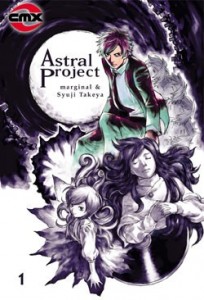
astral110. ASTRAL PROJECT

MARGINAL AND SUYUJI TAKEDA • 4 VOLUMES (complete)

Astral Project might have been an indigestible stew of pseudo-science and Deep Thoughts About Jazz, thanks to its far-out premise: a young man discovers a connection between his sister’s disappearance and an Albert Ayler recording that helps facilitate out-of-body experiences. Marginal spins a ripping yarn, however, grounding the story’s more fantastic elements in the gritty realism of Tokyo’s red light district. He immerses us in the story to such a degree, in fact, that we learn things as Masahiko does; we’re never one step ahead of our protagonist, a common problem in thrillers. Syuji Takeya’s artwork won’t appeal to everyone, as it sometimes has a rough, sketchy quality that doesn’t mesh well with the dark, Photoshopped backgrounds, but Takeya creates a memorable assortment of faces and bodies that suggest the seediness of Masahiko’s world more readily than dialog could. Quite possibly Ornette Coleman’s favorite manga. (Originally reviewed at PopCultureShock on 10/27/08. )

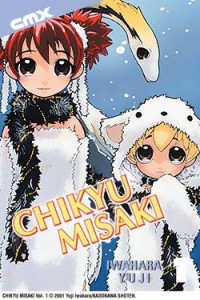
chikyu19. CHIKYU MISAKI

YUJI IWAHARA • 3 VOLUMES (complete)

This fast-paced adventure plays like best live-action film Disney never made, mixing comedy, family drama, and fantasy elements to tell the story of fourteen-year-old Misaki, who discovers that the local lake is inhabited by a pint-sized Loch Ness Monster. The twist? Little Neo transforms into a cute little boy on land — a nifty trick when a band of kidnappers-cum-poachers get wind of his existence. Chikyu Misaki has a kind of fierce kid logic to it: who but a ten-year-old would dream up a story in which a dinosaur, a downed airplane, a lost suitcase filled with gold, and a potential stepmother all get a turn in the spotlight? Yuji Iwahara’s artwork is also a big plus: his character designs do a fine job of delineating each cast member’s personality and role in the drama, while his action scenes are crisp and fluid. Only a few odd, squicky moments of sexual humor prevent this from being a slam-dunk recommendation for the under-twelve crowd.

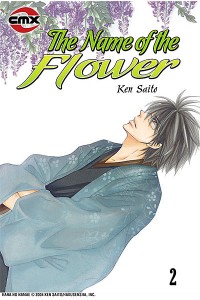
nameflower28. THE NAME OF THE FLOWER

KEN SAITO • 4 VOLUMES (complete)

Did Ken Saito have Charlotte Brontë on the brain when she dreamed up the plot for The Name of the Flower? I ask because Flower‘s storyline seems like pure Masterpiece Theater fodder: Chouko, a young orphan left mute and despondent by her parents’ death, is sent to live with a male guardian who  endured a similarly tragic past. Over time, the two form a deep attachment that neither dares admit, an attachment tested by Chouko’s decision to enroll in college and Kei’s general reclusiveness. If the set-up is ripe for melodrama, Saito manages to craft a story that’s rooted in everyday experience; her characters’ journey to self-awareness and romance is complicated by real-life obstacles, not mad wives in the attic. Lovely art cements the bittersweet mood of this borderline josei title. One of my nominees for Best New Manga of 2009.

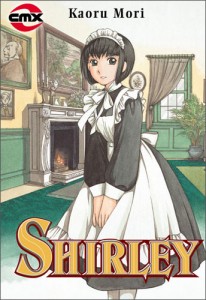
Shirley_Cover7. SHIRLEY

KAORU MORI • 1 VOLUME (complete)

At first glance, Shirley looks like a practice run for Emma, a collection of pleasant, straightforward maid stories featuring prototype versions of Emma‘s main characters. A closer examination, however, reveals that Shirley is, in fact, a series of detailed character sketches exploring the relationships between three maids and their respective employers. While some of these sketches aren’t entirely successful — Kaoru Mori cheerfully describes one as “an extremely cheap story about a boy and an animal” and attributes the inspiration for another to The A-Team (no, really) — the five chapters focusing on thirteen-year-old Shirley Madison and her independent, headstrong employer are as good as any passage in Emma. (Reviewed at The Manga Critic on 3/9/10.)

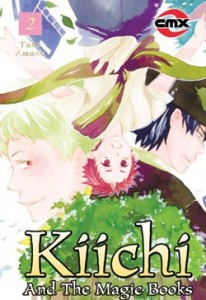
kiichi26. KIICHI AND THE MAGIC BOOKS

TAKA AMANO • 5 VOLUMES (complete)

This poignant coming-of-age story focuses on Kiichi, a young oni whose lonely existence is transformed by a chance encounter with a traveling librarian. Inspired by the information in one of Mototaro’s books, Kiichi decides to leave his village in search of others like himself. Kiichi’s journey brings him into contact with a variety of people, many of whom seek to harm or profit from his unique abilities, or who simply fear his appearance. Though Taka Amano never shies away from the darker implications of her story, showing us just how unscrupulous, ignorant, and venal people of all ages can be, Kiichi and the Magic Books is never mawkish or didactic; the fantasy elements add considerable interest and charm, while Kiichi proves emotionally resilient in the face of prejudice and mistrust. Readers more accustomed to the look and feel of Naruto may not initially respond to Amano’s starkly beautiful pen-and-ink drawings. Encourage them to try Kiichi anyway, as this series offers the same degree of complexity, imagination, and emotional authenticity as an Ursula LeGuin or Phillip Pullman novel. CMX’s best title for readers under the age of twelve. (Originally reviewed at Good Comics for Kids on 1/23/09.)

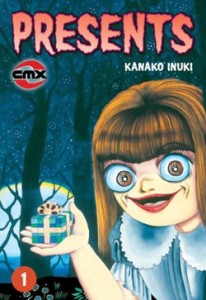
presents15. PRESENTS

KANAKO INUKI • 3 VOLUMES (complete)

Any series that prompted John Jakala to coin a phrase as useful and catchy as “comeuppance theater” deserves a place on a top ten list of some kind; the fact that Kanako Inuki’s horror-comedy is fiendishly entertaining earns it a spot on this particular countdown. Presents reads a lot like Tales of the Crypt, with each story adhering to the same formula: creepy child-woman Karumi offers an enticing present to an unsuspecting person, a present that quickly reveals itself to be an instrument of punishment for the recipient’s bad behavior or poor character. (Hence Jakala’s term “comeuppance theater.”) Though she loves drawing bugs and hideously deformed faces, Inuki is less interested in scaring us than making us laugh and squirm with recognition at our own folly; Inuki’s creepiest stories are also her funniest, satirizing commercial culture and female vanity with aplomb. A must for fans of Kazuo Umezu and Hideshi Hino.

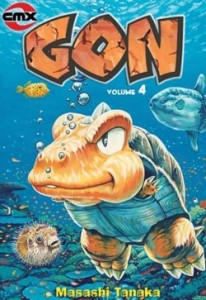
gon44. GON

MASASHI TANAKA • 7 VOLUMES (complete)

Billed as “the pint-sized terror from the Jurassic era,” Gon is a small orange dinosaur who runs amok in present-day forests, oceans, and arctic tundras, terrorizing predators, defending small animals, and doing whatever else suits his mood. Masashi Tanaka’s artwork is old school in the best sense, employing cross-hatching and delicate lines in lieu of screentone to create volume and depth. His panels are astonishingly detailed yet never fussy or poorly composed — if anything, Tanaka’s technique yields sharper images than the contemporary practice of mixing computer-generated fill with hand-drawn lines. Though Tanaka endows his creatures with unusually expressive faces, he resists the urge to fully anthropomorphize them; their behavior seems species-appropriate even if their expressions occasional verge on human. (Read: the elephants don’t wear spats or drive automobiles, the dogs don’t pretend to be World War I flying aces.) His restraint inoculates Gon against a terminal case of the cutes, resulting in a sometimes funny, sometimes violent, sometimes heartbreaking look at the natural world. (Originally reviewed at PopCultureShock on 2/20/08.)

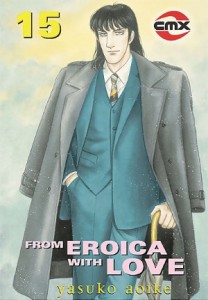
eroica153. FROM EROICA WITH LOVE

YASUKO AOIKE • 15 VOLUMES (incomplete)

What begins as an unsatisfying story about a trio of telepathic teens quickly takes a turn for the awesome with the introduction of Dorian Red, an openly gay British earl who dresses like a rock star and crisscrosses the globe to steal priceless works of art. Eroica eventually settles into an entertaining cat-and-mouse game between Dorian and uptight NATO intelligence officer Klaus Heinz von dem Eberbach, a stoic homophobe who detests the winking, flirtatious Dorian. Though they travel separately, their paths frequently converge in hilarious and explosive ways: hijackings, kidnappings, car chases. The frosting on the cake is Yasuko Aoike’s vintage seventies character designs: Dorian is the spitting image of Robert Plant, right down to the ridiculously tight pants and flowing scarves, while Klaus wears a ‘do as severe and straight as he is. The result is a delirious, over-the-top action-adventure that brings rock-n-roll swagger to a James Bond premise.

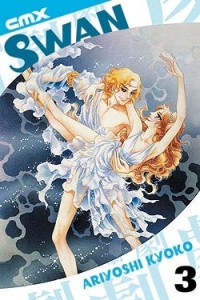
swan32. SWAN

KYOKO ARIYOSHI • 15 VOLUMES (incomplete)

Swan captures a particular moment in ballet history when the best Russian troupes commanded large, enthusiastic audiences on both sides of the Iron Curtain; when every developed nation had a ballet company of its own (even if the form was imported from elsewhere); and when dancers like Nuryev and Fonteyn were bonafide international celebrities. Into this glamorous world comes sixteen-year-old Masumi, a Japanese girl from the sticks who has passion and raw talent, but lacks refinement. She wins a spot at a national academy for dance, and begins clawing her way up the ranks, learning the repertoire (cue the Tchaikovsky!), making friends and enemies, and eventually finding her way to New York for immersion in new styles and techniques. As compelling as the drama may be, the real star of Swan is the art: the dance choreography is beautifully rendered, capturing both the heroine’s graceful intensity and the music’s lyricism. A few aspects of Swan haven’t aged well — the heroine falls victim to bouts of hysterical deafness, for example — but the strong visuals, historically accurate details, and sports manga vibe keep this marvelous series buoyant throughout.

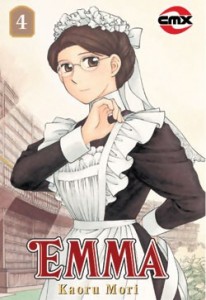
emma41. EMMA

KAORU MORI • 10 VOLUMES (complete)

If Emma‘s rich-boy-loves-poor-maid storyline suggests a lost volume of The Forsyte Saga, the expert way in which William and Emma’s courtship is told more than compensates for a few moments of narrative cliche. Kaoru Mori immerses us in the very different worlds of her lead characters, from the elaborate dinner parties and country outings of William’s circle to the scut work and boozy revelry of Emma’s fellow servants. Mori occasionally fumbles small details (pssst… Tosca didn’t debut until 1900!), but most of the time she convincingly recreates the period through her exquisite pen-and-ink drawings of intricate costumes, ornate furnishings, and fussy architecture. That keen sense of observation extends to her cast as well: Emma bursts at the seams with memorable supporting players, from Kelly Stowner, William’s crusty but kind-hearted former governess, to Hakim Atawari, an Eton-educated raj and friend of the Jones family. The main story concludes with volume seven; volumes eight, nine, and ten feature stories about some of the secondary characters, as well as a resolution for Emma and William’s long and tortured romance. (Originally reviewed at PopCultureShock on 9/19/07.)

* * * * *

Here’s a friendly challenge to everyone who’s still mourning the loss of a favorite CMX title: if I didn’t include your favorite on this list, add your suggestion(s) to the comments thread. I’ll compile everyone’s recommendations into a poll and let you choose one for me to review next month.

Filed Under: Manga Critic Tagged With: Animals, Classic, cmx, Historical Drama, Horror/Supernatural, Kanako Inuki, Kaoru Mori, Kid-Friendly Manga, Magnificent 49ers, Romance/Romantic Comedy, Seinen, shojo

My 10 Favorite CMX Titles

June 14, 2010 by Katherine Dacey

CMX may not have had the biggest titles or the biggest sales, but its catalog had a pleasing eclecticism:  who else would license series as utterly different as Moon Child, Madara, and Go West? I didn’t always love what they published, but I appreciated their efforts to bring important artists and off-beat series to American audiences’ attention. I also appreciated the care and consistency with which they edited books; it’s a sad irony that many fans will remember them for the Tenjo Tenghe fiasco and not for the fine job they did with Emma and Shirley. Below are the ten CMX titles I plan to keep in my permanent collection. (Click here for a kid-friendly list of CMX manga.)

astral110. Astral Project
By Marginal and Suyuji Takeda • 4 volumes (complete)
Astral Project might have been an indigestible stew of pseudo-science and Deep Thoughts About Jazz, as it focuses on a young man discovers a connection between his sister’s disappearance and an Albert Ayler recording that helps facilitate out-of-body experiences. Marginal spins a ripping yarn, however, grounding the story’s more fantastic elements in the gritty realism of Tokyo’s red light district. He immerses us in the story to such a degree, in fact, that we learn things as Masahiko does; we’re never one step ahead of our protagonist, a common problem in thrillers. Syuji Takeya’s artwork won’t appeal to everyone, as it sometimes has a rough, sketchy quality that doesn’t mesh well with the dark, Photoshopped backgrounds, but Takeya creates a memorable assortment of faces and bodies that suggest the seediness of Masahiko’s world more readily than dialog could. Quite possibly Ornette Coleman’s favorite manga. (Originally reviewed at PopCultureShock on 10/27/08. )

chikyu19. Chikyu Misaki
By Yuji Iwahara • 3 volumes (complete)
This fast-paced adventure plays like best live-action film Disney never made, mixing comedy, family drama, and fantasy elements to tell the story of fourteen-year-old Misaki, who discovers that the local lake is inhabited by a pint-sized Loch Ness Monster. The twist? Little Neo transforms into a cute little boy on land — a nifty trick when a band of kidnappers-cum-poachers get wind of his existence. Chikyu Misaki has a kind of fierce kid logic to it: who but a ten-year-old would dream up a story in which a dinosaur, a downed airplane, a lost suitcase filled with gold, and a potential stepmother all get a turn in the spotlight? Yuji Iwahara’s artwork is also a big plus: his character designs do a fine job of delineating each cast member’s personality and role in the drama, while his action scenes are crisp and fluid. Only a few odd, squicky moments of sexual humor prevent this from being a slam-dunk recommendation for the under-twelve crowd.

nameflower28. The Name of the Flower
By Ken Seito • 4 volumes (complete)
Did Ken Saito have Charlotte Brontë on the brain when she dreamed up the plot for The Name of the Flower? I ask because Flower‘s storyline seems like pure Masterpiece Theater fodder: Chouko, a young orphan left mute and despondent by her parents’ death, is sent to live with a male guardian who  endured a similarly tragic past. Over time, the two form a deep attachment that neither dares admit, an attachment tested by Chouko’s decision to enroll in college and Kei’s general reclusiveness. If the set-up is ripe for melodrama, Saito manages to craft a story that’s rooted in everyday experience; her characters’ journey to self-awareness and romance is complicated by real-life obstacles, not mad wives in the attic. Lovely art cements the bittersweet mood of this borderline josei title. One of my nominees for Best New Manga of 2009.

Shirley_Cover7. Shirley
By Kaoru Mori • 1 volume (complete)
At first glance, Shirley looks like a practice run for Emma, a collection of pleasant, straightforward maid stories featuring prototype versions of Emma‘s main characters. A closer examination, however, reveals that Shirley is, in fact, a series of detailed character sketches exploring the relationships between three maids and their respective employers. While some of these sketches aren’t entirely successful — Kaoru Mori cheerfully describes one as “an extremely cheap story about a boy and an animal” and attributes the inspiration for another to The A-Team — the five chapters focusing on thirteen-year-old Shirley Madison and her independent, headstrong employer are as good as any passage in Emma. (Reviewed at The Manga Critic on 3/9/10.)

kiichi26. Kiichi and the Magic Books
By Taka Amano • 5 volumes (complete)
This poignant coming-of-age story focuses on Kiichi, a young oni whose lonely existence is transformed by a chance encounter with a traveling librarian. Inspired by the information in one of Mototaro’s books, Kiichi decides to leave his village in search of others like himself. Kiichi’s journey brings him into contact with a variety of people, many of whom seek to harm him or profit from his unique abilities, or who simply fear his appearance. Though Taka Amano never shies away from the darker implications of her story, showing us just how unscrupulous, ignorant, and venal people of all ages can be, Kiichi and the Magic Books is never mawkish or didactic; the fantasy elements add considerable interest and charm, while Kiichi proves emotionally resilient in the face of prejudice and mistrust. Readers more accustomed to the look and feel of Naruto may not initially respond to Amano’s starkly beautiful pen-and-ink drawings. Encourage them to try Kiichi anyway, as this series offers the same degree of complexity, imagination, and emotional authenticity as an Ursula LeGuin or Phillip Pullman novel. CMX’s best title for readers under the age of twelve. (Originally reviewed at Good Comics for Kids on 1/23/09.)

presents15. Presents
By Kanako Inuki • 3 volumes (complete)
Any series that prompted John Jakala to coin a phrase as useful and catchy as “comeuppance theater” deserves a place on a top ten list of some kind; the fact that Kanako Inuki’s horror-comedy is fiendishly entertaining earns it a spot on this particular countdown. Presents reads a lot like Tales of the Crypt, with each story adhering to the same formula: creepy child-woman Karumi offers an enticing present to an unsuspecting person, a present that quickly reveals itself to be an instrument of punishment for the recipient’s bad behavior or poor character. (Hence Jakala’s term “comeuppance theater.”) Though she loves drawing bugs and hideously deformed faces, Inuki is less interested in scaring us than making us laugh and squirm with recognition at our own folly; Inuki’s creepiest stories are also her funniest, satirizing commercial culture and female vanity with aplomb. A must for fans of Kazuo Umezu and Hideshi Hino.

gon44. Gon
By Masashi Tanaka • 7 volumes (complete)
Billed as “the pint-sized terror from the Jurassic era,” Gon is a small orange dinosaur who runs amok in present-day forests, oceans, and arctic tundras, terrorizing predators, defending small animals, and doing whatever else suits his mood. Masashi Tanaka’s artwork is old school in the best sense, employing cross-hatching and delicate lines in lieu of screentone to create volume and depth. His panels are astonishingly detailed yet never fussy or poorly composed — if anything, Tanaka’s technique yields sharper images than the contemporary practice of mixing computer-generated fill with hand-drawn lines. Though Tanaka endows his creatures with unusually expressive faces, he resists the urge to fully anthropomorphize them; their behavior seems species-appropriate even if their expressions occasional verge on human. (Read: the elephants don’t wear spats or drive automobiles, the dogs don’t pretend to be World War I flying aces.) His restraint inoculates Gon against a terminal case of the cutes, resulting in a sometimes funny, sometimes violent, sometimes heartbreaking look at the natural world. (Originally reviewed at PopCultureShock on 2/20/08.)

eroica153. From Eroica with Love
By Yasuko Aoike • 15 volumes (incomplete)
What begins as an unsatisfying story about a trio of telepathic teens quickly takes a turn for the awesome with the introduction of Dorian Red, an openly gay British earl who dresses like a rock star and crisscrosses the globe to steal priceless works of art. Eroica eventually settles into an entertaining cat-and-mouse game between Dorian and uptight NATO intelligence officer Klaus Heinz von dem Eberbach, a stoic homophobe who detests the winking, flirtatious Dorian. Though they travel separately, their paths frequently converge in hilarious and explosive ways: hijackings, kidnappings, car chases. The frosting on the cake is Yasuko Aoike’s vintage seventies character designs: Dorian is the spitting image of Robert Plant, right down to the ridiculously tight pants and flowing scarves, while Klaus wears a ‘do as severe and straight as he is. The result is a delirious, over-the-top action-adventure that brings rock-n-roll swagger to a James Bond premise.

swan32. Swan
By Kyoko Ariyoshi • 15 volumes (incomplete)
Swan captures a particular moment in ballet history when the best Russian troupes commanded large, enthusiastic audiences on both sides of the Iron Curtain; when every developed nation had a ballet company of its own (even if the form was imported from elsewhere); and when dancers like Nuryev and Fonteyn were bonafide international celebrities. Into this glamorous world comes sixteen-year-old Masumi, a Japanese girl from the sticks who has passion and raw talent, but lacks refinement. She wins a spot at a national academy for dance, and begins clawing her way up the ranks, learning the repertoire (cue the Tchaikovsky!), making friends and enemies, and eventually finding her way to New York for immersion in new styles and techniques. As compelling as the drama may be, the real star of Swan is the art: the dance choreography is beautifully rendered, capturing both the heroine’s graceful intensity and the music’s lyricism. A few aspects of Swan haven’t aged well — the heroine falls victim to bouts of hysterical deafness, for example — but the strong visuals, historically accurate details, and sports manga vibe keep this marvelous series buoyant throughout.

emma41. Emma
By Kaoru Mori • 10 volume (complete)
If Emma‘s rich-boy-loves-poor-maid storyline suggests a lost volume of The Forsyte Saga, the expert way in which William and Emma’s courtship is told more than compensates for a few moments of narrative cliche. Kaoru Mori immerses us in the very different worlds of her lead characters, from the elaborate dinner parties and country outings of William’s circle to the scut work and boozy revelry of Emma’s fellow servants. Mori occasionally fumbles small details (pssst… Tosca didn’t debut until 1900!), but most of the time she convincingly recreates the period through her exquisite pen-and-ink drawings of intricate costumes, ornate furnishings, and fussy architecture. That keen sense of observation extends to her cast as well: Emma bursts at the seams with memorable supporting players, from Kelly Stowner, William’s crusty but kind-hearted former governess, to Hakim Atawari, an Eton-educated raj and friend of the Jones family. The main story concludes with volume seven; volumes eight, nine, and ten feature stories about some of the secondary characters, as well as a resolution for Emma and William’s long and tortured romance. (Originally reviewed at PopCultureShock on 9/19/07.)

* * * * *

Here’s a friendly challenge to everyone who’s still mourning the loss of a favorite CMX title: if I didn’t include your favorite on this list, add your suggestion(s) to the comments thread. I’ll compile everyone’s recommendations into a poll and let you choose one for me to review next month.

Filed Under: Manga, Manga Critic, Recommended Reading Tagged With: Animals, Classic, cmx, Historical Drama, Horror/Supernatural, Kanako Inuki, Kaoru Mori, Kid-Friendly, Magnificent 49ers, Romance/Romantic Comedy

Silent Möbius, Vol. 1

June 10, 2010 by Katherine Dacey

silentmobius1I like science fiction, I really do, but I have limited tolerance for certain tropes: futures in which all the women dress like strippers — or worse, fascist strippers — futures in which giant bugs menace Earth, and futures in which magic and technology freely commingle. Small wonder, then, that Kia Asamiya’s Silent Möbius has never been on my short list of must-read manga — it’s a festival of cheesecake, gooey monsters, and pistol-packing soldiers who, in a pinch, must decide whether to cast a spell or fire a rocket launcher at the enemy. Imagine my surprise when I discovered just how entertaining Silent Möbius turned out to be, gratuitous panty shots, bugs, and all.

When shorn of its mystical mumbo-jumbo and elaborate character histories, Silent Möbius is, at heart, a classic “They came from outer space!” tale. The story begins in 2026, when the Earth is under siege from interdimensional beings known as Lucifer Hawks, fierce, shape-shifting beasties that can assume a variety of forms: dragons, humans, oversize millipedes. Only a small team of elite agents — the so-called Attacked Mystification Police Force (AMP) — are capable of killing the Hawks with a mixture of up-to-the-minute technology and good old-fashioned sorcery. Where the Hawks are coming from and why remains mysterious — at least in the very early stages of the story — though we learn that one agent’s father may be responsible for opening the floodgate between Earth and the Hawks’ home world.

If the plot is pedestrian, Asamiya’s towering cityscapes and appealing character designs aren’t. To be sure, there are plenty of other sci-fi manga from the 1980s and 1990s peddling similar visions of a dysfunctional future paved in concrete and lit by neon, but Asamiya and his helpers pull off even the busiest compositions, bringing the urban scenes to energetic life; I dare you not to compare Silent Möbius with Blade Runner. (Someone else must have thought so, too, as Asamiya was tapped to do the manga adaptation of Star Wars: The Phantom Menace, yet another work that pilfered visuals from Scott’s ground-breaking film.) Then there are the character designs: each member of the AMP seems to be taking her grooming cues from the golden age of MTV, when video vixens came in two flavors: those with enormous feathered hair, and those with short, heavily lacquered locks. Better still, their uniforms consist of jackets with epaulets, neckties, and stirrup leggings. Who knew that 2026 would look suspiciously like 1986?

The other thing that won me over was the characters. I wouldn’t construe Asamiya’s decision to make the AMP a strictly female force as a nod to feminism; there are enough costume failures and half-clad characters to suggest Asamiya was as interested in satisfying the male gaze as he was in promoting the idea that women can kick ass just as well as men. At the same time, however, the ladies of AMP are tough and decisive, and don’t take guff from their male peers; in one of the series’ few nods to realism, the largely male police force resents the AMP for their ability to assume control of any investigation, grumbling about jurisdiction and occasionally baiting the women into fights.

Not that Silent Möbius doesn’t have moments of eyeball-rolling stupidity. Asamiya saddled his characters with borderline stripper names, for example: who but an adult entertainer would choose a name like “Rally Cheyenne” or “Katsumi Liqueur”? (Worse still: Katsumi’s father was Gilgelf Liqueuer, a name best suited for a drunken Hobbit.) Then, too, the series’ rather complicated mythology isn’t well explained; it’s the kind of universe where some characters kill aliens by drawing pentagrams on the ground while others use bazookas. And the cheesecake… sigh. I often had the sinking feeling that Asamiya was secretly auditioning to do a Pirelli Tire calendar with his frequent images of semi-naked women in provocative poses.

Costume failures and panty shots aside, I enjoyed the first volume of Silent Möbius well enough to continue with the series. It’s a fun, escapist romp that occasionally takes itself a little too seriously, but never bogs down in its own ridiculous mythology.

SILENT MÖBIUS: COMPLETE EDITION, VOL. 1 • BY KIA ASAMIYA • UDON ENTERTAINMENT • 200 pp. • RATING: OLDER TEEN (16+)

Filed Under: Manga Critic Tagged With: Classic, Kia Asamiya, Silent Moebius, Udon Entertainment

Silent Möbius, Vol. 1

June 10, 2010 by Katherine Dacey

I like science fiction, I really do, but I have limited tolerance for certain tropes: futures in which all the women dress like strippers — or worse, fascist strippers — futures in which giant bugs menace Earth, and futures in which magic and technology freely commingle. Small wonder, then, that Kia Asamiya’s Silent Möbius has never been on my short list of must-read manga — it’s a festival of cheesecake, gooey monsters, and pistol-packing soldiers who, in a pinch, must decide whether to cast a spell or fire a rocket launcher at the enemy. Imagine my surprise when I discovered just how entertaining Silent Möbius turned out to be, gratuitous panty shots, bugs, and all.

When shorn of its mystical mumbo-jumbo and elaborate character histories, Silent Möbius is, at heart, a classic “They came from outer space!” tale. The story begins in 2026, when the Earth is under siege from interdimensional beings known as Lucifer Hawks, fierce, shape-shifting beasties that can assume a variety of forms: dragons, humans, oversize millipedes. Only a small team of elite agents — the so-called Attacked Mystification Police Force (AMP) — are capable of killing the Hawks with a mixture of up-to-the-minute technology and good old-fashioned sorcery. Where the Hawks are coming from and why remains mysterious — at least in the very early stages of the story — though we learn that one agent’s father may be responsible for opening the floodgate between Earth and the Hawks’ home world.

If the plot is pedestrian, Asamiya’s towering cityscapes and appealing character designs aren’t. To be sure, there are plenty of other sci-fi manga from the 1980s and 1990s peddling similar visions of a dysfunctional future paved in concrete and lit by neon, but Asamiya and his helpers pull off even the busiest compositions, bringing the urban scenes to energetic life; I dare you not to compare Silent Möbius with Blade Runner. (Someone else must have thought so, too, as Asamiya was tapped to do the manga adaptation of Star Wars: The Phantom Menace, yet another work that pilfered visuals from Scott’s ground-breaking film.) Then there are the character designs: each member of the AMP seems to be taking her grooming cues from the golden age of MTV, when video vixens came in two flavors: those with enormous feathered hair, and those with short, heavily lacquered locks. Better still, their uniforms consist of jackets with epaulets, neckties, and stirrup leggings. Who knew that 2026 would look suspiciously like 1986?

The other thing that won me over was the characters. I wouldn’t construe Asamiya’s decision to make the AMP a strictly female force as a nod to feminism; there are enough costume failures and half-clad characters to suggest Asamiya was as interested in satisfying the male gaze as he was in promoting the idea that women can kick ass just as well as men. At the same time, however, the ladies of AMP are tough and decisive, and don’t take guff from their male peers; in one of the series’ few nods to realism, the largely male police force resents the AMP for their ability to assume control of any investigation, grumbling about jurisdiction and occasionally baiting the women into fights.

Not that Silent Möbius doesn’t have moments of eyeball-rolling stupidity. Asamiya saddled his characters with borderline stripper names, for example: who but an adult entertainer would choose a name like “Rally Cheyenne” or “Katsumi Liqueur”? (Worse still: Katsumi’s father was Gilgelf Liqueuer, a name best suited for a drunken Hobbit.) Then, too, the series’ rather complicated mythology isn’t well explained; it’s the kind of universe where some characters kill aliens by drawing pentagrams on the ground while others use bazookas. And the cheesecake… sigh. I often had the sinking feeling that Asamiya was secretly auditioning to do a Pirelli Tire calendar with his frequent images of semi-naked women in provocative poses.

Costume failures and panty shots aside, I enjoyed the first volume of Silent Möbius well enough to continue with the series. It’s a fun, escapist romp that occasionally takes itself a little too seriously, but never bogs down in its own ridiculous mythology.

SILENT MÖBIUS: COMPLETE EDITION, VOL. 1 • BY KIA ASAMIYA • UDON ENTERTAINMENT • 200 pp. • RATING: OLDER TEEN (16+)

Filed Under: Manga, Manga Critic, REVIEWS Tagged With: Classic, Kia Asamiya, Post-Apocalyptic Sci-Fi, Silent Moebius, Udon Entertainment

13th Boy, Vols. 1-4

June 8, 2010 by Katherine Dacey

13thboy_1Like Water for Kimchi — that’s how I would describe 13th Boy, a weird, wonderful Korean comedy with a strong element of magical realism.

The plot is standard sunjong fodder: Hee-So, a teen with a flair for the dramatic, believes that the handsome Won-Jun is destined to be her twelfth and last boyfriend, the man with whom she’ll spend the rest of her life. Though Won-Jun accepts her initial confession of love — she drags him on television to ask him on a date — he dumps her just one month later, sending Hee-So into a tailspin: how could her destiny walk away from her? She then resolves to take fate into her own hands, launching an aggressive campaign to win him back: she stalks Won-Jun, looking for any opportunity to be alone with him; she joins the Girl Scouts so that she can go on a camping trip with him (he’s a Boy Scout); she even befriends her romantic rival Sae-Bom, defending Sae-Bom from bullies and risking her life to rescue Sae-Bom’s beloved stuffed rabbit from a burning building. In short: Hee-So is a girl on a mission, dignity be damned.

…

Read More

Filed Under: Manga Critic Tagged With: yen press

13th Boy, Vols. 1-4

June 8, 2010 by Katherine Dacey

Like Water for Kimchi — that’s how I would describe 13th Boy, a weird, wonderful Korean comedy with a strong element of magical realism.

The plot is standard sunjong fodder: Hee-So, a teen with a flair for the dramatic, believes that the handsome Won-Jun is destined to be her twelfth and last boyfriend, the man with whom she’ll spend the rest of her life. Though Won-Jun accepts her initial confession of love — she drags him on television to ask him on a date — he dumps her just one month later, sending Hee-So into a tailspin: how could her destiny walk away from her? She then resolves to take fate into her own hands, launching an aggressive campaign to win him back: she stalks Won-Jun, looking for any opportunity to be alone with him; she joins the Girl Scouts so that she can go on a camping trip with him (he’s a Boy Scout); she even befriends her romantic rival Sae-Bom, defending Sae-Bom from bullies and risking her life to rescue Sae-Bom’s beloved stuffed rabbit from a burning building. In short: Hee-So is a girl on a mission, dignity be damned.

Our first clue that 13th Boy isn’t just another dreary comedy about a girl going to extremes to nab a cute boy is the introduction of Beatrice, Hee-So’s sidekick. Beatrice is a talking cactus (no, really, a talking cactus) who transforms into a handsome, if somewhat androgynous, teen whenever there’s a full moon. I don’t know too many storytellers who could make something as cracky as a lovelorn saguaro work, but SangEun Lee presents Beatrice matter-of-factly, as if every self-respecting girl had a walking, talking man-plant living in her bedroom. If anything, Beatrice functions as a nifty surrogate for the reader, voicing concern about Hee-So’s fanatical commitment to Won-Jun and urging Hee-So to focus her attention elsewhere.

Our second clue is the revelation that one of Hee-So’s classmates has magical powers: Whie-Young can change the weather, make himself invisible, walk through walls, and bring inanimate objects to life. Though Whie-Young’s mother and grandmother have warned him not to use his abilities, he persists, hoping to prove the depth of his feelings for Hee-So. (Yes, 13th Boy is one of those comedies in which every character is head-over-heels for the wrong person.) Those rescues and romantic acts come at a steep price, as each spell shortens Whie-Young’s life; if he doesn’t stop playing Hee-So’s guardian angel, he’ll die a very young man.

If the fantasy elements enliven a tepid premise, the story’s more down-to-earth aspects — especially Hee-So’s relationship with her female friends — give 13th Boy some real emotional heft. Hee-So’s best buddy, Nam-Joo, is a welcome addition to the cast, a tough tomboy who’s fiercely loyal to Hee-So yet takes a dim view of her pal’s romantic obsession. Their squabbles and pep talks have a ring of truth to them, even if Lee contrives some ridiculous scenarios for the girls to resolve their differences. (I don’t know about you, but I never settled a score with anyone by challenging them to a dodge ball game or judo match.) Sae-Bom, too, turns out to be a more interesting, complicated character than she first appears; as the story unfolds, we realize that she has the emotional IQ of a grade schooler but the physical appearance and intellect of a teenager, making her an object of scorn among the class alpha girls. If Hee-So’s motivation for defending Sae-Bom was initially less-than-pure (a fact she readily concedes), she develops a genuine sense of empathy for Won-Jun’s friend — one of our first clues that Hee-So’s boy-crazed exterior belies a more compassionate, less narcissistic nature.

Lee’s crisp layouts and cute character designs are an excellent complement to her storytelling. She uses bold, strong lines to define her characters, shying away from heavy use of screentone; the white of the page plays just as important a role in defining space and volume as the ink, making her designs pop. (Beatrice is a notable exception, as his cactus skin is toned dark grey.) Though Hee-So and Won-Jun have enormous, doll-like eyes, Lee’s grasp of anatomy is solid; her characters have the rangy, slightly awkward bodies of fifteen-year-olds, rather than the hyper-stylized physiques of the Bring It On! gang. Only the backgrounds disappoint, a mish-mash of traced architectural elements and Photoshopped images that seem a little too generic for such a whacked-out story. (Or maybe that’s the genius of the bland background art? I can’t decide.)

I’ll be honest: I went into 13th Boy knowing about Beatrice, which predisposed me to overlook some of the first volume’s groan-worthy moments. And as much as I love Beatrice — and really, what’s not to like about a chatty cactus? — what really won me over was the deft way in which SangEun Lee balanced the series’ magical elements with its more realistic ones, creating a unique story in which magical acts reveal character and everyday acts affect change.

Review copy of volume 4 provided by the publisher.

13TH BOY, VOLS. 1-4 • BY SANG-EUN LEE • YEN PRESS • RATING: TEEN

Filed Under: Manga Critic, Manhwa, REVIEWS Tagged With: manhwa, Romance/Romantic Comedy, yen press

Neko Ramen, Vol. 1: Hey! Order Up!

June 2, 2010 by Katherine Dacey

If you’ve ever lived with a cat or dog, you know that no meal is complete without a pet hair garnish. Now imagine that your beloved companion actually prepared your meals instead of watching you eat them: what sort of unimaginable horrors might you encounter beyond the stray hair? That’s the starting point for Neko Ramen, a 4-koma manga about a cat whose big dream is to run a noodle shop, but author Kenji Sonishi quickly moves past hair balls and litter box jokes to mine a richer vein of humor, poking fun at his cat cook’s delusions of entrepreneurial grandeur.

Taisho is forever dreaming up ways to expand his business, ideas that seem sound in the abstract, but prove disastrous in the execution: a dessert ramen consisting of noodles and milk, a delivery service that’s thwarted by feline territoriality, a playing card promotion featuring unappetizing pictures of soup. In fact, Taisho is so completely misguided that he doesn’t grasp what’s novel about Neko Ramen; when a competitor in a cat costume opens a shop, hoping to capitalize on Taisho’s appearance on “The World’s Most Amazing Animals,” Taisho thinks he, too, needs an animal costume in order to drum up business. His sole customer, the long-suffering Tanaka-san, tries hard to offer sensible advice, but Tanaka’s counsel falls on deaf ears. (Why Tanaka sticks around for ramen that he freely admits is “awful” is one the series’ great mysteries.)

Sonishi’s artwork is crude and sketchy; each character is rendered with just enough lines to give a general impression of who or what he’s supposed to be. The primitive quality of the art actually works in the series’ favor, conveying the low-rent nature of Taisho’s business. More effective still is Sonishi’s strategy for differentiating Taisho from the other cats who regularly appear in the series: Taisho resembles a maneki neko (beckoning cat statue) in an apron, while other felines are depicted as simple, rounded shapes with ears and tails.

None of this would work if the translation were stiff or colorless, but TOKYOPOP wisely employed the husband-and-wife team of Emily Gordon and Kumail Nanjiani to adapt the script for English-speaking audiences. Both are experienced writers and performers (she wrote for Bust and Jane, he does stand-up comedy), and their ear for language is evident throughout volume one; the dialogue is idiomatic and the punchlines are snappy. The other secret to the script’s success is the care with which the adaptors distinguish Taisho’s voice from Tanaka’s, infusing the characters’ owner-customer banter the feeling of a good manzai routine, with Taisho as the boke and Tanaka as the tsukkomi.

The biggest surprise about Neko Ramen is that Sonishi manages to wring so many laughs out of what could be a one-joke premise. Sonishi’s gags remain fresh throughout the first volume, thanks, in part, to several interludes in which he abandons the 4-koma format to relate stories of Taisho’s past: his ill-fated stint as a cat model, his rivalry with a noodle shop staffed by a dog, a monkey, and a bird. These interludes nicely set the table for volume two, providing Sonishi more avenues for his absurd humor without straying too far from the series’ basic idea. Highly recommended, whether or not you fancy cats.

NEKO RAMEN, VOL. 1: HEY! ORDER UP! • BY KENJI SONISHI • TOKYOPOP • 156 pp. • RATING: TEEN (13+)

Filed Under: Manga Critic Tagged With: 4-koma, Tokyopop

Neko Ramen, Vol. 1: Hey! Order Up!

June 2, 2010 by Katherine Dacey

If you’ve ever lived with a cat or dog, you know that no meal is complete without a pet hair garnish. Now imagine that your beloved companion actually prepared your meals instead of watching you eat them: what sort of unimaginable horrors might you encounter beyond the stray hair? That’s the starting point for Neko Ramen, a 4-koma manga about a cat whose big dream is to run a noodle shop, but author Kenji Sonishi quickly moves past hair balls and litter box jokes to mine a richer vein of humor, poking fun at his cat cook’s delusions of entrepreneurial grandeur.

Taisho is forever dreaming up ways to expand his business, ideas that seem sound in the abstract, but prove disastrous in the execution: a dessert ramen consisting of noodles and milk, a delivery service that’s thwarted by feline territoriality, a playing card promotion featuring unappetizing pictures of soup. In fact, Taisho is so completely misguided that he doesn’t grasp what’s novel about Neko Ramen; when a competitor in a cat costume opens a shop, hoping to capitalize on Taisho’s appearance on “The World’s Most Amazing Animals,” Taisho thinks he, too, needs an animal costume in order to drum up business. His sole customer, the long-suffering Tanaka-san, tries hard to offer sensible advice, but Tanaka’s counsel falls on deaf ears. (Why Tanaka sticks around for ramen that he freely admits is “awful” is one the series’ great mysteries.)

Sonishi’s artwork is crude and sketchy; each character is rendered with just enough lines to give a general impression of who or what he’s supposed to be. The primitive quality of the art actually works in the series’ favor, conveying the low-rent nature of Taisho’s business. More effective still is Sonishi’s strategy for differentiating Taisho from the other cats who regularly appear in the series: Taisho resembles a maneki neko (beckoning cat statue) in an apron, while other felines are depicted as simple, rounded shapes with ears and tails.

None of this would work if the translation were stiff or colorless, but TOKYOPOP wisely employed the husband-and-wife team of Emily Gordon and Kumail Nanjiani to adapt the script for English-speaking audiences. Both are experienced writers and performers (she wrote for Bust and Jane, he does stand-up comedy), and their ear for language is evident throughout volume one; the dialogue is idiomatic and the punchlines are snappy. The other secret to the script’s success is the care with which the adaptors distinguish Taisho’s voice from Tanaka’s, infusing the characters’ owner-customer banter the feeling of a good manzai routine, with Taisho as the boke and Tanaka as the tsukkomi.

The biggest surprise about Neko Ramen is that Sonishi manages to wring so many laughs out of what could be a one-joke premise. Sonishi’s gags remain fresh throughout the first volume, thanks, in part, to several interludes in which he abandons the 4-koma format to relate stories of Taisho’s past: his ill-fated stint as a cat model, his rivalry with a noodle shop staffed by a dog, a monkey, and a bird. These interludes nicely set the table for volume two, providing Sonishi more avenues for his absurd humor without straying too far from the series’ basic idea. Highly recommended, whether or not you fancy cats.

NEKO RAMEN, VOL. 1: HEY! ORDER UP! • BY KENJI SONISHI • TOKYOPOP • 156 pp. • RATING: TEEN (13+)

Filed Under: Manga, Manga Critic, REVIEWS Tagged With: 4-koma, Cats, Comedy, Cooking and Food, Tokyopop

Library Wars: Love & War, Vol. 1

June 1, 2010 by Katherine Dacey

LibraryWars1If I were thirteen years old, Library Wars would be at the top of my Best Manga Ever list, as it reads like a catalog of the things I dug in my early teens: books about the future, books about women breaking into male professions, books with bickering leads who harbor secret feelings for each other. I can’t say that Library Wars works as well for me as an adult, but I can recommend it to younger female manga fans who are tired of stories about wallflowers, doormats, or fifteen-year-old girls whose primary objective is to nab a husband.
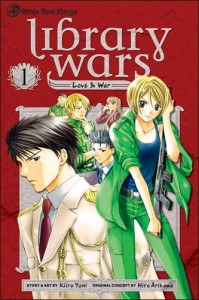
The story focuses on Iku Hasahara, a former track star and future librarian who enlists in the Library Defense Force (LDF), a paramilitary organization dedicated to combating censorship. Formed in response to the Media Betterment Act, the LDF actively challenges the national government’s efforts to remove books from stores and libraries, using weapons and strong-arm tactics when necessary. Iku is the only female recruit who can keep pace with the guys, push-up for push-up, and is the frequent target of abuse from Atsushi Dojo, a handsome drill sergeant who takes grim delight in pointing out her weaknesses. (Her mastery of the Japanese Decimal System leaves a lot to be desired.) As Iku advances through basic training, however, she begins to realize that Dojo isn’t so bad; his sometimes brusque demeanor masks genuine concern for his pupil, and a sincere desire to help her become a top-notch officer.

…

Read More

Filed Under: Manga Critic Tagged With: shojo, VIZ

Library Wars: Love & War, Vol. 1

June 1, 2010 by Katherine Dacey

If I were thirteen years old, Library Wars would be at the top of my Best Manga Ever list, as it reads like a catalog of the things I dug in my early teens: books about the future, books about women breaking into male professions, books with bickering leads who harbor secret feelings for each other. I can’t say that Library Wars works as well for me as an adult, but I can recommend it to younger female manga fans who are tired of stories about wallflowers, doormats, or fifteen-year-old girls whose primary objective is to nab a husband.

The story focuses on Iku Hasahara, a former track star and future librarian who enlists in the Library Defense Force (LDF), a paramilitary organization dedicated to combating censorship. Formed in response to the Media Betterment Act, the LDF actively challenges the national government’s efforts to remove books from stores and libraries, using weapons and strong-arm tactics when necessary. Iku is the only female recruit who can keep pace with the guys, push-up for push-up, and is the frequent target of abuse from Atsushi Dojo, a handsome drill sergeant who takes grim delight in pointing out her weaknesses. (Her mastery of the Japanese Decimal System leaves a lot to be desired.) As Iku advances through basic training, however, she begins to realize that Dojo isn’t so bad; his sometimes brusque demeanor masks genuine concern for his pupil, and a sincere desire to help her become a top-notch officer.

Library Wars‘ premise certainly invites comparisons with Fahrenheit 451. The future society depicted in Library Wars isn’t nearly as bleak or disorderly as the one Ray Bradbury imagined back in 1951, but creators Hiro Arakawa and Kiiro Yumi are just as insistent on the importance of standing up for free speech; Iku joined the Defense Forces after the Media Betterment Committee’s jack-booted thugs attempted to confiscate a book from her. (A hot guy also factored into her decision to enlist.) The MBC is as arbitrary and ruthless as the Firemen of Fahrenheit 451, working hard to restrict citizens’ access to potentially “harmful” materials, even going so far as to infiltrate libraries to weed out undesirable material.

In adapting Library Wars from novel to manga, however, Kiiro Yuki places less emphasis on the book-banning crisis and more on her characters’ relationships, preserving just enough background about the LDF’s history to justify the action sequences. That’s not necessarily a bad choice; Iku and Dojo’s banter has a pleasant, antagonistic zing to it that infuses the boot camp scenes with some playful energy. The LDF’s rationale for existing, however, often seems underdeveloped, as we don’t know what prompted the national government to pass the Betterment Act. In leaving these details vague, one could argue that Yuki is simply being true to historical fact; oppressive regimes from tsarist Russia to Maoist China have arbitrarily banned books and condemned authors in the interest of “the national welfare,” yet in the context of the Library Wars manga, that lack of specificity comes off as sloppiness. We don’t know whether censorship is having a real impact on citizens’ ability to say and think what they please; the few scenes in which we glimpse the MBC in action suggest that they’re more of a nuisance than a genuine threat to the social order.

The artwork is serviceable but not great. The character designs are about as basic as they get, with haircuts playing a pivotal role in establishing each cast member’s personality; we know Iku is a tomboy from her sensible and slightly androgynous bob, for example, while Dojo’s neat ‘do paints him as a hardcore military man. (By contrast, Sgt. Komaki, the series’ designated McDreamy character, has the kind of tousled locks that wouldn’t pass muster in the Marines.) The action scenes are hasty affairs, rendered with little respect for continuity or background detail, while the layouts often feel busy, with too many small panels and design elements hampering the visual flow.

If the censorship theme and artwork aren’t as well executed as I might have hoped, Library Wars earns high marks for having a smart, capable heroine and a smart, topical premise. Iku may not be a wonder woman, but she’s a plausible mixture of strength and uncertainty; teen girls will relate to her shifting moods, fierce temper, and high principles, even if they can’t agree whether she should end up with Dojo. And really, what’s not to like about a series that features hot guys who hate censorship but like books, libraries, and butt-kicking women? Now there’s a fantasy female readers of all ages can endorse.

LIBRARY WARS: LOVE & WAR, VOL. 1 • STORY & ART KIIRO YUMI, ORIGINAL CONCEPT BY HIRO ARAKAWA • VIZ • 200 pp. • RATING: OLDER TEEN (16+)

Filed Under: Manga, Manga Critic, REVIEWS Tagged With: Sci-Fi, shojo beat, VIZ

A, A’ and They Were Eleven

May 31, 2010 by Katherine Dacey

Though Vertical has published two series by Keiko Takemiya, the Magnificent 49ers’ work remains largely unavailable in English, with a few exceptions: Yasuko Aoike’s From Eroica With Love (which debuted in 1976 in Akita Shoten), and Moto Hagio’s short stories “A, A’ [A, A Prime],” “4/4 [Quatre/Quarts],” “X+Y,” and “They Were Eleven.”* These four stories comprise a mere 330 pages of material, but they offer readers a window into a key stage in shojo manga’s development, when women artists began pushing the medium in new directions, visually and thematically. Hagio’s work, like Takemiya’s, is unabashedly Romantic, filled with yearning characters who are struggling to uncover their true selves, even when that quest puts them at odds with societal norms. Though there is an intense, adolescent sensibility to some of her stories, that — for me, at least — is part of their beauty; Hagio clearly remembers what it feels like to be sixteen or eighteen, yet the way she frames those emotions is so exquisite and refined that the reader can appreciate her craft, even if the drama seems a little overripe from an adult perspective.

If you’ve been curious about what Takemiya’s peers were doing while she was writing To Terra and Song of the Wind and the Trees, or are wondering what to expect if you purchase Hagio’s A Drunken Dream this fall, read on.

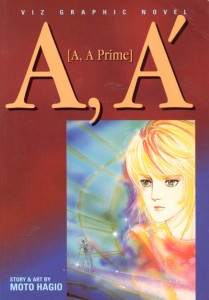
aa_coverA, A’ [A, A Prime]

This sometimes lyrical, sometimes bizarre anthology contains three interrelated stories. In the first, “A, A’, [A, A Prime],” a group of researchers struggle to accept Addy, a new team member who is, in fact, the clone of a colleague who perished several years earlier; in the second, “4/4 [Quatre/Quarts],” Mori, a telepath, becomes obsessed with Trill, a strange young woman who’s virtually mute; and in the third, “X+Y,” a now-older Mori falls in love with Tacto, an androgynous young man who resembles Trill. Addy, Trill, and Tacto are Unicorns, a humanoid species bred for deep-space travel. Though Unicorns share common physical characteristics — most notably a shock of red hair running down the center of their heads — and high IQs — their original purpose was to serve as computer technicians on long space missions — they have a hard time negotiating the human world: emotions baffle them, and the act of forming deep attachments to other people can destabilize their personalities.

Though Hagio rehearses some time-honored sci-fi tropes — especially the danger of genetic tampering — one of her most striking themes is the relationship between memory and identity. Addy, for example, is born with all of her predecessor’s memories of childhood, but none of her predecessor’s memories of Proxima, the remote ice world where the original Addy worked for three years before dying in an accident. That gap in Addy’s memory proves especially difficult for her co-worker Regg, who had been romantically involved with Addy’s predecessor. Addy has no idea who he is, and is bewildered that Regg knows about events from her “childhood” — events that Addy hasn’t discussed with anyone. More troubling still, these “memories” are deeply upsetting, even though Addy knows she isn’t reliving her own history.

Tacto, on the other hand, teeters on the verge of a breakdown because his memory is incomplete. As a young child, he stumbled across a gruesome sight, one which his father attempted to erase from Tacto’s memory. That seemingly humane gesture backfired, however, leaving Tacto with only an emotional echo of the traumatic event and no concrete information about what he’d actually seen; only by recovering those painful memories does Tacto escape his emotional paralysis and embrace Mori’s love for him.

Hagio’s artwork supports the intensely Romantic quality of all three stories, as she represents her characters’ memories with symbolically rich imagery. In “4/4,” for example, Trill is haunted by a recurring vision of corpses, each fastened to the floor with a lepidopterist’s pin — Trill’s memory of numerous, unsuccessful attempts to clone her. (Dr. Sazzan, her caretaker, is obsessed with breeding more Unicorns.) Tacto’s unformed memory of his childhood resembles the nightmare paintings of John Fuselli; Tacto sees a disembodied, demonic face emerge from the rocky surface of an asteroid, a swirling black cloud with eyes and a terrible mouth.

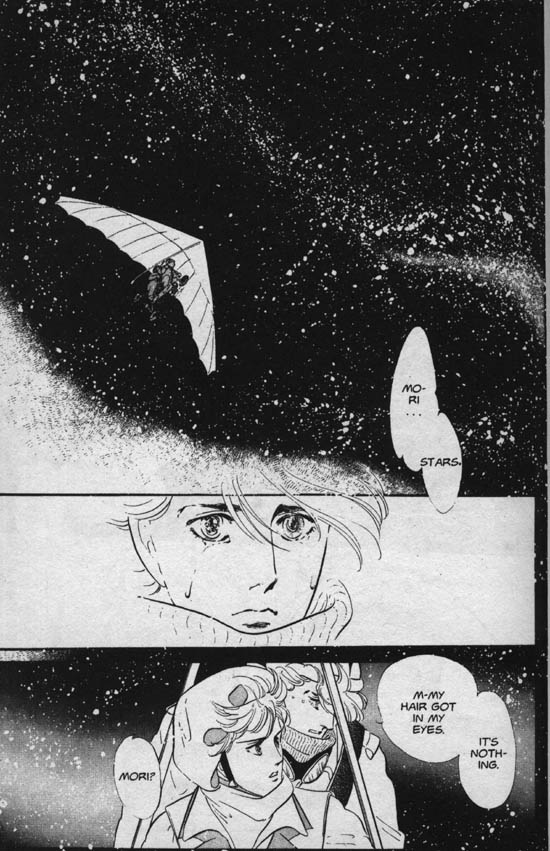
That dream-like quality extends to the settings as well, which mirror the characters’ turbulent emotional states. Trill and Mori, for example, visit a spectacular aviary aboard a space station; it’s a lush, erotically charged setting evocative of a Rousseau painting, and one that suggests the intensity of Mori’s desire for Trill. Hagio performs a similar trick in this sequence, transforming an interstellar reconnaissance mission into an intimate windsailing expedition through the stars:

aprime

Lest A, A’ sound like The Unbearable Lightness of Being in Space, let me assure you that Hagio demonstrates a unique ability to mix the sublime with the ridiculous. Her characters’ names, for example, are just about as goofy as they come: Dr. Wright Moonsault. Regg Bone. Marble. Professor Sazzan. Their costumes, too, have the same overripe quality as the names, with men sporting headbands, half capes, tall boots, and Renn Fair hats, and women clad in off-the-shoulder jumpsuits. The subplots take the cake, however, for their sheer moonbattiness: in “X+Y,” for example, Tacto’s father invents a temporary sex change drug that enables a male colleague to become pregnant, a subplot that actually holds the key to unlocking Tacto’s past.

Now out of print, VIZ originally released A, A’ in 1997. Expect to pay about $25.00 for a decent used copy if you choose to buy it online through ALibris or Amazon’s network of retailers. You might also try the library or your local comic shop’s bargain bin.

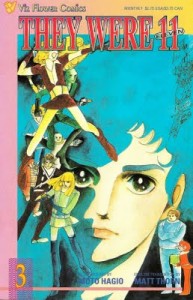
theywereeleven3THEY WERE ELEVEN

Ten cadets at an interstellar space academy are dispatched to a decommissioned ship. Their task: remain on board for 53 days without pressing the panic button; if they persevere, all ten will pass their final exam. Once aboard the ship, however, the cadets realize something is amiss. Not only do they have an extra crew member, but a series of mechanical failures and explosions threaten to send the ship hurtling into the surface of a neighboring star.

Though the premise could be spun out in the manner of, say, Event Horizon, Hagio favors a Gene Rodenberry approach, emphasizing character development and social commentary over gunplay, robots, or totally icky alien life forms. (You know the kind: they embed themselves in your chest cavity, hunt you down like a rabbit, or just spray toxic venom in your face.) Like the good astronauts of the starship Enterprise, They Were Eleven‘s cast are humanoids of various shapes and sizes. A few seem empathic; one has remarkable healing powers; another is tall and scaly; yet another looks like a distant relative of The Thing; and one pretty character has yet to decide whether it will develop into a man or woman. The dilemmas the cadets face — technical, social, and medical — also place us firmly in Star Trek territory, inspiring the characters to ruminate on issues as varied as gender roles and the ethics of sacrificing an individual for the good of the collective.

In fact, the exploration of gender is one of They Were Eleven‘s most interesting subplots; Frol, the sexually indeterminate member of the crew, is furious that her shipmates construe her as female. “I hate women!” she shouts. “Women are nothing but a waste of space!” Midway through the story, Hagio reveals the source of Frol’s misogyny: her parents want her to become the ninth wife of a prominent nobleman. If Frol passes the Galactic Academy exam, however, she will earn the right to become a man, a privilege usually reserved for a family’s eldest child. (Frol’s people are born hermaphrodites, becoming male or female only in adulthood.) Hagio’s critique of gender roles is both obvious and sly — obvious, in that Frol’s objection to being a woman stems from the division of labor on her home world (men rule the roost; women do all the work and bear lots of children) and sly, in that Hagio uses primogeniture as a metaphor for the broader sense of entitlement that comes with being born male.

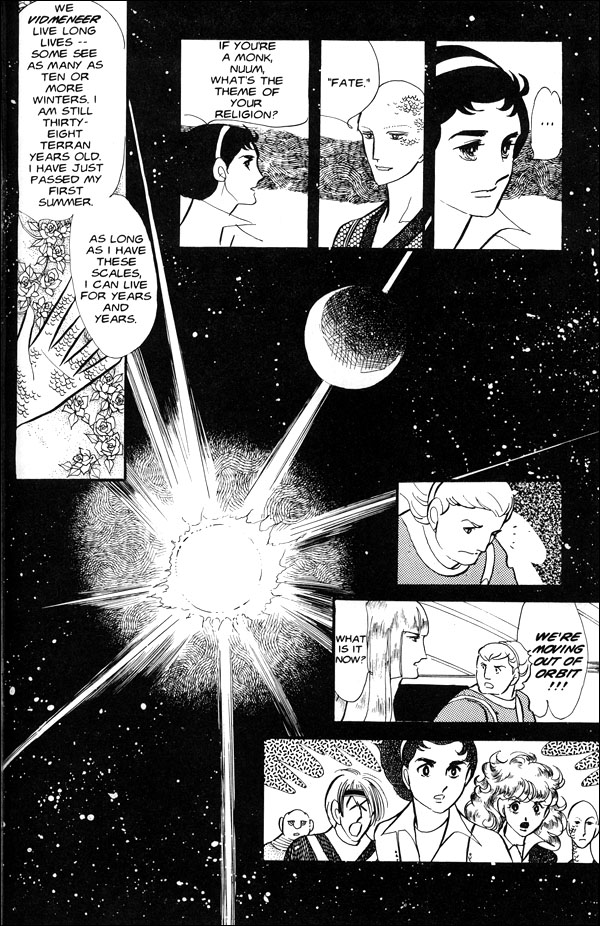
If Hagio’s aliens are strictly by the Star Trek book, all funny foreheads and funky hides, her layouts are stunning, punctuated by several arresting, full-page images: an enormous hall of cadets taking their exams (each in a groovy, womb-like isolation pod to prevent cheating), a picture of the dying star around which the test ship is orbiting, a character’s profile dissolving into a trail of stars. Hagio juxtaposes these expansive images with long, almost claustrophobically tight scenes of shipmates bickering and coping with the latest mechanical failures. It’s a neat trick, giving us a sense of how tight quarters really are aboard the White, and suggesting how that small space exacerbates tensions among the crew. And oh, those interiors! Like Takemiya, Hagio loves to draw detailed banks of computers and rows of tubes and wires and pipes, bringing the ship to vivid life. (Or, perhaps more accurately in the case of They Were Eleven, showing the ship in all its decrepitude.)

theywere11_page

Much as I would like to recommend They Were Eleven, the story is out of print in English. In the mid-1990s, VIZ issued it in two forms: as a four-issue comic (1995), and in the anthology Four Shojo Stories (1996). Used book dealers have gotten wise to the scarcity of this title; copies of Four Shojo Stories generally retail for $60 and up. Though I didn’t have too much difficulty scaring up the old VIZ Flower floppies on eBay (and I rather enjoyed the American-style presentation), it would be great to see this chestnut re-issued for a generation of readers who think that Black Bird is the first and last word in girls’ comics.

* Hagio’s story “Hanshin” was reprinted in The Comics Journal‘s shojo manga issue from 2005 (no. 269). For the purposes of this essay, I’m focusing on Hagio’s commercially available work. And speaking of work by pioneering shojo artists, Swan, which ran in Margaret from 1976 to 1981, is also available in English (CMX), and is the work of artist Kyoko Ariyoshi, who was born in 1950.

This an expanded version of a review that originally appeared at PopCultureShock on 1/20/07.

Filed Under: Manga Critic Tagged With: Classic, Magnificent 49ers, moto hagio, shojo, VIZ

Manga Artifacts: A, A’ and They Were Eleven

May 31, 2010 by Katherine Dacey

Though Vertical has published two series by Keiko Takemiya, the Magnificent 49ers’ work remains largely unavailable in English, with a few exceptions: Yasuko Aoike’s From Eroica With Love (which debuted in 1976 in Akita Shoten), and Moto Hagio’s short stories “A, A’ [A, A Prime],” “4/4 [Quatre/Quarts],” “X+Y,” and “They Were Eleven.”* These four stories comprise a mere 330 pages of material, but they offer readers a window into a key stage in shojo manga’s development, when women artists began pushing the medium in new directions, visually and thematically. Hagio’s work, like Takemiya’s, is unabashedly Romantic, filled with yearning characters who are struggling to uncover their true selves, even when that quest puts them at odds with societal norms. Though there is an intense, adolescent sensibility to some of her stories, that — for me, at least — is part of their beauty; Hagio clearly remembers what it feels like to be sixteen or eighteen, yet the way she frames those emotions is so exquisite and refined that the reader can appreciate her craft, even if the drama seems a little overripe from an adult perspective.

If you’ve been curious about what Takemiya’s peers were doing while she was writing To Terra and Song of the Wind and the Trees, or are wondering what to expect if you purchase Hagio’s A Drunken Dream this fall, read on.

aa_coverA, A’ [A, A Prime]

This sometimes lyrical, sometimes bizarre anthology contains three interrelated stories. In the first, “A, A’, [A, A Prime],” a group of researchers struggle to accept Addy, a new team member who is, in fact, the clone of a colleague who perished several years earlier; in the second, “4/4 [Quatre/Quarts],” Mori, a telepath, becomes obsessed with Trill, a strange young woman who’s virtually mute; and in the third, “X+Y,” a now-older Mori falls in love with Tacto, an androgynous young man who resembles Trill. Addy, Trill, and Tacto are Unicorns, a humanoid species bred for deep-space travel. Though Unicorns share common physical characteristics — most notably a shock of red hair running down the center of their heads — and high IQs — their original purpose was to serve as computer technicians on long space missions — they have a hard time negotiating the human world: emotions baffle them, and the act of forming deep attachments to other people can destabilize their personalities.

Though Hagio rehearses some time-honored sci-fi tropes — especially the danger of genetic tampering — one of her most striking themes is the relationship between memory and identity. Addy, for example, is born with all of her predecessor’s memories of childhood, but none of her predecessor’s memories of Proxima, the remote ice world where the original Addy worked for three years before dying in an accident. That gap in Addy’s memory proves especially difficult for her co-worker Regg, who had been romantically involved with Addy’s predecessor. Addy has no idea who he is, and is bewildered that Regg knows about events from her “childhood” — events that Addy hasn’t discussed with anyone. More troubling still, these “memories” are deeply upsetting, even though Addy knows she isn’t reliving her own history.

Tacto, on the other hand, teeters on the verge of a breakdown because his memory is incomplete. As a young child, he stumbled across a gruesome sight, one which his father attempted to erase from Tacto’s memory. That seemingly humane gesture backfired, however, leaving Tacto with only an emotional echo of the traumatic event and no concrete information about what he’d actually seen; only by recovering those painful memories does Tacto escape his emotional paralysis and embrace Mori’s love for him.

Hagio’s artwork supports the intensely Romantic quality of all three stories, as she represents her characters’ memories with symbolically rich imagery. In “4/4,” for example, Trill is haunted by a recurring vision of corpses, each fastened to the floor with a lepidopterist’s pin — Trill’s memory of numerous, unsuccessful attempts to clone her. (Dr. Sazzan, her caretaker, is obsessed with breeding more Unicorns.) Tacto’s unformed memory of his childhood resembles the nightmare paintings of John Fuselli; Tacto sees a disembodied, demonic face emerge from the rocky surface of an asteroid, a swirling black cloud with eyes and a terrible mouth.

That dream-like quality extends to the settings as well, which mirror the characters’ turbulent emotional states. Trill and Mori, for example, visit a spectacular aviary aboard a space station; it’s a lush, erotically charged setting evocative of a Rousseau painting, and one that suggests the intensity of Mori’s desire for Trill. Hagio performs a similar trick in this sequence, transforming an interstellar reconnaissance mission into an intimate windsailing expedition through the stars:

aprime

Lest A, A’ sound like The Unbearable Lightness of Being in Space, let me assure you that Hagio demonstrates a unique ability to mix the sublime with the ridiculous. Her characters’ names, for example, are just about as goofy as they come: Dr. Wright Moonsault. Regg Bone. Marble. Professor Sazzan. Their costumes, too, have the same overripe quality as the names, with men sporting headbands, half capes, tall boots, and Renn Fair hats, and women clad in off-the-shoulder jumpsuits. The subplots take the cake, however, for their sheer moonbattiness: in “X+Y,” for example, Tacto’s father invents a temporary sex change drug that enables a male colleague to become pregnant, a subplot that actually holds the key to unlocking Tacto’s past.

Now out of print, VIZ originally released A, A’ in 1997. Expect to pay about $25.00 for a decent used copy if you choose to buy it online through ALibris or Amazon’s network of retailers. You might also try the library or your local comic shop’s bargain bin.

theywereeleven3THEY WERE ELEVEN

Ten cadets at an interstellar space academy are dispatched to a decommissioned ship. Their task: remain on board for 53 days without pressing the panic button; if they persevere, all ten will pass their final exam. Once aboard the ship, however, the cadets realize something is amiss. Not only do they have an extra crew member, but a series of mechanical failures and explosions threaten to send the ship hurtling into the surface of a neighboring star.

Though the premise could be spun out in the manner of, say, Event Horizon, Hagio favors a Gene Rodenberry approach, emphasizing character development and social commentary over gunplay, robots, or totally icky alien life forms. (You know the kind: they embed themselves in your chest cavity, hunt you down like a rabbit, or just spray toxic venom in your face.) Like the good astronauts of the starship Enterprise, They Were Eleven‘s cast are humanoids of various shapes and sizes. A few seem empathic; one has remarkable healing powers; another is tall and scaly; yet another looks like a distant relative of The Thing; and one pretty character has yet to decide whether it will develop into a man or woman. The dilemmas the cadets face — technical, social, and medical — also place us firmly in Star Trek territory, inspiring the characters to ruminate on issues as varied as gender roles and the ethics of sacrificing an individual for the good of the collective.

In fact, the exploration of gender is one of They Were Eleven‘s most interesting subplots; Frol, the sexually indeterminate member of the crew, is furious that her shipmates construe her as female. “I hate women!” she shouts. “Women are nothing but a waste of space!” Midway through the story, Hagio reveals the source of Frol’s misogyny: her parents want her to become the ninth wife of a prominent nobleman. If Frol passes the Galactic Academy exam, however, she will earn the right to become a man, a privilege usually reserved for a family’s eldest child. (Frol’s people are born hermaphrodites, becoming male or female only in adulthood.) Hagio’s critique of gender roles is both obvious and sly — obvious, in that Frol’s objection to being a woman stems from the division of labor on her home world (men rule the roost; women do all the work and bear lots of children) and sly, in that Hagio uses primogeniture as a metaphor for the broader sense of entitlement that comes with being born male.

If Hagio’s aliens are strictly by the Star Trek book, all funny foreheads and funky hides, her layouts are stunning, punctuated by several arresting, full-page images: an enormous hall of cadets taking their exams (each in a groovy, womb-like isolation pod to prevent cheating), a picture of the dying star around which the test ship is orbiting, a character’s profile dissolving into a trail of stars. Hagio juxtaposes these expansive images with long, almost claustrophobically tight scenes of shipmates bickering and coping with the latest mechanical failures. It’s a neat trick, giving us a sense of how tight quarters really are aboard the White, and suggesting how that small space exacerbates tensions among the crew. And oh, those interiors! Like Takemiya, Hagio loves to draw detailed banks of computers and rows of tubes and wires and pipes, bringing the ship to vivid life. (Or, perhaps more accurately in the case of They Were Eleven, showing the ship in all its decrepitude.)

theywere11_page

Much as I would like to recommend They Were Eleven, the story is out of print in English. In the mid-1990s, VIZ issued it in two forms: as a four-issue comic (1995), and in the anthology Four Shojo Stories (1996). Used book dealers have gotten wise to the scarcity of this title; copies of Four Shojo Stories generally retail for $60 and up. Though I didn’t have too much difficulty scaring up the old VIZ Flower floppies on eBay (and I rather enjoyed the American-style presentation), it would be great to see this chestnut re-issued for a generation of readers who think that Black Bird is the first and last word in girls’ comics.

* Hagio’s story “Hanshin” was reprinted in The Comics Journal‘s shojo manga issue from 2005 (no. 269). For the purposes of this essay, I’m focusing on Hagio’s commercially available work. And speaking of work by pioneering shojo artists, Swan, which ran in Margaret from 1976 to 1981, is also available in English (CMX), and is the work of artist Kyoko Ariyoshi, who was born in 1950.

This an expanded version of a review that originally appeared at PopCultureShock on 1/20/07.

Filed Under: Manga, Manga Critic, REVIEWS Tagged With: Classic, Magnificent 49ers, moto hagio, Sci-Fi, VIZ

  • « Go to Previous Page
  • Page 1
  • Interim pages omitted …
  • Page 28
  • Page 29
  • Page 30
  • Page 31
  • Page 32
  • Interim pages omitted …
  • Page 39
  • Go to Next Page »
 | Log in
Copyright © 2010 Manga Bookshelf | Powered by WordPress & the Genesis Framework