• Skip to primary navigation
  • Skip to main content
  • Skip to primary sidebar
  • Home
  • About Us
    • Privacy Policy
    • Comment Policy
    • Disclosures & Disclaimers
  • Resources
    • Links, Essays & Articles
    • Fandomology!
    • CLAMP Directory
    • BlogRoll
  • Features & Columns
    • 3 Things Thursday
    • Adventures in the Key of Shoujo
    • Bit & Blips (game reviews)
    • BL BOOKRACK
    • Bookshelf Briefs
    • Bringing the Drama
    • Comic Conversion
    • Fanservice Friday
    • Going Digital
    • It Came From the Sinosphere
    • License This!
    • Magazine no Mori
    • My Week in Manga
    • OFF THE SHELF
    • Not By Manga Alone
    • PICK OF THE WEEK
    • Subtitles & Sensibility
    • Weekly Shonen Jump Recaps
  • Manga Moveable Feast
    • MMF Full Archive
    • Yun Kouga
    • CLAMP
    • Shojo Beat
    • Osamu Tezuka
    • Sailor Moon
    • Fruits Basket
    • Takehiko Inoue
    • Wild Adapter
    • One Piece
    • After School Nightmare
    • Karakuri Odette
    • Paradise Kiss
    • The Color Trilogy
    • To Terra…
    • Sexy Voice & Robo
  • Browse by Author
    • Sean Gaffney
    • Anna Neatrour
    • Michelle Smith
    • Katherine Dacey
    • MJ
    • Brigid Alverson
    • Travis Anderson
    • Phillip Anthony
    • Derek Bown
    • Jaci Dahlvang
    • Angela Eastman
    • Erica Friedman
    • Sara K.
    • Megan Purdy
    • Emily Snodgrass
    • Nancy Thistlethwaite
    • Eva Volin
    • David Welsh
  • MB Blogs
    • A Case Suitable For Treatment
    • Experiments in Manga
    • MangaBlog
    • The Manga Critic
    • Manga Report
    • Soliloquy in Blue
    • Manga Curmudgeon (archive)

Manga Bookshelf

Discussion, Resources, Roundtables, & Reviews

Manga Critic

A Bride’s Story, Vols. 2-3

March 16, 2012 by Katherine Dacey 14 Comments

Around the age of ten, I had a brief but intense love affair with historical fiction. It began with Little House in the Big Woods — required reading for all American girls of a certain age — and Roll of Thunder, Hear My Cry. I then discovered Johnny Tremain, made an unsuccessful attempt to read The Last of the Mohicans — way over my head, I’m afraid — and devoured Summer of My German Soldier.

The books that had the greatest claim on my heart, however, were Lois Lenski’s American regional novels: Strawberry Girl, Cotton in My Sack, Blue Ridge Billy, Mama Hattie’s Girl, and Shoo-Fly Girl. Looking back on these books now, I can see that they weren’t as meticulously crafted as Roll of Thunder or Johnny Tremain; Lenski’s writing was, at times, pedestrian, and her characterizations thin. What Lenski did well, however, was help young readers imagine what it was like to live in rural areas before television, telephones, and electricity were fixtures of the American home. Her books were filled with vivid descriptions of everyday activities: baking pies, picking crops, making dresses from patterns, canning vegetables, feeding chickens, washing clothes. From my sheltered point of view, Lenski’s characters led exotic, fascinating lives: who wouldn’t want to turn a bolt of calico into an actual dress, or spend the day picking berries? (The answer turns out to be me, as I flunked Home Economics.)

Though I’ve read my share of historical novels in the intervening years, I’ve seldom loved those books with the same fierce intensity as I did Strawberry Girl. Some of that disenchantment could be chalked up to adolescence: as a teenager, music superseded books as my most important form of escapism, and I read far fewer novels. And some of my disenchantment reflected my academic training: as a college student, I majored in History, taking courses that gave me the tools for exploring other places and times. Reading A Bride’s Story, however, reminded me how powerful good historical fiction can be.

A Bride’s Story depicts everyday life in a long-ago setting — in this case, Central Asia in the nineteenth century, where the fictional Eihon clan herd sheep and make textiles. To give readers a better understanding of the period, Kaoru Mori devotes entire chapters to describing how her characters live. In chapter 6 of A Bride’s Story, for example, Mori documents “oven day,” a communal event in which women prepare and bake bread. Mori captures the scene in meticulous detail, showing us how the women shape and stamp the dough into elaborate patterns. At the same time, however, Mori uses this gathering to explore the social dynamic within the Eihon clan; though none of the women are overtly hostile to new bride Amir, her inexperience and outsider status make it all but impossible for her to join the circle.

Other rituals are depicted with similar care. In chapter 10, for example, British anthropologist Henry Smith observes the Eihon women embroidering linen. Smith is a clever device: he serves as a natural reader surrogate, neatly anticipating the reader’s questions about the materials and cultural significance of the patterns. His questions serve another equally important purpose: they prompt Balkirsch, the clan matriarch, to identify the author of each design, explaining who she was and where she came from, in the process giving an informal history of the village.

Even in volume three, which introduces a new romantic subplot, Mori continues to document everyday activities in painstaking detail. Once again, Henry Smith serves as our eyes and ears, this time during a brief stay with two women he meets on the road to Ankara. Mori does a superb job of contrasting these women’s existence with the Eihons’: unlike the Eihons, who live in a thriving village, these women live alone on the edge of a vast plain, occupying two modest yurts with little in the way of possessions. Talas, the younger woman, must do the work of two people, grinding grain by hand, spinning wool, preparing meals, and tending a flock of sheep, following them on foot for miles each day. Though her face is youthful, her body language is not; in stark contrast to the physically robust Amir, Talas’s stooped shoulders and downcast eyes suggest the physical toll her daily labors exert.

Though Mori punctuates these moments of quiet reflection with dramatic, juicy scenes — a nighttime raid on the Eihon compound, an interrogation by Cossack soldiers, an angry confrontation between suitors — A Bride’s Story is at its best when it focuses on women’s daily lives. As this reviewer observes, Mori is not critiquing Central Asian society so much as depicting it in its full complexity. Mori never shies away from showing us how vulnerable women are in a patriarchal culture, as Talas’ situation demonstrates: without a father to arrange a new marriage for her, her late husbands’ relatives may claim her as property.

At the same time, however, Mori recognizes that women find small but meaningful ways to exercise their agency in such cultures, carving out a sphere of influence for themselves. She celebrates their wisdom and resilience, honoring their hard work by documenting it in minute detail. Perhaps that’s why I love A Bride’s Story so much; like Strawberry Girl and Little House in the Big Woods, A Bride’s Story helps me imagine what my daily life as a woman would have been like, warts and all, had I been born in another place and time. Highly recommended.

Review copy of volume three provided by Yen Press.

A BRIDE’S STORY, VOLS. 2-3 • BY KAORU MORI • YEN PRESS • RATING: OLDER TEEN (16+)

Filed Under: Manga Critic Tagged With: Bride's Story, Kaoru Mori, Silk Road, yen press

A Bride’s Story, Vols. 2-3

March 16, 2012 by Katherine Dacey

Around the age of ten, I had a brief but intense love affair with historical fiction. It began with Little House in the Big Woods — required reading for all American girls of a certain age — and Roll of Thunder, Hear My Cry. I then discovered Johnny Tremain, made an unsuccessful attempt to read The Last of the Mohicans — way over my head, I’m afraid — and devoured Summer of My German Soldier.

The books that had the greatest claim on my heart, however, were Lois Lenski’s American regional novels: Strawberry Girl, Cotton in My Sack, Blue Ridge Billy, Mama Hattie’s Girl, and Shoo-Fly Girl. Looking back on these books now, I can see that they weren’t as meticulously crafted as Roll of Thunder or Johnny Tremain; Lenski’s writing was, at times, pedestrian, and her characterizations thin. What Lenski did well, however, was help young readers imagine what it was like to live in rural areas before television, telephones, and electricity were fixtures of the American home. Her books were filled with vivid descriptions of everyday activities: baking pies, picking crops, making dresses from patterns, canning vegetables, feeding chickens, washing clothes. From my sheltered point of view, Lenski’s characters led exotic, fascinating lives: who wouldn’t want to turn a bolt of calico into an actual dress, or spend the day picking berries? (The answer turns out to be me, as I flunked Home Economics.)

Though I’ve read my share of historical novels in the intervening years, I’ve seldom loved those books with the same fierce intensity as I did Strawberry Girl. Some of that disenchantment could be chalked up to adolescence: as a teenager, music superseded books as my most important form of escapism, and I read far fewer novels. And some of my disenchantment reflected my academic training: as a college student, I majored in History, taking courses that gave me the tools for exploring other places and times. Reading A Bride’s Story, however, reminded me how powerful good historical fiction can be.

A Bride’s Story depicts everyday life in a long-ago setting — in this case, Central Asia in the nineteenth century, where the fictional Eihon clan herd sheep and make textiles. To give readers a better understanding of the period, Kaoru Mori devotes entire chapters to describing how her characters live. In chapter 6 of A Bride’s Story, for example, Mori documents “oven day,” a communal event in which women prepare and bake bread. Mori captures the scene in meticulous detail, showing us how the women shape and stamp the dough into elaborate patterns. At the same time, however, Mori uses this gathering to explore the social dynamic within the Eihon clan; though none of the women are overtly hostile to new bride Amir, her inexperience and outsider status make it all but impossible for her to join the circle.

Other rituals are depicted with similar care. In chapter 10, for example, British anthropologist Henry Smith observes the Eihon women embroidering linen. Smith is a clever device: he serves as a natural reader surrogate, neatly anticipating the reader’s questions about the materials and cultural significance of the patterns. His questions serve another equally important purpose: they prompt Balkirsch, the clan matriarch, to identify the author of each design, explaining who she was and where she came from, in the process giving an informal history of the village.

Even in volume three, which introduces a new romantic subplot, Mori continues to document everyday activities in painstaking detail. Once again, Henry Smith serves as our eyes and ears, this time during a brief stay with two women he meets on the road to Ankara. Mori does a superb job of contrasting these women’s existence with the Eihons’: unlike the Eihons, who live in a thriving village, these women live alone on the edge of a vast plain, occupying two modest yurts with little in the way of possessions. Talas, the younger woman, must do the work of two people, grinding grain by hand, spinning wool, preparing meals, and tending a flock of sheep, following them on foot for miles each day. Though her face is youthful, her body language is not; in stark contrast to the physically robust Amir, Talas’s stooped shoulders and downcast eyes suggest the physical toll her daily labors exert.

Though Mori punctuates these moments of quiet reflection with dramatic, juicy scenes — a nighttime raid on the Eihon compound, an interrogation by Cossack soldiers, an angry confrontation between suitors — A Bride’s Story is at its best when it focuses on women’s daily lives. As this reviewer observes, Mori is not critiquing Central Asian society so much as depicting it in its full complexity. Mori never shies away from showing us how vulnerable women are in a patriarchal culture, as Talas’ situation demonstrates: without a father to arrange a new marriage for her, her late husbands’ relatives may claim her as property.

At the same time, however, Mori recognizes that women find small but meaningful ways to exercise their agency in such cultures, carving out a sphere of influence for themselves. She celebrates their wisdom and resilience, honoring their hard work by documenting it in minute detail. Perhaps that’s why I love A Bride’s Story so much; like Strawberry Girl and Little House in the Big Woods, A Bride’s Story helps me imagine what my daily life as a woman would have been like, warts and all, had I been born in another place and time. Highly recommended.

Review copy of volume three provided by Yen Press.

A BRIDE’S STORY, VOLS. 2-3 • BY KAORU MORI • YEN PRESS • RATING: OLDER TEEN (16+)

Filed Under: Manga, Manga Critic, REVIEWS Tagged With: Bride's Story, Kaoru Mori, Silk Road, yen press

Show Us Your Stuff: Neokitty’s Cat Soup Manga

March 15, 2012 by Katherine Dacey 2 Comments

This week’s contributor, Neokitty, has eclectic tastes. Her library includes fluffy shojo (Tail of the Moon), period dramas (A Bride’s Story), OOP classics (Kazan), and ultra-violent cult favorites (Berserk, The Monkey King) — now that’s diversity! Like some of our previous participants, Neokitty has dedicated a room in her home to manga, games, and figurines. As you’ll see from the photos, it’s an impressive collection, both in terms of size and organization. I think I need to hire her to whip my messy office/manga lair into shape! So without further ado, here’s Neokitty in her own words. – Katherine Dacey

My name is Terra but I go by Neokitty on almost every site. I trade a lot on Gametz and Mangatude. I also like making art and watching foreign movies and anime. My favorite series manga is Berserk and my favorite stand-alone manga is A Drunken Dream. I’ll also read anything by Kaoru Mori and Fumi Yoshinaga.

A view of Neokitty’s manga room.

How long have you been collecting manga?
Around 10 years.

What was the first manga you bought?
Sailor Moon.

How big is your collection?
Over 1,000 volumes.

What is the rarest item in your collection?
I think my Black Jack artbook is uncommon.

What is the weirdest item in your collection?
My Cat Soup (Nekojiru Udon) manga.

How has your taste in manga evolved since you started your collection?
At first, I mostly read shoujo; now I seem to read more gory stuff.

Who are your favorite comic artists?
Katsuya Terada (The Monkey King) is pretty cool, and Kaoru Mori art in A Bride’s Story is gorgeous.

Left to right: Neokitty’s yaoi shrine (plus a few favorite plushies); Berserk, Tramps Like Us, Nodame Cantabile, and Kage Tora all have pride of place on Neokitty’s shelves.

What series are you actively collecting right now?
Right now, I’m finishing up Black Jack and Barefoot Gen.

Do you have any tips for fellow collectors (e.g. how to organize a collection, where to find rare books, where to score the best deals on new manga)?
I try to organize my books according to publisher.

Show Us Your Stuff is a regular column in which readers share pictures of their manga collections and discuss their favorite series. If you’d like to see your manga library featured here, please follow the directions on this page.

Filed Under: Manga Critic Tagged With: Awesome Manga Collections

Is This A Zombie?, Vol. 1

March 9, 2012 by Katherine Dacey 18 Comments

Here’s a tip for aspiring manga artists: if you’re going to spoof a genre, your jokes should be poking fun at said genre’s conventions, not slavishly adhering to them. Is This a Zombie? wants to be a send-up of magical girl manga and harem comedies, but focuses so heavily on panty shots, “accidental” nudity (of the “whoops, my clothes disintegrated!” variety), and girl fights that it’s easy to forget that the story is supposed to be a cheeky riposte to Cutie Honey, Sailor Moon, Love Hina, and Negima!

The other great problem plaguing Is This a Zombie? is focus. From the opening pages of volume one, a reader might reasonably conclude that the main plot revolves around teenager Ayumu Aikawa’s quest to find out who killed him. The sudden arrival of Haruna, a self-proclaimed “magikewl girl” who wears a maid’s costume and carries a pink chainsaw, complicates the picture, however. By means never fully explained, Haruna’s powers are accidentally transferred to Ayumu, who undergoes a full Sailor Moon-style transformation into a dress-wearing, weapon-wielding magical girl in the presence of other supernatural beings.

If Haruna’s arrival provided genuine comic relief, or advanced the plot in a meaningful way, the resulting horror-magical girl mishmash might not seem so incongruous. The lame cross-dressing jokes, however, do almost nothing for the story except reveal Shinichi Kimura’s steadfast belief that if a man in a frilly dress is hilarious, then a male magical girl in a frilly dress is exponentially funnier. And if the guy-in-a-dress gags weren’t tired enough, Kimura gives Ayumu a full-fledged harem that includes Eu, a necromancer, and Sera, a vampire ninja. True to harem comedy form, the three girls live with Ayumu, clamoring for Ayumu’s attention, bickering with each other during meals, and seeking his approval on outfits. Whatever “comedy” results from their competition is of a meager sort; Kimura seems to think that that the girls’ catty put-downs have sufficient zing to generate laughs. (They don’t.)

The artwork does little to enhance the story’s comedic tone. Ayumu is as generic a hero as they come, with a carefully tousled mop of hair, a standard-issue high school uniform, and a nose that’s ever-so-slightly larger than the female characters’. Of the three magical girls, only Sera is drawn as a mature teen; Eu and Haruna each look about ten or eleven years old. The girls’ youthful appearance would be less unsettling if they kept their clothing on, but Haruna’s frequent costume failures put an icky, exploitative spin on a sight gag that’s clearly meant to be sexy.

The backgrounds and action scenes have the same perfunctory quality as the character designs. All of the settings — cemeteries, schoolrooms, apartments — look the same, a collection of simple, square shapes that barely establish the location. And while that means the fight scenes are lean and mean, unburdened with excessive detail, it also means that the combat seems to be taking place in an alternate universe from the main story, one that lacks any meaningful visual continuity with the other scenes.

I wish I could find something to like about Is This a Zombie?, as the story wants to be the Naked Gun of manga spoofs, a naughty but good-natured comedy that invites readers to laugh at tired tropes. The resulting story, however, feels a lot more like Epic Movie, a scattershot, semi-exploitative grab-bag of superhero jokes, Pirates of the Caribbean gags, and sword-and-sandal send-ups; substitute “zombie manga,” “harem comedies,” and “magical-girl manga” for the aforementioned genres, and you’d have Is This a Zombie? in all its awfulness.

Review copy provided by Yen Press. Volume one will be available on March 27th.

IS THIS A ZOMBIE?, VOL. 1 • STORY BY SHINICHI KIMURA, ART BY SACCHI, CHARACTERS BY KOBUICHI – MURIRIN • YEN PRESS • 172 pp. • RATING: MATURE (NUDITY, LANGUAGE, VIOLENCE)

Filed Under: Manga Critic Tagged With: Harem Manga, Magical Girl Manga, yen press, Zombies

Is This A Zombie?, Vol. 1

March 9, 2012 by Katherine Dacey

Here’s a tip for aspiring manga artists: if you’re going to spoof a genre, your jokes should be poking fun at said genre’s conventions, not slavishly adhering to them. Is This a Zombie? wants to be a send-up of magical girl manga and harem comedies, but focuses so heavily on panty shots, “accidental” nudity (of the “whoops, my clothes disintegrated!” variety), and girl fights that it’s easy to forget that the story is supposed to be a cheeky riposte to Cutie Honey, Sailor Moon, Love Hina, and Negima!

The other great problem plaguing Is This a Zombie? is focus. From the opening pages of volume one, a reader might reasonably conclude that the main plot revolves around teenager Ayumu Aikawa’s quest to find out who killed him. The sudden arrival of Haruna, a self-proclaimed “magikewl girl” who wears a maid’s costume and carries a pink chainsaw, complicates the picture, however. By means never fully explained, Haruna’s powers are accidentally transferred to Ayumu, who undergoes a full Sailor Moon-style transformation into a dress-wearing, weapon-wielding magical girl in the presence of other supernatural beings.

If Haruna’s arrival provided genuine comic relief, or advanced the plot in a meaningful way, the resulting horror-magical girl mishmash might not seem so incongruous. The lame cross-dressing jokes, however, do almost nothing for the story except reveal Shinichi Kimura’s steadfast belief that if a man in a frilly dress is hilarious, then a male magical girl in a frilly dress is exponentially funnier. And if the guy-in-a-dress gags weren’t tired enough, Kimura gives Ayumu a full-fledged harem that includes Eu, a necromancer, and Sera, a vampire ninja. True to harem comedy form, the three girls live with Ayumu, clamoring for Ayumu’s attention, bickering with each other during meals, and seeking his approval on outfits. Whatever “comedy” results from their competition is of a meager sort; Kimura seems to think that that the girls’ catty put-downs have sufficient zing to generate laughs. (They don’t.)

The artwork does little to enhance the story’s comedic tone. Ayumu is as generic a hero as they come, with a carefully tousled mop of hair, a standard-issue high school uniform, and a nose that’s ever-so-slightly larger than the female characters’. Of the three magical girls, only Sera is drawn as a mature teen; Eu and Haruna each look about ten or eleven years old. The girls’ youthful appearance would be less unsettling if they kept their clothing on, but Haruna’s frequent costume failures put an icky, exploitative spin on a sight gag that’s clearly meant to be sexy.

The backgrounds and action scenes have the same perfunctory quality as the character designs. All of the settings — cemeteries, schoolrooms, apartments — look the same, a collection of simple, square shapes that barely establish the location. And while that means the fight scenes are lean and mean, unburdened with excessive detail, it also means that the combat seems to be taking place in an alternate universe from the main story, one that lacks any meaningful visual continuity with the other scenes.

I wish I could find something to like about Is This a Zombie?, as the story wants to be the Naked Gun of manga spoofs, a naughty but good-natured comedy that invites readers to laugh at tired tropes. The resulting story, however, feels a lot more like Epic Movie, a scattershot, semi-exploitative grab-bag of superhero jokes, Pirates of the Caribbean gags, and sword-and-sandal send-ups; substitute “zombie manga,” “harem comedies,” and “magical-girl manga” for the aforementioned genres, and you’d have Is This a Zombie? in all its awfulness.

Review copy provided by Yen Press. Volume one will be available on March 27th.

IS THIS A ZOMBIE?, VOL. 1 • STORY BY SHINICHI KIMURA, ART BY SACCHI, CHARACTERS BY KOBUICHI – MURIRIN • YEN PRESS • 172 pp. • RATING: MATURE (NUDITY, LANGUAGE, VIOLENCE)

Filed Under: Manga, Manga Critic, REVIEWS Tagged With: Harem Manga, Magical Girl Manga, yen press, Zombies

Show Us Your Stuff: Lovely Duckie’s Manga Library

March 8, 2012 by Katherine Dacey 11 Comments

Greetings! This Thursday’s featured collector is Candace, an avid reviewer who writes about manga and anime at her site Lovely Duckie’s Blog. Like many manga fans, Sailor Moon played an essential role in introducing her to Japanese animation and comics. In the nine years Candance has been a collector, her tastes have evolved to include a wide variety of shojo and josei titles — she counts Skip Beat! and Tokyo Crazy Paradise among her favorites — as well as series such as Bakuman, The Drops of God, and Kurosagi Corpse Delivery Service. Oh, and her library is one of the largest we’ve featured to date, with other 2,600+ volumes. My only question: does she have staff to help her shelve and catalog it all?! – Katherine Dacey

How long have you been collecting manga?

January 2003. I started off REAL slow, I was only able to keep up with a single series at a time. As I got old enough to have a job my collection grew. I used to work one day at a bakery once a week to buy 3-4 volumes of manga every other week or so. Now that I’ve graduated college and have a job I pre-order whatever I want, it’s heaven.

What was the first manga you bought?

I pre-ordered volume one of Sailor Moon (Pocket Mixx) from the Barnes and Noble one town over from where I lived. The next series I tried out was Cardcaptor Sakura, but I was also eyeing Fushigi Yugi. (I didn’t actually read Fushigi Yugi until many years later.) After Cardcaptor Sakura, I had my hands full trying to buy every CLAMP series I could; the only ones I missed out on were Clover (THANK YOU Dark Horse for the re-release) and a couple of the CLAMP School volumes.

How big is your collection?

I’m at 2600+, the list I keep is a bit outdated but you can see most of what I own at this link (http://www.justmanga.com/vmb/13795). I’m in a situation where I can have lots of shelves and easy access to most of my manga, I recently had to pack up two bins and fill the top shelf of the guest bedroom closet because my figures were competing for the space. I decided to cut back on figures to save money and space, so those two bins may be able to be unpacked again, we’ll see. Not going to lie… when it’s time to move to a new home, this is going to be a major inconvenience for me and my significant other. When I moved last time I collected LOTS of wine boxes from the liquor store and packed them in those. Wine boxes are a nice size that makes it so I don’t accidentally make any one box that’s too heavy.

What is the rarest item in your collection?

I’m not sure, once I own the manga (or art book) I don’t really keep tabs on if it becomes rare or not…I’d guess perhaps owning all of Basara is the rarest series I own. Volumes 18-20 seem pretty overpriced at the moment. I also think a few of my Kindaichi Case Files manga volumes are difficult to buy at a reasonable price, back when I bought the set a few years ago some volumes were already starting to be a pain to find. And since Tokyopop is no more, I doubt there are any reprints of Kindaichi. I also own most of the Osamu Tezuka volumes released in the US including all of Phoenix. For art books… my Cardcaptor Sakura (English) #1-3 art books seem somewhat rare, I also have all the (Japanese) Aria art books.


What is the weirdest item in your collection?

It could be my used copy of InuYasha, which the previous owner colored in tops on all of the breasted yokai. There were a lot of harpie-like creatures so he/she had their work cut out for him/her! If an average friend off the street came into my collection room and selected a manga at random…there are quite a few series that I can think of that they would find weird. Hands down the weirdest series for me to read was After School Nightmare; the ending especially was an extremely weird moment for me. Kurosagi Corpse Delivery Service is another series I love that could be considered very weird, I can think of many scenes that are shocking to someone casually flipping through.

In terms of just items I own (not just manga)…the weirdest item is probably my Franky POP Megahouse Figure, his outfit/character design is extremely difficult to explain…and figure manufacturer really didn’t need to add that much detail to his speedo…darn you Megahouse for your accuracy.

How has your taste in manga evolved since you started your collection?

It was all magical girl stuff at first, then shoujo, then shonen, and now I read just about every genre. My favorite reads are good mystery series. I also tend to favor seinen, and slice-of-life series. I’ve found that if it’s available I prefer to watch the anime of my favorite shonen series over the manga, my all time favorite anime is One Piece, but I can’t say for sure it’s my all time favorite manga. In general I think most action series can be made significantly better by anime because the flow of the action is easier to appreciate, plus sometimes the (Japanese) voice actors breathe even more life into the character on top of the good structure made by the manga-ka.

Who are your favorite comic artists?

CLAMP, Yoshiki Nakamura, Ririko Tsujita, Osamu Tezuka, Eiichiro Oda, Kozue Amano, Fumiya Satō/Yōzaburō Kanari, Kenta Shinohara, Naoki Urasawa, Ai Yazawa, Inio Asano

What series are you actively collecting right now?

Too many to name. But some of the volumes I look forward to the most are Skip Beat!, A Bride’s Story, Higurashi When They Cry, Ai Ore!, Bakuman, Drops of God, Bunny Drop, Alice in the Country of Hearts, Yotsubato, Ikigami, Kingyo Used Books, Kobato, March Story, and Kurosagi Corpse Delivery Service.

Favorite Series that were Dropped (US Release) 

The Secret Notes of Lady Kanoko, Aria, V.B. Rose, Bride of Deimos, Kindaichi Case Files, Swan, GinTama, Pet Shop of Horrors: Tokyo, The Queen’s Knight, The Stellar Six of Gingacho

Favorite Series that may never make it to the US

Tokyo Crazy Paradise, Sket Dance, Glass Mask, Parfait Tic, Koi Dano Ai Dano


Do you have any tips for fellow collectors (e.g. how to organize a collection, where to find rare books, where to score the best deals on new manga)?

I try and put my complete series in spots that are more difficult to access, because I tend to have to disturb that shelf less often (adding more volumes and pulling down older volumes to re-read before reading the newest volumes). I tend to buy deep bookcases and double layer my manga (so entire rows are hidden from view by more manga), so do as I say and not as I do, if possible openly display all your ongoing series. It’s a major headache to read the latest volume of a series and then not be able to find where the rest of the series is.

Just because the first few volumes of a series are easy to find (and cheap) doesn’t mean the rest of the series will be easy to find too. In fact, sometimes it’s a sign of the exact opposite. If there is a series you’re interested in, go to Amazon and check to make sure no single volumes are out of print (OOP). It’s dangerous to the wallet to get deeply involved in a series that will later force you to separate with excessive amounts of money from a seller for a single volume. If this series has a few OOP volumes that are significantly overpriced, try to find some scans and read them on-line to preview the series. If it’s something you think you’ll REALLY love, then go to eBay and wait to buy the whole series as a set. Plan on having to pay more than the total MSRP of each book totaled, but USUALLY that total still ends up being less than separately tracking down each individual volume. Sure, the first 11 volumes may be available from sellers for 1 cent plus shipping, but those volumes in the teens that cost $50 – $90 a piece will completely suck away all your savings from the previous volumes. Plus if you buy them as a group on eBay you tend to get a set that’s less worn, all the worst condition volumes of manga I own were from sellers on Amazon not accurately describing the condition of the volume. (There is NO SUCH THING as a “like New” ex-library copy of manga in my opinion!) But DON’T underestimate buying from Amazon sellers either, I’ve had cases where I got an entire series at half its MSRP because I bought from lots of different sellers at 1 cent per volume.

If you like to keep up with all your series, and you have a lot of series originally priced at under $10, then use Amazon. If a manga is originally priced at under $10 it will be buy 3 get the 4th free with free shipping (free shipping at over $25 which is around what it will cost). Currently I wait for enough of my Viz  shoujo series to have a bunch of available pre-orders and put them on order all at once. And YES buy 3 get the 4th free does work on pre-orders too, now. But the drawback is that more and more manga is originally prices at over $9.99 these days, so I can’t apply the sale to as many series as I once did. But Amazon does a decent job discounting volumes that cost more than $9.99, too. Right Stuf also seems like a great source of manga. I can’t complain about their service or their available stock, and I REALLY like the catalog they send out.

Some of you might be asking…if you can get chapters scanned why pay for legitimate copies at all!? Some of my ALL TIME favorite series are only partially scanned online, OR not at all. Fan Scans don’t work if the series you love is a big hit in Japan but not so much where you live. Plus, I respect the mangaka too much to not put money in their pockets for their efforts.

Show Us Your Stuff is a regular column in which readers share pictures of their manga collections and discuss their favorite series. If you’d like to see your manga library featured here, please follow the directions on this page.

Filed Under: Manga Critic Tagged With: Awesome Manga Collections

Recorder and Randsell, Vol. 1

March 3, 2012 by Katherine Dacey 9 Comments

Most of the 4-koma manga I’ve read have been stamped from the same mold. There’s a quartet of teenage girls, each of whom has one personality trait, one talent or obsession, and one distinguishing physical characteristic. They all attend the same cram school, or live in the same dorm, and participate in the same everyday activities: studying for tests, planning trips to the beach, baking cakes. What passes for humor arises mostly from the clash of personalities or interests: the klutz accidentally pours water on the neat freak’s homework, or the brain chastises the compulsive gamer for playing another round of Warcraft instead of hitting the books.

Recorder and Randsell is an interesting variation on this theme, replacing the quartet of girls with mismatched siblings: Atsumi, a high school sophomore who looks eight, and Atsushi, a fifth grader who looks like a college student.

As one might guess from the characters’ appearance, most of the jokes revolve around mistaken identity. Atsumi’s best friend, the well-developed Sayo, pretends that Atsumi is her daughter to keep creepy guys at bay, while Atsushi’s grade-school pals dress him up as a parent so they can attend a cultural festival without a chaperone. Not all of the humor is PG-rated: in one of the series’ many running gags, Atsushi’s pretty young teacher is flustered by her student’s deceptively mature physique, her humiliation compounded by strangers mistakenly assuming that the puppy-like Atsushi is, in fact, her boyfriend.

To be sure, many 4-koma titles are built on the same foundation as Recorder and Randsell: the characters are easy to grasp; they follow clearly established patterns of behavior; and they seldom learn from their mistakes. What makes Recorder and Randsell funny is Higeyashi’s ability to devise new scenarios that yield the same disastrous outcomes; no matter what Atsumi and Atsushi do, or where they go, other people misread their respective ages. Higeyashi is also unconcerned with making her characters lovable, which grants her license to be weird, edgy, and a little mean to them — something that almost never happens in Sunshine Sketch or Ichiroh!!, where the characters’ behavior is carefully calibrated to trigger the reader’s awwwwwwwww reflex.

Also working in Recorder and Randsell‘s favor is the small but well-defined supporting cast. Meme Higeshiya gives each of these characters a clear role to play: Atsushi’s sidekicks, for example, remind us that Atsushi is on the brink of becoming a teenager, as they simultaneously envy the attention Atsushi receives from female classmates and tease him about his size. (“He’s a huge target!” one gleefully declares at the beginning of a dodge ball game.) The best supporting player, however, is Take, the Miyagawa’s next-door neighbor, a thirty-something man who can’t hold a steady job. Though we never see his face, Take is a frequent visitor to the Miyagawa household, unloading unwanted clothing on Atsushi whenever he breaks up with a girlfriend. (“Naoko gave me that shirt… Sachiko picked out those pants… Keiko bought me those shoes,” Take tells a bewildered Atsushi. “Stop or I won’t want to wear them anymore!” Atsushi complains.)

The art, like the script, gets the job done. Higeshiya plays up the physical contrast between the siblings, rendering Atsumi as a tiny, doll-faced girl with enormous eyes and Atsushi as a tall shojo prince. On closer inspection, the reader will see that Higeyashi is skillful enough to capture her characters’ respective ages through their body language and facial expressions; Atsushi clearly comports himself like a child, with wildly exaggerated movements and quicksilver moods, while Atsumi assumes the scolding posture of an adult.

I’d be the first to admit that such a slender premise couldn’t sustain a eight- or ten-volume series; by the fifth time the police arrest Atsushi on suspicion of being a pedophile, the punchline falls flat. Read in short bursts, however, the effect is like a good newspaper strip, offering an agreeable mixture of predictable and not-so-predictable jokes. Recommended.

RECORDER AND RANDSELL, VOL. 1 • BY MEME HIGEYASHI • TAKESHOBO CO., LTD. (JMANGA) • 115 pages • RATING: TEEN PLUS (13+)
Filed Under: Manga Critic Tagged With: 4-koma, JManga, Recorder to Randoseru

Recorder and Randsell

March 3, 2012 by Katherine Dacey

Most of the 4-koma manga I’ve read have been stamped from the same mold. There’s a quartet of teenage girls, each of whom has one personality trait, one talent or obsession, and one distinguishing physical characteristic. They all attend the same cram school, or live in the same dorm, and participate in the same everyday activities: studying for tests, planning trips to the beach, baking cakes. What passes for humor arises mostly from the clash of personalities or interests: the klutz accidentally pours water on the neat freak’s homework, or the brain chastises the compulsive gamer for playing another round of Warcraft instead of hitting the books.

Recorder and Randsell is an interesting variation on this theme, replacing the quartet of girls with mismatched siblings: Atsumi, a high school sophomore who looks eight, and Atsushi, a fifth grader who looks like a college student.

As one might guess from the characters’ appearance, most of the jokes revolve around mistaken identity. Atsumi’s best friend, the well-developed Sayo, pretends that Atsumi is her daughter to keep creepy guys at bay, while Atsushi’s grade-school pals dress him up as a parent so they can attend a cultural festival without a chaperone. Not all of the humor is PG-rated: in one of the series’ many running gags, Atsushi’s pretty young teacher is flustered by her student’s deceptively mature physique, her humiliation compounded by strangers mistakenly assuming that the puppy-like Atsushi is, in fact, her boyfriend.

To be sure, many 4-koma titles are built on the same foundation as Recorder and Randsell: the characters are easy to grasp; they follow clearly established patterns of behavior; and they seldom learn from their mistakes. What makes Recorder and Randsell funny is Higeyashi’s ability to devise new scenarios that yield the same disastrous outcomes; no matter what Atsumi and Atsushi do, or where they go, other people misread their respective ages. Higeyashi is also unconcerned with making her characters lovable, which grants her license to be weird, edgy, and a little mean to them — something that almost never happens in Sunshine Sketch or Ichiroh!!, where the characters’ behavior is carefully calibrated to trigger the reader’s awwwwwwwww reflex.

Also working in Recorder and Randsell‘s favor is the small but well-defined supporting cast. Meme Higeshiya gives each of these characters a clear role to play: Atsushi’s sidekicks, for example, remind us that Atsushi is on the brink of becoming a teenager, as they simultaneously envy the attention Atsushi receives from female classmates and tease him about his size. (“He’s a huge target!” one gleefully declares at the beginning of a dodge ball game.) The best supporting player, however, is Take, the Miyagawa’s next-door neighbor, a thirty-something man who can’t hold a steady job. Though we never see his face, Take is a frequent visitor to the Miyagawa household, unloading unwanted clothing on Atsushi whenever he breaks up with a girlfriend. (“Naoko gave me that shirt… Sachiko picked out those pants… Keiko bought me those shoes,” Take tells a bewildered Atsushi. “Stop or I won’t want to wear them anymore!” Atsushi complains.)
The art, like the script, gets the job done. Higeshiya plays up the physical contrast between the siblings, rendering Atsumi as a tiny, doll-faced girl with enormous eyes and Atsushi as a tall shojo prince. On closer inspection, the reader will see that Higeyashi is skillful enough to capture her characters’ respective ages through their body language and facial expressions; Atsushi clearly comports himself like a child, with wildly exaggerated movements and quicksilver moods, while Atsumi assumes the scolding posture of an adult.

I’d be the first to admit that such a slender premise couldn’t sustain a eight- or ten-volume series; by the fifth time the police arrest Atsushi on suspicion of being a pedophile, the punchline falls flat. Read in short bursts, however, the effect is like a good newspaper strip, offering an agreeable mixture of predictable and not-so-predictable jokes. Recommended.

RECORDER AND RANDSELL, VOL. 1 • BY MEME HIGEYASHI • TAKESHOBO CO., LTD. (JMANGA) • 115 pages • RATING: TEEN PLUS (13+)

Filed Under: Manga, Manga Critic, REVIEWS Tagged With: 4-koma, JManga, Recorder to Randoseru

Show Us Your Stuff: Karen’s Collection

March 1, 2012 by Katherine Dacey 7 Comments

Greetings! After a one-week hiatus, Show Us Your Stuff is back with a new collector: Karen, a professional designer who hails from Northern Ireland. Karen’s library isn’t the largest one we’ve featured on the site, but it’s one of the most carefully curated, as Karen routinely prunes her collection so that she has room for new series and new favorites. Like many of our other featured collectors, Karen’s taste is eclectic: you’ll find Nodame Cantabile and Honey & Clover on her shelves alongside Vagabond, Shadow Star, and X. Here’s what Karen had to say about her manga library. -Katherine Dacey

Hiya. I’m Karen, a 28-year-old digital designer from Belfast, Northern Ireland. I’ve been watching anime from about the age of 13 and collecting manga from around 17. I’m a massive bibliophile and love having so many manga at hand (though at the same time, I’ve very picky about what I buy and like to keep my collection down to just what I really like).

How long have you been collecting manga?
I started sometime during my last two years in high school, so maybe around 11 years. Back then, I lived in a town about 25 miles away from the one shop, as far as I was aware, in the whole of Northern Ireland which sold manga. On the occasional shopping trip to Belfast, I would always visit this comic store in the hopes of having enough money to buy a single volume of manga (back then it would often cost £16/US$25 or more per manga!).

What was the first manga you bought?
I think it was a volume of the Mixx edition of Sailor Moon, shortly followed by Pokemon. As I continued to buy each volume of those series as they were released, I added Shadow Star, No Need for Tenchi (I sold these a few years back), and X/1999 to the list.

How big is your collection?
Around 670 volumes, not including art books, guides, etc. though I’m doing a purge of between 30 and 40 volumes, so that will bring my number down a far bit. But then, in turn, that money is being used to help me catch up on some series that I’m a bit behind with.

What is the rarest item in your collection?
There aren’t that many “rare” items. I do have all of the original Mixx release of Sailor Moon, and the Full Metal Panic! novels seem to be a nightmare to get a hold of.

What is the weirdest item in your collection?
Mmmm, I think the weirdest would be a Japanese volume of Boundary-Scan Moon Night’s Dream (スキャンダリムーンは夜の夢) by Kumi Morikawa. (At least I think that’s the name!) I bought it during a fund-raising sale held by the Japanese Society where I live from one of the older Japanese ladies (the manga was first published in the ’70s, though the volume I have is a more recent reprint). I loved the old-style art, and, along with the other Japanese manga I have, am hoping to use it to practice my Japanese. (Yay for furigana!)

How has your taste in manga evolved since you started your collection?
I’ve gone from buying a lot of shoujo to being more of a josei and seinen fan, and whereas before I would have an interest in some shounen, it’s not something that excites me much any longer, other than some of what I think of as the better series such as Rurouni Kenshin and Full Metal Alchemist.

Who are your favorite comic artists?
At the moment, my favorite manga-ka is Naoki Urasawa. I’ve always been a fan of hardcore sci-fi, so the first one of his works that I read, Pluto, blew me away. Monster was amazing, and out of all the series I’m currently collecting, 20th Century Boys is the one I’m quickest to read when a new volume is released.

I’m also a big fan of Chika Umino, loving her work in Honey and Clover, Eden of the East (one of my favorite anime), and March Comes in Like a Lion (which I’m collecting the Japanese releases of). I hope more of her work is published in English as I would love to be able to read March Comes in Like a Lion without having to try to translate it — I’m still a beginner when it comes to kanji — or looking for other’s translations. Lately I’ve been getting more and more into Fumi Yoshinaga’s works.

I used to be a big CLAMP fan, and Tokyo Babylon is still one of my favorites, but I haven’t been that into their recent stuff, with the exception of xxxHOLiC.

What series are you actively collecting right now?
20th Century Boys, Bride’s Tale, Bunny Drop (though I may drop this after hearing how the series ends…), House of Five Leaves, Kimi ni Todoke, Library Wars: Love & Peace, The Melancholy of Haruhi Suzumiya novels, Natsume’s Book of Friends, Ooku, Ouran High School Host Club, Pretty Guardian Sailor Moon, Sayonara, Zetsubou Sensei, Wandering Son, We Were There, xxxHOLiC, and the new X omnibus edition. I’m also playing catch-up with the following: Full Metal Alchemist, Kaze Hikaru, Kurosagi Corpse Delivery Service, and the omnibus editions of both Rurouni Kenshin and Vagabond.

I’m embarrassed to say I still haven’t bought anything by Tezuka! The new version of Adolf in the next few months will probably be my first.

Do you have any tips for fellow collectors (e.g. how to organize a collection, where to find rare books, where to score the best deals on new manga)?
I don’t do anything that special in terms of physical organization. I just break the collection into two sets in terms of height — tall and normal — in order to fit as many shelves as possible into the bookcases. I remember spending a whole weekend working this out, and ended up going from having no room for more manga, to enough for another 100 volumes or so. After that I just arrange them alphabetically, and stack some vertically, to break things up visually a little, as well as help prevent manga from toppling over while set upright.

In terms of non-physical organization, I catalogue everything, both as list (http://www.akaihane.co.uk/lj/collections/manga-collection.php), as well as on Goodreads (http://www.goodreads.com/review/list/1680658-karen-murray?shelf=owned-manga). So if I had any advice, I’d recommend people to sign up to Goodreads. When you have a good few series on the go and a largish collection, it’s very easy to lose track, and spend ages sitting looking at your shelves, trying to remember what you still need to read. This site (and to a lesser extent, MyAnimeList), allows me to have a separate list for manga that I own but have not read yet, and to order them in terms of priority. It helps motivate me to get up to date with what I own. Though I still have 50 or so unread volumes! And every time I seem to lessen that number, I end up going on a buying spree.

Show Us Your Stuff is a regular column in which readers share pictures of their manga collections and discuss their favorite series. If you’d like to see your manga library featured here, please follow the directions on this page.

Filed Under: Manga Critic Tagged With: Awesome Manga Collections

Osamu Tezuka’s Lost World

February 23, 2012 by Katherine Dacey 6 Comments

Reading Osamu Tezuka’s Lost World (1948) reminded me a formative graduate school experience. I was researching George Gershwin’s Porgy and Bess (1935), when I stumbled across a blistering review of a composition I’d never heard: Blue Monday (1922), a one-act “jazz opera” that Gershwin composed for Paul Whiteman’s Scandals of 1922. After attending its premiere, Charles Darnton, critic for the New York Tribune, pronounced the project a disaster, an ill-advised attempt to transplant the conventions of verismo opera to a Harlem setting. Blue Monday, he opined, was “the most dismal, stupid, and incredible blackface sketch that has probably ever been perpetrated. In it a dusky soprano finally killed her gambling man. She should have shot all her associates the moment they appeared and then turned the pistol on herself.” (Darnton, 11)

Ouch.

The review piqued my interest, however, prompting me to track down a recording of Blue Monday. Judged against Porgy and Bess, it was an inferior work; as Gershwin biographer Charles Schwartz observed, the music was several degrees removed from jazz and ragtime, drawing its cues from Alexander’s Ragtime Band and not The Maple Leaf Rag. (Schwartz, 61) The dramaturgy, too, was weak, conveying little of the Harlem setting. Yet in this early experiment, I could hear glimmerings of Gershwin’s mature style, a conscious effort to bring African-American music to the opera stage. And that excited me.

I had a similar reaction to Lost World, an early, problematic work in the Tezuka canon. First published in 1948, Lost World focuses on a scientific expedition to the fictional planet Mamango, a large, egg-shaped rock that, five million years earlier, had been a part of the Earth. When the scientists arrive on Mamango, they discover a Jurassic landscape carpeted in monstrous ferns, populated by hungry dinosaurs, and littered with powerful “energy stones.” The financial and scientific value of their discoveries, however, soon cause a deadly rift within the expedition party.

The execution of Lost World will come as a shock to readers familiar with Tezuka’s mature style. The profusion of subplots, minor characters, and doppelgangers makes the story hard to follow on a moment-to-moment basis; without frequent narrative interventions from the characters, large stretches of Lost World would be incomprehensible. More frustrating still is Tezuka’s over-reliance on dialogue to resolve plot points and reveal motive, even when that information is readily conveyed by the pictures. (“This is payback for you throwing me into the gorge! You get me?!” one character yells as he pummels the person who pushed him off a cliff in the previous scene.) The biggest disappointment, however, is the artwork; most of the panels consist of talking heads, with a handful of dramatic, but disjointed, action scenes interrupting the steady stream of chatter.

Writing about Lost World in the 1980s, Tezuka conceded Lost World‘s shortcomings, attributing them to his age (he was 20) and the circumstances of its publication. As he explained, the work originally ran in an Osaka newspaper, Kansai Yoron, where the target audience was young adults. The two-volume version published by Fuji Shobo, however, was aimed at the children’s market, necessitating substantial changes to the the script. What had been a romance in the original version, for example, was recast as a brother-sister relationship in the Fuji Shobo edition; anything more explicit would have been “absolutely taboo in children’s comics” of the period. (Tezuka, 248)

At the same time, Tezuka touted Lost World as an important milestone in his artistic development. “I thought that at the very least, there was no other comic book like mine, which was like a novel (albeit a very crude one), and had an unhappy ending,” Tezuka explained. (Tezuka 247) A careful inspection of Lost World supports Tezuka’s claim for its significance; whatever its shortcomings, many of the characters and themes of his mature works appear in embryonic form in Lost World.

On the most basic level, Tezuka employs several of his best-known “stars” in Lost World, arranging them in contrasting pairs. Acetylene Lamp, for example, plays an unscrupulous journalist who stows away aboard the expedition’s spaceship so that he can get an exclusive scoop on Mamango — and profit from the mysterious “energy stones” scattered across its surface. Another Tezuka favorite, Shunsaku Ban (a.k.a. Higeoyaji), plays yang to Lamp’s yin; as in many of his other incarnations, Ban is a middle-aged detective whose blustery demeanor camouflages his basic decency. Both characters are motivated by curiosity, but their curiosity compels them in opposite directions: Lamp towards profit, Ban towards truth.

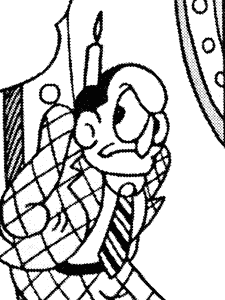
From left to right: Acetylene Lamp, Shunsaku Ban/Hygeoyaji, Kenichi Shikishima

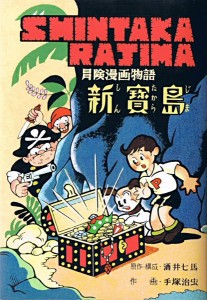
The story’s two scientists are likewise played by major “stars” from the Tezuka troupe. Kenichi Shikishima, hero of New Treasure Island, leads the Mamango expedition. Dr. Shikishima’s youthful spirit, resolve, and courage are contrasted with that of Dr. Butaru Makeru, a mustachioed villain whose cowardice and opportunism precipitate the disaster on Mamango. While Shikishima resolves to visit Mamango “for the sake of world science,” Makeru hints at his selfish motives for participating in the expedition: “If by some chance we meet with something unexpected on that planet, don’t blame me. Heh, heh, heh!” That contrast is also underscored by their terrestrial research as well: while Shikishima’s experiments are intended to help animals achieve human consciousness, Makeru’s experiments are designed for his own personal benefit, with little regard for their greater social or scientific good.

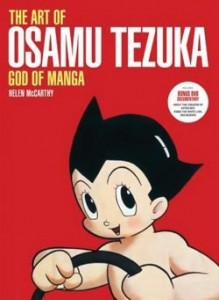
In later works, Tezuka was less schematic in his representations of good and evil, allowing characters to simultaneously embody both. Father Garai, anti-hero of MW, is a good example of this later tendency: Garai is a good man tormented by dark sexual desires, seeking grace even as he sins repeatedly. Black Jack is another, a character whose misanthropy and greed are counterbalanced by a strong reverence for life. As Helen McCarthy observes in The Art of Osamu Tezuka: God of Manga, Black Jack is “sometimes a gentle and compassionate savior, sometimes a cold and unforgiving avenger,” two opposite yet equally human responses to “the inevitability of death.” (McCarthy, 199)

Ayame

Mimio

Lost World also introduces a recurring character type found throughout Tezuka’s work: the artificial life-form. Early in the story, Tezuka introduces us to Mimio, a talking rabbit, and Ayame, a “veggie girl.” Both are the result of scientific experiments: Dr. Shikishima surgically enhanced Mimio’s brain to grant him human intelligence, while Dr. Butamo cultivated Ayame in a laboratory. (Note that Shikishima’s motives seem benevolent; he wants to help animals achieve equal status with humans, whereas Butamo is more interested in making a wife for himself.)

Mimio and Ayame’s quest for humanity is rather baldly presented. In an early chapter, for example, Mimio visits Shikishima’s lab, where a new group of surgically enhanced animals are learning how to think and act like humans. Though the animals’ struggles with language and manners are played for laughs — “Boy, all humans sure do look alike!” exclaims a dog — there’s a definite sense that these creatures’ own desires are being subordinated to Shikishima’s grander mission of animal-human detente. “You’re very being is unique,” one of Shikishima’s colleagues tells his subjects. “Therefore, you should help humans and be a guide to other animals in perpetuum.”

Unlike Mimio, Ayame looks human, even though she is composed entirely of plant material — and that makes her situation more precarious than the rabbit’s. On the one hand, Dr. Butamo wants her to become his wife, threatening to kill her if she refuses to honor his marriage proposal. On the other, some of the characters view Ayame as nothing more than a walking, talking cabbage — and thus a potential food source when the crew’s rations run out. Ayame remains committed to exploring her humanity nonetheless; late in the manga, she and Shikishima have this pointed exchange:

Shikishima: Miss Ayame, surely, you must be surprised to be having so many adventures.You see? The world of humans is full of adventure and wonder!

Ayame: I feel as if I finally understand what things bring the most pleasure and happiness to the hearts of humans!

Shikishima: Well, then, when you return to the laboratory, you should have Mr. Butamo teach you even more, shouldn’t you?

In Mimio and Ayame, it’s not hard to see the inspiration for later characters such as Dororo‘s Hyakkimaru and Black Jack‘s Pinoko, both of whom struggle to reconcile the circumstances of their “birth” with their desire to be fully human.

Perhaps the most striking thing about Lost World is the final act, in which an accident permanently strands Ayame and Shikishima on Mamango. In Tezuka’s original version, Ayame and Shikishima embrace their fate as lovers, but in the Fuji Shobo edition, Tezuka portrayed them as brother and sister. Nonetheless, Tezuka left the final words of the original intact, speculating that in five million years, “when Mamango once again approaches the Earth,” mankind might find a new race of “plant animal people” descended from Ayame and Shikishima.

Similar Adam-and-Eve motifs recur throughout Tezuka’s oeuvre, finding a more sexual and spiritual expression in such mature works as Apollo’s Song and Phoenix: Nostalgia. Nostalgia is a particularly odd and fascinating variation on the theme, as the Adam figure dies early in the story, leaving his pregnant wife alone on a remote space colony. His wife then mates with her own offspring who, in turn, mate with an extraterrestrial life form whose DNA proves essential to rescuing humanity from the brink of extinction. In short, Nostalgia — like Lost World — dares to a imagine a new future for mankind in which other forms of life — terrestrial and extraterrestrial — play an important role in our evolution.

Whether these observations will make Lost World more palatable to a casual reader is debatable; I fully admit that I struggled through its 246 pages, backtracking frequently in a futile effort to understand what was happening. But if you approach Lost World in the same spirit I approached Gershwin’s Blue Monday — as a window into a major artist’s early development — you may find, as I did, a work of astonishing vibrancy, contradiction, and interest.

Works Cited
“Bet Lost on First Opera.” New York Times. 21 July 1935: II1. Print.
Darnton, Charles. “George White’s Scandals’ Lively and Gorgeous.” New York World 29 Aug. 1922: 11. Print.
McCarthy, Helen, and Osamu Tezuka. The Art of Osamu Tezuka: God of Manga. New York: Abrams ComicArts, 2009. Print.
Schwartz, Charles. Gershwin: His Life and Music. New York: The Bobbs-Merrill Company, Inc., 1973. Print.
Tezuka, Osamu, and Kumar Sivasubramanian. Lost World. Milwaukee, OR: Dark Horse, 2003. Print.

Filed Under: Manga Critic Tagged With: Lostworld, Osamu Tezuka

Manga Artifacts: Osamu Tezuka’s Lost World

February 23, 2012 by Katherine Dacey

Reading Osamu Tezuka’s Lost World (1948) reminded me a formative graduate school experience. I was researching George Gershwin’s Porgy and Bess (1935), when I stumbled across a blistering review of a composition I’d never heard: Blue Monday (1922), a one-act “jazz opera” that Gershwin composed for Paul Whiteman’s Scandals of 1922. After attending its premiere, Charles Darnton, critic for the New York Tribune, pronounced the project a disaster, an ill-advised attempt to transplant the conventions of verismo opera to a Harlem setting. Blue Monday, he opined, was “the most dismal, stupid, and incredible blackface sketch that has probably ever been perpetrated. In it a dusky soprano finally killed her gambling man. She should have shot all her associates the moment they appeared and then turned the pistol on herself.” (Darnton, 11)

Ouch.

The review piqued my interest, however, prompting me to track down a recording of Blue Monday. Judged against Porgy and Bess, it was an inferior work; as Gershwin biographer Charles Schwartz observed, the music was several degrees removed from jazz and ragtime, drawing its cues from Alexander’s Ragtime Band and not The Maple Leaf Rag. (Schwartz, 61) The dramaturgy, too, was weak, conveying little of the Harlem setting. Yet in this early experiment, I could hear glimmerings of Gershwin’s mature style, a conscious effort to bring African-American music to the opera stage. And that excited me.

I had a similar reaction to Lost World, an early, problematic work in the Tezuka canon. First published in 1948, Lost World focuses on a scientific expedition to the fictional planet Mamango, a large, egg-shaped rock that, five million years earlier, had been a part of the Earth. When the scientists arrive on Mamango, they discover a Jurassic landscape carpeted in monstrous ferns, populated by hungry dinosaurs, and littered with powerful “energy stones.” The financial and scientific value of their discoveries, however, soon cause a deadly rift within the expedition party.

The execution of Lost World will come as a shock to readers familiar with Tezuka’s mature style. The profusion of subplots, minor characters, and doppelgangers makes the story hard to follow on a moment-to-moment basis; without frequent narrative interventions from the characters, large stretches of Lost World would be incomprehensible. More frustrating still is Tezuka’s over-reliance on dialogue to resolve plot points and reveal motive, even when that information is readily conveyed by the pictures. (“This is payback for you throwing me into the gorge! You get me?!” one character yells as he pummels the person who pushed him off a cliff in the previous scene.) The biggest disappointment, however, is the artwork; most of the panels consist of talking heads, with a handful of dramatic, but disjointed, action scenes interrupting the steady stream of chatter.

Writing about Lost World in the 1980s, Tezuka conceded Lost World‘s shortcomings, attributing them to his age (he was 20) and the circumstances of its publication. As he explained, the work originally ran in an Osaka newspaper, Kansai Yoron, where the target audience was young adults. The two-volume version published by Fuji Shobo, however, was aimed at the children’s market, necessitating substantial changes to the the script. What had been a romance in the original version, for example, was recast as a brother-sister relationship in the Fuji Shobo edition; anything more explicit would have been “absolutely taboo in children’s comics” of the period. (Tezuka, 248)

At the same time, Tezuka touted Lost World as an important milestone in his artistic development. “I thought that at the very least, there was no other comic book like mine, which was like a novel (albeit a very crude one), and had an unhappy ending,” Tezuka explained. (Tezuka 247) A careful inspection of Lost World supports Tezuka’s claim for its significance; whatever its shortcomings, many of the characters and themes of his mature works appear in embryonic form in Lost World.

On the most basic level, Tezuka employs several of his best-known “stars” in Lost World, arranging them in contrasting pairs. Acetylene Lamp, for example, plays an unscrupulous journalist who stows away aboard the expedition’s spaceship so that he can get an exclusive scoop on Mamango — and profit from the mysterious “energy stones” scattered across its surface. Another Tezuka favorite, Shunsaku Ban (a.k.a. Higeoyaji), plays yang to Lamp’s yin; as in many of his other incarnations, Ban is a middle-aged detective whose blustery demeanor camouflages his basic decency. Both characters are motivated by curiosity, but their curiosity compels them in opposite directions: Lamp towards profit, Ban towards truth.

From left to right: Acetylene Lamp, Shunsaku Ban/Hygeoyaji, Kenichi Shikishima

The story’s two scientists are likewise played by major “stars” from the Tezuka troupe. Kenichi Shikishima, hero of New Treasure Island, leads the Mamango expedition. Dr. Shikishima’s youthful spirit, resolve, and courage are contrasted with that of Dr. Butaru Makeru, a mustachioed villain whose cowardice and opportunism precipitate the disaster on Mamango. While Shikishima resolves to visit Mamango “for the sake of world science,” Makeru hints at his selfish motives for participating in the expedition: “If by some chance we meet with something unexpected on that planet, don’t blame me. Heh, heh, heh!” That contrast is also underscored by their terrestrial research as well: while Shikishima’s experiments are intended to help animals achieve human consciousness, Makeru’s experiments are designed for his own personal benefit, with little regard for their greater social or scientific good.

In later works, Tezuka was less schematic in his representations of good and evil, allowing characters to simultaneously embody both. Father Garai, anti-hero of MW, is a good example of this later tendency: Garai is a good man tormented by dark sexual desires, seeking grace even as he sins repeatedly. Black Jack is another, a character whose misanthropy and greed are counterbalanced by a strong reverence for life. As Helen McCarthy observes in The Art of Osamu Tezuka: God of Manga, Black Jack is “sometimes a gentle and compassionate savior, sometimes a cold and unforgiving avenger,” two opposite yet equally human responses to “the inevitability of death.” (McCarthy, 199)

Ayame

Mimio

Lost World also introduces a recurring character type found throughout Tezuka’s work: the artificial life-form. Early in the story, Tezuka introduces us to Mimio, a talking rabbit, and Ayame, a “veggie girl.” Both are the result of scientific experiments: Dr. Shikishima surgically enhanced Mimio’s brain to grant him human intelligence, while Dr. Butamo cultivated Ayame in a laboratory. (Note that Shikishima’s motives seem benevolent; he wants to help animals achieve equal status with humans, whereas Butamo is more interested in making a wife for himself.)

Mimio and Ayame’s quest for humanity is rather baldly presented. In an early chapter, for example, Mimio visits Shikishima’s lab, where a new group of surgically enhanced animals are learning how to think and act like humans. Though the animals’ struggles with language and manners are played for laughs — “Boy, all humans sure do look alike!” exclaims a dog — there’s a definite sense that these creatures’ own desires are being subordinated to Shikishima’s grander mission of animal-human detente. “You’re very being is unique,” one of Shikishima’s colleagues tells his subjects. “Therefore, you should help humans and be a guide to other animals in perpetuum.”

Unlike Mimio, Ayame looks human, even though she is composed entirely of plant material — and that makes her situation more precarious than the rabbit’s. On the one hand, Dr. Butamo wants her to become his wife, threatening to kill her if she refuses to honor his marriage proposal. On the other, some of the characters view Ayame as nothing more than a walking, talking cabbage — and thus a potential food source when the crew’s rations run out. Ayame remains committed to exploring her humanity nonetheless; late in the manga, she and Shikishima have this pointed exchange:

Shikishima: Miss Ayame, surely, you must be surprised to be having so many adventures.You see? The world of humans is full of adventure and wonder!

Ayame: I feel as if I finally understand what things bring the most pleasure and happiness to the hearts of humans!

Shikishima: Well, then, when you return to the laboratory, you should have Mr. Butamo teach you even more, shouldn’t you?

In Mimio and Ayame, it’s not hard to see the inspiration for later characters such as Dororo‘s Hyakkimaru and Black Jack‘s Pinoko, both of whom struggle to reconcile the circumstances of their “birth” with their desire to be fully human.

Perhaps the most striking thing about Lost World is the final act, in which an accident permanently strands Ayame and Shikishima on Mamango. In Tezuka’s original version, Ayame and Shikishima embrace their fate as lovers, but in the Fuji Shobo edition, Tezuka portrayed them as brother and sister. Nonetheless, Tezuka left the final words of the original intact, speculating that in five million years, “when Mamango once again approaches the Earth,” mankind might find a new race of “plant animal people” descended from Ayame and Shikishima.

Similar Adam-and-Eve motifs recur throughout Tezuka’s oeuvre, finding a more sexual and spiritual expression in such mature works as Apollo’s Song and Phoenix: Nostalgia. Nostalgia is a particularly odd and fascinating variation on the theme, as the Adam figure dies early in the story, leaving his pregnant wife alone on a remote space colony. His wife then mates with her own offspring who, in turn, mate with an extraterrestrial life form whose DNA proves essential to rescuing humanity from the brink of extinction. In short, Nostalgia — like Lost World — dares to a imagine a new future for mankind in which other forms of life — terrestrial and extraterrestrial — play an important role in our evolution.

Whether these observations will make Lost World more palatable to a casual reader is debatable; I fully admit that I struggled through its 246 pages, backtracking frequently in a futile effort to understand what was happening. But if you approach Lost World in the same spirit I approached Gershwin’s Blue Monday — as a window into a major artist’s early development — you may find, as I did, a work of astonishing vibrancy, contradiction, and interest.

Works Cited
“Bet Lost on First Opera.” New York Times. 21 July 1935: II1. Print.
Darnton, Charles. “George White’s Scandals’ Lively and Gorgeous.” New York World 29 Aug. 1922: 11. Print.
McCarthy, Helen, and Osamu Tezuka. The Art of Osamu Tezuka: God of Manga. New York: Abrams ComicArts, 2009. Print.
Schwartz, Charles. Gershwin: His Life and Music. New York: The Bobbs-Merrill Company, Inc., 1973. Print.
Tezuka, Osamu, and Kumar Sivasubramanian. Lost World. Milwaukee, OR: Dark Horse, 2003. Print.

Filed Under: Manga, Manga Critic, REVIEWS Tagged With: Lostworld, Osamu Tezuka

MMF: An Introduction to Osamu Tezuka

February 19, 2012 by Katherine Dacey 15 Comments

February 9, 2012 marked the twenty-third anniversary of Osamu Tezuka’s death. His career in the manga industry spanned five decades, from the early days of the akahon market to the industry’s zenith, when comics accounted for nearly 40% of all books sold in Japan. Over the course of his life, Tezuka produced more than 150,000 pages of manga; created such iconic characters as Astro Boy, Kimba the White Lion, and Black Jack; launched a manga magazine and an animation studio; and mentored such artists as Hiroshi Fujimoto and Shotaro Ishimonori. The extent of Tezuka’s influence on Japanese visual culture is hard to understate; few modern creators have had such a profound impact on the medium in which they worked.

In Dreamland Japan: Writings on Modern Manga (1996), Frederik L. Schodt argues that Tezuka’s most important legacy was the story comic, “an intricate novelistic format” that anticipated the long-running stories in Weekly Shonen Jump, Morning, and Nakayoshi (234). Tezuka’s first story comics — New Treasure Island (1947), Jungle Emperor (1950-54), Astro Boy (1952-68), Princess Knight (1953-56) — were aimed at children, but his later work demonstrated that the format was well-suited to exploring adult themes, too.

Tezuka also pioneered a new way of drawing stories. As Schodt explains, Tezuka borrowed techniques from Walt Disney films “to create a sense of motion with his page layouts” — in essence, to bring the movie-going experience to the printed page (235). Tezuka’s example proved exceptionally powerful; the dynamic, visually-driven storytelling of Astro Boy and New Treasure Island continue to influence contemporary artists, especially in the world of shonen manga.

Tezuka would have been pleased, I think, to see how widely his stories are being read today, both in Japan and throughout Asia, the Americas, and Europe. In the United States alone, eighteen of Tezuka’s manga have been adapted for English-speaking audiences, Astro Boy, Black Jack (1973-83), and Phoenix (1956-89) among them.

Through these translations, I’ve developed a complicated relationship with Tezuka’s work. I love his art: his fluid layouts, his brilliant caricatures, his tripped-out dream sequences, and Freudian sex scenes. I also love his ambition: many of his stories — especially from the later stages of his career — have the sweep and social conscience of a Tolstoy novel, but the lurid, trashy soul of a Brian DePalma thriller.

Whenever I read one of Tezuka’s books, however, I’m reminded of the social, cultural, and temporal distance between his world and mine, even when I’m engrossed in the story and invested in the characters. Reading Swallowing the Earth (1968), for example, I was confronted by images that upset me. As a feminist, I winced at Tezuka’s depiction of Polynesian women as Hottentot Venuses, libidinous monsters with enormous lips and grotesquely rounded bodies. As an American, I struggled through Earth‘s racial warfare subplot with a mixture of dismay and horror: how could someone as fundamentally humane as Tezuka unwittingly tap into white supremacist fantasy when dramatizing the injustice of segregation?

Even when it infuriates me — as passages in Apollo’s Song (1970), Ayako (1972-73), and The Book of Human Insects (1970) have done — I’m still irresistibly drawn to his work. I admire Tezuka’s willingness to wrestle with the dark side of human nature, to create heroes and villains of genuine moral complexity. I also admire Tezuka’s playful side: his tendency to break the fourth wall, write himself into stories, bestow Dickensian names on his characters, and draw elaborate crowd scenes that would have made Busby Berkeley green with envy.

In the last ten years, there’s been an explosion of English-language articles and books aimed at readers like me, fans who recognize Tezuka’s important role in shaping the modern anime and manga industries, but want to learn more about his life, career, and artistic process. Helen McCarthy’s The Art of Osamu Tezuka: God of Manga (2009) is an excellent example of this trend; though she meticulously explains Tezuka’s star system and elucidates recurring themes in his work, she argues that Tezuka was “first and foremost a maker of popular entertainment,” and should be understood as such.

The complexity and size of Tezuka’s oeuvre has inspired American scholars to write about him as well. Flip through a volume of Mechademia, or browse the Asian Studies aisle at your local bookstore, and you’ll find scholars writing about Tezuka’s artistic legacy from a variety of perspectives. Some of these works — such as Natsu Onoda Power’s God of Comics: Osamu Tezuka and the Creation of Post-WWII Manga (2009) — make a conscious effort to bridge the gap between Ivory Tower and fandom, while others are clearly intended for academic audiences.

The goal of this month’s Manga Movable Feast is to create a space where all of Tezuka’s admirers — fans, critics, and scholars — can interact, sharing their reactions to his work, assessing his artistic legacy, reviewing titles new and old, and engaging with the messier, more problematic aspects of his work. Anyone can contribute: all you need to do is send me a link to a Tezuka-themed essay, podcast, or review, and I’ll feature it in one of my daily round-ups. (Email or Twitter are the best way to submit links; Twitter submissions should be directed to @manga_critic.) Note that the feast runs from today (Sunday, February 19th) through Saturday, February 25th. For more information, please visit the Osamu Tezuka MMF archive.

This is an expanded version of an essay that appeared at The Manga Critic on 12/14/10.

Filed Under: Manga Critic Tagged With: Manga Movable Feast, Osamu Tezuka

An Introduction to Osamu Tezuka

February 19, 2012 by Katherine Dacey

February 9, 2012 marked the twenty-third anniversary of Osamu Tezuka’s death. His career in the manga industry spanned five decades, from the early days of the akahon market to the industry’s zenith, when comics accounted for nearly 40% of all books sold in Japan. Over the course of his life, Tezuka produced more than 150,000 pages of manga; created such iconic characters as Astro Boy, Kimba the White Lion, and Black Jack; launched a manga magazine and an animation studio; and mentored such artists as Hiroshi Fujimoto and Shotaro Ishimonori. The extent of Tezuka’s influence on Japanese visual culture is hard to understate; few modern creators have had such a profound impact on the medium in which they worked.

In Dreamland Japan: Writings on Modern Manga (1996), Frederik L. Schodt argues that Tezuka’s most important legacy was the story comic, “an intricate novelistic format” that anticipated the long-running stories in Weekly Shonen Jump, Morning, and Nakayoshi (234). Tezuka’s first story comics — New Treasure Island (1947), Jungle Emperor (1950-54), Astro Boy (1952-68), Princess Knight (1953-56) — were aimed at children, but his later work demonstrated that the format was well-suited to exploring adult themes, too.

Tezuka also pioneered a new way of drawing stories. As Schodt explains, Tezuka borrowed techniques from Walt Disney films “to create a sense of motion with his page layouts” — in essence, to bring the movie-going experience to the printed page (235). Tezuka’s example proved exceptionally powerful; the dynamic, visually-driven storytelling of Astro Boy and New Treasure Island continue to influence contemporary artists, especially in the world of shonen manga.

Tezuka would have been pleased, I think, to see how widely his stories are being read today, both in Japan and throughout Asia, the Americas, and Europe. In the United States alone, eighteen of Tezuka’s manga have been adapted for English-speaking audiences, Astro Boy, Black Jack (1973-83), and Phoenix (1956-89) among them.

Through these translations, I’ve developed a complicated relationship with Tezuka’s work. I love his art: his fluid layouts, his brilliant caricatures, his tripped-out dream sequences, and Freudian sex scenes. I also love his ambition: many of his stories — especially from the later stages of his career — have the sweep and social conscience of a Tolstoy novel, but the lurid, trashy soul of a Brian DePalma thriller.

Whenever I read one of Tezuka’s books, however, I’m reminded of the social, cultural, and temporal distance between his world and mine, even when I’m engrossed in the story and invested in the characters. Reading Swallowing the Earth (1968), for example, I was confronted by images that upset me. As a feminist, I winced at Tezuka’s depiction of Polynesian women as Hottentot Venuses, libidinous monsters with enormous lips and grotesquely rounded bodies. As an American, I struggled through Earth‘s racial warfare subplot with a mixture of dismay and horror: how could someone as fundamentally humane as Tezuka unwittingly tap into white supremacist fantasy when dramatizing the injustice of segregation?

Even when it infuriates me — as passages in Apollo’s Song (1970), Ayako (1972-73), and The Book of Human Insects (1970) have done — I’m still irresistibly drawn to his work. I admire Tezuka’s willingness to wrestle with the dark side of human nature, to create heroes and villains of genuine moral complexity. I also admire Tezuka’s playful side: his tendency to break the fourth wall, write himself into stories, bestow Dickensian names on his characters, and draw elaborate crowd scenes that would have made Busby Berkeley green with envy.

In the last ten years, there’s been an explosion of English-language articles and books aimed at readers like me, fans who recognize Tezuka’s important role in shaping the modern anime and manga industries, but want to learn more about his life, career, and artistic process. Helen McCarthy’s The Art of Osamu Tezuka: God of Manga (2009) is an excellent example of this trend; though she meticulously explains Tezuka’s star system and elucidates recurring themes in his work, she argues that Tezuka was “first and foremost a maker of popular entertainment,” and should be understood as such.

The complexity and size of Tezuka’s oeuvre has inspired American scholars to write about him as well. Flip through a volume of Mechademia, or browse the Asian Studies aisle at your local bookstore, and you’ll find scholars writing about Tezuka’s artistic legacy from a variety of perspectives. Some of these works — such as Natsu Onoda Power’s God of Comics: Osamu Tezuka and the Creation of Post-WWII Manga (2009) — make a conscious effort to bridge the gap between Ivory Tower and fandom, while others are clearly intended for academic audiences.

The goal of this month’s Manga Movable Feast is to create a space where all of Tezuka’s admirers — fans, critics, and scholars — can interact, sharing their reactions to his work, assessing his artistic legacy, reviewing titles new and old, and engaging with the messier, more problematic aspects of his work. Anyone can contribute: all you need to do is send me a link to a Tezuka-themed essay, podcast, or review, and I’ll feature it in one of my daily round-ups. (Email or Twitter are the best way to submit links; Twitter submissions should be directed to @manga_critic.) Note that the feast runs from today (Sunday, February 19th) through Saturday, February 25th. For more information, please visit the Osamu Tezuka MMF archive.

This is an expanded version of an essay that appeared at The Manga Critic on 12/14/10.

Filed Under: Manga, Manga Critic Tagged With: Manga Movable Feast, Osamu Tezuka

Soulless: The Manga, Vol. 1

February 18, 2012 by Katherine Dacey 17 Comments

Soulless is saucy in the best possible sense of the word: it’s bold and smart, with a heroine so irrepressible you can see why author Gail Carriger couldn’t tell Alexia Tarabotti’s story in just one book.

As fans of Carriger’s Parasol Protectorate novels know, Alexia is a sharp-tongued woman living in Victorian London — or rather, a steampunk version of Victorian London in which vampires and werewolves co-exist with the “daylight” (read: “human”) world. As she would in the real nineteenth-century England, Alexia faces pressure to marry, a prospect complicated by her age — she’s twenty-six — her ethnicity — her father was Italian — and her prodigious intellect. Alexia has one additional strike against her, albeit one that doesn’t affect her marriageability: she’s soulless, a “preternatural” being who can neutralize the vampires and werewolves’ power, temporarily reducing them to mortal form.

Plot-wise, Soulless is an agreeable mishmash of Young Sherlock Holmes, Underworld, and Mansfield Park, with a dash of Jules Verne for good measure. The basic storyline is a whodunnit: Alexia becomes the prime suspect in a string of supernatural disappearances around London, and must collaborate with Lord Collan Maccon, a belligerent werewolf detective, to clear her name. What they discover in the course of their investigation is a grand conspiracy worthy of an Indiana Jones movie, complete with evil scientists, vampire “hives,” sinister-looking laboratories, and a golem; all that’s missing is the Ark of the Covenant and a few Nazi generals.

At the same time, Soulless is a romance. Alexia would make a swell Austen heroine, as she faces the kind of obstacles to marriage that would elicit sympathy from the Dashwood girls and Fanny Price. The greatest of these hurdles isn’t her name or her age, however; it’s Alexia’s firm conviction that marriage should not be a socially or financially expedient union, but a true partnership. Paging Elizabeth Bennett!

Given how many genres are present in the text — it’s a crime procedural, a thriller, an urban fantasy, a comedy of manners, and a bodice ripper — it’s astonishing how well all the tropes mesh. Some of that success can be attributed to the dialogue. The characters’ peppery exchanges are an affectionate parody of British costume dramas; substitute “soulless” for “penniless,” and Alexia could easily be a character in Sense and Sensibility. A few passages strain too hard for effect — would anyone have really chosen “comestibles” over “food” when complaining about a party? — but for the most part, Carriger finds a convincing tone that’s neither faux-archaic nor casually contemporary.

Soulless’ other great strength is its appealing cast of characters. Alexia and Maccon are clearly the stars of this imaginary universe; anyone who’s read Middlemarch or Emma will immediately recognize that Alexia and Maccon are The Main Couple, as they spend most of volume one denying their mutual attraction and trading zingers. (“I may be a werewolf and Scottish, but despite what you may have read about both, we are not cads!” Maccon declares in a fit of Darcy-esque pique.) In the spirit of the best nineteenth-century novels, however, Carriger situates her lovebirds inside a vibrant community, albeit one inhabited by grumpy werewolves and flamboyant vampires in lieu of parsons, baronets, and virtuous maidens. Though these supporting characters don’t always get the screen time they deserve, Lord Akeldama, Professor Lyall, and Ivy Hisselpenny enliven the narrative with sharp observations and sound advice for Alexia and Maccon.

Manga artist Rem, best-known for her work on Vampire Kisses, does a fine job of translating Carriger’s prose into pictures. Though Rem’s attention to period detail is evident in the characters’ sumptuous costumes and lavishly furnished parlors, her meticulousness extends to the action sequences as well. An early fight between Alexia and a vampire is expertly staged, making effective use of dramatic camera angles and overturned furniture to capture the intensity of their struggle. Rem also manages to fold many of Carriger’s steampunk flourishes — zeppelins, steam-powered carriages, “glassicals” — into the story without overwhelming the eye; if anything, I found the subtlety of the steampunk elements an improvement on the novel, where the object descriptions sometimes felt like tangents.

The only drawback to the artwork is Alexia herself. In the novels, Carriger describes her as plain and full-figured; in the manga, however, Rem depicts Alexia as a buxom, wasp-waisted babe with a pouty mouth and a pretty face. That transformation is certainly in keeping with manga aesthetics — even the plainest young characters are usually pleasing to the eye — but not with the source material; as a reader, one of the real pleasures of Soulless is watching the heroine triumph on the strength of her character and brains, not the size of her bust.

On the whole, however, Rem has succeeded in taking a justifiably popular novel and making it work in a different medium on its own terms; readers new to Carriger’s work will be as enchanted with this cheeky, fun adaptation as her hardcore fans. Recommended.

Review copy provided by Yen Press. Volume one of Soulless: The Manga will be released in March 2012.

SOULLESS: THE MANGA, VOL. 1 • STORY BY GAIL CARRIGER, ART AND ADAPTATION BY REM • YEN PRESS •  208 pp. • RATING: OLDER TEEN (VIOLENCE, SEXUAL SITUATIONS, NUDITY)

Filed Under: Manga Critic Tagged With: Gail Carriger, Rem, Soulless, steampunk, Vampires, Werewolves, yen press

Soulless: The Manga, Vol. 1

February 18, 2012 by Katherine Dacey

Soulless is saucy in the best possible sense of the word: it’s bold and smart, with a heroine so irrepressible you can see why author Gail Carriger couldn’t tell Alexia Tarabotti’s story in just one book.

As fans of Carriger’s Parasol Protectorate novels know, Alexia is a sharp-tongued woman living in Victorian London — or rather, a steampunk version of Victorian London in which vampires and werewolves co-exist with the “daylight” (read: “human”) world. As she would in the real nineteenth-century England, Alexia faces pressure to marry, a prospect complicated by her age — she’s twenty-six — her ethnicity — her father was Italian — and her prodigious intellect. Alexia has one additional strike against her, albeit one that doesn’t affect her marriageability: she’s soulless, a “preternatural” being who can neutralize the vampires and werewolves’ power, temporarily reducing them to mortal form.

Plot-wise, Soulless is an agreeable mishmash of Young Sherlock Holmes, Underworld, and Mansfield Park, with a dash of Jules Verne for good measure. The basic storyline is a whodunnit: Alexia becomes the prime suspect in a string of supernatural disappearances around London, and must collaborate with Lord Collan Maccon, a belligerent werewolf detective, to clear her name. What they discover in the course of their investigation is a grand conspiracy worthy of an Indiana Jones movie, complete with evil scientists, vampire “hives,” sinister-looking laboratories, and a golem; all that’s missing is the Ark of the Covenant and a few Nazi generals.

At the same time, Soulless is a romance. Alexia would make a swell Austen heroine, as she faces the kind of obstacles to marriage that would elicit sympathy from the Dashwood girls and Fanny Price. The greatest of these hurdles isn’t her name or her age, however; it’s Alexia’s firm conviction that marriage should not be a socially or financially expedient union, but a true partnership. Paging Elizabeth Bennett!

Given how many genres are present in the text — it’s a crime procedural, a thriller, an urban fantasy, a comedy of manners, and a bodice ripper — it’s astonishing how well all the tropes mesh. Some of that success can be attributed to the dialogue. The characters’ peppery exchanges are an affectionate parody of British costume dramas; substitute “soulless” for “penniless,” and Alexia could easily be a character in Sense and Sensibility. A few passages strain too hard for effect — would anyone have really chosen “comestibles” over “food” when complaining about a party? — but for the most part, Carriger finds a convincing tone that’s neither faux-archaic nor casually contemporary.

Soulless’ other great strength is its appealing cast of characters. Alexia and Maccon are clearly the stars of this imaginary universe; anyone who’s read Middlemarch or Emma will immediately recognize that Alexia and Maccon are The Main Couple, as they spend most of volume one denying their mutual attraction and trading zingers. (“I may be a werewolf and Scottish, but despite what you may have read about both, we are not cads!” Maccon declares in a fit of Darcy-esque pique.) In the spirit of the best nineteenth-century novels, however, Carriger situates her lovebirds inside a vibrant community, albeit one inhabited by grumpy werewolves and flamboyant vampires in lieu of parsons, baronets, and virtuous maidens. Though these supporting characters don’t always get the screen time they deserve, Lord Akeldama, Professor Lyall, and Ivy Hisselpenny enliven the narrative with sharp observations and sound advice for Alexia and Maccon.

Manga artist Rem, best-known for her work on Vampire Kisses, does a fine job of translating Carriger’s prose into pictures. Though Rem’s attention to period detail is evident in the characters’ sumptuous costumes and lavishly furnished parlors, her meticulousness extends to the action sequences as well. An early fight between Alexia and a vampire is expertly staged, making effective use of dramatic camera angles and overturned furniture to capture the intensity of their struggle. Rem also manages to fold many of Carriger’s steampunk flourishes — zeppelins, steam-powered carriages, “glassicals” — into the story without overwhelming the eye; if anything, I found the subtlety of the steampunk elements an improvement on the novel, where the object descriptions sometimes felt like tangents.

The only drawback to the artwork is Alexia herself. In the novels, Carriger describes her as plain and full-figured; in the manga, however, Rem depicts Alexia as a buxom, wasp-waisted babe with a pouty mouth and a pretty face. That transformation is certainly in keeping with manga aesthetics — even the plainest young characters are usually pleasing to the eye — but not with the source material; as a reader, one of the real pleasures of Soulless is watching the heroine triumph on the strength of her character and brains, not the size of her bust.

On the whole, however, Rem has succeeded in taking a justifiably popular novel and making it work in a different medium on its own terms; readers new to Carriger’s work will be as enchanted with this cheeky, fun adaptation as her hardcore fans. Recommended.

Review copy provided by Yen Press. Volume one of Soulless: The Manga will be released in March 2012.

SOULLESS: THE MANGA, VOL. 1 • STORY BY GAIL CARRIGER, ART AND ADAPTATION BY REM • YEN PRESS •  208 pp. • RATING: OLDER TEEN (VIOLENCE, SEXUAL SITUATIONS, NUDITY)

Filed Under: Manga, Manga Critic, REVIEWS Tagged With: Gail Carriger, Rem, Soulless, steampunk, Vampires, Werewolves, yen press

  • « Go to Previous Page
  • Page 1
  • Interim pages omitted …
  • Page 12
  • Page 13
  • Page 14
  • Page 15
  • Page 16
  • Interim pages omitted …
  • Page 39
  • Go to Next Page »
 | Log in
Copyright © 2010 Manga Bookshelf | Powered by WordPress & the Genesis Framework