• Skip to primary navigation
  • Skip to main content
  • Skip to primary sidebar
  • Home
  • About Us
    • Privacy Policy
    • Comment Policy
    • Disclosures & Disclaimers
  • Resources
    • Links, Essays & Articles
    • Fandomology!
    • CLAMP Directory
    • BlogRoll
  • Features & Columns
    • 3 Things Thursday
    • Adventures in the Key of Shoujo
    • Bit & Blips (game reviews)
    • BL BOOKRACK
    • Bookshelf Briefs
    • Bringing the Drama
    • Comic Conversion
    • Fanservice Friday
    • Going Digital
    • It Came From the Sinosphere
    • License This!
    • Magazine no Mori
    • My Week in Manga
    • OFF THE SHELF
    • Not By Manga Alone
    • PICK OF THE WEEK
    • Subtitles & Sensibility
    • Weekly Shonen Jump Recaps
  • Manga Moveable Feast
    • MMF Full Archive
    • Yun Kouga
    • CLAMP
    • Shojo Beat
    • Osamu Tezuka
    • Sailor Moon
    • Fruits Basket
    • Takehiko Inoue
    • Wild Adapter
    • One Piece
    • After School Nightmare
    • Karakuri Odette
    • Paradise Kiss
    • The Color Trilogy
    • To Terra…
    • Sexy Voice & Robo
  • Browse by Author
    • Sean Gaffney
    • Anna Neatrour
    • Michelle Smith
    • Katherine Dacey
    • MJ
    • Brigid Alverson
    • Travis Anderson
    • Phillip Anthony
    • Derek Bown
    • Jaci Dahlvang
    • Angela Eastman
    • Erica Friedman
    • Sara K.
    • Megan Purdy
    • Emily Snodgrass
    • Nancy Thistlethwaite
    • Eva Volin
    • David Welsh
  • MB Blogs
    • A Case Suitable For Treatment
    • Experiments in Manga
    • MangaBlog
    • The Manga Critic
    • Manga Report
    • Soliloquy in Blue
    • Manga Curmudgeon (archive)

Manga Bookshelf

Discussion, Resources, Roundtables, & Reviews

Manga Critic

Dream Fossil: The Complete Stories of Satoshi Kon

January 6, 2017 by Katherine Dacey

Dream Fossil is a window into a crucial stage in Satoshi Kon’s development: the six-year period between the publication of his first short story (1984) and his first long-form manga (1990). Readers may be astonished by Kon’s undisguised homage to Katsuhiro Otomo, and the flaws in his storytelling technique. Yet Dream Fossil is not simply a collection of juvenilia; these stories represent Kon’s first meaningful attempt to grapple with the themes that define his mature work, from Perfect Blue and Tokyo Godfathers to Paranoia Agent and Paprika.

Consider “Carve” and “Toriko,” two of Kon’s earliest works. Both take place in dystopian societies that stress conformity and obedience over individualism and free will–an ideal set-up for exploring the boundaries between reality and illusion. Though Kon delineates these boundaries more baldly in “Carve” and “Toriko” than in his later films, all of Kon’s characters exist in a false state of consciousness with only shattering acts of violence forcing them to question what they think is real. These early stories also suggest Otomo’s strong influence on Kon; “Carve,” in particular, feels like a compressed retelling of Akira, as both feature a young male protagonist whose extrasensory powers turn him into God-like being.

“Beyond the Sun” and “Joyful Bell” are another instructive pairing. Both stories evoke the humanist spirit of Tokyo Godfathers in their fond, funny depictions of two city-dwellers who temporarily escape the confines of their daily routines. As in Tokyo Godfathers, the urban landscape proves an essential component of both stories; Kon treats the city as a playground where adults can shed the burdens of age, failure, and loneliness to recover their optimism and youthful wonder.

Other stories work well on their own terms. “Guests,” a cautionary tale about real estate, skillfully blends humor and horror, while “Picnic,” one of Dream Fossil‘s briefest selections, depicts the sepulchral beauty of an underwater city. At the other end of the spectrum are Kon’s coming-of-age stories “Horseplay,” “Summer of Anxiety,” and “Day Has Dawned,” all of which suffer from tonal schizophrenia, see-sawing between wacky hijinks and meaningful lessons about adulthood. This combination might have worked in a longer format, but Kon’s characters are so underdeveloped that they never register as distinct individuals who are motivated by their own beliefs, fears, and desires.

If pressed to say whether I “liked” Dream Fossil, I’d be reluctant to give a simple yes-or-no answer. It’s difficult to overlook the rubbery faces and clumsy internal transitions in the volume’s weakest stories, or Kon’s flagrant efforts to cop Otomo’s style. Yet many of the stories feature the kind of arresting sequences, amusing plot twists, and flashes of genuine imagination that are hallmarks of Kon’s best films, making it difficult to dismiss this uneven body of work as “good,” “bad,” or “okay.”

Dream Fossil: The Complete Stories of Satoshi Kon
By Satoshi Kon
No rating
Vertical Comics, $24.95

This review originally appeared at MangaBlog on June 19, 2015.
Filed Under: Manga, Manga Critic, REVIEWS Tagged With: Satoshi Kon, Short Stories, vertical

One-Punch Man, Vols. 1-2

January 6, 2017 by Katherine Dacey

In a scene that would surely please Jack Kirby, One-Punch Man opens with a pow! splat! and boom!, as Saitama, the eponymous hero, goes mano-a-mano with the powerful Vaccine Man, a three-story menace with razor-sharp claws. Though Vaccine Man is formidable, he has a pronounced Achilles’ heel: chattiness. “I exist because of humankind’s constant pollution of the environment!” he tells Saitama. “The Earth is a single living organism! And you humans are the disease-causing germs killing it! The will of the earth gave birth to me so that I may destroy humanity and their insidious civilization!” Vaccine Man is so stunned that Saitama lacks an equally dramatic origin story that he lets down his guard, allowing Saitama to land a deadly right hook.

And so it goes with the other villains in One-Punch Man: Saitama’s unassuming appearance and matter-of-fact demeanor give him a strategic advantage over the preening scientists, cyborg gorillas, were-lions, and giant crabmen who terrorize City Z. Saitama’s sangfroid comes at a cost, however: the media never credit his alter ego with saving the day, instead attributing these victories to more improbable heroes such as Mumen Rider, a timid, helmet-wearing cyclist. Even the acquisition of a sidekick, Genos, does little to boost Saitama’s visibility in a city crawling with would-be heroes and monsters.

If it sounds as if One-Punch Man is shooting fish in a barrel, it is; supermen and shonen heroes, by definition, are a self-parodying lot. (See: capes, spandex, “Wind Scar.”) What inoculates One-Punch Man against snarky superiority is its ability to toe the line between straightforward action and affectionate spoof. It’s jokey and sincere, a combination that proves infectious.

Saitama is key to ONE’s strategy for bridging the action/satire divide: the character dutifully acknowledges tokusatsu cliches while refusing to capitulate to the ones he deems most ridiculous. (In one scene, Saitama counters an opponent’s “Lion Slash: Meteor Power Shower” attack with a burst of “Consecutive Normal Punches.”) ONE’s script is complemented by bold, polished artwork; even if the outcome of a battle is never in question, artist Yusuke Murata dreams up imaginative obstacles to prevent Saitama from defeating his opponents too quickly, or rehashing an earlier confrontation.

Is One-Punch Man worthy of its Eisner nomination? Based on what I’ve read so far, I’d say yes: it’s brisk, breezy, and executed with consummate skill. It may not be the “best” title in the bunch–I’d give the honor to Moyocco Anno’s In Clothes Called Fat–but it’s a lot more fun than either volume of Showa: A History of Japan… Scout’s honor.

The verdict:  Highly recommended.

One-Punch Man, Vols. 1-2
Story by ONE, Art by Yusuke Murata
Rated T, for teens
VIZ Media, $6.99 (digital)

This review originally appeared at MangaBlog on June 12, 2015.

Filed Under: Manga, Manga Critic, REVIEWS Tagged With: Comedy, one punch man, Shonen Jump, VIZ

Short Takes: Food Wars, Manga Dogs, and Yukarism

January 6, 2017 by Katherine Dacey

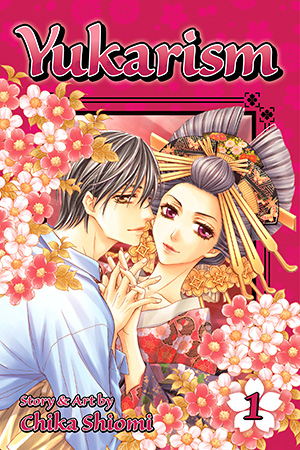
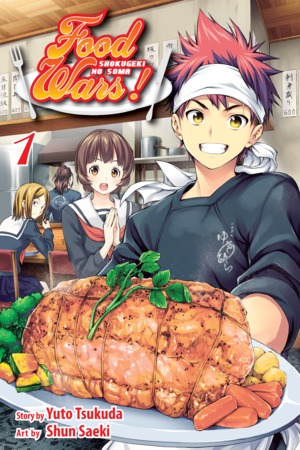
Did you receive an Amazon or RightStuf gift certificate this holiday? If so, this post is for you! Below, I’ve reviewed the first volumes of three series that debuted in 2014, offering a quick-and-dirty assessment of each. Already read Food Wars? Fear not—I’ve also tackled Manga Dogs, a comedy about a teen manga artist, and Yukarism, a time-traveling, gender-bendering manga from Chika Shiomi (Canon, Yurara).

thumb-10857-FDW_01_webFood Wars, Vol. 1
Story by Yuto Tsukada, Art by Shun Saeki
Rated T+, for Older Teens
VIZ Manga, $9.99

Food Wars begins with an only-in-manga scenario: Soma Yukihira’s dad shutters the family’s greasy spoon restaurant and lights out for America, leaving his son behind. With no place to go, Soma enrolls at Totsuki Culinary Academy, a hoity-toity cooking school that prides itself on its wealthy alumnae, rigorous curriculum, and high attrition rate. Soma’s working-class background is a major handicap in this environment, but his can-do attitude and culinary instincts allow him to triumph in difficult situations, whether he’s salvaging an over-salted pot roast or wowing an unscrupulous developer with a simple potato dish.

In theory, I ought to hate Food Wars for its cartoonish characters and abundant cheesecake, two qualities I generally despise in a manga. But here’s the thing: it’s fun. Soma repeatedly shows up bullies and snobs with his ability to transform everyday dishes into haute cuisine, proving that good food doesn’t need to be fancy. Though Soma’s foes are stock types—the Busty Bitch, the Rich Mean Boy, the Teacher With Impossibly High Standards—Shun Sakei’s crisp caricatures make them seem like fresh creations. I wish I could say the same for Sakei’s abundant fanservice, which quickly wears out its welcome with porny images of women enjoying Soma’s cooking. These pin-up moments are supposed to be funny, I guess, but the heavy emphasis on heaving cleavage and bare skin seems more like a concession to teenage male taste than an organic part of the story.

The verdict: I can’t decide if Food Wars is a guilty pleasure or a hate read, but I’ve just purchased volumes 2-4.

Manga Dogs 1Manga Dogs, Vol. 1
By Ema Toyama
Rated T, for Teens
Kodansha Comics, $10.99

Manga Dogs has a terrific premise: a teenage artist decides to enroll in her school’s manga program, only to discover that her teacher is inept, and her classmates are pretty-boy otakus with no skill or work ethic. When Kanna’s classmates discover that she’s actually a published artist, Fumio, Fujio, and Shota glom onto her in hopes of breaking into the business—even though her debut series is on the verge of being cancelled.

With such a ripe set-up, it’s a pity that Manga Dogs is DOA. Part of the problem is that the script panders to the reader at every turn, whether it’s poking fun at reverse-harem tropes or saddling the characters with pun-tastic names inspired by famous manga creators. The author spends too much time patting the reader on the back for “getting” the jokes and not enough time writing genuinely funny scenarios or imbuing her characters with more than one personality trait each. The other issue is pacing: the story and artwork are both frenetic, with characters screaming, jumping, and flapping their arms on almost every page. By the end of the third chapter, I felt as if someone had beaten me up for my lunch money while asking me, “Do you think I’m funny? No? Now do you think I’m funny?”

The verdict: Just say no.

1421575906Yukarism, Vol. 1
By Chika Shiomi
Rated T, for Teen
VIZ Media, $9.99

Yukarism combines the supernatural elements of Rasetsu with the historical drama of Sakuran, then adds a dash of gender-bending weirdness for good measure. The story revolves around Yukari, a best-selling author whose novels explore the history of Edo’s red-light district. Though fans attribute the abundant details in his writing to research, Yukari has an even better strategy for learning about the past: he visits it! When he returns to the 1800s, however, Yukari becomes Yumurasaki, a top-earning oiran (or courtesan) enmeshed in a web of political intrigue, lust, and violence.

Given the complexity of the plot, it’s not surprising that the first volume of Yukarism is a bumpy ride. The tone see-saws between broad physical comedy and brooding melodrama, making it difficult to know if Yukari’s plight is being played for laughs or sniffles. The script, on the other hand, is too pointed; manga-ka Chika Shiomi is so intent on telling us what Yukari is thinking and seeing that she forgets the old dictum about showing, not telling. The same kind of editorial interventions result in at least one character waxing profusely about how handsome and cool Yukari is, just in case we haven’t realized that he’s supposed to be handsome and cool. Now that the basic parameters of the story have been established, however, Shiomi can dispense with the heavy-handed dialogue and do what she does best: write sudsy supernatural romances with beautiful characters in beautiful costumes.

The verdict: Volume two should be a pure guilty pleasure.

These reviews originally appeared at MangaBlog on January 2, 2015.

Filed Under: Classic Manga Critic, Manga, Manga Critic, REVIEWS Tagged With: Cooking and Food, kodansha, shojo, Shonen, VIZ

Assassination Classroom, Vol. 1

January 6, 2017 by Katherine Dacey

Americans steadfastly believe that all students need to succeed are a few good teachers—think of how many movies you’ve seen about an unorthodox educator who helps a group of misfits, losers, or underachievers realize their full potential against all odds. Perhaps that’s why American publishers hesitated before licensing Assassination Classroom, a comedy that outwardly conforms to the tenets of the genre while poking fun at its hoariest cliches.

Assassination Classroom‘s star teacher is Koro-sensei, a super-powered alien who can wipe out an army with a swish of a tentacle. His students are class 3-E, the troublemakers and flunkies of Kunugigaoka Junior High School. Instead of studying calculus or Shakespeare, however, Koro-sensei’s charges are learning how to kill him and save Earth in the process—in other words, it’s To Sir With Lethal Force.

If the script isn’t quite as edgy as my summary suggests, Assassination Classroom scores points for the sheer ridiculousness of the premise. Koro-sensei’s relentless enthusiasm and high standards match those of other fictional educators—Michelle Pfeiffer in Dangerous Minds, Robin Williams in Dead Poets Society—but are applied to such activities as shooting and stabbing. He gives the same kind of inspirational speeches that you’d find in those movies, too, reminding his charges that he specifically requested the job because he knows the students’ true potential.

In one scene, for example, timid student Okuda presents Koro-sensei with three deadly potions, imploring him to sample them. “I’m not good at surprise attacks!” she tells him. “But I love chemistry! And I really put my heart and soul into this!” Koro-sensei cheerfully obliges, offering to help Okuda “research a poison that can kill me.” When Okuda proves more skillful at mixing chemicals than persuading her target to drink them, Koro-sensei reminds her that “in order to kill someone, you need to understand how they feel,” skills that she can cultivate through—what else?—reading and writing.

The exchange between Okuda and Koro-sensei is complemented by some of the best visual gags in volume one. One of the poisons, for example, neutralizes Koro-sensei’s Cheshire grin into a flat line, prompting a student to exclaim, “You look like an emoticon!” Although Koro-sensei’s face is the essence of simplicity—a circle with pin-dot eyes and a toothy smile—this subtle tweak of his appearance yields a big pay-off laugh-wise.

At the same time, however, the poison episode illustrates Assassination Classroom‘s biggest flaw: Yusei Matsui wants to have his cake and eat it, too, soft-pedaling the humor with an uplifting, awwww-worthy moment in almost every chapter. Students unironically vow to do their best after Koro-sensei points out the flaws in their technique, saves them from harm, or gives them a pep talk. None of the students harbor a grudge against him—at least not for very long—or question the value of Koro-sensei’s lessons. (Makes you wonder: is Koro-sensei guilty of grade inflation?)

Still, I enjoyed volume one enough to continue with the series, even if Matsui’s efforts to express the Shonen Jump dictum of “friendship, effort, victory” sometimes blunt the edge of his satire.

ASSASSINATION CLASSROOM, VOL. 1 • BY YUSEI MATSUI • RATED T+, FOR OLDER TEENS • VIZ MEDIA

This review originally appeared at MangaBlog on December 18, 2014.

Filed Under: Manga, Manga Critic, REVIEWS Tagged With: Comedy, Shonen Jump Advanced, VIZ, Yusei Matsui

Barakamon, Vol. 1

January 6, 2017 by Katherine Dacey

Barakamon is a textbook fish-out-of-water story: an impatient city slicker finds himself in the country where life is slower, folks are simpler, and meaningful lessons abound. Its hero, Seishuu Handa, is a calligrapher whose fiery temper and skillful but unimaginative work have made him a pariah in Tokyo. His foils are the farmers and fishermen of Gotou, a small island on the southwestern tip of Japan that’s inhabited by an assortment of eccentrics, codgers, and naifs.

If this all sounds a little too familiar, it is; you’ve seen variations on this story at the multiplex, on television, and yes, in manga. (I think I liked it better when it was called Cold Comfort Farm, and starred Kate Beckinsale and Rufus Sewell.) Satsuki Yoshino does her best to infuse the story with enough humor and warmth to camouflage its shopworn elements, throwing in jokes about internet pornography, dead frogs, and bad report cards whenever the story teeters on the brink of sentimentality. The mandates of the genre, however, demand that Handa endure humiliations and have epiphanies with astonishing regularity—1.5 times per chapter, by my calculations.

From time to time, however, Yoshino finds fresh ways to show us Handa’s slow and fitful progress towards redemption. The first chapter provides an instructive example: Handa angrily dismisses his six-year-old neighbor Naru when she declares his calligraphy “just like teachers write.” After seeing Naru’s wounded expression, Handa chastises himself for lashing out at a kid. Handa never musters an apology to Naru, but makes restitution by joining her for a series of small adventures. The experience of swimming in the ocean, scrambling over a wall, and watching a sunset prove liberating, leading Handa to an explosive outburst of creativity punctuated by a few high-flying kicks. (Now that’s what I call action painting.) The results are messy, but the message is clear: Handa has the potential to be a genuine artist if he can connect with his playful side.

Like the story, the artwork is serviceable if not particularly distinctive. Yoshino creates enough variety in her character designs that the reader can easily distinguish one islander from another—an important asset in a story with many supporting players. Yoshino’s grasp of anatomy, however, is less assured. When viewed from the side, for example, Handa’s Tokyo nemesis has a cranium like a gorilla’s and a chest to match; when viewed from above, however, the Director appears small and wizened. Other characters suffer from similar bodily distortions that exaggerate their necks, arms, and torsos, especially when Yoshino attempts to draw them from an unusual vantage point.

Yoshino is more successful at creating a sense of place. Through a few simple but evocative images of the harbor and coastline, she firmly establishes the seaside location. She also uses architectural details to suggest how old the village is; though locals enjoy such modern conveniences as television, their homes look otherwise untouched by modernity. Yoshino is less successful in creating a sense of space, however. It’s unclear, for example, if Naru lives a stone’s throw from Handa’s house—hence her frequent intrusions—or if she lives a mile down the road.

The dialogue, too, plays an important role in establishing the setting. Faced with the difficult task of rendering the Gotou dialect, translators Krista and Karie Shipley chose a broad Southern accent for the local population. That decision neatly illustrates the cultural divide between Handa and his neighbors, but at the cost of nuance; a few jokes that hinge on vocabulary simply can’t be conveyed by this particular adaptation strategy. (The Shipleys’ translation notes are helpful in demystifying these exchanges.) Most of the punchlines, however, need no such editorial interventions to enjoy; certain elements of city slicker/country bumpkin humor transcend culture.

My verdict: Barakamon has enough charm and energy to engage the reader, even if the story isn’t executed with enough precision or subtlety to transcend the basic requirements of the fish-out-of-water genre.

BARAKAMON, VOL. 1 • BY SATSUKI YOSHINO • RATED T, FOR TEENS • YEN PRESS

This review originally appeared at MangaBlog on November 19, 2014.

Filed Under: Manga, Manga Critic, REVIEWS Tagged With: Comedy, Satsuki Yoshino, yen press

Strobe Edge, Vol. 1

October 30, 2012 by Katherine Dacey 3 Comments

One of the most maddening aspects of shojo manga is that it can take 100 or 200 pages for a character to realize what she’s feeling, and another 200 or 300 before she actually tells someone; only the British period drama wrings more tension from its characters’ inability to say what they’re thinking. Strobe Edge, the newest addition to VIZ’s Shojo Beat imprint, isn’t quite as drawn out as Parade’s End or The Remains of the Day, but there are enough meaningful glances, lip quivers, and moist eyes for an entire BBC mini-series.

Strobe Edge focuses on Ninako, a classic shojo everygirl: she’s cute but not gorgeous, bright but not brilliant, liked but not popular. Through a twist of fate, Ninako meets and befriends Ren, her school’s Designated Dreamboat. Ninako is initially happy to be Ren’s pal, but soon finds herself consumed with thoughts about  him: should she tell him how she feels and risk alienating him, or silently resign herself to being his friend?

Author Io Sakisaka certainly evokes the mixture of excitement and fear that grips anyone in the throes of a crush, but she’s less successful at expressing those ideas in a distinctive voice; Ninako is so utterly lacking in personality that everything she thinks and says sounds like a lyric from a Selena Gomez song. (“For some reason, my chest kinda aches,” she muses after one encounter with Ren.) That same blandly polished quality extends to the artwork. Though Sakisaka exercises restraint in her layouts, giving Ninako room to breathe and reflect, her character designs are too ordinary to make much of an impression; I swear I’ve seen this cover before.

Perhaps that’s the point — Sakisaka has created a story and heroine so generic that almost any young teenager could see parallels between her own life and Ninako’s. While that kind of reading experience can be enormously comforting at twelve or thirteen, it’s awfully dull for older readers who need a little more than thousand-mile stares and cryptic conversations to hold our attention; a little subtext or, frankly, context, would make all that angstful withholding more dramatically compelling.

Review copy provided by VIZ Media. Volume one will arrive in stores on November 6, 2012.

STROBE EDGE, VOL. 1 • BY IO SAKISAKA • VIZ MEDIA • 200 pp. • RATING: TEEN (13+)

Filed Under: Manga Critic Tagged With: shojo beat, Strobe Edge, VIZ

Strobe Edge, Vol. 1

October 30, 2012 by Katherine Dacey

One of the most maddening aspects of shojo manga is that it can take 100 or 200 pages for a character to realize what she’s feeling, and another 200 or 300 before she actually tells someone; only the British period drama wrings more tension from its characters’ inability to say what they’re thinking. Strobe Edge, the newest addition to VIZ’s Shojo Beat imprint, isn’t quite as drawn out as Parade’s End or The Remains of the Day, but there are enough meaningful glances, lip quivers, and moist eyes for an entire BBC mini-series.

Strobe Edge focuses on Ninako, a classic shojo everygirl: she’s cute but not gorgeous, bright but not brilliant, liked but not popular. Through a twist of fate, Ninako meets and befriends Ren, her school’s Designated Dreamboat. Ninako is initially happy to be Ren’s pal, but soon finds herself consumed with thoughts about  him: should she tell him how she feels and risk alienating him, or silently resign herself to being his friend?

Author Io Sakisaka certainly evokes the mixture of excitement and fear that grips anyone in the throes of a crush, but she’s less successful at expressing those ideas in a distinctive voice; Ninako is so utterly lacking in personality that everything she thinks and says sounds like a lyric from a Selena Gomez song. (“For some reason, my chest kinda aches,” she muses after one encounter with Ren.) That same blandly polished quality extends to the artwork. Though Sakisaka exercises restraint in her layouts, giving Ninako room to breathe and reflect, her character designs are too ordinary to make much of an impression; I swear I’ve seen this cover before.

Perhaps that’s the point — Sakisaka has created a story and heroine so generic that almost any young teenager could see parallels between her own life and Ninako’s. While that kind of reading experience can be enormously comforting at twelve or thirteen, it’s awfully dull for older readers who need a little more than thousand-mile stares and cryptic conversations to hold our attention; a little subtext or, frankly, context, would make all that angstful withholding more dramatically compelling.

Review copy provided by VIZ Media. Volume one will arrive in stores on November 6, 2012.

STROBE EDGE, VOL. 1 • BY IO SAKISAKA • VIZ MEDIA • 200 pp. • RATING: TEEN (13+)

Filed Under: Manga, Manga Critic, REVIEWS Tagged With: shojo beat, Strobe Edge, VIZ

The Best Manga You’re Not Reading: Mail

October 20, 2012 by Katherine Dacey 1 Comment

Have spirit gun, will travel — that’s the basic plot of Mail, a three-volume collection of ghost stories penned by Kurosagi Corpse Delivery Service illustrator Housui Yamazaki.

Like Kurosagi, Mail follows a spook-of-the-week formula, pausing occasionally to fill us in on the personal life of its chief exorcist, Detective Reiji Akiba. Akiba initially presents as a Columbo-esque figure, disarming clients with his rumpled coat and penchant for napping on the job, but his true nature is soon revealed in the first story: he’s handy with Kagutsuchi, his trusty pistol, and unflappable in the presence of the undead.

As we learn over the course of the series, Akiba was blind as a child. Medicine restored his sight, but with a side effect: he saw dead people. After years of living in fear of ghosts, Akiba learned to perform exorcisms with Kagutsuchi, a skill he parlayed into a career as a modern-day onmyoji.

If Akiba’s strategies for assisting his clients are decidedly hi-tech — websites, cellphones, GPS devices, bullets — the stories have a pleasantly old-fashioned quality to them. Some are morality plays; in “The Doll,” for example, a toy becomes the vessel for a hit-and-run victim to bring her killer to justice. Others read more like good campfire tales; in “Suppressed,” for example, a young woman begins receiving mysterious calls from a “friend” who’s en route to her home, the last of which appear to be originating from inside her apartment. Still others draw on urban legend for inspiration; “Ka-tsu-mi,” the fifth chapter in the series, focuses on a girl who dies after accidentally photographing a ghost.

I’d be the first to admit that Yamazaki is not a master of suspense. Though Mail is filled with suitably gruesome imagery and creative variations on oft-told ghost stories, the reader is never in doubt about Akiba’s ability to save his clients. The endings have a sameness that becomes more apparent when reading them back-to-back, as Akiba’s only method for banishing the undead is to fire Kagutsuchi. And while Akiba demonstrates remarkable sangfroid when confronting murdered babies, vengeful lovers, and drowning victims, his undeniable coolness doesn’t quite compensate for the predictability of the denounements.

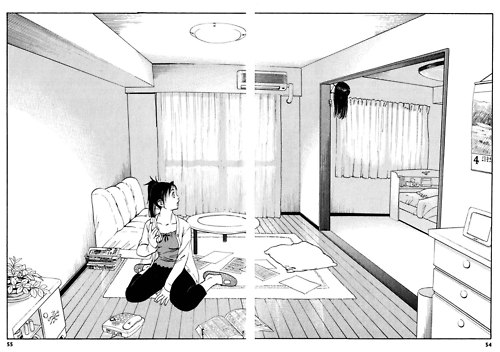
What Mail lacks in suspense it makes up in atmosphere. Yamazaki shows considerable flair for turning ordinary urban environments into unbearably scary places, whether he’s depicting an empty public bathroom or a high-rise building. In one of Mail‘s best stories, for example, a woman receives a letter urging her to move out of her apartment right away. Shortly after reading the letter, she catches glimpse of something moving along the ceiling of the adjacent room:

Though we’re outside the picture plane, viewing the action from a different angle than the hapless apartment dweller, we don’t have any more information about what’s lurking in the other room than she does; Yamazaki is relying on the reader to guess what might be crawling along the ceiling by planting one suggestive detail.

The other thing that makes this image so unsettling is the very mundaneness of the setting. With its square rooms and bland furnishings, this scene could be unfolding in almost any Tokyo neighborhood, in almost any modern apartment complex. (Add a parquet floor, and it could just as easily be taking place in any postwar building in Manhattan.) More unsettling still is that this scene is taking place in broad daylight, not at night; whatever is haunting the apartment isn’t relying on the camouflage of darkness, but is sallying forth at a time of day when spirits are supposed to be hidden and, more importantly, impotent.

Not all of the stories take place in Tokyo; several unfold in the countryside. Mail is at its best in urban settings, however, as the very nature of city living gives Yamazaki ample material to work with, whether he’s spinning a cautionary tale about the anonymity of modern life or simply reflecting on the myriad layers of history buried underneath new roadways and buildings. As a life-long city-dweller, I found stories such as “The Drive” — which takes place on an urban freeway — “The Elevator” — which takes place in a stalled elevator car — and “Hide-and-Seek” — which takes place in a haunted apartment — among the spookiest in the collection, as they tapped into a deep well of fear that all urban folk share: that cities harbor something even bigger and scarier than crime, high property taxes, or gridlock.

MAIL, VOLS. 1-3 • BY HOUSUI YAMAZAKI • DARK HORSE • RATING: OLDER TEEN/MATURE

Filed Under: Manga Critic Tagged With: Dark Horse, Horror/Supernatural, Housui Yamazaki

The Best Manga You’re Not Reading: Mail

October 20, 2012 by Katherine Dacey

Have spirit gun, will travel — that’s the basic plot of Mail, a three-volume collection of ghost stories penned by Kurosagi Corpse Delivery Service illustrator Housui Yamazaki. Like Kurosagi, Mail follows a spook-of-the-week formula, pausing occasionally to fill us in on the personal life of its chief exorcist, Detective Reiji Akiba. Akiba initially presents as a Columbo-esque figure, disarming clients with his rumpled coat and penchant for napping on the job, but his true nature is soon revealed in the first story: he’s handy with Kagutsuchi, his trusty pistol, and unflappable in the presence of the undead.

As we learn over the course of the series, Akiba was born blind. Medicine restored his sight, but with a side effect: he began seeing dead people. After years of living in fear of ghosts, Akiba learned to perform exorcisms with Kagutsuchi, a skill he parlayed into a career as a modern-day onmyoji.

If Akiba’s strategies for assisting his clients are decidedly hi-tech — websites, cellphones, GPS devices, bullets — the stories have a pleasantly old-fashioned quality to them. Some are morality plays; in “The Doll,” for example, a toy becomes the vessel for a hit-and-run victim to bring her killer to justice. Others read more like good campfire tales; in “Suppressed,” for example, a young woman begins receiving mysterious calls from a “friend” who’s en route to her home, the last of which appear to be originating from inside her apartment. Still others draw on urban legend for inspiration; “Ka-tsu-mi,” the fifth chapter in the series, focuses on a girl who dies after accidentally photographing a ghost.

I’d be the first to admit that Yamazaki is not a master of suspense. Though Mail is filled with suitably gruesome imagery and creative variations on oft-told ghost stories, the reader is never in doubt about Akiba’s ability to save his clients. The endings have a sameness that becomes more apparent when reading them back-to-back, as Akiba’s only method for banishing the undead is to fire Kagutsuchi. And while Akiba demonstrates remarkable sangfroid when confronting murdered babies, vengeful lovers, and drowning victims, his undeniable coolness doesn’t quite compensate for the predictability of the denounements.

What Mail lacks in suspense it makes up in atmosphere. Yamazaki shows considerable flair for turning ordinary urban environments into unbearably scary places, whether he’s depicting an empty public bathroom or a high-rise building. In one of Mail‘s best stories, for example, a woman receives a letter urging her to move out of her apartment right away. Shortly after reading the letter, she catches glimpse of something moving along the ceiling of the adjacent room:

Though we’re outside the picture plane, viewing the action from a different angle than the hapless apartment dweller, we don’t have any more information about what’s lurking in the other room than she does; Yamazaki is relying on the reader to guess what might be crawling along the ceiling by planting one suggestive detail.

The other thing that makes this image so unsettling is the very mundaneness of the setting. With its square rooms and bland furnishings, this scene could be unfolding in almost any Tokyo neighborhood, in almost any modern apartment complex. (Add a parquet floor, and it could just as easily be taking place in any postwar building in Manhattan.) More unsettling still is that this scene is taking place in broad daylight, not at night; whatever is haunting the apartment isn’t relying on the camouflage of darkness, but is sallying forth at a time of day when spirits are supposed to be hidden and, more importantly, impotent.

Not all of the stories take place in Tokyo; several unfold in the countryside. Mail is at its best in urban settings, however, as the very nature of city living gives Yamazaki ample material to work with, whether he’s spinning a cautionary tale about the anonymity of modern life or simply reflecting on the myriad layers of history buried underneath new roadways and buildings. As a life-long city-dweller, I found stories such as “The Drive” — which takes place on an urban freeway — “The Elevator” — which takes place in a stalled elevator car — and “Hide-and-Seek” — which takes place in a haunted apartment — among the spookiest in the collection, as they tapped into a deep well of fear that all urban folk share: that cities harbor something even bigger and scarier than crime, high property taxes, or gridlock.

MAIL, VOLS. 1-3 • BY HOUSUI YAMAZAKI • DARK HORSE • RATING: OLDER TEEN/MATURE

Filed Under: Manga, Manga Critic, Recommended Reading, REVIEWS Tagged With: Dark Horse, Horror/Supernatural, Housui Yamazaki

A First Look at Cross Manage

October 13, 2012 by Katherine Dacey 3 Comments

For a series whose plot hinges on a mammary collision, Cross Manage is better than it has any right to be: it’s interesting, funny, and populated with appealing characters who rise above type.

The collider and the collidee are, respectively, Sakurai, an aimless second-year student, and Misora, captain of the girls’ lacrosse team. Though Sakurai has joined and quit twelve clubs, he has yet to discover an activity at which he excels; he scoffs at the idea that anyone would play a sport or pursue a hobby simply for enjoyment. Misora is his diametric opposite, an enthusiast who can describe the history of lacrosse in voluminous detail, but can’t make a shot to save her life. When Sakurai accidentally grabs Misora’s chest during an impromptu coaching session, she offers him a choice: become the manager of the girls’ lacrosse team, or risk public humiliation.

Yikes! The “whoops-I-touched-your-boob!” gag is one of the most overused and least amusing “comic” bits in shonen manga, not least because it portrays boys as the victims of mammary collisions, rather than the other way around. I admit that my heart sank a little when I read that scene: surely Kaito could have found a more creative way to set the plot in motion, perhaps one that didn’t scream Love Hina: The Lacrosse Years. But I soldiered on for another chapter, and was pleasantly surprised to discover that Cross Manage wasn’t evolving into a panty-fest or a string of lecherous, Benny Hill-style gags, but an amusing character study of two charmingly screwed-up teens.

Anyone who’s read more than two shonen rom-coms will recognize Sakurai and Misora as familiar types, but artist/author Kaito has invested them with more personality than is called for by the genre. Misora, for example, is a classic Shonen Spaz Dream Girl, but she’s an interesting variation on the type; though she’s utterly incompetent at everything, she’s clearly knowledgeable about lacrosse. She freely admits that she’s terrible, but she doesn’t care because playing the game gives her a sense of accomplishment and purpose.

Sakurai embodies another classic type, the Cool Reader Surrogate. As portrayed in the first two chapters of Cross Manage, Sakurai is a natural at everything — photography, shogi, sports — even though he never practices. Sakurai is a sympathetic character nonetheless, one who’s both moved and puzzled by Misora’s dedication to a sport at which she… well, sucks. And while Misora has a lot to learn from Sakurai about how to handle the stick and pass the ball, Sakurai clearly has a lot to learn from Misora as well — not the least of which is how to enjoy doing things at which he’s not an expert. (Also how to comport himself around girls, of whom he has a deep, unnatural phobia that’s sure to be explained in a future chapter.)

As with many Shonen Jump titles, the artwork is crisp if not terribly distinctive; I’d have a hard time picking Sakurai and Misora out of a line-up of recent Jump characters, though both are memorable enough within the context of the story. Kaito has the artistic chops to populate Cross Manage with a diverse supporting cast — a key skill in a series that promises to have a bumper crop of comic relief characters. Though he hasn’t had many opportunities to showcase this skill just yet, a throwaway scene involving the “prince” of the shogi club hints at Kaito’s ability to establish personality through a few well-chosen details.

If Kaito can steer clear of excessive fanservice, and provide both Sakurai and Misora room for personal growth, I could see myself following Cross Manage; if not, it will join the large pile of shonen romantic comedies that I’ve abandoned after the fifth — or fifteenth — “misunderstanding” involving groping, nudity, or panties. Stay tuned.

CROSS MANAGE, CHAPTERS 1-2 • BY KAITO • VIZ MEDIA • CURRENTLY RUNNING IN WEEKLY SHONEN JUMP ALPHA

Filed Under: Manga Critic Tagged With: Lacrosse, Shonen, Shonen Jump, Sports Manga, VIZ

A First Look at Cross Manage

October 13, 2012 by Katherine Dacey

For a series whose plot hinges on a mammary collision, Cross Manage is better than it has any right to be: it’s interesting, funny, and populated with appealing characters who rise above type. The collider and the collidee are, respectively, Sakurai, an aimless second-year student, and Misora, captain of the girls’ lacrosse team. Though Sakurai has joined and quit twelve clubs, he has yet to discover an activity at which he excels; he scoffs at the idea that anyone would play a sport or pursue a hobby simply for enjoyment. Misora is his diametric opposite, an enthusiast who can describe the history of lacrosse in voluminous detail, but can’t make a shot to save her life. When Sakurai accidentally grabs Misora’s chest during an impromptu coaching session, she offers him a choice: become the manager of the girls’ lacrosse team, or risk public humiliation.

Yikes! The “whoops-I-touched-your-boob!” gag is one of the most overused and least amusing “comic” bits in shonen manga, not least because it portrays boys as the victims of mammary collisions, rather than the other way around. I admit that my heart sank a little when I read that scene: surely Kaito could have found a more creative way to set the plot in motion, perhaps one that didn’t scream Love Hina: The Lacrosse Years. But I soldiered on for another chapter, and was pleasantly surprised to discover that Cross Manage wasn’t evolving into a panty-fest or a string of lecherous, Benny Hill-style gags, but an amusing character study of two charmingly screwed-up teens.

Anyone who’s read more than two shonen rom-coms will recognize Sakurai and Misora as familiar types, but artist/author Kaito has invested them with more personality than is called for by the genre. Misora, for example, is a classic Shonen Spaz Dream Girl, but she’s an interesting variation on the type; though she’s utterly incompetent at everything, she’s clearly knowledgeable about lacrosse. She freely admits that she’s terrible, but she doesn’t care because playing the game gives her a sense of accomplishment and purpose.

Sakurai embodies another classic type, the Cool Reader Surrogate. As portrayed in the first two chapters of Cross Manage, Sakurai is a natural at everything — photography, shogi, sports — even though he never practices. Sakurai is a sympathetic character nonetheless, one who’s both moved and puzzled by Misora’s dedication to a sport at which she… well, sucks. And while Misora has a lot to learn from Sakurai about how to handle the stick and pass the ball, Sakurai clearly has a lot to learn from Misora as well — not the least of which is how to enjoy doing things at which he’s not an expert. (Also how to comport himself around girls, of whom he has a deep, unnatural phobia that’s sure to be explained in a future chapter.)

As with many Shonen Jump titles, the artwork is crisp if not terribly distinctive; I’d have a hard time picking Sakurai and Misora out of a line-up of recent Jump characters, though both are memorable enough within the context of the story. Kaito has the artistic chops to populate Cross Manage with a diverse supporting cast — a key skill in a series that promises to have a bumper crop of comic relief characters. Though he hasn’t had many opportunities to showcase this skill just yet, a throwaway scene involving the “prince” of the shogi club hints at Kaito’s ability to establish personality through a few well-chosen details.

If Kaito can steer clear of excessive fanservice, and provide both Sakurai and Misora room for personal growth, I could see myself following Cross Manage; if not, it will join the large pile of shonen romantic comedies that I’ve abandoned after the fifth — or fifteenth — “misunderstanding” involving groping, nudity, or panties. Stay tuned.

CROSS MANAGE, CHAPTERS 1-2 • BY KAITO • VIZ MEDIA • CURRENTLY RUNNING IN WEEKLY SHONEN JUMP ALPHA

Filed Under: Manga, Manga Critic, REVIEWS Tagged With: Lacrosse, Shonen, Shonen Jump, Sports Manga, VIZ

Give My Regards to Black Jack, Vols. 1-2

October 5, 2012 by Katherine Dacey 1 Comment

Give My Regards to Black Jack tells a familiar story: a newly-minted professional enters his field, convinced that he has chosen the True Path. He soon discovers, however, that many of his colleagues have chosen profit over passion, forcing him to decide whether to follow their example or fight the system.

Eijiro Saito, the hero, is a graduate of a top medical school, brimming with energy and enthusiasm. Though Saito lands a plum internship at Eiroku University’s teaching hospital, his pay is meager; he supplements his income by moonlighting at a woefully understaffed emergency room. At both institutions, Saito encounters crooked doctors who demand bribes from patients; arrogant doctors who belittle poor patients; and money-minded doctors who care only about the hospital’s bottom line. For all the challenges to Saito’s idealism, however, he clings tenaciously to the belief that candor and sincerity are a doctor’s greatest assets.

As agit-prop, Give My Regards to Black Jack succeeds. Author Shuho Sato makes a convincing case that billing practices encourage Japanese hospitals to treat patients as cash cows, rather than people in need of medical care. Sato also offers a blistering critique of doctor training, showing us the toll that long hours, poor pay, and workplace bullying exact on residents.

As drama, however, Give My Regards to Black Jack is too tidy to be moving. True, Saito’s despair at his own futility seems genuine. Early in volume one, for example, Saito finds himself alone in the operating room with a motorcycle accident victim. Fearful of killing the patient, Saito does nothing; only the last-minute intervention of a more experienced surgeon prevents the victim from dying on the table. In a moment of self-hatred, Saito dissolves into tears, castigating himself for his paralysis — a scene that intuitively and emotionally feels right, given where he is in his residency.

Where the story falters is in its portrayal of the senior doctors at Eiroku Hospital: they’re haughty and deceitful, primarily concerned with asserting their authority over patients and junior staff members. Even when their words ring with truth, their advice is framed as a cynical and self-serving pose. Not all of the doctors fit this mold: the repulsively drawn Ushida, who toils in the Seido emergency room, is a wiser and more compassionate soul than his wolfish face or feral demeanor might suggest. So is Saburo Kita, a maverick heart surgeon who loves karaoke and paisley shirts; Kita cuts a flamboyant figure, but is humble when discussing his work. These characters are few and far between, however, with many more doctors acting like graduates of the Snidely Whiplash School of Medical Malpractice.

The series’ other shortcoming is the artwork. Though Sato shows a Tezukian flair for close-ups of mangled flesh and pulsating organs, his character designs lack Tezuka’s finesse. Tezuka’s Black Jack might be a cartoonish figure with his cloak and Frankensutures, but those design elements are fundamental to establishing Black Jack’s personality; a reader could dive into any Black Jack story and immediately understand who he is. Moreover, all of the characters in Black Jack are crafted with similar care, each assigned a few simple but telling details that communicate their role in the drama.

By contrast, Ushida looks like he stepped out of Toriko, with his bug eyes, lantern-jaw, and perma-sneer. Since none of the other characters are rendered in such a grotesque fashion, one could make the argument that Ushida’s ugliness must serve a dramatic purpose, symbolizing the corrosive effect of his working conditions. We never spend enough time with Ushida, however, to know how much he sacrificed his ideals for a steady career, nor do we see enough of his behavior with patients to rationalize his appearance. It seems perverse to draw only one character in such a distorted fashion; say what you will about Tezuka’s caricatures, but there was always a unifying aesthetic in Black Jack that made it possible for the reader to view Dr. Kiriko, Pinoko, and Biwamaru as inhabitants of the same universe.

What Sato’s work has in common with Tezuka’s is a fierce conviction that the Japanese medical establishment is bloated, ineffective, and indifferent to real human suffering. Sato addresses these shortcomings in a more explicit fashion than Tezuka did in Black Jack — or Ode to Kirihito, for that matter — using real medical procedures and real administrative dilemmas as plot fodder. Yet Sato’s stories are often unmoving, as his hero’s idealism compels him to take simplistic stands on complex issues. Tezuka, on the other hand, focused more on entertaining audiences than on educating them about Japanese health care, building his stories around a character whose subversive, self-interested behavior never prevented him from treating the genuinely deserving. Tezuka’s stories might be more formulaic and absurd than Sato’s, but they’re never so earnestly dull that they read like anti-JMA propaganda. Call me crazy, but I’ll take killer whale surgery and teratoid cystomas over a hectoring medical procedural any day.

GIVE MY REGARDS TO BLACK JACK, VOLS. 1-2 • BY SHUHO SATO • SELF-PUBLISHED (AVAILABLE THROUGH AMAZON’S KINDLE STORE)

Filed Under: Manga Critic Tagged With: black jack, Medical, Say Hello to Black Jack, Shuho Sato

Give My Regards to Black Jack, Vols. 1-2

October 5, 2012 by Katherine Dacey

Give My Regards to Black Jack tells a familiar story: a newly-minted professional enters his field, convinced that he has chosen the True Path. He soon discovers, however, that many of his colleagues have chosen profit over passion, forcing him to decide whether to follow their example or fight the system.

Eijiro Saito, the hero, is a graduate of a top medical school, brimming with energy and enthusiasm. Though Saito lands a plum internship at Eiroku University’s teaching hospital, his pay is meager; he supplements his income by moonlighting at a woefully understaffed emergency room. At both institutions, Saito encounters crooked doctors who demand bribes from patients; arrogant doctors who belittle poor patients; and money-minded doctors who care only about the hospital’s bottom line. For all the challenges to Saito’s idealism, however, he clings tenaciously to the belief that candor and sincerity are a doctor’s greatest assets.

As agit-prop, Give My Regards to Black Jack succeeds. Author Shuho Sato makes a convincing case that billing practices encourage Japanese hospitals to treat patients as cash cows, rather than people in need of medical care. Sato also offers a blistering critique of doctor training, showing us the toll that long hours, poor pay, and workplace bullying exact on residents.

As drama, however, Give My Regards to Black Jack is too tidy to be moving. True, Saito’s despair at his own futility seems genuine. Early in volume one, for example, Saito finds himself alone in the operating room with a motorcycle accident victim. Fearful of killing the patient, Saito does nothing; only the last-minute intervention of a more experienced surgeon prevents the victim from dying on the table. In a moment of self-hatred, Saito dissolves into tears, castigating himself for his paralysis — a scene that intuitively and emotionally feels right, given where he is in his residency.

Where the story falters is in its portrayal of the senior doctors at Eiroku Hospital: they’re haughty and deceitful, primarily concerned with asserting their authority over patients and junior staff members. Even when their words ring with truth, their advice is framed as a cynical and self-serving pose. Not all of the doctors fit this mold: the repulsively drawn Ushida, who toils in the Seido emergency room, is a wiser and more compassionate soul than his wolfish face or feral demeanor might suggest. So is Saburo Kita, a maverick heart surgeon who loves karaoke and paisley shirts; Kita cuts a flamboyant figure, but is humble when discussing his work. These characters are few and far between, however, with many more doctors acting like graduates of the Snidely Whiplash School of Medical Malpractice.

The series’ other shortcoming is the artwork. Though Sato shows a Tezukian flair for close-ups of mangled flesh and pulsating organs, his character designs lack Tezuka’s finesse. Tezuka’s Black Jack might be a cartoonish figure with his cloak and Frankensutures, but those design elements are fundamental to establishing Black Jack’s personality; a reader could dive into any Black Jack story and immediately understand who he is. Moreover, all of the characters in Black Jack are crafted with similar care, each assigned a few simple but telling details that communicate their role in the drama.

By contrast, Ushida looks like he stepped out of Toriko, with his bug eyes, lantern-jaw, and perma-sneer. Since none of the other characters are rendered in such a grotesque fashion, one could make the argument that Ushida’s ugliness must serve a dramatic purpose, symbolizing the corrosive effect of his working conditions. We never spend enough time with Ushida, however, to know how much he sacrificed his ideals for a steady career, nor do we see enough of his behavior with patients to rationalize his appearance. It seems perverse to draw only one character in such a distorted fashion; say what you will about Tezuka’s caricatures, but there was always a unifying aesthetic in Black Jack that made it possible for the reader to view Dr. Kiriko, Pinoko, and Biwamaru as inhabitants of the same universe.

What Sato’s work has in common with Tezuka’s is a fierce conviction that the Japanese medical establishment is bloated, ineffective, and indifferent to real human suffering. Sato addresses these shortcomings in a more explicit fashion than Tezuka did in Black Jack — or Ode to Kirihito, for that matter — using real medical procedures and real administrative dilemmas as plot fodder. Yet Sato’s stories are often unmoving, as his hero’s idealism compels him to take simplistic stands on complex issues. Tezuka, on the other hand, focused more on entertaining audiences than on educating them about Japanese health care, building his stories around a character whose subversive, self-interested behavior never prevented him from treating the genuinely deserving. Tezuka’s stories might be more formulaic and absurd than Sato’s, but they’re never so earnestly dull that they read like anti-JMA propaganda. Call me crazy, but I’ll take killer whale surgery and teratoid cystomas over a hectoring medical procedural any day.

GIVE MY REGARDS TO BLACK JACK, VOLS. 1-2 • BY SHUHO SATO • SELF-PUBLISHED (AVAILABLE THROUGH AMAZON’S KINDLE STORE)

Filed Under: Manga, Manga Critic, REVIEWS Tagged With: black jack, Medical, Say Hello to Black Jack, Shuho Sato

Limit, Vol. 1

September 28, 2012 by Katherine Dacey 2 Comments

“The world doesn’t suffer fools or fugly people” — so says Sakura, the most popular student in class 2-4. Sakura is a classic Alpha Girl: pretty, manipulative, and confident that at fifteen, she’s discovered the secret to being successful. (“Both studies and make-up. They’re real important for enjoying life, you know?” she informs her pal Konno.) Though Sakura’s friends may not like her, they recognize her power and follow her example; when Sakura declares that the awkward, quiet Arisa Morishige should “die,” Sakura’s friends are all too quick to agree.

The dynamic between Sakura’s clique and Morishige is dramatically reversed, however, on an annual school trip to “exchange camp,” where second-year students spend a week roughing it in a rural setting. En route to camp, a bus accident kills most of the class, leaving a handful of survivors stranded in the wilderness. The remaining members of Sakura’s clique soon discover that their nasty antics have demoted them from the A-list to the D — a demotion that, in their new, desperate circumstances, has potentially deadly consequences.

In a more cynical frame of mind, I might describe Limit as “Lord of the Flies with chicks,” but that cheeky brush-off doesn’t quite do justice to Keiko Suenobo’s story. Her principal characters are just as concerned with survival as William Golding’s private-school boys were, but the girls’ internal power struggles are less a exploration of Hobbesian philosophy than an extreme dramatization of the cliquish behavior found in Japanese high schools. In other words, it’s Mean Girls… with weapons.

Entertaining as that sounds, Limit suffers from a crucial flaw: Konno, the narrator, isn’t very interesting, as her primary role is to be an inoffensive reader surrogate. Konno is pretty and smart enough to be a member of Sakura’s clique, but passive enough that her behavior won’t elicit criticism from most readers; Konno is never portrayed as a ringleader or enthusiastic participant in Morishige’s degradation, though she clearly joined Sakura in harassing Morishige. That’s a mistake, I think, because it permits the reader to side too readily with Konno when the tables are turned, ignoring the fact that Morishige’s rage stems from being bullied on a daily basis by Sakura and Konno.

The other survivors are a more compelling lot, even if each neatly slots into a well-established role: The Principled Outsider, The Timid Girl, The Frenemy. That Suenobo endows each of these girls with more humanity than those roles require is testament to her skill as a writer. Volume one’s most moving scene, for example, belongs to Ichinose, Sakura’s best friend. Though she and Konno have moved in the same social circles, the bus accident reveals that Ichinose views Konno as a rival for Sakura’s friendship. Ichinose’s desperation at being “traded in” for the smarter, prettier Konno is palpable, and the rawness of her angry confession is one of the few moments in the script that doesn’t feel like a rote portrayal of mean-girl politics.

Perhaps the strongest element of Limit is the artwork. Suenobo’s meticulous efforts to dramatize her characters’ inner turmoil reminds the reader that Limit ran in Bessatsu Friend, not Weekly Shonen Magazine. Konno and Ichinose scream and cry as lustily as any character in Cage of Eden, but Limit‘s characters register a much fuller range of emotions than just fear of being lost or eaten; Konno and her fellow survivors are by turns angry, jealous, gleeful, miserable, spiteful, bitter, remorseful, and fearful — of one another. By far the most dramatic example is Morishige, who morphs from cringing, sweaty scapegoat to demonic avenger; her once dull, shark-like eyes are suddenly animated with a fierce, nasty sense of purpose, and she moves with a speed and deliberation that surprise her classmates.

Suenobo also demonstrates a flair for staging action scenes. The bus accident is depicted in a brief but effective sequence that makes creative use of camera angles to suggest the severity of the crash. Likewise, Suenobo firmly establishes how desperate the girls’ situation really is; in a few carefully drawn panels, the reader readily grasps the geographic obstacles to rescue, from sheer cliff walls to impenetrable woods. That no one’s cell phone works feels like an unnecessary touch, given the care with which Suenobo sketches out the crash site and its environs.

If the story is, at times, a little uneven, or ungenerous to Morishige, Limit still shows considerable promise. Suenobo makes good use of her teen-survivor premise to explore the politics of bullying without being too mawkish. At the same time, however, Suenobo manages to write a scary thriller that’s sophisticated and suspenseful enough to sustain an adult’s interest; the story’s occasional Grand Guignol touches add a welcome dash of camp, preventing the story from sinking under the weight of its Very Important Message. I can’t imagine what will happen in volume two, but I’m looking forward to reading it… with the lights on. Recommended.

Review copy provided by Vertical, Inc. Volume one will be released on October 9, 2012.

LIMIT, VOL. 1 • BY KEIKO SUENOBO • VERTICAL, INC. • 176 pp.

Filed Under: Manga Critic Tagged With: Keiko Suenobo, Limit, shojo, vertical

Limit, Vol. 1

September 28, 2012 by Katherine Dacey

“The world doesn’t suffer fools or fugly people” — so says Sakura, the most popular student in class 2-4. Sakura is a classic Alpha Girl: pretty, manipulative, and confident that at fifteen, she’s discovered the secret to being successful. (“Both studies and make-up. They’re real important for enjoying life, you know?” she informs her pal Konno.) Though Sakura’s friends may not like her, they recognize her power and follow her example; when Sakura declares that the awkward, quiet Arisa Morishige should “die,” Sakura’s friends are all too quick to agree.

The dynamic between Sakura’s clique and Morishige is dramatically reversed, however, on an annual school trip to “exchange camp,” where second-year students spend a week roughing it in a rural setting. En route to camp, a bus accident kills most of the class, leaving a handful of survivors stranded in the wilderness. The remaining members of Sakura’s clique soon discover that their nasty antics have demoted them from the A-list to the D — a demotion that, in their new, desperate circumstances, has potentially deadly consequences.

In a more cynical frame of mind, I might describe Limit as “Lord of the Flies with chicks,” but that cheeky brush-off doesn’t quite do justice to Keiko Suenobo’s story. Her principal characters are just as concerned with survival as William Golding’s private-school boys were, but the girls’ internal power struggles are less a exploration of Hobbesian philosophy than an extreme dramatization of the cliquish behavior found in Japanese high schools. In other words, it’s Mean Girls… with weapons.

Entertaining as that sounds, Limit suffers from a crucial flaw: Konno, the narrator, isn’t very interesting, as her primary role is to be an inoffensive reader surrogate. Konno is pretty and smart enough to be a member of Sakura’s clique, but passive enough that her behavior won’t elicit criticism from most readers; Konno is never portrayed as a ringleader or enthusiastic participant in Morishige’s degradation, though she clearly joined Sakura in harassing Morishige. That’s a mistake, I think, because it permits the reader to side too readily with Konno when the tables are turned, ignoring the fact that Morishige’s rage stems from being bullied on a daily basis by Sakura and Konno.

The other survivors are a more compelling lot, even if each neatly slots into a well-established role: The Principled Outsider, The Timid Girl, The Frenemy. That Suenobo endows each of these girls with more humanity than those roles require is testament to her skill as a writer. Volume one’s most moving scene, for example, belongs to Ichinose, Sakura’s best friend. Though she and Konno have moved in the same social circles, the bus accident reveals that Ichinose views Konno as a rival for Sakura’s friendship. Ichinose’s desperation at being “traded in” for the smarter, prettier Konno is palpable, and the rawness of her angry confession is one of the few moments in the script that doesn’t feel like a rote portrayal of mean-girl politics.

Perhaps the strongest element of Limit is the artwork. Suenobo’s meticulous efforts to dramatize her characters’ inner turmoil reminds the reader that Limit ran in Bessatsu Friend, not Weekly Shonen Magazine. Konno and Ichinose scream and cry as lustily as any character in Cage of Eden, but Limit‘s characters register a much fuller range of emotions than just fear of being lost or eaten; Konno and her fellow survivors are by turns angry, jealous, gleeful, miserable, spiteful, bitter, remorseful, and fearful — of one another. By far the most dramatic example is Morishige, who morphs from cringing, sweaty scapegoat to demonic avenger; her once dull, shark-like eyes are suddenly animated with a fierce, nasty sense of purpose, and she moves with a speed and deliberation that surprise her classmates.

Suenobo also demonstrates a flair for staging action scenes. The bus accident is depicted in a brief but effective sequence that makes creative use of camera angles to suggest the severity of the crash. Likewise, Suenobo firmly establishes how desperate the girls’ situation really is; in a few carefully drawn panels, the reader readily grasps the geographic obstacles to rescue, from sheer cliff walls to impenetrable woods. That no one’s cell phone works feels like an unnecessary touch, given the care with which Suenobo sketches out the crash site and its environs.

If the story is, at times, a little uneven, or ungenerous to Morishige, Limit still shows considerable promise. Suenobo makes good use of her teen-survivor premise to explore the politics of bullying without being too mawkish. At the same time, however, Suenobo manages to write a scary thriller that’s sophisticated and suspenseful enough to sustain an adult’s interest; the story’s occasional Grand Guignol touches add a welcome dash of camp, preventing the story from sinking under the weight of its Very Important Message. I can’t imagine what will happen in volume two, but I’m looking forward to reading it… with the lights on. Recommended.

Review copy provided by Vertical, Inc. Volume one will be released on October 9, 2012.

LIMIT, VOL. 1 • BY KEIKO SUENOBO • VERTICAL, INC. • 176 pp.

Filed Under: Manga, Manga Critic, REVIEWS Tagged With: Keiko Suenobo, Limit, shojo, vertical

  • « Go to Previous Page
  • Page 1
  • Interim pages omitted …
  • Page 8
  • Page 9
  • Page 10
  • Page 11
  • Page 12
  • Interim pages omitted …
  • Page 39
  • Go to Next Page »
 | Log in
Copyright © 2010 Manga Bookshelf | Powered by WordPress & the Genesis Framework