• Skip to primary navigation
  • Skip to main content
  • Skip to primary sidebar
  • Home
  • About Us
    • Privacy Policy
    • Comment Policy
    • Disclosures & Disclaimers
  • Resources
    • Links, Essays & Articles
    • Fandomology!
    • CLAMP Directory
    • BlogRoll
  • Features & Columns
    • 3 Things Thursday
    • Adventures in the Key of Shoujo
    • Bit & Blips (game reviews)
    • BL BOOKRACK
    • Bookshelf Briefs
    • Bringing the Drama
    • Comic Conversion
    • Fanservice Friday
    • Going Digital
    • It Came From the Sinosphere
    • License This!
    • Magazine no Mori
    • My Week in Manga
    • OFF THE SHELF
    • Not By Manga Alone
    • PICK OF THE WEEK
    • Subtitles & Sensibility
    • Weekly Shonen Jump Recaps
  • Manga Moveable Feast
    • MMF Full Archive
    • Yun Kouga
    • CLAMP
    • Shojo Beat
    • Osamu Tezuka
    • Sailor Moon
    • Fruits Basket
    • Takehiko Inoue
    • Wild Adapter
    • One Piece
    • After School Nightmare
    • Karakuri Odette
    • Paradise Kiss
    • The Color Trilogy
    • To Terra…
    • Sexy Voice & Robo
  • Browse by Author
    • Sean Gaffney
    • Anna Neatrour
    • Michelle Smith
    • Katherine Dacey
    • MJ
    • Brigid Alverson
    • Travis Anderson
    • Phillip Anthony
    • Derek Bown
    • Jaci Dahlvang
    • Angela Eastman
    • Erica Friedman
    • Sara K.
    • Megan Purdy
    • Emily Snodgrass
    • Nancy Thistlethwaite
    • Eva Volin
    • David Welsh
  • MB Blogs
    • A Case Suitable For Treatment
    • Experiments in Manga
    • MangaBlog
    • The Manga Critic
    • Manga Report
    • Soliloquy in Blue
    • Manga Curmudgeon (archive)

Manga Bookshelf

Discussion, Resources, Roundtables, & Reviews

Reviews

Neon Genesis Evangelion: Anima, Vol. 5

July 10, 2021 by Sean Gaffney

By Ikuto Yamashita. Released in Japan as “Shin Seiki Evangelion Anima” by Kadokawa Shoten, serialized in the magazine Dengeki Hobby. Released in North America by Seven Seas. Translated by Michael Rachmat. Adapted by Peter Adrian Behravesh.

And so the light novel series that was written for a magazine dedicated to the selling of plastic models and toys ends the only way that it honestly could: with 250 more pages that show off just how great these Eva battles would look if you put the models together. If you love looking at Evas and imagining them fighting each other, it’s a terrific book. If you do not – and I am counting myself here – it’s a letdown. My expectations were not all that high… indeed, they mostly just involved hoping that we were done with thousands of people turning to salt. (I was wrong, alas.) And there are actual plot and character moments here. But the character moments aren’t enough, the plot is sometimes bad, and the ending merely stops, when it cries out for an epilogue of some sort. Sorry, kids, who knows what happens next, but it will be in a world where giant robots don’t fight, so who cares?

We pick up right where we left off, as everyone’s trying to figure out a way to save the day despite Shinji having .83 seconds to go till Third Impact. Mari is desperately searching for a pack of SOME sort, even if it’s not her original, and does not really give two figs about anyone else. Hikari is possessed by evil. Kaji, also possessed by evil, is being smug in Misato’s direction. The Reis are finally sharing minds again, but that may not be a good thing. The only sensible ones seem to be Asuka and Toji, and unfortunately both of them lose their sense of self as the book goes on. How many apocalypses can Earth go through before it finally gives up the ghost? Can Shinji stop it all? And will we get the weirdest Biblical imagery ever?

The best parts of the book were when it was so over the top I had to laugh out loud. Kensuke and (a now unposessed) Hikari manage to survive certain death by hiding under the Shroud of Turin, a line tossed off so casually it’s brilliant. The way that Shinji, now dead, ends up coming back is so grotesque and awful that my jaw dropped, and to be fair Asuka thinks the exact same thing I did: ew. At the same time, the reappearance of some seemingly dead characters right at the end, and reaction to same, falls absolutely flat, mostly as everything is too chaotic to stay on them for even a moment. Likewise, two characters no longer being evil is barely even given weight because, as I said, apocalypse uber alles. The book keeps such a frenetic pace throughout that you can’t enjoy anything, and then when armageddon is finally avoided (somewhat), it simply stops. The end.

That said, I hear the movies weren’t really satisfying to some viewers either, and the manga (probably my favorite version) also had its issues. Evangelion may simply be too messy a story to have a decent ending for. And these books did have some pretty cool fights. If you want another version of what happens, and aren’t really invested in any one character, this is a series to read. Sadly, my overall reaction to the series ends up being a shrug.

Filed Under: evangelion, REVIEWS

My Next Life As a Villainess: All Routes Lead to Doom!, Vol. 9

July 9, 2021 by Sean Gaffney

By Satoru Yamaguchi and Nami Hidaka. Released in Japan as “Otome Game no Hametsu Flag Shika Nai Akuyaku Reijou ni Tensei Shite Shimatta…” by Ichijinsha Bunko Iris. Released in North America by J-Novel Club. Translated by Marco Godano.

This was a strong volume of Bakarina, despite doing absolutely nothing that I thought it would do. I thought it would be action-filled, instead it’s merely the last quarter or so. I thought it would be more serious, but it’s no more serious than any other volume of the series. But that’s a good thing, as really, who wants to see these characters suffer? Unless they’re suffering because the woman they love is as dense as lead, in which case, yes please. The book also benefits from most of the cast being absent – Katarina is on a secret mission in another part of the country, and so for the most part it’s just her, Maria and Sora. Which is bad news for fans of the other love interests, but very good news for those who love KataMari or KataSora, as both of those pairings get some good attention. As for the actual plot, it goes pretty much as you’d expect, with Katarina walking into the solution.

Katarina, along with Larna, Maria and Sora, are following up on the “kidnapped citizens” plot from last time, heading to the tow “Ocean Harbor” to try to get to the bottom of things. (I love that the name of the town sounds exactly like what you’d name a plot-point town in an otome game.) They end up at a restaurant owned by Larna’s friend… well, frenemy Regina, who uses the restaurant as a front for ferreting out stuff for the Ministry. However, since they have Maria (who can cook) and Katarina (who is not only an excellent waitress but also knows how to market), they can now run it like an actual restaurant, and maybe turn a profit! Was there something else? Oh right, the kids being kidnapped, along with the noble girl. But that’s OK, I’m sure there can be someone for Katarina to befriend who will lead them to the bad guys.

Probably my favorite thing about this book was seeing Katarina as a waitress. Everyone is blown out of the water by how good she is at it, because she’s supposedly the daughter of a duke, but honestly I was surprised as well, as even though we know she has her past life from Japan and probably part-timed as a waitress before, the temptation would be to make her bad at the job for a laugh. Instead, she turns out to be fantastic at the job for a great character moment. I also really enjoyed Katarina’s “dates” with Maria and Sora, which are basically catnip to us readers, and also features Maria once again literally confessing to Katarina and having her say “You lost me” in the best Shirou tradition. Props to Sora, too, for realizing that, rather than Keith or himself, Jeord’s biggest competition in the Katarina Sweepstakes is Maria. As for the plot itself, it proved to be resolved fairly easily, but we got to see Katarina in peril, Katarina biting someone to try to get herself out of peril, Maria being a light magic badass, and so all is well.

It’s still pretty clear that someone is trying to destabilize the countries in some way, and while the reader likely knows who’s behind it, the characters do not as of yet, so expect more investigation in the next book. Till then, enjoy Katarina Claes, waitress extraordinaire!

Filed Under: my next life as a villainess, REVIEWS

Ascendance of a Bookworm: I’ll Do Anything to Become a Librarian!, Part 4: Founder of the Royal Academy’s So-Called Library Committee, Vol. 1

July 7, 2021 by Sean Gaffney

By Miya Kazuki and You Shiina. Released in Japan as “Honzuki no Gekokujou: Shisho ni Naru Tame ni wa Shudan wo Erandeiraremasen” by TO Books. Released in North America digitally by J-Novel Club. Translated by quof.

It’s two years later, and we’re starting a new arc in Ascendance of a Bookworm. The longest one yet, this arc is 9 books long. After Rozemyne wakes up and comes to terms with life moving on without her, she barely has any time to get her footing before she’s supposed to start going to the Royal Academy as a first-year student. Good news: The Academy has a pretty large library, with actual books. Bad news: she can’t go there till she passes all her written and practical starter exams, and thanks to an unthinking Wilfried, everyone else also has to do this. There’s also the usual class struggles, not helped by the fact that she STILL looks seven years old. Still, she’s been thoroughly prepared by Ferdinand for this sort of thing, the people who tried to kill her have gone back into hiding, and she’s making new friends. How hard can a magical academy be?

There’s a lot of new people in this book, many of whom e will probably have to remember – there’s a reason why the best Bookworm fans are the ones with the colored spreadsheets. The most important so far seem to be Hirschur, an eccentric teacher who was fairly hands off with students… till she meets Rozemyne and realizes she’s Ferdinand 2; Solange, the Academy’s librarian who takes a shine to Rozemyne right away when she accidentally activates two dormant magical tools designed to help run the library (those would be the rabbits you see on the cover); and Hartmutt, a new attendant of Rozemyne’s who seems to think she’s the second coming of Jesus Christ. Can’t imagine where he got that idea, given that she’s resurrecting long-dead magical rabbits, plowing through the coursework in record-breaking time, and completely upending the Academy’s music department.

It can be a bit frustrating for the reader to see that Rozemyne is not only still in a short seven-year-old body, but also still tends to get exhausted easily – though not nearly as much as before. It can also be a bit frustrating for her, as she’s not taken very seriously by the nobles that are above her in status – some are ignoring her so they can get closer to Wilfried, some see her as an eccentric wind-up toy, and some seem to only want her for her mana compression teachings. Fortunately, she does have quite a few allies – Wilfried has matured since she was asleep, as has Charlotte (who is now taller than she is, to Rozemyne’s horror) and her attendants are mostly on her side, and also a bit eccentric. Though for eccentricity it’s still hard to pass Angelica, who remains Bookworm’s favorite rock-stupid knight.

Despite Sylvester’s growing horror as he hears of just what Rozemyne has gotten up to in the first few weeks of her classes, this is still mostly setup – we haven’t really had any serious threats or plot shakers yet, although Detlinde might prove to be one. Rozemyne’s biggest enemy right now might be herself, as her lack of court manners leads her down dangerous roads, such as forgetting that she promised to meet after school with the PRINCE. Still, I’m sure she’ll get through it. In the meantime, welcome to a new arc of one of the best novels currently being translated.

Filed Under: ascendance of a bookworm, REVIEWS

Bofuri: I Don’t Want to Get Hurt, So I’ll Max Out My Defense, Vol. 2

July 5, 2021 by Sean Gaffney

By Yuumikan and KOIN. Released in Japan as “Itai no wa Iya nano de Bōgyoryoku ni Kyokufuri Shitai to Omoimasu” by Kadokawa Books. Released in North America by Yen On. Translated by Andrew Cunningham.

While the first volume of Bofuri was concerned with Maple and her introduction to and subsequent interaction with the game, the second book is all about Maple and Sally and their friendship, which shines through both in how they fight well together and their relaxed interaction with each other in non-relaxed moments. These two are best friends, who have known each other most of their lives. And it shows, as we see right away why they’re a terrifying combo if you happen to go up against them. That said… Maple’s not big on the PvP end of the game, preferring to face off against monsters. Sally does not have that issue at all, and you get the sense that she’s generally more comfortable in a role where she can simply stack the bodies high. Maple may be a monster because of her unconventional build and ecentric thought processes, but Sally is a monster simply as she’s a really, really, REALLY good gamer.

The entire book is taken up with the second major event of the game, which involves finding 300 silver medals scattered across a very large map. What’s more, the winners of the FIRST major event already have one gold medal (the equivalent of ten silvers)… and yes, if you kill off the players you get their medals. Maple and Sally team up on this one, and end up in a forest (which has ghosts, Sally’s one weakness), an ice cave (taking on a nigh unkillable monster… and killing it, which nets them two animal companions), an underground maze (where they are chained together – literally – with Kasumi, a samurai player who fights with swords), a beach (where Sally, who can swim, scouts, while Maple befriends a mage named Kanade and they build a sandcastle together), and an underwater area (where they have to fight evil doppelgangers of each other). As this goes on, they do get a few medals, but it’s not quite enough to place in the top 10… so Sally decides to go player hunting.

The most significant cut from the anime is where Maple fights not-Sally and Sally fights not-Maple, two tough fights that get both of them a bit paranoid (which leads to the book’s funniest moment, where they reveal private info about each other to prove they’re the real one, and it’s super embarrassing). The cast is increasing, and it’s nice to see Kasumi and Kanade. I did note that there was some added character drama in the anime… here, after a brief fight at the start, Kasumi gets on fine with Maple and Sally. Two other things I noticed. First, this book really hammers home how often Maple uses poison in the early days… the book is almost coated with poison, to the point where the reader might get a bit bored. The second is that the novel is far more into the gaming mechanics of everything. The anime loves to show off Maple “being Maple”, but the book gives us that plus all the times Maple isn’t being Maple, but just a normal player doing normal things. It can sometimes be a bit tedious… I absolutely see why the anime cut a lot of this book… but it’s also fun if you love these two girls.

This book ends with the “giant turtle makes acid rain” sequence, so I assume the next volume will feature the forming of Maple tree guild. As with the first book, you aren’t really missing vital info the anime skipped, but you do get to see two best friends having a ball fighting things for 250 pages. And that’s enough.

Filed Under: bofuri, REVIEWS

The Sidekick Never Gets the Girl, Let Alone the Protag’s Sister!, Vol. 1

July 4, 2021 by Sean Gaffney

By Toshizo and U35. Released in Japan as “Shinyuu Mob no Ore ni Shujinkou no Imouto ga Horeru Wake ga Nai” by PASH! Books. Released in North America by J-Novel Club. Translated by Tristan K. Hill.

Sometimes you just have to be patient and wait for the author to get around to The Hook. This is especially true with this book, where we get a prologue that clearly shows us that this is not merely just another dumb high school romcom… and then spends most of the first half of the book trying its damndest to hide that fact once again. That said, that fits well with the protagonist, and it’s his narrative voice that we’re getting. As such, you get a book that is about 75% what would happen if the annoying loud guy who’s always best friends with The Main Character was the viewpoint, and it can be really annoying. Like, really annoying. As I said, sometimes you have to be patient, but it’s hard. Fortunately, in the second half, especially the last quarter, we actually get to the meat of the book, and find that “sidekick” is the biggest PTSD-coping mechanism in our hero’s armory.

After a grim, death-filled prologue that makes you wonder if you picked up Roll Over and Die by mistake, where our hero Koh battles the Archfiend… we suddenly cut to modern-day Japan, where Kunugi Kou is late for school, running out of his house with a piece of bread in his mouth (doesn’t work as well as you’d think), and stopping a naked pervert from attacking a young teenage girl. When she asks who her savior is, he says he’s Ayase Kaito… actually the name of his best friend. He then goes off to live his normal school life, where he watches the same Kaito deal with what appears to be a love quadrangle and enjoys being a dumb, loud guy who is on the outskirts of this fun. Unfortunately, the girl he saved is Ayase HIKARI… Kaito’s little sister. Also unfortunately, she’s now really taking a shine to him. And that’s not even getting into the fact that the love quadrangle may be tailing off of its own accord. And what does this have to do with that fantasy scene featuring… Kou? Or Koh?

When we actually get to the serious meat of the story, it’s really good. It’s also something of a spoiler, and I don’t want to give everything away. Suffice it to say that almost everything Kou does is a front, and there are several people who either knew this from the start or become aware of this as things go along. This is really good. I enjoyed it. But it does mean walking through a lot of cliched scenarios written better in titles such as the Rascal series or My Youth Romantic Comedy series, both of which this seems to pastiche in many ways. It’s good in that it eventually gives you insight into how Kou is surviving, and the somewhat bad job he’s doing at it. It’s not good as a reader because it’s not really that FUN. I suspect the author wants it to be, but… sorry.

That said, this is not a long-running series – it apparently ends with the next volume, though I’m not sure if it has an actual ending or if it suffers from cancellitis. And certainly after the cliffhanger we get here, I suspect it will be harder to have “ha ha ha look I’m a goofball!” throughout. Nevertheless, I do recommend reading this if you can tolerate the romcom cliches. It is a very good Hook.

Filed Under: REVIEWS, sidekick never gets the girl

Loner Life in Another World, Vol. 1

July 3, 2021 by Sean Gaffney

By Shoji Goj and booota. Released in Japan as “Hitoribocchi no Isekai Kouryaku” by Overlap Bunko. Released in North America by Seven Seas. Translated by Eric Margolis. Adapted by Veles Svitlychny.

I can’t say I hadn’t been warned. Indeed, that’s the only reason I decided to read the book in the first place. I’m trying to stop reading “I got the worst powers when isekai’d, but it turns out they’re secretly the best” light novel titles, and that’s exactly what this is. The manga was already coming out via Kaiten Books, and I hadn’t read it. But then I heard that the original novel was apparently something of a legend in Japan for being hard to understand and difficult to parse, and that most fans agreed the manga was the way to go. Really, I thought? Now I’m intrigued. And so I picked up this very long book, and started it. About 1/3 through the book, I felt I’d made a mistake. Sure, our loner hero rambles – a LOT – but there wasn’t enough of the comedy I’d heard about to justify reading more. And then he runs into the girls in his class, and the book promptly falls off a cliff while screaming and flapping its arms.

No, that’s not our hero on the cover, as this is in the light novel genre of “why have a guy on the cover when I have so many heroines?”. Our “hero” is Haruka, an eccentric loner who likes to skulk in his class and read. One day his class is transported to another world, but Haruka, familiar with this plot device, leaps up, jumps onto the bookcases in back, and crawls up into the ceiling. This … did not stop him getting isekai’d, but it means he was not transported with the others, and by the time this world’s “god” finds him, well, there are no good skills left. Just a hodgepodge of ones no one wanted. The old “god”, feeling guilty about having Haruka separated from the others, and having trouble dealing with Haruka’s basic personality, gives him ALL the skills left. Including the negative ones. Can he survive as a loner?

God, I hope not, because the parts of the book where he’s by himself are the worst. As I said earlier, he rambles, he’s obnoxious and rude, and he has no common sense, but these things alone do not really separate him from other isekai weirdos we’ve seen before. It’s only when he runs into the 20 girls in his class, fleeing from an event that drove the class apart, that the book really takes off, because Haruka is SO bad at interpersonal skills that it’s almost magic. This is not something he gained from a skill, by the way – he’s called the head of the girls’ group “Class Rep” for the last 11 years despite them having always been in the same class, and in general it’s implied he’s just like this. This allows for the girls to become 20 varieties of tsukkomi (sometimes in unison, which is a trip), and also makes the book far more entertaining, as you keep waiting to see what bullshit he pulls next.

The book can be hard to parse at times, but that’s by design, as that’s how Haruka is. I think the translators did a fantastic job showing off stream-of-consciousness blabbering and how annoying it can be to everyone around you. The book… is not good, to be honest. Because Haruka refuses to think of his class in anything but their “roles” (Class Rep, mean girls, nerds, etc.) his narration does as well, and so there is a certain Goblin Slayer feel to the characters that I didn’t like in that book either. (It doesn’t help that it’s infectious, and Class Rep herself starts thinking in terms of those roles.) The denouement at the end of the book feels out of absolutely nowhere, with very little buildup from Haruka before it’s over. And, of course, it’s still a book about a schlub of a guy who amasses 20 pretty girls around him who are somewhat devoted to him but also yell at him all the time, which means that it won’t attract the sort of fan who also gets mad at Kirito.

But… there’s just something about it. I spent a lot more time screaming at this book than I have with any light novel in the past year or so. The lead’s lack of ANY sense makes your teeth grind. And… it is pretty funny in that regard. It also, honestly, had far less fanservice than I expected from a genre like this, even leaving aside that he names one of the class “Nudist girl”. It makes me want to read the second book, even though I know it will be like getting slapped in the face with a paper fan over and over again. If you want to read a series that dares you to read it, look no further.

Filed Under: loner life in another world, REVIEWS

Konosuba: God’s Blessing on This Wonderful World!: The Crimson Magic Trials

July 1, 2021 by Sean Gaffney

By Natsume Akatsuki and Kurone Mishima. Released in Japan as “Kono Subarashii Sekai ni Shukufuku o!” by Kadokawa Sneaker Bunko. Released in North America by Yen On. Translated by Kevin Steinbach.

Possibly the funniest part of this book is when Kazuma and Megumin end up getting chased in the woods by one of the villains, and while trying not to spoil too much, said villain’s mission is to destroy all “reajuus with harems”. Leaving aside that the publisher/translator is expecting all KonoSuba readers to know what reajuu means, the idea that this describes Kazuma is, at first, hilarious… until you think about it. Isn’t he actually quite content with his life right now? Doesn’t he have a lot of real-life friends, a fulfilling career, and a cute girlfriend? As well as other girls also in love with him? Slowly but surely, Kazuma has become Kirito and no one noticed. That said, technically this is Yunyun’s book… although, because she is Yunyun, most of her plot is spent offscreen and she’s mostly embarrassed. Still, in the end, she achieves her wildest dreams… sort of. Because maybe the real Yunyun wants the friends she meets along the way.

In the last book, also offscreen, Yunyun had Megumin aid her in taking the Crimson Magic Trials to determine the next chief… and both times Megumin blew everything up. It’s not made clear if this was accidental or on purpose, but Yunyun now has only one chance left, so will NOT be taking Megumin this time. Taking first Darkness (disaster, but passed) then Aqua (disaster, but passed), theoretically Kazuma should be helping with the final trial. However, there is a “mad bomber” running around the area who likes to blow up folks that look Japanese, so Megumin – who is absolutely not jealous or making this all up, nosirree – forbids him from doing it. As Yunyun ends up getting “help” from a supporting character we haven’t seen in years (no, not Dust), Kazuma and Megumin try to solve the Mad Bomber problem and also deal with the fact that they’re both very awkward virgins who are not really ready to have sex yet.

This is not the longest story in the world, even for KonoSuba. Indeed, we essentially start the next book in the final chapter, as everyone returns to Axel to find a new priestess, Serena, who claims to be Kazuma’s “fan” and seems to be better than Aqua at, well, everything. It does allow us to have one last fun time with the biggest village full of dramatic dorks ever. Megumin’s mother is all for her daughter getting it on with Kazuma, who has to repeat Megumin’s age a lot (fourteen) to remind himself why he’s not doing this yet. There is a bedroom scene where they get awfully close, as she offers to help “relieve his tension”, but, needless to say, events ensue that prevent this. As for Yunyun, well, she does end up getting her dream come true, but eventually realizes that “Megumin’s greatest rival” is more important to her now than “chief of the clan”. She also gets the second best joke in the book, when an imprisoned and somewhat humiliated Megumin whines at Yunyun, telling her to “go ahead and laugh”, and Yunyun does just that – and points, too.

Given how this book ended, I expect Aqua will be the featured character for the next volume. We’re getting pretty close to the end here. KonoSuba fans should have a lot of fun.

Filed Under: konosuba, REVIEWS

The Detective Is Already Dead, Vol. 1

June 30, 2021 by Sean Gaffney

By nigozyu and Umibouzu. Released in Japan as “Tantei wa mou, Shindeiru” by MF Bunko J. Released in North America by Yen On. Translated by Taylor Engel.

Sometimes I sabotage myself. I hear vague things about a title, like how acclaimed it is or how the premise sounds cool and does not have anyone be transported to another world, and I get inflated expectations. Let’s face it, I thought this title was going to be a lot more serious than it actually is. The color pages started to clue me in, and by the first scene in the book I was snarking as if this was a new volume of In Another World with My Smartphone. Fortunately, around the halfway mark of the book, the author stops pretending to be another author and buckles down to an actual story and it gets better – the back half easily outstrips the front. I’m saying this right away so that folks won’t abandon the book when it has the heroine reach into the hero’s mouth and say things like “I’ll double-kill you” (something which, I counted, she says three times). This is especially jarring as she’s otherwise nothing like H*tagi S*njogahara at all.

Our hero is Kimihiko, who has a knack of getting involved in sticky situations. Four years ago, on a flight, he met Siesta, a detective who asked him to be her assistant. Sadly, Siesta was killed a year ago (it’s not a spoiler, look, it’s in the title), and now he’s trying to live a normal Japanese high school life. This lasts literally half a page, and then he runs up against a) a young woman with a recent heart transplant, who is looking for something but she isn’t sure what; b) a famous idol singer who needs someone to protect a very expensive and valuable sapphire; and c) Siesta’s OTHER former assistant, who gets along with Kimihiko about as well as oil and water, and who is searching for her legacy. And of course, none of these are actually the main plot, which is that Kimihiko and his friends are being hunted by an evil organization… the same one who killed Siesta.

As I said, this starts badly. The nature of Nagisa’s dilemma is easily discovered, and she loses any sharpness she had in her character after this is discovered. (You could argue this is because of the resolution of her internal dilemma, but it’s not presented that way.) Then it gets better. Yui is a deliberate take on the cutesy teen idol, but she’s hiding several secrets. The back half turns into an action movie, and also really draws out the fantastical elements of the book, which I was also not expecting. Throughout this we get flashbacks to Siesta and Kimihiko working together, and see how close their relationship was. (It also gives Siesta a bit of humanity that she’s somewhat lacking through the rest of the book – note the only times we hear about her being silly are offscreen and in third person from Kimihiko.) The book also ends with a nice “this can now become a series” plot extension.

And indeed it has. If you like action series like Strike the Blood, and don’t mind dialogue that sometimes sounds like it was written for the screen rather than to sound natural (also like Strike the Blood, come to think of it), this is a good, solid read. Just try not to think of Bakemonogatari when you first meet Nagisa.

Filed Under: detective is already dead, REVIEWS

Reborn to Master the Blade: From Hero-King to Extraordinary Squire, Vol. 1

June 29, 2021 by Sean Gaffney

By Hayaken and Nagu. Released in Japan as “Eiyu-oh, Bu wo Kiwameru tame Tensei su. Soshite, Sekai Saikyou no Minarai Kisi ♀” by HJ Bunko. Released in North America by J-Novel Club. Translated by Mike Langwiser.

You have to find something to latch on to, when you’re reading all these light novels. So many reincarnations, and overpowered swords being wielded, and magic determining your lot in life, etc… all of which this book has in abundance. If your goal in reading a new light novel series is to find something different from what’s come before, keep walking along and try to find something else. But as I said, you look for the little things. Things like our hero, now reincarnated as a rather voluptuous teenage heroine, feeling extremely uncomfortable at walking into a room and getting leered at, something that rarely comes up in these kind of books. (To be fair, there are normal “let me massage your boobs” bath scenes as well, so it could just be a coincidence.) More importantly, though, is that our heroine, Inglis, is… well, a bit of a battle thirsty meathead. No interest in power or money or romance… she wants a good fight. Meathead heroines might keep me reading.

Our hero is a king who united the land and won the day, and is now dying late in his years. A goddess comes to grant him a wish, and he asks to be reborn as simply someone who doesn’t have to worry about ruling or politicking, but can just FIGHT FIGHT FIGHT. He gets his wish… but is rather surprised that he’s reborn as a girl. Inglis rapidly grows up to find that things are not really the way they were back in her previous life… indeed, her own kingdom is now forgotten in the mists of time. On the bright side, this means that she can call upon aether and mana that others don’t have a clue about. On the downside, she has a magical blessing of zero, so cannot become a knight. That’s fine, though, She sets out to become a squire to her cousin Rafinha, who can become a knight. After all, Inglis is here for only one thing: honing her blade.

The book has a lot of the sort of things you’ve seen in these sorts of books before. There’s a group of arrogant nobles that abuse the common folks and keep slaves, and the one example of them who’s not that sort is promptly sabotaged. We’ve got to go off to knight training school, which I’ve no doubt will keep the second volume very familiar as well. But I dunno, it was pretty good. Inglis is a nice mixture of an old male king and a young teenage girl, and I was amused that she has a hobby of admiring herself in the mirror – it’s nice to see a hero with actual vanity. Her cousin Rafinha, unlike other books of this sort, is also quite powerful, and together the two of them take out monster and bad guys with ease. If you think that’s boring… well, so does Inglis, and that’s why she’s searching for fights.

So it’s not essential, but it’s good enough. I’ll pick up the next volume.

Filed Under: reborn to master the blade, REVIEWS

Sword Art Online, Vol. 22: Kiss and Fly

June 28, 2021 by Sean Gaffney

By Reki Kawahara and abec. Released in Japan by Dengeki Bunko. Released in North America by Yen On. Translated by Stephen Paul.

After the cliffhanger for the last volume of SAO, a lot of people were anxious for the continuation, in particular wanting to see more of a heroine who’d only shown up in the Progressive series before now. Well, I have good news and bad news. The good news is that Argo is here, and gets a supporting role at the start of the book. The bad news is that the role is in a short story, and indeed this is a short story collection, taking the various pieces Kawahara wrote as DVD/BD extras in Japan and stitching them together to make a book. This is not necessarily a bad thing – the first three stories are decent enough, and the final story I’d go so far as to call excellent. But I have to admit, starting a brand new arc, the first thing the creator has done that wasn’t published online… and then switching to the first short story collection since Vol 8? The reader cannot help being a bit bummed out.

The cover art cannot entirely escape Kirito – he’s there in the bottom left corner – but does show off the heroines of the various short stories (including one who should be a spoiler). In The Day Before, Kirito and Asuna go to buy the log cabin he’s had his eye on before getting married, but run into Argo, who’s got a big problem. In the Day After, Asuna is having trouble getting her avatar used to ALO – far more trouble than everyone else. Could she be… haunted? Rainbow Bridge is a sequel to an anime extra episode that showed off the cast in swimsuits – here they try to figure out why the quest they did was so unsatisfying. Finally, Sisters’ Prayer is a prequel to the 7th book, showing us how Yuuki, her sister, and a friend they meet who also has a terminal illness decide to start their own guild.

As with most short story collections, the quality varies. I love Argo, but she did not really have a lot to do here, and you get the sense Kawahara wrote her in as she was added to the anime episodes at the last minute. The Day After is better, benefiting from a lack of first-person Kirito and also tying up one of the loose ends of the series, showing us that Kirito’s first love is fine with Kirito’s current love. Rainbow Bridge is the slightest story in the book, but does give Leafa a chance to show off her Norse Mythology nerd-ness, and also allows for a cool action sequence. The best story is the last one, a bittersweet yet uplifting tale of Yuuki and her sister, playing in a “safe” VR game for terminal patients, finding out that there are better ways to live your life even if you can’t leave your hospital room, and helping another girl who wants to be in SAO with her friends so badly she is OK with dying to do so. It’s really fantastic.

So yes, this is definitely worth reading, and I enjoyed it. But it does not solve the growing need for the next volume of Unital Ring. That comes in the fall, alas.

Filed Under: REVIEWS, sword art online

Villainess: Reloaded! Blowing Away Bad Ends with Modern Weapons, Vol. 1

June 27, 2021 by Sean Gaffney

By 616th Special Information Battalion and Wuhuo. Released in Japan as “Doushitemo Hametsushitakunai Akuyaku Reijou ga Gendai Heiki wo Te ni Shita Kekka ga Kore desu” by K Lanove Books. Released in North America by J-Novel Club. Translated by Shaun Cook.

Gotta be honest, I got the premise to this one mixed up. I am reading far too many of these villainess stories lately, and I had thought this was a “Peggy Sue” sent back to the past story like Tearmoon Empire. But no, it’s a “I’m the villainess in an otome game” story like Bakarina… in fact, clearly inspired by Bakarina in many ways. That said, while this is mostly light fluff, the choice of the author to start things off with an ominous, bloody prologue filled with death and a genuinely evil villainess for once had me raising an eyebrow… then raising the other when it’s never brought up again. Instead, for the most part, this is a pretty fun story of a military otaku, brought into an otome game world, who, like Katarina, tries to avoid her bad endings that will happen in ten years time. *Unlike* Katarina, she does so by making lots and lots of guns.

After the ominous introduction I mentioned before, we’re introduced to Astrid, a promising 4-year-old with a lot of magic talent and the daughter of a duke. She also, as you may have gathered, has memories of a previous life in Japan…a college girl who was a serious military otaku. What’s more, she knows this is the world of an otome game she once played… and that, yup, she’s the villainess who gets exiled in the end. As with Katarina, the idea of “being nice to everyone and not being evil” rarely occurs to her (though it does on occasion). Instead, she’s going to be spending time figuring out how to introduce rifles, pistols, shotguns, and grenade launchers via the power of magic, imagination, and the spirits that end up doing whatever she wants. Now if only she could avoid all those pesky love interests, who for some reason seem even more fascinated with her.

Obviously, there’s a lot of Bakarina here. The heroine is clueless about why all the love interests seem drawn to her, though Astrid is slightly more self aware… but that’s only a matter of degree. I’d argue that another good comparison is The Eminence in Shadow, as you see Astrid for most of the first half of the book just go nuts making and using all kinds of weapons, to the horror of her maids and family (with the exception of her mother, who seems to know everything Astrid is thinking… mostly as her poker face is terrible). The first half of the book is better than the second half, which shows Astrid as a six-year-old and then eight-year-old, going through school, studying advanced blood magic methods, helping other students, and trying to figure out why the prince in her class won’t leave her alone. In other words, it has far less dakka, and that’s not something you want to hear from a series like this, which depends on its gimmick of “Astrid’s Got a Gun”.

Still, it is interesting enough that I’ll pick up a second volume. Astrid desperately needs an injection of common sense, as she researches ways to affect the brain so that she won’t suffer from PTSD when she has to kill people to avoid exile. Realizing that she’s only creating her own fate now rather than avoiding it is beyond her narrowly focused mind, alas.

Filed Under: REVIEWS, villainess reloaded

Super Cub, Episodes 1-12

June 26, 2021 by Sean Gaffney

Written by Toshizō Nemoto, directed by Toshiro Fujii for Studio Kai. Based on the light novel written by Tone Kōken and illustrated by Hiro, published in Japan by Kadokawa Sneaker Bunko. Released in North America on the Funimation Streaming Service.

I review anime series on my site basically never, but something about Super Cub makes me want to talk about it. It wasn’t the most popular series of Spring 2021 – that’s probably Vivy: Fluorite Eye’s Song. It doesn’t have an amazing original music soundtrack – though the sound design is incredible. It doesn’t have an all-star cast – indeed, the lead role goes to a relatively new actress. It lacks exciting battles or romantic drama (no, sorry folks, much as I enjoyed teasing about it, this is not a yuri series.) And yet for a select few folks, every Wednesday suddenly became Super Cub Wednesday, a time to sit back and watch an introverted, quiet, and depressed high school girl slowly find friends and a purpose in life thanks to the purchase of a Honda Super Cub.

Contrary to the belief of a lot of fans of the series, it was not created by Honda as an advertisement for their Super Cub line, though I’m sure they were delighted to sponsor the series. It’s based on a still-running light novel series about a high school girl named Koguma, who lives alone in a small apartment in a small town in Yamanashi Prefecture. When we first see Koguma, her life is very sterile. She gets up, shower and gets dressed in her uniform, makes a simple breakfast and a simple lunch (which she will eat cold, as there’s always a line for the microwave), and then ride her bike to school, which involves a hill and exhausts her every morning. After being passed by faster bikes and scooters, one day she decides to turn towards a motorcycle store, where (after seeing new scooters are 100% too expensive for her) she buys, quite cheap, a Honda Super Cub. Over the course of the next twelve episodes, we follow her and her Super Cub as her life grows larger and more enriching with every episode.

There are so many things I could talk about. The cast of the series is minimal – while there are supporting characters, for the most part it’s three girls. Koguma; Reiko, a pretty but distant girl in her class who turns out to be a massive Cub otaku (and also a very eccentric young woman); and Shii, a very small girl in Koguma’s class who rides an Alex Moulton bicycle and gradually begins to idolize Koguma and Reiko. With the exception of the cliffhanger to one episode, the series never gets too big or dramatic. It relies on small, realistic moments, like Koguma’s fear when her Cub doesn’t start after midnight in the local convenience store (out of gas), or Koguma’s part-time job, which involves a 45-minute commute each way; or Koguma and Reiko’s increasing struggles with the elements and nature.

I do love the other two characters. Reiko is delightful and wacky, even if she’s a little too happy to walk around naked in a “this novel is for guys” sort of way. She gets her own focus episode where she tries to climb Mount Fuji with her Hunter Cub, and it’s a delightful examination of sheer stubbornness and perseverance. Shii’s story takes up much of the back half of the series, and leads to the series’ only real cliffhanger, where her desperate attempt to stay on the same pace as the “cool kids” leads to an accident. She has the emotional journey of the series, and seeing her, at the end, buying her own Little Cub, a vehicle as adorable as her, warms the heart. That said, Koguma is the star, and Koguma is the character that I was most invested in, every episode.

Koguma, after buying her Super Cub, gains new friends, has new experiences, shows more of a rebellious side, and also shows off her delightfully understated sense of humor, which was one of the high points of the series. At the same time, she does not change all that much. While we do see her smile more and more (and her smiles are delightful, trust me), her default setting is still quiet and emotionally guarded. She is careful about money, tries not to have to trust other people, and tends to deflect any and all praise of her actions, increasingly crediting the Super Cub with anything she did herself. The Super Cub, as Koguma herself admits in the final episode, is not a magical girl mascot that can heal all your issues – issues Koguma still deals with even towards the end of the series.

That leads to the series’ most controversial moment, when Shii, taking a “cat path” shortcut to go shopping, ends up crashing her bike into a stream off the side of the trail. Looking in a lot of pain, she calls… no, not her parents. No, not 119. She calls Koguma, the girl she has put on a massive pedestal by this time. And Koguma comes to the rescue in her Super Cub, getting Shii out of the water (slapping her to keep her awake), struggling to hoist them both back onto the path, and then… sticking Shii INTO her Cub’s front basket (Shii is teeny weeny) and driving her back to her apartment for a hot bath. This, to put it mildly, upset fans. Why did she not call for an ambulance? What was she thinking? To me (and several others), it seemed far more obvious: Koguma hates relying on anyone else, ambulances and hospitals might mean paying money she doesn’t have, and Shii seemed to mostly just be cold. You could argue it was a bad decision, but: a) who says characters have to always do the correct thing?, and b) we’d literally seen Koguma disobey her teachers – twice! – in a previous episode. She is not a good citizen sort – she’s an introverted teen worried about her friend. (Oh yes, and Shii’s trail was apparently 500 yards from Koguma’s apartment.)

Let’s talk about the animation and sound design. Super Cub does not do anything flashy – it’s fairly standard animation, not a lot of CG work or 3D flashiness like So I’m a Spider, So What?. That said, there was never any moment in the series where I felt “ah, this was the cost-cutting episode” or “this is where they ran out of time” – unlike, say, So I’m a Spider, So What?. It had a shtick which worked wonderfully throughout the series – it used muted colors, but when Koguma had a “Eureka moment” or emotional revelation, the colors would brighten. It was terrific. Meanwhile, the sound design was so good it was being praised immediately even by people who did not normally notice things like that. The soundtrack mostly consisted, at dramatic moments, of public domain classical music, ranging from Debussy and Vivaldi to Erik Satie. But the show was not afraid to have long stretches with no music at all, featuring Koguma silently starting her day, with the cooking of rice and buttering of toast showing off the quiet depression that is her existence as she starts the series.

I would definitely argue Koguma is depressed as we start the show. It’s a very quiet, normal depression, the sort that you wouldn’t even notice if you were a classmate (and indeed they don’t). Koguma describes herself as a girl with nothing in the first episode – no friends, no family, no goals, no plans for the future. At the end of episode 12 (to the consternation of some folks who wanted her to acknowledge what Reiko and Shii mean to her), she repeats the exact same monologue – but says that she now has a Cub, which gives her the determination to find those things. It calls back to the previous episode, where Shii, devastated at the fact that her bike was destroyed in her crash, begs Koguma to take the winter away, to make this season just stop. After a long pause, and it sounds like she HATES to say this, Koguma admits, “that’s not something my Cub can do”. That said, the very next episode, she does decide – yes, we ARE going to take Shii to Spring, and while the Cub is the means, it does not make the decision – she does. The Cub gives her confidence and energy that she completely lacked before.

I could go on – indeed, I have, this is much longer than my light novel and manga reviews. But that’s just how much I got out of this superlative anime. I don’t expect it to win any awards or anything, but if you like character-driven pieces with strong writing for teenage girls and a lack of “message” moralizing (unless that message is to buy Honda products), then Super Cub is a must-watch. I hope the series gets licensed for Blu-Ray release, I’d love to own this to rewatch for years to come.

Filed Under: REVIEWS, super cub

Sword Art Online Alternative: Gun Gale Online: 4th Squad Jam: Finish

June 26, 2021 by Sean Gaffney

By Keiichi Sigsawa and Kouhaku Kuroboshi, based on the series created by Reki Kawahara. Released in Japan by Dengeki Bunko. Released in North America by Yen On. Translated by Stephen Paul.

OK, this turned out better than I had expected. I probably should have trusted in the author more. Keiichi Sigsawa is a man who knows what his strengths are, and in the case of Gun Gale Online, that is “cool action sequences that you want to see filed”, not “Karen has to find a way to get out of a marriage she doesn’t want”. As such, the actual plotline that brought us to this epic 3-part story is dealt with perfunctorily in the final chapter, and if it has a bit of a “sad trombone” feel to it, that’s fine. What folks are really here about is the gunfights, though, and boy howdy do we get a lot of that here. Not only is this the third part of an epic gun battle, but the book is also one of the longest in the series. It’s giving you excellent value for money. As for who comes off looking cool? Honestly, pretty much everyone.

We pick up right where we left off, with the huge battle between SHINC and Llenn being interrupted by Fire’s minions, all of whom are there to make sure that Llenn loses. (Llenn, throughout this book, points out she is under no obligation to marry this guy even if he does beat her in the game. No one listens to her.) As SHINC begins to lose members one by one, LPFM gains two back, as Shirley and Clarence come riding to the rescue – literally. We then move onto a train, then across a frozen lake – which of course starts to crack – and even deal with DEATH FROM ABOVE before we get into the final battle, which takes place inaside a massive deserted shopping mall – and only pistols are allowed. Can LPFM and what remains of SHINC hold out against two teams of the enemy? And can Karen finally tell Fire she’s just not interested?

The worldbuilding in this little universe is really good. Even if it does mean that we sometimes get pages at a time going into the history of guns and rifles. We have a seriously broad definition of “pistol” once we hit the mall, and most of the enemy takes full advantage of that. I also really liked the concept of the robot horse, and how it relates to Shirley’s real-life skills. (Shirley in general is terrific in this book, getting actual character development, and a wonderful final scene which shows off that this is a GAME, and she’s not actually a revenge-filled sociopath. And I admit I did find the ending a bit amusing – Fire, having decided that Karen is the woman he wants to marry to the point of setting this all up so he can “defeat” her, is scared off because Llenn is simply too damn terrifying – and Karen says that Karen and Llenn are both “her”. Oh no, strong women, flee!

There is a Vol. 10 out in Japan, which we should get in the fall, but after that we’re caught up with Karen’s story. There *is* more Sword Art Online Alternative to license, though. (hint, hint) In any case, fans of action movies will love this.

Filed Under: REVIEWS, sword art online

Re: ZERO ~Starting Life in Another World~, Vol. 16

June 25, 2021 by Sean Gaffney

By Tappei Nagatsuki and Shinichirou Otsuka. Released in Japan by MF Bunko J. Released in North America by Yen On. Translated by Jeremiah Borque.

Fans of this series have been reading it for a long time now, and know that this is the first book in a new arc. As such, we keep wondering when things are going to turn terrible again and when nightmarish, hideous things are going to start happening to Subaru. And, I’m not gonna lie, that does indeed happen. By the end of the book, we’re back in familiar territory. The wonderful news is that it’s the END of the book – which means we get an entire volume of everything simply being fun and relaxing. Now that all of Camp Emilia are on the same page, and we’ve had a timeskip (it’s been a year since the prior volume ended), the book can lean hard on what the main cast does best: Subaru being the tsukkomi, Beatrice snarking, Emilia being so earnest you want to look away, Garfiel looking for a good fight, and Otto stressing out. Almost all of those things happen in this book. Sorry, Garfiel. There’s always someone better.

As noted, it’s a year later, and Emilia’s group (minus Ram and Roswaal, who it seems sit this arc out) are invited to Pristella, the City of Water. They’re invited by Anastasia, and it turns out that invitations have been made to (almost) all the other factions as well. This allows the entire cast of the third arc to finally meet up again, and in what is essentially a bizarre combination of Venice (the city) and Japan (the inn they’re staying at – which is deliberately Japanese to such an obvious degree that Subaru is certain that someone else isekai’d into this world before him is responsible.) Now Subaru can try to make nice with Julius (semi-success), we can mete up with Crusch (still awesome, but in a 100% different way than how she used to be) and Felt (still kicking against the pricks). We might EVEN get a grandfather and grandson to reach towards reconciliation… or we would if a very uninvited guest didn’t drop by.

So basically we have a bunch of fun setup and scenes with characters interacting in either a) hilarious, b) heartwarming, or c) infuriating ways, and it’s bliss. (This does not count the final few scenes in the book, which are appropriately horror-filled and ghastly.) Subaru is confident now and so is Emilia, and everyone can see the change. We also meet up again with Liliana, the minstrel whose stay at the manor and subsequent chaos everyone remembers from the first short story collection… hang on, I’m getting something in my ear… what? Still unlicensed? Oh well, the author tries to describe what happened. Erm, you had to be there, I guess. It’s also nice to see the five candidates battling it out again after so long – what with the fight against the White Whale, and ALL of Arc 4, I would not blame readers for needing a refresher. And then there’s the villain – they’re on the cover, on the right – who is seriously screwed up and evil and I really hope something can be done about them next time.

That may be tough, though – Subaru’s not going back a leisurely couple hours or day or so as before. That said, till the next book, enjoy one of the best light novel series out there, with everyone being really happy and confident, including the author.

Filed Under: re: zero, REVIEWS

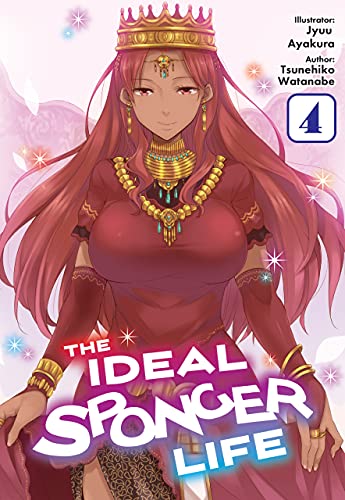
The Ideal Sponger Life, Vol. 3

June 23, 2021 by Sean Gaffney

By Tsunehiko Watanabe and Jyuu Ayakura. Released in Japan as “Risou no Himo Seikatsu” by Hero Bunko. Released in North America by J-Novel Club. Translated by MPT.

Ideal Sponger Life continues to do what it does best: spend most of its time making that title a lie. Indeed, Zenjirou straight up admits it here. While he wanted to have a lazy, indolent life to recover from his Japanese work burnout, after a few months the mental turmoil is fixed and… he wants to do things! Fortunately, there are things to do. He can install air conditioners, he can help to better the water wheel, and he can continue to fend off attempts to try to bride, seduce, or flat out trick him into bad ideas. That said, one thing he can’t do is talk to his son – the way languages and magic intertwine in this world, we want to make sure the baby grows up knowing the native tongue, not a mishmash of that and Japanese. This is, believe it or not, more interesting than it sounds. (It would have to be.) And for those of you who are still bored, I have good news: RAPTOR ATTACKS.

As you can see, much like Strike the Blood, the cover art is here to remind you who the heroine is and to ensure there are no other contenders. That said, for once the concubine thing is not a focus, as they have bigger things to worry about. They’re not getting salt from their major supplier, and a battalion is sent to figure out why. They quickly find it’s raptors. A ridiculous amount, with apparently a larger, more intelligent leader at the helm. Meanwhile, Aura is getting back into the swing of things after her pregnancy, seeing about getting her blacksmiths to make glass, her engineers to build the aforementioned water wheels, and lots of political dealings, including deciding who should lead the battalion to investigate the missing salt. And then there’s the neighboring country’s royal family coming to visit… something that is almost unheard of.

The royal family (however remote their succession is) will have to wait till next time, but that still gives us a lot to do. Aura’s chief general is still really hungry for power, and therefore the excuse of fighting off a bunch of raptors is welcome (though THAT may also have to wait till next time… this is not a book to read if you love action sequences, brief raptor attacks aside). No, it’s just deal making and world building, as far as the eye can see. Even those who were reading for the horny parts will be disappointed (again): Aura has given birth and recovered, but Zenjirou didn’t bring condoms with him from Japan, and she doesn’t want to get pregnant immediately after her first, so lovemaking is off the menu for now. Oh yes, and as with the previous book, there is an extended epilogue featuring Zenjirou’s wacky maid trio, and unfortunately, as with previous volumes, the author thinks it’s a lot funner than it really is.

So sponging is off the menu, but we do have lots of other things going on, and the next book should introduce some new supporting cast. In the meantime, this is a good read if you enjoy titles like Accomplishments of the Duke’s Daughter or other series that promise you a gimmick and then give you sensible good writing instead.

Filed Under: ideal sponger life, REVIEWS

  • « Go to Previous Page
  • Page 1
  • Interim pages omitted …
  • Page 93
  • Page 94
  • Page 95
  • Page 96
  • Page 97
  • Interim pages omitted …
  • Page 342
  • Go to Next Page »
 | Log in
Copyright © 2010 Manga Bookshelf | Powered by WordPress & the Genesis Framework