• Skip to primary navigation
  • Skip to main content
  • Skip to primary sidebar
  • Home
  • About Us
    • Privacy Policy
    • Comment Policy
    • Disclosures & Disclaimers
  • Resources
    • Links, Essays & Articles
    • Fandomology!
    • CLAMP Directory
    • BlogRoll
  • Features & Columns
    • 3 Things Thursday
    • Adventures in the Key of Shoujo
    • Bit & Blips (game reviews)
    • BL BOOKRACK
    • Bookshelf Briefs
    • Bringing the Drama
    • Comic Conversion
    • Fanservice Friday
    • Going Digital
    • It Came From the Sinosphere
    • License This!
    • Magazine no Mori
    • My Week in Manga
    • OFF THE SHELF
    • Not By Manga Alone
    • PICK OF THE WEEK
    • Subtitles & Sensibility
    • Weekly Shonen Jump Recaps
  • Manga Moveable Feast
    • MMF Full Archive
    • Yun Kouga
    • CLAMP
    • Shojo Beat
    • Osamu Tezuka
    • Sailor Moon
    • Fruits Basket
    • Takehiko Inoue
    • Wild Adapter
    • One Piece
    • After School Nightmare
    • Karakuri Odette
    • Paradise Kiss
    • The Color Trilogy
    • To Terra…
    • Sexy Voice & Robo
  • Browse by Author
    • Sean Gaffney
    • Anna Neatrour
    • Michelle Smith
    • Katherine Dacey
    • MJ
    • Brigid Alverson
    • Travis Anderson
    • Phillip Anthony
    • Derek Bown
    • Jaci Dahlvang
    • Angela Eastman
    • Erica Friedman
    • Sara K.
    • Megan Purdy
    • Emily Snodgrass
    • Nancy Thistlethwaite
    • Eva Volin
    • David Welsh
  • MB Blogs
    • A Case Suitable For Treatment
    • Experiments in Manga
    • MangaBlog
    • The Manga Critic
    • Manga Report
    • Soliloquy in Blue
    • Manga Curmudgeon (archive)

Manga Bookshelf

Discussion, Resources, Roundtables, & Reviews

Reviews

Durarara!! Yellow Scarves Arc, Vol. 1

October 5, 2014 by Sean Gaffney

By Ryohgo Narita, Suzuhito Yasuda, and Akiyo Satorigi. Released in Japan by Square Enix, serialization ongoing in the magazine GFantasy. Released in North America by Yen Press.

You’ll note in my header that I said ‘serialization ongoing’, even though this particular arc has ended in Japan. Square Enix and the author have decided to sell this series in self-contained arcs, each one taking in one of the light novels it’s adapting, rather that putting it all under one umbrella of volumes. Technically this is the 8th volume of Durarara!!, and it’s time to sit back and take stock of where we are. The first arc served to introduce one of our teen protagonists, Mikado, and show why he wasn’t quite what he seemed. The Saika arc did the same for Anri, and now here’s Masaomi on the cover of the Yellow Scarves arc, so it must be his turn.

drrr8

In some ways, Masaomi’s past is the least surprising of the three kids. He’s always seemed like his over the top happy, perverse guy side has been a front for something, and here we see what it is. The Yellow Scarves are his gang, and though he may not have had intentions of it becoming what it is today, what matters is that his people were hurt by the slasher. As such, he’s pulled back in in order to give the gang a figurehead and leader, and to get revenge. The irony here being that in the end, the person he may need to seek revenge on is also the girl he’s been hitting on this entire time.

Naturally his past is also tied up in Izaya’s, who appears here not just in his monomaniacal ranting phase of the present day, but also as a manipulative bastard in Masaomi’s past. I will say this for DRRR!!, it is not afraid to paint Izaya as an utter asshole. He confidently manipulates those he knows into doing what he wants; he spouts cod-philosophy that even makes Namie, a girl who has justified murder and her own incestual feelings, retch; and if it happens that someone who is equally broken latches onto Izaya and treats him almost like a savior, well, that’s fine too. Everyone in Ikebukuro is a game piece to Izaya, and since he mashes games together at will, the more pieces the better the chaos.

This leads me to Saki, who is introduced here. I had been spoiled a bit on who she was and the internet backdraft she was hit with when the anime came out. She is Masaomi’s old girlfriend, who suffered a crippling injury that has kept her hospitalized for an extended period, and she’s also utterly devoted to Izaya. Thus we have fans who hate her for being manipulative towards Masaomi (which she would be the first to admit, I suspect – I’m not pretending she’s a nice, innocent girl) and those who hate her for pairing reasons. Frequently I find myself drawn to characters who get this sort of backlash, and I find myself liking Saki, and wanting to see more of what makes her tick. Does she really love Masaomi? Is she merely a sleeper agent of Izaya’s? Both?

I suspect that this arc will lead up to a confrontation between the three kids – the cliffhanger here, showing Masaomi almost catching Anri spying on the gang, suggests it. This is a good thing. You can only sustain a buildup so much, sooner or later you have to have a payoff. We’ve had two smaller ones in the first two arcs, and I want a big one here. It should also be a lot of fun.

Filed Under: REVIEWS

Attack on Titan: Before the Fall

October 3, 2014 by Ash Brown

Attack on Titan: Before the FallAuthor: Ryo Suzukaze
Illustrator: Thores Shibamoto

Translator: Ko Ransom
U.S. publisher: Vertical
ISBN: 9781939130860
Released: September 2014
Original release: 2011

Hajime Isayama’s manga series Attack on Titan has become extraordinarily successful not only in Japan but worldwide as well. The series has inspired numerous manga spinoffs, anime, games, and more. Attack on Titan: Before the Fall is the first of three light novels written by Ryo Suzukaze and illustrated by Thores Shibamoto which serve as a prequel to Isayama’s original series. The second and third novels have been adapted as the manga series Attack on Titan: Before the Fall, illustrated by Satoshi Shiki, which is being released in English by Kodansha Comics. The first Before the Fall novel, however, was licensed and released by Vertical in 2014 with an English translation by Ko Ransom. Currently the novel, which was originally published in Japan in 2011, is chronologically the earliest story set in the Attack on Titan universe. I’m fascinated by the Attack on Titan phenomena and the large fanbase that it has developed, not to mention the series itself, so I was very interested in reading the Before the Fall prequel.

Angel Aaltonen may be young, but his ingenuity is impressive. A master craftsman, he and the others at the workshop he is a part of strive to design, create, and improve the weapons used in humanity’s fight for survival against the Titans. Except that Angel has never actually seen a Titan. Neither has most of the human population which seeks safety within a series of enormous walls. But while for a time they may be safe, they are also trapped by their own defenses. Only the members of the Survey Corps and Garrison forces have directly confronted the Titans, gigantic monstrosities that devour humans and bring destruction and terror. Even more dire is the fact no one knows how to stop or defeat the Titans. Angel and many others fear that one day the unthinkable will happen and the walls will fail. They are determined to discover the Titan’s weaknesses before that can happen, but the existing political and religious situation will make that prospect even more difficult than it already is to accomplish.

Most of the stories in Attack on Titan as a whole follow those characters who serve in the military–the people who are on the front lines directly fighting the Titans. Before the Fall, however, focuses on those who work behind the scenes to make those battles possible–the scientists, craftsmen, and engineers. (Granted, by the end of Before the Fall, Angel has become fairly hands-on himself.) It’s an interesting approach, giving a slight spin to an already familiar story, and one that I particularly liked and appreciated. Among other things, Before the Fall shows the development of some of the most iconic technology in Attack on Titan, the three-dimensional maneuvering gear. But as intriguing as the story is in Before the Fall, sadly the writing itself isn’t particularly engaging and the novel ends up being fairly slow going despite several intense action sequences. There were also a few frustratingly obvious oversights made by the characters; I found it difficult to believe that their logic would have been so flawed. Ultimately, I liked the premise of Before the Fall much more than its execution.

Although the writing might not be the best, where Before the Fall excels is in providing Attack on Titan with more thoroughly grounded worldbuilding, backstory, and lore. Suzukaze not only explores the development and creation of the equipment and weapons that will be used to fight the Titans, he also shows the beginning of the unrest between the general population, the military and government, and the religious cults and factions. There is enough of a basic introduction to the world that even readers who aren’t familiar with Attack on Titan should be able to easily follow Before the Fall, but the novel will appeal most to those who already know and enjoy the franchise. Before the Fall doesn’t tend to have the overwhelmingly bleak atmosphere of the original manga series, but it is still definitely a part of Attack on Titan, meaning that there are many casualties and several gruesome and horrifying turns of events. The air of dark mystery generally found in Attack on Titan remains in Before the Fall, as do the desperate punctuations of human hope and determination in the face of annihilation.

Filed Under: REVIEWS Tagged With: attack on titan, Light Novels, Novels, Ryo Suzukaze, Thores Shibamoto, vertical

Shoulder-a-Coffin Kuro, Vol. 4

September 30, 2014 by Sean Gaffney

By Satoko Kiyuduki. Released in Japan as “Hitsugi Katsugi no Kuro – Kaichu Tabi no Wa” by Houbunsha, serialization ongoing in the magazine Manga Time Kirara. Released in North America by Yen Press.

Sometimes, when I’m reading a series with as much ambiguity as this one, I find it difficult to discern which parts I should be picking apart as clues to what’s going on, and which parts I should just let wash over me as part of the overall mood. That’s slowly starting to go away – we get more information on Kuro, Sen and the witch here than in any previous volume – but there’s still large chunks of the story where I feel like I’m trying to connect the dots without a pencil. Luckily, the style and mood of the series are still superior, so it’s an excellent read even if I am sometimes baffled at what’s really going on.

kuro4

The volume opens right away with a lot more info than previous ones, as we see a young, grumpy man meet a cute young girl who he reluctantly takes in as his apprentice. The girl is clearly meant to be a young, innocent(ish) Kuro, but the man eludes us at first, until the horrific cursing itself, which we finally see in a bit more detail, and which rebounds horribly on not just Kuro but her master as well. After this flashback, the story (seemingly) picks up where it left off in Volume 3, with Kuro still in a coma and Nijuku and Sanju patiently waiting for her while trying to deal with the fact that her face is starting to fade in their young memories the longer they wait.

Kuro has never been a bright and upbeat series (it’s a contrast with the overtly happy and content GA Art Design Class), but this volume really seem to go above and beyond by dwelling on Kuro’s search for the one who cursed her, which also ties into what is clearly Kuro’s deathwish. We see several stories with Kuro traveling by herself, meeting people who are going on a long train journey, and she plans to go with them but doesn’t seem optimistic. Sure enough, as the train is about to leave she realizes she suddenly left her hat and coffin – which she never lets leave her sight – outside on the platform. You don’t have to read Night of the Galactic Railroad to know what this is a metaphor for.

Once awake and recovered, Kuro’s journey continues, but even then it seems to be a bit more fatalistic. She meets a young girl waiting for her parents who have never come home, and helps convince her to move on with her life. We see a long forgotten kingdom that destroyed itself in search of a perfection that doesn’t actually exist. And Sanju gets a nasty lesson regarding the fragility of things that are not her when she rips the arm off another girl’s cat by “playing too hard”, and they have to deal with the consequences. Kuro makes it very clear in this book that the two young girls she travels with are her “baggage” keeping her tied to this world, far more so than finding the witch who cursed her, and one worries what will happen when they finally have to part.

Shoulder-a-Coffin Kuro comes out so infrequently that it can be a hard series to connect with at times, but when you do it rewards the connection handsomely, being thoughtful, intelligent, moody, and somewhat depressing. Kuro’s heavy coffin is a metaphor, but it’s also real, and seeing her without it feels deeply wrong. I do wonder if the next volume might be the last – we seem like we’re near the end of our journey. There will likely be a long wait till we find out, though.

Filed Under: REVIEWS

The Disappearance of Nagato Yuki-chan, Vol. 6

September 28, 2014 by Sean Gaffney

By Nagaru Tanigawa and Puyo. Released in Japan as “Nagato Yuki-chan no Shoushitsu” by Kadokawa Shoten, serialization ongoing in the magazine Young Ace. Released in North America by Yen Press.

In my last review of this title, I seemed somewhat grumpy. The manga had gotten to a place that seemed ideal to wrap up, but trundled past and kept going anyway, with any love confessions quietly brushed under the carpet. I have no doubt that, with the main manga having ended in Japan, and no light novels or anime on the horizon, there is strong impetus to keep the remaining cash-cow spinoffs running. That said, I enjoyed this volume a lot more than the last, as Puyo settles in to do what he does best: take the Haruhi characters, soften them and give them alternate traits without quite turning them into another person, and write as many heartwarming, smile-inducing scenes as possible.

yuki-chan6

I had discussed Kyon’s confession (and Yuki not hearing it) last time, and while I’m annoyed he backed off, I’m pleased to see that his experience with the alternate Nagato has affected him. He can’t pretend to go out with Sasaki, even if it’s to help her deal with a guy that’s being too forward, because it wouldn’t be right to Nagato’s feelings. Not the Nagato he knows, but the alternate Nagato. This is very Kyon, and nice to see in a series which lacks his sarcastic inner monologue and thus sometimes has him be more of a cipher than necessary. As for Sasaki, like the rest of the female cast, she seems to be aware she loves Kyon but unwilling to admit it directly. You get the sense that the ‘date me to fend off my admirer’ plan was a bit of a ruse.

Possibly the funniest moment in the series involves Mikuru, another character who’s been reduced to a minor role in this spinoff due to the AU. Here she sees Nagato trying to decide what to do about Kyon seemingly having a better choice in Sasaki, and plays up the part of the wise older student, telling Yuki that jealousy is a perfectly valid feeling to have. That said, when Yuki asks how best to approach Kyon, Mikuru gradually falls apart, as it’s clear she has little to no experience in that area either. (Yuki and Mikuru in this series are somewhat defined by the friendship they have with more extroverted, pushy people who spur them on.) Mikuru being a “failure as a sempai” is hilarious, and Yuki’s response to this is sweet.

Haruhi spends most of the volume on the edges, as she’s pissed off at Kyon and Yuki for not letting her do a band with the literature club. Interesting, the ENOZ thing happened at last year’s cultural festival, where Haruhi was just a visitor, only with Tsuruya playing the brilliant guitarist. Even more interestingly, she gets Mikuru to willingly join the band on tambourine for this year (Mikuru is less shell-shocked by Haruhi here, even if she still has confidence issues). This all leads up to the last scene in the book, though, where Haruhi goes to get Ryoko to make sure she attends the concert. Ryouko snarks on her bunny outfit, but the important thing is Haruhi willingly thanking her for taking care of getting the band on the schedule, and Ryouko saying she did it as a friend, not as a class rep. (Also, ship tease out the wazoo, but that’s just me.)

I haven’t even gotten into all the tiny little Haruhi refs buried in here (I wonder if the Endless Eight joke was in the original Japanese…), or the fact that of COURSE Kuyou is at Haruhi and Sasaki’s school in this AU, and of COURSE she’s meek and shy just like Yuki is, and of COURSE she has an adorable meet cute with Taniguchi. This is not exactly a series to read if you want surprise, or, if I’m being honest, depth. But it’s got a good heart, which is pretty much its entire reason for being, and in that respect fulfills the reader’s needs. Haruhi fans should be pleased once more.

Filed Under: REVIEWS

The Tale of the Cavern

September 27, 2014 by Ash Brown

The Tale of the CavernAuthor: Minamoto no Shitagō
Translator: Ziro Uraki
Publisher: Shinozaki Shorin
ISBN: 9784784104376
Released: 1984
Original release: 10th Century

While reading The World of the Shining Prince: Court Life in Ancient Japan, I encountered quite a few references to a work of fiction called Utsuho Monogatari. Written in the late tenth century, most likely by the famous scholar and poet Minamoto no Shitagō, it is considered to be one of the first, if not the first, long-form narratives of Japan. That in and of itself caught my attention, but I became even more interested in reading Utsuho Monogatari (sometimes written as Utsubo Monogatari) when I learned how important of a role music played in the tale and that it was an immediate precursor to and major influence on The Tale of Genji. However, I did have a bit of trouble finding a translation of the complete work. Thankfully, with some help from other readers of classic Japanese literature, I discovered Ziro Uraki’s 1984 English translation from the Japanese publisher Shinozaki Shorin The Tale of the Cavern. (Somewhat unusual, as the title is more often translated in English as The Tale of the Hollow Tree.) Uraki was also the first person to translate Utsuho Monogatari from tenth-century Japanese into modern Japanese.

During the reign of Emperor Saga lived a young nobleman named Toshikage who was admired for his beauty, talent, and learning. At the age of sixteen he was ordered to join the embassy to China. However, the three ships that set sail for the continent encountered a large tempest and Toshikage, shipwrecked on the coast of Persia, was the only survivor. It would be many, many years before Toshikage would be able to return to Japan, bringing with him impressive musical skill and a collection of mystical koto gifted to him by the Heavens during his wanderings. These koto and the secrets to playing them–songs that could cause great storms and make the earth tremble or heal those who heard them–would be kept and cherished by his family for four generations. Toshikage’s descendents and their musical abilities were highly sought after, bringing them both strife and fortune in politics as well as love. Their lives would become closely entwined with those of the other nobility in the capital and even with those of the members of the Imperial family itself.

While the beginning of The Tale of the Cavern contains many fantastical elements, the rest of the novel tends to be much more realistic, following the political and romantic affairs of its many characters. However, the magic never entirely disappears from the tale and the novel both begins and ends with the magnificence and marvel of music. Proficiency in the arts–music, calligraphy, dance, poetry, and so on–was a highly desired quality among Heian-era nobility. Those who had such skill in The Tale of the Cavern were rewarded for their diligent study and natural talent, rising quickly through the ranks and securing advantageous marriages and promotions for themselves and their relatives. In addition to music, poetry in particular was a very important part of both court life in Heian-era Japan and in the novel iteself. The Tale of the Cavern is filled with poetry and numerous declarations of love–skillful wordplay was appreciated nearly as much as a person’s status and influenced the regard and esteem in which they were held by others.

As a story of music and love, I couldn’t help but be drawn to The Tale of the Cavern. I don’t think it will necessarily appeal to a general, modern audience, but readers who are interested in classical Japan and Japanese literature would be fortunate to read the novel. (If they can find it, that is.) The narrative does wander a bit, and the plot of the story isn’t especially driving, either. The individual chapters and the characters and events in them are related, but they aren’t always closely tied together; it can sometimes be difficult to tell just exactly how much time has passed between one and the next. Even so, The Tale of the Cavern provides a fascinating glimpse into Heian court life and all of the social and political maneuverings involved; granted, with a heavy dose of romance and just a touch of the fantastic and supernatural added to the novels’ more realistic elements. But I, for one, was glad to have the opportunity to read Utsuho Monogatari in its entirety.

Filed Under: REVIEWS Tagged With: Minamoto no Shitagō, Novels

Dororo, Vol. 3

September 26, 2014 by Ash Brown

Dororo, Volume 3Creator: Osamu Tezuka
U.S. publisher: Vertical
ISBN: 9781934287187
Released: August 2008
Original run: 1968-1969
Awards: Eisner Award

Osamu Tezuka was an extraordinarily prolific and influential creator of manga and anime. So far, only a small fraction of his total output has been released in English. Out of those, one of my personal favorites is his short manga series Dororo. With yokai, an accursed swordsman, and the inclusion of historical elements, I can’t help but like Dororo. Although eventually releasing an omnibus containing the entire series, initially Vertical published Dororo in three separate volumes which earned an Eisner Award in 2009. Dororo, Volume 3, released in 2008, contains the portion of the series that was originally serialized in Japan between 1968 and 1969. It was also during that time period that Dororo went on hiatus. Tezuka abandoned the manga for a year, leaving it without an ending, before returning to it when the Dororo anime series began. The manga was then given a proper conclusion, albeit a much shorter one than was first envisioned. The finale admittedly ended up being a bit rushed, but I love Dororo anyway.

Chased by demons and in turn chasing them down, Hyakkimaru is slowly regaining his forty-eight missing body parts one at a time; each demon he defeats brings him closer to becoming whole. Often it’s not the terrifying supernatural beings that Hyakkimaru must really worry about, though. Humans–with all of their failings, greed, and lust for power–can be just as dangerous as any monster. Hyakkimaru’s father, who selfishly sacrificed his own son’s body in exchange for demonic aid, has become an oppressive warlord. Hyakkimaru isn’t the only one suffering because of his father’s ambitions. The country is being torn apart by war and it’s the farmers and commoners who are being forced to support and fight for leaders they didn’t choose. Dororo, Hyakkimaru’s young traveling companion, also has a family legacy left to deal with. The diminutive thief’s late father was a bandit who amassed a significant amount of wealth. The map to the location of his treasure was tattooed upon his child’s back and now Dororo is pursued by those who want the riches for their own corrupt purposes.

Dororo is one of Tezuka’s transitional works as he began to develop more mature, adult-oriented stories in contrast to his more lighthearted manga generally intended for younger audiences. Dororo addresses serious issues like war and discrimination, but it also incorporates charm, humor, and bittersweet joy. One particular bright spot to balance the darker elements of the series is the titular Dororo. The small thief has led a hard life and can empathize with others and their misfortunes, becoming an exuberant and enthusiastic champion for their causes, while somehow remaining optimistic and cheerful in the face of all the unfairness and tragedy. Hyakkimaru, on the other hand, has an even more dire past than Dororo and has grown weary of the injustices in the world. But the time Hyakkimaru has spent with Dororo as they travel across Japan has changed him. Dororo’s positivity has rubbed off on Hyakkimaru and he has come to care for the youngster immensely. Whether Hyakkimaru realizes it or not, he desperately needed someone like Dororo in his otherwise bleak life.

The relationship that develops between Hyakkimaru and Dororo is only one component of many that makes me appreciate what Tezuka is doing with the series, even if it did end up being truncated. I was initially drawn to Dororo because of Hyakkimaru’s horrifying origin story and his fight to regain what he lost, searching for somewhere to belong and wanting nothing more than to live in peace. His specific situation may be unique, but that desire to be accepted by others is nearly universal. I also liked the supernatural elements in Dororo and how Tezuka slowly shifts the focus of the series to issues more firmly based in reality. The demons and monsters never completely disappear from Dororo, but as the manga progresses the historical influences and more realistic aspects of the manga become increasingly prominent. Among other things, Tezuka’s artwork and storytelling in Dororo takes inspiration from traditional legends and tales, samurai films, and events from Japan’s Warring States period, but he also incorporates his own touches and imagination and pulls it all together in a way that only Tezuka can.

Filed Under: REVIEWS Tagged With: dororo, Eisner Award, manga, Osamu Tezuka, vertical

My Love Story! Vol 2

September 25, 2014 by Anna N

My Love Story! Volume 2 by Kazune Kawahara and Aruko

I thought the first volume of this series managed to be both hilarious and refreshing with its unconventional for shoujo manga premise of focusing on the foibles of a unconventional male hero. The second volume took first place on my to-read pile as soon as I got it, and it was just as delightful as the first volume. There are a few episodic chapters here that all manage to focus on something a bit different, while still providing some continuity in exploring the developing romance between the giant Takeo and his cute girlfriend Yamato, with conventionally attractive Sunakawa acting as a willing and supportive third wheel.

The first chapter shows Takeo tasked with the job of rounding up some boys to go along on a group date with Yamato and her friends from school. BYamato has told all her friends how awesome her new boyfriend is, and when they are confronted with the somewhat ungainly Takeo and his band of misfits, they don’t react well. Takeo does excel at feats of strength, and when a fire breaks out he manages to rescue everyone from the burning building, winning the admiration of every new acquaintance. Yamato and Takeo’s relationship is tested further when he agrees to do the judo team the favor of temporarily joining them before a big match, which causes him to have to spend too much time training. Sunakawa acts as a somewhat enigmatic but still caring sounding board to the couple. As Takeo starts preparing the best birthday ever for Yamato, he notices that the usually reticent Sunakawa seems to be even more preoccupied, causing him to have to choose between his girlfriend and his best friend.

The type of comedy in My Love Story! is tricky to pull off. Even though Takeo is drawn to be exaggeratedly not the shoujo manga ideal and he gets into plenty of ridiculous situations, the steadfast affection of Yamato and Sunakawa ensures that he’s never an object of ridicule. The world might be against him, but he has the support of people who think he’s great the way he is. It’s a nice central message that’s absent from more cynical series. Aruko does a great job with drawing physical comedy of the series, with plenty of exaggerated expressions and action elements, but there are also plenty of more subtle moments as Sunakawa shields his emotions and Yamato reacts with joy to practically everything Takeo does. This is all a balancing act of plot and art, and My Love Story! pulls it off well.

Filed Under: REVIEWS Tagged With: My Love Story, shojo beat, viz media

GA: Geijutsuka Art Design Class, Vol. 6

September 25, 2014 by Sean Gaffney

By Satoko Kiyuduki. Released in Japan by Houbunsha, serialization ongoing in the magazine Manga Time Kirara Carat. Released in North America by Yen Press.

As ever, one reason that GA is probably my favorite “4-koma about girls in a school setting and their daily lives’ manga is the art school setting. Art pervades the entire title, and we get explanations of art history each time by the cast, who are trying to understand it themselves. This volume it’s the periods of art history, ranging from the Ancient Greeks to the Renaissance to Baroque and Rococo periods, with each represented by a cast member in the appropriate pastiche. If a point needs to be made that falls outside the scope of modern life, we can have the cast members having a dream, which Kisaragi (typically) does at the start, and Namiko (far less typically) does later on. The characters’ eccentricities drive the comedy, but art drives the plot. (Such as it is – this is still a 4-koma at heart.)

ga6

Speaking of the characters’ eccentricities, this series usually has one chapter per volume that takes a closer look at quiet, reserved Miyabi, and this one is no exception. When asked to identify student’s artwork from a random selection, hers is the first they pick out, because it’s the best. As we discover, she’s been talented her entire life, but getting told that she’s good in everything she does has become somewhat meaningless to her, to the point where she seeks out advice from a teacher. Miyabi has a lot of other issues North American readers don’t have to deal with (her impending arranged marriage, for one), but I think many will feel for her here, and be intrigued by her obsession with the color black, which has mostly been used comedically in the past. Of course, it’s Kisaragi who ends up pulling her out of her funk – the two have the deepest bond among the cast.

The other chapter that really caught my eye was the one that traveled back in time to 1972, looking at a period when the school’s fashion department was separate from the art school. We see five students – who of course look amazingly like our own cast, but with different names and slight variations – dealing with their own issues, mostly revolving around current trends in fashion. They try to imagine what the school uniform will look like in 2014, and come quite close to Kisaragi’s own uniform. This odd time machine-like chapter is one reason why I never really get tired of GA despite its comedy antics – there’s always a new perspective on things.

There are also typical school plots here, though done with an art school touch. In the athletic competition, they have to create art to be used, and one boy overdoes it with a giant paper mache crane (which ends up, by various wacky events, becoming more of a riceball). The best gag here is probably the relay race and its resolution, which relies on family resemblance. Towards the end we have the school festival, where Awara and her art club members are pulling out all the stops in creating a 3D art exhibit, and rope in Kisaragi and her friends to help. It’s nice to see the groups, which rarely interact within the series, coming together like this – something lampshaded by Awara herself.

The usual caveats apply – if you don’t like 4-koma comedies with lots of one-liners and cute but eccentric girls, this will not change your mind. If you do but are a bit tired of the sameness, give GA a try. If nothing else, you’ll learn about art.

Filed Under: REVIEWS

Time Killers

September 23, 2014 by Sean Gaffney

By Kazue Kato. Released in Japan by Shueisha, stories collected from various Jump one-shots. Released in North America by Viz Media.

Rabbits. There’s no helping it, that’s the one thing I take away most from this collection of short stories by the author of Blue Exorcist. There are romances, action adventures, tragic minimalist studies, and amusing comedies, but the rabbits seem to pervade the work. The author clearly likes her rabbits. Once you get past that, though, you’re left with a solid collection that nevertheless tells you what should be obvious: this is a hodgepodge of stories that together helped her write Blue Exorcist, which is better than all of them and her strongest work. This doesn’t denigrate Time Killers: in fact, you’d expect most collections of early works to be that way. Authors improve.

timekillers

The first story is one of the darkest, with the rabbit suit (which in this story looks remarkably like Arthur’s moth costume from The Tick) being one of the few bits of humor. A teenage boy whose life to date has been a series of tragedies now makes his living assassinating for hire, and yet continues to try to eke out an existence as a high school student. Now he has to kill the father of one of his classmates, a raging idealist who wants to save the world. It’s a terrific debut (the first and last stories in the collection are the best), and you can easily see why it was picked up as her debut.

The middle of the collection is more patchy. One story seems to be a post-apocalyptic Western where half the cast are talking rabbits, but it never really gelled for me, possibly as the main human kept reminding me too much of Naruto. There are some excellent 5-6 page short stories that show off Kato’s art and sense of pacing, both with minimal to no dialogue. Redemption also features in a few of these, with a young man who has to care for his daughter realizing that he can’t keep running from life forever (and literally getting away with murder… the comedic tone of this story is deliberately jarring, which I quite liked). There are also a few stories that just didn’t work for me, such as the one with the “magic girl rice bowl”, and the romance among aline invasion, which needed more development and room to get the reader to care about what was going on.

As I said earlier, the highlight of the volume is the final story, The Miyama-Uguisu Mansion Incident. You can see the seeds of Blue Exorcist sprouting here, and not just because the two leads look like Rin and Shiemi. The art has come to the point where it can almost carry the story by itself, and the theme of gaining enough strength to be able to save someone important to you is one that resonates powerfully for a Jump viewer. The villain is nicely evil and over the top without quite descending into camp, and there’s an air of sweet melancholy that drapes over the whole affair. It’s a fine work.

Viz hasn’t skimped on the presentation – the paper quality is high, with many color pages throughout. Any Blue Exorcist fan should pick this up, and if casual readers get it and enjoy it, go track down Blue Exorcist. Also, it has lots of rabbits and rabbit costumes. Far more than your average Jump title.

Filed Under: REVIEWS

Genshiken: Second Season, Vol. 5

September 21, 2014 by Sean Gaffney

By Shimoku Kio. Released in Japan by Kodansha, serialization ongoing in the magazine Afternoon. Released in North America by Kodansha Comics.

I’ve reviewed the last couple of volumes of this sequel to Genshiken in Bookshelf Briefs, and have remarked several times that it almost feels like they’re trying to aim for a new demographic with all of the new cast being of a more BL tilt, and the graduation of most of the previous players. That said, there are still characters dropping in and out throughout, and Madarame has been a constant, if smaller presence. Well, that changes here. The new volume starts with a definitive ending to the most talked about plotline of the old series, and helps to set up a new one that will also star Madarame, who has never been the viewpoint character but has always been the face of Genshiken, so to speak.

genshiken2-5

The old plotline is, of course, Madarame’s crush on Saki, and the fact that she’s been sort of aware but ignoring it. Last volume she admitted this, and the rest of the club set things up so that they could be alone and he could confess. No one – not even Madarame – seriously expects anything but a rejection. After all, Saki has been dating Kousaka since the series began, and while the majority of fans aren’t really thrilled with that, their love for each other has never been in question. (In fact, the scenes with Kousaka here are some of his best, as I finally begin to understand a character I’ve always had trouble with. As for the “confession” itself, it was very Genshiken, being both hilarious and heartwarming, and the aftermath slips to purely being the latter.

It feels like an ending, as Kio himself lampshades, but there’s still a lot of things to resolve. For one, as Saki notes, Madarame is busy obliviously gathering a harem of his own. Keiko gets a lot more face time here, and we see more of why she’s interested in someone with all the baggage that Madarame has – baggage that gets worse when he decides to quit his job, saying himself he wants to see how far he can fall. As for Hato, his crush on Madarame, if it is one, is still wrapped up in his own identity, which is in flux. This is painful for him, and it’s almost reminiscent of Wandering Son at times, except Hato is far less accepting of his own desires. Having Hato and Madarame intersect like this is a perfect plot – they’re the two most interesting characters of all of Genshiken.

Other than that, it seemed appropriate to devote a chapter to Ohno and Tanaka, who are almost the forgotten couple of the manga (partly die to Tanaka mostly being together about thin gs – even here he’s the adult.) This is also quite cute, and has a nice heartwarming scene that could be construed as a proposal – that’s certainly how the club takes it. And while there isn’t much Sue, the cliffhanger makes me think we may get more of her next time. Genshiken hasn’t forgotten about its old fans, but still has plenty for new readers. If you enjoyed the series before, this volume will not disappoint you.

Filed Under: REVIEWS

What Did You Eat Yesterday?, Vol. 4

September 19, 2014 by Ash Brown

What Did You Eat Yesterday?, Volume 4Creator: Fumi Yoshinaga
U.S. publisher: Vertical
ISBN: 9781939130792
Released: September 2014
Original release: 2010

With each new volume of Fumi Yoshinaga’s series What Did You Eat Yesterday? that is released in English, I seem to fall in love with the manga just a little more. What Did You Eat Yesterday? probably isn’t my favorite series by Yoshinaga, but I still enjoy the series immensely. Granted, What Did You Eat Yesterday? has a few things going for it that particularly appeal to me. First of all, I’m already a well-established fan of Yoshinaga’s work in general. I also happen to be a fan of food and food manga which What Did You Eat Yesterday? most definitely is. But perhaps most importantly, I appreciate the series’ realistic portrayal of a devoted gay couple and some of the issues that queer people face in contemporary Japan. Food and gay men are frequently found in Yoshinaga’s manga–often together for that matter–so it’s not a terribly surprising combination to see in What Did You Eat Yesterday?. I’m certainly not going to complain about it, though. The fourth volume of the What Did You Eat Yesterday? was published in Japan in 2010 before being released by Vertical in English in 2014.

Although he is a successful and respected lawyer, Shiro much prefers his time spent in the kitchen over his time spent at the office. Cooking has its challenges too though, like when Shiro’s boyfriend Kenji decides that they should have friends over for a dinner party rather than eating out. This solves the problem of Shiro’s constant worrying over being outed as gay while in public, but now he is left to fret over what to serve two men with very discerning palates. (Fortunately, Kenji is more than happy to eat whatever it is Shiro cooks up.) Every once in a while it’s actually Kenji who is set loose in the kitchen. Shiro is more particular when it comes to cooking and preparing meals so he’d much rather be the one in charge, but occasionally that’s just not possible. Kenji might not have the same confidence or natural flair that Shiro has for food, but he can still make a pretty good dish when he needs or wants to. From time to time even Shiro is faced with a technique that he hasn’t quite mastered yet. And so while cooking is often a way for Shiro to unwind, it can sometimes cause a bit of stress, too.

As always, food, it’s preparation, and the resulting recipes are all a major part of What Did You Eat Yesterday?. Some readers will find the minute details tedious, especially if they have no inclination or ability to actually try making any of the dishes, but those sections can easily be skimmed over or simply appreciated for Yoshinaga’s artwork. Her illustrations of food and cooking techniques are beautifully drawn and nearly photorealistic in many instances. Yoshinaga is able to convey a wide variety of textures which is especially important, and impressive, as she is working in black and white without the aid of color. But what particularly struck me about the cooking scenes in the fourth volume of What Did You Eat Yesterday? is how Yoshinaga skillfully captures the different moods pervading the kitchen through Shiro and Kenji’s body language and facial expressions: Shiro’s intense preoccupation when trying to put together the perfect meal, his gloom and frustration when something doesn’t turn out quite right, Kenji’s frenetic happiness when he gets a chance to take care of Shiro for a change, and so on.

Even though a fair amount of What Did You Eat Yesterday? is spent in the kitchen, Yoshinaga’s focus on the characters is a particularly important component of the manga. The series tends to be episodic from chapter to chapter, but growth and change can still be seen as Kenji and especially Shiro are further developed. The fourth volume of What Did You Eat Yesterday? shows Shiro struggling with his anxieties about still being partially in the closet, admiring and perhaps even envying how open, easygoing, and carefree Kenji is able to be about his sexuality. Kenji and their friends are exceptionally considerate and accommodating of Shiro’s fears, but those fears still understandably cause some tension in his relationships. Another interesting developement in this volume of the series is that both Shiro and Kenji at least temporarily become the confidants of their respective bosses who have a few family issues of their own to work out. While the food in What Did You Eat Yesterday? is appealing, it’s really these sorts of connections and moments between characters that make the series so engaging.

Filed Under: REVIEWS Tagged With: fumi yoshinaga, manga, vertical, what did you eat yesterday?

Attack on Titan Guidebook

September 18, 2014 by Sean Gaffney

By Hajime Isayama and the editors at Kodansha. Released in Japan by Kodansha in two separate volumes, “Inside” and “Outside”. Released in North America by Kodansha Comics.

Shonen manga in Japan get quite popular, and as you’d expect, fans want to know absolutely everything about their favorite characters, things that wouldn’t necessarily come up in the manga proper. For those people, there are guidebooks like these – they consists of bios, recaps, examinations of all the little fiddly bits, character popularity polls, favorite quotes, etc. They allow the creator to reveal some information that would likely fit awkwardly if it had to be inserted into the story proper, and let fans understand the characters and story better – OMG, Jean is an Aries! Just like me!

tit

For those familiar with these sorts of guides, the style is unsurprising, but if you aren’t, be prepared for lots of superlatives. At times it reads like a gossip magazine, with lots of punchy headlines and exclamation marks as it tells the story of the 104th training squad. These are two books released separately in Japan joined together, and sometimes you’re able to see that – the book has spoilers through Vol. 11 of the series, but much of the first half seems to have spoilers only through Vol. 9. It can also be somewhat inconsistent – the book takes pains not to discuss Reiner and Bertholt’s secrets in their bio, but has no issues revealing Ymir’s.

There’s a long interview with Isayama where he discusses the major influences on the series – many may be surprised to here one of the biggest was Muv Luv Alternative, though those who have read the visual novel itself may be less surprised – it’s darker than Higurashi. I was less surprised to hear about the influence of Saving Private Ryan in regards to the emotional reactions of the soldiers. The workings of the manga industry are briefly shown, as Isayama discusses how he was asked to move to a more expensive apartment so that he could fit his assistants in it – but then had to make the series a success or he couldn’t afford the apartment!

Where the guidebook excels is in giving a name and backstory to the minor characters like “girl who dies in Volume 2” or “that one guy whose name I can never remember”. Isayama’s art is terrible, especially at the start, and this guide is a boon for those who can’t really tell apart the 5-6 different soldiers with short blond hair. There’s also a lot of discussion of the mechanics of titans and how the vertical gear works, and to show it’s not all grim darkness there’s also some cute fake interviews with the cast, and Isayama drew some AU art based on reader suggestions, such as Sasha, Connie and Reiner forming a band.

Obviously this is not something that you want to pick up if you’re new to the series and wish to see what it’s about. Read the actual manga instead. For those who are fans of the manga, though, this gives you lots of facts and figures, reminds you of your favorite moments, and is a good go-to reference guide. Also, I think the original must call Sasha a boke about 80,000 times. “Airhead” is the translation here.

Filed Under: REVIEWS

Wandering Son, Vol. 7

September 17, 2014 by Ash Brown

Wandering Son, Volume 7Creator: Takako Shimura
U.S. publisher: Fantagraphics Books
ISBN: 9781606997505
Released: August 2014
Original release: 2007

The wait between the release of each new volume of the English-language edition of Takako Shimura’s manga series Wandering Son can seem torturous, but without fail I’m exceptionally glad when the next installment is finally available. Wandering Son is a manga that is personally very meaningful to me, so I’m always a little worried that Fantagraphics won’t be able to complete the series, which would be a shame. Fantagraphics’ edition of Wandering Son is beautiful, complete with color pages and hardcover binding. Wandering Son, Volume 7 was originally published in Japan in 2007 while Fantagraphics’ English translation by Matt Thorn was released in 2014. The series concluded in Japan with the fifteenth volume, which means that the English-language release has just about reached the midway point of Wandering Son. I sincerely hope the rest of the series will be able to be published, too.

The seventh graders’ production of a gender-swapped Romeo & Juliet for their school’s cultural festival is over, but there doesn’t seem to be any end in sight for the drama unfolding in the classroom. Although a few of the students were dissatisfied with their own parts and performances, the play was generally well received, resulting in the theater club attempting to scout some of the best talent. This does cause some tension as the members of the various school clubs shift around to follow their personal interests, leaving friends behind in the process. Some friendships are being severely tested while other, more antagonistic, relationships appear to be on the mend. As Shuichi, Takatsuki, and the others grow and mature, their connections to one another change and evolve, too. Puberty continues to progress as well, bringing with it unwanted changes, anxieties over developing bodies, and concerns over physical appearances. What to wear, what not to wear, acne, and skin problems are all legitimate worries, providing opportunities for both teasing and bonding.

Wandering Son is told in a somewhat non-linear, almost fragmented sort of way. Shimura takes individual moments and memories, often from different points in the characters’ lives, and then layers them together, drawing connections between the separate pieces that would not necessarily have been obvious otherwise. This makes it easier for readers to see that the characters, though they all have their own unique perspectives and individual experiences, are dealing with some very similar issues. Their approaches to those issues and how they deal them are often quite different, though. This layering and revealing of parallels, as well as the other narrative and storytelling techniques that Shimura uses, are very effective in building on some of the themes that Wandering Son explores–namely personal identity–by exhibiting the depth and nuance of the series’ sensitive portrayal of the characters as individuals. The realism and authenticity of the characterization in Wandering Son is one of the manga’s greatest strengths.

Another related aspect of the manga that is handled particularly well is the natural changes in the characters’ relationships with one another. Wandering Son has a large cast of both primary and important secondary characters and it’s a close-knit group. When something happens between two of the members, the social dynamics of the entire circle is influenced. Major developments occur when Shuichi and Anna begin dating, helping to trigger some unexpected changes in Chiba and Takatsuki’s relationship which were particularly interesting to see. Chiba is incredibly self-centered and at times exceptionally unlikeable, but she’s also perceptive and seems to be very sure of herself and who she is. Takatsuki, on the other hand, is still working all of that out but is fiercely determined in other ways. It’s because of Takatsuki’s persistence, despite Chiba’s prickliness, that their friendship has a chance of improving–something that everyone would be happy about. It won’t be an easy process, though, and will take some time. Wandering Son excels in capturing the real-life messiness of relationships.

Filed Under: REVIEWS Tagged With: Fantagraphics Books, manga, Takako Shimura, Wandering Son

Ranma 1/2, Vols. 7 & 8

September 16, 2014 by Sean Gaffney

By Rumiko Takahashi. Released in Japan by Shogakukan, serialized in the magazine Shonen Sunday. Released in North America by Viz.

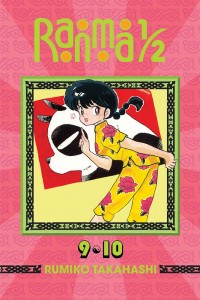
I’ve joked several times in the last few weeks about warning people that this volume features the debut of Happosai, but there’s a kernel of truth to that warning: Happosai is repugnant, and a polarizing figure both within Ranma fandom and within the series itself. Not because anyone really likes him – even his fans think he adds some fun comedy but don’t like him personally – but whether the comedy he adds to the series is really needed. Because Happi is defined by being a pervert – yes, an incredibly strong martial arts master pervert, but a pervert just the same. He feels up women, he steals their underwear, he literally gains strength through contact with females. He is a walking trigger warning. He’s meant to be the male version of Cologne, but Cologne’s actions all serve a greater purpose – at least so far – and Ranma learns a great deal from her. For all that Happi is supposed to be training Ranma as his successor, there’s no lessons, no training, and no point. He is a pox on Ranma 1/2, and will be here till the end of the series. He doesn’t even make horrible puns, like Cherry, his spiritual predecessor from UY, did.

ranma7-8

(breaths out) I feel better. Now let’s talk about what was fun this volume. Ranma has settled into doing what it does best, which is ‘almost anything goes in the name of comedy’. (It’s not *quite* as over the top as UY, so I added the ‘almost’.) There’s lots of martial arts battles, as we see Ranma, Akane and Shampoo compete in martial arts takeout delivery, as well as Akane and Ranma fighting to defend the name of their supposed school when a Dojo Destroyer comes to town (the Destroyer himself looks like a ridiculous over the top stereotype, and barely speaks, but I’ll gloss over that for now. And there’s plenty of comedy, as Ranma’s class puts on a production of Romeo and Juliet, which means a lot to Akane (who was Romeo as a kid, but now finally gets to be Juliet), but little to any of the various competing Romeos, including Ranma. (I was highly amused to see her yelling at Ranma for not reading the play, as in the end all Takahashi takes from the original is ‘balcony scene’ and ‘kiss’.)

There’s quite a lot of time devoted to Ranma (and sometimes Genma) trying to find a cure for the curse, and there are a few temporary cures but nothing really permanent. While this will still play out across the series, as we get further in Ranma simply gets more accepting of his dual nature, and seeing the desperation shown here is interesting. As for Ranma and Akane themselves, they’re both quite attracted to each other and sympathetic to each other’s pain once they pause to think – but they hardly ever do that anymore, so when we do see such moments (Akane bringing Ranma warm food and drink in the backlot), it’s nice and heartwarming. (The box Happi hides under in that scene, by the way, has a reference to Nura: Rise of the Yokai Clan. Wrong company! Shogakukan should be turning in its grave! Don’t tell me they aren’t dead, I’ve seen what Sunday sales in Japan are like lately.)

Miscellaneous thoughts: At one point, when Genma is at his absolute sketchiest, Kasumi calls him annoying. For Kasumi, this is a devastating comment, particularly this late in the series. Both Genma and Soun come off particularly badly in this volume, both as former disciples of Happi who want to be free of him but can’t do anything about it, and as parents who try to trick their children into marrying each other. Nabiki still exists mostly as the “normal” character – we see her deny she’s related to her family more than once in this volume – and Takahashi’s habit of showing her constantly eating is in full force here. Kuno and Gosunkugi are also as loopy as ever – Gosunkugi in particular suffers so much and is loathed by so many you can’t help but laugh at his pathetic awfulness.

Another solid volume of Ranma, though those who found the series beginning to grate at this point and hoping for more plot resolution are only going to get more annoyed as it goes on. Next time around we’ll introduce our final main cast member, and one who’s even more polarizing in her own way. Not because of her own characteristics, but because of how she gave fans who hate Akane a real alternative, and the ship wars truly began in earnest. Next time, we’ll talk Ukyou Kuonji.

Filed Under: REVIEWS

Hayate the Combat Butler, Vol. 24

September 14, 2014 by Sean Gaffney

By Kenjiro Hata. Released in Japan as “Hayate no Gotoku!” by Shogakukan, serialization ongoing in the magazine Shonen Sunday. Released in North America by Viz.

This is probably my favorite volume of Hayate the Combat Butler to date. It manages to resolve the Athena storyline with a lot of fighting spirit, emotional turmoil, and one big “call my name” rescue by Hayate. But is also has a great deal of heart, as we see Hayate’s reunion with Athena, Hina’s heart-to-heart with Ayumu, and some strikingly normal and non-insane life advice from Yukiji. And don’t worry, there’s a good amount of humor here as well, mostly featuring the minor cast back at the hotel having to fight off a pack of mythological beasts. This volume packs a lot of stuff into it, and it’s no surprise that the emotional resolution of Athena’s storyline will carry over into Volume 25.

hayate24

We also see Nagi at perhaps her most mature, even as she insists that Hayate can protect her from anything. Nagi has been a bit of a polarizing character, being both underage *and* tsundere, but even her detractors seemed to like this scene, where she crushes the stone that represents Hayate’s moral dilemma, and announces that she will deal with the consequences no matter what. Of course, I doubt she really realizes what it’s like for a girl like her to live without money, but it’s still great to see.

Likewise, it’s always nice to see Yukiji as the big sister that she usually tries to avoid being. She senses Hina’s abject depression even over the phone, and so flies over there to set things right. (Hina lampshades that this is possible, as she notes Yukiji would have to fly all the way from Italy… which isn’t that far away from Greece, in fact.) Yukiji’s advice is blunt but necessary, as Hina (and Ayumu) both need to be reminded that even in a manga, you sometimes can’t get the happy ending you want, and that this is what life is – a series of struggles. The friendship forged by Hina and Ayumu is important right now, as they can console each other – and also note that it’s nice to be in love with a man who’s loved the same woman for 10 years now, rather than an indecisive player (which Hayate is often accused of being.)

Hina also gets to be at the final battle, as Ayumu and Aika coerce her into dressing as Red, the super sentai hero. Then a magical sword drags her to the battle (literally) that Hayate is having with a possessed Athena and King Midas. There’s little to no humor here, as we see Athena’s struggles and Hayate’s anguish in raw, unfiltered scenes. Yet even here, Hata can’t resist making cultural references – the entire finale is an homage to the end of Shoujo Kakumei Utena, with Athena trapped in a dark place surrounded by swords, and Hayate breaking through in order to rescue her from her despair. It’s hard not to cry with happiness as they embrace, Midas vanquished at last – even as Hina, making a quick exit, is trying not to cry in emotional pain.

The last chapter is pure romantic shipping fluff, as Athena gives into to her grumpy tsundere side (that 3/4 of this cast seems to possess) and tries fishing for compliments while at the same time being upset by them – witness her attack on Hayate after he notes how he was surprised how large her breasts had gotten. As the volume ends, Athena starts to tell Hayate how she escaped from the castle ten years ago, but I have a feeling that we’re also due for a parting soon – after all, Hayate is up to Vol. 41+ in Japan, and did not end with Hayate and Athena ending up together. So expect the next volume to nudge back towards the comedic status quo. For now, however, this was an amazing volume of shonen manga, and well worth the temporary departure from comedy.

Filed Under: REVIEWS

  • « Go to Previous Page
  • Page 1
  • Interim pages omitted …
  • Page 244
  • Page 245
  • Page 246
  • Page 247
  • Page 248
  • Interim pages omitted …
  • Page 342
  • Go to Next Page »
 | Log in
Copyright © 2010 Manga Bookshelf | Powered by WordPress & the Genesis Framework