• Skip to primary navigation
  • Skip to main content
  • Skip to primary sidebar
  • Home
  • About Us
    • Privacy Policy
    • Comment Policy
    • Disclosures & Disclaimers
  • Resources
    • Links, Essays & Articles
    • Fandomology!
    • CLAMP Directory
    • BlogRoll
  • Features & Columns
    • 3 Things Thursday
    • Adventures in the Key of Shoujo
    • Bit & Blips (game reviews)
    • BL BOOKRACK
    • Bookshelf Briefs
    • Bringing the Drama
    • Comic Conversion
    • Fanservice Friday
    • Going Digital
    • It Came From the Sinosphere
    • License This!
    • Magazine no Mori
    • My Week in Manga
    • OFF THE SHELF
    • Not By Manga Alone
    • PICK OF THE WEEK
    • Subtitles & Sensibility
    • Weekly Shonen Jump Recaps
  • Manga Moveable Feast
    • MMF Full Archive
    • Yun Kouga
    • CLAMP
    • Shojo Beat
    • Osamu Tezuka
    • Sailor Moon
    • Fruits Basket
    • Takehiko Inoue
    • Wild Adapter
    • One Piece
    • After School Nightmare
    • Karakuri Odette
    • Paradise Kiss
    • The Color Trilogy
    • To Terra…
    • Sexy Voice & Robo
  • Browse by Author
    • Sean Gaffney
    • Anna Neatrour
    • Michelle Smith
    • Katherine Dacey
    • MJ
    • Brigid Alverson
    • Travis Anderson
    • Phillip Anthony
    • Derek Bown
    • Jaci Dahlvang
    • Angela Eastman
    • Erica Friedman
    • Sara K.
    • Megan Purdy
    • Emily Snodgrass
    • Nancy Thistlethwaite
    • Eva Volin
    • David Welsh
  • MB Blogs
    • A Case Suitable For Treatment
    • Experiments in Manga
    • MangaBlog
    • The Manga Critic
    • Manga Report
    • Soliloquy in Blue
    • Manga Curmudgeon (archive)

Manga Bookshelf

Discussion, Resources, Roundtables, & Reviews

Features & Reviews

Off the Shelf: Ayako

February 24, 2011 by MJ and Michelle Smith 23 Comments

Welcome to another edition of Off the Shelf with MJ & Michelle! I’m joined, as always, by Soliloquy in Blue‘s Michelle Smith.

This week, Michelle and I take a break from our regular format to focus on a single title, Osamu Tezuka’s Ayako, published in English by Vertical, Inc.


MJ: So, Michelle, read anything incredibly depressing lately?

MICHELLE: Ha! Y’know, I actually found Ayako more confounding than depressing. Perhaps that’s because I just recently read some Barefoot Gen, which is an even bigger downer.

MJ: Oh, interesting. What confounded you so about it? Or are we just getting ahead of ourselves with a question like that?

MICHELLE: I think possibly we are, but in general, I just couldn’t figure out what the whole point of it all was. What exactly was Tezuka trying to say? Perhaps that’s something you can help me with.

MJ: I do have some ideas about that, yes. To make things easier on ourselves and our readers, though, maybe we should start with the basic plot. Want to take a stab at it?

MICHELLE: Somehow I knew my summarizin’ skills would be called upon! :) Spoilers ahead.

The story begins in 1949, when former POW Jiro Tenge returns home after the war to a chilly reception from his father, Sakuemon, who is described as arrogant, lecherous, and “thoroughly contemptible,” and learns that he has a new little sister. The girl, Ayako, is the product of Sakuemon’s liaison with his daughter-in-law Su’e, who has been offered up by her husband (Jiro’s elder brother) in exchange for a larger share of Sakuemon’s inheritance. Jiro is appropriately creeped out.

At first it seems like he’s going to be the sane one amidst his bizarre family, but then it’s revealed that he betrayed many of his countrymen at the POW camp and is currently spying for the occupying American forces. When they instruct him to convey a particular corpse onto railroad tracks, he complies, and when Ayako and a playmate later see him washing blood off his shirt, spirals into desperate attempts to cover up his crime, which ultimately leads to Ayako being imprisoned in a storehouse for 23 years while her family members either abandon or violate her.

Ayako finally escapes in 1972 and flees to Tokyo. Jiro, who has changed his name and is now the boss of what seems to be a crime syndicate, has been sending her money for ages and she mistakenly believes he’s her benefactor. Some dogged investigators won’t let up on Jiro and, finally, he ends up fleeing back home where all the offending family members get trapped in a cave-in and eventually die, except for Ayako. The end.

MJ: I know I was cruel to make you be the one to do that, but somehow I knew that if anyone could summarize 700 pages of human selfishness and degradation into a few short paragraphs, it would be you. :D

MICHELLE: I really don’t know where to begin with describing the depths of the degradation, honestly. Everyone in the Tenge family is guilty of something. You have the men, who are more obviously guilty of crimes like murder and incest, but the women are equally to blame, for allowing Ayako to be imprisoned and abandoning her to her fate. Nearly everyone wants to possess Ayako for some reason—even the policeman’s son, who attempts to acclimate her to the outside world, says, “Ayako is mine!!!”—while she herself equates feelings of affection with physical love, and so tries to put the moves on various inappropriate people.

There’s substantial violence against women, too, and for a while I thought the book was misogynistic. The only slightly strong female character seemed to be the fellow spy Jiro takes up with for a while, but after an absurdly comical seduction scene she becomes clingy. “Just don’t ever ditch me,” she implores him. But then I realized that the men are all portrayed just as horribly, too. They’re all greedy, sleazy, lust-driven cretins. It stopped looking like misogyny and more like outright misanthropy.

MJ: I don’t think misanthropy is a misread, and it’s an interesting viewpoint from Tezuka, who, though never shy about exposing the darkest aspects of humanity, has in the other works of his that I’ve read still found some kind of hope in it all… something of humanity worth treasuring. Yet here, as you say, everyone is contemptible in some way. All the men are morally wretched beasts, and all the women are helpless to stop them, eventually becoming complicit in Ayako’s ongoing abuse by their inaction. Even Shiro, the youngest of Ayako’s “brothers,” who for the longest time appears to be the one member of the family genuinely interested in doing the right thing (even to his own peril), is eventually corrupted by his own lust, to the point of being just as awful as any of them.

Only Ayako, who is not really a person at all in the construct of the story, remains innocent. And it’s a twisted kind of “innocent” that makes her really unfit to interact with anyone (not that this is a huge loss).

MICHELLE: I wonder if part of Tezuka’s intent was to subvert the audience’s expectation that a hero of sorts would appear. At first, Jiro appears the likely candidate, but that falls through. “Okay, Shiro then,” I thought, since he was such an honest little kid, but he succumbs to temptation and beds Ayako. Finally there’s Hanao, the young man Ayako cohabitates with, who remains more virtuous than anyone else, but still thinks of her as an object. Why did everyone want to possess her, anyway? Is it simply that she’s malleable and nubile?

MJ: I wonder if he just thinks a hero is impossible in Japan of that time. He’s obviously got a lot to say about post-war Japan and the American occupation. He illustrates both the sickness of old Japan (evident in the Tenge patriarch’s unchecked urges) and the sickness of the new (Jiro’s treachery, the government’s treatment of its socialist factions), and presents them as pretty much incurable ills. In Kate’s review, she suggests that it isn’t much of a stretch to see Ayako as a symbol for Japan, abused from all sides, and I have to say that makes a lot of sense to me.

MICHELLE: Ooh, that’s very deep. I’m afraid that thought didn’t even come close to occurring to me. Her eventual accommodation to and preference for remaining isolated and confined takes on a whole new meaning now.

MJ: I hadn’t thought of it in terms of a symbol that big, either, so I can’t take credit. But it seems clear that Ayako really is nothing more than a symbol, and Japan in particular makes a lot of sense. Thinking too, of the inappropriate appetites Ayako develops, without even really understanding what they’re about… it really could be seen as a pretty scathing view of western influence on modern Japan.

Grand symbolism aside, though, I think there’s a lot here being said about the insidiousness of moral corruption… the way it seeps into those who touch it until they become embodiments of the corruption around them. No one escapes, really, and Tezuka takes that to a stunningly literal point by having them actually die in a cave. He goes so far with it, it begins to feel clumsy and overstated. I mean, it’s powerful, there’s really no denying that, but more heavy-handed than is usual even for Tezuka.

MICHELLE: Poor Japan. It just wanted to stay happily in the cellar, but then it read a women’s magazine and now it wants to have the sex.

And yes, you’re right. I particularly found Shiro’s about-face very abrupt. There he is, saying, “I’ve let myself get drenched head t’toe in all th’ Tenge sewage” in a way that suggests he regrets what has happened, but then on the next page he’s dismissing the fact that Su’e was murdered by her husband and declaring, “I’m gonna keep violatin’ Ayako.” What? Shouldn’t there be at least more guilt or something first? I get that Tezuka needed to move the story along, since it spans such a long time, but this development definitely felt clunky to me.

MJ: I wonder if Tezuka betrayed himself a little bit here. You know, there he is, working so hard to show that everyone is inevitably corruptible when placed in an environment of such corruption, and he’s created this powerfully honest kid to make his point. Yet here you are, utterly unconvinced. Maybe that’s his own little shred of hope, betraying him in the background. :)

MICHELLE: Well, I am convinced that Shiro has turned into someone just as contemptible as the rest of them. It was just the speed of the progression that made me adopt my dubious face.

But, y’know, as much as we have mixed feelings about the work in general, it’s a testament to Tezuka’s skills that I devoured 700 pages with relative ease, and even though there were really no characters to care about—Ayako, as you mentioned, is largely a cipher—the momentum of the story kept me interested to the end.

MJ: Oh, absolutely. There’s nothing enjoyable about Ayako, and I wouldn’t say it’s Tezuka in his element. It’s too persistently dark, without enough contrast to gracefully make his point. But I listed it as one of the best manga of last year, because even with all that, it’s still masterful. The visual storytelling is incredibly compelling–I was transfixed by Tezuka’s artwork throughout, even in parts of the story I found most distasteful. A scene in which Shiro is having sex with Ayako, for instance, and the two of them are transported through the skylight (Ayako’s only connection with the world outside her prison) into the night sky… it’s really beautiful, and even moving. Yet it’s one of the more sickening sections of the story, which in a story like this is saying quite a bit.

MICHELLE: By contrast, I snickered heartily at the phallic imagery at play in the scene where Jiro seduces the female spy. It reads as ludicrous to me, but who knows, maybe at the time it was scandalous or something.

MJ: Ha! Yes, that’s perhaps an unfortunate side-effect of this having been created in the 1970s. Sort of the sequential art equivalent of the leisure suit.

MICHELLE: One particularly effective visual passage that I recall happens after Ayako has gone to live with Hanao. He’s gone off for some reason and one of Jiro’s goons sneaks in the window and attempts to ravish her, only to be thwarted by Hanao’s dad. There are about six pages in a row where the panel perspective and size is identical—the interior of this small bedroom—and I thought it was pretty effective in showing that even such an ordinary space can be the venue for violence and commotion. Plus, there are several pages broken up into unique panel arrangements the likes of which I’ve never seen anywhere else.

MJ: Oh, I know exactly the passage you mean! Yes, there is something really effective about that scene, with the bed sitting there looking so normal all the time. Also, the stationary perspective reminds me of watching a play.

One sequence early on I think works really well, is the set of pages in which Jiro’s accessory to murder is carried out. It’s raining throughout, and we see the train come through and run over the victim, segueing into the older sister waiting for her lover to return on the train. There’s almost no dialogue at all, over the course of several pages, and even one of the few bits that’s there, the sister’s, “No one’s gotten off at all,” actually seems unnecessary.

MICHELLE: It’s a very noir kind of feeling.

MJ: Indeed.

MICHELLE: Talking about that first dirty job reminds me that I found the whole “who at GHQ hired me?” part tacked on at the end to be very random and kind of boring. I never could get very interested in that aspect of the story, and I didn’t understand either how Jiro evidently used the bomb provided by Kinjo to kill the female spy (Machiko?) instead of the American officer he was supposed to target, and yet still got to keep the money and be partners with the guy for the next twenty years.

MJ: I agree, that was the least interesting aspect of the story to me. While I can see why Tezuka wanted to let Jiro escape his fate back home and end up even profiting from it–his affluence and lifestyle change allow Ayako to poignantly mistake him for someone good in her life–the trappings of it all seem pretty clumsy.

MICHELLE: So, I guess what we’re getting at is, the story and characters are not the best, but it’s still a really well-made manga with some possibly deep themes that could escape a casual audience. I mean, I personally classify it as a keeper.

MJ: Yes, I think that’s exactly what we’re getting at. Though Ayako is problematic in some ways, it’s also a genuine work of art. I’d consider it an essential part of anyone’s manga library.

MICHELLE: I couldn’t have said it better myself.


Filed Under: OFF THE SHELF Tagged With: ayako, Osamu Tezuka

3 Things Thursday: Vertical x Kodansha

February 24, 2011 by MJ 18 Comments

So, any of you following manga industry news have undoubtedly already heard about Kodansha’s new investment in Vertical, Inc., a story that broke last night, but has apparently been in the works for quite some time.

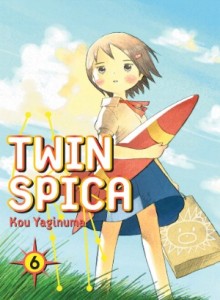
As a big fan of Vertical’s non-Kodansha licenses (Twin Spica, 7 Billion Needles, most of the company’s Tezuka releases) I was grateful to hear that the news would not impact their ability to continue with those licenses. Still, this seems like an appropriate time to reflect on some of the Vertical x Kodansha goodness we’ve already seen, either in print or in the works. Though my understanding is that some of these negotiations took place directly between Vertical and the series’ authors (or their representatives), the fact remains, we have both publishers to thank for their existence in print.

3 series brought to us by Vertical and Kodansha:

1. Chi’s Sweet Home | Konami Kanata – I’ve been a big fan of this sweet (and sometimes bittersweet) tale of human/cat cohabitation since Vertical’s release of its first volume, and those feelings have only grown warmer over time. Though the series is certainly appropriate for children, the advantage of it having been published in a magazine for adults definitely gives it an edge for a reader like me. Both genuinely funny and occasionally dark, there’s a lot more to Chi than meets the eye. And when what meets the eye is as cute as this… well, there’s really no way it can go wrong. Volume 5 is available now!

2. Princess Knight | Osamu Tezuka – Though this license was likely brought forth via Tezuka Productions, we have Kodansha to thank for all of its incarnations in print so far, from Shojo Club, to Nakayoshi, to the bilingual version that up until now (or soon, at least) was the series’ only English-language edition.

In the words of David Welsh, ” It sounds really delightful. It’s only three volumes long. It’s Tezuka. More Tezuka is always better.”

Agreed on all points.

3. The Drops of God | Tadashi Agi – Another one of David’s recently-fulfilled license requests, this manga has me hooked already simply by being about wine. Though I expect it might be hard on my pocketbook (all the wines in the series are real, and can be sought out and purchased by those willing to spend the dough), I honestly can’t wait to dig in.

Deb Aoki has been pushing for some time for this series to be licensed. “The Drops of God tries to capture the romance, the drama, the history, and the sensual joy of drinking wine, the fascinating people who make, sell and collect wine, and the diverse places where wine is grown, bottled and enjoyed all over the world.” Read more at About.com.


An honorable mention must go to Peepo Choo, which I featured in this column just a few weeks ago!

So, readers, what are your thoughts on what we might see now from Vertical and Kodansha?

Filed Under: 3 Things Thursday Tagged With: kodansha, vertical

Better Than Life by Grant Naylor: C

February 23, 2011 by Michelle Smith

From the back cover:
Life just couldn’t have been better—or maybe it couldn’t have gotten worse. Aboard the massive starship Red Dwarf, life was barely happening at all. Holly, the ship’s computer, had gone from super genius to so dumb that even a talking Toaster could hold its own with him. And the only surviving human aboard, David Lister—along with the holographic Arnold Rimmer; Cat, the best-groomed entity in the universe; and the cleaning robot Kryten—was trapped in a game called “Better Than Life.”

At one time Holly could have easily saved them. But right now Holly couldn’t even keep Red Dwarf from colliding with a runaway planet. It looked like Lister might be stuck in the game until he died—or until Red Dwarf was destroyed. Unless, of course, the cheap little Toaster and the cleaning robot could find the way back to reality without killing everyone in the process…

Review:
Every now and then it’s tempting to post a review that consists merely of the word “meh.” This is one of those times.

Better Than Life picks up where the first Red Dwarf book, Infinity Welcomes Careful Drivers, leaves off: all four members of the crew are stuck inside the addictive virtual reality game, Better Than Life, leaving Holly (the computer) alone with only a talking toaster for company.

They do eventually make it out, only to discover that Holly, having followed the toaster’s advice, has increased his IQ to over 12,000 but has decreased his remaining runtime to about two minutes. Oh, and there’s an ice planet headed straight for the stalled ship.

From here on out, the book is basically a sequence of dire perils over which four rather moronic characters must somehow triumph. Lister performs a feat of planetary billiards to knock the incoming planet away, but then ends up stranded on it. As it thaws due to the proximity to its new sun, it’s revealed to be Earth, relegated to garbage planet status by the rest of our solar system literally eons ago. There are flying cockroaches. There is a black hole. There’s a fair amount of scientific explanation for things.

And that’s where the book falters. See, as a show, Red Dwarf is a sci-fi comedy. The science takes such a back seat it’s four cars back. Better Than Life, on the other hand, attempts to be comedic sci-fi, but it doesn’t even manage that, because hardly any of it is actually amusing. Even Chris Barrie’s narration—again, excellent with the voices but a bit dodgy with pronunciation—can’t resuscitate what is essentially an exceedingly dull story. There are a few good moments of characterization, however. I especially enjoyed anything that proved that Rimmer really does care about Lister.

We end on another cliffhanger, with Lister transported to a planet on another universe on which time runs backwards. I can only assume that this is what the later book in the series, Backwards, is about. The only thing is… that one’s not available on unabridged audio and though I did procure myself a used copy, I’m not inclined just yet to expend the effort and time that reading a paper book demands. Maybe someday.

Filed Under: Books Tagged With: Red Dwarf

Don’t Fear the Adaptation: Maison Ikkoku

February 23, 2011 by Cathy Yan 20 Comments

Hello, this is Cathy! I’m so excited to be a part of Manga Bookshelf! To kick off the anime reviews, I thought I’d start with something long, old, and beloved.


Maison Ikkoku | by Rumiko Takahashi | Manga: Shogakukan/Viz Media | Anime: Studio Deen/Viz Media

Buy at Amazon

Anyone who’s ever read manga has probably read a Rumiko Takahashi story, whether it be Rumic Theater, Ranma 1/2, or Inuyasha. She is easily one of the most recognizable and popular mangaka, one of the few that all American readers can name with ease. But in 1980, Takahashi was 23 and her first major work, Urusei Yatsura, was only just beginning to pick up. Armed with her own experiences of living in a small apartment with her two assistants, she sat down to write what became my favorite of her long epics: Maison Ikkoku.

Maison Ikkoku is about the residents of Ikkoku-kan, a boarding house in Tokyo. The protagonist, Yusaku Godai, is a 20 year old ronin student deep into his second year of trying to pass college entrance exams, when the story opens on the arrival of Kyoko Otonashi, the young widow who’s Ikkoku’s new manager. Yusaku instantly falls in love with Kyoko, but like all Takahashi romances, there are plenty of obstacles. The other residents of Ikkoku do their utmost to create embarrassing situations for the uncertain couple. The local tennis coach Shun Mitaka, a rich and suave playboy, declares his own intentions towards Kyoko within hours of meeting her and spends the rest of the series wooing her. Yusaku’s cheery ex-coworker Kozue Nanao eventually becomes his cheery girlfriend, though, much to everyone’s chagrin, she never cottons onto Yusaku’s feelings for Kyoko. Then of course, there’s Kyoko herself, who worries that loving a new man would be betraying the memory of her dead husband. Throw in three interfering families, an engagement made and broken by a fear of dogs, and a high school girl determined to marry Yusaku, and it’s easy to see how the story spanned seven years, fifteen volumes of manga, and 96 episodes of anime before coming to a satisfactory end.

Maison Ikkoku is ultimately a slice-of-life romantic comedy, but unlike Takahashi’s other series, it’s set firmly in the real world. The recurring characters, while exaggerated, are perfectly ordinary people with perfectly ordinary problems. Families get into screaming arguments, marriage is complicated by monetary concerns and societal approval, young men and women worry about their future careers. The path leading up to Ikkoku, the persimmon trees, the kotatsu, the fear of the economic downturn, Kyoko’s habit of sweeping the sidewalk free of leaves– all these are still elements of everyday Japanese life.

Yet the more humorous plot devices of Maison Ikkoku could have only existed in the Internet-less, cellphone-less world of the eighties. If gimmicks like mistaking the French restaurant “Ma Maison” for the local pub “Mamezou,” or Yusaku’s female friends pranking Kyoko so badly she ends up installing a public phone for the rest of the boarding home seem ridiculous at first glance, they’re enjoyable for nostalgia’s sake. In 2011, hijinks like that just don’t happen anymore– people just text each other!

The main love triangle

The relationship between Yusaku and Kyoko is the highlight of the entire series. The anime does a wonderful job of showing how it changes from obsession (on Yusaku’s part) and annoyance (on Kyoko’s part) to a mutual affection. Surrounded by secondary characters who are more or less caricatures, the main romantic players come across as surprisingly real. Yusaku might appear at first to be simply a lecherous loser just barely out of his teenage years, but with time, he emerges as a man who, if nothing else, will always do the right thing, even if it’s to his disadvantage. And Kyoko is never just a pretty face. While Mitaka and Yusaku are both guilty of idealizing her, they also embrace her faults: her tendency towards jealousy, her bad temper, her indecisiveness. In an adorable moment in episode 43, they even spend a night drunkenly swapping notes and consoling each other. Kyoko is secretive to a fault with her feelings, so it’s no surprise that most of the series consists of both men learning to reconcile their idea of Kyoko with the person she actually is. An admirably realistic portrayal of love, for sure, but gosh if the story isn’t repetitive! If you don’t find yourself tempted to throw your TV out the window by episode 58, you’re doing it wrong.

Despite the addition of numerous sidestories, Maison Ikkoku the anime feels more streamlined than its manga counterpart, simply because the anime has the benefit of hindsight. While the manga hesitates over how to resolve Kyoko’s and Yusaku’s relationship, the anime already knows how the story ends and stresses their romantic tension early on, most notably in episode 14 and and 22. Readers of the manga might actually wonder if Kyoko ends up with Yusaku; the anime, on the other hand, is emphatically a story about Kyoko and Yusaku, just with detours.

However, the anime never strays far from the manga’s wacky sitcom nature. Don’t expect Ichinose to be much more than a busy body with a fondness for alcohol, or for Yotsuya to stop being an infuriatingly mysterious leech. Just the opposite, as the Ichinose-Yotsuya-Akemi trio get far more screen time in the anime. On the other hand, Nikaido, an accidental resident introduced late in the manga, is absent from the anime, and his lines are given away to the other Ikkoku residents. Anime-only fans thus never experience the epic prank war that erupts between Nikaido and Yotsuya, but Nikaido’s absence is glossed over so well in the anime that it made me question Takahashi’s choice to introduce him at all in the manga.

With five opening and six ending songs, including a Japanese pop hit by Anzen Chitai and two songs by Gilbert O’Sullivan that never made it to the American release, the soundtrack is a perfect representative of the music from that time period. Likewise, the animation is classically eighties but holds up well despite its age. Among other things, the characters frequently change outfits — a rare feat even nowadays for an anime series! Despite its simplicity, the animation does an excellent job conveying the characters’ every emotion, no matter how nuanced, and manages to stay true to Rumiko Takahashi’s original art. Paired with an all around impressive performance from the entire Japanese voice acting cast, the characters of Maison Ikkoku have never been more alive as they are in the anime.

For those who have never read the original manga, Maison Ikkoku the anime is an excellent substitute or introduction. For those who are already fans of the manga, watching the anime is just like revisiting an old friend. Personally, three episodes — 27, 84, and 92 — make the anime adaptation for me. Episode 27’s masterful use of silence, a blinking light, and silhouettes elevate the anime treatment of Souchirou-san’s disappearance into something far more cinematic. I could write whole essays on how wonderfully episode 84 encapsulates repeating issues of trust, family, and determination, not to mention the little animation details — the classical music soundtrack, the Joan Miro in the hotel lobby — that build a world richer than the one in the manga. And Episode 92, split into three acts, each dedicated to one woman, is a great argument for why Takahashi writes some of the best women in anime.

Viz Media distributed both the manga and anime, and both are available through most major online retailers. As the series is pretty old now, it’s unlikely to be found in bookstores, but chances are good that if your local library is like mine and only stocks outdated anime or manga, the old Viz volumes (complete with cheesy titles like “The Hounds of War” or “Good Housekeeping”) will still be there.

Filed Under: Don't Fear the Adaptation Tagged With: anime, maison ikkoku

The Josei Alphabet: D

February 23, 2011 by David Welsh

“D” is for…

Daisy Luck, written and illustrated by Tsunami Umino, originally serialized in Kodansha’s Kiss, two volumes. This series follows four lifelong friends. One is a housewife, one works as a baker, one is a salarywoman, and one is unemployed.

Darling wa Nanamono ni Tsuki, written and illustrated by Yuki Yoshihara, originally serialized in Shogakukan’s Petit Comic, eight volumes. More funny smut from the prolific creator of Butterflies, Flowers (Viz), this time about the marriage of the daughter of a gay man and her attempts to keep things spicy. Published in German by Tokyopop and French by Panini.

Deka Wanko, written and illustrated by Kozeuko Morimoto, currently serialized in Shueisha’s You, seven volumes so far. This goofy detective series features a sleuth with a keen sense of smell and a fondness for frills. It’s been adapted into a live-action drama.

Doctor Lonely, adaptation of a novel by Glenda Sanders by Akiyo Izuka, originally published by Harlequin. A mail carrier finds her fantasies about an attractive doctor are muddled up by his nerdy reality.

Double House, written and illustrated by Nanae Haruno, originally serialized in Shueisha’s Young You, one volume. This story explores the complicated relationship between a young woman and a male-to-female transsexual. Erica (Okazu) Friedman has written about some of Haruno’s other works, including Pieta.

Licensed josei:

  • Dazzle, written and illustrated by Minari Endoh, published by Tokyopop, originally serialized in Ichijinsha’s Comic Zero-Sum.
  • Diabolo, written by Kaoru Ohashi, illustrated by Kei Kusunoki, published by Tokyopop, originally serialized in Shueisha’s Comic Crimson, three volumes.
  • Dolis, written and illustrated by Maki Kusumoto, published by Tokyopop, originally serialized by Shodensha, one volume.
  • Doll, written and illustrated by Mitsukazu Mihara, published by Tokyopop, originally serialized in Shodensha’s Feel Young, six volumes.
  • A Drunken Dream and Other Stories, written and illustrated by Moto Hagio, published by Fantagraphics, short stories originally serialized in various magazines, including Shogakukan’s Petit Flower, one volume.

What starts with “D” in your josei alphabet?

Reader recommendations and reminders:

  • Daite Daite Daite Darling, written and illustrated by Miwa Sakai, originally serialized in Hakusensha’s Silky, 15 volumes.
  • Do Da Dancin’!, written and illustrated by Satoru Makimura, originally serialized in Shueisha’s Young You, 9 volumes.
  • Do Da Dancin’! Venice Kokusaihen, written and illustrated by Satoru Makimura, currently serialized in Shueisha’s Office You, 8 volumes so far.

Filed Under: FEATURES

Manhwa Monday: Dinosaur wars

February 21, 2011 by MJ 3 Comments

Welcome to another Manhwa Monday!

This week, Korea JoongAng Daily reports that cartoonist Kim Soo-jung’s popular manhwa character Dooly has become a subject of controversy between the local governments of Dobong and Bucheon, both of whom want to use the 10 million-year-old dinosaur as a mascot.

“Dobong District has been planning a Dooly theme park with a museum dedicated to the dinosaur since 2007. Lee, the Dobong District Office director, said that construction on the museum, estimated at 13 billion won ($11.6 million), is slated to start next year, with a target completion date of 2015.

Bucheon, meanwhile, has spent the past eight years transforming its image from that of an industrial city to one dedicated to animation. In 1998, the city established the Korea Manhwa Contents Agency (Komacon) and the Bucheon International Comics Festival. Dooly has served as the city’s mascot since 2003.”

Check out the article for more.

On this side of the Pacific, NETCOMICS continues to show signs of life, publishing another new chapter of Sooyeon Won’s Full House.

At The Hooded Utilitarian, Michelle Smith and I discuss in-depth Jeon JinSeok and Han SeungHee’s One Thousand and One Nights, complete with sheep jokes and pretty pictures.

This week in reviews: On his video podcast, Otaku, no Video, Brent P. Newhall talks about volume one of One Fine Day (Yen Press). At Manga Maniac Cafe, Julie enjoys volume six of 13th Boy (Yen Press). Angela Eastman checks out the final volume of Very! Very! Sweet (Yen Press) at Mania.com.

That’s all for this week!

Is there something I’ve missed? Leave your manhwa-related links in comments!

Filed Under: Manhwa Bookshelf, Manhwa Monday

From the stack: A Single Match

February 21, 2011 by David Welsh

If I had to pick a favorite boutique comics publisher, it would probably be Drawn & Quarterly, simply for the volume of work they’ve released that I really, really enjoy. If I isolate the portion of their catalog devoted to Japanese comics, their success rate is somewhat lower. I appreciate their efforts to bring avant-garde manga to English-reading audiences, but I don’t always particularly enjoy the individual works.

I like the work of Yoshihiro Tatsumi, particularly his autobiography, A Drifting Life., and his early genre work, Black Blizzard. I found Seiichi Hayashi’s Red Colored Elegy more of its time than enduring. Susumu Katsumata’s Red Snow was pure pleasure, but Imiri Sakabashira’s The Box Man struck me as a fleeting, flashy fever dream. I’m happy to report that Oji Suzuki’s collection of short stories, A Single Match, wound up on the positive end of the spectrum, though that wasn’t an instantaneous verdict.

Suzuki has a very distinct rhythm and sensibility, and it isn’t immediately accessible. His stories have a quality that’s both dreamlike and naturalistic, and it took a few stories for me to yield to the style. In dreams, you find yourself recognizing people and places you’ve never been before, accepting circumstances that are totally alien to your experience and constructing memories that you claim as your own, even though you know that they aren’t. It’s a bit unsettling to see that illogically coherent frame of reference captured so precisely on paper, and since the experience of dreams isn’t an entirely comfortable one to begin with, the feeling of unease can be magnified.

“Tale of Remembrance” is an extraordinary example of this real-but-not approach. Narrative perspective seems to shift before you realize it. Inky blackness frames indelible images like a forlorn, faceless girl floating in the sky. Specific impressions that seem like memory are transformed into unsettling visual metaphors. Emotional undercurrents run from tender to suggestively menacing. It’s quite a reading experience, and it’s certainly not the only one of its kind in this collection.

Even the more ostensibly straightforward stories like “Mountain Town” keep you on uncertain footing. In this piece, a boy accompanies his father to return a scooter that he’d used for a part-time job. The journey is fraught with tension, unspoken and verbalized. The boy seesaws between uncomplicated comfort in his father’s company and painful awareness of the man’s shortcomings. Suzuki’s illustrations here are generally fairly concrete, though there are flashes of abstraction, like a memory is being filled in with a raw, emotional conceptualization.

As much as I ended up enjoying this collection, I have to admit to initial unease and impatience. It’s not a work that grabs you from the first page, and I’m not even sure the works are best appreciated as a single reading experience. They were published in Seirindo’s legendary alternative anthology, Garo, and I found myself wondering how they would have read in that context. The notion of getting a small dose of Suzuki’s work in the midst of a variety of other styles and subjects was appealing to me. When I read the stories again, I’ll sprinkle them in between other works to see if my theory is correct.

And I certainly will read them again. It’s nice to be challenged by a work, especially when the work rewards you for rising to that challenge. And I would happily read any of Suzuki’s work that Drawn & Quarterly chooses to publish, though maybe not all at once.

Filed Under: REVIEWS

Black Jack, Vols. 12-13

February 20, 2011 by Katherine Dacey, David Welsh and MJ 8 Comments

In the mold of Kate and David’s recent co-review of Salvatore, Kate takes the lead along with David and MJ, in a collaborative look at Tezuka’s Black Jack.


Black Jack, Vols. 12-13 | By Osamu Tezuka | Published by Vertical, Inc. | Buy at Amazon

KATE: One of the things that strikes me most about Black Jack is its consistency: every volume has one or two dud stories, but on the whole, the series is uniformly good, even when Tezuka is essentially repeating himself with a theme-and-variation on an earlier plot. If you were going to point to one story in volumes twelve or thirteen as an example of what Tezuka does best, what would it be and why?

DAVID: While I agree that it’s a consistently entertaining series, I do have a clear favorite from these two volumes. It’s “A Night in a Cottage” from the 13th volume. Black Jack is out driving on a lonesome road at night, and he meets a very pregnant woman who’s harboring a great deal of emotional pain. There are some great twists in this story, which I won’t spoil, but what I like best about it is how Tezuka constructs things so that Black Jack’s mythology is stripped away. The woman knows nothing about Black Jack’s notoriety, so he can abandon some of his public posture, and readers can see what parts of his personality endure when he isn’t playing for an audience. It’s really written well, and it’s kind of a gift for fans of the character.

MJ: I don’t know if I can say that this story is what Tezuka does best, because it feels a little atypical for the series, but I’d say my favorite here is “The Pirate’s Arm.” It’s the story of a student gymnast whose arm develops gangrene. Black Jack must amputate the arm, but he replaces it with a prosthetic that appears to have the ability to talk. Frequently, the series’ more heartwarming stories aren’t necessarily its best, but this one really works for me. It’s surprisingly subtle, with a real payoff in the end.

DAVID: I liked that one a lot, partly because I could imagine it providing inspiration to future mangaka.

KATE: Both of those stories were on my short list, too, though my favorite was “Wildcat Boy,” from volume 12. It’s no secret that Tezuka loved the movies, and “Wildcat” is a thoughtful tribute to two cinema legends: Francois Truffaut and Satyajit Ray. As one might guess from the title, the story features a patient who was raised by ocelots — at least, that’s what I think they are — and views human beings with suspicion. You don’t need to know anything about “The Wild Child” or “The World of Apu,” however, to appreciate the story, as it’s a compelling, if slightly ham-fisted, meditation on that age-old question: is civilization really man’s natural state? Like many “Black Jack” stories, the final twist reveals Jack to be wiser and more attuned to the natural world than his money-grubbing might suggest.

So far, we’ve focused on specific stories we liked. Were there any stories in volumes 12 or 13 that you felt didn’t work? If so, why?

MJ: I really liked that story too, Kate. And if it’s ham-fisted, I think it might be necessarily so. Though I think we three tend to appreciate subtlety a great deal, I suspect Tezuka knew his readers well.

As for stories that don’t work well here, the first that jumps to mind for me is “A Challenge of the Third Kind,” in which Black Jack is summoned to operate on an alien. While the concept is not so far out of line with the leaps of logic the series establishes as standard, there’s a line crossed here somewhere that strains that standard to the point of exasperation. Even as a gag manga, I had difficulty enjoying that story, and I’m a pretty generous reader when it comes to this kind of fantasy.

DAVID: As for low points in these two volumes, I’d pick “Looking Good” from volume 12. For me, a good Black Jack story must include one of these three things: sufficiently gruesome medical content; an emotionally compelling patient; or creepy Pinoko antics. “Looking Good” had none of these things, and, beyond that, it didn’t really have much in the way of internal logic.

It’s about a thug who’s running a protection racket on local school festivals, which is potentially hilarious, whether you like school festivals in manga or not. (I’m very much in the pro-festival camp, though that doesn’t mean I don’t relish them when they go very wrong.) It seems like the story never quite came together on basic terms, nor did it live up to its goofy potential.

KATE: I’m with MJ: I find Tezuka’s forays into science fiction and the supernatural kind of clumsy. I can believe that Black Jack would operate on himself in the Australian outback or perform a full-body skin graft because both acts are proof of his surgical mojo. But when it involves aliens or ghosts? Too gimmicky for me; those stories suggest a “very special Halloween edition of House, MD” or a Scooby Doo episode. (Just add meddling kids and stir!)

“The Cursed Operation,” which appears in volume 13, is a good example of what I mean. After a mummy arrives at a hospital for x-rays, strange things start to happen. Jack scoffs at the doctors and nurses who refuse to carry out their duties, declaring his intent to clear the hospital’s surgical backlog by operating on several patients at once. Strike one: the spooky happenings are neither scary nor funny. Strike two: Tezuka has already used the “operating on a bunch of people at once” plot in earlier volumes. Strike three: Tezuka tries to freshen up the “operating on a bunch of people at once” plot by including the ancient mummy as a patient. As a result, the story feels perfunctory; it’s the kind of story that Tezuka could produce on autopilot, and it shows; there’s nothing remotely surprising or interesting about the outcome.

Shifting gears a bit, I wanted to ask you about the art. Do you have a favorite scene or character from volumes 12 and 13? What makes it work for you?

DAVID: I was very taken with “Death of an Actress” in volume 13. The character design is delightful, and I always love Tezuka’s way of rendering a beautiful woman. I enjoy that because that beauty is very much in Tezuka’s unique style. If you held these beauties up against more conventional renderings of that kind of woman, they wouldn’t stand a chance, but within this context, it conveys. I also love the Hollywood glamor of the story, the fading glory, and the cruel, showbiz cynicism that comes across very efficiently. It’s not the flashiest piece in either volume, but I thought the drawings worked really well with the content.

MJ: David, I agree very much with what you say here about the way Tezuka draws a beautiful woman. I think I have a special fondness for his rendering, maybe because it’s unconventional.

That said, I do have a favorite scene of my own. It’s from the story you mention earlier, David, “Night Cottage.” There’s a wordless page near the end, when Black Jack is waking up in the cottage that is just so expressive. The morning sun pushing through the trees, Black Jack’s moment of panic when he realizes his companion is gone–I think it’s a beautifully crafted scene. Also, I especially enjoy the character of Black Jack when he’s *not* in control, so this brief, silent moment is one I like a great deal.

KATE: For me, it’s all about the character designs. Tezuka is often accused of being too “cartoony” (whatever that means), but in Black Jack, his flair for physical exaggeration works exceptionally well. Tezuka is able to pack a tremendous amount of information into his character designs, which allows him to jump into each story with a minimum of exposition. Going back to “Wildcat Boy,” for example, we almost don’t need to be told that Apu has been raised by wild animals; it’s evident in the way Tezuka draws Apu’s hands, which look more like claws than fingers, and Apu’s teeth, which are sharp and pointed. Even as Black Jack attempts to “civilize” Apu, the boy never loses his feral appearance; in a nice touch, he arches his back and hisses.

MJ: I think it’s true that Tezuka’s style is “cartoony,” but I also don’t think of that as a negative. The ability to evoke a fully-realized character using broad strokes is part of his genius, as far as I’m concerned. It’s depressing to me that this something people cite as a problem with his work.

DAVID: Speaking of character design, I’m compelled to mention something I always mention when I write about this series: Pinoko. I love her. She’s so creepy and sad, yet strangely cute. If I had to vote for my favorite kid sidekick of all time, she’d win by a mile, because she’s so very, very wrong on so many levels.

MJ: Oh, I so agree, David. I think we’re reminded of that especially here in “Teratoid Cystoma, Part 2,” in which Black Jack is asked to operate on a cystoma similar (but not quite similar enough) to Pinoko in her original form. I’m struck here by how much she’s treated like a child, and maybe even how much she acts like one, in a story that serves as such a clear reminder of her origins.

KATE: Even though I’m firmly in the anti-Pinoko camp, I also found “Teratoid Cystoma, Part 2” quite moving. Pinoko’s desire to have a friend (or “brother,” as she says) who shares the same history is surprisingly touching; it underscores just how unnatural and isolating her situation is, and how misunderstood she feels. Jack’s reaction, too, is oddly affecting; though he balks at playing Pinoko’s father, his desire to protect her from disappointment is evident in the delicate (and somewhat deceptive) way he tries to manage her expectations about the operation.

So what I guess I’m saying is that “Teratoid Cystoma, Part 2” might be on my short list of great Black Jack stories, even though I’m not a Pinoko fan.

And is it just me, or does Pinoko sound oddly like Sean Connery in the English translation?

DAVID: I can honestly say I’ve never made the Connery connection.

KATE: Itsssh those schlurry “ess” sounds that irresistibly reminds me of Connery.

MJ: I can definitely see the Connery connection, though I think in my head she’s a bit more… Cindy Brady. Probably Connery is preferable. :D

DAVID: I’m entirely behind the Cindy Brady comparison. They both seem to not be quite human and make me uneasy.

KATE: As our heated debate over Pinoko suggests, Black Jack really belongs to the world of pop culture more than many of Tezuka’s other mature works. There’s a pulpy, operatic quality to the stories in Black Jack that reminds me of my favorite television shows, and I get the feeling that’s exactly what Tezuka intended. I love his more self-consciously literary works, too, but Black Jack is probably his most entertaining series, and the easiest to recommend to civilians and continuity freaks, as anyone — and I mean anyone — could pick up either volume 12 or 13, read a story, and get the gist of the series.


Images Copyright © Tezuka Productions. Translation Coypright © Vertical Inc.

Filed Under: MANGA REVIEWS Tagged With: black jack, Osamu Tezuka

License request day: Zipang

February 18, 2011 by David Welsh

From the Manga Moveable Feast to a lively but technologically challenged Manga Out Loud podcast, it’s all about World War II this week. Barefoot Gen (Last Gasp) addresses history directly and brutally, and Ayako (Vertical) invents a tale of history’s victims, so one might be forgiven the impulse to rewrite history. That leads us to this week’s license request.

Kaiji Kawaguchi’s Zipang, which yielded an astonishing 43 volumes in Kodansha’s Morning, sends visitors from the present into the past and explores the potential consequences of that kind of junket. In this case, it’s a contemporary Defense Force vessel, the Mirai, which takes a wrong turn on the way to Hawaii and winds up in the Pacific on the eve of the decisive Battle of Midway.

The crew of the Mirai encompasses a number of different viewpoints on the tricky subject of time travel, from those who yearn to rewrite history whenever the opportunity presents itself to those who don’t so much want to divert a butterfly, lest that butterfly be headed someplace really, really important. I admit that I’m not especially interested in either war stories or treatises on the elasticity of time, but this book is supposed to be really, really good.

It won the Kodansha Manga Award in 2002. It was one of the Official Selections at the 2007 Festival International de la Bande Desinée. Four volumes were apparently published as a part of Kodansha’s Bilingual Comics project back in the day, but I can’t find confirmation of that claim, and I can only imagine what they’d cost, if they do exist. You’re in better shape if you’re able to read French, as Kana is publishing the book in that language, and they’re up to the 29th volume at this point.

Highly regarded as Kawaguchi is, his only work to see complete publication in English was Eagle: The Making of an Asian-American President (Viz, originally serialized in Shogakukan’s Big Comic), which I think is out of print. Its five volumes don’t seem to be fetching the prices that some out-of-print titles do, but I’m not sure how easy it is to find all five volumes. Casterman’s Sakka imprint published it in French in 11 volumes.

The likelihood of this request being fulfilled seems rather slim. It’s long, it’s manly, and I’d wager it displays a shortage of girls in body stockings doing cartwheels. This is the kind of title that makes publishers ask you why you’re wishing bankruptcy on them when you bring it up. But if I could go back in time and rewrite the history of manga in English, I would divert whatever butterfly I could to improve the chances of books like this.

Filed Under: LICENSE REQUESTS, Link Blogging

3 Things Thursday: To the polls

February 17, 2011 by MJ 43 Comments

Hello lovely readers! After a week full of roundtables & discussion posts, I’m beginning to really tire of the sound of my own voice. So to mix things up a little, this week’s 3 Things is going to be a question.

Readers: What 3 series would you most like to see discussed here at Manga Bookshelf?

You can choose any series you like, but to give you an idea of what’s immediately possible, here are a few photos (in various states of focus) of what I’ve got on my bookshelves: (click on images for larger view)


Some upcoming posts I currently know of include Ayako (next week!) and Black Jack (very soon!) so you need not spend your votes on those!

Okay. Go!

Filed Under: 3 Things Thursday

Two on friendship

February 17, 2011 by David Welsh

Weird as it may be to say for someone who reads a fair amount of shônen manga, I think friendship is an under-examined subject in comics. There are some great ones that offer insights into unromantic bonds among unrelated people, but new examples are always welcome. I’ve recently enjoyed two relative newcomers to this genre, both of which address the shifting fortunes of friendship. They’re very different, but each is well worth a read.

Sarah Oleksyk’s Ivy (Oni Press) is about as frank an examination of emotional growing pains as you’re likely to find. Its titular heroine is suffering through the restrictions of high-school life in a small town, trying to make decisions about her future that she knows her mother would oppose, and wondering why her closest friends seem to be distancing themselves from her. Readers won’t wonder, as Ivy doesn’t seem like an easy person to be around. To be perfectly honest, she’s kind of awful, but she’s awful in achingly specific, recognizable ways.

Oleksyk doesn’t seem to be doing that thing where a creator will trick you into loving her unsympathetic protagonist. She seems more hopeful that you won’t judge Ivy too harshly and that you’ll see the bits of her that track with the bits of you that you may not care to remember. That was my experience with the book. I could identify with both the friends who find Ivy increasingly hard to take (“She makes fun of everything I say!”) and the spikes of temper and feelings of ill use and jealousy that seem to bubble out of Ivy before she even realizes it. There are tons of moments that acutely express feelings I’ve had in the past, even if I haven’t shared the identical experience that triggered them.

That kind of pungent, “I’ve felt that before” specificity informs the entire book, even when “I’ve felt that before” is accompanied by the less flattering sensation that I’ve read some of this before. While Oleksyk’s characters never feel less than uniquely alive, some of their experiences cover very well-traveled ground. Oleksyk brings freshness to Ivy’s first serious romantic relationship (which you will probably watch through spread fingers with some bad ex’s face floating unbidden in your memory), but her conflict with her mother and troubles with a teacher felt very predictable. It’s not that these threads aren’t executed well or aren’t true to the character; it’s that these specific arcs have been portrayed so often and so well that it’s hard not to feel that you’ve been there and done that.

But, though it all, Oleksyk remains true to the fact that her heroine isn’t a particularly nice person. Ivy is worthy of interest and sympathy, but she has a lot of growing up to do. That clear-eyed understanding, combined with a note-perfect facility for teen turmoil (along with splendid, expressive art), make Ivy a standout.

(Comments based on a digital review copy provided by the publisher. I haven’t seen the physical book, so I can’t comment on its production values.)

In a much lighter vein is the first volume of Yuuki Fujimoto’s The Stellar Six of Gingacho (Tokyopop), which follows six friends who are all children of various vendors in a small market street. Mike, the green grocer’s daughter, has noticed that the group has been drifting apart as they’ve gotten older and split off into different classes at school. She’s made new friends and developed new interests herself, but she doesn’t want to lose the special bond that she’s formed with this neighborhood pack. So she comes up with things they can do as a group, particularly when they’re tied to their shared identity as vendors’ kids.

The best parts of this book are tied to Market Street. Perhaps it reveals too much in the way of postmodern hippie leanings on my part, but I love stories that feature small businesses and independent entrepreneurs. Fujimoto seems to share my admiration, and the bustle of Market Street, the interactions between various shop owners and their collective efforts, play an important role beyond just giving the ensemble cast a commonality. Market Street has a warm sense of place, and it’s easy to see why Mike wants to nourish the parts of her that are spring from it.

Not unexpectedly, things tend to sag when events move away from the neighborhood. The slow-building subplot of Mike’s dawning romantic feelings for longtime friend Kuro (the fishmonger’s son) is nice enough, but it feels generic compared to the ensemble elements. When the kids are at school, the book resembles any number of competent middle-school romances. If Fujimoto figures out how to ground Mike and Kuro’s developing relationship in the atmosphere and events of Market Street, my concerns will be nullified. (I’ll also be happy if she devotes more individual attention to the other members of the ensemble.)

Fujimoto does end the volume on a wonderful high note. Its final story introduces Market Street’s curmudgeonly granny of a candy shop owner. I’ve expressed my fondness for this type of character before, and I love this specimen’s playfully combative relationship with the kids and her abiding loyalty to her neighborhood, no matter how often she carps about details. Her loyalty is returned in just the right proportion in a lovely story about neighbors doing right by each other and generations finding unexpected ways to connect.

If I were to complain about anything about the book, it would be the positively miniscule type size of the many conversational asides Fujimoto gives her characters. It’s hard to see how they could be any larger, but they’re an absolute chore to decipher, and the affection the book earns overall makes me not want to miss a word.

(The Stellar Six of Gingacho originally ran in Hakusensha’s Hana to Yume and The Hana to Yume for a total of ten volumes.)

Filed Under: REVIEWS

BL Bookrack on the road!

February 17, 2011 by MJ 1 Comment

BL fans may have noticed this week’s glaring omission of our BL Bookrack column, but that’s because this month, Michelle & I took our Bookrack act on the road!

Today at The Hooded Utilitarian, you will find a post, One Thousand and One Nights with MJ & Michelle, in which Michelle and I take on Jeon JinSeok & Han SeungHee’s Arabian Nights manhwa adaptation Off the Shelf style!

Premise: “About a month ago, Noah asked if we’d be interested in having a conversation about comics here at The Hooded Utilitarian, similar to our weekly manga discussion column, Off the Shelf (at Manga Bookshelf), and our monthly art-talk feature, Let’s Get Visual (at Soliloquy in Blue). He suggested at the time that we might try discussing a mutually admired series (as we once did with Ai Yazawa’s Paradise Kiss), and that the subject need not be manga.”

So go forth, BL fans, and check out this month’s special BL Bookrack, complete with jokes about sheep lovin’ and pretty, pretty pictures!

Filed Under: BL BOOKRACK, UNSHELVED Tagged With: bl bookrack, manhwa, one thousand and one nights, the hooded utilitarian, yaoi/boys' love

The Josei Alphabet: C

February 16, 2011 by David Welsh

“C” is for…

Cappuccino, written and illustrated by Wataru (Ultra Maniac, Marmalade Boy) Yoshizumi, serialized in Shueisha’s Chorus, one volume. One of my favorite shôjo creators tells the tale of an unmarried, cohabitating couple trying to make their relationship work. Another Yoshizumi josei title is Cherish, also from Chorus, also one volume. Update: Cherish has been published in French by Glénat and in German by Tokyopop. Cappuccino has been published in German by Tokyopop.

Clover, written an illustrated by Toriko Chiya, serialized in Shueisha’s Bouquet, then in Cookie, then in Chorus, 24 volumes. It’s about an office lady with a complicated love life. It would have to be complicated to need two dozen volumes, wouldn’t it?

The Cornered Mouse Dreams of Cheese, written and illustrated by Setona (After School Nightmare, X-Day) Mizushiro, serialized in Shogakukan’s Judy, one volume, published in French by Asuka. Described by some as Mizushiro’s masterwork, it’s about a sexy relationship that begins with blackmail. Update: There’s a second part to this story, The Carp on the Chopping Block Jumps Twice, also serialized in Judy and published as the second volume of Cornered Mouse by Asuka. Both are available in Italian courtesy of Kappa Edizioni and in German courtesy of Carlsen Verlag.

Corseltel no Ryuujitsushi, written and illustrated by Ayuma Isurugi, serialized in Ichijinsha’s Comic Zero-Sum, 4 volumes. This charming-looking fantasy series is about magicians who can use the powers of dragons in return for caring for those powerful creatures.

Crash, written and illustrated by Erica Sakurazawa, serialized in Shodensha’s Feel Young, two volumes, published in French by Kaze. This one takes a frank look at the entertainment industry and the ways it can dehumanize its promising stars.

A Cruel God Reigns, written and illustrated by Moto (A Drunken Dream and Other Stories) Hagio, serialized in Shogakukan’s Petit Flower, 17 volumes. This sprawling, emotionally brutal story explores the horrible and lasting consequences of sexual abuse.

Magazines:

  • Chorus, published by Shueisha.
  • Comic Amour, published by Dream Maker.
  • Comic Zero-Sum, published by Ichijinsha.
  • Cutie Comic, published  by Takarajimasha, defunct.

What starts with “C” in your josei alphabet?

Reader recommendations and reminders:

Sean (A Case Suitable for Treatment) Gaffney brought up an interesting question on Twitter. What are we to make of Shueisha’s Cookie? I believe it’s technically shôjo, though it seems to have been launched by the staff of Shueisha’s defunct josei magazine, Bouquet, and it feeds a fair number of series into Shueisha’s Chorus. Cookie is the home publication of Ai Yazawa’s NANA (Viz), just to confuse things further.

Filed Under: FEATURES

Breaking Down Banana Fish, Vols. 11-13

February 15, 2011 by MJ, Michelle Smith, Khursten Santos, Eva Volin, Robin Brenner and Connie C. 13 Comments

Hello and welcome to the sixth installment of our roundtable, Breaking Down Banana Fish!

This month, we move to our new three-volume format with volumes eleven through thirteen, beginning with Ash’s escape from a government mental hospital. Having been officially declared dead, Ash is able to reunite with Eiji and his gang without the cops on his tail, but a new scheme from Papa Dino’s corner soon has him trapped again, forced back into prostitution, this time of mind instead of body.

With Ash back in Dino’s clutches, it’s time for Eiji to step up and plan his rescue, with no little help from Chinatown’s gang leader, Sing Soo-Ling.

I’m joined again in this round by Michelle Smith (Soliloquy in Blue), Khursten Santos (Otaku Champloo), Connie C. (Slightly Biased Manga), Eva Volin (Good Comics For Kids), and Robin Brenner (No Flying, No Tights).

Many thanks to these wonderful women for their continued time and brilliance!

Read our roundtable on volumes one and two here, volumes three and four here, volumes five and six here, volumes seven and eight here, and volumes nine and ten here. On to part six!
…

Read More

Filed Under: FEATURES Tagged With: banana fish, breaking down banana fish, roundtables

Manhwa Monday: Review round-up

February 14, 2011 by MJ 1 Comment

Welcome to another Manhwa Monday!

We’ve got a few review links to share today, but first, a quick look at the upcoming film adaptation of Kang Pool’s webtoon series, I Love You, adapted as Late Blossom for film.

The summary according to The Korea Times: “The movie revolves around four senior citizens living in a hillside village. Kim Man-seok, played by veteran actor Lee Soon-jae, is a milkman who wakes the village early each morning with his noisy, battered motorcycle. He meets Song (Yoon So-jung), who scavenges for scrap paper while roaming around the town at daybreak. As they meet again and again, they slowly develop feelings for each other.”

The film opens in Korea this week.

At Panel Patter, Rob McMonigal takes a look at volume one of Time and Again (Yen Press). Chrystal White at Japanator checks out volume 11 of Black God (Yen Press). Todd Douglass of Anime Maki posts some quick reviews of three Yen Press manhwa. In her article, “hunting for yaoi,” at Sequential Tart, Wolfen Moondaughter looks briefly at the BL manhwa Aegis (NETCOMICS). And Bibliophilic Monologues celebrates a manhwa monday of their own, with an overview of Pig Bride (Yen Press).

That’s all for this week!

Is there something I’ve missed? Leave your manhwa-related links in comments!

Filed Under: Manhwa Bookshelf, Manhwa Monday

  • « Go to Previous Page
  • Page 1
  • Interim pages omitted …
  • Page 456
  • Page 457
  • Page 458
  • Page 459
  • Page 460
  • Interim pages omitted …
  • Page 538
  • Go to Next Page »
 | Log in
Copyright © 2010 Manga Bookshelf | Powered by WordPress & the Genesis Framework