• Skip to primary navigation
  • Skip to main content
  • Skip to primary sidebar
  • Home
  • About Us
    • Privacy Policy
    • Comment Policy
    • Disclosures & Disclaimers
  • Resources
    • Links, Essays & Articles
    • Fandomology!
    • CLAMP Directory
    • BlogRoll
  • Features & Columns
    • 3 Things Thursday
    • Adventures in the Key of Shoujo
    • Bit & Blips (game reviews)
    • BL BOOKRACK
    • Bookshelf Briefs
    • Bringing the Drama
    • Comic Conversion
    • Fanservice Friday
    • Going Digital
    • It Came From the Sinosphere
    • License This!
    • Magazine no Mori
    • My Week in Manga
    • OFF THE SHELF
    • Not By Manga Alone
    • PICK OF THE WEEK
    • Subtitles & Sensibility
    • Weekly Shonen Jump Recaps
  • Manga Moveable Feast
    • MMF Full Archive
    • Yun Kouga
    • CLAMP
    • Shojo Beat
    • Osamu Tezuka
    • Sailor Moon
    • Fruits Basket
    • Takehiko Inoue
    • Wild Adapter
    • One Piece
    • After School Nightmare
    • Karakuri Odette
    • Paradise Kiss
    • The Color Trilogy
    • To Terra…
    • Sexy Voice & Robo
  • Browse by Author
    • Sean Gaffney
    • Anna Neatrour
    • Michelle Smith
    • Katherine Dacey
    • MJ
    • Brigid Alverson
    • Travis Anderson
    • Phillip Anthony
    • Derek Bown
    • Jaci Dahlvang
    • Angela Eastman
    • Erica Friedman
    • Sara K.
    • Megan Purdy
    • Emily Snodgrass
    • Nancy Thistlethwaite
    • Eva Volin
    • David Welsh
  • MB Blogs
    • A Case Suitable For Treatment
    • Experiments in Manga
    • MangaBlog
    • The Manga Critic
    • Manga Report
    • Soliloquy in Blue
    • Manga Curmudgeon (archive)

Manga Bookshelf

Discussion, Resources, Roundtables, & Reviews

Features & Reviews

Off the Shelf: Shoujo Fantasy Catch-Up

July 13, 2013 by MJ and Michelle Smith 2 Comments

MJ: Good morning, Michelle! It’s been a while since we got together to talk about manga, but we’re certainly going to make up for it this week!

MICHELLE: Indeed we are! I’m excited that the e-publication of older shoujo titles on VIZManga gives us the opportunity to have columns like this one, in which we’re basically gonna check back in with a couple of series we previously discussed and see how they’re faring.

MJ: I second your excitement, that’s certain!

Back in March, we took at look at the beginnings of two shoujo fantasy series from the 1990s, Chie Shinohara’s Red River, and Kyoko Hikawa’s From Far Away, both currently in digital re-release. Only two volume in, I think we’d both picked a favorite, but I’m interested to see whether things have changed at all on that front, now that we’ve delved in further.

Michelle, would you like to get us started?

MICHELLE: Sure!

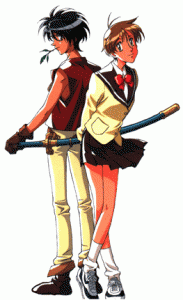
thumb-7141-RED_10_webSo, as a reminder, Red River is about a modern-day Japanese schoolgirl named Yuri who is transported to the Hittite Empire by the scheming queen, who intends to use Yuri in a curse against the other princes so that the queen’s son may ascend to the throne. Very quickly she meets Prince Kail and becomes known as his concubine.

As the story develops, Yuri is eventually hailed as the incarnation of Ishtar, goddess of war. At first, Kail just makes this up in order to have an excuse to keep Yuri with him when he rides off to war, but there are a few suggestions in the story that this might actually be true. The queen cooks up a variety of schemes designed to get rid of Kail and/or Yuri, and so our heroes spend most of their time trying to foil her plots, but have a hard time proving she was ultimately responsible for them. Meanwhile, their romantic feelings for each other grow, but Kail holds back because he believes Yuri really wants to go home, and Yuri holds back because she believes that Kail is going to have to marry a suitable queen someday and that he can never really be hers.

MJ: I will be the first to admit that, though I liked Red River from the start, I was less than enthused about its general plotting and its romantic trajectory and certainly held it in somewhat lower regard that I did From Far Away. Now, ten volumes in, things have changed dramatically, at least as far as Red River is concerned.

It’s hard to believe now that I was once dismayed by what felt like too-easy plotting and wearied by Kail’s “rake” persona, as I’ve been swept up completely by both at this point. And I think that Yuri’s characterization deserves credit for both of these things, as it’s her strength and general awesomeness that makes the whole story work for me. She’s transformed from simply “plucky” to “thoughtful and inspiring,” and she’s transformed those who remain near her, including Kail.

MICHELLE: Yuri has definitely changed a lot and become a genuine asset to Kail. Things were still a little problematic in earlier volumes—in which she becomes a sword badass pretty much instantly, or conveniently overhears enemy plotting but then blows her cover by both a) stepping on a twig in the middle of the desert and b) sneezing—and I rolled my eyes a lot, but she does eventually do awesome things, like when she has the presence of mind to prevent anyone from removing an arrow with which she’s been shot because she knows its markings will be crucial evidence. Of course, a bevy of dudes express interest in her, but it’s mostly because she’s bewitched them by doing something impressive. (She still gets on my nerves occasionally, though!)

Another aspect of the story that’s developed a lot is the political scheming. I also really like Ilbani, who is Kail’s… chief-of-staff or something. He originally counseled Kail against marrying a mere concubine, but once he saw how great Yuri would be as queen, he changed his tune, and has actually been conspiring to keep her from returning home to Japan.

MJ: I think maybe the political scheming has had a lot to do with my change of heart on the plotting as well, because it keeps the story’s very black-and-white villainess (formerly the queen, now the dowager) from becoming too one-note to be interesting. Yes, she’s only got one real objective—increasing her power by making her son king—but there are a lot of obstacles in her way, and her path isn’t simple by any means. Also, her son is a truly lovely character who, though too young to be an effective king, is at least no Joffery Baratheon. That’s a nice touch.

I have to say, though, that Yuri has never gotten “on my nerves.” I genuinely adore her, and that feeling is only increasing as the story continues. But perhaps my perspective is a little different than yours, because I admit that when you said that she’s become a genuine asset to Kail, I was thinking, “No, it’s that Kail has become a genuine asset to her!” Heh. I especially appreciate the fact that she’s adjusted to her environment enough to understand, from a cultural standpoint, how the results of her actions in this world would differ from those in her old world, and tries hard to make adjustments with that in mind. And her decisions during the Hittites’ war against the Mitanni really show her true colors. Her heart and her bravery ring true even when she’s being handed some unbelievable abilities, and that’s ultimately what’s important to me.

MICHELLE: I suppose the reason why I phrased it that way is because Kail has some clearly defined goals as to what he’s trying to accomplish long-term, and Yuri doesn’t. That said, she does take on and successfully complete various short-term projects, and having his backing is indeed an asset there. And I do assume that she will eventually develop long-term goals of her own.

One random thing I wanted to mention is… isn’t Kail supposed to be some awesome sorcerer? He’s got the capability to send Yuri home again, but we never see him work any magic! You’d think he’d be able to devise something to actually catch the queen in the act!

MJ: You know, I admit I hadn’t really thought about it! In a way, though, I’m glad he hasn’t been performing any sorcery, because I feel like that would be just another checkmark on the list of “things that are too easy in Red River,” and watching him deal with things with only the power of politics and personal strategy is much more compelling. After all this time, I think I’d just sort of assumed that he can help Yuri get back because of the magical power in the particular time and place rather than because of his awesome personal power. And maybe I’m not so far off, really. Even the queen is limited to what she can do with what’s at hand. She can create a potion with mind-controlling properties, but it’s not like she can wave her arms and make someone into her slave or turn them into a goat or something.

I think the limited magic makes the story work a whole lot better, even if it means sloppiness in other plotting areas.

MICHELLE: Perhaps we’re back to the one point where we often seem to differ: tolerance of sloppy plotting when there is character goodness at hand. I have some degree of it, but you’ve got more. :)

MJ: You speak the truth. As always.

MICHELLE: Heh. So, want to catch us up a bit on From Far Away?

MJ: Okay!

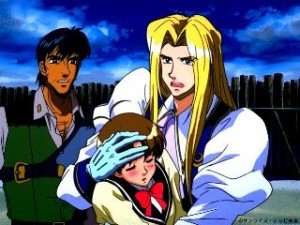
ffa8Like Red River, From Far Away sends a Japanese high school student on an epic journey, but one through space/dimension rather than time.

Noriko’s increasingly strange dreams become reality, as a seemingly random act of terror plunges her into another world in which she is identified as “The Awakening,” a supernatural being prophesied to bring forth the Sky Demon—a legendary evil that grants ultimate power to any nation that controls it. True to prophesy, Noriko’s first encounter is with a warrior named Izark, who is soon revealed to be the yet unawakened Sky Demon.

Aware of his destructive potential, Izark’s original intention is to destroy The Awakening before it can transform him into the monster he’s sure to become, but as he gets to know Norkio, he finds himself unable to do so, and decides instead to distance himself from her, in hopes that this will be enough to keep tragedy at bay. But prophecy being what it is, even this is too much to hope for, and he finds himself drawn back to Noriko despite himself.

Further in (we’ve both now read through volume 8), the two, now deeply in love, have finally become resigned to their mutual plight, and have decided to travel together, hoping against hope that they can somehow alter their fate.

MICHELLE: I have to say that From Far Away started off as my favorite of the pair and remains that way. I have a very strong compulsion to compare the series, but probably I should give FFA some praise on its own merits first.

I love the real adventure feeling of From Far Away. By this I don’t mean the various monsters the characters encounter, or the strange beasts, or the political scheming (yes, there’s a bit of that here, as well), or Izark’s supernatural powers. More, I mean the assembly of a hodge-podge group of friends who are traveling together in pursuit of a big, epic goal. In volume three, Izark leaves Noriko in the care of Gaya, someone he befriended two years ago and trusts. It’s revealed later in a bonus story that she was the one who taught Izark to use a sword, and I absolutely LOVE that a plump, unattractive, middle-aged woman gets to be such an unabashed heroic badass. Later, Noriko meets Agol and Geena, a former mercenary and his seven-year-old daughter, whilst Izark initially fights against and later recruits Barago, a hard-faced warrior who soon grows ashamed of his service to a corrupt lord and decides to make amends by aiding Izark.

There are some other supporting characters, too, but these are the ones who particularly stand out for me. In fact, I totally ship Gaya and Barago—Baragaya!—and was kinda dismayed to see on an age chart that he is supposed to be 25 (he looks 45!) and she’s 53. Still, I’m sure that those crazy kids can make it work!

Anyway, by this point in the story, Noriko and Izark have been outed and have distanced themselves from their friends in order to not bring harm upon them. But it’s not like their friends are now lost and aimless—they’re going to be working to find a lot of honorable leaders that have been ousted by corrupt ones in hopes of eventual overthrow.

I’ve got more to say about Noriko and Izark’s relationship, too, but perhaps I should pause here, as this was possibly sufficient gushing.

MJ: From Far Away is still my favorite as well, and I think what I particularly love about it (besides the things you already mentioned) is that we aren’t left long in that Twilight-esque “I love you but I can’t be with you” place. Though both Izark and Noriko must individually confront the ramifications of their relationship and they struggle with that in their own ways, they ultimately decide that they are better off together than apart, even if it creates a greater danger in their lives and in the world as a whole. Yes, Izark goes through a phase where he’s deliberately standoffish with Noriko (somehow this is always the way), but he gets over it faster than I’ve become accustomed to in the treacherous waters of YA fiction.

MICHELLE: Another thing that I really love is our degree of access to Izark’s thoughts. He may have great physical prowess, but we get to see that he’s awkward and anxious, and regards himself as not being strong at all in terms of controlling his emotions. I’m sure I can’t be the only one reminded of Kyo and Tohru here, also. The first time Noriko sees the transformed Izark, she’s not concerned with how he looks, but only sorry that she saw something he didn’t want her to see and worried that he’s going to go away again. It eventually becomes clear that harm befalling her has the capacity to awaken the Sky Demon, but, more than that, she’s the person who can heal his emotional wounds and bring him back to himself.

MJ: I had, indeed, thought of Kyo and Tohru, and thankfully that’s not a bad thing at all! This moment is expertly written, as well. Though Noriko’s reaction could so easily have played out as an unbelievable mix of selflessness and obliviousness, it truly reads like love, plain and simple. And it makes her role as The Awakening feel all the more important and grounded in emotional truth.

MICHELLE: Definitely. And there’s been such lovely buildup to that moment from Izark’s side—”Am I afraid of the day when The Awakening turns me into a real monster? Or do I fear the day when Noriko will see me as a monster and leave me?”—that the significance of what her acceptance means to him is just about palpable. It is no lie that I have geekbumps right now as I type this.

I love how he begins to change once he accepts her love, and I love their sense of partnership in this. This does bring up a comparison with Red River, where the threats are generally coming from one source (the queen) and which the audience doesn’t really believe will succeed in killing either of the two leads. In From Far Away, danger is everywhere, and it seems a lot more conceivable (though still probably unlikely) that one of the leads could be forced to do something awful because of who they are.

MJ: I am in agreement on all points! I really can’t wait to continue with this series (and Red River, too). And I’m sure we’ll take a look at more of these digital re-releases in later columns as well!

MICHELLE: I am on a personal mission to get you to read Kaze Hikaru, so yes, I’d say we will!

Filed Under: OFF THE SHELF Tagged With: from far away, red river

Soulless: The Manga Vol. 1

July 11, 2013 by Anna N


Soulless: The Manga by Gail Carriger and Rem

I generally tend to steer clear of manga adaptations of books I’ve already read. I have read the first three books of Gail Carriger’s Parasol Protectorate series, and then I stopped following it, because of plot element that I usually find extremely annoying in romance novels. I spotted this manga version recently at my local library and decided to give it a try.

Soulless the book is a witty take on the steampunk/paranormal/historical romance genre. Heroine Alexia Tarabotti is a bit of a black sheep in her own family due to her intelligence and looks taking after her father instead of her mother. She’s also a unique and rare specimen of supernatural being because she’s a preturnatural, someone born without a soul. This gives her immunity to vampires and werewolves, which comes in handy as Victorian era London is overrun by supernatural beings.

Alexia has an encounter with a rather stupid vampire after she ducks out of a party in an attempt to find something decent to eat. This doesn’t sit well with the overbearing werewolf Lord Conall Macon, who is working for the government. Alexia and Conall insult each other and stalk off, only to find themselves thrown together again as unusual things begin to happen with the local London vampires. As a heroine, Alexia is very entertaining. She doesn’t hesitate to rescue herself by staking the odd vampire, and her status as a spinster ensures that she’s going to speak her mind without much regard for social conventions. On the other hand she has a hard time believing that anyone, even a werewolf would be attracted to her, because she’s been the topic of frequent put-downs by her family.

It is difficult to adapt an almost 400 page book into a 225 page manga. A certain amount of world building and character development does get lost in the process. The book goes into much more depth with Alexia’s relationships with the foppish vampire Akeldama and Ivy, Alexia’s good friend with horrific taste in hats. Some of the details about what exactly a preturnatural is and the more steampunkish aspects of this particular London were glossed over. But the essential plot and the developing romance between Alexia and Conall was maintained, so overall I can’t really quibble with the adaptation choices.

The art by Rem is detailed and fluid, with distinct designs for each character. The occasional lapse into chibi/wolf puppy style when Conall was in the grips of werewolf emotion was funny, and overall the art was extremely appealing. The illustrations did a good job at portraying the humorous reactions the characters have to each other even while they are dealing with plenty of suspicious supernatural incidents. Overall, I thought that this adaptation was one that fans of the book would enjoy. It also reminded me of what I liked about the prose series, so I might give the fourth book a try now.

Filed Under: REVIEWS Tagged With: Soulless, yen press

Manga the Week of 7/17

July 11, 2013 by Sean Gaffney, Michelle Smith, MJ and Anna N 4 Comments

SEAN: Standard ‘Diamond is sending me Yen Press a week early’ warning. I’m not quite sure why they do this, it seems to only be the the Northeast Corridor. Ironically, years ago, I used to get my manga a week later than others, again just the Northeast Corridor was affected. In any case, my list is hefty this week.

Dark Horse has the 4th volume of Gate 7, a title that has completely failed to keep me interested in any way. But there are some fans of it, particularly those of a historical bent.

MICHELLE: I feel bad that this one didn’t particularly grab me, but… it didn’t.

MJ: Gate 7 *did* grab me right away, but then the heavy concentration of unfamiliar historical references kinda bogged me down. Fortunately, I found a helpful guide to carry me through! So I’m looking forward to this new volume with only the slightest sense of bog.

SEAN: Kodansha has the 4th volume of Missions of Love. You know, when I was first promoting this title as an interesting little shoujo love triangle, I wasn’t aware that it was going to turn into the Gakuen Prince of 2013. Let’s see how saucy it will get this time.

MICHELLE: I read a couple of volumes of this, but I think I didn’t like any of the characters enough to continue.

ANNA: Knowing now that it turns into the Gakuen Prince of 2013, I’m glad I didn’t start reading this.

sailormoon12

SEAN: Many are calling the 12th Sailor Moon volume the final one, and it’s true that the main story wraps up here. However, this re-release stripped out all the short stories that had originally been interspersed in the volumes, and has given them two separate books of their own. So fear not! Soon you will be able to learn if Rei farts.

MICHELLE: Yay?

SEAN: Viz has the 5th volume of 07-Ghost, a series I’ve fallen behind on. Anyone else?

MICHELLE: I’m behind, too. I’ll catch up one day.

MJ: Same here, and that’s really a shame.

ANNA: I’ve read through volume four, and I like this series! But I’m predisposed to enjoy any manga that involves fighting priests.

SEAN: They also have the 5th and final volume of I’ll Give It My All… Tomorrow, a SigIkki series. I found the protagonist too annoying to continue the series, but then, that was sort of the point, and I know a lot of people identified with his situations.

MJ: I can’t say that I identify with him, but I do feel like I know him, and that is enough to keep me interested in his plight.

SEAN: The rest is all Yen. We have the 14th volume of Black Butler, which I’m sure is sexy as hell, at least according to the Tumblrs I see. Or perhaps smexy.

MICHELLE: I am old, because I just had to look up what “smexy” means.

MJ: Smexy or not, I just… can’t get into it.

ANNA: I read the first volume, and that was enough for me.

bookgirl7

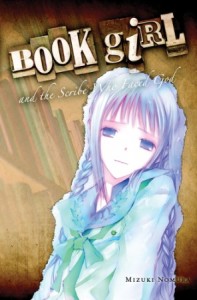
SEAN: This isn’t a manga, but I don’t care. The Book Girl light novel series has hit its endgame, and Book Girl and the Scribe Who Faced God is a 2-parter it’s so big. Part 1 drops this week, and we will finally get to focus on Tohko.

The 2nd and final Doubt omnibus is out, which will no doubt kill off most of the rest of the cast. If you’re a fan, good news: its spiritual sequel Judge is coming soon.

Is This A Zombie? 5 proves that it’s not just Seven Seas’ moe titles that make me sigh and rub my forehead. Congrats to Yen, I guess?

MJ: Heh.

SEAN: K-On! had a sweet, definitive ending, but it was also wildly popular, and you know what companies think about wildly popular finished titles. So K-On! College is the first of two sequels that continue the story, this one following Yui, Mio, Ritsu and Mugi in higher education.

Nabari no Ou is the last title we have this week that is ending, showing us that you can succeed as a ninja manga and not be Naruto. Though I’m sure it would have appreciated Naruto’s sales…

MICHELLE: This title isn’t one of my favorites, but it’s been interesting enough to keep me reading, so I’m looking forward to reaching the conclusion.

MJ: This title is one of my favorites, so I’m looking forward to it!

orikomagica1

SEAN: Madoka Magica prints money, let’s have more of it! Puella Magi Oriko Magica is another spinoff series, and I believe it’s the darker of the two that Yen is putting out.

Soul Eater 15 shows us barreling to a climax, though things have started to go badly for some of our heroes. Poor Kid!

Lastly, we have a 4th omnibus of Until Death Do Us Part, which doesn’t remind me of the way Glenn Miller played at all. (Seven Degrees of Pun Bacon there.)

MICHELLE: I would feel so proud of myself if I could get the reference.

MJ: That’s what Google is for, Michelle!

SEAN: Even Google might not help. Till Death Do Us Part -> Till Death Us Do Part -> All In The Family -> “Those Were The Days” -> “Boy, the way Glenn Miller played…” Welcome to Sean’s mind. Don’t stay long.

MJ: I guess we’ll have to wait until someone develops a search engine for Sean’s brain. It’s sure to happen. Someday.

SEAN: What manga are you beating the heat with?

Filed Under: FEATURES, manga the week of

Bringing the Drama: Flower Boy Next Door

July 10, 2013 by Anna N, Emily Snodgrass, Eva Volin, Michelle Smith and Nancy Thistlethwaite 8 Comments

ANNA: Flower Boy Next Door has a bit of a quirky premise for a k-drama. Go Dok-Mi (Park Shin-hye) has a severe case of agoraphobia, doing her editing work from her home, and almost never venturing outside. Her main outlet is spying on her handsome neighbor in the next building. Go Dok-Mi finds herself taken out of her familiar surroundings when she encounters Enrique Geum (Yoon Shi-yoon), a famous video game designer who spots her spying on his brother. Go Dok-Mi’s neighbor webtoon artist Oh Jin-Rak (Kim Ji-hoon) silently watches over her, and attempts to make sure her emotional equilibrium as a shut-in isn’t disturbed. Rounding out the cast are Cha Do-Hwi who is Go Dok-mi’s friend turned enemy from high school and Oh Dong-Hoon the assistant webtoon artist.

Flower Boy Next Door is available for streaming on Dramafever.

What did you think of this drama?

Flower Boy Next Door!

Flower Boy Next Door!

EMILY: I’ve really enjoyed this show. It has a very different look and feel to it than many other dramas I’ve seen. There is sort of a low key indie vibe to the production. I guess I’m used to seeing shows where there are chaebol/CEO type guys driving around in luxury cars and everyone has perfect hair and nice clothes (even the characters who are supposed to be poor). In this case, the drama feels a little more gritty. While many k-drama heroines face extreme hardship or past trauma, for the most part, they remain plucky and cute. Here we have a heroine who is actually damaged. She experienced past trauma, and it actually had an effect on her personality and how she lives. She didn’t just ‘try her best’ and keep cheerfully forging on; she shut herself in and hid from the world. Therefore, her character feels more realistic to me than other heroines. Her hair isn’t always perfect (or artfully disheveled) and she wears messy clothing. Her apartment is cluttered.

Bundling up in one's apartment saves money!

Bundling up in one’s apartment saves money!

As for the guys, while their occupations are a bit less realistic, at least they aren’t living like perfect rich guys either. Mr. Webtoon artist has a whole pile of issues of his own, and Enrique also has a failed romance. I really enjoyed watching these three interact and change after meeting each other.

MICHELLE: I love this drama with every fiber of my being. I love that it doesn’t follow the usual Guy #1 (he’s kind of a jerk but you know he’ll ultimately get the girl) and Guy #2 (he’s super nice and therefore you know he’s got no chance) formula. True, Enrique is rich, but he’s also goofy and has uncanny insight into Go Dok-Mi’s true thoughts. He challenges her, and she needs this. Jin-Rak is nice and handsome (and played by someone who’s been Guy #1 in the past) and considerate to Dok-Mi’s plight, but he puts her on a pedestal and indulges her eccentricities in a way that isn’t helping her.

I haven’t finished the series yet, but this is one love triangle that I don’t find predictable in the slightest. It’s so well-done, with more subtlety and depth than the other dramas I have seen (which admittedly is a very small sliver of the population).

ANNA: I liked the series very much but I had a more measured reaction. I thought that the innovative cinematography and storytelling were a bit front-loaded onto the earlier episodes, but I did enjoy the more realistic and gritty vibe of the show. I was genuinely uncertain for a little bit who the heroine would end up with! One storytelling element that I liked a lot was how transparent Cha Do-Hwi’s manipulations were and how quickly the men saw through some of them. Usually no one but another woman would detect the evil strategies of the female antagonist. It was pretty hilarious that after Cha Do-Hwi engineered a broken heel in proximity to Oh Jin-rak in order to have an excuse to summon his assistance, the webtoon assistant Oh Doog-Hoon immediately comments that it was interesting that all her clothes were from the current season, but her broken shoe was so last year in style.

I was also a big fan of the cranky, sleep-deprived webtoon editor.

The artists share a moment with their editor.

The artists share a moment with their editor.

EVA: As usual, I went the other way. I was really turned off by the series at first (slow, plodding character, same things happening over and over, the obviousness of Cha Do-Hwi), but as I’ve gone on (I’m currently on episode 10), I’ve grown to like the characters, I care more about their issues, and I’m loving the non-K-Dramaness (that indie vibe Emily talked about). I LOVE that no one here is living in an inappropriately posh apartment or on somebody’s roof. I LOVE that Oh Jin-Rak’s webtoon editor is an overworked, exhausted crackpot. I LOVE that none of the romances are proceeding smoothly towards a finish line. And I especially love that (with the exception of Cha Do-Hwi, of course) people who say they care actually do care and try to help. It’s refreshing and lovely and I wish more tv shows (American included) were like this.

ANNA: I thought that the reliance on Enrique’s crazy fans as a plot element bogged down the middle part of the series a little bit. Also, I thought that Enrique was cute, but the romance between Go Dok-Mi and Enrique was a bit like showing what would happen if a woman fell in love with cute teddy bear. I much preferred Oh Jin-Rak, but perhaps I just find cranky men attractive.

Keeping tabs on his neighbor.

Keeping tabs on his neighbor.

MICHELLE: Jin-Rak is, by far, the studlier of the two, but I think Enrique is healthier for her. But, that said, he could probably have as good of an influence if he were just to remain her friend. Jin-Rak seems willing to be friends, but it’s more from a place of “it will stress her out if I confess” than any real feeling of contentment with that role in her life.

NANCY: I would watch this drama just for the stressed-out webtoon editor. She was by far my favorite. I liked how this series started out, and the characters were well developed, but I did have issues as the series went on. At first this drama shows a very personal view of a woman’s struggle to rejoin society, and then towards the end we are merely watching from the outside, wondering what her motivations are. They shut us out from the shut-in!! Plus there are many gimmicks used in the last (and first) few minutes of each episode to create false cliffhangers. They have nothing to do with the main plot and actually lessen the integrity of the characters in some cases. I’m also going to show my support for Enrique–this drama would have been unbearable without him.

Everybody's favorite webtoon editor!

Everybody’s favorite webtoon editor!

EVA: Stressed-out webtoon editor is the character I’d be if I were in this series. Her bits of comic relief are some of the best laughs I’ve gotten from this show.

I’ve made it through episode twelve and, yay for man-tears and dry kisses! But, yeah. I hear what you’re saying, Nancy. Go Dok-Mi’s internal monologue and/or the narration of her journal writing gives us an entry point to how she feels about her life as a shut-in, how her expectations have contracted, and how willing to compromise her own desires she is if it means she doesn’t have to confront the world. I’ve enjoyed having that window during the last few episodes I’ve seen.

Also, for the first time in this series, I missed the ubiquitous bitch slap/coffee toss. I wanted more drama during the confrontations between Go Dok-Mi and Cha Do-Hwi. Instead we got silent tears, some fainting, and an unsatisfactory blame toss. These two have history and I wanted to see what happened. But nothing happened! Bah. I’ll keep watching, if only because I hope to see more of a closure to this relationship than we’ve been given so far.

ANNA: I liked the way stressed-out webtoon editor managed to be both hilarious and poignant at the same time. She ends up in a very nice place at the end of the drama, which was nice to see.

MICHELLE: Speaking of hilarity, there were quite a few bits on Flower Boy Next Door that made me laugh out loud, and I’m not the easiest person to make laugh. There’s that absurd moment in which Enrique catches Dok-Mi spying on his brother’s apartment… whilst clad in some weird furry panda hat/cape thing. Or the scene where a drunken Jin-Rak—who I am still used to as the humorless lawyer from Stars Falling from the Sky—decides to go to sleep amidst the building’s recyclables, at which point Dong-Hoon thoughtfully covers him with a stray piece of cardboard. I guess when I describe them, these don’t seem like the most clever jokes ever, but they certainly appealed to my sense of humor.

Enrique busts out his Detective Conan cosplay. As one does.

Enrique busts out his Detective Conan cosplay. As one does.

ANNA: I also loved the bit where the men were all pretending to be Spanish-speaking Italian mafia in order to punk Jin-Rak’s estranged family.

So, check out Flower Boy Next Door if you are interested in a k-drama with a slightly different sensibility than you might be used to. The combination of a gritty setting, camera techniques that evoke indie films, and some engaging characters in unusual situations make this a drama that is well worth watching.

Filed Under: Bringing the Drama, Dramas

It Came From the Sinosphere: The Iron-Crane Pentalogy (Part 1)

July 9, 2013 by Sara K. 1 Comment

Book cover for 'Precious Sword, Golden Hairpin'

Book cover for ‘Precious Sword, Golden Hairpin’

The Iron-Crane Pentalogy is not just one of the most influential works of wuxia ever written, it’s possibly the most well-known work of wuxia outside of the Chinese-speaking world. In fact, many Manga Bookshelf readers have already heard of it.

Before you think “Hey, I’m a Manga Bookshelf reader, and I’ve never heard of the Iron-Crane Pentalogy,” look at the titles of the five novels:

1. Crane Frightens Kunlun
2. Precious Sword, Golden Hairpin
3. Sword Force, Pearl Shine
4. Crouching Tiger, Hidden Dragon
5. Iron Rider, Silver Vase

The name “Crane-Iron” comes from the titles of the first and final novels.

If you have never heard of a single one of these stories, then okay, you’ve never heard of the Iron-Crane Pentalogy.

The Story

Book cover for 'Crane Frightens Kunlun'

Book cover for ‘Crane Frightens Kunlun’

There is an old man who is the master of the world’s most awesome martial arts. He has two disciples, the older of whom is a mute (and nobody know his name), and the younger of whom is eventually known to the world as “Southern Crane.” Both the mute and Southern Crane transmit their martial arts knowledge to future generations. The Crane-Iron Pentalogy is about the marital artists who learn these awesome technqies.

The first novel, Crane Frightens Kunlun, is about the boyhood of Southern Crane, who was born as Jiang Xiaohe. Jiang Xiaohe centers his youth around getting revenge on Bao “Kunlun” for the murder of his father and forced separation from his mother. Jiang Xiaohe also wants to marry Master Bao’s granddaughter, Bao Ahluan, and it never occurs to him than she might object to him killing her grandfather. Xiaohe’s rashness and anger is an irresistable force, and Bao ‘Kunlun’s narrowmindedness and refusal to openly acknowledge the wrongs he has committed is an immovable object. Irresistable force + immovable object = tragic consequences.

In the second novel, Precious Sword, Golden Hairpin, Li Mubai, the son of two characters in Crane Frightens Kunlun, falls in love with Yu Shulien, whose beauty is only surpassed by her peerless sword-fighting skills and sense of honor. However, it turns out that Yu Shulien already has a fiance, Meng Sizhao. BUMMER! Li Mubai goes to Beijing, where, in his attempt to get over his heartbreak, he gets into a romantic relationship with a prostitute called Xie Cuiqian, who might secretly be a vigilante who rescues innocent girls. Meanwhile, Meng Sizhao’s greedy older brother has forced him to go into exile so he can have the family property all to himself, and Yu Shulien has to deal with her father’s very powerful enemies.

In the third novel, Sword Force, Pearl Light, Southern Crane tells Li Mubai to fix the mess that is his life. Later, people try to get some pearls, people are murdered, a girl gets kidnapped, Yu Shulien gets involved…

In the fourth novel, Crouching Tiger, Hidden Dragon, and important sword goes missing, and it seems the thief is an expert at martial arts. Did Cai Xiangmei, an acrobat girl who has recently agreed to work as a servant for Yu Jiaolong (daughter of a very high-ranking offical) steal it? Also, we learn that the family who was murdered/kidnapped because of that set of pearls in the third novel has a secret family member, called Lo Xiaohu, who, not knowing his true family origins, is a bandit…

In the fifth novel Iron Knight, Silver Vase, Han Tiefang, who grew up in an official’s family, abandons everything he has to find his mother, who had been kidnapped long ago. Meanwhile, a young martial artist, Chun Xueping, knows almost nothing about her family…

Background

Book cover for 'Sword Force, Pearl Shine'

Book cover for ‘Sword Force, Pearl Shine’

The Iron-Crane Pentalogy was originally published in the 1930s and 1940s, and was one of the most popular works of Chinese fiction in that era.

The writer, Wang Dulu, had a strong interest in psychology (for example, he read many of Freud’s works). Before writing wuxia, Wang Dulu was a romance novelist, though apparently many of his ‘romance’ novels were as much about sons clashing with their fathers as they were about romance. And it really shows in the Iron-Crane Pentalogy that Wang Dulu was a romance novelist, since the martial arts are just a plot device, and much more attention is paid to the characters’ romantic feelings.

The “Northern School” and the “Southern School” are the two sets of novelists who are considered responsible for defining the wuxia genre in the 1920s, 30s, and 40s. Wang Dulu is considered one of the key writers from the ‘Northern School’.

I also must note that these novels were just after the first part of the Chinese Civil War, and during the Japanese invasion of China, in other words, China as a state was unravelling. I think this helps explain much of the bleakness and antagonism found in the novels.

Practically every major wuxia writer after 1950 was heavily influenced by Wang Dulu, and the Iron-Crane Pentalogy in particular. I will write more about that later.

Just Enough to Convey the Feeling

Book cover for 'Iron Rider, Silver Vase'

Book cover for ‘Iron Rider, Silver Vase’

As you can tell by reading the above attempt at a plot summary, the plot is actually rather complicated … but it feels simple when you read it. In fact, it feels so simple that it’s only after the fact that I realized how many of the subtleties I had absorbed, particularly the little ripples of the characters’ consciousness.

For example, there is a scene (I’m changing the characters’ names to avoid spoilers) where Character A is grieving over the death of Character B. A and B were lovers, and even had a child together, but B left A almost two decades ago, and A never went to find her until it was too late. A is feeling intense grief, not only because B is dead, but because he never said goodbye.

Enter Character C.

C at first is moved by A’s very sincere grief, and his first impulse is to comfort A. Then he holds himself back. C has a great deal of respect for B, and feels that A is no where close to being worthy of her. Furthermore, the fact that A and B had sex and a child out of wedlock was a great stain on B’s honor. Therefore, C decides to torment A, by essentially saying ‘you did not see her for almost twenty years, and now you’re crying because she’s gone. What kind of man are you? A real man would not be weeping over this.’

A replies “You’re right.” Then he says “I am only thinking of her so much because you remind me of her.”

What A and C do not know – but the reader knows – is that C is A and B’s biological son. That makes this little scene all the more poignant.

The novels are full of this subtle little emotional back-and-forth. Wang Dulu states just enough for the reader to understand what is happening, and no more. Unlike many dramatic stories which try to squeeze more dramatic juice than the pulp of the story can supply, Wang Dulu squeezes out just enough dramatic juice to demonstrate just how juicy the story is.

And it works because it feels true. People really do have these emotional entanglements.

If I can use the word “image” to describe something that is emotional rather than visual, then these novels have plenty of striking emotional images.

The Freedom to Define Intimate Relationships

Book cover for 'Crouching Tiger, Hidden Dragon'

Book cover for ‘Crouching Tiger, Hidden Dragon’

One consistent theme in the pentalogy is that trying to force people to make their intimate relationships fit “socially-acceptable” forms leads to a lot of suffering. For example, Southern Crane’s father was killed because he pursued sex with a woman other than his wife. Is having extramarital sex without some form of agreement from one’s spouse right? No, but adultery does not justify murder, and forcing Southern Crane’s mother to remarry and separate her from her son because it’s the socially appropriate thing to do causes Southern Crane to have an extremely unhappy childhood (also, note that Southern Crane’s mother, even with the adultery, did not want her husband to get get killed).

Another example: Han Tiefang, under pressure from his family, got married when he was only 15 years old … and his marriage is very unsatisfying. Since his wife hasn’t done anything wrong, he doesn’t want to divorce her (and thereby deprive her of economic support), so instead he leaves town forever (or at least that’s what he thinks) to look for his mother.

This happens again and again throughout the pentalogy. Intimate relationships which do not follow narrowly defined social norms (which is quite a few of the intimate relationships in the pentalogy) get heavily policed.

The pentalogy also shows quite a range of intimate relationships. Some women who are unmarried and not prostitutes choose to have sex (SHOCK). Some people love and want to marry women who are not virgins (SHOCK). Some people even love and want to marry prostitutes (SHOCK). Sometimes people in intimate relationships are not having sex with each other (SHOCK). Sometimes people in intimate relationships do not want to marry each other (SHOCK).

The stories are heteronormative, but considering they were written in 1930s/40s China, I would have been extremely surprised if they were not.

One of the more subtle points is that, for intimate relationships to be satisfying, people need time. Most of all, they need time to figure themselves out, and discover who they are and what they want, before they can build a mature intimate relationship. This is exactly why pressuring people to marry young (a pressure that most of the characters feel) can lead to disaster.

And there’s more…

The Iron-Crane Pentalogy is one of my favorite works of Chinese fiction, so of course I’m not done discussing it. Come back next week for Part II.


Sara K. loves fresh lychee fruit. She ate some right before working on this post.

Filed Under: It Came From the Sinosphere Tagged With: Chinese, Crouching Tiger Hidden Dragon, Iron-Crane, Novel, Wang Dulu, wuxia

World War Blue, Vol. 1

July 9, 2013 by Sean Gaffney

By Anastasia Shestakova and Crimson. Released in Japan as ‘Aoi Sekai no Chūshin de’ by Micro Magazine, serialized on a mobile service. Released in North America by Seven Seas.

I wasn’t quite sure what to expect of this series going in. Its author is supposedly Russian (though that feels like a pen name), and it originally ran in Japan, as far as I can tell, as a cellphone manga. Those are a lot bigger there than they are here, and it’s gotten up to nine volumes. The gimmick, as it were, is that this is a shonen fantasy re-imagining of the console wars between Sega and Nintendo in the 1980s, with our heroes on the Sega side battling the evil Nintendo Empire. (I do admit this does not look good for our heroes, if we stick to established history…) I know a little bit about gaming, but not much. So how confusing would this title be to me?

worldwarblue1

The answer is not very. Honestly, if it weren’t for the obvious Kingdom names – “Segua” vs. “Ninteldo” – and the author’s interspersed notes giving a brief history of gaming in the 80s, I may not even have noticed the metaphor. The leads are supposed to represent a different game – Gear, the hero, is Sonic the Hedgehog; his childhood friend Nel is Phantasy Star 2; his tsundere love interest Opal is Fantasy Zone, etc. I didn’t know this until the notes told me. More importantly, these are stock shonen characters – the author even admits she created Gear to be a shonen manga role model, and that he is.

Because when it gets right down to it, this isn’t really for fans of computer games as much as it is fans of Fairy Tail. Gear is a fast fighter who wants to avenge the death of his friend. He goes to the capital city and joins the army by means of simply defeating everyone in it. Opal is even more stock character, immediately hating and challenging the young man who appears out of nowhere, but falling for him the second she is defeated. Even the perverse mentor who shows our heroes how to get stronger while constantly making suggestive remarks feels right out of Dragon Ball.

This has the feel of a Magazine title more than Jump, mostly due to the sexual overtones. There’s actually very little fanservice so far (much to my surprise), but the aforementioned perverse mentor (who’s meant to be Tetris, I think) keeps talking about plugging the gaping holes in everyone’s defenses with his rod, and also gropes the heroine to teach her a lesson after she’s magically exhausted. And the army commander, Ramses (she’s meant to be Columns, I guess?) gets sexually aroused seeing Gear fight (we see her naked, in the one piece of fanservice in the volume) and is describes as having ‘unspeakable hobbies’. But again, these types of sexualized ‘guy jokes’ would not be out of place in Magazine or Champion.

In all honesty, this is pretty generic shonen. I’m interested in seeing how Ninteldo (which is, of course, led by Mario) looks once we see them in action as more than just evil guys. That said, I am totally behind Seven Seas licensing this and putting out more of it, for one very good reason: it’s nothing like anything else they publish. Seven Seas is trying to expand a bit away from their mainstay market of ‘otaku fanboys’, as we’ve seen with the female-oriented Alice spinoffs. This is another step in that direction, showing off a series that appeals to the shonen boy in all of us; a young man vowing to fight for his country against the bad guys, using powerful moves. Let’s see how Gear can differentiate himself from Luffy or Natsu.

Filed Under: REVIEWS

Kaze Hikaru, Vol. 21

July 8, 2013 by Anna N


Kaze Hikaru Volume 21 by Taeko Watanabe

Kaze Hikaru is one of those titles that makes me feel happier just because it exists. The new volumes come out very slowly now, so when one appears it is always a good excuse to celebrate! This volume was particularly rewarding for any long-time reader of the series, as Sei and Soji begin to acknowledge their feelings about each other although they remain very much constrained by Sei’s disguise as a male Shinsengumi recruit and the customs of the times.

In the aftermath of Sei’s mission, it is announced that she’s going to be reassigned to Saito’s troop. Soji decides to create more distance between him and his young protegee by telling her that he requested the transfer and abruptly ordering her to leave him alone, saying “I got sick of your chasing me around like a girl.” Sei assumes that Soji thinks her feelings are burdensome and decides to run away. She leaves, fortunately during her rest period so she won’t be executed for desertion. Soji is relaxing, assuming that he’s fixed everything but he’s alarmed when Saito informs him that he’s in love with Sei.

Sei travels to a nunnery where she’s taken refuge before, learning about village healing from the head nun Suigetsuni. Sei has decided to sever the ties to her old life and join a nunnery, because it is the only way to sever her ties with her previous life. Soji becomes more and more worried as he realizes that no one knows where Sei is, and with his position in the Shinsengumi he can do nothing but sit, wait, and be forced to execute her for desertion if she doesn’t come back. The parallel stories shifting back and forth between the couple were particularly effective in this volume, as Soji’s growing concern forces him to confront his own feelings about Sei, and Sei grapples with her thoughts about healing and death as she learns more about Suigetsuni’s life story.

Watanabe is a master at spinning out a story, as 21 volumes into Kaze Hikaru, I’m in no hurry to see it wrapped up. Even though so much of this manga revolves around the characters being unable to express their emotions to each other, it is easy to see just how much Sei and Soji have changed each other through their unconventional friendship. As always, the author notes manage to distill an incredible amount of research into a few pages focusing on an element from the historical setting of the manga. This volume focuses on clothing and her reasons for depicting the Shinsengumi a certain way. If you aren’t reading this manga yet, give it a try! This is such a thoughtful, well-executed historical series that really stands out as having much more substance than most shoujo manga.

Filed Under: REVIEWS Tagged With: kaze hikaru, shojo beat, viz media

7 Billion Needles, Vol. 1

July 7, 2013 by Anna N

7 Billion Needles, Vol. 1 by Nobuaki Tadano

I was happy when I saw that Vertical was releasing some of their titles for the Kindle, but I already had print copies of the main series I was following like Twin Spica. I remember hearing interesting things about 7 Billion Needles, so I decided to give the first volume a try. Hikaru is a typical teenager, spending most of her time shutting out the world by keeping her headphones on. She’s a teenager with something other than angst churning inside her though. On a school trip she had an encounter with an extraterrestrial object that vaporized her body, leading to an alien intelligence named Ciel who reconstructed her body and establishes a symbiotic relationship with her.

Tadano does a good job establishing a slightly unsettling slice of life tone for this manga. Hikaru goes through her life someone aimlessly, and gradually more and more strange events begin to occur around her. Ciel makes contact and tells his host that he’s hunting an even worse threat – an entity called Maelstrom that might also be inhabiting a human. The title 7 Billion Needles refers to the needle in a haystack like task of hunting down an evil alien intelligence hiding somewhere in the human population. The manga is based on the Hal Clement novel Needle, and Tadano does manage to strike a good balance between the thought experiment vibe of classic science fiction and manga action as Hikaru and Ciel strike an uneasy truce and start hunting together.

The reading experience on my Kindle Paperwhite was just fine. I was intrigued by the first volume, and this is the type of digital series I can easily see myself stocking up on when I’m about to go on a trip and can’t haul around a bunch of physical copies of manga with me.

Filed Under: REVIEWS Tagged With: 7 billion needles, vertical

Manga the Week of 7/10

July 5, 2013 by Sean Gaffney, Michelle Smith and MJ 11 Comments

SEAN: Not as big as week 1 of July, but there’s plenty of tasty treats to check out as the summer continues to be hot.

tokyobabylon2

Dark Horse has the 2nd and final omnibus of Tokyo Babylon. I didn’t buy this one, so will forever imagine it ends with a big picnic, and possibly puppies and unicorns. :)

MICHELLE: I will allow you to have your dreams.

MJ: I’m sure everyone can guess how eagerly I’ve been anticipating this release. I was over the moon for Dark Horse’s first omnibus, and since I actually like to be beaten into a sobbing pulp by my fiction, I’m willing to move forward without those puppies and unicorns. Note: This volume will also contain Hokuto’s side story of epic awesomeness, so there’s that.

SEAN: Digital Manga Publishing is finally returning to print manga, and what better title to see returning to our shelves than the 7th volume of Vampire Hunter D?

MICHELLE: While this personally doesn’t excite me much, I was very pleased to see that the tenth volume of Itazura Na Kiss is now available for pre-order. Hurray for print manga!

SEAN: SubLime has two new debuts. False Memories has a cute cover, so I have less to say about it. It’s by the author of Devil’s Honey and Dash!

MICHELLE: The cover is very cute indeed. I confess that was all it took to convince me to read it, and I didn’t connect the author with Devil’s Honey. The latter was pretty good, though, so I’m definitely intrigued.

MJ: Agreed!

hideandseek

SEAN: Oh Dear Lord. Look at the cover for Hide & Seek. Have you seen two people you want to punch in the face more than these two? :) This is by the author of Bond of Dreams, Bond of Love, which if I recall also had ridiculous covers. Recommended for those who enjoy large yaoi hands.

MICHELLE: *snerk* While I liked Yaya Sakuragi’s Stay Close to Me, Bond of Dreams, Bond of Love was so generic and the characters so unappealing that I now view anything else by the author with trepidation.

MJ: Heh. I deeply disliked Bond of Dreams, Bond of Love, but on the upside, at least these two characters both look like adults, so I’ll give it a try.

SEAN: Vertical has the 6th volume of Flowers of Evil, whose sales will hopefully be bumped by the recent conclusion to the anime version.

MJ: I hope so, too! I’m looking forward to this volume in any case.

SEAN: Viz has Case Closed Vol. 47. In Japan, Vol. 79 came out this April. Sadly, I suspect we will not be seeing the great Case Closed speedup anytime soon.

MICHELLE: I find this series to be fun occasionally, but it’s one of those cases where I’m very grateful my local library purchases it so I don’t have to. I can’t imagine housing dozens of volumes of goofy, episodic mysteries.

SEAN: The 5th Fullmetal Alchemist omnibus contains Vols. 13-15 of this shonen series that everyone should own. And I hope Viz can negotiate digital rights back now that Square Enix shuttered their digital site.

MICHELLE: It’s a classic.

rinne12MJ: Fullmetal Alchemist is absolutely a must-own, and I’m glad it’s being given a second run like this.

SEAN: The 4th Loveless omnibus, with Vol. 7 & 8, I think catches us up with Viz’s newer releases, right?

MICHELLE: It does, as volume 11 came out in June. It also catches us up with Japan.

MJ: I honestly can’t wait. The new volumes have been mocking me from the shelf for so long.

SEAN: Rin-Ne has hit a dozen volumes, and is doing well enough that it doesn’t have to worry about getting as behind as Case Closed is. Not that this means any legitimate plot is happening, mind you…

MICHELLE: I’m happy that RIN-NE exists for whenever I want a dose of Takahashi, but it’s true there’s not really anything to get excited about.

SEAN: Finally, we see the second volume of superhero manga Tiger & Bunny. He’s a superhero. He’s also a superhero. THEY FIGHT CRIME!

Anything here catch your fancy?

Filed Under: FEATURES, manga the week of

Mobile Suit Gundam: The Origin, Vol. 2

July 5, 2013 by Sean Gaffney

By Yoshikazu Yasuhiko; Original Story by Yoshiyuki Tomino and Hajime Yatate; Mechanical Design by Kunio Okawara. Released in Japan by Kadokawa Shoten, serialized in the magazine Gundam Ace. Released in North America by Vertical, Inc.

When we last left our heroes, they’d finally gotten back to Earth. Of course, this proves to be only the beginning of their troubles… they’re in enemy territory, and are being told by their allies in South America “get here first, then we’ll tell you what to do next.” Their ace pilot is having a bit of a PTSD attack, and wants no part of all of this. The refugees they picked up are resorting to taking hostages just to be allowed to leave. And our man in charge, Bright Noah, just can’t seem to get any respect. But then, this is what happens when your enemies call your ship the “Trojan Horse”… you have all the luck that Troy did.

gundam2

To get the obvious out of the way first, most of what you enjoyed about the first book is present and correct here in the second. The battles are done very well, with lots of attention to detail and realism (given that these are robot wars), but don’t take up so much of the book that you get bored with all the combat. The overall tone is serious, but there are some very amusing dashes of humor, including Lieutenant Reed’s ulcer, Fraw Bow’s jealousy (and a flash of the same thing from Amuro), and every exasperated face Noah makes. But overall, the message continues to be what Gundam does best: war is a horrible thing that destroys entire cities, and one should never revel in it.

I think my favorite party of the volume was watching every single interaction between Char and Garma. After all the earnestness that our heroes fall into, it’s great seeing two people who clearly despise each other attempting to one-up each other in how politely smug they can be. Char’s needling of Garma, and manipulation as the story goes on, really shows of his people skills, albeit not in a good way. He spends much of this volume simply watching things develop (well, that and taking long showers so that he can properly show off his fantastic naked body to the reader). This makes his arrogant sneering at Garma right at the end all the more startling, and reminds you once again that he may be the bad guy you love to hate, but he’s still the bad guy.

As for Amuro, he gets the bulk of the second half of this volume, as he reunites with his mother. I’ll be honest, I totally expected him to return and find his mother dead – all the signs were pointing that way – but then, this series has pointed one way and gone another before, so I shouldn’t be surprised. What we got was even better, though – his mother has no context for what’s happened to Amuro at all, and all she can see is that her little boy has become a killer. This is far more visceral than most stories of this time, given Amuro has to lethally fight his way out of the encampment his mother is living in. It’s the emotional heart of the story.

And then there is the titular Garma. The Gundam story makes sure that we don’t simply see the Zeon enemy as “space Nazis”, and Garma’s desire to be worthy of his name, as well as his romance with an Earth girl, is part of this. I was never quite sure till the end how invested he was in Icelina, but it seems to be more genuine than I thought, and I wonder if she’ll return at some point down the line. But in the end, this is a story about war and the prices that one pays during it, and the final images we see are a father brutally gunned down in front of his daughter, and a father stunned to hear of the death of his son.

I admit I would perhaps have slightly fewer mech battles if I were plotting this, but oh well. Gundam is still a riveting and fascinating series, and fully justifies why it has endured all these years. And the presentation, again, is fantastic – a real coffee table book. It’s hard to wait three more months to see what happens next.

Filed Under: REVIEWS

It Came from the Sinosphere: Island, End of Nightmare (Manhua)

July 2, 2013 by Sara K. Leave a Comment

The cover of the manhua, featuring Luonian (blue) running towards the reader, and Huaizhen (orange) taking up most of the background.

Why couldn’t I find this image in a bigger size?

Hello, everyone! I’m back.

The Story

During a trip to an island in the South China sea, a teenager called Luonian has an encounter with a phoenix, and then a giant dog (a demon?) pins him to the ground. Then Luonian wakes up in a hospital in Taiwan. Was it just a nightmare?

A picture of Luonian with the island in the background.  We see a jungle and a seagull.

Back in his hometown, Banqiao, Luonian gets attacked by a demon … which gets taken down by some fellow senior high school students. Apparently, a number of teenage demon hunters attend Luonian’s senior high school, but demon hunters are generally pretty discreet about their work, so he wasn’t aware of their activities before. Now that he knows, their offer to train him and let him join their demon-hunting club.

To make matters worse, that “dog,” who is actually a nine-tailed fox and is called “Huaizhen,” comes back. Huaizhen had waited 3000 years to get the “aura” of that phoenix … and Luonian had “stolen” that opporunity by getting the “aura” of the phoenix instead.
Therefore, Huaizhen wants to eat him. However, they strike a deal – Luonian lets Huaizhen suck his phoenix-aura-laden-energy (note: this might not be the best way to translate this from Chinese), and Luonian will let him live. Furthermore, since demons are attracted to the phoenix-aura, Luonian should expect a lot more demons in his life from now on.

In case you’re not familiar with Chinese-mythology, men are supposed to feel extreme sexual attraction towards nine-tailed-foxes. In Huaizhen’s experience, this is generally true … with the notable of Luonian, who doesn’t have the least bit of sexual interest in Huaizhen. Huaizhen finds this … intriguing.

Finally, Huaizhen urges Luonian to join the demon-hunters because a) they can help protect him from the demons (and if the demons get him, she can’t suck his energy) and b) she wants to know more about the demon-hunters. But Huaizhen makes a point of hanging around Luonian a lot, pretending to be Luonian’s teenager sister, and if the demon-hunters learn about her true nature…

Background

This manhua is adapted from a series by a very popular online novelist called Moren. Moren is known for mixing fantasy, wuxia, and science fiction together. I myself have only read the first couple volumes of Island, End of Nightmare, and I would call it fantasy with elements of wuxia and science fiction rather than blend (I feel it has a lot more in common with the YA fantasy I’ve read than the wuxia or science-fiction I’ve read).

The artist YinYin with Han Baobao, who did the writing for the manhua adaptation.

The artist YinYin with Han Baobao, who did the writing for the manhua adaptation.

The manhua edition is drawn by YinYin, who also drew the illustrations and book covers for the original novels. YinYin is a regular contributor to Crative Comics Collection, and has produced her own original manhua.

The Artwork

YinYin says in the interview at the end of the volume that, when drawing for manhua, her first priority is to communicate the story, and aesthetic considerations (i.e. is the artwork pretty) are secondary. I think this is a good set of priorities since comic books are storytelling media, and there are many other media for artists who want to put aesthetics first.

SURPRISE! Fellow senior high school student nabs demon.  There is a big, clear panel showing the main action, with supporting panels with reaction shots.  Also, notice that the demon hunter is erect and vertical, while the demon is horizontal, making a nice right-angle.

SURPRISE! Fellow senior high school student nabs demon. There is a big, clear panel showing the main action, with supporting panels with reaction shots. Also, notice that the demon hunter is erect and vertical, while the demon is horizontal, making a nice right-angle.

And I think YinYin gets the “storytelling” part down. The artwork does an excellent job of clearly communicating the story. Though the plot summary above may seem a bit complicated, it’s actually quite easy to follow in the manhua itself, and I think the artwork definitely helps. It took much less effort to follow the manhua than the original novel, and the novel itself is not hard to follow.

I also don’t think putting the story first costs the aesthetics anything.

First of all, the more I look at it, the more I like the cover illustration of the novel. I really dig the blue/orange theme – and it’s very appropriate that Luonian is blue, and that Huaizhen is orange, since they act as opposite personalities. Come to think of it, this is a beautiful example of storytelling and aesthetics coming together.

This 'big main panel with supporting reaction panels' composition really works.

This ‘big main panel with supporting reaction panels’ composition really works.

The artwork clean and smooth. I think the trick is that YinYin makes sure there is enoguh detail to give the artwork meaning, yet it stays simple enough that everything is focused and the reader’s eye is not distracted by minutiae. And YinYin knows how to make a page pop with a simple, striking image. Most pages are not like that, but then again, if they were, then they wouldn’t pop.

Getting nabbed by a giant dog definitely pops.

Getting nabbed by a giant dog definitely pops.

And some of the images are simply, well, graceful.

I like this page for some reason.

I like this page for some reason.

In fact, I think this is the best work I’ve seen from YinYin.

The phoenix, of course, is lovely.

The phoenix, of course, is lovely.

YinYin also says that, while obviously there is a strong Japanese influence on her work, she tries to express her own style rather than try to make her artwork look like Japanese manga.

Where Have I Seen This Before

If you have read a significant amount of general manga – heck, even if you’re just reasonably familiar with YA fantasy – this should seem like familiar territory. The question is: what sets this tale of teenage demon-hunters apart from other tales of teenage demon-hunters?

One way to stand out is to have superlative writing. Though this story is well-written … and there are definitely touches I like (for example, the fact that Luonian’s senior high school just happens to have a demon-hunting group, and of course he didn’t know about it since there was no reason for him to know about it) … the storytelling alone is not exceptional enough to make it stand out from the other well-written stories in this genre.

Alas, the story's attempts at puberty/sexual humor is not one of the things which makes it stand out.

Alas, the story’s attempts at puberty/sexual humor is not one of the things which makes it stand out.

The thing which does make this story stand out is that it is set in Taiwan.

All other things being equal, people are usually more interested in stories about their own society and themselves than stories about other societies and other people. Taiwanese people are no exception. While Taiwanese people love Japanese manga, all other things being equal, they find things even more interesting if it’s about Taiwanese people in Taiwan than Japanese people in Japan.

While it’s not apparent in the first volume of the manhua (though I’m sure this will come through in future volumes), this story really does run all over Taiwan, and I think that is on purpose. There is such variety in Taiwan itself that one can find quite a variety of interesting locations without ever going abroad. As someone who has travelled extensively in Taiwan, I really enjoy this aspect of the story.

Availability in English

Ha ha ha ha ha.

Conclusion

I have no intention of continuing with this manhua, or with continuing the original novel series. It’s good enough that I don’t mind reading it, it’s just that there is so much more out there that I’m much more excited to read.

This manhua seems to be part of a campaign by the publisher Gaea to promote local manhua, particularly manhua which is distinctively Taiwanese. Making one of the first manhua an adaptation of a popular novel series is probably a good move, at least as far as getting readers’ attention. Considering the recent successes of movies made in Taiwan, I think there is definitely an audience out there for good, distinctively local manhua. The main thing needed to build that readership is to create and publish consistently high-quality manhua to attract and, more importantly, keep them.

However, though this volume was first published last August, volume 2 has yet to appear. That conceivably could be because the artist is too busy … but I think it’s a sign that the manhua has not been selling well.

Next time: The Iron-Crane Pentalogy (novels)


So much has happened in the past few weeks, where can Sara K. begin? Well, she is now one of rare people in the world who can honestly say that she has soked in an outdoor seawater hotspring in the middle of a thunderstorm. There are only three seawater hot springs in the world, and considering her geographic location, Manga Bookshelf readers can probably figure out that she did not go to the one in Sicily.

Filed Under: It Came From the Sinosphere Tagged With: Island: End of Nightmare, manhua, Moren, online novels, YinYin

Utsubora: The Story Of A Novelist

July 2, 2013 by Sean Gaffney

By Asumiko Nakamura. Released in Japan as two separate volumes by Ohta Shuppan, serialized in the magazine Manga Erotics F. Released in North America by Vertical.

I didn’t know a whole lot about this series going into it, except that it had striking cover art, and the premise seemed to promise a whodunnit sort of thing. As it turns out, the death at the start of the book is more of a catalyst than a mystery. Instead, it’s the story of several really broken people, and watching them all move through life, desperately trying to find the purpose they lack. And trust me, that’s a lot more riveting than trying to figure out how someone really died.

utsubora

The plot of the manga involves a well-known writer who has apparently begun a new series in a monthly magazine called ‘Utsubora’ – an archaic Japanese word that can mean ‘hollow space’. The fictional story and the manga both are inhabited by people who define that word, be it the writer himself, the mysterious girl who seemed to be his muse, his exasperated editor, or the niece who is seemingly the most normal girl here. One of the things I really liked about the manga is the way that Nakamura makes you shift sympathies as you read and understand more – I really empathized with Tsuji, the young editor, at the start, and then less and less as the story went on and we saw how far he’d go regarding his crush. Likewise, Mizorogi started off as a stoic creep, but gradually I felt deep pity and empathy for him.

Despite what the title may imply, not every series that runs in Manga Erotics F has to have sex in it. This one does, though, and we see quite a few scenes of lovemaking. The interesting thing is that they’re all presented very differently depending on who is present. Mizorogi’s psychological issues mean that sex with him is very different from sex with someone like Tsuji, a fact that is pointed out immediately by the girl who’s been with both of them. (It also ties in to his issues with being able to write, and using “Fujino” for that.) And a later scene showing Tsuji and a desperate female author who’s in lust with him seems far dirtier than the other scenes, less loving and more passionate and quick.

I haven’t talked much about the two girls on the front and back covers, even thought they are very much the focus of this work. Indeed, for a while I wasn’t quite sure what was going on with them at all. The mystery set up at the beginning was less about the death and more about what happened before, and how much we, as a reader, could trust what’s presented to us. In the end, though, I’m left with an almost aching sadness as I look back on what happened with Aki Fujino, Sakura Miki and Fujiko Akiyama, and it’s her character that conveys the meaning of the title the most. At the start, and at the end, she stands stoic before us, but in between those times the raw emotion is almost too much to bear.

Utsubora is a book, I think, that has to be felt almost as much as it has to be read. Its examination of a writer’s life, and the people that surround that life, is tangible and heartbreaking. There’s a lot of stuff I wasn’t even able to cover here, simply as I didn’t want to spoil too much about this book, which is highly unusual for me. Seek this out, it’s one of the best titles I’ve read this year.

Filed Under: REVIEWS

Weekly Shonen Jump Recap: June 24, 2013

July 1, 2013 by Derek Bown 4 Comments

WSJ June 24 TitleA bit late, but not three weeks late. I count that as progress. What I don’t count as progress, or at least not major progress, is the headliner chapter for this week’s issue. But, let’s dive straight into it shall we?

Naruto Ch. 635
I’m a bit conflicted about this week’s chapter of Naruto. On the one hand it’s good for the story that this isn’t Sasuke’s ultimate redemption. One of the biggest promises made by the series was that in the end Naruto and Sasuke would have a final showdown. It’s hard to do that satisfactorily if Sasuke were redeemed the way we thought he had been. At the same time I’m glad that Sakura hasn’t fallen back into her old habits with the return of Sasuke. The fact that she’s clearly lying to herself about being glad that he’s back is interesting, and promising for her character development, something that I’ve felt has been missing from this series for the past several years.

On the other hand, this chapter isn’t all that great. It’s confusing, some of the art is just weird, and the mood shift is so drastic I tend to focus on that more than I do on how promising these developments are for the series as a whole. If I had anything to say about Naruto—and I do in fact have a lot to say about it, but if we were to narrow what I was to say down to one thing—it would be that this series has been clumsy. It’s been clumsy for many years, ever since the start of the Kage summit.

In the early years this was a great series, but it didn’t take long for certain problems to start cropping up. The series was still enjoyable all the way past the timeskip, and even beyond the timeskip in places. But the attack of Pein against Konoha, and the disappointing way that Kishimoto handled characters like Hinata (which has not been redeemed in the slightest by these past few chapters) were monumental in forming my decision that this series isn’t that great. And that’s not to speak of the years wasted following Sasuke as he does absolutely no growing and all his powers are just given to him by virtue of his ancestry and by necessity of the plot.

But these past few years, and I do mean years, that we’ve been focusing on the Ninja War have been atrocious. Even when the focus is put on characters I want to read more about, it’s been done so clumsily that I can’t see anything this series does as just another bid for time. We all know Naruto won’t be cancelled. Kishimoto knows this, and judging by the quality of his manga at the moment I’d say that while he has an ending in mind he’s stretching it as far as possible. Why? I can’t say. But I’ve got the sneaking suspicion that somewhere in the line, whether it be Kishimoto himself or the editorial department, someone has been sacrificing quality in favor of more money. After all, they’re clearly scared about Bleach and Naruto ending. With two of the big three gone and only one replacement, what does their magazine have? And thus they sacrifice quality and we’re left with manga that we used to know and love but now wish would just go away.

It’s kind of like The Simpsons in that regard.

Oh, and let’s not forget the infantile character interaction between Karin, Suigetsu, and Orochimaru. I think I don’t even need to comment on that one, it speaks for itself. But I will say that I think Kishimoto has either lost his sense of humor or is writing to a much lower age group than he thinks he actually is.

Naruto

One-Punch Man Ch. 020.2
I absolutely love the way Murata draws gadgets in this series. First it was Sonic’s exploding Shuriken, and now it’s Golden Ball’s slingshot. He keeps drawing things that I really, really want. With this chapter we get a look into what the monsters as well as the heroes think about Saitama’s neighborhood. Nobody quite knows what’s going on, but he’s risen to the level of an urban legend. And somehow, even though we know Saitama is the good guy, even though most of the time he’s drawn so plainly, somehow he still manages to be the focus of the most terrifying panel of the chapter. And we still get to see that One can write jokes about Saitama’s power level without growing stale. Though there is a slight hint of, “Okay, we get it” with the overall concept, but in the end I find myself just enjoying this series.

One-Punch Man

World Trigger Ch. 019
I normally don’t let art quirks bug me. But I’ve had enough. The duck faces from Yuma were bad enough, but now we have ANOTHER character whose thing is making duck faces! Is this Ashihara’s concept of the height of comedy? People making duck faces? The kid who writes axe cop would tell this guy, “Dude, come on, it’s not that funny.” The thing about World Trigger is that Ashihara has a lot of good ideas, and he is skilled enough to pull off some nifty scene transitions. The problem is that he isn’t quite skilled enough to bring across ALL of his ideas properly. Sure having a Capybara in his series is kickass, but so what? Without the skill to tell a coherent story, and the wisdom to stick to conventional tropes where necessary (such as actually bothering to give your characters motivation), then all the clever ideas and moments of talent won’t amount to much. I don’t see this series going anywhere, but I think we can expect Ashihara’s next work, or event he next after that, to be something to look forward to. As long as he can recognize his failings and work to adjust them. If he can’t do that, then I don’t expect much from him.

Bleach Ch. 542
The interesting thing about Bleach is that sometimes it will clearly contradict itself, but then after just a moment of thought the answer will present itself. Sure Kubo had said that Kyouraku and Ukitake were the only ones with double Zanpakuto, and sure he broke that with Hisagi, but when Ichigo gets his double Zanpakuto it works because at the time Kyouraku and Ukitake were the only two that had double Zanpakuto. And it makes sense for Ichigo to have two blades like that, considering that we’re going with the idea of his powers being split between his Hollow plus Soul Reaper powers and his Quincy powers. Though with all these redesigns I feel that Kubo has lost the iconic look that so many people associated with his series. And by this point I think a lot of people will be turned off by the constant design changes. Here’s hoping that Kubo can end Bleach soon and then move on to design his next series.

Bleach

Nisekoi Ch. 079
Not only do we finally move away from Haru, but we focus on one of my favorite characters, Tsugumi. The main draw this chapter is getting some more backstory, developing Tsugumi in a very needed way, considering she’s the odd one out from the childhood promise group. While it may feel like any development between her and Raku is wasted space since it’s clear who he will end up with, I still feel that the journey more than makes up for knowing the destination. And of course we get to see Onodera at the very end for the final punchline.

Cross Manage Ch. 038
If this series gets cancelled I will lose all hope in the youth of Japan. I know that at it’s hard to appreciate literary and artistic quality at a young age, what with all the media aimed at you being all vampires and kissing and stuff (I don’t know, I don’t pay much attention to YA anymore). But it takes a special level of dense not to get why this series needs to keep going. It’s a comedy, it’s a character piece, it’s a surprisingly great sports manga, AND it’s a drama! What more could anyone want? The only thing missing is a battle for galactic peace or something. Granted the sensitivity of this series may be a bit more shoujo, but considering that most of my issues with shoujo lie with the art styles and the focus entirely on romance, I consider Cross Manage to be the series that takes the good from shoujo and wraps it in a familiar shounen package. With Misora’s injury all the heavy drama from the first chapter comes back, but this time we’ve had thirty-seven chapters to get to know the characters. Combine this with Kaito’s raw skill for drama and suddenly this series keeps getting more and more compelling. I still don’t know how it end, but now we have an added dilema on top of the possibility of losing the game.

Cross Manage

Toriko Ch. 238
Well, if Cross Manage didn’t give you the raw violence you wanted, then here’s Toriko to the rescue. While the past few chapters have been a bit too much violence with little more substance, I think that this chapter was really aided by the addition of the visualization powers. Essentially we get to go far more violent than either Toriko or Starjun could survive, allowing for the most brutal fight this series has seen in a while, or that Jump has ever seen. And of course it’s supplemented by the fact that they all really are taking major damage. Not much substance as far as the story or characterization is concerned, but it had plenty of well drafted violence. And sometimes that’s just what we’re in the mood for.

Toriko

Dragon Ball Z Ch. 020
Finally we move from the training arc to the actual battle. While the training didn’t take nearly as long as it would have in the anime, stretched into weekly segments it took long enough. But, even though we don’t get that much fighting this chapter, it clearly shows why so many remember this series so fondly, and why it’s considered a classic shonen battle manga. The action is just well rendered and badass. The story behind this manga may not be the strongest, but there’s a reason it’s the strongest in fight scenes.

Dragon Ball Z


Just as a reminder, for any newcomers, I haven’t been reviewing Yugioh Zexal mostly because there is no way I could have fairly represented it. Most of my comments would have been along the lines of, “Card games are dumb, I don’t get this series.” It doesn’t help that I haven’t been reading it from the beginning, and really the only way I could have is if I’d either bought the digital volumes or pirated the series. Neither of which I feel inclined to do for the latest incarnation of a series I haven’t followed since season two of the anime.

And for this week’s question, would you like me to spend more time discussing the specific events of the chapters, which would include spoilers, or do you prefer my relatively spoiler free format that focuses entirely on discussion? My theory is that anyone reading this has either read the chapters and wants another opinion, or they’re deciding whether to read it and won’t appreciate spoilers. Let me know in the comments which you think would work better.

If you want to hear more, check out the Manga^3 Podcast Archives. Or go directly to the last week’s episode, Episode 052 – June 17, 2013 – The Top Five Sexiest Manga Characters | Fairy Tail Vol. 7.

Filed Under: FEATURES & REVIEWS, WSJA Recaps

Bookshelf Briefs 7/1/13

July 1, 2013 by Sean Gaffney, Michelle Smith and Anna N Leave a Comment

This week, Sean, Michelle, & Anna look at recent releases from Seven Seas, Viz Media, Yen Press, and Kodansha Comics.


aceheartsAlice in the Country of Clover: Ace of Hearts | By QuinRose and Mamenosuke Fujimaru | Seven Seas – This wasn’t quite as bad as Bloody Twins, but it’s right up there. I’ve said before that the Alice manga is best when it’s not focusing on romance, and this isn’t that; it’s pretty much Alice falling for Ace, and getting lost a lot with him. There’s some attempt at working with Ace’s psychoses – the friendlier she is to everyone, the less he likes her, which would not bode well for them if this relationship lasted longer than half a book. But for the most part this is simply ‘the Ace ending’ for those who read the visual novel. It’s not even big enough to fill the book – about 60% is Ace, and the rest of the volume is two Crimson Empire stories. Which are also dull. Honestly, even if you’re an Ace fan, there are other books that use him better than this one. – Sean Gaffney

devil9A Devil and Her Love Song, Vol. 9 | By Miyoshi Tomori | Viz Media – I enjoy each new volume of A Devil and Her Love Song, but the reliance on melodramatic tropes keeps it from becoming a favorite. Moments when the drama comes from the characters themselves are the best parts of the series. The highlight of this particular volume is when Maria is able to convince her group of friends to welcome fellow outcast Shintaro, making him profoundly happy. But then there are moments when the drama comes from something trope-y, like that ubiquitous shojo heroine predator, the random thug on the street (a.k.a. “the sidewalk cretin”), one of whom is responsible for causing Maria to miss Shin’s concert hall performance. This plot device is so contrived that it takes away from what’s going on with the characters, which seems to be that Maria’s developing a newfound appreciation for Yusuke. In the end, I really like this series, but I don’t love it. – Michelle Smith

fairytail27Fairy Tail, Vol. 27 | By Hiro Mashima | Kodansha Comics – Last volume had the villains winning everything, now it’s time for Fairy Tail’s comeback. Sometimes this is hilarious (everything about Natsu and Lucy’s teamup is one of the funniest things in this entire manga, and Mashima has shows he can draw funny faces better than almost anyone), and sometimes it’s badass (Loke’s fight with Capricorn, and how it ties into both Lucy and her late mother). Possibly the most interesting fight, though, is one that was changed at the last minute. Juvia’s battle with Meredy was originally supposed to be a big water powers beatdown, but after the Tohoku Earthquake and tsunami Mashima changed it to what we see here, showing that love and acceptance is what is really needed. It’s nice and heartwarming, and fits with Fairy Tail’s basic tenets. – Sean Gaffney

goong9Goong: The Royal Palace, Vol. 9 | by Park SoHee | Yen Press – I enjoy this manhwa, but I stopped following it actively. I stumbled across a bunch of the omnibus volumes at my local library and decided to dive in again. Were the characters’ lips always so bee-stung? In this contemporary story of a modern-day Korea with an active royal family commoner turned princess Chae-Kyung ponders the possibility of announcing her intention to divorce her royal prince Shin even though she loves him. There’s plenty of intrigue and manipulation in this frothy soap opera, as Shin gets framed and the Queen Mother tries dosing the young couple with herbs in order to hasten the appearance of a royal grandchild. I enjoy the way the art turns lavish whenever the royals are wearing more traditional Korean garb. There should be plenty of drama and intrigue in the volumes ahead! – Anna N

skipbeat31Skip Beat!, Vol. 31 | by Yoshiki Nakamura | Viz Media – I know I’ve mentioned before that the Heel siblings storyline in the current arc fills me with almost unholy levels of fangirl glee. This latest installment of Skip Beat is just as engrossing as the last. Ren has always been a bit of a handsome and mysterious cypher but Kyoko is gradually realizing the depths of his issues and trying to help him out however she can. A storyline about an actor confronting his inner demons might not seem exciting, but Nakamura’s dynamic and stylish art combined with the fact that Kyoko and Ren seem to be drawing closer together is plenty to satisfy fans of this series. – Anna N

strobeedge5Strobe Edge, Vol. 5 | By Io Sakisaka | Viz Media – Well, I was not expecting that! Interesting! But even before the unexpected twist, there was a lot to like about this volume of Strobe Edge. With Ren keeping his distance, Ninako ends up spending more time in the company of Ando, a former playboy who has confessed his love for her. I really appreciate that he’s become a fully fledged character instead of a simple rival, and we learn a good deal about his past in this volume. There are also many changes going around, and various characters afflicted with longing, and really it’s just so great and somehow refreshing. This is what good shoujo drama is like when you don’t have to result to tired old clichés. Yes, A Devil and Her Love Song, I’m talking to you. It actually reminds me a little of We Were There, which is high praise indeed. Go read Strobe Edge. – Michelle Smith

Filed Under: Bookshelf Briefs

Cross Game, Vols 7 and 8

June 30, 2013 by Anna N

Cross Game is one of those series that was so great, I’m a bit angry at myself for taking so long to finish it. The seventh omnibus volume was a bit of a surprise, because something that I expected to happen didn’t, and it didn’t happen in a way that was really interesting with the story that Adachi was building. All along I thought that there’d be a major confrontation between Ko’s team and the antagonistic coach at Kurokoma. But Kurokoma doesn’t even bother to scout their first-round competition because they’ve never heard of the team. Daimon’s arrogance is on full display as he talks to Junpei who is on his way to scout Seishu’s first-round opponent. Daimon says of his competition that he doesn’t even know what they are called, they’re “some no-name school…a team I have no intention of remembering…” The no-name team ends up being Seishu’s next opponent, as Kurokoma is defeated in the first round. Daimon’s comeuppance didn’t come at the hands of Seishu, it came from his own internal failings. In most other shonen manga there’s be a more simplistic confrontation between the two teams during the tournament, but thankfully Adachi doesn’t write his manga in an expected way.

Junpei has proposed to the oldest Tsukishima daughter Ichiyo, and she’s answered that she’ll marry him if Seishu gets to Koshien, adding an extra element of romantic tension to every baseball game. Ko’s finally reached a point where he can’t rely on Aoba for advice. His athletic abilities keep growing and as he tries to adjust his form after throwing the ball faster than he has before, Aoba can’t help him because she’s never thrown a ball that fast. Akane is hospitalized, and the idea of losing her combined with her similarity to Wakaba, makes the summer seem a bit eerie. Ko seems largely unflappable through the whole situation and Aoba comments to Yuhei that he seems cold. Yuhei comments that Ko knows “some things you just gotta do. Other things, you can only have faith…”

One of the things I love is the way simple scenes end up saying so much about the relationships between the characters. Aoba and Ko are riding an empty train together and she makes a point of sitting as far away from him as possible. Ko comments that the distance between them never changes and when she sharply asks if he said anything, he just replies “Nope.”

As the series comes to a close, I was reminded all over again how for a manga the focuses so intensely on baseball, it isn’t really about baseball at all in terms of the motivations and actions of the characters. Ko’s calm and constant training is touched off by the idea that Aoba’s will only like a boy who can pitch a 100 mph fastball. As All of Ko’s training begins to pay off with some inspired pitching as his team becomes a contender for Koshien, his pitches start clocking at higher and higher speeds. As Aoba watches Ko she thinks that he used to be like her, overly emotional and with a quick temper, but now “he’s just like Wakaba.”

During the final game there’s parallel baseball action and emotional revelation happening, as the reader sees the depth of Aoba’s hatred for Ko, and how that hatred is a proxy for dealing with Wakaba’s death, and how stoic and emotionally mature Ko is to just let himself be the object of Aoba’s scorn. During a pivotal moment Ko has to bat, and he hands the umpire a token, putting himself firmly back in the mental space of all of the times he’s practiced his batting at the Tsukishima’s batting cage. Adachi introduces these moments in such an off-hand naturalistic way that the symbolism involved never seems forced or overly precious. As the series concluded I realized that more than just showing the dramatic struggles of a high-school baseball team, Cross Game is really a classic romance manga, with some closing moments that would put most shoujo manga to shame just in terms of the emotional depth portrayed. Ko and Aoba are one of my favorite manga couples, and Cross Game really is a work to be treasured.

Filed Under: REVIEWS

  • « Go to Previous Page
  • Page 1
  • Interim pages omitted …
  • Page 370
  • Page 371
  • Page 372
  • Page 373
  • Page 374
  • Interim pages omitted …
  • Page 538
  • Go to Next Page »
 | Log in
Copyright © 2010 Manga Bookshelf | Powered by WordPress & the Genesis Framework