• Skip to primary navigation
  • Skip to main content
  • Skip to primary sidebar
  • Home
  • About Us
    • Privacy Policy
    • Comment Policy
    • Disclosures & Disclaimers
  • Resources
    • Links, Essays & Articles
    • Fandomology!
    • CLAMP Directory
    • BlogRoll
  • Features & Columns
    • 3 Things Thursday
    • Adventures in the Key of Shoujo
    • Bit & Blips (game reviews)
    • BL BOOKRACK
    • Bookshelf Briefs
    • Bringing the Drama
    • Comic Conversion
    • Fanservice Friday
    • Going Digital
    • It Came From the Sinosphere
    • License This!
    • Magazine no Mori
    • My Week in Manga
    • OFF THE SHELF
    • Not By Manga Alone
    • PICK OF THE WEEK
    • Subtitles & Sensibility
    • Weekly Shonen Jump Recaps
  • Manga Moveable Feast
    • MMF Full Archive
    • Yun Kouga
    • CLAMP
    • Shojo Beat
    • Osamu Tezuka
    • Sailor Moon
    • Fruits Basket
    • Takehiko Inoue
    • Wild Adapter
    • One Piece
    • After School Nightmare
    • Karakuri Odette
    • Paradise Kiss
    • The Color Trilogy
    • To Terra…
    • Sexy Voice & Robo
  • Browse by Author
    • Sean Gaffney
    • Anna Neatrour
    • Michelle Smith
    • Katherine Dacey
    • MJ
    • Brigid Alverson
    • Travis Anderson
    • Phillip Anthony
    • Derek Bown
    • Jaci Dahlvang
    • Angela Eastman
    • Erica Friedman
    • Sara K.
    • Megan Purdy
    • Emily Snodgrass
    • Nancy Thistlethwaite
    • Eva Volin
    • David Welsh
  • MB Blogs
    • A Case Suitable For Treatment
    • Experiments in Manga
    • MangaBlog
    • The Manga Critic
    • Manga Report
    • Soliloquy in Blue
    • Manga Curmudgeon (archive)

Manga Bookshelf

Discussion, Resources, Roundtables, & Reviews

Features & Reviews

Manga Publishers on Fan Interest in Manga Online

April 18, 2014 by Justin Stroman 5 Comments

Welp, thanks Google! Credit to AnimeKon for that.

Um, I guess this is the best image I could find? Credit to AnimeKon.

It started this week, when Ash had posted a link to Kodansha’s Tumblr that weighed in on piracy. Interested in reading what they said, I checked it out, and after sitting on this idea for a day, I decided to get in contact with all the manga publishers in the US and basically asked them for a response to that query. So a shout-out to he or she who decided to ask the question, and to Ash for linking to it.

I should already preface this by saying that, after reading the responses by the publishers, feel free to discuss your overall position on the situation, because discussion is good, and especially for those who live on the side where you do read manga that has no chance of being published in English for a multitude of reasons, it may be something you want to know. Or maybe not know about!

Note: as a heads up, this post may be updated with publisher thoughts as the day goes on. It’s their choice whether to respond or not.

Anyways, here they are (let’s start with the one who started this chain off):

Kodansha’s Editor Ben Applegate:

Today, here’s how our process works. We read series as they begin serialization in Kodansha’s magazines, and we keep an eye on the promising ones. If it’s by an author or from a franchise we’ve had success with, that’s a major bonus. Kodansha Japan will come to us to with the series they want to push in the future. We also consider which series may get an anime presence. All of these factors are more important than fan requests online. Though there was a time when most publishers referred to scanlations during licensing, and maybe some still do, we don’t. The other manga publishers I’m familiar with don’t either.

This is not because we don’t pay attention to our fans. It’s because we’ve learned from experience that highly-requested series usually produce sales that come in under expectations. The biggest reason is that, unfortunately, heavy social media users are just not representative of a majority of English-language manga fans. But it can’t help that most of the target audience has already read the series online, and thus isn’t very motivated to buy.

When series, usually seinen series, that are frequently requested on social media as a result of scans do get licensed, sales might be okay for Vol. 1 and sometimes 2, but they drop far below expectations on Vol. 3+. My personal hypothesis here is that people who’ve read the scanlations maybe remember to buy Vol. 1 or 2 because they want to support the artist, but by Vol. 3 and later they either forget or feel they’ve done their part. But the publisher is still on the hook for five, ten, fifteen more potentially money-losing volumes.

So, given the choice (and we usually aren’t), I would rather start from zero with a series I strongly believed in and try to build an audience for the legal release than be forced to compete with illegal scanlations that people have already been reading for months or years.

It doesn’t mean we’ve given up on “fan favorite” series. Vinland Saga was highly-requested and highly-scanlated for years. We took lots of extraordinary measures to try to break the “seinen curse,” producing premium hardcover editions with a bonus story, exclusive author Q&A, and other extra content. We also made them 2-in-1 editions to reduce the number of volumes we’d have to release. Whether that has worked or not is still an open question. Though Vol. 1 is doing well, it is discouraging to see basically no change in the popularity of the scanlations since we licensed the series.

Finally, consider: We’ve received some asks about whether having a manga available in English on a legal manga site makes a print version less likely because people have already read it. Well, illegal scanlations have an impact that’s many times bigger than any legal manga site. Something to think about.

So, what can you do? Well, you can stop reading scanlations, and encourage friends to do the same. I have never read more than a single chapter of a series in scanlation, and I have read a lot of manga (not all of it in Japanese). There is enough excellent manga out legally in English to fill all of your leisure time. ALL of it. And it’s increasingly available digitally at an affordable price.

If you still need a little piracy in your life, the least you can do is stop reading series that have been licensed. If you want to see what happens next, wait for the official release to catch up. You’ll survive the wait, I promise. And please spread the word about licensed releases! It can be hard for publishers to get scan readers informed about the legal version.

Viz’s Vice President of Publishing, Leyla Acker:

— On whether it’s a bad thing to read manga that won’t be published in English online when they’ve been fan translated?

I don’t think it’s a “bad thing,” mainly because I don’t think that value judgments like “good” and “bad” are useful to the conversation. The assumption implicit in this question is that the legitimacy of scanlations should be measured primarily by their potential impact on sales. While that’s no small issue, it’s not the main one, which is this: with a few notable exceptions, every mangaka and doujinshika I have ever spoken to about their work being scanlated hates it. From the creator’s perspective, the point is not whether the work is officially released in English or any other language, but that their work has been appropriated by people they don’t know and then used in ways they never consented to, even if it’s being done with good intentions.

— If fan interest online ever compelled them to go back and take a second look at a title?

You can basically copy and paste Kodansha’s Tumblr post on scanlations here. In other words, no. As fans ourselves, we’re definitely aware of what people are talking about online, but in our market there’s not necessarily a direct correlation between what’s popular online and what people actually buy. In fact, sometimes there’s an inverse correlation, not only with seinen and josei, as the Kodansha post indicated, but also markedly with shoujo. Also, if a midlist or potentially more modest-selling title has been heavily scanlated that can act as a disincentive for us to publish it since we know we’ll be faced with diminished sales out the gate.

Digital Manga Publishing’s Sales Manager Yoko Tanigaki:

— On whether it’s a bad thing to read manga that won’t be published in English online when they’ve been fan translated?

When was it ever a good thing? This is not a good or bad thing. This is an issue of right or wrong. It is wrong to take un-consented or unlicensed materials, scan them, translate them and distribute them. This is stealing- YES, stealing. This is never OK. This is WRONG. Knowing this and you still want a “scanlation-like” action in your life? Come work for me at Digital Manga Guild, and we’ll pay you a portion of the sale. I could always use more translators and letterers.

— On whether it’s a bad thing to read manga that won’t be published in English online when they’ve been fan translated?

Not really. There is no magical publishing formula that says “this book will sell well because it has a huge fan interest on line.”


Justin is the Editor-in-Chief of Organization Anti-Social Geniuses, an anime and manga blog. Currently is on an anime backlog adventure. You can follow him on Twitter @Kami_nomi.

Filed Under: FEATURES Tagged With: digital manga publishing, fan interest online, Kodansha Comics, kodansha usa, Manga Publishers, viz media

The Black Lizard and Beast in the Shadows

April 18, 2014 by Ash Brown

The Black Lizard and Beast in the ShadowsAuthor: Edogawa Rampo
Illustrator: Kawajiri Hiroaki

Translator: Ian Hughes
U.S. publisher: Kurodahan Press
ISBN: 9784902075212
Released: January 2006
Original release: 1934 and 1928

After being introduced to the works of Edogawa Rampo through Strange Tale of Panorama Island and Japanese Tales of Mystery and Imagination, I have slowly been making my way through the rest of his work available in English. Compared to his total output in Japan where he was and continues to be an extremely influential author, relatively little has actually been translated. Happily, in recent years Kurodahan Press has been releasing more and more of Rampo’s stories and essays. The Black Lizard and Beast in the Shadows became the first volume of Rampo’s work to be published by Kurodahan Press in English in 2006. Translated by Ian Hughes and with an introduction by Mark Schreiber and illustrations by Kawajiri Hiroaki, the book collects two of Rampo’s short novels. The Black Lizard, originally published in Japan in 1934, features Rampo’s famous detective Akechi Kogorō. The second, shorter story, Beast in the Shadows, was first released in 1928 was one of Rampo’s earlier major works.

In the Japanese underworld the Black Lizard reigns supreme. A woman of exceptional beauty and intelligence, she has become one of Japan’s greatest criminals with an entourage of underlings ready and willing to carry out her schemes and to do her bidding. Most recently the Black Lizard has had her eye on the “Star of Egypt,” the most precious diamond in Japan. Her intent isn’t to steal it. Instead, she has put into motion an audacious plan to kidnap the owner’s daughter Sanae and demand the diamond as ransom. The brilliant private detective Akechi Kogorō is called in to prevent the kidnapping, but he may have met his match with the Black Lizard. The battle of wits between these two opponents in The Black Lizard is marvelous. Both are masters of disguise and both are extremely clever. A large portion of the novel consists of their daring and unexpected tactics as they try to out-think and stay several step ahead of each other. The plot of The Black Lizard take the readers through numerous twists and turns, some of which are difficult to believe but all of which are exciting.

Beast in the Shadows is told from the perspective of a detective novelist who accidentally becomes involved in a case surrounding his fellow mystery author Ōe Shundei. The novelist has fallen in love with Oyamada Shizuko, the wife of a wealthy entrepreneur, and it is for her sake that he begins investigating Shundei. Shundei is a misanthrope and stays out of the public eye so not much is known about the author. However, Shizuko has come to the determination that Ōe Shundei is the pen name of Hirata Ichirō, an ex-lover who has been harassing her and threatening her through letters. Hirata seems to have been spying on Shizuko and her husband and knows things about their private, intimate lives that no one else should. Instead of going to the police, Shizuko turns to the novels as her confidant in order to keep the matter discreet. Though shorter than The Black Lizard, Beast in the Shadows incorporates just as many surprising plot developments if not more, include a fantastic twist ending.

When I first started reading The Black Lizard and Beast in the Shadows I wondered why those two particular novels, other than being some of Rampo’s better known works of suspense, had been collected into a single volume. But by the end it became clear that there is one particular similarity between the two stories that tie them together thematically. I’m afraid that revealing it would spoil the mystery, though. However, I will say that the Black Lizard isn’t the only incredibly cunning character in the book. Another important element in both The Black Lizard and Beast in the Shadows is the role that fiction plays in the stories and specifically how crime inspires and influences fantasy and vice versa. This is particularly prominent in Beast in the Shadows where two primary characters are novelists, giving them a unique perspective on the investigation. But fiction is influential to The Black Lizard as well, Rampo’s very own short story “The Human Chair” being a pivotal reference. I already knew that I enjoy Rampo’s work, but I found The Black Lizard and Beast in the Shadows particularly fascinating because of the power granted to stories in the volume.

Filed Under: REVIEWS Tagged With: Edogawa Rampo, Kawajiri Hiroaki, Kurodahan Press, Novels

Attack on Titan, Vol. 12

April 18, 2014 by Sean Gaffney

By Hajime Isayama. Released in Japan by Kodansha, serialization ongoing in the magazine Bessatsu Shonen Magazine. Released in North America by Kodansha Comics.

We’ve had a lot of revelations in the last few volumes of Attack on Titan, revelations that the group really haven’t had time to take in what with the kidnappings, fleeing and screaming at each other. And we get one more big one at the end of this volume, as we discover the reason why Eren is so important to the Titan cause (and no, it’s not his temper). Mostly what this volume does, though, is strengthen and reinforce the themes of the series in a ‘battle to the death’ context: friendship vs. duty, love vs. safety, and what it means to be a human.

titan12

Let’s start with Ymir, who gets the largest picture on the cover, even if it’s in her titan form. Ymir’s devotion to Historia has been apparent almost from her first appearance, and this volume pretty much spells out how much Historia means to her – she’s willing to side with the rest of the Survey Corps unless Reiner and Bertolt can meet her demands. (This does lead to two of the only pieces of humor in the entire volume – first, when Historia delightedly spots Ymir’s titan only to go ‘eh?’ as she’s promptly swallowed in her mouth; and 2nd, Ymir’s defense of titans, where ‘eating people’ gets a Some Like It Hot response – nobody’s perfect!) Once Ymir and Historia are reunited, they spend no time in trying to out self-sacrifice one another, and Historia shows that the obsession is not merely a we-way street. (I’ll be using Historia, by the way, in the future, as this is the name she now wants to use for herself – Krista is a pseudonym.) In the end, though, they simply CAN’T be together, not right now.

As for Reiner and Bertolt, they’re still guilt ridden over what they had to do, and Bertolt screams out how they don’t enjoy killing anyone and that no one would choose to do this. This doesn’t stop them from needing to take Eren and Historia to the Titans. Armin, who is getting craftier (and more morally grey) with each volume, starts needling them about their comrade Annie, who Armin says is currently being tortured by the scientists back home. I’m not entirely sure this is true – in fact, I highly suspect it is false – but that doesn’t matter. Armin can see how torn the two of them are by what they’re doing, and uses it to his best advantage. God help us all if that boy turns evil.

Mikasa mostly spends this volume screaming and beating the crap out of people, but her most telling moment comes when she’s too injured to protect Eren anymore, and a Titan is upon them… the same Titan that ate Eren’s mother so many years ago. Mikasa tends to show her softer side only to Eren, and even then only when she senses one of them is near death. Here she wants to show Eren the depths of the familial love (I refuse to ship them, shut up) that she has for him. Speaking of familial love, they are both promptly rescued by the sacrifice of Hannes, who was important at the very beginning of this manga but has since fallen out of focus. It makes thematic sense that, after losing Eren’s mother, we would now see a father figure fall to the same titan. This does not make it any less depressing, though.

And so the long battle is over, and arguably our heroes won. Eren and Historia are back with the Survey Corps. Erwin lost an arm, but is alive. Reiner, Bertolt and Ymir got away to an uncertain future (it’s hinted Ymir may be walking to her death, something that she’s surprisingly OK with – Historia’s ‘goddess’ habit is rubbing off). Where do we go from here? I’m not sure, but this volume certainly will give readers more of what they like to see in this series. Still recommended. (Needs more Sasha, dammit. Where is she, anyway?)

Filed Under: REVIEWS

Manga the Week of 4/23

April 17, 2014 by Sean Gaffney, MJ, Anna N, Ash Brown and Michelle Smith 2 Comments

SEAN: The 4th week of April brings us a variety of stuff, even if the majority comes from Yen Press, who always enjoy getting a week mostly to themselves (Viz usually owns Week 1 for this purpose).

watergod15

There’s not nearly as much Korean manwha coming out these days, so I can actually highlight it when it does appear. This week sees the 15th volume of Bride of the Water God, which I believe the Manga Bookshelf team has greatly enjoyed in the past.

MJ: I am so happy that this series continues to be published! It’s beautiful.

ANNA: I’m fairly indifferent to this series. I thought the first two volumes were lovely, but the plot was so thin that the book didn’t maintain my interest at all. But good on Bride of the Water God for being one of the few surviving translated manwha series!

SEAN: There’s also the 31st volume of Gantz, which I believe the Manga Bookshelf team has not particularly enjoyed in the past, but whose collected costumes in all 31 volumes could power the rubber and lycra industries for the next twenty years.

ASH: I enjoyed the first five volumes or so, but never quite got around to reading more of the series. The length makes the prospect a little daunting at this point…

SEAN: Kodansha gives us the 9th volume of Animal Land, which, like Zatch Bell (by the same creator) I keep hearing good things about but can never quite get into.

ASH: It took me a few volumes to really get into Animal Land, but I’m looking forward to seeing where it goes.

SEAN: Vertical has the 9th volume of Flowers of Evil, which is ending next month in Japan, I believe, so we should be getting near a climax.

MJ: All right!

ASH: I’ve been waiting for this entire arc to be released before reading it. And now the wait is over!

SEAN: One of the most contested manga of the last few years comes to an end with Vol. 10 of Bunny Drop. I understand this volume mostly features chapters devoted to Rin as a child, but will also have a flashforward past the end of the series, so be warned in advance. I look forward to an post-series interview from Yen Press regarding this title!

higurashi25

MICHELLE: I’ll be reading it, for the sake of completeness if nothing else.

MJ: I’m rather looking forward to it.

ANNA: I dropped it after the third volume because I just found the plot squicky.

ASH: I’m interested in reading this volume. Some of Bunny Drop was incredibly well done. Other parts of it…not so much.

SEAN: Unless Yen decides to surprise me at Sakuracon by announcing the Dice-Killing optional epilogue, this is likely the final volume of Higurashi: When They Cry, containing the final two volumes from the Festival Accompanying Arc. This is, at last, the good end. Not a series I ever thought I’d read, I have since become totally obsessed with it, and thank Yen for exposing me to its charms. Nipaa~!

I’ve also been pleasantly surprised by Inu x Boku SS, which manages to be less moe than I feared and with dark undertones that are handled rather subtly. I am eagerly awaiting this new volume.

As for the 3rd volume of WataMote… all right, fine, No Matter How You Look At It, It’s You Guys’ Fault I’m Not Popular!, the key is to try to balance the excellent art, humor and characterization with the fact that reading about the lead too much makes you lose faith in humanity and possibly the will to live.

MICHELLE: Ugh, no thanks. Life’s too short.

MJ: Heh.

SEAN: Spice & Wolf’s novels have reached double digits, something which is entirely down to the economics examined through the series, and not at all for the moe and occasionally naked wolf-eared girls who also occupy the series. The novels recently ended with Vol. 17, so we’re over the halfway point.

ASH: I finally gave up on the novels a few volume back, but I’m glad that devoted fans are getting more of the series.

saonovel1

SEAN: I appear to be one of the few people out there who loved the first Sword Art Online manga omnibus, as those who had seen the anime and read the novels said it was very rushed. Luckily, here is the first novel so that I can compare them. I look forward to enjoying them even more. Wish Yen had the digital rights, though.

MJ: This is probably my most-anticipated release this week. I loved the anime adaptation of these novels, and I’m very excited to have the chance to read the source material!

SEAN: Lastly, we have the 2nd and final omnibus of the 3rd Umineko arc, Banquet of the Golden Witch. This should be the last of the truly doorstopping omnibuses – the series went from 5 volumes per arc to 6 after this, so further omnibuses will be 2-2-2 rather than 2.5/2.5. As for the content, after this ends you should have a lot more clues as to Beatrice’s true nature.

MICHELLE: Is that one kid still going “Uuu! Uuuuuu!!” all the time?

SEAN: She’s dead at this point in the arc (Umineko and Higurashi are the only two series where I can say that and have it not be a spoiler). The 4th arc will explore her life in depth, and explain the background of the “uu-uuu’ thing. It’s far more tragic and depressing than just an annoying tic. (Though admittedly, we aren’t there yet, and I admit it is a very annoying tic.)

What’s on your pull list from this group?

Filed Under: FEATURES, manga the week of

Maka-Maka: Sex, Life, and Communication, Volume 1

April 16, 2014 by Ash Brown

Maka-Maka: Sex, Life, Communication, Volume 1Creator: Torajiro Kishi
U.S. publisher: Media Blasters
ISBN: 9781598832938
Released: November 2008
Original release: 2003

There have been relatively few mature, adult-oriented yuri manga licensed in English. One of the best, or at least one of my favorites, is Torajiro Kishi’s Maka-Maka: Sex, Life, and Communication. It’s a short series consisting of only two slim volumes, both of which are unfortunately very out of print. The first volume of Maka-Maka was released in English in 2008 by Kitty Media, the adult and mature content imprint of Media Blasters. Maka-Maka was also released in French as well as in German. The first volume of Maka-Maka was originally published in Japan in 2003. The English edition of Maka-Maka closely emulates the Japanese release. The cover of Kitty Media’s English-language release declares Maka-Maka to be a groundbreaking, critically acclaimed work. I can’t really comment on that, but I do know that the series was generally well-received when first released in English. One of the things that makes Maka-Maka particularly stand out is that Kishi’s artwork is completely in color. In fact, if I recall correctly, Maka-Maka was the first full-color manga that I ever came across.

Jun and Nene are exceptionally close. The two young women attend the same art college–Jun studies graphic arts while Nene pursues fashion design–and they share similar interests as well. When the two of them aren’t working on assignments for class they enjoy spending time together. They both have boyfriends (Jun actually has three), but their most satisfying relationship sexually and romantically is the one that they share with each other. Nene and Jun are friends with benefits, but they are also best friends. They care immensely about each other, support each other, and simply enjoy being together. They relax and have fun, complain about schoolwork and their boyfriends, and are generally just there for each other. Which isn’t to say that they don’t have their disagreements and arguments. Occasionally teasing goes a little too far and feelings get hurt, but in the end both Nene and Jun love each other. Their relationship is one of the most important things in their lives and it is something that neither of them wants to give up.

As previously mentioned, one of the things that sets Maka-Maka apart from many other manga is Kishi’s color artwork, which is excellent. The highlighting does sometimes make it appear as though Jun and Nene have a shiny, plastic-like sheen to their bodies, but otherwise the artwork is quite nice. The shading, textures, and skin tones are particularly lovely and realistic. They also change depending on a chapter’s setting or the lighting of the environment. Whether it’s harsh fluorescent indoor lights, the brilliant noonday sun, cool moonlight, or a warm sunset, Kishi adapts the color palette in Maka-Maka to fit the various moods and scenes. Kishi’s figure work is also very strong. Though somewhat idealized and flawless, Jun and Nene’s appearances aren’t especially exaggerated or unnatural. They are obviously adult women and they have curves. The two of them are almost constantly smiling, too. Their likeable personalities shine through their facial expressions and body language as they enjoy each other’s company.

Maka-Maka is unquestionably an erotic manga and Sex, Life, and Communication is an extremely apt subtitle. Sex, kissing, cuddling, groping, and fondling make up a large portion of the manga. Physical intimacy is one of the ways that Jun and Nene communicate with each other and show their love and affection. The sex between Nene and Jun in Maka-Maka is joyful and includes plenty of laughter. Their close, intimate relationship, of which sex is only one part, simply makes me happy. In comparison, their sexual encounters with men in the manga, at least those that are shown, are much more awkward and can even be unpleasant. Jun and Nene are happiest when they are together. Maka-Maka doesn’t have much of an ongoing story. Instead, the short chapters, each only seven pages long, allow readers brief glimpses into the everyday lives of the two young women and their close, personal relationship. Some of the content in Maka-Maka may be explicit and mature, but the manga is just as much about these wonderful, believable characters as it is about the sex.

Filed Under: REVIEWS Tagged With: Maka-Maka, manga, Media Blasters, Torajiro Kishi, Year of Yuri

xxxHOLIC Rei, Vol. 1

April 15, 2014 by Sean Gaffney

By CLAMP. Released in Japan by Kodansha, serialization ongoing in the magazine Young Magazine. Released in North America by Kodansha Comics.

(This review is based on an advance copy provided by the publisher.)

There is a genre of fanfiction that is quite popular these days called ‘fix fic”. This is when you have a beloved series that then does something horrid to your favorite character or pairing, and moves in a direction you hate. You then write something to resolve this dilemma, either bringing the character back, breaking up the hated pairing, etc. You could also try simply ignoring that anything happened after a certain point. Tara fans who watched Buffy like doing this, saying their fanfic ignored everything from Seeing Red onwards. And now we have CLAMP, returning to their own work only a couple of years after wrapping it up with a contested ending. And we have what seems at first to be a bizarre case of the creators writing their own fix fic.

xxxholic

If you enjoyed the early volumes of xxxHOLIC, boy, is this the volume for you. We see the return of the entire cast. Yuko is getting drunk, harrassing Watanuki, and acting mysterious. Watanuki is angry at absolutely everything, and tends to have supernatural events drawn to him. Doumeki continues to be the stoic not-boyfriend (the BL tease is through the roof here, something noted by Yuko). Himawari is there to, well, bounce plot ideas off of – for some reason Watanuki’s crush on her isn’t focused on quite so much, possibly as CLAMP know their audience. And there are some nice moments of existential horror, such as when we see what’s been following Watanuki around and asking him questions. I also loved the customers of the volume, which continues a theme of xxxHOLIC of supposedly mild, pretty women hiding amazingly petty depths.

And yet anyone who read the original series is left to ask “what the hell is going on here?”. Doumeki still has his egg, so this isn’t a total reboot. And there are little hints that this is not really a reset but something of a continuation after all. Is Watanuki trapped in some sort of fantasy where he goes about the early manga shenanigans? Is this the world we’d be seeing if the dreaded name “Li Syaoran” had never crossed anyone’s lips? I suspect this is the case, even though I don’t want it to be, because I really did not like xxxHOLIC’s ending at all, and would really like to avoid ending up back in that place. And so you’re left with the ambiguity, which of course is what CLAMP revels in with this series.

Nevertheless, even if I worry about the endgame, this is a terrific volume to pick up for those who dropped the series around the 30,000th Tsubasa crossover. The art is terrific, still one of the main selling points (just look at that cover!). There’s some examination of human nature that’s cringeworthy – in a good way. And there is Watanuki, still the best creation CLAMP has come up with in the past ten years, back to trying to come to terms with his life and not simply accepting that he has to live in Yuko’s shop for the next 100 years. That alone is worth the price of the book. Let’s see how long it keeps up before the illusion is ripped away.

Filed Under: REVIEWS

Bookshelf Briefs 4/14/14

April 14, 2014 by Sean Gaffney and Anna N Leave a Comment

This week, Sean and Anna look at recent releases from Seven Seas and Viz Media.

alice-nightmareAlice in the Country of Clover: Nightmare | By QuinRose and Job | Seven Seas – A word of warning: this is another volume where only half of the story is what’s actually on the cover. The rest are short vignettes from Alice and Crimson Empire. The main story features Nightmare, as you might guess, and focuses on his annoying ability to read Alice’s thoughts, as well as his poor health. The other stories have Alice with Peter and Ace on a picnic; Alice and the Bloody Twins falling into a pit trap, and various Sheila x male love interest stories from the other continuity. The art style is quite different from what I’m used to – it’s meant to be more stark, but I think it just makes the art look like a bad reproduction, sadly. If you want more Alice, here it is, but this is 2nd tier stuff. – Sean Gaffney

devil13A Devil and Her Love Song, Vol. 13 | by Miyoshi Tomori | Viz Media – This was a great final volume of a shoujo series that is just unusual enough to make it extra memorable. Sometimes final volumes seem a bit rushed, but this one hit all the emotional beats a reader would want in a very deliberate way. Maria’s growth is demonstrated through her care of her female friends and in her budding relationship with her new found family. There’s never any doubt who Maria will end up with at the end, and Shin arrives while Maria is in the midst of singing her heart out to him. In shoujo love triangles, I always feel a bit bad for the second lead guy, but I really enjoyed the way the volume concluded with Yusuke’s point of view. Each character got a proper send-off, and I felt like the series had a fitting conclusion. – Anna N

nura20Nura: Rise of the Yokai Clan, Vol. 20 | By Hiroshi Shiibashi | Viz Media – I really like the way this volume of Nura uses the humans who make up his class at school. We saw a couple of volumes ago that Natsumi was used as a sort of monster template, and now we see our villain calling it back to haunt her. This allows her friend Maki to show off how awesome she is, even in the face of truly terrifying stuff. (Why isn’t their yuri about these two?) Much of the rest of this volume is devoted to fighting, and Rikuo looking cooler than ever. The villains still aren’t defeated,. though, and I suspect we have a ways to go. But it’s nice to see a shonen superpower series not forgetting about all the Muggles left along the way, and allowing them to kick but as well when necessary, both physically and emotionally. – Sean Gaffney

rein2Sweet Rein, Vol. 2 | By Sakura Tsukuba | Viz Media – Sweet Rein may be too sweet for some, but I’m enjoying this gentle fantasy light romance series about a teenage girl Santa and her reindeer. This volume doesn’t have much of an ongoing storyline, as Kurumi embarks on her third Christmas delivering presents, although the author helpfully notes that despite passing three Christmases, Kurumi is eternally 17. Along the way there’s a bit of tension as the duo encounter a “Dark Santa,” and Kaito’s brother meets his Santa, who is not very enthusiastic about the idea of Christmas at all. Kurumi and Kaito’s relationship takes a bit of a backseat in this volume, but I’m still enjoying this series. It might be a bit predictable, but it is a nice low key cozy read. – Anna N

toriko21Toriko, Vol. 21 | By Mitsutoshi Shimabukuro | Viz Media – Much of this volume seems to combine the food plot that is Toriko’s raison d’etre with various Buddhist teachings, as Toriko learns that being a loud and boisterous guy is not going to get him Bubble Fruit anytime soon. There’s meditation, and inner peace, and finally there’s damn near starvation in order to get the fruit to accept that he respects it as food (as opposed to simply wanting to eat it). Naturally, this leads to a monumental power up. And just in time, really, as the temple he and Komatsu are staying at is under siege by Gourmet Corp. Various former allies are now enemies, including Komatsu’s old cooking friend. I suspect Toriko will win the day, but the majority of this volume was about finding peace in food, not beating folks up. – Sean Gaffney

Filed Under: Bookshelf Briefs

My Week in Manga: April 7-April 13, 2014

April 14, 2014 by Ash Brown

My News and Reviews

With all of the various review project that I recently have had going on, it’s been a while since there’s only been two posts at Experiments in Manga for any given week. (Not counting the My Week in Manga feature.) Last week I posted a review of Chōhei Kambayashi’s science fiction novel Yukikaze. Although interesting from the start, it did take me a few chapters to really get into the book, but ultimately I was very impressed with the depth of Kambayashi’s ideas. The sequel Good Luck, Yukikaze has also been translated and released in English. I’ll be making a point of reading it, as well. My other post last week was a part of the Discovering Manga feature which explores some of the ways that I learn about and learn more about manga and the manga industry. This time around I talked about the site Organization Anti-Social Geniuses which has some great manga-related content–not just reviews, but articles and interviews, too. If you’re not already familiar with OASG, it’s definitely worth checking out.

As for other things worth checking out online: Justin Stroman’s most recent guest post at Manga Bookshelf focuses on manga adapters and the history of manga adaptation. Vertical is hinting at a new license. (A huge volume of 1980s manga, possibly in hardcover? Yes, please.) Manjiorin of Manga Connection has started her Swan review project. I recently finished reading all of Swan that was published in English. I absolutely loved the series, so am looking forward to reading her reviews. A Bento Books newsletter is now available for those interested in staying on top of Bento Books and its releases. The Kodansha Comics tumblr weighs in on piracy from a publisher’s perspective. And finally, Ryan Holmberg takes a look at 1930s shoujo manga with his article Matsumoto Katsuji and the American Roots of Kawaii.

Quick Takes

Beast & FeastBeast & Feast by Norikazu Akira. After a somewhat dubious first chapter, Beast & Feast ends up being a rather cute and sweet boys’ love manga, although it does seem a little odd to describe it using those words. Considering the seriousness of the yakuza storyline and the violence (mostly implied rather than seen), the manga can actually be surprisingly lighthearted. This is mostly due to the characters. Despite their differences, and despite the fact that Hyodo is a yakuza and Kazuha is a police detective, the two of them ultimately make a great couple and they care about each other tremendously. There’s also a fair amount of explicit sex. Hyodo’s sexual appetite is insatiable, making Beast & Feast a very apt title for the manga. While I wasn’t blown away by Beast & Feast, it was solidly entertaining in addition to having attractive artwork. I enjoyed the manga and its characters. So much so that I plan on picking up Honey Darling, the only other manga by Akira currently available in English. (Actually, now that I think about it, she also collaborated on Clan of the Nakagamis.)

Bride of Deimos, Volume 1Bride of Deimos, Volumes 1-7 written by Etsuko Ikeda, illustrated by Yuho Ashibe. There is something about shoujo horror that I find irresistible; maybe it’s just that so much of it seems to have close ties to Gothic literature and Romanticism and emphasizes the emotional and psychological aspects of the story. Bride of Deimos is an interesting example of this type of shoujo horror. It’s from the 1970s and so it also has that fabulous classic shoujo style, too. Only seven of the seventeen volumes were ever released in English. However, the manga tends to be mostly episodic, so it’s not as though the story feels terribly incomplete. I do wish more had been translated though; I ended up really enjoying the series. The framing story for Bride of Deimos focuses on Minako, a young woman whom the androgynously beautiful devil Deimos is determined to make his bride. Many of the individual tales in some way involve love and generally end very badly for those involved. Bride of Deimos somewhat strangely incorporates both Japanese and Greek mythology as well other elements of traditional Western horror and the supernatural.

Panorama of HellPanorama of Hell by Hideshi Hino. And then there’s Panorama of Hell, a horror manga of a completely different sort from 1982. As can probably be determined from the cover alone, Panorama of Hell is extremely gruesome, bloody, violent, and visceral. Panorama of Hell is legitimately terrifying and frightening, and probably one of the best horror manga that I have read. But because it is so graphic and disturbing, and because the humor is so exceptionally dark, Panorama of Hell is definitely not something that I would recommend to just anyone. It takes a reader with a strong heart and stomach to really appreciate the manga. Panorama of Hell is the story of an unnamed painter who has an obsession with blood which he uses in the creation of his artwork. The manga explores his paintings before turning to his family, his past, and all of the abuse and insanity which has had a tremendous influence on him. Hino mixes surreal imagery with historic events in Panorama of Hell. The results are hellish, driving home just how terrible reality can be. Some of Panorama of Hell is actually based on Hino’s life, which in itself is terrifying.

Sunny, Volume 2Sunny, Volumes 2-3 by Taiyo Matsumoto. Sunny is another manga that draws inspiration from the creator’s life. Set in Japan in the 1970s, Sunny can be almost overwhelmingly melancholic. Although there are heartwarming moments there are just as many scenes that are absolutely heartbreaking. Sunny follows the lives of the children at the Star Kids Home. Some are orphans, some have been completely abandoned by their parents, and some have only been temporarily separated from their families. The story also follows the adults in their lives, both those who are positive influences on the children and those who have caused them harm. The people at Star Kids Home, the children and the adults, form an odd sort of family with all of the benefits and disadvantages that that entails. Out of all of the manga by Matsumoto that has so far been released in English, Sunny is the most realistic and therefore probably the most readily accessible for a casual reader. It lacks much of the surrealism present in his other works. Instead Sunny relies even more heavily on the complexities of the characters and their relationships with one another.

Filed Under: FEATURES, My Week in Manga Tagged With: Bride of Deimos, Etsuko Ikeda, Hideshi Hino, manga, Norikazu Akira, sunny, Taiyo Matsumoto, Yuho Ashibe

Weekly Shonen Jump Recap: March 31, 2014

April 13, 2014 by Derek Bown 1 Comment

March 31 CoverI didn’t get much reading done this week besides Fairy Tail Vol. 36, of which I will be writing a review shortly. I did pick up the first volume of The Seven Deadly Sins, and will be giving it a read through this week. But let’s jump right ahead into the latest Weekly Shonen Jump chapters.

Seraph of the End Ch. 014
I admit to finding myself a little bit intrigued. I still do not consider Seraph of the End a good manga, but the concept of the humans using what appear to be some kind of fallen angel based power, is actually somewhat intriguing. So often powers in manga are derived from demons or monsters, but to see powers derived from angels is rare. And for those angel powers to be more dangerous, if not quite what I have in mind when I think of angels, is all the more curious. It’s enough to make me wonder what happens next, but I still hate all the characters and all the past baggage this manga has been dragging along.

Seraph of the End

One Piece Ch. 742
Talk about a range of emotions, from being heartbroken at the tragedy that is Kyros’ backstory, to being disappointed at Usopp’s foregone defeat, to being amused and somewhat terrified by what has to be the wackiest, and most frightening, set of faces Oda has ever drawn. I don’t want to go into spoiler’s on Kyros’ backstory, let’s just leave it at “stuff’s messed up yo” and look forward to the mess that DoFlamingo will have to deal with next week when all the toys turn back into humans.

One Piece

World Trigger Ch. 054
The ongoing action in this story has been excellent. We end with another cliffhanger, but it’s once again one of the good ones, and not the cheating kind where a piece of information is withheld. Rather we continue with cliffhangers of the “They’re boned” variety. The humanoid neighbors are turning out to be just the right level of powerful to really push the power limits while also not going overboard. There’s a certain balance to this story that I can’t help but appreciate.

All You Need Is Kill Ch. 010
Not only do we get an explanation to all the weirdness going on, we also end Rita’s flashback. The information shared about the story is certainly interesting, but the way it is shared with the reader is a bit strange. Rathe than focusing on the viewpoint character we learn all this information without him having learned it. It comes across as being incomplete, and doesn’t really fit how this kind of story should be told. It definitely feels more like how a novel would be written, with a narrator changing who the viewpoint character is, which feels very out of place to the story as it had been told before this flashback.

Naruto Ch. 670
Every once in a while I’ll read a chapter of Naruto that makes me feel a little bad for how much I like to dump on the series. And then I get a chapter like this one. Which shows just how inept the writing has gotten. Not only is the comedy middling at best, but the central focus of the story, and I feel no shame in spoiling this, is about how Naruto is the reincarnation of a character we were only just introduced to this very chapter. See, this kind of reveal loses some of its impact when half of the reveal contains information that was not important enough to be introduced to us until just now. Granted it’s the weakness of the serialized medium, you can’t go back and insert foreshadowing where you want, but there is a certain gravity that revealing a character is the reincarnation of a historical figure who we’ve known about for the entire series, versus the complete apathy the same kind of reveal incurs if said historical figure did not exist in the series before this chapter.

And to make things worse, what started out as a subtle “Naruto and Sasuke’s battle has happened before with other characters”, has become hammered in so heavily that one would think Kishimoto doesn’t trust his readers to get it. We got it back when the parallel was between Naruto, Sasuke, Sakura, Jiraiya, Orochimaru, and Tsunade. We became a bit annoyed when that parallel was again brought up with Kakashi, Obito, and Rin. Now with the parallel being brought up again with the Sage’s son’s I’m a bit insulted that you think I didn’t get it the first time. And if there turns out to be a girl involved in that third parallel then I might just go from insulted to irately enraged. If Sasuke turns out to be the reincarnation of the older Son, which he inevitably will, then I’m done with this series.

Naruto

Toriko Ch. 271
Sometimes humor is out of place. But with Chichi the Nitro (I think he is at least), I think I’ll let it slide. There’s just something about him that I can’t help but like. Even if he brings out the sleaziest parts of Toriko and the gang as they start bartering for Chichi’s help with women’s clothing. Jeez, Toriko, you’re not even married to Rin yet and you’re already exchanging her clothes for services. Well, at least you’re not like Goku who offered up Bulma’s breasts to that old Kami pervert and then had the gall to insult his own wife by saying her breasts were not firm. Yes, this is a thing that happened. Look it up and try and disagree with me the next time I say Goku is the worst husband.

And yet, I enjoyed this chapter because it foreshadowed exactly how much bigger this series is going to get.

Toriko

Nisekoi Ch. 116
After the excellent Ruri story I’m a bit disappointed that the followup chapter would be so lackluster. The story itself is fine enough, but the age old “the girl is a terrible cook” has already been done here. And to better effect as at least Onodera makes food that looks good. Though I do appreciate how Chitoge at least isn’t being unreasonable about Rakku eating her food. At least she appreciates his effort.

Stealth Symphony Ch. 006
At the moment this manga is stuck in the phase where all I can really say is “it’s a manga”. This is because it has neither done anything horrendously terrible, nor has it done anything amazing yet. The concept that Jig is going to be fighting against the first friendly people he’s met is certainly interesting, but it does feel like the relationship between the characters needed to be developed first before we got this confrontation. A few more one off chapters wouldn’t have been amiss. There’s a reason some of our favorite manga started with single story chapters before moving onto larger stories, it’s to build up the characters. At the moment I don’t have any particular attachment to the characters so I can’t really say that I’m particularly invested just yet. I’ll need a better reason to root for the characters, other than the fact that they are there.

Bleach Ch. 574
Remember those old roleplaying forums, where people would create characters and write up stories together without any set rules for how the characters’ combat abilities worked? This chapter felt like a battle between the most hated participants in those role playing forums. The guy who had no limits to his character’s powers, and just made it all up as he went along, and the guy that had no imagination at all, but would constantly insist that his opponents attacks did nothing.

That is, 100%, exactly what this chapter is. And seen from that point of view it is actually kind of glorious. Already the stupid action that any Kenpachi fight is was entertainment enough. But with that realization I skyrocketed this chapter to quite possibly one of my all time favorites for Bleach. And now you too can enjoy this chapter in a way you never could before. You’re welcome.


If you want to hear more, check out the Manga^3 Podcast Archives.

Filed Under: FEATURES & REVIEWS, WSJA Recaps Tagged With: bleach, blue exorcist, Dragon Ball Z, naruto, nisekoi, One Piece, one punch man, toriko, world trigger

Say “I Love You”, Vol. 1

April 13, 2014 by Sean Gaffney

By Kanae Hazuki. Released in Japan as “Sukitte Ii Na Yo” by Kodansha, serialization ongoing in the magazine Dessert. Released in North America by Kodansha Comics.

(This review is based on an advance copy provided by the publisher.)

For every manga series out there that the reader immediately falls in love with the moment they read the first chapter, there are four others that take a while to get cooking. This can be dangerous, as readers are very casual these days and can drop a work fast if it doesn’t reach out and grab them. But even in works that aren’t lights out, there is a spark of something, be it a background, a secondary character, or what have you, that keeps you wanting to come back in hopes of getting more. That’s where I am with this manga, whose first volume I found flawed yet intriguing at the same time.

sayiloveyou1

The author, Kanae Hazuki, may be familiar to reader with long memories and a habit of buying everything – her one-shot volume Voices of Love was published by Aurora under the LuvLuv imprint, their unsuccessful attempt to jumpstart a market for romantic and slightly smutty josei manga here in North America. This title is her breakout hit, and runs in Kodansha’s shoujo/josei borderline magazine Dessert, so I suspect it won’t get as explicit as most of her other works, but you never know – the lead male is hinted to be sexually active, something you rarely see in the fluffier shoujo titles.

The premise is ‘popular boy meets bullied girl and finds her interesting’, not exactly the most original one in the book. But Hazuki, in an afterword, notes how she wanted to focus on the bullying aspects, and it’s done quite well – by the end of the volume Mei and Asami may be friends, but the majority of the class is still not above being vicious to her, and Mei is not about to get any help from others – indeed, at one point after getting beaten by a couple of girls in her class, Mei notes to Yamato, “I fell.” This manga appears to have a more serious tone than My Little Monster, the other Dessert title Kodansha recently picked up, and that all starts with Mei. She has low self-esteem and most of her emotions have been repressed for years, so when Yamato shows interest in her she’s even more confused than before.

As for Yamato, his popular guy conceals a dark past, and we see why he would be nice to someone like Mei, who the rest of the school seems to delight in abusing. (Teacher figures are entirely absent from this volume, of course.) In fact, a lot of his behavior in this volume makes more sense in retrospect after the final chapter where he talks about his middle school years, and I honestly spent most of the volume not really liking him much. It didn’t help that his friend Nakanishi is the loud obnoxious type and his own romantic relationship was resolved, in my opinion, far too quickly, possibly so that there can be a couple that each of the leads can go to for advice later on.

There was a lot of awkward here. The characters didn’t reach out and grab me except for Mei, the pacing read like the author intended it to be another one-shot and was startled at having to expand it into multiple volumes, and there are a few consent issues here as well. At the same time I liked the basic themes, I want to see Mei’s character development, and I want to read more about how the cast battles back against the culture of bullying they live in. This volume is a bit half-cooked, but tasty enough that I’ll stick around for more.

Filed Under: REVIEWS

Do You Know What a Manga Adapter Is? You Do Now!

April 11, 2014 by Justin Stroman 15 Comments

Alice in The Country of HeartsRosario + Vampire Strobe Edge

For a month and a week or so now, I’ve been working on a project intended to highlight people working in the manga industry and how hard they’re working to bring forth quality manga (well, that’s one of the things). When the project started, I intended to highlight three of more known positions in manga. I did:

  • Advice on Manga Lettering, From Manga Letterers
  • Advice on Manga Translation, From Manga Translators
  • Advice on Manga Editing, From Manga Editors

But, in all honestly, those were the three I had actually known about. But very early on in the project, I learned about another position that I had no clue what it was. That would be an adapter:

…I know a few others in the industry and can ask them if they’d be interested in chatting/emailing with you for your project. Are you focusing on just letterers for now, or looking for translators/adapters too?

So, after asking Lys Blakeslee, Yen Press’s letterer who participated in the project and the one who sent the quoted text above, about what a manga adapter is, her response back implied that it was essentially just like editing. That was what I thought for two weeks or so. Then I finally started getting in contact with as many industry folk as I possibly could for editors, and I went back to the first person Lys gave me contact info for.

This was the response:

…And I’d be delighted to contribute, but I’m actually an adapter/rewriter, not an editor, so I can’t answer this specific set of questions. If you have a similar set of questions about adaptation, I hope you’ll send them my way!

So yeah, I had no idea what a manga adapter/rewriter was. Now, I had seen something like “adaptation” in certain manga series. If you check the credits page of most Seven Seas and Viz Media works, I’d see “adaptation” listed there. I didn’t find much information on it. I decided I wasn’t going to worry about it then.

But flash forward back to a few weeks ago, and now I’ve run into a dilemma. It’s not something I planned to do. I could just turn down doing the last project on manga adapters and call it a day.

Well, that was until I did a search on Google just to find information on what a manga adapter was.

Thanks based Google!

Gooogggleeeee

Hi MJ

Oh hai MJ

Thanks based Google! So with Google being relatively useless, and my curiosity of finding out what an adapter actually does to a manga series tempting me, I took the plunge. I now plan on asking manga adapters advice on manga adapting, which will be up in two weeks, potentially.

But after I got this response back when I decided to ask what a manga adapter is:

What the hell? A manga adapter? I never heard of this. That sounds like something an anime studio would use.

-Manga blogger I keep in touch with

It became clear that it needed some explanation, so now I’ll talk about manga adapters. So, I guess the basic question is:

What is a Manga Adapter?

Well, from what I gathered from asking around, the job of a manga adapter is to take the translated Japanese script done by a translator into English, and make it sound like words you commonly see on a day to day basis. They normally receive the Japanese manga and English translation in a Word Document, and would adjust the text so it fits the bubbles and reads well in English. “Sometimes a rewriter does very little other than restructure sentences so they sound clear in English,” Lianne Sentar, who happened to be an adapter/rewriter for TOKYOPOP for years before they shut down the manga division in 2011 and is the adapter for Seven Seas’s Alice of The Country of series, said via email. “But rewriters can also do a more deluxe adaptation–adding lines to help clear up ambiguous sections, making connections in dialogue to stitch together ideas that were vague in the Japanese, replicating Japanese speech patterns with distinct English speech patterns.”

Even with this description, I was still mostly confused. Actually, it wasn’t her explanation that was wrong. It’s more or less my line of thinking. My thought was that the translator would already be writing it in proper English form. And if there are any glaring errors or in need of some things that needed smoothing out, the editor would take care of it. So what’s the need for an adapter? Ysabet MacFarlane, who happens to be adapting/rewriting manga such as Haganai, Mayo Chiki, A Devil and Her Love Song, and Strobe Edge, gave me a reason why to think that with this comment: “If someone can translate accurately, for example, but isn’t necessarily a great writer, we can compensate for that.” What this reminded me was that, hey, not everyone can write. And some of the people translating manga might not even be native English speakers. Of course, even some English speakers can have trouble writing, but whatever the case, there can always be a third eye looking it over. I now reflect back to the Manga Editing advice piece, where Daniella Orihuela-Gruber’s had answered my question on what her biggest challenge is when it comes to editing manga. Her answer involved the tone of a manga series, and this particular line implies a few things:

It’s easier if there’s a rewriter on the manga, though. That way there’s three of us trying to get the language right. However, I don’t always get that privilege!

  1. It would be great to make sure we make this manga good, so having an extra set of eyes would be nice.
  2. As you can also tell, it depends whether or not an adapter/re-writer will be assigned to the project for an editor, probably by publisher.

Clearly, the tone of a character, story, and how it’s shown is important. So…what happens when it goes wrong? Well, I finally understood it by reading Sensei’s Ramblings on this very subject. This is actually a post done by translator William Flaganan, who explains what they do, and explains it simply: “The most vital domain of the rewriter is characterization. If the characters sound like the characters, then the rewriter is doing a good job. If all the characters sound the same, then there’s a problem.” Here’s the example he gives which finally made me understand the role of an adapter:

Let’s take the line:

I’m going out with friends. Do you want to come along?

Tough Guy:

Me and the guys are goin’ out. Comin’?

Child:

I gonna meet up with some friends! You coming too?

Young man:

Some of the guys and I are hitting the bars. You coming with?

Young woman:

A few of us are getting together. Do you think you can come along?

Elderly:

Several of us are going to paint the town. Do you feel like joining in?

Polite:

A few of us had plans to go out. I do hope you can accompany us.

Affected:

Plans are afoot for a group outing. Your presence is requested.

So, what’s the issue you ask? Well, they all sound the same. For a manga series, it’s possible they can use the first, neutral sentence. The problem? “The experience,” says William, “wouldn’t be as rich as is could be, and worse, wouldn’t be as rich as it was for Japanese readers when they read the original book.” And that’s a big no-no. As expressed by the adapters themselves and William’s article, nobody will ever notice the rewriter made a mistake, which means they’ve done a great job. They will notice when they make a big one like that, and that would be an issue. Now, here’s the full answer from Daniella on tone in a manga series:

Trying to catch the right tone for the series is probably the hardest for me. The copy-editing, the formatting, and the quality control aspects of the job are all pretty easy, but finding language that fits the book the best is always a challenge.

You have to find the right balance of language befitting a character and the overall tone of the manga. This is less about localization or writing the character like they’re speaking in an accent, and more about making sure a trendy teenager in the 21st Century isn’t speaking like they’re a Victorian aristocrat. Unless the manga tells us that’s their thing.

It’s easier if there’s a re-writer on the manga, though. That way there’s three of us trying to get the language right. However, I don’t always get that privilege!

So look back at those lines again, and you should get the point. It’s obviously something we don’t keep in mind when we’re reading a manga series, but that’s what the industry people have to deal with. If we do notice an issue like that, then that means the Adapter has failed. And…apparently we need to bring pitchforks and stuff.

But ok, I think I’ve explained what an adapter is. I sincerely hope you’ve got it.

…So why adapter/re-writer? Why are there two names of these? Who coined the term?

“I don’t know.” That was the answer from Lianne. She then explained that they are used differently:

  1. Within the industry, it’s referred to as a rewriter.
  2. But in manga books, it’s “adaptation” or “adapted by”.

And yes, Ysabet was not sure either.

I don’t know, but I think that should get figured out. Or explained. It’d be nice to know who coined the names in the first place actually…

Rewriter mixed in with xxx

Yeah, searching for Manga rewriters is not any better actually

Rewriter mixed in with more xxx

Who knew searching for manga rewriter would lead to this though???

So what happened to Manga Adapting?

“it’s a dying art–” Lianne said.

But um…well–

“the job itself is disappearing”

…Well then.

As you probably figured out from the start, manga adapting is…not exactly popular, it seems. Back in the early days of manga, a lot of people could be adapters.

“My impression,” Ysabet said, “is that adapters were more common back when manga was becoming a big thing in North America, especially because the early licensed titles tended to get more heavily localized than most things do now. I’m pretty sure that most or all of the VIZ series that I was familiar with back in the late ’90s or so had adapters.” So for a good chunk of time, there was definitely more of a usage for them.

“When manga first started to be published, all of my friends who loved manga but didn’t know Japanese wanted to be rewriters,” mentioned William in his article. He added that you didn’t have to take the years of Japanese to actually become a part of the manga industry.

Of course, back then you can consider that a problem. In anime (especially 4kids, poor them), there was a lot of changes that as a kid you wouldn’t know or care about, but you then realize that they effectively changed the original intention of the work itself, and that, with only a handful of exceptions (think of Dragonball Z of course. Then think of Ghost Stories!), is bad.

That’s how manga was back then too.

“There used to be WAY more of a push to ‘Westernize’ scripts before the manga was released to North American bookstores,” Lianne said. “Names were changes to Western equivalents–Yamato became “Matt,” for example–and references to Japanese places, foods, and culture were removed or replaced with Western equivalents (onigiri became donuts). This was really ethnocentric, obviously! And bizarre at times.” But it was thanks to having the manga kept in its original form (right to left) that eventually this type of thinking slowed down. And has remained so for the most part nowadays.

But, as that change occurred, well, so did the number of adapters in the manga industry.

Needless to say, having the manga in its original form was not the reason adapters started to die down. There were a lot of factors. Of course, the manga industry going downward when the economy went south in 2008-2009 is a big factor. But mostly, translators and editors assumed the role of re-writing. As I explained at the start, only Viz and Seven Seas currently use adapters. With tighter budgets and a more targeted approach to what manga is licensed, as opposed to licensing just about everything, other companies might not need an adapter.

Another thing that I think contributes to a lack of adapters in the industry is learning Japanese. In doing the manga advice series, it’s become extremely clear — though not a surprise — you need to know some Japanese, whether it’s Hiragana/Katakana, to actual words, etc. As already mentioned, you didn’t have to know Japanese to be an adapter. But with more of a focus on maintaining the original work as seen in Japan as best as possible, knowing the language is important.

So…what’s next for adapters?

Hard to say definitively, though it is bleak from what I can tell. Viz and Seven Seas it seems will continue to rely on adapters for their manga, so for current adapters, things should be good. It’s just you can probably expect to be doing other things.

“It’s really a part-time freelance position, and most rewriters do other jobs in the industry as well (editing, proofing) to supplement their income and get more work,” Lianne said. “Rewriters are generally hired by the series, so you have to constantly apply for new series to add to your current ones or take the place of series that end.”

But as for anybody who would want to get into adapting…it…looks impossible right now. That said, it doesn’t mean there’s no chance. You’ll just have to be incredibly fortunate. That and if I can get in touch with any other manga adapters, we’ll see their take on the industry in some time. So there may be a way to break in. We just don’t know how.

So did any of you know about manga adapters/rewriters before reading this article? Do you understand what they do now? If you have any thoughts, feel free to reply in the comments below.


Justin is the Editor-in-Chief of Organization Anti-Social Geniuses, a Japanese Pop Culture blog. Even with all the time in the world, he’s almost certain to still be behind in anime and manga. You can follow him on Twitter (@Kami_nomi)

Filed Under: FEATURES Tagged With: adaptation, Manga Adapter, Manga Rewriter, manga series

Discovering Manga: Organization Anti-Social Geniuses

April 11, 2014 by Ash Brown

Organization Anti-Social GeniusesIn 2010, around the same time that I started writing at Experiments in Manga, another blog also came into existence, Organization Anti-Social Genuises (OASG). Originally co-founded by Justin Stroman (the current Editor-in-Chief of OASG and an occasional guest writer at Manga Bookshelf) and the now retired LCMoran, the site is currently a team effort with a group of writers (mostly from the United States and France) working on features, articles, interviews, and reviews of Japanese pop culture, including manga, anime, video games, and more.

The site’s associated Twitter account, OrganizationASG sums it up pretty nicely: “We’re anti-social geniuses that try and highlight those people behind the scenes in anime and manga.” I’ve more or less been following OSAG since its beginning, so why am I making a point of featuring it now? I’ve always enjoyed OSAG, and it did a fantastic job hosting the Naoki Urasawa Manga Moveable Feast back in February 2013, but recently I’ve been particularly impressed by the manga-related content that the team has been posting.

I’ve already repeatedly mentioned hat OASG is a team effort. So, who exactly is writing about manga at OASG? Justin does a ton of writing for OASG in general and is also one of the site’s most prolific manga writers. He conducts interviews, reviews manga, and writes many of the manga articles. Maggie has earned her title of manga reviewer while Manjiorin (who also has her own blog, Manga Connection, which I quite enjoy) is another of the site’s primary manga columnists. Naru mostly writes anime reviews at OASG, but she also posts manga reviews from time to time. As for past writers, LCMoran wrote some manga-related content and from 2011 to 2013 Sweetpea had the more or less weekly manga column Bookmarked.

When it comes to manga, OASG is largely divided into two main categories. There are the Manga Articles and there are the Manga Reviews, which can also be browsed by demographic: Shounen, Shoujo, Seinen, and Josei. (Sadly, there’s no index to the reviews. An excellent index has been added!) However, those categories aren’t the only places to find manga-related material on OASG. One of the other places where manga content regularly shows up is in the site’s section for Interviews. Justin talks with all sorts of people from the manga industry: translators, letters, editors, publishers, critics, bloggers, and so on. OASG also maintains a list of the year’s US manga releases organized by release date and publisher. The list specifically focuses on the six major manga publishers in the United States: Digital Manga, Kodansha Comics, Seven Seas, Vertical, Viz Media, and Yen Press. Explore OASG further and manga content can be found all over the place.

As much as I enjoy the manga reviews at OASG, my favorite posts tend to be the manga-related interviews, columns, and articles simply because I don’t know of many other sites that feature that type of content. OASG’s Resources page collects links to some of the site’s most helpful posts, including plenty of manga-oriented material. Occasionally, OASG will have an ongoing series of manga articles, as well. For example, Justin just very recently launched The Manga Artists Who Stopped By and Left Forever which I’m looking forward to a great deal.

So that was the long of it. The short of it? Organization Anti-Social Geniuses is a great site for manga-related content, some of it not found anywhere else, and you should really consider checking it out.

Filed Under: FEATURES

Manga the Week of 4/16

April 10, 2014 by Sean Gaffney, Ash Brown, MJ, Michelle Smith and Anna N 2 Comments

SEAN: Mid-April brings us a wide variety of titles, with something for absolutely everyone.

Alive

I often feel guilty for forgetting about Gen Manga’s releases, so will take the time to point out a new collection called Alive, which is apparently “a collection of melancholy love stories”, which will likely appeal to, well, indie comics fans.

ASH: Gen releases some interesting material; I like to support its print releases.

MJ: That actually sounds like it might be up my alley. I should check it out.

SEAN: I suspect that the Tournament Arc Fairy Tail has been doing is about to get totally derailed in Vol. 37, which is likely for the best. This has been around the right length for a tournament arc.

As for Missions of Love, this 7th volume will no doubt see everyone continue to not get together in the most soap opera way possible.

ASH: This series is such a guilty pleasure for me.

SEAN: And the volume that everyone has been waiting for (or at least people like me who enjoy amusing name/number jokes), No. 6 No. 6.

ASH: No. 6, No. 6! Not to be confused with No. 5, No. 5. That’s a different manga entirely.

MJ: Heh.

SEAN: A Certain Scientific Railgun is a rare case of a spinoff outdoing the original both in popularity and quality. We’ve caught up with Japan, so are back to only 1 volume every 8-9 months or so. Vol. 9 should be worth the wait, as Misaka finds herself without allies.

devils1

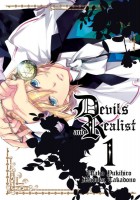
Devils and Realist is a new series from Seven Seas, and it seems to be more for the Alice crowd than the Monster Musume crowd, as it’s a josei manga from Comic Zero-Sum. It has a certain Black Butler tone to it judging from its description, and I suspect will please fans of that series as well.

ASH: I’m looking forward to giving this one a try. (I also really just like the cover of the first volume.)

MICHELLE: It *is* quite pretty.

ANNA: Huh, I hadn’t realized that this was a josei manga. The cover is pretty! I will likely check this out.

MJ: I am always up for anything from Comic Zero-Sum, I admit, though I’m not a fan of Black Butler, so we’ll see.

SEAN: And Love In Hell wraps up with its third volume. Can our hero and heroine live happily ever after in the hereafter? Or will we just have more amusing bloody injuries?

Meanwhile, World War Blue 5 continues to combine standard shonen fantasy manga with ‘spot the 80s Japanese gaming reference’.

Vertical has the 4th volume of grim yet worthy medieval manga Wolfsmund.

ASH: Grim might be putting it mildly, but if you like dark manga Wolfsmund is definitely worth checking out.

ANNA: I have too much to read! I do want to check this out one day.

And SigIkki yet lives, even if it’s down to 2 or 3 titles. Afterschool Charisma 9 will no doubt involve celebrity clones who just happen to look like hot bishonen. For some reason. I understand it’s gotten darker and more serious as it’s gone on.

MICHELLE: One day I will get caught up on this.

ANNA: I also want to get caught up on this!

dorohedoro12

SEAN: Dorohedoro has also gotten darker and more serious as it’s gone on, which is a surprise given it was already pretty damn dark, just not very serious. Poor En! What will happen to everyone now?

ASH: I’m always happy to see more Dorohedoro! It’s such a weird series.

SEAN: Lastly, it may have come out digitally on the 1st, but Vol. 3 of Sunny ships to stores next week. I always manage to be startled at how good it is, even if I can’t quite figure out what to say about it. I don’t expect that to change.

ASH: I’m glad to see Sunny, too. Viz’s deluxe hardcovers are a treat.

MICHELLE: It’s simultaneously accessible and impressive. I’m really looking forward to volume three!

ANNA: This manga really does deserve the deluxe production.

MJ: Yes! Yes!

SEAN: An Easter Basket of manga treats. What’re you seeking?

Filed Under: FEATURES, manga the week of

What Did You Eat Yesterday?, Vol. 1

April 10, 2014 by Sean Gaffney

By Fumi Yoshinaga. Released in Japan as “Kinou Nani Tabeta?” by Kodansha, serialized in the magazine Morning. Released in North America by Vertical.

This series has been demanded by the manga cognoscenti almost since it began serialization, and particularly since Yoshinaga’s other titles made it big over here (well, semi-big – no one’s comparing sales between Antique Bakery and Vampire Knight). The story of a gay couple and their everyday lives and eating habits, it’s an intriguing title if only as, unlike other BL titles released over here, it’s very much slice of life rather than oriented towards BL fans like many other series with gay men released in North America. In a couple of ways it reminded me of the Odd Couple, if you replaced Oscar with another, slightly different Felix and made them both gay.

whatdid1

Our three lead characters are Shiro, a dapper lawyer who looks younger than his age and loves bargains; Kenji, a hairstylist who seems to live around the emotional extremes; and the food that they eat each chapter. Yes, trust me, the food is a main character, as loving attention is devoted to purchasing, cooking and eating it. Indeed, at times it seems the only thing keeping the characters sane and happy is delicious meals, as they (as well as the minor side characters) have a bunch of personal problems and neuroses that are equally on display here.

I must admit, while I found Shiro to be endearingly dorky at times, particularly when he’s fretting about bargains, I’m not sure I’ve really warmed to him, as he’s rather hard to like. He’s still in the closet at work, and takes pains to remain so. He and Kenji fight a couple of times here, but nothing is particularly resolved, it more or less just goes ignored or gets papered over with delicious meals. Which I admit is very true to life and absolutely what some couples are like, but it doesn’t make for entertaining reading. Shiro works a little better when he’s dealing with others, such as the housewife he befriends who shares his love of food bargains.

As for Kenji, he seems nice enough, but there are undercurrents there as well. He’s far too passive and accepting in his relationship, though he does show signs of jealousy when he sees Shiro shopping at a bakery owned by his ex-girlfriend from college (an attempt to ‘play straight’ that didn’t last long). On the whole, though, he seems to be a bit more at peace with his life than Shiro is, though I’m sure he’d appreciate being more open about their relationship.

And the food? It looks delicious. Some chapters get recipes after them, but not all – Shiro thinks aloud as he cooks, letting us know the details of exactly what he’s doing. Cooking and eating seem to be the one thing that relieves him of his daily stress. I wouldn’t call this a ‘foodie manga’, though – the food is a spice, giving you another reason to read the story about two men and their everyday lives together. It’s definitely a title worth checking out, and features a lot of what people love about Yoshinaga. Just be aware that sometimes you’re going to want to shake the protagonists and say “What are you acting this way? Stop it!”

Filed Under: REVIEWS

Yukikaze

April 9, 2014 by Ash Brown

YukikazeAuthor: Chōhei Kambayashi
Translator: Neil Nadelman
U.S. publisher: Viz Media
ISBN: 9781421532554
Released: January 2010
Original release: 1984
Awards: Seiun Award

Chōhei Kambayashi is an award-winning, well-respected, and popular author of science fiction in Japan. His novel Yukikaze is one of his best known works and has even been adapted into a short anime series. It is also his first book to be translated and released in English. Originally published in Japan in 1984, Yukikaze would go on to win a Seiun Award in 1985. Kambayashi revisited and slightly revised the novel in 2002 in preparation for the volume’s sequel Good Luck, Yukikaze. Neil Nadelman’s translation of Yukikaze, published by Viz Media’s speculative fiction imprint Haikasoru in 2010, is based on this 2002 edition. Haikasoru’s release of Yukikaze also includes two very interesting essays about the novel by Ran Ishidou and Ray Fuyuki. Haikasoru also released an English translation of Good Luck, Yukikaze. Kambayashi has written a third volume in the series, Unbroken Arrow, which has yet to be translated.

Rei Fukai is one of the best pilots that the Faery Air Force has, surviving numerous encounters with the JAM, an alien force threatening humanity’s very existence. It has been more than three decades since the JAM first appeared on Earth. They were quickly pushed back to the planet from where their invasion was launched, however the prolonged war against the JAM continues with no obvious way to secure a complete victory. Survival is Fukai’s primary order and goal. A member of an elite squadron associated with the Special Air Force, his mission is to collect and record massive amounts of data about the JAM and their tactical capabilities. He is to return with that information no matter what, even if that means leaving his comrades behind to die. Because of this, he and the others in his squadron have earned the reputation of being cold-hearted bastards. Outside of himself, the only thing that Fukai believes in, cares about, or trusts is the Yukikaze, the highly advanced fighter plane that he pilots.

Kambayashi addresses several themes in depth in Yukikaze: what humanity’s purpose is within the context of war, what it means to be human or inhuman, and perhaps most strikingly what the impact of the convergence of human intelligence and the technology it develops could be. Yukikaze is an engaging war story, with kinetic and hazardous air battles that have terrifying implications, but like all great science fiction the novel is also incredibly thought-provoking. The members of the Faery Air Force, and especially those in the Special Air Force, are primarily made up of criminals, those with anti-social tendencies, and other people who are unwanted or have no place back on Earth. They are treated more like expendable resources than they are like human beings. The war and the fighting is so far removed from those living on Earth that they are mostly oblivious to what is occurring on Faery. Protecting Earth is a thankless task for those engaged in the war, people who have very few ties to the planet left but who have no better options other than to fight.

Considering all of this, it isn’t that surprising that Fukai and some of the other pilots would prefer their planes to people. I’ll admit, as unsociable as Fukai can be, I did like the guy. It did take me a couple of chapters to really settle into Yukikaze, but by the end of the novel I was completely engaged. A large reason behind that was because of Fukai and his development as the novel progressed as well as the evolution of the Yukikaze. In the chaos of war, Fukai’s relationship to his fighter is one of the only stable things remaining in his life, but even that begins to change. The members of the Faery Air Force are often called inhuman and compared to machines. At the same time those machines are becoming more and more advanced, raising the question of whether humans are even necessary anymore. The war against the JAM that humanity is waging may not be the only battle of survival that it should be concerned about fighting. After an interesting but somewhat clunky beginning, I was actually quite impressed with the depth of Kambayashi’s ideas in Yukikaze. I look forward to reading its sequel.

Filed Under: REVIEWS Tagged With: Chōhei Kambayashi, Haikasoru, Novels, Seiun Award, viz media, Yukikaze

  • « Go to Previous Page
  • Page 1
  • Interim pages omitted …
  • Page 345
  • Page 346
  • Page 347
  • Page 348
  • Page 349
  • Interim pages omitted …
  • Page 538
  • Go to Next Page »
 | Log in
Copyright © 2010 Manga Bookshelf | Powered by WordPress & the Genesis Framework