• Skip to primary navigation
  • Skip to main content
  • Skip to primary sidebar
  • Home
  • About Us
    • Privacy Policy
    • Comment Policy
    • Disclosures & Disclaimers
  • Resources
    • Links, Essays & Articles
    • Fandomology!
    • CLAMP Directory
    • BlogRoll
  • Features & Columns
    • 3 Things Thursday
    • Adventures in the Key of Shoujo
    • Bit & Blips (game reviews)
    • BL BOOKRACK
    • Bookshelf Briefs
    • Bringing the Drama
    • Comic Conversion
    • Fanservice Friday
    • Going Digital
    • It Came From the Sinosphere
    • License This!
    • Magazine no Mori
    • My Week in Manga
    • OFF THE SHELF
    • Not By Manga Alone
    • PICK OF THE WEEK
    • Subtitles & Sensibility
    • Weekly Shonen Jump Recaps
  • Manga Moveable Feast
    • MMF Full Archive
    • Yun Kouga
    • CLAMP
    • Shojo Beat
    • Osamu Tezuka
    • Sailor Moon
    • Fruits Basket
    • Takehiko Inoue
    • Wild Adapter
    • One Piece
    • After School Nightmare
    • Karakuri Odette
    • Paradise Kiss
    • The Color Trilogy
    • To Terra…
    • Sexy Voice & Robo
  • Browse by Author
    • Sean Gaffney
    • Anna Neatrour
    • Michelle Smith
    • Katherine Dacey
    • MJ
    • Brigid Alverson
    • Travis Anderson
    • Phillip Anthony
    • Derek Bown
    • Jaci Dahlvang
    • Angela Eastman
    • Erica Friedman
    • Sara K.
    • Megan Purdy
    • Emily Snodgrass
    • Nancy Thistlethwaite
    • Eva Volin
    • David Welsh
  • MB Blogs
    • A Case Suitable For Treatment
    • Experiments in Manga
    • MangaBlog
    • The Manga Critic
    • Manga Report
    • Soliloquy in Blue
    • Manga Curmudgeon (archive)

Manga Bookshelf

Discussion, Resources, Roundtables, & Reviews

Features & Reviews

Bookshelf Briefs 3/21/16

March 21, 2016 by Sean Gaffney and Michelle Smith Leave a Comment

idol2Idol Dreams, Vol. 2 | By Arina Tanemura | VIZ Media – There are still certain aspects of Idol Dreams that strike me as incredibly creepy, given that the main character is 31 on the inside even if she’s temporarily in the body of her 15-year-old self. In this volume, for example, Chikage finds out that 15-year-old idol Hibiki might have a girlfriend, so she stalks him and ends up following him home to find out what the deal is. Lame! On the other hand, I enjoyed getting a look of her and Tokita together as middle-school students, and am now a bit more curious to see how she ended up becoming such a restrained and clueless adult. So, I guess I care a little bit now and that’s gotta count as progress. – Michelle Smith

roseprin9Kiss of the Rose Princess, Vol. 9 | By Aya Shouoto | VIZ Media – I wish I could say that Kiss of the Rose Princess has a strong ending that really rewards those who stuck with it, but, alas, I cannot do so. Great swaths of it made no sense to me whatsoever, and I can’t tell if that’s because the writing is genuinely incoherent or if I just never paid enough attention to details along the way. If one overlooks one’s puzzlement, it’s kind of a paint-by-numbers shoujo conclusion in which bad guys are revealed to be sympathetic, the power of shoujo heroine optimism keeps someone from doing something they’ll regret, and the big bad (another secret evil society—Shouoto’s got one of those in He’s My Only Vampire too, I believe) is defeated with ease. I mean, it’s not a horrible series, but it remains my least favorite of the three Shouoto series currently in print in English. – Michelle Smith

komomo3Komomo Confiserie, Vol. 3 | By Maki Minami | Viz Media – In general, I tend to like Maki Minami titles more than most bloggers—Special A is still a favorite of mine—but I’m just not feeling the love for this new series, possibly as the heroine, Komomo herself, is just too different from her previous titles. There’s still the core of denseness and not understand what this thing called love is, but there doesn’t seem to be much else. And Natsu, the obvious love interest, is not nearly as well characterized as either Kei or Senri. The food still looks delicious, though, and I like the best friend who has very little idea how to behave properly. But, especially as this is a relatively short series, I sort of want a little more from it than I’m getting. – Sean Gaffney

Komomo Confiserie, Vol. 3 | By Maki Minami | VIZ Media – Komomo’s been blushing up a storm and having heart palpitations whenever she’s around handsome cobbler Seto, but she can’t figure out what’s up. Her utter obliviousness is pretty dumb, and though the entire premise of this manga is unrealistic, it’s this that bothers me most of all. Still, I did like how Komomo instantly sets her own feelings aside when it comes to ensuring Seto’s happiness with his girlfriend, realizing that she’s not the one who can bring out the best in him. Plus, Rise trying to cheer her up by singing (terribly) was kind of amusing, too. In the end, my heart has warmed to this series a little, but I still don’t love it like I did Voice Over!. Maybe it needs some cats. – Michelle Smith

seki7My Neighbor Seki, Vol. 7 | By Takuma Morishige | Vertical Comics – For all that this manga is still at its best when it’s showing us Yokoi’s reactions to whatever Seki happens to be doing, it can’t be denied that Seki’s faces are getting just as good, especially now that Yokoi is able to stand up to him more often. We also have enough continuity now that we can see the return of old favorites, such as the robot family, now cursed with an Aibo that’s far too big compared to them, and the phantom art thief, who’s moved on to Western works as well. And Yokoi also joins in, of course, which works for good and ill—she just doesn’t have Seki’s sense of imagination. Luckily, Seki makes up for it on his own, which is good, as I think Vol. 8 is a few months away. – Sean Gaffney

nisekoi14Nisekoi, Vol. 14 | By Naoshi Komi | Viz Media – I can only imagine that Nisekoi‘s Western fans were not delighted with this new volume. Late additions to a harem manga always tend to get a hard time, even more so given that Yui is not only ANOTHER childhood friend, but also a prodigy, which means she’s completed enough schooling to be teaching Raku and company’s class. Oh yes, and she’s also the head of a Chinese Mafia family, complete with her own loyal bodyguard. One could be forgiven for assuming she’s there by editorial fiat to keep the story running as it’s still popular. That said, she’s amusing and intelligent, and enjoys teasing Raku without going too far with it, so we’ll see how long she sticks around. – Sean Gaffney

persona4Persona 4, Vols. 1 & 2 | By Shuji Sogabe and ATLUS | Udon Entertainment – This is a manga based on a game I haven’t played, and there’s apparently an anime as well. The hero in the game has the player’s name, so here one is invented. The story itself is half horror, half psychological action series, as our nameless hero and his three friends get sucked into another world where they must battle the negative sides they try to hide from others—battles which have killed other people. I found the second volume more interesting than the first, possibly due to the heavy yuri tease that I suspect will go nowhere. Oh, and which annoying bear pun creature came first, this or Dangan Ronpa? Recommended for Persona 4 fans, others won’t miss much. – Sean Gaffney

Filed Under: Bookshelf Briefs

My Week in Manga: March 14-March 20, 2016

March 21, 2016 by Ash Brown

My News and Reviews

I managed to post two in-depth manga reviews at Experiments in Manga last week, though it looks like I’ll only be posting one this coming week since taiko will be keeping me pretty busy with a number of different performances and related events. Inio Asano’s A Girl on the Shore was the first manga that I reviewed last week. Like the rest of Asano’s work that I’ve read, it can be emotionally intense and hard-hitting at times, but it’s very well done. As part of my monthly horror manga review project, last week I also took a look Mushishi, Volumes 8, 9, and 10, the final installment in the English-language release of Yuki Urushibara’s award-winning debut. Although I’ve reached the end of the series proper, I’m planning on at least more Mushishi-related post before I’m through.

Elsewhere online: The BBC has an interesting piece on Keiko Takemiya—The godmother of manga sex in Japan. Rokudenashiko was interviewed by the Anne Ishii of MASSIVE about controversial art and free speech. Otaku USA posted an interview with translator and scholar Frederik L. Schodt about his work and Osamu Tezuka. An interview with Steve Oliff, the colorist who worked on Marvel’s release of Katsuhiro Otomo’s Akira, was posted at Anime News Network. In licensing news, Dark Horse has picked up the Psycho-Pass: Inspector Shinya Kogami manga written by Midori Goto and illustrated by Natsuo Sai. Finally, the Skip Beat! crowdfunding effort that I mentioned a couple weeks ago has moved from Indiegogo to Kickstarter.

Quick Takes

Dream Fossil: The Complete Stories of Satoshi KonDream Fossil: The Complete Stories of Satoshi Kon by Satoshi Kon. Compiling fifteen of Kon’s short manga from between 1984 and 1989, as well as an essay by Susumu Hirasawa (which was a pleasant surprise), Dream Fossil is a somewhat peculiar volume which will probably be of most interest to Kon enthusiasts although other readers may find parts of it appealing as well. As is the case with so many collections, some stories are much stronger than others. Some of the unevenness can likely be attributed to the fact that Dream Fossil consists of Kon’s early works in which his narrative techniques were still being refined and developed. I actually found myself frustrated with some of the stories because they read less like manga and more like a storyboard or broad outline for a more involved work; some of the stories and ideas seem like they would have been better conveyed through animation rather than sequential art. Even so, as a whole I did enjoy Dream Fossil. While the storytelling itself was sometimes weak, the underlying concepts and imagery were great.

Master Keaton, Volume 2Master Keaton, Volumes 2-4 written by Hokusei Katsushika and Takashi Nagasaki and illustrated by Naoki Urasawa. It’s been some time since I read the first volume of Master Keaton, but being a fairly episodic series without much of an overarching story it wasn’t at all difficult to fall right back into the manga. I first picked up Master Keaton because of Urasawa’s involvement with the manga. This is still a major draw for me, but I continue to read the series because I genuinely enjoy the stories and characters. Keaton is sent all over the world to investigate a wide range of cases, so there’s plenty of variety in the manga’s stories as well. Although the series’ drama, action and adventure is certainly engaging, I especially like the chapters that take advantage of Keaton’s archaeological and academic interests.  Master Keaton, while fictionalized, makes use of actual people, places, and events, which I like. (I’ve even learned a few factual tidbits from the manga.) Occasionally the series does get bogged down in historical details that don’t necessarily further the story, though.

The Tipping PointThe Tipping Point edited by Alex Donoghue and Tim Pilcher. Published as part of the fortieth anniversary celebrations of the comics publisher Humanoids, The Tipping Point collects thirteen short works from creators influenced by Japanese, Franco-Belgian, and American comics traditions. The anthology specifically caught my attention due to the mangaka involved—Taiyo Matsumoto, Atsushi Kaneko, Naoki Urasawa, Keiichi Koike, and Katsuya Terada—although the European and American creators are notable in their own right. (Sadly, though the collection touts its own innovation and diversity, only male creators are represented, something that is quickly glossed over in the introduction.) I greatly enjoyed the individual comics which range in subject, genre, and tone, but as a collection The Tipping Point seems to be missing a sense of cohesiveness and context. In the end, I was left wondering why these particular creators and why these particular works were selected to be brought together. Perhaps the theme of a “tipping point” was simply too vague or broad.

Filed Under: FEATURES, My Week in Manga Tagged With: comics, Hokusei Katsushika, manga, Master Keaton, Naoki Urasawa, Satoshi Kon, Takashi Nagasaki

Paradise Residence, Vol. 1

March 20, 2016 by Sean Gaffney

By Kosuke Fujishima. Released in Japan by Kodansha, serialized in the magazine Afternoon. Released in North America by Kodansha Comics.

For all that Fujishima’s Oh My Goddess! was a series with angels, devils, and everything in between (that is when it wasn’t just about vehicles and those who love them), there was an awful lot of what is generally termed ‘slice-of-life’ in the series. And before that we had You’re Under Arrest, which also took a basic premise (female cop buddy movie) and used it as a springboard for everyday amusing situations. As a result, it should not come as a surprise that his new series details the rather everyday, slice-of-life adventures of a girls’ dormitory way up a hill, and the eccentric characters therein. Of course, the problem with this is that the series needs to rise and fall on said eccentric characters, and so far we don’t really get a good handle on any except one or two.

parares1

Our two heroines are on the front cover posing for us, and they are very much of the Miyuki and Natsumi school of personalities. Takanashi is brash, sleeps late, loves to eat, is not very good at school but makes up for it with energy and heart. Misawa is her best friend, the straight man of the group who exists mostly to react to Takanashi’s antics and sometimes sigh. The dorm they’re in is old and tends to fall apart easily, but its residents all love it, particularly when defending it against their all-girls’ school’s other dorm, which is modern and state of the art. We get the overly sadistic sempai, the elementary schoolgirl who acts as a dorm mother (she’s the daughter of the REAL, almost never seen, dorm mother), the overseas student, the otaku, the eccentric artist, etcetera.

The volume begins pretty much in media res, showing off the group’s everyday school and dorm life. We see how Takanashi deals with dogs, heat, and typhoons, as well as what appears to be a rivalry with a stuck-up girl from the otehr dorm. After this volume, we get as an extra “Volume 0”, a collection of the initial chapters that ran as one-offs in the spinoff good!Afternoon while Fujishima was still working on Oh My Goddess!. I can see why it was put later, as the characters are not quite in character yet, but it does give a better introduction to everyone than the initial first volume does. There’s also a short story featuring Takanashi’s parents, about the springtime of youth, etc.

This is light and fluffy fun. If there’s a flaw it’s that that’s all it is. There’s not as big a hook to draw people in as there is with Oh My Goddess!, and I doubt we’ll get serious plotlines here. The pacing can be slow, as you’d expect with this genre. And sometimes there’s a gag thrown in that just doesn’t work, such as one girl comedically falling into another girl’s breasts during a blackout, as if Fujishima is reminded that fanservice has moved on since 1985 and tried to imitate it. But if you like Fujishima, and his art is very nice here, this should appeal to you. It’s also over in Japan, so should wrap up pretty soon.

Filed Under: REVIEWS

Mushishi, Vol. 8, 9, and 10

March 18, 2016 by Ash Brown

Mushishi, Volumes 8-10Creator: Yuki Urushibara
U.S. publisher: Del Rey
ISBN: 9780345505606
Released: July 2010
Original release: 2007-2008
Awards: Japan Media Arts Award, Kodansha Manga Award

Every once in a while I come across a work that stays with me long after I first finish reading it and that I find myself revisiting time and again. Yuki Urushibara’s ten-volume debut manga series Mushishi is one such work. Heavily influenced by traditional Japanese folklore but retaining modern sensibilities, Mushishi is a nuanced and layered manga which can either be simply enjoyed as a collection of atmospheric and subtly unsettling stories or more deeply appreciated for its complex underlying themes and philosophies. Mushishi quickly became and remains one of my favorite manga. The series has been received positively by fans and critics alike, earning Urushibara several awards and recognitions including a Japan Media Arts Award and a Kodansha Manga Award. Mushishi has also been the basis for multiple anime among other media adaptations. In English, the series was first published in print by Del Rey Manga and was later released digitally by Kodansha Comics.

The final volume of the English-langauge edition of Mushishi, first printed in 2010 and released digitally in 2014, is equivalent to the eighth, ninth, and tenth volumes of the series’ original Japanese release published between 2007 and 2008. Keeping with the episodic nature of Mushishi, the volume collects fourteen stories that for the most part aren’t directly tied to one another or to earlier chapters, but which share similar ideas and themes with the rest of the series. Family relationships are very important in Mushishi as a whole, but stories like “The Milk of the Valley,” “The Hidden Channel,” “Aquamarine,” and “The Thread of Life” in particular explore the deep bonds between mothers, including surrogate mothers, and their children. Other stories, like “The Final Bit of Crimson,” “Stars in the Jar of the Sky,” and “The Scented Darkness,” are about other realities and worlds, or at least about aspects of the natural world that aren’t fully understood by humankind. On the other hand, “Sunshowers,” “The Mud Weeds,” “The Whirlwind,” and “The Eternal Tree” are stories which show that when dealing with possession by or control of mushi, greater understanding can be both a curse and a blessing.

Mushishi, Volume 10, page 155The remaining three stories collected in the volume, including the series’ two-part finale, specifically involve Ginko (the manga’s protagonist and linking character), his personal relationship to mushi (primordial creatures that are closest to the original form of life), and what are known as “masters” in the world of Mushishi. Each master is associated with a specific geographic area and are responsible for maintaining the connection and balance between the natural world and all of the beings found within it. They are described as the living embodiment of the promise and rule of life. Although each of the three stories are technically found in different volumes of the series, taken together they form a particularly interesting narrative and are very illuminating when it comes to Ginko’s character. “The Bed of Grass” returns to Ginko’s past, firmly establishing why he is who he is and revealing the origin of his deep connection to and somewhat unusual attitude towards mushi. That connection is extremely critical to and further developed in “The Bottom of Winter” and in the series’ conclusion “Drops of Bells.”

Ginko’s devotion to life, whether it be human, mushi, or some other form, is perhaps the most prominent narrative driving force behind the entirety of Mushishi. At the same time, Ginko is also very aware that sometimes life cannot and should not always be preserved and that coexistence isn’t always an option. The intent is to find an appropriate balance, but what that balance should be is often debatable and mistakes are made. Ginko frequently acts in a role akin to that of a master and on several occasions throughout the series even considers taking the responsibilities of master upon himself. The decisions that he makes as he considers all of this in the final volumes of Mushishi are especially poignant. Mushishi is a manga series about many things, but at its very heart it’s an exploration of relationships, not only between humans and the natural world of which they are only one, inextricable part, but between people as individuals and as members of larger social groups. Mushi provide a seemingly supernatural element to the series, but ultimately the focus of Mushishi is on the very real, varied, and changing struggles of individuals living in an evolving world that they cannot completely control or understand.

Filed Under: REVIEWS Tagged With: del rey, Japan Media Arts Award, Kodansha Manga Award, manga, mushishi, Yuki Urushibara

Ranma 1/2, Vols. 25-26

March 18, 2016 by Sean Gaffney

By Rumiko Takahashi. Released in Japan by Shogakukan, serialized in the magazine Shonen Sunday. Released in North America by Viz.

It’s not an ironclad rule, but in general, the longer the story arc in Ranma the better it ends up being. And this is good news for this volume, which wraps up the Herb arc from the previous omnibus, introduces a new character who brings a lot of silliness to the table, and has what may be the strongest arc in the entire series, where Takahashi learns that even though her series desperately need to be static and unchanging, sometimes you have to have the occasional character development. (Admittedly, we haven’t seen her learn that lesson with Rin-Ne just yet, but hey.) The Shinnosuke arc also manages to be strong simply by reversing the usual plotline of many a Ranma story, as this time it’s Akane who meets the stranger with a mysterious connection to her past.

ranma25-26

Indeed, Akane is comparatively calm and peaceful compared to previous situations, possibly as, instead of dealing with a supposed errant fiancee for Ranma, she now has her own love troubles to deal with. Shinnosuke saved her when she was a child, at great cost to his own self, and has grown up to be a handsome young man who looks a bit like Ryouga. (Too much, IMO – especially when the actual Ryouga shows up, it can be difficult to tell them apart.) The trouble is that Akane loves Ranma, and even though she’ll never say it or think it she knows it as well. Thus on her end she feels an obligation to stay and help because of a life debt. Ranma, who is playing the Akane role this time around, can only see her getting cozy with this new guy. He goes through various stages of jealousy, and as ever with Ranma, the worst argument, where you know things are really bad, comes from when Ranma and Akane STOP hitting each other.

There is another half to this volume, of course. We wrap up Herb in a quick but satisfying way, and Ranma once again proves unable to sacrifice even one of his worst villains. We also meet Hinako, who is another character who transforms from one form to another, though for once it’s not due to a cursed spring but rather due to a failed attempt at a good deed by Happosai, of all people. The Hinako storyline is not going to give you the depth and romance that you see in the Shinnosuke arc. Instead we get pure comedy, as Ranma, in order to defeat the teacher, has to essentially grope her pressure points – which are exactly where you’d think they are. Oh yes, and Hinako’s transformation from bratty immature kid to statuesque stunner makes no sense except as comedy. But that’s Ranma for ya.

In short, Ranma has now turned the corner and is entering its twilight years, but can still turn out some classics, and this volume is overall excellent, provided you don’t mind some fanservice. There’s even actual romantic progress at the very end, which I won’t spoil except to again say that the real tsundere in this series is Ranma, not Akane.

Filed Under: REVIEWS

Manga the Week of 3/23

March 17, 2016 by Sean Gaffney, Michelle Smith, Ash Brown, MJ and Anna N Leave a Comment

SEAN: It is somewhat sad that with the huge number of manga out towards the end of every month, I can be relieved that there are “only” 33 titles out next week. Let’s plow through them.

Dark Horse has a 3rd Astro Boy omnibus.

Kodansha has an awful lot of stuff. There’s a 4th volume of that pesky Devil Survivor.

And Noragami is still sped up with its 12th release.

If you prefer 4 to 3, then the debut of Persona Q: Shadow of the Labyrinth Side P4 will delight you. I’ll be in the corner looking baffled.

pj1

At long last, North America sees the debut of possibly the most anticipated josei title ever: Princess Jellyfish, which runs in Kiss magazine, gets an omnibus release, and it is fantastic. The Manga Bookshelf team would normally all pick it as Pick of the Week automatically, but see below. (FYI: PJ’s creator, Akiko Higashimura, has a younger brother, who happens to draw My Neighbor Seki.)

MICHELLE: I feel like I have been waiting for this for ages and ages. So excited!

ASH: Same here! (Also, I had no idea Akiko Higashimura and Takuma Morishige were related!)

MJ: So ready for this!

ANNA: I feel like I’ve been waiting for this FOREVER! Very much looking forward to reading this.

SEAN: Also debuting is Real Account, which is a survival game manga, and zzzzzzzzzzzzzzzzzzsnooooore – sorry, fell asleep there. Moving on.

MICHELLE: It can’t be worse than BTOOOM!, can it?

MJ: We shouldn’t underestimate it, Michelle. We should give it a chance to prove that it’s worse. It’s only fair.

SEAN: And a 7th volume of Yamada-kun and the Seven Witches. One volume per witch!

Seven Seas gives us a 5th volume of Servamp, which I believe still has vampires.

And Vertical has a 7th volume of Ajin, a series I know many people are excited about.

ASH: Especially now that there’s an anime series.

SEAN: Viz finally debuts the new shoujo title from the Vampire Knight creator, who has switched from Vampires to Ninjas with Shuriken and Pleats.

MICHELLE: I didn’t love Vampire Knight, but I’m still looking forward to checking this out.

MJ: Same.

ANNA: I will read this!

SEAN: And now it’s Yen time, starting with the Yen On light novel imprint. Accel World gets a 6th volume, as we try to figure out if our hero is going to turn possessed and evil or not.

The third Durarara!!, meanwhile, focuses on Masaomi, the third member of our high school power trio.

Log Horizon has a 4th volume, resolving the cliffhanger from the third, and possibly featuring Shiroe pushing his glasses up his face a few more times.

And there’s a 4th No Game No Life, which I wasn’t as pleased with as usual. I reviewed it here.

agkz1

Akame Ga KILL! ZERO is the new spinoff series of the week, a prequel taking place a few years before the main series and focusing, appropriately enough, on Akame.

There’s a third Black Bullet manga, with plenty of disturbing yet well choreographed loli assassin action for you.

Bloody Cross nears its end, but isn’t there yet, even as we hit double digits with Volume 10.

And we get the 2nd to last volume of Chaika the Coffin Princess as well, which is sadly far below the most important coffin carrying manga this week. More later.

Demon from Afar must have run out of cast members, as the 6th volume is its last.

So The Disappearance of Nagato Yuki-chan has resolved its main romance, and has finished promoting its anime. It has to wrap up soon. Right? Right?

He’s My Only Vampire is only half finished, but I’m enjoying it more than Shouoto’s other titles, and so I look forward to Vol. 6.

MICHELLE: Same here, though Demon Prince of Momochi House is pretty pleasant, too.

SEAN: The second The Honor Student at Magic High School continues to tell an alternate viewpoint of the novel we haven’t quite gotten to yet.

There’s also a 4th omnibus of Karneval’s circus mysteries.

And if you enjoy seeing a girl attempt to do life correctly and fail constantly, you no doubt are already aware that No Matter How You Look At It, It’s You Guys’ Fault That I’m Not Popular!! has an 8th volume next week.

And if you enjoy pretty supernatural people, have a 2nd Of The Red, the Light, and the Ayakashi.

MICHELLE: Yay! Volume one was a surprise delight!

ASH: I actually just finished reading the first volume; I’m intrigued and look forward to more.

MJ: Hm, I guess I should check out that first volume!

ph24

SEAN: Poor Princess Jellyfish! An obvious Pick of the Week… except oh look, here’s the final Pandora Hearts volume! Michelle, MJ, you aren’t allowed to pick both this time. (evil grin)

MICHELLE: Oh, man. Well, I’m pretty sure where MJ’s heart lies, but I am less committed.

MJ: Oh, the final one. Oh. Oh.

SEAN: And a third Prison School volume, which I think will give readers all the excess bodily fluids they could possibly want.

ASH: And then some, most likely.

SEAN: Rose Guns Days has a third volume of its Season 1 arc.

The only coffin manga that matters next week, we finally see a 5th volume of Shoulder-a-Coffin Kuro. Yay!

Spice & Wolf has a 12th manga volume, and for those who want to catch up with the series, 1-12 will also now be available digitally starting next week.

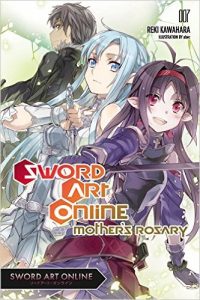
Sword Art Online begins the Mother’s Rosary arc, despite having just started the Phantom Bullet arc as well. The series ran at the same time in Japan, and will do so here as well.

Lastly, there’s a 4th volume of Sword Art Online Progressive’s manga, featuring Argo!, and also those other two I guess.

Even if you don’t get a lot of manga, there’s STILL a lot to get next week. Can you keep up?

MICHELLE: Not really, no!

Filed Under: FEATURES, manga the week of

A Girl on the Shore

March 16, 2016 by Ash Brown

A Girl on the ShoreCreator: Inio Asano
U.S. publisher: Vertical
ISBN: 9781941220856
Released: January 2016
Original release: 2011-2013

Several of Inio Asano’s manga have been released in English in the past—Solanin, What A Wonderful World!, and Nijigahara Holograph—and I’ve read every one. While they all left a significant impression on me and can be difficult works, Nijigahara Holograph in particular floored me, further convincing me to seek out more of Asano’s manga. Vertical Comics published one of Asano’s more recent manga series A Girl on the Shore in early 2016. While the English-language edition of A Girl on the Shore is complete in a single omnibus, in Japan the series was originally released in two volumes which were published in 2011 and 2013. I didn’t actually know much about A Girl on the Shore before picking it up beyond the fact it was by Asano, but I rightfully anticipated that it would be a fairly challenging read in addition to being beautifully drawn.

Junior high can be a trying time for anyone as students become more aware of themselves and each other while hormones and the intense desire to belong complicate relationships and they make decisions that will greatly influence their futures. Koume has a crush on her upperclassman Misaki, but he turns out to be something of a playboy, taking advantage of her interest by receiving sexual favors with no intention of returning her feelings. In order to cope, Koume turns around and does the same thing to her classmate Keisuke who she had previously rejected after he confessed that he liked her. Keisuke and Koume both know that they’re manipulating and using each other, but that doesn’t stop their increasingly intimate relationship from evolving and their feelings from changing. Both of them are searching for some deeper connection and meaning in their lives. For a time, having sex together seems to satisfy that need, but in the end the physical relationship only obscures their underlying emotional crises.

A Girl on the Shore, page 147A Girl on the Shore contains numerous and frank depictions of teenage sex. However, the sexual content of the volume is integral to the story that Asano is telling and carries meaning beyond titillation. In fact, A Girl on the Shore provides a deliberately uncomfortable and voyeuristic reading experience, often showing events and personal encounters unfolding directly from the characters’ perspectives. Sex isn’t romanticized or idealized in the manga and carries with it significant repercussions. Koume and Keisuke’s relationship has consequences not only for them both, but for the others around them as well. Physically the two are intimate and daring, but there continues to be a separation between them and they remain emotionally distant. Their relationship is an incredibly important one and their feelings and needs become progressively intertwined, but they are never quite able to completely and truly connect with each other.

Asano’s works tend to be emotionally intense and A Girl on the Shore is no exception. The manga is filled with discontent and sadness that occasionally erupts in physical or psychological violence. A Girl on the Shore is coming-of-age story that can be brutally unsettling and hard-hitting. Koume finds herself drawn more and more towards Keisuke and the complicated power dynamics of their intimacy, seemingly oblivious of the toll that the relationship is taking on them both. Independent of that, Keisuke is also dealing with some heavy family matters and emotional issues of his own. Ultimately, one of the most prominent themes of A Girl on the Shore is loneliness and isolation even in the midst of a relationship. This is beautifully emphasized by Asano’s artwork in which detailed backgrounds, dramatic perspectives, layout and use of space form settings in which people seem set apart not only from others but the world around them as well. At times A Girl on the Shore can tend to be overwhelmingly bleak and tragic, but there is a deliberate narrative purpose and intent behind the pain and pessimism.

Filed Under: REVIEWS Tagged With: Inio Asano, manga, vertical, Vertical Comics

Skip Beat! Vol. 36

March 15, 2016 by Anna N

Skip Beat Volume 36 by Yoshiki Nakamura

I feel like most reviews of Skip Beat could just be summed up as, “Skip Beat, long-running shoujo series, continues to be relentlessly excellent,” but as I was reading the latest volume there were several specific things that struck me about it. I absolutely loved the Heel siblings plot, and while the manga has to move on from Ren and Kyoko being forced to be in close proximity to each other as they pretend to be gothic semi-incestual siblings in order to further Ren’s acting career as he acts in a drama while pretending to be an entirely different actor than “Ren” which is itself a totally different persona from his genuine personality, I’m glad that this volume eases out of the story line gently, with Kyoko getting one last big scene as Setsu.

Early in this volume I was reminded at how good Nakamura is at drawing Kyoko in freak-out mode, as she suffers agony in telling Ren that she kissed her long-lost fairy prince Corn (who is also Ren). Ren is pushing Kyoko a bit to get an emotional reaction from her, but he also is genuinely grateful for her help as they part and she heads back to Japan to resume her own acting career. Kyoko has matured so much as an actress and a person, and while she’s handling a crisis on her new show, things get complicated fast when Sho visits her home.

A settled and stable shoujo heroine doesn’t make for much drama, and now in addition to Sho’s reappearance, Kyoko is confronted with the specter of her long-absent horrible mother. Just when she starts to get a bit of emotional equilibrium, something happens to throw things off!

Lettering Skip Beat! must be a fun and challenging job, as there are different fonts used for Kyoko when she’s beset by the angry demon side of her personality, when she’s yelling at Sho, and when she’s calmly giving advice to a fellow actress. All in all, this was a very entertaining volume helping Skip Beat! transition away from one story line into a new direction, and I’m looking forward to seeing what happens next.

sb36

Filed Under: REVIEWS Tagged With: shojo, shoujo, Skip Beat!, viz media

Bookshelf Briefs 3/15/16

March 15, 2016 by Sean Gaffney and Michelle Smith Leave a Comment

Beware the Ides of Briefs!

barakamon9Barakamon, Vol. 9 | By Satsuki Yoshino | Yen Press – As this volume of Barakamon was going on, Yoshino was also beginning the Handa-kun spinoff series (also available from Yen), so it’s not surprising that we start to see the two blend together, as a former high school classmate with a grudge shows up for the annual intervillage athletic event. Handa being Handa, he doesn’t actually remember any of this, and is more concerned with prosaic matters, such as sleeping off the all-nighter he put in. That said, we see his true nature at the very end: he doesn’t actually care about personal victories if the overall victory is lost. That’s why people like him, and why folks like Hiroshi and Tama use him as an example even as they go through their own failures. – Sean Gaffney

evergreen4Evergreen, Vol. 4 | By Yuyuko Takemiya and Akira Gaskabe | Seven Seas – Since this is the final volume of Evergreen, we need to pack all the plot revelations and angst into one volume, and it can get kind of exhausting after a while. To give the manga credit, though, unlike many other “you’re brother and sister, oh wait no you aren’t after all” manga I could name (Marmalade Boy), this one does not pull back that punch, and as a result, the heartwarming romance we’ve seen developed this whole time falls apart appropriately. Which is good, but does leave you a bit dissatisfied—On-chan and Sora’s epiphany on a bus just isn’t quite the same. So in thie end, this was filled with many good ideas, but I don’t think worked as well as the author’s novels. – Sean Gaffney

idol2Idol Dreams, Vol. 2 | By Arina Tanemura | Viz Media – The problem with Idol Dreams is that the things that I think make the series more interesting—the disturbing romance between a 31-year-old in a 15-year-old’s body and her fellow idols, the adult male lead clearly showing he’s still desperately in love with her despite having a girlfriend, the unfortunate return of the guy who set this all up in the first place—are all things that I have no confidence that the author is actually going to handle properly, particularly given the interview at the back. That said, I always enjoy reading it in the moment, and I think, like Love at Fourteen, I’ll continue to enjoy it and call it problematic at the same time every review. – Sean Gaffney

nozaki2Monthly Girls’ Nozaki-kun, Vol. 2 | By Izumi Tsubaki | Yen Press –A rather strange thing happens while I read Monthly Girls’ Nozaki-kun. Although I never laugh at any of the 4-panel punchlines—and, indeed, sometimes find them deeply unfunny—positive feelings gradually build up as I read to the point where I end up enjoying the volume overall anyway. I do wonder if I like the wrong things, though. For example, my favorite aspect of this volume is the firm guidance Nozaki’s new editor gives him, spurring Nozaki to try to put himself into the shoes of his characters. Could this series actually incorporate his growth as a mangaka without changing his oddball personality? I rather doubt it. Even if that never happens, though, I will probably keep reading. – Michelle Smith

onepunch5One-Punch Man, Vol. 5 | By ONE and Yusuke Marata | Viz Media – One of the many good things about One-Punch Man is showing off the variety of character types we get in the super-powered folks. We see the overdramatic drama queens, the shirkers who use it to further their other career, and the painfully earnest ones who want to help and save people but really don’t have enough power to fight the ridiculous monsters this series can throw at you. Saitama notices, though, and he continues to take the bullet for the greater good, pretending that he’s selfish and evil to make the other heroes stand out as that much more noble. I think this is eventually going to come back and haunt him, but for now all is well, and things continue to be wiped out in one punch. – Sean Gaffney

sily12Say I Love You., Vol. 12 | By Kanae Hazuki | Kodansha Comics –After an eventful day volunteering at a kindergarten, Mei reflects that what she most wants is to be needed. Whether she knows it or not, she fulfills this role twice in this volume, first by arranging a meeting with a photographer who helps Yamato figure out why his recent photos haven’t been making him happy, and secondly by giving some good advice to Len, whose preference for online friends (who don’t know about his famous sister) backfires due to his own enigmatic fame in the world of online gaming. I wasn’t entirely sold on the Aoi siblings last volume, but for some reason, Len’s plight in particular really earned my sympathy this time. Mopey otaku or not, he’s a captivating character and I appreciate the chance to see how much Mei has grown in the way she deals with him. As always, I’m looking forward to the next volume! – Michelle Smith

skipbeat36Skip Beat!, Vol. 36 | By Yoshiki Nakamura | Viz Media – We were always going to end up here, right from the very first chapter. There was simply no way that Kyoko’s mother was not going to end up in the middle of her life, no matter how much either of them deny it. And so while I’m relieved to see that it’s time for that particular gun to be fired, I worry intensely that it is going to excuse her mother’s abuse—as so many other Japanese series have done in the name of showing off how good parents are really. Meanwhile, Box R has debuted, and unfortunately it’s not the success that Dark Moon was. Can Kyoko’s career take a failure this early? Ironically, though, the best scene in the volume is between her and Sho, two people who simply can’t accept how well they know each other. – Sean Gaffney

Skip Beat!, Vol. 36 | By Yoshiki Nakamura | VIZ Media – After a heartfelt thank-you from Ren, the Heel siblings arc comes to a close. Kyoko returns to work in Tokyo, where Box R has debuted to lackluster ratings. While she helps mentor a costar with rage issues of her own, a far more interesting plot is brewing: Kyoko’s mother now knows where she is and is making inroads into her world. She’s serving as a consultant on Moko’s new show, and has been in contact with Sho’s parents, too. This leads to the volume’s best scene, in which Sho is not only legitimately worried about Kyoko, but also encourages her not to let her mother sway her from her goals. I hadn’t realized how much I had missed their scenes, and seeing Sho recognizing her talent and respecting her ambition shows some real growth. I never thought I’d clamor for more Sho, but now I kind of am! – Michelle Smith

socute5So Cute It Hurts!!, Vol. 5 | By Go Ikeyamada | VIZ Media –While I still think this series is painfully unfunny and unashamedly generic, the fact remains that I don’t hate it as much as I used to. In fact, I even kind of like that Mitsuru had his heart broken, and instead of ending up with the girl he feels compelled to protect, it’s looking like romance is in the air with a fearless girl he sees as his equal. That was unexpected. I’m also a sucker for retrospective narration, so when some turned up at the end of volume four, hinting ominously about Aoi’s past, I was doomed. Oh, I have very little faith that the big reveal will be worth the investment of time or resolved in any way that doesn’t rely heavily on Shoujo Heroine Optimism, but I’ll still read at least far enough to find out what the big secret is. Grumble grumble. – Michelle Smith

Filed Under: Bookshelf Briefs

No Game No Life, Vol. 4

March 15, 2016 by Sean Gaffney

By Yuu Kamiya. Released in Japan by Media Factory. Released in North America by Yen On.

It’s always dangerous when a title that you enjoy despite its many glaring flaws has a subpar volume. Suddenly there isn’t enough to enjoy to justify wading through everything. It doesn’t help that this volume was delayed two months for unknown reasons (possibly as the translator got burnt out – it did have a 3-month schedule before this). And it’s unfortunate that this is the first volume that wasn’t adapted into an anime, so will presumably have a lot of new readers trying to see what happens next. But yes, there’s no getting around this – this is just not a great volume of No Game No Life.

ngnl4

Everything seems to be just that little bit tired, starting with Sora and Shiro, who in the first volume were hideously broken people who just happened to be crazy otaku, but here the otaku part is in full swing and were it not for a few casual mentions in the text, you’d never even remember how codependent they are on each other’s presence. This is the first of a two-parter again, so it’s possible the next volume will up the ante, but it also has to be said that nothing really seems to threaten our heroes. Sure, they initially refuse to play the datesim simply because it’s just like that anathema, real-life romance, but once they’re in it, merely avoiding any love points seems to be fine with them. Sora and Shiro have been shown to be invincible, and that’s ALL they are here.

The other characters don’t fare much better. There are the usual NGNL levels of perversion, this time around involving the fantasy vampires and mermaids we see here. The fact that the dhampirs can suck bodily fluids other than blood is (pardon me) milked for all it’s worth, and the Sirens are succubuses whose lack of foresight and intelligence had better be undercut when we reach Volume 5 or I’m going to be pissed off. You don’t right an entire race of bimbos anymore just because it’s fun. And then there’s Ino, the old Werebeast grandpa, whose response in regards to winning the datesim was… memorable, but I’m not sure I get the manly part, and he was also used as a sexual gag regarding all the women he’d bedded over the years.

There is one bright spot in this volume, and that was the first scene with Steph, who has been left behind to deal with the kingdom while Sora and Shiro are negotiating with the Shrine Maiden. Having been forced to play against the two for thousands of games, and losing every single time, Steph has actually become scarily good at games, particularly the card games we saw her failing at in the very first volume. Of course, she’s not aware of this – she’s constantly trying to compare herself to Sora and Shiro, rather than, say, the average citizen. We are also reminded why Sora and Shiro left her there in the firt place – she’s really good at running a country, something they would be terrible at. Sadly, she then goes back to being a figure of mockery for most of the book, but that one brief shining moment was excellent.

It’s possible the next volume will turn this around. As I said, it is a two-parter of sorts. But I must admit that after reading this volume of NGNL I just felt tired.

Filed Under: REVIEWS

My Week in Manga: March 7-March 13, 2016

March 14, 2016 by Ash Brown

My News and Reviews

I was finally able to post February’s Bookshelf Overload at Experiments in Manga last week, a few days later than I originally intended, but at least it’s up. I’ve been intentionally decreasing the number of new manga and other things that I’m buying at the moment, which means that I’ll be happily digging into my backlog and catching up on older series. I also posted an in-depth review last week, though perhaps it’s more of a summary. Either way, Mechademia, Volume 10: World Renewal contains some interesting material for those looking for a more scholarly approach to the study of manga, anime, and other Japanese popular culture. The volume also includes “Nanohana,” a short manga by Moto Hagio, and a story by Tomoyuki Hoshino called “Good Morning.” I am very fond of both creators’ work, so that made me especially happy to see.

Interesting things found online last week: Viz Media will apparently be releasing a new volume of Haikyu every month after it’s debut in July until the English edition catches up with the Japan’s releases, which is rather impressive. Yokai scholar and manga translator Zack Davisson wrote a great piece for The Comics Journal called Confessions of a Manga Translator. (Some of the comments are worth reading, too.) VICE has an interview with Gengoroh Tagame, who will also be participating in the Queer Japan documentary. (The Kickstarter campaign for the project ends very soon and could use some additional support; if it at all interests you, please consider contributing!) Graham Kolbeins, the filmmaker behind the documentary was recently interviewed as well.

Quick Takes

Alice in the Country of Clover: Cheshire Cat Waltz, Volume 1Alice in the Country of Clover: Cheshire Cat Waltz, Volumes 1-4 by Mamenosuke Fujimaru. With the extraordinary number of retellings, spinoffs, and sequels to Alice in the Country of Hearts, it can be somewhat daunting to know where to start. Fortunately, I have people looking out for me; Cheshire Cat Waltz was one of the series that was repeatedly recommended by multiple individuals. Although it still has the same vaguely ominous atmosphere (which I like), the Country of Clover is actually a slightly different setting than the Country of Hearts. Even the personalities of the characters that are shared between the two are somewhat changed as they adapt to their modified roles. I found Boris, the Cheshire Cat, an especially interesting character in the first manga series, so it probably makes sense that I would enjoy a series where he plays a leading role. Admittedly, the pairings in the various Alice in the Country of manga that I’ve read certainly shouldn’t be lauded as examples of healthy relationships. Boris, as sweet and considerate as he can sometimes be, is also very possessive. The story is engaging, though, and Cheshire Cat Waltz is surprisingly steamy as well.

Behind Story, Volume 2Behind Story, Volumes 2-3 by Narae Ahn. I enjoyed the first volume of Behind Story more than I thought I would, so I wanted to be sure to read more of the boys’ love manhwa. At the time, I didn’t even know how long the series was, and I wasn’t able to find out much about the creator, either. It turns out Behind Story is only three volumes, was Ahn’s debut series, and was originally published online. The final two volumes of Behind Story take place three years after the first. Johann has survived his teacher’s attempted murder-suicide, but his life is still a complicated mess; he’s more or less forced transfer out of school, leaving Taehee—one of the very few people who legitimately cared for him and his well-being—behind with no way to contact him. Eventually the two of them do reunite, but they’ve both changed over the years and neither are sure what direction their relationship will take in the future. Behind Story is a fairly solid debut with interesting characters and a story that, for the most part, moves beyond the genre’s standard tropes. The series’ ending does perhaps wrap up a little too quickly and nicely and could have used a little more development, but overall the manhwa is enjoyable.

Monthly Girls' Nozaki-kun, Volume 1Monthly Girls’ Nozaki-kun, Volume 1 by Izumi Tsubaki. I absolutely loved the anime adaptation of Monthly Girls’ Nozaki-kun, so I was very happy when Yen Press announced that it would be releasing the original manga series. The success of four-panel manga can be rather hit-or-miss in the North American market as their comedy is often firmly situated within a Japanese sense of humor and context. A few of the jokes in the first volume of Monthly Girls’ Nozaki-kun I may not have immediately understood if I hadn’t already seen the anime (which was able to more fully expound on things due to its format) but overall the manga and its gags are largely accessible and very funny. The series revolves around Nozaki—a relatively successful shoujo mangaka who has a difficult time convincing many of his high school classmates of that fact due to his large stature and seemingly stoic nature—and the various students who become his assistants or the inspiration for his characters. The manga is good-natured fun, much of the humor the result of the differences between the characters’ personalities and how most other people actually perceive them. I especially appreciate the series’ willingness to play with gender roles and expectations.

Filed Under: FEATURES, My Week in Manga Tagged With: Alice in the Country of, Behind Story, Izumi Tsubaki, Mamenosuke Fujimaru, manga, manhwa, Monthly Girls' Nozaki-kun, Narae Ahn

Legend of the Galactic Heroes: Dawn

March 13, 2016 by Sean Gaffney

By Yoshiki Tanaka. Released in Japan as “Ginga Eiyū Densetsu” by Tokuma Shoten. Released in North America by Haikasoru.

It’s rare to see a book that was first published in 1982 get so much excitement, but that’s exactly what happened when Viz’s SF imprint Haikasoru announced they had the first three volumes of this legendary series. The announcement was very much meant for old-school fans, those who are now in their early 40s and grew up with questionable translated fansubs of the 100-episode OAV that adapted the books (which has also recently been licensed). Why the excitement? Because it’s a really good story, showing off epic space battles and cool military tactics while at the same time showing us why constant warfare is something we should always strive to avoid. If the title sounds grandiose and over the top, it should. That’s what we’re going for here.

logh1

The first novel divides itself fairly equally between two sides of a long-running war. The Empire are a bunch of not-quite-Germans, whose lead character is Reinhard von Lohengramm, a young, handsome and brilliant tactician who is motivated by hatred and revenge after having his sister taken as mistress to the Emperor several years ago. Luckily, he has the standard sensible best friend with him, who occasionally reminds him to not go too far. On the side of the republic, we have Yang Wen-Li, who reminds me far too much of Tylor except that Yang came first. Yang desperately wants to be a historian and not get involved in the war at all, but sadly he’s an equally amazing military tactician, so he slides upwards through the book to full Admiral, mostly by virtue of being sensible, not lusting for glory and honor, and the occasional bout of clever genius.

The book begins with a long prologue showing how the Empire came to be, with the rise of Rudolf, a Hilter expy who shows off how much worse the Empire used to be. The sympathy of the Western reader, I admit, definitely resides with Yang over Reinhard, at least at the start. As the book goes on, though, and you see the very familiar corrupt democracy who think nothing of starting a war to get votes, you realize that neither side are really able to claim to be the good guys, and there are a bunch of inept generals and foolhardy glory hounds who show off the bad sides of both groups. Halfway through the book the Empire suffers a grievous military loss, and at the end an even worse political one. The Alliance shoots itself in the foot badly and is seen at the end licking its wounds. Even worse, there’s a hint that there are other parties trying to play both sides against the middle… led by the Church. (The Church, in stories like this, is almost always evil, unless it’s run by nuns.)

Haikasoru did a good job with the translation, I feel. It’s pompous and overly formal much of the time, but that’s exactly what the author is going for, I believe – much of the volume reads like a history book, and informality would miss the point. As I said earlier, the title is not just for show. This is not a light novel – it’s an epic legend, along the lines of Wagnerian opera. The anime, in fact, used a LOT of Mahler as the background music, which is highly fitting. If you enjoy military tactics books, as well as political infighting along the lines of Game of Thrones, then this is definitely the series for you. Haikasoru has promised two more volumes (the rest depends on sales) and I will absolutely be getting them.

Filed Under: REVIEWS

Mechademia, Volume 10: World Renewal

March 11, 2016 by Ash Brown

Mechademia, Volume 10: World RenewalEditor: Frenchy Lunning
Publisher: University of Minnesota Press
ISBN: 9780816699155
Released: November 2015

Mechademia, one of the few academic journal’s in English specifically devoted to the study of manga and anime, began publication in 2006. Since then, under the editorial guidance of Frenchy Lunning, a new thematic volume has been released every year and the journal has grown to include research and analysis of other areas of Japanese popular culture, such as film, television, games, novels, and fandom. I’ve previously read individual articles published in Mechademia, and even own several of the volumes, but I’ve never actually read one of the annuals from cover to cover until now; I had the happy opportunity to receive a review copy of Mechademia, Volume 10: World Renewal from University of Minnesota Press. It’s an aptly themed volume, signalling the end of one era and ushering a in a new one for the journal—World Renewal, released in 2015, is the last volume with Lunning serving as editor-in-chief.

After Lunning’s acknowledgements and introduction, World Renewal is divided into four main sections which collect articles, essays, stories, and even a short manga. The first part of the volume, Passages of As Not, uses the March 2011 Tōhoku earthquake, tsunami, and nuclear disaster as a touchstone. Akira Mizuta Lippit’s “Between Disaster, Medium 3.11” examines the experience of disaster, time, and space through Koreda Hirokazu’s film After Life. Similarly, “The Land of Hope: Planetary Cartographies of Fukushima, 2012” by Christophe Thouny uses Sion Sono’s film The Land of Hope to discuss fictionalized portrayals of disaster and changing landscapes. Sabu Kohso’s “Tokyo Apparatus (Version 1.0)” looks beyond the Tōhoku disaster towards the 2020 Tokyo Olympics. The section concludes with a translation of Tomoyuki Hoshino’s “Good Morning: A Postdisaster Palm-of-the-Hand Story” which I was particularly happy to see as I find Hoshino’s works in general to be especially powerful.

While as a whole I found World Renewal to be interesting and rewarding, the second section, Positions of What If, dealing with alternate histories, presents, and futures, was perhaps my personal favorite. I especially liked Andrea Horbinski’s “Record of Dying Days: The Alternate History of Ōoku” which explores one of Fumi Yoshinaga’s most tremendous manga series. Susan W. Furukawa’s “Deconstructing the Taikō: The Problem of Hideyoshi as Postwar Business Model” is a fascinating analysis of the various interpretations of Hideyoshi Toyotomi in Japanese popular culture of the 1950s, ’60s, and ’70s. (Eiji Yoshikawa’s Taiko from the 1940s is also mentioned in passing.) Matthew Penny presents a fictional essay outlining a future history of Japan based on the ideals of the political far right in “A Nation Restored: The Utopian Future of Japan’s Far Right” which was a remarkably effective technique. I was also extraordinarily pleased to discover that Moto Hagio’s short manga “Nanohana” was included in this section as well.

World Renewal continues with the third part, Worlds of As If, which collects three case studies investigating possible emerging worlds through an examination of evolving methods of creation, experience, and engagement. Satomi Saito uses Sword Art Online, Vampire Hunter D, and The Melancholy of Haruhi Suzumiya as examples of the varying and changing approaches used in the development of cross-media franchises in “Beyond the Horizon of the Possible Worlds: A Historical Overview of Japanese Media Franchises.” Sandra Annet’s “What Can a Vocaloid Do? The Kyara as Body without Organs” in part focuses on how fans use, reuse, and reimagine official characters and narratives to create their own media. The third section closes with “A World Without Pain: Therapeutic Robots and the Analgesic Imagination” by Steven R. Anderson which discusses Oriza Hirata’s dramatic play Sayonara and Katsuhiro Otomo’s Roujin Z anime among other works.

The final and fourth section of World Renewal, Loops of Just Then, largely deals with parallel narratives, worlds, and temporal loops. In “The Girl at the End of Time: Temporality, (P)remediation, and Narrative Freedom in Puella Magi Madoka Magica,” Forrest Greenwood compares the anime’s narrative structure to those that are commonly used in visual novels. Pamela Gossin delves into the complexities and connections between Hayao Miyazaki’s life and work in “Animated Nature: Aesthetics, Ethics, and Empathy in Miyazaki Hayao’s Ecophilosophy.” The Higurashi franchise forms a platform for Brett Hack’s examination of Japanese news coverage and media commentary on youth violence in “Ominous Image of Youth: Worlds, Identities, and Violence in Japanese News Media and When They Cry.” Finally, World Renewal concludes with “Parallel Universes, Vertical Worlds, and the Nation as Palimpsest in Murakami Ryū’s The World Five Minutes from Now” by Kendall Heitzman, an analysis of Murakami’s dystopic alternate history novel which I would love to one day read in translation.

Overall, I found World Renewal to be a thought-provoking and intellectually stimulating volume. Some of the essays can be fairly dense—this especially seemed to be true of those included in the first section—so the volume is difficult to recommend to a casual reader in its entirety, but there are also essays that are more readily accessible. For most people, picking and choosing among the various submissions according to their own particular interests will likely be the most satisfying approach to take. Personally, while I enjoyed reading about some of my own favorite series and creators in World Renewal, I greatly appreciated the analysis of works that I was less familiar with. In fact, my curiosity has been piqued and I’m much more interested in experiencing first hand some of the media examined in World Renewal that I had previously passed over or was unaware of. I also particularly liked the thematic nature of the volume which allows for a wide variety of material to be explored while still retaining some focus and cohesiveness. World Renewal understandably tends towards the academic which will at times prove challenging for a general audience, but the topics and material discussed are fascinating and many of the ideas expressed are quite interesting.

Thank you to University of Minnesota Press for providing a copy of Mechademia, Volume 10 for review

Filed Under: REVIEWS Tagged With: anime, film, manga, Mechademia, Nonfiction

Umineko: When They Cry, Vol. 12

March 10, 2016 by Sean Gaffney

Story by Ryukishi07; Art by Akitaka. Released in Japan in two separate volumes as “Umineko no Naku Koro ni: End of the Golden Witch” by Square Enix, serialized in the magazine Gangan Joker. Released in North America by Yen Press.

This review is quite late, mostly as I didn’t really want to read this volume, at all, even though I also really did. Umineko can be very difficult to read and enjoy for fun, especially if you are someone who empathizes with the pain of others. While Higurashi dealt with abuse in one of its plotlines, every single page of Umineko is about abuse on a grand scale. The daily contempt and grinding down that drives Natsuhi to the brink long before the series even begins. Erika’s joyful cruelty in removing every last shred of denial and hope in Natsuhi’s heart. And of course Bernkastel, whose loving adoption of Erika as her daughter is contrasted with the hate-filled rage seen when Erika fails, as of course she does, because there’s more of this series to go. A lot more.

umineko12

As I said above, the reader is meant to empathize with Natsuhi, because the writing impels us to do so, but saying that she’s the best of the parents isn’t saying much. Besides her emotional abuse of Shannon, we find here that she is in fact a murderer herself, having been driven to it by expectations of women in the 1960s and a general sense of self-loathing pushed outwards. She gets by in life due to the poorly expressed but genuine love her husband and daughter have for her (which Erika destroys as well – note to readers, never keep a diary filled only with bad things) and a denial of reality that feels very familiar five arcs into this series. Erika destroys that as well, of course, showing us that no, Kinzo always hated her.

It’s Erika’s supposition that Natsuhi was having an affair with a deluded Kinzo that feels like one piece of sourness too many though, a further blow that is entirely unnecessary. But that’s Erika for you. There’s also Beatrice, who does finally seem to be killed off here – twice – as befits the title. She dies broken as well, as Battler still – still! – has no idea what she’s talking about with a promise that he broke, and finally begs for death. I am aware that this is the low ebb of the series, and that future arcs, while dark and depressing, have more light than this. But even for Umineko this is just hard to take.

Thankfully Battler finally comes to the rescue, a bit too late for Beatrice, but at least he gets another chance to try again. He has finally realized what Beatrice was trying to tell him, though naturally he doesn’t tell the reader that, in case there are folks who still haven’t guessed. I felt his last battle against Dlanor was a bit rushed, to be honest – it felt like they underestimated the pages needed. (This likely led to the last two arcs having EVEN MORE volumes to play around in.) And now Battler is in charge of the game board, and the next arc – Dawn of the Golden Witch – will show us how he plans to honor Beatrice’s memory.

This is a great series to read intellectually, and if you like horror and Higurashi faces (TM) it’s also excellent, but I don’t think I’ve seen a series as emotionally exhausting as Umineko in quite some time. The break between volumes is welcome.

Filed Under: REVIEWS

Manga the Week of 3/16

March 9, 2016 by Sean Gaffney, Michelle Smith, Ash Brown, MJ and Anna N Leave a Comment

SEAN: Third weeks are usually the most diverse manga weeks. And that’s the case here, with lots of new titles debuting. Let’s see what we’ve got.

dangan1

Dark Horse gives us the first volume of Dangan Ronpa: The Animation, which contrary to its name is indeed a manga. It’s based on a game and has had tons of adaptations – this is the Shonen Ace one. A lot of folks I know like it, but it is set in a school where people die one by one, so be warned.

And there’s a 3rd Oh My Goddess! omnibus as well.

Kodansha has a couple of debuts next week. Forget Me Not (aka Soredemo Boku wa Kimi ga Suki) is a somewhat ecchi romance from the Shonen Magazine group (it’s been in both Weekly and Betsu), and should appeal to fans of Suzuka and other titles where you just scream in rage and bafflement at the male lead for months on end.

MICHELLE: Heh.

SEAN: There’s a second volume of supernatural mystery series Livingstone.

Kosuke Fujishima, author of Oh My Goddess!, actually finished that series, and so needed something to draw. That something is Paradise Residence, whose first omnibus volume is due out next week. It runs in Afternoon. I’m not sure if this collects Vol. 0 and 1 or 1 and 2 – it’s that kind of series. It also has a female lead at an all girls’ school, because Fujishima knows no one reads his series for the men.

MICHELLE: I’m kind of interested in this one, though I know virtually nothing about it.

SEAN: Seven Seas has a 4th omnibus of Freezing, with lots of girls fighting and being busty.

And the fourth and final volume of Evergreen, the bittersweet not-quite-romance from the author of Toradora!.

Vertical has the 7th My Neighbor Seki, which I think catches us up with Japan, so it may be a while till Seki 8.

ASH: My Neighbor Seki is still an utterly delightful series.

MJ: This, yes.

SEAN: They also debut a quirky romance called Mysterious Girlfriend X, which also ran in Afternoon. It’s an omnibus of the first two volumes, and should be fun to read provided you’re OK with drool. If you aren’t, this is probably not the title for you.

MICHELLE: Ew.

ASH: I actually know quite a few people who are excited about this series; I may need to check it out, drool and all.

ANNA: I know I am not ok with drool and will be skipping this.

MJ: I… wow, drool?

punpun1

SEAN: The big debut this week for bloggers, who never met a depressing artsy manga they didn’t love, is Goodnight Punpun, a series by Inio Asano, author of Solanin, Nijigihara Holograph, etc. This is his longest series, I believe, and ran in Young Sunday (then Big Comic Spirits when YS folded). It’s extremely weird, extremely cruel, and extremely heartwarming. It too is an omnibus with 2 volumes inside.

MICHELLE: I am still not recovered from A Girl on the Shore, honestly. I don’t know if I can take more Asano right now.

ASH: Asano can be rough, but I’m looking forward to this one.

ANNA: I own but have not read A Girl on the Shore because I haven’t felt up to it, but I’m going to get this and I think that more Asano is always a good thing.

MJ: I am always ready for more depressing artsy manga, as long as it’s from Asano.

SEAN: There’s also a 6th volume of insurance madness with Master Keaton.

ANNA: Yay!

SEAN: And Manga Bookshelf peeps will be delighted to hear we’re getting a 14th volume of Real as well.

MICHELLE: Yay!!!!!!!!!!!!

ASH: Excellent.

ANNA: Extra Yay!!!!!

MJ: Hurray!!

SEAN: Lastly, Terra Formars has Volume 11 coming out.

A whole bunch of new series next week. Which ones are you getting?

Filed Under: FEATURES, manga the week of

  • « Go to Previous Page
  • Page 1
  • Interim pages omitted …
  • Page 288
  • Page 289
  • Page 290
  • Page 291
  • Page 292
  • Interim pages omitted …
  • Page 538
  • Go to Next Page »
 | Log in
Copyright © 2010 Manga Bookshelf | Powered by WordPress & the Genesis Framework