• Skip to primary navigation
  • Skip to main content
  • Skip to primary sidebar
  • Home
  • About Us
    • Privacy Policy
    • Comment Policy
    • Disclosures & Disclaimers
  • Resources
    • Links, Essays & Articles
    • Fandomology!
    • CLAMP Directory
    • BlogRoll
  • Features & Columns
    • 3 Things Thursday
    • Adventures in the Key of Shoujo
    • Bit & Blips (game reviews)
    • BL BOOKRACK
    • Bookshelf Briefs
    • Bringing the Drama
    • Comic Conversion
    • Fanservice Friday
    • Going Digital
    • It Came From the Sinosphere
    • License This!
    • Magazine no Mori
    • My Week in Manga
    • OFF THE SHELF
    • Not By Manga Alone
    • PICK OF THE WEEK
    • Subtitles & Sensibility
    • Weekly Shonen Jump Recaps
  • Manga Moveable Feast
    • MMF Full Archive
    • Yun Kouga
    • CLAMP
    • Shojo Beat
    • Osamu Tezuka
    • Sailor Moon
    • Fruits Basket
    • Takehiko Inoue
    • Wild Adapter
    • One Piece
    • After School Nightmare
    • Karakuri Odette
    • Paradise Kiss
    • The Color Trilogy
    • To Terra…
    • Sexy Voice & Robo
  • Browse by Author
    • Sean Gaffney
    • Anna Neatrour
    • Michelle Smith
    • Katherine Dacey
    • MJ
    • Brigid Alverson
    • Travis Anderson
    • Phillip Anthony
    • Derek Bown
    • Jaci Dahlvang
    • Angela Eastman
    • Erica Friedman
    • Sara K.
    • Megan Purdy
    • Emily Snodgrass
    • Nancy Thistlethwaite
    • Eva Volin
    • David Welsh
  • MB Blogs
    • A Case Suitable For Treatment
    • Experiments in Manga
    • MangaBlog
    • The Manga Critic
    • Manga Report
    • Soliloquy in Blue
    • Manga Curmudgeon (archive)

Manga Bookshelf

Discussion, Resources, Roundtables, & Reviews

Features & Reviews

Bookshelf Briefs 10/31/16

October 31, 2016 by Sean Gaffney and Michelle Smith Leave a Comment

certainaccel4A Certain Scientific Accelerator, Vol. 4 | By Kazuma Kamachi and Arata Yamachi| Seven Seas – The majority of the fight in this all-fight volume does not actually feature the titular character, and with good reason: Accelerator is just too overpowered for the mid-level evil teen group that’s here. But that’s OK, as we get to see Kato and Estelle put up a really good fight, and, like Aiho in the last book, get to show they’re not there merely to get rescued before, well, they are. And when Accelerator does arrive, we are reminded that a) these really are inexperienced kids, riding high on confidence they don’t really have, and b) Accelerator is TERRIFYING. He’s not a hero, that’s Touma or Mikoto. That said, he can fulfill a hero’s function. Good stuff. – Sean Gaffney

genshiken2-9Genshiken: Second Season, Vol. 9 | By Shimoku Kio | Kodansha Comics – I asked last time if Madarame’s harem antics were the main plot of Genshiken now, and it’s clear that yes indeed they are. This is somewhat disappointing to many fans (most fans?), as getting Madarame laid is not really why any of us really read Genshiken—or at least, now that Saki is out of it. Still, Kio tries his best to keep our interest, and there is a nice subplot involving Hato and Yajima’s competing manga, and why Hato is coming up short. It also speaks to the value of constructive criticism. But it is just a subplot—the main plot is things like Sue trying to stop herself blushing and panicking whenever she has to deal with Madarame, or a field trip to Yajima’s house that ends in drunken shenanigans. This is the manga Genshiken is now, and while I enjoyed it I would not blame anyone for dropping it. – Sean Gaffney

horimiya5Horimiya, Vol. 5 | By Hero and Daisuke Hagiwara | Yen Press – There is a lot less of Hori being a standard angry blushing anime girl here, and it’s all for the better. Indeed, she and Miyamura really are trying to get closer and take the next step in their relationship, but events are conspiring against them. In addition, Miyamura is having to deal with the fact that, having changed his image, he’s now being found attractive by others—much to his chagrin. Slightly less welcome in this mix is Sawada, a girl whose obsession with breaking Hori and Miyamura up turns out to be a different kind of twisted love, but it really didn’t connect with me—I like her better as a lonely girl dealing with the loss of her brother than as the lesbian stalker. A good, solid volume of romantic comedy. – Sean Gaffney

kisshim7Kiss Him, Not Me!, Vol. 7 | By Junko | Kodansha Comics – This series has always been better when hitting the comedy rather than the romance, in the tradition of The Wallflower, a series it sometimes resembles. And the good news is this is a particularly funny volume, featuring Kae and Shima’s fangirling even managing to come out at shrine remembrances, a haunted island that leads to a lot of wackiness as well as some close calls, and perhaps most importantly, Kae may actually be seeing Igarashi as a man she is attracted to, as opposed to wanting him in BL fantasies. Of course, Nanashima won’t take this lying down, but I suspect he will regret that forced kiss (if he remembers it—the trouble with bad colds). If you like shenanigans, this is a good manga to read. – Sean Gaffney

kuroko3-4Kuroko’s Basketball, Vols. 3-4 | By Tadatoshi Fujimaki | Viz Media – This second omnibus takes place during a tournament, and does a very good job of showing how intense and grueling those can be—especially when you move on and have to play another team later in the day. Keeping your energy can be next to impossible, and we see both of our heroes benched at one point, which of course also helps to show off the skills of the rest of the team. (The funniest moment in the volume is seeing how their manager “motivates” Junpei to play well.) The other teams are no slouches, though, in particular Midorima, who seems to be able to sink a basket whenever and wherever he likes. Even he can’t defeat the cliffhanger ending, though. This works well in omnibuses. – Sean Gaffney

liselotte2Liselotte & Witch’s Forest, Vol. 2 | By Natsuki Takaya | Yen Press – Takaya-sensei herself admits that volume one proceeded at a leisurely pace, but volume two is quite the opposite. While we don’t learn the entire story of what happened to Enrich, we learn the majority of it, and it’s pretty fascinating. I especially loved that, once Engetsu is injured protecting her from an assassin who’s come back to finish the job, Liselotte carries him home herself, all the while castigating herself for all the questions she never asked him, even though whenever she tried he looked so sad that she backed off. I do like awareness of one’s own flaws as a character trait. Ultimately, this is a very satisfying volume that manages to provide some major answers and yet not all of them. Heartily recommended. – Michelle Smith

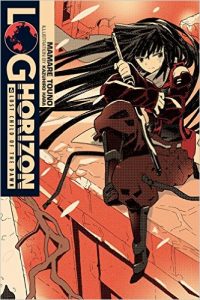
logwest4Log Horizon: The West Wind Brigade, Vol. 4 | By Koyuki and Mamare Touno | Yen Press – First of all, the first 20 pages of this volume were appalling, and I highly recommend skipping them—they’re totally irrelevant to the rest of the book. The rest of the book is pretty solid, continuing to advance the events happening away from Shiro in the first and second book. We see how the food Marielle and company are selling is causing near riots and theft. We see more of the People of the Earth becoming sentient and sympathetic, especially Sara, the West Wind Brigade housekeeper. And we see that Soujiro is simply not suited to some things, as the riot is broken up by Magus, who is using her power now for good rather than evil. Deus ex machina with the appearance potion, though. – Sean Gaffney

magi20Magi: The Labyrinth of Magic, Vol. 20 | By Shinobu Ohtaka | VIZ Media –For a while, this almost feels like a series finale. The villain—a “crystallization of magoi and black rukh” whose origins I didn’t completely understand—is so tough that not even the combined forces of thirteen metal-vessel users, including badasses Sinbad and Koen (and the latter’s siblings, save Hakuryu) can defeat it. It was nice to see Morgiana again, and I also wonder if there was some intentional hinting going on about Sinbad’s future path. Mostly, though, I liked how a certain character’s sacrifice was the key to the good guys winning the day, and the absolutely surprising and lovely outcome of their act. If you like shounen adventure with the capacity to make you verklempt, you should be reading Magi. And yes, I’m talking to you, MJ. – Michelle Smith

socute9So Cute It Hurts!!, Vol. 9 | By Go Ikeyamada | VIZ Media – There is absolutely nothing cute about this volume of manga whatsoever. There is, however, an abundance of dumb. There’s dumb plotting, in which Megumi is convinced Aoi hates her now because she asked about a scar on his shoulder and he ran away, leading to a plot wherein she is kidnapped by a group of random thugs who want to teach some other guy a lesson. But mostly Megumi herself is dumb, and can’t even hide properly from the thugs. Massive eyeroll. In any case, we find out why Aoi wears an eyepatch and, surprise surprise, it’s because his eye is missing. Why else would anyone wear an eye patch for two years?! Anyway, I suspect Megumi will learn about his traumtic injury and accept him anyway (after being dumb, of course) but I think I am well and truly cured of any curiosity I possessed about this series. – Michelle Smith

Filed Under: Bookshelf Briefs

Sword Art Online: Progressive, Vol. 4

October 30, 2016 by Sean Gaffney

By Reki Kawahara and abec. Released in Japan by ASCII Mediaworks. Released in North America by Yen On. Translated by Stephen Paul.

After a third volume that was good but somewhat insubstantial, the fourth volume of Progressive knocks it out of the park. One big reason why is the viewpoint: we get Asuna’s POV again (3rd person) for the first half of the book, with the 2nd half back to 1st person Kirito. This not only allows us much greater insight into how Asuna thinks, but also helps to show off how the two of them view each other – Asuna in the first half is running scared a lot, partly due to this particular level featuring ghosts, a pet fear of hers, but also in general, as she feels inadequate to the floor, and Kirito is constantly two steps ahead of her. She can’t even bring herself to duel him so she can have practice at it – in a game where something going wrong means death, it weighs too much on her.

saop4

Then we see Kirito, and once again Asuna becomes the somewhat cool, noble tsundere he always puts on a pedestal. He also shows us that some of her assumptions about him are wrong – she admired his cool bluff against two enemy players, but he was actually on the verge of snapping, as seeing a status saying someone isn’t dead and actually not seeing them dead are two very different things. We also see that both he and Asuna are slowly becoming aware of their growing feelings towards each other, but are not really going to do anything about it – in fact, we even see Kirito abuse this fact, as in order to cover up his real intentions he pretends that he hasn’t joined one of the two big guilds as they’d force him to part with her. Of course, what it really is is that he feels she’s a better “leader” than he is, and he doesn’t want to get too close as he regards his role as making her “fly” so she doesn’t need him anymore. Which, of course, Asuna is somewhat aware of, and is the source of much of her own angst.

Argo is here, as you might have guessed from the cover, and she gets quite a lot more to do than usual, from dueling with Asuna to show off that she actually *can* take care of herself thank you very much, to hen showing us that she too can be vulnerable, as the new changes to the 5th floor boss almost end up taking her out. She’s a great character, and I am quite pleased that Kawahara continues to use her even though she doesn’t show up in the original series. Fans continue to debate whether this reboot will eventually reach the same points as canon – i.e., Kirito and Asuna will separate for a long period, and things will proceed as from the original. I think Kawahara realizes he doesn’t have to care about that for the next several books, and that he’s happy to simply rewrite Aincrad with new experience and better characterization than he had years ago. (He’s also written Progressive plot and characters into some of his unofficial doujinshi work – Argo shows up in one story during Kirito and Asuna’s honeymoon, and another story tells of the fate of the Dark Elves (who aren’t in this book, by the way, though I suspect they may be in the next one).)

And then there’s the other big reason this is the best of the Progressive books – a genuine threat from something outside the game itself. The second book showed us Morte, a player who seemed to want to cause chaos. We see him again here, working on more of the same, and also meet his boss. The discussion of why players would want to kill other players is brought up by both Kirito and Asuna, but both of them shy away from the actual reason – it’s a thrill and they can get away with it. The boss’ name isn’t mentioned, but signs are good that it’s PoH, who later heads up the guild Laughing Coffin, which we’ve discussed before. Again, part of the fun of reading Progressive is seeing he seeds being set for later events, and PoH is a creepy psycho. He’s clearly one of the major antagonists of the series. Even now that we’re a few years out of Aincrad, I wonder if he’ll pop up again.

So all this, plus the usual excellent battle scenes, and slightly less fanservice than usual (courtesy Asuna, who demands she and Argo be clothed during their bathtime duel). If you enjoy Sword Art Online even a little bit, you should love this one. Get ready to wait for the 5th volume, though – it’s not even scheduled in Japan yet.

Filed Under: REVIEWS

Manga the Week of 11/2

October 28, 2016 by Sean Gaffney, Michelle Smith, Ash Brown, MJ and Anna N Leave a Comment

SEAN: Not only are there no small weeks anymore, there are no medium weeks. Only large weeks forever, with piles and piles of new manga.

MICHELLE: I can’t be sad about this, though I’ll forever mourn the titles that got cancelled when the first bubble burst.

ASH: True, true.

SEAN: We start with something that is not technically manga, but certainly has a manga style and audience. The second omnibus of the Megatokyo webcomic is out, collecting Vol. 4-6 of the Hunter x Hunter of North America. This catches up with the released volumes, I believe.

cellsatwork

Kodansha has 6 new titles this week, starting with Cells at Work!, a cute new series which combines educational biology, amusing comedy, and action movie. I already reviewed the first volume, and found it quite enjoyable.

MICHELLE: I’m looking forward to this one!

ASH: I’m rather curious about it, myself.

MJ: This sounds pretty cool!

ANNA: It does sound intriguing.

SEAN: Devil Survivor comes to an end with its 8th and final volume.

I may be forced to endure far too many Monster Girl series these days, but at least some of them are cute and fluffy rather than softcore porn. Interviews with Monster Girls is one of the former, a sweet series about a teacher taking interest in the “demihumans” in his school.

ASH: It’s interesting to see publishers other than Seven Seas taking on the trend.

SEAN: It has been over 6 months since I last enjoyed the glorious trash that is Missions of Love. Here’s Vol. 13, and it can’t come fast enough. How will everyone be horrible this time?

ASH: I’ll admit, I actually do read and enjoy this series.

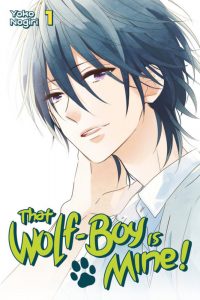
And there’s a 2nd volume of That Wolf-Boy Is Mine! (The doggone wolf-boy is mine?)

MICHELLE: I think of that song EVERY SINGLE TIME!

ASH: The first volume, while certainly not breaking any new ground, was still enjoyable. I’m looking forward to reading more.

SEAN: Lastly (for Kodansha), Your Lie in April reaches its 2nd to last volume. Will it all end happily ever after? (Spoiler: no.)

Seven Seas gives us a 3rd volume of the violent and grotesque Hour of the Zombie.

trex1

And just when you thought monster girl manga could not get sillier, there’s My Girlfriend is a T-Rex. No, really. It runs in Media Factory’s Gene Pixiv, which I guess cultivates artists from the popular Japanese art platform.

Vertical gives us a 5th Nichijou, which had better have more Mai this time around.

And the rest is mostly Viz, but that doesn’t mean we’re near done. Bleach has a 68th volume, and still has a few more to go after that, despite being finished in Japan.

And if you missed Bleach, or just want to relive its glory days, read the 17th omnibus, which shows those days had already passed by that point.

Dragon Ball Full Color Freeza Arc 4! Buy it again! And again! And Again!

And if that wasn’t enough exclamation marks for you, here’s Haikyu!! 5.

MICHELLE: Huzzah!

ASH: Yay!!

ANNA: WOO HOO!

SEAN: Rejoice, for the JoJo’s hardcovers continue! This is Stardust Crusaders, which some may have read when Viz brought it over years ago, but which many may have missed (including me). Now it’s here in hardcover deluxe editions.

ASH: I’m double-dipping on this. The hardcovers are beautiful.

ANNA: I’m behind on my Jojo reading, I’m glad Viz continues to put out these editions.

zelda1

SEAN: And if you loved The Legend of Zelda manga, Viz is starting to re-release that as well, in a Legendary Edition.

Maid-sama! has a 6th 2-in-1, as it tries to explain Usui’s backstory while still letting him tease Misaki mercilessly, because really we read this for her blushing and yelling, right?

MICHELLE: I do like getting more information about him.

ANNA: The yelling is always a highlight.

SEAN: And My Hero Academia’s 6th volume should be starting up a new arc.

Viz decides to skip the Naruto novel about Hinata’s wedding prep, possibly to pacify fans, and instead will release the first volume of Itachi’s Story.

And Nisekoi gets an 18th volume. Will it start to wrap things up?

One Piece has 80 volumes. Eighty. That’s as many as eight tens. And that’s wonderful.

One-Punch Man’s 9th volume. Less volumes, but lots of punching.

ASH: One-Punch Man is still a lot of fun.

MJ: Always ready for this.

ANNA: I’m behind as always but happy for the punching.

SEAN: A 21st volume of Oresama Teacher means I will definitely have something for my Pick of the Week.

ANNA: This is my regular reminder that I need to catch up on this series.

shuriken2

SEAN: Shuriken and Pleats ends with its 2nd volume, and Hino heads back towards vampires, which are apparently better than ninjas after all.

ANNA: I have an idea. What about VAMPIRE NINJAS?

SEAN: Toriko 36. More eating. More fighting. More weird creatures. More homoerotic subtext that it will never deliver on.

World Trigger has really become popular, and now I wish I had kept up with it. Here’s Vol. 13.

MJ: I wish I had, too! But even more, I wish I’d stuck with Oresama Teacher, since you still love it after all this time.

And Yu-Gi-Oh! has an 8th 3-in-1.

Lastly, Yen On has (deep breath) Is It Wrong To Try To Pick Up Girls In A Dungeon? On the Side: Sword Oratorio. As you may have guessed, it is a spinoff novel from the main series, dealing with Bell’s crush, Aiz Wallenstein, and the misadventures of her own guild. I hear there are elves!

Have you already burned out your wallet for the year? Or is there more you must buy?

Filed Under: FEATURES, manga the week of

Welcome to the Ballroom, Vol. 1

October 27, 2016 by Anna N

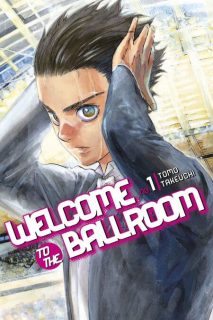
Welcome to the Ballroom Volume 1 by Tomo Takeuchi

The ballet manga Swan is one of my all-time favorites, and dance manga doesn’t get translated into english very often so I was very interested in checking out Welcome to the Ballroom, which has a shonen take on learning how to dance.

Like many shonen protagonists, Tatara Fujita is aimless and without purpose. When he’s saved from being bullied by Kaname Sengoku, Tatara is dragged along to a ballroom dance studio where he is part of a new student round-up campaign. Kaname yells at him, “Through dance, you can absolutely achieve your adolescent fantasies of touching someone’s body!” Conveniently Tatara discovers that Shizuku, a girl at his school has been taking dance classes at the same studio. Tatara is too self-conscious and poor to sign up for lessons, but later on at home he watches a dvd of ballroom dance performances and decides that he’s finally found something that he can care about.

When Tatara shows up at the studio again and announces to Kaname that he’s going to turn pro and wants to learn how to dance, he’s set up for some serious hazing. Kaname instructs his new student in the box step and tells him to practice until he is given permission to stop. Tatara practices all through the night and into the next morning. It turns out that while he isn’t great at following directions, if he sees a dance performed he can successfully mimic some advanced movements.

I enjoyed the art in this book, while the dancing doesn’t reach level of the ballet in Swan, the dance scenes are suitably dynamic. I was impressed at how Takeuchi handled the varying looks and somewhat split personality of Shizuku’s partner Hanaoka, who shifts from being a polished and commanding presence on the dance floor to a scruffy student with a cold. The contrast between the dancers in daily life and their costumes and bearing during competition showcases how ballroom dancing is an entirely new world.

ballroom1

By the end of the volume, Tatara has found his purpose, started to practice with great devotion, and continued despite all of Kaname’s attempts to discourage him. It is possible to see the possibility that he might make it as a dancer, and I’m thoroughly enjoying seeing some of the shonen staple sports manga plot elements being applied to ballroom dance.

Filed Under: REVIEWS Tagged With: Kodansha Comics, Shonen, welcome to the ballroom

Psycome: Murder Princess and the Summer Death Camp

October 27, 2016 by Sean Gaffney

By Mizuki Mizushiro and Namanie. Released in Japan by Enterbrain. Released in North America by Yen On. Translated by Nicole Wilder.

The second volume of Psycome takes its premise and runs with it, as we see our class of murderers sent on a field trip/survival camp, a trope that I thought was actually more Western than anything else but apparently must pop up in Japan as well. Once at camp, we get the usual combination of cliched romantic comedy antics and attempted killings, even though, of course, murder is absolutely prohibited by the staff. We see such cliches as walking across a rickety rope bridge, class skits around the campfire, late-night ero comedy at the hot springs, and a nature walk to boot. And all this is supervised by a new girl, Shamaya, the Murder Princess of the title. And unlike Kyousuke or Eiri, she is definitely here for genuine murder, as she sees fit to gleefully tell us.

psycome2

Just as all the main cast are painful cliches, so is Shamaya – as you can tell from the cover art, she’s the pampered ojou-sama type, and also fills in as head of the Public Morals Committee, dedicated to making sure all the new freshman are following the straight and true path. Of course, after Book One we know that said path is turning teenage killers into professional assassins, so we’re not too impressed. And indeed Shamaya is fairly easily thrown off her game – at first by people merely breaking the rules (such as the three goons whose names I can’t even remember trying to strangle Kyousuke), but later on she meets her match in Maina, the baby-talking clumsy girl who’s in this school for accidental deaths so ludicrous that no one believes they’re accidental. Maina brings out Shamaya’s true psychotic nature, but unfortunately for her there’s already a better psycho in town, Renko.

The book continues to walk a fine line, and doesn’t always succeed – sometimes when it tries too hard to be earnest or serious, I don’t feel as if it’s earned it. Hence I was skeptical of Shamaya’s heel-face turn after Maina’s big speech, and kept waiting for it to be another trick. Some of the comedy also falls flat, such as the epilogue where Shamaya seems to have traded in her murderous impulses for yuri impulses. But this is offset by some genuinely good set pieces, such as Eiri’s apology to Kyousuke for being such a tsundere to him, which *does* seem genuine and earned, or Maina’s aforementioned speech, which is depressing but also uplifting. And some of the comedy managed to surprise me and make me laugh, particularly Renko’s beatboxing rap group, which has to be read to be believed.

So, as with the first volume, we’re left with a promising yet deeply inconsistent book with an intriguing premise. The epilogue promises us a new character in the third volume, which I suspect will ramp up another cliched harem comedy trope accordingly, much as I’d wish it wouldn’t. But that’s what you get when you read a series like this. If they’re going to set a series in a wacky prison school and then throw in every cliche in the book, it would feel wrong not to hit every cliche. I’m not sure I could tolerate a manga or anime of this, but as prose, Psycome is amusing, goofy fun.

Filed Under: REVIEWS

Manga Giveaway: Sweetness & Lightning Giveaway

October 26, 2016 by Ash Brown

It’s the last Wednesday in October, so it’s yet again time for another monthly giveaway at Experiments in Manga! This time you’ll all have the chance to win both the first and second volumes of Gido Amagakure’s food and family manga Sweetness & Lightning as released in English by Kodansha Comics. Why two volumes? Mostly because I feel like it! And also because I ended up with extra copies of both. But I also wanted to share the cuteness and food. Anyway, as always, this month’s giveaway is open worldwide!

Sweetness & Lightning, Volume 1Sweetness & Lightning, Volume 2

It’s not really a secret that I enjoy food manga and will basically give any series a try if food is somehow prominently featured. That’s what initially drew me to Amagakure’s Sweetness & Lightning, but what I find particularly endearing about the series is the loving father-daughter relationship that it portrays. (Kōhei Inuzuka is great, and his daughter is pretty darn adorable.) Maybe it’s because I’ve become a parent relatively recently myself (okay… it’s been two years now), but I find parent-child relationships in manga to be particularly interesting, especially when they are a core element to the story being told. And that’s certainly the case with Sweetness & Lightning. While it’s still early on in the manga’s English-language release, so far I find the mix of food and family in Sweetness & Lightning to be immensely appealing.

So, you may be wondering, how can you win the first two volumes of Sweetness & Lightning?

1) In the comments below, tell me a little about your favorite dad or father figure from manga. (Don’t have a favorite? Simply mention that instead.)
2) If you’re on Twitter, you can earn a bonus entry by tweeting, or retweeting, about the contest. Make sure to include a link to this post and @PhoenixTerran (that’s me).

Not too difficult, right? Everyone can earn up to two entries each and has one week to submit comments for the giveaway. If the comment form gives you trouble, or if you prefer, responses can also be submitted directly to phoenixterran(at)gmail(dot)com. The comments will then be posted here in your name. The giveaway winner will be randomly selected and announced on November 2, 2016. Best of luck to you all!

VERY IMPORTANT: Include some way that I can contact you. This can be an e-mail address in the comment form, a link to your website, Twitter username, or whatever. If I can’t figure out how to get a hold of you and you win, I’ll just draw another name.

Contest Winner Announced–Manga Giveaway: Sweetness & Lightning Giveaway Winner

Filed Under: FEATURES, Giveaways Tagged With: Gido Amagakure, manga, Sweetness and Lightning

Cells at Work!, Vol. 1

October 25, 2016 by Sean Gaffney

By Akane Shimizu. Released in Japan as “Hataraku Saibou” by Kodansha, serialization ongoing in the magazine Shonen Sirius. Released in North America by Kodansha Comics. Translated by Yamato Tanaka.

We have seen a lot of anthropomorphism in manga and anime recently, with Hetalia probably being the most famous example of it. It can be fun to imagine countries, or subway lines, or beers reimagined with human shapes and personalities. It’s been around a long time, and is usually in a humorous vein. But that doesn’t mean that it can’t also be used to teach you things. In Cells at Work!, the things we’re learning about are – no surprise – cells, as the human body is shown as sort of a messy organic factory, where various types of cells try to do their job as quickly as possible while avoiding the seemingly constant threat of invasion. Thankfully, this is not an ‘educational’ manga per se, as the main thrust is human and action, both of which we get in great amounts.

cellsatwork

Our Heroine is Red Blood Cell – yeah, don’t expect easy to remember Japanese names here – a cute, spunky, but somewhat dim girl whose job it is delivering oxygen to various parts of the body and then CO2 back to the lungs. Assuming she can ever find the lungs. And assuming she is not utterly destroyed by the various things that go wrong while she’s on duty, ranging from Pneumococcus and Influenza to allergies and scrape wounds, all of which could be complete disasters if not taken care of fast. Luckily, we have our hero, White Blood Cell, who is stoic and deadpan and more than a little insanely violent. He’s there to take out these monsters (some of whom resemble typical magical girl show villains, which is what makes it so amusing) and help explain things to Red Blood Cell, who seems to need a lot of things explained.

Much of this manga gets by on the sheer ridiculousness of what is going on, which helps make all the discussion of T-Cells and Memory Cells go down easier. We see overenthusiastic B-Cells, airheaded Mast Cells, yandere princess Macrophages (possibly my favorite), and trembling and scared Naive Cells. Each of the four chapters shows something going wrong, and what needs to be done to fight it. The fights involve a lot of things blowing up, crowds running and screaming, and lots of property damage, so in that way it’s a very fun shonen action manga. The humor is what I keep coming back to, though – especially a JoJo’s Bizarre Adventure cameo where I was not expecting one to be. And then there’s the Platelets, who are absolutely adorable little moppets who will make you go ‘aaaaaw’.

You really do learn a lot about cells here, and the color frontispiece seems to imply we’ve only just scratched the surface of the cells we can talk about. The main characters are definitely Red Blood Cell and White Blood Cell, though, and while there’s no romance (how on Earth could you pull that off?), their growing friendship is also a highlight. I had no idea what this manga was going to be like when I heard it was licensed, but now I’m totally sold. Give me more.

Filed Under: REVIEWS

My Week in Manga: October 17-October 23, 2016

October 24, 2016 by Ash Brown

My News and Reviews

Last week was yet another week during which I wasn’t online much, though this time it was because I was on a short family vacation in Ohio to visit my folks. I did however still manage to post my review of the absolutely wonderful children’s book Are You an Echo?: The Lost Poetry of Misuzu Kaneko. The book, fully illustrated by Toshikado Hajiri, combines a biographical narrative of Kaneko’s work and life written by David Jacobson along with a selection of Kaneko’s poems presented in both the original Japanese and in English translation. Are You an Echo? is a beautiful book that adults will be able to appreciate, too; I wasn’t previously familiar with Kaneko’s poetry and am incredibly glad to have been introduced to it.

Although I was busy with family last week, a few things did catch my eye online: Vertical’s Fall 2016 manga licensing survey is now live for those interested in suggesting titles that they’d like to see the company publish in English; The Mystery Writers of Japan have released a very useful website in English which includes great information such as an outline of the group’s history and a list of recent English translations of the members’ works; As for cool queer comics Kickstarters, there is a newly launched campaign to collect Tab Kimpton’s delightful Minority Monsters comics in a single volume along with additional bonus content.

Quick Takes

Fairy Tail, Volume 55Fairy Tail, Volume 55 by Hiro Mashima. With all of the recent developments in Fairy Tail it seems like the series might in fact be reaching its final story arcs. Granted, Mashima could just as easily stretch things out for quite a bit longer as he has repeatedly done in the past. Often Fairy Tail feels rather directionless to me, as though the creator is making things up as he goes (which he has admitted to) or isn’t sure exactly what he wants to do with the series. That being said, when Mashima actually manages to bring together disparate storylines and plot developments together in a way that makes sense and seems planned from the beginning (even if it actually wasn’t) the results can be thrilling. The fifty-fifth volume of Fairy Tail opens with one of the biggest game-changing reveals in the series as Natsu and Zeref face each other down. It’s a dramatic encounter and works tremendously well. Sadly, the rest of the volume isn’t quite as strong as its opening and many of the other plot twists and backstories feel forced at best. Still, this most recent story arc is probably my favorite out of those that I’ve so far read. (I started reading Fairy Tail part way through, so there are several arcs that I’ve missed.) I especially appreciate how it gives the tournament arc, which grew increasingly tedious, a greater purpose in the series as a whole. The action sequences and battles continue to be an exciting part of the manga as well, and there are plenty of those to be found in this volume.

intense1Intense, Volume 1: Night on the Red Road by Kyungha Yi. I’ve deliberately been keeping a lookout for new print releases from Netcomics, but even if I wasn’t Yi’s Intense would have caught my attention. The series’ cover artwork is stunning and the manhwa’s production values and quality is some of the best that I’ve seen from Netcomics. Intense was originally released in six digital volumes, but the print edition has been collected into four. The interior artwork, though it’s not in color, is just as beautiful, striking, and moody as Yi’s cover illustrations. The story is likewise very moody and at times can be extremely dark and violent. The series follows Jiwoon, an assassin and bodyguard for a crime syndicate who has been temporarily assigned to a red-light district. There he encounters and is drawn to the mysterious Soohan who works there as a sort of handyman. With their melancholic, slightly detached personalities, it seems as though the two young men likely share a fair amount in common, so much so that the tragic backstory revealed in the flashbacks interspersed throughout the first volume could easily belong to either of them. If nothing else, Intense is certainly well named. The manhwa is heavy and intense both emotionally and psychologically, moreso than many other boys’ love stories I’ve read. I definitely plan on reading the rest of the series and I’m very curious to see how the relationship between Jiwoon and Soohan develops.

Paradise Residence, Volume 3Paradise Residence, Volume 3 by Kosuke Fujishima. Admittedly, it has been quite some time since I’ve read the first two volumes of Paradise Residence, but I really don’t remember the characters being especially infatuated with motorbikes and motorcycles which is something that is quite prominent in the third and final volume. Maybe I just completely missed it before and that’s why it seemed to suddenly come out of nowhere, but the resulting story is nice. However, it’s another sudden development that becomes the dramatic focus of the rest of the volume–due to some unfortunate circumstances, the dorm is scheduled for demolition rather than renovation and the young women living there must do all that they can to save their beloved home. They come up with a rather creative solution to their problem that, while it strains believability, is impressively audacious and clever. Paradise Residence is a series that I enjoyed much more than I thought or expected I would. It doesn’t really have a lot of substance or depth to it, but it’s a pleasant slice-of-life manga set in an all-girls high school. Though not particularly nuanced, most of the characters are generally likeable. Even with the occasional bit of drama, Paradise Residence tends to be a fairly quiet and low-key series. The artwork is attractive, too, although Fujishima seems fond of drawing characters with one eye closed; I’m not sure if they’re supposed to be winking or what.

Spoof on Titan, Volume 1Spoof on Titan, Volume 1 by Hounori. In general the manga spinoffs of Hajime Isayama’s Attack on Titan depend on readers having at least some familiarity with the original series, although to varying degrees. Spoof on Titan perhaps requires a little more than many of the others as the humor relies heavily on knowledge of the characters and their personalities. Unlike Attack on Titan: Junior High, the other Attack on Titan comedy series, Spoof on Titan is firmly set in the world of the original manga. Granted, it’s a much more friendly version of that world–the Titans, though mentioned frequently, barely make an appearance and the death, destruction, and violence has been greatly toned down. The gore and darkness of Attack on Titan aren’t really to be found in Spoof on Titan. Hounori’s illustrations and character redesigns are pretty cute, too. Spoof on Titan is a four-panel comedy manga which is a format that I tend to really like when it’s done well, but the comics in Spoof on Titan tended to be fairly hit-or-miss for me. Some of them legitimately made me laugh while I barely cracked a smile at others. Overall, though, I am largely enjoying the series and find it amusing. I’m not sure that I would necessarily want to binge-read Spoof on Titan, but the series can be fun in small doses. The first volume reads like a collection of comedic Attack on Titan bonus manga, which is essentially what it is even if Isayama himself isn’t directly working on the series.

Save

Filed Under: FEATURES, My Week in Manga Tagged With: attack on titan, Fairy Tail, Hiro Mashima, Hounori, Intense, Kosuke Fujishima, Kyungha Yi, manga, manhwa, Paradise Residence

Bookshelf Briefs 10/24/16

October 24, 2016 by Sean Gaffney and Michelle Smith Leave a Comment

fatezero3Fate/Zero, Vol. 3 | By Gen Urobuchi, Type-Moon, and Shinjiro | Dark Horse – I did say last time that the series was going to get darker, and boy howdy I was not wrong. No amount of cute shots of Rin as a child or amusing scenes of Irisviel driving like a maniac can really make up for the main thrust of the latter half of the book, which is that Caster is Bluebeard, an insane murderer (though historians now doubt this), and his master Ryunosuke is even worse. There are numerous scenes of women and children gleefully butchered, which I’m sure were quite lovingly described in the original novel but which the manga adds an extra dollop of horror to. Oh yes, and we also see what’s happening to Sakura, which if you’ve never played Heaven’s Feel may come as a shock. Horrifying but good. – Sean Gaffney

food14Food Wars!: Shokugeki no Soma, Vol. 14 | By Yuto Tsukuda and Shun Saeki | Viz Media – I was expecting Soma to level up and learn that he still had room to grow while working for Shinomiya, and I wasn’t wrong. The better part was seeing how far Shinomiya has come, given how much of an antagonist he was about ten volumes ago. He’s tough but never unfair, really knows his stuff, and I loved his backstory showing how his love for French food stemmed from his mother’s love of it. His staff were also fun, and it’s always wonderful to see Hinako again. But the arc is over, and there’s a nice montage of the main cast showing off their own growth aside from Soma. Now they earn the reward, which is a picnic with the top ten in the school. If you guessed they were all eccentric lunatics, congrats. Always great. – Sean Gaffney

haikyu4Haikyu!!, Vol. 4 | By Haruichi Furudate | Viz Media – Given a team as raw as the one that stars in Haikyu!!, it would be a bit of a stretch to see them winning right off the bat against other teams. Oh, don’t get me wrong, there are many opportunities to see Hinata and company show off their skills, and they keep things close all the time. But the thing I liked best about this volume was the fact that the rival team won as they simply work better as a team, not a brilliantly talented collection of individuals. And, as with all sports manga, you learn more and more about the ins and outs of volleyball as you go, though thankfully not to the point it gets boring. In the end, though, Kageyama makes the best point—if that had been a tournament, everything would have been over. Time to TRAIN HARDER. – Sean Gaffney

horimiya5Horimiya, Vol. 5 | By Hero and Daisuke Hagiwara | Yen Press – The last volume had me a little worried, but it does seem to have been a false alarm. Much of the beginning involves reactions to Miyamura’s new look, culminating in a fakeout where his supposed new admirer actually fancies Hori instead. I enjoyed that she seems to bring out his more irritable side, much like his middle-school friend Shindou does, as well as the latter mentioning that Miyamura is different with others. Miyamura insists it’s not an act, and it’s likely nothing will come of this, but it would be interesting if it did. We also get some excellent scenes with our main couple, including a kind of sexy one wherein Miyamura wonders whether it’s acceptable to try anything with her, and a cute reunion hug after he has to be out of town for a few days. I’m happy and relieved to continue to enjoy this series! – Michelle Smith

kamisama-22Kamisama Kiss, Vol. 22 | By Julietta Suzuki | Viz Media – This has just ended in Japan, and it’s beginning to show—this is definitely feeling like the final endgame plot. Leaving aside the fact that Nanami is slowly dying (and no, I don’t expect that to stick), the whole volume relies on Nanami’s basic goodness meaning that they cannot try the most obvious solutions to their problems. They can’t kill Akura-oh’s host, they can’t have Nanami kill a human to gain life force. Oh yes, and Tomoe finds out Nanami’s little secret, which leads to him, impatient as ever, scarfing the (temporary?) cure to hug her and berate her from keeping things from him. I’m not sure exactly how fluffy this ending is going to be, but I’m enjoying the journey it’s taking to get there. – Sean Gaffney

monster4My Monster Secret, Vol. 4 | By Eiji Masuda | Seven Seas – This continues to be an excellent combination of hilarious mayhem and cute romance, in that order. Which means that if you want a payoff right away, be prepared to be frustrated. Asahi and Youka are adorable and clearly meant to be together, but they’re both such shy, awkward dorks that I think it will be at least ten more volumes. Luckily, there is the humor to tide us over, being the destruction of a brand new car, the all-in attempt to get a rare hamburger, and the least subtle UFO ever. There’s also new characters, be it Youko’s parents, who are pretty much exactly as you’d expect, and a granddaughter from the future, who is more of a cliffhanger. This makes me laugh a lot, especially the art. – Sean Gaffney

sily16Say I Love You., Vol. 16 | By Kanae Hazuki | Kodansha Comics – It’s been a long time since my husband and I were in a long-distance relationship, but this volume of Say I Love You. expertly evoked those memories. Mei and Yamato are pursing their individual dreams and attending different schools. They do their best to keep in touch, but their schedules make it difficult to find time to see each other, and each is meeting new people and having new experiences independently. When Takeshi seems on the verge of dumping Asami in favor of a college classmate, and Mei finds out Yamato was spotted out with a woman (when he’d only said he’d be with “a friend”), she is thrown into turmoil. It’s great to see a shoujo series acknowledge that high school romances don’t always work out, and that people change and grow apart. I still doubt that’ll happen here, but it’s nice to feel like it’s a real possibility! – Michelle Smith

Say “I Love You,” Vol. 16 | By Kanae Hazuki | Kodansha Comics – Let’s face it, much as I find Asami fun, the relationship between her and Takeshi was the least developed one in this series, possibly as it was one of the first. And given that the theme of this first post-high school volume is about trying to sustain such relationships past school, it’s not a surprise that theirs might be the first one to head south. From our point of view, though, it’s Mei and Yamato that may be in more trouble, as Yamato has a new friend who is clearly going after him hard, even if he doesn’t quite want to admit it. Honestly, though, the best scene in the volume may be Megumi and Rin, as Megumi’s frustrations boil over and Rin offers some much-needed help. Will this all end well? – Sean Gaffney

Filed Under: Bookshelf Briefs

Yona of the Dawn, Vol. 2

October 23, 2016 by Sean Gaffney

By Mizuho Kusanagi. Released in Japan as “Akatsuki no Yona” by Hakusensha, serialization ongoing in the magazine Hana to Yume. Released in North America by Viz. Translated by JN Productions, Adapted by Ysabet Reinhardt MacFarlane.

I said I had wanted more plot development, and I get a lot of it here, very well told. We do indeed see there is a Fire Tribe in addition to the Wind tribe, and their young prince is appropriately a hothead (and ex-suitor) of Yona who is appalled when his hotheaded plan ends up turning into disaster. We also do not lose sight of Su-won, who may have started off the series by murdering Yona’s father but is not going to be just another insane shoujo villain. The idea that Yona is dead fills him with grief, and also allows us to see more flashbacks. Intterestingly, we see that Hak has actually told Su-won he wants to see him married to Yona and ruling as King. There is a silent “but not like this” that is very palpable, however.

yona2

Of course, this series is not 2 volumes long, and Yona is not dead. But before that, we get a nice look at Hak in his natural habitat, as we see another cliche of romance manga used quite well, which is the sheltered rich girl arriving in the town of the peasant boy and seeing how his simple, non-affluent lifestyle is much happier than she could have imagined. Hak is a good general who cares about his tribe, but is also able to let those who are his contemporaries (in age, if nothing else) get away with mouthing off to him provided it’s not an emergency. We also get a Tiny Tim sort, Tae-Yeon, who is adorable and inspiring and also needs his medicine. The world may be filled with political machinations, but here there are just good people.

And them there’s Yona herself, who does get to wield a sword in this volume, though she’s still shaking off her princess roots. Forced to pretend to be a lady’s maid at first, that doesn’t last long, as there’s no way that she can accept “just live here in hiding for the rest of your life” while people are suffering. I was very pleased that, rather than demand to come with Hak, she announces that she’s leaving, and wants him to come with HER. He calls her quite selfish, but it’s not the bad kind of selfishness. And, as long as we’re counting tropes, I loved the scene where she cuts off her long hair with a sword in order to escape the Fire Tribe leader. Not only is that sort of scene always badass, it gives supposed evidence of her death to the King later on.

But she isn’t dead, and despite the ridiculousness of Yona and Hak surviving a fall from that height (which the author herself points out in a 4-koma at the end), they seem to have been taken in by some allies. I’m not sure what will happen next, but given the type of manga this is, no doubt it will involve destiny and power struggles and possibly cool horseback riding? And more swords! The sky’s the limit, really. Oh yes, and some cute romance would be nice, but not necessary.

Filed Under: REVIEWS

Kitaro Meets Nurarihyon

October 21, 2016 by Sean Gaffney

By Shigeru Mizuki. Released in Japan as “Gegege no Kitaro” by (among others) Kodansha, serialized in various magazines. Released in North America by Drawn & Quarterly. Translated by Zack Davisson.

It is interesting reading these old late 1960s Kitaro manga, showing off the wonders and terrors of yokai to a Japanese audience, now that we are in something of a yokai glut here in North America. Oh, yokai are never going to pass vampires, or even monster girls. But you get things like Kamisama Kiss, which puts yokai in a supernatural shoujo romance. And Natsume’s Book of Friends, almost a spiritual successor to Kitaro, as he walks around solving problems and getting involved despite himself. And of course there’s the Shonen Jump series Nurarihyon no Mago, which wasn’t a huge hit, but got over 20 volumes, so could be said to be a mild hit in Japan. It did alright here as well.

kitanura

The Nurarihyon seen here on the cover is of the same type as Nura from the Jump manga (or, to be more accurate, Nura’s grandfather, who fits the stereotype better), but of course this Nurarihyon is not remotely a hero. He’s closer to the actual legend, an old man who walks into your house, drinks your tea, acts as if he owns the place, and leaves. Compared to the other yokai we see in this volume, he doesn’t have that many superpowers, but that just makes it all the more chilling when he gets rid of Kitaro and Nezumi Otoko so easily. Of course, Kitaro *is* the hero, so he manages to escape and trap Nurarihyon in a place he’s not going to be coming back from anytime soon. In fact, I would argue Kitaro’s solution is equally chilling.

These stories sometimes do feel their age, and not just due to the technology of the times. Kitaro is very much a morally ambiguous hero, getting involved when it looks as if humans are directly threatened with yokai but otherwise mostly getting pulled into things by the morally corrupt Nezumi Otoko, who even this early in the series has made his transition from rapscallion to scallywag, so to speak. He’s such a lovable creature you want to forgive him for being a greedy gluttonous and occasionally murderous swine. Oh yes, and somewhat sexist as well – one story has an old yokai try to seduce Nezumi Otoko merely as she’s watched a TV show with a May-December romance and wanted more fun in her life. Kitaro’s response amounts to “you are an ugly old woman, back where you came from!”, which left a sour taste in my mouth. Kitaro, at this point in the series, does not really reach for sentiment.

It does have plenty of creepy scares, though. The Wanyudo has always freaked me out a bit, and so seeing it in a story involving supposed lost diamonds made me shiver. And did I mention vampires earlier? Well, there’s one here, who’s employing Nezumi Otoko to find him fresh victims, but he runs afoul of a hair-based yokai who’s actually succeeded in possessing Kitaro (is this going to happen once a volume?). In essence, though, what we have here is Kitaro as he was at the height of his powers – warts and all. If you appreciate manga history, or just want a good spooky book for your kids, this is a great title to pick up.

Filed Under: REVIEWS

Manga the Week of 10/26

October 20, 2016 by Sean Gaffney, Michelle Smith, Ash Brown and Anna N 2 Comments

SEAN: End of October. 35 titles. Scary!

MICHELLE: I am having Count Floyd feels.

SEAN: Kodansha brings us the 9th volume of Genshiken 2nd Season, which may have a new cast but has ended up being about Madarame’s love life.

ASH: I’ll admit, I really wasn’t expecting it to basically become a harem manga.

ghostandlady1

SEAN: Kazuhiro Fujita, best known over here for the unlicensed yet very popular Ushio and Tora, has a new hardcover horror volume out, part of a series subtitled “The Black Museum” that runs in Morning. This one is called The Ghost And The Lady, and features Florence Nightingale. It sounds amazing.

ASH: It looks it, too!

SEAN: Kodansha also has a 7th volume of Kiss Him, Not Me!, which I hope is stocked next to The Ghost and the Lady at all good bookstores, just for the humor value.

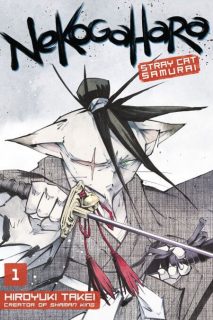
Speaking of new works by authors best known for something else, Nekogahara: Stray Cat Samurai is from the creator of Shaman King, and has… well, cat samurai. Be warned: this is not your Chi sort of cat book – it runs in Shonen Magazine Edge (I assume because the works are edgy).

MICHELLE: Huh.

ANNA: I have a similar reaction as Michelle.

SEAN: And a 17th volume of breakout hit Noragami.

ASH: I’ve come to really enjoy this series.

SEAN: Seven Seas also has a bunch of stuff. The 4th volume of spinoff A Certain Scientific Accelerator continues to be action oriented, much to the annoyance of Last Order.

A new Freezing omnibus, Vols. 11-12, will please anyone who likes breasts.

ewewew1

Speaking of such readers, the big release this week is Monster Girl Encyclopedia, which is apparently a lavishly illustrated guide to various types of monster girls. It’s a hardcover, so they’re really pushing this. I also hear that it’s possibly the most fanservicey title they’ve ever released.

ASH: That’s impressive in and of itself.

SEAN: And another omnibus, with manwha release Witch Hunter getting Vols. 17 and 18.

Vertical has a 2nd volume of Immortal Hounds.

Time for Yen. First of all, we have the digital-only releases: Aoharu x Machinegun 6, Black Detective 6, Saki 6, and Corpse Princess… 7. Sure, ruin my numerology, why don’t you.

ASH: Saki!

SEAN: Light novels. Psycome has a second volume of wacky insane girls in prison antics.

And the fourth volume of Sword Art Online: Progressive has Argo on its cover, which automatically makes it a must-read.

As for Yen’s print manga, we get an eighth Akame Ga KILL!

Did I say Aoharu x Machinegun was digital-only? Never mind. Like Handa-kun, it did well enough to get a print release, with Volume 1 shipping next week.

The Asterisk War has a 2nd manga release. I quite like the book’s cliched but breezy story.

We’ve caught up with Barakamon, so it’s been a while since the last volume. I’ve missed it. Here’s Vol. 12.

MICHELLE: I have every intention of getting caught up on Barakamon. Intentions, but not time, alas.

bloody12

SEAN: Bloody Cross comes to an end with its 12th and final volume.

A Certain Magical Index has its 7th manga volume, which I think starts to adapt the 6th novel.

And The Devil Is A Part-Timer! has its 7th manga volume, which is still adapting the 3rd novel, because it didn’t skip entire books like Index’s manga did.

And if you like cuter and fluffier, there’s a 5th volume of the High School!! spinoff.

Fruits Basket has a 6th omnibus, as Akito helpfully allows Tohru to gain resolve to stop the curse by being completely terrible.

I’d mentioned Handa-kun before, and we get a 4th print volume here.

Horimiya gives us a 5th volume of adorable high school romance.

MICHELLE: Yay for Furuba and Horimiya!

ASH: Yay, indeed!

SEAN: More manga adaptations of light novels, or in this case adaptations of songs, with the 7th Kagerou Daze.

I was lukewarm to the first Liselotte & Witch’s Forest, but a 2nd volume should help firm up which direction it’s going.

MICHELLE: I found it reasonably intriguing, but definitely the second volume is going to be key. I’m looking forward to it a lot.

ANNA: Surprisingly I haven’t read this yet, but I plan to.

SEAN: And there’s a 4th spinoff volume of Log Horizon’s West Wind Brigade.

MORE manga adaptations of light novels! This time the 2nd Re: Zero manga.

scum1

It’s rare we see seinen romance manga in North America, let alone by a female author. But Scum’s Wish is still about tortured high schoolers and hopeless crushes, have no fear. It runs in Big Gangan, and has been on the Crunchyroll app as well.

Taboo Tattoo gets a 4th volume, so it can’t be all THAT taboo.

Another manga gets out of digital only land, as we see the first volume of Today’s Cerberus. This is a Shonen Gangan series, has supernatural elements, and leans very much towards the comedy end of things. Not quite Another Monster Girl Series, but close as dammit.

Just because monster girls are the next big genre doesn’t mean we’re not getting more survival game as well. I know little about Tohyo Game except it runs in Big Gangan, and is an omnibus of the first 2 volumes.

Are you being tricked? Or is all this manga a treat?

Filed Under: FEATURES, manga the week of

Are You an Echo?: The Lost Poetry of Misuzu Kaneko

October 20, 2016 by Ash Brown

Are You an Echo?: The Lost Poetry of Misuzu KanekoAuthor: Misuzu Kaneko, David Jacobson
Illustrator: Toshikado Hajiri

Translator: Sally Ito and Michiko Tsuboi
Publisher: Chin Music Press
ISBN: 9781634059626
Released: September 2016

Misuzu Kaneko, who in the 1920s was a well-known author of poetry for children, almost faded into obscurity after her early death at the age of twenty-six only to have her work rediscovered in 1982. Since then her poetry has been met with great admiration and acclaim. Despite having her work translated into nearly a dozen different languages, Kaneko is relatively unknown in English. Are You an Echo?: The Lost Poetry of Misuzu Kaneko, published by Chin Music Press in 2016, is a beautifully illustrated and crafted children’s book created by a multi-national team with members hailing from Japan, the United States, and Canada in an effort to bring Kaneko’s work to a larger audience. Before reading Are You an Echo? I was unaware of both Kaneko and her poetry. After reading the volume I can only hope that more of her work will be translated in the future–the book is a marvelous introduction.

Are You an Echo? consists of two main parts. The first is a biographical narrative written by David Jacobson, a journalist and editorial consultant at Chin Music Press, which outlines both the life of Kaneko and the history of her work and its rediscovery by Setsuo Yazaki, another poet who also provides the foreword to the book. Although Are You an Echo? is meant for a young audience, Jacobson is honest and touches upon some of the sadder aspects of Kaneko’s story such as her unhappy marriage, unfortunate illness, and eventual decision to end her own life. However, the topics are handled with gentleness and sensitivity. Several of Kaneko’s poems are incorporated directly into the narrative while the second part of Are You an Echo? is specifically devoted to a selection of her work. The poems are presented in both their original Japanese and in an English translation jointly composed by Michiko Tsuboi and the poet Sally Ito.

Are You an Echo?, page 5The format is somewhat unusual for a children’s book, but I feel the decision to include a biography along with a selection of Kaneko’s work in a single volume is ultimately a good one. Are You an Echo? not only introduces Kaneko’s poetry, it also places it within a greater context. Jacobson’ s narrative is easily accessible and the story of how Kaneko and her work have come to positively influence the lives of so many people is a wonderful one. Hajiri’s illustrations are likewise captivating. The artwork is colorful without being garish and has a gentle softness to it that complements both Jacobson’s text and Kaneko’s poetry. Hajiri depicts scenes from Kaneko’s life and imagination and provides a lovely visual accompaniment to and interpretation of her work.

Twenty-five of Kaneko’s surviving five-hundred-twelve poems are included in Are You an Echo?. The translators have taken obvious care in rendering Kaneko’s work into English. Kaneko wrote in a feminine form of Japanese which doesn’t have a direct equivalent in English, but Ito and Tsuboi have successfully crafted a translation that reads well and captures the feelings and intentions of the originals. The poems collected in Are You an Echo? are utterly delightful. One of the things that I found most striking about Are You an Echo? is the tremendous empathy that Kaneko exhibits through her work. Though a touch of melancholy can frequently be found, the poems embody the natural curiosity, wonder, and earnestness of the children for whom she was writing. Kaneko’s poetry is immensely charming and deeply compassionate; I am so incredibly glad to have encountered it. While the book may be intended and suited for younger readers, there is still plenty for adults to enjoy and appreciate about it, too. Are You an Echo? is a treasure.

Thank you to Chin Music Press for providing a copy of Are You an Echo? for review.

Filed Under: REVIEWS Tagged With: Chin Music Press, David Jacobson, Misuzu Kaneko, Nonfiction, Poetry, Toshikado Hajiri

Platinum End, Vol. 1

October 18, 2016 by Sean Gaffney

By Tsugumi Ohba and Takeshi Obata. Released in Japan by Shueisha, serialization ongoing in the magazine Jump Aquare. Released in North America by Viz. Translated by Stephen Paul.

The creator team of Ohba and Obata has brought Japan and North America some of the most iconic manga out there in Death Note and Bakuman. In addition, Obata’s art has also been seen in Hikaru no Go, All You Need Is Kill, and, erm, School Judgment. OK, possibly not that last one, but otherwise, they’re all acknowledged hits and big influences. So I always feel guilty that I’ve never really warmed to any of them. I found Hikaru no Go pretty dull, Death Note’s nihilism wasn’t my bag, and Bakuman’s casual sexism rubbed me the wrong way. Yet hope springs eternal, and here they are with a new series. Can they build on the strengths of past works, or will I be grinding my teeth again?

platinum1

A little of both, really. I’m not as familiar with Death Note as most other readers are, mostly as I didn’t warm to its premise so never really read it, but it strikes me that a lot of the same themes I hear that it had are cropping up here. Our hero, Mirai, begins the story as, sadly, many manga protagonists do, by resolving to kill himself. He ends up being saved by an angelic being, Nasse, who explains he’s been chosen to participate in a war of sorts to see who gets to become the next God. He also has powers to a) fly, and b) make someone fall madly in love with him… for 33 days. Naturally, there are other participants as well, from the sleazy (a guy who decides to use the love arrows for orgies) to the so-called moralistic (the guy who becomes a vigilante superhero), to the girl Mirai has a crush on (who is the cliffhanger ending).

Ohta and Obata love grey, morally ambiguous works, and this is no exception. The star of the volume is without a doubt Nasse, who would love it if Mirai simply used his newfound powers a lot more indiscriminately. She’s supposedly an angel, but is 100% fine with murder and other morally reprehensible acts. Luckily, Mirai isn’t, and after his first horrific but accidental use of his powers, tries to think seriously about what to do and how to use them carefully – especially as he realizes that the God War involves killing off every other candidate. Nasse, though, is fine with absolutely anything as long as it gives him “normal happiness”, whatever that is, because that’s what he wished for from the start. It’s really creepy, to be honest.

Where the manga succeeds is where all Obata manga succeed – the art is fantastic, with dynamic poses, violence and fanservice when it’s appropriate, and a nice ability to read the character’s emotions from their expressions rather than just the dialogue, something many other artists have issues with. And the premise looks like it could go to interesting places… or nasty ones. The odd morality of the angels, though, reminds me more of Franken Fran than anything else, and likely will determine if I continue this series or not.

Filed Under: REVIEWS

Komomo Confiserie, Vols 4 and 5

October 17, 2016 by Anna N

Komomo Confiserie, Vols 4 and 5 by Maki Minami

This series was five volumes long, and it feels like exactly the right length to wrap everything up and not leave the readers hanging. It was pleasant enough, but I don’t see myself rereading it anytime soon. Still, this is the first Minami series that I’ve stuck with all the way to the end, so there’s something about cranky pasty chefs that I must find appealing! The last two volumes of the series work through a few barriers to Komomo and Natsu getting together.

This volume shows how Komomo deals with a psychotic girl who has decided to stalk Natsu in a dramatic fashion. Natsu starts ignoring Komomo for her own protection, because he doesn’t want Komomo to become a focus for Noelle’s wrath. Komomo doesn’t deal well with being ignored though, and since Natsu doesn’t openly discuss this problem with her at all (which is standard practice for shoujo heroes) the situation drags on far too long. While Komomo manages to fly under the radar for a little bit, Noelle becomes suspicious of Komomo and Natsu’s relationship and decides to take out her revenge on the Meli-Melo pastry shop. Here, Komomo’s sheer force of will and commanding nature comes out when she decides that she will not stand for Natsu’s livelihood being threatened, and she takes charge in a spectacular fashion, exhibiting some emotional maturity that she wouldn’t have been capable of at the start of the series.

Mitsuru, an old friend of Natsu starts to move in on the story. He’s fascinated with Komomo and figures out that Natsu must be in love with her. However, he has his own secret motivation for becoming involved with the odd pastry-obsessed couple, which is explored more fully in the next volume.

While Komomo starts to realize her feelings for Natsu when she begins to feel jealous of Noelle in the previous volume, the dynamic in the final volume is reversed as Natsu is forced to confront just how precious Komomo is to him once Mitsuru comes charging on the scene. Komomo has a choice to go back to her old life or stay devoted to Meli-Melo, and while her feelings aren’t in question, it takes a bit of time for Natsu to actually acknowledge what the reader has known has been going on since the very first volume.

Komomo Confiserie isn’t the most innovative shoujo manga, but I enjoyed the pastry-themed setting and Komomo’s imperious manner, expressive eyebrows, and occasional fits of rage. I While I don’t see myself rereading this manga anytime soon, it was the first Maki Minami series that I actually read from start to finish. Even though I had a very clear idea where the story would conclude after reading the first volume, I still enjoyed reading the whole series.

km5

Filed Under: REVIEWS Tagged With: komomo confiserie, shojo beat, shoujo, viz media

  • « Go to Previous Page
  • Page 1
  • Interim pages omitted …
  • Page 272
  • Page 273
  • Page 274
  • Page 275
  • Page 276
  • Interim pages omitted …
  • Page 538
  • Go to Next Page »
 | Log in
Copyright © 2010 Manga Bookshelf | Powered by WordPress & the Genesis Framework