• Skip to primary navigation
  • Skip to main content
  • Skip to primary sidebar
  • Home
  • About Us
    • Privacy Policy
    • Comment Policy
    • Disclosures & Disclaimers
  • Resources
    • Links, Essays & Articles
    • Fandomology!
    • CLAMP Directory
    • BlogRoll
  • Features & Columns
    • 3 Things Thursday
    • Adventures in the Key of Shoujo
    • Bit & Blips (game reviews)
    • BL BOOKRACK
    • Bookshelf Briefs
    • Bringing the Drama
    • Comic Conversion
    • Fanservice Friday
    • Going Digital
    • It Came From the Sinosphere
    • License This!
    • Magazine no Mori
    • My Week in Manga
    • OFF THE SHELF
    • Not By Manga Alone
    • PICK OF THE WEEK
    • Subtitles & Sensibility
    • Weekly Shonen Jump Recaps
  • Manga Moveable Feast
    • MMF Full Archive
    • Yun Kouga
    • CLAMP
    • Shojo Beat
    • Osamu Tezuka
    • Sailor Moon
    • Fruits Basket
    • Takehiko Inoue
    • Wild Adapter
    • One Piece
    • After School Nightmare
    • Karakuri Odette
    • Paradise Kiss
    • The Color Trilogy
    • To Terra…
    • Sexy Voice & Robo
  • Browse by Author
    • Sean Gaffney
    • Anna Neatrour
    • Michelle Smith
    • Katherine Dacey
    • MJ
    • Brigid Alverson
    • Travis Anderson
    • Phillip Anthony
    • Derek Bown
    • Jaci Dahlvang
    • Angela Eastman
    • Erica Friedman
    • Sara K.
    • Megan Purdy
    • Emily Snodgrass
    • Nancy Thistlethwaite
    • Eva Volin
    • David Welsh
  • MB Blogs
    • A Case Suitable For Treatment
    • Experiments in Manga
    • MangaBlog
    • The Manga Critic
    • Manga Report
    • Soliloquy in Blue
    • Manga Curmudgeon (archive)

Manga Bookshelf

Discussion, Resources, Roundtables, & Reviews

Features & Reviews

A First Look at YashaHime: Demon Half-Princess

October 11, 2020 by Katherine Dacey

For a brief moment in the early 2000s, Rumiko Takashashi’s InuYasha was the shonen franchise in America. It was a constant presence on cable television, where it anchored Cartoon Network’s Adult Swim line-up, and a commercial success for VIZ Media, which issued and re-issued the series in formats ranging from flipped floppies to deluxe, three-in-volumes. By the time InuYasha finished its run in 2008, readers had moved on to other franchises, but InuYasha was an important series for the North American comics market, as it helped reveal an underserved population of teens who weren’t particularly interested in Batman or Captain America, but were interested in reading comics about characters their own age.

InuYasha also demonstrated that teen girls were just as enthusiastic about action, adventure, and horror comics as their male counterparts, especially if the series featured well-rounded female characters. To be sure, plenty of shonen manga included at least one Tough Female Character™, but InuYasha’s three female leads were defined as much by their frustrations, insecurities, and smarts as they were their ass-kicking capabilities. Equally important, Kagome, Sango, and Kikyo weren’t drawn for the male gaze; they were depicted as normal young women, making it easier for teen girls to identify with the characters’ struggles and triumphs.

It seems fitting, then, that the new InuYasha spin-off puts girls front and center. YashaHime: Princess Half-Demon is a “next generation” sequel that focuses on the original characters’ offspring—in this case, the teenage daughters of InuYasha and his big brother Sesshomaru. This time around, however, Sesshomaru’s twins Towa and Setsuna are the leads and InuYasha’s kid Moroha is the brash, impetuous foil to her sterner, more reticent cousins.

The good news is that YashaHime faithfully adheres to the spirit of the original series, with its characteristic mixture of romance, slapstick, horror, and action; anyone worried that the new series might try too hard to differentiate itself from InuYasha will be happy to see that the new show keeps the focus on demon-fighting, quests, and camaraderie. The bad news is that the first episode is so compressed that the new heroines barely make an impression on the viewer, as their introductions are overshadowed by clumsy bits of exposition, cameo appearances by the original series’ main characters, and a showdown between a demon and the old gang.

In an effort to create more continuity between the original series and the sequel, the second episode reveals that Towa was raised by Kagome’s younger brother Sota in present-day Tokyo. Towa’s introductory scenes are so focused on explaining her backstory that her distinctive choice of clothing—a schoolboy’s uniform—initially seems like an afterthought: “better for fighting,” Towa tells us in a voice-over. That detail turns out to be an important clue about how Towa sees herself, as she complains that “girls must be feminine and boys must be masculine,” a distinction that Towa finds as restrictive as the clothes she’s expected to wear. Towa’s gender presentation is addressed in a ham-fisted way—her younger sister pleads with Towa to be more “girly” and “cute”—but the writers’ willingness to address Towa’s fierce rejection of gender binaries suggests that YashaHime may explore some interesting new thematic territory.

The only truly disappointing aspect of YashaHime is the animation, a flaw that’s most evident in its stiffly executed fight scenes. The animators never create a persuasive illusion of people jumping, flying, and running through three-dimensional space; all the characters look like paper cut-outs superimposed on unimaginative backgrounds. The flatness of the imagery is even more obvious when YashaHime and InuYasha are viewed side-by-side, as InuYasha’s softer, more nuanced color palette gave the picture plane more depth and the characters’ bodies more weight. The one bright spot is YashaHime‘s character designs: Moroha, Towa, and Setsuna bear just enough resemblance to their parents to make it easy for the viewer to grasp the father-daughter connection, even though each girl has her own unique look. That attention to detail extends beyond their physical appearance, too, influencing the way they move, talk, and twitch their noses when they catch wind of a demon.

If I sound a little ambivalent about YashaHime, I am: it shows considerable promise, but hasn’t quite escaped the long shadow of its parent series or found the right pacing for the kind of stories it wants to tell. I’m reserving final judgment until the relationships between Towa, Setsuna, and Moroha are more clearly delineated—after all, it was the complex web of feelings and friendships that made InuYasha compelling as much as its demon-of-the-week adventures. Here’s hoping the sequel will embrace that approach, too.

Episodes 1-2 of YashaHime: Princess Half-Demon are currently streaming on Crunchyroll, Funimation, and Hulu. New episodes air on Saturdays.

Filed Under: Manga Critic, Movies & TV, REVIEWS Tagged With: anime, inuyasha, VIZ, YashaHime

A Lily Blooms in Another World

October 11, 2020 by Sean Gaffney

By Ameko Kaeruda and Shio Sakura. Released in Japan as “Isekai ni Saku wa Yuri no Hana” by GL Bunko. Released in North America digitally by J-Novel Club. Translated by Tom Harris.

We have been getting rather glutted with this genre over the last couple of months, but I have to say I’m still not really that tired of ‘otome game villainesses’, if only as we have a long way to go before it catches up to ‘nebbish guy in fantasy dungeon crawl’ or even ‘grumpy cynical high school guy gains a heart (and a harem)’. It helps that, Bakarina aside, most of the genre tends to be one-shots or short series, so doesn’t wear out its welcome quite as much. This has a similar premise to another title I reviewed recently, I’m in Love with the Villainess, and it’s not hard to see why – Japanese otome games rarely if ever give you a chance to go that route, and frequently the villainess has a lot more character than the love interests. Why wouldn’t anyone be drawn to them? Especially someone looking for romance between young women.

Our heroine is another in a long line of office workers who give and give and give till they have a heart attack and die young. She is reborn as Miyako Florence, the star of her favorite otome game, and is engaged to one of the nobles. There’s just one problem. She has no interest in Klaus, the noble in question. Instead, her attention is drawn to Fuuka Hamilton, the “stereotypical villainess” character who tries, seemingly, to belittle her at every turn. Miyako, though, sees through Fuuka’s facade and knows there’s a serious-minded and kind woman underneath the arrogant exterior. So… she kidnaps her, Retreating to her own family’s cottage, Miyako promises Fuuka that within 14 days she will get her to admit that she is happy living there with her. Fuuka, suffering from the effects of the first good night’s sleep she’s had in ages, agrees to this plan. That said, this world runs on “young women are only as important as who they marry”. Will Miyako be allowed to get away with this?

This is by the author of Sexiled, but aside from a brief mention of Laplace as a figure in the land’s past history, they aren’t connected. Except, of course they are, because this is a world where a woman’s value is in who she marries and those who fail or otherwise embarrass their families are completely destroyed. The first half of the book softens us up, being very much watching two women have a honeymoon together at a lovely guest cottage in the country. It’s cute, but it’s also slight. The second half, when Fuuka decides to return home to accept what she knows will be a horrific punishment, is where things really get good, particularly in regards to our heroine, Miyako. I’d written her off as the weak part of the book, but seeing her character development, particularly when the penny drops as she meets another couple who let her know that no, you do NOT have to accept that this world is sexist and just run away – is excellent, and leads to an action-packed and satisfying ending, giving Miyako and Fuuka’s love the depth it needed.

It’s possible I’m playing this up a bit too much – it is pretty fluffy and slight at the end of the day. But I had a lot of fun reading it, and am absolutely not tired of the genre. Or the author, who I’d love to see more of. Fans of Sexiled and otome villainesses will find this a must-buy.

Filed Under: a lily blooms in another world, REVIEWS

Deathbound Duke’s Daughter: Erika Aurelia and the Angel’s Crypt

October 10, 2020 by Sean Gaffney

By Terasu Senoo and Munashichi. Released in Japan as “Shini Yasui Koushaku Reijou to Shichi-nin no Kikoushi” by M Novels (Futabasha). Released in North America digitally by J-Novel Club. Translated by Roy Nukia.

The second volume of the Erika Aurelia series sees her trying to prevent her death in Route Two of the otome game she played in her past life. That said, honestly, if you’re after otome game villainess novels you may find this wanting – Erika’s past life is important in determining her character as a whole, but rarely comes up in the text itself. Which simply leaves us with a fantastic action-adventure mystery series for young adults – and that’s fine by me. Erika ends up befriending her rivals, wandering into deathtraps, having to think her way out of deathtraps (and not always succeeding, though rest assured she is not killed off), and otherwise behaving just as I’d like a savvy eight-year-old with past-life memories to behave. Plus, in this book, there’s piles and piles of dragons. And if the villain seems a bit overly obvious, well, that’s what the extra chapters after the main story are for – this is not just Erika’s tale.

Erika and her father are headed to Ynys Negesydd, which is not in Wales, but is instead the capital of Ignitia, and they’re there for a royal banquet and also to watch a joust with dragons as the mounts. Erika is nervous as this is what sets up Death #2 on her list of things to avoid; her old self was rude to the first prince August, who is unable to ride dragons in a land where that is considered scandalous for royalty. Erika is unlikely to be as rude and obnoxious as her old villainous self, but she still has a tendency to speak her mind without thinking, so she could still be in trouble. Especially when August invites her to see the underground crypt rumored to hold the Beast of Contracts, and you start to realize that selling his soul to be able to ride dragons may be happening much faster than in Erika’s otome game.

There’s lots to like here. Erika is a great lead character, being very clever but also prone to making mistakes. Her past life, we are told, was filled with boys flocking around her and girls hating her, and honestly in this one, while she’s managed to avoid the latter, she still has the former. That said, the fact that everyone is pre-teen means the romance can be cute rather than annoying, especially given Erika right now has no feelings for anyone – and no sense of self-preservation, a fact noted by about half the cast. It’s also not a series that revolves entirely around her – her older brother has his own adventures, which seem to be just as if not more dangerous than her own, and there’s lots of bits of world building and lore that you know will pay off down the line but are just dropped casually here. Best of all, it’s simply thrilling to read.

Unfortunately, this may be all we get to read. While the webnovel this is based on has more material, Futabasha has not published a new volume in almost three years, so it seems to be cancelled. (This seems to be a problem with this publisher – see also The Epic Tale of the Reincarnated Prince Herscherik.) That said, if you’re looking for a fun YA novel with a great protagonist, you can’t really go wrong with Erika Aurelia.

Filed Under: deathbound duke's daughter, REVIEWS

Manga the Week of 10/14/20

October 8, 2020 by Sean Gaffney, Michelle Smith, Ash Brown, MJ and Anna N Leave a Comment

SEAN: October 2020, where you have to bar your doors against trick-or-treaters. This year sucks. Let’s brighten it with manga.

Denpa Books says they’re putting out the 3rd Pleasure and Corruption.

J-Novel Club’s digital debut is a manga. Sorcerous Stabber Orphen: The Youthful Journey. By the title, I’d guess it’s a prequel to The Wayward Journey?

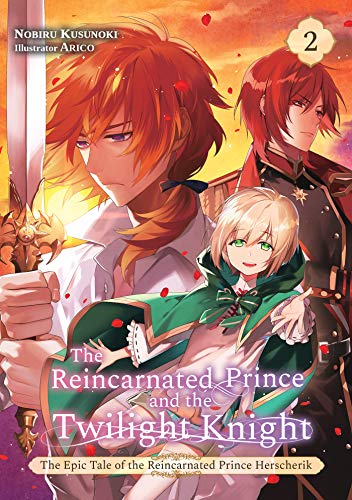
Also from J-Novel Club: Bibliophile Princess 4, Epic Tale of the Reincarnated Prince Herscherik 2, the 4th The Master of Ragnarok & Blesser of Einherjar manga, Record of Wortenia War 8, and Wild Times with a Fake Fake Princess 3, which I believe is the final volume.

Kodansha has a few print titles coming out. The debut, which I am very excited for, is Blue Period, an Afternoon manga from the author of She and Her Cat. A young man finds a calling in painting, but it’s one that might ruin his future if he’s not careful.

MICHELLE: I’m looking forward to this, too!

ASH: Same!

MJ: This sounds great!

ANNA: I’m officially intrigued.

SEAN: Also in print, the 5th Attack on Titan Colossal Edition, Grand Blue Dreaming 11, Interviews with Monster Girls 8, and Something’s Wrong with Us 3.

ASH: In case anyone hasn’t actually seen the colossal edition in person, it is indeed colossal.

SEAN: Two debuts digitally. The first is Practice Makes Perfect (Acchi no Renshuu Hajimemashita), a shoujo manga from Ane Friend. Two jocks who were just dumped by their respective partners due to lack of experience try to “practice” with each other.

The other is Shaman King: Zero, which contains various short stories of the main series that ran in Jump Kai back when this was owned by Shueisha.

And there’s All-Out!! 16, Domestic Girlfriend 27, Vampire Dormitory 4, and We Must Never Fall in Love! 2.

MICHELLE: I believe this is the penultimate All-Out!!, a sports series I have still not even managed to start. Shock!

SEAN: One Peace has a 3rd volume of The New Gate.

Seven Seas has a debut. Well, two, really, as The Hidden Dungeon Only I Can Enter has a print release now. It’s trash, but very readable.

ASH: Sometimes you need a series like that.

SEAN: The other debut is Cutie and the Beast (Pujo to Yajuu: JK ga Akuyaku Wrestler ni Koi shita Hanashi), a Betsufure shoujo manga about, well, a high school girl who falls in love with a wrestler who looks like a villain. This looks adorable.

MICHELLE: I have a soft spot for stories where a scary-looking guy is actually very sweet.

ASH: I am incredibly curious about this title; it looks and sounds great!

ANNA: I’m going to check this out too!

SEAN: Also out: The Ancient Magus’ Bride 13, Classroom of the Elite 6 in print, How NOT to Summon a Demon Lord 9 (the manga version), Kingdom of Z 2, My Next Life As a Villainess 4 (manga version), and There’s a Demon Lord on the Floor 8.

ASH: Hooray for more The Ancient Magus’ Bride! I need to catch up on the last few volumes (and spin-offs).

SEAN: Square Enix has a 2nd volume of The Strongest Sage with the Weakest Crest.

SuBLime has two manga: His Favorite 11, and Jealousy 2.

MICHELLE: I bought Jealousy volume one, but haven’t managed to read it yet. It looks very dramatic.

ASH: His Favorite is so goofy; I really enjoy it.

SEAN: Vertical has two books: CITY 9, and Knights of Sidonia Master Edition 7.

Viz has two not-quite-manga debuts. The first is The Art of Magic the Gathering: War of the Spark.

The second is Fangirl: the Manga, a Viz Original by Rainbow Rowell and Gabi Nam about a fanfic-writing twin who now finds herself in college with her fanfic writing disparaged and her twin not there.

ASH: Interesting! This had slipped my radar.

SEAN: Also from Viz: Case Closed 76, Komi Can’t Communicate 9, Persona 5 4 (or Persona 4 5, whichever you prefer), Pokemon Adventures: Collector’s Edition 4, Radiant 13, Sleepy Princess in the Demon Castle 13, and Transformers: The Manga 3.

ASH: Sleepy Princess in the Demon Castle continues to delight me.

SEAN: So? Whadja get?

Filed Under: FEATURES, manga the week of

Mapping: The Trash-Tier Skill That Got Me Into a Top-Tier Party, Vol. 1

October 8, 2020 by Sean Gaffney

By Udon Kamono and Hitomi Shizuki. Released in Japan as “Hazure Skill “Mapping” wo Te ni Shita Shounen wa Saikyou Party to Dungeon ni Idomu” by Overlap. Released in North America by J-Novel Club. Translated by Mana Z.

I admit when this first came out, I was planning on skipping it. While I do read far too many light novels, my days of trying to read all the Vol. 1s are gone forever. And when J-Novel Club posted the first chunk on their site/app, it read like someone who enjoyed Arifureta but wished the lead was a bit whinier. But a couple of folks told me that it actually got pretty interesting, so I ended up checking out the first volume all the way through. And, while I don’t think I’ll be reading any further, I can confirm that it does get interesting, despite its extremely poor start, and ends up being more an examination of how to try to drag your way to improving yourself when you don’t have the resources that everyone else around you has. It also has a final reveal that is quite well handled.

Our protagonist is Note. He and his childhood friend are getting the Skills that, in this world, can make or break your future. She gets three fantastic skills. He gets one Super Rare one that takes all three skill slots… and is famously known for being useless (there are two, much better mapping skills after this one). A year later, he’s been dumped by his childhood friend and is trying to join adventuring parties as baggage handler and getting drunk in bars. Then he’s scouted by a high-grade party who seem to have figured out a use for Mapping… it can handle mapping dungeons, which the other two mapping skills can’t do. Of course, he has Mapping, but he’s also a weak, self-hating guy, so the rest of the book is spent trying to get him in shape, teach him other, more useful talents for their party, and get him to actually stop acting like a wuss.

As I said before, the book starts off terribly, and I was also annoyed that we never got the perspective of the childhood friend that abandoned him, who reads as nothing other than a plot device. Things improve after he’s picked up by the Arrivers, the dungeon-crawling party that recruits him. The idea of taking months to train him up to do dungeon crawls (which are minimal in this first volume) is a good one, and we do see him slowly regain a sense of self-worth and show off quite a bit of cunning and self-awareness. The last quarter of the book has him trying to stop another one of their party, the sword expert, from leaving as he’s fallen in love with a girl. The classic “oh no, he’s fallen for the girl who has eight different men on the side” plot made me roll my eyes at first, but here we actually DO get her perspective later on, and her backstory, and while that doesn’t make her more likeable, it does work very well with the story.

The book has, beyond its stock low self-worth hero, more stock characters – our party leader whose dark past is no doubt waiting to be unearthed; the lecherous sword guy; a cardboard tsundere magic user (that’s her on the cover); and a dwarf girl who is there to fill the “I look (and act) underage but am not” slot. It improved in the second half, and if you like these types of characters, or “weakest becomes strongest” fantasies, this might appeal to you.

Filed Under: mapping, REVIEWS

The Extraordinary, the Ordinary, and SOAP!, Vol. 3

October 7, 2020 by Sean Gaffney

By Nao Wakasa and ICA. Released in Japan as “Hibon, Heibon, Shabon!” by ArianRose. Released in North America by J-Novel Club. Translated by Emily Hemphill.

This is the final volume of this romantic fantasy, and that feels just about right. The wary reader will also note that everything seems to be resolved by about Page 80, and knows that we’re not going to get 130 pages of wedding prep. Indeed, this volume balances out dramatic crisis and romantic fluff almost equally, sliding from one to the other with verve. There is one thing I wasn’t too fond of, but that was driven by the plot, so I can’t complain too much. More importantly, I really loved the way that the friendship between Lucia and Maria was shown – it’s just as important as the romance between Lucia and Celes, and the ongoing development of Maria continues in this book. Indeed, I’d argue Maria is the best part of the series, which pulls off its isekai with a twist fantastically. Well, there are a few annoying romance novel tropes as well, but eh. For the most part, I was quite pleased with this.

We begin in a bad place, as our heroes are separated and locked up in the final kingdom they’d been visiting. This leads to Lucia getting kidnapped and almost killed by some evil nobles – someone seems to have it in for her. After this, it’s almost an anticlimax when the final tree is purified and the monsters are removed from the land… though that includes their baby dragon pet, which makes Maria and Lucia sad. That said, success! The sacred maidens did it! Lucia and Celes are engaged! Lucia no longer has her Soap! powers, but that’s likely because there’s no reason for them anymore. Now they can all go home and… wait, something is tickling the back of my brain. Wasn’t the king evil and wanted the shrine maiden killed off after they completed their duty? And isn’t Lucia without her Soap! powers… just a commoner maid? Is this going to have a tragic ending after all?

So yeah, about halfway through the book everything falls apart and we have to put it back together. That does not take long. I do wish Lucia had a bit more agency in the whole ordeal, but the problem with taking away the awesome magic powers from your heroine after her work is done is that it does tend to leave her powerless. I did love Maria’s solution to finding Lucia, which was very clever and also helped to make Lucia’s adventure well known among the entire kingdom. And yes, after THAT we get the wedding prep and the reunions and everything else, now that the evil king has been removed and Edoardo is in power. (Maria and Edoardo’s romance is not quite as heartwarming – let’s face it, if it weren’t for Celes this would be a yuri title.) And Lucia may not have Soap! anymore, but her debt is paid off, she has a husband and an ever-growing family, which is all she really ever wanted.

This was, overall, quite a nice read, and I liked the gimmick of the heroine being one of the fantasy world residents, with the actual isekai’d from Japan protagonist being a supporting character. Those who enjoy J-Novel Heart titles will want to read this one.

Filed Under: extraordinary ordinary and soap!, REVIEWS

Invaders of the Rokujouma!?, Vol. 32

October 6, 2020 by Sean Gaffney

By Takehaya and Poco. Released in Japan as “Rokujouma no Shinryakusha!?” by HJ Bunko. Released in North America digitally by J-Novel Club. Translated by Warnis.

It’s been a while since we’ve checked in with our Rokujouma family, and it’s a relief to see that everyone is much the same. It’s actually quite impressive that this series that should have ended with Vol. 29 is taking a relaxing victory lap and also springboarding a whole new plot that will take many books to resolve at the same time. It doesn’t actually feel dissonant – what’s resolved is Koutarou and the other girls, and though he’s still too “teenage” to actually say I Love You out loud or anything, it’s only a matter of time. This is pointed out to him by MacKenzie, after Koutarou worries about Yurika above and beyond the call of duty – he cannot simply choose one girl at this point. Indeed, the author agrees, which is why we’re getting the side stories that imagine life if he DID fall for only one girl. But that’s next time: this volume is back in the present-day, and showing that the aftermath of the war is still coming to Earth… literally.

There are three main plot threads here, all of which tie into each other. First of all, it’s time for the sports festival again, which is very important to the original core cast as it’s the first time they really bonded as a group way back in the single digit volumes. Unfortunately, dreams of winning the big prize may have to be put on hold. The spaceship that blew up at the end of the last volume was deliberately blown up – now its alien tech is scattered all over Japan, and is being picked up by unscrupulous companies to examine. Even worse, they’ve kidnapped an American scientist and are holding his family hostage in order to force him to work on the alien tech. Now our heroes have to rescue the scientist, his wife and daughter, and retrieve or destroy the technology, all while trying not to get in trouble at school. Oh, and Yurika’s working for the bad guys again, though this time it really is an accident.

It needs to be said, there’s a whole lot of sap here, and if you dislike that, you may want to stop reading. That said, this is the 34th book in the series (counting the two .5 volumes), and I suspect new readers are not going to be anywhere near this. Old readers will find plenty to smile about – every girl gets a chance to be sweet with the man they love, except MacKenzie’s little sister, who’s still trying to come to terms with the fact that the brother she idolized is a playboy. This actually gets weaponized towards the end of the book, as part of the plan. The plan itself makes the latter half of the book feel like a heist movie, as we see everything coming together, everyone gets to show off their cool powers, and only a few girls have emotional crises. (Yurika is a given, but Shizuka is really starting to get worried about everyone thinking of her as basically “the big guy”.)

Summing up, this is exactly what Rokujouma fans want in a book. Next time we get another three short stories/alternate universe book, with Clan winning the “what if Koutarou chose only me?” sweepstakes. So expect bickering galore.

Filed Under: invaders of the rokujouma!?, REVIEWS

The Invincible Shovel, Vol. 3

October 5, 2020 by Sean Gaffney

By Yasohachi Tsuchise and Hagure Yuuki. Released in Japan as “Scoop Musou: “Scoop Hadouhou!” (`・ω・´)♂〓〓〓〓★(゜Д゜ ;;) .:∴DOGOoo” by MF Bunko J. Released in North America by Seven Seas. Translated by Elliot Ryoga.

Gotta admit, starting to get a bit annoyed with this title at times. Not all the time, mind you. When it’s at its best it’s doing what it’s done the last two volumes: have Alan solve problems immediately by using his shovel in ways that make no sense, have Catria get upset about this, and have Lithisia be silly and also somewhat scary. There is plenty of that in this book. It also uses the word ‘shovel’ 900 times, more than the previous two, and that’s not even counting the fact that the translator gave in and started using ‘scoop’ as well, which is there 120 times. But there is another element of the book, which is the ‘using shovel in a sexual way’ part, and it is, frankly, getting rather irritating, as it’s less subtle and more creepy throughout, especially in any scene involving Lithisia abusing Alice. It’s one of those times when the brain just refuses to make something funny. The phrase “Alice-juices” really does not help.

Our heroes continue to try to track down orbs from the four corners of the world. They rescue the mermaid population from an evil Hydra, go up to the sky world and meet two angels, one of whom briefly joins Catria as the sole voice of reason in the party, and try to stop demons corrupting more angels; they go to the Kingdom of Darkness and help free its people from demonic enslavement (and forced rape, something else I was not happy with), and finally they descend to hell and take on various minions, some familiar to Alice and some familiar to Alan. Throughout this Alan uses shovels to do damn near anything, but more surprisingly, so does Catria, though she’s not quite ready to admit that just yet.

Catria is probably the best part of the book, as it’s actually funny seeing her being the “voice of common sense” while, at the same time, firing off wave motion shovel blasts with her sword, which over the course of the book is slowly starting to turn into a shovel. She’s still the person with the most ethical sense here, though. That said, Lithisia may not be quite as far gone as the previous book… and, if I’m being honest, most of this one… has portrayed her. Seeing the hydra, who essentially turned evil when their love was spurned, makes her worry that if Alan leaves her she’ll to the exact same thing. There’s also the ending, where she gets in over her head when battling a God trying to possess Alice, and is forced to admit that perhaps she is NOT ready to solve every problem with a shovel like Alan can.

Honestly, I don’t see the sexual humor going away anytime soon, but I wish it would stick to ‘misunderstanding uses of the word ‘shovel’ in salacious ways’ rather than ‘Lithisia molests Alice with a shovel repeatedly’. The book is showing signs of depth – about 5% of the book, perhaps – which is enough given it’s meant to be a broad comedy. I will keep reading, though I expect I will remain a bit irritated. (Also, given the use of the shovel is frequently only implied by the text, how on Earth will they ever animate this?)

Filed Under: invincible shovel, REVIEWS

The Hidden Dungeon Only I Can Enter, Vol. 2

October 4, 2020 by Sean Gaffney

By Meguru Seto and Takehana Note. Released in Japan by Kodansha Lanove Books. Released in North America by Seven Seas. Translated by T. Emerson. Adapted by Cae Hawksmoor.

This continues to be the most McDonald’s of light novels. It’s bad for you, and if you dig into it it’s filled with yucky stuff, but it fills you up fast and tastes yummy, so you don’t care. There is literally nothing in this entire book that will even make you raise an eyebrow in surprise. Our hero’s harem does not expand, but the others all basically do everything but stick their tongue down his throat and he blinks at them in confusion. (Honestly, the best bond he has in this book is with the lion monster he takes in as a pet. And even that has a brief ‘hah, the tulip on his head makes him gay!’ joke that made me grind my teeth.) The little sister is getting to be more like incestuous little sisters in other books. And I suspect the author has a fetish for getting stepped on that is basically showing up as is in this book. And yet… it still reads smooth as silk. Sigh.

A brief summary of things that happen to Noir in this book. He gets a huge pile of money from the noble girl he saved at the end of the last book. As mentioned above, he befriends the dungeon monster (also from the last book) and it essentially becomes his talking dog/mount. He rescues an elf zombie. He gets a midterm exam, which consists of easy, hard, and impossible tasks (pick one. He picks impossible). His guild receptionist faces off against another guild receptionist who uses sex to lure adventurers to her. He rescues a sentient tree from a passel of monsters (said tree takes the form of a little girl, so cue those sorts of jokes). And in the largest story in the book, he helps a village win against a group of thieves that has stolen their women. Oh yes, and then he and the others do the impossible task.

As the previous two paragraph might tell you, this book is still trash. It doesn’t even really get to the level of McDonald’s – it’s more of a Jack-in-the-Box. Noir is the blandest of heroes, who is always ready to help anyone but cannot understand why all these girls get angry at each other around him. This includes a chapter where he’s sick and three of them essentially fasten themselves around his body. Everyone is in love with him: the childhood friend, the elf girl, the receptionist, the little sister, the mentor stuck in the dungeon, his teacher, AND the noble princess. He gains powers by hugging, kissing and other fetishes, but of course will never go farther. And his powers are as OP as anything, but he constantly insists that he’s just lucky. I have expected him to call himself a humble vice-commander.

But it’s easy to read, the girls do actually achieve things that don’t revolve around Noir (sometimes), and its fanservice has drawn its wobbly line in the sand. If you like OP harem series and aren’t picky about anything else? This is right up your street. (It’s trash, though.)

Filed Under: hidden dungeon only i can enter, REVIEWS

My Next Life As a Villainess: All Routes Lead to Doom!, Vol. 7

October 3, 2020 by Sean Gaffney

By Satoru Yamaguchi and Nami Hidaka. Released in Japan as “Otome Game no Hametsu Flag Shika Nai Akuyaku Reijou ni Tensei Shite Shimatta…” by Ichijinsha Bunko Iris. Released in North America by J-Novel Club. Translated by Marco Godano.

It may be a bit late, to be honest – the reader’s patience after Vol. 2 has been sorely tested – but we finally have a volume of Bakarina that I would call excellent. The characterization works with the plot, there is actual forward motion in regards to Fortune Lover 2, and perhaps most importantly (and I know this may change), there is a love interest who does not fall for Katarina. This is important for keeping the series going, as if you are a black hole vortex of ‘everybody loves me’, eventually disbelief gets stretched a bit thin – as we’ve seen in Books 3 and 4 of this series. But yes, now people can like Katarina and not fall for her, which is a relief. Unfortunately for fans of the main cast aside from our heroine, only Maria and Jeord fans will really be happy – as I expected when I reviewed Vol. 6, Keith, Mary, Alan, Sophia and Nicol are reduced to small roles, if not cameos.

Katarina and Sora start their working days at the Magical Ministry, and she is absolutely DELIGHTED to find that it’s mostly running errands and lifting boxes – she was afraid that it would involve paperwork. Given Rafael’s current position, I don’t blame her. When not working, she’s trying to figure out who planted the note about Fortune Lover 2 on her, which leads to her meeting Jeord’s relatives and the reader learning about the recent past of the Sorcier kingdom, which is a lot bloodier and filled with concubines than I would have expected. She is also trying to sort out New Love Interest #3, Cyrus, which (try to contain your surprise) turns out to be a lot easier than she expected, because she is who she is. All of these plots converge when she and Maria come across a magic stone that offers Maria increased power in her light magic… and, Katarina is stunned to discover later on, more power for her dark magic – whether she wants it or not.

There is the usual “Katarina narrative voice, than another character goes over the same events” literary device we’ve seen throughout the series, but it’s not entirely “let me tell you how awesome she is” this time, which is a bit of a relief. Indeed, the book loves its running gag of how bad Katarina is at intellectual pursuits. She can’t read ancient script, which was taught to them in school, meaning when everyone else is deep in research she’s off to the side feeling useless. She does pull off classic Katarina empathy with Cyrus, as they bond over a surprising shared hobby, but Cyrus ends up with a crush on Maria – just like the game, in fact. This may be the ongoing worry – Katarina is sensing evil presences following her around, and her learning stronger dark magic against her will has her fearing that she really is headed towards the FL2 bad end – where OG Katarina returns with same.

Fortunately, she has the main cast to remind her that she is not, in fact, a bad person. That said, it’s a sad ending for Katarina, who is forced to do actual homework to satisfy Lady Larna’s curiosity. As for my own curiosity, I wasn’t wild about “Fortune Lover II” being the next plot point, but it’s going surprisingly well, and has enough of my preferred ship (Maria) to make me eager to read the next one. (Yes, I know it’s gonna be Jeord, shush.)

Filed Under: my next life as a villainess, REVIEWS

Holmes of Kyoto, Vol. 1

October 2, 2020 by Sean Gaffney

By Mai Mochizuki and Shizu Yamauchi. Released in Japan by Futabasha. Released in North America by J-Novel Club. Translated by Minna Lin.

Sometimes you read a light novel because you want adventure, action, and isekai teens slowly amassing a harem. But there are times (most times, I will admit) when that is not what you want. Sometimes you want a book that is the equivalent of curling up in an overstuffed armchair on a sunny winter afternoon, tea and biscuits at your side (British variety or Southern variety, your choice). This new series is absolutely that kind of book. The author admits in the afterword that she wanted to write a series of “light mystery” stories with no murders, and that’s what we get here, with some perplexing (and not so perplexing) challenges for our leads. More that that, though, this book is a love letter to Kyoto, taking the time to walk us around its most famous spots. It was written 6 months after the author moved there so as to keep that “newcomer” feel, and it succeeds admirably, as its lead, Aoi, is also a newcomer to the area.

Aoi has been in Kyoto for about six months, enough so that she’s not entirely new, but not enough that she isn’t dazzled by the sights. She’s dealing with heartbreak, as her boyfriend broke up with her remotely and is now seeing her best friend. She wants to earn train money to go back where she used to live to confront them, so tries to sell some of her family antiques. At the shop, though, she meets Holmes, aka Kiyotaka, the son of the owner and possessed with an amazing talent for observation… as well as an ability to tell real antiques from fakes. Aoi, as it turns out, has similar unpolished talent, and so, after talking her out of her train ride, she ends up working at the shop. Together they solve antique-related mysteries and grow closer – she’s clearly falling for him. But what about her past relationships – and his own?

I was reminded, oddly enough, of In/Spectre while reading this, which has a similar feel of “we solve mysteries while also having a romance that’s mostly one-sided” to it. There’s no supernatural content here, though, and Holmes of Kyoto is far more relaxed about it. As for the romance, given that Aoi is still in high school, I’m content with it being on the back burner – indeed, the series is 15+ volumes in Japan, so I think the mystery is definitely the more important part. That said, Aoi and Holmes bond as good friends almost immediately, even as she blushes and notes his handsomeness to us. The mysteries themselves are not all that hard to solve – I guessed one solution almost immediately – but they’re entertaining to read and the characters are fun. And there is a lot of discussion of both antiques and Kyoto – at times this feels more like a travelogue than a mystery series, and you know what? I’m fine with that as well.

Basically, if I had one word to sum up this series it would be nice. It’s a comforting read, worth saving for when you’re feeling down.

Filed Under: holmes of kyoto, REVIEWS

Manga the Week of 10/7/20

October 1, 2020 by Sean Gaffney, Ash Brown, Michelle Smith and Anna N 2 Comments

SEAN: It’s October, and we are all having pumpkin spice something!

Dark Horse debuts Blade of the Immortal!… again. Deluxe hardcover this time, 576 pages, even has a bookmark ribbon to show it’s class.

ASH: Blade of the Immortal holds a very special place in my heart. While I didn’t double-dip for the paperback omnibus edition, I will be picking up these new deluxe hardcovers; Dark Horse has been doing a beautiful job with them.

ANNA: I’m sort of tempted but I also have such limited bookshelf space!

SEAN: J-Novel Club has some print titles for us. Ascendance of a Bookworm 6, How NOT to Summon a Demon Lord 12, I Shall Survive Using Potions! 2, In Another World with My Smartphone 12, and the 4th Marginal Operation manga.

ASH: Ascendance of a Bookworm is the one catching my eye here.

The digital debut is A Lily Blooms in Another World, a one-shot light novel by the author of Sexiled. It’s an “otome game villainess” story (where our heroine, once again, loves the villainess – see two weeks ago for more of this), but I loved Sexiled, so will definitely be giving this a chance.

ASH: Oh! I hadn’t made the author connection yet! Sexiled is indeed great, so I may need to add this one to my list, too. (If/when it is released in print.)

SEAN: Also, Discommunication’s 5th manga volume, I Shall Survive Using Potions! 5, the 5th Infinite Dendrogram manga, and Slayers 2.

Kodansha… let’s see. In print, we get Granblue Fantasy 5 and Maga-Tsuki 11-13 (which ends the series, a series that started so long ago I forget what it’s about. It has brides on the cover, though.)

Digitally, the debut is Four Kisses, in Secret (Kisu wa Kossori to). This is a one-shot short story collection of four one-shots that appeared in Dessert. Expect romance.

And 35 volumes of Shaman King. We discussed this before, but the delay has finished, and they’re due out next week.

And we get Cells at Work: Bacteria! 4, Chihayafuru 22, A Condition Called Love 6, Grand Blue Dreaming 11, Our Precious Conversations 7 (the final volume), Smile Down the Runway 14, Star⇄Crossed!! 3, That Time I Got Reincarnated (Again!) as a Workaholic Slime 2 (also a final volume), To Be Next to You 10 (also also a final volume), and You Got Me, Sempai! 9.

MICHELLE: Of course, I must cheer for more Chihayafuru but am also happy for the conclusion of To Be Next to You, which I’ve really enjoyed. I also need to read Our Precious Conversations at some point, as it’s by the creator of My Little Monster, which I liked.

ANNA: One of these days I need to catch up on Chihayafuru, I have a few digital volumes stockpiled.

SEAN: Seven Seas has only one print release next week, Made in Abyss Official Anthology – Layer 1: Irredeemable Cave Raiders. As noted, this is a doujinshi anthology of the popular manga.

ASH: I haven’t read much of Made in Abyss yet myself, but I do still like seeing these sorts of anthologies released.

SEAN: Digitally we see a 7th volume of Reincarnated As a Sword.

This is the one-month anniversary of my saying “Tokyopop has the 6th omnibus volume of Aria the Masterpiece.” And it’s still true! Ah, 2020, truly the most delay-filled year…

Vertical gives us a 6th Kino’s Journey, and also wants to let you know that Dissolving Classroom and Velveteen and Mandala are out digitally now.

Viz knows that this first week of the month belongs to them, and has pulled out all the stops. We start with Chainsaw Man, a highly acclaimed fan favorite… from the author of Fire Punch. Somehow those two things go together. I’ve been told it’s a lot of fun, but also really defines the “black” in “black comedy”.

ASH: I’ve likewise heard some great things about Chainsaw Man! I wasn’t a huge fan of Fire Punch, but I plan on checking this series out.

ANNA: I thought it was fun.

SEAN: Moriarty the Patriot (Yuukoku no Moriarty) is the other debut, a Jump Square series reimagining Moriarty from Sherlock Holmes as a protagonist.

ASH: Another one about which I am curious.

MICHELLE: Me too!

ANNA: This was not on my radar before but this sounds interesting.

SEAN: And there’s Revolutionary Girl Utena: After the Revolution, a one-shot manga volume from the Utena manga creator. The Utena manga and I do not get on, but I’ve heard that there are things to like about this.

ASH: I really liked The Adolescence of Utena manga, but I haven’t actually read the manga series. (Shocking, I know!!) I’ll be fixing that in the near future, and will be picking up After the Revolution, too.

MICHELLE: I’ve read the original and The Adolescence of Utena, but it was in 2006, right before I started reviewing. I remember a little. In general, I don’t have a lot of patience with narratives that don’t make complete sense, but I will still probably check out After the Revolution.

SEAN: Ao Haru Ride has its 13th and final volume, and The Demon Prince of Momochi House has its 16th and final volume.

ASH: I’m a couple volume behind with The Demon Prince of Momochi House, but as a whole I’ve been enjoying it.

MICHELLE: So many final volumes this week!

ANNA: Ah! I didn’t realize these series were concluding! Both very good.

SEAN: We also see An Incurable Case of Love 5, Jujutsu Kaisen 6, My Hero Academia 25, Naruto: Sasuke’s Story (a novel), One-Punch Man 21, Prince Freya 3, We Never Learn 12, and Yona of the Dawn 26.

ASH: Oooh, some other good titles from Viz, too.

MICHELLE: Forsooth!

ANNA: This is a happy week for me!

SEAN: Meanwhile, no one woke Yen when September ended, as they still have some releases that slid to next week. Including a debut… well, sequel… ACCA-13 PS. As you can imagine, this is an epilogue to the original.

ASH: Natsume Ono is one of the creators whose work I will always make a point to read.

SEAN: There’s also the 3rd Combatants Will Be Dispatched! manga, Hatsu*Haru 12, and Triage X 20.

What manga is in the autumn of your year?

Filed Under: FEATURES, manga the week of

Kokoro Connect: Asu Random, Part 2

October 1, 2020 by Sean Gaffney

By Sadanatsu Anda and Shiromizakana. Released in Japan by Famitsu Bunko. Released in North America by J-Novel Club. Translated by Molly Lee.

This is, as the author notes, the longest book in the series. It’s not as long as some other light novels in my collection, but in terms of Kokoro Connect it’s pretty chunky. And it does what we’ve always known the series does well and want it to continue doing: traumatize our protagonists as much as possible. They’ve gotten their wish to be put in the place where the other students are trapped, but I’m not sure they were prepared for everyone to think of them as the villains who won’t tell the truth about why they’re really trying to do this. (Because if they tell the truth, they lose.) Even worse, the student council seems to be their adversaries, friends they’ve known their whole high school life are breaking apart, relationships are fracturing, and, yes, people are STILL losing their memories. Kokoro Connect is VERY good at making everything seem completely hopeless about the halfway point of each book, and that’s what we get here. That said, the real hopelessness comes with the special bonus round.

Given the series is essentially a metaphor for teenage hormones and growing up, it’s less of a surprise than expected that the conflict in the first three-quarters of this book is “should we punch each other till we forget everything and disappear?”. Needless to say, the CRC are not in favor of punching. Unfortunately, it turns out “guys, we just have to stand together and unite!” doesn’t actually achieve concrete things, while the punching, while no one knows if the things it causes are good or bad, is at least something to do. What’s more, of course, the CRC are being painted as the suspicious, untrustworthy kids, which, well, is not 100% wrong? Through no fault of their own, they can’t open up about this. That said, the solution they do come up with (start small with their closest friends, then work outward) ends up being fine. Well, almost fine.

Whoops! The last quarter of the book is the seeming worst case scenario – Heartseed does a takeback and everyone really does lose their memories. This is not as emotionally volatile as the first section of the book, but hurts more, because seeing the club interacting with each other like they’re casual acquaintances is just too depressing. Fortunately, all the things they did in Book 9, while mostly erased by Heartseed and company, do manage to clue them in that something is wrong (kudos to the first years) and they end up retracing the steps of the moments in the series where they became the closest of friends… and, for two couples, where they confessed. Kokoro Connect always reads like a roller coaster where it’s just one big down and one big up, and this is the same. It’s a feel good ending.

That said, there is one more book of short stories still to go. But man, this was one of the most emotionally draining light novels I’ve read, managing a lot of supernatural content while ALSO being a slice-of-life high school romance series. Highly recommended, especially to anime fans who want to see what happens next.

Filed Under: kokoro connect, REVIEWS

Bookshelf Briefs 9/30/20

September 30, 2020 by Ash Brown, Sean Gaffney and Michelle Smith Leave a Comment

Accomplishments of the Duke’s Daughter, Vol. 6 | By Reai and Suki Umemiya | Seven Seas – Another series down to “once a year” release—I had to jog my memory at the start to recall what had been happening. Many things are going wrong for our heroine, who is trying to be strong and tough but is also starting to break down, and I felt that the scenes with her and Dean struck just the right balance of comforting and letting the heroine cry without making her seem weaker. This sets the stage for her comeback, which is extraordinary. (And also has a corrupt Church, a constant in Japanese light novels, though at least here there are also honest and good religious people in it.) That said, eventually Dean’s identity will come out, and I do wonder how this very good “villainess” isekai will handle it. – Sean Gaffney

The Ancient Magus’ Bride: Jack Flash and the Faerie Case Files, Vol. 1 | By Yu Godai, Mako Oikawa, and Kore Yamazaki | Seven Seas – A faerie switched at birth for a human child, Jack never fit in in either world. Only in the mortal realm could she earn money for anime collectibles, however, so she decided to make herself into a tough, capable woman like her literary heroes and set up shop as a detective. Together with her fellow changeling, Larry the werewolf, Jack takes on supernatural cases in New York City. In this volume, Lindel tasks them with tracking down a missing dragon egg. I liked the resources Jack uses to obtain information, which include a dapper theatre ghost and a spell with components of rat whiskers and taxi tires because “Nobody out there knows this city better than them.” I still found this a bit hard to get into, though, especially the parts involving a perpetually tearful off-off-off-off-Broadway actress and her pickpocket boyfriend. Still, I will check out volume two! – Michelle Smith

Black Clover, Vol. 22 | By Yuki Tabata | Viz Media – At long last, this interminable arc comes to an end. I enjoyed a lot of it, but I cannot deny it should have been about two volumes shorter. Most of the book is taken up by shonen battles, with the villain being nigh unkillable, the heroes almost breaking themselves to stop him, etc. Fortunately, the day is saved, and even the Wizard King turns out to be… sort of alive again? Shota fans should be happy. Asta fans perhaps less so—the sheer amount of damage done to the kingdom in this arc means someone has to be blamed, and give Asta has the “dark evil magic” it’s gonna be him, especially when he takes the incredibly obvious bait they use to get him to fight. Oh well, if Asta were smart, this wouldn’t be Black Clover. – Sean Gaffney

Don’t Toy with Me, Miss Nagatoro, Vol. 3 | By Nanashi | Vertical Comics – Part of the problem with titles like this and the other teasing works (Takagi-san less so as Nishikata doesn’t fall into the category) is that they are, at heart, the classic “extroverted girl acts overtly extroverted to bring introverted guy out of their shell,” and that’s not really a plot that feels comfortable in the Gen Z days, where you’re more likely to say “why doesn’t she just let him be in his quiet, safe space?” And by she I mean they, as Nagatoro’s two friends appear far more often here, which offers some good two-way teasing action, as they clearly see her crush on him, if not why. It’s still sort of hard to read, but if you pretend he’s more OK with it than he actually is, this is cute. – Sean Gaffney

Failed Princesses, Vol. 1 | By Ajiichi | Seven Seas – The concept of “popular girl meets unpopular girl” is a common one in yuri manga, and we do indeed hit several of its tropes in this first volume. The amusing thing is that Kanade, the shy outcast girl, is perfectly aware of how things are supposed to go, and keeps pulling back a bit to try to save Nanaki from, well, making herself an outcast by associating with the wrong people. The best part of the volume is that Nanaki really doesn’t give two shits about any of that, and seems set on making Kanade her best friend… and also making her over, which backfires a bit as Kanade cleans up nicely. I hear this gets a bit dramatic later, but for the moment it’s a cute and fluffy proto-yuri story. – Sean Gaffney

In/Spectre, Vol. 12 | By Kyo Shirodaira and Chashiba Katase | Kodansha Comics – The first story in this volume is another “Rikka tries to make people understand Kotoko is an evil Machiavellian schemer,” this time with one of her ex-classmates, but again the response seems to be “we know she’s a manipulative bitch, but she’s a good person anyway.” The larger story, which will continue into the next book, seems to be a chance to write Kuro and Kotoko as an actual romance, as the man we meet here and his relationship with a yuki-onna… as well as his penchant for attracting misfortune… very much parallel them. That said, they’re very cute together, which is why I hope he avoids the murder charge he’s now being investigated for. Still a favorite. – Sean Gaffney

Interviews with Monster Girls, Vol. 8 | By Petos | Kodansha Comics – The author knows what people want to see, but also knows that the best way to get readers is to drive them crazy by not showing it. We finally get what we’ve been begging for here, as Tetsuo asks Sakie out on a date. (This is after rejecting Kyouko’s love confession, both because she’s his student and also, as he is forced to admit, as he likes Sakie.) The stage is set for the date… and the rest of the book is thus spent with the three main student girls going to Kyouko’s for a fireworks viewing and meeting her family. They’re good chapters, and I really liked showing how difficult Kyouko has it as a dullahan in terms of everyday life, but GOD, please get back to the teachers, I beg you! – Sean Gaffney

Kaguya-sama: Love Is War, Vol. 16 | By Aka Akasaka | Viz Media – The series has gotten to the point where the more rewarding chapters are the ones as part of a larger arc. Not that the one-shot chapters are bad—though Maki’s journey to India may be the most pointless thing in this entire series to date, we do get Chika’s iconic “shut up or I’ll kill you” here. But the larger arcs, featuring Miyuki and Kaguya attempting to date without interruptions, and setting up Ishigami and Iino for a romance—though given the number of limbs broken in this book, and Iino’s own horrible lack of self-awareness, it may be a ways out—are better. This series is still hilarious, but we’ve come to read it more for the heartwarming moments. Heck, there’s even some serious drama here. Very good. – Sean Gaffney

Nineteen | By Ancco | Drawn & Quarterly – Although it was translated and released second in English, Nineteen is a precursor to Ancco’s internationally award-winning manhwa Bad Friends. The volume collects thirteen short comics originally published in Korea over a decade ago which absolutely remain relevant to today’s world. While understandably not as polished as some of Ancco’s later work—one can observe her style evolving and growing over the course of the collection (which is fascinating)—the comics still carry significant emotional weight and impact. Nineteen includes diary comics, which tend to be more lighthearted, as well as harder-hitting fictional stories, many of which also have autobiographical inspiration. As a whole, the collection explores themes of young adulthood, growing up, and complicated family relationships. In particular, there is a compelling focus on the relationships among daughters, mothers, and grandmothers. Some of the narratives can be rather bleak, but a resigned sense of humor threads through Nineteen, too. – Ash Brown

Ran the Peerless Beauty, Vol. 8 | By Ammitsu | Kodansha Comics (digital only) – Shoujo manga that has couples getting together BEFORE the end of the series is inevitably going to have an arc dealing with how far the lead couple should go now that they’re dating, and this is Ran’s turn, as she and Akira and their friends go to a beach house Ran’s family owns and have some beach fun. Unfortunately, the cast gets winnowed down one by one until it’s just the two of them… and her overprotective father, who arrives in time to provide the cliffhanger and no doubt ensure that nookie does not ensue. Not that I think it should—these two kids are even purer than the couple from Kimi ni Todoke, and I think they should mature a bit more before going further. Plus, watching them blush and kiss is wonderful. – Sean Gaffney

Spy x Family, Vol. 2 | By Tatsuya Endo | Viz Media – Having spent our first volume establishing that our found family can really come to love each other deep down, this volume shows off how they are also, at heart, fundamentally awkward and unable to socialize normally. This is unsurprising—hints of Loid’s life we’ve seen show him as a war orphan, Yor is a contract killer, and Anya basically grew up being experimented on by bad guys. As the school soon finds, this leads to issues. The second half of the book introduces Yor’s sister-obsessed little brother Yuri, who turns out to be a torture expert for Loid’s enemies. As always, half the fun is that everyone except Anya has no idea who their real selves are, and the cliffhanger tells us we’re in for some hilarious family fun. I love this. – Sean Gaffney

Spy x Family, Vol. 2 | By Tatsuya Endo | VIZ Media – After a brief spell atop the waiting list, Anya officially makes it into Eden Academy. Loid is anxious to progress to the next stage of his mission and, believing there’s not much chance of turning Anya into an elite scholar like his agency wants, focuses instead on having her befriend the younger son of his target. It does not go to plan, of course. Anya is very cute in this volume, and I also really appreciated how Loid genuinely listens to Yor and values her input. The arrival of Yor’s brother, a member of the secret police, is going to be a fun complication, and another cast member with a secret, but my favorite part of this series is probably always going to be how much love these three are already feeling for each other. So unique and good! – Michelle Smith

Sword Art Online: Hollow Realization, Vol. 6 | By Tomo Hirokawa, based on the story by Reki Kawahara | Yen Press – The weakness of this manga is the same as always—it’s written to tie into the games, and features several characters I just don’t recognize, which can be a problem given this is the big final let’s-save-the-world ending. That said, this is still a decent SAO title. Kirito gets to be cool and badass, but because this isn’t written just by Kawahara others do as well, and it’s a nice balanced effort that focuses on heroine Premiere. I also really liked the point where all the NPCs are worried when everyone has to log out for several days for maintenance. While I’ll still remember this as the “SAO only everyone is alive” manga, I enjoyed reading it, when I wasn’t confused. – Sean Gaffney

Filed Under: Bookshelf Briefs

Past Life Countess, Present Life Otome Game NPC?!

September 29, 2020 by Sean Gaffney

By Sorahoshi and Yuki Kinami. Released in Japan as “Moto Hakushaku Reijou wa Otome Game ni Sansen Shimashita” on the Shōsetsuka ni Narō website. Released in North America by Cross Infinite World. Translated by Amber Tamosaitis.

First off, this book comes out of the gate with a killer premise. We’ve talked before about the idea of a “reverse isekai”, where a fantasy denizen dies and is reincarnated in modern Japan, but this is, I believe, the first time we’ve seen it in English. And Urara (formerly Annerosa Ortegamo) is not just in modern-day Japan… she’s in a Japan based on an otome game! She only hears about this when she meets Shizuku, a girl who, as it turns out, is the ‘poor girl reincarnated as the heroine of the otome game she loves’ that we HAVE seen before. Only Urara ends up charming the pants off of everyone, while Shizuku ends up being subjected to horrible comedy violence much of the time. What I just described is about the first fifteen pages of a 320-page book. The good thing about this book is it takes a multi-layered ‘reincarnation’ premise and makes us enjoy slowly meandering towards the ending.

The book is based straight off of a webnovel, rather than a webnovel that’s been picked up and edited by a publisher. This is the modus operandi for Cross Infinite World, and it tends to lead to books that are pleasantly long and stuffed with content, including things that would probably get cut down for length elsewhere. The benefit of this is that the character development feels less rushed and more natural, particularly with Shizuku, who starts the book as unlikeaqble as she possibly can be and slowly, over the course of the next two hundred or so pages, becomes Urara’s best friend. She doesn’t particularly change per se, but we get to know her past and her (somewhat warped) reasoning, and more to the point, she likes Urara, once she’s determined that Urara does not, in fact, have her eyes on one of the many male targets in this “otome game”, but is instead falling for… a woman?

Well, OK, no. The book gets this out of the way a fifth of the way through it, which probably was a wise move, as leaving the revelation that Chouko is a guy who dresses as a girl for family reasons for the ending would likely have angered yuri romance fans. Because wow, this reads like a yuri romance otherwise. The school they attend feels very Maria-sama Ga Miteru, though it’s co-ed, and if you can imagine a romance between Sachiko and Shimako you come closest to seeing how Chouko and Urara interact. The guys, unfortunately, do not come across as well, and I do admit that throughout most of the book I kept having to remind myself who was who, though eventually you learn to separate out Shinmyou (the jerk) and Shimozuru (the one who falls for Shizuku). There is also an epilogue set in Urara’s past life that left a very bad taste in my mouth, and I did not really like the implication at all. It added murder and mental torment to what was otherwise a nice, sweet romance novel.

But you can just stop before reading that. Most of this is the equivalent of a long, leisurely boat ride down the river that takes up the entire afternoon. It’s not all that concerned with anything but its heroine and her “perfect princess” manners causing everyone to turn her way. It’s a good read.

Filed Under: past life countess present life otome game npc?!, REVIEWS

  • « Go to Previous Page
  • Page 1
  • Interim pages omitted …
  • Page 142
  • Page 143
  • Page 144
  • Page 145
  • Page 146
  • Interim pages omitted …
  • Page 538
  • Go to Next Page »
 | Log in
Copyright © 2010 Manga Bookshelf | Powered by WordPress & the Genesis Framework