• Skip to primary navigation
  • Skip to main content
  • Skip to primary sidebar
  • Home
  • About Us
    • Privacy Policy
    • Comment Policy
    • Disclosures & Disclaimers
  • Resources
    • Links, Essays & Articles
    • Fandomology!
    • CLAMP Directory
    • BlogRoll
  • Features & Columns
    • 3 Things Thursday
    • Adventures in the Key of Shoujo
    • Bit & Blips (game reviews)
    • BL BOOKRACK
    • Bookshelf Briefs
    • Bringing the Drama
    • Comic Conversion
    • Fanservice Friday
    • Going Digital
    • It Came From the Sinosphere
    • License This!
    • Magazine no Mori
    • My Week in Manga
    • OFF THE SHELF
    • Not By Manga Alone
    • PICK OF THE WEEK
    • Subtitles & Sensibility
    • Weekly Shonen Jump Recaps
  • Manga Moveable Feast
    • MMF Full Archive
    • Yun Kouga
    • CLAMP
    • Shojo Beat
    • Osamu Tezuka
    • Sailor Moon
    • Fruits Basket
    • Takehiko Inoue
    • Wild Adapter
    • One Piece
    • After School Nightmare
    • Karakuri Odette
    • Paradise Kiss
    • The Color Trilogy
    • To Terra…
    • Sexy Voice & Robo
  • Browse by Author
    • Sean Gaffney
    • Anna Neatrour
    • Michelle Smith
    • Katherine Dacey
    • MJ
    • Brigid Alverson
    • Travis Anderson
    • Phillip Anthony
    • Derek Bown
    • Jaci Dahlvang
    • Angela Eastman
    • Erica Friedman
    • Sara K.
    • Megan Purdy
    • Emily Snodgrass
    • Nancy Thistlethwaite
    • Eva Volin
    • David Welsh
  • MB Blogs
    • A Case Suitable For Treatment
    • Experiments in Manga
    • MangaBlog
    • The Manga Critic
    • Manga Report
    • Soliloquy in Blue
    • Manga Curmudgeon (archive)

Manga Bookshelf

Discussion, Resources, Roundtables, & Reviews

My Week in Manga

My Week in Manga: February 2-February 8, 2015

February 9, 2015 by Ash Brown

My News and Reviews

A small variety of posts went up at Experiments in Manga last week. First up, the Cinderalla manga giveaway winner was announced. The contest was a tie-in to the Female Goth Mangaka Carnival, so the post also includes a list of the featured creators’ manga available in English. The first in-depth manga review for February was Saki Nakagawa’s Attack on Titan: Junior High, a parody spinoff of the immensely popular Attack on Titan franchise. The series’ funniness can be somewhat uneven, but it can be absolutely hilarious at times. And posted over the weekend was January’s Bookshelf Overload, revealing the absurd amount of manga that came into my household last month.

Elsewhere online, Viz Media’s Shojo Beat announced two new licenses: QQ Sweeper by Kyousuke Motomi (the creator of Dengeki Daisy, which I rather enjoy) and Idol Dreams by Arina Tanemura. Organization Anti-Social Geniuses posted The Very Unofficial Guide to Discovering Manga in 2015, which is a nice overview of demographics, publishers, where to read and buy manga, and so on. Den of Geek has an interview with comics historian Graham Kolbeins, one of the editors behind Massive: Gay Erotic Manga and the Men Who Make It and The Passion of Gengoroh Tagame: The Master of Gay Erotic Manga. Finally, Otaku USA interviews Patrick Macias about Hypersonic Music Club, his collaboration with artist Hiroyuki Takahashi and the first of Crunchyroll Manga’s original series.

Quick Takes
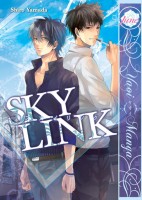
Sky LinkSky Link by Shiro Yamada. Like many boys’ love mangaka, before making her professional debut Yamada started by creating doujinshi (she seems to have been particularly fond of pairing Gintoki and Hijikata from Gin Tama together). Sky Link is Yamada’s first original manga and is currently the only work of hers available in English. The volume collects two unrelated boys’ love stories, the titular “Sky Link” and “You through a Kaleidoscope.” Unfortunately, neither of the short manga are particularly satisfying; while her artwork can at times be quite lovely (occasionally her characters’ eyes are unintentionally creepy), Yamada definitely has room to grow as a storyteller. “Sky Link” had too many disparate elements to it. It could have worked quite well as a longer series, but as a short story Yamada didn’t have enough time to effectively develop the plot or characters and everything is left frustratingly vague. Ritsuki is a first year college student with some sort of troubled past who has caught the attention and affections of one of his new professors who, it is later revealed, has a troubled past of his own. “You through a Kaleidoscope,” a fairly standard high school boys’ love romance, isn’t as ambitious but is more successful as a result.
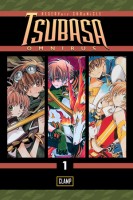
Tsubasa: Reservoir Chronicle, Omnibus 1Tsubasa: Reservoir Chronicle, Omnibuses 1-2 (equivalent to Volumes 1-6) by CLAMP. I originally read the first few volumes of Tsubasa back when it was being released by Del Rey. Because I was borrowing it from the library and people had a tendency to steal volumes Tsubasa and its sort-of crossover series xxxHolic, I never got very far with the series. I’m glad that Kodansha is bringing Tsubasa back into print, because it really is an immensely enjoyable adventure tale. And because the setting is constantly moving from one dimension to the next, CLAMP is able to have a lot of fun with the clothing designs and worldbuilding from one short story arc to the next. The drive of the series is the search for Princess Sakura’s memory, pieces of which have been scattered throughout space and time, but the remembrances of her and the other characters form an important part of the story as well. I do think I’m enjoying Tsubasa a little more my second time trying to read it. I’ve now been exposed to more of CLAMP’s work, so I can better appreciate the references being made and the alternate-dimension versions of characters from the group’s other manga. (Seeing couples originally from X actually have a chance at happiness is both touching and heart-wrenching.)

UQHolder3UQ Holder!, Volume 3 by Ken Akamatsu. I enjoyed the third volume of UQ Holder more than I did the first two, but the series has yet to win me over. It seems as though the manga is starting to focus a bit more, which it desperately needed to do, but that may simply be because Akamatsu spends very little time on trying to develop a coherent plot and primarily sticks with the action sequences. The third volume is almost entirely devoted to a sequence of fight scenes. Right now the battles in UQ Holder are probably my favorite thing about the series. They are entertaining, exciting, and extremely energetic. And because immortals are involved, they can be pretty epic, too. The damage inflicted on both persons and property is impressive. Many of the characters, even the non-immortals, have superhuman powers of some sort. Incredible strength, quick regeneration, shape-shifting, and magic—either alone or in combination—are only a few examples of the over-the-top abilities found in UQ Holder. But as entertaining as the battles can be, from time to time the action is unclear. Something will happen and it will be extremely difficult to understand exactly what or how. I’m not even going to try to attempt to explain why Yukihime suddenly loses her skirt for seemingly no reason.
Filed Under: FEATURES, My Week in Manga Tagged With: clamp, Ken Akamatsu, manga, Shiro Yamada, tsubasa, UQ Holder

My Week in Manga: January 26-February 1, 2015

February 2, 2015 by Ash Brown

My News and Reviews

The Female Goth Mangaka Carnival wrapped up last week. In addition to my recent Spotlight on Mitsukazu Mihara, I also contributed two other related posts. The first was Experiments in Manga’s latest giveaway. There’s still time to enter for a chance to win Junko Mizuno’s Cinderalla. I also posted a review of Asumiko Nakamura’s manga Utsubora: The Story of a Novelist. It’s a dark and twisting tale, and one that I come to love a little more each time I read it. Completely unrelated to the Carnival, last week I also reviewed Yasunari Kawabata’s The Sound of the Mountain, a classic novel about growing older and family relationships.

Elsewhere online, Viz announced that it will be bringing Shotaro Ishinomori’s The Legend of Zelda: A Link to the Past back into print, which I’m looking forward to a great deal. Media scholar Henry Jenkins is posting lengthy, in-depth interview with Patrick W. Galbraith, “In Defense of Moe,” talking about manga, anime, and otaku studies (Part 1|Part 2|Part 3|Part 4|Part 5|Part 6). Digital Manga has launched its next Tezuka Kickstarter to publish Osamu Tezuka’s two-volume Alabaster with a stretch goal to reprint Swallowing the Earth (again). A recent update for Digital Manga’s Finder Kickstarter includes a link to a list of boys’ love titles that are currently in stock. Perhaps most importantly, it indicates which manga are available in limited quantities.

Quick Takes

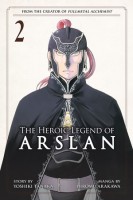
The Heroic Legend of Arslan, Volume 2The Heroic Legend of Arslan, Volume 2 by Hiromu Arakawa. The particular weakness of the second volume of The Heroic Legend of Arslan is that while the battles and sieges are proceeding at a good pace–and Arakawa’s fight and action sequences are excellent–there is a relative lack of character development. Unsurprisingly, considering that the manga takes place during a time of war, there are important, dramatic deaths, but emotionally they aren’t especially effective since readers hadn’t had the opportunity to really get to know those involved before their demise. At this point, many of the antagonists and even a fair number of the series’ protagonists are missing complexity and nuance. Thankfully Arslan himself does show a little growth by the end of the volume, but attention is mostly given to the war being fought and some of the political intrigue behind it all. Granted, those are very important aspects of the series since they are what Arslan must overcome. However, I am hoping that future volumes will spend more time examining the characters as people. Intense, bloody battles are all well and good, but I want to more completely understand the motivation and drive behind them.

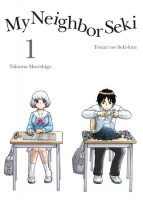
My Neighbor Seki, Volume 1My Neighbor Seki, Volume 1 by Takuma Morishige. I was originally only vaguely curious about My Neighbor Seki, but after watching the absolutely delightful anime adaptation last year, I knew it was a series that I couldn’t miss. The premise is deceptively simple: Yokoi sits in the last row of seats in her classroom right next to Seki, a boy who is always goofing around at his desk. Yokoi finds this incredibly distracting, especially since the ways in which Seki amuses himself can be spectacularly elaborate. Often she’s astounded by Seki’s audacity, but on occasion she can’t help but to join in or interfere with what he’s doing. Of course this means she’s often the one in danger of getting into trouble with the teachers for not paying attention in class. The individual chapters in My Neighbor Seki may be short, but the sheer creativity displayed by Morishige, and in turn by Seki, is quite impressive. The original My Neighbor Seki manga is just as wonderful as the anime was; I’ll definitely be following the manga to its end. (In Japan the series is currently ongoing with six volumes having so far been released.) My Neighbor Seki is funny and charming and a marvelously entertaining read.

Secrecy of the Shivering NightSecrecy of the Shivering Night by Muku Ogura. After reading the first volume of the short boys’ love series Castle Mango, I decided to seek out more of the artist’s work. Currently the only other manga of her’s available in print in English is Secrecy of the Shivering Night. Unlike Castle Mango, Ogura wrote the stories collected in Secrecy of the Shivering Night in addition to illustrating them. The volume includes four short boys’ love manga which, other than tending towards the more sweet or romantic and having slightly peculiar lead characters, are all unrelated. The setup for the titular story is perhaps the most curious and seemingly far-fetched–a young man who is afraid of bright lights and another young man who is afraid of the dark end up as dorm roommates–but the resulting relationship dynamic is surprisingly satisfying. Their opposite phobias, but even more so their opposite personalities, make them an adorable couple. Secrecy of the Shivering Night isn’t an especially outstanding collection, but the stories are generally cute and a little bit quirky, which are characteristics I happen to particularly enjoy, and Ogura’s artwork has a pleasant softness to it.

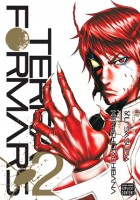
Terra Formars, Volume 2Terra Formars, Volumes 2-4 written by Yu Sasuga and illustrated by Ken-ichi Tachibana. If the first volume of Terra Formars largely felt like a stand-alone prequel, that’s because it was. The second volume begins twenty years later. An exceptionally fatal disease is becoming more prevalent on Earth which requires a new mission to Mars in order to research a cure. Shokichi Komachi, one of the two survivors from the previous Mars mission, leads a crew of one hundred men and women genetically modified to survive the conditions and lifeforms found on the planet. Terra Formars continues to be extraordinarily violent with an incredibly high body count, though considering the first volume I was actually surprised by how many people are left alive by the end of the fourth. It seems as though there might be an actual plot to Terra Formars, but it’s mostly just an excuse to show epic, over-the-top hand-to-hand combat between opponents with astounding, superhuman abilities. I still dislike the visual design of the humanoid cockroaches immensely, but at least there’s an attempt in these volumes to better explain their appearance. The portrayal of women in the manga has slightly improved, as well.

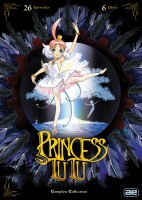
Princess TutuPrincess Tutu directed by Junichi Sato. I picked up Princess Tutu more on a whim than anything else when I saw it on super sale. Although I vaguely remembered hearing good things about the anime, I honestly didn’t know much about the series. I’m very glad that I own it because Princess Tutu is marvelous. I do find it somewhat difficult to describe in a way that does the justice, though. The story follows a girl called Duck who really is a duck. She’s under an enchantment that allows her to not only take human form but to also become the magical Princess Tutu. Through the power of her dance she restores the shattered heart of a prince who had sacrificed himself to save others. That all might sound a little strange, and parts of the anime are admittedly weird, but the series is also very good. Stories are just as real as reality in Princess Tutu, and just as potent if not more so. Bits and pieces of classic ballets, operas, and plays can be found throughout the series all mixed together to form a unique work. I absolutely loved the anime’s use of orchestral works not just as background music but as meaningful additions to the story, emphasizing the significance of the characters and of their actions and, for those who are familiar with the pieces, even revealing some of the plot.


Filed Under: FEATURES, My Week in Manga Tagged With: anime, Heroic Legend of Arslan, Hiromu Arakawa, Ken-ichi Tachibana, manga, Muku Ogura, My Neighbor Seki, princess tutu, Takuma Morishige, Terra Formars, Yu Sasuga

My Week in Manga: January 19-January 25, 2015

January 26, 2015 by Ash Brown

My News and Reviews

Last week I posted a review of Chōhei Kambayashi’s award-winning novel Good Luck, Yukikaze. Because I had enjoyed Yukikaze, the first novel in the series, I was looking forward to reading its sequel. Sadly, although there is some tremendously thought-provoking material in Good Luck, Yukikaze, I found it to be incredibly frustrating as a novel. Also posted last week was my first (and what will probably be my most substantial) contribution to the Female Goth Mangaka Carnival: a spotlight on Mitsukazu Mihara. I’ve previously written a little about her manga series The Embalmer, but this time I took a brief look at all of her manga that was released in English and examined some of the recurring themes found in her work.

Speaking of the Carnival, the hosts at The Beautiful World posted an excellent introduction which includes biographical information of the featured artists as well as an overview of gothic fashion and literary themes. Elsewhere online, Mangabrog has translated a conversation between Hiroaki Samura and Masashi Kishimoto. Chromatic Press has some additional comments on making Sparkler Monthly back issues free to read. (Most importantly, the magazine needs 1,000 subscribers by the end of July 2015 to ensure it survives into its third year.) And some great news from France, Jiro Taniguchi and Baku Yumemakura’s manga series The Summit of the Gods (a favorite of mine) is being adapted as an animated film.

Quick Takes

Corto Maltese: Under the Sign of CapricornCorto Maltese: Under the Sign of Capricorn by Hugo Pratt. A portion of Corto Maltese, a seminal comic created by Italian artist Hugo Pratt in 1967, was previously translated into English, however that release was criticized for its use of altered and reformatted page layouts among other things. Under the Sign of Capricorn is technically the third Corto Maltese collection, but it’s the first volume to be released in the series’ new English-language edition from EuroComics, IDW’s newest imprint. The goal is to release the entire twelve-volume series using the original artwork and oversized format over the next few years. Under the Sign of Capricorn is a great looking comic, the high-quality paper and large trim size shows off Pratt’s superb black and white artwork. The titular Corto Maltese is a sea-captain who, though he claims to have no enemies and to live only for himself, frequently finds his life in danger as he tends to side with the underdogs in their battles against those who hold power over them. (He’s a fantastic character.) Under the Sign of Capricorn is a collection of connected adventure stories, many with a slight touch of the supernatural and a lot more humor than I was anticipating. I’m looking forward to reading more of the series.

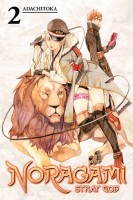
Noragami: Stray God, Volume 2Noragami: Stray God, Volumes 2-3 by Adachitoka. It took a little while for the first volume of Noragami to settle on its tone, but these two volumes have managed to achieve an excellent balance between the series’ humor and drama. They also explore more of the manga’s worldbuilding and delve more deeply into the mechanics of the gods’ relationships with their shinki. New characters and adversaries have been introduced as well. I initially thought that Noragami might be an episodic series–it certainly has a setup that would lend itself well to that format–but it looks like the manga will have an ongoing and increasingly complex plot. In a series about a low-level god of war who is trying to raise his status and gain followers, it’s not too surprising that other Japanese deities make an appearance in Noragami. However, some of them are portrayed very differently than their traditional counterparts. I was greatly amused by this, but then I already have some knowledge of Japanese religion and mythology. There are translation notes provided for readers who aren’t as familiar, but the delightful incongruities probably won’t be as effective without some prior understanding. However, overall enjoyment of Noragami doesn’t rely on esoteric expertise.
Tough Love BabyTough Love Baby by Shiuko Kano. While it’s not an exceptional boys’ love one-shot, Tough Love Baby was actually fairly solid. This was a pleasant surprise, especially considering my frustrations with some of Kano’s other early works. (And Tough Love Baby is one of her earliest.) Another pleasant surprise–since I’m into that sort of thing–was the somewhat reversible nature of two of the characters. Despite being the secondary couple, I was actually much more interested in the relationship between Tamotsu and Sora than I was in the relationship between Yoshino and Sachi. This was mostly because I ended up particularly liking Sora. (Tamotsu can be a bit of a jerk, though on occasion he does try not to be.) Sora is diminutive throughout high school, but undergoes a tremendous growth spurt upon entering college. Even though he’s much taller than everyone one else, adorable is still the best word to describe him. In some ways, Sora’s story actually parallels Sachi’s. After a three-year absence, Yoshino returns to discover that the cute thirteen-year-old boy he had developed feelings for has grown up to become a juvenile delinquent. Tamotsu is one of Sachi’s friends and a fellow tough guy, but he happens to be in love with Sachi, too. Which brings the story back to Sora, who greatly admires and falls for Tamotsu.


Filed Under: FEATURES, My Week in Manga Tagged With: Adachitoka, comics, Corto Maltese, Hugo Pratt, Noragami, Shiuko Kano

My Week in Manga: January 12-January 18, 2015

January 19, 2015 by Ash Brown

My News and Reviews

I posted two reviews at Experiments in Manga last week. The first review was of Manazuru, Hiromi Kawakami’s first novel to be translated into English. It’s a slightly surreal but moving work about memory, loss, letting go, and moving on. I had previously read and enjoyed some of Kawakami’s short stories, but Manazuru is her first long-form work that I’ve read. The other review posted last week was a part of my monthly horror manga review project. In December I took a look at took a look at Setona Mizushiro’s After School Nightmare, Volume 1, but this month I started digging into Yuki Urushibara’s award-winning Mushishi, which happens to be one of my favorite manga series. (Next month will be After School Nightmare‘s turn once again, and I’ll continue to alternate between the series.)

On to other interesting news and reading! Sparkler Monthly has a new subscription model for the new year, which means even more of its content is now free. (But if you like what you see, please consider becoming a member!) Kodansha Comics announced several new licenses, including a new series from Blade of the Immortal‘s Hiroaki Samura among other intriguing manga. Amazon leaked Vertical Comics’ most recent acquisition announcement, Hajime Segawa’s Tokyo ESP. And speaking of Vertical, here’s a list of Vertical manga that may be going out of print in the near future. And completely unrelated, Gayumbos has an interview with Kazuhide Ichikawa, one of the creators featured in Massive: Gay Erotic Manga and the Men Who Make It.

Finally, I wanted to draw everyone’s attention to the Female Goth Mangaka Carnival which is currently under way and will continue through the end of January. Hosted by the The Beautiful World, which previously hosted the Kaori Yuki Manga Moveable Feast, the Carnival is focusing on Fujiwara Kaoru, Kusumoto Maki, Mitsukazu Mihara, Junko Mizuno, Asumiko Nakamura and their works. I have a few things in mind for the Carnival, including a spotlight on Mitsukazu Mihara, a manga giveaway that ties into the Carnival, and a review of Asumiko Nakamura’s Utsubora. Assuming all goes according to plan, my Carnival posts should start showing up by Friday.

Quick Takes

Ani-Imo, Volume 1Ani-Imo, Volume 1 by Haruko Kurumatani. I often enjoy body-swap manga, but I was somewhat wary of Ani-Imo. I’ll admit, the first volume actually wasn’t as terrible as I anticipated it would be. There were even parts of it that I legitimately liked. Still, overall I really can’t say that I enjoyed the manga. There’s a lot about Ani-Imo that frankly makes me uncomfortable. I’m actually not bothered by the potential incest itself (although the manga’s excuse that makes it not really incest seems awfully convenient and not particularly believable). However, I intensely disliked the doctor in the manga. He comes across as extremely predatory and unfortunately his bisexuality is used to emphasize that point. Also, the young women in the series, despite being high schoolers, look more like elementary grade students, which makes the sexual overtones of Ani-Imo even harder to take. Some of the manga’s creepiness I’m sure is intentional, but since the series seems to be trying to be a comedy. The balance of the series’ tone doesn’t seem quite right and the manga ends up being a bit off-putting.

Manga Dogs, Volume 2Manga Dogs, Volume 2 by Ema Toyama. Since Manga Dogs is more of a gag manga than anything else, there isn’t really much of a driving plot to the series. Instead there’s the initial setup (a high school with a new, but abysmally supported manga program) and the introduction of the main players (Tezuka and the three classmates who have attached themselves to her, as well as a small handful of supporting cast members) which serve as the starting point for all of the hijinks in the series. I’m not really sure where Manga Dogs is heading, or even if it is heading anywhere, but I do find it amusing. Granted, much of the humor depends on a reader having a deeper interest in and understanding of manga and its creation than the casual fan might generally possess. The other major source of the series’ comedy are the goofball antics of Tezuka’s enthusiastic yet delusional devotees–Specs, Prince, and Dream Kid. But, surprisingly enough, although they’re usually air-headed idiots, every once in a while the three of them actually do exhibit some common sense.

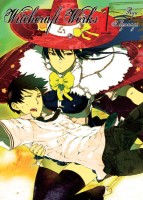
Witchcraft Works, Volume 1Witchcraft Works, Volumes 1-2 by Ryu Mizunagi. Witches seem to be showing up in anime and manga more and more often these days, but I don’t have a particular interest in them. I almost passed over Witchcraft Works because of that. But since it’s a manga being released by Vertical Comics, I was a little more inclined to check it out. That and I generally liked the artwork; the cover in particular is striking, but the interior art looks great, too (even if some of the character designs tend to be absurdly buxom). So far, Witchcraft Works is a delightfully strange and quirky manga, it’s ridiculousness and weirdness making it a lot of fun. I’m especially enjoying the reversals in the usual gender roles–Honoka, the male lead, is the one who needs saving and protecting while Ayaka, the female lead, is the strong and stoic hero. (I also love that she’s at least a head taller than him.) Ayaka is an incredibly powerful fire witch which means many of the action sequences are done and over with before they’ve really had the chance to begin, but at least she puts an end to things with flair. And often literally with flare.

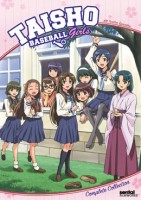
TaishoBaseballGirlsTaisho Baseball Girls directed by Takashi Ikehata. Although I’ve discovered that I generally enjoy sports anime, I was particularly interested in Taisho Baseball Girls because of its historical setting. Not many series take place during the Taisho era, a time period in which Japan was becoming increasingly Westernized and there was some societal anxiety caused by that. Although the twelve-episode anime is based on an ongoing series of light novels written by Atsushi Kagurazaka, it tells a complete and very satisfying story. A group of nine high school girls band together to form a baseball team in order to challenge an all-boys team and prove that women’s place in the world shouldn’t be and isn’t limited to the household. The problem is that very few of the girls actually have any experience playing baseball. Taisho Baseball Girls is a charming and heartwarming series without being overly sentimental. Some of the girls’ family members, friends, and teachers oppose what they’re doing and their unladylike behavior while others are incredibly supportive of them and their hard work.

Filed Under: FEATURES, My Week in Manga Tagged With: Ani-Imo, anime, Ema Toyama, Haruko Kurumatani, manga, Manga Dogs, Ryu Mizunagi, Taisho Baseball Girls, Witchcraft Works

My Week in Manga: January 5-January 11, 2015

January 12, 2015 by Ash Brown

My News and Reviews

Well, last week unintentionally became a week filled with gay-themed manga here at Experiments in Manga, not that that’s something I’m going to complain about. But, first things first, the WataMote manga giveaway winner was announced. The post also includes a list of otaku manga available in English for anyone looking for something to read in that sub-genre. And now, back to the gay manga! I posted two in-depth manga reviews last week. The first review was of Takeshi Matsu’s English-debut More and More of You and Other Stories, a collection of gay erotic doujinshi. It’s both a fun and funny volume, so I hope to see more of Matsu’s work translated in the future. Over the weekend, I also posted a review of What Did You Eat Yesterday?, Volume 5 by Fumi Yoshinaga. I continue to really enjoy the series’ mix of food and contemporary gay life. The sixth volume was actually released last week, so I’m a little behind in my reviews, but it’s still a great series.

Elsewhere online, Digital Manga launched its first non-Tezuka Kickstarter project, an effort to reprint and restock the first six volumes of Ayano Yamane’s Finder boys’ love series. (Like many of Digital Manga’s recent Kickstarter projects, I have mixed feelings about this one.) In licensing news, Seven Seas and Yen Press announced quite a few new titles on social media. Sean has a nice roundup of the licenses over at A Case Suitable for Treatment. For those who are interested in the history of manga or are more academically inclined, be sure to check out Ryan Holmberg’s most recent What Was Alternative Manga? column, “The Fukui Ei’ichi Incident and the Prehistory of Komaga-Gekiga” at The Comics Journal and the second part of Nicholas Theisen’s manga studies essay “Takeuchi Osamu and Manga Expression” at Comics Forum.

Quick Takes

Alice in the Country of Hearts, Omnibus 2Alice in the Country of Hearts, Omnibuses 2-3 (equivalent to Volumes 3-6) by Soumei Hoshino. I was taken by surprise by how much I enjoyed the first omnibus of Alice in the Country of Hearts and so soon found myself tracking down the rest of the series. I became a little less enamored with the manga the more I read, but in the end I still thoroughly enjoyed the series and I definitely plan on picking up some of the spinoffs. Because Alice in the Country of Hearts is based on a romance adventure game, it’s not too surprising that Alice is eventually paired off with one of the multitude of people who have expressed intense interest in her. However, I didn’t really like who it was she ended up with in Alice in the Country of Hearts because he’s a violent jerk. Granted, I can say that and not really spoil too much since so many of the guys in the series are violent jerks–they feel so strongly for Alice that more than one of them actually wants to, or even tries to, kill her. This certainly adds to the ominous atmosphere of Alice in the Country of Hearts, which is one of the things I particularly like about the series. What I was hoping to see and what the manga doesn’t quite deliver on was more explanation about the world itself and about the “game” that is being played. I suspect some of the other Alice series may expand on this, though.

Citrus, Volume 1Citrus, Volume 1 by Saburouta. I know quite a few people who were very excited for Citrus, Seven Seas’ most recent yuri acquisition. I didn’t know much about the series, but I’m always interested in seeing, and reading, more yuri in English. Yuzu is boisterous young woman whose life has been thrown into turmoil after her mother remarries. She has a new name, a new high school, and even a new sister. Mei and Yuzu don’t really get along that well and their relationship gets even more complicated when Mei suddenly kisses Yuzu, but not out of any sort of true affection. Yuzu’s not entirely sure what’s going on with her new sibling, but after the kiss she can’t get her out of her mind and begins to develop non-sisterly feelings for Mei. Quite a few things in the first volume of Citrus strained my suspension of disbelief–I cannot and will never be convinced that Yuzu’s mother completely failed to mention before they all actually moved into the same household together that as part of her remarriage Yuzu would be gaining a stepsister–but it is an intriguing start to the series. The manga has great potential for melodrama. Mei is somewhat of a mystery at this point, and I’m curious to learn more about her. She puts up a good front for most people, but she’s incredibly manipulative and Yuzu’s one of very few people who knows about and has seen that side of her.

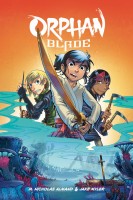
Orphan BladeOrphan Blade written by M. Nicholas Almand and illustrated by Jake Myler. After previewing some of Myler’s work in progress for Orphan Blade, I was really looking forward to reading the graphic novel. Unfortunately, while there were some aspects of the comic that I really appreciated (it’s nice to see a gay protagonist), overall I was disappointed with Orphan Blade, especially since it had such great potential. The setting is an alternate-universe, 17th-century Japan in which the world was overrun with kaijū. But now that most of the monsters have been destroyed, humans are once again at war with each other. Particularly coveted are Artifacts, weapons of immense power fashioned out of the bodies and bones of the defeated kaijū. Hadashi is a young man who comes into possession of one of those Artifacts, but it possesses him in return. For the most part, Myler’s artwork is excellent. The monster and character designs, while lacking cohesiveness, are great and I love the colors. Orphan Blade is surprisingly violent, bloody, and gruesome. There are plenty of dynamic battles, however the action is frequently confusing and difficult to follow which is particularly problematic since a large part of the graphic novel is devoted to fight sequences. I like the world and basic premise of Orphan Blade, but the story feels inexpertly cobbled together in places, which may be explained by the fact that Almand sadly passed away before the comic’s completion.

Filed Under: FEATURES, My Week in Manga Tagged With: Alice in the Country of, Citrus, comics, Jake Myler, M. Nicholas Almand, manga, Saburouta, Soumei Hoshino

My Week in Manga: December 29, 2014-January 4, 2015

January 5, 2015 by Ash Brown

My News and Reviews

Happy New Year, everyone! Things are already off to a good start at Experiments in Manga. The last manga giveaway of 2014 is currently underway and there’s still time to enter for a chance to win No Matter How I Look at It, It’s You Guys’ Fault I’m Not Popular!, Volume 1 by Nico Tanigawa. All you have to do is tell me a little about some of your favorite otaku. The honor of the first in-depth manga review of the year, and in fact the very first post of 2015, goes to Hiroaki Samura’s Vigilance, the thirtieth and penultimate volume of Blade of the Immortal. I still love the series after all this time, and this installment has some particularly nice fight sequences. Finally, December’s Bookshelf Overload was posted over the weekend as well.

There were a few interesting things from Vertical this week, including a roundup of the happenings of 2014 and what fans can look forward to from the publisher in 2015. Another enlightening read from Vertical’s Tumblr account tackles sports, sports fiction, and sports manga and the challenges it presents to the North American market. Also, in case you missed it, Vertical is now on ask.fm and is answering all sorts of questions there. Last but not least, thanks to the success of its release of Mobile Suit Gundam: The Origin, Vertical is looking into publishing more Gundam manga. If you’re interested and haven’t already, be sure to take Vertical’s Gundam survey which will be open through the end of today.

Elsewhere online, Khursten has made a manga resolution for the year to feature josei more at Otaku Champloo. Organization Anti-Social Geniuses debuted a new feature, Inside the Industry, with Inside the Manga Industry with Lillian Diaz-Przybyl. The Hairpin has an excellent interview with Anne Ishii who, among other things, is the translator and one of the editors of the newly released Massive: Gay Erotic Manga and the Men Who Make It (which I recently reviewed; it’s great).

Quick Takes

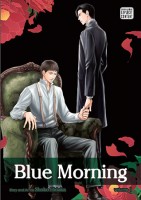
Blue Morning, Volume 1Blue Morning, Volumes 1-5 by Shoko Hidaka. I’ve been meaning to read Blue Morning for a while but have only now gotten around to it. The benefit of this is that I had five volumes that I could read all at once. The drawback, of course, is the long wait until the sixth volume is released. I loved Blue Morning. It’s a moody, slow-burning boys’ love series with beautiful, elegant artwork and well-developed, subtly nuanced characters. A dramatic period piece, the manga takes place during Japan’s Meji era in which the country’s social, political, and economic structures underwent great change. The story focuses on Akihito Kuze who, after being orphaned, is suddenly thrust into Japan’s peerage as a viscount at the age of ten. Tomoyuki Katsuragi, the Kuze family steward, becomes his tutor and guardian. As he grows Akihito ends up developing feelings for Katsuragi and their relationship undergoes an intense evolution and power reversal. The romantic elements of Blue Morning are important, but much of the plot is actually focused on the political maneuverings of both Katsuragi and Akihito to raise the family’s status, though the each of the men have their own reasons for doing so.

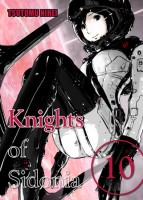
KnightsSidonia10Knights of Sidonia, Volumes 10-12 by Tsutomu Nihei. I decided to save up a few volumes of Knights of Sidonia since they read so quickly and I wanted to enjoy a larger chunk of the story. But even though there are quite a few major developments in these particular volumes, including the introduction of an important new character, somehow it just feels like Nihei is stalling for time and that there wasn’t actually much forward movement in the series. Even so, it was still an enjoyable read and I still like the manga. Knights of Sidionia remains a rather peculiar series, a combination of horror, science fiction and, of all things, romantic comedy. Sidonia’s hero Tanikaze, despite being incredibly awkward socially, has managed capture the romantic interest of quite a few of the other characters, basically amassing one of the most unusual harems that I’ve ever come across in manga. And while he has all sorts of domestic challenges to deal with now that his house has five residents more or less living there, he’s also one of humanity’s best pilots in the fight for survival against the Gauna. The war is entering a new stage, new technology has been developed, and the Gauna continue to gain new abilities.

Say I Love You, Volume 4Say I Love You, Volume 4 by Kanae Hazuki. Four volumes in, Say I Love You continues to set itself apart from many of the other shoujo manga series that are currently being released with its very realistic approach to young adult relationships, romance, and sexuality. The characters show a believable mix of maturity and immaturity, at times handling themselves extraordinarily well and at other times ending up a mess of confused emotions. This volume also introduces a new character, Kai, whom I’m particularly looking forward to seeing more of. In the afterword Hazuki mentions that she believes that manga “isn’t just for showing the nice side of things,” a belief that I think comes through in Say I Love You. There are the wonderful moments between characters as they grow closer, but every relationship has its ups and downs and Hazuki isn’t afraid to show the emotional pain and turmoil experienced by her characters as part of that growth. Regret, jealousy, selfishness, and uncertainty all have a role to play as do happiness, affection, altruism, and confidence. None of the characters are perfect and they all make mistakes as they navigate new and sometimes surprising relationships.

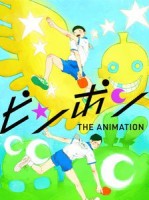
Ping Pong: The AnimationPing Pong: The Animation directed by Masaaki Yuasa. Taiyō Matsumoto’s breakout manga was a five-volume series from the mid-1990s called Ping Pong. I’ve become a fan of Matsumoto’s work and would love to read Ping Pong, but it’s probably unlikely to ever be licensed. However, the eleven-episode anime adaptation made me very happy. The style of animation is somewhat unusual, reminiscent of Matsumoto’s loose but deliberate lines and uses a variety of palettes ranging from monochrome to pastel to vivid colors. I was particularly impressed by the series’ sound design and effective use of music. Smile and Peco are close friends and the strongest members of their school’s table tennis club but they both approach the game very differently. On its surface, Ping Pong is a fairly straightforward tale about competitive table tennis, but the series has prominent psychological elements and more depth than it might appear at first glance. Peco and Smile aren’t the only important players in Ping Pong; the protagonists and antagonists of the series are in constant flux. I enjoyed the Ping Pong anime immensely; I’ll definitely be picking up the physical release this summer.

Filed Under: FEATURES, My Week in Manga Tagged With: anime, blue morning, Kanae Hazuki, knights of sidonia, manga, Ping Pong, Say I Love You, Shoko Hidaka, Tsutomu Nihei

My Week in Manga: December 22-December 28, 2014

December 29, 2014 by Ash Brown

My News and Reviews

The end of the year is drawing near and because of the holidays I’ve been traveling quite a bit to see family. Despite being in a part of the country with less than ideal and spotty Internet access for most of the week (middle-of-nowhere Ohio), I still managed to post a few things. The honor of the final in-depth manga review of the year goes to Massive: Gay Erotic Manga and the Men Who Make It, one of my most anticipated releases of 2014. Technically it’s more than just manga–the anthology includes photography, essays, creator profiles, and more. It’s a fantastic work, and highly recommended for anyone even remotely interested in gay manga. Last week I also posted my list of notable releases from 2014. Massive is on the list, as are many other works, including comics and prose in addition to manga. It’s the second year I’ve done a list like this and I enjoyed making it, so I think it’ll probably become an annual feature.

One of the other notable manga that made my list was Makoto Yukimura’s marvelous Vinland Saga. Sadly, Kodansha Comics announced on Twitter that publication of the series has been temporarily suspended. No official explanation or reason has been given at this time (although there has been plenty of speculation), but Kodansha hopes to have more to say about the situation come the new year. Elsewhere online, Mangabrog has posted a lengthy translation of Brutus magazine’s interview with Hajime Isayama from its November 2014 Attack on Titan special issue. And although it’s not exactly manga news, the Smithsonian has begun putting the Pulverer Collection online–an impressive collection of Japanese illustrated books–along with related essays and videos. There were probably some other interesting things happening last week, but like I mentioned I’ve been traveling and visiting with family, so let me know if I missed something!

Quick Takes

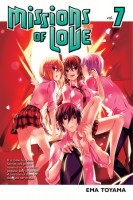
Missions of Love, Volume 7Missions of Love, Volumes 7-9 by Ema Toyama. It’s been a little while since I’ve read Missions of Love, but it didn’t take me very long at all to fall back into the twisted relationship drama of the series. I’m actually glad that I had a few volumes saved up to read all at once since I tend to speed through the manga so quickly. Missions of Love is a series that has me easily turning page after page just to see how audacious the storyline can be without actually crossing the line into something blatantly indecent. The series is smutty and extremely suggestive. The characters are terrible people, selfish and manipulative. Their relationships are a twisted, tangled mess. But I can’t seem to turn away from the outrageousness of the series. Several confessions of love are made over the course of these particular volumes which only serve to complicate further an already complicated situation. And on top of that, Yukina’s preschool teacher, who unintentionally traumatized her when she was his student, is back in the picture which creates even more turmoil. Missions of Love certainly isn’t the most wholesome manga series, but it is an addicting one.

Punch Up!, Volume 1Punch Up!, Volumes 1-4 by Shiuko Kano. Although Punch Up! is a technically spinoff of Play Boy Blues, which was never completely released in English, knowledge of the earlier series isn’t necessary; Punch Up! stands perfectly well on its own. Kouta is a young but skilled construction worker who, thanks to a missing cat, ends up becoming the roommate of Motoharu, a successful and sought-after architect. Eventually, and not too surprisingly since this is a boys’ love manga, the two of them hook up as well. And since they both enjoy sex, it’s a frequent occurrence in the series. (One of Motoharu’s most prominent and amusing character traits is how horny he is.) Punch Up! also features a lengthy amnesia arc. Normally this isn’t a plot device that I’m particularly fond of, but it actually does provide for some interesting character development in the manga, so I’m a little more forgiving than I might otherwise be. Punch Up! has a fair amount of humor to it and a large cast of interesting secondary characters. And cats. For the most part I enjoyed the series, but there were a few things–like the treatment of Kouta’s older transgender sibling–that left something to be desired.

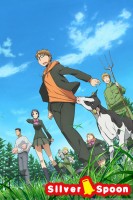
Silver SpoonSilver Spoon, Season 2 directed by Kotomi Deai. It’s unlikely that Hiromu Arakawa’s award-winning manga series Silver Spoon will ever be licensed in English (although I would love to see it released), but at least the anime adaptation is available. I thoroughly enjoyed the first season of Silver Spoon and the second season is just as good if not better. Silver Spoon is a wonderful series. For me, part of the anime’s appeal is that it actually reminds me of home–I grew up in a small, rural farming community–and I can greatly empathize with the plights of the series’ characters and their families when tough decisions must be made. The importance of family is actually one of the second season’s particular emphases. Farming is not an easy or forgiving profession and deserves much more respect than it is often given. Silver Spoon doesn’t sugarcoat the harsh realities of agricultural work, but at the same time it isn’t overly pessimistic, either. There are humorous, cheerful, heartwarming, and even inspiring elements that nicely balance out the anime’s seriousness and occasional tragedy and sadness. Silver Spoon has great characters and character growth. I only wish that there was more of the series!

Filed Under: FEATURES, My Week in Manga Tagged With: anime, Ema Toyama, manga, missions of love, punch up!, Shiuko Kano, Silver Spoon

My Week in Manga: December 15-December 21, 2014

December 22, 2014 by Ash Brown

My News and Reviews

Last week was another week with two reviews here at Experiments in Manga. My monthly horror manga review project is now underway, so I took a look at Setona Mizushiro’s After School Nightmare, Volume 1, which is a very intriguing start to the series. Next month I’ll start in on the in-depth reviews for Yuki Urushibara Mushishi and continue to alternate between the two series until the review project is completed. Last week I also reviewed The Early Cases of Akechi Kogorō by Edogawa Rampo, which I was very excited to read. The volume collects four of the earliest stories featuring Rampo’s great detective. And over at Manga Bookshelf proper, I and the rest of the Manga Bookshelf bloggers talked a little about the Manga the Year of 2014, noting some of our favorite things from the past year. Like I did last year, later this week I’ll also be posting my own list of notable releases from 2014.

I’m still extraordinarily busy at work as I settle into being the temporary boss of my unit for the next seven months or so, so I’ve been a bit preoccupied and haven’t had a chance to closely follow what’s going on in the mangasphere these days. However, I did still manage to catch a few interesting things to read online. Jason Thompson’s most recent House of 1000 Manga column focuses on Learn English with JoJo’s Bizarre Adventure, which I am now determined to track down. J. R. Brown has an introductory post to Boys in Skirts, her series of article and reviews focusing on otokonoko at Mode: Verbose. I also came across a fascinating post about the popularity of the Year 24 Group. I’m not familiar with the author or the blog, but it looks like it should have other promising manga articles as well.

Quick Takes

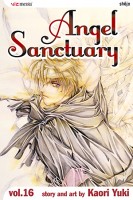
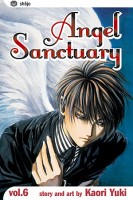
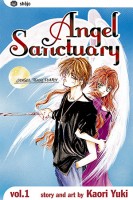
Angel Sanctuary, Volume 16Angel Sanctuary, Volumes 16-20 by Kaori Yuki. Here it is, the tumultuous conclusion to the epic Angel Sanctuary. By the end of the series, Yuki actually does manage to pull everything together in a way that mostly makes sense and proves that she actually can kill off a main character, something that I had my doubts about. I know a fair number of people who adore Angel Sanctuary, but while there were some things I really liked about the series, overall I found it pretty frustrating. Maybe I just wasn’t paying close enough attention, but more often than not I found Angel Sanctuary to be confusing and difficult to follow with a huge cast of characters, none of whom are exactly who they initially appear to be, and plot twist after plot twist. Granted, that did mean the series was consistently drama-filled. But with a little more editorial guidance, Angel Sanctuary could have been something phenomenal instead of just good. I did appreciate the manga’s core, however. Love is the driving force behind Angel Sanctuary. All of the characters are dealing with love in one way or another; it is the source of tremendous good as well as tremendous evil, but in the end it is shown to be a redemptive force.

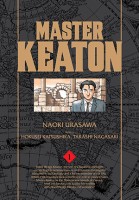
Master Keaton, Volume 1Master Keaton, Volume 1 written by Hokusei Katsushika and Takashi Nagasaki and illustrated by Naoki Urasawa. One of the many reasons that I became so enamored with manga was thanks to Urasawa’s series Pluto, so I’m always curious and excited when a new work of his is licensed in English. Admittedly, Master Keaton, while newly translated, is one of Urasawa’s older collaborations that began in the late 1980s. The titular Keaton (technically Hiraga-Keaton) is a half-Japanese, half-English archaeology professor who works as an insurance investigator on the side. He also used to be a member of the British Army’s Special Air Service, which adds survival skills and combat experience to his already impressive and eclectic set of talents. I enjoyed the first volume of Master Keaton. The manga has a nice mix of action and adventure, mystery and detective work, and even a bit of family drama. Occasionally it can be a little heavy on politics and history which interrupts the series’ pacing, but generally the slower parts are interesting, too. It’s also worth mentioning that the book design and production quality of Viz’s release of Master Keaton is particularly nice.

Open Spaces and Closed Places, Parts 1-2Open Spaces and Closed Places, Volumes 1-6 by Saicoink. I don’t remember exactly when or how I first heard about the mini-comic series Open Spaces and Closed Places, but it was recently brought to my attention again when Saicoink released the sixth and final volume. I finally got around to reading the series, and I absolutely loved it. Jirou is the boss of the delinquents at his school. When he isn’t busy getting into fights, he’s pining for Oscar, the president of the student council. Oscar likes Jirou, too, but for various reasons doesn’t feel he can accept his love, and so spends much of his time teasing the other boy instead. It’s a delightful relationship, both adorable and sad at the same time. Soon after Open Spaces and Closed Places begins, fantastical elements are introduced and the series becomes more and more surreal as it goes, culminating in a spectacular dream sequence. Saicoink specifically mentions drawing inspiration from Suehiro Maruo and Usamaru Furuya. While their influence can be seen in Open Spaces and Closed Places, the series isn’t as grotesque or as graphic as some of their works, though its humor is still accompanied by some amount darkness and tragedy. It’s a sinister, strange, and wonderful series.

Sankarea: Undying Love, Volume 9Sankarea: Undying Love, Volume 9 by Mitsuru Hattori. Sometimes Sankarea is all about its horror, sometimes it’s all about its peculiar romantic comedy, and sometimes it manages to be about both. The ninth volume is generally successful in balancing the series’ two opposing aspects, though the comedy has definitely taken a turn for the serious. Hattori does still find plenty of opportunities to add a bit of fanservice to the manga, this time mostly in the form of dressing Rea up in a variety of revealing costumes and outfits, often for no better reason than she looks cute in them. But even with those largely unnecessary diversions, the plot does continue to move along nicely in the ninth volume. Chihiro and most of the rest of his group have made their escape from ZoMA and return to Japan. Rea is suffering from amnesia though and doesn’t remember Chihiro or their relationship. Often I’m annoyed by the memory loss trope in manga—frequently it’s the result of bad or lazy writing—but for the most part it actually works pretty well in Sankarea. I still like the quirkiness of the characters in Sankarea, but Bub the undead cat remains my favorite by far.

Filed Under: FEATURES, My Week in Manga Tagged With: angel sanctuary, comics, Hokusei Katsushika, Kaori Yuki, manga, Master Keaton, Mitsuru Hattori, Naoki Urasawa, Open Spaces and Closed Places, Saicoink, Sankarea, Takashi Nagasaki

My Week in Manga: December 8-December 14, 2014

December 15, 2014 by Ash Brown

My News and Reviews

Two reviews were posted at Experiments in Manga last week. The first was of Frederik L. Schodt’s classic survey of manga originally written in 1983 but slightly revised in 1986 and with a new introduction added in 1997, Manga! Manga!: The World of Japanese Comics. It may be a few decades old, but it’s still a fantastic work that is well worth reading. Last week I also reviewed Hikaru Suruga’s Attack on Titan: No Regrets, Volume 2, the final volume of Attack on Titan‘s short, shoujo spinoff which focuses on Levi and Erwin’s backstories. I wasn’t quite as fond of the second volume as I was of the first, but I did enjoy the series. It’s definitely a must-read for fans of Erwin and/or Levi and I appreciated how it expanded the setting of Attack on Titan.

Elsewhere online, Kodansha Comics announced the license of Naoshi Arakawa’s Your Lie in April. An Indiegogo campaign was launched to create a stop-motion film adaptation of Moyoco Anno’s The Diary of Ochibi manga. Vertical linked to an older article about Prophecy and how French Manga Fans Inspire the Work of Tsutsui Tetsuya. (The first volume of Prophecy was recently released in English and it’s fantastic.) And last but not least, Muse Hack posted an interview with Mikhail Koulikov of the Anime and Manga Studies Blog. I’ve been following Koulikov’s Anime and Manga Studies ever since I’ve discovered it. The blog is a great resource for anyone interested in the academic pursuit and scholarly study of Japanese pop culture.

Quick Takes

Fairy Tail, Volume 43Fairy Tail, Volume 43 by Hiro Mashima. There was very little Gray in the forty-third volume of Fairly Tail which made me a little sad, especially after the buildup in his character and story over the last few volumes. But with a series like Fairy Tail, which has a fairly large cast of characters who regularly play an important role in its plot, time needs to be spent with those other characters as well. Fairy Tail always seems to have one or two moments of fanservice that, at least for me, detract from the story being told. The clothing and armor choices for the female characters in particular tend towards stereotypical fantasy design–showing more flesh than would be appropriate for battle–but at least the women in Fairy Tail generally have well-developed personalities and are very capable characters in their own right. Often, they’re even stronger than the men. And to be fair, there’s male nudity as well as female nudity in Fairy Tail, though as might be expected from a shounen manga, generally not to the same extent. Fairy Tail is now well into the beginning of the Tartaros arc of the series in which the members of the Fairy Tail guild must face off with a dark guild of demons which is trying to eliminate the entire Magic Council.

Kiss All the Boys, Volume 1Kiss All the Boys, Volumes 1-3 by Shiuko Kano. For the most part I enjoyed Kiss All the Boys more than Kano’s earlier series Yakuza in Love, but ultimately I felt a bit cheated by its conclusion. While in some ways I’m glad that most everything ends happily for the characters, I’m not convinced that that’s really how things would have played out and some of the eventual pairings are troubling. But while Kiss All the Boys may not be the most believable series, at least the convoluted relationships are for the most part interesting even when they are appalling. The series hinges on Tetsuo, a straight thirty-something hentai artist with a fifteen-year-old son born from his youthful indiscretions. At least he’s supposed to be straight. Conveniently for the manga, he soon finds himself entangled in relationships with several other men–his next door neighbor, his best friend and editor, and even the boy his gay son has a crush on. Tetsuo is an asshole, but at least he knows he’s an asshole. He does make some effort to rise above his nature but unfortunately never quite manages to succeed. For the most part Kiss All the Boys is intended to be a comedy and shouldn’t be taken too seriously, but I couldn’t help but worry for the youngsters left with terrible adult role models.

Yukarism, Volume 1Yukarism, Volume 1 by Chika Shiomi. I haven’t previously read any of Shiomi’s manga, but I was looking forward to Yukarism because of its promise of interesting gender dynamics, reincarnation, and historical romance. Although Yukari Kobayakawa is only seventeen, he has already made a name for himself as an author of novels set in the Edo period. He never has to do any research though since he subconsciously draws inspiration from his past life as a courtesan in the era’s pleasure district. Except for that particular twist, at this point Yukari actually isn’t a very interesting character. He’s very reserved, self-absorbed, impassive, and completely unfazed when he begins to slip back and forth between his past life and his current one. Many of the people surrounding Yukari in present-day Japan are reincarnations of people he knew in the pleasure district although they don’t all seem to be aware of that fact. There’s definitely some potential for romance in Yukarism, but after only one volume that doesn’t appear to be the series’ main concern yet. Instead, the mystery surrounding the deaths of Yukari and the others in the past seems to take precedence, although the connections between all of the characters in all of their incarnations is an important element as well. I’ll be curious to see how the series continues to develop.

DevilPartTimerThe Devil Is a Part-Timer! directed by Naoto Hosoda. I’ve been meaning to watch The Devil Is a Part-Timer! for quite some time now, but I was recently reminded of that intention when Yen Press licensed both the light novel series by Satoshi Wagahara on which the anime is based as well as at least one of its manga adaptations. While the anime is entertaining, the ridiculous premise is more hilarious in theory than in execution–The Devil Is a Part-Timer! is actually played fairly straight. But it’s still a fun and consistently amusing series. I particularly got a kick out of Satan diligently working in the fast food industry as a way to take over the world (he takes his job very seriously) and the portrayal of Lucifer as a hikikomori with an online-shopping addiction. For the most part, The Devil Is a Part-Timer! nicely balances its comedy with its drama. Although it has a conclusion, the ending of the series lacks finality and some of the characters introduced were never really put to good use, as though additional seasons were initially planned for but never manifested. (At least I haven’t heard anything about a second season.) Overall, The Devil Is a Part-Timer! is funny series and a nice change of pace from all of the anime centered around high school or middle school students. I might just give the original novels a try when they’re released in English.

Filed Under: FEATURES, My Week in Manga Tagged With: anime, Chika Shiomi, Devil Is a Part-Timer, Fairy Tail, Hiro Mashima, Kiss All the Boys, manga, Shiuko Kano, Yukarism

My Week in Manga: December 1-December 7, 2014

December 8, 2014 by Ash Brown

My News and Reviews

There were a few different things posted at Experiments in Manga last week. First up was the announcement of the Seven Seas Sampler manga giveaway winner. The post also includes a list of some favorite titles published or soon to be published by Seven Seas. The honor of the first in-depth manga review for December goes to Mobile Suit Gundam: The Origin, Volume 7 by Yoshikazu Yasuhiko. Even if you’re not particularly interested in Gundam (I’ll readily admit to not being a devotee of the franchise, myself), I’d still highly recommend the series to readers looking for some great science fiction manga. The Origin is consistently great, and Vertical’s edition remains one of the best-looking manga releases in English. Also, over the weekend, I posted November’s Bookshelf Overload for those of you interested in what made it onto my shelves last month. (Granted, it doesn’t all actually fit on my shelves at the moment, thus the “overload.” There are a few strategically placed piles and boxes in my room, too…)

Elsewhere online, Digital Manga has a survey soliciting Tezuka Kickstarter Feedback. According to a recent e-mail newsletter, Digital Manga is expecting to launch a Kickstarter project sometime in 2015 to reprint Unico, Swallowing the Earth, and Barbara, all of which have previously been Kickstarted. Philip of Eeeper’s Choice expresses some of the concerns over these recent developments. Also interesting, a Publishers Weekly article about Digital Manga’s recent Kickstarter efforts notes that Digital Manga is apparently not planning on actually distributing the Tezuka manga outside of direct sales and the library market. This means that individuals who want the manga will either have to back a successful Kickstarter project, or purchase them directly from the publisher. I’ve been extremely busy at work lately (my immediate supervisor retired on Friday, which more or less leaves me in charge of my unit for the time being), so I wasn’t able to follow much more than the Digital Manga drama, but I did see that Viz made a new license announcement: Junji Ito’s Fragments of Horror! And speaking of licenses, Reverse Thieves has compiled a list of all of the manga, light novels, and anime licenses that were announced in 2014.

Quick Takes

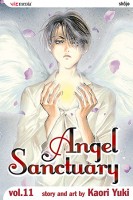
Angel Sanctuary, Volume 11Angel Sanctuary, Volumes 11-15 by Kaori Yuki. It took more than half of the series, but Angel Sanctuary has finally grabbed a hold of me. I’ve enjoyed Yuki’s artwork since the beginning, I’ve always liked the series’ exploration of overarching themes of love, destiny, and personal responsibility, and I can certainly appreciate the tremendous amount of research Yuki has put into creating her mythology, but the story itself has been somewhat of an unfocused mess up until this point. Now things are starting to pull together in a very satisfying way though. I’m actually looking forward to reading the conclusion of Angel Sanctuary instead of just feeling obligated to finish the manga. It’s getting really good and the drama is epic. Yuki still has the tendency to be a little haphazard in her narrative structure, but the series has become much easier to follow. It probably helps that her editors wouldn’t allow her to introduce any more new characters. The cast of Angel Sanctuary is huge, and so it’s understandably challenging to present all of their backstories while maintaining the series’ forward momentum. Fortunately, as it approaches its turbulent end, Angel Sanctuary seems to have found its center and drive.

Manga Dogs, Volume 1Manga Dogs, Volume 1 by Ema Toyama. Up until now, the only other manga that I’ve read by Toyama is her ongoing series Missions of Love, so I wasn’t quite sure what to expect from Manga Dogs. Turns out it’s a very different series, probably best described as gag manga about making manga and the manga industry. While for me it was never laugh-out-loud hilarious, I was generally amused and consistently entertained by the first volume of Manga Dogs. It’s silly fun. Even though she’s only fifteen, Kanna Tezuka recently made her manga debut. Granted, her series isn’t doing so well and is in danger of cancellation. Her high school has a new major specializing in manga, though it’s incredibly poorly run, which is where three pretty boys attach themselves to her. Fumio Akatsuka, Fujio Fuji, and Shota Ishinomori are more interested in the fame and fortune they associate with successful mangaka rather than the sweat and stress it takes to get there, though. As can be seen with the characters’ names, Manga Dogs has plenty of nods and references to established mangaka, but most of the humor comes from the three young men’s misguided efforts to become famous artists without actually putting in any effort.

Prophecy, Volume 1Prophecy, Volume 1 by Tetsuya Tsutsui. Before reading the first volume of Prophecy I actually didn’t know much about the manga except that Vertical was approached to publish it directly by the author. Prophecy is a mature, chilling, and realistic series dealing with cyber crime, social media, how quickly people can turn on one another, and the terrible things that can be done under the guise of anonymity. A small group of vigilantes are taking matters into their own hands, viciously striking out against those who have trespassed against others online. While their methods are extreme, their motivation is easy to understand and even empathize with; the world can be a cruel, cruel place. It’s an entirely different sort of case than the members Anti Cyber Crimes Division of the Metropolitan Police are usually involved in. Specializing in internet crime, they more commonly deal with copyright and intellectual property infringement. But in this particular war of information, people’s lives are at stake, not just their livelihoods. The first volume of Prophecy was exceptional. In my opinion, it’s one of the strongest series to debut this year. I’ll definitely be picking up the rest of the manga.

Filed Under: FEATURES, My Week in Manga Tagged With: angel sanctuary, Ema Toyama, Kaori Yuki, manga, Manga Dogs, Prophecy, Tetsuya Tsutsui

My Week in Manga: November 24-November 30, 2014

December 1, 2014 by Ash Brown

My News and Reviews

Last week was a busy week for me as I was traveling and such for the Thanksgiving holiday, but Experiments in Manga had quite a few things going on, too. The most recent manga giveaway was posted and there’s still time to enter for a chance to win a Seven Seas Sampler–four first volumes of some of Seven Seas’ manga series. I also posted two reviews last week. First up was Yu Godai’s novel Quantum Devil Saga: Avatar Tuner, Volume 1 which I loved. It’s based on the same story as Digital Devil Saga, a spinoff of the Shin Megami Tensei video game series. I also reviewed Ryosuke Takeuchi and Takeshi Obata’s All You Need Is Kill manga adaptation of Hiroshi Sakurazaka’s original All You Need Is Kill novel. I think the novel is the stronger of the two, but I enjoyed the manga as well. Last week I also joined in with the other Manga Bookshelf bloggers for a roundtable on food manga over at MangaBlog.

I should also probably mention that the votes have been tallied for my next monthly manga review project. After School Nightmare took an early lead, but it ended up being a very close contest between it and Dorohedoro and Mushishi. And in the end, After School Nightmare and Mushishi actually tied with each other! So, I’ve decided to review both manga. There are a few different ways to approach this, but beginning with After School Nightmare, each month I’ll alternate between the two series. If everything goes according to schedule, it should take me a year and a half to complete the review project. Thank you to everyone who participated in the poll! I was very glad to see interest expressed in all of the series to which I had narrowed down the vote. I’ll be sure to keep in mind the other series that were strongly supported and try to feature them as best as I can, too. I wish that I had more time to read and write!

Elsewhere online, Organization Anti-Social Geniuses had a couple of posts that I found particularly interesting last week–an interview with Abigail Blackman, one of Yen Press’ editors and letterers, and a discussion of some of the fears of buying manga from U.S. publishers. Digital Manga has launched yet another Osamu Tezuka manga Kickstarter, though one that seems much more reasonable than the last failed project. This time, Digital Manga is trying to raise funding for the publication of Tezuka’s Ludwig B, an unfinished manga series about Beethoven. (In part because of my background in music, I’m actually really interested in Ludwig B.) I’d also like to bring a little attention to an effort started by Becca Hillburn–a group for Western Shoujo Comic Artists. More about it and the endeavor to create a network of support for manga-influenced artists can be read at Hillburn’s website Nattosoup: Solidarity and the American Shoujo/Josei Comic Scene.

Quick Takes

Alice in the Country of Hearts, Omnibus 1Alice in the Country of Hearts, Omnibus 1 (equivalent to Volumes 1-2) by Soumei Hoshino. Based on an otome game by Quin Rose, Hoshino’s Alice in the Country of Hearts is one of many manga adaptations and spinoffs. Originally the series was partially released in English by Tokyopop, but the license was later rescued by Yen Press. Despite hearing good things about Alice in the Country of Hears, one of the reasons it took me so long to give the manga a try was the sheer number of volumes associated with the franchise. I’m glad that I finally got around to reading the first omnibus, though, because I loved it. At first, Alice in the Country of Hearts seems like a fairly straightforward re-imagining of Lewis Carroll’s Alice’s Adventures in Wonderland. (Granted, many of the characters are now bishōnen of various types.) But it soon becomes clear that something very ominous and disconcerting is brewing under the story’s surface. Alice has been transported to Wonderland and if she ever wants to return home she will have to get to know its residents better. Although they are participating in some sort of game to win her affections, those who live in Wonderland are prone to violence and have a very different sense of what is normal.

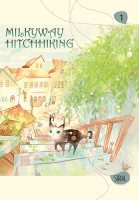
Milkyway Hitchhiking, Omnibus 1Milkyway Hitchhiking, Omnibus 1 (equivalent to Volumes 1-2) by Sirial. Although occasionally the same characters make an appearance in multiple stories, Milkyway Hitchhiking is generally an episodic manhwa. The only thing that really ties the volume together is the presence of Milkyway, a beautiful cat who can apparently travel through space and time. She may or may not actually play an active role in the stories being told. Sometimes she’s just an observer and sometimes she’s a participant. Sometimes she’s a focal point of a tale and sometimes she simply happens to be present while events unfold around her. The most striking thing about Milkyway Hitchhiking is its beautiful, full-color artwork. Some of the individual illustrations are simply stunningly gorgeous. A variety of color palettes are used to lovely effect. While I particularly appreciate Milkyway Hitchhiking for Sirial’s art, I also enjoyed the individual episodes, too. The stories range from the fantastical to those grounded in reality. Some feel very much like something out of a fairy tale while others are contemporary slice-of-life or historical in nature. At times heartwarming and at times heartbreaking, I very much enjoyed Milkyway Hitchhiking and look forward to reading more of the series.

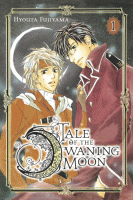
Tale of the Waning Moon, Volume 1Tale of the Waning Moon, Volume 1 by Hyouta Fujiyama. I have a tendency to forget that Yen Press releases boys’ love series. Tale of the Waning Moon is one of those manga. Fujiyama has had quite a few of her works released in English, but I haven’t read any until now. Tale of the Waning Moon is pretty ridiculous. Ryuka is a young man whose girlfriend recently left him for another man. While drowning his sorrows Ryuka accidentally calls upon Ixto, the spirit of the last quarter moon, to grant him true love. The twist is that all of the eligible candidates that Ixto comes up with are men, which doesn’t particularly appeal to Ryuka. The real problem is that when Ryuka rejects those options, he comes under Ixto’s spell and is therefore compelled to leave his village on a quest to reunite with the spirit. From there, Ryuka sets of on his journey, unintentionally amassing an adventuring party of sorts in the process. Tale of the Waning Moon has sex (not all of it consensual) and silliness, magic and mayhem. Inspired and heavily influenced by fantasy RPGs, the manga is definitely more of a comedy than it is a romance. Tale of the Waning Moon is a short series–only four volumes–and the first installment entertained me well enough, so I’ll probably get around to picking up the rest at some point.

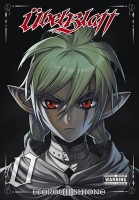
Ubel Blatt, Omnibus 0Übel Blatt, Omnibus 0 (equivalent to Volumes 0-1) by Etorouji Shiono. Übel Blatt, which translates as “evil blade,” has a lot going for it that generally appeals to me–a dark fantasy setting, a tale of revenge, epic battles, and so on–but for some reason, the first omnibus (the zeroth omnibus?) didn’t quite grab me as much as I expected it to. I’m not really sure why, since it seems like a series that should interest me. In fact, overall I actually did like the story. I even like many of the characters, especially its lead. But there were a few little (and big) things here and there that just didn’t work for me. For one, the sexual content and rape in the volume seems entirely unnecessary. It comes across as a superfluous attempt to add more edginess as opposed to being important to the story. Most of the female characters don’t fare particularly well, either. Occasionally there’s a little bit of hope that they’ll overcome their scantily clad fantasy tropes, but it never quite seems to happen. At this point, many of the antagonists in Übel Blatt seem fairly one-dimensional, too, though I suspect that this will change as the series progresses. All that being said, Übel Blatt does feature some excellent fight sequences and scenes of destruction. And while I’m not desperate to read the next volume, the series does show potential.

Filed Under: FEATURES, My Week in Manga Tagged With: Alice in the Country of, Etorouji Shiono, Hyouta Fujiyama, manga, manhwa, Milkyway Hitchhiking, Sirial, Soumei Hoshino, tale of the waning moon, Ubel Blatt

My Week in Manga: November 17-November 23, 2014

November 23, 2014 by Ash Brown

My News and Reviews

Two reviews were posted last week at Experiments in Manga, and a little something else as well! The first review was for the second part of Boogiepop Returns: VS Imaginator, the third volume in Kouhei Kadono’s Boogiepop light novel series. Boogiepop is a rather peculiar series, but I’ve really been enjoying it. And speaking of series that I enjoy, I also reviewed the fifth omnibus of Vinland Saga by Makoto Yukimura. Vinland Saga is an epic work of historical fiction, and one of my favorite manga series currently being released in English. And, as promised, last week I also posted a poll so that readers of Experiments in Manga can help pick my next monthly manga review project. I’ve narrowed the choices down to five horror manga options, and now it’s up to you to vote. The poll will be open through the end of November.

A few things of note that I encountered online last week: It was brought to my attention that Akino Kondoh’s collection Nothing Whatsoever All Out in the Open is now available to order. Publishers Weekly has a great list of 12 Awesome Comics about Outer Space compiled by Matt White which includes Makoto Yukimura’s Planetes, Chūya Koyama’s Space Brothers, and Yukinobu Hoshino’s 2001 Nights, which are all excellent choices. Finally, Johanna Draper Carlson has a nice recap of the recent Digtial Manga Tezuka Kickstarter debacle/failure over at Manga Worth Reading.

Quick Takes

Angel Sanctuary, Volume 6Angel Sanctuary, Volumes 6-10 by Kaori Yuki. Halfway through the series, and I still find Angel Sanctuary a bit frustrating and confusing. It’s difficult to follow because there is so much going and and there are so many characters, with even more being introduced in these volumes Angel Sanctuary is incredibly ambitious, but I’m afraid that Yuki has bitten off too much to chew; the series would be stronger with a little more focus. Even though it seems like Yuki is making things up as she goes along, her author’s notes would seem to indicate that she actually does have a plan and even the major plot twists were developed well in advance. To the reader, though, it feels like they come out of nowhere. If anything, it should be very clear by this point in the series that you really can’t trust any of the characters. They all have their own ambitions and motivations, so it’s almost impossible for any of them to be considered allies for a long period of time. I can’t deny that Angel Sanctuary is extraordinarily dramatic, and a string of betrayals continues to up the stakes. And even though the story is all over the place, I do still really enjoy Yuki’s gothic artwork.

Barakamon, Volume 1Barakamon, Volume 1 by Satsuki Yoshino. Seishuu Handa is a young, award-winning calligrapher who, after handling a critique of his work quite poorly, has been encouraged by his father to at least temporarily retire to the remote Gotō Island. Thus begins Barakamon, a fairly low-key comedy that’s part slice of life and part gag manga. Much of the humor either revolves around Seishuu, a city boy, being so out-of-place in the countryside, or Naru, a young, energetic troublemaker who’s grown rather attached to “Sensei.” Though generally amusing, Barakamon is never quite as funny as I actually want it to be. I’ll admit though, since I grew up in a rural village myself, I couldn’t help but feel a little bit satisfied when Seishuu gets shown up by the island’s residents, especially because he thinks so little of them to begin with. I can appreciate Seishuu’s struggles as an artist, too, though I can’t say that I like him very much as a person, yet. But, I suspect that’s what Barakamon is in part about–Seishuu becoming a better person after some much-needed self-reflection. While no means exceptional in art or story, I did largely enjoy the first volume of Barakamon and plan on continuing the series for a least another few volumes.

Smut Peddler 2014Smut Peddler 2014 by Various. After being revived in 2012, Smut Peddler is back again in 2014 with a second collection of short, erotic comics. Some of the contributors are new to Smut Peddler while others are returning to the series. Smut Peddler 2014 includes twenty-five comics from thirty-two artists and writers. Although some of the individual comics are phenomenal, overall I think the first collection is the stronger of the two. Even so, Smut Peddler remains one of the best series for diverse, sex-positive, lady-friendly, queer-friendly, kink-friendly erotic comics. There’s straight sex, and queer sex. There’s modest sex and flamboyant sex. Sweet sex and spicy sex. Sex with humor and sex with solemnity. And there’s everything in between, too. With the inclusion of a few science fiction and fantasy tales, there’s also alien and inter-species sex, which is always fun. I was particularly pleased to see how many transgender and/or nonbinary narratives were included in the 2014 edition of Smut Peddler. The sheer variety of genres, styles, characters, and stories found in Smut Peddler is one of the highlights of the series. The fact that the creators are just as diverse as their comics makes it even better.

Filed Under: FEATURES, My Week in Manga Tagged With: angel sanctuary, Barakamon, comics, Kaori Yuki, manga, Satsuki Yoshino, Smut Peddler

My Week in Manga: November 10-November 16, 2014

November 17, 2014 by Ash Brown

My News and Reviews

Last week I posted two reviews at Experiments in Manga. The first review of was of Ajin: Demi-Human, Volume 1 written by Tsuina Miura and illustrated by Gamon Sakurai. It’s a manga with a rather dark atmosphere that deals with immortals, which is right up my alley. The first volume was a good start to the series; I’m looking forward to seeing how it continues to develop. The second review was of The Legend of Bold Riley, created by Leia Weathington and illustrated by a number of different artists. The review was actually the final review in my Year of Yuri project, so over the weekend I posted a wrap-up for the project as a whole. Later this week, most likely on Friday, a poll will go live so that readers of Experiments in Manga can vote to help me select my next monthly review project.

I came across a few fun and interesting things elsewhere online last week, too. Mangabrog has a translation of a conversation between Katsuhiro Otomo and Takehiko Inoue from 2012. Kate Beaton posted the second part of her collection of comics based on Natsume Sōseki Kokoro (a novel that I’ve reviewed in the past). The Ceiling Gallery posted “Girl Talk”, an article about “the life, friends and music of manga author Okazaki Kyoko” which is well worth reading. Anna Madill, a professor at The University of Leeds, is currently conducting research into boys’ love fandom. If you’re an English-speaking boys’ love fan, please consider assisting her research by completing a brief BL Fandom Survey.

Quick Takes

Lucifer and the Biscuit Hammer, Omnibus 1Lucifer and the Biscuit Hammer, Omnibus 1 (equivalent to Volumes 1-2) by Satoshi Mizukami. I really wasn’t sure what to expect from Lucifer and the Biscuit Hammer, but I ended up enjoying the first volume immensely. One morning, college student Amamiya Yuuhi wakes up to discover a talking lizard in his bed, requesting his help to protect a princess destined to save the world from an evil mage bent on destroying Earth by using a giant hammer floating in space. Despite his initial reluctance to get involved in the whole mess, Yuuhi decides to become her knight because of one simple fact: The only reason Samidare (who need little protection) wants to save the world is so that she can destroy it herself. Much like its title, Lucifer and the Biscuit Hammer is kind of strange. Both the characters and story are quirky, a little goofy, and rather bizarre. The manga is also quite a bit darker than it first appears; the characters are all revealed to have twisted pasts and tragedies to work through. It’s particularly interesting to see protagonists who are closer to being supervillians than superheros. I’m still not entirely sure where Lucifer and Biscuit Hammer is heading, but I’m really looking forward to reading more of the series and finding out.

My Japanese Husband Thinks I'm Crazy!My Japanese Husband Thinks I’m Crazy by Grace Buchele Mineta. A companions of sorts to her blog Texan in Tokyo, My Japanese Husband Thinks I’m Crazy! is a collection of autobiographical comics and essays about Mineta’s life in Japan, her work as a freelancer, and her intercultural marriage. I’ll admit, I haven’t actually read much of Texan in Tokyo, but the comics made me laugh, so I decided to pick up the book. Some of the material collected is new to the volume while other material comes directly from the blog. My Japanese Husband Thinks I’m Crazy! is a wonderfully amusing and at times even enlightening collection. The main “characters” are Mineta herself, her salaryman husband Ryosuke, and Marvin–a talking rabbit who’s a figment of her imagination, the result of “stress, coffee, and loneliness from being a freelancer in Tokyo.” The comics are sweet, charming, and short, generally only a single page consisting of a few panels. Many of the comics are personal in nature, but some of Minata’s experiences are certainly shared by other foreign residents and visitors to Japan. My Japanese Husband Thinks I’m Crazy! is a fun way to learn little tidbits about Japan and Japanese culture.

Yakuza in Love, Volume 1Yakuza in Love, Volumes 1-3 by Shiuko Kano. Despite being one of the boys’ love creators with the most manga published in English, which I assume would be an indicator of her popularity, I generally find Kano’s work to be fairly hit-or-miss with me. Sadly, Yakuza in Love largely falls into the miss category. The short series is one of Kano’s earliest works, and it shows. The pacing is all over the place and frequently rushed, the action is difficult to follow, the sex and supposed romance doesn’t always mesh with the story, the plot doesn’t distinguish itself from any other generic yakuza-themed boys’ love manga, and she can’t quite seem to decide if she’s going for comedy or drama. She probably should have stuck with the humor–as a whole, Yakuza in Love simply doesn’t work as well when it takes itself too seriously. It wasn’t all bad, though. Just perhaps a little too ambitious. The best part of Yakuza in Love is actually all of the extras at the end which take up the last half of the third volume. Kano relaxes and just has fun with her characters, actually giving them more depth while parodying her own story. As a result, the extras end up being much more enjoyable.

Monthly Girls' Nozaki-kunMonthly Girls’ Nozaki-kun directed by Mitsue Yamazaki. Based off of an ongoing yonkoma manga series by Izumi Tsubaki, Monthly Girls’ Nozaki-kun is an absolutely delightful twelve-episode anime series. The titular Nozaki is a tall, stoic, and slightly oblivious high school student who, despite what most people would assume from his appearance, also happens to be a published shoujo mangaka. Sakura has a crush on Nozaki, but when she tries to confess her love to him she somehow winds up as one of his assistants instead. Monthly Girls’ Nozaki-kun is a very funny and enjoyable series which freely plays around with shoujo manga tropes and character types. Nozaki finds inspiration for his manga from the other students at school, usually in slightly unexpected ways. He’s also amassed a handful of assistants in addition to Sakura, all with their own quirks and relationship problems which provide plenty of material for Nozaki to work with which eventually ends up in his manga. For the most part the anime tends to be fairly episodic, though there are several recurring characters and running jokes. Overall, the series is a tremendous amount of fun with a large cast of likeable characters.

Filed Under: FEATURES, My Week in Manga Tagged With: anime, comics, Grace Buchele Mineta, Lucifer and the Biscuit Hammer, manga, Monthly Girls' Nozaki-kun, Satoshi Mizukami, Shiuko Kano, Yakuza in Love

My Week in Manga: November 3-November 9, 2014

November 10, 2014 by Ash Brown

My News and Reviews

Last week at Experiments in Manga the winner of the Sherlock Bones manga giveaway was announced. As usual, I took the opportunity to compile a list of manga as well, in this case a list of manga available in English that feature detectives or other crime solvers. I also posted two reviews last week. The first review was of No. 6, Volume 9, the final volume of Hinoki Kino’s No. 6 manga adaptation. I’m happy to report that the manga has a much less rushed and much more complete ending than the anime adaptation had. And for something completely different, I also reviewed Ivan Morris’ translation of The Pillow Book of Sei Shōnagon last week. It may have been written in the tenth and eleventh centuries, but it’s still an engaging and enjoyable work.

Interesting reading found elsewhere online included a look at some of the most completely collected manga series in Japan, many of which have been licensed in English in whole or in part. (I was happy to see some of my personal favorites, like Parasyte and Hikaru no Go on the list.) Brigid Alverson has a nice overview of the current state of the manga industry in North America for School Library Journal. And over at A Case for Suitable for Treatment, Sean Gaffney has a roundup of some of the recent manga licenses from various publishers. There are also two surveys that are going on right now. Viz has its Fall 2014 Anime and Manga Survey and Vertical has its first ever light novel survey. Last but not least, Khursten Santos of Otaku Champloo has an excellent writeup of the Manga Futures conference recently held in Australia.

Quick Takes

Black Jack, Volume 14Black Jack, Volumes 14-17 by Osamu Tezuka. It’s a shame that much of Black Jack has gone out of print. Fortunately, Vertical announced just last week that it will be publishing ebooks of all its Tezuka manga, so readers who missed Black Jack in print will at least be able to read it digitally. Even though Black Jack isn’t my favorite Tezuka manga, I enjoy the series immensely and Black Jack is one of my favorite Tezuka characters. He can be a bit of a bastard, but there’s usually a reason for it and it tends to mostly be a cover for his extraordinary compassion. He’s also amazingly skilled. Some of the stories in Black Jack are fairly improbable although still highly entertaining while others are actually quite realistic. (Tezuka’s medical training comes in very handy for Black Jack.) Plastic surgery, specifically surgeries that are intended to change or hide a person’s identity, are particularly prominent in these final volumes. It provides an interesting contrast to Black Jack himself who rarely denies who he is. The seventeenth volume in Vertical’s edition of Black Jack also includes a handy guide to the publication history of the individual chapters.

Black Rose Alice, Volume 2Black Rose Alice, Volume 2 by Setona Mizushiro. I absolutely loved the first volume of Black Rose Alice and I remained captivated by the second. It’s a strange, dark, and disconcerting series. Mizushiro’s vampires are completely different from any other type of vampire that I’ve come across in fiction. I do like that, but it’s also challenging since readers can’t rely on an already established mythos or assume what it actually means to be a vampire; Mizushiro has to explain it all. I’m not sure that I actually understand everything that is going on with the vampires yet, but I’m assuming that more will be revealed as the series progresses. One thing is certain, though: they are definitely very creepy. In exchange for the life of the young man with whom she is in love, Azusa has entered into an agreement with a nest of vampires. Out of the four vampires, she must choose one to procreate with after which they will both die. The relationship dynamics are bizarre, and honestly a little discomforting, but very compelling as the vampires vie for her affections. It’s not as simple as choosing one of the vampires; in order to fulfill her agreement, she will actually have to come to love them. I’m really looking forward to reading more of Black Rose Alice.

Same DifferenceSame Difference by Nozomu Hiiragi. Tsuburaya and Ozaki are the elite of the elite, and both adored by the women at the company where they work. (So much so that the ladies literally swoon in their presence.) However, Ozaki isn’t used to sharing the attention, and so decides to make Tsuburaya fall in love with him, unintentionally falling for Tsuburaya in the process. Out of the two of them, Ozaki is more muscular and crude while Tsuburaya is more elegant and refined. Despite arguably being the more masculine and aggressive of the pair, Ozaki is often the one being out-maneuvered by Tsuburaya in their seemingly antagonistic relationship. It’s not that Tsuburaya dislikes Ozaki–quite the opposite, actually–it’s just that he has a sadistic streak and enjoys making the other man squirm. Same Difference is definitely played for laughs more than romance. Apparently the manga is actually an ongoing series that’s currently up to three volumes in Japan, which I hadn’t realized while reading it. Unfortunately, only the first volume has been licensed in English at this point. Honestly, I wouldn’t mind reading more of the series. It doesn’t have the most subtle, nuanced, or realistic characters or story, but it’s amusingly ridiculous and doesn’t take itself seriously at all.

Filed Under: FEATURES, My Week in Manga Tagged With: black jack, Black Rose Alice, manga, Nozomu Hiiragi, Osamu Tezuka, Setona Mizushiro

My Week in Manga: October 27-November 2, 2014

November 3, 2014 by Ash Brown

My News and Reviews

October is finally over, and I somehow managed to survive! I’ve been extremely busy at work which bled over into the rest of my life and has interfered with a lot of things that I would otherwise rather be doing. I’m really hoping that my stress levels and schedule settle down a bit in November, but my immediate supervisor is retiring in December and I’ll be taking on some more responsibilities in my unit (at least temporarily), so we’ll see how that goes! Anyway, I was somehow able to keep on top of my posts here at Experiments in Manga. The most recent manga giveaway is currently in progress and there’s still time to enter for a chance to win Sherlock Bones, Volume 1. Since this past Friday was Hallowe’en, I decided it would be appropriate to review Junji Ito’s manga Uzumaki: Spiral into Horror. It’s been deservedly called a masterpiece, and the deluxe omnibus edition is especially nice. And over the weekend, I posted October’s Bookshelf Overload for those of you interested in what made it onto my bookshelves last month. I’m sure there was plenty of interesting reading to be found online, but I’m afraid I’ve been so busy I haven’t been able to pay much attention recently. Let me know if I missed something particularly good!

Quick Takes

Angel Sanctuary, Volume 1Angel Sanctuary, Volumes 1-5 by Kaori Yuki. It’s pretty clear after reading the first few volumes of Angel Sanctuary that this manga is going to be epic, for better or for worse. Angel Sanctuary has a huge cast (most with multiple names and multiple identities) and easily enough material for several completely different and unrelated series. So much is crammed into the early volumes that I’m afraid that Yuki might be trying to do too much at once with the manga. Though he is initially unaware of it, Setsuna is the reincarnation of the angel Alexiel, fated to suffer for her past deeds life after life. This causes significant problems for him–other angels and demons are searching for Alexiel,  some to reawaken her soul and some to completely destroy her. But even more problematic is Setsuna’s incestuous love for his younger sister Sara. So far the story is somewhat confusing and difficult to follow, albeit with moments of brilliance. However, I do consistently enjoy Yuki’s gothic artwork, tragic melodrama, and gender play. Many of Yuki’s angels also happen to be sexist assholes, completely capable of murder, deception, and greed, which is certainly an interesting take on the celestial beings.

The Flowers of Evil, Volume 10The Flowers of Evil, Volumes 10-11 by Shuzo Oshimi. Several years have passed since the incident in Kasuga’s hometown and his tumultuous relationship with Nakamura. The time has now come for him to face everything that he has done in his past and to confront how his actions have affected the people in his life–his family, his former classmates, his girlfriend, and most importantly himself. Up until now, he has been unable to move on with his life. His past, though he tries to hide it or run away from it, still defines who he is. The finale of The Flowers of Evil is a very effective exploration of personal identity and responsibility. Oshimi’s artwork, while never awful, has improved tremendously since the beginning of the series. This is particularly important for the last two volumes of The Flowers of Evil since large portions of the manga are completely without dialogue or narration; the art must be strong enough to carry the story entirely on its own, and it succeeds in that. The Flowers of Evil is a surprising series, ending with a very different tone and in a very different place than where it first began. It was quite a journey and it was worth every page.

Free!: Eternal SummerFree!: Eternal Summer directed by Hiroko Utsumi. I rather enjoyed the first season of Free! and was pleasantly surprised to discover that in addition to its goofiness the anime series actually had some substance to it. And so I was looking forward to watching its second season, Eternal Summer. A lot of the humor and drama in the second season comes from the introduction of several new characters. It was a little strange to have best friends suddenly appear when I’m pretty sure they weren’t even hinted at in the first season, but I ended up really liking the additions to the cast. Although most of the characters see some development, most striking is how much Rin has changed from the first season. His anger and angst is mostly gone and he’s become fairly chill, although he’s still very passionate about swimming. It’s a passion that he shares with the other swimmers in the anime, but each has his own approach and way of expressing it. They really don’t always make the best, wisest, or most mature decisions, though. (Not that I would expect that teenagers would.) Driving the narrative of Eternal Summer is the characters’ struggles and searches for their dreams and futures. The season provided a very satisfying conclusion to Free!.

Filed Under: FEATURES, My Week in Manga Tagged With: angel sanctuary, anime, Flowers of Evil, Free, Kaori Yuki, manga, Shuzo Oshimi

  • « Go to Previous Page
  • Page 1
  • Interim pages omitted …
  • Page 9
  • Page 10
  • Page 11
  • Page 12
  • Page 13
  • Interim pages omitted …
  • Page 17
  • Go to Next Page »
 | Log in
Copyright © 2010 Manga Bookshelf | Powered by WordPress & the Genesis Framework