• Skip to primary navigation
  • Skip to main content
  • Skip to primary sidebar
  • Home
  • About Us
    • Privacy Policy
    • Comment Policy
    • Disclosures & Disclaimers
  • Resources
    • Links, Essays & Articles
    • Fandomology!
    • CLAMP Directory
    • BlogRoll
  • Features & Columns
    • 3 Things Thursday
    • Adventures in the Key of Shoujo
    • Bit & Blips (game reviews)
    • BL BOOKRACK
    • Bookshelf Briefs
    • Bringing the Drama
    • Comic Conversion
    • Fanservice Friday
    • Going Digital
    • It Came From the Sinosphere
    • License This!
    • Magazine no Mori
    • My Week in Manga
    • OFF THE SHELF
    • Not By Manga Alone
    • PICK OF THE WEEK
    • Subtitles & Sensibility
    • Weekly Shonen Jump Recaps
  • Manga Moveable Feast
    • MMF Full Archive
    • Yun Kouga
    • CLAMP
    • Shojo Beat
    • Osamu Tezuka
    • Sailor Moon
    • Fruits Basket
    • Takehiko Inoue
    • Wild Adapter
    • One Piece
    • After School Nightmare
    • Karakuri Odette
    • Paradise Kiss
    • The Color Trilogy
    • To Terra…
    • Sexy Voice & Robo
  • Browse by Author
    • Sean Gaffney
    • Anna Neatrour
    • Michelle Smith
    • Katherine Dacey
    • MJ
    • Brigid Alverson
    • Travis Anderson
    • Phillip Anthony
    • Derek Bown
    • Jaci Dahlvang
    • Angela Eastman
    • Erica Friedman
    • Sara K.
    • Megan Purdy
    • Emily Snodgrass
    • Nancy Thistlethwaite
    • Eva Volin
    • David Welsh
  • MB Blogs
    • A Case Suitable For Treatment
    • Experiments in Manga
    • MangaBlog
    • The Manga Critic
    • Manga Report
    • Soliloquy in Blue
    • Manga Curmudgeon (archive)

Manga Bookshelf

Discussion, Resources, Roundtables, & Reviews

Features

My Week in Manga: July 18-July 24, 2016

July 24, 2016 by Ash Brown

My News and Reviews

Other than the regular My Week in Manga feature, there were no posts from me last week at Experiments in Manga. I was, however, able to make some progress on my review for the final volume of Setona Mizushiro’s manga series After School Nightmare. I hope to finish and post the review in the very near future, and then officially wrap up my horror manga review project.

Elsewhere online last week, I came across two interesting interviews: a translation of a 2006 conversation between Taiyo Matsumoto and Fumiko Takano as well as an interview with Kazue Kato, creator of Blue Exorcist, from Anime Expo 2016. The San Diego Comic Con took place over the weekend and there were a few licensing announcements to come out of the event: Kodansha Comics is planning a deluxe edition of Masamune Shirow’s Ghost in the Shell; Udon Entertainment has acquired Yuztan’s Dragon Crown manga adaptation in addition to more artbooks, Manga Classics, and a Street Fighter novel; and Viz Media will be releasing a Princess Mononoke artbook as well books based on RWBY.

Finally, in part due to a suggestion made by a regular reader of Experiments in Manga, I’d like to start more regularly mentioning some of the crowdfunding projects that I’m either supporting or that have caught my eye. In the past, I’ve tended to only mention projects that were directly or tangentially related to manga in some way, but I’d like to begin highlighting other campaigns as well. And so! Natasha Alterici is raising funds for the second volume of Heathen, a beautifully illustrated comic about lesbian Vikings. Jason Thompson, author of Manga: The Complete Guide and a comic creator in his own right, is printing a poster map of alien invaders. Bones of the Coast is an anthology of horror comics inspired by the Pacific Northwest.

I’d also like to take this opportunity to give the Sparkler Monthly Year 4 campaign another shout out. (If you follow me on Twitter, that’s pretty much all I’ve been doing for the last week or so, and will probably continue to do so for a while.) I really love everything that Sparkler Monthly/Chromatic Press is doing, and will be legitimately heartbroken if the Kickstarter doesn’t succeed.

Quick Takes

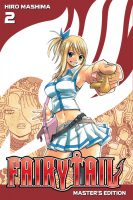
Fairy Tail, Omnibus 2Fairy Tail, Omnibus 2 (equivalent to Volumes 6-10) by Hiro Mashima. When I first started reading Fairy Tail, I ended up jumping into the series around the twenty-fifth volume. Fairy Tail has a huge following, but it just didn’t seem to click with me. However, now that I’ve read some of earlier volumes, I think I finally more fully understand the appeal of the series. Fairy Tail is a fun and exciting manga with likeable characters and an emphasis on friendship and found family. One of my complaints about Fairy Tail in the past has been that it often seems directionless. Even this early in the series Mashima readily admits to making things up as the he goes with no concrete plan in place. He even seemed surprised when he realized that the series would reach ten volumes. (And it’s now over fifty and still ongoing.) Interestingly, this lack of direction didn’t seem to bother me as much as it has before, I think in part due to the fact that Mashima spends a fair amount of second omnibus exploring the main characters’ back stories which provided the needed amount of focus. I liked getting to know the characters better, something I missed out on by starting with a later story arc. Also, Kodansha’s massive, oversized “Master’s Edition” omnibuses show off Mashima’s artwork and are a great way to catch up on the series.

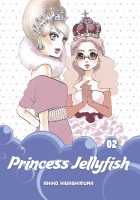
Princess Jellyfish, Omnibus 2Princess Jellyfish, Omnibus 2 (equivalent to Volumes 3-4) by Akiko Higashimura. I am still incredibly happy that Kodansha Comics is releasing a print edition of Princess Jellyfish. I’m also glad that the series seems to be worth the risk and is doing fairly well for the publisher so far. I am especially looking forward to reaching the parts of the story that weren’t included in the anime adaptation. While there are some differences, for the most part the second omnibus fall entirely into what was adapted for the anime. Because of that I’m not at all surprised by any of the plot developments, but I still am thoroughly enjoying the story and characters. I also get a kick out of the visual nods to classic shoujo manga that Higashimura scatters throughout the series, usually when something particularly dramatic is going on. Princess Jellyfish is probably first and foremost a comedy, but through its humor it explores issues of gender roles and expectations. There is a fair amount of relationship drama, too. At this point in the series, Kuranosuke is trying to come up with a plan to raise the funds needed to save the Amamizukan apartments from being demolished and in doing so becomes more and more attached to Tsukimi. As for Tsukimi, she’s dealing with her own personal and romantic turmoils.

A Silent Voice, Volume 7A Silent Voice, Volume 7 by Yoshitoki Oima. The first volume of A Silent Voice left a huge impression on me, and the series as a whole has consistently been one of the strongest stories that I’ve recently read. Granted, A Silent Voice isn’t always an easy read and the subject matter can be pretty heavy. Bullying, depression, social anxiety, suicide attempts, and other tough issues all come into play. Oima isn’t afraid to let the relationships between the characters be extremely messy and complicated. I especially appreciate that Oima doesn’t just slap romance on the situation like magical bandage that will fix everything or erase the misdeeds of the past. From time to time, I was a little worried that might happen, but A Silent Voice takes a more nuanced and much less stereotypical route with the story. If anything, the romantic feelings just complicate matters further. The characters themselves are realistically and believably flawed people. Frankly, they can even be unlikeable, they still remain interesting and compelling. Many of them are struggling with mistakes that they have made and are dealing with devastating regret. But by the end of the series, the characters able to begin to look forward towards the future instead of wallowing in what can’t be changed; their pasts have shaped who they are, but won’t be the only thing that defines them.

Filed Under: FEATURES, My Week in Manga Tagged With: Akiko Higashimura, Fairy Tail, Hiro Mashima, manga, Princess Jellyfish, Silent Voice, Yoshitoki Oima

Manga the Week of 7/27

July 21, 2016 by Sean Gaffney, Michelle Smith, Anna N and Ash Brown Leave a Comment

SEAN: You know the drill. Last week of the month, piles and piles of titles, let’s get right to it.

Dark Horse gives us a 2nd volume of Dangan Ronpa: The Animation, whose awkward subtitle lets you know it’s based on that rather than the game.

And they also have a 4th Oh My Goddess omnibus, which is warring with Dragon Ball for most re-releases.

emeraldas1

This is my featured manga this week, and I guarantee it’s my pick of the week as well. The first omnibus volume of Queen Emeraldas is coming from Kodansha Comics, and I’ve heard it looks gorgeous. Matsumoto’s manga is always amazing, and don’t let the age of the material stop you – this is top tier.

MICHELLE: So excite!

ANNA: I am also very, very excited!

ASH: Definitely picking this one up!

SEAN: Also from Kodansha, we have a 3rd volume of Real Account.

ASH: As far as manga with games of life and death go, this series actually manages to be pretty interesting.

SEAN: The other Kodansha debut is Sweetness and Lightning, which runs in good! Afternoon, and apparently lives up to the sweet part of its name. It was a Crunchyroll title that Kodansha then decided to take to print. The author is much better known for BL titles, which this isn’t.

MICHELLE: I’m looking forward to this, as well!

ASH: A food manga featuring a single dad and his adorable kid? I’m in.

SEAN: And there is a 9th volume of Yamada-kun and the Seven Witches, currently in the middle of a very dramatic arc.

ASH: That it is! I just recently caught up with the series, and I’m curious to see where it goes.

SEAN: Seven Seas has a 4th volume of college romance and drama Golden Time.

We also have the 4th and final volume of Haven’t You Heard? I’m Sakamoto, which is ending at just about the right time, I think.

ASH: I’m glad Seven Seas took a chance on this series.

SEAN: Vertical has the 2nd volume of vampire thriller Devils’ Line.

hounds1

They also debut Immortal Hounds, a violent supernatural thriller that runs in Enterbrain’s Harta magazine. If you liked Ajin and the like, you should enjoy this.

And now for Yen. Only one digital-only title this month, the 5th volume of Crimson Prince.

For print, we have a 7th volume of capital-letter loving (or just English loan-word loving) Akame Ga KILL!.

A manga debut based off a light novel that comes out next month, The Asterisk War is a fantasy series with magic and swords, much like every other series licensed in the past 3 years or so. Its manga runs in… groan… Comic Alive.

Speaking of manga that make me groan, BTOOOM! is somehow at 14 volumes, and more are coming.

MICHELLE: Ugh.

SEAN: A Certain Magical Index has its 6th manga volume. It’s adapting Accelerator and Last Order, should be good.

And The Devil Is A Part-Timer! also has its 6th manga, which is only up to the 3rd book, because it’s not jettisoning some novels the way Index did.

The final volume of Final Fantasy Type-0 Side Story, Volume 5, means I can stop making lame soccer-based jokes.

Fruits Basket gets a 3rd Collectors’ Edition, which will collect the 5th and 6th volumes. It will feature a very awkward but true discussion of how school bullying really works in Japan.

MICHELLE: And Shigure looks fetching on the cover.

ANNA: More Fruits Basket is always a good thing!

SEAN: Horimiya has a 4th volume of romantic sweetness – will things finally get taken further?

ASH: I really need to catch up on this series! The first volume was delightful.

SEAN: How to Raise a Boring Girlfriend reaches Vol. 3, and the boring girlfriend is still the major issue with this.

Kagerou Daze has a 6th manga volume, and I’ve honestly lost track of which LN volume it’s adapting.

And a 5th omnibus of Karneval comes next week as well.

liselotte1

The debut I’d be most excited about were it not for Queen Emeraldas is Liselotte & Witch’s Forest, the current series (though I think it’s on hiatus for health reasons) by Natsuki Takaya, creator of Fruits Basket. It runs, when active, in Hana to Yume.

MICHELLE: And a third debut I’m eagerly anticipating. All of these fab new series almost salve the pain of what we lost when various companies folded in recent years. I’ll never stop pining for Silver Diamond, though.

ANNA: Ah, I’m looking forward to this, although series on hiatus always make me nervous. Also, if Michelle is going to shout out Silver Diamond, I am going to take a moment of silence for Demon Sacred.

MICHELLE: I still haven’t given up hope!

SEAN: Log Horizon’s harem-influenced spinoff The West Wind Brigade has a 3rd volume.

And there’s a 4th omnibus of hard-to-read but fascinating Prison School.

ASH: Yup.

SEAN: And for those who wished Jeanne D’Arc’s life was just as tragic but had more magical girls, there’s the 3rd Puella Magi Tart Magica manga.

Re: Zero had its novel debut last week, so look to that post for a description. Here’s Vol. 1 of the manga, which runs in Big Gangan.

Lastly, there is a 3rd Taboo Tattoo, one of manga recent series that have an anime running at the same time.

Exhausted yet? That’s a whole lotta spicy manga. You’ll need alka-seltzer.

Filed Under: FEATURES, manga the week of

My Week in Manga: July 11-July 17, 2016

July 18, 2016 by Ash Brown

My News and Reviews

I finally did it! I actually managed to finish a longer, in-depth feature. The first since I announced the need to scale back on my blogging. It’s been about a month, the last in-depth post being my review of Yui Sakuma’s Complex Age, Volume 1. (Which I suppose thematically may have been oddly appropriate.) Anyway! Last week I posted a new Adaptation Adventures feature, this time focusing on the Mushishi manga, anime adaptations, and live-action film. I actually really enjoy writing these longer non-review features, so it made me very happy to be able to post a new one! The Mushishi Adaptation Adventures post is part of my (at one point monthly) horror manga review project. There’s only one more review to go, the final volume in Setona Mizushiro’s After School Nightmare, and then I’ll be able to bring the project to a close, so I’ll likely be focusing on that for my next in-depth post.

Elsewhere online, last week I came across a few interesting interviews: Oprainfall has a brief interview with Naoshi Arakawa, the creator of Your Lie in April, from Anime Expo. Crunchyroll posted an interview with Reo Kurosu, the producer of the newest Berserk anime adaptation, also from Anime Expo. And over at Okazu, Takarazuka Week begins with an interview with Ako Dachs, a former troupe member. Also, though not an interview, there is a free online course from Keio University that looks incredibly interesting: Japanese Culture through Rare Books. The class just started today, so there’s still time to register!

Quick Takes

Franken Fran, Omnibus 2Franken Fran, Omnibus 2 (equivalent to Volumes 3-4) by Katsuhisa Kigitsu. While I wasn’t quite as taken with the second omnibus as I was with the first, I am still enjoying Franken Fran a great deal and definitely plan on reading more of the series. It’s not nearly as fanservice-y a series as the covers might indicate, although there is still some amount of nudity and sexually charged imagery and themes. Sadly, I do know of some people who would likely enjoy the manga who are hesitant to try it simply because of the salacious nature of the cover artwork. For the most part though, Franken Fran is just good, wholesome(ish), gruesome fun. The series remains episodic, so knowing the basic premise is all that’s necessary to jump into most chapters. There’s not much character development at this point either. What Franken Fran does have is a fantastic and frequently dark sense of humor, oddly quirky yet likeable characters, and a bizarre charm. (I mean, even the Flying Spaghetti Monster makes a legitimate appearance in the second omnibus.) Franken Fran is a horror manga that’s fun and funny as well as gross and grotesque. The stories tend to be incredibly weird, but that’s also probably part of why the series is so engaging and entertaining.

Real Account, Volume 2Real Account, Volume 2 written by Okushou and illustrated by Shizumu Watanabe. I was a little surprised by how much I enjoyed the first volume of Real Account, but I found that I appreciated its mix of life-or-death entertainment, psychological drama, and social commentary; I was very curious to see how the manga might develop. Real Account continues to be thought-provoking, encouraging readers to really consider the impact that social media has on individuals and society. The series isn’t especially subtle about it, though, and can be a little over-the-top and melodramatic. Online transgressions in the series can lead to someone’s literal death in Real Account, generally in a rather spectacular fashion. The series already has a huge body count and it doesn’t appear as though the rate of casualties will be slowing down any time soon. At this point the motivations and identities of the people behind it all have yet to be revealed, but the games that people are being forced to play are only becoming deadlier. The manga’s creators do go out of their way to ensure that the lead hasn’t yet killed anyone himself, but he most definitely benefits from others killing on his behalf.

Yamada-kun and the Seven Witches, Volume 5Yamada-kun and the Seven Witches, Volumes 5-8 by Miki Yohsikawa. Although I have been thoroughly enjoying Yamada-kun and the Seven Witches, it’s been a while since I’ve actually read any of the series. These few volumes are generally playful, upbeat, and fun with plenty of kissing happening between all genders. I really like how Yamada’s circle of friends and acquaintances continues to grow without it exactly becoming a harem situation. Granted, the series’ basic premise does mean that sexual harassment occurs on a fairly regular basis. Thankfully, Yamada-kun and the Seven Witches is most definitely fiction, and a comedy at that. However, if taken seriously, the occasionally forced and reluctant kisses, usually necessary for the story and played for humor, may very well be off-putting for some readers. But there’s all sorts of other silliness in Yamada-kun and the Seven Witches, and the plot is progressing quite nicely, too. By the end of the eighth volume, the identities of all seven witches have been discovered. The fallout of this is unexpected and is accompanied by several plot twists and revelations. It feels as though the series’ first story arc is beginning to draw to a close; it should be interesting to see where things go from here.

Filed Under: FEATURES, My Week in Manga Tagged With: Franken Fran, Katsuhisa Kigitsu, manga, Miki Yoshikawa, Okushou, Real Account, Shizumu Watanabe, Yamada-kun and the Seven Witches

Manga the Week of 7/20

July 14, 2016 by Sean Gaffney, Ash Brown, Anna N and Michelle Smith Leave a Comment

SEAN: Sometimes I like to shake things up and do my list in reverse order, usually when a feature image would be right at the bottom of the list. This is one of those times.

rezero1

So let’s start with Yen On, which has four books out, one a debut, Re: ZERO ~Starting Life in Another World~ sounds like a mouthful, and it is yet another in a series of “normal guy gets summoned to fantasy world” books, but I have heard from those who have seen the anime that this is top tier stuff. We shall see, but I am provisionally excited.

ASH: One of the light novel competitions has actually stopped accepting those types of stories they’ve become so prevalent.

SEAN: Log Horizon has a 5th volume, subtitled A Sunday in Akiba. Will Shiro and company be able to avoid politics and monster killing and have a light fluffy volume of no consequence? I highly doubt it.

After a bit of a delay, we see the 4th Kagerou Daze novel. The main point of interest in the last novel was seeing that one of the Mekakushi group seems to have a grudge against Shintaro, and also knows about his tragic relationship with Ayano. I’d like to see more about that.

The 4th Durarara!! novel, on the other hand, is a bit of a placeholder before the next major arc begins, but as with most Narita novels, the placeholding is possibly more interesting to fans.

ASH: I’ve sadly fallen behind in most of my light novel reading.

SEAN: And now back to manga, so the rest of the MB team can wake up. We have a 13th volume of Terra Formars from Viz, which honestly has gone a lot further than I expected.

I believe that the 9th volume of Monster (Perfect Edition) is the last, which means it’s a perfect time for readers who got behind to catch up.

ASH: I’m really glad Monster is available in its entirety again! And in a great looking edition, too.

SEAN: And hey, it’s been a while – over a year, in fact – but here’s the 7th volume of Gangsta.

ASH: I’ve been looking forward to the continuation of the series as well as the spinoff that Viz recently licensed.

ANNA: I didn’t realize that there was a spinoff coming out too! I enjoy this series and it has been far too long since a new volume came out.

SEAN: The Complete Chi’s Sweet Home has a 3rd omnibus of amazingly cute kitties!

MICHELLE: Yay!

SEAN: Seven Seas has a bevy of titles out. My Monster Secret’s 3rd volume continues to show us that monsters and broad comedy mix really well.

linhdl

If you enjoyed Love in Hell when it came out a while back, we’re now getting a sequel series, Love in Hell: Death Life. As for me, I’d prefer an anime of Matt Groening’s Life in Hell.

And there’s a 4th volume of yuri thriller Akuma no Riddle, which is beginning to run out of antagonists.

MICHELLE: I haven’t gone back since volume two. Not sure if I am sufficiently compelled.

SEAN: One Peace has a 4th volume of the manga adaptation of Rise of the Shield Hero (which runs in Comic Flapper, for those of you fond of that magazine).

Kodansha has an 8th volume of UQ Holder, which has gone from weekly to monthly recently in Japan, so may start slowing down soon.

And with Noragami 16, we are finally caught up with Japan, so the monthly releases end here.

ASH: I recently caught up with Noragami myself and it’s getting really good. Like, really good.

SEAN: Lastly, we end as we began, with a novel. This one can’t really be called light, though, as it’s the 2nd Legend of the Galactic Heroes book from Haikasoru. Space opera! Intrigue! A whole lot of death! All are within these pages.

MICHELLE: Woot! I confess I still haven’t read the first one, but I am totally getting this via Audible, as I did the first volume.

ASH: Definitely picking this up!

ANNA: I need to confess that I haven’t read the first, but I really want to! Maybe I will schedule a reading binge for a long weekend soon.

SEAN: Which of these books will help you beat the heat?

Filed Under: FEATURES, manga the week of

Adaptation Adventures: Mushishi

July 14, 2016 by Ash Brown

Mushishi, Volume 1After revisiting and reviewing each volume of Yuki Urushibara’s Mushishi for my horror manga review project, by now it’s probably readily clear that I greatly enjoy the series. I love the influence of traditional Japanese folklore on the stories. I love the manga’s subtle creepinesss. I love the exploration of the relationship between humans and the rest of nature. I love how the series delves into the connections that exist between people. I love the importance placed on the search for knowledge. The storytelling in Mushishi is atmospheric, beautiful, and frequently unsettling as individuals struggle with themselves and with the unknown. There is darkness and tragedy in Mushishi but there is also hope—one of the major themes in the manga is that for better or for worse, life will ultimately persevere.

Mushishi is a largely episodic series following Ginko, a mushishi, who travels the Japanese countryside studying mushi and trying to help people who have fallen under their influence. Mushi are described as creatures which are very close to the original form of life. Their presence is fundamental and necessary to the living world, but depending on the circumstances they may either be beneficial to or negatively impact humans. Mushi are frequently at the heart of unusual natural phenomenon or may cause otherwise unexplainable illnesses. Within the context of the series mushi can be taken literally, but they can also be read as metaphors for many conditions experienced in reality.

MushishiAnime1Urushibara’s ten-volume Mushishi, originally serialized in Japan between 1999 and 2008, was first released in print in English by Del Rey Manga between 2007 and 2010. Soon after, Del Rey’s manga imprint was closed and Mushishi subsequently went out of print. Unsurprisingly, the print edition of Mushishi has become increasingly difficult to find over time, but in 2014 Kodansha Comics released the entire series digitally. In addition to earning multiple awards and honors over the course of its publication, Mushishi was also the basis for multiple anime adaptations and a live-action film (most of which are available digitally if not physically in North America), as well as a variety of other media.

The first Mushishi anime series, directed by Hiroshi Nagahama, aired in Japan in 2005 and 2006. At twenty-six episodes, it only adapted a portion of the original manga. (Granted, the manga hadn’t yet been completed at that point.) Since I love the Mushishi manga, it probably doesn’t come as much of a surprise that I love the anime as well. Although the first Mushishi anime adaptation isn’t necessarily my favorite series, or even the anime that means the most to me personally, it is the series that I’ve seen the most number of times; I return to it frequently. Eventually, nearly a decade after the first Mushishi anime series, an animated television special was released which was followed a few months later by a second anime series. This twenty-episode series, also directed Nagahama, aired in Japan between 2014 and 2015 and adapted most of the remaining stories found in the manga. (A second animated television special was released during this time as well.) Despite the number of years that passed between the first and the second anime series, they are both very similar in tone and style. Nagahama also directed the Mushishi animated film released in 2015 which adapted the manga’s final story arc. Since I loved both the original manga and the first anime series, I was very happy to see so much more Mushishi anime produced.

MushishiAnime2-17The various Mushishi anime are very faithful adaptations of the manga. Frequently the scenes in the anime follow the scenes in the manga frame by frame and panel by panel, though occasionally the order that events appear in the narrative is slightly altered. Where the anime distinguish themselves is in their color and sound, especially in the establishment of the backgrounds and settings. Urushibara’s color artwork is lovely, but except for the covers of the individual manga volumes, very few examples of it officially appeared in North America. (I imported Urushibara’s 2015 Mushishi artbook which is filled with color illustrations and I adore it.) The anime bring the world of Mushishi to life. While the actual animation can at times be fairly simple and limited, the environments are always absolutely gorgeous and beautiful in their detail. The sound design in the anime adaptations is great, too, adding spectacularly to the overall atmosphere. The music by Toshio Masuda (which I’m constantly listening to) makes extensive use of bells, chimes, and other percussion along with unobtrusive synthesized and acoustic instruments, creating a beautiful soundtrack that is in turns ethereal and dramatic. Much like the original, the Mushishi anime creates an experience that can be calming and soothing as well as unsettling and disturbing.

MushishiMovieUrushibara’s manga series was also the inspiration for Katsuhiro Otomo’s award-winning 2006 live-action film Mushishi. For the most part the film was received very well both inside and outside of Japan. Though overall it’s palette tends to be darker and more subdued than the anime adaptations, the visuals can be quite stunning; the special effects hold up surprisingly well even a decade after it was first released. I actually only very recently watched Otomo’s Mushishi for the first time. From the standpoint of someone who is very familiar with the original manga and its anime adaptations, the live-action movie is somewhat disorienting and perhaps even shocking. Though it begins much as one would expect, it ultimately deviates a fair amount from its source material even to the point of changing some of the underpinning mythologies and characterizations of the original. It’s clear that Urushibara’s manga provides the basis for the movie, but many details have been reimagined or remixed in some way. The narrative is still interesting, though. Otomo successfully weaves together several stories from the manga series and makes references to many others before taking the film in an entirely new and different direction. While the original Mushishi tends to be episodic, Otomo’s film is self-contained and provides a single cohesive story. In part this is accomplished placing a significant focus on Ginko’s past and what it means for his present and future, providing a framework for the film as a whole. Instead of simply wandering the countryside helping other people, Ginko has the additional motivation of trying to solve the mystery of who he really is and to reclaim his missing memories.

MushishiLiveActionWhile I would consider the Mushishi manga and anime to be horror, albeit fairly subtle and subdued horror, the film is much more obviously so. Many of the underlying elements are the same, but the film focuses more directly on the aspects of traditional, supernatural horror. However, this does mean some of the more nuanced themes found in the manga and anime are missing. Otomo’s film is a much darker incarnation of Mushishi. The movie, especially towards its end, is incredibly creepy and extraordinarily disconcerting in both imagery and story. It’s so different in tone and narrative that it might actually be better described as a portrayal of an alternate universe of Mushishi rather than being a strict adaptation. It certainly won’t be to everyone’s taste, especially if viewers are expecting something more akin to the gentler (though still disquieting) anime adaptations, but I actually quite liked the movie. For me though, it’s really more of a horror film before it’s a Mushishi film. Still, I feel that the live-action film, the anime adaptations, and the original manga are all well worth checking out and are all fascinating in their own rights. And of course, although unlikely, I’d love to see more Mushishi media and merchandise released in North America.

Save

Filed Under: FEATURES Tagged With: anime, film, Hiroshi Nagahama, Katsuhiro Otomo, manga, mushishi, Yuki Urushibara

My Week in Manga: July 4-July 10, 2016

July 11, 2016 by Ash Brown

My News and Reviews

Okay! A couple of different although expected things were posted last week at Experiments in Manga in addition to the usual My Week in Manga feature. First up was the announcement of the Complex Age Giveaway Winner which also includes a list of manga which incorporates cosplay in one way or another. I also posted the Bookshelf Overload for June last week for those of you interested in what manga and such I’ve recently acquired.

Other interesting things found online: As Anime Expo wrapped up early last week, a few more licensing announcements were made. Viz Media announced that it plans on publishing the fourth part of Hirohiko Araki’s JoJo’s Bizarre Adventure as well as Araki’s How to Create Manga. Yen Press will release Erased by Kei Sanbe and Bungo Stray Dogs written by Kafka Asagiri and illustrated Sango Harukawa. Also announced last week was SuBLime’s partnership with Libre, outlining their plans to release Ayano Yamane’s Finder series as well as other titles in English. Ani-gamers posted an interview with Rei Hiroe from AnimeNext 2016. And over at the Lobster Dance, the sixth installment of “The Sparkling World of 1970s Shojo Manga” takes a look at the Rose of Versailles franchise.

Quick Takes

As Many As There Are StarsAs Many As There Are Stars by Miecohouse Matsumoto. As Many As There Are Stars starts as one thing but by the end of volume the manga has turned into something else entirely. Matsumoto may very well have had this planned out in advance—hints about Kousuke’s tragic past and proclivities are present from very early on—but the shift in tone is still a bit jarring. As Many As There Are Stars is a boys’ love one-shot about seven young men who are all in the same club at college. Supposedly it’s an astronomy club of some sort, but it might as well be a club for sexual tension as most of the members have feelings for one or more of the others. The notable exception is the first year who, despite being an important plot point in the first chapter, is largely forgotten for the rest of the volume. Initially, the manga is fairly sweet and lighthearted if somewhat cliché as it explores the relationships between the club members. Eventually As Many As There Are Stars turns its focus onto Kousuke, an art student who is both desperate to be and terrified of being loved. What starts as a somewhat goofy manga develops into something more melancholic, a story about an unfortunate young man confronted by friendship and love.

Inuyashiki, Volume 2Inuyashiki, Volumes 2-3 by Hiroya Oku. After reading the first volume of Inuyashiki, I was curious to see what direction Oku would take the series. At this point, I’m not entirely convinced that Oku actually has a cohesive overarching narrative in mind. Instead, the basic premise of the series creates a platform for Oku to tell some legitimately disturbing stories; I’m just not sure that there’s much of a point to them beyond their violence and depravity. Inuyashiki often feels like it’s being distasteful just to be distasteful in order to see just how far Oku can push the boundaries of acceptability. However, I will admit that it can be can oddly satisfying to see someone who looks like an elderly man protect others by beating the crap out of obvious wrongdoers. (Oku seems to go out of the way to make the bad guys as over-the-top and awful as possible, which is fitting for the series as a whole.) Inuyashiki—the previously mentioned old man—is starkly contrasted by Shishigami, the manga’s other, much younger, lead. Like Inuyashiki, Shishigami has been reborn as a cyborg. Unlike Inuyashiki, he has been using his newly-gained powers to cause death a mayhem at will. He is unyielding in his deliberate cruelty and absolutely terrifying.

Noragami: Stray God, Volume 8Noragami: Stray God, Volumes 8-14 by Adachitoka. I have been enjoying Noragami more and more as the series progresses, but I still managed to fall behind on the manga. I was actually intending to only read a few volumes this past week, but once I started I found myself devouring my entire backlog; Noragami continues to get better and better. More of Yato’s backstory has been revealed at this point and his past has become central to the plot. The narrative flow can be somewhat odd, though. In between the intensely dramatic and serious story arcs, Adachitoka has the tendency to introduce several chapters (or more) of what feels like playful filler material. However, I’m really enjoying Adachitoka’s modernized take on Japanese deities and mythologies. (I also appreciate the thorough translation and cultural notes included in the volumes.) The interplay between the gods, shinki, ayakashi, and humans is fascinating and the relationships and power dynamics between them all are marvelously complex and nuanced even if the characters’ actions aren’t always the most subtle. Adachitoka also isn’t afraid of killing off major characters, which heightens the tension of the series’ conflicts and it’s unlikely anyone will remain unscathed.

Save

Save

Filed Under: FEATURES, My Week in Manga Tagged With: Adachitoka, Hiroya Oku, Inuyashiki, manga, Miecohouse Matsumoto, Noragami

Manga the Week of 7/13

July 7, 2016 by Sean Gaffney, Ash Brown, Michelle Smith and Anna N Leave a Comment

SEAN: For a 2nd week of the month, there sure is a lot of stuff coming out. What have we got here?

Dark horse has a 6th and final volume of the Oreimo spinoff Kuroneko. Is it a slightly less incestuous ending? (Actually, I think, unlike many harem spinoffs, it’s not an AU at all.)

wanderingisland1

If you recall Spirit of Wonder coming out from Dark Horse, a) you are very very old, and b) you will be delighted with the release of Wandering Island by the same author.

ASH: I missed out on Spirit of Wonder, but I’m looking forward to giving this series a try.

SEAN: Fairy Tail Zero from Kodansha is, as the title might suggest, a prequel focusing on Fairy Tail’s founder, Mavis.

Forget Me Not has a 3rd volume. Note this isn’t the Forget Me Not which the author of Wandering Island wrote back in the 1990s.

ASH: Ha! I hadn’t made that non-connection yet.

SEAN: And The Seven Deadly Sins gives us Vol. 15, and has surely run out of sins by now, just as I have run out of jokes to use about this title.

Seven Seas has an 8th volume of Magical Girl Apocalypse, because grim and gritty refuses to go away no matter how many wishes I use.

And the Monster Musume spinoff I Heart Monster Girls gives you some 4-koma gag monsters.

Pandora in the Crimson Shell’s 5th volume has less Excel Saga knockoffs, but does have a fair amount of exciting action, and of course the awful service is there too.

tezukastory

The big release this week is The Osamu Tezuka Story, a biography from Stone Bridge Press that is over 900 pages (and print only, so I will let someone else read it – Ash, I suspect).

ASH: Yup! It might take me a while to get through, though. My copy just arrived, and it is ENORMOUS.

SEAN: SubLime has the 2nd and final volume of Midnight Stranger, who is no doubt friends with the Midnight Cowboy and Midnight Rambler.

ASH: The first volume of Midnight Stranger was, well, strange, but the clueless goat spirit was rather endearing.

SEAN: Viz gives us the 59th volume of Case Closed. I don’t read it, but it’s always great to see non-Jump series reach this many volumes – in fact, I think Case Closed may be the ONLY non-Jump series to reach this many volumes here.

Ranma 1/2’s 15th omnibus volume has the introduction of my favorite Ranma character. I am alone in this, and have been since 1996, but I don’t care. It’s been 20 years, I won’t back down now.

ASH: I’m still glad this series is getting a re-release.

MICHELLE: Me, too.

SEAN: Lastly, Rin-Ne has a 21st volume. My guess is that ghosts will feature in some way. Also, Rinne will be poor. And Sakura will continue to not have any emotions at all.

What’s your wallet paying for?

MICHELLE: Nothing this time, actually.

ANNA: My wallet is paying for nothing! It is a good thing so much great manga came out in the previous week!

Filed Under: FEATURES, manga the week of

My Week in Manga: June 27-July 3, 2016

July 4, 2016 by Ash Brown

My News and Reviews

Last week was the end of one month and the beginning of another, which means it’s time for yet another manga giveaway at Experiments in Manga. There are still a couple of days left to enter for a chance to win Complex Age, Volume 1 by Yui Sakuma. As can probably be gleaned from my relatively recent review of the first volume, so far I’m really liking the series.

In other news, it sounds like Akimaro Mori’s award-winning collection of short mysteries The Black Cat Takes a Stroll will finally be released by Bento Books this year, perhaps even within the next few months. Fans of Vampire Hunter D will likely be interested in a recently launched a Kickstarter campaign to produce Vampire Hunter D: Message from Mars, a comic based on Hideyuki Kikuchi’s unpublished short story Message from Cecile. (Anime News Network posted an interview with part of the creative team which has more information.) But the Kickstarter project I’m personally most excited about at the moment is the campaign to support the fourth year of Sparkler Monthly Magazine. I’m not shy about my love of Chromatic Press and Sparkler Monthly (Chromatic Press even has its own tag here at Experiments in Manga) so I really want to see the campaign succeed.

Anime Expo began last week and there were plenty of licensing announcements to come out of the event. Dark Horse has licensed Hatsune Miku: Rin-Chan Now!, Neon Genesis Evangelion: Legend of the Piko-Piko Middle School Students, and H.P. Lovecraft’s The Hound and Other Stories by Gou Tanabe which should be great. The announcements from Kodansha Comics included an interactive Attack on Titan novel, and four manga for print release: Fire Force, Clockwork Planet, Toppu GP and the one I’m probably most interested in, Ichi F, about a nuclear power plant worker in Fukushima. Seven Seas has picked up Magical Girl Site, Species Domain, Plum Crazy! Tales of A Tiger-Striped Cat, and Dreamin’ Sun which is by Ichigo Takano, so I definitely plan on checking it out. Vertical will be translating the Nisemonogatari light novels. Viz Media will be releasing Dragon Ball Super, The Water Dragon’s Bride, and Mobile Suit Gundam Thunderbolt and will be rereleasing Yu-Gi-Oh! Arc-V, Rurouni Kenshin, and Revolutionary Girl Utena. Yen Press has added one light novel (Rokka: Braves of the Six Flowers), five manga (Rokka: Braves of the Six Flowers, The Isolator, Big Order, Smokin’ Parade, Murciélago) as well as an original graphic novel by Cassandra Jean, Reindeer Boy, which I’m especially looking forward to.

Quick Takes

My Little Monster, Volume 11My Little Monster, Volumes 11-13 by Robico. While the middle part of the series felt like it dragged a bit, overall I would say My Little Monster was a manga that for the most part I enjoyed. I particularly liked the characters and their quirkiness. The story itself was at times tedious to read due to the fact that the narrative often backtracked after any forward progress was made in regards to the plot and so the same ground had to be covered multiple times. The seriousness of some parts of the story (like Haru’s background and family situation) didn’t always seem to mesh well as a whole with the series’ comedy. Robico tended to handle the humor better, and I like My Little Monster best when it’s being ridiculous (I can’t begin to tell you how pleased I was to see Nagoya the chicken at the wedding), but there were still some very touching moments. I also really enjoy Robico’s after-chapter four-panel manga. The series proper actually ends with the twelfth volume while the thirteenth volume collects various side stories and epilogue chapters that focus on the series’ supporting cast. Because the English-language release of series has been so well supported, Kodansha Comics also includes an extra sixty pages of comics and character profiles which were a great deal of fun.

Persona Q: Shadow of the Labyrinth, Side: P4, Volume 1Persona Q: Shadow of the Labyrinth, Side: P4, Volumes 1-2 by So Tobita. I still haven’t played the original Persona Q video game, but since I’ve read the Side: P3 manga adaptation I now have a decent sense of its story. Or, at least the beginning of the story; Side: P3 was only two volumes long. I incorrectly assumed that Side: P4 would follow the same pattern, but as far as I can tell the series is still ongoing. Reading Side: P4 almost immediately after reading Side: P3 does cause a fair amount of déjà vu, and understandably so as it’s more or less the same story simply from a different perspective with the characters from the Persona 4 series taking the lead this time instead of those from the Persona 3 series. There are original scenes and content to be found in Side: P4, but the further along the series gets the more similarities are to be found. While I generally liked Side: P3, I’m actually really enjoying Side: P4. This rendition of the story is able to stand on its own fairly well so that even readers who aren’t already familiar with Persona as a whole can follow along more easily. I also find that I generally connect more with the Persona 4 cast more than I do the Persona 3 cast. And as an added bonus, Side: P4 has significantly more homoeroticism, which I do enjoy.

Wrecked HeartsWrecked Hearts by Mathilde Kitteh and Luca Oliveri. I came across Wrecked Hearts almost entirely by accident but I’m so glad that I did because I loved it. The volume was published by a small press in Sweden and features science fiction stories in English from two creators based in France which are heavily influenced by shoujo manga. Wrecked Hearts opens with the shorter of the two comics, Oliveri’s “The Real Thing,” about a shape-shifting alien living her life as a human girl while her father studies the human race. She develops a crush on a boy in her class and so poses as another boy during a school trip in order to try to get to know him better. The longer comic, “Dark Energy” by Kitteh, is about a celestial goddess who takes human form to experience love only to encounter heartbreak after heartbreak, ultimately deciding to travel through space alone until an android journalist comes to visit her ship. The two comics in Wrecked Hearts are not directly related by characters or plot, but the tone of the stories and some of the themes explored are similar—loneliness, love, romance, gender, sexuality, and identity are all important to the tales being told. Wrecked Hearts is also a beautifully produced book, and both Kitteh and Oliveri’s illustration styles are lovely.

Filed Under: FEATURES, My Week in Manga Tagged With: comics, Luca Oliveri, manga, Mathilde Kitteh, My Little Monster, Persona, Robico, Shin Megami Tensei

Manga the Week of 7/6

June 30, 2016 by Sean Gaffney, Ash Brown, Anna N and Michelle Smith 2 Comments

SEAN: July, another big month for manga, because there are no small months for manga anymore. What’ve we got for the first week, aside from a pile of Viz (though we’ll be getting to that as well)?

Kodansha has the 6th volume of Devil Survivor. Is every manga title in Japan somehow based on Shin Megami Tensei?

And an 8th Your Lie in April, sure to be gut-punchingly heartwarming in a horrible way.

ASH: I finally just got caught up with this series! Pretty sure I already know how some things will turn out, but I’m still glad to see music manga being released.

SEAN: Seven Seas gives us a 5th volume of The Ancient Magus’ Bride, and I cannot wait, as it’s one of my favorite titles from them.

ASH: Same!

ANNA: I started the first volume and didn’t finish it for some reason. I should try again!

battlerabbits1

SEAN: Then there is the debut of Battle Rabbits. Judging by the title, you’d expect bad things, but no, this is a Zero-Sum series, so I doubt it’s boobies and fighting. It’s by the authors of 07-Ghost.

MICHELLE: Huh! This wasn’t on my radar.

ANNA: I’m interested, and also feeling guilty for not reading more 07-Ghost.

SEAN: A Centaur’s Life continues to be utterly strange and unpredictable, even as we reach Volume 9.

Vertical gives us a 3rd Nichijou, which is strange and unpredictable in a totally different way. I love it a lot.

MICHELLE: I enjoyed the first two more than I expected to, so am looking forward to this one.

SEAN: Now here’s the Viz. Behind the Scenes!! has a 2nd volume. I’m not used to series starting out caught up with Japan. This feels like it’s been a while since Book 1.

MICHELLE: It really has. I hope I like volume two more than the first.

ANNA: I liked the first one well enough!

SEAN: You’ll never guess who shows up at the end of the 67th volume of Bleach. No one could have predicted… no, wait, everyone did.

The Demon Prince of Momochi House continues Aya Shouoto’s demonic hold on all of North American manga publishing with its 5th volume. (Speaking of which, why hasn’t Kodansha picked up Super Darling?)

MICHELLE: At only two volumes, it definitely would seem to be an easy contender.

ANNA: I like Demon Prince, and thought the 4th volume was really strong.

SEAN: Dragon Ball Full Color Freeza Arc Volume 2. Yes, it’s still being re-released.

haikyu1

The big release this week is Haikyu!!, the new Jump sports manga – remember when that was box office poison? – about a volleyball team. It’s a monthly release, as this has already reached 22+ volumes in Japan. Friendship! Training! Victory!

MICHELLE: YAYYYYY!! Also… new volumes every month!

ASH: It’s an ambitious publishing schedule, but I think it might just pay off.

MICHELLE: Back in the day, this was more common. I want to say the entirely of Rurouni Kenshin came out this way, and there were periods of time in which Fruits Basket, GetBackers (someone rescue this), and InuYasha were all monthly releases, too.

ANNA: I am always stoked for more sports manga.

SEAN: Honey So Sweet has a 3rd volume. I’m hoping for more mild angst and mild romance. And more of that other girl.

And then there’s My Love Story!!, which has Vol. 9. It introduced a rival last time. Will he ruin everything? Will there be angst in my beloved shoujo sweetness?

MICHELLE: I will be snagging both of these.

ASH: I still adore My Love Story!!

ANNA: Looking forward to both titles very much!

SEAN: Naruto has a 15th 3-in-1. Perhaps you’ve heard of it.

And Jump’s most popular harem series continues with Nisekoi 16.

One-Punch Man 7! Has Saitama finally met someone who will take MORE than one punch? It’s looking likely!

ASH: I desperately need to catch up with this series. I really love Murata’s artwork, though.

ANNA: More punching!

SEAN: The other debut from Viz, 7th Garden, comes from Jump Square. From what I hear, it may appeal more to a Seven Seas demographic than a Viz one, as it seems a bit servicey? But hey, demons.

Twin Star Exorcists has a 5th volume, and I understand its anime is still chugging right along as well.

Lastly, there’s an 11th World Trigger.

What manga are you buying? What manga are you tragically breaking up with?

Filed Under: FEATURES, manga the week of

Manga Giveaway: Complex Age Giveaway

June 29, 2016 by Ash Brown

While I’m currently following a more relaxed posting schedule at Experiments in Manga if there’s one thing that you’ll be able to count on it’s the monthly manga giveaway. And as it is now nearing the end of the June, it’s time for another one! This month you all have a chance to win a copy of Yui Sakuma’s Complex Age, Volume 1 as recently published in English by Kodansha Comics. As always, this giveaway is open worldwide!

Complex Age, Volume 1

I reviewed the first volume of Complex Age not too long ago and was surprised by how much I could identify with a manga that focuses on cosplay. Not that I have anything against cosplay. Quite the contrary, I admire the enthusiasm and devotion that so many cosplayers display and enjoy seeing the results of their efforts; it’s just that cosplay isn’t something that I’m personally invested or involved in. Complex Age is one of the few manga I know of in which cosplay has such a prominent role, but I can think of a few others that incorporate it in passing as well. Perhaps unsurprisingly, I tend to enjoy them, but Complex Age was the first to really hit close to home for me.

So, you may be wondering, how can you win a copy of Complex Age, Volume 1?

1) Have you encountered cosplay in a manga? If so, tell me a little about it in the comments below! (If you haven’t, simply mention that.)
2) If you’re on Twitter, you can earn a bonus entry by tweeting, or retweeting, about the contest. Make sure to include a link to this post and @PhoenixTerran (that’s me).

It’s as simple as that. Everyone participating has one week to submit comments and can earn up to two entries each for this giveaway. If you prefer or if you have trouble with the comment form, you can also send your comments to phoenixterran(at)gmail(dot)com and they will be posted here in your name. The winner of the giveaway will be randomly selected and announced on July 6, 2016. Best of luck to you all!

VERY IMPORTANT: Include some way that I can contact you. This can be an e-mail address in the comment form, a link to your website, Twitter username, or whatever. If I can’t figure out how to get a hold of you and you win, I’ll just draw another name.

Contest Winner Announced–Manga Giveaway: Complex Age Giveaway Winner

Filed Under: FEATURES, Giveaways Tagged With: Complex Age, manga, Yui Sakuma

My Week in Manga: June 20-June 26, 2016

June 27, 2016 by Ash Brown

My News and Reviews

Not much news to report in regards to Experiments in Manga this past week, though I would like to take to the opportunity to thank everyone for the kind words, encouragement, and support as I work to find some life-work-blog-etc balance. (In case you missed it, I went into more detail in last week’s My Week in Manga.) Currently I’m working on an Adaptation Adventures feature for Mushishi for my horror manga review project, but it’s been delayed (yet again) as I needed to get my DVD player working in order to watch the live-action film. Hopefully, I’ll be able to finish the post up soon!

Elsewhere online, Libre responded responded to Digital Manga’s rather unprofessional announcement that the publishers were parting ways. (Apparently there was a breach of contract; from how Libre’s comments are phrased, I’m assuming it was on Digital Manga’s part.) Digital Manga will stop selling manga that were licensed from Libre on June 30th and posted a list of the discontinued titles on Twitter. Justin at The OASG interviewed Ajani Oloye, one of Kodansha Comics’ manga editors. In licensing news, Bruno Gmünder’s catalog for Fall 2016 lists two new collections from Mentaiko Itto in its Gay Manga line, a poster book and the manga The Boy Who Cried Wolf. (I highly enjoyed Itto’s previous English-language manga collection, Priapus, so this is good news for me.)

Quick Takes

Forget Me Not, Volume 2Forget Me Not, Volume 2 written by Mag Hsu and illustrated by Nao Emoto. While the catalyst behind Forget Me Not is the mystery woman who helped to save Serizawa’s life after he was in a motorcycle accident, so far the series spends most of its time exploring Serizawa’s past and lost loves. One of the most touching incidents in the second volume (at least for me) actually had nothing to do with Serizawa’s erstwhile romances—a classmate confesses to Serizawa that he’s gay and that he has feelings for him. Serizawa handles the situation remarkably well, especially when considering the social disasters so many of his other relationships end up becoming. But even those failed relationships are important for Serizawa’s growth as a person and show that good things actually can come about as the result of struggling with rejection. Serizawa is a much more interesting character than I initially gave him credit for. He’s a believably and realistically flawed person who makes stupid mistakes but isn’t generally acting out of malice. Serizawa does occasionally act like a complete jerk, but for the most part it’s unintentional. I like that the series shows how he matures, and in some cases doesn’t, over time.

Your Lie in April, Volume 3Your Lie in April, Volumes 3-7 by Naoshi Arakawa. It was the series’ emphasis on music that first brought Your Lie in April to my attention, and it’s still one of the thing that I like best about the manga. As a musician, I appreciate the characters’ efforts to express themselves through their art, though as a composer I can’t completely agree with the amount of disregard some of the characters show towards the original score. The more I read of Your Lie in April, the more I realize that while music is an important aspect of the series, at it’s very heart the manga is about messy and complicated love of varying types. Kosei’s relationship with his  mother is deeply intertwined with his relationship to music and everything else in his life stems from that. Everyone in the series seems focused on Kosei. It can all be very melodramatic and at times Your Lie in April narrowly avoids becoming overly sentimental. But then I, too, believe in the power of music. Kosei’s return to playing the piano is traumatic, but ultimately healing for him. Realistically, however, it music shouldn’t be a complete replacement for the emotional and psychological support that he needs to recover from years of abuse and the death of his mother.

Yowamushi Pedal, Omnibus 2Yowamushi Pedal, Omnibus 2 (equivalent to Volumes 3-4) by Wataru Watanabe. I’ve seen a fair amount of the Yowamushi Pedal anime so I know exactly what’s going to happen this early on in the original manga, but I still find the series incredibly enjoyable to read. I think that part of that has to do with the artwork; I really like Watanabe’s style in Yowamushi Pedal. The art is not at all what I would call pretty—in fact many people might even consider its roughness and angularity ugly—but it is very dynamic, energetic, and thrilling. Story-wise, the second omnibus is almost entirely devoted to the inaugural race of the first year members of the road racing club. Most of the team are experienced racers but Onoda, the lead of Yowamushi Pedal, most definitely is not. Since Onoda himself is learning the rules and techniques used in road cycling for the first time, Watanabe is able to take advantage of the opportunity to introduce the same concepts to readers who likewise might not be familiar with them. From time to time it does interrupt the flow of the narrative, but Yowamushi Pedal generally moves along at a good pace. I find the series very entertaining and I’m really looking forward to reading more.

Filed Under: FEATURES, My Week in Manga Tagged With: Forget Me Not, Mag Hsu, manga, Nao Emoto, Naoshi Arakawa, Wataru Watanabe, Your Lie in April, Yowamushi Pedal

Manga the Week of 6/29

June 23, 2016 by Sean Gaffney, Michelle Smith, Ash Brown, MJ and Anna N Leave a Comment

SEAN: The word for next week is “spinoff”, boys and girls. Can you say spinoff? I knew you could!

OK, let’s try to plow through. Dark Horse first, as always. Astro Boy Omnibus 4. Everyone loves Astro Boy.

Kodansha gives us the 2nd and final volume of Fairy Tail’s Gray-related spinoff (can you say that, boys and girls?) Ice Trail.

And a 4th Inuyashiki, with far less skintight leather than Gantz had but just as disturbing.

Livingstone has a 3rd volume. I’ve heard it called “quirky”.

And there’s a 3rd Maga-Tsuki as well, for more romantic comedy shenanigans.

jellyfish2

Lastly, and most importantly to the Manga Bookshelf team, Kodansha has a 2nd omnibus of Princess Jellyfish. Remember when getting this license was an impossible dream?

MICHELLE: Yay! I’m looking forward to this a lot.

ASH: Dream the impossible dream! Reach the unreachable star! (And then go buy Princess Jellyfish because it is wonderful.)

MJ: Good news!

ANNA: Still thrilled this is coming out here.

SEAN: One Peace picked up, almost without anyone realizing it, the license to Maria Holic and are re-releasing it in omnibuses. Fans of fake yuri and traps are sure to want to get it.

MICHELLE: If only it had been Maria-sama ga Miteru instead!

SEAN: Seven Seas gives us an 11th volume of A Certain Scientific Railgun, the spinoff (can you say that, boys and girls?) to Index. It’s just finished a serious arc, so I suspect that things will be a lot wackier this time around.

And there’s also a 4th volume of Magika Swordsman and Summoner, which some people clearly enjoy.

Udon has a 3rd volume of Persona 4, the manga spinoff (can you say that, boys and girls?) of the game.

ASH: I liked the first volume, but I’ve already fallen behind. I should correct that.

SEAN: Vertical has a spinoff (can you say that, boys and girls?) novel that I know some people have been waiting for. Attack on Titan: Lost Girls gives focus to two of the most seemingly stoic of the cast, Mikasa and Annie.

They also have a 5th volume of the “totally created by Americans, honest” series Ninja Slayer.

Yen Press has a number of digital releases. New volumes for Aoharu x Machinegun, Black Detective, and Corpse Princess. The final volume of Grim Reaper and Four Girlfriends and Little Witches’ Collier. And a 4th volume of Saki, for the Manga Bookshelf folks.

MICHELLE: Hm. The fanservice was starting to get to me, but I do still have some interest in Saki.

ASH: Saki! Speaking of impossible dreams, I’d still love to see a print release.

MJ: Same here!

SEAN: Yen On releases the 7th volume of A Certain Magical Index. Did you want more Roman Catholics in your Index? More nuns? What about a murderous military nun corps? Have I got good news for you!

Yen proper starts off with the 2nd volume of Akame Ga KILL! ZERO, another spinoff (can you say that, boys and girls?).

And Kaori Yuki shows us beautiful, beautiful death once more with a 4th Alice in Murderland.

Ani-Imo’s bizarre shoujo incestuous mind game antics come to an end with its 7th volume.

Barakamon has an 11th volume. Is Handa really going to have an arranged marriage? Signs point to no.

Black Bullet has a 4th manga volume of child killers and glorious depression.

It seemed like Bloody Cross announced it was ending several years ago, but it continues onward with its 11th volume.

We have a 4th Devil Is A Part Timer! High School!!, with 3 exclamation marks worth of fun. It’s a spinoff (can you say that, boys and girls?).

furuba1-1

The big release this week is a re-release, as Yen is putting out Fruits Basket in omnibus editions. The first two, covering Vol. 1-4, are due out next week. I absolutely cannot wait to read this all over again. Who’s your favorite Souma? I’m partial to Shigure and his black, black heart.

MICHELLE: I am excite, despite already owning most of the series in Japanese and all of it from TOKYOPOP. I love the entire “Mabudachi Trio” very much, but have the warmest, proudest love for Yuki.

ASH: Glad to see this coming back, and in such a nice edition, too. I’m also rather partial to Shigure myself, but there are so many fascinating characters in the series.

MJ: These are absolutely beautiful, and I’m so excited to see them! I checked back into an old 3 Things Thursday to see what I said back then, and apparently I chose Momiji! I’ll stand by that! Looking forward to an epic re-read.

ANNA: Yay! I’m pretty resistant to buying series all over again, but I am so glad that Fruits Basket is back, this series deserves a wide audience, and I’m sure there are people who missed it the first time around.

SEAN: There’s a 3rd Handa-kun, which is the spinoff (can you say that, boys and girls?) to Barakamon.

He’s My Only Vampire is starting to lose me a bit, but I know it ends in a few volumes or so. Here’s Vol. 7.

MICHELLE: Yeah. I’m going to soldier on to the end, though. Hopefully it’ll make more sense than Kiss of the Rose Princess.

SEAN: And a 3rd volume of Irregular at Magic High School spinoff (can you say that, boys and girls?) The Honor Student at Magic High School.

Third volumes galore! Here’s a 3rd for Of the Red, the Light and the Ayakashi.

MICHELLE: I’m looking forward to this one!

SEAN: If you enjoyed the Overlord light novel, why not try the manga (does this count as a spinoff)? The first volume is out next week.

And Rose Guns Days ends its Season One with its 4th volume, although future seasons are coming.

Servant x Service has a 2nd omnibus which wraps up that series. It proved to be a lot more character-focused than I expected for a fluffy workplace 4-koma.

The other debut this week is Space Dandy, which was originally an anime but now has this manga spinoff (can you say that, boys and girls?). If you enjoyed Cowboy Bebop and Samurai Champloo, this is in the same vein.

Lastly, a 2nd volume of Sword Art Online, Mother’s Rosary, which adapts the 7th light novel.

And with that, my running gag has come to an end. What are you getting this week?

Filed Under: FEATURES, manga the week of

My Week in Manga: June 13-June 19, 2016

June 20, 2016 by Ash Brown

My News and Reviews

Okay. So I don’t usually get very personal here at Experiments in Manga, but I feel it’s needed this time. Last week I had every intention of posting an in-depth review of Dawn, the first novel in Yoshino Tanaka’s renowned space opera Legend of the Galactic Heroes. But Thursday came along and I’d only managed to write a quarter of it and I finally had to admit to myself that it just wasn’t going to happen. And so while driving to and from taiko rehearsal that evening I took the opportunity to reevaluate some things and to try to find a sustainable solution for Experiments in Manga.

The last year and a half or so has been rough on me. Without going into unnecessary details, I have been under tremendous amount of stress at work, at home, and just in general with more and more responsibilities to take on and less and less time for myself. While my anxiety issues are fortunately mostly in check at the moment, being stressed out feeds directly into my depression which in turn feeds into being stressed out. It’s a miserable cycle that’s difficult to break. And it makes doing all of the things that I want to do nigh impossible, even if I actually had the time to do all of those things (which I don’t).

I can’t do much about the situation at work right now, and my options outside of work are limited, too, but one thing that I have complete control over is my blogging. While there are some very strong arguments to be made for me to completely give up writing at Experiments in Manga, that’s not really something that I’m prepared to do yet. However, I will be drastically changing my approach and will be writing less, at least for the time being. I’m hoping this won’t be permanent, but I will have to see how things go as I try to find some balance in my life.

And so: For now the My Week in Manga feature will continue to be posted as normal, as will the monthly manga giveaways. The Bookshelf Overload feature will still make an appearance every month, too. However, in-depth reviews and other long-form features will by necessity be posted more sporadically and won’t necessarily adhere to a specific schedule. To make up for this somewhat, the Quick Takes section of My Week in Manga will be expanded slightly to include my thoughts on novels and nonfiction works among other things. Even though overall I will be writing less, this means that I’ll be able to read more, and hopefully relax more, which will be very good for me.

Anyway! In happier news, according to the series’ translator, the second volume of Quantum Devil Saga: Avatar Tuner is scheduled for release later this year. (I reviewed the first volume when it was released and liked it so well that it made my list of notable works of 2014.) Kodansha Comics’ most recent creator spotlight features an interview with Akiko Higashimura. The latest manga Kickstarter campaign to launch is a project by Fakku and Toshio Maeda to release a remastered edition of Urotsukidoji: Legend of the Overfiend. Some pretty big news for fans of BL in translation, Japanese publisher Libre has cut its ties with Digital Manga. Sadly, though perhaps not especially surprising at this point, Digital Manga’s press release comes across as very passive aggressive and unprofessional.

Quick Takes

Persona Q: Shadow of the Labyrinth, Side: P3, Volume 2Persona Q: Shadow of the Labyrinth, Side: P3, Volume 2 by So Tobita. I haven’t actually played the Persona Q video game, but from what I hear from others, the manga adaptation remains true to its tone and main storyline. My knowledge of the original Persona Q, as well as my knowledge of Persona 3 and Persona 4 which directly tie into Persona Q, is admittedly cursory. Those who do not have at least some familiarity with the Persona franchise will be at a significant disadvantage when reading Persona Q, especially when it comes to understanding the characters and their personalities. Fortunately, I know enough to be able to appreciate the Persona Q for what it is—a fun and slightly silly adventure with puzzles, labyrinths, and cute artwork (much like the game itself, which I suspect I would greatly enjoy playing). The manga is very clearly an adaptation of an role-playing game as some of the side quests, boss fights, and other elements of gameplay remain quite evident, but the ways in which they are incorporated into the story are generally unobtrusive and make sense within the context of all that is going on.

Red Red Rock and Other Stories, 1967-1970Red Red Rock and Other Stories, 1967-1970 by Seiichi Hayashi. As far as creators of alternative manga go, Hayashi is fairly well represented in English with several volumes of manga available in translation. The most recent is Red Red Rock and Other Stories, a collection of thirteen of Hayashi’s short avant-garde manga as well as an accompanying essay by the volume’s editor and manga historian Ryan Holmberg. Most of the stories come from the influential alternative manga magazine Garo, but two of the selections were actually created for the magazine A Woman’s Self. Out of all of Hayashi’s manga currently available in English, Red Red Rock and Other Stories is probably one of the least immediately accessible. While Hayashi’s imagery can be stunning and appreciated by all, some of the short manga in Red Red Rock and Other Stories will likely be nearly impenetrable for a casual reader. But that’s where Holmberg’s informative essay comes in handy, explaining some of the references and historical context needed to fully understand the collection. I enjoyed the manga in Red Red Rock and Other Stories, but I also appreciated being able to learn more about them.

The Seven Deadly Sins, Volume 12The Seven Deadly Sins, Volumes 12-14 by Nakaba Suzuki. It’s been a while since I’ve read any of The Seven Deadly Sins, but I picked up the series again just in time for a major showdown. Granted, just about any of the fights that occur in The Seven Deadly Sins become epic battles simply because all of the combatants involved are so incredibly powerful. The action sequences are impressive, although sometimes it can be difficult to tell exactly what is going on. Some of the characters move so quickly only the results of their martial techniques are apparent. Occasionally Suzuki absolutely nails these sequences and they can be thrillingly effective, but just as often the action ends up being confusing. Suzuki also seems reluctant to actually kill anyone off which means the stakes don’t seem as high they should be. Well, except for the potential end of the world. At first it seems as though an apocalypse has been averted in these few volumes, but soon it become apparent it that it may have only been delayed. The Seven Deadly Sins still have plenty of fighting left to do, not only for the future of their world but also to overcome their past mistakes.

Legend of the Galactic Heroes, Volume 1: DawnLegend of the Galactic Heroes, Volume 1: Dawn by Yoshiki Tanaka. Thanks to Viz Media’s speculative fiction imprint Haikasoru, Tanaka’s award-winning Legend of the Galactic Heroes novels are finally getting an official English-language release. Although Dawn is largely a standalone novel, it feels even more like an extended prologue to the ten-volume work as a whole, providing an introduction to the setting and the war that is the focus of the series. Much of Dawn is devoted to two opposing factions, the Galactic Empire and the Free Planets Alliance, but there’s also the Phezzan Dominion, a third faction which ultimately isn’t as neutral as it first appears. While the cast of characters in Legend of the Galactic Heroes is fairly large, at this point the most is known about two rival strategists—the reluctant hero Yang Wen-li and the ambitious genius Reinhard von Lohengramm—and their closest cohorts. With strategists as some of the main characters, a fair amount of legitimate battle strategy is included in Dawn which I particularly liked. There’s also a significant amount of politics involved in the story and none of the factions come out of the first volume looking very good with their warmongering ways.

Filed Under: FEATURES, My Week in Manga Tagged With: Legend of the Galactic Heroes, manga, Nakaba Suzuki, Novels, Persona, Seiichi Hayashi, Seven Deadly Sins, Shin Megami Tensei, So Tobita, Yoshiki Tanaka

Manga the Week of 6/22

June 16, 2016 by Sean Gaffney, Michelle Smith, Ash Brown, MJ and Anna N Leave a Comment

SEAN: Third weeks of the month: almost like second weeks, but they seem different, mostly as Viz tends to put out its blogger-friendly titles here. What’s happening next week?

complexage1

Kodansha debuts a new seinen series that ran in Morning magazine, which means I am already well-disposed to it. Complex Age features a cosplay fanatic who is being forced to acknowledge reality, which is that she’s now an adult with adult concerns, and can’t pull off the 14-year-old magical girl look anymore. This should be good.

MICHELLE: Definitely looking forward to this one!

ASH: I actually just reviewed this! It is indeed good.

MJ: That actually does sound good.

ANNA: I’m intrigued.

SEAN: And Fairy Tail has reached 54 volumes, meaning I think it has achieved its goal of being the Kodansha version of One Piece quite well.

And speaking of juggernaut franchises trying to catch up with Japan, here’s the 15th volume of Noragami. (I think it catches up by next month.)

ASH: I’ve got some catching up to do, but I have been enjoying Noragami.

SEAN: Seven Seas gives us two more volumes of fighting and fanservice manga Freezing, with Vol. 9 and 10 in one omnibus.

And there’s also a second volume of Survival Game virtual reality manga Not Lives.

Vertical gives us a 2nd omnibus of quirky romantic comedy Mysterious Girlfriend X.

MICHELLE: It’s a salivaganza!

SEAN: Viz has a second omnibus of Goodnight Punpun, which reminds me to start feel guilty about being not even halfway through the first, even though its quality is obvious.

psycome1

ASH: The first omnibus was extraordinary, heartbreaking and surreal.

ANNA: I feel guilty I haven’t read the first volume yet too.
SEAN: Insurance madness continues with the 7th Master Keaton collection.

MICHELLE: I am woefully behind on this one.

ANNA: Me too!

SEAN: And there’s a 7th volume of amazingly popular Tokyo Ghoul.

Lastly, Yen On debuts a new series, Psycome. This is short for ‘Psycho Love Comedy’, and it comes from Enterbrain. Our hero is sent to prison for killing a dozen people (he’s actually innocent), and ends up in a prison filled with girls, all of whom are killers and all of whom proceed to obsess on him. This could be funny or dire, honestly. To be fair, it is a Yen On title that doesn’t involve fantasy worlds or gaming, though the prison itself seems like a fantasy. To be fairer, it’s only 6 volumes long, making it the rare Yen On license that isn’t ongoing in Japan.

Buy these manga or I’LL KILL YOU… nah, yandere doesn’t work when it’s me. What are you getting?

Filed Under: FEATURES, manga the week of

My Week in Manga: June 6-June 12, 2016

June 13, 2016 by Ash Brown

My News and Reviews

Last week at Experiments in Manga I posted May’s Bookshelf Overload. Largely in part due to my trip to TCAF and the generosity of Kodansha Comics, I ended up with a lot of comics and manga to add to my shelves in May. I was actually out of the state traveling for work for most of the week, but while I was gone I did manage to post an in-depth review of Yui Sakuma’s Complex Age, Volume 1 which is scheduled to be released later this month. I was completely taken by surprise by how strongly the manga resonated with me.

As for some of the interesting reading that I came across online last week: Kodansha Comics’ most recent creator spotlight, which includes links to interviews, videos, and more, focuses on Yoshitoki Oima. ICv2 interviewed Stu Levy about Tokyopop’s return to print publishing. At The OASG, Jenny McKeon shared part of her story about becoming a manga translator in comic form. Also, the most recent installment of The Sparkling World of 1970s Shojo Manga highlights Keiko Takemiya and her work.

Quick Takes

Kiss Him, Not Me!, Volume 3Kiss Him, Not Me!, Volumes 3-4 by Junko. I can’t help it. I do have some reservations about the occasional emphasis placed on Serinuma’s weight (although it does reflect more poorly on the other characters than it does on Serinuma herself), but Kiss Him, Not Me! honestly makes me grin. The story is ridiculous and over-the-top, as are Junko’s illustrations. The characters’ facial expressions and extreme reactions can be pretty spectacular. But there’s also some legitimate character development in the series to go along with the comedy. At times it can even be quite touching. One of the things that makes Kiss Him, Not Me! particularly refreshing is that although Serinuma is basically dealing with a reverse-harem situation, she doesn’t really have any sort of romantic interest in any of the other characters. Like the title suggests, she’d much rather her fujoshi fantasies be indulged. But at this point she does care a great deal about them all as friends, and she makes a great friend even if her suitors would like something more. The four boys and now also the one girl (who is a fantastic addition to the series) are slowly changing for the better and are becoming better people simply by knowing her.

Orange, Omnibus 2Orange, Omnibus 2 by Ichigo Takano. The first manga to really floor me this year was the debut of Orange. I was a little worried how the second half of the series would turn out, but Takano handles the story very well, finding a good balance between hopefulness and bittersweetness. Orange is a series that deals very frankly, realistically, and powerfully with heavy subject matter like depression and suicide. Takano captures extraordinarily well what it can be like to have depression and how extremely difficult it can be not only for that person but for their loved ones as well. Orange recognizes that issues surrounding mental health are complicated and simple fixes don’t really exist. The manga is not always an easy read—honestly, it can be devastating and I’ll admit to reading through tears on multiple occasions—but it most definitely is a worthwhile series. The second omnibus is filled out by one of Takano’s earlier manga Haruiro Astronaut, a romantic comedy which plays around with shoujo tropes. After the hard-hitting emotional drama of Orange, Haruiro Astronaut comes across as a little frivolous, but it’s enjoyable and in the end I rather liked it’s goofiness.

Paradise Residence, Volume 2Paradise Residence, Volume 2 by Kosuke Fujishima. I’m a little surprised by how much I’m enjoying Paradise Residence. Perhaps it’s because the series reminds me of some of the better parts of living in a dormitory and leaves me feeling a bit nostalgic for my college days. (Paradise Residence is about an all-girls high school, though, so the experience isn’t quite the same.) I was particularly fond of the chapter in the second volume in which everyone shows off their culinary skills and creations using low-budget ingredients and super-simple cooking techniques. (Actual recipes are included in the volume as well, which is a nice touch.) Paradise Residence is a fairly low-key comedy that relies more on the charming nature of its cast rather than on over-the-top humor, although sometimes the manga can be pretty ridiculous. The characters are generally likeable and their interactions are entertaining, providing much of the series’ appeal. However, their characterization does come across as somewhat shallow; some of the girls seem to be little more than a “type” or are stuck with a single gag instead being allowed to be fully-realized characters.

Filed Under: FEATURES, My Week in Manga Tagged With: Ichigo Takano, Junko, Kiss Him Not Me, Kosuke Fujishima, manga, Orange, Paradise Residence

  • « Go to Previous Page
  • Page 1
  • Interim pages omitted …
  • Page 46
  • Page 47
  • Page 48
  • Page 49
  • Page 50
  • Interim pages omitted …
  • Page 116
  • Go to Next Page »
 | Log in
Copyright © 2010 Manga Bookshelf | Powered by WordPress & the Genesis Framework