• Skip to primary navigation
  • Skip to main content
  • Skip to primary sidebar
  • Home
  • About Us
    • Privacy Policy
    • Comment Policy
    • Disclosures & Disclaimers
  • Resources
    • Links, Essays & Articles
    • Fandomology!
    • CLAMP Directory
    • BlogRoll
  • Features & Columns
    • 3 Things Thursday
    • Adventures in the Key of Shoujo
    • Bit & Blips (game reviews)
    • BL BOOKRACK
    • Bookshelf Briefs
    • Bringing the Drama
    • Comic Conversion
    • Fanservice Friday
    • Going Digital
    • It Came From the Sinosphere
    • License This!
    • Magazine no Mori
    • My Week in Manga
    • OFF THE SHELF
    • Not By Manga Alone
    • PICK OF THE WEEK
    • Subtitles & Sensibility
    • Weekly Shonen Jump Recaps
  • Manga Moveable Feast
    • MMF Full Archive
    • Yun Kouga
    • CLAMP
    • Shojo Beat
    • Osamu Tezuka
    • Sailor Moon
    • Fruits Basket
    • Takehiko Inoue
    • Wild Adapter
    • One Piece
    • After School Nightmare
    • Karakuri Odette
    • Paradise Kiss
    • The Color Trilogy
    • To Terra…
    • Sexy Voice & Robo
  • Browse by Author
    • Sean Gaffney
    • Anna Neatrour
    • Michelle Smith
    • Katherine Dacey
    • MJ
    • Brigid Alverson
    • Travis Anderson
    • Phillip Anthony
    • Derek Bown
    • Jaci Dahlvang
    • Angela Eastman
    • Erica Friedman
    • Sara K.
    • Megan Purdy
    • Emily Snodgrass
    • Nancy Thistlethwaite
    • Eva Volin
    • David Welsh
  • MB Blogs
    • A Case Suitable For Treatment
    • Experiments in Manga
    • MangaBlog
    • The Manga Critic
    • Manga Report
    • Soliloquy in Blue
    • Manga Curmudgeon (archive)

Manga Bookshelf

Discussion, Resources, Roundtables, & Reviews

Blog

Princess Knight, Vol. 1

October 19, 2011 by Sean Gaffney

By Osamu Tezuka. Released in Japan as “Ribon no Kishi” by Kodansha, serialized in the magazine Nakayoshi. Released in North America by Vertical.

We’ve been waiting for this one a while. Gripping, depressing Tezuka seinen is all very well and good, but sometimes you have to bring out the big guns. And there are few guns bigger than Princess Knight, which most argue is one of the most influential titles ever, inspiring a generation of shoujo artists. There are actually several versions of the title; the original, in 1954; a sequel with the heroine’s children, in 1958; a rewrite and expansion in 1963; and a science-fiction tie-in to an anime in 1967. Vertical is releasing the 3rd and most well-known version.

Though enjoyable to children and adults alike, this work is definitely aimed at the younger reader, with its premise being couched in fairy tale language. In heaven, they give out girl hearts and boy hearts to babies about to be born, determining their gender. A mischievous angel, Tink, feeds a baby a boy heart right before God gives the same baby a girl heart. As a result, the girl is both with hearts for both genders. And what’s worse, the girl is a princess of the kingdom of Silverland! Now the girl is raised as a boy, to avoid rousing the suspicious of the evil Duke Duralumin, who wants his own son on the throne.

The inherent sexism of the kingdom (which must have a male ruler) is offset by Sapphire herself, who manages to be incredibly badass. Yes, there are those moments where the series undercuts itself – at one point, Sapphire’s boy heart is temporarily removed and she grows weak and loses her fencing skills – but for the most part she is a bright and active heroine, one who longs to be a young woman but who also does not want to give up the freedoms of being a young man. Things aren’t subtle here – her love for Prince Charming (yes, really) verges on the histrionic at times – but Sapphire remains a great heroine throughout, who you want to see emerge victorious.

That may be difficult, though. As with many stories in this vein, there are any number of traumas and disasters that befall her. Her father is killed, her mother imprisoned. She is forced to work menial tasks a la Cinderella, turned into a swan, and kidnapped by pirates. Sexy pirates. Once it gets started, the action never really lets up, just like the best children’s stories. Not that it’s all grim tidings. The basic plot trimmings may sound like Disney, but a lot of the gags are also right out of animated cartoons, with circus horses mocking the King, plucky mice helping the heroine escape, and the villain double-act of Duralumin and Nylon hamming it up for all they’re worth.

Vertical is releasing the three original Japanese volumes here as two slightly larger ones, and so naturally we end with a cliffhanger. Their presentation is excellent, with a lovely original cover (whose color is slightly more purple than the picture above, the only one I can find online), and the translation captures the broad, declamatory language. As Sapphire swashbuckles her way through various deathtraps and tries to gain her love and her femininity while remaining strong and speaking her mind, you’ll find that you absolutely can’t put the book down. The second volume cannot come soon enough.

Filed Under: REVIEWS

Twin Spica Volumes 4-6

October 19, 2011 by Anna N

Twin Spica is one of those series that is so uniformly excellent I sometimes have a hard time writing about it because I really just want to say “Go read this!” But that wouldn’t make for a very long blog post, would it?

Twin Spica Volume 4

Asumi and her classmates start their first real day of astronaut training. They are submerged in water wearing space suits and forced to complete a simulation of the type of movements they’d be expected to do in space. Asumi notices that her left hand is too weak, and this triggers a wave of memories of her childhood with her companion Mr. Lion. He showed her how difficult fine maneuvers are in space by having her wear a puffy glove and pick up marbles. Asumi’s father comes home to see his tiny daughter sitting against a wall working on grip exercises with a resolute expression on her face. Her dad comments “Life’s tough, eh?” Asumi washes out of the exercise but she’s determined to improve. These first few scenes really highlight what I like best about Twin Spica. Asumi’s childhood memories blend and inform her desire to get into space, and even though she’s not in the optimal physical shape to be an astronaut, she won’t back down from her goals.

On a class outing Asumi encounters a boy who comments that the uniforms of Tokyo Space school make him sick. Asumi’s classmate Marika is hiding her own health issues, and Asumi’s friend Mr. Lion appears to have a strange connection with Marika way back when he was alive. One of the things I like about Twin Spica is that while the story unfolds with some potentially weighty symbolism, the slice of life tone keeps it from being too precious. Instead an interlude with Mr. Lion and the spirit of his father seems appropriately mysterious, and Asumi’s adventures in Zero G plane training end up forging a bonding experience with her classmates through vomit.

Twin Spica Volume 5

Asumi’s encounter with the space hating boy Kiriu continues to effect them both. They’ve run into each other a couple more times, and he’s saving a rocket key chain that she dropped. He’s bullied at school, and it turns out that he was affected by the same space tragedy of “The Lion” that overshadows Asumi’s life. Despite his initial defensiveness, Kiriu and Asumi end up bonding a little bit. Asumi heads out to a more serious test of her skill as the trainees are placed in capsules and dropped of at random points in the wilderness. This is to simulate what might happen in the event of a crash landing, and Asumi is all alone without anyone to support her. An extended flashback sequence brings up more questions about Marika and Mr. Lion, as he’s shown as a young boy befriending a sick girl who seems to be trapped in her house most of the time. The boy builds a giant rocket model clubhouse out in the woods near her house, and the girl sneaks away to join him. Mr. Lion thinks “I never knew her name…their faces look similar but the age difference is too great.” When he visits his old clubhouse he sees the names Marika and Mr. Lion etched into a metal panel. Asumi’s struggles in the woods contrast with the young Mr. Lion’s attempts to befriend a lonely and sick girl.

Twin Spica Volume 6

Every few volumes Twin Spica will make me feel all weepy. Asumi manages to work her way through the wilderness challenge without a compass. When she meets up with her friends she’s surprised to see that they were all given compasses. I wonder if someone is deliberately trying to make Asumi wash out of the program. When Asumi sees that everyone is there except Marika, she decides to head back and search for her missing friend along with her other classmates. Marika has already been rescued and is resting safely, but when she sees what is happening on a monitor, she’s overcome with emotion. Shu quietly notices Asumi’s skills and concludes that she’s his biggest rival in the astronaut program. Kiriu and Asumi continue to spend some time together. Asumi has an encounter with a stoic astronaut who used to be a friend of Mr. Lion. He comes to lecture at the school and isn’t a particularly good storyteller, but Asumi runs into him after class and positions him on a bench with the ghost of Mr. Lion next to him. The ghostly Mr. Lion plays his harmonica and the astronaut is able to remember the days back when he was younger sitting with his lost friend on a roof. Mr. Lion quietly observes Marika. She’s affected when she hears a comment Asumi makes when her class completes an exercise of putting together a piece of equipment from spare parts, “Even though it’s the same thing with the same parts, it feels totally different.” Mr. Lion struggles with telling Asumi what he knows about Marika. There’s a constant tension between the past and the future in Twin Spica, as the different lives of the characters become more connected and intertwined. It makes for very rewarding reading, and Yaginuma’s simple and sometimes childlike character designs allow him to explore heavy emotional territory with a light and subtle touch.

Filed Under: UNSHELVED

Upcoming 10/19/2011

October 18, 2011 by David Welsh

Looking at the Manga Bookshelf Pick of the Week, you’d expect a bounty of new arrivals in your average comic shop. Looking at the Diamond-driven ComicList, it’s somewhat less exciting.

Never fear, though! Vertical leaps into the breach with the 16th volume of Osamu Tezuka’s Black Jack. It’s hard to believe that there will be only one more book in this series, isn’t it? As much as I enjoy Tezuka’s crazy, grown-up opuses, it’s always a treat to see him in mainstream entertainer mode, because even those comics are refreshingly weird. Here’s hoping that Vertical will find another example of Tezuka aiming for the mainstream and still packing his stories with insane, often disturbing grace notes. (Hi, Pinoko! I’ll miss you!)

What looks good to you?


Filed Under: DAILY CHATTER

The Drops of God, Vol. 1

October 18, 2011 by Sean Gaffney

By Tadashi Agi and Shu Okimoto. Released in Japan as “Kami no Shizuku” by Kodansha, serialization ongoing in the magazine Weekly Morning. Released in North America by Vertical.

Everyone’s been waiting for this one for a long time – since before the announcement of its license, in fact. It’s rare that you can say that a manga actually has an effect on the real world, but that’s what we have with The Drops of God, which has drastically impacted the sales of wine in Japan and the Far East. It’s been featured in the New York Times over here, and there’s buzz about it in wine magazines as well. Does it live up to the hype?

It does, even though it’s not quiet as revolutionary as you may have been led to believe. This is another in a long line of foodie mangas, and this time around it happens to be about wine. The plot could almost be taken straight from Oishinbo: there is a truculent young man, at odds with his father, who joins forces with a cute young woman to try to capture the “perfect” wines. Indeed, the basic setup of “people bring out food/drink and the hero and heroine gasp and describe its taste” could be from any number of food mangas out in Japan, many with volumes numbering into the 50s and 60s.

That said, where Drops of God draws you in is its writing. The main duo are perhaps not as well-written as the rest, but I’m hopeful we will see character development for them as the book goes on. (Less hopeful for romance, I’m pretty sure that there isn’t an ongoing plot with them as there was in Oishinbo.) More interesting is the so-called villain of the series, Tomine, who manages to capture that ‘sneering bastard’ type very well. I also really liked his sister Sara, who comes across as a shallow and vain model but whose description of the wine she’s drinking is possibly the highlight of the entire volume. I hope we see more of her.

The wraparound story of finding Shizuku’s father’s wine collection is really a way to develop any story needed. Here we see a man and his lover torn apart by circumstance and by his misreading the taste of a wine 15 years earlier; and the cliffhanger deals with a co-worker who refuses to accept French wine, noting that Italian is the best there is. Naturally, most of these problems can be solved by just the right vintage.

The descriptions of the wine can be a bit over the top – everyone by now knows that Shizuku describes a wine as tasting like a Queen concert – but that’s apparently true to life, and it’s noted that the ability to speak poetically about wine is just as important as the identification. Oh yes, and for lovers of fanservice, we get to see Miyabi in bed with Shizuku and in her underwear (don’t worry, nothing happened), as well as Tomine pouring wine onto the back of his lover (yeah, something happened there, but not on screen.)

Vertical’s translation and presentation is as good as we’ve come to expect from them. I was startled to find that the series is unflipped – Vertical tends to go for the widest readership they can get, which usually means flipping the art – but apparently the wine labels used throughout the manga made this impossible. You’re also getting two volumes in one, as Vertical is publishing 4 omnibuses of the first 8 Japanese volumes. The series is 28+ volumes in Japan, and not ending anytime soon, so Vertical has just licensed the first ‘arc’. If sales do well, they may get more. I’d like to see more, this is a fun title, if very typical of its genre.

Filed Under: REVIEWS

Pick of the Week: Post-NYCC

October 17, 2011 by Michelle Smith, Sean Gaffney, David Welsh, Katherine Dacey and MJ 7 Comments

In the aftermath of New York Comic Con, we have no Bookshelf Briefs to offer this week, but we did manage to pull together a quick Pick of the Week! Check out our picks from this week’s haul at Midtown Comics below.


MICHELLE: Faced with yet another tough choice this week, I ultimately decided to award my pick to the seventh volume of Jun Mochizuki’s Pandora Hearts. Volume one introduced so many story elements at once that it left me baffled, but I’m glad I gave the story another chance because it has coalesced into an affecting tale with genuinely intriguing characters. True, volume six, wherein the gang heads off to visit the little sister of protagonist Oz—who, thanks to her brother’s stint in another dimension, is now older than him—at school and meets some new characters was not my favorite, but I have faith that it will lead somewhere interesting. That’s why I will most assuredly be picking up volume seven!

SEAN: I’m at NYCC, so this will be short. New Higurashi. Start of the Rena arc. Good stuff, go get it.

DAVID: There’s so much great stuff this week, with lots of new releases from Yen Press, a few choice items from Viz’s Signature line, and an always-welcome new volume of Osamu Tezuka’s Black Jack from Vertical, but I have to go with the book that it feels like I’ve been waiting for the longest, and that would be the second volume of Kaoru Mori’s Bride’s Story from Yen. I thought the first volume was faultlessly beautiful, and I’m eager to learn more about its can-do heroine, Amir. As was the case with Mori’s Emma, the plot here is less interesting than the meticulously rendered trappings and the small but very lovely moments that reveal character. With Mori, it’s always more about the harmonic elements than a traditional, central melodic line, but the ultimate effect is always fascinating to me. I really enjoy spending time in the worlds she creates.

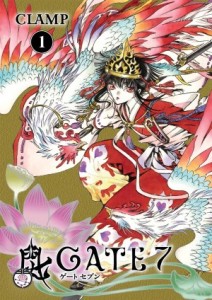
KATE: A Bride’s Story is at the top of my must-buy list, too, but since David has so eloquently described the series’ charms, I’ll recommend the first volume of CLAMP’s Gate 7 instead. This long-delayed project was first announced at San Diego Comic-Con in 2007, and has undergone several transformations along the way. (Remember when it was going to be simultaneously released in Japan, Korea, and North America in “mangette” form?) The story is pure CLAMP: a shy teen is transported from modern-day Tokyo to a fantasy realm that’s under siege from ferocious monsters. Naturally, he discovers that he has skillz he didn’t know he had — would it be a manga if he didn’t have a few hidden talents? — and must decide whether to save the Earth or go home for dinner. If the cover art is any indication, Gate 7 will be a feast for the eyes, even if the plot mechanics are a little creaky. Kathryn Hemann, who blogs at Contemporary Japanese Literature, has a thoughtful early review that’s worth reading if you’re on the fence about buying it.

MJ: I’m a bit of a post-con zombie this morning, but since I see that my cohorts have already covered several of my top choices (Pandora Hearts, A Bride’s Story, and Gate 7), I’ll take a moment to put the spotlight on the penultimate volume of Osamu Tezuka’s Black Jack. This series is always a winner with me, but I’m especially interested in this volume’s final chapter, which reportedly comes in at something like 70 pages. Though short, episodic storytelling served this series well, I admit I’m thrilled at the prospect of digging in to something so substantial. Definitely a must-buy!


Readers, what looks good to you?

Filed Under: PICK OF THE WEEK

NYCC/NYAF 2011, Day Three

October 17, 2011 by Sean Gaffney

The final day of Comic Con was also the quietest, with only two events that I was interested in.

First up was Viz Media’s regular old panel, which followed the special press-only announcement of Shonen Jump Alpha on Friday. Much of the 2nd half of the panel was indeed devoted to that, but there were also a few other announcements. The manga title I was most interested in was Jiu Jiu, which is the new title from the author of hiatused Tokyopop series Clean Freak Fully Equipped, Toya Tobina. It’s about a female demon hunter and her two hot bishie familiars, and looks to be a lot of fun! It ran in Hana to Yume for a period, but the publisher/author has now moved it to the 6 times a year The Hana magazine instead. It’s 3 volumes and still ongoing.

The second and final manga announcement was a license rescue – the 2nd of the con! Yes, Viz has picked up Loveless from Tokyopop, and will be releasing it starting with Vol. 9, which is where it left off. This title runs in Ichijinsha’s Comic Zero-Sum, and is another of those “not quite BL but has many BL elements” series. It’s still running in Japan, and I think fans will be excited about this.

Other than that, there was a lot of discussion of their VizKids properties. Mameshiba is quite popular, and they’re doing a series of graphic novels next summer. The trailer was adorable. There’s also a new series of books based around Mister Men/Little Miss, and more Voltron Force books as well. They’ve partnered with Netflix to bring anime fans all of Naruto up to Shippuden, as well as the first Bleach movie and the 4 Inu Yasha movies. They also confirmed – finally – the Final Inu Yasha TV series, which will be out next year.

And yes, they too are working on an Android app. :)

After this, I mooched around the con for a while before it was time for the Classic Warners and MGM cartoons on Blu-Ray panel. I knew the San Diego Comic Con presenters wouldn’t be there, but they managed to get a nice all-star cast of panelists. The moderator was Gary Mariano, WB Home Video’s marketing director. On the panel was Will Friedwald, co-author with Jerry of the most famous WB cartoon books out there (The Warner Brothers Cartoons and Looney Tunes and Merrie Melodies); Greg Ford, director of The Duxorcist and Blooper Bunny; Doug Compton, who was an animator on Blooper Bunny and has also been an animator on Doug, Pinky and the Brain, etc.; David Levy, director of the film Grandpa Looked Like William Powell; and Bill Plympton, famous animator and director of Academy Award nominated short Your Face.

They mentioned the Tom & Jerry and Looney Tunes Platinum collections are out in 2 weeks and 1 month, respectively. The LT sets are numbered, so some lucky fan may end up with #1 if they buy it from Amazon. They showed some clips of the restoration work, with Flirty Birdy being the T&J clip and the Looney Tunes being represented by Feline Frame-Up. I’m no great judge of differences between the current DVDs and the Blu-Ray, but I thought the slips looked great.

There was then a brief casual discussion of Warners cartoons – it was clear the audience liked Tom and Jerry, but were there for Bugs and Daffy. Same with the panelists. Ford mentioned he liked Chuck Jones’ ‘dark’ cartoons such as Fresh Airedale and Chow Hound. Plympton likes Clampett and Avery, of course, and Levy warmed my heart by talking about Frank Tashlin, my own favorite WB director. They noted the fact that the personality of each director was so easily visible – you look at a cartoon and you KNOW it’s Jones or Clampett, without even needing a credit. They also likened the animators to jazz bebop groups. The music was also mentioned, with Mariano noting the long sequence of St. Louis Blues in Flirty Birdy, and his suspecting MGM had to pay a royalty for that. Carl Stalling was mentioned, and his relationship with Milt Franklyn was likened to Duke Ellington’s with Billy Strayhorn. It was also noted by Ford that music students listening to Stalling were reminded of Prokofiev.

We then watched The Great Piggy Bank Robbery, which was as fantastic as ever, even if the audience seemed a bit subdued. Q&A followed, though I had to duck out early. Yes, someone asked about the Censored 11. Mariano said he had nothing to announce now, though when some audience members booed he noted he was not saying “No plans at this time” – they have plans, they just aren’t ready yet. There was also discussion of Mel Blanc, and the new shorts being made using his old records.

After that I went and had a nice dinner with friends, and then after much public transport wackiness (those who know my Ryouga Hibiki-esque sense of direction can guess what happened), I am now back home.

Comic Con was a lot of fun, though its size is very daunting. I’m not claustrophobic, but the time spent on that show floor was enough to make me a bit edgy – it’s just a huge crush of people. I was very appreciative of the anime panels – at least the industry ones – being on the north side of the center like all the other panels – it made for far less walking. And I think I will simply have to accept arriving an hour before each panel to wait in line as something I need to do from now on. Still, I will definitely be going back again, and I thought they did a good job at keeping everything manageable.

And thanks to all my fellow manga bloggers, as well as my friends Merc, Alan and Richard, for their delightful company. Also, thanks to the representatives at Viz, Yen and Vertical for not having their eyes glaze over *too* visibly when I went on about what magazine series debuted in or exactly why I think Beelzebub is still unlikely to be licensed.

Any other Comic Con thoughts? Comment away!

Filed Under: UNSHELVED Tagged With: NYCC 2011

X, Vol. 1

October 16, 2011 by Katherine Dacey

As a child of the 1970s, I appreciate a good disaster flick, whether the devastation is local or global, natural or man-made. There’s something immensely satisfying about watching the world go up in flames, only to walk outside the theater and be reassured by the presence of stop lights, busses, coffee shops, and pedestrians going about their business. Small wonder, then, that I adored CLAMP’s X back in 2003. Not only did it have an impossibly large cast of attractive characters, it also boasted awesome scenes of destruction — scenes worthy of a Hollywood blockbuster.

When VIZ announced that it would be reissuing X in a deluxe edition, however, I had misgivings about the project: would the apocalypse be as good the second time around?

In 2003, I’d swooned over the illustrations, re-read favorite scenes, and marveled at the fact that all the characters dressed like refugees from a 1980s music video. Though my inner snob normally disdained anything so purple, I secretly loved the all-caps dialogue, the swirling lines and wind-swept hairdos, and the melodramatic death scenes, not to mention the eerie, post-apocalyptic dream sequences that were sprinkled throughout the series. X read like a hybrid of The Seventh Sign (not to be confused with The Seventh Seal, a much classier flick), Götterdämmerung, and Captain EO, and I couldn’t get enough of it.

At the time I was collecting X, I hadn’t read much else, save a handful of manga by CLAMP and Rumiko Takahashi. The very qualities that drew me to X — angstful conversations, tortured characters — soon had the opposite effect on me: I started to avoid comics in which the emotional volume was cranked up to eleven on every page, as I found them exhausting, the manga equivalent of Tristan and Isolde. Re-reading Tokyo Babylon, for example, I was mortified by my initial enthusiasm for the story, which now seemed hopelessly overripe to me; not since I’d re-read The Lion, The Witch, and The Wardrobe had I been so disappointed by a favorite text.

Revisiting X proved a more rewarding experience, though the series’ structural flaws were more readily apparent on a second reading. The dialogue, for example, is often unintentionally hilarious: bystanders comment on the main characters, helpfully telling us how wonderful they are (“Last week, he saved my son from drowning in the river,” one anonymous mother says of Fuma), while the main characters introduce themselves to one another as if they’re networking, not preparing to kill each other. (Sample: “The name’s Sorata Arisugawa! A cute ‘n’ fun-lovin’ high school senior!” “Allow me to return the favor. I am Yuto Kigai. A humble public servant in the local ward office.”) Kotori, the first major female character to be introduced, embodies the Mary Sue concept to a tee; not only is she beautiful, kind, and long of hair, but she’s also very delicate, beset with a heart so weak that she collapses whenever someone frowns. More amusing still are the characters who materialize at the very moment they’re needed: witness the introduction of Tokiko Magami, a school nurse who just so happens to be Kamui’s sole surviving relative, and a fount of information about Kamui’s mother.

Yet these moments of narrative clumsiness are overpowered by the sheer force of the imagery. The battle scenes are kinetic and violent, as characters leap across rooftops, level buildings, and plunge their swords into one another; few licensed shojo or shonen titles can match the gory zest with which CLAMP executes these moments of hand-to-hand combat. The dream sequences, too, are shockingly graphic: characters are dismembered, crucified, impaled, and engulfed in flames, often right before their loved ones’ eyes. Though these images teeter on the brink of kitsch — in one dream, Kamui cradles Kotori’s severed head in his arms — they underscore one of the series’ most important points: sacrifice and loss are a fundamental part of becoming an adult, whether that sacrifice means leaving one’s family (as Sorata and Lady Arashi have done) or losing them (as Kamui, Fuma, and Kotori do in the early chapters of the manga).

The series’ other major theme — that humans are poor stewards of Mother Earth — is less successfully illustrated; three volumes in, it still isn’t clear what, exactly, the Seven Seals are charged with doing: preventing nuclear war? staving off pollution? protecting spotted owls? What will happen if the Seals fail, however, is evocatively rendered; CLAMP draws a post-apocalyptic Tokyo worthy of Katsuhiro Otomo, a landscape of twisted skyscrapers and rotting corpses slowly engulfed by sand dunes.

The fact that these images appeared in Monthly Asuka and not Young Magazine is what makes X so remarkable: it may not be the best shojo fantasy ever written, but it certainly is one of the bloodiest, a fierce, angry blast of emotion that scorches everything in its path. I hesitate to suggest that X‘s body count is an achievement, but it is sharp and welcome rebuke to the idea that female readers strongly prefer conversation and character development to butt-kicking and carnage. Count me in for volume two.

Review copy provided by VIZ Media, LLC.

X, VOL. 1 • BY CLAMP • VIZ MEDIA • 580 pp. • RATING: OLDER TEEN (16+)

Filed Under: Manga, Manga Critic, REVIEWS Tagged With: clamp, shojo, VIZ, X/1999

X, Vol. 1

October 16, 2011 by Katherine Dacey 19 Comments

As a child of the 1970s, I appreciate a good disaster flick, whether the devastation is local or global, natural or man-made. There’s something immensely satisfying about watching the world go up in flames, only to walk outside the theater and be reassured by the presence of stop lights, busses, coffee shops, and pedestrians going about their business. Small wonder, then, that I adored CLAMP’s X back in 2003. Not only did it have an impossibly large cast of attractive characters, it also boasted awesome scenes of destruction — scenes worthy of a Hollywood blockbuster.

When VIZ announced that it would be reissuing X in a deluxe edition, however, I had misgivings about the project: would the apocalypse be as good the second time around?

In 2003, I’d swooned over the illustrations, re-read favorite scenes, and marveled at the fact that all the characters dressed like refugees from a 1980s music video. Though my inner snob normally disdained anything so purple, I secretly loved the all-caps dialogue, the swirling lines and wind-swept hairdos, and the melodramatic death scenes, not to mention the eerie, post-apocalyptic dream sequences that were sprinkled throughout the series. X read like a hybrid of The Seventh Sign (not to be confused with The Seventh Seal, a much classier flick), Götterdämmerung, and Captain EO, and I couldn’t get enough of it.

At the time I was collecting X, I hadn’t read much else, save a handful of manga by CLAMP and Rumiko Takahashi. The very qualities that drew me to X — angstful conversations, tortured characters — soon had the opposite effect on me: I started to avoid comics in which the emotional volume was cranked up to eleven on every page, as I found them exhausting, the manga equivalent of Tristan and Isolde. Re-reading Tokyo Babylon, for example, I was mortified by my initial enthusiasm for the story, which now seemed hopelessly overripe to me; not since I’d re-read The Lion, The Witch, and The Wardrobe had I been so disappointed by a favorite text.

Revisiting X proved a more rewarding experience, though the series’ structural flaws were more readily apparent on a second reading. The dialogue, for example, is often unintentionally hilarious: bystanders comment on the main characters, helpfully telling us how wonderful they are (“Last week, he saved my son from drowning in the river,” one anonymous mother says of Fuma), while the main characters introduce themselves to one another as if they’re networking, not preparing to kill each other. (Sample: “The name’s Sorata Arisugawa! A cute ‘n’ fun-lovin’ high school senior!” “Allow me to return the favor. I am Yuto Kigai. A humble public servant in the local ward office.”) Kotori, the first major female character to be introduced, embodies the Mary Sue concept to a tee; not only is she beautiful, kind, and long of hair, but she’s also very delicate, beset with a heart so weak that she collapses whenever someone frowns. More amusing still are the characters who materialize at the very moment they’re needed: witness the introduction of Tokiko Magami, a school nurse who just so happens to be Kamui’s sole surviving relative, and a fount of information about Kamui’s mother.

Yet these moments of narrative clumsiness are overpowered by the sheer force of the imagery. The battle scenes are kinetic and violent, as characters leap across rooftops, level buildings, and plunge their swords into one another; few licensed shojo or shonen titles can match the gory zest with which CLAMP executes these moments of hand-to-hand combat. The dream sequences, too, are shockingly graphic: characters are dismembered, crucified, impaled, and engulfed in flames, often right before their loved ones’ eyes. Though these images teeter on the brink of kitsch — in one dream, Kamui cradles Kotori’s severed head in his arms — they underscore one of the series’ most important points: sacrifice and loss are a fundamental part of becoming an adult, whether that sacrifice means leaving one’s family (as Sorata and Lady Arashi have done) or losing them (as Kamui, Fuma, and Kotori do in the early chapters of the manga).

The series’ other major theme — that humans are poor stewards of Mother Earth — is less successfully illustrated; three volumes in, it still isn’t clear what, exactly, the Seven Seals are charged with doing: preventing nuclear war? staving off pollution? protecting spotted owls? What will happen if the Seals fail, however, is evocatively rendered; CLAMP draws a post-apocalyptic Tokyo worthy of Katsuhiro Otomo, a landscape of twisted skyscrapers and rotting corpses slowly engulfed by sand dunes.

The fact that these images appeared in Monthly Asuka and not Young Magazine is what makes X so remarkable: it may not be the best shojo fantasy ever written, but it certainly is one of the bloodiest, a fierce, angry blast of emotion that scorches everything in its path. I hesitate to suggest that X‘s body count is an achievement, but it is sharp and welcome rebuke to the idea that female readers strongly prefer conversation and character development to butt-kicking and carnage. Count me in for volume two.

Review copy provided by VIZ Media, LLC.

X, VOL. 1 • BY CLAMP • VIZ MEDIA • 580 pp. • RATING: OLDER TEEN (16+)

Filed Under: Manga Critic Tagged With: clamp, shojo, VIZ, X/1999

NYCC 2011 Gallery: From the show floor

October 16, 2011 by MJ 3 Comments

From the main show floor at New York Comic Con 2011:

(click to enlarge)

Filed Under: UNSHELVED Tagged With: NYCC 2011

NYCC/NYAF 2011, Day Two

October 15, 2011 by Sean Gaffney

Day 2 of NYCC began with the help of Starbucks, providing me with the tea I needed to keep going. I arrived early expecting lines for the Bandai panel, and I was right, though it wasn’t as bad as later lines. Bandai themselves had no new announcements, though they’re clearly very revved up about Gundam UC. The highlight (lowlight?) of the panel was the Q&A, where I was once again reminded that fans think Bandai USA makes the shows, not Japan. They asked about new Geass, they asked about Star Driver Season 2. The moderator said “Go to the Sunrise panel to ask about that.”

The panel that did have a HUGE line was Archie, which was in a smaller room than last year, for some odd reason. Archie was one of the highlights of last year’s con for me, and this year was no different. Alex Segura moderated, and was excited about the reintroduction of the old Archie superheroes, who are returning – though not getting rebooted, the panel was quick to note. Unlike last year, CEO John Goldwater was a full participant, and his enthusiasm for everything Archie shone through. They announced a new Sabrina animated series, as well as one for Little Archie, both animated by Moonscoop, which should be out next fall.

As for titles already running, Kevin Keller appears in Life With Archie’s ongoing plot. He’s getting married, having met his partner – a doctor, every mother’s dream – after getting wounded in a battlefield. Kevin also has his own series, where he’s Class President and dealing with modern high school issues – dating, proms – and it was noted by Dan Parent that they hope to make Kevin as “flawed” as all the other Archie characters. Archie’s own comic has a 100% profits-to-charity issue, to benefit Ronald McDonald House, with an appropriate plotline. The following issue guest stars football player Michael Strahan, another big Archie fan.

Archie meets KISS sounds really dumb at first, but the trailer they showed and the followup Q&A made me far more interested. The plot of the 4-issue mini will involve Sabrina, Josie, a huge cast – and zombies. And I mentioned the old original Archie superheroes – they’re also bringing back Pureheart the Powerful and the Superteens, discussing making a more realistic take on the characters – why would Veronica restrict herself to just ONE superhero outfit, it was noted? They also discussed the huge success of Life With Archie, and Valerie returning from a Pussycats tour to reunite with Archie from their earlier storyline. I also asked about the Dark Horse and IDW Archive books, and John Goldwater noted they were doing “exceptionally well”, though my suggestion of Josie and Bob Bolling collections was met with a safe “anything’s possible” answer.

And yes, Android app soon.

Then I had a lot of time, so braved the show floor – I’m not claustrophobic, but that many people in one area makes me nervous. I spoke with Craig Yoe briefly at the Archie table, as he was promoting the Archie’s Mad House collection. He also showed me his new Barney Bear comic book collection, which looks fantastic. I did get the Archie the Married Life collection 1, as I had gotten a lot of old titles recently and wanted to support their newer stuff. I also got stopped by several My Little Pony fans. I had bought a “Pinkie Moon” T-shirt from Welovefine on Friday, and it apparently had sold out soon after, so I had many people admiring the hot item.

After dinner, it was time for the Comic Book Legal Defense Fund to discuss Defending Manga. This was an excellent panel, highlighting the fact that all of us read things every day that, if we showed them to a “non-fan”, they might not understand what we take for granted. It can be very easy to run afoul of the current attempts to “protect the children”. They discussed the Overfiend sting in Texas, Christopher Handley and the current Canadian Border Guard controversies, and of course Bill 156. It was noted that most “moe” character types look like children – it’s the design. Heck, I reviewed both Love Hina and Negima this week – both have nude girls, one 12 and one an ancient vampire in the body of a 10-year-old girl. Both have hit bestseller lists here in the States, too. It could be anything, because we forget that most folks think all manga is the same – it’s “that Japanese porn”.

One more day to go. What news will Viz have besides Shonen Jump Alpha? And how much will I love the Classic Cartoon panel?

Filed Under: UNSHELVED Tagged With: NYCC 2011

  • « Go to Previous Page
  • Page 1
  • Interim pages omitted …
  • Page 807
  • Page 808
  • Page 809
  • Page 810
  • Page 811
  • Interim pages omitted …
  • Page 1047
  • Go to Next Page »
 | Log in
Copyright © 2010 Manga Bookshelf | Powered by WordPress & the Genesis Framework