• Skip to primary navigation
  • Skip to main content
  • Skip to primary sidebar
  • Home
  • About Us
    • Privacy Policy
    • Comment Policy
    • Disclosures & Disclaimers
  • Resources
    • Links, Essays & Articles
    • Fandomology!
    • CLAMP Directory
    • BlogRoll
  • Features & Columns
    • 3 Things Thursday
    • Adventures in the Key of Shoujo
    • Bit & Blips (game reviews)
    • BL BOOKRACK
    • Bookshelf Briefs
    • Bringing the Drama
    • Comic Conversion
    • Fanservice Friday
    • Going Digital
    • It Came From the Sinosphere
    • License This!
    • Magazine no Mori
    • My Week in Manga
    • OFF THE SHELF
    • Not By Manga Alone
    • PICK OF THE WEEK
    • Subtitles & Sensibility
    • Weekly Shonen Jump Recaps
  • Manga Moveable Feast
    • MMF Full Archive
    • Yun Kouga
    • CLAMP
    • Shojo Beat
    • Osamu Tezuka
    • Sailor Moon
    • Fruits Basket
    • Takehiko Inoue
    • Wild Adapter
    • One Piece
    • After School Nightmare
    • Karakuri Odette
    • Paradise Kiss
    • The Color Trilogy
    • To Terra…
    • Sexy Voice & Robo
  • Browse by Author
    • Sean Gaffney
    • Anna Neatrour
    • Michelle Smith
    • Katherine Dacey
    • MJ
    • Brigid Alverson
    • Travis Anderson
    • Phillip Anthony
    • Derek Bown
    • Jaci Dahlvang
    • Angela Eastman
    • Erica Friedman
    • Sara K.
    • Megan Purdy
    • Emily Snodgrass
    • Nancy Thistlethwaite
    • Eva Volin
    • David Welsh
  • MB Blogs
    • A Case Suitable For Treatment
    • Experiments in Manga
    • MangaBlog
    • The Manga Critic
    • Manga Report
    • Soliloquy in Blue
    • Manga Curmudgeon (archive)

Manga Bookshelf

Discussion, Resources, Roundtables, & Reviews

Blog

Hayate the Combat Butler, Vol. 22

September 15, 2013 by Sean Gaffney

By Kenjiro Hata. Released in Japan as “Hayate no Gotoku!” by Shogakukan, serialization ongoing in the magazine Shonen Sunday. Released in North America by Viz.

This volume, and the two that follow it, are for me the high point of the entire run of Hayate the Combat Butler. Hata has a tendency to get sidetracked and lost in comedy asides, to the point where he’s started to parody his tendency to do so. Also, it’s becoming quite clear that someone is telling him that he has to keep the series going and can’t wrap things up. But that’s in Japan. Here, we’re finally getting to the good stuff. All the slow character development, glacial plot points, and G*ndam references lead to this confrontation in Greece.

hayate22

For all that Hayate is a wacky harem comedy, it has some dark tones at its core. Mostly it’s been about the horrible parents of Hayate, Wataru and Hina, and the absent/dead parents of Nagi and Athena. But there’s also been a sense of aiming for your dream and failing that’s come up several times with Hina’s alcoholic sister Yukiji. She’s in Italy because the teacher (and old high-school friend) who has a crush on her is trying to make grand gestures so that he doesn’t have to actually confess. After a chapter of misunderstandings and beatings, the now drunken teacher wonders out loud how the cool, guitar-playing Yukiji turned into the lazy, shiftless, aimless young woman we all know. And the answer is that life happens. It’s why people make wishes, and dream of fairy stories. And create magical luck stones, for that matter.

Speaking of which, we finally get the confrontation we’ve waited 10 years for… well OK, four volumes. Hayate sees Athena, and calls out to her. Unfortunately, she doesn’t know who he is. Or at least pretends she doesn’t know – as a very cute aftershot tells us, she is quite aware of Hayate but has some longer game, which involves that stone. The last volume gave us a few minor villains trying to get their hands on the stone, but now we move on to the more dangerous players. 16-year-old Athena looks like a dark queen, what with her black dress and princess curls (and healthy bust – clearly larger than any of the other girls in Hayate’s wannabe harem). We can only hope that she sides with her feelings over her need for that stone.

And so, having started the volume with Yukiji noting that sometimes things don’t work out, and dreams don’t come true, we end with the dinner date between Hayate and Hinagiku, who is determined to confess. Of course, Hina is mistakenly thinking that Hayate hates her because of her tsundere antics. And Hayate has worked out that Athena was lying, and is wondering what to do now and why meeting Athena is affecting him so much. So the dinner date is a masterpiece of distraction. Tragically, the two characters have revelations exactly at the WRONG time. Hina finally mans up her courage and starts to confess. And Hayate finally puts two and two together and realizes why he’s so devastated by Athena’s disfavor, and why he wants desperately to apologize: he loves her.

It’s an epic cliffhanger, to be sure. Hata certainly thought so, as Vols. 23 and 24 came out in Japan the same day. Sadly, that won’t happen here, where Hayate simply doesn’t have the sales. So we’ll have to check back in another six months to see how Hayate’s admission affects Hina, and whether it spurs him to return to Athena. The tension only gets higher from here.

Filed Under: REVIEWS

Blade of the Immortal, Volume 25: Snowfall at Dawn

September 13, 2013 by Ash Brown

Blade of the Immortal, Volume 25Creator: Hiroaki Samura
U.S. publisher: Dark Horse
ISBN: 9781595828835
Released: August 2012
Original release: 2009
Awards: Eisner Award, Japan Media Arts Award

Snowfall at Dawn is the twenty-fifth volume in the English-language release of Hiroaki Samura’s award-winning manga series Blade of the Immortal. Published by Dark Horse in 2012, Snowfall at Dawn collects the same chapters as the twenty-fourth volume of the original Japanese edition of Blade of the Immortal released in 2009. Blade of the Immortal first began serialization in 1993 and has covered a lot of ground since then. Starting as a story of revenge with a touch of the supernatural, the series mixes historical reality with the fantastic and later on even a healthy dose of horror. Snowfall at Dawn is part of the fifth and final major story arc of the series. With morally complex characters, dynamic artwork, and an engaging story, Blade of the Immortal continues to be one of my favorite manga series.

After their daring assault on Edō Castle, Baro Sukezane provides the diversion needed to allow his comrades Magatsu Taito and Anotsu Kagehisa, the leader of the Ittō-ryū sword school, to escape. They aim to rejoin the rest of the Ittō-ryū as quickly as possible while avoiding their pursuers. Among those trying to locate Anotsu are Asano Rin and Manji, her bodyguard and companion. Little do the pair know, but they are also being pursued. Shira, a sadistic murderer who holds a particularly intense grudge against Manji, is steadily getting closer to exacting his revenge. Accompanying Shira is Kawakami Renzō, a broken young man with his own reason for hating Manji. It’s only a matter of time before the four of them meet once again. The encounter is one that Shira has been preparing for and fantasizing about, taking great pleasure in anticipating and contemplating the pain and torment his plans will bring Manji and Rin.

The last few volumes have been building up to the confrontation between Shira and Manji. Unsurprisingly, their battle is the focus of Snowfall at Dawn. What did surprise me, however, is how comparatively tame it is physically when considering the perverse and barbaric nature of Shira’s past exploits and misdeeds. The potential for extreme physical violence between Shira and Manji is great. Shira is an unapologetic and twisted sadist while Manji is a man who is extraordinarily difficult to kill, making him an ideal victim and target. But Shira isn’t only interested in Manji’s physical suffering, he also takes great joy in causing mental anguish. Although there is still plenty of bodily harm and pain inflicted during the battle in Snowfall at Dawn, the psychological impact and agony caused by Shira’s attack on Rin and Manji is just as crucial to the fight. Out of all of the characters in Blade of the Immortal, Shira is easily the most unquestionably villanous and terrifying.

In addition to the showdown between Shira and Manji, Snowfall at Dawn also reveals Shira’s whereabouts during the long prison story arc as well as his involvement in the immortality experiments. Shira may be an utter bastard, but he’s had some unspeakable things done to him as well. As part of this, there is also a lengthy discourse in Snowfall at Dawn about the nature and limitations of Manji’s bizarre regenerative abilities. While vaguely interesting, it is largely unnecessary. Anyone who has been reading Blade of the Immortal should be well aware by this point that Manji’s immortality is imperfect; ample evidence can be found throughout the series. However, Samura hasn’t previously gone into such specific detail about it as he does in Snowfall at Dawn. Unfortunately, he has to interrupt the flow of the story in order to do so. Still, Samura soon returns to what really matters in Snowfall at Dawn–Manji and Shira’s battle, which will reach its conclusion in the next volume, Blizzard.

Filed Under: REVIEWS Tagged With: Blade of the Immortal, Dark Horse, Eisner Award, Hiroaki Samura, Japan Media Arts Award, manga

Manga the Week of 9/18

September 12, 2013 by Sean Gaffney, Michelle Smith, Ash Brown and MJ 3 Comments

SEAN: Three weeks this September have a huge pile of manga, one is merely a small pile. This is that week. (Though some may get Yen titles one week early via Diamond.)

Genshiken has continued to prove that if you have a good enough ensemble cast, it doesn’t matter who the ‘lead character’ or stars are. It rotates students in, it rotates students out. Well, OK, Madarame and his not-quite-harem continue to be the focus of the 2nd Season. Vol. 3 is out this week.

MICHELLE: I must admit that I have never read any Genshiken.

ASH: I haven’t read any of the second season yet, but I did rather enjoy the Genshiken omnibuses. Guess I’ll need to catch up!

MJ: I’ve always been interested in this title, but missed picking up the first season, so I’ve never managed to get into it. I would like to rectify that at some point!

SEAN: The other Kodansha title, Sherlock Bones, you may at first glance think is meant for younger readers, especially once you see the premise “Sherlock Holmes reincarnated as a dog”. That said, I think there may be something I can do to tempt old-school mystery and manga fans to get this volume: “From the creator of Kindaichi Case Files.”

MICHELLE: … and also !!! That certainly tempts me!

MJ: What she said!

tropic

SEAN: Everyone knows that old-school manga titles are not really looked at by companies anymore. UNLESS… they’re by the late director Satoshi Kon, aka Perfect Blue, Tokyo Godfathers, etc. Tropic of the Sea was a single-volume manga he did for Kodansha’s Young Magazine in 1990, and it’s at the start of his career, before he became famous for other things. It promises to be riveting, from what I hear.

ASH: I’m really looking forward to Tropic of the Sea. That cover is simply gorgeous and the interior art I’ve seen is also striking.

MJ: I’m very interested in this as well.

SEAN: Bokurano: Ours must still have cast members to kill off in a tragic yet heartwarming and life-affirming way, as the series is still going. Here’s Vol. 9 from Viz, whose continued support of the SigIKKI line I will always appreciate.

MICHELLE: I’ve fallen somewhat behind on Bokurano: Ours, but I do like it.

SEAN: Lastly, Ooku: The Inner Chambers has a new volume. We’re caught up with Japan, and the series doesn’t come out all that rapidly anymore. But this just makes this alternate world tale of court intrigue a rare treat.

MICHELLE: Yay, more Ooku!

ASH: Indeed! Hooray for more Ooku!

MJ: Insert additional cheers here!

SEAN: What manga dost thou wish to acquire on the morrow?

Filed Under: FEATURES, manga the week of

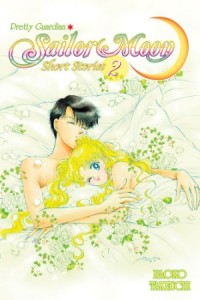
Pretty Guardian Sailor Moon Short Stories, Vol. 1

September 12, 2013 by Sean Gaffney

By Naoko Takeuchi. Released in Japan as “Bishoujo Senshi Sailor Moon” by Kodansha, serialized in the magazine Run Run. Released in North America by Kodansha Comics.

There’s an important thing to keep in mind when reading this first of two collections of short stories that were interspersed throughout the series’ run: they didn’t run in Nakayoshi. They ran in a sister magazine, run Run, which was also home to Sailor V. Run Run no longer exists today, but I seem to recall when it was around that its core audience was girls about 2-3 years younger than the usual Nakayoshi audience. And that’s not even getting into the fact that these are quick side-stories Naoko dashed off in between chapters, so are naturally going to be a bit more comedic and fluffy than the core plotline.

sailormoonss1

If all of this sounds a bit defensive, well, let’s just say that ‘light and frothy’ doesn’t begin to describe this volume of Sailor Moon extras, most of which are very silly and not exactly lending themselves to deeper analysis. Four of the stories star Chibi-Usa and her friends (with occasional rescues from Sailors Moon and V), while three others detail the struggles of the Inners to pass high school exams. The first one is around the R continuity (Chibi-Usa has just arrived, and is meeting her very busty friend Momo… Ranma fans will immediately be reminded of Shampoo), but most of the stories take place around the SuperS continuity – indeed, a few of them were adapted into the SuperS anime – with the final one seeming to be around Stars, given it has Hotaru.

This is not to say I did not 100% enjoy these stories, as I did. I like Naoko’s style of blatant humor, and she has a knack for amusing caricature faces. The Chibi-Usa stories at the beginning are pure fun for kids, with the kids getting into danger and having to transform to get themselves out of it. The story at the end is slightly longer and attempts to have more depth, but there’s only so far you can go when you find out that Naru’s sister is not only a kogal but is also named Naruru. It’s good to know that Japan has horrible naming sense as well. (Also, kudos to Mari Morimoto for the translation of this chapter, which was filled with topical Japanese slang that Chibi-Usa and Hotaru pointed out and lampshaded throughout, thus making it virtually unadaptable. A very nice job.)

My favorite part of the book, I will admit, are the three stories focusing on the Inners. Makoto’s is probably the weakest, but we do get some amusing scenes of her procrastination through cooking and housework, and also hear about her late parents for what may be the only time in the manga OR anime canon. (They’re killed in a plane crash when Makoto was a little girl, which is used here as both an amusing gag and to have Mako gain sympathy points from her friends.) Ami’s First Love is probably the best written of the three, and it’s no surprise that the anime adapted this into a short film for theaters. Ami can be very tightly wound, so seeing her coming unglued at finding a student who’s just as perfect in studying as she is is hilarious, particularly when she gets so upset by this she seems to make herself ill.

And then there’s Rei and Minako. I’ve discussed how much I love this chapter before, silly as it is, and that hasn’t changed. The manga version of Rei – cool, collection, a bit ‘ice queen’ – is in such contrast to Minako’s extrovert that it makes sense that she’d want to see what Rei’s life at school is like – and yes, she’d want to ask if Rei farted. I think that Minako regards Rei as a bit too perfect, and this is just her own tactless way of trying to reassure herself that Rei is human after all. Of course, all that her visit to Rei’s perfect Catholic school ends up doing is tweaking Minako’s own insecurities – and that leads to Rei seeming genuinely upset at Minako getting angry, showing she *isn’t* the perfect ice princess. Rei is likely very lonely at that school where she only has admirers, and just can’t express her friendships in the way that Minako wants her to. Still, they manage to bond by… well, Rei being possessed and trying to kiss Minako. And afterwards being crankier than ever. But Minako’s feeling good again, and that’s what’s important. Bless these children.

So if the Sailor Moon series was a full-course meal, then this is dessert. Don’t go into it expecting anything more than delicious sweets that are easy on the eyes but not all that good for you, and you should be fine. Also, Rei has never farted. She is better than all of us.

Filed Under: REVIEWS

The Crimson Labyrinth

September 11, 2013 by Ash Brown

The Crimson LabyrinthAuthor: Yusuke Kishi
Translator: Masami Isetani and Camellia Nieh
U.S. publisher: Vertical
ISBN: 9781932234114
Released: October 2006
Original release: 1999

The Crimson Labyrinth, written by Yusuke Kishi, was first published in Japan in 1999. Prior to the novel’s release, Kishi had won two Japan Horror Association Awards. He continues to be a bestseller and award winner in Japan both for his horror and for his speculative fiction. The Crimson Labyrinth was released in English in 2006 by Vertical with a translation by Masami Isetani and Camellia Nieh. The novel was Kishi’s English debut and so far remains the only work of his that has been translated, although Vertical is scheduled to release Tōru Oikawa’s manga adaptation of Kishi’s novel From the New World in 2013. The Crimson Labyrinth was my introduction to Kishi and his work. I was particularly interested in reading The Crimson Labyrinth after seeing it compared to Koushun Takami’s Battle Royale, a personal favorite of mine. Also, I tend to enjoy just about everything that Vertical publishes.

Forty years old and unemployed, Yoshihiko Fujiki never expected that answering a job advertisement would end up with him being drugged and abandoned in the wild. He wakes up alone with only a small amount of food and water and a Pocket Game Kids handheld game console to keep him company. Soon he encounters Ai Otomo who is also wandering alone and who has been given similar provisions. Following the instructions provided by the game console, together they navigate the labyrinthine corridors and valleys of the bizarre landscape in which they find themselves. When they reach the first checkpoint indicated by the console they discover another group of people waiting there. All together there are nine Japanese men and women and no one seems to be certain of what is going on, where they are, who has stranded them or for what purpose. What they do know is that have become unwilling participants in a perverse game of survival. If they want to stay alive they may very well have to turn on each other.

The Crimson Labyrinth is heavily influenced by extreme reality television as well as classic, text-based role-playing games. And just like those RPGs, the decisions made by the characters early on in The Crimson Labyrinth are the most crucial and will determine how the rest of the game will play out. At first the group of nine works together, but their cooperation quickly disintegrates. The group fragments into four smaller teams, each following a different path outlined by the game: survival, self-defense, food, or information. Game theory might suggest how the competition will progress and what will lead to the ideal outcome for all involved, but as Fujiki points out, game theory is nearly useless in their situation. It depends on people making logical and rational decisions after considering all the information available to them. Humans are most certainly not rational creatures, especially when faced with the unknown, consumed by fear, and fighting for their lives.

Most of The Crimson Labyrinth takes place over the course of a few weeks. As events and the game unfold, the novel is seen exclusively from Fujiki’s perspective. For a large part of The Crimson Labyrinth he doesn’t interact much with anyone except Ai. This is a little unfortunate since the utter hell the other teams are going through can only be inferred. But as the novel and the game progress, Ai and Fujiki come across shocking evidence that the other players are having a very hard time of it and that it didn’t take long at all for violence to erupt. The wilderness is filled with its own dangers, but it’s really their fellow humans that they need to be wary of. Terrible things happen in The Crimson Labyrinth. What makes it even worse is the fact that so many of them could have been avoided if only people were able to bring themselves to trust each other and work together. In the end, no one is entirely innocent of the deaths that occur. A quick read, The Crimson Labyrinth is an absorbing novel of horror and survival.

Filed Under: REVIEWS Tagged With: Novels, vertical, Yusuke Kishi

It Came from the Sinosphere: State of Divinity (Part 2)

September 10, 2013 by Sara K. Leave a Comment

Linghu Chong and Ren Yingying sit by a waterfall

Picking up from last week, here is even more State of Divinity.

Background

This is a TVB production.

TVB Hong Kong’s (and the Cantonese-speaking world’s) biggest commercial television station, and one of the most popular television production companies in all of Asia. Their hit shows get dubbed in Vietnamese Indonesian, Hindi, Mandarin, Thai, and other widely major languages.

In wuxia, ‘TVB’ is a legendary name. Many people around Asia (and in Asian communities abroad) first got hooked onto wuxia due thanks to a TVB production. TVB has also been a launching point for the careers of many of Hong Kong’s top actors. In particular, the 1980s is known as the ‘golden era’ of TVB wuxia dramas.

Chow Yun-Fat as Linghu Chong and Rebecca Chan as Ren Yingying from the 1984 TV adaptation.

Chow Yun-Fat as Linghu Chong and Rebecca Chan as Ren Yingying from the 1984 TV adaptation.

Well, this drama, State of Divinity, was made in the 1990s, after the ‘golden era’. Yet on every single list I have ever seen ranking wuxia dramas from the 1990s, State of Divinity is always in first or second place. This is actually the second time that TVB has adapted this novel – the first adaptation was The Smiling Proud Wanderer 1984, starring Chow Yun-fat as Linghu Chong. Yet, in spite of the fact that The Smiling Proud Wanderer 1984 was made in the golden 80s, every single reviewer says that State of Divinity is much, much better.

This is also TVB’s last adaptation of this novel – in 2000, Jin Yong revoked TVB’s license to adapt his work.

The Visuals

State of Divinity is not ugly. At times, it’s pretty. But if you compare it to Laughing in the Wind, which is probably the most beautiful TV drama I have ever seen, it will lose really, really badly. Therefore I will be merciful, and not compare them.

Shenggu is wearing a veil as she walks out of a burning building.

I do like this dramatic shot.

Yilin and the Hengshan Sect

I think Yilin, the young Buddhist nun, might be one of the most under-appreciated characters in the story. Almost nobody takes her because she’s just a teenage girl, and as well all know, teenage girls – particularly teenage girls with strong feelings combined with doubt – are by default silly. But if you actually think about what she says and what she does … it actually does not seem so silly after all, at least not to me.

state12

She says that if doing the right thing would mean going to hell, then she would willingly spend an eternity in hell. Think about that for a moment. If she things that doing the right thing *might* send her to hell, that means that she does not consider the Buddhist world order to be perfectly just. While her religion heavily influences her sense of ethics, she thinks it does not have the final word on what is right and what is wrong. And she is so committed to doing the right thing that she would be willing to go to hell for it.

Can you bribe someone who is willing to go to hell in order to do the right thing? Can you threaten them?

In this respect, Yilin and Linghu Chong are very much alike. For most of the story, Linghu Chong believes that he is going to die quite soon, so whenever somebody tries to bribe/threaten him, his standard response is ‘I am going to die soon, so why should I care?’

The nuns of the Hengshan Sect

The nuns of the Hengshan Sect

And then there is the doubt. Her religious order tells her on thing, her father tells her another thing, and then there are the feelings inside her own heart that she doesn’t completely understand. It is therefore quite reasonable that she is not sure what to do, and she is humble enough to recognize this. However, in the deepest levels of her heart, I think she has no doubt that she wants to do the right thing, it is merely a question of what the ‘right’ thing actually is.

Of course, Yilin is part of the Hengshan Sect, which is the voice of morality in the story. And many of the issues specific to Yilin also apply to the whole sect. The Hengshan sect is an order of Buddhist nuns who have taken vows to live a simple life and do no harm. While many characters publicly praise the Hengshan Sect for their upright way of life, they privately hold contempt for that ‘bunch of nuns’. I think this partially because the nuns are women, but I think it’s also because, by putting morality and humility first, they silently critique anybody whose goal is to amass power and prestige.

state14

It’s interesting to note that, while the Hengshan Sect has many rules, whenever those rules come into conflict with what’s right, they always bend the rule and do what’s right. This is something which almost no other group in the story will do – and indeed the Hengshan Sect gets heavily criticised for bending its rules. How dare they put ethics first! Silly women!

Laughing in the Wind removes much of Yilin’s and the Hengshan Sect’s role in the story, and I understand why – its interpretation of the story doesn’t need them so much. State of Divinity, on the other hand, really does justice to Yilin and the Hengshan Sect. They are a crucial part of State of Divinity’s humanistic vision.

The Thick, Deep Humanity of It All

One thing that is really striking about this drama is the depth of the human relationships.

For example, more than any other version of this story I’ve experienced (including the original novel), this TV show establishes really well the relationships within the Huashan Sect. While
they certainly aren’t a perfect ‘family’, overall, it feels like a tight, warm group.

Linghu Chong is injured. Again.  Never fear, the Huashan Sect looks after its own.

Linghu Chong is injured. Again. Never fear, the Huashan Sect looks after its own.

Of course, this makes the eventual fate of the Huashan Sect all the more heartbreaking.

And then there is Zuo Lengshan. Unlike most of the ‘villains’, he doesn’t seem to have any redeeming qualities. Yet in this adaptation, he feels human. That’s not to say he is *not* a villain – his actions, after all, are pretty much the same as in every other version of the story. But it feels like there is a human being behind those actions, rather than a mere ‘bad guy’.

Zuo Lengshan is puzzled.

Zuo Lengshan is puzzled.

I think what made the difference to me was the very first episode, where Zuo Lengshan was pondering something which puzzled him. Something about that very simple act – trying to figure out a something he doesn’t understand – made Zuo Lengshan feel like a genuine person.

Indeed, it seems much of the artistic directive in this TV drama was to make everybody feel like a real person. For example, there is an entire new subplot which is added just to explain why Yue Lingshan acts a certain way (she does the same thing in most versions of the story, but it usually difficult to buy it).

Yue Lingshan looks very unhappy as she hugs a pine tree.

Yue Lingshan

Clearly, the actors put a lot of work into making their characters feel genuine, and to make their connections feel authentic. In addition to the actors work, there’s also the work of the camera operators and editors – I didn’t realize just how much of this TV show consists of meaningful glances and reaction shots until I translated that scene for Part 1. It all works really, really well.

The Bad Gender Baggage

Alas, there is a huge exception to the story’s humanistic vision, and that’s the way it handles non-binary/cis gender. Or, if I may be blunt, it’s transmisogynist.

state18

During the course of the story, four characters lose their testicles. One of them loses his testicles in an ‘ordinary’ way – while he loses his interest in sex, his voice doesn’t change, and he generally still seems fairly masculine. This is consistent with what happens in the real world to people who lose their testicles post-puberty.

The other three, however (I am making up a term in order to avoid spoilers) ‘go through the mork’. In addition to losing their genitalia, they become stereotypically feminine – they develop an interest in pretty clothes, make-up, embroidery, etc. Clearly this is due to ‘going through the mork’, not just the absence of their testicles.

The thing is, these three characters happen to be villains.

Now, in some versions of the story, you could argue that they were evil *before* they ‘went through the mork’, and that it’s just a coincidence that the characters transitioning from male to female are all evil. Well, in State of Divinity that argument doesn’t hold – it clearly depicts the characters becoming *more* evil after they ‘go through the mork’. Now you could say that it’s just a coincidence that the same thing which makes them evil also makes them feminine … but that’s not what the characters in the story think (to paraphrase Ren Yingying ‘Don’t trust him because he’s a neither male nor female freak’).

I actually like Henry Lo's performance.  It's not his fault that the story is transmisogynist.

I actually like Henry Lo’s performance. It’s not his fault that the story is transmisogynist.

Believe me, I have tried to interpret this story in a way which is not transmisogynist … and basically the only two ways to pull that off is a) change the story (which is what Laughing in the Wind does to reduce the transmisogyny) or b) not be honest with myself.

Some people might excuse the transphobia/transmisogyny by saying that it was written in the 1960s. My response is that Liang Yusheng managed to write an wuxia novel in 1960s Hong Kong with a transwoman character *without* implying that MtF people are evil. If he could do it, why not Jin Yong?

I am really disappointed that such a great story is also transmisogynist.

If Laughing in the Wind is a Work of Art, then State of Divinity Is a Cat

As I’ve described before, Laughing in the Wind feels like it’s been curated by somebody with impeccable artistic taste. Part of the joy of watching that show is wondering what exquisite delight is coming next, for the TV show manages to get the viewer to trust its artistic sense pretty quickly.

State of Divinity is not like that. It does not dazzle the audience with its refined elegance. It feels like a typical wuxia TV show – just as the opening theme song announces. It submits itself so entirely to being a standard wuxia TV show that it has become a ‘cat’.

state19

The actress Uta Hagen says in the book Respect for Acting that, if you put an adult human on stage with an animal, such as cat, or a very young child, then the audience will probably pay more attention to the animal/young child than the adult human. That’s because animals/young children are not very stage conscious, and will probably act more authentically than adults who have been trained to monitor themselves. Uta Hagen said that her goal, as a performer, is to always be more fascinating to watch than a cat.

State of Divinity is so true to what it is that it sucks the viewers in and holds onto them tightly. I actually cannot think of another TV show – in any language and any genre – which excels State of Divinity in this specific respect.

And I Still Have More to Say…

So come back next week!

state20

Filed Under: Dramas, It Came From the Sinosphere Tagged With: Hong Kong, Jackie Lui, jin yong, State of Divinity, The Laughing Proud Wanderer, TVB, wuxia

Josei love stories, Akira, and a Kickstarter

September 10, 2013 by Brigid Alverson

The Manga Bookshelf bloggers discuss their Pick of the Week, and they also look ahead to this week’s new manga releases. Also at Manga Bookshelf, MJ and Michelle Smith discuss some josei romances in their latest Off the Shelf column and Erica Friedman takes a peek at Young Gangan magazine.

Erica Friedman has plenty of news, including some about herself, in the latest edition of Yuri Network News.

Paul Gravett looks at the works of Katsuhiro Otomo, with lots of samples of Marvel’s colorized version of Akira.

Lori Henderson discusses Vizmanga.com, the Manga Reborn Kickstarter, and the last two volumes of Alice in the Country of Hearts in her latest Manga Dome podcast at Manga Xanadu.

Reviews: It’s time for a new set of Bookshelf Briefs at Manga Bookshelf. Ash Brown takes us through a week’s worth of manga at Experiments in Manga.

Sean Gaffney on vol. 6 of Attack on Titan (A Case Suitable for Treatment)
Sakura Eries on vol. 20 of Bakuman (The Fandom Post)
Matthew Warner on vol. 57 of Bleach (The Fandom Post)
Anna N. on vol. 1 of Eat For Your Life (Manga Report)
Ken H on vols. 15 and 16 of Erementar Gerade (Comics Should Be Good)
Connie C. on Heart of Thomas, To Terra, and From Eroica With Love (Comics Should Be Good)
Sean Gaffney on Helter Skelter: Fashion Unfriendly (A Case Suitable for Treatment)
Ken H. on vol. 5 of Heroman (Comics Should Be Good)
Matthew Warner on vol. 5 of Is This a Zombie? (The Fandom Post)
Matthew Alexander on vol. 1 of Judge (The Fandom Post)
L.B. Bryant on vol. 1 of Judge (ICv2)
Ash Brown on Kitaro (Experiments in Manga)
Ash Brown on Manga: Introduction, Challenges, and Best Practices (Experiments in Manga)
Anna N. on vol. 1 of Midnight Secretary (Manga Report)
Ash Brown on Mobile Suit Gundam: The Origin, Volume 2: Garma (Experiments in Manga)
Matthew Alexander on vol. 1 of Monster Musume (The Fandom Post)
Sean Gaffney on vols. 10-12 of Neon Genesis Evangelion (omnibus edition) (A Case Suitable for Treatment)
Manjiorin on vol. 1 of Neon Genesis Evangelion: The Shinji Ikari Detective Diary (Organization Anti-Social Geniuses)
TSOTE on vol. 25 of Q.E.D. (Three Steps Over Japan)
Matthew Alexander on vol. 1 of The Sacred Blacksmith (The Fandom Post)
Erica Friedman on Strange Babies (Okazu)
Lesley Aeschliman on vol. 1 of Tiger & Bunny (Blogcritics)
L.B. Bryant on vol. 1 of Tiger & Bunny Comic Anthology (ICv2)
Connie C. on Tiger & Bunny, Heroes Are Extinct, and Ratman (Comics Should Be Good)
Justin on vol. 1 of Wolfsmund (Organization Anti-Social Geniuses)
Sean Gaffney on vols. 5-7 of Young Miss Holmes Casebook (omnibus edition) (A Case Suitable for Treatment)
Drew McCabe on vol. 3 of Yu-Gi-Oh! Zexal (Comic Attack)

Filed Under: MANGABLOG

Midnight Secretary, Vol. 1

September 10, 2013 by Sean Gaffney

By Tomu Ohmi. Released in Japan by Shogakukan, serialized in the magazine Petit Comic. Released in North America by Viz.

I often joke when discussing licenses that the thing most companies tend to look for is “does this manga have vampires in it? And are they hot??”. But of course in general there has to be more substance to it than that. We need smart, compelling characters, we need some intriguing backstory, and of course we do need some nice seductive romance. With Midnight Secretary we get two out of the three, and I suspect the intriguing backstory will come in future volumes as this develops more of a plot.

midnightsecretary1

Kaya is a young woman living with her mother who is highly skilled but has one big problem (at least it’s a problem to her): she has a face that makes her look far too young. So, in order to get the secretarial work that she’s so good at, she does her hair up in a tight bun and wears glasses, looking very much like the cliche of what we think good secretaries should be. Like most Petit Comic heroines I’ve read about, her family has fallen on hard times, and her father has passed away from being incompetent… um, from stress. Luckily, she has a new job as secretary to the company director. Unluckily, he’s a womanizer, arrogant, and unimpressed with her looks. Oh yes, and he’s a vampire.

I am pleased that we get the reveal to this right off the bat, and that, after a bit of soul searching (and some blackmail on Kyohei’s part) she manages to file “vampire” under “things I have to manage in my boss’ day”. Indeed, Kaya takes her job very seriously indeed, and once she accepts what Kyohei is, she’s quick to research everything about vampires (most of which, amusingly, is wrong) and try to deal with the issues. And yes, sometimes that involves his sucking her blood, but only in emergencies. And it’s totally not one of the most erotic experiences she’s ever had, nope.

Kyohei’s brother is the executive director, and Kaya notes he isn’t a vampire, something I was prepared to have be wrong but no, it appears that is the case. It’s amusing to me that most of the drama in this fist volume comes less from Kyohei’s vampiric tendencies and more from the corporate intrigue. Kaya is far more valuable to him for her smarts and her spying ability than as a free meal ticket. Of course, he does eventually get her hair down and glasses off, and we start to see the smoldering passion that will no doubt justify this series’ 7-volume length. Indeed, by the end of Vol. 1 Kyohei is finding that other women’s blood just doesn’t do it for him, and he adds ‘blood for me’ to the endless list of Kaya’s tasks.

This is a fun series, with a more capable heroine than I’m used to seeing in this type of title. I wonder if we’ll get more of Kyohei’s vampire backstory as the series goes on, or if it will stick to corporate intrigue. And of course how these two will fall deeper in love. It’s another spicy romantic josei series from Shojo Beat. Fans of romance and the supernatural will snap it up.

Filed Under: REVIEWS

My Week in Manga: September 2-September 8, 2013

September 9, 2013 by Ash Brown

My News and Reviews

Last week I announced the Blood Lad Giveaway Winner. The post also includes a list of manga licensed in English that feature vampires, too, if you’re looking for something to sink your teeth into. I posted two reviews last week in addition to the giveaway announcement. The honor of the first in-depth manga review for September goes to Shigeru Mizuki’s Kitaro. The manga collects stories from the first three volumes of Mizuki’s yokai classic GeGeGe no Kitaro. I absolutely loved it. I also reviewed Manga: Introduction, Challenges, and Best Practices, edited by Manga Bookshelf’s own MJ and presented by the Comic Book Legal Defense Fund. It’s a great resource and recommended for anyone wanting to learn a bit more about manga. The book’s general release is in December, but it is possible to purchase an early copy directly from CBLDF.

Elsewhere online, Vertical’s licensing and reader survey is now open and will close on September 25. It’s a great way to let Vertical know what you’re reading. If you want you can even suggest manga you’d like to see Vertical publish in English. Related to Vertical manga, Matt Cycyk at Matt Talks About Manga has a nice post about Knights of Sidonia and why fans of Attack on Titan might want to check the series out–Attack on Sidonia: Selling Knights of Sidonia to Attack on Titan Fans. And speaking of manga, I was amused to come across the article Attack on Titan’s author causes a stir with his less-than-stellar sketches at RocketNews24. (Amused since I’m used to hearing complaints about the artwork in Attack on Titan and didn’t realize it was something so shocking.)

Quick Takes

Battle Angel Alita: Last Order, Omnibus 1Battle Angel Alita: Last Order, Omnibus 1-2 (equivalent to Volumes 1-6) by Yukito Kishiro. Although I have been aware of Battle Angel Alita for quite some time I haven’t read any of the manga until now. Last Order is the original series’ immediate successor, serving as a sort of alternate ending. It’s still ongoing in Japan. The manga is a little difficult to jump into without already having some familiarity with the franchise; I frequently found myself confused why certain characters were important to the story and what their motivations were. But by the time I reached the second omnibus I had started to settle into the series and even began to enjoy myself. I like Last Order best when Kishiro isn’t trying to be too serious with the story and focuses more on the action–cyborg battles, ancient Martian martial arts, space karate, and so on. Alita is an appealing lead, but at the moment I think I like the more erratic and unruly supporting character Sechs even better.

Chi's Sweet Home, Volume 10Chi’s Sweet Home, Volume 10 by Konami Kanata. I can always count on Chi’s Sweet Home to bring a smile to my face. Kanata’s color work is lovely and Chi is adorable. I grew up around a lot of cats and continue to be surrounded by them, so I can particularly appreciate Chi’s antics. And with the tenth volume of Chi’s Sweet Home, there are even more kittens romping around–Cocchi and Chi have befriended a pair of sibling kittens. Kanata captures the attitudes and behavior of cats perfectly. Chi has finally come to the realization that she’s a not a human, but she still has a far way to go before mastering all the skills expected of a feline. In many ways Chi’s Sweet Home is very episodic, but there’s also the underlying story of Chi being separated from her original family. By the end of the tenth volume it looks as though she may be getting closer to finding her mother. (She’s easily distracted, though.) Generally the series is funny and sweet, but there’s a bit of sadness and drama, too.

Diary of SangchulDiary of Sangchul by Hajin Yoo. Two side stories from Yoo’s Totally Captivated boys’ love manhwa were released in English. One of those is Diary of Sangchul, which is a prequel to the main series. It’s not absolutely necessary to have read Totally Captivated in order to enjoy Diary of Sangchul, but the manhwa will probably appeal most to those who have. The majority of the volume is devoted Sangchul’s story through which is shown Mookyul’s rise to power and how he earns the respect of the men who work under him. Dairy of Sangchul also reveals more about Mookyul’s relationship with the Chairman (who looks a lot younger here than he does in the original series.) Diary of Sangchul dovetails quite nicely with Totally Captivated. There is also a short manhwa about Mookyul and the Chairman’s first meeting included in the volume. In the epilogue Yoo goes on to outline the rest of their story. I’m not sure if she ever drew it, but I’m okay if she didn’t–it’s extraordinarily melodramatic.

Helter Skelter: Fashion UnfriendlyHelter Skelter: Fashion Unfriendly by Kyoko Okazaki. I’m always happy to see more josei released in English, but I was especially excited for Okazaki’s debut. Okazaki is a particularly influential josei artist. (The marvelous Moyoco Anno even once worked as her assistant.) The award-winning Helter Skelter is a harsh and brutal tale about the darker side of the entertainment industry. Thanks to drastic and repeated plastic surgery, Liliko is enjoying the height of her career as a celebrity but the operations can only take her so far. As her body begins to deteriorate her life begins to spin out of control. Her obsessions and society’s unrealistic expectations drive her to extremes; in the end she isn’t the only one ruined. Helter Skelther is an startling work. Even though the characters are often unlikeable, the manga is extremely engaging; it’s hard to look away from their unraveling. Helter Skelter works simply as fiction, but it can also be read as a deeper criticism of celebrity culture.

Filed Under: FEATURES, My Week in Manga Tagged With: Battle Angel Alita, chi's sweet home, Hajin Yoo, Konami Kanata, Kyoko Okazaki, manga, manhwa, totally captivated, Yukito Kishiro

Pick of the Week: Something for Everyone

September 9, 2013 by Michelle Smith, Ash Brown, Sean Gaffney, MJ and Anna N Leave a Comment

potw-9-9-13MICHELLE: Even though I’m not completely sold on the idea of packaging the Sailor Moon Sailor Moon Short Stories separately, I am nonetheless going to appoint the first volume of them as my pick for this week, since it’s my penultimate chance to mention Sailor Moon in this column. I can’t believe the series is really nearly complete in English; it seemed to happen so fast!

ASH: Another series that is slowly nearing the end of its release in English is Hiroaki Samura’s long-running Blade of the Immortal. It’s a personal favorite of mine, so I’d be a bad fan if I didn’t choose it as my pick of the week. The Man of Tango is also very tempting, though…

SEAN: Normally I would be all over Sailor Moon as well. However, this volume of Hayate the Combat Butler, as well as the two that follow it, are a peak that I’m not sure the series has ever quite reached again. It’s especially a rewarding volume for Hinagiku fans, at least until the final page. For fans of romantic harem comedy, this is still one of the funnier ones. At least till 2014, when we’ll see the two action-oriented thriller volumes.

MJ: I’m going to pick up where Ash left off and give my vote to Tetuzoh Okadaya’s The Man of Tango. BL one-shots are not often for me, but based on everything I’ve read about this book, even down to the cover design, I’m going to guess that this one will be. It’s definitely one I’m willing to take a chance on. So there you have it!

ANNA: I’ll have to go with the sixth volume of 07-Ghost. There are many great manga shipping this week, but I’ll likely read that manga first. The mystical fighting priests reel me in every time!

What looks good to you this week?

Filed Under: PICK OF THE WEEK

  • « Go to Previous Page
  • Page 1
  • Interim pages omitted …
  • Page 663
  • Page 664
  • Page 665
  • Page 666
  • Page 667
  • Interim pages omitted …
  • Page 1060
  • Go to Next Page »
 | Log in
Copyright © 2010 Manga Bookshelf | Powered by WordPress & the Genesis Framework