• Skip to primary navigation
  • Skip to main content
  • Skip to primary sidebar
  • Home
  • About Us
    • Privacy Policy
    • Comment Policy
    • Disclosures & Disclaimers
  • Resources
    • Links, Essays & Articles
    • Fandomology!
    • CLAMP Directory
    • BlogRoll
  • Features & Columns
    • 3 Things Thursday
    • Adventures in the Key of Shoujo
    • Bit & Blips (game reviews)
    • BL BOOKRACK
    • Bookshelf Briefs
    • Bringing the Drama
    • Comic Conversion
    • Fanservice Friday
    • Going Digital
    • It Came From the Sinosphere
    • License This!
    • Magazine no Mori
    • My Week in Manga
    • OFF THE SHELF
    • Not By Manga Alone
    • PICK OF THE WEEK
    • Subtitles & Sensibility
    • Weekly Shonen Jump Recaps
  • Manga Moveable Feast
    • MMF Full Archive
    • Yun Kouga
    • CLAMP
    • Shojo Beat
    • Osamu Tezuka
    • Sailor Moon
    • Fruits Basket
    • Takehiko Inoue
    • Wild Adapter
    • One Piece
    • After School Nightmare
    • Karakuri Odette
    • Paradise Kiss
    • The Color Trilogy
    • To Terra…
    • Sexy Voice & Robo
  • Browse by Author
    • Sean Gaffney
    • Anna Neatrour
    • Michelle Smith
    • Katherine Dacey
    • MJ
    • Brigid Alverson
    • Travis Anderson
    • Phillip Anthony
    • Derek Bown
    • Jaci Dahlvang
    • Angela Eastman
    • Erica Friedman
    • Sara K.
    • Megan Purdy
    • Emily Snodgrass
    • Nancy Thistlethwaite
    • Eva Volin
    • David Welsh
  • MB Blogs
    • A Case Suitable For Treatment
    • Experiments in Manga
    • MangaBlog
    • The Manga Critic
    • Manga Report
    • Soliloquy in Blue
    • Manga Curmudgeon (archive)

Manga Bookshelf

Discussion, Resources, Roundtables, & Reviews

Blog

Happy Marriage ?! Vol. 1

July 26, 2013 by Anna N

Happy Marriage?! Vol. 1 by Maki Enjoji

When the series Butterflies, Flowers ended I was a little bit concerned about the future state of translated editions of smutty romance manga for Older Ladies. There’s plenty of smutty romance manga set in high school, but josei titles are a bit hard to come by. Happy Marriage?! comes from the josei magazine Petit Comic, which is the home magazine of Butterflies, Flowers and Midnight Secretary (also coming soon!). The manga opens with a winning image as an attractive woman freaks out over having to sign her name to a marriage certificate. What will become of her!?

Chiwa Takanashi is a hard-working office lady who moonlights as a hostess in a bar to pay off her father’s business debts. She loudly proclaims to her friends that she has no interest in romance, because she would want a normal guy who can take care of himself, but all of those men are already taken. Chiwa has an odd encounter with an arrogant businessman at her night job who tells her “there’s no point to what she’s doing” and she should quit because there’s nothing about a hostess job to take pride in. Chiwa stands up for herself by throwing a drink in his face, and promptly gets fired. At her normal job, she’s called in to the office of the president of the company, meets his grandfather, and gets the proposition that if she marries the handsome CEO Hokuto, her family’s debts will all be paid off. Hokuto’s grandfather is delighted with the prospect of Chiwa as a granddaughter because he used to be in love with her grandmother. Chiwa decides to be pragmatic and go through with the marriage, only to find out that she’s getting a lot more than she bargained for.

The set-up and characters for Happy Marriage?! make it seem fairly similar to Butterflies, Flowers but there are enough differences that I think readers would enjoy both series. Chiwa is a little bit more scrappy than Choko, and while Hokuto and Masayuki both share certain romance manga alpha male tendencies, Hokuto is much less weird. Happy Marriage seems like it dials back the wackiness and insane situations of Butterflies, Flowers and explores the developing relationship between Chiwa and Hokuto with a bit more nuance and emotion.

Enjoji’s character designs remind me a little bit of Miki Aihara. The illustrations do a good job at portraying all the nuances of the character’s emotions, from Hokuto’s black moods when he’s worried their secret marriage is going to be revealed at work, to the unexpected enjoyment the new couple find in each other’s company when they hide out in a love hotel only to have a marathon video gaming and karaoke session. One of the things that I liked most about this volume was the fact that Hokuto would secretly go out of his way to surprise and support Chiwa when she has to face the anxiety-ridden situation of going to a high school reunion.

Overall, this was an enjoyable first volume. The insane arranged marriage is set up very efficiently in the first chapter, so the rest of the book is devoted to showcasing the unconventional romance. I’m always happy to read more josei manga in English, but it is even more of a treat when the series is fun, entertaining, and capably illustrated. Happy Marriage?! won’t disappoint josei fans looking for a new series to follow.

Filed Under: REVIEWS Tagged With: happy marriage

Manga the Week of 7/31

July 25, 2013 by Sean Gaffney, Michelle Smith, MJ and Anna N 5 Comments

SEAN: It’s the dreaded 5th week of the month, but there’s more to find here than usual, with a couple of really tasty manga treats, particularly if you like old-school manga.

Dark Horse has the 28th volume of Gantz. I’m not certain if they’re still all wearing shiny leather catsuits. I have to assume they are. Sadly, this series is still not Hen or HEN, two series (yes, they are separate, though connected) by the same author that I would rather see licensed over here.

MICHELLE: Do they involve chickens? (Please say yes.)

henSEAN: Nope. Hen involves a straight high school boy falling in love with another boy, and trying to convince himself that his love is a girl who’s just trapped in a boy’s body. HEN is essentially the same, only the lead is a girl falling for another girl (this version got an anime). They’re both more interesting than they sound. (Hen means ‘strange’ in Japanese.)

MJ: Is it awful that I’m more excited about this Hen/HEN discussion than I am about the actual items on this week’s list?

MICHELLE: So am I. Gender-complicated romance trumps shounen fighting sagas.

MJ: Amen.

MICHELLE: Even if there are no chickens.

MJ: Even then.

SEAN: I also note that both Hen and HEN ran in Young Jump (which explains much of the fanservice scattered throughout both titles). So they’re not just seinen gay manga, but MANLY seinen gay manga. :) (They also take place in the same ‘universe’, and intertwine slightly.)

I found out about HEN from Erica, who has the series in Japanese.

MJ: I feel somehow that this week’s featured image should be Hen. Or HEN. One of the two. :D No?

SEAN: Sadly, it would require Viz to license the series (or sublicense it to Dark Horse, but honestly Gantz is more their style), which I doubt will happen unless the market changes a lot more than it has to date. This is late 80s-mid 90s stuff, let’s remember. :)

MJ: Oh, well. *sniff*

SEAN: Kodansha Comics has a new Fairy Tail, also a Vol. 28. Still speeding up, though if you have a digital option, you can get up to Vol. 33 now, I believe. I believe that fights are still happening.

MICHELLE: That is a good bet.

mohicansSEAN: Picturebox debut their new line of ’10-cent manga’, which seems to pick up various influential old-school titles, Yes, Tezuka is coming in the fall, but first we have Shigeru Sugiura, who was almost as influential but is criminally underrepresented outside Japan. His Last of the Mohicans came out in 1953, though I believe this hardcover release is from his 1970s redraw/touch-up of that. This is not a straight-up adaptation, though. Surreal is the word of the day. Highly anticipated.

MICHELLE: Huh. Interesting.

MJ: I’m definitely interested in this, though with the slightest concern over my ability to fully appreciate it. But I have high hopes!

ANNA: This sounds off the beaten path and very interesting. I’m always glad when something unconventional gets released, and old-school manga is something that we’ve not seen as much of over here as I would like.

SEAN: And in case you really wanted Tezuka, Vertical has the sequel to Princess Knight, Twin Knights. This came out in 1958, 5 years before the Princess Knight we saw over here, which was a redone version of the original Princess Knight from 1954, of which this is a direct sequel. If that made sense to you, congratulations, you are a Tezuka fanboy. This should be light, frothy adventure fun.

MICHELLE: Maybe it will be missing the elements of Princess Knight that kinda made me mad.

MJ: I’m hoping so. A lot.

ANNA: Looking forward to this!

SEAN: Lastly, Yen releases another in their series of Kingdom Hearts releases, this one an omnibus repackaging of Kingdom Hearts II. This is a full-on shonen adventure, which ran in Square Enix’s main magazine, Gangan. The only odd thing about it is Donald Duck and Goofy’s presence, really. Otherwise this could be Fairy Tail or Soul Eater.

MICHELLE: I regret to say that I could not possibly care less about Kingdom Hearts.

MJ: I probably could, but not a lot less.

SEAN: Are these titles too old-school for you? Or not old enough? Or do you want HEN as well? (No, it’s still not licensed – that image above is from the French release.)

Filed Under: FEATURES, manga the week of

It Came from the Sinosphere: Starry Starry Night

July 23, 2013 by Sara K. Leave a Comment

Right near the beginning of the film, our protagonist is sitting inside Taipei Train Station, with a train ticket in her hand. Then it begins to snow.

starry01

I think that says more about what kind of movie this is than any blurb I can think up.

The Story

Xiaomei is not as happy living in the city with her parents as she was when she lived with her grandfather in the countryside. She becomes friends with her new classmate, Xiaojie, who is often bullied by the other students.

There is a piece missing in her “Starry Starry Night” jigsaw puzzle, and she can’t find it or replace it.

starry06

Eventually, shortly after her grandfather’s death, Xiaomei’s parents announce that they are going to divorce. Afterwards, Xiaomei runs away with Xiaojie to go to the house where she lived with her (now dead) grandfather. But they get lost…

Background

This film is based on the picture book by the very successful Taiwanese illustrator/writer Jimmy Liao, which in turn was named after a certain Vincent Van Gogh painting. It was a Chinese-Taiwanese co-production (China supplied the money, Taiwan supplied the creativity), and the first public screening was at the Busan International Film Festival.

Location, Location, Location

Wow.

First of all, when I saw the first scene, which was filmed in Taipei Train Station, I thought “that is exactly how it looked when I was living in Taipei.” I remember when the scaffolding in the background was first put up. However, it’s been over a year since Taipei train station looked like that (the scaffolding was for the renovation), so I checked. Lo and behold, that scene was shot in March 2011, when I was still living quite close to the train station. Back then, I spent quite a bit of time wandering around Taipei station, pondering whatever was on my mind (for example, I remember one evening when I was walking around Taipei train station and couldn’t stop thinking about Basara). The fact that this is exactly how Taipei Train Station looked when I lived around there (minus the snow, of course) makes this specific scene very nostalgic to me. When I get around to discussing Mars (I can hardly believe that I haven’t dedicated a post to Mars yet) I will say more about the neighborhood.

And then there are the scenes in the Alishan mountains.

This looks like it's might still in the subtropical zone, so I suspect this scene isn't too deep into the Alishan mountains.

This is nothing compared to the famous cypress or bamboo forests in the Alishan region.

The film never says that Xiaomei’s grandfather lived in the Alishan mountains … but it looks like the Alishan mountains, and I know that it was filmed in the Alishan mountains.

The Alishan mountains have an important place in Taiwan’s cultural heritage. First of all, Taiwan’s most famous kind of tea, Alishan mountain tea, is grown there. A popular Taiwanese drink/desert, aiyu, originated in the Alishan mountains, and the best aiyu I’ve ever consumed was in Ruifeng, one of Alishan’s villages. Alishan is one of the most popular places to view Yushan, Taiwan’s highest – and most culturally revered – mountain. And then, there is the famous Alishan Forest Railway, which an important cultural symbol, as well as notorious for its many mishaps. Currently, only a few sections of the railway are in operation (the tracks have a tendency to collapse during earthquakes and typhoons). The silver lining is that, because the trains aren’t running, it is safe to walk on the tracks, which is sometimes the best way to get around the transportation-hostile Alishan range (roads are often washed-out, buses get cancelled, etc). In fact, during the film, Xiaomei and Xiaojie do walk on some train tracks.

There are tons of tea fields in the Alishan region.

There are tons of tea fields in the Alishan region.

Currently, the grandfather’s house is in the historic town of Fenqihu. The movie was not filmed there, but the county requested they move the film set to a place where tourists could visit it. At the time I visited it, I had not seen the movie, but I could see the loving and meticulous care put into all of the little details of the house.

What Does France Have To Do With It?

Xiaomei’s mother is into all things French. She wears French clothes, drinks French wine, decorates her home with French artwork, often talks in France, and after the divorce, she moves to France.

A scene in France.

A scene in France.

Until a few decades ago, most prominent visual artists in Taiwan received their training abroad, usually in Japan, China, or … France. When I visit art galleries focusing on Taiwanese artists from before 1980, I can often tell whether the artist trained in Japan, China, or France. Since the institutions to support native talent in the fine arts in Taiwan are relatively young, patrons of the arts who are not so interested in contemporary work often devote most of their attention to foreign art.

What I find interesting is that, in Xiaomei’s imagination, Alishan/Taiwan and France/Europe are not separate worlds. They are part of the same world – her world. Nothing illustrates this more clearly than the scene where an Alishan alpine train rolls through Van Gogh’s “Starry Starry Night.”

The Alishan alpine goes through Van Gogh's Starry Starry Night

Climate-wise, Alishan and France are also not so different. Though Taiwan is a tropical island, the Alishan region is at such as a high elevation that it’s climate is temperate, as you can tell in the movie. When I show some of the photos I’ve taken in Taiwan’s mountainous interior to both Taiwanese and European people, they often comment ‘that looks like Europe’.

The Alishan region also has a significant number of European Catholic missionaries – as reflected in the movie by the abandoned church.

The abandoned church, next to a section of the Alishan railway.  There are reasons why most of the Alishan train line is not operating right now, and reasons why, back when it was operating, it was unreliable and had a number of accidents which killed a bunch of passengers.

The abandoned church, next to a section of the Alishan railway. There are reasons why most of the Alishan train line is not operating right now, and reasons why, back when it was operating, it was unreliable and had a number of accidents which killed a bunch of passengers.

Strike ‘Em With Magical Realism

A lot of the appeal of this movie comes from juxtaposing ordinary things in an extraordinary way. For example, Taipei Train Station is ordinary, and snow is ordinary, but snow in Taipei Train Station is extraordinary. Ditto with the Alishan alipine train and the painting ‘Starry Starry Night’.

However, sometimes it’s a little more subtle – light the shadow of Xiaomei’s half-naked body in an abandoned church (I’m surprised that I’m calling the silhouette of an adolescent girl changing her clothes inside a church “subtle”).

starry09

However, the climax of the movie is Xiaomei’s nightmare.

starry04

In her nightmare, her friend Xiaojie, and then her parents, are a jigsaw puzzle – and the pieces are falling apart.

The Human Side

However, what makes a deeper impression on me than the magical realism is the human side of the story.

Xiaomei's Mother

Xiaomei’s Mother

One of the most memorable scenes is when Xiaomei is dining with her mother in a very posh establishment. Xiaomei asks her mother if she’s happy, and her mother says that she is very happy. It’s obvious to the audience, however, that she is not at all happy. To get away from the topic of her (un)happiness, her mother spontaneously pulls her daughter out of her seat for a dance. For a moment, mother and daughter are cheerfully dancing together and then … the cheerfulness recedes.

It’s little touches like this throughout the film which makes the characters feel lively and real.

Availability in English

This movie is available on DVD with English subtitles.

Conclusion

I don’t get this movie.

Though I appreciated many of the individual elements in this movie, for some reason, the trees would not come together in my mind to form a forest.

It’s not that the plot is hard to follow. The plot is quite easy to follow. It’s the significance of what happens which baffles me.

I know this is supposed to be a movie about the loss of childhood innocence, and I can get that the jigsaw puzzle is a metaphor for Xiaomei’s life/world. However, I still do not get how some elements tie into this, and I’m not completely sure what the movie is trying to say about the loss of childhood innocence.

Maybe if I were to see the movie again next year, I would totally get it, and wonder why it wasn’t obvious to me before. Or maybe I still wouldn’t get it.

In spite of all this, the movie is still recommended. Even though I had trouble figuring out the sum of the parts, nearly all of the parts are very charming.

Next Time: Shadow of Visions (manhua)


As long as there isn’t a typhoon, or a big earthquake, or roads closed by landslides, or huge rocks falling for no obvious reason, Taiwan’s mountains are an excellent place to get away from the heat of the Taiwanese summer. Sara K. plans to go into the mountains next week, partially for that very reason. Alas, there are plenty of things which can foil her plans. Fortunately, she is less susceptible to altitude sickness than many people, which makes things a little easier.

Filed Under: It Came From the Sinosphere Tagged With: movie, Starry Starry Night, taiwan

Happy Hustle High!, Vol. 1

July 23, 2013 by Sean Gaffney

By Rie Takada. Released in Japan as “H³ School!” by Shogakukan, serialized in the magazine Shoujo Comic. Released in North America by Viz Media.

As many of you know, Viz has been releasing many of its titles digitally. And, while it’s great to have the latest Naruto or One Piece on your tablet, the main reason this is an amazing boon for consumers is seeing some of the older, out of print titles of yesteryear return. Let’s face it, I have enough trouble keeping up with the current titles I read, much less trying to go back and grab that series I missed 8 years ago. And this one intrigued me in particular, because I had vague memories of people really enjoying it. My other two experiences with the author – Punch! and Gaba Kawa – were more mediocre, so I wanted to give this a try to see if it was the exception. Sure enough, this is so far an excellent shoujo series with a great, spunky heroine.

hhh1

Hanabi Ozora is typical of the shoujo heroines I like – takes no shit from anyone, generally beloved by her female classmates, can be dense as lead when it comes to the opposite sex, etc. These qualities are put to the test for her when her school is folded into a boys’ school as it wasn’t doing all that well. Now she and her classmates have to deal with boys – boys who seem, at times, arrogant, haughty, and cold. But also, y’know, really amazingly handsome. In fact, the girls’ school council can’t deal with the devastatingly attractive Yoshitomo, who is making rules against classmates dating. That can’t stand! Enter Hanabi, who has no issues whatsoever dealing with handsome guys – hell, her biggest issue is her frizzy hair.

The romantic male lead, by the way, is not the aforementioned Yoshitomo, who so far tends to be the ‘arrogant with a nice streak underneath’ sort, but the school vice-president, Yasuaki. Yasuaki has trouble dealing with girls in general, so getting Hanabi in his face every day is almost too much for him. His cold aloofness, naturally, turns out to be shyness. Oh, and did I mention he’s a surfer? Hanabi has to get his signature in order to ditch the anti-fraternization rule, and he gradually comes to appreciate her never-quit attitude, which seems to apply to her entire life as well as her petitions.

The complications start when the other school council member, Tokihisa, starts to fall for Hanabi, who’s never dealt with romance, so has no idea why being friendly with another guy would make the first guy jealous. This must be resolved by a tennis match… between men! (With added Hanabi.) It doesn’t help that Yasuaki is effortlessly good at everything he does, leading to Tokihisa having a serious inferiority complex. And if you guessed we’d be dealing with a forceful kiss by the end of this, you’re right… in fact, as a bonus, we also get mouth-to-mouth resuscitation after a surfing accident too!

Absolutely nothing about this is original, but as I’ve noted before, if you want originality, why are you reading shoujo manga? This manga gave me what I wanted: a strong, amusing heroine, a variety of hot guys she could potential end up with, the one cool, brooding guy she obviously will end up with, and some nice surfing shots. (The author, by the way, has moved on to josei, writing for Hakusensha’s Silky and Shogakukan’s Judy. Since those two magazines combined have inspired zero North American licenses, we may not get much more of her over here.) I’ll definitely be checking out further volumes of this series.

Filed Under: REVIEWS

Weekly Shonen Jump Recap: July 1-15, 2013

July 22, 2013 by Derek Bown 1 Comment

July 15 CoverIn case it hasn’t become painfully obvious, my writing time is currently dependent on how busy work is. For the foreseeable future I’ll have to write these as a bi-weekly or tri-weekly column. It all depends on how things go at work during the week.

One Piece Ch. 712-714
Oh Sanji. Sanji, Sanji, Sanji. You used to be so cool? What happened man? Now you’re just the butt of jokes; sure I laugh at those jokes every time, and maybe a little part of me thinks it’s karma for your womanizing ways, but even I wish for a return to the Mr Prince times. Still, you manage to shine a little bit, but only after Violet looks into your mind and is horrified by what she sees. And considering she can read minds I imagine she’s seen some pretty perverted stuff. And somehow your sincerity brings her over to your side. I’m not sure if you’re really smooth or you just got lucky for once in your life.

What’s been great about One Piece these past few weeks is how much ground has been covered in the story. Splitting focus between multiple story lines is not an easy task, and most manga authors avoid it as much as possible. And yet, somehow Oda manages to do it not just chapter by chapter, but page by page in each individual chapter. He even manages to bring back old characters like Noland. And astute readers, such as the gentlemen at the One Piece Podcast, will notice that the seeds for the current arc were planted even so far back as the Skypiea arc. And there’s really nothing quite like one chapter ending with possibly one of the funniest faces in One Piece, and another ending with one of the many “most epic One Piece moments.” Luffy punches out a giant, what more do you want from your manga? (Please leave all answers to that question in the comments section.)

One Piece

Naruto Ch. 636-638
I’ve found that a lot of my time commenting on Naruto is spent referencing all the terrible stuff that has happened before the chapters in question. And in a way that is supremely unfair. After all, I dislike being judged for the deeds of my ancestors, so who am I to hold what came before against the most recent chapters?

Is what I’d love to say, but let’s be honest here. Once burned twice shy, and this manga has burned me multiple times. So already it’s impossible for me to really get invested in anything that happens in this series, because I know full well how bad things can get in this series. And even if I am able, with the most supreme of efforts, to forget everything I’ve disliked about this series in the past, I still find the recent chapters dull and uninspired. I could talk about specifics, but why bother? Everything is summed up in the most recent chapter; a chapter so rote and by the numbers that I’m amazed it was penned by the author of one of the most popular manga in the world. So the big event this most recent chapter was based on? The villain gets stronger. Shock and awe! I’ve never seen this exact scenario played out even as far back as say…JoJo’s Bizarre Adventure (and even before that). “But wait,” you might say, you hypothetical reader, “It’s not about the events, it’s about how they are portrayed. After all, originality died a long time ago. To really be great one must do what’s done before but do it better, or in a slightly different way.” Unfortunately neither of those happen. The reveal that Obito is now more powerful is as generic as it can get. I honestly think this series should have ended a long time ago, it’s just being stretched for time because someone in Shonen Jump is afraid of what will happen if Naruto ends at the same time Bleach is wrapping up. Well, I can tell you something that’s worse than this hypothetical eventuality, what we’re getting right now. There is nothing worse than a creatively bankrupt piece of art. Of course it’s impossible to separate manga from their commercial nature, but there is room to allow for decisions motivated by artistic integrity rather than a business committee. Ultimately consumers will react to great art, it’s just unfortunate that turning out a bunch of garbage and some good stuff is more economically sound.

One-Punch Man Ch. 021-023
Thanks goodness for series where sometimes the artist just decides, “Forget actually having a story, I’m going to spend an entire chapter drawing each and every exact motion my characters are making.” Sure it may not make for the longest read, and sure it may mean we get less story than in a chapter of Bleach, but the last thing I feel like doing is criticising the one shonen/seinen manga that is trying something different. Are some of these chapters a pain to read on a phone? Most definitely, but when I get around to reading them on my computer there is nothing better than how meticulously Murata captures motion in his art.

One-Punch Man

Toriko Ch. 239-241
There’s a stark difference when we move from Toriko and Starjun’s fight to the events in the coliseum. I may love Toriko, but he is not necessarily as interesting as pretty much every other character in this series. It’s when we focus on the next big reveal that this series really shows its strength. And of course, after a brutal two chapters, where the lines of reality and fantasy are blurred (though I could have sworn they were blurred long ago, Toriko is confusing when it comes to what is a physical manifestation and what is a metaphysical representation of a concept), we get a reveal that Shimabukuro knows how to draw women. After years of nothing but butch men and mostly butch women I’m amazed to see that Shimabukuro has finally gone outside his comfort zone and drawn a conventionally attractive woman. Though this latest reveal, that Froese was a woman, has shown a possible trend. I’ve been noticing that a lot of the cooks paired with gourmet hunters tend to be women, once again casting doubt as to what Komatsu’s gender was originally meant to be, or if perhaps there’s some gender role commentary going on here.

Toriko

Cross Manage Ch. 039-041
Cross Manage has managed a three week streak (not counting the weeks before of course) of absolute excellence. And now, with the end of the big game upon us, I find myself still wondering whether this series will be ending soon or not. Had they won I would have considered that the final nail in the coffin. After all, who ends a sports manga with the heroes losing to their big rivals? Possibly a genius, because the fact that they lost the game doesn’t mean that there will ever be a rematch. Whatever comes next, even if this series meets an early end, it has been handled so well that I’m certain whatever comes next, and however this series ends, it will be perfectly satisfying. I’ll still be enraged that the youth of Japan are incapable of recognizing true quality, but I’ll try my hardest to convince myself that this series has done everything it set out to do.

World Trigger Ch. 020-022
So we finally learn something about Yuma. Finally we get to see his back story. Keep in mind that for twenty chapters he’s more or less been the focus and we know nothing about him or his goals. And here we are twenty chapters in and we don’t exactly have a goal, but the author has admitted that he needs a goal. Too bad that goal he finally decides on is awful. And not just awful, awfully derivative. I won’t say that someone dipped into someone else’s creative well, but I have to say, this whole concept of a three man team competing against other three man teams to rise in the ranks of their organization sounds awfully familiar. I know I may be coming across as being impossible to please, but when we go from having absolutely not direction to having terrible direction then I have to put my foot down. This idea of a tournament, which is already a terrible idea no matter who writes it (minor exceptions apply), but for a series so early on to suddenly jump into a tournament is absolute lunacy. And if nothing else this series feels like its wasting the golden chance it’s been given. Shonen Jump is not an easy magazine to get into or stay inside. You’d think that anyone who finally manages to work their foot into the door would realize how lucky they are and not waste their time throwing the laziest tropes in the game at us.

What makes it worse is that there is some legitimately entertaining character work in chapter twenty two. There’s definite skill going into this manga, that skill just isn’t being applied where it should be. And even though I enjoyed the latter half of chapter twenty two, it doesn’t undo the rage I felt reading the first couple pages.

Nisekoi Ch. 080-082
Nisekoi continues to be funny, though the addition of fanservice in two of the three chapters these last three weeks makes this a bit of an uncomfortable set of chapters to read for older fans. Of course, they’re not real characters blah, blah, but yegads it feels so weird reading a series where one is reminded that the target audience is considerably younger. Not like that’s ever stopped me from enjoying a comic or cartoon before, but one does not like to be reminded of one’s age. Good thing the fanservice is not the only reason for these chapters. They also happen to be just as funny as any of the chapters preceding them. And in some cases they are even funnier.

Bleach Ch. 543-545
Sometimes I feel like a failure of a reviewer when I read Bleach and, when I try to actually review it, I can’t remember what happened. Well, after I blame the manga for that and not myself, I strain and I strain and I manage to remember a little bit of what happened these last three weeks. Mostly questions. Questions that I can’t help but ask. Such as, “If this woman brutally murders hot guys instead of having sex with them, why hasn’t anyone realized that maybe her room is the last place any horny guy should be going?” Is nobody in this army asking what’s happened to Private Hans? Isn’t there a commanding officer of some kind that might wonder what happened? No role call? Anything? Not even rumors about the crazy woman calling men to her room and then they never appear? Seems like the kind of gossip the new recruits would need to hear about. Just because WE didn’t know about her habits, doesn’t mean the entirety of the Bleach universe does not know. Things can exist before we see them. Some might even say that in order to write a good story one MUST do this.

It just goes to show, how little Kubo cares about his human characters, when it took me a couple seconds to realize the strange guy asking about Ichigo was Keigo. Maybe a smaller cast for your next project, Kubo-sensei? Something a little more manageable perhaps? Or you could do as Toriyama did and do professional character design for a while.

Bleach

Dragon Ball Z Ch. 022-024
Good old Dragon Ball Z. Sometimes all it takes is some mindless action to cool down after a long day of raging and commenting on other manga. Just this once, I think I won’t bother commenting on these chapters, and instead just let the good old action tropes of the past soothe my soul.

Blue Exorcist Ch. 047
But not for too long. We’ve got one of our monthlies to talk about. Of which I will say this, it’s amazing how enjoyable a series can become when one abandons the discipline of shipping. In the past perhaps I would have raged about the lack of any satisfying romantic development. But instead I will just enjoy the cute moment between friends and siblings, and the fact that this chapter reminds me of how importance friendship is. Sure romance is good and all, but not at the cost of other relationships. Love triangles may be fun and all (for some, I hate them myself), but sometimes it’s better to just focus on what really matters.

Jaco The Galactic Patrolman Ch. 001
It’s amazing how an old veteran can come on to the scene and show all the rookies how a first chapter should be written. Our characters have been introduced, and we’ve gotten two sources of conflict and plot. One of our main characters has a goal, and the other has been exposed to the variables he needs to determine his own goal. Will he work to save the world, or let Jaco destroy it? Considering that the character in question is a grumpy old man, I can’t say which way he’ll decide. Sure the humor may fall flat at some points, but Toriyama himself says some people are either too young or too not-Japanese to get it. And I’m perfectly happy with that, all I need is a first chapter that actually does what a first chapter should do. Take notes, World Trigger.


If you want to hear more, check out the Manga^3 Podcast Archives. Or go directly to the last few episodes, Episode 054 – July 1, 2013 – The Portrayal of Overweight People in Manga | Fairy Tail Vol. 9 and Episode 055 – July 8, 2013 – The Top Five Old People in Manga | Fairy Tail Vol. 10.

Filed Under: FEATURES & REVIEWS, WSJA Recaps Tagged With: bleach, blue exorcist, Cross Manage, Dragon Ball Z, Jako The Galactic Patrolman, naruto, nisekoi, One Piece, toriko, world trigger

Bookshelf Briefs 7/22/13

July 22, 2013 by Michelle Smith, Anna N and Sean Gaffney 3 Comments

This week, Michelle, Anna, & Sean look at recent releases from Viz Media, Last Gasp, Kodansha Comics, & Vertical, Inc.


kamisama13Kamisama Kiss, Vol. 13 | By Julietta Suzuki | Viz Media – This volume concludes the storyline where Nanami and her companions visit Himemiko’s erstwhile fiance Nishiki for their wedding, even though Himemiko is still in love with her human boyfriend Kotaro. Nishiki has gradually been changed by Nanami’s presence and his growing awareness of other people’s emotions. Nanami sees Kotaro and Himemiko’s relationship progress in a way that gives her hope for her feelings towards Tomoe, but everything is derailed a little bit when a toad spirit possesses her body. Nanami’s possessed form is unusually cheerful and doll-like, and Nanami as an amphibian is comically dispirited. Kamisama Kiss is always delightful and this volume is no exception! – Anna N.

knights3Knights of Sidonia, Vol. 3 | By Tsutomu Nihei | Vertical, Inc. – Man, Knights of Sidonia is so good, I think I could happily read, oh, 25 volumes in a row. Plus, compared to Nihei’s enigmatic (to put it mildly) BLAME!, we’re actually getting quite a few answers already. True, new mysteries are cropping up all the time, including the rapid evolution of the enemy gauna that sees them creating a replica of one of Tanikaze’s fallen comrades, but the final chapters, in which readers learn the truth of Tanikaze’s origins, are incredibly rewarding. I’m honestly surprised that this information was revealed so quickly and coherently. About the only thing I could wish for from this series would be more “life on the Sidonia” segments. The battles are fascinating, but I’d like to see more of the characters off-duty. There’s a little of that here, and it’s neat, but more, please! – Michelle Smith

pelu2Little Fluffy Gigolo PELU, Vol. 2 | By Junko Mizuno | Last Gasp – Delightfully strange. Wonderfully absurd. If either of these descriptive phrases appeals to you, then you might enjoy Junko Mizuno’s Little Fluffy Gigolo PELU. In this volume, Pelu (an alien fluffball who has come to Earth in search of a bride to have his baby) pines for an enigmatic “soap girl” from afar, is duped by a sentient crocheted puppet, competes for yakiniku on a gameshow, becomes a sex slave and unwitting porn star, nearly runs off with a broken-hearted kappa girl, and meets his niece, who has an adventure of her own involving quintuplets and sparkly, magical sausages. PELU is wholly original and you are guaranteed to encounter scenes you’ve never come across in manga before. And even with all this absurdity, the story is still both coherent and compelling. Highly recommended. – Michelle Smith

missions4Missions of Love, Vol. 4 | By Ema Toyama | Kodansha Comics – As I’ve noted before, my tolerance for trashy shoujo manga is basically proportional to the self-confidence of the heroine. This is likely the only reason I’m still reading Missions of Love like it’s eating candy. Everyone in this title is horribly flawed in some way, shape or form, none more so than our heroine, who has no idea what she does to everyone around her. We also have the addition of Mami, who is such a cliched “jealous rival girl” that I have to wonder if it’s parody of some sort. But the big draw for this title is still the sexiness, and more to the point, the dissonance between the brains of the lead couple and their emotions, which give the scenes like ‘bite me on the neck’ an extra erotic charge which you wouldn’t see if it were intentional. This manga is so bad for you, but I can’t stop. – Sean Gaffney

natsume14Natsume’s Book of Friends, Vol. 14 | By Yuki Midorikawa | Viz Media – This new volume of Natsume starts with two one-shots, one melancholy and one sweet. But the bulk of it is given over to his discovering more about his grandmother Reiko’s past, as we start to see what might become a backstory indicating how she even had a child – noted here to be out of wedlock. Natsume’s opening up to people is absolutely a good thing, and one of the ways in which he’s able to differentiate himself from his grandmother. But it also leads to pitfalls, as he can’t simply take advantage of his friends and family the way Reiko used to do. Caring too much is something Natsume has always done, but lately it’s getting worse, and you get the feeling that we’re headed to a breaking point. For now, though, we get some more yokai, and a slowly advancing plot. – Sean Gaffney

rin-ne12Rin-Ne, Vol. 12 | By Rumiko Takahashi | Viz Media – The last third of this volume of Rin-Ne is much like the previous 11 volumes, which is to say slice-of-afterlife comedy involving people who weren’t able to fulfill love so were unable to pass on, or alternately laughing at how poor Rinne is. The majority of the book, though, is devoted to a longer plot involving Rokumon, who is taking an exam to see if he can become a ranked Black Cat (which means a bigger budget for Rinne). He faces off against all the other familiars in the series, and the result is, as you’d expect from someone like Takahashi, more of a battle royale than a final exam. It does show off how earnest and dedicated Rokumon is, though, and how he can think fast when the need really arises. If you like Takahashi and don’t mind lack of plot movement, Rin-Ne won’t disappoint. – Sean Gaffney

Filed Under: Bookshelf Briefs

My Week in Manga: July 15-July 21, 2013

July 22, 2013 by Ash Brown

My News and Reviews

Last week I posted two in-depth manga reviews here at Experiments in Manga. The first review was for Hiroaki Samura’s Blade of the Immortal, Volume 23: Scarlet Swords. Now that Manji has made his escape from the dungeons under Edō Castle the series has started to focus a bit more on the Ittō-ryū once again, which I’m happy to see. My second review last week was my contribution to the Yun Kouga Manga Moveable Feast. I took a closer look at Viz Media’s new release of Kouga’s Loveless. I had previously read Loveless when Tokyopop published the first eight volumes years ago, but Viz’s first omnibus quickly reminded me why I find the manga so peculiarly compelling.

Last week was also the San Diego Comic-Con. Seeing as it’s clear across the country from me and it’s unlikely that I’d ever be able to handle such a huge event, I wasn’t in attendance. However, I did pay attention to some of the news and announcements coming out of SDCC. I was most interested in Haikasoru’s plans for a graphic novel adaptation of All You Need Is Kill (I reviewed the original a few years ago), a new translation of Battle Royale (I reviewed the previous translation a few years ago, too), and a collection of essays on Battle Royale. In other news: Viz is relaunching the Viz Kids imprint as Perfect Square; Kodansha is adding more shoujo titles to its catalog, including some Del Rey license rescues; and Naoki Urasawa’s 20th Century Boys won its second Eisner Award this year.

Oh! And the next Manga Moveable Feast will soon be upon us! Khursten of Otaku Champloo is hosting August’s Feast early in the month in order to coincide 8/01 (a.k.a. “yaoi day.”) Khursten’s calling it a fujojo fiyaysta and the Feast will be focusing on boys’ love and yaoi. So, join us from August 1 to August 10 for a good time, giveaways, and more!

Quick Takes

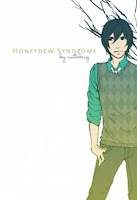
Honeydew Syndrome, Volumes 1-2 by New Shoe. I thoroughly enjoyed Honeydew Syndrome, particularly it’s quirky and true-to-life characters. Initially released as a webcomic, the boys’ love series was later collected in print in two volumes with additional bonus content. The first volume focuses on the somewhat awkward relationship between Metis and Josh which only gets its start after Josh hauls out and punches Metis in the face. The second volume partly overlaps with the first–some of the same events are seen from different perspectives–and focuses on their friends. Honeydew Syndrome doesn’t really have a driving plot; instead, it’s much more about relationships (and not just the romantic ones.)

Saiyuki Reload, Volumes 1-3 by Kazuya Minekura. Though the manga changed names, magazines, and demographics, Saiyuki Reload is a direct followup to Minekura’s Saiyuki. While I enjoyed the slightly ridiculous Saiyuki, for some reason Saiyuki Reload doesn’t seem to be clicking as well with me. Despite a few flashbacks delving into Sanzo’s past, these early volumes just don’t feel like they’re going anywhere with either the story or the characters. It’s as if Sanzo and his crew are simply playing their previously established roles; the character development seems to be missing. However, the artwork in Saiyuki Reload is more polished than that in Saiyuki. (It is a more recent series after all.) The action sequences tend to be clearer and easier to follow, too.

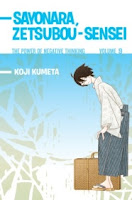
Sayonara, Zetsubou-Sensei: The Power of Negative Thinking, Volumes 9-10 by Koji Kumeta. Sayonara, Zetsubou-Sensei was originally released in English by Del Rey, but it is one of the series that Kodansha now continues to publish. It’s a slow seller–there hasn’t been a volume released in over a year–but I can understand why. The series tends to be episodic, has a very specific sense of humor, and the sheer number of cultural references it uses makes the series challenging to translate and adapt. Despite the fact that I often find Sayonara, Zetsubou-Sensei to be hilarious in a darkly absurd way, I can only read a volume or two at a time without it feeling like a chore. But I do like the series and am glad that it’s available.

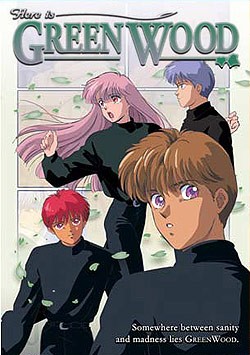
Here Is Greenwood directed by Tomomi Mochizuki. Based on the shoujo manga series by Yukie Nasu, Here Is Greenwood is a six-episode OVA. Although it is a mix of strict adaptation, new material, and slight re-imaginings of the stories in the original, the anime stays very true to the tone of the manga. I read and enjoyed Here Is Greenwood and I enjoyed the anime as well, but I don’t think that it will hold much appeal to those who aren’t already familiar with the characters. Here Is Greenwood is fairly episodic but the stories all revolve around the perpetually stressed-out high school student Kazuya Hasukawa, his oddball dorm and class mates, and the often absurd situations they find themselves in. The series is quirky and funny and made me laugh on several occasions.

Filed Under: My Week in Manga Tagged With: anime, comics, Here Is Greenwood, Honeydew Syndrome, kazuya minekura, Koji Kumeta, manga, New Shoe, Saiyuki, sayonara zetsubou-sensei

Pick of the Week: Limit

July 22, 2013 by MJ, Anna N and Sean Gaffney 1 Comment

limit6MJ: It’s a bit of a slow week for new manga, since we looked at Yen Press’ releases last week, but I still have a clear pick in the mix. I’m all in for the final volume of Keiko Suenobu’s Limit, out this week from Vertical. I’ve been on the edge of my seat since the very beginning, and the tension could not be higher as we go into this last volume. It’s rare that a short series like this packs such a punch. It’s the one and only pick for me this week.

ANNA: I will throw in for Limit as well. Looking forward to catching up on this series!

SEAN: Yeah, Limit 6 for me as well. Its overblown melodrama is its greatest weakness, but also its biggest strength.

What looks good to you this week?

Filed Under: PICK OF THE WEEK

Yun Kouga MMF: Final Link Roundup

July 21, 2013 by MJ Leave a Comment

loveless-blossomsWe’ve come to the end of the Yun Kouga Manga Moveable Feast! Though participation was undeniably low, we’re excited about the contributions that were made to the Feast. Here’s a roundup from the past few days:

I weighed in with a new 3 Things Thursday, in which I picked out three (ish) of my favorite female characters from Yun Kouga’s catalogue, including one from Earthian, which I read for the first time this week.

The male-centric sensibility often applies to shoujo manga as well—particularly those penned by creators who enjoy a strong undercurrent of BL subtext in their work, and this absolutely describes Yun Kouga. After all, even Gestalt‘s kick-ass heroine, Ouri, is actually a man temporarily endowed with a female form. Still, Kouga-sensei does not let me down! Female characters are always part of the fabric of her stories, even the most BL-rific of her worlds. For today’s 3 Things Thursday, I’ll look at three of these!

soubi-bound At Experiments in Manga, Ash Brown revisits the first two volumes of Loveless by way of Viz’s new omnibus release – Loveless, Omnibus 1:

The beginning of Loveless is a story of intense yearning and loneliness with characters who have been broken, damaged, and twisted. But even when they despair they still cling to hope. Ritsuka has trouble accepting himself and difficulty trusting others; the attention he receives from Soubi is both welcomed and feared. Loveless is also a story about the power of words. In part because of his association with Soubi, Ritsuka is pulled into a world where battles are waged with words and spells are cast that can cause considerable pain and physical damage … The first omnibus of Loveless raises more questions than it provides answers, but it does establish an intriguing tale and characters. Even having read it before, I still find Loveless to be a strangely enthralling and compelling manga.

Continuing the trend, our own Anna Neatrour at Manga Report gives the Viz’s first omnibus a second chance and finds she’s glad she did – Loveless Vols. 1 and 2:

Some manga seems a bit too edited or mass produced. Unless you’re seeking out manga from some of the more alternative magazines, most mainstream manga isn’t all that weird. The pinnacle of enjoyable manga weirdness in my mind is Est Em’s Working Kentauros. That manga about the slice of life tribulations about Centaur salarymen provides the reader with a peak into a manga creator’s subconscious and ability to be creative without boundaries. Loveless isn’t as unconventionally weird as Working Kentauros, but its combination of cat people, light bondage, magical battles, mysterious organizations, abusive parents, master/servant relationships, and occasional licking definitely add up to a manga that’s a bit more distinctive and quirky than one might expect.

And it’s all Loveless, all the time as Michelle & I celebrate our 100th installment of Off the Shelf with an epic discussion of the series – Off the Shelf, MMF Edition: Loveless:

MICHELLE: I really love the imagery of the “I can’t let go of anyone’s hand” moment, too. Another thing that strikes me about that shirt-buttoning scene is what Ritsuka says during it: “Y’know… I could never do anything like that for you.” Even though he finds violence abhorrent, it’s still his instinct to give Soubi what he needs/craves, and it saddens him that this is something that he simply cannot do.

MJ: Yes, yes! The fact that he words it that way, “for you” rather than “to you” (which is surely the way Kio sees it) acknowledges its importance to Soubi, and makes it clear that, even if Ritsuka can’t quite understand why Soubi would want something like that, he understands that he shouldn’t just dismiss Soubi’s feelings about it.

100-COLUMNS2

This wraps up the Yun Kouga MMF! Many thanks to everyone who participated. The complete archive can be found here. We now make way for the Boys’ Love MMF, to be hosted in August by Khursten Santos at Otaku Champloo!

Filed Under: UNSHELVED Tagged With: Manga Moveable Feast, MMF, Yun Kouga

K-On! College

July 21, 2013 by Sean Gaffney

By Kakifly. Released in Japan by Houbunsha, serialized in the magazine Manga Time Kirara. Released in North America by Yen Press.

It’s hard to be drawn in sometimes when a series is just so corporately driven. There was nothing wrong with the ending of the original K-On! It ended quite well, with the girls graduating and moving on to college. And yet suddenly, a few months later, we return with not one but TWO new series, each running in a separate magazine. It’s hard not to look at this and think that the publisher asked the writer to drag things on a little bit longer. What’s more, it is only a little bit – each sequel only lasted one volume, and the ending for this college volume just isn’t as satisfying as the original ending. Not to mention that many of the new characters fill similar functions to the old group. So, why read this cash-in?

k-oncollege

Well, because the author still knows how to write cute girls doing cute things and having cute situations. I mentioned in a comment on a previous review that I use ‘moe’ in two distinct and separate ways, and this is the first one. Everything about this is designed to make the reader happy to read about girls doing everyday things and trying to keep their high school rock band going. There is zero romance, and next to zero fanservice (there’s a suggestive color page of Mugi at one point). And there are absolutely no little sisters being this cute. Well, there’s Ui, but she acts the part of the responsible oneesama in any case. In any case, what we have here is more of the same, but at college. But if you enjoyed the first four volumes, there’s a high percentage you’ll enjoy this.

There is even, dare I say it, a bit of character development, showing that the girls might be growing up. Yui is trying to think about why she wants to keep playing music, even if she tends to think so hard it gives her a fever. Ritsu is the same, only she’s not a prodigy like Yui or a hard-worker like Mio and Mugi, so her fears tend to come to the fore. Mio still has her little foibles, but is cringing and freaking out a lot less, and is able to give just as good as she gets (her friendship with Ritsu remains a highlight). As for Mugi, she’s on her own for the first time in her life, so has her own insecurities that the others have never worried about. Seeing her joy in the little things we take for granted is really sweet.

As for the new girls, they get fleshed out more than I expected. Akira in particular I wasn’t fond of when we first met her, as it was fairly clear that the author needed someone for Yui to glomp and Azusa wasn’t around anymore, so here was a nearby replacement. Gradually, as the manga wears on, though, we see that she’s isn’t just another tsundere. She’s also allowed to have an old male crush, since she’s not one of the original cast and fanboys won’t burn merchandise in protest. But fear not, it doesn’t go anywhere. Sachi and Ayame round out the rest of that trio, and each have their own little quirks (particularly Sachi), but sadly don’t get as much time as Akira to develop in the minimal pages we see here.

Again, there’s nothing here that doesn’t support the idea that the author was asked to draw a little bit more to make some more money. But the core of what made K-On! enjoyable is also still here, and there’s nothing actively wrong with this. If you enjoyed reading about the four girls before, you’ll enjoy it here. If not, well, get it so that you can watch Ritsu’s hair evolve over the course of the volume.

Filed Under: REVIEWS

  • « Go to Previous Page
  • Page 1
  • Interim pages omitted …
  • Page 660
  • Page 661
  • Page 662
  • Page 663
  • Page 664
  • Interim pages omitted …
  • Page 1048
  • Go to Next Page »
 | Log in
Copyright © 2010 Manga Bookshelf | Powered by WordPress & the Genesis Framework