• Skip to primary navigation
  • Skip to main content
  • Skip to primary sidebar
  • Home
  • About Us
    • Privacy Policy
    • Comment Policy
    • Disclosures & Disclaimers
  • Resources
    • Links, Essays & Articles
    • Fandomology!
    • CLAMP Directory
    • BlogRoll
  • Features & Columns
    • 3 Things Thursday
    • Adventures in the Key of Shoujo
    • Bit & Blips (game reviews)
    • BL BOOKRACK
    • Bookshelf Briefs
    • Bringing the Drama
    • Comic Conversion
    • Fanservice Friday
    • Going Digital
    • It Came From the Sinosphere
    • License This!
    • Magazine no Mori
    • My Week in Manga
    • OFF THE SHELF
    • Not By Manga Alone
    • PICK OF THE WEEK
    • Subtitles & Sensibility
    • Weekly Shonen Jump Recaps
  • Manga Moveable Feast
    • MMF Full Archive
    • Yun Kouga
    • CLAMP
    • Shojo Beat
    • Osamu Tezuka
    • Sailor Moon
    • Fruits Basket
    • Takehiko Inoue
    • Wild Adapter
    • One Piece
    • After School Nightmare
    • Karakuri Odette
    • Paradise Kiss
    • The Color Trilogy
    • To Terra…
    • Sexy Voice & Robo
  • Browse by Author
    • Sean Gaffney
    • Anna Neatrour
    • Michelle Smith
    • Katherine Dacey
    • MJ
    • Brigid Alverson
    • Travis Anderson
    • Phillip Anthony
    • Derek Bown
    • Jaci Dahlvang
    • Angela Eastman
    • Erica Friedman
    • Sara K.
    • Megan Purdy
    • Emily Snodgrass
    • Nancy Thistlethwaite
    • Eva Volin
    • David Welsh
  • MB Blogs
    • A Case Suitable For Treatment
    • Experiments in Manga
    • MangaBlog
    • The Manga Critic
    • Manga Report
    • Soliloquy in Blue
    • Manga Curmudgeon (archive)

Manga Bookshelf

Discussion, Resources, Roundtables, & Reviews

Blog

Pick of the Week: Something for Everyone

September 9, 2013 by Michelle Smith, Ash Brown, Sean Gaffney, MJ and Anna N Leave a Comment

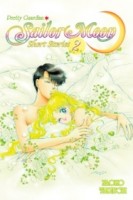
potw-9-9-13MICHELLE: Even though I’m not completely sold on the idea of packaging the Sailor Moon Sailor Moon Short Stories separately, I am nonetheless going to appoint the first volume of them as my pick for this week, since it’s my penultimate chance to mention Sailor Moon in this column. I can’t believe the series is really nearly complete in English; it seemed to happen so fast!

ASH: Another series that is slowly nearing the end of its release in English is Hiroaki Samura’s long-running Blade of the Immortal. It’s a personal favorite of mine, so I’d be a bad fan if I didn’t choose it as my pick of the week. The Man of Tango is also very tempting, though…

SEAN: Normally I would be all over Sailor Moon as well. However, this volume of Hayate the Combat Butler, as well as the two that follow it, are a peak that I’m not sure the series has ever quite reached again. It’s especially a rewarding volume for Hinagiku fans, at least until the final page. For fans of romantic harem comedy, this is still one of the funnier ones. At least till 2014, when we’ll see the two action-oriented thriller volumes.

MJ: I’m going to pick up where Ash left off and give my vote to Tetuzoh Okadaya’s The Man of Tango. BL one-shots are not often for me, but based on everything I’ve read about this book, even down to the cover design, I’m going to guess that this one will be. It’s definitely one I’m willing to take a chance on. So there you have it!

ANNA: I’ll have to go with the sixth volume of 07-Ghost. There are many great manga shipping this week, but I’ll likely read that manga first. The mystical fighting priests reel me in every time!

What looks good to you this week?

Filed Under: PICK OF THE WEEK

Bookshelf Briefs 9/9/13

September 9, 2013 by Anna N, MJ and Sean Gaffney Leave a Comment

This week, Anna, MJ, & Sean look at recent releases from Viz Media, SuBLime Manga, and Swedish publisher Nosebleed Studio.


demon4Demon Love Spell, Vol. 4 | By Mayu Shinjo | Viz Media – Part of me reads Shinjo’s recent works with a feeling of wistful nostalgia for the more melodrama-filled antics of her earlier series. However, each volume of Demon Love Spell becomes more hilarious and disarming. This volume of the comedic supernatural romance features Miko and incubus Kagura temporarily becoming parents to a boy who appears from a peach, and Miko’s trip to the demon world features her being confronted with a parade of Kagura’s siblings, each more gorgeous than the next. This is one of those series that leaps up to the top of my to-read stack whenever a new volume arrives. Highly recommended. – Anna N

Demon Love Spell, Vol. 4 | By Mayu Shinjo | Viz Media – Now that Mayu Shinjo is no longer at Shogakukan and can’t just have everyone fall into the sack after 2 chapters (though you’d never know it by that seductive cover), she’s forced to find ways to have our heroes not going there. It’s especially amusing in this volume as the last few obstacles that are stopping them are getting removed; Miko now admits that she desires Kagura and is ready to give herself to him, and Kagura has admitted that she is different from his other conquests and he wants to marry her, not just screw her. Of course, this doesn’t mean anything happens. Between peach babies, bodyswaps, interfering fathers on both sides, and a swarm of amazingly sexy in-laws, Miko has her hands full here. But I’m OK with that, as this is the most fun I’ve ever had with a Shinjo series. – Sean Gaffney

hideandseek1Hide and Seek, Vol. 1 | By Yaya Sakuragi | SuBLime Manga – Despite some decidedly positive experiences with the works of Yaya Sakuragi, I can’t deny that my intense dislike of Bond of Dreams, Bond of Love caused me to approach this spin-off with great apprehension. With that in mind, I’m happy to report that I’ve been pleasantly surprised! Though Hide and Seek‘s carefree single dad, Shuji Tanihara, and reserved doctor, Takafumi Saji, represent fairly typical BL types, their characterization feels fresh and their slow-building relationship reads as nuanced and unpredictable, even within the predictable confines of the genre. Furthermore, the sex scenes actually enhance characterization and move the plot forward—something I’ve long stopped expecting in BL romance. If anyone ever told me I’d one day consider revisiting Bond of Dreams, Bond of Love, I’d have scoffed heartily. Yet here we are. Unexpectedly recommended. – MJ

kimi17Kimi Ni Todoke Vol. 17 | by Karuho Shiina | Viz Media – Kimi Ni Todoke is one of those longer series that deserves to be whatever length the author wishes to stretch it out to, simply because the length of the series allows the reader to build up an affinity for all the characters and the manga as a whole is so well-executed. Sawako and Kazehaya’s relationship is under a bit of a strain, as he attempts to maintain distance between them out of respect for her naivete and she begins to worry that he doesn’t want to be around her anymore. Usually this type of storyline where the characters are kept apart because they aren’t really communicating can cause me to feel highly impatient, but Shiina’s slow, emotionally delicate handling of the situation just wants me to follow along with the progression of this relationship.
– Anna N

slamdunk30Slam Dunk, Vol. 30 | by Takehiko Inoue | Viz Media – When most long-running series come to a close after 30+ volumes I usually read the final volumes with a bit of relief, looking forward to the conclusion. I am actually extremely sad that this is the next to last volume of Slam Dunk, because I feel like there are so many other stories that could be told with these characters, 31 volumes is just scratching the surface. There are hints of a conclusion, as Akagi looks back over his career during a timeout and Rukawa continues to evolve on the court. I’m going to be sitting here impatiently waiting until December, because I’m worried that Sakuragi really did injure his back making a key play in the game. It is a shame that sports manga isn’t more commercially appealing in North America, but at least with this series we have the opportunity to read one of the best examples of the genre. Highly recommended as always. – Anna N

Omslag1-300x420Swedish Manga Anthology | By Catarina Batista, Natalia Batista, & Joakim Waller | Nosebleed Studio – This anthology of three global manga comes from Nosebleed Studio, a group of Swedish artists who are not only influenced heavily by Japanese manga, but who have, in some cases, pursued publication in Japan. I mention this, because even in this anthology, which is deliberately Swedish-themed, there is a sense that the authors are writing for Japanese audiences. The book’s second two stories, Natalia Batista’s “Hearts of Midsummer” and Joakim Waller’s “Leo” both read right-to-left, as they would if they’d been intended for publication in Japanese. “Leo,” in fact, doesn’t read as something particularly Swedish at all, aside from the characters’ names, and could just as easily be set in Japanese school. The volume’s standout is Catarina Batista’s “Crying Wolf,” an anti-wolf-hunting story that manages to be more charming than heavy-handed, though all three are well-constructed and enjoyable to read. – MJ

Filed Under: Bookshelf Briefs

Eat for Your Life vol. 1

September 9, 2013 by Anna N

eatforyourlife

Eat for Your Life Volume 1 by Shigeru Tsuchiyama

This book is available on emanga.com

I do enjoy food manga now and then, and since unfortunately this is a genre that we only get a small sampling of here I’m always interested in a new title. While there are plenty of manga that I’ve read devoted to particular dishes or types of food, eating with friends, or in the case of Toriko eating incredibly weird things, this is the first eating competition manga that I’ve read. I found the combination of sports manga plot structure and endless drawings of bowls of katsudon compelling.

Ohara is a salaryman with a reputation as a gourmet. Perpetually broke due to his habit of going on food tours, he stumbles across an eating competition and decides to try his luck. Ohara fails, but he catches the eye of a professional food competitor named George. I could tell at a glance that George was going to be Ohara’s eccentric mentor because he was wearing a fringed leather jacket, sunglasses, and a ponytail. George appreciates Ohara’s ability to savor what he is eating as well as his rudimentary but sound eating technique.

Ohara begins to be pulled into the world of competative eating, but with some informal coaching from George, he might be ready to take his love of eating to the next level. The situations and characters in Eat For Your Life follow the “try your best” theme of most sports manga, except here one tries to conquer insane serving amounts of food as opposed to facing an opponent on the sports field. Eat For Your Life was amusing. The art was well executed, but not particularly distinctive, and there wwas a decent amount of humor as Ohara reacts with a rookie’s amazement to the world of competitive eating. I recommended this title for foodie manga fans.

Electronic access provided by the publisher.

Filed Under: REVIEWS Tagged With: digital manga publishing, dmg, emanga

Young Miss Holmes, Casebook 5-7

September 8, 2013 by Sean Gaffney

By Kaoru Shintani. Released in Japan as “Christie High Tension” by Media Factory, serialized in the magazine Comic Flapper. Released in North America by Seven Seas.

The Young Miss Holmes series wraps up here with an omnibus of the final three volumes, and also takes a departure from canon, as only the first story, “The Adventure of the Solitary Cyclist”, is a Watson story published by Conan Doyle. That said, some of the titles of the remaining stories here may be familiar with Holmes and Watson, particularly the “Canary Trainer” mentioned in “The Adventure of Black Peter”, and the infamous “Giant Rat of Sumatra”, mentioned in the “Adventure of the Sussex Vampire” story. Shintani makes a decent effort at leaving the Holmes canon, and it allows him to do a bit more with Christie than simple sleuthing, particularly in the finale, which is basically an action movie with very little detecting.

ymh3

The canonical Holmes story, Solitary Cyclist, does a decent job of having Christie and Sherlock join forces. Violet Smith is an old friend of Grace, Christie’s governess. Christie herself is chomping at the bit to become more independent, while still retaining a childlike air (particularly in the Circus chapters). That said, she’s not only more mature than most girls her age but far more modern, discussing how she has no desire to be a young lady the way the Victorians see them, and is already taking her savings and starting a pension plan to allow her servants to retire happily. It’s a good way to try to drag Holmes into the 21st century a bit, while still maintaining the charm of the original. (That said, I could have done without the appearance of Queen Victoria herself, in the weakest part of the book.)

The book is not faultless, of course. There is less nudity and gore than the first two omnibuses, but there’s still lots of corpses for an All-Ages rating, and Comic Flapper and Shintani still seem to sexualize Christie more than is necessary on a few title pages. The use of ‘moneylenders’ once or twice comes with some Victorian stereotypes, although it’s not really bad unless you’re looking for it. (Indeed, most of the villains here suffer from “I am ugly and therefore a villain” disease, which is quite common in comics and manga alike.) “The Dying Message” and “The Flying Dancer” aren’t too bad, but are weaker than the other stories we see here.

The Canary Trainer story is easily the creepiest of the book, featuring murder, suicide, child slavery, hypnotic suggestion, and child prostitution. It also merges Christie and Holmes the best of the five stories seen here, as they start out pursuing two totally different cases that only turn out to be the same thing right near the end. However, in a shocking display of canon ignorance, Shintani may have drawn Mycroft Holmes as slim. Luckily, there’s an out: everyone who says “that must have been Mycroft” didn’t actually see him. Perhaps it was Sherringford. Let’s go with that.

Things come to a head with the 7th volume/last third of the book, The Giant Rat of Sumatra. This helps to avoid the stereotype of “foreign villains” by sending a troup of good guys from India to help protect Christie from the thuggee bad guys. They are, of course, led by a young woman who is basically the Indian version of Christie, complete with tomboy mannerisms and snarky retainers. She’s good in a fight, however, which is a bonus, as Christie decides to simply go to ground in her mansion and let the villains come to her. Which they do, in one big final conflagration.

The series ends with the return of Christie’s parents, which marks a good stopping point – I’m sure they won’t totally stop her getting into adventures, but no doubt she will have to slow down a little. Shintani is currently writing a sequel, Christie London Massive, featuring a 17-year-old Christie, a whole new cadre of battle maids (led by Nora, no fear, she’s still there), and perhaps a familiar adversary of Sherlock Holmes thrown into the mix. Of course, that’s Japan. Whether it comes out here or not depends on how well the print and E-Book versions do. I had a ball reading them, particularly as a Holmes fan, and definitely recommend picking up the whole series.

Also, there is a dodo. For some reason.

Filed Under: REVIEWS

Manga: Introduction, Challenges, and Best Practices

September 8, 2013 by Ash Brown

Manga: Introduction, Challenges, and Best PracticesEditor: MJ
Publisher: Dark Horse
ISBN: 9781616552787
Released: December 2013

The Comic Book Legal Defense Fund (CBLDF) is an organization based in the United States devoted to the protection of the freedoms to read, create, and provide access to comics. Manga: Introduction, Challenges, and Best Practices is a part of its education initiative funded by the Gaiman Foundation and was published by Dark Horse in 2013. Manga was edited by MJ and includes contributions from Katherine Dacey, Shaenon Garrity, Sean Gaffney, Ed Chavez, Erica Friedman, and Robin Brenner. It’s an excellent lineup of manga critics, scholars, and those who have worked in the manga industry in both Japan and North America. Being familiar with their work, in addition to being a card-carrying member of the CBLDF, I was very excited when I learned about the upcoming release of Manga. And because I also happen to be a librarian, I was able to snag an early copy of the guide.

Manga consists of nine chapters and a list of recommended resources. The first chapter, “What Is Manga?” provides a brief history of manga both in Japan and in the West, distinguishes manga from comparable comics traditions such as manhua, manhwa, OEL manga and other manga-influenced comics, and provides suggested resources for further reading. The following chapters survey the four major demographics of manga–shōnen, shōjo, seinen, and josei–as well as two additional categories–yuri and boys’ love. These chapters cover history, commonly found genres, special issues, and (except for the chapter devoted to yuri) notable artists. Another chapter, “Untranslated and Fan Translated,” addresses dōjinshi and scanlations. The final and longest chapter, “Challenges,” focuses on the collection and defense of manga by libraries and summarizes a few major North American court cases dealing with manga.

As is always the danger when writing about popular culture, some of the information in Manga–specifically some of the references to what has or hasn’t been licensed in English–is already out of date. That doesn’t make Manga any less valuable as a resource, though. It is, however, something to keep in mind while reading the guide. Manga is a fantastic introduction to and overview of manga and manga history, especially as it applies to the North American market. The book seems to be particularly geared towards libraries and schools which may be developing or maintaining a manga collection, but Manga should also be interesting and useful to already established fans of manga as a whole as well to as people who are unfamiliar with the form but who would like to learn more about it. Manga packs a lot of information into a slim volume but remains very accessible throughout.

The only thing missing that may have made Manga even more useful for the uninitiated would be a glossary of terms. More information about the contributors themselves would have also been beneficial. I knew who they were but someone less familiar with the subject area wouldn’t necessarily recognize them. Overall, Manga is short and to the point and is an excellent resource. The guide eases readers into the subject and avoids overwhelming them with too much information. There were a couple of generalizations that gave me pause and may have been overly broad, but Manga is meant as an introduction and so shouldn’t (and doesn’t) get bogged down in technicalities and exceptions. Manga is consistently accurate and informative for the audience it’s intended. The book may not be incredibly in-depth, but it is a great place to start learning about manga, its history, and its challenges. Manga is very easy to recommend not only to library professionals, but to general manga enthusiasts as well.

Disclosure: Experiments in Manga is a member blog of Manga Bookshelf; many of those who worked on Manga are also associated with Manga Bookshelf.

Filed Under: REVIEWS Tagged With: Dark Horse, manga, Melinda Beasi, Nonfiction

Off the Shelf: Josei Romance Edition

September 8, 2013 by MJ and Michelle Smith Leave a Comment

MJ: Hello, Michelle! Wow, it’s been a while, hasn’t it?

MICHELLE: It certainly has! We’ve both had a tremendous amount of stuff going on in our lives lately.

MJ: Ooooh yes we have. It’s great to be back here with you, though. I’m dying to talk about some manga! We’ve got two mutual reads to discuss this week. Want to get us started?

midnightsecretary1MICHELLE: Sure! I suppose I’ll just start with the one I read first, which was the debut volume of Midnight Secretary, by Tomu Ohmi. Originally serialized in Petit Comic, this seven-volume josei series is about an uber-efficient young secretary, Kaya Satozuka, who is assigned to Kyohei Tohma, the difficult managing director of the tableware manufacturer they both work for. Tohma’s pretty much a jerk and is inclined to dismiss her at their first meeting for her plain looks, but Satozuka counters that he should wait and see what she’s capable of so he can make an informed decision.

She proceeds to do her job with surpassing competence, and Tohma’s ungrateful remarks gradually give way to compliments, though remarks about her appearance persist. In the process, she discovers that her boss is a vampire, and makes it her mission to protect him dutifully, even giving him her blood at one point when a meeting in an atmosphere of religious faith leaves him weak. Of course, she’s unable to get this incident out of her mind, and before the end of the volume she’s shedding her professional persona and getting gussied up to attend a Christmas function with Tohma, whereupon he feeds on her again, then develops some mad craving that all of his other sexy “meals” aren’t able to provide.

I just don’t know about this one. I didn’t hate it and would probably read more, but I’m kind of annoyed by the “competant woman gets undone by the attentions of amorous soundrel” plotline.

MJ: Oddly, I found that this didn’t really bother me all that much, and I’m a bit perplexed as to why. Somehow, though, I found that the over-the-top fantasy premise kept me from needing to take anything about it seriously, and in the end I just had a lot of fun.

It also helps that Kaya really is an incredible secretary, so even as we’re being put through the usual “amorous scoundrel” paces, that’s an area where she isn’t remotely vulnerable. So often, Tohma’s type of controlling hot-shot love interest relies on breaking down the heroine’s self-esteem, but when it comes to the one thing she truly cares about—her abilities at work—he can’t even make a dent. If she falls for him? Well, that’s romance. But nobody can damage Kaya’s belief in herself.

MICHELLE: That’s a very good point about her skills—she doesn’t need him to take care of her, because she’s got an excellent professional reputation already. Probably I’m just taking things too seriously, as is my wont. Also, I feel like a crotchety old lady for saying this, but… I kinda want to know more about the tableware!

MJ: Normally, I’d be taking it too seriously, too! I have a very limited sense of humor when it comes to controlling, male love interests. Yet somehow, I’m super-relaxed about it here.

I do have some favorite bits of humor in this volume, too. I particularly enjoyed following Kaya’s early experiments with things like crosses and mirrors, as she tries to determine which vampire legends she needs to pay attention to in order to properly protect her boss.

I admit I don’t remember the tableware. Is the a euphemism? What am I missing here?!

MICHELLE: Oh, it was just a throwaway line about what their company does. Care to introduce our second manga?

happymarriageMJ: I would! Our second read this week was the first volume of Maki Enjoji’s Happy Marriage?!.

Like Midnight Secretary (and, previously, Butterflies, Flowers), Happy Marriage?! comes to us from the josei magazine Petit Comic, released here under Viz’s Shojo Beat imprint. And, like both Midnight Secretary and Butterflies, Flowers, the series features an office romance between a young woman and her boss—in this case, office lady Chiwa Takanashi and her company’s president, Hokuto Mamiya.

Chiwa works full-time at the Mamiya Company, but moonlights as a hostess in an effort to pay off her father’s business debts. Unlike her coworkers, she’s fairly uninterested in attracting a boyfriend, let alone anything more serious. But her life is turned upside-down when the company’s Chairman offers to eliminate her family’s financial troubles if she’ll agree to an arranged marriage with his grandson, Hokuto, who also happens to be her boss. Hokuto has his own reasons for agreeing to the marriage (namely, keeping his position as company president), and though Chiwa’s reservations are considerable, she ultimately agrees.

The two move in together (against Chiwa’s wishes) and this leads to a number of embarrassing moments as well as the disappointing revelation that Chiwa’s new husband is a complete slob. He’s also a devastatingly handsome, predictably controlling romantic lead, who taunts her with a sexy secretary while improbably pledging sexual fidelity to his wife of convenience. Misunderstandings and wackiness ensue.

There’s nothing really new in this series, as you may have guessed, but it’s genuinely fun and (so far) less maddening than, say, Butterflies, Flowers, which is a compliment, I suppose.

MICHELLE: After a notably inauspicious start—the scene in which Chiwa conveniently forgets to bring new undies to change into after her bath, and then just so happens to trip over a cushion and expose her goodies to Hokuto is particularly cringe-worthy—I actually kind of enjoyed this one. True, Hokuto can be quite controlling—he arranges for them to get locked in the company archives so they can have time along together—and, like Tohma, makes remarks about Chiwa’s looks and status (“If people found out that I married a woman like you it’d ruin my reputation”), but has some redeeming points, like his intention to take the marriage vows seriously. Chiwa can be irrational—she’s the type to storm out after an argument but forget her purse—but I liked that she will actually ask for help when she needs it as well as express her gratitude.

This arrangement and their personalities reminded me a lot of a manhwa plotline, actually. Something akin to Full House.

MJ: It’s funny that you should bring up Full House, Michelle, because I found myself thinking of another manhwa series, So I Married an Anti-Fan, which similarly pushes its heroine and hero into a “fake” relationship that (presumably) becomes a real one. And though Happy Marriage?! lacks the outrageous K-drama-esque quality that made Anti-Fan so much fun for me, I really did enjoy this first volume as well.

I think, similarly to the way you reacted to Midnight Secretary, I was bothered that Chiwa falls for Hokuto so quickly, and perhaps that’s where it differs from the manhwa we’ve mentioned, too. I mean, he’s not a monster, and he does sweep in fairly heroically in the last chapter to save face for Chiwa at her class reunion. But I suppose I’d prefer the bickering to last as long as possible in a story like this.

MICHELLE: Oh, yes, Anti-Fan is probably a better comparison! I think I have a much lower bicker tolerance than you do, so was pleased to see scenes wherein Chiwa and Hokuto are actually able to really talk to each other happening as early as volume one.

I can see myself reading the complete run of both these series, but I’m not sure whether I’d reread them.

MJ: I’m absolutely certain I’ll enjoy reading both these series all the way through… and that I’m unlikely to re-read them. Which is interesting to note, since I’d absolutely re-read both the manhwa series we’ve brought up in comparison. I’m trying to put my finger on what exactly makes the difference, and the closest I can come is “personality.” Both of those manhwa series feature an excess of individual personality as the primary element of their charm. These josei romances, on the other hand, I think are charming largely for their sense of sameness and familiarity.

Like most high-school romance series, these office romances are compelling in part because we know exactly what’s going to happen and we can just relax and enjoy ourselves as the inevitable plays out. And though they each begin with their own premise, they’re ultimately alike enough that they kinda ran together for me as I read them. In fact, I had to correct myself early on in the discussion of Midnight Secretary as I began to discuss a romantic rival that I later realized was from Happy Marriage?!

MICHELLE: Yeah, in particular the guys are similar, what with the mix of insults and compliments and all of that. Sometimes I was reminded of those Harlequin romance manga adaptations, too, but I’d definitely say these are several steps up in terms of originality, even being as similar as they are. I think the conclusion to Happy Marriage?! is a little more obvious than Midnight Secretary, but I can certainly use some easy, cozy things to read now and then!

MJ: Definitely! Honestly, none of this is a complaint. Even if my public pleas for “more josei!” are answered by more of this and not as much meatier fare, such as Vertical’s Helter-Skelter (which we originally planned to include with these as part of a josei column, until we realized just how inappropriate that matchup would be), I can enjoy these for what they are. It’s still gratifying to read stories about adult women, and I can’t deny that I love romance. It’s comfort food, no more, no less.

MICHELLE: Pass the mashed potatoes!

Filed Under: OFF THE SHELF

Helter Skelter: Fashion Unfriendly

September 7, 2013 by Sean Gaffney

By Kyoko Okazaki. Released in Japan by Shodensha, serialized in the magazine Feel Young. Released in North America by Vertical.

When I first heard about the new title that Vertical had licensed, and its basic premise, I started to formulate in my head an idea of how it would probably go. We already knew it would be about modeling and plastic surgery in some way. It was not a great leap forward to imagine there would be a younger, more successful rival, a controlling mother figure, and the hubristic slide into inevitable tragedy. And technically, that’s all present and correct in this volume. But that doesn’t begin to describe what a stunning ride this is, and how much you get drawn into its characters and storyline.

helterskelter

Liliko is the star here, and she’s far more self-aware than I was really expecting. She starts at the top of the modeling game, but it’s taken a lot of work to get her there. Moreover, a secondary plotline throughout the book discusses the shady characters who did her plastic surgery, and how the law is getting closer and closer to them. Really, while Liliko is flagrantly horrible at many points in this book – she notes at one point that she’s so broken that the only thing that gives her satisfaction is breaking others – she’s no worse than na lot of the top strata in the business she’s engaged in, which uncaringly throws away stars once they lose their looks or get embroiled in scandal.

Actually, the character I was most fascinated with throughout the book was Hada, the young woman who starts as Liliko’s gofer/assistant and ends up falling for her hard, in all the wrong ways. I was initially expecting Hada to end up killing herself – there are a few suicides in this book, and I wondered if one of the corpses I saw would be hers. Then, as things got worse, I realized that it was more likely she’d wind up arrested. Then I wondered if she’d be the chief witness for the prosecution. Then, as things really spiraled, it became clear that there was no separating Hada and her easily led boyfriend from Liliko for any period… not while they’re still completely codependent on each other.

There was one thing I didn’t think worked here, or at least that didn’t resonate with me as much as the rest of the book. Takao Nanbu, Liliko’s boyfriend at the start of the book, likes to speak in a philosophical, slightly smarmy way, and he simply grated on my nerves with all the Tiger Lily stuff and talk about past lives. Certainly he added a different element to the story (and oh do I feel bad for his fiancee getting caught up in Liliko’s psychotic drama), but especially towards the end I felt his monologues were simply overdone.

It’s hard to discuss the main selling point of this manga, as it’s basically an underlying tone. So much happens here that could be termed a car crash, but Okazaki is so compelling a storyteller that you read on anyway, even as modeling turns to adultery, assault and multiple suicides. The title is completely appropriate – and no, despite the song getting a mention right at the end, I don’t think it’s entirely talking about The Beatles. The Helter Skelter is a British amusement park ride (tornado slide for U.S. readers) that is a wild, out of control ride that makes the reader want to go back to the top when they hit the bottom. Likewise Liliko hits rock bottom at the end of this book, but that doesn’t mean that we should count her out, or that this is the end. Her story (and possible new downfall) is only beginning.

Filed Under: REVIEWS

Kitaro

September 6, 2013 by Ash Brown

KitaroCreator: Shigeru Mizuki
U.S. publisher: Drawn & Quarterly
ISBN: 9781770461109
Released: August 2013
Original release: 1967-1969

Over the last few years I have become increasingly interested in yokai–Japan’s supernatural beings and monsters of myth and legend. When it comes to yokai manga the most influential creator in Japan is Shigeru Mizuki. His most famous series GeGeGe no Kitaro is considered a classic and continues to inspire others. I was absolutely thrilled when Drawn & Quarterly announced that GeGeGe no Kitaro had been licensed in English. Kitaro, released in 2013, collects stories from the first few volumes of Mizuki’s GeGeGe no Kitaro published in Japan between 1967 and 1969. Also included in Drawn & Quarterly’s Kitaro is an excellent introduction by Matt Alt (one of the co-authors of Yokai Attack!) and a yokai glossary by Zach Davisson, both of which are particularly useful for readers who aren’t familiar with Kitaro or yokai, but which should also be interesting for those who are more knowledgeable.

“It is said that when the crow caws thrice, and the frog responds twice, the appearance of Kitaro is imminent.” Kitaro of the Graveyard, a one-eyed yokai in the form of a young boy whose ways are mysterious and who wields great spirit powers. Generally a friendly sort of fellow, Kitaro helps protect people from more malicious yokai although unscrupulous humans might find themselves on the losing end of an encounter with him as well. Sometimes working alone and sometimes enlisting the help of other yokai, Kitaro’s adventures take him all over Japan, everywhere from its most densely populated cities to its most remote islands and beyond. It is part of Kitaro’s mission to defeat evil yokai. The spirits and monsters that he faces will take all of the esoteric knowledge and supernatural skills he has to vanquish them, not to mention a little luck.

The stories in Kitaro tend to be episodic and vary in length–most are around fifteen pages while the longest could easily be collected as their own graphic novels. Although the stories aren’t directly related, many share recurring characters. The most notable are Kitaro himself, his father Medama Oyaji–an eyeball with a body who resides in Kitaro’s empty eye socket and enjoys a good teacup bath–and Nezumi Otoko–a half-human, half-yokai troublemaker and sometimes friend. Mizuki was inspired by more than just Japanese folklore when creating Kitaro. In addition to traditional yokai and his own imagination, popular culture and more modern kaiju were also important influences. Even monsters from Western literature, film, and mythology make an appearance. As a result, Kitaro is a lively amalgamation of sources.

I found Kitaro to be utterly delightful. Although it is a horror manga dealing with powerful supernatural creatures and featuring some legitimately creepy scenarios, Kitaro is also very funny and even cheerful in tone. Kitaro does seem to gain abilities as is convenient to the story, but it is still amusing to see how he manages to get out of precarious situations. It can be a bit silly at times, and on occasion deceptively simple and straightforward, but Kitaro is also a great deal of fun. Because of its episodic nature there isn’t much plot or character development, but Mizuki’s creations are still memorable. I particularly appreciate all of the different traditions he draws from to create a tale that is distinctly his own. I loved Kitaro and enjoyed the volume immensely. I sincerely hope that Drawn & Quarterly will be able to release more of the series.

Filed Under: REVIEWS Tagged With: Drawn and Quarterly, Kitaro, manga, Shigeru Mizuki

Manga the Week of 9/11

September 5, 2013 by Sean Gaffney, Ash Brown, Michelle Smith, Anna N and MJ 3 Comments

SEAN: Manga is here, let’s to’t.

Dark Horse has the 27th volume of Blade of the Immortal, one of Dark Horse’s long-running prestige manga titles. It’s still badass.

ASH: That it is! Blade of the Immortal was one of the first manga series that I started reading and I’m still hooked on it.

MICHELLE: I read the first volume and was really impressed by the art, and I own a bunch more of it, but I’ve still never continued. The same thing happened with Vagabond too, actually.

ANNA: I read the first three volumes or so and really liked it. If I ever stumble across a library with a good chunk of this series, I would check it out again. Vagabond as always has my eternal devotion, I think I might be behind with one or two of the VizBig editions.

MJ: I wish I’d gotten hooked early on. At this point the length feels so daunting! Yet I feel I’d probably love it.

smss1SEAN: They also have the 4th volume of OreImo. No spoilers in the comments, bitter fans of the anime. (I wonder if OreImo will pull a School Rumble in terms of sales now that the ending is out in Japan?)

DMP have a BL title coming out called Priceless Honey. Seems to be a short story collection from the author of Punch Up!.

MJ: I’m not big on BL anthologies, but I did like Punch Up!…

SEAN: Kodansha have the 2nd to last Arisa, which I got very, very behind on. Luckily, it’s out digitally now, so I can try to catch up!

ASH: I’m a bit behind on Arisa as well, but it had a great start and I’ve been meaning to read more of it.

MICHELLE: I’ve read through volume ten. It’s become rather snickerworthy, as I noted in brief back in June, but I’m still planning to see it through to the end.

ANNA:
I haven’t read this, for some reason Kodansha’s current shoujo releases don’t appeal to me very much, but I’m looking forward to some of the new series they’ve recently announced!

Not out digitally (here or in Japan) but certainly out in print is the first collection of Sailor Moon Short Stories. These ran in Nakayoshi’s sister magazines throughout the run of the manga, and originally were interspersed through the original volumes. The re-release collected them all at the end. This first of two volumes collects the Chibi-Usa side stories, and the Exam Battles starring the other Inners. It also has my 2nd favorite Sailor Moon manga moment.

MICHELLE: I’m not sure how wise it was to put the short stories in their own collection. True, this way they don’t interrupt the main flow of the narrative, but when I read the Japanese edition this way I was sort of… underwhelmed. Maybe they’ll fare better in English.

manoftangoANNA: One of these days I will marathon Sailor Moon, I feel like I should block out a day and stock up on Sailor Moon reading supplies. I’m envisioning a lot of sweet milky tea and many star-shaped cookies.

SEAN: I’ve come to love His Favorite without ever reading it, just for the look of disgust on the face of the uke on every single cover. It’s an absolute delight, and I hope he’s just as grouchy in the manga itself. Vol. 5 is out this week.

MJ: I’m a volume behind on this now, but the manga really is as delightful as its covers, in my experience. And that character is pretty grouchy. It could sort of read as an AU xxxHolic fanfic, if that gives you some sense of what you’re in for.

SEAN: Also out from SubLime is The Man of Tango, which sounds like it should star Robert Vaughn and David McCallum. The cover art for this is easily the best design SubLime’s ever done (their cover design has been a very weak point to date), and really looks smokingly passionate. This apparently has previously unpublished content as well.

ASH: I’m very excited about the release of The Man of Tango! Originally licensed by Aurora but never released, I was thrilled to see SuBLime pick it up.

ANNA: I don’t read a ton of yaoi, but this was one manga that I actually pre-ordered when Aurora was supposed to release it. Glad this is coming out finally, I found the title and cover of this manga very intriguing.

MJ: I’m looking forward to this as well!

SEAN: Udon still puts out manga, and not just artbooks. Today, it’s Disgaea 3: School of Devils 2. Next week, Arsenal 4, Tottenham nil.

arata15And a trio from Viz. 07-GHOST just ended in Japan last month, but fear not, there’s still a lot to go before we catch up. Here’s Vol. 6.

MICHELLE: It seems like volumes of this series are appearing like bunnies! Soon we’ll be caught up with Go!Comi, if we’re not already!

ANNA: ACK, I’m three volumes behind now! I do like this series, though.

MJ: I am too, yikes!

SEAN: Arata: The Legend is about a year and a half behind Japan, which is not uncommon for a Shonen Sunday mid-list title, even if it is by Yuu Watase. Here’s Vol. 15.

MICHELLE: I do enjoy Arata, even if I can’t get as squeeful about it as, say, Genbu Kaiden.

ANNA: Genbu Kaiden deserves all the squees!

MJ: Agreed, re: Genbu Kaiden. I’m iffy on Arata.

SEAN: And Vol. 22 of Hayate the Combat Butler, which is 3 1/2 years behind Japan and growing farther away every biannual release, but sadly, sales. The manga is still in Greece, and this volume has what may be one of the best romantic heartbreakers of the entire series to date.

Anything strike your fancy?

Filed Under: FEATURES, manga the week of

Manga Giveaway: Blood Lad Giveaway Winner

September 4, 2013 by Ash Brown

Blood Lad, Omnibus 1And the winner of the Blood Lad Giveaway is…Olivia!

As the winner, Olivia will be receiving a new copy of the first volume of Yuuki Kodama’s Blood Lad as published by Yen Press. For this giveaway, I was interested in learning about people’s favorite vampires from manga. Be sure to check out the Blood Lad Giveaway comments for all of the details. There was a great turn out and a great variety in the responses–everyone from Hellsing‘s Alucard and Seras to the half vampire/half were-koala Paifu from Cowa! were mentioned.

And now, here is a select list of manga featuring vampires of different sorts that have been licensed in English at one time or another:

Blood Alone by Masayuki Takano
Blood Lad by Yuuki Kodama
Blood Honey by Sakyou Yozakura
Blood Sucker: Legend of Zipangu written by Saki Okuse, illustrated by Aki Shimizu
Blood+ by Asuka Katsura
Blood-C by Ranmaru Kotone
Bloody Kiss by Kazuko Furumiya
Canon by Chika Shiomi
Chibi Vampire by Yuna Kagesaki
Cirque du Freak by Takahiro Arai
Cowa! by Akira Toriyama
Crescent Moon by Haruko Iida
Crimson Cross written by Sakae Maeda, illustrated by Kyoko Negishi
Dance in the Vampire Bund by Nozomu Tamaki
Devil by Torajiro Kishi
Gantz by Hiroya Oku
Hellsing by Kouta Hirano
Hipira written Katsuhiro Otomo, illustrated by Shinji Kimura
How to Seduce a Vampire by Nimosaku Shimada
Jojo’s Bizarre Adventure by Hirohiko Araki
Lament of the Lamb by Kei Toume
Midnight Secretary by Tomu Ohmi
Millennium Snow by Bisco Hatori
Pathos by Mika Sadahiro
The Record of a Fallen Vampire written by Kyou Shirodaira, illustrated by Yuri Kimura
Rosario + Vampire by Akihisa Ikeda
Trinity Blood by Kiyo Kyujyo
Until the Full Moon by Sanami Matoh
Vampire Game by Judal
Vampire Hunter D by Saiko Takaki
Vampire Knight by Matsuri Hino
Vampire Princess Miyu by Narumi Kakinouchi and Toshiki Hirano
Vampire’s Portrait by Hiroki Kusumoto
Vassalord by Nanae Chrono

The above list is by no means comprehensive. Vampires are very popular and make frequent appearances in manga; the list could have gone on for quite a while. But, if you’re looking for some vampire manga to read, it’s probably a pretty decent place to start. Thank you to everyone who shared their favorite manga vampires with me. I hope to see you again for the next giveaway!

Filed Under: UNSHELVED Tagged With: blood lad, manga, Yuuki Kodama

  • « Go to Previous Page
  • Page 1
  • Interim pages omitted …
  • Page 657
  • Page 658
  • Page 659
  • Page 660
  • Page 661
  • Interim pages omitted …
  • Page 1053
  • Go to Next Page »
 | Log in
Copyright © 2010 Manga Bookshelf | Powered by WordPress & the Genesis Framework