• Skip to primary navigation
  • Skip to main content
  • Skip to primary sidebar
  • Home
  • About Us
    • Privacy Policy
    • Comment Policy
    • Disclosures & Disclaimers
  • Resources
    • Links, Essays & Articles
    • Fandomology!
    • CLAMP Directory
    • BlogRoll
  • Features & Columns
    • 3 Things Thursday
    • Adventures in the Key of Shoujo
    • Bit & Blips (game reviews)
    • BL BOOKRACK
    • Bookshelf Briefs
    • Bringing the Drama
    • Comic Conversion
    • Fanservice Friday
    • Going Digital
    • It Came From the Sinosphere
    • License This!
    • Magazine no Mori
    • My Week in Manga
    • OFF THE SHELF
    • Not By Manga Alone
    • PICK OF THE WEEK
    • Subtitles & Sensibility
    • Weekly Shonen Jump Recaps
  • Manga Moveable Feast
    • MMF Full Archive
    • Yun Kouga
    • CLAMP
    • Shojo Beat
    • Osamu Tezuka
    • Sailor Moon
    • Fruits Basket
    • Takehiko Inoue
    • Wild Adapter
    • One Piece
    • After School Nightmare
    • Karakuri Odette
    • Paradise Kiss
    • The Color Trilogy
    • To Terra…
    • Sexy Voice & Robo
  • Browse by Author
    • Sean Gaffney
    • Anna Neatrour
    • Michelle Smith
    • Katherine Dacey
    • MJ
    • Brigid Alverson
    • Travis Anderson
    • Phillip Anthony
    • Derek Bown
    • Jaci Dahlvang
    • Angela Eastman
    • Erica Friedman
    • Sara K.
    • Megan Purdy
    • Emily Snodgrass
    • Nancy Thistlethwaite
    • Eva Volin
    • David Welsh
  • MB Blogs
    • A Case Suitable For Treatment
    • Experiments in Manga
    • MangaBlog
    • The Manga Critic
    • Manga Report
    • Soliloquy in Blue
    • Manga Curmudgeon (archive)

Manga Bookshelf

Discussion, Resources, Roundtables, & Reviews

Blog

Dropping Our Gaze Before the Glory of Nakayoshi

October 2, 2013 by Erica Friedman Leave a Comment

Nakayoshi-Oct13In a world of stories about and for Princesses, Nakayoshi is Queen.

Nakayoshi Magazine, published by Kodansha Publishing, is the oldest continuously-published manga magazine for girls. Begun in 1954, Nakayoshi sells 170,834 copies a month, according the the Japanese Magazine Publishers’ Association. Nakayoshi has disctictively colorful covers wrapped around 500 pages of stories that range from the most light-hearted magical girl to far more serious travails of love, life and even adventure.

In the 1990s, Nakyoshi branched out into anime. Sailor Moon, a popular series running in Nakayoshi at the time, is widely considered to be the catalyst that broke shoujo out of being a small, self-contained niche, into mainstream anime and manga awareness, both in Japan and the West. Now that Sailor Moon is on the verge of a revival for it’s 20th anniversary, the pages of Nakayoshi are once again filled with teasers, and themed goods for the series.

If you’ve been reading manga for more than a few years, I’d bet dollars to donuts that you’ve heard of, if not read, a Nakayoshi series. Sailor Moon, Card Captor Sakura, Magic Knight Rayearth and Saint Tail are all “gateway” series for folks who came to anime and manga in the 1990s. Recent popular series are Ghost Hunt by Inada Shiho,  Shugo Chara! by Peach Pit and Jigoku Shoujo and Jigoku Shoujo R (Published in English as Hell Girll) illustrated by Etou Miyuki.

Nakayoshi, like its competition in the girls’ manga market, comes packaged with “furoku;” small gifts, jewelry, accessories, stickers, etc., branded with series from the magazine, or with the Nakayoshi brand itself. The current issue, for instance, contains a paper stationary set. Nakayoshi has a website on which each series is given a page with character introductions, links to published volumes, available downloads and other typical website features. Trial chapters of current  manga is available on the website as are video trailers and promotions. Nakayoshi also has ongoing recruitment for new artists, a change from even a few years ago.

At 500 pages for 580¥ per volume, ($5.90 at time of writing,) Nakayoshi can surprise you with nearly every page. Following “DokiDoki Precure,” which as an extremely popular anime franchise in Japan, is a pretty straightforward magical girl story. “Watashi ni XXX Shinasai” is a comedy-romance, Andou Narumi returns with “Waltz no Jikan,” a love story built around that favorite of young girls everywhere…ballroom dancing. “Sabagebu~!” follows a transfer student who finds herself embroiled with the heavily armed Survival Game Club at her new school and has just been slated for 2014 anime. And even wildly popular music idols such as Vocaloids and AKB48  have a niche in Nakayoshi, as their manga runs in the pages. You really just never know what you’ll find in the pages of this Grand Old Dame of girls’ manga.

Nakayoshi Magazine from Kodansha Publishing: http://kc.kodansha.co.jp/magazine/index.php/01033
Filed Under: Magazine no Mori Tagged With: Erica Friedman, Kodansha Comics, Manga Magazine, Nakayoshi

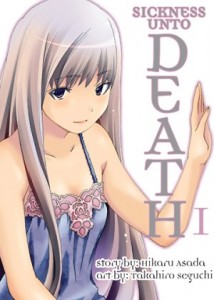
Sickness Unto Death, Vol. 1

October 2, 2013 by Sean Gaffney

By Hikaru Asada and Takahiro Seguchi. Released in Japan as “Shi ni Itaru Yamai” by Hakusensha, serialized in the magazine Young Animal. Released in North America by Vertical.

This manga starts in right away telling you that it’s going to be a tragedy. The very first scene shows us our hero, as an adult, visiting the grave of the heroine. It’s very stark, especially considering how much emphasis the rest of the text puts on trying to save her from her inner demons and her despair. But given how the efforts to save her are, much of the time, exactly the wrong thing to do (or being handled by the wrong person), it shouldn’t come as too much of a surprise. This isn’t a romantic comedy, it’s ‘watching a car crash in slow motion’ manga. Still, that can be riveting, and it in here.

sickness1

We get most of the story, as I said, in flashback. Kazuma, a young man going to college so he can study psychology, answers an ad providing lodging for him if he could care for a sick person. Said person is Emiru, an emaciated young woman whose hair has turned white and who seems to exist in a perpetual state of “almost dying” without actually doing so. Kazuma is immediately attracted to her, and decides that he’s going to try his best to get her out of this gloom that her life has become. As I noted above, this is a giant mistake. Emiru’s butler, who should step in as a mature adult and say this, doesn’t say anything as he’s beholden to the family, and also gets conveniently written out. Kazuma’s teacher helps him understand the psychological aspects of Emiru’s mindset, but thinks he’s speaking in the abstract. And then things get more intimate…

I’ll be honest with you, it’s hard for me to read this work without thinking of another manga that revolves, supposedly, around despair. It doesn’t help that as an adult, Kazuma bears a distinct resemblance to Itoshiki-sensei, the lead teacher in Sayonara Zetsubou-sensei, and that manga too has him dealing with young women with psychological problems. This is an altogether darker work, though, and where it best succeeds is focusing on Emiru’s all-encompassing pain and despondency. It doesn’t help that we see flashbacks to her about two years ago, and she’s a cute, outgoing young high school student – the sort of girl who would be the love interest in some shonen harem manga. Now her hair has turned white, she’s so thin you can almost see through her, and she lives on the verge of despair. Of course, this is a two-volume series, so we don’t actually find out her tragic past till next volume, but I can hazard a few guesses…

I greatly enjoyed this volume, but I have to admit that a lot of the time I was screaming at Kazuma “No, no, don’t do that, argh, are you stupid?!” But hey, he’s a young smitten teenager who’s fallen for someone who seems to be drifting away from him even as he meets her. It’s no wonder he’s so desperate. And so here, in this volume, we have the Sickness. I can only presume Volume Two will bring the Death. It looks to be riveting.

Filed Under: REVIEWS

September Switch, new manga, and more

October 1, 2013 by Brigid Alverson

Digital Manga’s September Switch promotion is still going on for a bit longer; at Panel Patter, Rob McMonigal takes a closer look at what it entails—basically, sign up with eManga and show you have bought an e-book somewhere else, and they will give you a free volume of manga. As eManga now offers DRM-free downloads, this may be something for yaoi fans in particular to explore.

The Manga Bookshelf team discusses their Pick of the Week.

News from Japan: Writer Tow Ubukata (Fafner, Mardock Scramble, Le Chevalier d’Eon) is teaming up with artist Rururu Kondoh to launch a new series, Gargoyle, in the November issue of Young King Ours. The series is set at the end of the shogunate and Ubukata describes it as “Shinsengumi in the style of X-Men.”

Reviews: The Manga Bookshelf team look over some recent releases in their latest set of Bookshelf Briefs. Ash Brown looks at My Week in Manga at Experiments in Manga.

Leroy Douresseaux on vol. 23 of Claymore (The Comic Book Bin)
Erica Friedman on the September issue of Comic Yuri Hime (Okazu)
Johanna Draper Carlson on vol. 4 of Missions of Love (Comics Worth Reading)
Matthew Warner on vol. 11 of Sailor Moon (The Fandom Post)
Derek Bown on the September 23 issue of Shonen Jump (Manga Bookshelf)
Lesley Aeschliman on vol. 5 of Strobe Edge (Blogcritics)
Rebecca Silverman on vol. 1 of Voice Over: Seiyuu Academy (ANN)

Filed Under: MANGABLOG

Weekly Shonen Jump Recap: September 23, 2013

October 1, 2013 by Derek Bown 1 Comment

Cover PageHey kids! Do you like rants!? You do? Well lucky you because we’ve got another classic comedy moment this week, all thanks to Kishimoto-sensei!

Fortunately everything else was actually okay otherwise I might have lost it this week.

Jaco The Galactic Patrolman Ch. 010
I was right about the rocket going down, not so much about Pants (or whatever her name is) dying. But I guess I should have expected as much, this is, after all, Toriyama, the man that figured out a way to kill every single one of his characters and bring them back anyway. I guess I was just hoping it would go a darker route. Still, with this being the second to last chapter of the series I still find myself more or less at a loss of what to say. I guess I enjoyed that the detective turned out to be reasonable, so at least we don’t have to worry about an irritatingly stubborn kind of antagonist. And I do admit that Jaco’s line at the end of the chapter was the best thing in existence. But, am I the only one that remembers there was supposed to be an upcoming alien invasion?

Naruto Ch. 647
For everything that Kishimoto does to make me maybe like Naruto again he then ruins it all with his awful sense of comedy. I’m almost speechless at how horrible his humor has gotten. What exactly was supposed to be funny about Karin’s scene? Here we had a decently tense scene and what does Kishimoto do? He brings his second worst character back and has her think something perverted. The world is about to be destroyed, this is no time for misplaced comedy. He keeps doing this too. Kishimoto used to be moderately funny, but it’s like he lost his mind. It’s almost like he became a father or something and lost all sense of humor. As all fathers inevitably do.

Is his editor not doing his job? Or is his sense of humor just as bad? At what point does any professional with a working brain think, “Hey, this tense moment? Let’s screw it up with bad comedy.” It probably wouldn’t be so bad if it weren’t Karin, who has become a poster child for everything wrong with Kishimoto’s writing. She was the first girl to escape from the dreaded “Sasuke Crush Syndrome” and the first character who actually went from “Well this is a stereotypical waste of space” to a character I actually kind of admired for finally learning that Sasuke is a raving lunatic. So what does Kishimoto do with her? He goes on to show that apparently Sasuke is so irresistible that even his attempted murder victims can’t help but fall in love with him again.

Naruto

What is going through his mind that makes him think this is okay? Sasuke would be perfectly fine, if he were a completely different character, but how exactly are we supposed to take anything he does seriously when women are falling for him left and right and won’t leave him be even when he tries to murder them. This isn’t a well written character, it’s a stinking harem series protagonist.

The rest of the chapter doesn’t even matter, because all I could think about was how terrible Kishimoto writes Karin and how he apparently has lost all understanding of what humor is. Reading this series is like reading something written by a space alien. They clearly are trying really hard, but they just don’t understand humans and can’t properly represent them in writing.

Toriko Ch. 250
Well then. I guess it doesn’t count as cannibalism if you feed your young to pigs and then eat the pigs, rather than just eating the young yourself. I…wow…yeah…

What is up with Toriko and randomly getting far darker than a series with such a goofy premise has any place being. Granted, I loved Midora’s back-story, it’s certainly unique, but I can’t focus on anything but this image of babies being fed to pigs. I…jeez…

I do like the explanation for how Midora’s power works. It’s not a, “I have this power because.” It actually ties in to the ability he’s already displayed. Which is solid writing. Now if only I could get that image out of my head.

Toriko

One-Punch Man Ch. 26
This is turning out to be the goriest week for shonen manga. First we’ve got pigs eating babies, and now Genos pretty much must have lost all his biological components to that acid.

I appreciate Mummen Rider’s scene. It may be mimicking previous scenes from this arc, but in this case I think it works better because we got rid of any illusion that “determination will win the day”. It’s very clear he’s not going to win this under any circumstances. And yet he fights, and this makes him even more sympathetic. I can only hope that he becomes the third member of Saitama’s group. He just seems like he’d be a lot of fun.

One-Punch Man

World Trigger Ch. 031
Aaaand I’m starting to hate this series again. Sure there were some good moments, such as Director Shinoda’s declaration, and the fact that he’s apparently the only sane person there. But anytime Kido does anything I keep thinking, “Why hasn’t the board removed him from power? The man is obviously imbalanced, somebody impeach the guy before he blows up a town!”

Pretty much most of the problems this series has can be symbolized with a picture of Kido’s face. The guy is obviously an antagonist, but he’s in a position of authority in what is clearly a militaristic/corporate setting. Do we not think that Bill Gates would have been kicked off the board at Microsoft if he’d decided to send a hit squad after the Genius Bar in the local apple store? There are just some things that don’t work in the real world, and the more a story relates its events to the real world the fewer leaps of logic and plot holes there can be.

Nisekoi Ch. 091
Yeah, uh, amnesia does not work that way. I’m pretty sure you don’t forget everything from the time you had amnesia when you remember everything before that. Well, I guess it works to further confuse the readers about what exactly happened in the past. As long as this series goes back to being funny I won’t complain. For someone that prefers a different girl with Raku this kind of chapter can be tedious or frustrating. Speaking as someone that prefers most of the girls over Chitoge I have to say this wasn’t my favorite chapter. And yet, it’s not like those Ryoga/Akari chapters from back in the day when I was reading Ranma 1/2, in that I can actually tolerate Chitoge’s presence and even enjoy her most of the time. So kudos, Naoshi, you’ve created my least favorite character and yet you’re able to keep me from hating her. Not sure how you did it, but you did.

Nisekoi

Bleach Ch. 549
Dammit manga artists, stop murdering/maiming children! First we got Toriko and now we’ve got this chapter. I may not have my own kids, but I’m certainly old enough for any violence against children to make me very uncomfortable. So please, knock it off!

And what exactly is up with Soi Fon mastering the Shunko because she doesn’t have her bankai? She specifically said, the first time she used it, that she doesn’t like her bankai because it’s the exact opposite of how she likes to fight. How exactly would having her bankai to rely on keep her from training her preferred method of fighting when she never wants to rely on it in the first place? It’s like a fist fighter not practicing his best punch because he has a knife to rely on. Sure a knife is more powerful, but if he’s better with his fists and prefers using his fists why would having a knife keep him from practicing his punches?

I understand what Kubo is doing, he wants his characters to find new power without relying on their trump cards. But Soi Fon is not the character to do that with, because she never relied on her bankai in the first place. In fact, why was she one of the ones to pull out her bankai during the Quincy invasion?

At least the Quincy aren’t going down so easily. Sure I’d like to just get to the conclusion of this series, but I’d prefer if we do it right rather than rushing through everything. So for now I’ll sit here, judging every move Kubo makes as if he were a beginner. Because there is a point where an experienced creator starts getting lazy and making rookie mistakes. If he can avoid those we might actually remember this series fondly after all.

Dragon Ball Z Ch. 032
Well, Nappa’s served his purpose and now it’s time for the main event. Nappa may not have been a very interesting character, but I always feel a bit of regret that he didn’t stick around for longer. Vegeta is fun and all, but I would have loved to have all the three Saiyan characters stick around together. It could have been a wacky sitcom.

Though, to be fair, most of my wish to keep Nappa around revolves entirely around the DBZ Abridged version of his character.


Not a good week to be a manga child. Not sure where the sudden violence against children is coming from, but let’s hope it doesn’t repeat next week. Besides that, the chapters were mostly okay to not so great. There was still enough to enjoy, but more than a few series chose this week to show off their weaknesses.

If you want to hear more, check out the Manga^3 Podcast Archives.

Filed Under: FEATURES & REVIEWS, WSJA Recaps Tagged With: bleach, blue exorcist, Dragon Ball Z, Jako The Galactic Patrolman, naruto, nisekoi, One Piece, one punch man, toriko, world trigger

Bookshelf Briefs 9/30/13

September 30, 2013 by MJ, Anna N, Michelle Smith and Sean Gaffney Leave a Comment

This week, MJ, Sean, Anna, and Michelle look at recent releases from Yen Press and Viz Media.


bride5A Bride’s Story, Vol. 5 | By Kaoru Mori | Yen Press – A Bride’s Story is a series that has been, over the course of its first four volumes, alternately educational, moving, funny, and just plain lovely to look at, and here in volume five it manages to be all those things at once. Despite some shaky early moments for this former vegetarian, involving the careful, detailed slaughter of a small herd of sheep, the twins’ wedding is even more delightful than I had ever imagined (and I imagined substantial delight). Even more charming are the subsequent chapters, in which we are reunited with the series’ original protagonist as she grows slowly closer to her young husband. I hadn’t realized how much I missed Amir until she was back in front of me, and this volume’s last few poignant, slice-of-life chapters were the perfect follow-up to the twins’ general wackiness. This is my favorite volume yet. Highly recommended. – MJ

devil11A Devil and Her Love Song, Vol. 11 | By Miyoshi Tomori | Viz Media – I thought there would be more emotional fallout from the events in the previous volume, but Shin and Maria move forward into the next phase of their relationship, somewhat distracted by the search for Maria’s real father. This series is always preoccupied with themes of forgiveness and redemption, and while part of me thought that Maria’s father was forgiven way to easily for past events, a single panel of Maria telling her father that he’s a terrible singer with a gentle expression on her face did a lot to sell this particular storyline. While Maria seems more settled, I’m now incredibly uneasy about what lies ahead for Shin. This series more than any other Shojo Beat series does a lot to instill disquiet in its readers, which is part of its unique appeal. – Anna N

happymarriage2Happy Marriage, Vol. 2 | By Maki Enjoji | Viz Media – I enjoyed the first volume of this series very much, and the second volume delivered up plenty of frothy fun. Newlyweds of convenience Chiwa and Hokuto are having difficulties navigating their new relationship due to their various communication issues, and things aren’t helped by the parade of handsome men that suddenly appear. First, there’s Chiwa’s new co-worker Yu Yagami, who uses his “nice-guy” whiles to become Chiwa’s confident. She’s so oblivious she is unaware of his feelings for her, and she ends up friend zoning him in an amusing way. More serious is the appearance of Chiwa’s old college senpei, who tries to woo her to his company. Hokuto begins to realize that he can’t be so complacent with his relationship with his new bride if plenty of other men are noticing her too. This continues to be a fun josei series. – Anna N

onepiece68One Piece, Vol. 68 | By Eiichiro Oda | Viz Media – It’s pretty much routine for things to get crazy in One Piece as an arc nears its presumed end, but this volume is crazier than most. A manaical villain, human/animal hybrids, a rampaging slime monster, body swaps, samurai, giant kids, a Naval presence, and a pirate alliance… It’s a bit much, but Oda keeps it together. This may also have been the first time when I really and truly didn’t see any way out of their peril for a significant chunk of the volume. It’s a testament to Oda’s skill that he can still create something this exciting on volume freakin’ 68 of his series. One Piece has been running since 1997, and to still feel this fresh is nothing short of a miracle. I’ll never get tired of extolling its virtues. – Michelle Smith

souleater16Soul Eater, Vol. 16 | By Atsushi Ohkubo | Yen Press – There are several cool moments for our heroes in this volume, particularly Maka and Soul, who get some good development over idealistic over practical, i.e. big fluffy angel wings vs. bat wings. They end up siding with practical, which is a good thing, as the enemy, i.e. Medusa, is ramping up her game. So much of this series has taken place right on the edge of madness – I mean, just look at the sun and moon, for goodness sake! – that it can take a while to realize just how far the madness has come since Vol. 1. Entire towns are now falling prey to Medusa’s influence, and Kid is still captured. And then of course there’s Crona, whose suffering Medusa seems to be deliberately pursuing for her own ends. I’m not sure how well that will end for her, but in the meantime Crona’s presence isn’t good for ANYONE. Another terrific volume. -Sean Gaffney

Filed Under: Bookshelf Briefs

My Week in Manga: September 23-September 29, 2013

September 30, 2013 by Ash Brown

My News and Reviews

There were a few different things going on at Experiments in Manga last week. First off is the Arisa manga giveaway. The winner will be announced on Wednesday, so you still have a little time to enter for a chance to win the first and eleventh volumes of Natsumi Ando’s Arisa. The most recent Library Love feature was posted last week, too, which is basically a collection of quick takes of manga that I’ve borrowed from my local library. My quest to read all of Edogawa Rampo’s material available in English also continued. This time I took a look at The Edogawa Rampo Reader, which is a nice introduction to his life and work. The volume collects eighteen of his short stories and essays from over a span of thirty years.

A few interesting things found online: Brigid Alverson interviewed Charles Brownstein of the Comic Book Legal Defense Fund about its new manga guide which will be released later this year. (I reviewed Manga: Introduction, Challenges, and Best Practices not too long ago and found it to be a great resource.) And speaking of the CBLDF, Keiji Nakazawa’s Barefoot Gen was recently highlighted as part of the Using Graphic Novels in Education feature. Finally, Vertical made some licensing announcements at Anime Weekend Atlanta: Tetsuya Tsutui’s manga Prophecy (interestingly enough, Tsutui approached Vertical directly about the license) and Shinobu Hashimoto’s biographical novel Compound Cinematics: Akira Kurosawa and I.

Quick Takes

Arisa, Volume 8Arisa, Volumes 8-11 by Natsumi Ando. The true King has been revealed! As has that person’s motivations and back story, which are suitably dark and dramatic. Arisa and its characters are all pretty twisted–the King isn’t the only one with serious issues. The most stable character in Arisa is probably Tsubasa, but sometimes I wonder about her, too. It’s not just anyone who would pretend to be someone else, after all. At times Arisa can be extraordinarily over the top with its action and melodrama, but that’s probably one of the reasons I find the series so absorbing. Some of it comes across as unintentionally ridiculous, though. But for every development that’s laughable, there’s another that is effectively disturbing. Arisa is a series that’s really easy to tear through. Despite all of the twists and turns in its plot (or maybe because of them) the manga reads very quickly. With only one volume left to go in the series, I’m very curious to see how things will play out.

Black Jack, Volume 7Black Jack, Volumes 7-9 by Osamu Tezuka. Every once in a while I get the urge to read a bunch of Black Jack. Since the series is fairly episodic, it’s easy to pick up even if it’s been a while since I’ve read any of the manga. There were a couple of things that particularly struck me about these volumes. First of all, Black Jack should really stay away from cliffs as he seems to have a habit of falling off of them. Secondly, since Black Jack is an unlicensed doctor, it probably shouldn’t be too surprising that he would have a tendency to become involved with criminals. Often this works out quite well for him–he is able to demand his high prices and the other parties want to keep things quiet, too. However, on occasion Black Jack’s association with organized crime comes back to bite him and he ends up a little worse for wear. As always, I adore Black Jack as a character. I enjoy how much of a bastard he can be while still maintaining a strong sense of integrity.

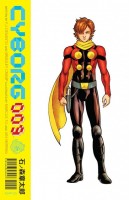
Cyborg 009Cyborg 009 written by F. J. DeSanto and Bradley Cramp and illustrated by Marcus To and Ian Herring. Working closely with Ishimori Productions, Cyborg 009 is a single-volume, hardcover graphic novel adapting Shotaro Ishinomori’s Cyborg 009 manga with a Western audience in mind published by Archaia. The comic is in full-color with updated character designs closer to some of the more recent anime adaptations than the original manga. Actually, the artwork was one of my favorite things about the Cyborg 009 graphic novel. Story-wise it would have benefited from either being a little more focused or a little bit longer. As it is, the graphic novel is very compressed and not all of the plot lines introduced are adequately developed. But it is fun and quickly paced, not to mention beautifully presented; hopefully it will encourage readers to seek out the original material. Also of note: the back cover indicates that Cyborg 009 is “Ishimori Universe Book 1.” I know that I’d be very interested in seeing more collaborations between Archaia and Ishimori.

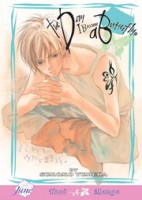
The Day I Become a ButterflyThe Day I Become a Butterfly by Sumomo Yumeka. Although The Day I Become a Butterfly was released under Digital Manga’s Juné imprint, two of the six collected stories aren’t at all boys’ love and a few of the others could be argued not to be as well. Yumeka describes the short manga in The Day I Become a Butterfly as inexplicable (she also admits to not liking them), but I think I would call them poetic. Instead of being straightforward narratives, the stories are quiet and almost impressionistic. They tend to be fairly introspective and melancholy; the desire for acceptance from others is a recurring theme throughout the volume. Yumeka’s artwork is lovely, although some of the character designs seem to be reused from one story to the next. Normally this might not be much of a problem, but because some of the stories in The Day I Become a Butterfly are interrelated it was sometimes confusing when the characters from an unrelated story looked like some of the recurring characters.

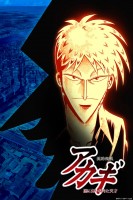
AkagiAkagi, Episodes 1-13 directed by Yuzo Sato. I love mahjong and Akagi is one of the mahjong series. I was thrilled when Crunchyroll picked up the anime for streaming. (I hold no illusions–mahjong manga and anime is very niche and unlikely to ever receive a physical release in North America.) Watching Akagi has actually improved my game a bit. It has also taught me how to cheat…not that I would. People who are at least vaguely familiar with mahjong will probably get more out of Akagi than those who aren’t, but it’s not necessary to understand the minutia of mahjong to enjoy the anime. The series can be surprisingly brutal at times and the games are intense–high stakes, crooked cops, yakuza, violence, manipulation. A huge emphasis is put on the psychological elements of the game. Akagi is a brilliant player and absolutely ruthless, both at the table and away from it. He seems to be afraid of nothing and is extremely ballsy. I’m really looking forward to watching the series’ second half.

Filed Under: FEATURES, My Week in Manga Tagged With: Akagi, anime, arisa, black jack, Bradley Cramp, comics, Cyborg 009, F. J. DeSanto, Ian Herring, manga, Marcus To, Natsumi Ando, Osamu Tezuka, Sumomo Yumeka

Pick of the Week: Totoro & More

September 30, 2013 by Sean Gaffney, Michelle Smith, Anna N, Ash Brown and MJ 1 Comment

potw-9-30SEAN: There’s a lot of good Viz stuff this week, including many long-running series, and a debut by an artist I enjoy. But I’m throwing my pick behind a novel, albeit with illustrations by one of the giants of the industry. Hayao Miyazaki’s My Neighbor Totoro is a movie that I hope by now every parent shows their child when they’re young, to instill a sense of wonder in them. That wonder is, I’m anticipating, carried over in this novel by children’s author Tsukigo Kubo, with Illustrations provided by Miyazaki. I have a copy, though I haven’t delved into it yet, and the illustrations evoke a very A. A. Milne, Pooh Corner feeling for me. Buy two copies – one for your child, and one for yourself.

MICHELLE: There are a couple of not-the-greatest-but-I-enjoyed-it shoujo releases this week, and I reckon I’ll have to pick one of those. So, I guess I’ll go with Happy Marriage?!, volume two. In the absence of new manhwa, I will accept something manhwa-esque in its place!

ANNA: I’m going to have to go with Slam Dunk Vol. 30, because any appearance of this basketball manga is a cause for celebration. I can’t believe it is almost over. I would happily read 30 more volumes of this series.

ASH: I’m with Anna on this one. Slam Dunk is a long series, so I’m glad that Viz is seeing it through to its end. (Only one more volume to go!) Plus, I’m always happy to have more of Takehiko Inoue’s manga in English.

MJ: And I’m with Sean. I was feeling a bit torn and wishy-washy this week, until Sean invoked House at Pooh Corner, and that sealed the deal. Now I must have it. And by “it,” I mean My Neighbor Totoro. Totoro is my favorite of Miyazaki’s films. It’s warm, whimsical, and just the right kind of story to deftly sidestep Miyazaki’s resistance to writing endings, which I expect might translate nicely to prose as well. This novel sounds just lovely. I’ll follow Sean’s advice, too, and buy one for my niece, then one for myself.

What looks good to you this week?

Filed Under: PICK OF THE WEEK

Vertical and One Peace Books announce new licenses

September 30, 2013 by Brigid Alverson

Wow! The first volume of Sailor Moon Short Stories tops the New York Times manga best seller list, and four volumes of Attack on Titan make the top ten as well.

There were two new license announcements at the Vertical panel at Anime Weekend Atlanta this past weekend, and one is a manga: They will publish Tetsuya Tsutui’s Prophecy (Yokokuhan), a story about the Tokyo police department’s cyber crime unit pursuing an arsonist. The other announcement was Shinobu Hashimoto’s novel Compound Cinematics: Akira Kurosawa and I.

Here’s another new license, from the small independent manga publisher One Peace Books: Takashi Ikeda’s yuri manga Whispered Words.

Erica Friedman rounds up the week’s yuri news in the latest edition of Yuri News Network at Okazu.

Lori Henderson discusses this week’s new print and digital releases and the first two volumes of Cross Manage in her latest Manga Dome podcast at Manga Xanadu.

Ryan Holmberg explores the origins of the name “Garo,” which was the title of an indy manga magazine in the 1960s.

News from Japan: Honey and Clover creator Chika Umino is putting her current series, March comes in like a lion, on hiatus while she undergoes hospitalization and surgery for an undisclosed condition. Fight Ippatsu! Jūden-chan!! is coming to an end. And is this something we should be watching? Miki Yoshikawa’s body-swapping manga Yamadakun to Nananin no Majo has sold 2 million copies.

Reviews

Matthew Warner on vol. 10 of Blue Exorcist (The Fandom Post)
Leroy Douresseaux on vol. 11 of Dawn of the Arcana (The Comic Book Bin)
Michael Buntag on vols. 1-3 of Give My Regards to Black Jack (NonSensical Words)
Kristin on vols. 1 and 2 of Happy Marriage?! (Comic Attack)
Justin on vol. 1 of Magi (Organization Anti-Social Geniuses)
Matthew Warner on vol. 68 of One Piece (The Fandom Post)
Kristin on vols. 13 and 14 of Oresama Teacher (Comic Attack)
Erin on Please Save My Earth (Gagging on Sexism)
Matthew Warner on vol. 2 of Puella Magi Kazumi Magica: The Innocent Malice (The Fandom Post)
TSOTE on vol. 33 of Q.E.D. (Three Steps Over Japan)
Richard Bruton on vol. 4 of Summit of the Gods (Forbidden Planet)
Sean Gaffney on vol. 1 of Vinland Saga (A Case Suitable for Treatment)

Filed Under: MANGABLOG

Vinland Saga, Vol. 1

September 29, 2013 by Sean Gaffney

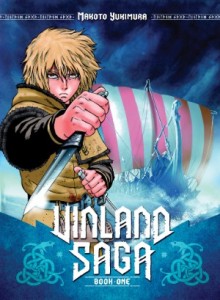
By Makoto Yukimura. Released in Japan as two separate volumes by Kodansha, serialized in the magazines Weekly Shonen Magazine, then Afternoon. Released in North America by Kodansha Comics.

At last, after years of fans begging for a license, we have one of the most anticipated titles of the year. Makoto Yukimura was released over here previously with his sci-fi garbage scow series Planetes, but that was another “critically acclaimed poor seller” that fans love and publishers hate. Nevertheless, the author’s skill is demonstrable in that series, and his art and storytelling have only improved since then. This tale of Thorfinn, a reluctant Viking warrior/prisoner-of-war and his tragic backstory is absolutely riveting, and makes you yearn for the next book in the series to come out so you can read on. Honestly, if it weren’t already in an omnibus (a handsome, hardcover one, by the way, looking very nice), I’d feel even more impatient.

vinland1

We open with Thorfinn already a young adult, then flash back to tell his backstory. This helps to amp up the tragedy as we can see what a cold-blooded killer Thorfinn can be… and how he pales in comparison to the captain who controls him, Askeladd. For all that this series may be Thorfinn’s, Askeladd is the one who captures the reader’s attention right off the bat, and I suspect he won any reader polls Japan had. Cheerful, clever, sly, and ruthless all in one, Askeladd makes a great anti-hero to contrast with Thorfinn’s sullen warrior. He even has his own moral code, such as it is – one we see in the second half of the book, when we find out just how Thorfinn lost his father Thors and was captured.

By the way, for those who love Berserk, you’ll love this too. It’s not QUITE as bleak and ultraviolent – at least not in this first volume – but there’s a lot of the same feel, and the battle scenes are fantastic (despite the presence of one of the worst Star Wars jokes I’ve ever seen). The art isn’t only good in the battle scenes either – the author has taken great care to be as historically accurate as possible in a fictional manga world, and I loved the attention to detail we see here.

I was expecting this to be a totally male-dominated book – and honestly, it still may end up that way – but there are two very good female roles here. First of all, the book’s only light relief is provided by Thorfinn’s older sister Ylva, a tsundere trapped in 11th century Iceland, who has all the boys of the village falling at her feet but would much rather stomp around and be grumpy. As for Thorfinn’s mother, she mostly exists on the sideline supporting her husband… till we see a flashback to Ylva’s birth, where Thors is prepared to simply nod and leave, and his wife looks like she’ll leap out of the bed and throttle him unless he names their child. The manga is filled with little moments like this.

This is not going to be a cheery romp – expect the majority of the cast to die – but it’s gripping stuff, and incredibly hard to put down. I really enjoyed Planetes, but you can see how Yukimura has evolved further here. The story carries you along effortlessly, makes you care about these people even as it then hurts them horribly, and is simply filled with badass men being badass. It was worth the long wait to get this.

Filed Under: REVIEWS

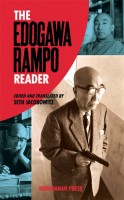
The Edogawa Rampo Reader

September 29, 2013 by Ash Brown

The Edogawa Rampo ReaderAuthor: Edogawa Rampo
Translator: Seth Jacobowitz
U.S. publisher: Kurodahan Press
ISBN: 9784902075250
Released: December 2008
Original release: 1926-1956

The Edogawa Rampo Reader, edited and translated by Seth Jacobowitz, was only the third volume of Edogawa Rampo’s work to be released in English, following Japanese Tales of Mystery and Imagination (which I have read and thoroughly enjoyed) and The Black Lizard and The Beast in the Shadows. Published by Kurodahan Press in 2008, The Edogawa Rampo Reader collects eight of Rampo’s short stories and ten of his essays selected from 1926 through 1956. In addition to these eighteen selections, The Edogawa Rampo Reader also includes a preface by Tatsumi Takayuki and an extensive introduction by Jacobowitz. Prior to the release of The Edogawa Rampo Reader, none of Rampo’s nonfiction work had been translated into English. In fact, all of the selections in The Edogawa Rampo Reader made their first appearance in English in the volume.

After the preface and introduction, The Edogawa Rampo Reader is divided into two sections: The Stories and The Essays. The stories include “The Daydream,” “The Martian Canals,” “The Appearance of Osei,” “Poison Weeds,” “The Stalker in the Attic,” “The Air Raid Shelter,” “Doctor Mera’s Mysterious Crimes,” and “The Dancing Dwarf.” Selected from throughout his career, the works exhibit Rampo’s skills as a mystery writer as well as a writer of the strange. The essays primarily fall into two different categories, those that are at least somewhat autobiographical–“The Horrors of Film,” “Spectral Voices,” “A Passion for Lenses,” “The Phantom Lord,” “My Love for the Printed Word,” and “Confessions of Rampo”–and those that deal with mystery fiction–“Fingerprint Novels of the Meiji Era,” “Dickens vs. Poe,” “An Eccentric Idea,” and “A Desire for Transformation.” Although there are more essays than stories in The Edogawa Rampo Reader, the nonfiction selections tend to be shorter than the fiction and so the section isn’t quite as long.

Whereas Japanese Tales of Mystery and Imagination basically amounted to a “best of” collection of Rampo’s short stories, The Edogawa Rampo Reader was deliberately curated to be representative of the different stages in Rampo’s career. Additionally, the volume emphasizes recurring motifs and themes that Rampo was fond of incorporating into both his fiction and nonfiction. The Edogawa Rampo Reader is meant to be comprehensive, single-volume exploration of Rampo and his work. As much as I enjoy Rampo’s short stories (which I do quite a bit) the real draw of The Edogawa Rampo Reader for me was the essays. Rampo is not only a fascinating author, he is also a fascinating person. His love of reading and writing comes through very clearly in his nonfiction. It was also interesting to see where he found his inspiration as a writer. His own life and imagination were sources, but literature from Japan and the rest of the world were also important influences.

The Edogawa Rampo Reader is a valuable resource. Rampo is an important literary figure in Japan, often cited as the father of modern Japanese mystery and crime fiction. His influence can still be seen today. Rampo is a noteworthy and intriguing creator; it really is a shame that more of his work isn’t available in English. Although they are all very good, I didn’t find the short stories in The Edogawa Rampo Reader to be quite as immediately engaging as those in Japanese Tales of Mystery and Imagination. However, overall the selection is broader in terms of genre and style. My favorite story was probably “The Stalker in the Attic,” which features Rampo’s detective Akechi Kogorō. (I would love to see an entire collection of Akechi stories in English.) But, as already mentioned, Rampo’s essays are really the highlight of the volume. I hope to see more of Rampo’s work released in English, but The Edogawa Rampo Reader makes a fine introduction to the influential author’s life and writing.

Filed Under: REVIEWS Tagged With: Edogawa Rampo, Kurodohan Press

  • « Go to Previous Page
  • Page 1
  • Interim pages omitted …
  • Page 647
  • Page 648
  • Page 649
  • Page 650
  • Page 651
  • Interim pages omitted …
  • Page 1048
  • Go to Next Page »
 | Log in
Copyright © 2010 Manga Bookshelf | Powered by WordPress & the Genesis Framework