• Skip to primary navigation
  • Skip to main content
  • Skip to primary sidebar
  • Home
  • About Us
    • Privacy Policy
    • Comment Policy
    • Disclosures & Disclaimers
  • Resources
    • Links, Essays & Articles
    • Fandomology!
    • CLAMP Directory
    • BlogRoll
  • Features & Columns
    • 3 Things Thursday
    • Adventures in the Key of Shoujo
    • Bit & Blips (game reviews)
    • BL BOOKRACK
    • Bookshelf Briefs
    • Bringing the Drama
    • Comic Conversion
    • Fanservice Friday
    • Going Digital
    • It Came From the Sinosphere
    • License This!
    • Magazine no Mori
    • My Week in Manga
    • OFF THE SHELF
    • Not By Manga Alone
    • PICK OF THE WEEK
    • Subtitles & Sensibility
    • Weekly Shonen Jump Recaps
  • Manga Moveable Feast
    • MMF Full Archive
    • Yun Kouga
    • CLAMP
    • Shojo Beat
    • Osamu Tezuka
    • Sailor Moon
    • Fruits Basket
    • Takehiko Inoue
    • Wild Adapter
    • One Piece
    • After School Nightmare
    • Karakuri Odette
    • Paradise Kiss
    • The Color Trilogy
    • To Terra…
    • Sexy Voice & Robo
  • Browse by Author
    • Sean Gaffney
    • Anna Neatrour
    • Michelle Smith
    • Katherine Dacey
    • MJ
    • Brigid Alverson
    • Travis Anderson
    • Phillip Anthony
    • Derek Bown
    • Jaci Dahlvang
    • Angela Eastman
    • Erica Friedman
    • Sara K.
    • Megan Purdy
    • Emily Snodgrass
    • Nancy Thistlethwaite
    • Eva Volin
    • David Welsh
  • MB Blogs
    • A Case Suitable For Treatment
    • Experiments in Manga
    • MangaBlog
    • The Manga Critic
    • Manga Report
    • Soliloquy in Blue
    • Manga Curmudgeon (archive)

Manga Bookshelf

Discussion, Resources, Roundtables, & Reviews

Blog

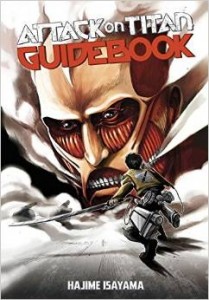
Attack on Titan Guidebook

September 18, 2014 by Sean Gaffney

By Hajime Isayama and the editors at Kodansha. Released in Japan by Kodansha in two separate volumes, “Inside” and “Outside”. Released in North America by Kodansha Comics.

Shonen manga in Japan get quite popular, and as you’d expect, fans want to know absolutely everything about their favorite characters, things that wouldn’t necessarily come up in the manga proper. For those people, there are guidebooks like these – they consists of bios, recaps, examinations of all the little fiddly bits, character popularity polls, favorite quotes, etc. They allow the creator to reveal some information that would likely fit awkwardly if it had to be inserted into the story proper, and let fans understand the characters and story better – OMG, Jean is an Aries! Just like me!
tit

For those familiar with these sorts of guides, the style is unsurprising, but if you aren’t, be prepared for lots of superlatives. At times it reads like a gossip magazine, with lots of punchy headlines and exclamation marks as it tells the story of the 104th training squad. These are two books released separately in Japan joined together, and sometimes you’re able to see that – the book has spoilers through Vol. 11 of the series, but much of the first half seems to have spoilers only through Vol. 9. It can also be somewhat inconsistent – the book takes pains not to discuss Reiner and Bertholt’s secrets in their bio, but has no issues revealing Ymir’s.

There’s a long interview with Isayama where he discusses the major influences on the series – many may be surprised to here one of the biggest was Muv Luv Alternative, though those who have read the visual novel itself may be less surprised – it’s darker than Higurashi. I was less surprised to hear about the influence of Saving Private Ryan in regards to the emotional reactions of the soldiers. The workings of the manga industry are briefly shown, as Isayama discusses how he was asked to move to a more expensive apartment so that he could fit his assistants in it – but then had to make the series a success or he couldn’t afford the apartment!

Where the guidebook excels is in giving a name and backstory to the minor characters like “girl who dies in Volume 2” or “that one guy whose name I can never remember”. Isayama’s art is terrible, especially at the start, and this guide is a boon for those who can’t really tell apart the 5-6 different soldiers with short blond hair. There’s also a lot of discussion of the mechanics of titans and how the vertical gear works, and to show it’s not all grim darkness there’s also some cute fake interviews with the cast, and Isayama drew some AU art based on reader suggestions, such as Sasha, Connie and Reiner forming a band.

Obviously this is not something that you want to pick up if you’re new to the series and wish to see what it’s about. Read the actual manga instead. For those who are fans of the manga, though, this gives you lots of facts and figures, reminds you of your favorite moments, and is a good go-to reference guide. Also, I think the original must call Sasha a boke about 80,000 times. “Airhead” is the translation here.
Filed Under: REVIEWS

Wandering Son, Vol. 7

September 17, 2014 by Ash Brown

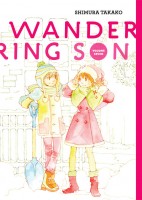
Wandering Son, Volume 7Creator: Takako Shimura
U.S. publisher: Fantagraphics Books
ISBN: 9781606997505
Released: August 2014
Original release: 2007

The wait between the release of each new volume of the English-language edition of Takako Shimura’s manga series Wandering Son can seem torturous, but without fail I’m exceptionally glad when the next installment is finally available. Wandering Son is a manga that is personally very meaningful to me, so I’m always a little worried that Fantagraphics won’t be able to complete the series, which would be a shame. Fantagraphics’ edition of Wandering Son is beautiful, complete with color pages and hardcover binding. Wandering Son, Volume 7 was originally published in Japan in 2007 while Fantagraphics’ English translation by Matt Thorn was released in 2014. The series concluded in Japan with the fifteenth volume, which means that the English-language release has just about reached the midway point of Wandering Son. I sincerely hope the rest of the series will be able to be published, too.

The seventh graders’ production of a gender-swapped Romeo & Juliet for their school’s cultural festival is over, but there doesn’t seem to be any end in sight for the drama unfolding in the classroom. Although a few of the students were dissatisfied with their own parts and performances, the play was generally well received, resulting in the theater club attempting to scout some of the best talent. This does cause some tension as the members of the various school clubs shift around to follow their personal interests, leaving friends behind in the process. Some friendships are being severely tested while other, more antagonistic, relationships appear to be on the mend. As Shuichi, Takatsuki, and the others grow and mature, their connections to one another change and evolve, too. Puberty continues to progress as well, bringing with it unwanted changes, anxieties over developing bodies, and concerns over physical appearances. What to wear, what not to wear, acne, and skin problems are all legitimate worries, providing opportunities for both teasing and bonding.

Wandering Son is told in a somewhat non-linear, almost fragmented sort of way. Shimura takes individual moments and memories, often from different points in the characters’ lives, and then layers them together, drawing connections between the separate pieces that would not necessarily have been obvious otherwise. This makes it easier for readers to see that the characters, though they all have their own unique perspectives and individual experiences, are dealing with some very similar issues. Their approaches to those issues and how they deal them are often quite different, though. This layering and revealing of parallels, as well as the other narrative and storytelling techniques that Shimura uses, are very effective in building on some of the themes that Wandering Son explores–namely personal identity–by exhibiting the depth and nuance of the series’ sensitive portrayal of the characters as individuals. The realism and authenticity of the characterization in Wandering Son is one of the manga’s greatest strengths.

Another related aspect of the manga that is handled particularly well is the natural changes in the characters’ relationships with one another. Wandering Son has a large cast of both primary and important secondary characters and it’s a close-knit group. When something happens between two of the members, the social dynamics of the entire circle is influenced. Major developments occur when Shuichi and Anna begin dating, helping to trigger some unexpected changes in Chiba and Takatsuki’s relationship which were particularly interesting to see. Chiba is incredibly self-centered and at times exceptionally unlikeable, but she’s also perceptive and seems to be very sure of herself and who she is. Takatsuki, on the other hand, is still working all of that out but is fiercely determined in other ways. It’s because of Takatsuki’s persistence, despite Chiba’s prickliness, that their friendship has a chance of improving–something that everyone would be happy about. It won’t be an easy process, though, and will take some time. Wandering Son excels in capturing the real-life messiness of relationships.

Filed Under: REVIEWS Tagged With: Fantagraphics Books, manga, Takako Shimura, Wandering Son

Why It’s Worth It To Buy Manga

September 16, 2014 by Justin Stroman 8 Comments

Manga Bookshelf

Why is it worth it to buy manga?

Living in New York City, where there’s Barnes & Nobles everywhere and a Kinokuniya on 41st and 6th, most manga available range from $10-13 dollars (Think Shonen Jump, Seven Seas, Shojo Beat, Kodansha, DMP for the most part), $14-20 dollars (think some Vertical titles, Viz Signature stuff), or you’ll find that rare manga title that’s $20-29 dollars (I think of Fantagraphics). Even if you order online, chances are buying food might be more important, cheaper, and satisfying than shelling out $8-9 bucks for a manga volume that has the issue of:

  1. It’s a volume out of who knows how many volumes of one series.
  2. The average reader can spend 30-45 minutes, depending on the material, on that one volume.
  3. Even if that one volume is perfect, what about the other volumes that come out that might not be so perfect because the storylines change?

And that’s just knowing the basics! If you’re a regular manga reader, then you’ll find other issues that pop up:

  1. Most manga in the states are well behind the Japanese editions. Only a certain few — Attack on Titan, One Piece — are popular enough to not be completely behind the JP editions, and in the history of manga publication in the states, only a few have been simultaneously published — Rin-Ne, Neon Genesis Evangelion are some I can think of — meaning we’re always gonna be behind in every facet unless we read it digitally.
  2. Space, space, space! Just like books, manga requires bookshelves, boxes, and space in your room to keep your manga. In the past, it was mostly ok, but with digital, reading manga physically is a thing of the past!

But ok, reading manga in your hands isn’t convenient for you. But that’s why we can read it online! There’s digital alternatives!…Oh, but there are issues there too:

  1. There’s manga services (Viz Media, Crunchyroll, Renta!) that don’t allow you to download manga since they’re flash based! So what happens if the service goes away? Won’t the manga go away? Didn’t we learn our lesson from JManga?
    (Note: if you have a phone/tablet, you can download and keep any Viz Media titles forever)
  2. And the ones that can allow us to keep pages (eManga, Manga Reborn) have some major site issues that limit potential — Paying $7.95 seems weird eManga! What’s with the design of the site Manga Reborn? I can’t tell what’s really new and cool to read!

All in all, there are logical, physical, and cost reasons regarding the purchase of manga that make me ask:

…Why is it worth it to buy manga again?

When I wrote a post wondering why people who read manga illegally end up informing publishers in multiple ways that they’re reading a manga the publishers licensed illegally, the answers were concise and straightforward. So, in a way, the response regarding price, digital alternatives, etc, reinforced something I’ve become more inclined to believe in since I’ve delved further into the manga industry (and in small ways manga fandom):

Manga is just not valuable.

I’ll say this though: it’s certainly valuable to go buy a $3.99 comic book issue or so that’s only 32 colored pages or a graphic novel that’s around $15-20 dollars, but not really cool to pay $10-20 dollars of 200 or so pages for a manga volume. It’s well worth it to shell out $60 dollars for a physical video game and have that sort of collection, but not as worth it to do so for manga since you’ll more than likely get more entertainment value out of the video game.

Now, as mentioned, there are legitimate reasons for concern about getting manga…moreso for those outside of the US. There’s digital alternatives that exist but are marked by harrowing issues (Manga Anime Guardians is Exhibit A), are region locked (though not as much as anime is), and are flash based, which apparently is more of an issue than I thought. There’s a lack of publishers, or no publishers, to publish manga outside of places like the US or France, and there are shipping issues that make a manga that’s $10 bucks cost more than it probably should if you’re ordering overseas in certain countries. There’s definite concerns that are worth complaining about, and you should complain about it if it’s something that can help publishers get better.

But you know, the other industries I mentioned, while they suffer from their issues, get criticized, and are for a different market, still sell pretty well. Manga on the other hand…not so much aside from the mainstream stuff.

Is this just a case of years and years of the manga market being inflexible, unflinching, with their model that doesn’t always show itself to be efficient? Past mistakes that are so unforgivable that it’s best to forget the creators actually exist and screw the publishers? Or just the notion that reading is a chore, you don’t want to fill your room with tons of manga that, for some, have no end in sight, etc? Or is this just a case of where you stand personally?

I graduated from school two years ago. At the time of graduation, I had no job, only money that I got from parents and family from graduating, and no real idea of what my future was. Needless to say, I ran out of money thanks to time, and that meant buying manga was unrealistic. The problem? Buying much of anything aside from a brand new Metrocard so I can get to job interviews and job fairs was unrealistic, so for most of 2013 and 2014, the only solace I had was that I could choose to read manga online, in an illegal fashion.

Of course I chose to do that!

…Not in the way you think though. For the most part, I only read stuff that no publisher would really care about. Like this interesting manhwa title called The Breaker: New Waves, or that extremely silly Mangaka-San to Assistant-San (better known somehow here as Comic Artist and his Assistants) by Doujin Work creator Hiroyuki. For anything that would get licensed, unless I liked it a lot, I’d pretty much drop reading it.

Well, I only ended up following two titles like that — Assassination Classroom, which I haven’t read since early in the year, for a few reasons, but once it got licensed, I stopped feeling the drive to read it, and Shokugeki no Soma, better known as Food Wars! Shokugeki no Soma here. I did not drop Shokugeki no Soma once it got licensed. More on Soma in a bit. In any case, I followed what I could, and most importantly, any new title that showed up from publishers I didn’t read…in any capacity. After all, I can’t — or don’t want to — read everything in existence.

I finally got a job. I started a few months ago. That means I have money to spend! But…I can’t just spend it on everything, as my paycheck isn’t even that much right now. I’m pretty much drowning in school debt, which I can thankfully delay for one more year. So I’m also in the process of saving money too. What does that mean? That means spending judiciously, targeting continuing stuff I’ll like, and waiting to buy everything.

That means finally buying a physical copy of Food Wars.

Why It's Worth It To Buy Manga

nomnomnom

And I’ll be waiting to buy a copy of Assassination Classroom. Maybe the first few chapters will read better than when I read it online.

The point is, you want to read manga online, fine. I do it too. If there was a efficient way to get copies of something you like, a game or a novel or whatever without having to pay in any fashion, that’s your prerogative, and in the case of manga, especially when legitimate publications that most mainstream people read (coughcoughNew York Timescough) can’t get it right either, how can I blame you? After all, it’s not like it’s being stopped right now.

But is manga really so worthless that you can’t even set a modest limit to buy some manga during the year?

That’s unfortunate, because I find manga to be something of great worth. I find it worth buying, and especially for a certain few, I find it worth having in my hands.

I’m not alone in thinking manga is worth buying.

———-

Sarah Hayes lives in Missouri, and has been collecting manga for 14 years. How did she even know about manga? Well, it started with Pokemon, Toonami, and her nearby comic shop. “When I realized there was a comic version of Gundam Wing–” Sarah emphasizes she was really into the series — “I picked it up. And then I saw comics for Sailor Moon, Cardcaptor Sakura, Oh! My Goddess, and at point, I was hooked.”

Tony Yao lives where I live: New York City! He got interested in manga back in 1998, while still in high school, and, well, back when AOL dominated and most websites looked old and aged. “I learned about what manga was when reading about Ghost in the Shell in an issue of Wizard Magazine back in 1995,” he said. “But in 98’, I discovered that Dragon Ball Z was a manga. I read old-fashioned text summaries of DBZ volumes on a Geocites DBZ fan site and that’s how it started!” He started collecting manga in 2003.

Erica Friedman, who lives in New Jersey, has been into manga since the 1990’s, “with the advent of Sailor Moon,” she said. Of course, she’s also been a part of the manga industry, starting her yuri publishing company ALC Publishing, which exclusively published Yuri content; starting Yuricon, a convention geared towards yuri related manga and anime content; and was part of the creation of MangaNEXT, an exclusive manga only related convention. So she’s been in the manga industry and fandom side of it for a long time.

Why It's Worth It To Buy MangaUnfortunately, with issues with the fandom and the differences between JP and US relations proving to be too much, ALC Publishing effectively is no longer publishing anything new. Has that closed the book on her interest in manga? Nope, as she still buys the Japanese editions.
Ash Brown (I think you know who he is around these parts!) was Ohio bred and born, but then he ended up moving to Michigan when he got older. He works as a librarian — “sadly, my job has nothing to do with manga,” he bemoans — and on the side, he’s a musician, and a martial artist. He is the neophyte when it comes to manga collecting: he started collecting manga in 2009 (same for me) when he got employed and had a decent income, though it did take reading Urasawa’s Pluto and manga criticism from Jason Thompson for him to dive head first into manga.

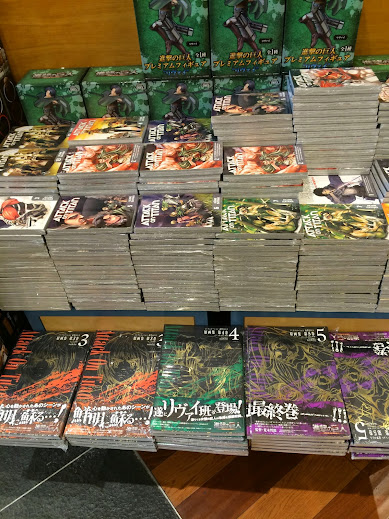
“I have been collecting manga since 2004,” says Noura, a manga fan in Florida…or was in Florida, until in 2000, she moved back to her home. Her home is in the United Arab Emirates. Yep, the UAE is in the eastern part of the Arabian Peninsula. She’s Emirati. There’s only the Kinokuniya in Dubai that actually sells manga, and even so, due to Islamic culture, there are manga that are banned from even getting published, especially Boys Love. How strict are the restrictions over there? “They were about to ban Attack on Titan Vol 8 because of the cover,” she said. The Kinokuniya staff did negotiate and convince regulators and parents (who she mentioned are conservative on these things) that they could sell it. But certain volumes of Dance in The Vampire Bund were banned. From The New World was in stock, but, whether it was due to sales or the content in the volume, they were slowly removed from the bookstore.

It hasn’t really stopped Noura from continuing to go back to that Kinokuniya, or just ordering the manga online. Considering the restrictions in place, it does make you wonder — why buy manga when you have to go through so many hoops to get it?

“Buying manga is like any other hobby,” said Noura, “so I do not understand why people refrain from spending money on it. If you love something, it feels better when you pay for it and have it, right? Video game fans buy games and I do not think they find it a waste of money, so I do not get why a lot of people feel that buying manga is not worth it.” She also mentioned that for titles she’s not sure of or not interested in owning the books of, she buys it digitally.

Erica reinforces this thought. “The simplest reason to buy manga is that actually putting your money where your interest is, is the easiest and best way to say ‘thank you’ to the manga artist you enjoy, the editors, the translators, the layout, the touchup, and letterers who all worked hard to bring you that book.”

Tony’s view on why it’s worth it to buy manga is the same, though it starts with a personal reason: details. “It’s easier to re-read things from a print book than from reading online. Reading online doesn’t allow for a better recall of details.”

Why It's Worth It To Buy Manga…I actually agree with that statement. But that’s merely a personal reason, and people are different. That’s why Tony’s second reason comes down to simply supporting mangaka. “You ensure someone else who has a dream about making it big as a mangaka can come true. If the industry grows, the money goes back to developing and nurturing future talent.” Tony references Hajime Isayama, and of course, with the big success of Attack on Titan not only in Japan but also in the West, he will be a name to be recognized after his current series ends. “A kid may be inspired to make manga because of him,” he continued. “He/she grows up and decides to pursue that dream and makes it happen. This situation has happened in the case of Akira Toriyama and the countless mangaka he’s inspired because of Dragon Ball. Your indirect support helps everyone.”
Even he acknowledges, however, that it’s not gonna be easy. With books in general, outside of a few best-sellers, they may be available everywhere but it’s not like they sell that much anyways, so why would manga sell the same when there’s not the same output? And scanlations have changed the game and forced publishers to actually pay attention to them, he said. None of that’s gonna change in the near future. But we can do something about that.

Sarah’s view on manga is the same and yet slightly different. Well, she does like having ownership of series she likes. “I love knowing that I can read and re-read and casually flip through my collection and not have to rely on someone else to keep them up on a server somewhere or a scanlation group that could very well shut down the very next day.” But, as a writer, her view of manga continues to change. “I’ve come to really value buying manga over any other course of action because as a writer, I understand how important it is to financially support our artists and writers and manga-ka everywhere. If shelling out so many dollars for a book of manga means keeping my favorite authors and the like in their homes, puts food on their tables, and keeps them from stressing out and focused on their work, then that’s cool by me.”

For Ash, who got into the collecting manga game late compared to everybody else, his reasons for thinking why buying manga is worth it are not complex, but not also simple, since he works as a librarian. Well, specifically, he works with digital content and materials, “so I am all too aware of the many challenges associated with them,” he says. It ends up starting physically, where you might as well spend your money on something that will last and can be shared with others. Then it’s mere exploration. “Personally, I take great enjoyment in the actual act of selecting and gathering material into a collection. I like finding and discovering manga to read and pulling it all together in one place.” He also ends up donating some of his collection — he told me his current collection’s close enough to 2,000 individual volumes of manga — to libraries, since that was how he originally was reading his manga: by borrowing it from them. “Libraries were what made it possible for me to pursue my interest in manga and other comics in the first place. It makes me extremely happy to know that even after leaving my collection, the manga that I bought will go on to be read by many other people.”

Overall though, the reason to actually buy manga is just like everyone else, for Ash: “I love manga and am appreciative of the creators and their work. I want to support them. There are easy ways to do that: I can purchase manga which have been licensed in English. I can purchase the original Japanese editions. I can borrow manga from a library. I can also encourage other people to do the same. By buying or borrowing legal copies of their work I am able to help support them and the industry financially so they can make a living and continue to create.

“In the end,” he added, “that’s what really matters to me. That’s why I buy manga. Because I love it and the people who make it.”

———-

As I briefly mentioned, I started collecting manga back in 2009 for a few reasons, one of which I eventually drifted away from as I lost my passion for art, or for making comics. Despite that, manga was always around for me to get, so I still continued buying. And yes, even despite Borders going away, it didn’t really change that much — I just now order online. Though my collection is extremely modest compared to mostly everyone, I think it’s cool to buy manga. Think of some of the examples given with what you can do with manga! You can re-read it anytime, hold it in your hand, buy it digitally, lend it to a friend or two, or donate it to your library. You could also do what I did and donate to your local anime/manga club (which I did do for some manga a few years ago). There’s a lot of things you can do with manga that I bet you wouldn’t want to do with your video game!…well, except sell it. Well, you can do that with manga too if you wish! Just, it depends how much you’re selling!

But whatever the case, sure, there are complaints that can be had about publisher practices, the current model, etc, and it is well within your right to complain about it, especially if you have a perfect example of a series that has been translated horribly, why should you accept a poor product, or an example of a manga that’s been poorly marketed (According to Twitter Noragami was apparently a victim of this for what it’s worth). And ok, sure, you can go ahead and choose to read some obscure or big time manga for free, since there’s hundreds of places to go do so, and not nearly enough legal services that you may feel that serves your needs — especially so for those who live outside the US. And paying for manga that you might not even want to keep three, four years from now? What kind of concept is that?

But there will always be issues with almost everything we choose to engage ourselves in — is manga thought about so little that we can’t even find a way to buy manga in English? In another language? In Japanese? Then that’s all manga is to you: of little value.

Fine, that’s ok. But I think manga has value. And that it is worth buying. Whether you buy a lot in a month, or choose to buy two manga in a month, or just once in two months, or however you do it, it adds up somehow. It will benefit someone. Whoever that person is! But contributions help. Even just going to your nearby library can help. In the end, it’s up to you really if you want to stuff your small room with manga or choose to buy manga digitally from a system that’s crippled from the get-go.

I’ll just state that I like manga a lot and I’ll continue to buy what looks to good to me…until I feel like manga is no longer an interest to me. Whenever that is!


Justin is the founder of Organization Anti-Social Geniuses, an anime/manga blog. He continues to fight his laziness, even though its inevitable he can’t defeat it. You can bug him on Twitter (@Kami_nomi)

Filed Under: FEATURES Tagged With: buy manga because you actually like it is a novel concept, buying manga, buying manga is weird bro, longish read, manga is cool I swear, too many opinions, why it's worth it to buy manga

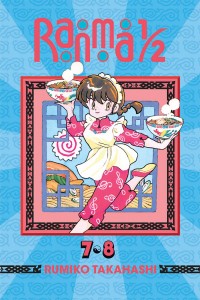
Ranma 1/2, Vols. 7 & 8

September 16, 2014 by Sean Gaffney

By Rumiko Takahashi. Released in Japan by Shogakukan, serialized in the magazine Shonen Sunday. Released in North America by Viz.

I’ve joked several times in the last few weeks about warning people that this volume features the debut of Happosai, but there’s a kernel of truth to that warning: Happosai is repugnant, and a polarizing figure both within Ranma fandom and within the series itself. Not because anyone really likes him – even his fans think he adds some fun comedy but don’t like him personally – but whether the comedy he adds to the series is really needed. Because Happi is defined by being a pervert – yes, an incredibly strong martial arts master pervert, but a pervert just the same. He feels up women, he steals their underwear, he literally gains strength through contact with females. He is a walking trigger warning. He’s meant to be the male version of Cologne, but Cologne’s actions all serve a greater purpose – at least so far – and Ranma learns a great deal from her. For all that Happi is supposed to be training Ranma as his successor, there’s no lessons, no training, and no point. He is a pox on Ranma 1/2, and will be here till the end of the series. He doesn’t even make horrible puns, like Cherry, his spiritual predecessor from UY, did.

ranma7-8

(breaths out) I feel better. Now let’s talk about what was fun this volume. Ranma has settled into doing what it does best, which is ‘almost anything goes in the name of comedy’. (It’s not *quite* as over the top as UY, so I added the ‘almost’.) There’s lots of martial arts battles, as we see Ranma, Akane and Shampoo compete in martial arts takeout delivery, as well as Akane and Ranma fighting to defend the name of their supposed school when a Dojo Destroyer comes to town (the Destroyer himself looks like a ridiculous over the top stereotype, and barely speaks, but I’ll gloss over that for now. And there’s plenty of comedy, as Ranma’s class puts on a production of Romeo and Juliet, which means a lot to Akane (who was Romeo as a kid, but now finally gets to be Juliet), but little to any of the various competing Romeos, including Ranma. (I was highly amused to see her yelling at Ranma for not reading the play, as in the end all Takahashi takes from the original is ‘balcony scene’ and ‘kiss’.)

There’s quite a lot of time devoted to Ranma (and sometimes Genma) trying to find a cure for the curse, and there are a few temporary cures but nothing really permanent. While this will still play out across the series, as we get further in Ranma simply gets more accepting of his dual nature, and seeing the desperation shown here is interesting. As for Ranma and Akane themselves, they’re both quite attracted to each other and sympathetic to each other’s pain once they pause to think – but they hardly ever do that anymore, so when we do see such moments (Akane bringing Ranma warm food and drink in the backlot), it’s nice and heartwarming. (The box Happi hides under in that scene, by the way, has a reference to Nura: Rise of the Yokai Clan. Wrong company! Shogakukan should be turning in its grave! Don’t tell me they aren’t dead, I’ve seen what Sunday sales in Japan are like lately.)

Miscellaneous thoughts: At one point, when Genma is at his absolute sketchiest, Kasumi calls him annoying. For Kasumi, this is a devastating comment, particularly this late in the series. Both Genma and Soun come off particularly badly in this volume, both as former disciples of Happi who want to be free of him but can’t do anything about it, and as parents who try to trick their children into marrying each other. Nabiki still exists mostly as the “normal” character – we see her deny she’s related to her family more than once in this volume – and Takahashi’s habit of showing her constantly eating is in full force here. Kuno and Gosunkugi are also as loopy as ever – Gosunkugi in particular suffers so much and is loathed by so many you can’t help but laugh at his pathetic awfulness.

Another solid volume of Ranma, though those who found the series beginning to grate at this point and hoping for more plot resolution are only going to get more annoyed as it goes on. Next time around we’ll introduce our final main cast member, and one who’s even more polarizing in her own way. Not because of her own characteristics, but because of how she gave fans who hate Akane a real alternative, and the ship wars truly began in earnest. Next time, we’ll talk Ukyou Kuonji.

Filed Under: REVIEWS

Bookshelf Briefs 9/15/14

September 15, 2014 by Sean Gaffney and Michelle Smith Leave a Comment

This week, Sean and Michelle look at recent releases from Seven Seas and Viz Media.

centaur4A Centaur’s Life, Vol. 4 | By Kei Murayama | Seven Seas – A Centaur’s Life is starting to find its footing, and this volume is a definite step up from the previous ones. There’s less emphasis on odd lolicon-esque scenes, and more genuine interaction with the world itself, as we are introduced to Sasasui, a snakefolk from Antarctica who forces Hime to deal with her old fears and possible prejudices, and who also gets to be the newbie that allows certain things to be explained to her. This can get a bit lecture-y (watch out whenever the characters point to a chart), but for the most part the series avoids that pitfall and remains a very odd slice-of-life series with a nice market in moral lessons, and Sasasui is a great introduction to the cast, with a reserved personality that fits in well. – Sean Gaffney

happymarriage7Happy Marriage?!, Vol. 7 | By Maki Enjoji | Viz Media – For some reason Diamond never shipped this to me, so I ended up getting it a month late. I wasn’t really all that bothered, to be honest. This is a series that excels at what it does, but what it does is variations on the same plot – our two leads experience jealousy, uncertainty, and self-confidence crises which they both think they must deal with on their own without working it out together. And all seems to be resolved (or at least reset to zero) by a healthy sex life, which Chiwa still tends to find embarrassing. We do now see that others are stepping in to seed discord rather than the two doing it of their own accord, but I’d really like to get rid of the question mark in the title and have some resolution here. – Sean Gaffney

magi7Magi: Labyrinth of Magic, Vol. 7 | By Shinobu Ohtaka | Viz Media – I can honestly say it was a delight to get caught up on Magi after having fallen several volumes behind. Here’s a series full of compelling characters with interesting backstories moving within a world in turmoil that we’re gradually learning more about. It’s like the focus began on Aladdin and his friendship with Alibaba and slowly spread outwards until now the former is finally learning about the purpose of his existence and the heretofore unmentioned enemy while the latter is endeavoring to be as brave as Aladdin thinks he is by leading his broken homeland into democracy. I might miss the promised adventuring that gets postponed by these weightier responsibilities, but the storytelling—and character development—is so good that it’s hard to complain. Still, if only it could pass the Bechdel test… – Michelle Smith

midnight7Midnight Secretary, Vol. 7 | By Tomu Ohmi | Viz Media – It’s no coincidence that a new Tomu Ohmi series was licensed almost immediately after Midnight Secretary, while Maki Enjoji only had the one – Ohmi’s is simply the better of the two “competing” josei titles, with a more likeable hero and heroine who are far more clued into each others’ moods and their own issues. Kaya struggles with jealousy, but it’s a far more mature inner monologue, and I found it much easier to take. The supernatural content also reaches a climax here, as the couple find a way to deal with Kyohei’s banishment while staying true to themselves – and indeed making sure the clan is tied to them in the future. This is probably my favorite of Viz’s Petit Comic licenses, and josei fans shouldn’t miss its final volume. – Sean Gaffney

nisekoi5Nisekoi, Vol. 5 | By Naoshi Komi | Viz Media – I’m still surprised at how much I’m enjoying Nisekoi, given its straight up harem comedy plot, with no supernatural events or other things to distract from things. This is all about ‘who will Raku end up with’, and readers are aware that it will be resolved, if it ever is, only after a long, long number of volumes. Still, it’s compulsive reading – everyone is likeable, people do dumb things but they aren’t out of character or so stupid you want to kill them, the cliffhangers are still A+ (particularly the one at the end of this volume), and even the antagonist introduced last time, Marika, is softened a bit and given a sympathetic backstory – her accent slipping was hilarious. Misekoi is top-notch harem comedy, and hard to put down. – Sean Gaffney

Filed Under: Bookshelf Briefs

My Week in Manga: September 8-September 14, 2014

September 15, 2014 by Ash Brown

My News and Reviews

Two reviews were posted at Experiments in Manga last week. Coincidentally, they both happened to be for works that are a bit disconcerting. First up was my review of Boogiepop and Others, the light novel by Kouhei Kadono which launched the entire Boogiepop franchise. The book is a fantastic mix of science fiction, mystery, and horror with a particularly interesting narrative structure. I’ll definitely be tracking down more of the series to read. The second review was a part of my Year of Yuri monthly review project. I took a look at Erica Sakurazawa’s Between the Sheets, one of the very first josei manga to be released in English. It’s a story about obsessive love and is legitimately disturbing, but in an entirely different way than Boogiepop and Others.

I’ve been super busy at work recently (actually, life in general has been pretty busy) so I’ve not been able to keep up with a lot of manga news, but I did catch a couple of license announcements from this year’s YaoiCon. SuBLime has a new slate of digital and print manga to look forward to (I was particularly excited to see a Tomoko Yamashita manga licensed; sadly, I think it’s digital-only at this point) and Digital Manga will be releasing a collection of Kou Yoneda’s No Touching at All side stories, among other things. Also, Mangabrog posted translation of a Q Hayashida interview from a few years ago. As a fan of Hayashida’s Dorohedoro, I was very happy to have a chance to read the interview.

Quick Takes

From the New World, Volume 4From the New World, Volumes 4-5 written by Yusuke Kishi and illustrated by Toru Oikawa. I continue to be completely torn by From the New World. There are parts of the manga that I absolutely love, but there are several things that frustrate me immensely and greatly inhibit my enjoyment of the series. I am not a prude and am generally not offended by fanservice, but the sex scenes in From the New World seem so incredibly out-of-place. I know that sexual relationships are an important aspect of the worldbuilding in From the New World, but the manga does not integrate them very well at all. I can only assume the original novel handles it better. Thankfully, the sex scenes in the manga are relatively rare. Unfortunately, they are very difficult to ignore and are only ever shown when young girls are involved. From the New World does much better with the story’s science fiction and horror elements. It is dark and disturbing, and these two volumes are particularly graphic and violent, as well. Despite my reservations–of which I have quite a few–I do plan on finishing the series. There are only two more volumes after all.

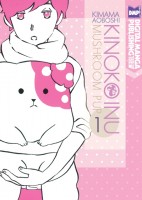
Kinoko Inu: Mushroom Pup, Volume 1Kinoko Inu: Mushroom Pup, Volume 1 by Kimama Aoboshi. The first volume of Mushroom Pup may very well be one of the oddest manga that I’ve read recently. And even though I enjoyed the volume, I’m still not exactly sure what to make of it. Calling Mushroom Pup quirky would be putting it extremely lightly. Hotaru Yuyami writes and illustrates horror books for children, but ever since his beloved dog Hanako died his creative impulse has completely left him. One evening a strange pink mushroom growing in his garden turns into an even stranger intelligent dog-like creature which attempts to help Yuyami get over his loss in some very bizarre ways. (This isn’t even attempted to be explained.) Also invading Yuyami’s life as he tries to grieve is his childhood friend-cum-editor and a mushroom researcher (with an amazing mohawk) who just so happens to be a huge fan of Yuyami’s work. For all of its strangeness, Mushroom Pup is actually rather subdued and even the humor tends to be straight-faced, which in some ways makes it even funnier. At the same time, it’s also a bit melancholy and heartwarming.

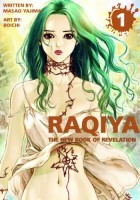
Raqiya: The New Book of Revelation, Volume 1Raqiya: The New Book of Revelation, Volumes 1-2 written by Masao Yajima, illustrated by Boichi. One Peace Books doesn’t tend to do much in the way of marketing or press releases, so it seems as though the publisher’s manga appears almost out of nowhere. Raqiya is a five-volume series focused around a young woman named Luna who seems to be the harbinger for the end of days. She has caught the interest of a small but extreme cult of heretical Christians as well as the attention of a secret and heavily armed Catholic organization charged with hunting down such heretics. It’s interesting to see Christianity play such a huge role in a manga, even if it is a highly fictionalized version of the religion. There’s also plenty of destruction and action in Raqiya–explosions, gun fights, car chases, and so on. Boichi’s artwork is effectively dynamic and extremely intense, if occasionally a bit over the top. Raqiya is definitely a violent and extreme manga; Boichi doesn’t hold back. Boichi is a Korean artist now working and living in Japan. His series Sun-Ken Rock has been available digitally, but Raqiya is his first manga to be released in English in print.

UQ Holder!, Volume 1UQ Holder!, Volumes 1-2 by Ken Akamatsu. Technically a sequel of sorts to Negima!: Magister Negi Magi (or at least set in the same universe), UQ Holder! seems to stand completely on its own and requires no knowledge of the earlier series. (Which is a good thing seeing as I haven’t read it.) So far I am fairly underwhelmed by UQ Holder!, though there are a few things I like about the series. Akamatsu’s fight and action sequences can be fairly entertaining, for one. Also, I tend to enjoy manga that explore the repercussions of immortality, which UQ Holder! is set up to do. Unfortunately, it hasn’t quite followed through on that potential yet, despite a wide variety of different types of immortals and immortality being introduced (vampires, genetically modified humans, cursed beings, and many others). In general, the story of UQ Holder! is lacking a clear direction with far too many different genre elements, tropes, and cliches being forced to share the same series. It doesn’t help that the goals and motivations of the series’ protagonist are left deliberately vague as well; Akamatsu tries to make a joke of it, but it either doesn’t quite work or just isn’t funny.

Filed Under: FEATURES, My Week in Manga Tagged With: Boichi, From the New World, Ken Akamatsu, Kimama Aoboshi, manga, Masao Yajima, Mushroom Pup, Raqiya, Toru Oikawa, UQ Holder, Yusuke Kishi

Pick of the Week: Titans & Sparklers

September 15, 2014 by Ash Brown, Michelle Smith, Sean Gaffney, Anna N and MJ 1 Comment

potwASH: It’s a rather light week for manga releases, but even so there are still a few series, like Genshiken that I’m currently following. However, the releases I’m most curious about this week aren’t even manga, though they are manga-related. Kodansha’s branching out with the Attack on Titan guidebook, but I’m particularly interested in reading Before the Fall from Vertical, which generally shies away from light novels.

MICHELLE: I have fallen several volumes behind on Bokurano: Ours, so I don’t know for certain that it’s still as depressing yet fascinating as it was early on. Perhaps the kids find a way out of their predicament! With that hope in mind, I recommend the final volume!

SEAN: I’m a sucker for infodumps, so the appearance of the Attack on Titan Guidebook is good news for me. I look forward to seeing the likes and dislikes of the entire cast in their biographies.

ANNA: There isn’t much coming out this week that appeals to me, so my pick of the week is Sparkler Monthly. I checked out their offerings recently, and I’ve enjoyed the online comics I’ve read from them. Check out their membership drive!

MJ: Anna, what an inspired idea! I will join you in your enthusiasm for Sparker Monthly! Though I admit I initially subscribed pretty much solely for the latest chapters of Jen Lee Quick’s Off*Beat, I’ve stuck around for the rest, including Quick’s new comic Gatesmith, which is very intriguing so far.

What looks good to you this week?

Filed Under: PICK OF THE WEEK

Hayate the Combat Butler, Vol. 24

September 14, 2014 by Sean Gaffney

By Kenjiro Hata. Released in Japan as “Hayate no Gotoku!” by Shogakukan, serialization ongoing in the magazine Shonen Sunday. Released in North America by Viz.

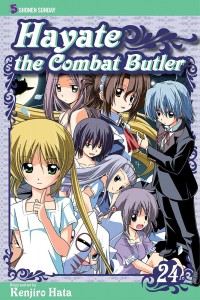
This is probably my favorite volume of Hayate the Combat Butler to date. It manages to resolve the Athena storyline with a lot of fighting spirit, emotional turmoil, and one big “call my name” rescue by Hayate. But is also has a great deal of heart, as we see Hayate’s reunion with Athena, Hina’s heart-to-heart with Ayumu, and some strikingly normal and non-insane life advice from Yukiji. And don’t worry, there’s a good amount of humor here as well, mostly featuring the minor cast back at the hotel having to fight off a pack of mythological beasts. This volume packs a lot of stuff into it, and it’s no surprise that the emotional resolution of Athena’s storyline will carry over into Volume 25.

hayate24

We also see Nagi at perhaps her most mature, even as she insists that Hayate can protect her from anything. Nagi has been a bit of a polarizing character, being both underage *and* tsundere, but even her detractors seemed to like this scene, where she crushes the stone that represents Hayate’s moral dilemma, and announces that she will deal with the consequences no matter what. Of course, I doubt she really realizes what it’s like for a girl like her to live without money, but it’s still great to see.

Likewise, it’s always nice to see Yukiji as the big sister that she usually tries to avoid being. She senses Hina’s abject depression even over the phone, and so flies over there to set things right. (Hina lampshades that this is possible, as she notes Yukiji would have to fly all the way from Italy… which isn’t that far away from Greece, in fact.) Yukiji’s advice is blunt but necessary, as Hina (and Ayumu) both need to be reminded that even in a manga, you sometimes can’t get the happy ending you want, and that this is what life is – a series of struggles. The friendship forged by Hina and Ayumu is important right now, as they can console each other – and also note that it’s nice to be in love with a man who’s loved the same woman for 10 years now, rather than an indecisive player (which Hayate is often accused of being.)

Hina also gets to be at the final battle, as Ayumu and Aika coerce her into dressing as Red, the super sentai hero. Then a magical sword drags her to the battle (literally) that Hayate is having with a possessed Athena and King Midas. There’s little to no humor here, as we see Athena’s struggles and Hayate’s anguish in raw, unfiltered scenes. Yet even here, Hata can’t resist making cultural references – the entire finale is an homage to the end of Shoujo Kakumei Utena, with Athena trapped in a dark place surrounded by swords, and Hayate breaking through in order to rescue her from her despair. It’s hard not to cry with happiness as they embrace, Midas vanquished at last – even as Hina, making a quick exit, is trying not to cry in emotional pain.

The last chapter is pure romantic shipping fluff, as Athena gives into to her grumpy tsundere side (that 3/4 of this cast seems to possess) and tries fishing for compliments while at the same time being upset by them – witness her attack on Hayate after he notes how he was surprised how large her breasts had gotten. As the volume ends, Athena starts to tell Hayate how she escaped from the castle ten years ago, but I have a feeling that we’re also due for a parting soon – after all, Hayate is up to Vol. 41+ in Japan, and did not end with Hayate and Athena ending up together. So expect the next volume to nudge back towards the comedic status quo. For now, however, this was an amazing volume of shonen manga, and well worth the temporary departure from comedy.

Filed Under: REVIEWS

Skip Beat! the drama

September 13, 2014 by Anna N Leave a Comment

I recently marathoned 14 episodes of the Tawainese live action version of Skip Beat! which is airing now on Dramafever. This production has been stalled in development previously, with Jerry Yan aka the Tsukasa role from Meteor Garden set to play the Ren Tsuruga character. Instead in this version we have some amazing stunt casting with two members of Super Junior playing the roles of Sho and Ren. My love of Korean entertainment generally starts and ends with k-dramas, so my awareness of Super Junior is just that they are the group that does the Sorry, Sorry song.

I’m always curious to check out live adaptations of manga that I enjoy, because when done right it gives me an opportunity to enjoy a story I’ve liked in a different way. I have a couple quibbles with the casting, but overall I think that most Skip Beat! manga fans will be happy to check out this drama.

skipb

Skip Beat! is the story of Kyoko (sorry, I’m going to just stick with the original names from the manga), a young girl without a family who is raised alongside Sho Fuwa, whose main ambition is to become an idol. She follows Sho to the big city and works multiple jobs to support him while he pursues his music career. When she finds out that Sho has just been using her all along, she takes a vow of revenge to punish him by eclipsing him in the entertainment industry. She manages to join a top talent agency, LME under the “Love Me Program” where she has to slowly work her way up in the industry by acting as a gopher while wearing a humiliating pink jumpsuit. She meets and makes an impression on Ren Tsuruga, a leading young actor and Sho’s senior in the industry. As Kyoko progresses in her journey towards celebrity, she gradually finds the craft of acting more and more rewarding.

I was wondering if a live action adaptation of the manga would manage to capture some of the frantic energy in Yoshiki Nakamura’s illustrations, and I was pleasantly surprised by the appearance of Bo the Chicken in the credits, along with some low budget cgi versions of Kyoko’s grudge spirit creatures. The first episode showed Kyoko’s superspeed as she frantically races to get to a store to grab a promotional poster of Sho. You can get a general feel for the show in this trailer, which shows a few moments from the first few episodes:

Ivy Chen is a good Kyoko, angry and vengeful when needed, and then innocent and enthusiastic when she gets her first chance to transform into the princess of her dreams at the hands of a makeup artist.

On the whole, I was very pleased with how closely the drama followed the manga in terms of plot, handling Kyoko’s unconventional entrance into the entertainment industry, where the skills she perfected by growing up helping out at a traditional Japanese inn coincidentally come in handy during her first acting jobs. The choice to dub Siwon’s and Donghae’s voices as Sho and Ren is a bit distracting at times, but since I don’t understand either Korean or Mandarin, I guess I shouldn’t be too picky. As Sho, Donghae basically has to act petulant and spoiled most of the time.

Petulant and Purple

Petulant and Purple

I had some issues with Siwon as Ren, mostly due to the fact that there wasn’t really a noticeable age difference between the actors, when I expect Ren as a character to appear much more mature than Kyoko and Sho. On the acting side, Ren in this drama is as reticent and inner-focused as I’d expect Ren to be, with the pleasant and professional mannerisms starting to be derailed a bit due to close proximity with Kyoko.

Tiny Grudges!

Tiny Grudges!

One thing I was very happy about was that the relationship between Kyoko and Kannae had plenty of time to develop. I was worried that the drama would push things too far in the direction of Super Junior Love Triangle, but Kannae and Kyoko’s gradual friendship forged in the adversity they face as fellow “Love Me!” Section comrades got just the right amount of screen time.

Besties Forever!

Besties Forever!

At 14 episodes in, this series is getting up to the point where Kyoko appears in Sho’s video, and I expect the series will be heading into the Dark Moon storyline soon as well. It’ll be interesting to see how they decide to wrap the series up, since the manga hasn’t ended yet.

Carrying a girl in a pink jumpsuit around. As you do.

Carrying a girl in a pink jumpsuit around. As you do.

Putting aside my quibbles with live action Ren not seeming older and manly enough, this is a very solid adaptation of Skip Beat! that should please fans of the manga. My only problem is having watched so many episodes at once, the main song for the title credits is now seared into my brain.

Filed Under: Drama Diary, FEATURES

Otome Game Review: Love! Sushi Rangers

September 12, 2014 by Anna N

I think I’ve figured out why I originally burnt out on Otome Games when I started playing them a year ago for just a few months. I generally tend towards games of the “freemium” variety, but they are so slow to progress that I end up playing a bunch of them at once, which then results in me deciding that I’ve been playing far too many otome games, so I just stop and go back to more productive pursuits like knitting, watching k-dramas, and not putting away the laundry. So this time around I’m going to give up on games I find a bit boring a bit earlier in the process, and just go ahead and write a review. I figure playing one storyline all the way to the end is enough, if the game isn’t that great, right?

All that being said, this game Love! Sushi Rangers is bonkers, because it features the typical reverse harem scenario of any otome game but with sushi ingredients. Sushi ingredients given human form and personalities. Japan, everybody!!!!!!

Love! Sushi Rangers is available on android and iPhone

Screenshot_2014-09-08-22-08-44

This game starts out with a premise familiar to any manga fan – someone’s parent is going crazy and abandoning them for no logical reason. It is almost as good as the plot device where a sudden marriage where the heroine gets an annoyingly attractive new sibling. In this particular case the heroine’s father, a world class sushi chef, announces that he is going to walk the earth to bring the gospel of sushi to foreign lands, leaving the family restaurant in the hands of his daughter, who is absolutely inept at making sushi. Yukari, who is a sensible girl except for her habit of falling in love with sushi ingredients, is angry and upset about this turn of events. She finds some unlikely helpers, as the sushi ingredients her father left behind turn into handsome young men, prepared to help her keep the restaurant running.

Other than the nutty aspect of dating sushi ingredients, this game is pretty boring. There isn’t really much of a plot to speak of in either of the routes I tried. Salmon and Tuna are engaged in a petulant rivalry with each other.

Screenshot_2014-09-09-12-35-08

This rivalry sometimes becomes violent. Sushi fight!!!!!

Screenshot_2014-09-09-12-35-40

While there is no plot to speak of, this game did at least have a sense of humor, as when the sushi ingredients ponder the morality of sushi ingredients eating sushi.

Screenshot_2014-09-08-22-07-05

I did appreciate the heroine’s tendencies to yell in all caps when she’s upset.

Screenshot_2014-08-22-18-15-19

As a free game, I think you can play up to three character’s story lines for free. I only played through all of Tuna and part of Salmon. It is very very unfortunate that Shrimp and Avocado don’t have routes. The power expended to get through the game for free is about the slowest to regenerate that I’ve ever encountered in a freemium otome game. You basically get only 2 chapters a day, which is a very slow pace. I didn’t think that the character designs were very attractive. Often the game presents you with empty rooms and subtitles, I’m assuming to save on the costs of doing additional illustrations. Lackluster art combined with almost no plot to speak of doesn’t really add up to a game that I’d be interested in playing much further, even though there are flashes of humor due to the wacky premise.

Filed Under: REVIEWS Tagged With: Love! Sushi Rangers, otome games

  • « Go to Previous Page
  • Page 1
  • Interim pages omitted …
  • Page 588
  • Page 589
  • Page 590
  • Page 591
  • Page 592
  • Interim pages omitted …
  • Page 1048
  • Go to Next Page »
 | Log in
Copyright © 2010 Manga Bookshelf | Powered by WordPress & the Genesis Framework