• Skip to primary navigation
  • Skip to main content
  • Skip to primary sidebar
  • Home
  • About Us
    • Privacy Policy
    • Comment Policy
    • Disclosures & Disclaimers
  • Resources
    • Links, Essays & Articles
    • Fandomology!
    • CLAMP Directory
    • BlogRoll
  • Features & Columns
    • 3 Things Thursday
    • Adventures in the Key of Shoujo
    • Bit & Blips (game reviews)
    • BL BOOKRACK
    • Bookshelf Briefs
    • Bringing the Drama
    • Comic Conversion
    • Fanservice Friday
    • Going Digital
    • It Came From the Sinosphere
    • License This!
    • Magazine no Mori
    • My Week in Manga
    • OFF THE SHELF
    • Not By Manga Alone
    • PICK OF THE WEEK
    • Subtitles & Sensibility
    • Weekly Shonen Jump Recaps
  • Manga Moveable Feast
    • MMF Full Archive
    • Yun Kouga
    • CLAMP
    • Shojo Beat
    • Osamu Tezuka
    • Sailor Moon
    • Fruits Basket
    • Takehiko Inoue
    • Wild Adapter
    • One Piece
    • After School Nightmare
    • Karakuri Odette
    • Paradise Kiss
    • The Color Trilogy
    • To Terra…
    • Sexy Voice & Robo
  • Browse by Author
    • Sean Gaffney
    • Anna Neatrour
    • Michelle Smith
    • Katherine Dacey
    • MJ
    • Brigid Alverson
    • Travis Anderson
    • Phillip Anthony
    • Derek Bown
    • Jaci Dahlvang
    • Angela Eastman
    • Erica Friedman
    • Sara K.
    • Megan Purdy
    • Emily Snodgrass
    • Nancy Thistlethwaite
    • Eva Volin
    • David Welsh
  • MB Blogs
    • A Case Suitable For Treatment
    • Experiments in Manga
    • MangaBlog
    • The Manga Critic
    • Manga Report
    • Soliloquy in Blue
    • Manga Curmudgeon (archive)

Manga Bookshelf

Discussion, Resources, Roundtables, & Reviews

Blog

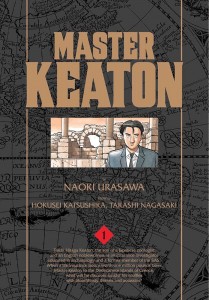
Master Keaton, Vol. 1

December 25, 2014 by Sean Gaffney

By Naoki Urasawa, Hokusei Katsushika, and Takashi Nagasaki. Released in Japan by Shogakukan, serialized in the magazine Big Comic Original. Released in North America by Viz Media.

A long awaited release on these shores, this is the sort of title that you’d have expected to be licensed back in the old Viz days of the early to mid 90s, filled with Crying Freeman and Mai the Psychic Girl. The series had an anime in the 1990s, but by then the fashion for seinen had passed, and it’s taken a resurgence, helped by the cult popularity of 20th Century Boys and Monster, to see the series out here at last as a deluxe Signature edition. There’s also some question over the actual creation. When it came out in the late 80s, it was credited to Katsushika as the writer and Urasawa as the artist. After Katsushika’s death, Urasawa claimed that they’d fought early in the series, and from that point Urasawa did the story himself, a viewpoint which has led to some criticism. Also, the third author on the cover is the writer for the CURRENT Master Keaton revival, which started in 2012, and which… isn’t this. (As with many Signature releases of older works, this is a release of the Japanese re-release, which may have updated art/storylines.)
keaton1

What is this, then? It’s been called “Indiana Jones manga”, but I’d compare it to another 80s icon, MacGyver. Taichi Keaton is a former SAS soldier turned freelance insurance investigator for Lloyd’s of London. He looks into wrongful death claims, art forgeries, and archaeological digs, all the while finding trouble and managing to maneuver his way out of it by virtue of his amazing survival skills. Sadly, he’s not nearly so competent in his personal live, being divorced and having a teenage daughter, Yuriko, who seems to find her father admirable and aggravating in equal measures.

I understand her frustration. Keaton is a man who it’s easy to admire but hard to like. His lax personality was highly popular at the time, and makes a nice change from, say, Golgo 13 (a series Katsushika also wrote for) or Crying Freeman. These days I think a reader might find it trying, especially his obsession with his ex-wife getting together with someone else (we never see the wife, and actually it occurs to me that Yuriko may have made the whole thing up to attempt to spur him into action). Later in the volume we see Keaton’s father, whose name he disavows (he takes his mother’s last name), and he’s also an eccentric, frustrating individual, who Keaton probably takes after more than he’d like. Keaton as a man seems mostly half-baked and half-hearted.

The series is on firmer ground with the mystery stories, which much of the time turn into spy stories. Master Keaton began in 1988, at the tail end of the Cold War, but feels more like an early 80s tale, with the Communists still exerting their hold behind the Iron Curtain. I wonder if we’ll see that change as the series went on – it lasted till 1994. The first few chapters are not fleshed out enough – Keaton is the sort of story that requires a bit of room to breathe, particularly with all the exposition, and it’s no surprise that it’s the multi-chapter works that are the best in the volume.

Master Keaton, in the end, is classic seinen. If I said this was a mystery series in Big Comic Original in the late 80s, the well-read manga fan would likely be able to predict precisely the types of stories you’d see here. But it’s very well-told, as expected from Urasawa, and when he’s not getting involved in personal business, Keaton makes an excellent investigator. I’ll definitely be picking up more.

Filed Under: REVIEWS

Manga the Week of 12/31

December 24, 2014 by Sean Gaffney, MJ, Ash Brown, Michelle Smith and Anna N 3 Comments

SEAN: There’s still not a great deal of manga out for this final week of the year, but there’s a bit more than last week. Let’s see what we’ve got.

stones

Gen Manga has a new title, called Stones of Power, which would appear from its cover art to star a catgirl shrine maiden.

MJ: If there’s one thing I’ve learned about Gen Manga, it’s that I should always pay more attention to it than I think I should. So I’ll be checking this out for sure.

ASH: I remember enjoying the early chapters of Stones of Power when Gen was serializing it, so I’m looking forward to reading the whole thing!

ANNA: Hmm, I look forward to reading your reviews!

SEAN: On to Kodansha. Fairy Tail 45 has a cover that makes me sigh, but ah well. I’m going to guess a lot of battles?

And Say “I Love You” is at Vol. 5, and that cover actually looks really cute? Will the inside be just as cute, or will it be more drama filled?

MICHELLE: Whatever the case, I’m sure it’ll be good!

ANNA: Such a good manga! I remember now that I haven’t read volume 4 yet. I’m going to treat myself to this!

SEAN: That doesn’t seem like a lot. Let’s do something we rarely do: what’s out digitally this month?

Dark Horse seems to have eased up on their app-only titles, as we’re seeing a pile of new digital manga this month that may have already come out earlier exclusively. Kurosagi Corpse Delivery Service, Crying Freeman, Blade of the Immortal, Oh My Goddess, and Mail all have various volumes out.

ASH: Nice to see Dark Horse making these more widely available, especially as so many of them are out of print.

SEAN: The two Kodansha titles I mentioned earlier are also available as ebooks.

Vertical has two more volumes of Black Jack, the 3rd and 4th.

MJ: Still so happy about this!

ANNA: Me too! I didn’t collect the whole series in print, so I might pick up a volume or to digitally.

SEAN: Viz has more of their ‘Viz Select’ titles, aka ‘the Kadokawa titles we can license rescue from Tokyopop’. Vol. 12 of Trinity Blood is where TP left off, and so far I don’t believe Viz has actually translated anything new for these rescues (they’re pretty low budget), so this may be it. And there’s the 2nd Mouryou Kiden volume, which is there to remind you why the title ‘ex-CLAMP artist’ is not really a compliment. And there’s a third volume of Zone-00.

MICHELLE: Man, this is like manga memory lane!

ANNA: I am feeling oddly nostalgic!

frog1

SEAN: Then we have the two debuts. Sgt. Frog is a series that I really enjoyed reading when it was first coming out, though I will admit I felt it was getting a bit long in the tooth by the end of it. It’s great to see back, though, and I am happy to see Vol. 1 digitally here.

The other series, Hands Off!, I know less about. It’s actually finished, with all 8 volumes being released over here. It seems to be an esper series, and I suspect will have hints of BL, like most esper series – and indeed a lot of Monthly Asuka series, which is where it ran.

MJ: Hmmm… maybe, maybe…

MICHELLE: That was pretty much exactly how I felt about Hands Off! when it was coming out in print. I bought volume one years and years ago and never got around to reading it.

SEAN: And just as Viz license rescues old Tokyopop titles, so Yen is license rescuing – at least digitally – some of the older titles Viz licensed via Square Enix, who now have a close working relationship with Yen. Nightmare Inspector: Yumekui Kenbun started in Stencil (sort-of shoujo) and then moved to GFantasy (sort of shonen). But the genre it really fits is ‘MJ’, I suspect.

MJ: Should I feel honored that I have become a genre? :D I think so. That said, I missed most of this series in print, so I should probably take the opportunity to pick it up now!

ASH: Nightmare Inspector is a series I’m personally very fond of. Glad it will be reaching some new readers.

MICHELLE: I was always kind of intrigued by this one, but never actually read it.

ANNA: I enjoyed the first couple volumes of this, nice to see it coming back!

SEAN: Technically the title to this next series in North America is ‘O-Parts Hunter‘, but I really hate not referring to it by its original Japanese title, 666 Satan (can’t imagine why they changed it…). If the artist’s last name sounds familiar, there’s a reason: the creator is the younger twin brother of Naruto’s creator. 666 Satan is well-told, if not particularly original.

Lastly, all 9 volumes of The Record of a Fallen Vampire are available. A Shonen Gangan series by the creator of Spiral: Bonds of Reasoning, featuring vampires, there was precisely zero chance this would not get licensed by Viz, and there was precisely zero chance that, once given the opportunity, Yen would not make it available digitally.

MJ: I’m in for this as well.

MICHELLE: MJ, would you believe I talked about this series in our very first Off the Shelf column? I did! Here’s proof.

SEAN: Do you plan to use your gift cards to get anything here?

Filed Under: FEATURES, manga the week of

Yukarism Vol. 1

December 24, 2014 by Anna N

Yukarism Volume 1 by Chika Shiomi

I’m always excited for the first volume of a new Shojo Beat series comes out, but I was SUPER EXCITED for Yukarism because I’ve enjoyed previous works from Shiomi so much. My absolute favorite of her series so far is Night of the Beasts. I thought that Yukarism had an interesting premise, so I was very curious!

The couple embracing on the cover of the first volume isn’t a couple, it is the same person in a current and previous life. Yukari is a young teenage genius of an author, producing books set in the Edo period with vivid historical detail. His new classmate Mahoro is fascinated by him, coming up with excuses to stop by with homework or treats when he’s absent from school due to a writing binge. Yukari recognizes something in Mahoro, but when she has a conversation with him, her expectations of talking to a author dedicated to his readers are derailed. Yukari seems to approach the world with a significant amount of detachment, perhaps because he’s haunted by memories from a previous life. When Yukari notices a scar on Mahoro’s wrist, he’s catapulted into the past and wakes up as a courtesan in the Edo period named Yumurasaki. Here, Mahoro’s previous life was as a man named Kazuma who serves as Yumurasaki’s protector.

Shiomi’s art is lovely. The character designs for Yukari and Yumurasaki look like male and female aspects of the same person. The shift in detail in the backgrounds from the sparse modern day to the elaborately decorated Edo period is a treat to see. There are little moments of physical comedy scattered throughout the book, because when Yukari travels to the past he can’t be as graceful as Yumuraski and finds himself overbalanced by headgear and teetering off his shoes. Kazuma is terrified when he sees Yumurasaki casually sitting like a teenage boy with his legs spread apart.

Yukari approaches his sudden experience of his past life like an adventure, but he doesn’t yet seem to be emotionally affected by living Yumurasaki’s life. He’s unconcerned by how his odd behavior might affect her relationships, and his attitude seems to be much more that of a writer observing details than someone who is invested in actually experiencing his life. Yukari’s encounters in the past end up giving him insight into the present, as a tormented girl who works in Yumurasaki appears in the present with psychological issues due to the trauma of her forgotten previous life. Yukari is able to use the knowledge he gained as Yumurasaki to help her.

Overall, I found this first volume very intriguing. I’m looking forward to seeing how the past continues to have an impact on Yukari’s present. Shiomi does a great job coming up with characters who have reticent but interesting personalities. Yukari really acts just as one would expect a teenage boy who used to be an elite courtesan of the past to behave. I’m also curious to see how the relationship between the more dynamic Yukari and the watchful Mahoro develops. Yukarism is a great new manga to kick off the new year!

Filed Under: REVIEWS

Massive: Gay Erotic Manga and the Men Who Make It

December 24, 2014 by Ash Brown

Massive: Gay Erotic Manga and the Men Who Make ItEditor: Anne Ishii, Chip Kidd, and Graham Kolbeins
Publisher: Fantagraphics Books
ISBN: 9781606997857
Released: December 2014

The first major publication of gay manga to be printed in English was The Passion of Gengoroh Tagame: The Master of Gay Erotic Manga. Soon after its release a new project–a gay manga anthology called Massive–was announced by the same team that worked on Tagame’s debut English collection. Originally intended to be released by PictureBox, the anthology was temporarily orphaned when the publisher ceased releasing comics before the volume was completed. I was thrilled when Fantagraphics took on the project. Edited by Anne Ishii, Chip Kidd, and Graham Kolbeins, Massive: Gay Erotic Manga and the Men Who Make It became one of my most anticipated releases of 2014. Gay manga is an extremely underrepresented genre of manga in English. Massive, like The Passion of Gengoroh Tagame before it, is a groundbreaking work. Through manga, interviews, photography, and essays, the anthology introduces nine of the genre’s most influential, respected, and promising creators to an English-reading audience.

The volume’s table of contents is formed by a gallery of photographs paired with full-page color pin-ups illustrated by each of the contributors to Massive: Gengoroh Tagame, Inu Yoshi, Kumada Poohsuke, Takeshi Matsu, Jiraiya, Gai Mizuki, Fumi Miyabi, Seizoh Ebisubashi, and Kazuhide Ichikawa. This is followed by introductory essays written by each of the three editors. Kidd’s “It Feels Too Good” conveys the excitement over the fact that a volume like Massive even exists, while Ishii reveals some of the steps it took to publish the material in “Seeking English Translator.” Kolbeins essay “Glocalizing Gei Manga” is particularly enlightening, providing a greater context for Massive and a brief overview of the history of gay manga and how the volume fits into it. Also included is a timeline of male-male sexuality in Japanese culture, a list of recommended readings, and numerous photographs and illustrations. However, the real meat of the collection is the individual profiles of each of the creators introducing their work and personal histories and exploring their careers and the impacts they have made on the genre of gay erotic manga. The other major highlight of Massive is the inclusion of examples of their manga.

For most of the contributors, Massive marks their debut in English. Excluding Tagame, who has thus far had four collections published, Matsu is the only creator to have had a major release in English. And except for Jiraiya’s “Caveman Guu,” which was previously printed separately, all of the manga collected in Massive is being translated into English for the first time. Some are excerpts of longer works, like Tagame’s Do You Remember South Island P.O.W. Camp? and Poohsuke’s Dreams of the New Century Theatre, while others are shorter, standalone stories. There is humor and playfulness to be found in Yoshi’s “Kandagawa-Kun” and Matsu’s “Kannai’s Dilemma,” more dubious encounters in Mizuki’s “Fantasy and Jump Rope,” Ebisubashi’s “Mr. Tokugawa,” and Ichikawa’s “Yakuza Godfathers”, and even mythological inspiration in Miyabe’s “Tengudake.” The manga collected in Massive is most definitely erotic in nature. Some of the selections are simply suggestive, but many feature explicit, uncensored, and uninhibited sex between hypermasculine, muscular, and otherwise large-bodied men. It is called Massive for a reason, after all.

The profiles of the creators included in Massive are just as engaging as the manga that has been collected. The volume provides an incredibly valuable look into the creation of gay erotic manga and art. Interestingly enough, several of the contributors mention that they would like to create gay manga without as much erotic content, but to successfully do so would be difficult due to the demands of their audience and what is expected from the genre of gay manga as a whole. The artists address many of the same subjects in their interviews but they each bring their own perspective to the discussion. It’s fascinating to learn about how the manga industry has changed and continues to change, the impact and challenges presented by foreign scanlations of manga, the benefits of working within the manga industry or independently outside of it, the use and misappropriation of the term bara both in Japan and in the West, and the relationship between gay manga and boys’ love manga, among many other topics. Massive truly is a spectacular volume and highly recommended for anyone interested in gay manga, its history, and its creators; it’s a fantastic introduction to the genre.

Filed Under: REVIEWS Tagged With: Anne Ishii, Chip Kidd, Fantagraphics Books, Gengoroh Tagame, Graham Kolbeins, manga, Nonfiction, Takeshi Matsu

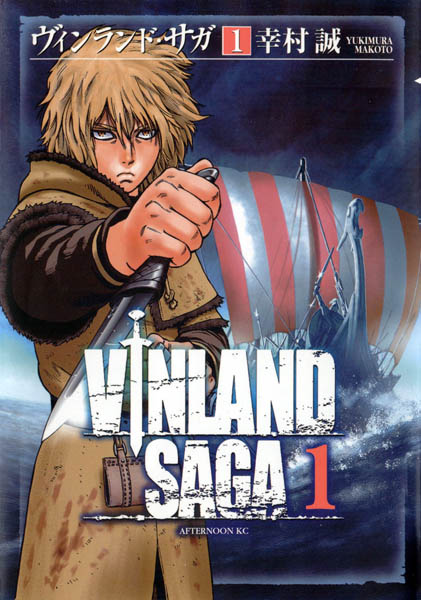
Vinland Saga “temporarily suspended”

December 23, 2014 by Brigid Alverson

Vinland_Saga_volume_01_cover

Bad news for Vinland Saga fans: The sixth volume has been removed from sales listings, and Kodansha Comics says the series has been “temporarily suspended.” In case you aren’t already reading the series, Johanna Draper Carlson explains why this is bad.

Good news for Shonen Jump readers: This week’s issue will include the one-shot story RKD-EK9 by Medaka Box writer NisiOisin and Death Note artist Takeshi Obata.

The Manga Bookshelf team look back at the most important manga of 2014.

Also at Manga Bookshelf, Erica Friedman has a nice introduction to the Japanese magazine Dengeki Daioh.

Twenty-five years after his death, Osamu Tezuka lives on in Japan, celebrated by murals, subway chimes, inventors, and the merchants in his old neighborhood, who trade Astro Money for civic-minded acts and serve up his favorite dish.

Erica Friedman posts a fresh edition of Yuri Network News at Okazu.

Happy blogiversary to Organization Anti-Social Geniuses, which turned four years old last week; if you haven’t checked it out from the links here, go take a look now!

News from Japan: Naoki Urasawa is taking a break from Billy Bat; the series, which has already had several interruptions, will go on hiatus until April. Library Wars: Love & War may just have ended in Japan, but artist Kiiro Yumi already has a new series, Toshokan Sensō: Love & War Bessatsu-hen, in the works. Plans are in the work for a Kabuki play based on Eiichiro Oda’s One Piece.

Reviews: The Manga Bookshelf team posts another round of quick reviews in their latest Bookshelf Briefs. Ash Brown looks back at The Week in Manga at Experiments in Manga.

Ash Brown on vol. 1 of Afterschool Nightmare (Experiments in Manga)
Johanna Draper Carlson on vol. 3 of Food Wars (Comics Worth Reading)
Anna N. on vols. 1 and 2 of Honey Blood (Manga Report)
Johanna Draper Carlson on Mail (Comics Worth Reading)
Johanna Draper Carlson on vol. 2 of Manga Dogs (Comics Worth Reading)
Lori Henderson on vol. 1 of Noragami (Manga Xanadu)
Johanna Draper Carlson on vol. 4 of Say I Love You (Comics Worth Reading)
Erica Freidman on Stretch (Okazu)
Lori Henderson on vols. 1-3 of Sweet Rein (Good Comics for Kids)
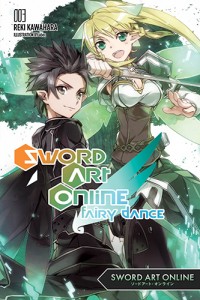
Sean Gaffney on vol. 3 of Sword Art Online: Fairy Dance (A Case Suitable for Treatment)
Erica Friedman on vol. 3 of Tsuki to Sekai to Etoile (Okazu)
Rebecca Silverman on vol. 8 of Umineko: When They Cry (ANN)
Johanna Draper Carlson on vol. 5 of What Did You Eat Yesterday? (Comics Worth Reading)
Rebecca Silverman on vol. 1 of Yukarism (ANN)

Filed Under: MANGABLOG

Sword Art Online, Vol. 3: Fairy Dance

December 23, 2014 by Sean Gaffney

By Reki Kawahara and abec. Released in Japan by ASCII Mediaworks. Released in North America by Yen Press.

The novels are still running a bit behind the manga here in the West, so much of this review will be discussing how the light novel differs from the first two volumes of the manga that I’ve already reviewed. They mostly hit similar notes – Suguha’s crush on her brother is in full force, Asuna is still trapped in a birdcage, and Sougo is an over-the-top villain – but the ability of prose to let you get inside the heads of its leads allows for a greater depth than the manga had, particularly with Kazuto and Asuna. There’s also some nice discussion of Kazuto’s family beyond his sister, as we see his working mother, who he apparently got his obsession with games from. That said, once Kazuto becomes Kirito, we’re back to this series’ raison d’être, which is watching the boy do awesome things.

fairydance1

The contrast between Kazuto and his MMORPG self didn’t come across as much in the manga as it does here, and it may have been my favorite part of the book. Now that he’s not in Sword Art Online, we’re left with a young teenage boy who’s weaker than he’s been the past two years, unable to decide what to do with his life, and with the one thing he cherished more than anything – Asuna – still far away from him. After meeting Sugou, and hearing about Asuna’s arranged marriage, he almost completely falls apart, sounding nothing like the character we’ve known, not even after the death of Sachi in the previous volume. It’s only when he reached ALfheim Online, the successor to SAO, and can become Kirito again that things change. And change they do – Kirito was pretty confident in the first two books, but here he’s almost cocky, showing off his skills (ported over from SAO, for reasons unknown to him) and cleaning house.

As for Asuna, her POV also benefits the story. She goes through the same crisis that Kazuto did earlier in the book, being trapped with only the monstrous Sugou for company and not even being sure if her love is alive. Once Sugou attempts to break her will by saying he is (cartoon villains always seem to make this mistake), she gains new strength, and it’s immediately put to good use – her use of game mechanics and environment to find a way to escape her cage is brilliant, and shows that she’s more than just a prize waiting for Kirito to rescue her here. (Sugou also gets to be even more horrible here – the scenes of him touching her, trying to go far enough so that she’ll punch him and thus “justify” using his supposed mind control on her sooner, are true nightmare fuel.)

Suguha/Leafa is the new character here, and like the other two we enjoy getting inside her head. She’s startled at her brother’s sudden kendo skills, picked up by sheer muscle memory from his days in SAO. The family revelations, which he knew about but didn’t tell her about, also have thrown her off kilter, and that combined with the onset of puberty has led to her accepting that she has feelings for Kazuto – but she can see he’s clearly in love with Asuna. She’s very similar to her brother, and it’s no surprise that when she plays ALO in an attempt to understand what he enjoyed about it, she too got very good very fast and is one of the top players in the game.

If you hated the Fairy Dance arc of the anime, then reading the light novel will probably not change your minds. If you enjoyed aspects of it but felt it fell short, given this version a try. It may read like wish-fulfillment fanfic, but there’s nothing wrong with that if it interests the reader, and I’m still greatly enjoying Kirito, Asuna and Leafa’s adventures. This is a 2-part book, so in April we’ll find how things wrap up.

Filed Under: REVIEWS

Bookshelf Briefs 12/22/14

December 22, 2014 by Sean Gaffney and Michelle Smith Leave a Comment

This week, Sean and Michelle take a look at recent releases from Seven Seas, Yen Press, Viz Media, and Kodansha Comics

alice-nightmare2Alice in the Country of Joker: Nightmare Trilogy, Vol. 2 | By QuinRose and Job | Seven Seas – Slightly better than the first volume, this has an interesting premise in that for once Alice has a repressed memory her love doesn’t want her to see that isn’t about Lorina. The idea of her scribbling in her dictionary is somewhat childish, but that fits the plot pretty well, to be honest. Unfortunately, we keep running into two big problems. First, the art is simply not up to par, frequently looking almost doujinshi-esque, and suggests a rushed product. Secondly, Nightmare just isn’t that good of a romantic hero, not showing off enough cool to make up for his basic flaws. It’s sad that the cutest part of this volume was in a side story which is Alice/Blood. For completists only.-Sean Gaffney

Durarara!! Yellow Scarves2Durarara!! Yellow Scarves Arc, Vol. 2 | By Ryohgo Narita, Suzuhito Yasuda, and Akiyo Satorigi | Yen Press – It’s impressive just how much the narrative is bending itself to make sure that its three leads don’t find out about each other’s secrets. Masaomi *almost* sees Anri here, but Celty manages to rescue her before the damage is done. As you can guess, most of this volume is backstory and buildup, showing why Masaomi is tormented in his relationship with Saki, as well as how Kadota’s gang ties into this (Walker blithely setting thugs on fire is in keeping with this author’s tendency to enjoy psychopathic tendencies). And then there’s Shinra’s father, who is a real loathsome piece of work on all fronts. Ah, DRRR, even your likeable heroes are broken.-Sean Gaffney

foodwars3Food Wars!, Vol. 3 | By Yuto Tsukuda and Shun Saeki | Viz Media – OK, this series has now fully won me over after its awful start. It’s got just what you want from a Jump series: ridiculous side character, rivals turned friends, ludicrous battles that are also amazing, all involving cooking, and teamwork winning out… well, at least till the end, when Megumi is expelled. I highly doubt that will last, and the cliffhanger suggests a new battle may change the outcome. But it also allows for some heartbreak. There’s a short story at the end that was Saeki’s debut work, showing a typical high school romance and also likely showing why he was paired with a writer for this new project. The main reason to get this is Food Wars, though, and I am looking forward to the next volume.-Sean Gaffney

Haganai-clubHaganai: I Don’t Have Many Friends – Club Minutes | By Kurian and Bomi | Seven Seas – This volumes holds together a little better than the previous ‘comedy side stories’ volume, partly due to its focus on holidays, giving it more of a thematic impact. Everyone’s amusing quirks are on display here. Rika makes filthy jokes, Yukimura is deadpan (this time about the Warring States), Sena can’t win at bishoujo games, and Yozora is the most broken of them all. We actually seem to skip past the main release, timeline-wise, as we see Student Council members who are implied to be new regulars here, and seem to have wandered in from a more normal comedy Still, it wasn’t too spoilery, and those who want more Haganai will be happy with what this volume gives them.-Sean Gaffney

honeyblood2Honey Blood Vol. 2 | By Miko Mitsuki | Viz Media – Well, that didn’t end so much as stop. Despite the author’s best efforts to say that this was indeed the ending she had in mind, this ending comes very abruptly and made me raise an eyebrow. (There’s a ‘side’ volume in February, that seems to consist of the ‘pilot episode’ and some side stories.) It’s a surprise as we get a new antagonist vampire introduced here, who’s carried a grudge against Junya since the Edo period and is determined to break up our couple. Add this to Hinata’s worries about whether she can really be what Junya needs, and whether hteir ‘bond’ requires sex in order to work, and you have a tasty little vampire potboiler for supernatural fans. Just… be aware it stops rather than ends. -Sean Gaffney

sidonia12Knights of Sidonia, Vol. 12 | By Tsutomu Nihei | Vertical Comics – There’s some obvious emotional manipulation going on in this volume, even more so than usual, and yet I still manage to find myself feeling bad for Sho, the newly introduced Honoka clone who is introduced to die tragicaslly, in a callback to events of the first few volumes with Hoshijiro (remember her?). I was less wild about the subplot involving who’s been peeping on the female pilots when they’re changing – naturally, everyone blames Tanikaze, and just as naturally it isn’t him. But if you’re going to introduce harem manga elements in your story, I suppose you have to take the bad with the good. Still, this volume is better off when it’s trying to pull at your heartstrings rather than hit your funnybone.-Sean Gaffney

magi9Magi, Vol. 9 | By Shinobu Ohtaka | Viz Media – A transitional volume of Magi, this serves to a) introduce a whole bunch of new powerful people who serve under Sinbad, including the cover couple, who hate each other so it must be love; b) have a wacky comedic subplot involving Sinbad being accused of raping a girl in her sleep, which I could have done without; and c) introducing a new protagonist, Hakuryu Ren, who initially seems a bit villainous but allies himself with our heroes fairly quickly. Oh yes, and there’s Morgiana, who repurposes the shackles she once wore in slavery into her new magical weapons, which almost makes up for the comedy subplot. A good volume, but I’m more looking forward to what happens next.-Sean Gaffney

millennium4Millennium Snow, Vol. 4 | By Bisco Hatori | Viz Media – It’s possibly unfortunate that this came out the same week as the last Honey Blood, as they both feature very similar plotlines, with a vampire from the past arriving to stir things up and ruin our hero’s life. Of course, Toya is far easier to manipulate than Junya, so things work out a lot better for the villain here. It’s up to Chiyuki, now dying again without Toya’s help, to try to figure out what’s really going on. The outcome is not really in doubt, nor is the epilogue,, but it’s still nice to see feelings being returned. Oh yes, there’s also the subplot with Toya’s grandfather, which has a sad and tragic air around it as it deals with senility that comes with old age. A solid, if somewhat stolid, ending for the series.-Sean Gaffney

voiceover8Voice Over: Seiyu Academy, Vol. 8 | By Maki Minami | Viz Media – We’ve already seen Hime having to deal with her apathetic, neglectful mother earlier in the series. Now we get Senri’s parents, and we find out that things are even rougher here. I love the flashback to Senri’s parents, as it’s framed as a sort of shoujo manga of its own, with two eccentric people meeting cutely and falling for each other. But there’s a reason shoujo mangas often stop before the couple has children (or even a wedding), and this is why: it doesn’t always translate into good parenting. Given Sakura is also the actress who most deeply influenced Hime, and we can see a major roadblock coming up in the next volume or so – assuming Hime gets past admitting that she’s Shiro.-Sean Gaffney

Voice Over!: Seiyu Academy, Vol. 8 | By Maki Minami | Viz Media – Although the regular gang makes an appearance in the first chapter, in which Tsukino finally manages to speak up and convey her feelings, the majority of this volume is devoted to Senri’s childhood. It all starts because he realizes his friendship with Shiro (heroine Hime in disguise) is making him happy, but then he panics because he can’t tell if it’s genuine happiness or just a performance. It turns out his famous actress mother was never her genuine self around Senri, always taking on a variety of roles and not considering how this would affect her son and his ability to relate to others. I suppose this could be treading perilously close to one of those shoujo manga that becomes mostly about the lead guy’s angst, but I actually quite enjoyed it, especially the story of Senri’s first cat friend. I find I’m sad that there are only four volumes left! – Michelle Smith

witchcraftworks2Witchcraft Works, Vol. 2 | By Ryu Mizunagi | Vertical Comics – There are some interesting battles and discussion of witchcraft here in this second volume, but for the most part the emphasis remains firmly on comedy, particularly with the introduction of Honoka’s overprotective little sister Kasumi, who it turns out is also a witch. If you saw the words ‘overprotective little sister’ and groaned at the thought of what was to come, congratulations, you win the otaku cliche bingo card. She sleeps in his bed, she takes baths with him, etc. No surprise then that Honoka (also for everyone’s safety) moves into Ayaka’s high rise, though they may not live long enough to enjoy it. I’m not sure I’m going to keep up with this one, but it’s fun for fans of supernatural comedy, even if a bit predictable.-Sean Gaffney

Filed Under: Bookshelf Briefs

My Week in Manga: December 15-December 21, 2014

December 22, 2014 by Ash Brown

My News and Reviews

Last week was another week with two reviews here at Experiments in Manga. My monthly horror manga review project is now underway, so I took a look at Setona Mizushiro’s After School Nightmare, Volume 1, which is a very intriguing start to the series. Next month I’ll start in on the in-depth reviews for Yuki Urushibara Mushishi and continue to alternate between the two series until the review project is completed. Last week I also reviewed The Early Cases of Akechi Kogorō by Edogawa Rampo, which I was very excited to read. The volume collects four of the earliest stories featuring Rampo’s great detective. And over at Manga Bookshelf proper, I and the rest of the Manga Bookshelf bloggers talked a little about the Manga the Year of 2014, noting some of our favorite things from the past year. Like I did last year, later this week I’ll also be posting my own list of notable releases from 2014.

I’m still extraordinarily busy at work as I settle into being the temporary boss of my unit for the next seven months or so, so I’ve been a bit preoccupied and haven’t had a chance to closely follow what’s going on in the mangasphere these days. However, I did still manage to catch a few interesting things to read online. Jason Thompson’s most recent House of 1000 Manga column focuses on Learn English with JoJo’s Bizarre Adventure, which I am now determined to track down. J. R. Brown has an introductory post to Boys in Skirts, her series of article and reviews focusing on otokonoko at Mode: Verbose. I also came across a fascinating post about the popularity of the Year 24 Group. I’m not familiar with the author or the blog, but it looks like it should have other promising manga articles as well.

Quick Takes

Angel Sanctuary, Volume 16Angel Sanctuary, Volumes 16-20 by Kaori Yuki. Here it is, the tumultuous conclusion to the epic Angel Sanctuary. By the end of the series, Yuki actually does manage to pull everything together in a way that mostly makes sense and proves that she actually can kill off a main character, something that I had my doubts about. I know a fair number of people who adore Angel Sanctuary, but while there were some things I really liked about the series, overall I found it pretty frustrating. Maybe I just wasn’t paying close enough attention, but more often than not I found Angel Sanctuary to be confusing and difficult to follow with a huge cast of characters, none of whom are exactly who they initially appear to be, and plot twist after plot twist. Granted, that did mean the series was consistently drama-filled. But with a little more editorial guidance, Angel Sanctuary could have been something phenomenal instead of just good. I did appreciate the manga’s core, however. Love is the driving force behind Angel Sanctuary. All of the characters are dealing with love in one way or another; it is the source of tremendous good as well as tremendous evil, but in the end it is shown to be a redemptive force.

Master Keaton, Volume 1Master Keaton, Volume 1 written by Hokusei Katsushika and Takashi Nagasaki and illustrated by Naoki Urasawa. One of the many reasons that I became so enamored with manga was thanks to Urasawa’s series Pluto, so I’m always curious and excited when a new work of his is licensed in English. Admittedly, Master Keaton, while newly translated, is one of Urasawa’s older collaborations that began in the late 1980s. The titular Keaton (technically Hiraga-Keaton) is a half-Japanese, half-English archaeology professor who works as an insurance investigator on the side. He also used to be a member of the British Army’s Special Air Service, which adds survival skills and combat experience to his already impressive and eclectic set of talents. I enjoyed the first volume of Master Keaton. The manga has a nice mix of action and adventure, mystery and detective work, and even a bit of family drama. Occasionally it can be a little heavy on politics and history which interrupts the series’ pacing, but generally the slower parts are interesting, too. It’s also worth mentioning that the book design and production quality of Viz’s release of Master Keaton is particularly nice.

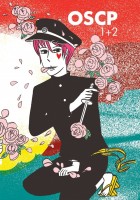
Open Spaces and Closed Places, Parts 1-2Open Spaces and Closed Places, Volumes 1-6 by Saicoink. I don’t remember exactly when or how I first heard about the mini-comic series Open Spaces and Closed Places, but it was recently brought to my attention again when Saicoink released the sixth and final volume. I finally got around to reading the series, and I absolutely loved it. Jirou is the boss of the delinquents at his school. When he isn’t busy getting into fights, he’s pining for Oscar, the president of the student council. Oscar likes Jirou, too, but for various reasons doesn’t feel he can accept his love, and so spends much of his time teasing the other boy instead. It’s a delightful relationship, both adorable and sad at the same time. Soon after Open Spaces and Closed Places begins, fantastical elements are introduced and the series becomes more and more surreal as it goes, culminating in a spectacular dream sequence. Saicoink specifically mentions drawing inspiration from Suehiro Maruo and Usamaru Furuya. While their influence can be seen in Open Spaces and Closed Places, the series isn’t as grotesque or as graphic as some of their works, though its humor is still accompanied by some amount darkness and tragedy. It’s a sinister, strange, and wonderful series.

Sankarea: Undying Love, Volume 9Sankarea: Undying Love, Volume 9 by Mitsuru Hattori. Sometimes Sankarea is all about its horror, sometimes it’s all about its peculiar romantic comedy, and sometimes it manages to be about both. The ninth volume is generally successful in balancing the series’ two opposing aspects, though the comedy has definitely taken a turn for the serious. Hattori does still find plenty of opportunities to add a bit of fanservice to the manga, this time mostly in the form of dressing Rea up in a variety of revealing costumes and outfits, often for no better reason than she looks cute in them. But even with those largely unnecessary diversions, the plot does continue to move along nicely in the ninth volume. Chihiro and most of the rest of his group have made their escape from ZoMA and return to Japan. Rea is suffering from amnesia though and doesn’t remember Chihiro or their relationship. Often I’m annoyed by the memory loss trope in manga—frequently it’s the result of bad or lazy writing—but for the most part it actually works pretty well in Sankarea. I still like the quirkiness of the characters in Sankarea, but Bub the undead cat remains my favorite by far.

Filed Under: FEATURES, My Week in Manga Tagged With: angel sanctuary, comics, Hokusei Katsushika, Kaori Yuki, manga, Master Keaton, Mitsuru Hattori, Naoki Urasawa, Open Spaces and Closed Places, Saicoink, Sankarea, Takashi Nagasaki

Honey Blood Volumes 1 and 2

December 21, 2014 by Anna N

Honey Blood Volumes 1 and 2 by Miko Mitsuki

Two volume manga series are a bit tricky sometimes. They tend to be series that are canceled because they were not entirely successful, and sometimes have unfinished or rushed endings as a result. Sometimes there are two volume series that do end up telling a story satisfactorily, but most of the time when I read them, I either end up acknowledging that I just read a manga that was never going to work or I find myself wishing for just one more volume.

Hinata is a normal high school girl going about her daily life, slightly mystified about the vampire novels that are taking her school by storm. At the same time there have been cases of young girls who are the victims of mysterious attacks in her city. When she comes home one day after school, she bumps into a strange young man in traditional Japanese clothing. He’s accompanied by a clinging female editor. It turns out that he’s Junya Tokinaga, the writer of the novels that Hinata thinks of as ludicrous. Hinata has a tendency to burst out with whatever is on her mind and her first encounter with the famous author has her musing how the central plot point of a vampire giving up immortality to die with the person he loves is difficult to understand. Junya ends up acting bizarrely flirtatious around Hinata while she keeps making comments like “I can’t stand guys like you!”

The neighborhood attacks continue, and Junya saves Hinata from a man who almost assaults her when she is walking alone at night. She begins to be more fascinated with her next door neighbor, and he continues to demonstrate his interest in her. Hinata begins to suspect that Junya is a vampire, and it turns out that Junya’s novels describing a situation where a vampire who kisses a mortal is bound only to her until they both die is based on the conditions of his own vampirism. I thought the art in this series was attractive, but the storyline ended up shoving Hinata and Junya together a little too quickly to be believable. By the end of the first volume, they are almost a couple with Hinata pursuing Junya while he attempts to hold back details of his life from her. The continued vampire attacks make the reader a bit uneasy, as it is unclear if Junya is feeding on other women, or if in fact there are other vampires around.

I think the second volume shows the author throwing a bunch of ideas out to see if anything would stick. Hinata and Junya embark on their unconventional romance. The reader gets a bit of back story when it is revealed that Junya’s long lost love was one of Hinata’s ancestors. Hinata and Junya’s overly solicitous editor get into a conflict of personalities. A rival vampire named Setsuna shows up to complicate the situation further. I liked the romance better in the second volume when Hinata and Junya were an established couple. I also enjoyed the blend of vampire angst and little moments of humor, like when Hinata picks out modern clothes for Junya only for him to promptly become a target for aggressive modeling scouts. As the second volume wrapped up, I found myself wishing that the author had a bit more time to develop the series before launching it in the first place. It seemed like it was starting to get a bit more interesting only to be cut short. If a longer series by Mitsuki gets licensed, I would be interested in reading it, because I’d be curious to see what she could do with more space to develop a series. As it is, I’d recommend Honey Blood for vampire manga collections, or for people who don’t mind reading short manga with abrupt endings.

Filed Under: REVIEWS Tagged With: honey blood, shojo beat, shoujo, viz media

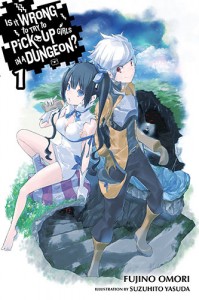
Is It Wrong To Try To Pick Up Girls In A Dungeon?, Vol. 1

December 21, 2014 by Sean Gaffney

By Fujino Omori and Suzuhito Yasuda. Released in Japan as “Dungeon ni Deai o Motomeru no wa Machigatte Iru Darou ka?” by Softbank Creative. Released in North America by Yen On.

For those who see that title and roll their eyes, the commonly agreed on abbreviation, from the Japanese title, is ‘DanMachi’. We’ve seen a few of the cliched light novels with titles as long as their content in manga and anime format before, but this is really the first time we’ve seen one as a light novel. As you’d expect, the longer the title the more likely that this is a romantic harem comedy, and that’s true here. It’s also a fantasy, though, one closely connected to the world of role-playing games (though it’s not players trapped in a game, for once). I think that the fantasy gamers will likely find it easier to appreciate this title than the harem comedy fans, though both will find things to like and dislike. One thing I think everyone will agree on is that the cover blurb is pretty misleading: Bell stops being a ‘damsel in distress’ almost immediately.

dungeon1

That is where we start, however. Bell is our narrator for most of the book, though it does switch off when the author wants to tell scenes without his presence to a third person style. He’s young and naive, wanting to become an adventurer in order to meet girls and get a harem, but he mostly wants that because this is what his grandfather (now deceased) taught him was the way of all things. In reality, he can’t catch a clue when it’s thrust in his face, really. The other protagonist is his sponsoring god, in this world where gods have come down to the real world and form gangs of adventurers to entertain themselves. Hestia has only one adventurer – Bell – but it’s clear that she just needs to mature. It’s also clear that she’s head over heels for Bell, and is somewhat frustrated at his lack of interest. As the book goes on we see more women – the big sister trying to convince Bell not to be stupid, the young waitress with an immediate crush on him, another goddess who wants him mostly to amuse herself – but it’s apparent from the start who the ‘lead girl’ is.

The fantasy aspect fares better, though I don’t really game so it’s possible I’m missing stuff. Bell fights increasingly tough monsters, and when he defeats them gets gems to exchange for money, or ‘drop items’ that might be useful. It honestly takes a little while to get used to the fact that this is meant to be a real world – adventurers have their ‘stats’ printed on their back in runes, for goodness’ sake. But the fights are well-written and go fast, and there’s a nice feeling of suspense to them. The book read very quickly and smoothly, which was nice, and lacks a lot of the self-important narrating we’ve seen in other books this year. There’s also a surprising lack of fanservice – surprising as the color artwork inside the front cover is filled with it. Hestia gets the nickname ‘loli big boobs’, which is unfortunate, but other than that the emphasis here is on the story for the most part.

I may have made this sound more interesting than it is – there’s nothing here that really gets me fired up for another volume. But it’s pleasant enough, and a nice quick read. Harem fans will be annoyed at the obliviousness of the hero and the possessiveness of the heroine, because they always are. Fantasy fans might be entertained by the ‘RPG in real life’ aspect, though, and may want to give it a shot. And fans of the Durarara!! light novels or the Yozakura Quartet manga will recognize the artist. It’s also available digitally, and an anime is due out soon.

Filed Under: REVIEWS

  • « Go to Previous Page
  • Page 1
  • Interim pages omitted …
  • Page 569
  • Page 570
  • Page 571
  • Page 572
  • Page 573
  • Interim pages omitted …
  • Page 1049
  • Go to Next Page »
 | Log in
Copyright © 2010 Manga Bookshelf | Powered by WordPress & the Genesis Framework