• Skip to primary navigation
  • Skip to main content
  • Skip to primary sidebar
  • Home
  • About Us
    • Privacy Policy
    • Comment Policy
    • Disclosures & Disclaimers
  • Resources
    • Links, Essays & Articles
    • Fandomology!
    • CLAMP Directory
    • BlogRoll
  • Features & Columns
    • 3 Things Thursday
    • Adventures in the Key of Shoujo
    • Bit & Blips (game reviews)
    • BL BOOKRACK
    • Bookshelf Briefs
    • Bringing the Drama
    • Comic Conversion
    • Fanservice Friday
    • Going Digital
    • It Came From the Sinosphere
    • License This!
    • Magazine no Mori
    • My Week in Manga
    • OFF THE SHELF
    • Not By Manga Alone
    • PICK OF THE WEEK
    • Subtitles & Sensibility
    • Weekly Shonen Jump Recaps
  • Manga Moveable Feast
    • MMF Full Archive
    • Yun Kouga
    • CLAMP
    • Shojo Beat
    • Osamu Tezuka
    • Sailor Moon
    • Fruits Basket
    • Takehiko Inoue
    • Wild Adapter
    • One Piece
    • After School Nightmare
    • Karakuri Odette
    • Paradise Kiss
    • The Color Trilogy
    • To Terra…
    • Sexy Voice & Robo
  • Browse by Author
    • Sean Gaffney
    • Anna Neatrour
    • Michelle Smith
    • Katherine Dacey
    • MJ
    • Brigid Alverson
    • Travis Anderson
    • Phillip Anthony
    • Derek Bown
    • Jaci Dahlvang
    • Angela Eastman
    • Erica Friedman
    • Sara K.
    • Megan Purdy
    • Emily Snodgrass
    • Nancy Thistlethwaite
    • Eva Volin
    • David Welsh
  • MB Blogs
    • A Case Suitable For Treatment
    • Experiments in Manga
    • MangaBlog
    • The Manga Critic
    • Manga Report
    • Soliloquy in Blue
    • Manga Curmudgeon (archive)

Manga Bookshelf

Discussion, Resources, Roundtables, & Reviews

Blog

Golden Time, Vol. 1

November 7, 2015 by Sean Gaffney

By Yuyuko Takemiya and Umechazuke. Released in Japan by ASCII Media Works, serialization ongoing in the magazine Dengeki Daioh. Released in North America by Seven Seas.

I’ve talked before about how difficult it can be to introduce an unlikable character early in a series and have their character growth be a part of it, mostly as fandom takes first impressions and encases them in amber forever. This is doubly true if the character is female, and quadrupley true (is this a word?) if it also happens to be a comedy romance, with harem overtones. Golden Time is starting off in a bit of a pickle, though, as its heroine, Kaga, is introduced to us as an obsessed stalker who’s also rich and beautiful, and rubs every single reader the wrong way. Luckily, we have our hero, Tada, who is determined to show that she has hidden depths, even if he can’t quite make them out. And, wonder of wonders, he is not the doormat that most of these series frequently use as male heroes, so as the volume goes on and we learn more about the two of them the good qualities of the series come to life.

goldentime1

That cover, to be honest, really doesn’t help, and panders to a fanbase that is more Monster Musume than Toradora. Oh yes, this is by the creator of Toradora, based on her light novels, which she started after finishing her other series. Toradora also featured an unusual lead male hero, and Golden Time’s Tada has a very good reason for sometimes acting out of character – he has amnesia of most of his life before the last year, and can’t recall what his character actually is. This is presented in the midst of a truly ridiculous chapter involving a religious cult who have kidnapped several students to indoctrinate them, so it’s no surprise that Kaga does not particularly believe him. As for Kaga, her backstory is more normal, being a lonely rich girl who has no idea how to do affection, so overdoes it to the point where it becomes terrifying.

Most of this volume just involved Tada, Kaga, and Kaga’s unfortunate crush Yanigasawa, who is thoroughly sick of her and horrified that she followed him to college (the fact that this is set in college – and indeed in the law program – is highly unusual for a harem comedy, and I hope more is done with it in future volumes). There’s another girl who gets cameos at the start and end, who I suspect will take on the position of chief rival/alternate heroine choice, but this is mostly a two-hander, relying on the two leads. They bond right away, and Tada is falling for Kaga while also clearly seeing her flaws – he just doesn’t really care, and also her flaws don’t impact *him*, as she’s in love with someone else.

I think fans of Takemiya’s other works will enjoy this, and fans of romantic comedies should give it a try, but be aware this is one of those series where you may need 2-3 volumes to star liking the heroine, and if you’re the sort who rolls out the word ‘psycho’ whenever it suits you, take my advice and don’t get involved.

Filed Under: REVIEWS

Junji Ito’s Cat Diary: Yon & Mu

November 6, 2015 by Ash Brown

Junji Ito's Cat Diary: Yon & MuCreator: Junji Ito
U.S. publisher: Kodansha
ISBN: 9781632361974
Released: October 2015
Original release: 2009

Junji Ito’s Cat Diary: Yon & Mu was one of the manga releases I was most looking forward to in 2015. Junji Ito is primarily known for horror manga–his Uzumaki is one of my personal favorites in the genre–but in 2008 he had the opportunity to serialize an autobiographically-inspired manga based on his experiences living in a house with two cats. The result was Junji Ito’s Cat Diary, ultimately collected in a single, slim volume and published in Japan in 2009. The English-language edition of the manga released by Kodansha Comics in 2015 also includes the contributions made by Ito and his wife (Ayako Ishiguro) to the 2011 Tohoku Earthquake relief anthology Teach Me, Michael! A Textbook in Support of Feline Disaster Victims. I thoroughly enjoy Ito’s brand of unusual horror and I, too, happen to have the privilege of feline companionship, so I was very interested in Junji Ito’s Cat Diary. I expected it to be a manga that I would enjoy and I wasn’t disappointed; I absolutely loved it.

J-kun is the proud owner of a new house in pristine condition from floor to ceiling and he’s looking forward to living there with his soon-to-be wife A-ko. What he didn’t initially realize was that by inviting her to live with him he would also become host to two more guests: Yon and Mu. J-kun is convinced that Yon, one of A-ko’s family’s cats, is cursed. He’s a strange-looking feline with skull-like markings that would seem to confirm J-kun’s suspicions. Mu, on the other hand, is an adorable kitten with a pedigree and cute enough to melt even J-kun’s dog-loving heart. And so begins J-kun’s trials and tribulations as a keeper of cats, slowly falling under their spell as he grieves the loss of his perfectly-kept house. He warms up to both Yon and Mu, but they don’t quite exhibit the same amount of warmth in return, more often than not preferring A-ko’s company. But J-kun is determined–one day he, too, will enjoy Yon and Mu’s love and affection.

Junji Ito's Cat Diary: Yon & Mu, page 31Junji Ito’s Cat Diary is immensely entertaining. Ito has kept his signature style used when drawing horror manga and has applied it to a collection of stories that are closer to being gag manga. The illustrations can be intentionally grotesque and creepy, with an emphasis on J-kun’s exaggerated expressions as he reacts (and overreacts) to the events occurring in his household and the horrors of pet ownership. A-ko, too, is drawn in such a way that her disconcerting appearance adds to the atmosphere of horror in the manga. For the most part, the cats are simply cats (at least when J-kun isn’t hallucinating from lack of sleep); it’s the humans who come across as maniacal. Junji Ito’s Cat Diary looks like it should be a horror manga and has all of the genre’s visual stylings, but it really isn’t. The humor is even funnier because of this deliberate disconnect between the actual stories being told and how they are being portrayed.

As someone who tends to enjoy Ito’s work and as someone who tends to like cat comics, I was already in a position to particularly appreciate Junji Ito’s Cat Diary. It may certainly not work for everyone, though–the manga is a weird mix of horror and comedy, the grotesque and the adorable–but I loved it. In general, the stories in Junji Ito’s Cat Diary are less about Yon and Mu’s antics and more about J-kun’s reactions to their behavior and his changing relationships with the two cats. Yon and Mu are actually very normal as cats go; the humans in the manga are the ones who come across as eccentric and a bit odd. Junji Ito’s Cat Diary is hilarious but at the same time the manga maintains and oddly disconcerting and even ominous atmosphere. Ito simply excels at taking the mundane and transforming it into something truly devious and bizarre. I’m not sure, but perhaps I should be concerned by how much I can identify with the stories found in Junji Ito’s Cat Diary.

Filed Under: REVIEWS Tagged With: Junji Ito, kodansha, Kodansha Comics, manga

Manga the Week of 11/11

November 5, 2015 by Sean Gaffney, Ash Brown, Anna N, Michelle Smith and MJ Leave a Comment

SEAN: Good news! Every week in November has an absurd amount of manga coming out – except next week! Bad news – the Manga Bookshelf team is going to be finding pick of the week very hard, I suspect.

fairygirls

Kodansha has a spinoff of Fairy Tail called Fairy Girls, which, as you may have guessed, is about the girls in Fairy Tail. It has a different author, though, and looks to be even more cutesy and fanservice-oriented than the main series – which is saying something.

And if you missed Fairy Tail to begin with, why not try the new 1000-page omnibus of the first five volumes? This is a ‘Colossal Edition’ style release.

ASH: That is a lot of manga in one volume! The Master’s Edition, indeed.

ANNA: That sounds crazy!

SEAN: Seven Seas has the second and final volume of Bodacious Space Pirates: Abyss of Hyperspace, which has female pirates in outer space, and I think that no other words are needed.

And for those who like dragons and nudity (I suspect the core fanbase reverses the order), there’s an 8th volume of Dragonar Academy.

SubLime has a 4th volume of Love Stage!!!!, which I’ve decided to add a ! to for each new volume.

ASH: I’ll admit: I’ve been collecting this series, but I actually haven’t read any of it yet.

MICHELLE: It’s fairly cute. Very fluffy, with very little stage, but not bad!

ANNA: Huh, I think I have a few volumes, I should read them!

MJ: I admit I would like more stage.

SEAN: The 11th omnibus of Ranma 1/2 ups the stakes for both Ranma and his father, as it sees the debut of Nodoka Saotome, Ranma’s mother who has certain ideas about what constitutes a “man among men”, and sex changes are probably not in that list.

The 19th volume of Rin-Ne I expect has no real premise-altering developments like that, but I bet it has a lot of ghosts who are secretly (or not so secretly) jerks.

Lastly, there is an 8th volume of superhero BL tease with Tiger & Bunny.

MICHELLE: I seldom rave about RIN-NE and Tiger & Bunny, but I do like both of them in a low-key kind of way.

SEAN: Taking a breather? Or getting something from the above list?

Filed Under: FEATURES, manga the week of

Oresama Teacher, Vol. 19

November 5, 2015 by Sean Gaffney

By Izumi Tsubaki. Released in Japan by Hakusensha, serialization ongoing in the magazine Hana to Yume. Released in North America by Viz.

In my review of the last volume, I said that Hayasaka’s past was looking more serious than this manga usually gets, but I didn’t think it was going to get that dark. Boy howdy was I wrong. Not that Oresama Teacher has suddenly turned angsty and depressing, but certainly this volume hinges on the fact that Momochi’s mental manipulation of Hayasaka is being helped along naturally by his own traumas, and that he has in fact had this sort of thing happen before. Luckily, he has the Public Morals club to help him this time, and the volume ends on an upbeat note (albeit one with our heroes at the bottom of a cliff – what is it with Hana to Yume series and cliffs?)

oreasma-19-2

Tsubaki enjoys playing with reader preconceptions and that’s certainly the case here, as Hayasaka’s supposed family background is the sort of thing we’ve seen in manga and anime before, with the mistress kept in a locked room away from everyone. Only that turns out not to be the case, and in fact is something that Hayasaka has created to cover up the real tragedy that he refuses to accept. The scene with Hayasaka and his father at the funeral is heartrending, something I never really thought I’d say about Oresama Teacher. And in fact, again contrary to our expectations, Hayasaka’s family turn out to be mostly okay – his hatred of his father stems from something that isn’t happening anywhere but in his head, and his dad, while trying to keep Hayasaka’s past hidden, shows genuine concern for him.

There is some humor in this volume, rest assured, though I wonder if the story turned more serious when Tsubaki was starting off Monthly Girls’ Nozaki-kun. Most of it comes from Mafuyu and Yui, who continue to react in a hilarious way whenever called on to be normal or mature. Mafuyu also gets an emotional arc in her desperation to make Hayasaka recover his memories, though I wonder if that will come back to bite her in the end, as it’s hinted that the main reason that Hayasaka hasn’t realized Mafuyu is Natsuo or Super Bun is his own mental blocks, and those may be coming down. Her emotional tears in the last chapter are well earned, though.

We’re still not quite done with this arc, though, as Momochi is still a threat. We see she’s used her ‘hypnosis’ powers in the past, and has forced several students to withdraw from school – even non-delinquents. There are, of course, nasty rumors about her, and I have a feeling that Hayasaka may not be the only one with a tragic past. (And he has a first name now! Though I can see why he wants to keep it a secret – and an endnote might have helped there, Viz.) Oresama Teacher is still worth reading for the comedy, but as it barrels towards a theoretical conclusion soon, it’s also gaining real depth and heart.

Filed Under: REVIEWS

Manga Giveaway: Barakamon Giveaway Winner

November 4, 2015 by Ash Brown

Barakamon, Volume 1And the winner of the Barakamon manga giveaway is… Joseph!

As the winner, Joseph will receive Satsuki Yoshino’s Barakamon, Volume 1 as released in English by Yen Press. As the fall and winter holiday season has arrived, I was beginning to feel a little nostalgic for my childhood home in the country. So, for this giveaway, I asked that entrant’s tell me a little about their favorite manga with countryside and rural settings. Check out the giveaway comments for everyone’s complete responses, and check out below for a list of manga!

Some of the countryside manga available in English:
Barakamon by Satsuki Yoshino
Brilliant Blue by Saemi Yorita
Can’t Win with You! written by Satosumi Takaguchi, illustrated by Yukine Honami
The Flowers of Evil by Shuzo Oshimi
A Girl on the Shore by Inio Asano
Kamikaze Girls by Yukio Kanesada
The Legend of Kamui by Sanpei Shirato
Mermaid Saga by Rumiko Takahashi
Moyasimon by Masayuki Ishikawa
Mushishi by Yuki Urushibara
Non Non Biyori by Atto
NonNonBa by Shigeru Mizuki
Popcorn Romance by Tomoko Taniguchi
Sand Chronicles by Hinako Ashihara
Summer Wars written by Mamoru Hosoda, illustrated by Iqura Sugimoto
Tropic of the Sea by Satoshi Kon
Vinland Saga by Makoto Yukimura
Wandering Island by Kenji Tsuruta

As usual, the above list isn’t comprehensive, but it hopefully presents a nice selection of manga from which to choose. Thank you to everyone who shared you’re favorites with me! I hope to see you all again for the next giveaway as well.

Filed Under: Giveaways, UNSHELVED Tagged With: Barakamon, manga, Satsuki Yoshino

Horimiya, Vol. 1

November 3, 2015 by Sean Gaffney

By HERO and Daisuke Hagiwara. Released in Japan by Square Enix, serialization ongoing in the magazine GFantasy. Released in North America by Yen Press.

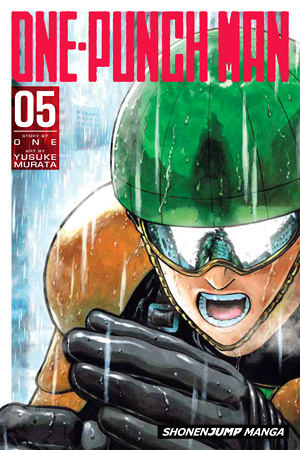
There’s been a strong market recently for repurposed web novels and webcomics licensed by major publishers and redone more professionally. Sword Art Online was originally published (fittingly) online. One-Punch Man was based on a webcomic band now has the Eyeshield 21 artist giving it a more manga feel. And then we have Hori-san to Miyamura-kun, a webcomic by HERO, which not only was popular enough to have Square Enix release the comic itself in 10 volumes several years ago, but now has a reboot with a new artist, running in Square Enix’s ‘we don’t have a shoujo magazine, so here it goes’ title GFantasy. And I’m happy that we’re getting it as well, as Horimiya is a delightfully fun and relaxed shoujo series about two people who find they can show each other their true selves, and how they then start falling for each other as well.

horimiya

Fans of Kare Kano may find the premise a bit familiar, but as you dig into it the differences stand out more. Kyouko is a bright, pretty, popular girl at school, but doesn’t hang out with her friends after as much as you’d expect. Izumi is a somewhat otaku-ish guy who always wears long sleeves and long hair no matter what, and who tends to keep to himself. The plot kicks off when Kyouko finds out that outside of school, he’s actually a pretty handsome guy with tattoos and piercings. And Izumi finds that Kyouko is actually a pretty diligent big sister who has to essentially raise her little brother while her mom is away for days at a time at work. Both of these are things they need to hide at school (though admittedly the whole “without my makeup I am plain and don’t want anyone to see this is how I relax” thing made me roll my eyes a bit), and Kyouko’s little brother really bonds with Izumi, so the two of them end up hanging out after school… and possibly more.

There’s no immediate hook to this series the way One-Punch Man had. It’s a standard shoujo with two likeable leads who are clearly going to end up together, it’s just a matter of when, and their friends who are slowly going to learn the terrible secrets contained within. But it’s one of those series that’s just very well told. The two leads are not overly naive and idealistic or sullen and rude, as you find in so many shoujo series these days. They’re just kids. The mood reminds me a bit of Love at Fourteen, only here they’re a couple of years older. The humor arises from the characters and situations, and sometimes made me laugh out loud. There’s even a good cliffhanger where Kyouko realizes that, despite being a nice kid, Izumi is indeed a teenage boy who might (gasp!) be sexually attracted to her.

Horimiya is a strong debut, and I recommend it not only to Yen’s followers but also to any Shojo Beat fans who might miss it because it’s from a different publisher. I eaglerly look forward to the second volume.

Filed Under: REVIEWS

Idol Dreams, Vol 1

November 2, 2015 by Anna N

Idol Dreams Volume 1 by Arina Tanemura

I was curious to check out this manga, mostly due to the fact that it is a slightly older skewing shoujo title. Also, the premise, about a 31 year-old office lady going back in time to relive her youth seemed interesting.

The hapless office lady in question is Chikage Deguchi, who is bullied at work. She’s let her 20s pass her by while she’s stuck in a style rut, repressed, and unable to find a boyfriend. Her humiliation is complete when she goes to a high school reunion. She’s humiliated even more at a high school reunion. She manages to make incidental conversation with a classmate named Tokita who happens to be a pharmaceutical rep, but her encounter with her high school crush doesn’t go well at all. Chikage is depressed and determined to end her life, when Tokita rescues her and tells her all about an experimental medication that will allow her to replay her wasted teenage years.

Chikage clearly operates under different human subjects rules than most people in the pharmaceutical industry, as he supplies Chikage with pills that transform her into a 15 year old and then sends her on her way, with instructions to check in often so he can gather data. Of course, as soon as teenage Chikage steps foot on the street, she’s recruited to be a stand-in model opposite the most popular member of a boy band, and thus her career as a budding teen idol begins!

Teen idol Hibiki looks a lot like Chikage’s old crush from her high school days, and she finds herself getting swept up in the life of a teen idol. She’s determined to master the social skills that she didn’t pay attention to as a young teen. The situation of a 31 year old woman in a 15 year old’s body and a 15 year old boy being paired up has the potential for a great deal of creepiness. I wasn’t taking this romance very seriously though, because it is clear that Tokita has an unexpressed crush on Chikage, and he seems to be one of the few men her own age that she can actually talk to without becoming self-conscious. So, even though there might be a bit of a wacky love triangle developing (like the original Amethyst Princess of Gemworld with reverse aging) I’m fairly confident that the romantic resolution to this manga will be non-squicky. We’ll see what happens in the next volume though.

Tanemura is always at her best when drawing super cute people, and the contrast between older Chikage and young idol version Akari is pronounced. I enjoyed seeing the friendship develop between Akari and the other boy band members, but I thought that Chikage’s occasional encounters with Tokita were much more promising in terms of any romance developing. Overall, I thought that this was a promising start to a new series, with the potential for the romance plots to derail and become off-putting. I generally enjoy Tanemura’s manga, and a series set in the world of teen idols is the perfect excuse for her to break out all the stops with the flourishes and detailed costumes that she does so well.

idoldreams1

Filed Under: REVIEWS Tagged With: Arina Tanemura, idol dreams, shojo beat, shoujo, viz media

Pick of the Week: Past Lives and Saving Souls

November 2, 2015 by Sean Gaffney, Michelle Smith, Ash Brown, MJ and Anna N Leave a Comment

livingstone1SEAN: This week’s pick is the debut of Arina Tanemura’s new series Idol Dreams. It was called her first josei series, though it runs in Melody, a magazine that caters to late shoujo/early josei demographics. And, as is common with a lot of new series lately, it features an age difference romance. Should be fun.

MICHELLE: Two series that I love are ending this week—Chi’s Sweet Home and Yukarism. I love Chi a lot, as it’s adorable and great for kids, but it doesn’t have a mystery plot that I’ve been waiting to see resolved for several months, so in terms of sheer anticipation, I think I’ve gotta award this week’s pick to Yukarism.

ASH: As usual, there are quite a few manga that I’m looking forward to this week. The final volume of the ever-delightful Chi’s Sweet Home is definitely high up there on my list, but as a JoJo’s fan who never expected to see much of the series translated, the first volume of the ridiculously epic Battle Tendency earns my pick this time around.

MJ: Since Michelle has already given the final volume of Yukarism its due, I’ll throw caution to the wind and check out Livingstone. Though I had mixed feelings about Deadman Wonderland, the combination of summary and cover art on this series’ first volume intrigues me pretty intensely. So I’m in, at least for the short term. Livingstone it is for me!

ANNA: I’m a bit torn between Yukarism and Idol Dreams but given that I’m often distracted by whatever is shiny and new, I’m going to pick the new Tanemura manga.

What looks good to you this week?

Filed Under: PICK OF THE WEEK

My Week in Manga: October 26-November 1, 2015

November 2, 2015 by Ash Brown

My News and Reviews

A few different things were posted at Experiments in Manga last week. The most recent manga giveaway is currently underway, for one, and here’s still time to enter for a chance to win Barakamon, Volume 1 by Satsuki Yoshino. Last week I reviewed Vinland Saga, Omnibus 6 by Makoto Yukimura. The series continues to impress me a great deal with its story telling and character development. The fate of the series in English will be in part determined by how well the sixth and seventh omnibuses do (the seventh omnibus is currently scheduled to be released in December); I truly hope that Kodansha will be able to release more because Vinland Saga is fantastic. Finally, over the weekend, I posted the Bookshelf Overload for October.

I’ve been extremely busy with all sorts of life stuff, so while I’m sure there were plenty of interesting things going on in the realm of manga online, there were only two that really caught my eye last week: Shojo Beat posted a short interview with Rinko Ueda and Chris Butcher wrote about his experience interviewing Masashi Kishimoto at New York Comic Con. Also as a heads up, because I am so extraordinarily caught up in things going on at work and at home right now, I’ve decided to go a little easier on myself with my blogging schedule for November (and probably for the first half of December as well). Instead of the usual Monday-Wednesday-Friday posting schedule, in the upcoming weeks I may just be posting on Monday and Thursday. Hopefully things will calm down and I can get back to writing more soon!

Quick Takes

Fairy Tail, Volume 50Fairy Tail, Volume 50 by Hiro Mashima. After so many arcs in which the Fairy Tail guild was fighting to save the world, I’m particularly enjoying the beginning of this most recent arc in which Fairy Tail doesn’t technically even exist anymore. Although there are some epic, world-altering developments occurring in the background, for the moment the story is focusing on the much more personal crises of the disbanded guild as it rebuilds itself. It’s a nice change of pace, though I’m fairly certain it won’t last for very long. A year or so has passed since the members of Fairy Tail parted their separate ways. Quite a few of the magic users have managed to power up during that time, allowing Mashima the opportunity to come up with some exciting and interesting new skills for them in order to show just how badass they’ve become (and they were strong to begin with). Some of the fan service focusing on the female characters in Fairy Tail continues to feel very out-of-place and distracting, but at least the women are frequently some of the strongest and most well-developed characters. The male characters are the subject of fan service from time to time, too, though never to the same extent.

Tokyo Ghoul, Volume 1Tokyo Ghoul, Volume 1-3 by Sui Ishida. The glut of vampire and zombie manga continues—and I’m not really a devotee of either of those subgenres—so I especially appreciate that Tokyo Ghoul makes use of an entirely different creature, the titular ghoul. In the case of this particular manga series, ghouls largely pass as normal humans assuming that they can master their intense hunger for human flesh. After an encounter with a ghoul that nearly leaves him dead, Kaneki finds himself in the unique position of partly belonging to both the human world and the world of the ghouls, and yet it will be a struggle for him to survive in either of them. In Tokyo Ghoul, humans are just as capable of being monsters. And Ishida isn’t afraid of killing off prominent characters, whether they be human or ghoul, so there is a constant sense of danger. Sadly, I think the emotional impact of the deaths was somewhat diminished since readers hadn’t yet had the chance to really get to know the characters involved as individuals. Still, kudos to Ishida for potentially making good use of some shocking, unexpected developments, especially as some early parts of the first volume were a little predictable.

Yamada-kun and the Seven Witches, Volume 4Yamada-kun and the Seven Witches, Volume 4 by Miki Yohsikawa. Although the fan service in Fairy Tail tends to bug me, the fan service in Yamada-kun and the Seven Witches doesn’t really bother me at all, probably because it’s better incorporated into the story itself. Admittedly, it can still be gratuitous from time to time. Since the manga in part deals with body-swapping, it makes sense that there would be some focus on the characters’ physical traits. Plus this particular volume includes the obligatory beach and onsen scenes. One thing that really impresses me about Yoshikawa’s artwork in the Yamada-kun and the Seven Witches is that it’s obvious from the characters’ facial expressions and body language when there has been some swapping going on. This actually ends up being explicitly pointed out in the series when one character develops a crush on a specific combination of personality and body type. The witch count continues to grow in the series as does Yamada’s group of friends while he begins to work out a theory explaining why everyone has the powers that they do. I’m still really enjoying Yamada-kun and the Seven Witches. Though largely a comedy, it has some heart to it as well.

Filed Under: FEATURES, My Week in Manga Tagged With: Fairy Tail, Hiro Mashima, manga, Miki Yoshikawa, Sui Ishida, Tokyo Ghoul, Yamada-kun and the Seven Witches

Bookshelf Briefs 11/2/15

November 2, 2015 by Michelle Smith and Sean Gaffney Leave a Comment

Sean and Michelle briefly review new releases from Kodansha, VIZ, and Yen Press.

barakamon7Barakamon, Vol. 7 | By Satsuki Yoshino | Yen Press – We’re back on the island, with the calligraphy once again taking a backseat to Handa’s somewhat hapless life among the natives. Sometimes this leads to running gags (broken windows galore) and sometimes to heartwarming sweetness (visiting the island’s 99-year-old matriarch). There’s also an expansion of the cast as we meet Miwa’s parents, introduced through a horrific misunderstanding. One set of parents is still notable in their absence, though, and Handa thinks about asking Naru about her own situation but opts instead to avoid getting serious with her. There’s no major revelations or developments here, but it’s sweet in a relaxed, daily life way. – Sean Gaffney

firstlove2First Love Monster, Vol. 2 | By Akira Hiyoshimura | Yen Press – Perhaps reading my misgivings about the first volume of this series, the second one tries to make it more obvious that this is meant to be a comedy rather than a romance. We meet another resident, who looks like a new “rival” for all of about three seconds before she reveals her true intentions, and the one sensible 11-year-old among the cast winds up falling for a girl who is (sigh) the male buttmonkey of the cast dressed in drag. Oddly, despite my sounding like I didn’t like it, this series is best when it’s at its most broadly comedic. When trying to examine the genuine emotional turmoil of a young girl and her elementary school boyfriend, things simply get too uncomfortable. – Sean Gaffney

idol1Idol Dreams, Vol. 1 | By Arina Tanemura | VIZ Media – Tanemura describes Idol Dreams as “a magical-girl series for adults,” and it kind of is, given that the protagonist, Chikage Deguchi, is a mousy, 31-year-old virgin who regrets the state of her romance-free life. But her age is really the only thing mature about Chikage, as her mentality fits much better into the 15-year-old body a former classmate’s experimental drug provides her. I like that Chikage plans to embrace this opportunity to change herself, but it’s still pretty creepy to see this grown woman crushing over the 15-year-old boy band member who provides her with her first kiss while she fills in for an advertising photo shoot (as you do). I can’t help but wonder what kind of reaction such a plot gimmick would get if the genders were reversed. I will probably read the next volume, but I don’t expect my opinion to change much. – Michelle Smith

catdiaryJunji Ito’s Cat Diary: Yon & Mu | By Junji Ito | Kodansha Comics – In case you were wondering, this is indeed just an amusing cat diary, which chapters like Yon getting out of the house or Yon giving preferential treatment to Ito’s wife. (Mu plays a far lesser role). But of course the joy of reading this manga is in seeing Ito’s over the top expressions, familiar to those who’ve read his horror manga, applied to such mundane topics. He even draws his wife without pupils, giving her an evil, soulless look that belies the actual material. The art is 3/4 of the reason to pick up this book—the other 1/4 is that these are indeed cute yet willful cats, and Ito’s struggle to master them and play with them at the same time is hilarious. Cat lovers will need to pick this up. – Sean Gaffney

ldk1LDK, Vol. 1 | By Ayu Watanabe | Kodansha Comics – The initial setup of LDK sounds extremely trope-y: second-year high-school girl Aoi Nishimori lives alone in an apartment, hunky but cold-hearted school prince Shusei Kugayama moves in next door, and “a series of crazy happenings” result in them having to live together. Burgeoning romantic feelings ensue. And because of this surfeit of tropes, I excused Shusei’s initial behavior as a trope, too. Sure, he’s a git, but he is being hounded by fangirls, and that can’t be fun. But as the volume wore on, and he did more and more egregious things—culminating with forcing Aoi to try on a swimsuit while handcuffed to him—I began to realize he’d crossed the line into flagrant asshole territory. Aoi does confront him and he apologizes, so I’m willing to read one more volume to see if any change seems imminent, but otherwise I am pretty disappointed. – Michelle Smith

missions11Missions of Love, Vol. 11 | By Ema Toyama | Kodansha Comics – The manga has been building up to Yukina finally making her choice between the childhood friend milquetoast Akira and the brooding yet caring Shigure. The trouble is that it’s not even close to being over yet. And so Yukina ends up making… the wrong choice, one that we immediately know is wrong, and Yukina soon finds out, as she still can’t separate her own personal life and the novel she’s writing—especially now that she’s in competition with another author. In addition, perhaps thinking that these people making terrible decisions were becoming too sympathetic, we meet Shigure’s brother Hisame, who is introduced in such a way that he may as well have “I Am Evil” on his shirt. Still so wrong, yet so addictive. – Sean Gaffney

yukarism4Yukarism, Vol. 4 | By Chika Shiomi | VIZ Media – Sadly, Yukarism comes to a close in this fourth and final volume. Selfishly, I wanted more, but in terms of the story, wrapping it up here means there weren’t any painful filler episodes to dilute the tense atmosphere Shiomi-sensei managed to maintain until the finale. I’m not going to spoil the specifics of how things are resolved, but I will say it was a very satisfactory conclusion and I got teary-eyed at least twice. Ultimately, though I was a little critical of the first volume, Yukarism soon won me over in a big way and it ended up becoming not only a keeper that I can foresee myself rereading but also a series that I think I will be foisting upon others who are not yet maniacal manga fans. I consider this a must-read for any shoujo fan. – Michelle Smith

Filed Under: Bookshelf Briefs

  • « Go to Previous Page
  • Page 1
  • Interim pages omitted …
  • Page 522
  • Page 523
  • Page 524
  • Page 525
  • Page 526
  • Interim pages omitted …
  • Page 1054
  • Go to Next Page »
 | Log in
Copyright © 2010 Manga Bookshelf | Powered by WordPress & the Genesis Framework