• Skip to primary navigation
  • Skip to main content
  • Skip to primary sidebar
  • Home
  • About Us
    • Privacy Policy
    • Comment Policy
    • Disclosures & Disclaimers
  • Resources
    • Links, Essays & Articles
    • Fandomology!
    • CLAMP Directory
    • BlogRoll
  • Features & Columns
    • 3 Things Thursday
    • Adventures in the Key of Shoujo
    • Bit & Blips (game reviews)
    • BL BOOKRACK
    • Bookshelf Briefs
    • Bringing the Drama
    • Comic Conversion
    • Fanservice Friday
    • Going Digital
    • It Came From the Sinosphere
    • License This!
    • Magazine no Mori
    • My Week in Manga
    • OFF THE SHELF
    • Not By Manga Alone
    • PICK OF THE WEEK
    • Subtitles & Sensibility
    • Weekly Shonen Jump Recaps
  • Manga Moveable Feast
    • MMF Full Archive
    • Yun Kouga
    • CLAMP
    • Shojo Beat
    • Osamu Tezuka
    • Sailor Moon
    • Fruits Basket
    • Takehiko Inoue
    • Wild Adapter
    • One Piece
    • After School Nightmare
    • Karakuri Odette
    • Paradise Kiss
    • The Color Trilogy
    • To Terra…
    • Sexy Voice & Robo
  • Browse by Author
    • Sean Gaffney
    • Anna Neatrour
    • Michelle Smith
    • Katherine Dacey
    • MJ
    • Brigid Alverson
    • Travis Anderson
    • Phillip Anthony
    • Derek Bown
    • Jaci Dahlvang
    • Angela Eastman
    • Erica Friedman
    • Sara K.
    • Megan Purdy
    • Emily Snodgrass
    • Nancy Thistlethwaite
    • Eva Volin
    • David Welsh
  • MB Blogs
    • A Case Suitable For Treatment
    • Experiments in Manga
    • MangaBlog
    • The Manga Critic
    • Manga Report
    • Soliloquy in Blue
    • Manga Curmudgeon (archive)

Manga Bookshelf

Discussion, Resources, Roundtables, & Reviews

Blog

My Week in Manga: October 19-October 25, 2015

October 26, 2015 by Ash Brown

My News and Reviews

I posted a couple of different things at Experiments in Manga last week in addition to the usual My Week in Manga feature. Having recently read and enjoyed Yukito Ayatsuji’s debut novel The Decagon House Murders, I made a point to finally get around to reading and reviewing his first novel released in English, Another. Though I felt a little cheated by one of the plot twists, overall the novel is a great mix of horror and mystery. I enjoyed the story so much that I plan on checking out the manga and anime versions, too. (Seems like a good candidate for an Adaptation Adventures feature.) My other post last week was some random musings on A Moment of Respite in Kohske’s Gangsta. Basically, a single scene from the sixth volume of the manga (more specifically, a sequence of three panels from that scene), inspired me to write more than a thousand words about some of the things that I particularly appreciate and love about the series.

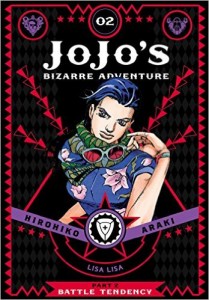
A few things of interest found online last week: First of all, the most recent entry in Ryan Holmberg’s What Was Alternative Manga? column, Gottfredson’s Illegitimate Heirs: Tezuka Osamu and the Great Wall of 1945, was posted at The Comics Journal. Speaking of Tezuka, Stone Bridge Press will be publishing the manga The Osamu Tezuka Story: A Life in Manga and Anime in a single, massive volume. In other licensing news, NBM Publishing continues to release graphic novels in the Louvre Collection. Hirohiko Araki was the first Japanese creator to contribute to the series with the JoJo’s Bizarre Adventure spinoff Rohan at the Louvre, but In 2016, Jiro Taniguchi’s full-color Guardians of the Louvre will be translated.

Quick Takes

A Centaur's Life, Volume 4A Centaur’s Life, Volumes 4-5 by Kei Murayama. I love the world that Murayama has created for A Centaur’s Life. A fair amount of the worldbuilding can be found within the series’ narrative, but there’s also a ton of supplementary material between chapters—lessons in history and biology and such. The full introduction of a new character in these volumes, a transfer student who’s also an Antarctic snake person, allows for even more worldbuilding to be incorporated directly into the manga as she is learning about cultures outside of her own while the other students are learning about hers. The issues of race and discrimination that come up fairly frequently in A Centaur’s Life can sometimes be a little heavy-handed or simplistic, but the lessons learned are good ones. The series does tend to be fairly episodic, and even the individual stories and chapters can be fairly fragmented. They give glimpses into the characters and their lives without there necessarily being much of a plot. Generally, A Centaur’s Life is fairly charming and sweet though it has moments that, for one reason or another, are vaguely disturbing, too.

LDK, Volume 1LDK, Volume 1 by Ayu Watanabe. I’ve largely enjoyed most of Kodansha Comics’ recent shoujo series (or at least found something about them that I’ve liked even if as a whole they didn’t work for me), so I was looking forward to giving LDK a try. I believe that LDK is Watanabe’s first manga to be released in English. I’m not especially familiar with her or her series, but she seems to primarily work in shoujo romance. LDK falls squarely into that category. However, after only one volume, I remain completely unconvinced by the supposed romantic chemistry between who will obviously become the lead couple after they end up living together. Part of my difficulty probably stems from the fact that I don’t particularly like either of the characters involved. Shusei is frankly a jerk with apparently no sense of how to express his interest in another person without being an absolute creep. And sadly Aoi is so concerned about doing right by her best friend that she doesn’t actually listen to what she says or needs. On top of that, so far LDK is just a little too generic in both its story and artwork for me to feel truly engaged with the series.

Passion, Volume 1Passion, Volumes 1-4 written by Shinobu Gotoh and illustrated by Shoko Takaku. I actually read the first volume of Passion several years ago, but the series begins so unpleasantly (opening with what appears to be a rape scene) that it took me this long to get around to finishing it. I gave it a second chance for two reasons: I was assured by others that the series improves and I’m loving the artist’s more recent series I’ve Seen It All. While it’s still not a favorite of mine, Passion does get significantly better. That opening scene which was so awful has repercussions for everyone involved and ends up being handled rather well by the creators. Hikaru is a high school student who is desperately in love with Shima, one of the teachers at his school. He forces himself on Shima and, after a peculiar turn of events, the two initially pretend to be lovers. But then their relationship continues to deepen. It turns out Shima is terribly manipulative, but he does recognize that about himself and is extremely troubled by it. Passion takes place over the course of multiple years. It’s interesting to see how the characters grow and evolve while dealing with their bad decisions.

Filed Under: FEATURES, My Week in Manga Tagged With: Ayu Watanabe, Centaur's Life, LDK, manga, Passion, Shinobu Gotoh, Shoko Takaku

More Durarara!

October 26, 2015 by Brigid Alverson

Durarara Re DollarsYen Press announced it has licensed yet another Durarara!! arc, Durarara!! Re;Dollars Arc, by Aogiri; the series has been running in Square Enix’s G Fantasy magazine since last year. [Anime News Network]

It’s a very Viz best-seller list this week, with the final volume of Naruto topping the list, and Deadman Wonderland, Tokyo Ghoul, and assorted other titles taking up nine of the ten slots; the sole exception is vol. 7 of Noragami, in the number 8 spot. [New York Times]

There are now 52 million volumes of Attack on Titan in print worldwide. [Anime News Network]

With 31 titles shipping this week, the Manga Bookshelf gang discusses what they will and won’t be buying. [Manga Bookshelf]

Ash Brown discusses a scene in Gangsta. [Experiments in Manga]

Erica Friedman reports in on Nijicon. [Okazu]

Princess Jellyfish creator Akiko Higashimura has put her latest series, Himozairu, on hiatus after getting heavy criticism over the first two chapters. The series is about training unemployed men (“himo”) to do housework in order to make them more attractive to women with high-paying jobs, and Higashimura said she really wanted to show “what actually occur to them after getting such training,” but critics said she was belittling the men. [Asahi Shimbun]

Reviews

Connie on vol. 7 of Alice in the Country of Joker: Circus and Liar’s Game (Slightly Biased Manga)
Connie on vol. 1 of Chihayafuru (Slightly Biased Manga)
Marissa Lieberman on vol. 1 of The Demon Prince of Momochi House (No Flying, No Tights)
Lesley Aeschliman on vol. 8 of Food Wars (WatchPlayRead)
Connie on vol. 8 of Junjo Romantica (Slightly Biased Manga)
Alice Vernon on Kagerou Daze (Girls Like Comics)
Connie on vol. 16 of Kamisama Kiss (Slightly Biased Manga)
Sean Gaffney on vol. 1 of Kill La Kill (A Case Suitable for Treatment)
Erica Friedman on vol. 5 of Kimi no Tame Nara Shineru (Okazu)
Rebecca Silverman on vol. 1 of Kiss Him, Not Me (Anime News Network)
Sean Gaffney on vol. 1 of L♥DK (A Case Suitable for Treatment)
Lesley Aeschliman on vol. 6 of My Love Story (WatchPlayRead)
Anna N on vol. 6 of My Love Story (Manga Report)
Connie on vol. 5 of No. 6 (Slightly Biased Manga)
Connie on vol. 45 of Oh My Goddess (Slightly Biased Manga)
Leroy Douresseaux on vol. 2 of One Punch Man (The Comic Book Bin)
Matthew Warner on vol. 2 of One Punch Man (The Fandom Post)
Leroy Douresseaux on vol. 6 of Seraph of the End (The Comic Book Bin)
Matthew Warner on vol. 2 of So Cute It Hurts (The Fandom Post)
Richard Gutierrez on vol. 1 of Strike the Blood (The Fandom Post)
Thomas Maluck on Time Killers (No Flying, No Tights)
Lesley Aeschliman on vol. 7 of World Trigger (WatchPlayRead)
Kory Cerjak on vol. 4 of Yamada-Kun and the Seven Witches (The Fandom Post)

Filed Under: MANGABLOG

Kill La Kill, Vol. 1

October 25, 2015 by Sean Gaffney

By Ryo Akizuki, based on the anime by TRIGGER and Kazuki Nakashima. Released in Japan by Kadokawa Shoten, serialized in the magazine Young Ace. Released in North America by Udon.

There’s an episode of Monty Python that features John Cleese as a man who’s quite interested in shouting, so much so that he screams every line at the top of his lungs. As I worked my way through the first volume of Kill La Kill, it occurred to me that what this really needed was for everyone’s voice to be just John Cleese shouting. It starts with the volume at maximum and that’s where it ends too. And I don’t just mean the characters shouting, although boy do they shout. The situations, the fight scenes, the backstory, everything is so over the top that the whole manga is just 160 pages of “YES I’M INTERESTED IN SHOUTING, BRIAN!”

klk1

The premise, equally ridiculous, is that Ryuki has come to an elite private school academy in order to track down her father’s killer. She has one half of a giant pair of scissors that she uses as her chief weapon, and suspects the student council president has the other half. When she arrives, she is immediately befriended by a small, cheerful chatterbox who spends most of the volume being kidnapped and pseudo-tortured to drive the plot. Can Ryuki find out the truth and win as she battles everyone? And will she need the help of the sentient, perverse school uniform she’s forced to wear in order to do so?

As you can see, the plot is just as shouted as everyone else. I think even if you knew nothing about Kill La Kill you’d know this was based off of an anime just by the aesthetic. I’ve never seen the anime, but I’ve heard enough about it to know that it’s completely ridiculous and also somewhat polarizing. The polarizing elements are here as well – Ryuki’s battle outfit is fanservice personified, and she clearly hates it, but the manga enjoys lingering on her. And there’s a creeper teacher whose presence is entirely unwelcome, in my opinion. That said, honestly, the manga moves so fast and doesn’t really linger on anything long enough for me to get vaguely irritated before something else is already happening.

This isn’t the sort of thing I could read if it were a long series – it’s simply too exhausting,even after only one volume. Luckily, it only seems to be three total, which sounds about the right amount. I’m not sure fans of the anime would get much out of this – it honestly feels like a straight up port of the episodes, though I can’t actually verify that. But for those who were curious, and enjoy seeing a lot of goofy action and manly shonen poses (though it’s technically seinen, probably due to the costume), Kiss La Kill is a decent series provided you don’t take it remotely seriously.

Filed Under: REVIEWS

My Love Story!! Vol 6

October 24, 2015 by Anna N

My Love Story Volume 6 by Kazune Kawahara and Aruko

It is nice to have a go-to manga series to read when one feels stressed out, and My Love Story!! never fails to make me happy.

This volume focuses more on the arrival of Takeo’s new sibling, and the reader gets the treat of seeing a little bit of his parents’ courtship. Takeo’s mom is portrayed as unflappingly capable in her younger years, and his dad exhibits the same ridiculous amount of enthusiasm that Takeo often channels. When something goes a little wrong with the pregnancy, Takeo starts exclaiming “I’ve got to be reliable!” as he tries to take care of everything for his family. He’s supported all the way by Suna and Yamato.

The old valentine’s day storyline has got to be one of the most overused cliches in shoujo manga, but My Love Story!! pulls off one of the most adorable examples of this storyline, as Takeo is so excited to be receiving “true love’s chocolate from his girlfriend, he finds himself striking random celebratory poses as he walks along and discusses his relationship with Suna. I was glad to see that there are hints Suna might actually become involved with a girl at last. He’s deliberately aloof, and shuns any girl who speaks badly of Takeo, so he hasn’t experienced romance yet either. I’m really looking forward to the next volume now, where more of the focus will be on him.

mylovestory6

Filed Under: REVIEWS Tagged With: My Love Story, shojo beat, viz media

Random Musings: A Moment of Respite in Kohske’s Gangsta

October 23, 2015 by Ash Brown

Gangsta is an ongoing manga series created by Kohske that began serialization in Japan in 2011. The collected volumes of the manga are being published in English by Viz Media under its Signature imprint. So far, I have been loving the series.

Although the manga features a large and diverse cast of characters, the story primarily revolves around the Handymen: Alex Benedetto, a former prostitute recovering from involuntary drug use; Nicolas Brown, a deaf Twilight mercenary with incredible physical abilities; and Worick Arcangelo, a gigolo with an exceptionally accurate and vivid memory. Living in the city of Ergastulum, which was created to quarantine and control the superhuman Twilights, the three leads carry out all sorts of odd jobs for the police, the mafia and gangs, and individual citizens, everything from repairing buildings to finding lost cats to assassination hits.

I have been thoroughly enjoying Gangsta ever since it first began being published in English. I like its dark, gritty atmosphere, intense action sequences, and engaging characters with complicated relationships and pasts. However, I only recently caught up with the sixth and most recent volume, released back in May. While reading the volume, I was particularly struck by a short sequence of panels which was part of a larger four-page scene:

Gangsta, Volume 6, page 51

At first glance, Nic could be standing next to anything—a door, a wall, a pillar, or what have you. I was initially so caught up in the subtle changes in his expression from one panel to the next that it actually took me a moment to realize that Nic was in fact leaning up against part of the sound system at Bastard (a club/brothel run by one of the mafia families that the Handymen are on good terms with). Nic may be deaf, but for an all too brief moment he’s enjoying Ally’s performance as she sings. He’s also literally feeling the music.

A bit of a personal side story: Back in my undergraduate days, the symphonic band that I was a part of would go on tour over spring break. There is one performance from my junior year that particularly stands out to me for two reasons. The first being that our lead trumpet player (who was also my roommate for the tour) was hit in the head by a tuba during intermission, didn’t let anyone know there was a problem, proceeded to play through the rest of the concert with a concussion, and ended up in the hospital that night as a result. The second reason (and the reason that I’m even bringing this all up) is that several members of that evening’s audience happened to be deaf. They sat together as a group with a clear view of the stage so that they could see the performance and they held balloons between their hands so that they could more easily feel the different vibrations created by the woodwinds, brass, and percussion.

Likewise, Nic standing near and actually leaning against one of the sound system’s speakers allows him to more fully experience the music of Ally’s performance. When I recognized this was what was happening, I immediately thought back to that concert in my junior year. I love Kohske’s attention to these sorts of details. They can be found throughout the series and bring an added level of realism and nuance to the manga’s characters and story. I also appreciate that Nic’s deafness isn’t used as a gimmick; it is an integral part of who he is as a person and how he experiences and interacts with his environment and the people around him.

This scene takes place during Ally’s second public performance as a singer at Bastard. The first was an effectively heartbreaking rendition of Ben E. King’s “Stand by Me,” her voice superimposed over the mayhem and death occurring in the streets just outside while Worick, Nic, and others risked their lives to trying save those of the Twilight refugees seeking shelter within the club. Tragically, the violence could not be withheld and ultimately spilled into the club itself. This makes Ally’s later performance even more significant, powerful, and emotionally resonant. Her singing this time is a celebration—it can be seen in the joy and happiness in her face and in the faces of those who are listening—providing healing for the survivors and a moment of peace between the tragedies of the past and the tragedies that will inevitably come.

The entire sequence, and specifically these three panels, capture that feeling and atmosphere astonishingly well. Kohske is remarkably skilled when it comes to pacing in Gangsta. Chaos and violence is balanced by quieter moments, pain and tragedy (of which there are plenty) is alleviated by humor and compassion. Gangsta has a narrative rhythm to it that continues to build tension without becoming unrelentingly bleak. Kohske knows when to push the action and when to hold back to allow the characters and the readers to recover, breathe, and process the ramifications of everything that has taken place.

What is also striking about this four-page scene is that there isn’t a single word of spoken dialogue or narration. Even what it is that Ally is singing is unknown. The scene is an entirely visual experience, relying exclusively on the strength of Kohske’s artwork to convey the emotions and narrative of the manga. It serves to emphasize what is happening in these particular three panels as well, accentuating Nic’s perspective as someone who can see but not hear the world around him. And then he closes his eyes, distancing himself even further from that world and from the people he cares about and who care about him.

In the very next instant, Nic is suddenly gone, off on a mission of his own devising that may very well get him killed. And he hasn’t told Ally or Worick or anyone else who truly matters about his plan. But this moment before he disappears is tremendously important—Nic is fully present as he absorbs with all of his senses Ally’s performance and the jubilation permeating the club, something that he will carry within himself when he leaves. Even while Nic is closing himself off, he still maintains and strengthens his connection to others. The space that he previously occupied is left disconcertingly empty; though initially unnoticed, his absence will be felt.

Nic knows what he’s going to do and what’s coming next even if nobody else does. Elation, sadness, energy, calm, regret, contentment, and a myriad of other things can all be found within this one scene. And the wider implications of it are surprisingly complex considering its simplicity. On the surface, Ally sings while others listen, but underneath it all is a turmoil of emotions and a tangle of intentions. In general I have found Kohske’s Gangsta to be an incredibly engaging manga, but this scene in particular has left a huge impression on me from both a visual and narrative standpoint.

Gangsta, Volume 6, page 51

Filed Under: FEATURES Tagged With: Gangsta, Kohske, manga

Manga the Week of 10/28

October 22, 2015 by Sean Gaffney, Ash Brown, Michelle Smith, Anna N and MJ 3 Comments

SEAN: Bad news. There’s 31 titles shipping next week. Good news: I’m not getting too many of them, so it’s not crippling for me. What’s happening next week, anyway?

I haven’t seen an 801 Media title in forever, but Amazon lists Magical Warriors: Chocolat & Pudding as coming out next week. Which sounds like a cute magical girl title, but I’m going to hazard a guess isn’t.

ASH: I’m pretty sure that’s actually a Project-H title…

SEAN: Gantz comes to an end with Vol. 37, which is good because I ran out of things to say about it 30 volumes ago. I wish HEN was licensed.

catdiary

Kodansha gives us more terrifying Junji Ito!… wait, no. This is Junji Ito’s Cat Diary: Yon & Mu, and I expect it will be adorable and strange.

ASH: I am looking forward to this so much!

MICHELLE: Me, too!

ANNA: This sounds like a winner.

SEAN: There’s also an 11th volume of guilty pleasure Missions of Love.

And a 4th volume of “she’s not a manic pixie dream girl, honest” series Your Lie in April.

Seven Seas is debuting three new titles. Akuma no Riddle has yuri and takes place at a girls’ private school, but given it’s all about assassins, I’m hoping it’s less moe than the usual.

ASH: Yun Kouga is involved with the series, so I’m doubly intrigued.

MJ: You had me at “Yun Kouga.” How was this not on my radar? I need to fix my radar.

MICHELLE: So do I!

ANNA: Huh. I am also intrigued.

SEAN: A Certain Scientific Accelerator is based off of a certain well-known franchise, and stars a certain popular antihero, as you will already have guessed.

And Golden Time is based on a light novel by the author of Toradora!, and I hope is just as heartwarming and enjoyable as that title is.

Udon gives us the first volume of Steins;Gate, a title I remember more for the aggravating punctuation than anything else.

MJ: This, this, THIS. I adored this as an anime series, so I’m very optimistic.

SEAN: Viz Select gives us a 2nd digital volume of Chocolate Cosmos. Teacher-student relationships, whee!

MICHELLE: The debut volume wasn’t bad, so I will probably check out volume two, as well.

ANNA: I meant to check this out earlier!

SEAN: Yen Digital has a giant pile of releases, as this is the first month of the “official” rollout, with chapter releases and everything. I’ll just cover volumes here, starting with Corpse Princess, which is probably what it sounds like.

There’s also new volumes for Handa-kun, The Royal Tutor, and Today’s Cerberus.

ASH: Handa-kun will be coming out in print later, so I’m hoping that more of the digital titles will, too.

SEAN: Unknown is an actual title for a new manga about supernatural powers and the people who police them.

MJ: I’ll pretty much always check out a series with supernatural powers.

magician

SEAN: And we get all 3 volumes of When a Magician’s Pupil Smiles, about an emotionless boy and his run-in with magic. This actually looks like a MJ/Michelle sort of title.

MJ: Why, it certainly does.

SEAN: Yen On has a third No Game No Life, where we see whether Sora will somehow manage to return from being erased from existence.

And a third Sword Art Online Progressive, where we reach a new level of Aincrad and prepare for a lot of water travel.

MJ: I’ve fallen behind in my SAO reading, but I must rectify that soon.

SEAN: Yen Press proper, meanwhile, has its usual pile. Accel World has a 5th manga, not to be confused with the 5th novel, out next month. (At least they aren’t the same date anymore.)

Akame Ga KILL! sure is popular, and has a 4th volume out as well.

Alice in Murderland proved to be as attractive to me as most other Kaori Yuki manga are, but a 2nd volume is out for her fans anyway.

Barakamon has a 7th volume, and I suspect we’ll have a lot more country life to make up for all the Tokyo in Vol. 6.

There’s a Black Butler artbook coming out with many pretty color illustrations of people draped over each other, I expect.

ASH: Yen does a nice job with its artbooks from what I’ve seen, so this should be good.

MJ: Agreed. I’m not a fan of the series, but I expect this will be a nice release.

SEAN: A Certain Magical Index’s 3rd manga volume decides to skip the not-all-that-good 2nd novel entirely and go straight to adapting the third.

And The Devil Is a Part-Timer! also has a 3rd manga volume out.

First Love Monster’s first volume balanced sweet and kind of skeevy very well. We’ll see if it can keep it up with Vol. 2.

horimiya

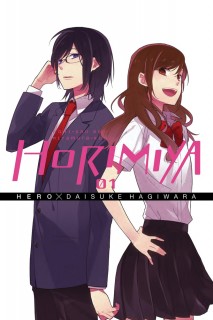
Horimiya is Yen’s debut this month, a manga adaptation of a webcomic that seems like your standard cute shoujo romance, but runs in GFantasy so I’m sure it has to be weird in some way.

ASH: I like weird!

MJ: GFantasy, it’s like a drug.

MICHELLE: I’m looking forward to this one a lot!

SEAN: A third Kagerou Daze will likely be adapting the 2nd novel, which I liked but see not reason to read a manga adaptation of.

In case you didn’t think Homura had had enough revenge yet, there’s a 2nd volume of Puella Magi Madoka Magica: Homura’s Revenge. (Look, I’m sorry, it’s the end of a long list.)

So I Can’t Play H! continues to give us ecchi situations with no payoff in its 3rd volume.

Lastly, the debut of the manga adaptation of Strike the Blood, whose first light novel I found reasonably good last month.

Does this list make you happy? Or merely ill at the pile of titles?

Filed Under: FEATURES, manga the week of

L♥DK, Vol. 1

October 22, 2015 by Sean Gaffney

By Ayu Watanabe. Released in Japan by Kodansha, serialization ongoing in the magazine Bessatsu Friend. Released in North America by Kodansha.

God knows that I am not the type of person to fault a manga for being too predictable. The industry runs on predictability, and anyone looking for a good adventure, comedy or romance title knows from the start at least the gist of what they’re going to get into. I’m used to many shoujo romances having the same sort of shape. But there’s an agreement you make with the author there, which is that there’s something in this series that will pull you in despite the predictability, be it dialogue, depth of characterization, degree of exaggeration, etc. If everything about a series is something that you can connect the dots, where you guess what’s going to happen 4 pages before it does… well, you probably have something like L♥DK.

ldk1

Stop me if you’ve heard this one before. Our heroine confronts our hero, who has just rejected her best friend’s confession, and they exchange words. She then goes back to her apartment to find that he’s now living next door. Though a not-so-amazing series of coincidences, his apartment gets ruined and they wind up living together as she feels it was her fault. Now she must keep it a secret from everyone she knows, which is hard as she’s starting to fall for him. It’s also hard because he enjoys flustering and teasing her to such an extent that it would be called bullying if this weren’t a shoujo romance.

Shusei is the guy, and oh my god. I haven’t thrown a book across the room in frustration in quite some time, but when he climbed into her bath and situated himself behind her while her best friend was knocking on the door, I did just that. I get that ‘bully the girl you love’ is a popular trope, and being a straight white male, I am absolutely not the one who gets to say whether it’s good or bad. As always, tropes are good and bad depending on the writing. But this seems a bit over the top even for this genre. Things aren’t helped later on when the two are accidentally handcuffed together by their landlady’s kid, and my first thought was ‘he has the key and is just doing this out of amusement and a really bizarre desire to stay with her’. And sure enough!

Now, this could be OK if we had a really good heroine, and Aoi shows flashes on occasion, mostly at the beginning. But honestly, I think she falls for this guy way too fast, particularly given this series is 18 volumes and counting in Japan. Most of the character beats are “Argh he is so frustrating” – he does something intimate – blushing and flustered – he is rude. Repeat as needed. And I’ve gotten to the point where if I have a blushing, flustered heroine who spends most of her time wondering why she’s in this situation, I can’t also have a guy who is ‘I tease and bully because I love’. This is a very popular shoujo type, and I suspect this series will do quite well here. But it’s just a no-sell for me. I’ve seen it all too often before. And not in a good way.

Filed Under: REVIEWS

Another

October 21, 2015 by Ash Brown

AnotherAuthor: Yukito Ayatsuji
Translator: Karen McGillicuddy
U.S. publisher: Yen Press
ISBN: 9780316339100
Released: October 2014
Original release: 2009

Another is a horror mystery novel written by Yukito Ayatsuji which was originally serialized in Japan between 2006 and 2009 before being collected into a single volume later that year. The novel was then released again in 2011 in two separate volumes. It is that edition upon which the English translation by Karen McGillicuddy is based. Another was initially released digitally in English by Yen Press in two volumes in 2103, but in 2014 it was published as a single-volume hardcover under the newly established Yen On light novel imprint. In addition to being Ayatsuji’s first novel to be translated into English, Another is probably his most widely-known work, especially outside of Japan. This is in part due to the fact that Another was adapted as a manga series and as an anime series, both of which have been licensed in English, as well as a live-action film. Although I’ve known about Another for a while, it actually wasn’t until I read Ayatsuji’s debut novel The Decagon House Murders that I was inspired to pick it up.

Yomiyama North Middle School’s third-year Class 3 is cursed. For some strange reason, the students of that class and their immediate families seem to be more susceptible to dying. Some years pass by without any casualties while other years see multiple deaths every month. The curse is said to be tied to an incident which occurred twenty-six years ago. A popular student named Misaki died, but the entire class was in such denial that Misaki’s spirit manifested. Now more than two decades later, Misaki’s story has been embellished and retold so many times that it’s difficult to tell how much of it is rumor and urban legend and how much is really true. Koichi Sakakibara recently transferred into Class 3 and isn’t sure what to believe and nobody is being particularly forthcoming about the situation. The curse could just simply be a ghost story, but his classmates and teachers are honestly frightened of something. And soon after Koichi’s arrival, a new series of deaths begin.

Another is a marvelous combination of mystery and horror. The first half of the novel explores the “what” and “why” of the increasingly odd situation while the second reveals the “how” and “who.” As a transfer student, Koichi is an outsider. He isn’t as knowledgeable as the other people involved, and they are reluctant to share information with him, so Koichi is largely left to investigate on his own. Eventually he gains some dubious allies, the most important being a young woman named Mei Misaki who may or may not actually exist. Ayatsuji excels at creating a constant air of uncertainty in Another—he introduces just enough creepiness and doubt that readers, like Koichi, are left questioning everything. While logical analysis is a valid option, the weirdness of the situation and the possibility of supernatural interference makes the more mundane, straightforward answers feel suspect. Additionally, Koichi himself is shown to be a somewhat unreliable narrator, and it’s his perspective of the unfolding events that drives Another.

Ayatsuji is particularly well-known for his inventive stories with dramatic twists. Another definitely falls into that category, the plot taking multiple clever and surprising turns over the course of the novel. However, without spoiling things, there was one major reveal towards the end that left me feeling cheated, especially when most of the other developments were so engaging. Retrospectively, the reveal does fit into the overall narrative, and there were some clues hinting at it scattered throughout the novel, but it isn’t foreshadowed as well as it could have been. As a result, I found it to be very unsatisfying. The revelation is shocking and certainly leaves an impact, but I think that had the information been shared earlier in the novel it could have been used even more effectively. Despite this one notable complaint, I actually quite enjoyed Another. The mystery was intriguing, the horror was disconcerting, and blended together they formed a chilling novel that was highly readable and kept me eagerly turning the pages.

Filed Under: REVIEWS Tagged With: Another, Novels, Yen On, yen press, Yukito Ayatsuji

Tezuka Bio, Kishimoto Interview, New Taniguchi!

October 21, 2015 by Brigid Alverson

Lots of big manga news this week!

First of all, my interview with Naruto creator Masashi Kishimoto is up. He was a real delight to talk to, and I particularly liked his description of the very first manga he ever created, when he was in middle school. He was very relaxed in the interview, and we had a good time. Please check it out! [Publishers Weekly]

The Osamu Tezuka Story - A Life in Manga and Anime by Toshio Ban and Tezuka Productions Translated by Frederick L. Schodt

Stone Bridge Press has a big announcement about a big book: They have licensed The Osamu Tezuka Story, a 900-page graphic biography of the Godfather of Manga, by Toshio Ban and Tezuka Productions.

Not only will readers get to see how Tezuka got his start and first successes, but they will follow him all the way through his amazing career, and in so doing will see how manga and anime developed from almost nothing in a devastated postwar Japan to the enormous commercial juggernauts they have become today. The story of Tezuka is truly the story of comics and animation media in Japan.

Frederick Schodt, who translated many Tezuka works and knew him personally, will be the translator. The book is due out in July. [Stone Bridge Press]

Holmberg

If you want to get a jump on the bio, Ryan Holmberg has presented a defense of his argument that Tezuka’s early work was inspired by Disney, and the article includes links to his earlier work on the topic. [The Comics Journal]

COVERLAYOUT.inddMeanwhile, NBM has announced its spring 2016 list, and it includes Jiro Taniguchi’s Guardians of the Louvre. This is part of their ongoing translation of The Louvre Collection, which also includes Rohan at the Louvre by JoJo’s Bizarre Adventures creator Hirohiko Araki. [NBM Publishing]

As of this week, Yen Press is publishing new chapters of Black Butler on the same day they are released in Japan. They are available in a variety of e-book formats for $1.99 each. [Yen Press]

Erica Friedman talks to the brass at BookWalker and then takes it out for a test drive herself. [Okazu]

The Manga Bookshelf team seem a bit dubious about their latest Pick of the Week. [Manga Bookshelf]

With sports manga making a comeback (Yowamushi Pedal, Haikyu!!, and Kuroko’s Basketball have all been licensed recently) Vernieda Vergara takes a look at five currently licensed titles worth checking out. [Panels]

Pandora Hearts creator Jun Mochizuki is at work on a new series, Vanitas no Carte (Memoir of Vanitas), a steampunk/vampire tale set in Paris in the 1800s. [Anime News Network]

Also in the works: A new Lupin III manga, based on the anime. [Anime News Network]

Gone but not forgotten: Laura lists her top ten out-of-print shoujo manga. [Heart of Manga]

Time to buy more manga? Check out the big Yen Press sale at RightStuf. [Yen Press]

Reviews: Ash Brown takes us through a week’s worth of manga reading and reviews at Experiments in Manga. There’s plenty of romance and a bit of magic in this week’s edition of Bookshelf Briefs at Manga Bookshelf.

Lesley Aeschliman on vol. 6 of Assassination Classroom (WatchPlayRead)
Connie on vol. 18 of Bakuman (Slightly Biased Manga)
Connie on vol. 3 of Black Rose Alice (Slightly Biased Manga)
Lesley Aeschliman on vol. 2 of The Demon Prince of Momochi House (WatchPlayRead)
Matthew Alexander on vol. 3 of Gou-Dere (The Fandom Post)
Connie on vol. 10 of Gravitation (Slightly Biased Manga)
Johanna Draper Carlson on vol. 1 of Kiss Him, Not Me! (Comics Worth Reading)
Sean Gaffney on vol. 1 of Kiss Him, Not Me! (A Case Suitable for Treatment)
James Ristig on vol. 1 of Ninja Slayer Kills! (The Fandom Post)
Leroy Douresseaux on vol. 11 of Nisekoi: False Love (The Comic Book Bin)
L.B. Bryant on vol. 1 of Puella Magi Suzune Magica (ICv2)
Rebecca Silverman on vol. 1 of QQ Sweeper (Anime News Network)
Erica Friedman on vol. 18 of Rakuen Le Paradis (Okazu)
Matthew Warner on vol. 29 of Toriko (The Fandom Post)

Filed Under: MANGABLOG

Kiss Him, Not Me!, Vol. 1

October 20, 2015 by Sean Gaffney

By Junko. Released in Japan as “Watashi ga Motete Dousunda” by Kodansha, serialization ongoing in the magazine Bessatsu Friend. Released in North America by Kodansha.

It’s always tricky trying to do an over the top comedy that plays with tropes. You run the risk of people not getting the joke, or latching on to the very thing that you’re making fun of, or simply not going far enough. This new title from Kodansha sometimes falls into that pitfall trap, as occasionally it sympathizes with its heroine’s plight a bit too much, or doesn’t hammer hard enough on its basic premise. But for the most part Kiss Him, Not Me! manages to mock reverse harems while avoiding being a copy of The Wallflower, a series that ran in the same magazine and which has a lot in common with this.

kisshim1

The author, as she says in the afterword, has basically been a BL rtist before this title, drawing smutty titles for Gentosha and Prince of Tennis and Haikyuu! doujinshi. Now she has a mainstream title about a chubby girl who loves her BL pairings until one day her favorite character is killed off, whereupon she doesn’t leave her room or eat for seven days, and comes out looking thin and gorgeous. It’s the sort of plotline I’d recently criticized with Let’s Dance a Waltz, and I don’t like it here either – stop doing this sort of thing. That said, Let’s Dance a Waltz read like it was saying “if you too dance for two weeks straight, this can be you!”. Kiss Him, Not Me is telling readers “This is completely ridiculous, don’t do this”.

As for its cast, they’re well sorted out by personality, if not always by art – I sometimes had trouble telling the two blond and two brunet guys apart. There’s no sense yet that one of them is the obvious romantic lead for her, mostly as, well, that’s the premise – she doesn’t really want to date any of them, she wants to ship them. She and her BL friend (who makes a decent straight man) argue about who should go with who, and who’s the seme and who’s the uke. Of course, they’re discussing real-life people rather than characters in a fictional universe. I’m not sure if future volumes will show the discomfort that can arise from this sort of thing, but if so, I doubt it will be hammered on very long – the purpose of this series is laughs.

If there’s one big weakness to this series, as I hinted earlier, it’s that I don’t think it quite goes far enough in its attempts to be over the top. I was expecting more BL tease than what we got here, frankly – it’s all in her head, of course, but we need to see a bit more of it. As for Kae herself, she’s basically placed in the position of female fantasy, as a gorgeous girl who suddenly has the four hottest guys in school all going after her. As such, I’d like to see a few more obstacles in her way. Sports and Study plots come up towards the end of this volume, but both are taken care of in such a way that she wins out completely. Compared to, say, Sunako in The Wallflower, Kae doesn’t exactly have it tough here. Still, if you want silly shoujo that will make you laugh, and don’t mind more magic weight-loss, this is a decent title to try.

Filed Under: REVIEWS

  • « Go to Previous Page
  • Page 1
  • Interim pages omitted …
  • Page 524
  • Page 525
  • Page 526
  • Page 527
  • Page 528
  • Interim pages omitted …
  • Page 1054
  • Go to Next Page »
 | Log in
Copyright © 2010 Manga Bookshelf | Powered by WordPress & the Genesis Framework