• Skip to primary navigation
  • Skip to main content
  • Skip to primary sidebar
  • Home
  • About Us
    • Privacy Policy
    • Comment Policy
    • Disclosures & Disclaimers
  • Resources
    • Links, Essays & Articles
    • Fandomology!
    • CLAMP Directory
    • BlogRoll
  • Features & Columns
    • 3 Things Thursday
    • Adventures in the Key of Shoujo
    • Bit & Blips (game reviews)
    • BL BOOKRACK
    • Bookshelf Briefs
    • Bringing the Drama
    • Comic Conversion
    • Fanservice Friday
    • Going Digital
    • It Came From the Sinosphere
    • License This!
    • Magazine no Mori
    • My Week in Manga
    • OFF THE SHELF
    • Not By Manga Alone
    • PICK OF THE WEEK
    • Subtitles & Sensibility
    • Weekly Shonen Jump Recaps
  • Manga Moveable Feast
    • MMF Full Archive
    • Yun Kouga
    • CLAMP
    • Shojo Beat
    • Osamu Tezuka
    • Sailor Moon
    • Fruits Basket
    • Takehiko Inoue
    • Wild Adapter
    • One Piece
    • After School Nightmare
    • Karakuri Odette
    • Paradise Kiss
    • The Color Trilogy
    • To Terra…
    • Sexy Voice & Robo
  • Browse by Author
    • Sean Gaffney
    • Anna Neatrour
    • Michelle Smith
    • Katherine Dacey
    • MJ
    • Brigid Alverson
    • Travis Anderson
    • Phillip Anthony
    • Derek Bown
    • Jaci Dahlvang
    • Angela Eastman
    • Erica Friedman
    • Sara K.
    • Megan Purdy
    • Emily Snodgrass
    • Nancy Thistlethwaite
    • Eva Volin
    • David Welsh
  • MB Blogs
    • A Case Suitable For Treatment
    • Experiments in Manga
    • MangaBlog
    • The Manga Critic
    • Manga Report
    • Soliloquy in Blue
    • Manga Curmudgeon (archive)

Manga Bookshelf

Discussion, Resources, Roundtables, & Reviews

Blog

Manga the Week of 3/30

March 24, 2016 by Sean Gaffney Leave a Comment

SEAN: For a 5th week of the month, there’s a surprising amount of stuff coming out, though it’s nothing compared to April, which features 895,623 new and ongoing series. But it’s still March, so what’s happening next week?

tagame

The Passion of Gengoroh Tagame is getting a re-release from the Bruno Gmuender publisher, giving you more of the famous gay manga author. I know a lot of people who are eagerly awaiting this.

ASH: I’m so glad to seeing this coming back into print, and with additional content, even!

ANNA: I’m not likely to read this manga, but I think it is great that the market now supports publishing titles like this. I can’t imagine this being published 10 years ago.

SEAN: Kodansha has the 13th and final volume of My Little Monster, a bumper volume not only featuring various sequels and side stories to the main plot, but also selected highlights from the fan book! A must buy.

MICHELLE: And buy it I shall!

SEAN: And The Seven Deadly Sins is also at Volume 13, but is nowhere near its final volume.

UQ Holder reaches Vol. 7, and by now has given up any pretense of being anything but a sequel to Negima.

And there’s a 6th volume of shonen romance Your Lie In April.

Seven Seas gives us an 8th volume of always interesting if sometimes a bit uncomfortable series A Centaur’s Life.

They also have the debut of Not Lives, yet ANOTHER survival game manga (2013: Alice in the Country of Hearts, 2014: Vampires, 2015: Zombies, 2016: Survival Game, 2017: ???), which also has gender bending to shake things up.

MICHELLE: I don’t suppose we could parlay the survival game trend into a license for Yumi Tamura’s 7SEEDS, eh?

nichijou1

SEAN: Speaking of familiar genres, Vertical debuts Nichijou, a humorous slice-of-life high school comedy – NO WAIT COME BACK! Nichijou is fantastic! It’s very weird and quirky (as the cover might indicate), and has some great characters. I’ve been eagerly awaiting it. For fans of Seki and Sakamoto.

ASH: I have heard good things, and I’m a fan of Seki and Sakamoto, so I should probably pick this up.

MICHELLE: It definitely looks intriguing.

ANNA: That sounds interesting.

MJ: Hm, okay, I’m in.

SEAN: The rest is all digital, but there’s a lot of it. Viz has a 2nd volume of the Boys Over Flowers sequel, appropriately named Boys Over Flowers Season Two.

MICHELLE: I read a chapter or two of this, but should try to get back into it.

ANNA: Yay! I enjoy this series.

SEAN: And Yen’s digital-only titles give us new volumes of Aphorism, Crimson Prince, Renaissance Eve, Scarlet Empire, and Sekirei.

ANNA: I need to catch up on Scarlet Empire – I think I bought the first volume and it disappeared into the mass of titles on my kindle.

SEAN: Is there a title here that cries out to your heart?
Filed Under: FEATURES, manga the week of

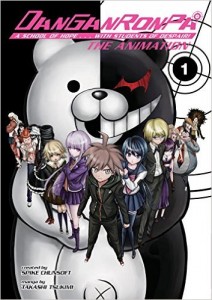
Danganronpa: The Animation, Vol. 1

March 22, 2016 by Sean Gaffney

By Spike Chunsoft and Takashi Tsukimi. Released in Japan by Kadokawa Shoten, serialized in the magazine Shonen Ace. Released in North America by Dark Horse.

I have made my opinions on the glut of ‘survival game’ manga well known by now, I hope. In general, if you’re writing a survival game manga, you need a lot to keep me interested, as teens locked in a school and killed off one by one has zoomed WAY past vampires and sadistic shoujo boyfriends in the things I avoid sweepstakes. And yet sometimes I do hear so much about a title that I feel the need to check it out anyway. Such a title is Danganronpa, which was originally a game and then got adapted to an anime. The manga wears on its sleeve that it’s adapting the anime and not the game, which is likely why it’s only 4 volumes instead of the 9-10 I’d expect otherwise. That said, what makes Danganronpa stand out?

dangan1

Well, for starters it’s far more overdramatic than the usual glumness I’ve seen from survival game manga before. Monokuma, the bear lurking in the background on the cover, seems to be both the manga’s mascot and its villain. He’s a ludicrously cruel and over the top figure, making bear puns as he gleefully executes people. He’s just a lot of fun, and stands out in particular because the rest of the cast of students are stereotypes, many deliberately so. Our hero is the average “player character” type, we get the jock, the idol, the fashion plate, the overweight otaku, etc. With a cast like this, that sort of shorthand is necessary as you’ll know at a glance what they’re like and how they’ll react. Plus, of course, the cast starts getting killed off fairly quickly, so you don’t have to remember all of them.

The other interesting aspect of this title is the trial sequence. Basically the kids are told they can escape the school if they kill someone – but they have to get away with it. There’s a trial, and if the killer isn’t found, the rest of the cast will get punished. Of course, the killer is found, as our hero is very good at deductions, and is helped out by a stoic girl who seems to be a detective, and I suspect may be a love interest except this is one of those series where everyone tends to die, so I won’t commit to that just yet. And the kids aren’t complete sociopaths either, mostly killing out of terror and fear of blackmail. I was also amused at how easy it was to solve the first murder’s ‘written in blood’ clue, and the manga must have agreed with me, as the cast also figures it out immediately.

This is a title that’s pretty much marketed to fans of the gmae or anime, and they should find it quite enjoyable. If you haven’t seen either, it’s still pretty good, keeping in mind the usual irritations of the genre. The comedy and dramatics help make that less of a poison pill this time around, though.

Filed Under: REVIEWS

Shuriken and Pleats Vol. 1

March 21, 2016 by Anna N

Shuriken and Pleats Volume 1 by Matsuri Hino

Matsuri Hino is one of those shoujo authors who I like, but I haven’t been pulled into the time of deep admiration that I feel towards an Arina Tanemura or a Chika Shiomi. One of the main reasons for this is that I never really connected with Hino’s major series Vampire Knight. I have some volumes stockpiled and I intend to give that series another chance one day. I do enjoy Hino’s delicate art. I was curious about a non-vampire series from Hino.

Shuriken and Pleats is a short two-volume series about a ninja girl in the modern age, with all of the angst one might expect from a Matsuri Hino title with the added bonus of some fish out of water humor. The tragedy is introduced in the first chapter, as Mikage Kirio is assigned to protect an idealistic man whose wife and daughter have passed away, possibly as the result of some of his research into a way to end world hunger. Mikage’s master James goes out of the way to exhibit a personal interest in the young ninja, wanting her to have a normal life. When James dies, his will sets Mikage up with an option for an independent life for the first time, and he requests that she take the time to go to school like a regular girl. Mikage moves back to Japan and makes an attempt to fit in as a schoolgirl, while being haunted by her past. She also finds a final person to protect along the way.

“Girl who doesn’t understand her feelings” is almost as much of a shoujo cliche as the inexplicably alluring klutzy heroine, but Mikage is a more interesting than usual example of this particular type of heroine. Being part of a secret ninja clan in the modern world is a legitimate reason to have a closed-off personality, and while she fails sometimes she does have some serious ninja skills. One thing that does make Shuriken and Pleats stand out are some fine points of character development that manage to be both humorous and tragic at the same time, like Mikage’s shrine of cute erasers that her former master gave her. Mikage’s reaction to having papers passed to her at school from behind her back is a dramatic flip and the stern command for her classmate to “State your intention.”

Mikage’s ninja nature is signaled by the flowing black scarf she wears at all times, even when in her school uniform. Hino’s art has her trademark extremely pretty character designs mixed with dynamic ninja action scenes. I found myself intrigued by Mikage’s journey as she gradually loosens up on her ninja training and starts dealing with her emotions for the first time. I was less interested in some of the aspects of the plot, like the conspiracy at work that Mikage has to unravel. There’s a great deal of plot development packed into just one volume, which perhaps speaks to the benefit of planned short manga series as opposed to short series that are the result of an abrupt cancellation. I enjoyed this manga, and I’ll look forward to the concluding volume. Shuriken and Pleats seems like it will be an entertaining diversion if someone is looking for a short series to enjoy.

sp1

Filed Under: REVIEWS Tagged With: shojo beat, shoujo, Shuriken and Pleats, viz media

Bookshelf Briefs 3/21/16

March 21, 2016 by Sean Gaffney and Michelle Smith Leave a Comment

idol2Idol Dreams, Vol. 2 | By Arina Tanemura | VIZ Media – There are still certain aspects of Idol Dreams that strike me as incredibly creepy, given that the main character is 31 on the inside even if she’s temporarily in the body of her 15-year-old self. In this volume, for example, Chikage finds out that 15-year-old idol Hibiki might have a girlfriend, so she stalks him and ends up following him home to find out what the deal is. Lame! On the other hand, I enjoyed getting a look of her and Tokita together as middle-school students, and am now a bit more curious to see how she ended up becoming such a restrained and clueless adult. So, I guess I care a little bit now and that’s gotta count as progress. – Michelle Smith

roseprin9Kiss of the Rose Princess, Vol. 9 | By Aya Shouoto | VIZ Media – I wish I could say that Kiss of the Rose Princess has a strong ending that really rewards those who stuck with it, but, alas, I cannot do so. Great swaths of it made no sense to me whatsoever, and I can’t tell if that’s because the writing is genuinely incoherent or if I just never paid enough attention to details along the way. If one overlooks one’s puzzlement, it’s kind of a paint-by-numbers shoujo conclusion in which bad guys are revealed to be sympathetic, the power of shoujo heroine optimism keeps someone from doing something they’ll regret, and the big bad (another secret evil society—Shouoto’s got one of those in He’s My Only Vampire too, I believe) is defeated with ease. I mean, it’s not a horrible series, but it remains my least favorite of the three Shouoto series currently in print in English. – Michelle Smith

komomo3Komomo Confiserie, Vol. 3 | By Maki Minami | Viz Media – In general, I tend to like Maki Minami titles more than most bloggers—Special A is still a favorite of mine—but I’m just not feeling the love for this new series, possibly as the heroine, Komomo herself, is just too different from her previous titles. There’s still the core of denseness and not understand what this thing called love is, but there doesn’t seem to be much else. And Natsu, the obvious love interest, is not nearly as well characterized as either Kei or Senri. The food still looks delicious, though, and I like the best friend who has very little idea how to behave properly. But, especially as this is a relatively short series, I sort of want a little more from it than I’m getting. – Sean Gaffney

Komomo Confiserie, Vol. 3 | By Maki Minami | VIZ Media – Komomo’s been blushing up a storm and having heart palpitations whenever she’s around handsome cobbler Seto, but she can’t figure out what’s up. Her utter obliviousness is pretty dumb, and though the entire premise of this manga is unrealistic, it’s this that bothers me most of all. Still, I did like how Komomo instantly sets her own feelings aside when it comes to ensuring Seto’s happiness with his girlfriend, realizing that she’s not the one who can bring out the best in him. Plus, Rise trying to cheer her up by singing (terribly) was kind of amusing, too. In the end, my heart has warmed to this series a little, but I still don’t love it like I did Voice Over!. Maybe it needs some cats. – Michelle Smith

seki7My Neighbor Seki, Vol. 7 | By Takuma Morishige | Vertical Comics – For all that this manga is still at its best when it’s showing us Yokoi’s reactions to whatever Seki happens to be doing, it can’t be denied that Seki’s faces are getting just as good, especially now that Yokoi is able to stand up to him more often. We also have enough continuity now that we can see the return of old favorites, such as the robot family, now cursed with an Aibo that’s far too big compared to them, and the phantom art thief, who’s moved on to Western works as well. And Yokoi also joins in, of course, which works for good and ill—she just doesn’t have Seki’s sense of imagination. Luckily, Seki makes up for it on his own, which is good, as I think Vol. 8 is a few months away. – Sean Gaffney

nisekoi14Nisekoi, Vol. 14 | By Naoshi Komi | Viz Media – I can only imagine that Nisekoi‘s Western fans were not delighted with this new volume. Late additions to a harem manga always tend to get a hard time, even more so given that Yui is not only ANOTHER childhood friend, but also a prodigy, which means she’s completed enough schooling to be teaching Raku and company’s class. Oh yes, and she’s also the head of a Chinese Mafia family, complete with her own loyal bodyguard. One could be forgiven for assuming she’s there by editorial fiat to keep the story running as it’s still popular. That said, she’s amusing and intelligent, and enjoys teasing Raku without going too far with it, so we’ll see how long she sticks around. – Sean Gaffney

persona4Persona 4, Vols. 1 & 2 | By Shuji Sogabe and ATLUS | Udon Entertainment – This is a manga based on a game I haven’t played, and there’s apparently an anime as well. The hero in the game has the player’s name, so here one is invented. The story itself is half horror, half psychological action series, as our nameless hero and his three friends get sucked into another world where they must battle the negative sides they try to hide from others—battles which have killed other people. I found the second volume more interesting than the first, possibly due to the heavy yuri tease that I suspect will go nowhere. Oh, and which annoying bear pun creature came first, this or Dangan Ronpa? Recommended for Persona 4 fans, others won’t miss much. – Sean Gaffney

Filed Under: Bookshelf Briefs

My Week in Manga: March 14-March 20, 2016

March 21, 2016 by Ash Brown

My News and Reviews

I managed to post two in-depth manga reviews at Experiments in Manga last week, though it looks like I’ll only be posting one this coming week since taiko will be keeping me pretty busy with a number of different performances and related events. Inio Asano’s A Girl on the Shore was the first manga that I reviewed last week. Like the rest of Asano’s work that I’ve read, it can be emotionally intense and hard-hitting at times, but it’s very well done. As part of my monthly horror manga review project, last week I also took a look Mushishi, Volumes 8, 9, and 10, the final installment in the English-language release of Yuki Urushibara’s award-winning debut. Although I’ve reached the end of the series proper, I’m planning on at least more Mushishi-related post before I’m through.

Elsewhere online: The BBC has an interesting piece on Keiko Takemiya—The godmother of manga sex in Japan. Rokudenashiko was interviewed by the Anne Ishii of MASSIVE about controversial art and free speech. Otaku USA posted an interview with translator and scholar Frederik L. Schodt about his work and Osamu Tezuka. An interview with Steve Oliff, the colorist who worked on Marvel’s release of Katsuhiro Otomo’s Akira, was posted at Anime News Network. In licensing news, Dark Horse has picked up the Psycho-Pass: Inspector Shinya Kogami manga written by Midori Goto and illustrated by Natsuo Sai. Finally, the Skip Beat! crowdfunding effort that I mentioned a couple weeks ago has moved from Indiegogo to Kickstarter.

Quick Takes

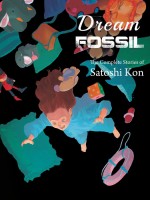
Dream Fossil: The Complete Stories of Satoshi KonDream Fossil: The Complete Stories of Satoshi Kon by Satoshi Kon. Compiling fifteen of Kon’s short manga from between 1984 and 1989, as well as an essay by Susumu Hirasawa (which was a pleasant surprise), Dream Fossil is a somewhat peculiar volume which will probably be of most interest to Kon enthusiasts although other readers may find parts of it appealing as well. As is the case with so many collections, some stories are much stronger than others. Some of the unevenness can likely be attributed to the fact that Dream Fossil consists of Kon’s early works in which his narrative techniques were still being refined and developed. I actually found myself frustrated with some of the stories because they read less like manga and more like a storyboard or broad outline for a more involved work; some of the stories and ideas seem like they would have been better conveyed through animation rather than sequential art. Even so, as a whole I did enjoy Dream Fossil. While the storytelling itself was sometimes weak, the underlying concepts and imagery were great.

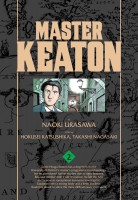
Master Keaton, Volume 2Master Keaton, Volumes 2-4 written by Hokusei Katsushika and Takashi Nagasaki and illustrated by Naoki Urasawa. It’s been some time since I read the first volume of Master Keaton, but being a fairly episodic series without much of an overarching story it wasn’t at all difficult to fall right back into the manga. I first picked up Master Keaton because of Urasawa’s involvement with the manga. This is still a major draw for me, but I continue to read the series because I genuinely enjoy the stories and characters. Keaton is sent all over the world to investigate a wide range of cases, so there’s plenty of variety in the manga’s stories as well. Although the series’ drama, action and adventure is certainly engaging, I especially like the chapters that take advantage of Keaton’s archaeological and academic interests.  Master Keaton, while fictionalized, makes use of actual people, places, and events, which I like. (I’ve even learned a few factual tidbits from the manga.) Occasionally the series does get bogged down in historical details that don’t necessarily further the story, though.

The Tipping PointThe Tipping Point edited by Alex Donoghue and Tim Pilcher. Published as part of the fortieth anniversary celebrations of the comics publisher Humanoids, The Tipping Point collects thirteen short works from creators influenced by Japanese, Franco-Belgian, and American comics traditions. The anthology specifically caught my attention due to the mangaka involved—Taiyo Matsumoto, Atsushi Kaneko, Naoki Urasawa, Keiichi Koike, and Katsuya Terada—although the European and American creators are notable in their own right. (Sadly, though the collection touts its own innovation and diversity, only male creators are represented, something that is quickly glossed over in the introduction.) I greatly enjoyed the individual comics which range in subject, genre, and tone, but as a collection The Tipping Point seems to be missing a sense of cohesiveness and context. In the end, I was left wondering why these particular creators and why these particular works were selected to be brought together. Perhaps the theme of a “tipping point” was simply too vague or broad.

Filed Under: FEATURES, My Week in Manga Tagged With: comics, Hokusei Katsushika, manga, Master Keaton, Naoki Urasawa, Satoshi Kon, Takashi Nagasaki

Pick of the Week: Jellyfish Princesses

March 21, 2016 by Michelle Smith, MJ, Sean Gaffney, Anna N and Ash Brown Leave a Comment

pj1MICHELLE: It’s almost here! It’s almost here! How could I be anything but asquee about Princess Jellyfish being almost here?!

MJ: This! This! So much this! And yet… I just have to be the one person here who will give my pick to the final (final, I said, FINAL) volume of my beloved Pandora Hearts. I’m sorry, I just gotta. Sweet Pandora Hearts, I will miss you.

SEAN: There is far too much coming out this week, and normally I’d be picking Shoulder-a-Coffin Kuro easily. But yeah, the need to pick Princess Jellyfish cannot be denied – it’s such an obvious Pick this week. So I will pick it.

ANNA: I feel like we’ve been waiting for Princess Jellyfish forever! I am so excited it is finally coming out. If I could double or triple pick one title for pick of the week, this would be it!

ASH: I’m not at all sorry to say that Princess Jellyfish is my pick, too! I really enjoyed the anime adaptation and am looking forward to reading the original manga series a great deal.

Filed Under: PICK OF THE WEEK

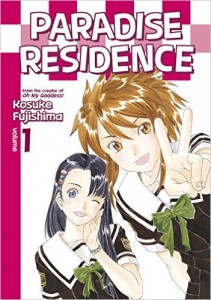
Paradise Residence, Vol. 1

March 20, 2016 by Sean Gaffney

By Kosuke Fujishima. Released in Japan by Kodansha, serialized in the magazine Afternoon. Released in North America by Kodansha Comics.

For all that Fujishima’s Oh My Goddess! was a series with angels, devils, and everything in between (that is when it wasn’t just about vehicles and those who love them), there was an awful lot of what is generally termed ‘slice-of-life’ in the series. And before that we had You’re Under Arrest, which also took a basic premise (female cop buddy movie) and used it as a springboard for everyday amusing situations. As a result, it should not come as a surprise that his new series details the rather everyday, slice-of-life adventures of a girls’ dormitory way up a hill, and the eccentric characters therein. Of course, the problem with this is that the series needs to rise and fall on said eccentric characters, and so far we don’t really get a good handle on any except one or two.

parares1

Our two heroines are on the front cover posing for us, and they are very much of the Miyuki and Natsumi school of personalities. Takanashi is brash, sleeps late, loves to eat, is not very good at school but makes up for it with energy and heart. Misawa is her best friend, the straight man of the group who exists mostly to react to Takanashi’s antics and sometimes sigh. The dorm they’re in is old and tends to fall apart easily, but its residents all love it, particularly when defending it against their all-girls’ school’s other dorm, which is modern and state of the art. We get the overly sadistic sempai, the elementary schoolgirl who acts as a dorm mother (she’s the daughter of the REAL, almost never seen, dorm mother), the overseas student, the otaku, the eccentric artist, etcetera.

The volume begins pretty much in media res, showing off the group’s everyday school and dorm life. We see how Takanashi deals with dogs, heat, and typhoons, as well as what appears to be a rivalry with a stuck-up girl from the otehr dorm. After this volume, we get as an extra “Volume 0”, a collection of the initial chapters that ran as one-offs in the spinoff good!Afternoon while Fujishima was still working on Oh My Goddess!. I can see why it was put later, as the characters are not quite in character yet, but it does give a better introduction to everyone than the initial first volume does. There’s also a short story featuring Takanashi’s parents, about the springtime of youth, etc.

This is light and fluffy fun. If there’s a flaw it’s that that’s all it is. There’s not as big a hook to draw people in as there is with Oh My Goddess!, and I doubt we’ll get serious plotlines here. The pacing can be slow, as you’d expect with this genre. And sometimes there’s a gag thrown in that just doesn’t work, such as one girl comedically falling into another girl’s breasts during a blackout, as if Fujishima is reminded that fanservice has moved on since 1985 and tried to imitate it. But if you like Fujishima, and his art is very nice here, this should appeal to you. It’s also over in Japan, so should wrap up pretty soon.

Filed Under: REVIEWS

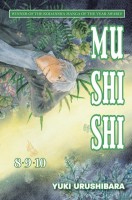
Mushishi, Vol. 8, 9, and 10

March 18, 2016 by Ash Brown

Mushishi, Volumes 8-10Creator: Yuki Urushibara
U.S. publisher: Del Rey
ISBN: 9780345505606
Released: July 2010
Original release: 2007-2008
Awards: Japan Media Arts Award, Kodansha Manga Award

Every once in a while I come across a work that stays with me long after I first finish reading it and that I find myself revisiting time and again. Yuki Urushibara’s ten-volume debut manga series Mushishi is one such work. Heavily influenced by traditional Japanese folklore but retaining modern sensibilities, Mushishi is a nuanced and layered manga which can either be simply enjoyed as a collection of atmospheric and subtly unsettling stories or more deeply appreciated for its complex underlying themes and philosophies. Mushishi quickly became and remains one of my favorite manga. The series has been received positively by fans and critics alike, earning Urushibara several awards and recognitions including a Japan Media Arts Award and a Kodansha Manga Award. Mushishi has also been the basis for multiple anime among other media adaptations. In English, the series was first published in print by Del Rey Manga and was later released digitally by Kodansha Comics.

The final volume of the English-langauge edition of Mushishi, first printed in 2010 and released digitally in 2014, is equivalent to the eighth, ninth, and tenth volumes of the series’ original Japanese release published between 2007 and 2008. Keeping with the episodic nature of Mushishi, the volume collects fourteen stories that for the most part aren’t directly tied to one another or to earlier chapters, but which share similar ideas and themes with the rest of the series. Family relationships are very important in Mushishi as a whole, but stories like “The Milk of the Valley,” “The Hidden Channel,” “Aquamarine,” and “The Thread of Life” in particular explore the deep bonds between mothers, including surrogate mothers, and their children. Other stories, like “The Final Bit of Crimson,” “Stars in the Jar of the Sky,” and “The Scented Darkness,” are about other realities and worlds, or at least about aspects of the natural world that aren’t fully understood by humankind. On the other hand, “Sunshowers,” “The Mud Weeds,” “The Whirlwind,” and “The Eternal Tree” are stories which show that when dealing with possession by or control of mushi, greater understanding can be both a curse and a blessing.

Mushishi, Volume 10, page 155The remaining three stories collected in the volume, including the series’ two-part finale, specifically involve Ginko (the manga’s protagonist and linking character), his personal relationship to mushi (primordial creatures that are closest to the original form of life), and what are known as “masters” in the world of Mushishi. Each master is associated with a specific geographic area and are responsible for maintaining the connection and balance between the natural world and all of the beings found within it. They are described as the living embodiment of the promise and rule of life. Although each of the three stories are technically found in different volumes of the series, taken together they form a particularly interesting narrative and are very illuminating when it comes to Ginko’s character. “The Bed of Grass” returns to Ginko’s past, firmly establishing why he is who he is and revealing the origin of his deep connection to and somewhat unusual attitude towards mushi. That connection is extremely critical to and further developed in “The Bottom of Winter” and in the series’ conclusion “Drops of Bells.”

Ginko’s devotion to life, whether it be human, mushi, or some other form, is perhaps the most prominent narrative driving force behind the entirety of Mushishi. At the same time, Ginko is also very aware that sometimes life cannot and should not always be preserved and that coexistence isn’t always an option. The intent is to find an appropriate balance, but what that balance should be is often debatable and mistakes are made. Ginko frequently acts in a role akin to that of a master and on several occasions throughout the series even considers taking the responsibilities of master upon himself. The decisions that he makes as he considers all of this in the final volumes of Mushishi are especially poignant. Mushishi is a manga series about many things, but at its very heart it’s an exploration of relationships, not only between humans and the natural world of which they are only one, inextricable part, but between people as individuals and as members of larger social groups. Mushi provide a seemingly supernatural element to the series, but ultimately the focus of Mushishi is on the very real, varied, and changing struggles of individuals living in an evolving world that they cannot completely control or understand.

Filed Under: REVIEWS Tagged With: del rey, Japan Media Arts Award, Kodansha Manga Award, manga, mushishi, Yuki Urushibara

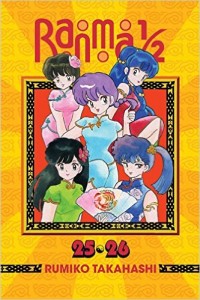
Ranma 1/2, Vols. 25-26

March 18, 2016 by Sean Gaffney

By Rumiko Takahashi. Released in Japan by Shogakukan, serialized in the magazine Shonen Sunday. Released in North America by Viz.

It’s not an ironclad rule, but in general, the longer the story arc in Ranma the better it ends up being. And this is good news for this volume, which wraps up the Herb arc from the previous omnibus, introduces a new character who brings a lot of silliness to the table, and has what may be the strongest arc in the entire series, where Takahashi learns that even though her series desperately need to be static and unchanging, sometimes you have to have the occasional character development. (Admittedly, we haven’t seen her learn that lesson with Rin-Ne just yet, but hey.) The Shinnosuke arc also manages to be strong simply by reversing the usual plotline of many a Ranma story, as this time it’s Akane who meets the stranger with a mysterious connection to her past.

ranma25-26

Indeed, Akane is comparatively calm and peaceful compared to previous situations, possibly as, instead of dealing with a supposed errant fiancee for Ranma, she now has her own love troubles to deal with. Shinnosuke saved her when she was a child, at great cost to his own self, and has grown up to be a handsome young man who looks a bit like Ryouga. (Too much, IMO – especially when the actual Ryouga shows up, it can be difficult to tell them apart.) The trouble is that Akane loves Ranma, and even though she’ll never say it or think it she knows it as well. Thus on her end she feels an obligation to stay and help because of a life debt. Ranma, who is playing the Akane role this time around, can only see her getting cozy with this new guy. He goes through various stages of jealousy, and as ever with Ranma, the worst argument, where you know things are really bad, comes from when Ranma and Akane STOP hitting each other.

There is another half to this volume, of course. We wrap up Herb in a quick but satisfying way, and Ranma once again proves unable to sacrifice even one of his worst villains. We also meet Hinako, who is another character who transforms from one form to another, though for once it’s not due to a cursed spring but rather due to a failed attempt at a good deed by Happosai, of all people. The Hinako storyline is not going to give you the depth and romance that you see in the Shinnosuke arc. Instead we get pure comedy, as Ranma, in order to defeat the teacher, has to essentially grope her pressure points – which are exactly where you’d think they are. Oh yes, and Hinako’s transformation from bratty immature kid to statuesque stunner makes no sense except as comedy. But that’s Ranma for ya.

In short, Ranma has now turned the corner and is entering its twilight years, but can still turn out some classics, and this volume is overall excellent, provided you don’t mind some fanservice. There’s even actual romantic progress at the very end, which I won’t spoil except to again say that the real tsundere in this series is Ranma, not Akane.

Filed Under: REVIEWS

Manga the Week of 3/23

March 17, 2016 by Sean Gaffney, Michelle Smith, Ash Brown, MJ and Anna N Leave a Comment

SEAN: It is somewhat sad that with the huge number of manga out towards the end of every month, I can be relieved that there are “only” 33 titles out next week. Let’s plow through them.

Dark Horse has a 3rd Astro Boy omnibus.

Kodansha has an awful lot of stuff. There’s a 4th volume of that pesky Devil Survivor.

And Noragami is still sped up with its 12th release.

If you prefer 4 to 3, then the debut of Persona Q: Shadow of the Labyrinth Side P4 will delight you. I’ll be in the corner looking baffled.

pj1

At long last, North America sees the debut of possibly the most anticipated josei title ever: Princess Jellyfish, which runs in Kiss magazine, gets an omnibus release, and it is fantastic. The Manga Bookshelf team would normally all pick it as Pick of the Week automatically, but see below. (FYI: PJ’s creator, Akiko Higashimura, has a younger brother, who happens to draw My Neighbor Seki.)

MICHELLE: I feel like I have been waiting for this for ages and ages. So excited!

ASH: Same here! (Also, I had no idea Akiko Higashimura and Takuma Morishige were related!)

MJ: So ready for this!

ANNA: I feel like I’ve been waiting for this FOREVER! Very much looking forward to reading this.

SEAN: Also debuting is Real Account, which is a survival game manga, and zzzzzzzzzzzzzzzzzzsnooooore – sorry, fell asleep there. Moving on.

MICHELLE: It can’t be worse than BTOOOM!, can it?

MJ: We shouldn’t underestimate it, Michelle. We should give it a chance to prove that it’s worse. It’s only fair.

SEAN: And a 7th volume of Yamada-kun and the Seven Witches. One volume per witch!

Seven Seas gives us a 5th volume of Servamp, which I believe still has vampires.

And Vertical has a 7th volume of Ajin, a series I know many people are excited about.

ASH: Especially now that there’s an anime series.

SEAN: Viz finally debuts the new shoujo title from the Vampire Knight creator, who has switched from Vampires to Ninjas with Shuriken and Pleats.

MICHELLE: I didn’t love Vampire Knight, but I’m still looking forward to checking this out.

MJ: Same.

ANNA: I will read this!

SEAN: And now it’s Yen time, starting with the Yen On light novel imprint. Accel World gets a 6th volume, as we try to figure out if our hero is going to turn possessed and evil or not.

The third Durarara!!, meanwhile, focuses on Masaomi, the third member of our high school power trio.

Log Horizon has a 4th volume, resolving the cliffhanger from the third, and possibly featuring Shiroe pushing his glasses up his face a few more times.

And there’s a 4th No Game No Life, which I wasn’t as pleased with as usual. I reviewed it here.

agkz1

Akame Ga KILL! ZERO is the new spinoff series of the week, a prequel taking place a few years before the main series and focusing, appropriately enough, on Akame.

There’s a third Black Bullet manga, with plenty of disturbing yet well choreographed loli assassin action for you.

Bloody Cross nears its end, but isn’t there yet, even as we hit double digits with Volume 10.

And we get the 2nd to last volume of Chaika the Coffin Princess as well, which is sadly far below the most important coffin carrying manga this week. More later.

Demon from Afar must have run out of cast members, as the 6th volume is its last.

So The Disappearance of Nagato Yuki-chan has resolved its main romance, and has finished promoting its anime. It has to wrap up soon. Right? Right?

He’s My Only Vampire is only half finished, but I’m enjoying it more than Shouoto’s other titles, and so I look forward to Vol. 6.

MICHELLE: Same here, though Demon Prince of Momochi House is pretty pleasant, too.

SEAN: The second The Honor Student at Magic High School continues to tell an alternate viewpoint of the novel we haven’t quite gotten to yet.

There’s also a 4th omnibus of Karneval’s circus mysteries.

And if you enjoy seeing a girl attempt to do life correctly and fail constantly, you no doubt are already aware that No Matter How You Look At It, It’s You Guys’ Fault That I’m Not Popular!! has an 8th volume next week.

And if you enjoy pretty supernatural people, have a 2nd Of The Red, the Light, and the Ayakashi.

MICHELLE: Yay! Volume one was a surprise delight!

ASH: I actually just finished reading the first volume; I’m intrigued and look forward to more.

MJ: Hm, I guess I should check out that first volume!

ph24

SEAN: Poor Princess Jellyfish! An obvious Pick of the Week… except oh look, here’s the final Pandora Hearts volume! Michelle, MJ, you aren’t allowed to pick both this time. (evil grin)

MICHELLE: Oh, man. Well, I’m pretty sure where MJ’s heart lies, but I am less committed.

MJ: Oh, the final one. Oh. Oh.

SEAN: And a third Prison School volume, which I think will give readers all the excess bodily fluids they could possibly want.

ASH: And then some, most likely.

SEAN: Rose Guns Days has a third volume of its Season 1 arc.

The only coffin manga that matters next week, we finally see a 5th volume of Shoulder-a-Coffin Kuro. Yay!

Spice & Wolf has a 12th manga volume, and for those who want to catch up with the series, 1-12 will also now be available digitally starting next week.

Sword Art Online begins the Mother’s Rosary arc, despite having just started the Phantom Bullet arc as well. The series ran at the same time in Japan, and will do so here as well.

Lastly, there’s a 4th volume of Sword Art Online Progressive’s manga, featuring Argo!, and also those other two I guess.

Even if you don’t get a lot of manga, there’s STILL a lot to get next week. Can you keep up?

MICHELLE: Not really, no!

Filed Under: FEATURES, manga the week of

  • « Go to Previous Page
  • Page 1
  • Interim pages omitted …
  • Page 496
  • Page 497
  • Page 498
  • Page 499
  • Page 500
  • Interim pages omitted …
  • Page 1049
  • Go to Next Page »
 | Log in
Copyright © 2010 Manga Bookshelf | Powered by WordPress & the Genesis Framework