• Skip to primary navigation
  • Skip to main content
  • Skip to primary sidebar
  • Home
  • About Us
    • Privacy Policy
    • Comment Policy
    • Disclosures & Disclaimers
  • Resources
    • Links, Essays & Articles
    • Fandomology!
    • CLAMP Directory
    • BlogRoll
  • Features & Columns
    • 3 Things Thursday
    • Adventures in the Key of Shoujo
    • Bit & Blips (game reviews)
    • BL BOOKRACK
    • Bookshelf Briefs
    • Bringing the Drama
    • Comic Conversion
    • Fanservice Friday
    • Going Digital
    • It Came From the Sinosphere
    • License This!
    • Magazine no Mori
    • My Week in Manga
    • OFF THE SHELF
    • Not By Manga Alone
    • PICK OF THE WEEK
    • Subtitles & Sensibility
    • Weekly Shonen Jump Recaps
  • Manga Moveable Feast
    • MMF Full Archive
    • Yun Kouga
    • CLAMP
    • Shojo Beat
    • Osamu Tezuka
    • Sailor Moon
    • Fruits Basket
    • Takehiko Inoue
    • Wild Adapter
    • One Piece
    • After School Nightmare
    • Karakuri Odette
    • Paradise Kiss
    • The Color Trilogy
    • To Terra…
    • Sexy Voice & Robo
  • Browse by Author
    • Sean Gaffney
    • Anna Neatrour
    • Michelle Smith
    • Katherine Dacey
    • MJ
    • Brigid Alverson
    • Travis Anderson
    • Phillip Anthony
    • Derek Bown
    • Jaci Dahlvang
    • Angela Eastman
    • Erica Friedman
    • Sara K.
    • Megan Purdy
    • Emily Snodgrass
    • Nancy Thistlethwaite
    • Eva Volin
    • David Welsh
  • MB Blogs
    • A Case Suitable For Treatment
    • Experiments in Manga
    • MangaBlog
    • The Manga Critic
    • Manga Report
    • Soliloquy in Blue
    • Manga Curmudgeon (archive)

Manga Bookshelf

Discussion, Resources, Roundtables, & Reviews

Blog

VIZ Has Banner Year, Kodansha Offers Humble Bundle

May 16, 2016 by Katherine Dacey

PokemonBrigid is wrapping up a busy stint TCAF, so I’ll be subbing for her this week. Here’s a quick round-up of new and noteworthy developments:

ICv2 buries the lede in this interview with Viz Media’s Beth Kawasaki, who tells them “This last fiscal year was our best ever, in the history of the company, and we do have some hit kids’ titles contributing greatly to that.” Emphasis ours. The most popular of those kids’ properties are Pokemon, Yo-kai Watch, and Legend of Zelda, and there’s a Pokemon cookbook on the way. [ICv2]

The latest volume of Akame ga Kill! tops the New York Times Manga Bestseller List, followed by the first volumes of I Am a Hero, Tokyo Ghoul, and One-Punch Man. [The New York Times]

Yen Press announced a new light novel license: Goblin Slayer! [Anime News Network]

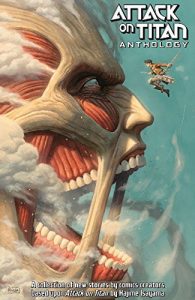
There are just two days left to download Kodansha Comics’ Humble Bundle, which includes the first three volumes of Attack on Titan, the first two volumes of Ajin: Demi-Human and Inuyashiki, and the first volumes of The Seven Deadly Sins, Parasyte, and Space Brothers. Proceeds benefit The Comic Book Legal Defense Fund. [Crunchyroll]

Should vendors and guests of Anime Expo be subject to background checks? The Society for the Promotion of Japanese Animation (SJPA) is considering such a policy; Christopher MacDonald, however, worries that this initiative may backfire. [Anime News Network]

In case you missed it: Ryan Holmberg posts a new installment of What Was Alternative Manga?, focusing on the work of Nakashima Kiyoshi. [The Comics Journal]

What’s arriving in your local bookstore this week? The Manga Bookshelf gang investigates. [Manga Bookshelf]

Despite the backlash against DreamWorks’ Ghost in the Shell film, Hollywood seems bullish on manga and anime properties. Among the projects currently in the pipeline are Death Note (courtesy of Netflix) and AKIRA (courtesy of Warner Brothers). [The Hollywood Reporter]

News from Japan: Of the Red, the Light, and the Ayakashi will finish its run in Monthly Comic Gene on June 15th… This dedicated cosplayer trekked to Mongolia to recreate scenes from Kaoru Mori’s A Bride’s Story… Which Shonen Jump character is sexiest? Japanese readers recently voted, expressing a strong preference for villains… Yotsuba&! creator Kiyohiko Azuma will share the Tezuka Cultural Prize with Kei Ichinoseki, author of Hanagami Sharaku.

Reviews: Over at The Comics Journal, Robert Kirby reviews the provocatively titled What Is Obscenity? The Story of a Good-for-Nothing Artist and Her Pussy. Closer to home, Michelle Smith and Sean Gaffney offer a fresh batch of Bookshelf Briefs that include the latest installments of Barakamon, Maid-Sama!!, and What Did You Eat Yesterday?

Johanna Draper Carlson on vol. 1 of Anne Happy: Unhappy Go Lucky! (Comics Worth Reading)
Johanna Draper Carlson on vol. 4 of Emma (Comics Worth Reading)
Erica Friedman on vols. 1-2 of Futaribeya (Okazu)
Incendiary Lemon on The Gods Lie (Anime UK News)
Terry Hong on Guardians of the Louvre (Book Dragon)
Lori Henderson on The Infernal Devices Trilogy (Manga Xanadu)
Ian Wolf on vols. 1-2 of Maga-Tsuki (Anime UK News)
Sheena McNeil on vol. 1 of Midnight Stranger (Sequential Tart)
Megan R. on Mr. Flower Groom (The Manga Test Drive)
SKJAM! on vol. 1 of Mysterious Girlfriend X (SKJAM! Reviews)
Sean Gaffney on vol. 78 of One Piece (A Case Suitable for Treatment)
Rebecca Silverman on vol. 1 of The Other Side of Secret (Anime News Network)
Mariko S. on vol. 2 of Otome no Teikoku (Okazu)
Megan R. on Passion (The Manga Test Drive)
Ken H. on vol. 1 of Princess Jellyfish (Sequential Ink)
Johanna Draper Carlson on vol. 1 of Servant x Service (Comics Worth Reading)
Laura on vol. 1 of Shuriken and Pleats (Heart of Manga)
Megan R. on Three Wolves Mountain (The Manga Test Drive)
Johanna Draper Carlson on vol. 10 of What Did You Eat Yesterday? (Comics Worth Reading)
Terry Hong on vol. 10 of What Did You Eat Yesterday? (Book Dragon)
Ash Brown on What Is Obscenity? The Story of a Good-for-Nothing Artist and Her Pussy (Experiments in Manga)
Matt on vol. 2 of Yowamushi Pedal (Ani-TAY)
Sean Gaffney on vol. 2 of Yowamushi Pedal (A Case Suitable for Treatment)

Filed Under: MANGABLOG

The Man in the High Castle

May 13, 2016 by Ash Brown

The Man in the High CastleAuthor: Philip K. Dick
Publisher: Houghton Mifflin Harcourt
ISBN: 9780544916081
Released: October 2016
Original release: 1962
Awards: Hugo Award

Philip K. Dick’s The Man in the High Castle is one of those classic science fiction novels that I’ve been meaning to read for ages but for one reason or another never quite got around to. Recently, though, the novel seems to be popping up wherever I turn: Viz Media’s speculative fiction imprint Haikasoru takes its name from the title; it was mentioned multiple times in the tenth volume of Mechademia which I read not too long ago; and in 2015 it was adapted as a live-action television series. Originally published in 1962, The Man in the High Castle can be counted as among the first major works of fiction written in English to examine an alternate history in which Germany and Japan emerged victorious from the Second World War, a historical turning point which has since become one of the most popular for the subgenre to explore. Winning the Hugo Award for best novel in 1963, The Man in the High Castle is also regarded as one of Dick’s most well-known and highly-acclaimed works. The novel has been re-published around the world numerous times with the most recent US edition scheduled to be released in 2016 by Houghton Mifflin Harcourt.

After being defeated, the United States of America was divided into three political entities at the end of World War II. The Pacific States of America is overseen by Japan and the Eastern United States is occupied by Germany while the central third of the country, the Rocky Mountain States, remains an independent buffer zone. Less than two decades have passed since the end of the war. Nazi Germany, having become a major power, continues to dominate and conquer the rest of the world and has even extended its reach to space. However, internal power struggles threaten to throw the precariously-balanced international political landscape into war and turmoil once again. In the meantime, Americans have had to either learn to adapt to their occupiers’ whims or to flee their homeland. The Japanese rule is fairly benign, especially when compared to that of the Germans, but it is still grating and demeaning for the Americans who are slowly losing their national identity along with the freedoms and respect that they once enjoyed in the past.

The alternate history that Dick envisions in The Man in the High Castle is honestly terrifying and horrifying. Under the global influence of a fascist, totalitarian regime, extreme racism and prejudice is rampant and genocide isn’t a thing of the past but of the present and future. People live in a world in which insidious fear, hatred, anger, and uncertainty have come to dominate. The Man in the High Castle follows several different and fairly ordinary characters from a variety of backgrounds who are all ultimately connected to one another, either directly or tangentially: an antiques dealer making his living selling Americana to Japanese clients, an American craftsman and jewelry maker who must hide his Jewish identity and heritage, a Japanese trade official stationed in what was once California, an American woman who teaches judo in the Rocky Mountain States, and a Nazi defector trying to prevent impending atrocities from becoming a reality. By the end of the novel, both together and separately, they have all taken a stand against the status quo and have made a difference, however small, in the world around them.

In addition to being a work of alternate history itself, there is a novel within The Man in the High Castle—The Grasshopper Lies Heavy—which explores yet another potential reality. That novel plays a pivotal role as does the Chinese classic the I Ching which many of the characters consult as an oracle or use to make major decisions and which Dick himself used to guide the story and plot of The Man in the High Castle. The writing style of The Man in the High Castle did take some time for me to get used to. Much of the novel consists of the characters’ internal monologues and thought processes, resulting in a work that frequently feels like fragmented stream-of-consciousness. Parts of the novel are also written in deliberately stilted English which, while clever and effective (and while I can understand and appreciate Dick’s intentions), doesn’t necessarily always make for the most pleasant reading experience. However, the underlying ideas and themes behind The Man in the High Castle are tremendous. Ultimately, The Man in the High Castle is a fascinating and chilling read, and a novel that is remarkably relevant and thought-provoking even today.

Filed Under: REVIEWS Tagged With: Hugo Award, Novels, Philip K. Dick

Bookshelf Overload: April 2016

May 11, 2016 by Ash Brown

April was a fairly reasonable month when it came to the number of manga and other books that I acquired, but by far my biggest acquisition was a house! It took nearly six months and a lot of stress to get everything to align properly, but I was finally able to close on the house that my family and I have had our eyes on since the the beginning of the process. We aren’t moved in yet, though we hope to be by the end of May. One of the (many) reasons that I’m especially excited about the new place is that it’s large enough that I’ll be able to devote an entire room to books. Now I’ll finally have a place to properly house my absurdly large library.

Anyway! Back to April’s manga. I happened across a bunch of Kaze Hikaru volumes for only a dollar each at my local comic book store, which made me very happy. As for preorders, there were several April releases that I was particularly happy to see, including Kaori Ozaki’s The Gods Lie (I loved Ozaki’s series Immortal Rain/Meteor Methuselah, so am glad to have the opportunity to read more of her manga) and the newly revised and expanded edition of The Passion of Gengoroh Tagame (I reviewed the original collection back when it was first released). However, what I think is probably one of the most notable and most important manga from April is Rokudenashiko’s What is Obscenity? I believe the official release date was technically in May and my copy simply arrived early, but that certainly didn’t stop me from reading and reviewing it.

Manga!
The Ancient Magus’ Bride, Volume 4 by Kore Yamazaki
I Am a Hero, Omnibus 1 by Kengo Hanazawa
The Gods Lie by Kaori Ozaki
Guardians of the Louvre by Jiro Taniguchi
Kaze Hikaru, Volumes 12-13, 15-18 by Taeko Watanabe
Library Wars: Love & War, Volume 15 by Kiiro Yumi
Midnight Stranger, Volume 1 by Bohra Naono
Of the Red, the Light, and the Ayakashi, Volume 2 by Nanao
The Passion of Gengoroh Tagame by Gengoroh Tagame
What is Obscenity?: The Story of a Good For Nothing Artist and Her Pussy by Rokudenashiko
Yowamushi Pedal, Omnibus 2 by Wataru Watanabe

Comics!
Broken Frontier edited by Frederik Hautain and Tyler Chin-Tanner
The Nameless City by Faith Erin Hicks
Two Keys, Volume 1 by Chloe Chan and Aliena Shoemaker
Vertoscope edited by Nechama Frier and Ten Van Winkle

Artbooks!
Bearutus by Cauro Hige
Blanc et Noir by Takeshi Obata
Living with Yuko Shimizu by Yuko Shimizu

Anthologies!
In Light of Shadows: More Gothic Tales by Kyōka Izumi

Nonfiction!
Straight from the Heart: Gender, Intimacy, and the Cultural Production of Shōjo Manga by Jennifer Prough

Filed Under: Bookshelf Overload, UNSHELVED

Manga the Week of 5/18

May 11, 2016 by Sean Gaffney, Ash Brown, Michelle Smith and MJ Leave a Comment

SEAN: Third weeks of the month tend to be grab bag weeks, and this is no exception, but as with most grab bags, there’s always something in there that’s of interest.

bloodcspinoff1

For those who were eagerly awaiting the new volume of Blood C, I got nothing. But we do have a spinoff from that series, titled Demonic Moonlight, coming from Dark Horse.

ASH: Huh, I think I missed this particular license being announced. Granted, I’ve not read Blood C, either.

SEAN: Cage of Eden has slowed down its release schedule, but it’s still going, and has reached its 20th volume from Kodansha.

And Devil Survivor is more than halfway over with its 5th volume.

Kodansha also has a 2nd volume of haremnesia series Forget Me Not.

MICHELLE: *snerk*

SEAN: And a 14th Noragami, which I believe still has one or two fans.

ASH: It does and I’ve been enjoying it, too, though I’m terribly behind.

SEAN: One Peace has the 3rd volume of the manga adaptation of Rise of the Shield Hero.

Seven Seas has a trio of releases. Devils and Realist is up to Volume 9, and still features very handsome demons.

ASH: Yet another series I’ve fallen behind on, but the artwork and demons are very pretty.

SEAN: If you love Monster Musume, you’ll be delighted at the new spinoff, I Heart Monster Girls.

And there’s a 2nd volume of dark Pokehorror series Tomodachi x Monster.

cigarette

A late entry that came out this week. Blame Amazon not actually classifying it as manga. Top Shelf has a collection of stories by Masahiko Matsumoto, famous gekiga and alternative manga artist. It’s called Cigarette Girl and looks absolutely fantastic. A must for fans of manga history.

MJ: Oh! Yes! Something I actually care about! Glad to see this on the list!

ASH: It’s literally been years since this manga was first announced; I’m thrilled it’s finally coming out!

Vertical debuts To The Abandoned Sacred Beasts, another in what is proving to be a lucrative line of ‘dark fantasy’ series.

ASH: Dark fantasy? I am intrigued.

SEAN: And Terra Formars from Viz has now hit a dozen volumes.

Lastly, we see a 4th Ultraman. A reminder that it’s a sequel to the beloved original TV show.

Are you grabbing something from this grab bag of manga?

Filed Under: FEATURES, manga the week of

Bookshelf Briefs 5/10/16

May 10, 2016 by Sean Gaffney and Michelle Smith Leave a Comment

barakamon10Barakamon, Vol. 10 | By Satsuki Yoshino | Yen Press – This is without a doubt the best volume of Barakamon to date, coming full circle to show off what began the title: Handa’s troubled relationship with his father, and his inability to stop overthinking his calligraphy. He can’t avoid the topic this time, though, as his parents are in town to visit, and we begin to see that Handa’s father is not the heartless strict man that previous chapters may have made him out to be. It all culminates in a father/son battle at Naru’s school, showing off how good his father REALLY is, but also that when Handa isn’t trying, he can have moments of genius that make his father realize that he has a true rival on his hands. A brilliant volume, and I didn’t even get to Kirie, a trans character who’s very well-handled. – Sean Gaffney

horimiya3Horimiya, Vol. 3 | By Hero and Daisuke Hagiwara | Yen Press – Being best friends can be very comforting, whereas being in love can be terrifying. So it’s no surprise that much of this third volume of Horimiya sees Hori and Miyamura desperately trying to avoid their relationship changing, even if it means simply sticking their fingers in their ears and going la la la. In the meantime, we meet a couple of new cast members, one of whom seems to have a thing for Ishikawa, in case you wondered if we weren’t going to have more love triangles. It’s all relaxed and heartwarming rather than angsty or wacky, though, and so it just feels good to read. I especially liked the simple presence that Miyamura gives Hori when she’s sick, possibly the sweetest moment in a sweet volume. – Sean Gaffney

maid7-8Maid-sama!, Vols. 7-8 | By Hiro Fujiwara | Viz Media – This was better than the previous volume, I will grant you. Admittedly, I found both side-stories fairly tedious, even if it gave us a chance to see Misaki as a delinquent. Misaki still spends most of the volume flushing in embarrassment, but is beginning to admit her feelings, even if it’s like pulling teeth. Usui’s perfection may be put to the test soon, as we see his jealousy and longing observing the wacky-yet-loving antics of Misaki’s family. (We also meet her younger sister, one of my favorite characters.) And we get set up for what I suspect will be the next major plot arc, the student council elections. Will Misaki get re-elected, or will the guys manage to get their Dark Horse in? Also, we’re now caught up with Tokyopop. – Sean Gaffney

Maid-sama!, Vols. 7-8 | By Hiro Fujiawara | VIZ Media – As I’ve been rereading Maid-sama! in VIZ’s new editions, I’ve had cause to wonder why I’d been so eager for a license rescue of this series. Now, at last, I remember. After several volumes of harassment, bickering, and episodic filler, Misaki and Usui are finally honest with each other about their feelings. Although I could argue that the smooch they share to the accompaniment of fireworks is somewhat cliché, this welcome development still makes me interested to find out how much the series might improve going forward. I do hope, however, that we’re not expected to take dull-as-dishwater Hinata seriously as a romantic rival, though I do sadistically enjoy it when Usui torments him. Aoi can also feel free to fall off the face of the Earth. – Michelle Smith

missions12Missions of Love, Vol. 12 | By Ema Toyama | Kodansha Comics – Well, there was no way that Hisame was going to be able to keep up being irredeemably evil for the rest of the series, particularly given that the rest of the cast aren’t exactly wonderful people. And so over the course of this volume it becomes apparently that he’s really just a petulant child who enjoys breaking his toys and hates it when they’re taken away from him. Mami is his old favorite, and the idea that she might actually be falling for Akira infuriates him. And his new toy, Yukina, is having trouble coping herself, especially with Shigure MIA for most of the book. Her novel is being affected by the fact that true love is not running at all smoothly. Still 100% trash, and 100% addictive. – Sean Gaffney

nichijou2Nichijou, Vol. 2 | By Keiichi Arawi | Vertical Comics – The ensemble is an important part of Nichijou, and we get to see more of them here, including Nakanojou’s non-mohawk personality traits, the amusing (and possibly romantic) antics of the Go/Soccer Club, and Misato becoming such a tsundere that aliens literally suck her up into the sky out of embarrassment. At its heart, though, the series knows that it stars Yuuko, whose puns are too lame to react to, whose tsukkomi reactions are simply unstoppable (though at least in the end she manages to get Mai to show something other than her poker face), and whose daydreams involve time cubes destroying the world (possibly as they have more or less than four). Nichijou remains strange and wonderful. – Sean Gaffney

wdyey10What Did You Eat Yesterday?, Vol. 10 | By Fumi Yoshinaga | Vertical, Inc. – I just want to sigh contentedly after finishing a volume of this much-beloved series. Not only does so much of the food look delicious—things that made me salivate this volume include croquettes and pancakes!—but I genuinely adore Shiro and Kenji, and find myself identifying with them a lot, especially in relation to their aging woes. Parents having surgery, middle-aged partners who lament the loss of their youthful physique… definitely some universal rites of passage. No, there’s no big drama here, unless you count a new hairstyle for one of the protagonists or future career prospects for Shiro, but it’s so all so comforting and lovely that I am not complaining one little bit. My love for What Did You Eat Yesterday? knows no bounds! – Michelle Smith

Filed Under: Bookshelf Briefs

One Piece, Vol. 78

May 10, 2016 by Sean Gaffney

By Eiichiro Oda. Released in Japan by Shueisha, serialization ongoing in the magazine Weekly Shonen Jump. Released in North America by Viz.

My last review of One Piece was, for me, quite negative, as I was getting very weary of Dressrosa. That hasn’t changed one bit with this new volume, unfortunately, and we’re still here. I am going to make a concerted effort not to bring up Rebecca, despite my teeth grinding so much during the “you are a pretty princess who must not fight” scenes I may need to see the dentist. Instead, let’s be positive and focus on the fun things going on in this arc. And there are fun things, because even when Oda is getting more sexist by the volume and rehashing things we’ve seen before, he can still introduce crazy stuff that makes you grin, or even show us a kid wearing a Bartholomew Kuma T-shirt.

onepiece78

The cover, showing off the Straw Hats (+ Law), reminds us that the main cast may have gotten a bit too unwieldy, given that Oda now has to write out half the Straw Hats in order to not overburden an already overburdened arc. That said, it does allow those who are remaining to have moments to shine. Zoro has done “beyond the impossible” so many times that you’d think it would be old hat by now, but no, it’s always fun, mostly as every time you’re reminded what a complete lunatic he can be when he’s in battle mode. If the enemy needs to be stopped but is much too far away, just have yourself hurled at the enemy. If he shapeshifts too fast to kill his real body, just cut everything so fast he doesn’t have time to get away. And oh yes, use haki to make sure your swords won’t even get scratched. When Zoro isn’t sleeping or getting lost, he’s there to be super cool, and he achieves that here.

Then there’s Luffy, who gets to battle the real Doflamingo at long last, in what is hopefully the climax of this arc. The timeskip has helped to mature Luffy, even if (like the rest of the cast) he can backslide at any time for comedy reasons. True, his reasoning for going all out against Doflamingo is still somewhat simplistic – you made my friends cry, you made my friends mad. But honestly, that’s a good enough reason to begin with, and if anyone deserves to be punched into next week, it’s Doflamingo, who sets up one last deathtrap to kill everyone on the island for the lulz. Flashbacks show that if you tell a young boy filled with rage and fury that he is better than everyone else and give him whatever he wants, bad things will ensue. Luffy is the opposite of this, even though he is also filled with rage and fury here. Abuse of power is the main enemy in One Piece, be it pirates, marines, World Government, or what have you. If you do it, Luffy is here to kick your ass.

So there are many things to like here, but again, I will be very, very glad to see the back of this arc. I believe that in the next volume I finally achieve this.

Filed Under: REVIEWS

Pick of the Week: Some Hail the King

May 9, 2016 by Michelle Smith, Sean Gaffney, Anna N, Ash Brown and MJ 1 Comment

requiem4SEAN: It’s a small week, but there’s a few items of interest here, definitely. That said, in terms of the title I’m most intrigued by, it has to be What Is Obscenity?, which I plan on picking up at TCAF, despite the inherent dangers of testing Canadian customs. And then probably reading it while listening to “The Power Of Pussy” by Bongwater.

ASH: An excellent choice, Sean! And, despite the most recent volumes in some of my favorite series like Requiem of the Rose King being released this week, What Is Obscenity? is my pick, too. I actually just reviewed the wonderfully remarkable, playful, and subversive comic memoir and highly recommend it.

MICHELLE: I will buck the trend and award my pick to volume ten of Fumi Yoshinaga’s always wonderful What Did You Eat Yesterday?. It’s been ten months since volume nine was released, but the wait is finally over! Happily, there’s only a six-month wait for volume eleven. Still long, but bearable.

ANNA: I’m most interested in the latest volume of Requiem of the Rose King. The combination of history and drama with Aya Kanno’s masterful art is hard to resist.

MJ: I’ve been incredibly torn this week, with a new volume of my beloved What Did You Eat Yesterday? and a number of other interesting prospects on the way. In the end, though, I guess I’m with Anna here. My personal obsession with Requiem of the Rose King in all its strangeness and beauty has me firmly in its thrall. There’s no other way for me this week.

Filed Under: PICK OF THE WEEK

My Week in Manga: May 2-May 8, 2016

May 9, 2016 by Ash Brown

My News and Reviews

Last week at Experiments in Manga I announced the winner of the superhero duo manga giveaway. As usual, the post also includes a list of manga, in this particular case a list of manga featuring superheros of one ilk or another. Last week I also posted my review of Rokudenashiko’s comic memoir What Is Obscenity?: The Story of a Good for Nothing Artist in Her Pussy which is a wonderfully engaging and important work. Rokudenashiko is one of the featured guests at the Toronto Comic Arts festival which is this upcoming weekend; I greatly admire her and her work, so I’m looking forward to having the opportunity to meet her in person.

Elsewhere online: Rokudenashiko was recently interviewed in preparation for her trip to Toronto. Massive Goods hints at an upcoming announcement regarding an English-language release of Gengoroh Tagame’s award-winning My Brother’s Husband, which I am super-excited about. And Ryan Holmberg wrote a about Katsumata Susumu’s Anti-Nuclear Manga for the Sainsbury Institute and, at the other end of the spectrum, about the Nuclear Literati: Nakashima Kiyoshi’s Furusato Goes to Hell for The Comics Journal.

Quick Takes

I Am a Hero, Omnibus 1I Am a Hero, Omnibus 1 (equivalent to Volumes 1-2) by Kengo Hanazawa. By this point I’m fairly burned-out when it comes to zombies, but I had heard so many good things about the award-winning I Am a Hero that I had to give it a try. And, I must admit, the manga is one of the most interesting and best examples of the genre that I’ve come across in quite some time. For me what makes I Am a Hero stand out is the lead character, Hideo. After making his debut as a professional mangaka, he’s back to being an assistant when his career failed to take off. He has the tendency to talk to himself, hear voices, and hallucinate, so everything that he experiences has to be questioned. The zombie apocalypse doesn’t really come until the second half of the first I Am a Hero omnibus. Until that happens, most of the hints and clues of the impending disaster can be easily dismissed as part of Hideo’s delusions. When the apocalypse finally does happen the series suddenly becomes horrifyingly brutal and grotesque as the world descends into chaos. Hideo remains surprisingly calm in the face of it all, partially because he initially assumes that the end of the world is just another one of his hallucinations. By the end of the first omnibus there’s already an extraordinarily high body count (most the named characters are done for and even Hideo isn’t completely unscathed), so I am very curious to see where the series goes from here.

Maga-Tsuki, Volume 1Maga-Tsuki, Volume 1 by Hoshino Taguchi. Apparently the initial inspiration behind Maga-Tsuki was originally going to be worked into a shōnen battle manga, but in the end it turned into a harem-ish romantic comedy. Personally, in this case I probably would have been more interested in the action-oriented series, but Maga-Tsuki does offer some variations on the usual tropes that are amusing. It is, however, very trope-heavy and contains the expected levels of fanservice for this type of story. When he accidentally breaks the sacred mirror protected by his family’s shrine, Yasuke finds himself cursed by the goddess sealed within it. In order to lift the curse he must make Orihime, a goddess of calamity and misfortune, happy, which proves to be something of a challenge. In the meantime, his soul has been separated from his body and he must maintain constant physical contact with Orihime or else he will die. A kiss from Orihime will conveniently revive him, though. This obviously results in all sorts of complications and misunderstandings, especially when it comes to trying to confess his feelings to the girl that he likes. I like that Maga-Tsuki makes use of Japanese mythology, otherwise I’m not sure that it would have managed to hold my attention. However, I do have a hard time seeing the sweetly cute and seemingly innocent Orihime as an ancient, all-knowing goddess even if her divine powers are suitably impressive.

The Nameless CityThe Nameless City, Volume 1 by Faith Erin Hicks with colors by Jordie Bellaire. In general I tend to be fond of Hicks’ work, but I’ve been especially anticipating the debut of The Nameless City trilogy having followed its development and progress online. The titular Nameless City is a city that has been conquered and re-conquered countless times. Situated in a geographically advantageous location which allows the ruling kingdom immense control over the area’s economics and trade it makes a sought-after target. The city is currently under the domain of the Dao and has been for a few decades, but it’s likely only a matter of time before there’s another invasion or the residents rise up in revolt. Inspired in part by Chinese history, The Nameless City is about an unlikely friendship that develops over the backdrop of warfare, clashing cultures, and political intrigue. Kaidu is one of the Dao, sent to the Nameless City to participate in military education and training (though he’d much rather be reading than fighting), while Rat is one of the city’s many orphans whose parents were killed by the Dao. As Kaidu gets to know Rat he gets to know the city, and he learns more about his own people in the process, too. As for Rat, she initially hates Kaidu simply because he is Dao, but that slowly changes as she realizes that not all Dao are the same. I’m really enjoying seeing their relationship develop and look forward to the next volume, The Stone Heart, a great deal.

Filed Under: FEATURES, My Week in Manga Tagged With: comics, Faith Erin Hicks, Hoshino Taguchi, I Am a Hero, Kengo Hanazawa, Maga-tsuki, manga, Nameless City

Yowamushi Pedal, Vol. 2

May 8, 2016 by Sean Gaffney

By Wataru Watanabe. Released in Japan in two separate volumes by Akita Shoten, serialization ongoing in the magazine Weekly Shonen Champion. Released in North America by Yen Press.

The last volume promised we’d see a race, but I don’t know if readers were prepared for the race to take up the entire omnibus, which is to say two volumes of the original Japanese release. Given that it’s meant to be an endurance test to weed out those who aren’t ready for the big time, it makes sense. And, of course, it ends up showing off the character development of our three leads – Onoda discovers the joy of competition, particularly when he gets a real bike; Naruko realizes that he is not in fact top dog here; and Imaizumi finds a desire to win that had been absent in him for some time. In other words, this still manages to embody all the archetypes of sports manga in one handy volume.

yowamushi2

Onoda is still the star, and we see him coming to terms with the fact that he can’t make it on pure guts alone – though god knows he tries, particularly when he gets his racing bike. There’s a lovely bit where he sees the car of team captains behind him (they’re there to pick up those too far behind and say they’ve lost) and despairs, but no, they’re here to give him his racing bike, which got stuck in traffic before the event. The team captains (and Kanzaki, who continues to boggle at Onoda’s raw potential, though this being a sports title, and an Akita Shoten one at that, I expect boggling is all she will do) also get to play Greek chorus along the way, explaining why *this* is the exact point that Onoda will finally run out of steam, only to be proven wrong time and time again.

Of course, he eventually does collapse – your male sports lead does not end up winning against the veterans in the early volumes. The course is designed to kill anyone who doesn’t plan on being a “cycling uber alles” sort, which means most of it is a giant hill. Onoda wins the race to the top of the hill, but that’s all he has in him. As for Imaizumi, there’s some lovely characterization here as he unconsciously finds himself riding as he did when he was a child (something noticed by Kanzaki, who was a childhood friend of his), and also overexerting himself despite knowing it’s not the right thing to do in order to efficiently win the race. Stoic types in manga are always at their most interesting when they go up against something that threatens their facade. It doesn’t necessarily have to make them emotional, but it’s good to see.

So now that Onoda has made a name for himself, to the point where even Kanzaki’s non-cycling BFF says that he seems to have more presence than before, what’s next? My guess is more cycling, and probably an intense training regimen. Are we too early for an inter-high meet? What does the author plan to do with the eccentric yet clearly intelligent and wily coach we’re introduced to? I definitely plan on finding out next time.

Filed Under: REVIEWS

What Is Obscenity?: The Story of a Good for Nothing Artist and Her Pussy

May 6, 2016 by Ash Brown

What Is Obscenity?Creator: Rokudenashiko
U.S. publisher: Koyama Press
ISBN: 9781927668313
Released: May 2016
Original release: 2015

Like many other people both inside and outside of Japan, the work of artist and activist Rokudenashiko (the pseudonym of Megumi Igarashi) was brought to my attention following her arrests in 2014 on charges of obscenity. Rokudenashiko is a self-described manko (pussy) artist, challenging preconceived notions and taboos surrounding female genitalia by creating clever, fun, and silly sculptures incorporating realistic molds of vulvas as well as designing Manko-chan, a cute anthropomorphized pussy. One of Rokudenashiko’s responses to being arrested was to create the manga What Is Obscenity? about her experience. It was originally serialized in the Japanese political magazine Weekly Friday in 2014 before being collected in a single volume along with other material in 2015. The English-language edition of Rokudenashiko’s comic memoir, subtitled The Story of a Good for Nothing Artist and Her Pussy, was published by Koyama Press in 2016 thanks in part to the editing, translation, and production efforts of the fine folks behind Massive Goods.

In 2013, Rokudenashiko successfully crowdfunded a project to create a kayak molded from a 3D scan of her genitals. One of the rewards given to some contributors of the campaign was a downloadable vector file of the scan which she encouraged others to use to make their own artwork. In July 2014, this file along with her artwork and other personal belongings were used as evidence to support the obscenity charges that were brought against her. Rokudenashiko was arrested and jailed for a week before being released only to be arrested and indicted again in December of that year. She continues to fight the charges in court and her trial process is currently ongoing, although a judgement on her case is scheduled to be pronounced on May 9, 2016.

What Is Obscenity? collects two short series of autobiographical manga—”What Is Obscenity? How I Became a So-Called Artist” about Rokudenashiko’s first arrest, her time spent in jail, and the immediate aftermath and “Why I Became a Manko Artist” which relates the story of how she almost unintentionally became an activist and started creating pussy-related artwork. Adorable illustrations of Manko-chan are found throughout the volume and “This Is My Story,” a short full-color manga about Manko-chan, is featured as well. The English-language edition of What Is Obscenity also includes additional material such as an introduction by Rokudenashiko, examples of her sculptures and artwork, color photography, cultural notes, and an excerpt of a discussion between Rokudenashiko and the controversial film direction Sion Sono.

What Is Obscenity?, page 11Freedom of expression, and especially freedom from governmental censorship, is something that I am very passionate about. One of my particular focuses in the various copyright and intellectual property law courses I took in graduate school actually happened to be obscenity law which, as in the case of Rokudenashiko, can be used to attempt to silence and punish artists and other creatives as criminals and which are notoriously inconsistent in their application. But Rokudenashiko isn’t allowing herself to be silenced. Her arrest and trial, as well as her willingness to publicly fight the obscenity charges, made not only national but international news. This has given her a larger platform that has allowed her to bring even greater attention to the absurdity of the systemic injustice of a society that objectifies the bodies of women while at the same time treating them as something shameful and obscene. I greatly and sincerely admire her work and efforts; what Rokudenashiko is doing is incredibly important both artistically and socially.

One of the things that makes Rokudenashiko so remarkable is that even in the face of infuriating and intimidating circumstances she is able to retain an outwardly upbeat, bright, and strikingly personable attitude which is then reflected in her work. Even while dealing with some fairly serious issues, What Is Obscenity? is sweet and charming with a wonderful sense of humor and art to match. As with much of Rokudenashiko’s work, What Is Obscenity? can be silly and fun, though many of the events portrayed were probably not nearly as funny while she was actually living through them. Her experiences, everything from the utter lows of personal and family troubles and the jail time caused by her artwork to the immense joy sparked by the unflagging support of her friends and fans, are recounted with a cheeky candidness that makes her story and the subject matter approachable and entertaining while still getting her message across. With its gentle humor and creative cuteness, What Is Obscenity? and the rest of Rokudenashiko’s work is subversively powerful, inspiring, and empowering.

Filed Under: REVIEWS Tagged With: Koyama Press, manga, Rokudenashiko

  • « Go to Previous Page
  • Page 1
  • Interim pages omitted …
  • Page 494
  • Page 495
  • Page 496
  • Page 497
  • Page 498
  • Interim pages omitted …
  • Page 1054
  • Go to Next Page »
 | Log in
Copyright © 2010 Manga Bookshelf | Powered by WordPress & the Genesis Framework