• Skip to primary navigation
  • Skip to main content
  • Skip to primary sidebar
  • Home
  • About Us
    • Privacy Policy
    • Comment Policy
    • Disclosures & Disclaimers
  • Resources
    • Links, Essays & Articles
    • Fandomology!
    • CLAMP Directory
    • BlogRoll
  • Features & Columns
    • 3 Things Thursday
    • Adventures in the Key of Shoujo
    • Bit & Blips (game reviews)
    • BL BOOKRACK
    • Bookshelf Briefs
    • Bringing the Drama
    • Comic Conversion
    • Fanservice Friday
    • Going Digital
    • It Came From the Sinosphere
    • License This!
    • Magazine no Mori
    • My Week in Manga
    • OFF THE SHELF
    • Not By Manga Alone
    • PICK OF THE WEEK
    • Subtitles & Sensibility
    • Weekly Shonen Jump Recaps
  • Manga Moveable Feast
    • MMF Full Archive
    • Yun Kouga
    • CLAMP
    • Shojo Beat
    • Osamu Tezuka
    • Sailor Moon
    • Fruits Basket
    • Takehiko Inoue
    • Wild Adapter
    • One Piece
    • After School Nightmare
    • Karakuri Odette
    • Paradise Kiss
    • The Color Trilogy
    • To Terra…
    • Sexy Voice & Robo
  • Browse by Author
    • Sean Gaffney
    • Anna Neatrour
    • Michelle Smith
    • Katherine Dacey
    • MJ
    • Brigid Alverson
    • Travis Anderson
    • Phillip Anthony
    • Derek Bown
    • Jaci Dahlvang
    • Angela Eastman
    • Erica Friedman
    • Sara K.
    • Megan Purdy
    • Emily Snodgrass
    • Nancy Thistlethwaite
    • Eva Volin
    • David Welsh
  • MB Blogs
    • A Case Suitable For Treatment
    • Experiments in Manga
    • MangaBlog
    • The Manga Critic
    • Manga Report
    • Soliloquy in Blue
    • Manga Curmudgeon (archive)

Manga Bookshelf

Discussion, Resources, Roundtables, & Reviews

Blog

Bookshelf Briefs 8/22/16

August 22, 2016 by Sean Gaffney and Michelle Smith Leave a Comment

assclass11Assassination Classroom, Vol. 11 | By Yusei Matsui | Viz Media – This is a volume I’d been expecting for some time, and it’s a story that needed to be told. When you take a group of bullied, persecuted students, given them amazing skills and actual teaching and care, and then watch them succeed beyond their wildest dreams, you’re going to have something like this happen. Our heroes are getting too self-satisfied and too cocky. And so, naturally, they make a mistake, which is bad enough, and then try to weasel out of it, which is much worse. Koro-sensei’s punishment was much needed, and of course it also reassures us that they’re still good kids at heart. For a manga about a yellow blob in a classroom where everyone’s trying to kill the teacher, this is still top-drawer stuff. – Sean Gaffney

blackclover2Black Clover, Vol. 2 | By Yuki Tabata | Viz Media – This seems to be another one of those titles that I enjoy almost despite itself. It really is astounding how many other popular titles you can see it trying to emulate. I mentioned Fairy Tail last time, but there’s a lot of Naruto here as well, as well as The Seven Deadly Sins. But the big obvious one this time is Magi, which again fulfills the rule of being a title from another company that is now being given a Jump spin. Oh yes, and one of the bad guys, Lotus, reads like Shunsui from Bleach as well. But the kids are nice and likeable, the fights are fairly interesting, and there were one or two times I laughed. Black Clover is anti-original, but it’s not actively bad, and those who enjoy “a Jump manga” will enjoy it. – Sean Gaffney

haikyu2Haikyu!!, Vol. 2 | By Haruichi Furudate | Viz Media – As you’d expect, most of this volume deals with the first competition our heroes have, even if it’s just a practice match. This allows Hinata to deal with the hideous nerves he has due to finally being able to achieve his dream and worrying that he’ll screw it up. Kageyama’s response to this mid-game, by the way, is probably the funniest moment of the book. We also meet the stars of the other team, and a new player for Hinata’s team, whose amusing secret ends up being both a cliffhanger and a punchline. For the most part, though, this volume is about breaking down the volleyball game and why Kageyama and Hinata, when they’re finally in sync, are so dangerous together. It’s good shonen sports fun. – Sean Gaffney

itazura11Itazura Na Kiss, Vol. 11 | By Kaoru Tada | Published by DMP – It’s here, it’s here! A new installment of Itazura Na Kiss is so very welcome, it almost supersedes any irritation over Kotoko’s perpetual incompetence. As the volume begins, she and Naoki have been separated for a year while he interns at a hospital in Kobe. While her continued mistakes can be frustrating, they often lead to sweet scenes in which Naoki is remarkably patient and reassuring, so that’s a plus. I also really liked the scene in which he challenges her to assist him in an emergency surgery and, for the first time, they end up saving someone’s life together. Too, they also helped some other characters get together; Naoki advising Yuuki, who’s so like him and yet also his own person, about acknowledging his feelings for Konomi was another highlight. I don’t know how long it’ll be ’til the twelfth and final installment, but my enthusiasm has been rekindled. – Michelle Smith

magi19Magi: The Labyrinth of Magic, Vol. 19 | By Shinobu Ohtaka | Viz Media – I’ve talked before about the author’s constant need to undercut any awesome moment Alibaba has the potential to have with either abject defeat or an amusing gag. That happens here as well, but it seems to be part of a larger aspect of Magi: anyone, no matter how confident or powerful, is capable of failing miserably in the right circumstances. OK, maybe not Sinbad, but he’s not here right now, is he? (Nor is Morgiana, and I really want to see her soon.) But our heroes and villains fight on anyway, being driven by those who inspire them out of strength (Koha and Koen) or determination (Marga and Titus). That said, this is still a volume that’s mostly just fighting, which again means all I can say to sum it up is: huh, cool. – Sean Gaffney

myhero5My Hero Academia, Vol. 5 | By Kohei Horikoshi | Viz Media – Yeah, I was not about to see Uraraka win as I’d hoped, but she put on an impressive showing against Bakugo, even if the audience didn’t quite seem to notice and thought he was bullying her. (He noticed, trust me.) More surprising, though, was seeing Midoriya losing in the semis, as the stage was clearly set for him to battle Bakugo in the finals. But there’s a more important lesson to be delivered here, about expectations and parents and doing what you want to do with all you’ve got, and Todoroki needed to learn it—though he had trouble applying it to the final, much to Bakugo’s frustration. In any case, we have the tournament arc out of the way early, so I suspect we’ll see a few more villains next time. – Sean Gaffney

op79One Piece, Vol. 79 | By Eiichiro Oda | VIZ Media – Well, it’s not quite the end of the Dressrosa arc, but it’s close! Although Luffy’s “Gear Four” has dealt Doflamingo a blow, it’s not a state he can sustain, and he needs ten minutes before he can use it again. In the meantime, gladiators, citizens, and even the sympathetic Navy admiral Fujitora rally together to try to buy time by delaying the approach of Doflamingo’s razor-sharp birdcage. It’s pretty suspenseful, and we also get welcome flashbacks as to where Sabo’s been all this time, but my favorite part is how Luffy defeating Doflamingo (for, of course, he eventually does) earns him many new enemies, especially those who had yet to receive the shady products they had already paid for. The world is widening once again, but first, the Straw Hats must get off the island before the Navy nabs them. Stay tuned! – Michelle Smith

sily15Say “I Love You,” Vol. 15 | By Kanae Hazuki | Kodansha Comics – I was surprised when the last few volumes focused more on the secondary cast than our hero and heroine (who had finally gotten together), but that’s nothing compared to my surprise at the end of this volume, where everyone graduates from high school and yet the manga does not end. This is so unexpected that the author feels the need to address it in her notes, stating this was what she planned on. I’m not quite sure I buy that, but it will hopefully lead to more interesting places. Much of the volume is spent reminding us how far Mei has come since the start, and she seems to have grown up beautifully. Can her relationship be sustained after “happily ever after,” though? – Sean Gaffney

Say I Love You., Vol. 15 | By Kanae Hazuki | Kodansha Comics – All things considered, this is a pretty melancholy volume. The first few chapters focus on Ren, who finally confesses his feelings to Mei and then tries to convince himself that being rejected didn’t hurt. Kai and Megumi say some awful things to each other, though they eventually patch things up. And the gang graduates from high school, “splitting up to find new versions of ourselves,” with much wistfulness and a farewell tour for high school memories. The manga is continuing, which I think is good news, but I have absolutely no idea what it’s going to look like, or which characters we’re going to keep following. Have we seen the last of the Aoi siblings, for example? I guess I’ll have to wait until October to find out. – Michelle Smith

Filed Under: Bookshelf Briefs

Pick of the Week: Old Friends and Repeat Offenders

August 22, 2016 by Sean Gaffney, Michelle Smith and Ash Brown 1 Comment

itazura11SEAN: I admit, if it weren’t for Yen On not delaying two of their books this week, I might not have anything to pick at all. As it is, I’ll pick the 8th volume of A Certain Magical Index. Kuroko may drive me crazy with her “comedy lesbian” antics, but it’s still a great read for me.

MICHELLE: I don’t really read light novels much, so I *am* in the position of not having something to pick. So, instead I will pick Itazura Na Kiss volume eleven, which came out last week. Get yours from Akadot!

SEAN: And only from Akadot, it would seem. Grump.

ASH: As for me, I’ll be taking advantage of this slower week to try to catch up on The Heroic Legend of Arslan!

Filed Under: PICK OF THE WEEK

My Week in Manga: August 15-August 21, 2106

August 22, 2016 by Ash Brown

My News and Reviews

After a somewhat tumultuous year, last week marked the sixth anniversary of Experiments in Manga! Though at one point I was very stressed out about the fate and state of the blog, I’m now honestly looking forward to year seven, even if I’m not able to write as much anymore. Thank you to everyone who has read and supported Experiments in Manga in the past, present, and future!

Elsewhere online, Speculative Fiction in Translation interviewed Tyran Grillo, translator of Yusaku Kitano’s award-winning Mr. Turtle, the most recent offering from Kurodahan Press. And Barnes & Noble posted a list of 8 Great Japanese Books in Translation That Aren’t by Haruki Murakami. It’s a great list–I’ve only reviewed one of the novels included (Manazuru by Hiromi Kawakami), but I’m very fond of Keigo Higashino‘s work and several of the other books are very high on my to-be-read pile.

Quick Takes

Forget Me Not, Volume 3Forget Me Not, Volume 3 written by Mag Hsu and illustrated by Nao Emoto. I was taken a little by surprise by how much I enjoyed the first two volumes of Forget Me Not and so I was looking forward to reading the third volume as well. The series delves into the life and past loves of Serizawa, a young man who so far has been shown to have very little luck when it comes to romance. Some of his relationship woes can be credited to the fact that he’s still immature and inexperienced, but that’s starting to become less and less of an excuse for him now that he’s in college. Perhaps because of that, the third volume of Forget Me Not didn’t work quite as well for me as the previous volumes did. It is very clear that the relationships shown in the third volume are heading towards an absolute train wreck. Considering the beginning of the series it’s already a known fact that Serizawa ends up alone and full of regret, but it’s still painful to watch the whole mess unfold. I feel just as badly for the two young women involved as I do for Serizawa. They both like him and he likes them both; Serizawa just hasn’t been able to figure out exactly what that means yet. Apparently, he still has quite a bit of growing up left to do. Despite my frustration with the most recent volume of Forget Me Not, I am curious to see how this unfortunate past ties in with the mystery of Serizawa’s current situation.

Noragami: Stray God, Volume 15Noragami: Stray God, Volumes 15-16 by Adachitoka. Although the series’ quirky humor hasn’t completely disappeared, Noragami has become increasingly dark and dramatic over time. Adachitoka does still find appropriate moments within the series to insert a bit of levity, but for me what makes the manga compelling is its characters. The real heart of the much of the conflict in Noragami–the frequently unpredictable relationships between the various gods as well as the turbulent relationships between the gods and mortals–has once again been thrust to the forefront of the series with the manga’s most recent story arc. One thing that I found particularly interesting about these two volumes of Noragami is that Adachitoka introduces several deities of indigenous origins in addition to recognizing the existence of foreign gods. I’m not sure that they will necessarily have a large role to play in the series (then again, it seems as though they might), but this expansion is marvelous from a worldbuilding perspective, especially as Noragami is currently dealing heavily with the court and political intrigue of the Heavens. Along with that also comes a few tremendous fight sequences. Ocassionally some of the individual actions can be a little difficult to follow amidst the chaos of battle, but overall the scenes are effective and at times even impressive.

Ten Count, Volume 1Ten Count, Volume 1 by Rihito Takarai. Although the art style in Ten Count looked familiar to me, I actually didn’t make the connection at first–Takarai was the artist of the short boys’ love series Seven Days which I loved. Ten Count, however, is a very different manga than Seven Days. Even before it was licensed in English, I was aware of Ten Count. It’s a massively popular boys’ love manga, but the series also has a fair number of detractors and understandably so. Only one volume in and Ten Count is already a deliberately uncomfortable and troubling story with dark psychological elements, dubious ethics, and emotional manipulation. The manga follows Shirotani, a young man with a severe obsessive-compulsive disorder which has remained untreated since it first manifested. After a chance meeting Shirotani catches the attention of Kurose, a clinical psychotherapist who would seem to have some emotional issues of his own. Kurose takes a particular and decidedly unprofessional interest in Shirotani, offering to help Shirotani deal with his condition off-the-record and off-the-clock. Without realizing it, as Shirotani begins to be able to more easily function within society, he has also become more and more reliant on Kurose. Romantic it certainly is not, but at least for the moment I’m part of the group that finds Ten Count compelling and definitely plan on reading more.

Another: Episode S/0Another: Episode S/0, novel by Yukito Ayatsuji, manga by Hiro Kiyohara. While I was left feeling a little cheated by how some of the major reveals were handled in the horror-mystery novel Another, for the most part I did like the book. And so I was excited when Yen Press licensed both the not-exactly-sequel Another: Episode S (the main action of the novel takes place during the original Another but is only tangentially related) and the short prequel manga Another 0, releasing them together in a single, beautiful hardcover volume. (Out of all the North American manga publishers, Yen Press has had some of the best book designs of late.) Sadly, Episode S has many of the same narrative problems found in Another, namely important reveals that, while they make sense, seem a bit unfair to the readers. I actually really liked the plot twists themselves in Episode S, it’s just that their execution falls short; once again left feeling unsatisfied by the story’s developments. Tonally, Episode S is a little different from Another–while it’s still a ghost story of sorts and there are some marvelously disturbing scenes, the mystery is emphasized far more than the horror. The atmosphere of Another 0, written and illustrated by the creator who helmed the Another manga adaptation, is much closer that of Another. The prequel relies heavily on readers’ familiarity with the original while Episode S largely stands on its own.

Ultimate Conditioning for Martial ArtsUltimate Conditioning for Martial Arts by Loren Landow. From an athletic standpoint, I have found several of the books published by Human Kinetics to be useful resources in supplementing my study of traditional Okinawan karate. Ultimate Conditioning for Martial Arts, one of the publisher’s most recent titles, can technically apply to any martial artist, but the book does tend to be geared more towards athletes and competitors. Landow also assumes that readers already have basic knowledge of anatomy, physiology, and sports training methods. While perhaps not suitable for absolute beginners, Ultimate Conditioning for Martial Arts does provide a good starting point for established martial artists who want to begin incorporating speed, agility, and conditioning work into their training. In addition to providing suggested conditioning exercises and programs, Landow also incorporates an overview of relevant and closely-related topics such as the evaluation and establishment of fitness baselines, warmups and flexibility, rest and recovery, and nutrition. The book includes a generous number of helpful photographs to accompany the descriptions of the specific exercises, but the photographs selected aren’t always the ones that would be most illustrative or useful. Additionally, rather than explaining the particular functions and applications of the individual exercises, Landow tends to broadly generalize and categorize their benefits. This lack of specificity and guidance can make the creation of an individualized conditioning program challenging for someone who has never developed one before. Ultimate Conditioning for Martial Arts groups commonly practiced martial arts disciplines together as either striking and kicking arts or wrestling and grappling arts. Landow suggests specific conditioning exercises for each category but also emphasizes the benefits of using a blended approach when developing a training program. Mixed Martial Arts is the only discipline that’s addressed in-depth but Ultimate Conditioning for Martial Arts is still broadly applicable to other martial arts and a valuable resource, providing a fine overall introduction to conditioning and endurance training.

Filed Under: FEATURES, My Week in Manga Tagged With: Adachitoka, Another, Forget Me Not, Hiro Kiyohara, Loren Landow, Mag Hsu, manga, Nao Emoto, Nonfiction, Noragami, Novels, Rihito Takarai, Ten Count, Yukito Ayatsuji

Dorohedoro, Vol. 19

August 21, 2016 by Sean Gaffney

By Q Hayashida. Released in Japan by Shogakukan, serialization ongoing in the magazine Hibana. Released in North America by Viz. Translated by AltJapan Co., Ltd. (Hiroko Yoda + Matt Alt).

I’ve missed Caiman. Yes, there’s a question as to who the real Caiman actually is, but I don’t care, I’ve missed THIS Caiman, the big goofy guy with the lizard head. Nikaido clearly has as well, even though she’s a lot more wary about his appearance than I am, even losing her perpetual happy face for a bit as she tries to work out what happened. Admittedly, what happened it not exactly clear to the reader either: it’s very fitting that when she explains to Caiman everything that’s happened to him for the past year, and asks if he understood, his response is an immediate “No”. I feel you, Caiman. We’ve all been there.

dorohedoro19

After the last volume, I was hoping for a bit less blood and guts, and to a certain extent that’s true, as we exchange it for a lot of scenes of people walking around trying to figure things out or avoid figuring other things out. In addition to Nikaido and Caiman, we have Dr. Kasukabe and Haru, who are trying to outthink our main devil leader and failing rather badly; the decapitated remains of En’s gang, who are having trouble doing much of anything at all, though ironically they may achieve more than the rest of the cast here; and Ebisu and her amnesiac slave, who are just trying to get En’s body back to the rest but are unfortunate enough to be the latest ones to run into Zombie Shin. Hope that goes better for them than it did the last group.

The big fight here is between Haru and Nikaido/Caiman, and it goes very badly very fast. So badly that Dr. Kasukabe is actually killed, and when I saw that I knew what was coming next. Sure enough, after Haru went berserk and annihilated Caiman (who must be getting tired of having his head killed in so many ways… melted this time), Nikaido breaks out her sorcerer’s magic and reverses time so she can stop the fight. This is always a dangerous narrative thing to do. Fans seem to have no issues with resurrecting people from a head in a jar, or a literal hell with devils, or all sorts of other kinds of magic, but time travel to rewrite the past still seems somewhat taboo. Still, we’ve seen Nikaido use it before, and I’m sure we will again, as she has two chances let.

This definitely now has the feel of a storyline that’s building to an ending, though it’s not quite over yet in Japan. I am hoping that the En half of Dorohedoro’s cast herd stops being a pile of body parts and gets to do something soon, and it would be nice to see Shin snap out of whatever zombie funk he’s in. And I’m not sure I want Nikaido being a devil either. With most stories you yearn for the characters to grow and change as the story comes to an end, but I have to admit, I just want my goofy gyoza lovers and violence-happy sorcerers back, please.

By the way, best joke of the volume has to be Caiman getting disgusted by a severed hand on the Store Knife, not realizing that it’s his OWN hand from the aborted future. A joke you can only pull off with Nikaido around.

Filed Under: dorohedoro, REVIEWS

Complex Age, Vol. 1

August 18, 2016 by Anna N

Complex Age Volume 1 by Yui Sakuma

I enjoy being able to break free from my typical shoujo reading fare now and then, so I was curious to check out Complex Age, a seinen manga about an office lady who is starting to age out of her cosplay habit. Nagisa Katura is a temp worker with a rich inner life. After work, she retreats into her room where she spends all her spare time working on her cosplay outfits in honor of a popular magical girl anime. Nagisa is a perfectionist, not only staying up late to get the details of her costumes correct, she’s also an expert on the body language of all the characters in the Magical Riding Hood Ururu show.

I enjoyed this manga, because it focused so much on personality-based growth and conflict. Nagisa’s age and height make her stand out among other cosplayers, and it was sad to see how her joy in her hobby was shaken a bit when some snarky photographers made comments about her age. Another reminder of Nagisa’s growing older comes when a young cosplayer with the perfect looks to portray Ururu shows up and joins her cosplay group. Looks aren’t really a match for experience and knowledge of a character though, and Nagisa approaches her portrayals with the same type of preparation a serious actress would take on when preparing for a role.

I have to admit, cosplay hasn’t really held much appeal for me personally, but I appreciated the detail and realism Sakuma brought to this story. The fictional anime series that Nagisa and her friends follow is fully realized with distinct characters who all have battle cries that incorporate different types of tea, which I thought was hilarious. Sakuma’s art switches between the more realistic real world and the idealized characters of the anime the characters try to emulate with ease. It is clear that Nagisa isn’t fully satisfied with her current life, and she’s going to change or go through some sort of evolution, and I’m interested in seeing what happens along the way in her journey. This volume also features a one-shot story that touches on similar themes but is very different from the main series. It was interesting to see how the characters and concepts in Complex Age evolved to accommodate the longer series.

complex1

Filed Under: REVIEWS

Manga the Week of 8/24

August 18, 2016 by Sean Gaffney, Michelle Smith, Anna N and Ash Brown Leave a Comment

SEAN: The dog days of August are really dragging in my opinion, and there isn’t much coming out this week I’m picking up. But I’ll tell you about it anyway, as it’s what I do.

rgveda1

Dark Horse has the first omnibus re-release of the old CLAMP series RG Veda, which I seem to recall I found the most difficult to get into of their early works. Perhaps Michelle or MJcan enlighten me further?

MICHELLE: I have actually never read RG Veda, either!

ANNA: I read a few volumes of RG Veda, and I agree it is hard to get into.

SEAN: Kodansha is next. Fairy Tail has a 3rd volume of its Wendy-focused spinoff Blue Mistral.

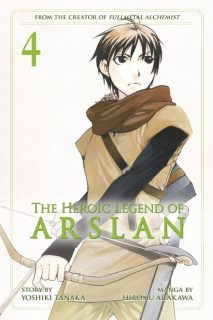
And a 5th volume of The Heroic Legend of Arslan, which may not come out that often but it’s drawn by Arakawa so who cares?

ANNA: I haven’t read this yet, I clearly need to rethink my life priorities.

ASH: I’ve read the first few volumes and definitely plan on reading more.

SEAN: And there’s a 6th volume of L♥DK, which continues to be oh-so-bad for us.

One Peace has a 5th volume of its novel Rise of the Shield Hero.

Seven Seas has a 2nd volume of horror manga Hour of the Zombie, which does not even pretend to be cute or fluffy before going for shocks.

There’s a 4th 4-koma volume of Merman in My Tub.

ASH: I’ve read a few volumes of this series, too, and was generally amused.

SEAN: And a 3rd volume of odd survival-game-ish Not Lives.

Vertical has the 6th Tokyo ESP omnibus – it’s catching up with Japan a bit, so this may slow down soon.

MICHELLE: I do like this series, but I’m a couple of volumes behind now.

Almost all of Yen’s August releases got pushed back a week, but there are two titles mysteriously unaffected at major retail sites, so I will list them here accordingly. The 8th A Certain Magical Index novel gives us a different POV narrator, as Mikoto’s stalker junior Kuroko gets her own series of adventures.

And The Irregular at Magic High School’s 2nd volume wraps up its first arc.

Do you want something from this list, or is it just too hot to read?

Filed Under: FEATURES, manga the week of

Random Musings: Six Years of Experiments in Manga

August 18, 2016 by Ash Brown

I did it! Experiments in Manga is officially six years old! While a respectable achievement in its own right, this anniversary is even more meaningful to me because I honestly wasn’t sure I was going to make it through the year. As many regular readers of Experiments in Manga know, I have needed to significantly cut back on how much I’m writing. I explained a bit about the change in posting schedule and what to expect couple of months ago, but basically my already limited amount of free time has been dramatically reduced. The causes, while time-consuming, haven’t all been bad, though. I’ve bought a house and my family has moved, which will be fantastic in the long run even if it was initially extremely stressful. After passing an audition in February, I’m now playing taiko semi-professionally. (Being an established, performing musician means a tremendous amount to me personally since for many years I had given up on that even being a possibility; I would love to make my living through music one day.) I’m also still trying to adjust to this whole parenthood thing, too.

But even with all that and more going on in my life, I have managed to find a way to keep Experiments in Manga going in some small capacity, so I’m going to celebrate that fact. At Experiments in Manga’s peak I was posting on average four features each week; now I’m doing my best to post two. It hurts to have cut back so much and I’d love to write more but, because writing is so difficult for me to begin with and because I’m so incredibly busy, that’s not a sustainable option for me at the moment. By necessity, at least for the foreseeable future, most in-depth features will rely on me being truly inspired to write. This might not actually be a bad thing; what I’m lacking in quantity I do hope that I can at least make up for in quality. (Though to be completely honest, I’m not at all confident about my ability to do so!)

Anyway, enough of all of that! I have been reading and writing about manga, Japanese literature, and other tangentially related items for six years! Six years! That’s pretty impressive, especially when considering the circumstances. Even though I’m writing less, looking back over the past year I am still happy with much of what I’ve been able to do. The manga and comic reviews that seemed to be particularly popular (or at least most frequently read/visited) from the last year included Hiroaki Samura’s Die Wergelder, Omnibus 1, Inio Asano’s A Girl on the Shore, Rokudenashiko’s What Is Obscenity?, Studio Kôsen’s Windrose, Volume 1, and Yui Sakuma’s Complex Age, Volume 1. I was also able to successfully wrap up my horror manga review project which featured Setona Mizushiro’s After School Nightmare and Yuki Urushibara’s Mushishi.

As for the non-manga reviews from the last year that people seemed to be particularly interested in there was Project Itoh’s Genocidal Organ, Yukito Ayatsuji’s The Decagon House Murders, the tenth volume of Mechademia, Soji Shimada’s The Tokyo Zodiac Murders, and Ryu Murakami’s short story collection Tokyo Decadence. (I’ve apparently been reading a fair amount of Japanese mystery and crime fiction of late, which is reflected in that list.) Although I’ve written mostly reviews at Experiments in Manga, the features that I often end up enjoying working on the most tend to be the non-reviews like my write-up of TCAF 2016 or my overview of Mushishi adaptations. The post from the last year that was probably my personal favorite was A Moment of Respite in Kohske’s Gangsta, some random musings sparked by a single scene in the manga. Generally, these types of features require significantly more inspiration than standard reviews, but I suspect that they may become slightly more common going forward as I shift my approach to writing at Experiments in Manga.

One last thing: I’d like to thank all of my readers, past and present, old and new. When I started Experiments in Manga it was in part to connect more with other readers and fans of manga and I think that it helped me to do that. I primarily write for myself, but it makes me tremendously happy to know that at least on occasion other people actually do find the site useful or interesting. I love hearing from people who have given something a try or have learned about something new because of what I’ve written here. I hope that in the coming year Experiments in Manga can continue to inspire people even if I’m not able to write as much as I once was. Thank you to everyone for your kindness and support over the last year and for sticking with me! It’s time to get started on year seven.

Filed Under: UNSHELVED Tagged With: Experiments in Manga

JoJo’s Bizarre Adventure: Battle Tendency, Vol. 4

August 18, 2016 by Sean Gaffney

By Hirohiko Araki. Released in Japan as “Jojo no Kimyou na Bouken” by Shueisha, serialized in the magazine Weekly Shonen Jump. Released in North America by Viz Media. Translated by Evan Galloway.

By now I think the seasoned JoJo reader is used to the ‘Bizarre’ part of the title, to the point that when the vampire horses show up early in this volume it merely earns a slight shrug, as if to say “of course there would be vampire horses, this is JoJo’. And I feel much the same way. That said, the vampire squirrel growing from the villain’s severed hand took even me by surprise, and reminded us of why this title was so successful – it really does not know when to quit. Be it amazingly graphic violence (for a Jump title), badass boasting, cool posing, or even coming back from near death almost a dozen times over the course of the book, Battle Tendency can be exhausting.

jojo4

We’re down to only two villains, each based off of a classic 1980s music reference, and the book is almost entirely devoted to JoJo taking out the two one by one. (What, you thought they would double team him? Get real. This is an HONORABLE fight between MEN!) First we have Wham… pardon me, Wamuu (is anyone else here reminded of the old Bastard!! translations?), who goes all Ben-Hur on JoJo with a chariot race to the death. This gives us a chance to see JoJo’s strength and weaknesses, because trust me, he’s filled with weaknesses. Sometimes you want to strangle the kid for how impulsive he is. It’s also a good way to see how he thinks, though, and to show us that much of his fabled “I’m going to predict what you say/do next” is just bluffing. Then we’re supposed to see his mentor (and, as it turns out, something more) Lisa Lisa fight Cars… sorry, Kars. But alas, this is JoJo’s title, and so she’s reduced to hostage bait. Sigh.

And so we come to the end of another arc. The villain has been destroyed after multiple attempts, but just as in the first series, the hero dies. Or so one might think. As I said in my last review, Caesar’s death allows JoJo to live on, in a parallel of Speedwagon and Erina living on after Jonathan’s death. It also gives us a hilariously silly graveside scene where JoJo shows up with Suzi Q in tow, wondering why everyone is at his grave and surprised to see him. (It also reads as very rushed – I suspect Araki ran out of time, or maybe just didn’t care enough. More Suzi Q, please!) And we see an older, grumpier, and apparently Japanese-hating Joseph at the very end, showing that amazingly, a Joestar *can* live to a ripe old age. This dovetails nicely with the start of the third arc, which takes place in Japan.

I enjoyed Battle Tendency a lot, more, I think, than the first part. It lacks a truly memorable villain like Dio, but Joseph is a lot more charismatic and likeable than Jonathan was. I look forward to seeing how Jotaro is different from both of them. I also look forward to less good-hearted Nazis in the next series. But above all, I hope we can top the vampire squirrels for hands thing, because that’s what JoJo’s Bizarre Adventure, in the end, is all about.

Filed Under: REVIEWS

Attack on Titan, Vol. 19

August 16, 2016 by Sean Gaffney

By Hajime Isayama. Released in Japan by Kodansha, serialization ongoing in the magazine Bessatsu Shonen Magazine. Released in North America by Kodansha Comics. Translated by Ko Ransom.

It feels like it’s been forever since we’ve seen a volume of Attack on Titan that is almost entirely devoted to fighting titans. The stakes are higher this time, though, as we know these titans. Most of the volume is devoted to dealing with Reiner and Bertholt, led by the Beast Titan, doing their best to wipe out the Survey Corps, followed by humanity. Our heroes, of course, are trying their best to stop them, and not only have Armin’s tactics but Erwin’s planning and Hange’s scientific genius. Attack on Titan has done ambiguity well in several past volumes, but there’s little of that here – though they try to portray themselves in a sympathetic way, there’s no doubting Reiner and Bertholt are the bad guys, and both seem to have accepted that, though we still don’t know the big ‘reason’ everyone has to die.

titan19

The most interesting thing here plotwise is the extended flashback we get to Marco, and how he died. Marco was killed off at the very beginning of the manga, but his picture appears in the cast list every time regardless, with a big X through it. This is for a reason – his death was very much a turning point. Now we find out it wasn’t just a turning point for the main cast, but for the secret Titan infiltrators as well. I still have trouble seeing the normally stoic Annie as emotional and panicky as she gets here, but Reiner is handled perfectly. We’ve seen before how he sometimes disassociates himself from the actions he has to take as a traitor, and that certainly comes through here. There’s also an astonishing contempt for Bertholt throughout the book – he’s always been a meek follower, but this just underlines that, with Reiner saying “I’ve never considered you reliable.”

It’s telling therefore that Bertholt’s big screaming confrontation is with Armin, who I think has also felt a bit weak at times, though unlike Bertholt he has the strength of his convictions. Bertholt’s ridiculous demands – give us Eren, and kill all of humanity – cause everyone to just stop and stare, and rightly so. Of course, humanity is not giving in so easily. Hange’s “thunder spears” are quite clever, even if they can also be extremely dangerous, and they may have actually dealt serious damage to Reiner. That said, he is a named character, and for all of Attack on Titan’s reputation as a dark and brutal series, named characters have done pretty well for themselves – Word of God said Sasha was supposed to die in the ninth volume but the editors asked for her to be spared.

That may change soon, though. Did we really see Hange killed off in the last page? Probably not, not in an offscreen manner like that. What about Reiner or Bertholt? And have we totally forgotten about the Beast Titan – what are his plans aside from letting those two try to destroy everything? This volume had a lot of noble fighting and impassioned screaming. I suspect next time may bring us a bit more tragedy.

Filed Under: REVIEWS

Bookshelf Briefs 8/15/16

August 15, 2016 by Sean Gaffney and Michelle Smith Leave a Comment

dfrag9D-Frag!, Vol. 9 | By Tomoya Haruno | Seven Seas – Games are serious business in this very silly manga, and when Kazama realizes he’s totally forgotten about the rematch he was supposed to have with Roka, she gets very upset. That’s what drives most of this volume, which is still mostly devoted to very funny comedy. I enjoyed seeing the awkwardness of Kazama trying to fit in with the real Game Development Club, and the revelation that the stupid medallion Kazama (and I) had totally forgotten about is actually relevant. But honestly, it’s all about the rematch itself, and Kazama’s strategy for winning is both ludicrous and brilliant. D-Frag! is a comedy first and foremost, and if you keep that in mind you’ll still enjoy yourself immensely. – Sean Gaffney

foodwars13Food Wars!: Shokugeki no Soma, Vol. 13 | By Yuto Tsukuda and Shun Saeki | Viz Media – I was right, Soma did not in fact win this volume. Which is not unexpected in a battle manga like this—and yes, Food Wars! is a battle manga more than it is a cooking manga. That said, Soma gains a lot from this loss, in particular the desire to cook for a reason other than to beat his father. He hasn’t found that reason yet, but just working at it is enough. After that, we get a new mini-arc involving helping at restaurants in the area, where Soma can put his childhood skills to use, Hisako shows off why Erina relies on her, Erina is, of course, perfect, and even Megumi’s keen observational eye earns her appreciation. These are smart kids, and they’re good at what they do. Classic Jump stuff. – Sean Gaffney

heiress2The Heiress and the Chauffeur, Vol. 2 | By Keiko Ishihara | Viz Media – This is not as good as the first volume, mostly as it has to wrap everything up, and due to the time period it takes place in, things have to get a bit unrealistic in order for our hero and heroine to come together in the end. We see romantic rivals (this time the blond is outwardly evil but secretly sweet—an inversion of the shoujo cliche), and Sayaka’s tsundere, not-a-lesbian best friend screaming every single line she gets in frustration at what she has to watch. But yeah, in the end, the heiress realizes she loves her chauffeur, they defy their family and run off, they run back when they realize that that would lead to the tragic ending, and love conquers all. Cute, but only OK. – Sean Gaffney

kaze24Kaze Hikaru, Vol. 24 | By Taeko Watanabe | VIZ Media – It’s August, and that can only mean our annual volume of Kaze Hikaru is upon us! The opening chapters had me feeling somewhat frustrated, alas, as Sei did something impulsive that she only belatedly realized was a betrayal of the Shinsengumi. Oopsies. Happily, just as it seemed we were in for more drama, with carefree Kondo about to embark on a journey with the very man who would like to assassinate him, we take an abrupt turn towards the past for some very entertaining chapters that explain just why Hijikata values Kondo so much. As usual, though, just as I’m settling in and enjoying a good story, the volume ends and that’s it for another year. At least we’re getting something, though, so thanks as usual, VIZ! – Michelle Smith

maid9-10Maid-sama!, Vols. 9-10 | By Hiro Fujiwara | VIZ Media – Answers! We got actual answers about Usui’s background! And they even kind of address why he excels at everything! And before that, there were some very good scenes between them including smoochies and Misaki communicating (admittedly with too much violence) her annoyance and frustration with his terminal evasiveness. Even the fact that we are seemingly destined for a detour into Trope City in the next volume (hot springs trip, ugh) cannot extinguish my goodwill. Throughout this volume, it felt like some sort of tension was simmering, and I’m not sure if I imagined it, but if we actually do get something a little more serious and serialized to take us through the second half of the series, I will be very pleased indeed. – Michelle Smith

Maid-sama!, Vols. 9-10 | By Hiro Fujiwara | Viz Media – At last, we’re seeing new Maid-sama! chapters in North America, which if nothing else reveals to us who wins the election. Though honestly, that was more about making Kanou open up and be less introverted than anything else. More importantly, we finally begin to see some of Usui’s past, and why he keeps trying to hide it from Misaki. Seeing that he’s a quarter British is not particularly a surprise, and I suspect there’s more to it than this. More surprising is the introduction of new teacher Maria, who not only new Usui as a child but appears to be a genuine lesbian, albeit of the usual ‘predatory’ variety so beloved by manga authors everywhere. Frustrating but addicting. – Sean Gaffney

sweetness1Sweetness & Lightning, Vol. 1 | By Gido Amagakure | Kodansha Comics – Melding genres can sometimes produce pleasant surprises, and pleasant is the word describing this manga, which takes the ‘single man raising rambunctious child’ genre and combines it with the ‘let’s cook a meal and describe how we do it’ genre to decent effect. The dad is Kouhei, a widower who’s still not quite over the death of his wife. The kid is Tsumugi, who’s not as hyper as Yotsuba but comes close. The wild card is Kotori, a student of his whose mother is always at work and who desperately needs to connect to someone, and has chosen Kouhei’s family. Provided we don’t go into the student/teacher romance genre, I think this could be a real winner. 50-50 odds we do, though. – Sean Gaffney

toriko35Toriko, Vol. 35 | By Mitsutoshi Shimabukuro | Viz Media – I can’t quite believe this is the same company that had to censor Dr. Slump and Dragon Ball at various points. Not only do we have the plotline with the monkey king almost explicitly say that they have to arouse him in order to make his testicles bigger and more tasty (which they do via interpretive dance, just in case you thought Toriko had gotten too predictable), but they then have to descend from the fighting arena on a literal pile of shit, and at the end of the volume they all turn into women. Luckily, as the cover might show off, all this leads to a good result, as Komatsu is alive again and reunited with our heroes. Toriko continues to be a bizarre Jump title, and the next arc could maybe be a bit more about food again? – Sean Gaffney

Filed Under: Bookshelf Briefs

  • « Go to Previous Page
  • Page 1
  • Interim pages omitted …
  • Page 492
  • Page 493
  • Page 494
  • Page 495
  • Page 496
  • Interim pages omitted …
  • Page 1065
  • Go to Next Page »
 | Log in
Copyright © 2010 Manga Bookshelf | Powered by WordPress & the Genesis Framework