• Skip to primary navigation
  • Skip to main content
  • Skip to primary sidebar
  • Home
  • About Us
    • Privacy Policy
    • Comment Policy
    • Disclosures & Disclaimers
  • Resources
    • Links, Essays & Articles
    • Fandomology!
    • CLAMP Directory
    • BlogRoll
  • Features & Columns
    • 3 Things Thursday
    • Adventures in the Key of Shoujo
    • Bit & Blips (game reviews)
    • BL BOOKRACK
    • Bookshelf Briefs
    • Bringing the Drama
    • Comic Conversion
    • Fanservice Friday
    • Going Digital
    • It Came From the Sinosphere
    • License This!
    • Magazine no Mori
    • My Week in Manga
    • OFF THE SHELF
    • Not By Manga Alone
    • PICK OF THE WEEK
    • Subtitles & Sensibility
    • Weekly Shonen Jump Recaps
  • Manga Moveable Feast
    • MMF Full Archive
    • Yun Kouga
    • CLAMP
    • Shojo Beat
    • Osamu Tezuka
    • Sailor Moon
    • Fruits Basket
    • Takehiko Inoue
    • Wild Adapter
    • One Piece
    • After School Nightmare
    • Karakuri Odette
    • Paradise Kiss
    • The Color Trilogy
    • To Terra…
    • Sexy Voice & Robo
  • Browse by Author
    • Sean Gaffney
    • Anna Neatrour
    • Michelle Smith
    • Katherine Dacey
    • MJ
    • Brigid Alverson
    • Travis Anderson
    • Phillip Anthony
    • Derek Bown
    • Jaci Dahlvang
    • Angela Eastman
    • Erica Friedman
    • Sara K.
    • Megan Purdy
    • Emily Snodgrass
    • Nancy Thistlethwaite
    • Eva Volin
    • David Welsh
  • MB Blogs
    • A Case Suitable For Treatment
    • Experiments in Manga
    • MangaBlog
    • The Manga Critic
    • Manga Report
    • Soliloquy in Blue
    • Manga Curmudgeon (archive)

Manga Bookshelf

Discussion, Resources, Roundtables, & Reviews

Blog

Durarara!!, Vol. 5

November 17, 2016 by Sean Gaffney

By Ryohgo Narita and Suzuhito Yasuda. Released in Japan by ASCII Mediaworks. Released in North America by Yen On. Translated by Stephen Paul.

Lately these days when I’m reading light novels I come at it from a different perspective than most North American readers, in that I really am reading it in this format first. I haven’t seen the anime for, say, The Irregular at Magic High School or Strike the Blood, so my opinions tend not to be swayed in advance beyond shamelessly spoiling myself on TV Tropes. But DRRR!! is different – I’ve seen the anime multiple times, and also read Yen’s manga (though the novels have finally passed the manga series timeline-wise), and therefore know where the books are going to go, even if I may be surprised by a narrative quirk or inner monologue. This also allows me to enthuse about characters I love finally showing up, even if it is somewhat baffling as to why I love them.

drrr5

Case in point: Vorona, one of the two Russians who arrive in this book as professional goons-for-hire. I love Vorona. She’s in my top 5 favorite DRRR!! characters. That said, you’d be hard pressed to see why here, as she’s merely a quirky villain. She speaks in a clipped, soundbite way that not only works very well for a Russian who’s learned Japanese, but also contrasts with all the other Russians speaking Japanese around her, who speak it much more fluently. She’s a repository of useless information, which she doles out to her goofy and somewhat dim partner Slon – be it why cows eating grass makes them fat or why the number 13 is unlucky. And, like the rest of the cast in this series, she’s a little bit broken on the inside, finding her thrills in killing and finding progressively stronger people to fight against. She thinks she’s found someone interesting in this volume with Celty, who is seemingly easily killed only to show up later. Book 6 onward will show more of why I love her.

Knowing the anime can also be a drawback as well, of course. Mikado is written here to be a hopelessly naive dupe, in over his head and trusting Izaya of all people, even thinking to himself that he’s “really a nice guy”, which is so untrue you wonder how on earth Mikado can even survive day-to-day. But as the astute fan knows there’s far more going on in Mikado than just naivete. Aoba can sense it, I think – he sees Mikado grinning as he’s being blackmailed towards the end of the book – but he pretty much thinks he can use Mikado as the public face for his own machinations. This is definitely the first book in a two-book arc, and we’ll learn later on it’s not as simple as that.

As ever with a Narita volume, there’s too much going on here to talk about everything in a review. I didn’t mention Shizuo’s subplot, as Izaya seems determined to irritate him as much as possible, be it sending a young yakuza princess to kill him or framing him for murder. It’s a great plot, and gives us the best interstitial art of the entire series, as Shizuo tries to convince Akane he’s not a bad guy by winking and sticking his tongue out. And Anri’s involved as well, as she also falls under Vorona’s large category of ‘strong monsters that I can try to kill’. And there’s Chikage, the gang leader lothario who’s determined to destroy all the men in the Dollars gang – but don’t hurt the women or you’ll be in trouble. The big downside is, of course, this is all setup. It’s those early episodes of the season that no one liked as they were all preparation for a payoff. Stay tuned for the payoff in Vol. 6.

Filed Under: REVIEWS

Everyone’s Getting Married Vol. 3

November 15, 2016 by Anna N

Everyone’s Getting Married, Volume 3 by Izumi Miyazono

Is everyone getting married? I see no evidence of it yet in this series where aspiring housewife Asuka and committed bachelor Ryu continue to fall in love with each other despite their utterly incompatible life goals. This manga manages to balance the twists and turns of a soap opera with some very touching moments as Ryu and Asuka continue to struggle with their feelings for each other, balance their demanding work schedules, and navigate their possibly doomed relationship.

One of the things I like about this series is how little it relies on conflict due to people not talking to each other. Sure it happens sometimes, but not talking about a problem isn’t stretched over multiple volumes as sometimes happens in romance manga. Even when some standard plot elements pop up in the form of Ryu’s Complicated Ex-Girlfriend and Asuka’s Flirty Co-Worker, this continues to lead the couple to reflect on their relationship.

Two events happen in fairly short succession that cause some strain. Yuko, a married actress who Ryu had a long-term affair with years ago is back in town. She’s touched by scandal due to her philandering husband, and Ryu is maneuvered by combative questions from the press into joking on tv that he’d dump his girlfriend for a chance to date her. In addition, Asuka gets news of a upcoming work transfer and is spending time with Kamiya, a colleague. They’re walking down the street together and they agree to do a “couple interview” as a joke, only Asuka is shocked when she sees that Ryu is interviewing her.

These additional people popping up near Asuka and Ryu cause them to confront some of the issues in their relationship. Asuka wonders if Yuko is the reason why Ryu is so set against marriage. Ryu is jealous of Kamiya, even though his relationship with Asuka is professional. But while the only person Asuka wants to marry is Ryu, she wonders what might happen if she takes Kamiya’s overtures seriously since it seems he does really want to get married.

As always the art is attractive and easy to follow, easily handling cute scenes of Ryu and Asuka supporting each other in addition to some tumultuous relationship drama. I wish Shojo Beat could bring out more series like this all at the same time, but I’ll be happy with what I can get.

egm3

Filed Under: REVIEWS Tagged With: everyone's getting married, Josei, shojo beat, viz media

Fire Force, Vol. 1

November 15, 2016 by Sean Gaffney

By Atsushi Ohkubo. Released in Japan as “Enen no Shouboutai” by Kodansha, serialization ongoing in the magazine Weekly Shonen Magazine. Released in North America by Kodansha Comics. Translated by Alethea & Athena Nibley.

It was always going to be difficult, following up on a series as popular as Soul Eater. And so Ohkubo decided to move to a bigger company (this is discussed in an absolutely hilarious afterword where he bemoans, like so many other artists who write for Magazine or Sunday, not getting into Jump) and started a brand new series. This is a bit more realistic than Soul Eater was, which sadly means a bit less gonzo background art details, but it’s still not quite in the real world. It’s a sublte first volume – I went through most of it thinking this was something of a step down from his last work, but as I reached the end of the volume I realized that I wanted to learn more about these characters. Which is all you can ask, really.

fireforec1

Our hero, who looks like Soul with black hair because manga artists have a style, let’s face it, is Shinra, a boy with a tragic past who has dedicated his life to being a hero, and the best way to do that in this world is to become a fireman. Why? Because all over the world people are spontaneously combusting for no reason, and turning into demonic creatures as they do. Shinra joins a squad dedicated to stopping these former humans and sending them to their eternal rest (they even have a nun/exorcist on hand). There are, of course, a few problems. He has a bad habit of grinning widely when he’s nervous or upset, something that always causes people to get the wrong idea. And he’s never done this before, so quickly has to get used to the fact that as a firefighter in THIS world, they will always be dealing with death – in fact, as is bluntly pointed out, they are murdering these people.

Did I forget to mention most of the cast has superpowers? Of course I did, because frankly, a firefighter manga is what I want. But yes, Shinra can run so fast his feet catch fire (or maybe it’s the fire that lets him run fast), and another girl on the squad can’t create fire, but can manipulate it beautifully. We also meet Arthur, who I suspect changed his name to be more apropos. He’s dedicated himself to being a knight – and has a past history at school with Shinra, so they don’t get along, as they both war as to whether knights or heroes are better. (The astute reader, of course, realizes they’re both idiots.) Probably my favorite character was the captain, who has no powers at all, but is a really good firefighter – and dispenses excellent advice.

So yes, a solid first volume, with a better plot and character but less style and moxie than Soul Eater’s first volume. There’s also some fanservice, ranging from mild (a brief shower scene with the two female firefighters) to pointless (one firefighter from another squad seems to have the ability to be constantly groped – mo, really, it seems like it’s her superpower). And we’re also meeting some villains, who no doubt will tie into the death of Shinra’s family. All in all, it’s a promising start.

Filed Under: REVIEWS

Bookshelf Briefs 11/14/16

November 14, 2016 by Sean Gaffney and Michelle Smith Leave a Comment

centaurlife10A Centaur’s Life, Vol. 10 | By Kei Murayama | Seven Seas – What I said in my last review applies, only more so. I’m wondering if the author even has a plan at all, or is just happy to coast on monster girls as long as possible. Here we wrap up the arc in the alternate universe, which ends with the ‘it was all a dream’ cliche so dreaded by readers everywhere. We get a test of strength among the class, which a baffled Hime wins without ever really knowing why. We get the introduction of Suu’s sister, which gives us the idea of a giant snake as a bratty goth-loli wannabe. For the most part, though, this wasn’t really very funny, and didn’t have as much of the total bafflement I’ve enjoyed before. Also, stop showing us girl monsters on the toilet. Jeezus. – Sean Gaffney

haikyu5Haikyu!!, Vol. 5 | By Haruichi Furudate | VIZ Media – This was another excellent installment of Haikyu!!. The Inter-High qualifiers are upon us, and I loved getting glimpses of some of the other participating teams. I especially loved Furudate’s extended look at those who were defeated in the first round, including a poignant montage and emphasis on the losers’ regrets. In this way, we also meet Karasuno’s girls’ team, and now I want a spinoff. For their part, the Karasuno boys also bring the feels as they overturn the prevailing opinion that they merely used to be good. The panel with an about-to-jump Hinata superimposed over a crow spreading its wings actually made me verklempt, as did the moment when he realizes how cool being a decoy can be. I wish I had more to read! – Michelle Smith

nichijou5Nichijou, Vol. 5 | By Keiichi Arawi | Vertical Comics – I was happy to see more Mai here as I requested, whether she’s torturing her friends in a game of Red Light Green Light, torturing her friends by drawing baffling buddha backgrounds on their yaoi manga, torturing the Professor by letting her dogs “play” with her, to the point where they bite Mio and Yukko for the lulz, and in general shows that she does not remotely grasp human interaction whatsoever. In non-Mai news, we see more of the scientist who’s desperate to examine Nano but gets tripped up by… well, everything. Western fans will be baffled by the surreal chapter based around nagashi somen. And in the best chapter in the book, our three girls struggle against the rain and her vagaries of an angry temple god. Terrific. – Sean Gaffney

nisekoi18Nisekoi: False Love, Vol. 18 | By Naoshi Komi | Viz Media – The field trip continues, and has many sweet and funny moments, but it’s not what the meat of this volume is. No, we’ve reached what appears to be the start of a final arc (spoiler: it’s not), where Chitoge is told that they’re moving back to the US, so she can come with and stop pretending to be Raku’s girlfriend. Needless to say, she’s devastated by this, as are the others, as she’s never had friends like this before, and of course is also in love with Raku. We’re starting to realize he’s in love with her as well—Shu blatantly asks who he likes, and while he says it’s Onodera it’s the first time he’s really waffling on the question. Will she leave? Will she stay? Will Claude kill Raku before that’s decided? Yup, cliffhanger. One of the best volumes yet. – Sean Gaffney

princessjelly3Princess Jellyfish, Vol. 3 | By Akiko Higashimura | Kodansha Comics – The effort Kuranosuke expends to support the dreams of others is truly impressive. Not only does he spearhead the fashion designer idea as a way to earn enough money to avoid Amamizu-kan’s destruction, but he manages to provide costumes and audience to a struggling student production, nudges Mayaya out of her comfort zone, and utilizes his politican father’s party to drum up attendees and press for a Jelly Fish fashion show. I love that he both accepts the Amars as they are and challenges them to participate in the outside world. In this way, he’s given them, and particularly a fired-up Tsukimi, an outlet for their hopes and fears as the reality of their neighborhood’s eventual destruction begins to hit home. Highly recommended. – Michelle Smith

roseking5Requiem of the Rose King, Vol. 5 | By Aya Kanno | VIZ Media – Wow, what a volume! Political scheming abounds in the action-packed moments, as Richard’s rescue of his brother forces Warwick to abandon his plan to make George the king and pivot instead back to the Lancasters, just as the other Edward (the one in love with Richard) counted on when he agreed to help Richard out. And in the quiet moments, we spend time with a couple of people still in love with Richard (Edward and Anne), and in the worst/best part of all, Henry and Richard manage to have another blissful interlude together, during which Richard finally admits to himself that he’s in love with Henry just as Henry says he will not permit himself to love anyone. Oh, the treachery and the angst! It’s riveting. Keep ’em coming, Kanno! – Michelle Smith

shuriken2Shuriken and Pleats, Vol. 2 | By Matsuri Hino | Viz Media – Well, that was one big thud of an ending. When this was licensed I heard it was two volumes long, which made me wary, and that after it ended the author returned to Vampire Knight material, which made me warier. Sure enough, this has “cancelled early due to low reader support” written all over it. Mikage’s stoic ninja finds many things to feel emotional about, but alas, we’re left with the uncomfortable ‘father role’ as the main romance, though it’s blessedly one-sided. And, this being a ninja manga, there’s plots, counterplots, fights on top of speedboats, etc. The main problem with this series, though, is that in the end there was not one plot twist I didn’t guess beforehand. Hino fans should reread Vampire Knight instead. – Sean Gaffney

wolfboy2That Wolf-Boy Is Mine!, Vol. 2 | By Yoko Nagiri | Kodansha Comics – The trouble with getting rejected and saying “I hope we can still be friends!” is that you need to actually have the resolve to do that, which is difficult when you’re still massively in love, not to mention getting mixed signals. As for Yu, we see signs of him getting jealous, but I don’t think he’s even consciously aware of what that is. Honestly, I wonder if Yu’s grumpy friend Rin might be a better match for Komugi, though as a blonde guy in a shoujo manga, he’s inevitably going to be second-best. What’s more, we’re getting some suggestion that Komugi’s background may not be what it seems, something that will no doubt lead to much drama but also allow her to end up with one of these guys. Good, but can be dull at times. – Sean Gaffney

uqholder9UQ Holder, Vol. 9 | By Ken Akamatsu | Kodansha Comics – As a Negima reader, I found it somewhat hilarious that as part of her training Tota, she sends him into the jungle in order to imitate his predecessor’s “cross a world in a short period” plotline. Even worse, his companion is Kirie, the Chisame lookee-likee, making it even more obvious that he’s just having fun for his fans. That said, this is quite a strong volume, showing off cool fights, embarrassed blushes, aborted love confessions, and our hero literally PUNCHING TIME in order to meet Evangeline’s young self again. New readers will suffer even more, though, as Ayake and Chachamaru show up at the end here, Konoka and Setsuna’s descendants are coming, and that Shinobu clone as well. Akamatsu’s greatest hits, but they’re good hits. – Sean Gaffney

Filed Under: Bookshelf Briefs

Pick of the Week: An Old Favorite

November 14, 2016 by Michelle Smith, Ash Brown, Anna N, MJ and Sean Gaffney 2 Comments

ooku12MICHELLE: Given the fact that I’m fidgeting impatiently for its arrival, I must pick Ooku volume twelve.

ASH: It’s Ooku for me, too! As much as I love What Did You Eat Yesterday?, Ooku is probably my favorite Yoshinaga manga, so I’m always glad to see a new volume released.

ANNA: Put me down for Ooku too, always happy to see a new volume of this released.

MJ: It’s another vote for Ooku from me! This is unsurprising, I’m sure. With me, Yoshinaga always wins.

SEAN: Much as Ooku is awesome, I can’t be pulled away from the lure of light novels this week. I’ll give my pick to the 6th volume of Log Horizon, which gives Akatsuki some much needed depth, and shows how the series carries on in Shiroe’s absence.

Filed Under: PICK OF THE WEEK

My Week in Manga: November 7-November 13, 2016

November 14, 2016 by Ash Brown

My News and Reviews

Last week was pretty quiet at Experiments in Manga (like most weeks these days, really) but I did finally get around to posting October’s Bookshelf Overload for those interested in some of the cool things I picked up last month. Last week was pretty stressful for a variety of reasons so I wasn’t online much, but I did recently find out about two Japanese novels scheduled to be released in translation next year that I’m very excited about. In May be on the lookout for Minae Mizumura’s Inheritance from Mother. Only two of Mizumura’s long works have been translated so far–A True Novel which in part is a reimagining of Emily Brontë’s Wuthering Heights, and the utterly fascinating nonfiction treatise The Fall of Language in the Age of English–both of which were tremendous, so I’m really looking forward to reading more by Mizumura. And in June look for Tomoyuki Hoshino’s Me, a novel exploring themes of identity. Hoshino’s stories are frequently challenging and unsettling but I find that it’s well-worth the effort it takes to read them. Like Mizumura, currently there are only two books by Hoshino available in English–the novel Lonely Hearts Killer and the short fiction collection We, the Children of Cats which in particular left a huge impression on me–so I’m happy that there will be a third.

Quick Takes

Cells at Work!, Volume 1Cells at Work!, Volume 1 by Akane Shimizu. Sometimes the premise of a manga is so fantastically odd that I can’t help but be curious. Cells at Work, in which the cells of the human body, bacteria, and such are literally personified, is one such series. It’s also an educational manga–readers may very well learn a thing or two about microbiology and human anatomy and physiology thanks to Cells at Work (assuming they weren’t already familiar with how the body functions). Although there are recurring characters, the first volume of Cells at Work is fairly episodic, mostly focusing on the immune system’s response to injury and potential infection. Things are more exciting when the world seems like it’s about to end and a catastrophe must be averted. Bacteria are portrayed like monsters and villains out of some sort of super sentai show. White blood cells are fairly cool and laid-back, at least until they’re fighting off invaders and are completely overcome by maniacal bloodlust. Influenza causes a zombie outbreak. Cedar pollen triggers an apocalyptic allergies. Sneezes take the form of enormous missiles. Cells at Work is actually kind of ridiculous and over-the-top (with artwork to match), but it’s a great deal of fun.

ghostlady1The Ghost and the Lady, Volume 1 by Kazuhiro Fujita. As far as I can tell, The Ghost and the Lady actually makes up the last two volumes of the three-volume series The Black Museum. I don’t believe Kodansha Comics has any current plans to release the rest of The Black Museum, but if it’s anywhere near as good as the first volume of The Ghost and the Lady then I hope to one day see it. The Ghost and the Lady is admittedly somewhat peculiar. Basically it’s a supernatural retelling of the life and legends surrounding Florence Nightingale. Tormented by eidolons–spectral manifestations of ill-will and malice–Florence seeks her own death, asking a ghost known as the Man in Grey to kill her. He agrees, but declares he will only take her life once she reaches the depths of despair. (Grey, who haunts a theater, has perhaps seen Shakespeare’s tragedies one too many times.) The Ghost and the Lady is intense and enthralling with both Grey and Florence precariously balanced on the edge of insanity. The series is a little difficult to describe in a way that conveys just how great it is. Honestly, I wasn’t quite sure what to expect from The Ghost and the Lady, but I loved the first volume and am looking forward to reading the second half of the story.

Requiem of the Rose King, Volume 4Requiem of the Rose King, Volumes 4-5 by Aya Kanno. I continue to thoroughly enjoy Requiem of the Rose King, Kanno’s dark and sensual reimagining of Shakespeare’s plays Henry VI and Richard III and of the historical Wars of the Roses. Shakespeare took some liberties when dramatizing England’s dynastic conflicts and Kanno has as well. The most notable difference in Requiem of the Rose King is the deliberate ambiguity of Richard’s sex–the perceived imperfection of his physical body contributing to his supposed demonic nature and already established mental and emotional anguish. Kanno’s artwork in the series is fittingly provocative, moody, and atmospheric. Dreams and reality are heavily intertwined which can occasionally make some of the transitions in the story difficult to follow, but for the most part it’s a marvelously effective technique. Anyone even remotely familiar with Shakespeare or history will know that Requiem of the Rose King can only end in tragedy. The never-ending political and personal betrayals along with the characters’ constant struggles to determine the destiny of the kingdom and of their selves makes for an immensely engrossing and provocative tale. I absolutely love the series.

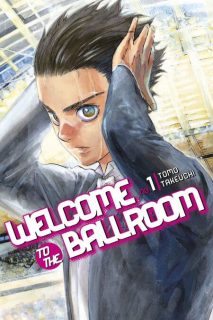
Welcome to the Ballroom, Volume 1Welcome to the Ballroom, Volume 1 by Tomo Takeuchi. Even with the resurgence of sports manga in translation, I still wasn’t expecting that Welcome to the Ballroom would be licensed. Competitive ballroom dancing, despite being very physically demanding, probably isn’t what immediately comes to most people’s mind as a sport. In addition to that, in my experience many people are unfairly dismissive of dance and especially of men who dance. I, however, more than welcome a series on the topic. Welcome to the Ballroom is about a high school student, Tatara Fujita, who ultimately becomes interested in dance after finding refuge from a group of bullies at a local studio. At first he’s embarrassed and he hides the fact that he’s taking lessons, but at last he’s finally found something in his life to be passionate about. Unfortunately for him, he doesn’t seem to have any natural talent for dance except for the uncanny ability to shadow and mimic another dancer. The first volume of Welcome to the Ballroom didn’t engage me as much as I thought or hoped that it would and some of the characters’ casual sexism was bothersome, but I’m still curious to see where the series goes from here, in part because it ends with quite a cliffhanger.

Filed Under: FEATURES, My Week in Manga Tagged With: Akane Shimizu, Aya Kanno, Cells at Work, Ghost and the Lady, Kazuhiro Fujita, manga, requiem of the rose king, Tomo Takeuchi, welcome to the ballroom

Princess Jellyfish, Vol. 3

November 14, 2016 by Sean Gaffney

By Akiko Higashimura. Released in Japan in two separate volumes as “Kuragehime” by Kodansha, serialization ongoing in the magazine Kiss. Released in North America by Kodansha Comics. Translated by Sarah Alys Lindholm.

After waffling a bit about the first two omnibuses of this series, the third settles in more comfortably into something I’m really enjoying. The characters develop a bit more, though that’s not always a good thing. The humor can be first rate much of the time. And the overwhelming sense of impending doom is done with a light but necessary touch, as we never forget even from the start that Amars’ home is about to be taken away from them – indeed, the owner (Chieko’s mother, who amusingly also seems to be a giant otaku, this time for Korean actors) signs off on selling it, so we’re left wondering what can possibly be left to save it? Ah, but in the best Mickey Rooney/Judy Garland tradition, Kuranosuke has the answer – we’re gonna put on a show!

jellyfish3

Actually, the show was my favorite part of this whole volume – not the fashion show that serves as the cliffhanger ending, but the college drama that they all go to see in order to fill up seats, that fires up Karanosuke’s arrogant fashion heart and leads to all this. College productions can be hilarious at times, and the idea of a huge number of Ophelia clones fighting it out over Hamlet is exactly the sort of play you’d likely see in a hardcore drama department. Likewise, the shoestring budget and slapdash costumes also fit in, even if they upset the aesthetic sense. It’s nice to see Tsukimi manage to overcome her introversion and get everyone sewing so we can get the jellyfish dresses, even if I did groan as Kuranosuke once again forced her into a big social situation without telling her.

And then there’s Inari. I still don’t like her – by design, she’s the villain – but I also wasn’t fond of the plotline in this volume. Her faked suicide looked and felt offhand, as if she threw it together uncaringly, though I was fine with Shu being upset about her doing it. The fact that she started to fall for him for real after he hit her upset me a bit, though I know it wasn’t meant to be taken that way. In reality, it’s that he actually cares about her well-being and isn’t just another male body on the sexual corporate ladder. Still, I wish we could have had that without the violence. That said, I was amused at how she seemingly falls apart a bit after that, to the point where she can’t even blackmail him properly.

The rest of Amars also fare well, getting things to do to flesh them out. Mayaya gets the most, of course, as she’s the one with the body of a model and the personality of a fruitcake. We get into the background of the cast in greater depth here – Mayaya hides her eyes as they’re evil-looking, similar to the hero in Toradora!. But everyone in Amars is quick to remind her that they all went through that sort of thing – they were all bullied in school for being different. I’m not sure how long Mayaya’s actual modeling career may last – and I note that if she ends up with the Benz freak it would be hilarious – but it’s amusing and inspiring at the same time.

To sum up, while I still have a few issues with Princess Jellyfish, I enjoyed this omnibus a lot more, and it’s a solid josei title for young women or anyone.

Filed Under: REVIEWS

JoJo’s Bizarre Adventure: Stardust Crusaders, Vol. 1

November 13, 2016 by Sean Gaffney

By Hirohiko Araki. Released in Japan as “Jojo no Kimyou na Bouken” by Shueisha, serialized in the magazine Weekly Shonen Jump. Released in North America by Viz Media. Translated by Evan Galloway, original translation and adaptation by Alexis Kirsch and Fred Burke.

Though this is the third arc in the JoJo’s series, it was actually the first released in North America, as Viz released it on its own in 2005. I never read it, mostly as it was the 3rd part of a series, and from what I hear its sales were no great shakes. But now JoJo’s is becoming more of a phenomenon, and the hardcovers seem to be doing OK, and so thankfully we get to read this somewhat in context, as we are introduced to Joseph Joestar’s grandson, Jotaro Kujo, his somewhat airheaded mother, Holly (she must get it from her own mother), and another epic quest, as Dio has returned from the dead to stir up trouble, kill off a few helpless victims, and make life miserable for the Joestars. And so the stage is set for an epic battle. Sadly, the first volume of said epic battle mostly falls flat for me.

jojo3-1

Jotaro is Japanese, unlike his English great-great grandfather or American grandfather, and shows it off by taking on the staple of 80s manga destined never to be licensed here, the delinquent uniform, complete with peaked cap that is worn slightly off-kilter. Unlike his overearnest/cocky (delete where applicable) ancestors, Jotaro is mostly stoic and cool, which is nice but makes him a lot more of a flat character than his predecessors. Thankfully, Joseph is here, albeit mellowed, and we get a few of the classic JoJo’s types – the mentor and friend, the villain turned good guy, the smug asshole minor villains, and the piles of cannon fodder that lead to many sort-of deaths. (The deaths are not as numerous as you’d expect – the school nurse who is possessed by evil literally has her head ripped off, but should be fine if she’s treated soon. What the hell?)

Of course, the main driving force of this arc is that Dio is back, and clearly up to his old tricks, using Jonathan’s body with his head stapled into it to possess people with parasitic brain worms and casually rape and murder random women in his castle of doom. What’s more, people are now exhibiting new Superpowers, called “Stands” for a reason so stupid I’d rather forget about it. Sometimes these can be cool, like JoJo’s, but they can also be deadly, like his mothers, which is causing her to slowly die by mutating into a plant, as far as I can tell. Thus our heroes must fly to Cairo to take on Dio, provided of course their plane is not hijacked, which it is. This arc is apparently a road movie, so expect lots of foreign settings in amongst the cool poses and piles of gore.

If you read JoJo’s for such things, you should enjoy this volume. There’s cool fights, there’s grotesque violence (the insect pulling the tongues out of an entire aisle of innocents on the plane wins), and there’s occasional stabs at humor, including a bad pun as the cliffhanger. But unfortunately, this was the first JoJo’s that I came away from thinking it was rather dull compared to its predecessors. Given it’s longer than both its predecessors combined, I’m hoping it fixes that soon.

Filed Under: REVIEWS

Aoharu x Machinegun, Vol. 1

November 12, 2016 by Sean Gaffney

By Naoe. Released in Japan by Square Enix, serialization ongoing in the magazine GFantasy. Released in North America by Yen Press. Translated by Leighann Harvey.

I have to admit, I wasn’t looking forward to this one. It’s clearly popular, given it’s a Yen Press digital-only title that escaped into print (6 volumes are currently out digitally). But I saw the words ‘survival game’ and groaned, having grown incredibly weary of Battle Royale wannabes, ever decreasing casts, and heartwarming character development followed by murder. Fortunately, Aoharu x Machinegun isn’t any of these things, instead being about a survival game we have here in reality – paintball wars. Only no paint here, instead we have bb pellets, and the party that is shot has to announce it. You can imagine how often that works out. Luckily, the two guys who make up our viewpoint team have found a new, good and earnest young man to be their third. Except what they don’t know is… she’s a woman!

aoharu1

This title runs in GFantasy, so probably deserves to be called shoujo, as that’s as close as Square Enix really gets to the genre. Our heroine, who sadly isn’t badass enough to get the cover art, is Hotaru, who goes to school dressed in a male uniform, is fairly flat-chested, and has a strong sense of justice that leads her to be hot-blooded and violent. Ergo, no one really assumes she’s a girl at all – only her best friend seems to know. The sense of justice is what leads to our plot, as in order to get revenge for said friend, she ends up invading a host club to take on the guy who was responsible. Naturally, he challenges her to a gun duel, and naturally, she loses. But she does have mad skills, so (not knowing she’s female – he literally tells the others he refuses to have girls on his team) he gets her to join him in outdoor survival gun battles.

So yeah, less Battle Royale and more Ouran High School Host Club. Unlike Ouran, though, the artist seems content to have Hotaru’s secret be a secret for now, which is fine, as neither Masamune (the aforementioned guy) or Tooru (the somewhat creepy next door neighbor who has an unhealthy obsession with Masamune) seem to be falling for her despite themselves. I was actually rather surprised that this trope didn’t pop up immediately, given its appearance in almost all shoujo featuring cross-dressing female leads. But romance is not the point of this first volume. This first volume is driven by Hotaru stressing out, bonding with her new friends, and being so overearnest that it drives everyone to distraction. It’s a good contrast for the guys, who are far more devious, though that sometimes doesn’t work out for them, particularly Tooru.

Nothing in this volume blew me away, but it’s quietly competent, with good action scenes and a likeable hero. And of course it hits on a current trend, while also managing to keep itself light and fluffy. And Hotaru’s very likeable. “Decent” is not really much of a recommendation, but that’s how I come away from Aoharu x Machinegun. Tell you what, I’ll add to it. “Mostly decent.”

Filed Under: REVIEWS

Bookshelf Overload: October 2016

November 11, 2016 by Ash Brown

October brought quite a few interesting things to my shelves. The University of Hawaii Press, which publishes some excellent Japan-related materials, had a major sale celebrating its 69th anniversary. So as not to go overboard (which would have been incredibly easy to do) I limited myself to five books. I was especially excited that Modanizumu: Modernist Fiction from Japan, 1913-1938 was included in the sale–it’s been on my wishlist since I wrote my spotlight on Kaita Murayama a couple of years ago. Kodansha Comics continues to impress me with the range and variety of manga that it’s publishing this year. Some of the great Kodansha manga from October included (but certainly wasn’t limited to) the shoujo tribute anthology Neo-Parasyte F, The Ghost and the Lady, Volume 1 by Kazuhiro Fujita and of course Princess Jellyfish, Omnibus 3 by Akiko Higashimura. (Technically, that last one is a November release; my copy just arrived early). High on the list of other October manga for which I was particularly excited there’s Blue Morning, Volume 6 by Shoko Hidaka (actually released in September, but I finally got my hands on a copy) and Kitaro Meets Nurarihyon by Shigeru Mizuki. As for non-manga October releases, I’m hoping to make time to read the second novel in Ken Liu’s Dandelion Dynasty trilogy, The Wall of Swords, sooner rather than later. (The first volume, The Grace of Kings, was one of my favorite books from last year.) I must also mention the wonderful children’s book and poetry collection Are You an Echo?: The Lost Poetry of Misuzu Kaneko which I recently reviewed and highly recommend.

Manga!
Ajin: Demi-Human, Volume 8 by Gamon Sakurai
Attack on Titan: Lost Girls, Volume 1 by Ryosuke Fuji
Blue Morning, Volume 6 by Shoko Hidaka
Cells at Work!, Volume 1 by Akane Shimizu
Dawn of the Arcana, Volumes 1-7, 9, 12-13 by Rei Toma
The Ghost and the Lady, Volume 1 by Kazuhiro Fujita
I Am a Hero, Omnibus 2 by Kengo Hanazawa
Interviews with Monster Girls, Volume 1 by Petos
Kitaro Meets Nurarihyon by Shigeru Mizuki
My Love Story!!, Volume 10 written by Kazune Kawahara, illustrated by Aruko
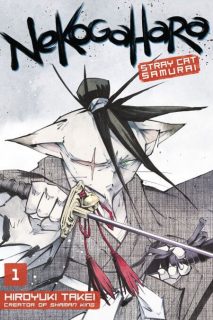
Nekogahara: Stray Cat Samurai, Volume 1 by Hiroyuki Takei
Neo-Parasyte F by Various
Platinum End, Volume 1 written by Tsugumi Ohba, illustrated by Takeshi Obata
Princess Jellyfish, Omnibus 3 by Akiko Higashimura
Samejima-kun and Sasahara-kun by Koshino
The Secret Sakura Shares by Akira Hagio
Sweetness &Lightning, Volume 2 by Gido Amagakure
Ten Count, Volume 2 by Rihito Takarai
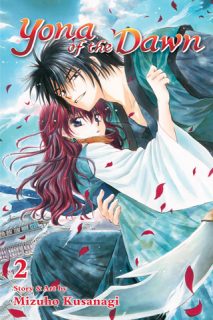
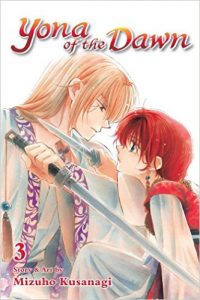
Yona of the Dawn, Volume 2 by Mizuho Kusanagi

Manhwa!
Goong: The Royal Palace, Volumes 2-7, 9-10 by Park SoHee

Comics!
Adulthood Is a Myth by Sarah Andersen
Eat Me by Megan Rose Gedris
Godzilla in Hell by James Stokoe
Food Baby by Lucie Byron
Hotblood!: A Centaur in the Old West by Toril Orlesky
Humanescent written by Jacques Nyemb
Kill 6 Billion Demons, Volume 1 by Tom Parkinson-Morgan
Love! Love! Fighting! by Sharean Morishita
Romeo X Julien, Act 2: The Lovers by Marina
Tetris: The Games People Play by Box Brown

Artbooks!
Fat Mermaids edited by Paige Hall
Hotblood! Foundry: Materials Book (1871-2016) by Toril Orlesky

Novels!
Deep Red by Hisashi Nozawa
Dandelion Dynasty, Book 2: The Wall of Swords by Ken Liu

Anthologies!
Modanizumu: Modernist Fiction from Japan, 1913-1938 edited by William Jefferson Tyler
Three-dimensional Reading: Stories of Time and Space in Japanese Modernist Fiction, 1911-1932 edited by Angela Yiu

Nonfiction!
Are You an Echo?: The Lost Poetry of Misuzu Kaneko written by David Jacobson, illustrated by Toshikado Hajiri
Bodies of Evidence: Women, Society, and Detective Fiction in 1990s Japan by Amanda C. Seaman
Reading Food in Modern Japanese Literature by Tomoko Aoyama
She Changed Comics: The Untold Story of the Women Who Changed Free Expression in Comics by Various
Whisky Japan: The Essential Guide to the World’s Most Exotic Whisky by Dominic Roskrow

Anime!
Monthly Girls’ Nozaki-kun directed by Mitsue Yamazaki
Natsume’s Book of Friends, Seasons 1-2 directed by Takahiro Omori
Escaflowne: The Movie directed by Kazuki Akane

Filed Under: Bookshelf Overload, UNSHELVED

  • « Go to Previous Page
  • Page 1
  • Interim pages omitted …
  • Page 483
  • Page 484
  • Page 485
  • Page 486
  • Page 487
  • Interim pages omitted …
  • Page 1068
  • Go to Next Page »
 | Log in
Copyright © 2010 Manga Bookshelf | Powered by WordPress & the Genesis Framework