• Skip to primary navigation
  • Skip to main content
  • Skip to primary sidebar
  • Home
  • About Us
    • Privacy Policy
    • Comment Policy
    • Disclosures & Disclaimers
  • Resources
    • Links, Essays & Articles
    • Fandomology!
    • CLAMP Directory
    • BlogRoll
  • Features & Columns
    • 3 Things Thursday
    • Adventures in the Key of Shoujo
    • Bit & Blips (game reviews)
    • BL BOOKRACK
    • Bookshelf Briefs
    • Bringing the Drama
    • Comic Conversion
    • Fanservice Friday
    • Going Digital
    • It Came From the Sinosphere
    • License This!
    • Magazine no Mori
    • My Week in Manga
    • OFF THE SHELF
    • Not By Manga Alone
    • PICK OF THE WEEK
    • Subtitles & Sensibility
    • Weekly Shonen Jump Recaps
  • Manga Moveable Feast
    • MMF Full Archive
    • Yun Kouga
    • CLAMP
    • Shojo Beat
    • Osamu Tezuka
    • Sailor Moon
    • Fruits Basket
    • Takehiko Inoue
    • Wild Adapter
    • One Piece
    • After School Nightmare
    • Karakuri Odette
    • Paradise Kiss
    • The Color Trilogy
    • To Terra…
    • Sexy Voice & Robo
  • Browse by Author
    • Sean Gaffney
    • Anna Neatrour
    • Michelle Smith
    • Katherine Dacey
    • MJ
    • Brigid Alverson
    • Travis Anderson
    • Phillip Anthony
    • Derek Bown
    • Jaci Dahlvang
    • Angela Eastman
    • Erica Friedman
    • Sara K.
    • Megan Purdy
    • Emily Snodgrass
    • Nancy Thistlethwaite
    • Eva Volin
    • David Welsh
  • MB Blogs
    • A Case Suitable For Treatment
    • Experiments in Manga
    • MangaBlog
    • The Manga Critic
    • Manga Report
    • Soliloquy in Blue
    • Manga Curmudgeon (archive)

Manga Bookshelf

Discussion, Resources, Roundtables, & Reviews

Blog

Yokai Rental Shop, Vol. 1

October 31, 2017 by Katherine Dacey

Yokai Rental Shop is a classic example of Monkey Paw Theater, in which a foolish person comes into possession of a magical object, uses said object to grant an ill-advised wish, then pays a terrible price for his rash decision. Author Shin Mashiba puts a Japanese spin on W.W. Jacob’s famous story, substituting a nekomata and an okuri-inu for a cursed paw, but otherwise conforms the tenets of the genre. The clientele of Pet Shop Crow seek quick or unwise solutions to everyday problems: one mourns the untimely demise of her favorite idol, another dreads his daily encounter with bullies, and a third worries that her younger sister is trying to steal her boyfriend. To help each client “solve” her problem, shop owner Karasu rents them an exotic pet with special abilities. That pet comes with specific instructions — defy them and the deal goes sideways, resulting in bodily harm or emotional trauma.

I liked this story better when it was called Pet Shop of Horrors.

Part of the problem is that Karasu’s clientele is an unsympathetic lot, especially when contrasted with the characters in “The Monkey’s Paw” or Pet Shop of Horrors. The bullying victim, for example, is so enraptured by his yokai companion’s powers that he explicitly ignores Karasu’s instructions, fantasizing about how he will utilize his new-found strength. Within two pages, however, he realizes the folly of his arrogance, as the okuri-inu metamorphoses into a canid Godzilla with a taste for human flesh. Only a quick intervention from Karasu prevents the chapter from devolving into a gruesome spectacle, though you may wish that Karasu had adopted a more laissez-faire attitude towards his foolish client.

The other major issue plaguing Yokai Rental Shop is that Mashiba doesn’t stick with the monster-of-the-week formula for long. A subplot involving Karasu and his half-brother Hiiragi, a fussy civil servant, takes a detour into InuYasha territory when Karasu makes an important discovery about their father. Mashiba tries milking the brothers’ temperamental differences for laughs, but the jokes don’t land with much force; if you’ve seen one episode of The Odd Couple or read a chapter of xxxHolic, you’ve seen this dynamic executed with more gusto and imagination, two qualities that Yokai Rental Shop sorely lacks.

Neither of these deficiencies would be so glaring if the artwork was less perfunctory, but Mashiba’s serviceable character designs and settings do little to imbue the story with its own identity. The shop’s clientele, in particular, are blandly interchangeable; they look like they belong in a government-issue manga about tax returns or recycling, lacking the kind of individuality that might highlight the poignancy of their dilemmas or underscore just how determined they are to get what they want. Even the “turn” in each story — in which the yokai reveal their true natures — is executed in get-the-job-done manner, relying too much on dialogue, smudgy screentone, and slashing lines to suggest what’s happening.

By skimping on these moments, Mashiba misses a crucial opportunity to make the reader feel pity, revulsion, satisfaction, or fear at the outcome of each story; the strongest reaction that any of these scenarios elicits is a shrug of the shoulders. The reader is left wondering why the author even bothered with the horror angle when her true objective seems to be writing a dramedy about a Mutt-and-Jeff pair of brothers—albeit eccentric ones.

YOKAI RENTAL SHOP, VOL. 1 • BY SHIN MASHIBA • TRANSLATED BY AMANDA HALEY, ADAPTED BY JULIA KINSMAN • SEVEN SEAS ENTERTAINMENT • RATED TEEN

Filed Under: Manga, Manga Critic, REVIEWS Tagged With: Horror/Supernatural, Seven Seas, Shin Mashiba, Yokai

Honey So Sweet, Vol. 8

October 31, 2017 by Anna N

Honey So Sweet Volume 8 by Amu Meguro

I’m a little worried about Shojo Beat’s list of titles now, because with both My Love Story!! and Honey So Sweet ending, it seems to be like there is a slight lack of super adorable manga currently being published. I’m sure something else will come along soon to full fans’ need for low conflict shoujo where everyone is genuinely nice to each other, but in the meantime I might have to get that extra warm and fuzzy feeling by rereading older series instead of from new manga.

This final volume focused on the characters’ all getting their lives together as Nao and Taiga start to approach the end of high school. In particular, Nao’s uncle Sou finally has a chance at a life outside of being a parent, as a long-lost love from his past suddenly reappears in his life. Sou has put aside his own feelings to a degree, with all of his efforts focused on Nao’s happiness. Nao is determined to demonstrate that she’s capable of being more self-sufficient, with the goal of encouraging Sou to move on. She has some predictably funny mishaps in her first attempts at household management.

In the end, Taiga’s usual blunt nature and heartfelt feelings cut to the heart of the matter in a conversation with Sou. Sou might find a way to move on as the young couple enters adulthood together. There’s a predictably happy ending, and a bonus story in the back of the manga that shows the first, one-shot version of the story. Overall, while Honey So Sweet might not be the most challenging manga to read, the whimsical illustrations and gentle pacing of the plot in each volume made it a perfect stress relieving manga. It is difficult to feel cynical about the world when reading Honey So Sweet, and that’s the main reason why I enjoyed this series so much.

Filed Under: Manga Reviews, REVIEWS Tagged With: honey so sweet, shojo beat, shoujo, viz media

Log Horizon: Go East, Kanami!

October 31, 2017 by Sean Gaffney

By Mamare Touno and Kazuhiro Hara. Released in Japan by Enterbrain. Released in North America by Yen On. Translated by Taylor Engel.

We continue our tour of the Elder Tales universe, with this volume not even taking place on the Japanese server for the most part. Instead we take a look at a group in Central Asia (Kazakhstan, to be precise) and their attempt to move slowly east so that they can swim to Japan (which seems ludicrous, but remember, adventurers). The reason to swim to Japan is quite a clever one: the whole disaster that caused the players to get caught in this world happened before the expansion pack had actually dropped… except in Japan, where they got it by virtue of the time zone. The group is led – sort of – by Kanami, a name that has come up quite often in previous books. The former de facto leader of the Debauchery Tea Party, she’s more a force of will than a leader. That said, it makes sense that of the main cast of this book, she actually gets the least attention – she has no character arc, being basically perfect.

No, instead, the main character for this book is Leonardo, who dresses like his favorite American hero, silly as it may seem, and says “Cowabunga” during desperate attacks. And is named Leonardo. But it’s OK, because this is a frog, not a turtle. Which makes this OK! Seriously, the mind reels at how much Touno wanted to use Teenage Mutant Ninja Turtles here, and the serial numbers aren’t so much filed off as covered over with see-through tape. Leonardo is actually a New Yorker, which is refreshing, and we get a passable idea of what his life was like in the real world before this (he seems to be a computer nerd). Here, he’s a very competent assassin, though he’s still not quite invested in their current situation, and has trouble seeing the People of the Earth as anything but NPCs. A lot of this book is showing him the error of his ways, including a subtle romance with Coppelia, a girl with a mysterious past.

The Log Horizon anime did a good job of steadfastly putting each book on the screen… with the exception of this book, which got short shrift, getting only one episode devoted to it. As such, if anime fans wanted to know which one they had to buy to get more details, this is definitely the one. There is the usual endless discussion of game mechanics, far more than almost any other LN in a game world bothers to do, but there are also some very cool battles. And we get more insight into what exactly is happening, and how the People of the Earth and its denizens are reacting to it. Lastly, I was very amused by the occasional mention of the series’ big bad, Indicus, the smug maid who’s using Nureha as a puppet ruler. Every time she’s mentioned, it’s in a “My friends… and Zoidberg” way, showing that almost nobody can stand her. I expect a confrontation between her and Shiroe soon.

This volume didn’t blow me away like the previous one did, but it’s a rock-solid volume of Log Horizon, and fans of the anime will absolutely have to get it. And remember, this Leonardo likes SUSHI, not pizza.

Filed Under: log horizon, REVIEWS

Bookshelf Briefs 10/30/17

October 30, 2017 by Michelle Smith and Sean Gaffney Leave a Comment

Alice & Zoroku, Vol. 2 | By Tetsuya Imai| Seven Seas – I’ll be honest, I have next to no interest in the science fiction part of this series, which involves mysterious powers, political intrigue trying to control those powers, a woman with a tragic backstory who is happy to use said backstory to kidnap children if it allows her to be close to her husband, etc. It’s told in a reasonable manner, but mostly left me cold. Where the series really takes off is when Zoroku is on the page—his righteous rage and straight-ahead manner no doubt frustrates his family endlessly, but they’re exactly what Sana needs, and his speeches to her were the highlight of the book. It’s an interesting balance between the two, but I’m still invested enough in the story to see where the author goes with it. – Sean Gaffney

Beasts of Abigaile, Vol. 2 | By Spica Aoki| Seven Seas – Most shoujo series live and die on the strength of the heroine, and that one big plus that Abigaile has going for it. Nina is spunky, righteous, and inspires others. She’ll sacrifice herself in order to save someone else, and also do her best to make friends AND try to figure out why she’s changed and how to escape this prison. We also get a little better look at why she left Japan, as it becomes clear it wasn’t just bullying but boomerang bullying. Naturally she’s about to get that here, as we have Eva clearly ready to take up the torch and become the Evil Girl who is there to make Nina’s life miserable. Not much in this series is surprising, but I enjoy its heart being on its sleeve, and fans of werewolves and shoujo will want to get it. – Sean Gaffney

Black Butler, Vol. 24 | By Yana Toboso | Yen Press – When a new volume of Black Butler comes out, I always think, “Ooh!” but then I read it and I’m like, “Oh yeah.” Because every time, I experience a mixture of mild interest and “I really don’t care about these characters.” In this installment, Ciel is up investigating a popular music hall that is extracting blood from its customers. Rather than raze it, he decides it’s wiser to set up an alternative to capture people’s hearts, and so he does, and we get another boy band performance from more students at the boys’ school. I suppose if one reads this series for fanservice reasons, this is plenty satisfying, but since I don’t, it’s rather ho-hum. I don’t know why I can’t just drop this series, but I guess I like it just enough to keep going with it. Faint praise, indeed. – Michelle Smith

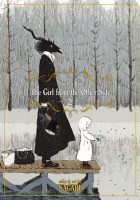
The Girl from the Other Side: Siúil, a Rún, Vol. 3 | By Nagabe| Seven Seas – After the first two volumes were unsettling with occasional suggestion that things might get a bit scary, this volume jumps headfirst into terrifying, especially towards the end of the book. I will also give it credit for a major fake out—I was fairly certain that one of the characters reintroduced here was either a fake or dead, and the fact that they’re not really shook me. Of course, they’re not untouched by the events going on in the book. The whole infection thing appears to be very real, and we understand Teacher’s feelings and hands-off attitude with Shiva a lot better now. And, of course, the best reason to read this series: the art is amazing. Do yourself a favor and pick this up. – Sean Gaffney

Horimiya, Vol. 9 | By Hero and Daisuke Hagiwara | Yen Press – I’m happy to report that there was no sign whatsoever of Hori cajoling Miyamura into being rough with her in this volume. Instead, we get a series of vignettes about the Hori family kotatsu and how it lulls the unsuspecting into lengthy naps, plus a recurring theme about Hori eating too many tangerines. I really liked the final scene between Hori and Miyamura, as it’s the kind of important romantic development we haven’t had in a few volumes now, but my attention was most captivated by Yuki and Tooru, who are still pretending to be dating. Yuki doesn’t want to drop the ruse, even when it breaks Sakura’s heart, yet also doesn’t want to suggest that it could be the real deal, lest she lose what closeness she does have with Tooru. I find I’m pretty invested in the outcome of their side drama. – Michelle Smith

Please Tell Me! Galko-chan, Vol. 4 | By Kenya Suzuki| Seven Seas – By now you know what you’re getting with a volume of Galko-chan. There’s not as much constant sex talk as the first volume, though it definitely crops up, and the art occasionally loves to emphasize the bodies of the girls. On the bright side, while the author clearly loves large breasts, the bodies are drawn relatively realistically for such characters. But honestly, the real reason to read this series is the friendship between Galko, Otoko and Ojou, and their daily conversations and obsessions. Galko’s obsession with Western films is getting more and more attention, and we even get a Snakes on a Plane mention. One of the better slice-of-life style series out there. – Sean Gaffney

Sword Art Online: Girls’ Ops, Vol. 4 | By Neko Nekobyou and Reki Kawahara | Yen Press – I will admit, it’s possible that the outcome of this volume—which wraps up the storyline with Lux’s past in SAO—was a bit too overwhelmingly sweet and heartwarming. SAO doesn’t really lean on the whole “power of friendship” trope as much as some other shonen series, but Girls’ Ops is not afraid to take it and run, with our villain doing her best to break Lux and her new friends apart, and completely failing to do so. And the villain is saved too, and turns out to be another ojou like Lux (and Asuna—honestly, the game must have been expensive as it had a lot of rich kids playing it). And Silica got to be smart and cool! I like that. The series does continue, likely in another year or so. – Sean Gaffney

Tokyo Tarareba Girls, Vol. 8 | By Akiko Higashimura | Kodansha Comics (digial only for the moment)- Just as Rinko has found easy-going happiness with Mr. Hayasaka and has moved in with him, her friends and Mami turn up on her doorstep with the revelation that Key might be in love with her. To Rinko’s credit, she protests a great deal while en route to see him, but the fact is… she got in the car of her own free will. And man, Higashimura-sensei is so wonderfully cruel about depicting what ensues. Once Rinko and Key meet again, their chemistry is undeniable, resulting in some great dramatic moments, but these developments are intercut with scenes in which sweet Mr. Hayasaka thinks how nice it is to have someone to come home to and plans the nice dinner he’s going to make for their private housewarming party. It’ll be brutal to see how much he is hurt by this, but I still desperately want that final volume ASAP! – Michelle Smith

Filed Under: Bookshelf Briefs

Pick of the Week: Break on Through to the Other Side

October 30, 2017 by Sean Gaffney, Michelle Smith, Anna N, Katherine Dacey and Ash Brown Leave a Comment

MICHELLE: There’s a lot of potentially interesting stuff here, but I have to go with the title that I have been eagerly anticipating for months, which is the third volume of Nagabe’s The Girl from the Other Side, published by Seven Seas. With its unique, dark artwork and fairy-tale story, it’s one-of-a-kind and absolutely something every manga fan should read. Especially you, MJ.

ANNA: I agree! The Girl from the Other Side is different from so much other manga out there, and the foreboding feeling that permeates this series make it a great spooky choice to read around Halloween.

SEAN: There is an embarrassment of stuff I want to get this week. My pick is for the final volume of The Disappearance of Nagato Yuki-chan, though. A series somewhat unloved by original Haruhi fans (at least here), I think it has its own charm, and its Asakura Ryouko is my favorite Asakura Ryouko.

KATE: Man, next week looks like it might bankrupt me! I can’t decide between the AKIRA box set and the next installment of The Girl From the Other Side, both of which look pretty damn amazing. I’m also excited about In This Corner of the World — rescued from license oblivion by Seven Seas — and the print debut of To Your Eternity, which is gorgeously illustrated and incredibly sad. Like, have-a-stiff-drink-before-you-read-it sad. (You’ve been warned!)

ASH: My wallet is in trouble, too. There’s so much being released that I’m interested in! I’ll definitely be picking up the next volumes of Kitaro and The Girl from the Other Side and the release of In This Corner of the World is certainly notable, too. But in the end, I think I’ll be joining Kate in naming the debut of To Your Eternity as my official pick this week. I’ve really enjoyed seeing Yoshitoki Oima’s growth as a creator.

Filed Under: PICK OF THE WEEK

My Week in Manga: October 23-October 29, 2017

October 30, 2017 by Ash Brown

My News and Reviews

In addition to the usual My Week in Manga, two other features were posted at Experiments in Manga last week. First up was the most recent monthly giveaway. The winner won’t be announced until Wednesday, so there’s still a little time left to enter for a chance to win the first volume of Oresama Teacher by Izumi Tsubaki. (I finally got around to reading Oresama Teacher because I love Tusbaki’s other manga series Monthly Girls’ Nozaki-kun so much. I am delighted to report that Oresama Teacher is great, too.) I also posted my review of the first omnibus of Sweet Blue Flowers by Takako Shimura last week. The manga was one of the debuts that I was most excited for this year and I was not at all disappointed. Like Shimura’s earlier series Wandering Son (which is an extremely important manga to me personally), Sweet Blue Flowers is a beautiful work. I’m so glad that it’s finally getting the print release it deserves and look forward to reading the rest of the series. (Now if only the rest of Wandering Son could be published, too! My fantasy is that Sweet Blue Flowers will be so successful that more of Shimura’s work will be translated.) Once again, I wasn’t actually online much last week and I worked on Sunday so I’m sure there’s plenty of news that I’ve missed. However, I did catch that Thomas Baudinette posted a translation of “Painting the essence of gay erotic art”–an interview with Gengoroh Tagame from a 2014 issue of the art magazine Bijutsu Techo.

Quick Takes

Fairy Tail: RhodoniteFairy Tail: Rhodonite by Kyouta Shibano. At first I was a little confused by the “2” emblazoned upon the cover of Rhodonite since it’s not in fact the second volume of Rhodonite. Instead, it’s the second volume in Shibano’s Fairy Tail Gaiden manga, one of a multitude of series spinning off from Hiro Mashima’s Fairy Tail that have recently been translated into English. Despite retaining the volume designations, the Fairy Tail Gaiden manga are being released as independent works by Kodansha Comics. Shibano’s three spinoff volumes, while relying very heavily on the original series, largely stand alone from one another. Rhodonite collects two side stories featuring Gajeel Redfox, one of the Dragon Slayers associated with the Fairy Tail Guild. Since I’m not especially well-versed in the Fairy Tail franchise, I’m not exactly sure where the first story, from which the volume gains its name, fits in. However, it does reveal more of Gajeel’s past and backstory as the guild is investigating the magic drug trade. The second story takes place while Gajeel is a member of the Magic Council during Fairy Tail’s disbandment. In this story he temporarily teams up with Cobra to rescue a group of children who were kidnapped to be sold as slaves. Already intended for those already familiar with Fairy Tail, Rhodonite will even more specifically appeal to those who are fans of Gajeel.

Spirit Circle, Volume 1Spirit Circle, Volume 1 by Satoshi Mizukami. I rather enjoyed Lucifer and the Biscuit Hammer, currently the only other manga series by Mizukami to be licensed in English. I would have been interested in Spirit Circle for that reason alone, but I’ve also been hearing great (and well-deserved) things about the manga beyond that. Like it’s predecessor in English (which is actually briefly referenced in passing), Spirit Circle is a manga that’s a little strange and quirky but that also has a great deal of heart and soul. Fuuta Okeya has the ability to see ghosts. That by itself would generally be enough to form the basic premise of a series, but thanks to a new transfer student, Fuuta must now also confront his past lives. Though meeting Fuuta for the first time in this life, Kouko Ishigami is very familiar with his previous incarnations. Historically, their encounters haven’t always gone so well, though. In the first volume of Spirit Circle, Fuuta is made to relive two of his pasts to the point of his deaths and parts of a third life are revealed as well. So far, I’m loving Spirit Circle. Fuuta and Kouko’s past lives are filled with heartbreaks and joys, echoes of which are apparent in the teenagers’ current existences. Taken separately, the stories are interesting, but together they’re marvelous. I’m very curious to see where Mizukami takes the series next.

Sweet Bean PasteSweet Bean Paste by Durian Sukegawa. The 2015 film adaptation of Sukegawa’s novel An has been released internationally under several different titles–Sweet Red Bean Paste, An, and Sweet Bean–and now the original work has been translated into English with yet another title variation, Sweet Bean Paste. I’ve not seen Naomi Kawase’s film, but it seems to have been generally well-received. As for Sukegawa’s original novel, it makes for a fairly quick and light read despite some of the story’s more tragic undercurrents and philosophical musings. Sentaro is a man with a criminal past, out of prison but still working off his debt by making and selling dorayaki in a confectionery shop owned by the widow of his boss. He’s not particularly invested in the job, but that begins to change when an elderly woman named Tokue, her hands disfigured from a childhood illness, convinces him to let her join him at the shop. Bringing a unique perspective on life along with a recipe for sweet bean paste more delicious than any other Sentaro has tasted, Tokue has a huge influence upon the younger man as their unexpected friendship blossoms. Although much about Tokue’s past is unfortunate and she continues to deal with the stigma associated with leprosy, she has still found a way to live on in the face of prejudice and discontent. Sentaro has much to learn from Tokue, even if the lessons are bittersweet.

Filed Under: My Week in Manga Tagged With: Durian Sukegawa, Fairy Tail, Kyouta Shibano, manga, Novels, Satoshi Mizukami, Spirit Circle

Hybrid x Heart Magias Academy Ataraxia, Vol. 1

October 30, 2017 by Sean Gaffney

By Masamune Kuji, Riku Ayakawa, Hisasi, and Kurogin. Released in Japan as “Masou Gakuen HxH” by Kadokawa Shoten, serialization ongoing in the magazine Comp Ace. Released in North America by Yen Press. Translated by Caleb Cook.

Every once in a while, despite knowing that it’s not really my thing, I take a look at one of these “excuse to draw large breasts” series. If I’m unlucky, I can’t even finish the thing. If I’m lucky, I find enough points of interest to catch my eye besides the boobs. Most of the time, though, I finish the volume and think “well, that certainly was that kind of series”, and such is the case with Hybrid x Heart, which also manages to work in the cliche of the magical academy of fighters. The thing that did surprise me, though, is how much the basic plot feels like Evangelion. Boy who was abandoned for being useless is brought back in a time of crisis to use his mecha powers to save the world, being led by his older sister, who is not a great Gendo figure, but we can’t have everything. The difference is that in order to save the world, he has to feel up the female cast until they gain power.

Yes, you read that right. Usually these series at least try to put a veneer of technology over the ecchi deeds, and we try to get that here with talk of “hybrid counts” and how it’s Kizuna’s power that basically refuels them. But it’s really about the breasts, which are groped quite a bit in this series, because there’s also a lot of mecha fighting and the girls who do the actual fighting need a bit of a recharge. I did notice that this is the sort of series where we not only credit the original character designer, but the original mecha designer, and the powered suits do look pretty cool if you’re into that sort of thing, though I imagine hardcore Gundam types might want to see more mecha battles and a bit less groping. As for the characters, they’re very generic, with the heroine Aine seemingly OK with Kizuna doing whatever he wants as long as she gets more power, and the standard blonde American Yurishia who will no doubt be the first main rival figure.

This was originally a light novel, and I think, as with the other series of this sort where the manga was licensed but the LN wasn’t (High School DxD, Testament of Sister New Devil) I should probably be grateful – the groping and constant boobfest is bad enough visually, but as prose I think it might be unbearable. As for the art, it’s passable, though I do note that Aine (blue hair) and Yurishia (blonde hair) have a tendency to look a lot alike in black and white, and it can be hard to tell them apart. Honestly, this reads sort of like the harem Evangelion fics you used to see back in the day on FFNet, with of course one big exception: no one is getting lucky here. The series doesn’t go beyond groping in this first volume. I’m not sure oif that will change, but in the meantime, I can recommend this series only to the most hardcore “must get everything with mecha” fans, or its likely audience, 13-year-old boys.

Filed Under: hybrid x heart, REVIEWS

Kamisama Kiss Vol. 25 – limited edition

October 29, 2017 by Anna N

Kamisama Kiss Volume 25 Limited Edition by Julietta Suzuki

I had a good time getting caught up on this series in order to enjoy the special edition concluding volume. After having to deal with the grand conclusion of the saga concerning Tomoe and Akura-ou, including visiting the land of the dead, tracking down Akura-oh’s immortal body, and dealing with Nanami’s decline after having her life force taken from her, the final volume gives all the characters in Kamisama Kiss some much needed breathing room, as Nanami and Tomoe prepare to enter the world of human adulthood together. Along the way Nanami helps out the Kotaro and Himemiko one last time, and it is nice to have this circular moment of returning to some of Nanami’s first friends after she became attached to the Ayakashi world.

Nanami and Tomoe’s wedding is a little bittersweet, because when they both become human, they’ll become cut off from the world where all their friends live. This is especially hard on Mizuki, who is worried about being left alone. Nanami and Tomoe decide to marry on the last possible day before becoming human, so everyone can be invited to the wedding. I do enjoy final volumes that allow the reader to say goodbye to an extended cast of characters, and this volume pulls off the reunion and celebration in a lively fashion, with detailed wedding costumes and panels that pause to show all the wedding guests. Someone as capable and arrogant as Tomoe isn’t going to have too much difficulty fitting into the human world, and the final chapter shows just how capable the newly human couple is at adapting to their new life.

The limited edition featured a slim hardcover book with the first few pages devoted to small reproductions of the color pages in the manga volumes. This was done in a collage, year-book style layout which was nice, but it also made me really long for an oversized volume of Julietta Suzuki illustrations because some of the detail was lost. The bulk of the volume is an extra bonus story that shows more of Nanami and Tomoe’s life after becoming human, with bonus pencil sketches of the final chapter of the manga. It was nice to get a window into Suzuki’s artistic process, I only wish the special bonus book had been two times the size and twice as long, but I shouldn’t be greedy! Kamisama Kiss was such a special series, I’m glad the final volume got a little extra bonus for the long-time fans who have enjoyed the series for so long.

Filed Under: Manga Reviews, REVIEWS, Uncategorized Tagged With: kamisama kiss, shojo beat, shoujo, viz media

In Another World with My Smartphone, Vol. 5

October 29, 2017 by Sean Gaffney

By Patora Fuyuhara and Eiji Usatsuka. Released in Japan as “Isekai wa Smartphone to Tomo ni” by Hobby Japan. Released in North America digitally by J-Novel Club. Translated by Andrew Hodgson.

First, off, here’s a surprise with this volume of Smartphone: there’s no new love interest. Touya’s list of wives is still stuck at five, and (for anime watchers who were rather startled to see her name on the flashforward) Leen here does nothing except dole out the occasional exposition and pine for the library to be discovered. That does not mean that there’s not a lot going on here: the story is jam-packed as always, though typically it does not appear to follow a specific path so much as meander. Touya sets up his new duchy, adding renovations to the castle (game room with bowling alley and whack-a-mole), gets the major rulers of the area obsessed with mahjong, creates roads, brings in new businesses, and creates a legion of soldiers (including a team of ninjas led by Tsubaki from the Eashen volume). Typical Smartphone stuff, and nothing that would raise an eyebrow. But let’s talk about the religious dictatorship.

This is the first volume to come out after the anime finished, so I expect may grab a few more readers who want to see what happens next. They may be surprised. Not so much by the evil and hypocritical dictatorship – such things are a dime a dozen in manga and light novels, and honestly the fact that the main Cardinal was described as looking exactly like Hitler barely raised an eyebrow. No, what startled me was Touya’s vehement reaction to the attempt to proselytize his nation, which in my opinion really went above and beyond natural “I’m not a fan of organized religion”. Touya’s past on our Earth pre-death has been completely ignored as we’ve gone along, but I do wonder if there was something in his past that led to this. I also suspect the author has an ax to grind. To be fair, Touya does say that he’s fine with people worshiping God in the way that they want – but he’ is very much against organized religion trying to flex its muscle, and says so vehemently. Where this becomes hilarious is that the God of this series – the one who resurrected Touya, which is why he can say “Sure I do” when people ask if he believes in God – comes down from on high to thank Touya for his speech decrying religion, and affirms to the somewhat terrified priestess watching that he really barely watches over the world at all – humans should seek to improve the world themselves, rather than rely on deities. The entire chapter is rather mind-boggling, and I wonder how it will read here in the West.

There is also a certain amount of backstory regarding the Phrase, which is not discovered through hard work and research, but instead given to us in an infodump by Ende, whose sole purpose in this series is to give exposition and look like Kaworu from Evangelion. The series’ faults are all still there – Touya is ridiculously overpowered, and finds out in this book he actually is a demigod; the BL author seems to have driven him into a complete “ew ew ew” rage whenever she’s remotely mentioned, which is irritating; and as I said before, despite the Phrase there seems to be no driving force behind this title beyond “watch what Touya does next”. That said, I’m content to do just that. The fiancees don’t get much to do here, but they all do kick ass in the final story, without Touya’s help, which pleased me. Oh yes, and Touya used his powers at Olga and Lyon’s nuptials for one of the sweetest wedding speeches you will ever see – it may be the highlight of the book. If you hated Smartphone, this won’t change your mind. If you loved Smartphone, unless you’re an Evangelical Christian, this will give you what you want.

Oh, and Touya also invents baseball. Because of course he does.

Filed Under: in another world with my smartphone, REVIEWS

Gabriel Dropout, Vol. 1

October 28, 2017 by Sean Gaffney

By Ukami. Released in Japan by ASCII Mediaworks, serialization ongoing in the magazine Dengeki Daioh “g”. Released in North America by Yen Press. Translated by Caleb Cook.

We’ve seen a lot of comedy manga lately from various publishers, but it’s been very hit and miss, which is not surprising given the nature of the beast. Comedy is hard, and comedy is also subjective. Sometimes something that’s enjoyable for a volume or two is going to be tiresome in the long haul (I’m looking at you, Aho Girl). Sometimes something that other readers find funny is going to rub you the wrong way, or you end up sympathizing too much with a group of characters who are clearly meant to be complete asses. That is, I suppose, theoretically possible with the cast of Gabriel Dropout, but I for one welcome a series that is not afraid to show us that both Heaven and Hell are combining to produce angels and devils that seem to specialize in being lazy, unproductive, pathetic, cruel, and completely unable to fulfill their original mission. If only as I find it very funny indeed.

Once again, the title is the premise. The girl on the cover is Gabriel, an Angel who graduated top of her class in Heaven, and is sent to Earth to learn how humans work so that she can help them in the best way possible. We do not, thankfully, see her arrival and fall – that would ruin the comedy. Instead, we simply cut to her, months later, down on Earth in a filthy apartment, playing RPGs, manga and rubbish stacked high, lazing around in her underwear. Her explanation for how this happened is as vague as it is self-serving, but I don’t care, as this sort of character is simply funny. She has a good snarky monologue in her head, can be the boke or tsukkomi as required, and clearly has the ability to be noble and upright but chooses not to. She’s assisted by Vignette, a demon who is essentially her mirror image – she needs to be doing bad things but has wound up being the student council president type.

These two alone would be a decent enough comedy, but we then add the ludicrously over the top Satanya, also a demon but far more egotistical, dramatic, and stupid. She’s the sort who brings her own downfall on herself, but it’s her reactions to everything that are wonderful. Then we see Gabriel’s fellow Angel Raphael, who is basically Mugi from K-On! if she were totally evil. Raphael lives to tease and troll, and therefore we see her most often with Satanya, who is the perfect victim. The premise of the series seems to be that the Angels and Devils would function much better of they were on each other’s team, though nobody is actually trying to do anything genuinely bad – Satanya regards throwing away a bottle without taking off the cap first as the height of villainy, after all.

Again, comedy is subjective, and I think some people might not enjoy this as much as I did. Certainly if you take Satanya’s suffering seriously the entire cast might simply be giant jerks. But I found Gabriel Dropout very funny, and am definitely adding it to my list of ongoing comedy manga. Whether it can survive the long haul… is a question the next volume will have to answer.

Filed Under: gabriel dropout, REVIEWS

  • « Go to Previous Page
  • Page 1
  • Interim pages omitted …
  • Page 401
  • Page 402
  • Page 403
  • Page 404
  • Page 405
  • Interim pages omitted …
  • Page 1048
  • Go to Next Page »
 | Log in
Copyright © 2010 Manga Bookshelf | Powered by WordPress & the Genesis Framework