• Skip to primary navigation
  • Skip to main content
  • Skip to primary sidebar
  • Home
  • About Us
    • Privacy Policy
    • Comment Policy
    • Disclosures & Disclaimers
  • Resources
    • Links, Essays & Articles
    • Fandomology!
    • CLAMP Directory
    • BlogRoll
  • Features & Columns
    • 3 Things Thursday
    • Adventures in the Key of Shoujo
    • Bit & Blips (game reviews)
    • BL BOOKRACK
    • Bookshelf Briefs
    • Bringing the Drama
    • Comic Conversion
    • Fanservice Friday
    • Going Digital
    • It Came From the Sinosphere
    • License This!
    • Magazine no Mori
    • My Week in Manga
    • OFF THE SHELF
    • Not By Manga Alone
    • PICK OF THE WEEK
    • Subtitles & Sensibility
    • Weekly Shonen Jump Recaps
  • Manga Moveable Feast
    • MMF Full Archive
    • Yun Kouga
    • CLAMP
    • Shojo Beat
    • Osamu Tezuka
    • Sailor Moon
    • Fruits Basket
    • Takehiko Inoue
    • Wild Adapter
    • One Piece
    • After School Nightmare
    • Karakuri Odette
    • Paradise Kiss
    • The Color Trilogy
    • To Terra…
    • Sexy Voice & Robo
  • Browse by Author
    • Sean Gaffney
    • Anna Neatrour
    • Michelle Smith
    • Katherine Dacey
    • MJ
    • Brigid Alverson
    • Travis Anderson
    • Phillip Anthony
    • Derek Bown
    • Jaci Dahlvang
    • Angela Eastman
    • Erica Friedman
    • Sara K.
    • Megan Purdy
    • Emily Snodgrass
    • Nancy Thistlethwaite
    • Eva Volin
    • David Welsh
  • MB Blogs
    • A Case Suitable For Treatment
    • Experiments in Manga
    • MangaBlog
    • The Manga Critic
    • Manga Report
    • Soliloquy in Blue
    • Manga Curmudgeon (archive)

Manga Bookshelf

Discussion, Resources, Roundtables, & Reviews

Blog

Holmes of Kyoto, Vol. 2

December 29, 2020 by Sean Gaffney

By Mai Mochizuki and Shizu Yamauchi. Released in Japan by Futabasha. Released in North America by J-Novel Club. Translated by Minna Lin.

I think the thing I find most amusing about Holmes of Kyoto is how it can’t seem to settle down in one particular genre. It’s supposed to be in the ‘light mystery’ genre, mostly involving forged antiques, and it definitely is that for a good deal of the book. The SOLUTION to said mysteries, though, is rarely the point and often an afterthought – at one point the book sets up an elaborate locked room mystery, complete with witnesses giving testimony that the reader is supposed to use to deduce the truth… and then solves the mystery immediately. There’s also the “let’s tour Kyoto and talk about how awesome it is” parts of the book, which are just as important as the mystery, and at times this seems like one of those travelogue style books where each chapter has the heroes at a new landmark. And of course it’s also a simmering slow-burn romance, one that actually seems to be on both sides this time, if still not going anywhere. The fact that the book balances all these sides perfectly is what makes it so fun.

These books are less novels and more collections of short stories, as we see Aoi and Holmes attend his grandfather’s birthday party (and deal with a smashed priceless antique); help a former art forger trying to make things right with his former victim; go to a temple where someone has theoretically stolen something precious… but they’re not sure what; tour a seemingly haunted house; and finally attend another party where they judge a series of paintings and antiques to show off their appraisal skills, only to find that the best among them may be our talented young heroine. The latter half of the book also introduces a new character who appears to be an ongoing antagonist to our hero… and while he’s not named Moriarty he’s certainly aware of the connection, and just as crafty as Holmes is.

I spoke last time that Aoi’s crush on Holmes was fairly one-sided, and that’s starting to change, and not just because everything they do together reminds people of a married couple. Aoi’s innocent and strong conviction is something that the usually too cynical Holmes needs in his life, and you get the sense that he might have told her so at the end of this book were it not for the presence of Akihito. I suspect Akihito’s appearances in this book might frustrate some readers. He is there to be comic relief, to be another person to have things explained to by Holmes, and to make sure that Holmes and Aoi don’t actually get closer than they already are – the author is well aware of the fact that Aoi is still in high school, and even has Holmes warn her when she’s forced to attend a mixer with university students. Still… man, they do make a REALLY good couple. It’s also nice to see Aoi’s instinctual brilliance at spotting “real” from “fake” coming to the fore so quickly.

So the main cast is expanding, and now we have a recurring villain. The series remains episodic, though, and I’m sure will continue to mostly concentrate on its light mysteries and the bond between Aoi and Holmes. And that’s a fine enough reason to read it.

Filed Under: holmes of kyoto, REVIEWS

The Hero Is Overpowered But Overly Cautious, Vol. 5

December 28, 2020 by Sean Gaffney

By Light Tuchihi and Saori Toyota. Released in Japan as “Kono Yuusha Ga Ore TUEEE Kuse Ni Shinchou Sugiru” by Kadokawa Books. Released in North America by Yen On. Translated by Matt Rutsohn.

This is the end of an arc, and given the way the LAST arc ended, I think that fans of the series were going to be a little suspicious. The element of surprise is gone. Likewise, it’s hard to top “I was responsible for the end of the world and also my wife and unborn child were eaten in front of me before I died” for tragedy. That said, this is a relatively serious volume by Cautious Hero standards. There’s still a lot of the usual silly comedy we’ve come to expect, of course. Rista overreacts to things, helped along here by Jonde as tsukkomi #2. Seiya’s actions always seem, at first, to be completely ludicrous (at least until later in the book, when you see he was absolutely right to be crazy prepared). But the book actually has two depressing and tragic parts, one midway and one near the end, and both are handled pretty well. The author is learning to balance.

The cover shows off the first half of the book. Seiya, Rista, Jonde and Kiriko arrive at a desert wasteland that is the home of End Boss #4… only to find there’s a thriving village there, everyone knows who Seiya is, and he defeated the Demon Lord a year before. Its clearly a trap, and even Rista knows it’s a trap, but it’s hard not to find a happy, monster-free village likeable, especially when the OTHER Seiya shows up. You know, the reckless one. This version had ONE moment of caution when, after his wife begged him, they go see an oracle who pointed out the Demon Lord’s ability to resurrect himself. After this trap is sprung, Seiya and company go back to the God’s world to train. And train. And train. Why does Seiya seem to be avoiding the final battle? And why is he telling Rista to play with literal toys?

I will try not to get too into spoil territory here, but both tragedies that I mentioned before are pulled off very well, especially the second, which leaves Rista once again devastated and also explains how Seiya’s seemingly annoying and callous actions were once again him trying to be thoughtful and nice without actually being so. It’s notable that this volume has the least amount of abuse towards Rista of the five, though I’m not sure if Seiya is laying off or if it’s just due to the book’s more serious tone. There’s also a suggestion of where things are going to go from here, and it’s not a pretty one, as we’re led to question everything about the current world that the deities have for themselves. Are we headed for Cautious Hero: Civil War? And is the relationship between Seiya and Rista going to go anywhere?

I suspect the answer to the last is “no”, at least not till the final book. But as for next time, we’re starting a new plot, so I expect a lot more wacky gags. Till then, enjoy a series that manages to pull off “why am I crying about a slapstick comedy character – AGAIN?”.

Filed Under: hero is overpowered but overly cautious, REVIEWS

Pick of the Year: Our Favorite 2020 Manga

December 28, 2020 by Katherine Dacey, Sean Gaffney, Anna N, Michelle Smith, Ash Brown and MJ Leave a Comment

KATE: Since this is the final week of 2020, we decided to pick our favorite new manga of 2020 instead of highlighting something from the new arrivals pile. I’m torn between two books: BL Metamorphosis, which is a feel-good series that’s never pat, obvious, or cliche in its portrayal of BL fandom, and Blood on the Tracks, a creepy, atmospheric series from Shuzo Oshimi about the perils of helicopter parenting. Though Oshimi’s manga always explores uncomfortable territory–seriously, this guy must be a joy at cocktail parties–he is one of the most distinctive and expressive artists currently being licensed for the US market. Oh, and he has a killer sense of pacing.

SEAN: There are all sorts of new manga I could talk about, from surprise romantic sweetness Sweat & Soap to the hilarious and sweet thriller Spy x Family to, as Kate said, the fantastic generational series BL Metamorphosis. But for me, the series of 2020 is actually from 1972. The Rose of Versailles was a Holy Grail of manga licensing for so long, and for a while it looked like it was in development forever, but the finished product shows off how it was worth the wait. One of the most iconic manga ever.

ANNA: No question for me, to have The Rose of Versailles released in such a wonderful edition after waiting so long for it to come out is something to be celebrated. To have such an iconic manga available in English is such a treat, and it deserves to be manga of the year.

MICHELLE: Looking back, there were a lot of debuts I loved (Knight of the Ice, Blue Flag, With a Dog AND a Cat, Every Day Is Fun, Yoshi no Zuikara…) and some that I’m sure I will love when I actually manage to read them (BL Metamorphosis, The Rose of Versailles, Ping Pong…) but the series that only took a few pages to completely secure my eternal love and devotion was Spy x Family. It’s stylish and clever but doesn’t lack substance, the characters are endearing and interesting, and it also manages to be both funny and heartwarming. I hope to be reading this series for years to come!

ASH: Many of my top manga of the year have already been mentioned – the coveted The Rose of Versailles, the undeniably wonderful BL Metamorphosis, the distinctive Ping Pong. It was also a great year for alternative and indie manga with the release of The Swamp, Magician A, and not one but two volumes of the Glaeolia anthology. But, if I’m to be completely honest, the single volume of manga that left the greatest impact on me this year was the conclusion of Blank Canvas. Akiko Higashimura’s ability to combine humor with brutal honesty is unmatched, making this series both heartwarming and heartwrenching.

MJ: It feels too obvious to say, “I’ve had a life-changing year” in 2020, but with so much new going on for me, career-wise, there hasn’t been much time for reading manga. That said, there are a number of series I know I should be reading, and I know I’ll love them when I do. Top of the list is BL Metamorphosis, which has been getting rave reviews from my colleagues, and wow, Michelle’s endorsement of Spy x Family is not something I can ignore. But I’m going to go “obvious” yet again and give my pick of the year to the long-awaited The Rose of Versailles. I can’ count the number of times we’ve chanted the name of that title—first, waiting for it to be licensed, then waiting for it to actually appear. And from what I’ve seen, the wait was more than worthwhile. What a gorgeous release! It has to be my pick.

Filed Under: PICK OF THE WEEK

Rascal Does Not Dream of Logical Witch

December 27, 2020 by Sean Gaffney

By Hajime Kamoshida and Keji Mizoguchi. Released in Japan as “Seishun Buta Yarou wa Logical Witch no Yume wo Minai” by Dengeki Bunko. Released in North America by Yen On. Translated by Andrew Cunningham.

The first two books in this series were not exactly loud and obnoxious, but they were fairly action-packed and things happened in them. By contrast, the third book, focusing on Sakuta’s friend Rio, is a quiet, muted affair, which fits well with the nature of her Adolescence Syndrome. Indeed, hers is the most relatable one that we’ve seen to date, dealing with issues that would affect a number of other girls her age. It also makes a lot of sense that, despite literally being split into two, both Rios are not all that far apart – this is not an example of an evil twin here, and even the things that the non-glasses wearing Rio do are something Rio started before the split. As such, Sakuta’s role here is mostly to listen, and occasionally yell, because Rio has possibly read too much science fiction and thinks the only way that this can end is if one of her two selves dies.

There are, of course, other things going on in Sakuta’s life besides Rio’s cloning blues. Mai is back to work with a vengeance, meaning that she is not really available to date him all that much – and when the two of them are spotted, she’s reminded by her agency that the fans would go ballistic if they heard she was dating a guy, which… well, yes, is true. What’s more, the girl he fell in love with from the past is still in the present, only she’s 12, and we’re STILL not sure what’s going on there. We do find out that she has a heart condition, which I expect will be fairly important and/or tragic later on. His sister is still a shut-in and acting much younger than her age. His best friend’s girlfriend still despises him, though she also proves to be a major help here as well. And what’s this idol group that we hear about?

But yes, for the most part curing Rio merely involves being there for Rio, learning about her past as an early bloomer, and her somewhat alarming present posting salacious selfies to an Instagram-ish site. There’s a somewhat awkward explanation for this from Sakuta’s annoying reporter friend, but the cycle of elation and loathing is one that feels a bit TOO real for a series that tends to rely on supernatural phenomenon that are secretly psychological damage. And of course there’s also her crush on Yuuma, which is awkward, as I suspect nearly everyone reading this or watching the anime would rather that Yuuma be dating Rio. But… Yuuma is not in love with Rio, even though they’re best friends. We don’t hear it (i.e. Sakuta doesn’t), but it’s implied she confessed to him at the end and was rejected. And, fortunately, no Rios were killed in the making of this book. It is a nice, bittersweet and calm ending.

Well, aside from the cliffhanger, which seems to imply that a bodyswap is the next crisis we’ll face. Till then, this is one of the better written light novels I’ve seen for some time, assuming you can put up with Sakuta’s personality. Well, he is a rascal, after all.

Filed Under: rascal does not dream, REVIEWS

Reincarnated As the Last of My Kind, Vol. 1

December 26, 2020 by Sean Gaffney

By Kiri Komori and Yamigo. Released in Japan as “Tensei Shitara Zetsumetsu Sunzen no Kishou Shuzokudeshita” on the Shōsetsuka ni Narō website. Released in North America by Cross Infinite World. Translated by Roman Lempert.

As I was reading this book, I kept getting an odd feeling, and I wondered what it was. The premise was simple enough – indeed, we’ve seen it before, as it’s very Mushoku Tensei if that were a slow life title. The heroine is sweet, remembering some details of her past in Japan when she needs to, but also allowed to at times be the cute little girl we see on the cover. The overpowered nature of the title is actually pretty tolerable, and this was startling given how many times the main character gets called a genius (don’t make it a drinking game). Then I realized about 3/4 of the way through what the issue was: this book gets to the end of Vol. 1, and we have a LOT of questions unresolved, including the main one about Tina’s origins. It’s the first of a long-running series. And that’s weird given it’s put out by Cross Infinite World, whose idea of “a huge long-runner” is about three books.

The cover is a bit of a fakeout, as I was absolutely expecting this young girl to be raised by the multi-tailed wolf on the cover, and that does not happen. After getting something of a 1978 Superman movie sendoff from her parents (who are about to die tragically), she ends up, after a series of terrifying moments, adopted by Marcus, an ex-soldier who lost his arm in the war and is headed back to his parents’ inn in the country. Naming her Tinaris, or Tina for short, they proceed to have a relatively sedate life, despite the passing of first Marcus’ mother and this his father, and the occasional eccentric guests at their inn, who usually get drawn into what Tina is doing. Because, well, Tina is odd. The fact that she’s very smart for her age we’d normally put down to the reincarnation memories, but it isn’t just that. She has an ability for alchemy and potions that’s off the scale–at five years old! And then there’s her pointy ears. She’s not an elf… but she’s clearly not human either.

The book’s world building is more complex than I expected, and can get very dark. Tina starts the book as a baby, and is immediately found by Bandits, who suggest assaulting her. Marcus has lost an arm, and his prosthetic isn’t great. A colleague of his lost half her face in a potion accident. And there’s an ongoing annoying running gag of everyone asking Tina about romance, despite the fact that at the end of the book she’s still only six years old. (That said, I’m pretty sure this last part is meant to be irritating, judging by Tina’s reaction to it all). That said… the book is still pleasant overall. Marcus is a good dad, occasionally hapless but not bumbling. Tina’s POV is well-balanced, as I said above, between the “woman from Japan” part of her and Tina herself, and she really does have a talent for alchemy and magic, and FAR more mana than humans. There’s an undercurrent of racism towards non-human races from another country, and slavery pops up (though thankfully no one ends up buying a slave). It’s… well, look at that, I started describing it and it got dark again.

There is sweet and fun stuff here, most of which I didn’t mention. The series, though, is clearly not remotely done, so don’t expect the classic done-in-one CIW story. This is in it for a longer haul. I’ll read the next one.

Filed Under: reincarnated as the last of my kind, REVIEWS

So I’m a Spider, So What?, Vol. 10

December 25, 2020 by Sean Gaffney

By Okina Baba and Tsukasa Kiryu. Released in Japan as “Kumo Desu ga, Nani ka?” by Kadokawa Books. Released in North America by Yen On. Translated by Jenny McKeon.

(There are spoilers in this review for the previous volume, so make sure you’ve read 9 first. Or are spoiled.)

I seem to be eating crow a lot in my recent reviews, usually as I read what I said at the end of the last one and realize that no, it went counter to all my expectations. And last time I said that I felt that White’s encounter with D would not likely change her all that much, and boy howdy was I wrong. It’s not perfect, and only with alone with the Demon Lord is she starting to be “herself”, but the days of “White Can’t Communicate” are coming to an end, as she now… talks in sentences! Expresses emotions! Thanks people! I’ve gotten used to her main character trait being the dissonance between her chatty inner monologue and her deadpan outside self that I was not expecting that she would finally bridge the gap. A lot of this is likely due to D, and the big revelation from last time of who her real self is.

The Demon Lord gets a lot accomplished in this book, firstly by taking out a major rebellion against her (which White actually gave her all the details on), then by meeting with the pontiff and making a deal with save Miss Oka and a group of elves that were part of the rebellion (at White’s request) in return for promising to kill off all the Elves at a later date (we do see some of this in earlier books). The Demon Lord also finally hears about what’s really happening with this world,. again thanks to White, but does not hear how much sacrifice and deaths it will take to fix things, again because White does not tell her. The Power Behind The Throne has never felt more appropriate, even as everyone continues to attribute this to the Demon Lord being just that brilliant. Oh, yes, and White can now actually cause physical pain to Ariel as well, though this is passed off as a gag.

I will admit that I do appreciate the gags, because let’s face it, this series has gotten about as dark as Overlord, which I dropped for being too dark. So White being all embarrassed is funny, as is most everything about Sophia being a massive spoiled brat. And then there’s D, a totally awful God, who is still finding the idea that the new God of this world is really a tiny spider that she swapped roles with so as to get away from being found after being reincarnated. The other reason the series is still good to read is the occasional heartwarming moment. I liked White trying to save Ms. Oka, and the flashback back to the classroom where we see why: Ms. Oka stopped the class killing the spider, and hence White herself, before they all got exploded. I also liked the ending with White taking Ariel to meet the legendary Sariel, and we see how she’s suffering for the entire world. It gives “saving the world” a face.

Still, there’s no denying this series is pretty damn dark – lots of slaughter in this book as well. That said, the best thing about this volume is White really starting to come into her own and take over as THE protagonist once more.

Filed Under: REVIEWS, so i'm a spider so what?

Girls Kingdom, Vol. 1

December 24, 2020 by Sean Gaffney

By Nayo and Shio Sakura. Released in Japan by GL Bunko. Released in North America by J-Novel Club. Translated by Philip Reuben.

Despite the fact that this is a review of Vol. 1 of a fairly new light novel series, the one thing I took away from it most was nostalgia. This book is drenched in Maria-sama Ga Miteru and Strawberry Panic, two series from the 00s that defined a generation of yuri, for better and worse. (In that order – Maria-sama for Better, Strawberry Panic for worse.) I think the author is well aware of what the audience wants here, and is quite happy to give it to them with the maximum amount of ridiculousness. There may be heartwarming moments and genuine yuri in future volumes, though I’m skeptical. What we get here, though, is one girl’s entry into a magical kingdom, one where she ends up having the Golden Ticket – almost literally – that puts her among the elite. And we get another girl, at the pinnacle of that elite, and her desire to try to have as little to do with it as possible. They need each other. They make a great pair.

Misaki is a young girl starting her first day at a new school. She runs out of her house screaming she’s going to be late (no toast, sadly), but ends up being VERY late, as the school is ridiculously huge. So late she jumps the gate – an expellable offense – but it’s OK, as Himeko is standing there, and is highly amused at the fact that a) Misaki jumped the gate at ALL, and b) Misaki seems to know NOTHING about the school that she’s starting in today. So she gets Misaki to agree to be her maid, in exchange for getting her out of being expelled. Misaki is rather baffled by this, then finds out why this school that she signed up for but knew nothing about is free: the half of the class she’s in are all training to be maids, so they may serve the OTHER half of the class. Which has Himeko, who is daughter of the Chairman of the Board.

As you can see, this premise is bananas, for many, many reasons. Misaki’s ignorance of EVERYTHING about her new school is hilarious. A school for maids-in-training and their rich young mistresses is so egregiously classist that your jaw will drop. Misaki’s roommate Kirara, who in any other series like this would be the protagonist, does things that made me physically recoil from my phone as I was reading the book. There are identical twins – with the same first name – who appear to be on the maid side for shits and giggles, which is fine as that’s how they live everything else in their life. Himeko is the perfect rich young girl, right down to living like an absolute slob and not giving a rat’s ass what anyone thinks of her. The book is basically a series of train wrecks set to prose.

That said, I had a grin on my face reading it. If you can put up with its silliness, it’s fun. If you ever saw or read Strawberry Panic, it’s required reading.

Filed Under: girls kingdom, REVIEWS

Manga the Week of 12/30/20

December 24, 2020 by Sean Gaffney, Michelle Smith, Ash Brown, MJ and Anna N Leave a Comment

SEAN: The final week of 2020, a year I will be all too happy to put behind me. What’s coming out?

J-Novel Club has Otherside Picnic 4, Welcome to Japan, Ms. Elf! 5, and the 2nd and final volume of WATARU!!! The Hot-Blooded Fighting Teen & His Epic Adventures After Stopping a Truck with His Bare Hands!!.

Kodansha has just two titles in print next week. That Time I Got Reincarnated as a Slime: Trinity in Tempest 2 (which I do not care about) and Witch Hat Atelier 7 (which I do).

MICHELLE: I pledge that someday I will actually read Witch Hat Atelier.

ASH: You have a treat waiting for you, Michelle! Witch Hat Atelier is truly wonderful.

ANNA: I agree, it is a wonderful series.

SEAN: Digitally it has a lot more. The debut is We’re New At This (Mijuku na Futari de Gozaimasu ga), a series from the creator of Ao-chan Can’t Study!. Two childhood friends have gotten married and love each other… but they’re both total innocents! Can they figure out how to do what couples do? This runs in Comic Days.

Also out digitally: Fairy Tail: Happy’s Heroic Adventure 7, Guilty 7, My Boyfriend in Orange 10, Shaman King: The Super Star 4 (which catches us up with Japan, I think), A Sign of Affection 3, and The Prince’s Romance Gambit 8. A Sign of Affection is already on my must-buy list.

MICHELLE: That’s another one I need to actually start. I also enjoy Guilty, which is a fun josei drama about people who definitely don’t need lessons on what couples do.

SEAN: Seven Seas has a trio of titles, the most important being the 4th and final volume of Satoko & Nada. They also have the print version of Restaurant to Another World 4 and the print version of Arifureta Zero 4.

MICHELLE: Yay Satoko & Nada.

ASH: This series is a delight! I’m so happy that it was released in translation.

SEAN: Sol Press has 4 digital titles, all light novels. The only one that isn’t a debut is Chivalry of a Failed Knight 4.

The Game Master Has Logged into Another World (GM ga Isekai ni Login Shimashita). Gamer and GM collapses one day and finds himself in a game, now he has to call on his special cheat GM powers. I hate everything I typed just now.

I Surrendered My Sword for a New Life As a Mage (Moto Saikyou no Kenshi wa, Isekai Mahou ni Akogareru). A boy really wants to learn magic… but has no talents there. He does have amazing talents as the reincarnation of a master swordsman, but still… he wants to learn magic! This sounds slightly better, but only slightly.

Let This Grieving Soul Retire! Woe is the Weakling Who Leads the Strongest Party (Nageki no Bourei wa Intai Shitai: Saijiyaku Hanta ni Yoru Saikiyou Patei Ikusei Jutsu). This actually made it onto the end-of-year Light Novel Popularity polls, which is why I might actually look at it, despite being a “weak to strong” book, a genre I’m not fond of. Our hero’s friends have cool powers. He does not. But for some reason they keep expecting things of him.

Square Enix has a third volume of My Dress-Up Darling.

ASH: This series really surprised me. It’s definitely risqué, but it has some depth to the story and characters, too.

SEAN: Tokyopop has the 7th and final omnibus of Aria The Masterpiece, meaning after 16 years, and being cancelled twice by two different companies, we can finally read the end of Aria.

ASH: Wow!

MJ: I don’t even know what to say about this.

ANNA: I suppose it is certainly some sort of publishing achievement.

SEAN: Vertical has a 2nd in NISIOISIN’s Pretty Boy Detective Club series, The Swindler, the Vanishing Man, and the Pretty Boys.

Yen On has a few December stragglers. This includes a debut. The World’s Finest Assassin, Reincarnated in a Different World as an Aristocrat (Sekai Saikou no Ansatsusha, Isekai Kizoku ni Tensei Suru) sounds a whole lot like a number of other series we’ve seen recently, to be honest.

ASH: There does seem to have been one or two of those…

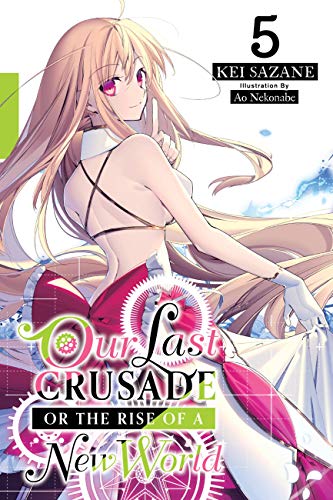
SEAN: There’s also Bungo Stray Dogs 5, Our Last Crusade or the Rise of a New World 5, and Woof Woof Story 5. Lotta 5s.

Lastly, Yen Press has High School Prodigies Have It Easy Even in Another World 9 (manga version) and A Terrified Teacher at Ghoul School 9.

What manga will you be reading to help you forget 2020?

Filed Under: FEATURES, manga the week of

Bloom Into You: Regarding Saeki Sayaka, Vol. 3

December 23, 2020 by Sean Gaffney

By Hitomi Iruma and Nakatani Nio. Released in Japan as “Yagate Kimi ni Naru: Saeki Sayaka ni Tsuite” by Dengeki Bunko. Released in North America by Seven Seas. Translated by Jan Cash and Vincent Castaneda. Adapted by Jenny McKeon.

As I was reading the 3rd and final volume of this spinoff series, I began to feel that it was less of a novel and more of a reward. A reward for Sayaka, who, after two books of repressed feelings and failed romances, finally gets to experience a joyous love. And a reward for the reader, because man, this book is a bright ball of sunshine. Sayaka and Haru’s interaction is simply a joy to read, Sayaka’s ongoing inner monologues are revelatory, especially her growing realization that yes, this is in fact real love she is feeling and it’s not the same thing as the love she has for Those Two Girls. (Though that may be the funniest scene in the book… are those two also a couple, by the way?) The continuity between the three books is fantastic, playing into reader expectations very well. And, at last, Sayaka and Touko finally get together to talk post-graduation, though that is the one note of bittersweetness in this sugary book.

The cover pretty much sets the stage. After seeing Haru crying at the end of the previous volume, the two have become friends, and the book begins with Haru confessing to Sayaka… though also admitting that her personality is the sort that also lets go of things easily. This actually doesn’t become apparent as the book goes on, as Haru is quite patient with Sayaka, who spends the entire book musing about what she feels for Haru, how it compares to her feelings for her old sempai, or Touko, or even the girl from the pool in elementary school. The book is mostly a series of conversations, showing us a Sayaka who is opening up to others far easier than she used to but is still definitely herself. Sayaka agrees to go out with Haru on a “trial basis”, as Haru puts it, and rapidly realizes that this *is* different from the others, and that she really has fallen in love.

Addressing the elephant in the room, yes, Haru sure does look like Yuu, but they’re not very much alike. She also resembles the swimming girl from Book One, to the point where the author includes a scene with Sayaka watching a TV show interviewing a swimmer who is clearly meant to be the same girl. What’s more, the climax of the third book once again takes place in a pool, with Sayaka and Haru’s underwater “confession” being incredibly emotional and heartwarming. (I admit I was also happy to see the swimming girl had recovered from Sayaka’s fleeing.) The conversations, both in dialogue and in text messages, felt very in character on all sides, and I was once again very happy to see that this is nothing whatsoever like the author’s other series, Adachi and Shimamura. And I really enjoyed the emphasis on names, and how Sayaka’s manner of addressing Haru changes over the book as her feelings grow. (But she still says “Koito-san”.)

There is a question in this book about whether a college student really is more “grown up” than a high school student, and you get the sense Sayaka is still maturing in that regard. The epilogue shows she has not gone as far with Haru as Yuu and Touko have. But that’s fine, because they’re different couples behaving differently. And even though there’s some sadness as Sayaka realizes she and Touko will likely grow more distant over time, the overall feeling after finishing this book is happiness that Sayaka and Haru are really in love, and what they brought to each other’s lives.

Filed Under: bloom into you, REVIEWS

Do You Love Your Mom and Her Two-Hit Multi-Target Attacks?, Vol. 7

December 22, 2020 by Sean Gaffney

By Dachima Inaka and Iida Pochi. Released in Japan as “Tsujo Kogeki ga Zentai Kogeki de Ni-kai Kogeki no Okasan wa Suki desu ka?” by Fujimi Fantasia Bunko. Released in North America by Yen On. Translated by Andrew Cunningham.

This series (which has now ended in Japan at Vol. 11) has, as its primary goal, humor and fanservice, as with many other series of its type – this one just involves moms. But there is a secondary goal that the series occasionally reaches toward, which is “make Masato a mature, self-sufficient young man”. As the author admits, you can’t really take this TOO far or you’d ruin the series’ main running gag of his being useless in the face of his overpowered mom. But this volume comes closest to giving him actual character development, and I can distantly see an endgame in site. That’s not so say this book is not also very silly, as we get stranded on a desert island, a beach volleyball game that seems to mostly involve hitting the girls’ asses with the ball, and the third of the Four Heavenly Kings, who seems to bond with Masato right away. And then there’s Porta… so close, but not yet.

This volume begins with a new area opening, which features Beastmen, including the Beastman Mom we saw in the tournament arc. Our party wins a gatcha lottery, with Mamako winning the grand prize, a trip to a resort for three days. Unfortunately, the airship they’re taking to the resort ends up in the midst of a party fight, and they end up crash landing on a seemingly deserted island. Still, they have the infinitely overpowered Mamako, so they can do things like create a beach, an entire resort town, etc. just by her calling on Mother Earth and willing it to happen. And Masato runs into a kindred spirit, someone who might finally be able to teach him how to get stronger. The question is… stronger for what? And also… is Mamako wearing herself out? REALLY?!

Yes, we’re finally getting a situation engineered where Mamako can’t use her full powers, and in fact is exhausting herself just trying to do what she normally does. This dovetails nicely with the ending, where Masato confronts her about lying to him about being fine, which she finally, grudgingly admits to because she didn’t want to worry him. This is, frankly, a situation that a parent has likely had to deal with before. As for Masato himself, after seeing the varieties of Mom-hating that the Four Heavenly Kings offer, he realizes, in the typical shonen protagonist way, that he wants to get stronger so that he can protect others, not just so that he can beat his mom at something. Which is good, as the ending trap requires him to use power that ONLY works if he says it’s to protect his mom. Even the other girls have to admit that he was almost cool there for a moment.

There’s lots of silliness here as well, usually involving our two pathetic villainesses, or Wise and Medhi, our two somewhat pathetic heroines. But this is Masato’s book, and he holds up pretty well, despite spending the first three quarters of it or so moping around thinking about how weak he is. Next time will we finally confront the mystery that is Porta? Maybe, maybe not. But for fans of the series, this is a very good volume.

Filed Under: do you love your mom?, REVIEWS

  • « Go to Previous Page
  • Page 1
  • Interim pages omitted …
  • Page 234
  • Page 235
  • Page 236
  • Page 237
  • Page 238
  • Interim pages omitted …
  • Page 1047
  • Go to Next Page »
 | Log in
Copyright © 2010 Manga Bookshelf | Powered by WordPress & the Genesis Framework