• Skip to primary navigation
  • Skip to main content
  • Skip to primary sidebar
  • Home
  • About Us
    • Privacy Policy
    • Comment Policy
    • Disclosures & Disclaimers
  • Resources
    • Links, Essays & Articles
    • Fandomology!
    • CLAMP Directory
    • BlogRoll
  • Features & Columns
    • 3 Things Thursday
    • Adventures in the Key of Shoujo
    • Bit & Blips (game reviews)
    • BL BOOKRACK
    • Bookshelf Briefs
    • Bringing the Drama
    • Comic Conversion
    • Fanservice Friday
    • Going Digital
    • It Came From the Sinosphere
    • License This!
    • Magazine no Mori
    • My Week in Manga
    • OFF THE SHELF
    • Not By Manga Alone
    • PICK OF THE WEEK
    • Subtitles & Sensibility
    • Weekly Shonen Jump Recaps
  • Manga Moveable Feast
    • MMF Full Archive
    • Yun Kouga
    • CLAMP
    • Shojo Beat
    • Osamu Tezuka
    • Sailor Moon
    • Fruits Basket
    • Takehiko Inoue
    • Wild Adapter
    • One Piece
    • After School Nightmare
    • Karakuri Odette
    • Paradise Kiss
    • The Color Trilogy
    • To Terra…
    • Sexy Voice & Robo
  • Browse by Author
    • Sean Gaffney
    • Anna Neatrour
    • Michelle Smith
    • Katherine Dacey
    • MJ
    • Brigid Alverson
    • Travis Anderson
    • Phillip Anthony
    • Derek Bown
    • Jaci Dahlvang
    • Angela Eastman
    • Erica Friedman
    • Sara K.
    • Megan Purdy
    • Emily Snodgrass
    • Nancy Thistlethwaite
    • Eva Volin
    • David Welsh
  • MB Blogs
    • A Case Suitable For Treatment
    • Experiments in Manga
    • MangaBlog
    • The Manga Critic
    • Manga Report
    • Soliloquy in Blue
    • Manga Curmudgeon (archive)

Manga Bookshelf

Discussion, Resources, Roundtables, & Reviews

Sean Gaffney

Attack on Titan, Vol. 22

August 14, 2017 by Sean Gaffney

By Hajime Isayama. Released in Japan by Kodansha, serialization ongoing in the magazine Bessatsu Shonen Magazine. Released in North America by Kodansha Comics. Translated by Ko Ransom.

“Tragic backstory intensifies” would be a good description of this volume, for the most part. Eren continues to have dreams that flash back to his father’s life before he was born, showing us the fate of Grisha’s first wife (she appeared in the story earlier than we think, it turns out!) and what our kingdom really is – an island kingdom, with most of the world very much not dead on the other side of the ocean. We also, as predicted, see Eren and Mikasa in jail for the orders they disobeyed in the previous couple of books, though that doesn’t last, mostly due to how important Eren really is. Oh yes, and much to Mikasa’s horror, we get a time limit on the Titans’ lives – they only live for 13 years after being titan-ized, meaning that we also get another major character death, though this one is offscreen.

Yes, in fine lesbian character tradition, Ymir writes a farewell note to Historia that confirms that a) she wanted to live the rest of her life married to her, but b) she can’t as she’s soon going to be dead. After Eren’s revelations, it’s pretty clear that this is meant to be due to simply living out that 13 year span rather than due to being executed. Reiner, at least, lets her write said farewell letter, though I wish we’d been able to see more of Historia’s reaction. I suppose it was unbecoming of a queen. So no happy ending for Ymir, though at least she doesn’t seem to have been killed off just for being gay. As for Mikasa, I’ve pretty much written off any hope of her character revolving around anything other than Eren, so her stunned disbelief through most of this is unsurprising. Not sure if they’ll find a way to stop Eren and Armin from dying. I could see it going either way.

There’s also more arguing over whether it was the right thing to save Armin or not – I suspect this may have been an argument that Isayama and some of his editors may have had as well. I wish that it had been one of the regulars allowed to take an opposing side, rather than generic military police guy, who is there to remind Hitch that Marlowe likely died terrified and to yell at everyone else, so immediately turns into one of my least favorite characters. I think it would have had more impact if it was a more familiar face on the Erwin side, though. In any case, however, we jump forward a bit and see the Survey Corps confirming what they’d found out from Grisha – that this is an island, and that there is ocean at the end of it. This leads to possibly the only really heartwarming scene in the book, with the members of Levi’s unit cheerfully splashing in the surf (though not in swimsuits – we can’t rewrite reality that much).

I didn’t see an “End of Part Two” at the finale of this volume, but it certainly felt like it. We’ve gotten a lot of our answers, but what comes next? In any case, Titan fans should enjoy this volume, though likely they will get frustrated with it as well. But we should all be used to that.

Filed Under: attack on titan, REVIEWS

Clockwork Planet, Vol. 1

August 12, 2017 by Sean Gaffney

By Yuu Kamiya, Tsubaki Himana, and Sino. Released in Japan by Kodansha. Released in North America by J-Novel Club. Translated by fofi.

Ugh. I hate the (2) that’s sitting in the URL up there. Why couldn’t this book have had a subtitle like some other light novels? In any case, as the URL shows, I’ve reviewed Clockwork Planet before: the first manga volume, which Kodansha Comics put out back in March. And now we have the light novel it was based on. When I had only mild enjoyment of the manga volume, I was told a few times that the light novel is significantly better. And indeed those people were right, as my enjoyment of the novel was significantly better – especially in regards to Marie, whose inner workings (so to speak) are a lot more explicit and sympathetic than they were in the parts of the manga I read. That said, you can definitely tell that a lot of this is written by Yuu Kamiya, the creator of No Game No Life. It has the same… flavor, so to speak.

The premise is that a socially ostracized boy with a REALLY acute sense of hearing has an automaton crash into his apartment one evening. This isn’t as odd as it seems, because as the name might imply, the Earth now runs on clockwork in order to stop its death. This particular automaton, however, is one of a very special series, and had in fact been dormant for the last two hundred years. Fortunately, Naoto is able to “hear” where the problem is and fix it, and now he has his very own robot girl, RyuZU, who is devoted to keeping him safe and happy and abusing him verbally, not in that order. (This is where the NGNL author’s fetishes come into play, as I mentioned above.) The other half of the plot involves genius teenage engineer Marie and her calm bodyguard/babysitter Halter, who is mostly a cyborg himself. They’re trying to fix a gravitational error that might destroy all of Kyoto. And then we discover that this error is, in fact, bpart of a VAST MILITARY CONSPIRACY!

As you may have gathered, subtlety is not on the menu for this book, but it’s a decent thriller, and I enjoyed the characters while finding them somewhat exasperating. Because this is written for a male Japanese audience, there is of course a large color picture of a naked loli girl in it, so as always this isn’t recommended for casual fans. But for Kamiya fans, or those who like “steampunk” type stories, it’s a lot of fun. The second half is definitely better than the first, as things swing into high and we show off what all of our heroes can do. And there’s a setup for future books, which we actually see a bit of in the prologue, as well as another robot girl that needs to be rescued from the government/military complex. Unlike a lot of “first volume” light novels that may or may not become series, this looks like it was designed to have more to it. Good thing we’re getting more. Recomme3nded.

Filed Under: clockwork planet, REVIEWS

Manga the Week of 8/16/17

August 10, 2017 by Sean Gaffney, Michelle Smith, Anna N and Ash Brown 1 Comment

SEAN: Next week is the closest we get to a small week these days. Revel in it.

Dark Horse gives us the 4th I Am A Hero omnibus. Zombies! Not quite as sexy and dangerous as vampires, but they try harder.

ASH: I Am a Hero is definitely one of the more interesting takes on the zombie subgenre that I’ve come across. But yeah, not especially sexy.

SEAN: J-Novel Club has two more volumes out next week. The 5th My Big Sister Lives in a Fantasy World is out, and will continue to compare itself to the Haruhi Suzumiya series.

And Playing to Win in a VRMMO has a 6th volume.

Most of the list is Kodansha, both print and digital. On the digital side we start with a 5th All-Rounder Meguru.

MICHELLE: This is one digital sports manga that I’ve yet to sample.

SEAN: Two new digital debuts next week. Beauty Bunny is from the author of Peach Heaven and is about a girl whose life is transformed by makeup and hot guys, perhaps not in that order. It’s 8 volumes, and ran in Dessert.

Cosplay Animal also ran in Dessert, but is about 10 years older than Beauty Bunny. A cosplayer meets her ideal guy whole cosplaying as a high school student. The trouble is her ideal guy IS a high school student. From what I’ve read this sounds like AMAZING complete trash. I am interested.

MICHELLE: I don’t think either of these is for me.

ANNA: I have to say I will at least try the first volume of Cosplay Animal, that sounds amusing.

Fairy Tail gives us a 4th monstrous volume of its Master’s Edition super-omnibus.

ASH: If someone hasn’t read Fairy Tail before, this edition is definitely the way to go.

SEAN: Kodansha Digital also has a 13th Fuuka, which continues to be written by Seo Kouji.

Hotaru’s Way also gets a 2nd volume digitally.

Back to print for the 8th Maga-Tsuki.

Peach Heaven has a 5th volume digitally, and I’m sorry this is so dull, but I haven’t read many of these.

MICHELLE: Although I love most of Kodansha’s digital offerings, Peach Heaven didn’t really appeal to me, I admit.

ANNA: I did not care for it.

SEAN: I have read the 22nd and final volume of School Rumble, though. It’s famous! Well, OK, infamous. The ending has to be seen to be disbelieved. There was a 1-volume continuation, School Rumble Z, that tried to fix things, but I don’t believe Kodansha has picked that up. In any case, bye, School Rumble! Flag or Riceball, you were great either way. Mostly.

Lastly for Kodansha, a 4th xxxHOLIC Rei has managed to edge its way out onto shelves, despite CLAMP’s busy schedule of delaying and cancelling other series.

ANNA: I’m still sad and angry about X/1999!!!

ASH: Yeah…

SEAN: Seven Seas gives us the 5th and final volume of Akuma no Riddle, which has combined yuri and assassins into quite an attractive package.

And a 6th Shomin Sample, whose package is less attractive.

Titan Books rarely makes appearances on here, but they do have the 1st volume of the Assassin’s Creed manga, which actually is adapting the Assassin’s Creed IV game. It ran in Jump Kai, and the author has also written some Naruto spinoff novels.

ASH: I’m picking this up mainly because of the involvement of Kendi/Kenji Oiwa, who also worked on the manga adaptations of Welcome to the NHK and Goth.

SEAN: Vertical has the 8th Devil’s Line.

Viz gives us two titles, the first being the 4th Mobile Suit Gundam Thunderbolt series. We now have two Gundam series coming out at the same time. How times have changed.

ANNA: This is amazing, and reminds me I need to actually read my stockpiled volumes of Gundam: The Origin.

ASH: I shamefully have a few volumes of that I still need to read, too…

SEAN: And lastly, there’s the 14th Tokyo Ghoul, which will interest casual readers more than any other title I mentioned on this list.

See? Next week is totally small and has nothing coming out! Aheh. What are you getting?

Filed Under: FEATURES, manga the week of

Invaders of the Rokujouma!?, Vol. 5

August 10, 2017 by Sean Gaffney

By Takehaya and Poco. Released in Japan as “Rokujouma no Shinryakusha!?” by Hobby Japan. Released in North America digitally by J-Novel Club. Translated by Warnis.

I’ve mentioned before that I enjoy Yurika’s role in the novels, being the constantly mocked and abused girl whose suffering is absolutely hilarious. That said, it’s not the sort of thing that you’re going to be able to drag out over 26+ volumes, not if you want to actually develop the characters enough to have people read 26+ volumes. So I was not particularly surprised that this volume of Rokujouma was going to try to give Yurika a bit more gravitas, or at least show us that as a magical girl she isn’t, in fact, as completely incompetent as her personality may imply. I wasn’t expecting this to turn into the best volume of the series to date, though, as Yurika’s frustrations in the first half of the book give way to a battle royale with her evil counterpart, and she finally gets her wish: her friends believe her.

And yes, I can see you raising an eyebrow at me. “Magical reset at the end?”, you say cynically. Yes, yes, magical reset at the end. But that’s not the point, the point is that Yurika is NOT affected by the magical reset, which means that the development she gets in this book will (hopefully, crosses fingers) remain going forward. A lot of Yurika’s issues are self-confidence related, which makes sense given her background which we get a bit more of here – she was an “ordinary girl” attacked for the large amount of mana she had, and her magical girl sempai pretty much sacrificed herself so that Yurika could continue to defend the world, etc. As a magical girl, Yurika is actually pretty damn powerful. It’s just the constant ridicule and denial by her friends that wear her down. But now she’s aware that, memory loss or no, in the end when her friends discover the truth they do support and defend her.

As for the harem, it’s interesting that Yurika does not particularly moon over Koutarou the way that the other girls do. There are a few hints she likes him, but for the most part she’s content to set up Harumi with him. Her attempts at helping that relationship along work much better than her attempts to get people to believe she’s a magical girl, honestly. As for Koutarou, his main issue is that he’s surrounded by a ghost, two aliens, and an “underground priestess”, and Yurika the “cosplayer” is the one normal girl in his life. Once he accepts that his harem are not going to abandon him, I think things can move forward. (As for Harumi, her main issue is that Koutarou puts distance between them that he doesn’t do with the others, and this is relatively straightforwardly fixed.) The other haremettes don’t get much to do, though the ending implies that the next book will feature Kiriha – which makes sense, she’s on the cover of this book. Gotta keep things consistent.

Rokujouma is never going to break any originality records, but it’s settled nicely into doing its thing, and the characters are growing with each book. Well worth a read for fans of battle harems.

Filed Under: invaders of the rokujouma!?, REVIEWS

Yona of the Dawn, Vol. 7

August 9, 2017 by Sean Gaffney

By Mizuho Kusanagi. Released in Japan as “Akatsuki no Yona” by Hakusensha, serialization ongoing in the magazine Hana to Yume. Released in North America by Viz. Translated by JN Productions, Adapted by Ysabet Reinhardt MacFarlane.

Wrapping up the pirates arc, there’s a lot to love here for the Yona of the Dawn fan. Yona herself is at her most badass, saving Yun and setting off the flare, killing the main bad guy herself with an arrow, and of course getting Jaeha on their side through the sheer power of her determination and awesomeness. Yun is also very awesome, getting the crap kicked out of him and showing that he’s far more than just the party straight man. Jaeha kicks and kicks some more, and also manages to be charming and seductive in that “nothing will ever really come of it” sort of way. But I think I have to admit that after finishing the volume, there’s really just one scene that I want to read over and over again, and that’s when Yona, in the aftermath of the battle, runs into Su-Won, who is equally stunned to find that she’s not dead.

Su-Won is, of course, the villain of the piece, and it was his killing of Yona’s father that started the whole shebang. But there’s always been a sense that there’s more to him than that – he’s Yona’s childhood friend and crush, and we knew at some point he would start to show a different side. We get that here, as his amazement at Yona not being dead leads to his needing to protect her from his own aides, who would no doubt not take kindly to Yona bopping around the country with a bunch of superpowered hot guys. The series has always done a good job showing Yona the Princess contrasted with Yona the outcast and messiah, and briefly being that princess again and seeing Su-Won (and reaching for his sword to potentially kill him) sends her into a bit of a mental tailspin. Hak is, of course, there to help clean up, and there’s even some parts played for comedy (such as when she unthinkingly starts to strip), but mostly this emotional scene serves notice that we will be returning to Su-Won again, and find out why he needs to do all this.

Yona does recover, of course, and sets out again, because there is still journeying to be done. Naturally, Jaeha decides to go along with her, but I did love the goodbye that both he and Yona got from the grumpy get good-hearted pirate captain, who’s served as a mother figure for both of them. I also appreciated that the volume ended with a goofy comedy chapter – it wasn’t all that funny, being a variation on the :love potion makes you fall for whoever you see first” story, but it was just nice to see lighthearted fare again. We will no doubt begin a new arc next time, and I still maintain that this is one of the best Shojo Beat series you could be reading.

Filed Under: REVIEWS, yona of the dawn

How a Realist Hero Rebuilt the Kingdom, Vol. 3

August 8, 2017 by Sean Gaffney

By Dojyomaru and Fuyuyuki. Released in Japan by Overlap, Inc. Released in North America digitally by J-Novel Club. Translated by Sean McCann.

I will give credit to the author, he managed to hold my attention despite the fact that the entire content of this third volume of Realist Hero is setting up the board for future books. This despite the fact that it’s also dealing with the fallout from Book 2, i.e. the war with Amadonia. This world’s equivalent of the United States is dropping by to arbitrate, and by arbitrate I mean tell Souma and company to give Amidonia back to its rulers, even though the arbitration is done with reluctance. Souma has plans, though. He’s starting the equivalent of a Japanese variety show in order to show Amadonia what true freedom is like. He’s discovering Aisha’s previously unknown talent for tsukkomi. He’s dealing with the nobles who didn’t rebel against him but are still being evil, and does it using (sigh) the power of Machiavelli’s The Prince, which I am never going to enjoy. And if all else fails, he still has his Mr. Rogers cardigan to break out.

As you may have gathered, Aisha, Souma’s elf bodyguard, does get a bit more to do in this book, which is good, given that she’s also set to become Souma’s second ‘primary queen’. The difference between royalty and commoners is highlighted in the narrative, but also pretty much accepted as ‘well, that’s the way it is’, which is uncomfortable. Aisha is royalty by dint of being an elf princess. In any case, there’s also Juna, who gets to be the country’s first big idol singer – something which backfires on her when Souma points out he can’t announce he’s marrying her as well or there would be riots. She is first on his bucket list, though, which also has a few likely suspects that get hinted at here. Though not, refreshingly, the younger sister of the Gran Chaos Empire, Jeanne, who gets ship tease with the prime minister instead. It’s nice to see romance in the series that doesn’t involve Souma.

We also get our first slave, since slavery is legal here as well, because fantasy world. This is a way to reconcile the plot with Castor and Carla, who were on the bad side but weren’t “against the king” per se. Castor is basically stripped of everything but allowed to live because of his years of military experience. Carla doesn’t have that, but she’s Liscia’s friend, so she’s made into a maid for the household. I suppose it’s a better way to deal with her in this narrative than killing her off, but again, I wish this series kicked back a bit more against its cliches, particularly when they involve ‘these people are better than those people’. I may get my wish in future books; there’s a suggestion that Souma’s inability to tell “demons” and “monsters” apart, and everyone’s else’s shock at this, may factor in future books.

And so we end with Souma having to come to terms with the fact that he had a dozen people executed for the crime of ‘might plot against me in the future’, and the fact that this is, to a certain degree, monstrous. Fortunately, he gets some healing therapy in the form of two hot fiancees in bathrobes snuggling up against him. (Note: this therapy likely only works in isekai harems.) I have many issues with Realist Hero, and they keep stacking up like cordwood, but I can’t deny its compulsive readability.

Also, Souma and Aisha’s banter during the ‘variety show’ was A+, the book is worth the price just for that one scene.

Filed Under: how a realist hero rebuilt the kingdom, REVIEWS

Pick of the Week: Across the Spectrum

August 7, 2017 by Sean Gaffney, Katherine Dacey, Michelle Smith, Ash Brown and Anna N Leave a Comment

SEAN: The title I find most intriguing this week is Nirvana, which is a reincarnated in another world title with a female lead (a rarity), and apparently borrows from both Hindu and Buddhist mythology. I’m in!

KATE: Hmmmm… If I were picking a manga on the strength of the title alone, Am I in Love Or Just Hungry would get my vote — we’ve all been there — but Sean makes Nirvana sound interesting, so I think I’ll follow his lead this week and choose Adventures in Reincarnation, too.

MICHELLE: There are a few titles that I’m somewhat interested in, but what I’m looking forward to the most is seeing whether the lead couple of The Full-Time Wife Escapist actually makes any progress. So, that’s my pick this week!

ASH: I’m a bit more curious about Nirvana now that I know a little more about it, but I must say that after three years since the last volume, it’s Drifters that really has my attention. It’s not a series that necessarily makes much sense, but it’s certainly bombastic with energetic action sequences and outrageous characters. (At least if I recall correctly; it’s been a while… )

ANNA: I’m intrigued by Nirvana after seeing everyone talk about it more, but the manga I’m probably most likely to get and read this week is Altair: A Record of Battles Volume 2, once I read volume 1 that is!

Filed Under: PICK OF THE WEEK

No Game No Life, Vol. 6

August 3, 2017 by Sean Gaffney

By Yuu Kamiya. Released in Japan by Media Factory. Released in North America by Yen On. Translated by Daniel Komen.

The author says in this afterword that this 6th volume was very last minute, as the anime was coming out soon, they needed something quick, adn his editor suggested that he do this flashback explaining the past of Disboard that he had laid out for “some point in the future”. I applaud the editors, because it’s an excellent choice, and ends up giving us what is easily the best volume in the series to date. Told by the God Tet (in disguise) to Izuna (mostly so that she can break in and point out the obvious similarity between the stars in the past and our current stars), we get a “grim and gritty” backstory that actually works for more than just “being dark”, showing us the horror of the war-torn land and why it was worth sacrificing so much in order to ensure it became the game-ruled world it is today.

Of course, we’re not necessarily dealing with an entirely new cast – as Izuna testily points out, Riku and Schwi are clearly analogues for Sora and Shiro, and Couron is Steph’s distant ancestor and the founder of their kingdom. This allows readers to get a good visualization of them, even if the personalities don’t quite intersect – Schwi is pretty dead on for Shiro, but Riku is basically Sora if he’d been broken by reality even more. As for Couron, she’s Steph without the abuse, and therefore perfect. Indeed, a lot of the “ha ha the writer thinks this is funny” fanservice is absent from this book, as the war setting means that it’s hard to trot out the sexual perversions and humiliation of Steph. Yes, Riku is teased about being a lolicon, and there’s a few “dying a virgin” remarks that Sora would be proud of, but that’s about it. This book knows now is not the time.

We also, by the way, see Jibril, and in many ways she’s the villain of the book. We knew that her past life before the Games became the rule was filled with a lust for blood and carnage, and her fight with Schwi here shows off her impatience and tendency towards overreacting, even if it ends up doing her harm in the end. That said, we also see that she’s definitely different from the other Flugel, even if it will take Sora and Shiro to really drag her potential forward. Much of the book is Riku doing what Sora normally does, which is to say plan an elaborate series of moves that end up winning the game for humanity. Tet says Riku and Schwi are stronger than [ ], as their world didn’t have the “game rules”. Sadly, this also means that they’re not granted protagonist immunity, so be prepared for some tragedy as well.

This was an excellent book, and the big downside to it is that it shows off that the author can be really good when he wants to be, but frequently lets it get buried under a need for fanservicey jokes and stupid anime tropes. Book 7 (which is in December, NGNL has settled into twice a year now) returns us to Sora and Shiro, and it will be nice to see them again, but I hope we can keep some of the added depth and gravitas we saw here and not just have a series of jokes about Steph’s tits. If you want to test out the series, though, 6 is the way to start, oddly enough.

Filed Under: no game no life, REVIEWS

Manga the Week of 8/9/17

August 2, 2017 by Sean Gaffney, Michelle Smith, Ash Brown and Anna N 1 Comment

SEAN: Stuff, stuff, stuff! So much stuff!

Dark Horse gives us a new volume of Drifters, the 4th. It comes out sporadically, so I will no doubt have to refresh my memory about what’s happening besides cool old famous people reincarnated and fighting each other. Actually, no, that should do it.

ASH: Let’s see, the last volume was released in English in… 2014. I didn’t expect that we’d ever see more of the series! I suspect that last year’s anime adaptation may have something to do with that.

SEAN: And there is a 4th omnibus of “Like Evangelion, only stupider” spinoff manga Shinji Ikari Raising Project.

J-Novel Club has a new debut, but it may seem familiar: Clockwork Planet, whose manga adaptation Kodansha has been releasing. This is their first Kodansha license, and will hopefully open the way for more in the future.

And we have the 4th In Another World With My Smartphone, which I hear is where the plot really kicks off.

Kodansha has titles both digital and print. Digitally we have the 2nd Altair: A Record of Battles, which is clearly not on the fastrack like some other digital titles.

ANNA: Good reminder for me to read the first one!

MICHELLE: Same!

SEAN: And the 2nd Aoba-kun’s Confessions as well.

I was unprepared for the Attack On Titan: Before the Fall adaptation to be this long, but here we are, Volume 11. Huh.

ASH: I’ve fallen behind, but I do largely like how the manga further develops and expands the story and characters from the original light novels.

SEAN: Back to digital with the 5th Full-Time Wife Escapist. Will these two poor communicators finally get together?

ANNA: I enjoy this series!

MICHELLE: Me, too. I’m always happy when I see a new installment on the schedule.

SEAN: And L♥DK has hit double digits, and presumably has not run out of ways to frustrate its heroine.

Seven Seas has the most titles out next week. There’s a lucky 13th volume of Devils and Realist.

And the 2nd print volume of the light (hah!) novel Grimgar of Fantasy and Ash.

Miss Kobayashi’s Dragon Maid will try to ride out the post-anime depression with its 4th volume.

The debut next week is Nirvana, an action fantasy with a “trapped in another world” veneer, the gimmick being the protagonist is female for once. It’s written by Jin, the creator of Kagerou Daze, and runs in Comic Gene.

Not Lives gives us a 6th volume. Has the cast diminished yet?

Also at double digits next week is Servamp. (poses) Vampires! (peers around, crickets chirp) Could it be the running gag has gone on too long?

ANNA: Maybe we need more mermaids or pirates.

SEAN: SuBLime has a digital-only release next week with Am I In Love Or Just Hungry, from popular author Akane Abe.

In print, they have the 2nd Deluxe Edition of Finder.

And the 5th volume of Ten Count, which has managed to irritate most of Manga Bookshelf by now.

ANNA: Yeargh.

ASH: I’m still reading it, though I completely understand why people dropped the series. The character’s relationship is far from healthy–right now to me it actually reads more like a horror manga and less like a romance.

SEAN: Viz has a 5th digital release of The Children Nowadays, whose existence I keep forgetting.

In print, they have the 21st volume of Itsuwaribito, which must be reaching a climax of some sort, I say as if I read past Vol. 1.

And a 2nd Legend of Zelda: Twilight Princess.

ASH: I’m enjoying this adaptation so far; I’m also glad that it doesn’t end with the second volume.

SEAN: Magi has reached 25 volumes! In Japan it’s wrapping up, here we still have a ways to go.

MICHELLE: I’m always kind of relieved to hear a series is ending. It’s probably the reassurance that I’ll actually get the complete story.

SEAN: Lastly, we have a 9th volume of Monster Hunter: Flash Hunter, which wars with Yu-Gi-Oh in how often it ends a Manga the Week of column and leaves me with nothing to say.

What do you say? Anything for you next week?

Filed Under: FEATURES, manga the week of

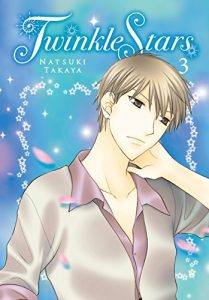
Twinkle Stars, Vol. 3

August 2, 2017 by Sean Gaffney

By Natsuki Takaya. Released in Japan as two separate volumes by Hakusensha, serialized in the magazine Hana to Yume. Released in North America by Yen Press. Translated by Sheldon Drzka.

I laugh heartily at my comment in the last review that Hijiri was absolutely perfect. She’s still my favorite, but this omnibus seemed entirely designed to show off that no, Hijiri is not perfect, that she is arrogant and headstrong and coming from a definite position of privilege, and when combined with the genuine fear she has of seeing her best friend get hurt again, it naturally leads to a bad confrontation. Which does, at least, get us Chihiro’s backstory, and the girl that he was supposedly in love with, Sakura. The love that it was, though, was a deeply unhealthy one, something the reader is well aware of as it plays out. Takaya is always at her best when showing off emotional pain, and we get that in spades here – there’s a suicide attempt, mostly successful, and implications that Chihiro also has suicidal thoughts. Fortunately, Takaya also writes Pollyannas, and that’s exactly what’s needed from Sakuya here.

Back to talking about Hijiri, literally everyone in the book realizes that she is doing the wrong thing and calls her out on it. First Yuuri, then Saki… it’s something that only she can do, being rich enough to basically have Chihiro’s entire past investigated to make sure that he’s not going to be causing Sakuya pain. And then, when she finds out about Sakura, his old love, telling her about it. Then she compounds it by refusing to admit what she did was wrong. It takes everything tat we’ve loved about the character for the last two omnibuses and turns it on its head, showing off the unpleasant and negative sides that her personality can have. We also learn how she first met Sakuya, and how her curiosity about those who felt pain turned to guilt and horror as she realized what that really means. Oh yes, and thankfully the crush on the teacher is not going to happen.

As for Chihiro, he’s more of a Yuki than a Kyo, if you know what I mean. It’s always a challenge to see someone repressing all their past emotional wounds and scars and not have them turn out somewhat flat, and again, Takuya is a master of doing this the right way. His confrontation with Sakuya at the reservoir is the highlight of the book, as we see that his obsession with Sakura (even the names are similar – at least in romanji) to an eerie degree) can turn to hatred as much as it does to love. Sakura is also a lonely child with a tragic past of abuse, like half the cast here, but she’s not written in a sympathetic way. I’ve no doubt she’ll wake up at some point, and I do wonder if she and Sakuya will ever meet.

Twinkle Stars gives fans of this author exactly what they want – deep emotional heartache and catharsis, calling out abuse for what it is, and showing that just because someone has a tragic past does not mean that their current joy and happiness has to be faked. I can’t wait to see where this goes next.

Filed Under: REVIEWS, twinkle stars

Durarara!!, Vol. 7

August 1, 2017 by Sean Gaffney

By Ryohgo Narita and Suzuhito Yasuda. Released in Japan by ASCII Mediaworks. Released in North America by Yen On. Translated by Stephen Paul.

Sooner or later in the life of every light novels, you get the volume that consists of short stories, usually because the author is still figuring out where to take the series next. And so it is with DRRR!!, which gives us 4 stories here surrounded by Izaya recuperating from his stab wound he got last time in the hospital, where he runs into a girl that literally everyone has forgotten, including him (and the creators of the anime, who were unhappy to see this, I imagine). The ‘theme’ of these stories seems to be Ikebukuro on holiday, and indeed, Narita has discussed the idea of the city as a character in the volume before. And of course there’s also some setup and moving of chess pieces for future books, most obviously in the story with Shizuo and Tom, which gives them a new co-worker.

First, though, we have to deal with the story nobody wanted. I think if you were to ask Western fans in particular which DRRR!! characters they never want to see or hear from again, the insane triangle of Namie, Seiji and Mika would likely top the list. And what’s worse, Narita has them in your face here, never letting you forget how much Namie wants to screw her little brother, or that Mika is seriously looking to EAT CELTY’S HEAD so that she can get closer to Seiji, or that Seiji… well, no, Seiji continues to be a nonentity. He gets some depth here, of a sort, but his main theme still seems to be “what do these two see in him?”. It’s not the most pointless story in the book, but it is the most disturbing. We then get a look at the backstory and current life of Akabayashi, the yakuza with a sweet cane and missing an eye we’ve seen in the previous book. He deals with the fallout from Akane’s kidnapping, stops some drug dealing on his turf, and escapes an attempt on his life with ease. He’s here to be incredibly cool, and succeeds. He also has a surprising tie to Anri, which is good as the “main” trio of teenagers otherwise make very minor to no appearances in this volume.

The best story in the collection, even if you don’t love her (which I do) is the third one, in which Vorona is cooling her heels at Russian Sushi and wondering what to do with her life now that she’s been beaten and humiliated. The answer? Join Shizuo and Tom in shaking down local deadbeats who rent porn and then never pay for it or other such offenses. Tom is rather startled at how good Vorona is at beating others up, and impressed at her wikipedia brain. Shizuo (who does not recognize her as the woman who kidnapped Akane, as she was wearing her motorcycle helmet) is just happy to be able to mentor someone. And Vorona is watching Shizuo closely, seeing how he manages to be stronger than everything else, and deciding that he’s her “prey”… much to the displeasure of Akane, who has decided that she needs to take out Shizuo as well, despite the fact that she really likes him. (It is implied that getting kidnapped on top of the family revelations kind of broke Akane, but that’s Narita for you.) This story is filled with humor and unnecessary violence, and the book is worth getting for just this one.

We end with a cute, if completely pointless, date between Shinra and Celty, who have gone off to the mountains to get closer but keep getting interrupted by the rest of the cast calling Shinra for one reason or another. This mostly serves to remind us that, eccentric as they are, these two are the least screwed up couple in the series. The book overall is marking time, but it’s still worth reading, provided you don’t mind the author occasionally reminding you that he loves to read horrible people being horrible at each other.

Filed Under: durarara!!, REVIEWS

Bookshelf Briefs 7/31/17

July 31, 2017 by Michelle Smith and Sean Gaffney Leave a Comment

Blue Exorcist, Vol. 17 | By Kazue Kato | Viz Media – Well, Yukio is STILL keeping things a secret, though it’s getting very hard. Much of this volume belongs to Shura, who comes from a family who, due to a curse, tend to live to 30, give birth, then die. Sadly, Shura isn’t giving birth anytime soon, and is pissing off the local god her family made this bargain with. To the rescue come Rin and Yukio, which gives us an opportunity for them to hash things out and at the same time resolve absolutely nothing, as well as remind us that Rin is the standard shonen protagonist. I really could have done without young Shura going topless and trying to seduce Father Fujimoto, though. This is a pretty good volume, but not as good as the arc before it—it still feels like it’s marking time. – Sean Gaffney

Giant Killing, Vol. 3 | By Masaya Tsunamoto and Tsujitomo | Kodansha Comics (digital only) – ETU’s pre-season match against Tokyo Victory continues, and it’s great to watch the team gaining confidence and enthusiasm. The fans agree, and after Tsubaki makes a mistake that grants their opponents a 2-1 advantage, it’s former captain Murakoshi who reinvigorates everyone’s hopes. Next, Tatsumi talks big at a press conference, slaying the crowd with jokes and promising to spice up the soccer world and then, at their first game of the official season, ETU ends up losing 4 to 1. There’s no way ETU’s road to success would be smooth, but I do still relish the moments of triumph when they come. In this volume, there’s a great two-page spread when Murakoshi scores, for example, followed by a two-pager of reaction shots. The pacing of this series is masterfully exhilarating. If you like sports manga, you should be reading this! – Michelle Smith

Liselotte & Witch’s Forest, Vol. 5 | Natsuki Takaya | Yen Press – This is an interesting volume of Liselotte & Witch’s Forest, in which quite a lot happens. Initially, the focus seems to be on Vergue and his hatred of humans for their rejection of him, and there’s a great scene in which Anna expertly manipulates him into coming to tea. (It gave me Hanajima/Kyo feelings, actually.) Engetsu, Anna and Alto, and Vergue all get a little more backstory, none of it good, and then Engetsu whisks Liselotte off to see the village festival, where she spies her brother and promptly flees. While she’s busy dealing with a new witch on the scene, Engetsu sits down for a conversation with her brother, Richard, about his plans for Liselotte. Pretty exciting, right? Eager for the next volume, right? Well, too bad. This series has been on hiatus since 2013. Join me in feeling very grumpy about that. – Michelle Smith

My Monster Secret, Vol. 7 | By Eiji Masuda | Seven Seas – While we do get another character introduced in the form of the world’s worst fallen angel, for the most part this volume continues to do what it does best—tell really funny stories about supernatural high schoolers who are super awkward. Fortunately, after the events in the last volume, Asahi and Youko make up, though it takes being stranded in a snowstorm and a bad cold to break past the discomfort. Youko’s father also shows up to play the world’s most dangerous game of Life, and though we keep getting hints that we’ll find out how he and Youko’s mother finished high school, we never do. The funniest chapter, though, is the competition to see who can be sexiest, which needs to be read to be believed. Great stuff. – Sean Gaffney

Welcome to the Ballroom, Vol. 6 | By Tomo Takeuchi | Kodansha Comics – I was right that Chinatsu was going to be partnering with Fujita berfore long, but it’s not smooth sailing—in fact, it’s the opposite of smooth sailing. Fujita’s been spoiled by having perfect partners till now, and Chinatsu’s struggling as before this she was the lead as she only danced with other female partners. Learning how to be a good lead is harder than learning how to copy others, especially as Fujita finds it’s the GUY they look at in the prelims, and if he and Chinatsu can’t sort this out it’s all over. Add to this the gorgeous artwork, which continues to show off the dancing to its best effect, and you have a gripping series, even as it pours on perhaps a bit too much angsty drama. – Sean Gaffney

Filed Under: Bookshelf Briefs

Pick of the Week: Shining Wind And Twinkling Stars

July 31, 2017 by Sean Gaffney, Michelle Smith, Katherine Dacey, Anna N and Ash Brown 1 Comment

MICHELLE: It’s that time of year again! I’m very interested in the conclusion of Otherworld Barbara as well as I Hear the Sunspot and She and Her Cat, but I am simply unable to pass up my annual chance to squee about Kaze Hikaru. I agree with AshLynx, who expressed a wish that VIZ would start making the annual release a 2-in-1 volume. Otherwise we won’t catch up to where Japan is now until I’m retired!

SEAN: I can’t break with the yearly tradition. It’s definitely Kaze Hikaru as my pick. My goal is for it to sell well enough that we might see it… dare I hope… TWICE a year!

ANNA: Kaze Hikaru all the way for me as well. I love that series!

KATE: Add my name to the chorus of folks recommending Kaze Hikaru. I’m glad VIZ continues to publish new installments, but second Michelle’s request for a slightly faster release schedule. The East Coast will be underwater before we get the final volume here in the US!

ASH: Despite its slow release schedule, I’ve still somehow managed to fall behind with Kaze Hikaru. And so while I do plan on reading it because I do like the series, my pick this week (perhaps surprisingly) actually goes to Twinkle Stars. Although the series is a little trope-worn in places, I found the first two omnibuses to be both compelling and emotionally resonant.

Filed Under: PICK OF THE WEEK

H. P. Lovecraft’s The Hound and Other Stories

July 31, 2017 by Sean Gaffney

By Gou Tanabe. Released in Japan by Enterbrain, serialized in the magazine Comic Beam. Released in North America by Dark Horse Comics. Translated by Zack Davisson.

This is the first in a series of Lovecraft adaptations that are still being done in the pages of Enterbrain’s oddball magazine Comic Beam, home of Emma, Thermae Romae, and other hard-to-classify series. The mangaka, Tanabe Gou, has specialized in adapting horror titles to the comics page, and just reading a few pages into this volume will show you that he knows his stuff. This volume collects three of Lovecraft’s more well-known short stories and turns them into fairly gripping horror manga, with plenty of the author’s tortured, overdone prose, but not so much that you want to stop reading (as I frequently do with Lovecraft). Thankfully, the nameless horrors in these particular stories also don’t feature Lovecraft’s awful brand of racism that has led fans to back away from him a bit in modern times. You can enjoy them for what they are: scary stuff with no reasonable explanation.

We begin with “The Temple”, which takes place in WWII – something which may puzzle readers, as the story was written in the 1920s. The ‘about the author’ at the end mentions that Tanabe moved the action up a few decades, and honestly it works even better that way – the original U-Boat Captain was so villainous he may as well have been a Nazi. they find the head of an old Grecian statue on a dead British soldier, and its presence gradually makes the crew of the U-Boat lose its sanity – not helped by the captain shooting “traitors”. Soon he ends up discovering Atlantis underwater, and where that statue really came from. In “The Hound”, two men who enjoy grave robbing for kicks find a jade amulet and take it back to England, where they are soon haunted by the ghastly beast that they may have killed at the gravesite. Finally, in “The Nameless City”, there’s only our narrator, exploring a city in Arabia that no one dares go near, and finding (all together now) eldritch horrors beyond his comprehension.

Honestly, the plot is pretty much irrelevant. What matters most here is mood, and Tanabe nails it, particularly in The Hound, which I found the best of the three stories. The sense of an encroaching doom that will engulf our characters (all male – women rarely if ever appear in a Lovecraft story) grows more and more with every turn of the page, and the few actual shots of violence are striking. Lovecraft stories are about the unseen, the imagined, and the unimaginable. Therefore a lot of adaptations risk becoming silly by showing said unshowable evil and having it not measure up. Tanabe has just the right amount of balance, as The Temple relies on its narrator’s own villainous depths, and The Hound is glimpsed mostly in shadow and corners. The Nameless City does draw a few monsters in detail, but its viewpoint is still firmly on the narrator (and the amazing vistas that he’s passing through).

Lovecraft is not for everyone, and I would not blame people from passing simply based on the name. But if you like horror and want to read something really creepy and offputting, this is an excellent adaptation. He’s done more of these – I think The Colour Out of Space was also adapted – and I hope it does well enough that we see more.

Filed Under: hp lovecraft manga, REVIEWS

Kagerou Daze VII: From the Darkness

July 30, 2017 by Sean Gaffney

By Jin (Shinzen no Teki-P) and Sidu. Released in Japan by Enterbrain. Released in North America by Yen On. Translated by Kevin Gifford.

Each volume in the series has competed to see who in the Mekakushi Dan has the worst childhood, and we may have a new winner with Kido, who gets the focus here. The book is divided into two parts that it goes back and forth between, like previous volumes in the series. The main story continues, with Shintaro, the Mekakushi-Dan and a newly revived Takane trying to find a way to stop Tateyama – or rather, whatever is behind Tateyama – and figure out how to stop this whole mess. This is interspersed with Kido’s childhood, being a child of an affair whose mother then dies several years later, causing her to be taken in by her rich father. Kido is an introverted self-hating mess, which honestly fits pretty well with what we’ve seen of present-day Kido, so the flashbacks work pretty well. Luckily, she also has a big stepsister looking out for her. Unluckily, this book is called “From the Darkness”.

Kido’s sections are the strongest in the book, doing a good job (despite the author’s self-deprecation in the afterword) of a realistic young girl resented by most people in the mansion, ignored by her father, and waiting to be abused by a sister that she’s sure hates her. But Rin does not, in fact, hate her, and after a series of painful to read but oh so accurate scenes of Kido wondering when the next blow is going to fall, she gradually begins to open up to the other girl and speak. Unfortunately, her dad is not merely cold and withdrawn, he’s rather unhinged, something which I wish was written in a slightly less abrupt way – the shortness of these books means that sometimes motivations get either left out or reduced to a villain monologue, and in this case it’s the later, as Kido’s father insanely expounds on why he went mad. After tragedy strikes, Kido finds herself in Azami’s realm, where Azami – rather startled to be meeting someone – realizes that Kido has one of her Eyes, and tries to explain as best she can. This section works much better.

Things don’t get much better in the main storyline, where we learn that you rarely gain a cool cyborg body without its creator having the ability to take the body over and turn it evil. Balanced against this is the reunion of Shintaro and Takane, who has to explain why she did what she did as Ene – which is fairly heartwarming – and why she ACTED like she did as Ene – which is the funniest part of the book. Unfortunately, while Shintaro’s plan to take out Tateyama is a good one, as I said, it reckons without one of the group being possessed. And so how we end the book with Shintaro dead, Kido dead, everyone else presumably about to die, and the realization that Book 8 not only may be the last but also isn’t out in Japan yet. This will have to satisfy Kagerou Daze fans for now, but I think it will do a fine job.

Also, will Seto ever get developed?

Filed Under: kagerou daze, REVIEWS

  • « Go to Previous Page
  • Page 1
  • Interim pages omitted …
  • Page 250
  • Page 251
  • Page 252
  • Page 253
  • Page 254
  • Interim pages omitted …
  • Page 382
  • Go to Next Page »
 | Log in
Copyright © 2010 Manga Bookshelf | Powered by WordPress & the Genesis Framework