• Skip to primary navigation
  • Skip to main content
  • Skip to primary sidebar
  • Home
  • About Us
    • Privacy Policy
    • Comment Policy
    • Disclosures & Disclaimers
  • Resources
    • Links, Essays & Articles
    • Fandomology!
    • CLAMP Directory
    • BlogRoll
  • Features & Columns
    • 3 Things Thursday
    • Adventures in the Key of Shoujo
    • Bit & Blips (game reviews)
    • BL BOOKRACK
    • Bookshelf Briefs
    • Bringing the Drama
    • Comic Conversion
    • Fanservice Friday
    • Going Digital
    • It Came From the Sinosphere
    • License This!
    • Magazine no Mori
    • My Week in Manga
    • OFF THE SHELF
    • Not By Manga Alone
    • PICK OF THE WEEK
    • Subtitles & Sensibility
    • Weekly Shonen Jump Recaps
  • Manga Moveable Feast
    • MMF Full Archive
    • Yun Kouga
    • CLAMP
    • Shojo Beat
    • Osamu Tezuka
    • Sailor Moon
    • Fruits Basket
    • Takehiko Inoue
    • Wild Adapter
    • One Piece
    • After School Nightmare
    • Karakuri Odette
    • Paradise Kiss
    • The Color Trilogy
    • To Terra…
    • Sexy Voice & Robo
  • Browse by Author
    • Sean Gaffney
    • Anna Neatrour
    • Michelle Smith
    • Katherine Dacey
    • MJ
    • Brigid Alverson
    • Travis Anderson
    • Phillip Anthony
    • Derek Bown
    • Jaci Dahlvang
    • Angela Eastman
    • Erica Friedman
    • Sara K.
    • Megan Purdy
    • Emily Snodgrass
    • Nancy Thistlethwaite
    • Eva Volin
    • David Welsh
  • MB Blogs
    • A Case Suitable For Treatment
    • Experiments in Manga
    • MangaBlog
    • The Manga Critic
    • Manga Report
    • Soliloquy in Blue
    • Manga Curmudgeon (archive)

Manga Bookshelf

Discussion, Resources, Roundtables, & Reviews

Ash Brown

My Week in Manga: August 11-August 17, 2014

August 18, 2014 by Ash Brown

My News and Reviews

So, as I briefly mentioned in my anniversary post this morning, my partners and I very recently became parents. We all ended up spending most of last week at the hospital; needless to say I was a bit preoccupied. But everyone is happy, healthy, and at home now, so everything’s good. Thankfully, I already had a couple of posts typed up and ready to go. Otherwise, it would have been a very quiet week here at Experiments in Manga since I didn’t get much reading or writing done at all. (For some reason.)

Anyway, I did somehow manage to post two reviews last week! First up was Denise Schroeder’s wonderful, delightful, and charming short comic Before You Go. The review is the latest installment in my Year of Yuri monthly manga review project, which focuses on manga and other comics with lesbian and yuri elements. Also reviewed last week was Jamie Lynn Lano’s memoir The Princess of Tennis: My Year Working in Japan As an Assistant Manga Artist. It’s a very interesting and informative book about the manga industry and Japan. The book can currently be purchased through Sparkler Monthly’s Distro program.

Despite being rather busy last week, I did come across a few things online that made for interesting reading. At Manga Connection, Manjiorin wraps up her Swan review project. The fourth Manga Studies column at Comics forum has been posted, focusing on Ishiko Junzō and gekiga. Joe McCulloch has a piece on the early work of Ryōichi Ikegami at The Comics Journal. Mangabrog has a translation of a conversation between Usamaru Furuya and Inio Asano. Also highly recommended is Comics Alliance’s interview with Vertical’s Ed Chavez.

Quick Takes

Gangsta3Gangsta, Volume 3 by Kohske. As can probably be inferred from the cover, much of the third volume of Gangsta delves into the pasts of Nic and Worick, how they met, and their somewhat complicated relationship with each other. In the process more is revealed about the history of Ergastulum and the Twilights, too. Gangsta is a very violent series. Even when Nic and Worick were young they found themselves surrounded by death in a harsh environment of political turmoil. In the case of Nic, he was being kept by a mercenary group hired to act as bodyguards to Worick’s family; he’s done plenty of killing of his own. He apparently has always been somewhat terrifying. The beginnings of Nic and Worick’s exceptionally close connection are seen in this volume. Neither of them come from a good family situation, both of them are seen as socially unacceptable (Nic because he’s a Twilight, Worick because he’s a bastard son), and both of them are physically abused by those who should care about them. Though they get off to a rough start, the two broken young men are able to find some solace in each other’s company. Nic and Worick fascinate me; I’m glad to have gotten more of their backstory in the third volume. I’ve enjoyed Gangsta from the very beginning and continue to do so.

Love Full of ScarsLove Full of Scars by Psyche Delico. Okay. So, Love Full of Scars is a collection of utterly ridiculous and absurd boys’ love stories. The over-the-top humor certainly won’t be to every reader’s taste, but I loved the volume. Though I largely enjoyed all of the short manga included in Love Full of Scars, my favorite was probably the titular story. (It also happens to be the longest, with several chapters devoted to it and side stories of its own.) Kanda is a high school punk who has a crush on Uesaka, the school’s biggest badass. The problem is that every time Kanda tries to confess his feelings, he ends up picking a fight instead. Fortunately, Uesaka is able to see through all of Kanda’s posing. They’re both delinquents so more often than not communicating with their fists and punching each other in the face helps them to solve their differences. The sex in Love Full of Scars, when and if it actually happens, usually ends up being rather awkward and incredibly earnest at the same time. The stories in the collection generally avoid the stereotypical seme/uke dynamics of the boys’ love genre. There is also a bit of a fixation on facial and body hair. And, well, pubic hair, too, for that matter. (Granted, that’s mostly for the sake of gag.) The manga is rough, rude, and raunchy, but I found it to be highly amusing and entertaining.

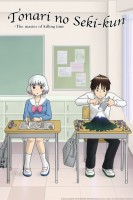
Tonari no Seki-kunTonari no Seki-kun: The Master of Killing Time directed by Yūji Mutoh. The anime adaptation of Takuma Morishige’s manga series My Neighbor Seki had completely slipped under my radar until Vertical announced that it had licensed the manga. My curiosity was piqued, so I decided to watch the anime while waiting for the manga to be released. The anime was an absolute delight; I wish there was more! I’m definitely looking forward to reading the manga next year. The premise of the series is disarmingly simple. Yokoi and Seki sit next to each other in the back of their high school classroom. But instead of studying, Seki occupies himself at his desk in all sorts of ways, messing around with erasers, shogi pieces, knitting, and so on. The scenarios are actually all very imaginative, creative, and elaborate. Try as she might, Yokoi can’t help but be caught up whatever it is Seki is doing, so she doesn’t get much studying done, either. The anime is much more entertaining than I’ve probably made it sound. Each episode is under eight minutes and they are all very funny. There is very little dialogue in the series. Instead, the narrative relies very heavily on Yokoi’s internal monologue. Yokoi’s voice actress, Kana Hanazawa, does a fantastic job with the role–she is exceptionally dynamic and expressive.

Filed Under: FEATURES, My Week in Manga Tagged With: anime, Gangsta, Kohske, manga, My Neighbor Seki, Psyche Delico

Random Musings: Four Years of Experiments in Manga

August 18, 2014 by Ash Brown

I have been writing about manga, Japanese literature, and other related (and occasionally not-so-related) subjects here at Experiments in Manga for four years now. That’s…kind of incredible in its own small way. I don’t generally delve too deeply into my personal life on the blog, but this past year has been particularly momentous for me, and not just because I’ve managed to keep Experiments in Manga going for so long.

Over the last year or so, I’ve been doing all sorts of coming out both online and off. I’m very fortunate to be in a place in my life where I am able to be more open about who I am, and I’m probably the happiest that I have ever been because of it. My family, friends, and coworkers have all been amazingly supportive. I’m also currently a month into recovering from a major surgery that (without going into all of the gory details) has improved my quality of life tremendously. And a little less than a week ago I and my partners became parents. So, yeah, there have been some big changes in my life over the last year!

As for Experiments in Manga, there have been some changes here, too. Probably the most noteworthy is that Experiments in Manga joined the Manga Bookshelf family of blogs and has now been a part of that cohort for a year. In addition to keeping up with my writing at Experiments in Manga, I also regularly participate in Manga Bookshelf’s group posts. I’ve really enjoyed being a part of Manga Bookshelf and working more closely with other manga bloggers. It’s brought Experiments in Manga more readers and commenters, too, which for the most part has been a lot of fun.

After almost two years of effort, I was finally able to wrap up my Blade of the Immortal review project in November. It was a good and challenging experience for me, and one that I wanted to repeat. So I let Experiments in Manga’s readers pick which manga I would tackle next. In a few months I’ll be wrapping up my Year of Yuri monthly review project and once again I’ll be putting my next review project up for a vote. I also had a couple of smaller, informal review projects over the past year. Back in January I celebrated my very own “Usamaru Furuya Week” by reviewing everything of his available in English that I hadn’t already. And every weekend in March I reviewed a volume of Takehiko Inoue’s phenomenal manga Real. (Because March equals basketball, or something like that.)

Last year saw more queer content discussed at Experiments in Manga than ever before. It wasn’t entirely done intentionally (well, except for the Year of Yuri project), but I’ll admit that it did make me happy. Many of those posts, like my random musings on a lecture about queer theory, Japanese literature, and translation and my review of Jeffery Angles’ Writing the Love of Boys: Origins of Bishōnen Culture in Modernist Japanese Literature, have been some of my most popular, or at least most frequently visited. Gengoroh Tagame also appears to be a perennial favorite; quite a bit of interest continues to be shown in my Two from Tagame post, which looks at two of his manga released relatively recently in English: Endless Game and Gunji.

Actually, one of the posts that I was personally very satisfied with from last year, a Spotlight on Kaita Murayama, was also somewhat queer-related. In general, I’ve been writing more of these Random Musings features. I’ve really enjoyed working on these posts. They allow me to be a little more freeform and talk about things that aren’t necessarily suited for the format that I currently use for my in-depth reviews. Other non-reviews that haven’t yet been mentioned that I was particularly happy with or that were otherwise well received include my thoughts on TCAF 2014, tips on finding manga in libraries, and a list of some of the notable releases of 2013. I had never done one of these end-of-the-year lists before, but it was surprisingly fun, so I’ll most likely do it again.

As for the in-depth reviews from the last year that seemed to be especially popular, I was a little surprised to see the amount of interest shown in some of the nonfiction titles that I read, such as The Nobility of Failure: Tragic Heroes in the History of Japan and The Way of Taiko (both of which were great). My review of the omnibus of the Mobile Suit Gundam trilogy of novels received a fair amount of attention, too. The five manga reviews from the past year that were the most frequently visited included Saki Nakagawa’s Attack on Titan: Junior High, Volume 1, Shigeru Mizuki’s Kitaro, Torajiro Kishi’s Maka-Maka: Sex, Life, and Communication, Volume 1, Yuma Ando and Yuki Sato’s Sherlock Bones, Volume 1, and Makoto Yukimura’s Vinland Saga, Omnibus 1.

By this point I seem to have settled into a fairly predictable posting schedule at Experiments in Manga. Each week sees at least three or four posts, occasionally more if I have some sort of project going on or am feeling particularly inspired. I think I’ve said this every year so far, but I really would love to write more than I do. Sadly, my free time is very limited and from here on out (with the kidling and all) it will be even more so. Right now three to four posts a week still seems like it should be a reasonable and manageable pace for me, though.

I’ve said this every year, too, but as always I would like to extend my thanks and appreciation to all of the readers of Experiments in Manga, both new and old. I mostly write for myself, but it is extremely satisfying to know that Experiments in Manga is at least occasionally interesting or helpful to other people as well. There certainly is plenty of room for improvement–I know there are some things that I don’t do very well and need to work on–but generally I’ve been very happy with the continued evolution of Experiments in Manga and the general direction the site has been taking. Thank you all for your support over the last year. Here’s hoping that the next one will be even better!

Filed Under: UNSHELVED Tagged With: Experiments in Manga

The Princess of Tennis

August 15, 2014 by Ash Brown

The Princess of TennisAuthor: Jamie Lynn Lano
Publisher: Jamie Lynn Lano
ISBN: 9781499797527
Released: July 2014

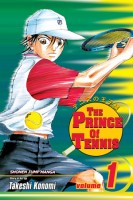
The Princess of Tennis: The True Story of Working As a Mangaka’s Assistant in Japan by Jamie Lynn Lano is just that–a memoir written by someone fortunate enough to live the dream of so many aspiring artists. Very few non-Japanese creators have had the opportunity to work within the manga industry as an assistant or as a lead mangaka. Fewer still have written about their experiences to any great extent. In addition to working as an assistant to Takeshi Konomi (the creator of the exceptionally popular The Prince of Tennis), during her time in Japan Lano was also freelance writer, a columnist for Asahi Weekly, a host for a Japanese children’s television program, and an avid blogger. The Princess of Tennis is based on “Working As an Assistant on The Prince of Tennis,” a series of posts which can be found on her blog Living Tall in Japan. (Lano is over six feet tall, so the site is aptly named.) I had previously read some of Lano’s story online, but was happy to see it collected and expanded upon in book form with The Princess of Tennis.

After graduating with a degree in media arts and animation, Lano moved to Japan where she taught English for a few years. In 2008, Konomi Takeshi put out a call looking for assistants for a new manga series. Unlike many other mangaka, he was also considering applications from artists who had little or no experience in the industry. Lano was a huge fan of his series The Prince of Tennis and considered Konomi to be one of her idols. And so, after some encouragement from her friends, she applied for the position, never thinking that she would actually be hired. But she was. And she ended up working with Konomi, his editors, and a small group of other assistants for more than a year. (And on the sequel to The Prince of Tennis, no less!) It was a dream come true for Lano, but as enthusiastic as she was the job wasn’t always a easy. Working as an assistant on a series that she loved certainly had its perks, but it was also a challenging and exhausting experience that required long, grueling hours.

The Princess of Tennis is a personal story that is told with heart and honesty. Lano’s style is very informal, almost diary-like. Although there is some self-reflection from the very beginning of the memoir, she generally focuses on what she was feeling at the time she is describing rather than providing a detailed analysis of the situation after the fact. Lano is a self-proclaimed fangirl, something comes through in the bubbly way she writes. She makes liberal use of exclamations points (and other punctuation), employs all-caps to indicate excitement or for emphasis, and the occasional emoticon even makes an appearance in the text. She also includes very cute illustrations at the beginning of each chapter, a few delightful bonus comics towards the end of the volume, and photographs throughout the book. Lano’s enthusiasm and gratitude for the opportunity to work as a manga assistant is obvious even when things, and people, become rather difficult to deal with. The Princess of Tennis is friendly and approachable in tone, making for an entertaining as well as informative read.

In The Princess of Tennis, Lano offers an insider’s look into the Japanese manga industry and into the creative process of making manga. At first she is so excited about working as an assistant for Konomi (and understandably so) that Lano tends to overlook the downfalls of the position. The Princess of Tennis almost seems like an account that couldn’t possibly be true. Initially more time is spent participating in media events and festivals than slaving away at the drawing table. But as the volume progresses and reality and frustrations set in, The Princess of Tennis becomes much more like what I’ve come to expect based on the stories from other creators in the trade. The Princess of Tennis also offers a glimpse into what it is like to live in Japan as a foreigner and the challenges associated with that. And because Lano is revealing the details of her personal life in The Princess of Tennis there is also the drama of interpersonal relationships, romantic and otherwise, to take into consideration. While she has held onto some secrets for the privacy and sake of the other people involved, Lano is very open and forthcoming in The Princess of Tennis, providing a unique perspective on the manga industry and on Japan.

Filed Under: REVIEWS Tagged With: Jamie Lynn Lano, manga, Nonfiction, Prince of Tennis

Manga the Week of 8/20

August 14, 2014 by Sean Gaffney, Ash Brown, Anna N, MJ and Michelle Smith 1 Comment

SEAN: There’s a little something for everyone in the third week of August, so let’s see what demographics we can scrounge up.

First off, it’s not out in bookstores yet, but Fantagraphics has shipped its 7th volume of Wandering Son to its Kickstarter backers. It’s still a must-read for anyone who likes good manga about real characters, as well as being a top-notch coming of age story.

ASH: I love this series so much. I can’t wait to read my copy.

ANNA: I need to get caught up on this! I really liked the first couple volumes.

MJ: I love this series with the fire of a thousand suns. I honestly can’t wait.

SEAN: Kodansha brings us the second volume of Attack on Titan: Before the Fall, the adaptation of the light novel about times way back when there was still quite a bit of defense separating humanity from its Titan opponents. Not that humanity really comes off well here, at least in Vol. 1.

ASH: Before the Fall has its own brand of Attack on Titan darkness. I’m looking forward to reading the original novel later this year, too.

arslan1

SEAN: Kodansha is also debuting The Heroic Legend of Arslan, a manga adaptation by Hiromu Arakawa of the novel series by Yoshiki Tanaka. From what I understand, it’s not so much high fantasy as low to medium fantasy, but it’s being drawn by Arakawa, so I’m totally on board.

MICHELLE: Me, too!

ASH: As am I!

ANNA: This sounds intriguing! More Arakawa can only be a good thing!

MJ: Count me in!

SEAN: There’s also the first omnibus release of Tsubasa: Reservoir Chronicle. I’ve made my opinion of the last half of this series quite clear in the past, so I will simply note that the FIRST half of this series is quite good indeed, and that fans who don’t mind manga that end in car crashes should absolutely check it out, if only for Kurogane and Fai.

MJ: I’m happy to see this getting a re-release!

SEAN: Seven Seas has a trio of releases geared towards the fanboy end of the spectrum. The one I’m interested in is the eighth volume of Haganai. If you were to ask me if there was a reason to get it, I would have to say: nun. (whack) Ow.

There’s also the 4th volume of monster hit Monster Musume, showing why I do not run manga companies.

ASH: Seven Seas recently announced the licensing of another manga by the creator of Monster Musume, so the series has apparently been doing quite well.

SEAN: And Strike Witches debuts a new miniseries with Vol. 1 of the 1937 Fuso Sea Incident. This incident appears, as far as I can tell, to be fictional, and should have more combat sequences than we’ve seen in prior volumes.

Vertical has the 11th volume of Chi’s Sweet Home, star of manga, anime, and TV commercials. I hope Chi isn’t letting it go to her head.

MICHELLE: Yay, Chi! I have my coworker’s young daughter addicted to this one.

ASH: A new volume of Chi is always a good reason to celebrate.

MJ: You really can’t have too much Chi.

dorohedoro13

SEAN: Ikki may have stopped publication, but SigIkki lives on (I think – it may get rebranded) with the 13th volume of Dorohedoro. Dorohedoro easily wins the longest running Ikki series published over here, and I am infinitely grateful to Viz for its release.

ASH: I would like to join you in expressing my gratitude. Dorohedoro is such a marvelously weird manga and I love it.

SEAN: There’s also the 3rd volume of Gangsta, which still makes me think of Black Lagoon too much but is starting to carve out its own niche in the ‘cool people attack each other by leaping into the air’ genre.

ASH: I’ve really been enjoying this series and am looking forward to the next installment.

ANNA: I enjoy this series very much too. Artsy seinen fighting and angst is fun.

SEAN: Lastly, the Kaze Hikaru of seinen, it’s Vol. 10 of Ikigami: The Ultimate Limit! This is the final volume, so we won’t be seeing its once a year likes again. With this and Bokurano: Ours ending next month, the genre of ‘incredibly depressing manga about optimism in humanity’ needs a new standard bearer. Who’ll take it up?

MICHELLE: I’ve been wondering when Ikigami would end, and whether, with that obligation finishing up, VIZ might give that yearly slot to another volume of Kaze Hikaru. That would rock so much. I do intend to finish Bokurano: Ours sometime, but I have to muster the mental fortitude.

SEAN: Does something here appeal to you? If not, why not?

Filed Under: FEATURES, manga the week of

Before You Go

August 13, 2014 by Ash Brown

Before You GoCreator: Denise Schroeder
Publisher: Chromatic Press
Released: May 2014
Original release: March 2014

Before You Go is a short, thirty-three paged comic written and illustrated by Denise Schroeder. Originally published in the March 2014 issue of Chromatic Press’ online multimedia magazine Sparkler Monthly (which, by the way, is marvelous), a small print run of Before You Go was released in time to debut at the 2014 Toronto Comic Arts Festival. Schroeder is an American artist currently living in Colorado. Before reading Before You Go I wasn’t familiar with her work, but in addition to various other things she is also the creator of three webcomics: Conquest, The Good Prince, and Paradox. I actually briefly met Schroeder while at TCAF, which was a delight. She very openly and happily proclaims manga and anime as major influences on her work, Sailor Moon being the series that ignited her passion. I follow the work of Chromatic Press very closely which is how I came to discover Schroeder and Before You Go. I am very glad to have been exposed to her comics.

One rainy day Sadie misses catching her train home after work, but then her luck changes for the better. Because of the mishap she meets Robin. The two young women hit it off and suddenly Sadie’s daily commute becomes something she looks forward to because it means she gets to spend more time with Robin. Eventually Robin begins to walk Sadie the rest of the way home even though it’s out of her way. Sadie and Robin’s initial chance encounter quickly blossoms into friendship with the possibility for their relationship to become something even more. They enjoy each other’s company and have become quite close. At least that’s what Sadie would like to think. The problem is that Robin is hesitant to open up; while she definitely shows interest in Sadie, she doesn’t seem to want to share anything about herself. Trust and communication are extremely important in any relationship, but they can also be some of the scariest parts, too.

Most of Before You Go either takes place on the train or on the way to and from the station as Sadie and Robin get to know each other. Their flirting and blushing is absolutely adorable. Even though Before You Go is a short comic, both Robin and Sadie are fully realized characters with distinctive personalities. They have hopes and dreams, and they have fears and regrets, too. Of the two, Sadie is the more dynamic and exuberant, evidence of her passion for the theater and performance. Robin tends to be more reserved, content to quietly observe. As Sadie points out in Before You Go, closely watching someone else can be valuable, but even that can’t reveal everything about who that person is. Because Before You Go is a comic, the act of looking and the visual storytelling elements are important for the reader’s understanding, too. The surprise, love, and concern between Sadie and Robin can be seen in Schroeder’s artwork even when the two women aren’t saying, or can’t say, anything at all.

Before You Go is a wonderful and utterly charming comic. I particularly appreciate the realism of the story as well as the realism of the characters and their relationship and interactions with each other. The comic has a quirky sense of humor to it which balances perfectly with the more serious and contemplative aspects of Before You Go. It’s also nice to see a love story between two adult women that recognizes the problems that someone who is queer might encounter in life without dwelling on the sadness that that so often entails. Before You Go is a quiet drama with honest heart and feeling behind it. The comic may be brief, but it is also marvelously complete–both the characters and the story are well thought out and developed with more maturity and depth than might appear at first glance. In the end, Before You Go is simply a comic that makes me happy to read. I look forward to seeing more of Schroeder’s work in the future.

Filed Under: REVIEWS Tagged With: Chromatic Press, comics, Denise Schroeder, Year of Yuri

My Week in Manga: August 4-August 10, 2014

August 11, 2014 by Ash Brown

My News and Reviews

There were two reviews at Experiments in Manga last week in addition to the announcement of the Mecha Manga Giveaway Winner, which also includes a list of some of the mecha manga that has been licensed in English at one point or another. (Considering how many have been released in English, it’s not a comprehensive list. Instead it focuses on some favorites.) As for the reviews, I recently read Fuyumi Ono’s The Twelve Kingdoms, Volume 4: Skies of Dawn. Sadly, this was the last volume in the series to be translated into English. The Twelve Kingdoms is a great series of fantasy novels, all of which are worth tracking down. Keeping with last week’s unintentional theme of reviewing fourth volumes of epic series, I also took a look at Vinland Saga, Omnibus 4 by Makoto Yukimura. Vinland Saga is one of my favorite manga series currently being released and this volume hasn’t changed that.

The phenomenal Sparkler Monthly is currently running a membership drive for its second year, and there are some fantastic incentives. I highly recommend checking the project out and contributing if you’re able. Lori at Manga Xanadu has a nice post looking back at the first year of Sparkler Monthly and looking forward to Sparkler Monthly Year Two. For some of my own reviews and random musings on the excellent content being released by Sparkler Monthly, check out the Chromatic Press tag. (Actually, I’ll be posting a review of Denise Schroeder’s Before You Go later this week, too.)

Elsewhere online, ICv2 has a two-part interview with Viz Media’s Leyla Aker and Kevin Hamric looking at What’s Selling, Where, and Why as well as focusing On Specific Products and Programs. Justin at Organization Anti-Social Geniuses has a fun post about The Curious Case of Last Pages For US Manga Editions. Also, Mangabrog has translated some of Takehiko Inoue’s interviews from back when Vagabond was on hiatus.

Quick Takes

Black Rose Alice, Volume 1Black Rose Alice, Volume 1 by Setona Mizushiro. I’ll admit, even though I have enjoyed the other manga by Mizushiro that I have read and despite the very good things that I’ve heard about Black Rose Alice, I was still a little hesitant to read the series. Mostly because I’ve become a little weary, and therefore wary, of vampire stories. But the vampires in Black Rose Alice are so different that I’m actually hesitant to even call them vampires. Either way, the first volume was phenomenal. It’s creepy and disconcerting, tragic and chilling. Dimitri is a rising star, an operatic tenor with a beautiful voice and a handsome face who is astounded when a stranger tells him he is to blame for a sudden wave of suicides. The deaths in the story have tremendous emotional impact, which is particularly impressive since the characters have just been introduced. The characterization in Black Rose Alice is excellent, especially that of Dimitri, and the artwork is lovely and atmospheric. I am a little sad to see early 20th-century Vienna already left behind as a setting in exchange for modern-day Tokyo, but I’m very curious to see where the story goes from here. I’ll definitely be picking up more of Black Rose Alice.

Blank Slate, Volume 1Blank Slate, Volumes 1-2 by Aya Kanno. I first read Blank Slate several years ago and recall really liking it. Upon rereading, it’s honestly not as good as I remember it being, though the art is pretty great. Even considering the flaws in its execution, I actually still really like the series. Apparently the story that Kanno originally planned was much longer and more complicated. Quite a few things changed plot-wise as well as character-wise when she shortened the series; the transition isn’t as smooth as it could have been. Blank Slate would have benefited from at least another volume or two so that all of the backstory that’s crammed into the second volume could have been more fully developed. Though in its way it is thrilling, there are so many plot twists and major reveals towards the series’ end that it’s almost absurd. Some of the characters are shown to be so different from who they were when they were first introduced that it’s almost difficult to believe the changes, but that does make their betrayals rather effective. And I do like that the completely amoral and nearly emotionless Zen, the series lead, remains a villain throughout despite a tragic past that is supposed to make him more sympathetic.

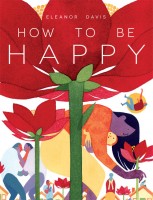
How to Be HappyHow to Be Happy by Eleanor Davis. I wasn’t previously familiar with Davis’ work, but after experiencing How to Be Happy I certainly want to read more of it. How to Be Happy is a collection of her short comics, some no longer than a page. Though her black and white illustrations are effective, Davis’ color work is especially striking. She exhibits a wide variety of styles in How to Be Happy, evoking a number of different moods. However, all of the comics come across as being at least a little surreal. Many, perhaps most, of the stories tend towards the melancholy and somber, but others have an underlying and almost hidden sense of humor and joy. As Davis points out in her author’s note, the book actually isn’t about how to be happy. And yet, I found reading the volume to be a wonderfully cathartic and thought-provoking experience. I would even go as far as to call it inspiring. Though she often employees fantastical elements, what Davis really seems to be doing in How to Be Happy is exploring the nature of life and reality through her short narratives. How to Be Happy is a beautiful, strange, and wondrous collection and one that I can definitely see myself returning to again.

Midaresomenishi: A Tale of Samurai LoveMidaresomenishi: A Tale of Samurai Love by Kazuma Kodaka. Although Midaresomenishi is self-described as a romantic epic, there’s not very much at all that is romantic about this boys’ love manga. Instead it’s an extremely dark tale with a focus on violence, sexual and otherwise. Truly terrible things happen in it. Blood, death, and sadism take precedence over affection and love. There is very little happiness to be found in Midaresomenishi, and what little there is is fleeting. Shirou is a young samurai who takes great pleasure in killing, but that is nothing in comparison to the joy that Sougetsu, a powerful and decadent master of bandits, takes in sexually dominating others. In order to protect the life of his younger brother Fujimura, Shirou allows himself to be subjugated by Sougetsu. What he doesn’t realize is that while Fujimura is alive, he has become a sexual plaything for Sougetsu’s underlings. There actually is some doomed love and strong familial bonds in Midaresomenishi, but for the most part the manga’s focus is on the more unpleasant relationships. Midaresomenishi doesn’t work for me as a love story, there’s simply too much force and coercion, but as a violent tragedy it is fairly successful.

Filed Under: FEATURES, My Week in Manga Tagged With: Aya Kanno, Black Rose Alice, Blank Slate, comics, Eleanor Davis, Kazuma Kodaka, manga, Setona Mizushiro

Pick of the Week: Loveless! And other stuff.

August 11, 2014 by Sean Gaffney, Michelle Smith, Ash Brown, Anna N and MJ 4 Comments

potwSEAN: It’s a relatively quiet week for me manga-wise, which is good, as I’m still trying to make a dent on last week. As a result, I will pick my go-to Shonen Sunday action series, Magi.

MICHELLE: I like Magi, too, but I am absolutely unable to pick anything other than Loveless, whose long-awaited twelfth volume is finally here! I will do my best not to think about how long it’ll take for volume thirteen to arrive, seeing as how it hasn’t even been released in Japan yet.

ASH: It’s Loveless for me this week, too! I’ve been saving up a few volumes to read all at once.

ANNA: There isn’t really anything coming out this week that I am all that enthused about, so I’m going to pick Kaze Hikaru from last week, just because that’s what I’m going to read next!

MJ: Loveless. LOVELESS. Did I mention Loveless? Seriously, though, did anyone expect me to pick something else? Surely not.

… Loveless

What looks good to you this week?
Filed Under: PICK OF THE WEEK

Vinland Saga, Vol. 4

August 9, 2014 by Ash Brown

Vinland Saga, Omnibus 4Creator: Makoto Yukimura
U.S. publisher: Kodansha
ISBN: 9781612624235
Released: July 2014
Original release: 2009
Awards: Japan Media Arts Award, Kodansha Manga Award

Makoto Yukimura’s award-winning Vinland Saga has quickly become one of the manga releases that I most look forward to each time a new volume is published every few months. The series is thoroughly researched historical fiction with fantastic artwork and incredibly engaging story and characters. I was happy when Kodansha Comics picked up the license, but as the series gets better and better with each passing volume my excitement for the manga grows along with it. Kodansha’s edition of Vinland Saga was the publisher’s first foray into a deluxe release. Each omnibus collects two of the original volumes, retaining the color pages, in a nice hardcover format. Vinland Saga, Omnibus 4, published by Kodansha in 2014, contains the seventh and eighth volumes of the Japanese edition of the series, both of which were released in 2009. The fourth omnibus, like the third, also includes an exclusive question and answer segment with Yukimura about the series which I’ve really been enjoying.

Defying all expectations, Prince Canute has survived his father’s attempt to have him killed in battle and has taken his destiny into his own hands. At one point a gentle young man considered weak by the Viking mercenaries and soldiers, Canute is now resolved to wrest the crown from his father, King Sweyn. He is prepared to use force and any other means necessary in order to gain control of the realm. This change of heart has earned Canute an impressive array of followers who are willing to fight and die for him as he challenges Denmark’s king. Thorkell and his men are known and respected as great warriors to be feared on the battlefield. Most of Askeladd’s troop has been slain, but Askeladd himself is a skilled fighter with an even greater talent for strategy and manipulation. The aid of both men will give Canute distinct advantages in the approaching confrontation, but its conclusion is far from certain. Sweyn  has strong men who are loyal to him as well in addition to the recognized power to rule over the masses. He isn’t about to let the throne slip away so easily.

I continue to be extremely impressed by the characterization in Vinland Saga. The main characters and even the supporting cast all have a tremendous amount of depth. They are complex, with both human failings and strengths, well-developed personalities, and believable motivations. Nothing is as simple as good or bad. Instead the characters are portrayed as real people with complicated pasts that have made them who they are. Up until this point Sweyn has been somewhat of an enigma, a dark shadow hanging over Canute and the territories which he has conquered. But in Vinland Saga, Omnibus 4 he, too, is revealed to be much more nuanced of a character than when he was first introduced. Much like Canute, Sweyn’s actions are informed and driven by his beliefs and his desire to create a prosperous realm. He is a formidable ruler with significant influence, but he is also a man and a tired one at that. Kingship has taken its toll. Sweyn also serves as an example showing that even a person with righteous intentions can become corrupt, a lesson that Canute would do well to take to heart.

Compared to previous installments of Vinland Saga, the fourth omnibus in the series focuses less on all-out battle and more on the political strategies and maneuverings going on behind the scenes. However, the intensity of the series remains and when fights do break out they make an impact. They are incredibly bold and dynamic. Yukimura’s action scenes are epic and extremely well choreographed, but what makes them so effective is the emotional investment of the characters. Askeladd in particular is especially compelling. He has been able to channel his hatred and desire for revenge, controlling those around him with immense skill, but it hasn’t been without personal sacrifice. Askeladd himself is also the target of revenge–Thorfinn holds him responsible for the death of his father. Thorfinn and Askeladd’s relationship is extraordinarily complex. Askeladd doesn’t blame the younger man for seeking his demise. In his own way he actually tries to teach Thorfinn, drawing from his own past experiences. But this omnibus makes it tragically clear that Thorfinn is so obsessed with his quest for revenge that he has thought very little beyond it.

Filed Under: REVIEWS Tagged With: Japan Media Arts Award, kodansha, Kodansha Comics, Kodansha Manga Award, Makoto Yukimura, manga, Vinland Saga

The Twelve Kingdoms, Vol. 4: Skies of Dawn

August 8, 2014 by Ash Brown

The Twelve Kingdoms, Volume 4: Skies of DawnAuthor: Fuyumi Ono
Illustrator: Akihiro Yamada

Translator: Alexander O. Smith
U.S. Publisher: Tokyopop
ISBN: 9781427802606
Released: November 2010
Original release: 1994

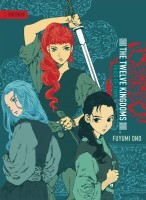
Skies of Dawn is the fourth and sadly final volume of Fuyumi Ono’s eight-volume fantasy novel series The Twelve Kingdoms, illustrated by Akihiro Yamada, to have been released in English. Published in Japan in two volumes in 1994, the novel was released in its entirety in 2010 by Tokyopop under its Pop Fiction imprint, first as a hardcover and then later in a paperback edition. As with the previous volumes of The Twelve Kingdoms, Skies of Dawn was translated by Alexander O. Smith. Interestingly enough, Elye J. Alexander, who frequently collaborates with Smith on translations and who worked with him on the first three volumes of The Twelve Kingdoms, does not appear to have been involved with Skies of Dawn. Though I discovered the series relatively late, I have been thoroughly enjoying The Twelve Kingdoms and Ono’s exceptionally well-developed world and characters. Skies of Dawn is easily the longest of the translated volumes, but that didn’t at all diminish my enthusiasm.

Yoko has become the king of Kei after being chosen by Keiki, the kingdom’s kirin. It’s still early in Yoko’s reign, but it hasn’t been easy for her. Many of the ministers of her court are corrupt and the others have very little trust in Yoko–Kei has had a bad history with lady-kings. Yoko lacks confidence in her rule as well. Having grown up in Japan before being suddenly swept away to the Twelve Kingdoms, her understanding of the world in which she now finds herself is limited and her knowledge of what it means to be king is even more so. Yoko isn’t the only young woman who is struggling with great changes in her life. Like Kei, the kingdom of Hou has also recently lost its ruler and those circumstances have forced its princess Shoukei into exile. Suzu, another girl who was originally from Japan, is unhappy with her lot in life in the Twelve Kingdoms. Though they don’t know each other, the destinies of these three young women will become closely intertwined, changing the direction and fate of Kei, a kingdom still struggling to restore itself after years of turmoil and calamity.

Although Skies of Dawn is technically the fourth volume in The Twelve Kingdoms, chronologically its story follows immediately after the events of the first volume, Sea of Shadow. The two intervening novels–Sea of Wind and The Vast Spread of the Seas–serve as prequels to the series, providing more context as well as back stories for The Twelve Kingdoms as a whole and for its major characters. As with the other volumes in The Twelve Kingdoms, Skies of Dawn actually stands very well on its own as a novel. Though they provide more background, it’s not absolutely necessary to have read the previous volumes in the series to understand what’s happening in Skies of Dawn. Actually, Skies of Dawn is almost like reading three novels contained in one, especially towards its beginning. It takes quite some time for Yoko, Shoukei, and Suzu’s individual stories to come together into a single narrative, but it is very satisfying when they do, especially because it happens in a way that is somewhat unexpected.

Worldbuilding has always been a major component of The Twelve Kingdoms and that hasn’t changed with Skies of Dawn. I do appreciate all of the thought and detail that Ono has put into every aspect of the series. Granted, while it is all very interesting, the worldbuilding does slow down the pacing of the plot a great deal. Much of the first half of Skies of Dawn is devoted to things like rules of governance, taxes, and marriage laws as Yoko learns more about her kingdom and the kingdoms surrounding it. It’s not until the second half of Skies of Dawn when Yoko, Shoukei, and Suzu’s stories begin to converge that events start to quickly escalate as the people of Kei come closer and closer to rebellion. The Twelve Kingdoms is an epic tale of fantasy in which the characters are required to grow and evolve, taking responsibility for themselves and for the changes in the world in which they live. Although it is unlikely that the rest of the series will be translated, Skies of Dawn and the previous volumes are still well worth seeking out.

Filed Under: REVIEWS Tagged With: Akihiro Yamada, Fuyumi Ono, Light Novels, Novels, Tokyopop, Twelve Kingdoms

Manga the Week of 8/13

August 7, 2014 by Sean Gaffney, Ash Brown, Michelle Smith, Anna N and MJ Leave a Comment

SEAN: If there was a quiet week in August, next week would be it, with a mere nine titles.

samurai2

Dark Horse has the 2nd of its Samurai Executioner omnibii, for those who can’t get enough of samurai, manliness, and manly samurai.

ASH: Surprisingly enough, I haven’t actually read any of Samurai Executioner. This would probably be a good time to change that.

SEAN: Kodansha gives us a double shot of Hiro Mashima, with the 41st volume of Fairy Tail (which starts a new arc) and the 2nd volume of Monster Soul (which wraps up).

SubLime has an entry, as the 5th volume of Crimson Spell is out. Listen to them. Crimson. Pff. It’s f**king Red. (Sorry, got caught up in the meme there.)

ASH: Speaking of getting caught up, I believe the fifth volume means we’ve caught up with Japan, too.

SEAN: Vertical has the 5th volume of Wolfsmund, whose cover may not be red but whose contents I expect will at least have a bit of blood.

ASH: I suspect that you’re right.

SEAN: Viz has recently said that Deadman Wonderland is its breakout hit of the last year, so it will please people no end that Vol. 4 is out. Also, clearly this means we need more license rescues. (Kidding, kidding…)

MICHELLE: I never kid about license rescues! Of course, whatever momentum the TOKYOPOP series that I most love(d) had is probably long-dissipated by now, but I can continue to hope that one day, I’ll get to read Silver Diamond in English in its entirety.

loveless12

ANNA: I am pausing a moment to contemplate the lack of an ending in English for Shinobi Life, Demon Sacred, and Sky Blue Shore.

SEAN: We also have the 12th volume of Itsuwaribito, which I still haven’t really read. Anyone?

The 12th volume of Loveless will no doubt generate a bit more excitement from my other Manga Bookshelf colleagues.

ASH: I’m looking forward to it!

MICHELLE: I am positively asquee!

MJ: Okay, yeah, I’m in the middle of production week, but I have to take at least a moment here to say: LOVELESS!!! <3 Oh, happy day.

SEAN: Lastly, we get a 7th volume of the Arabian Nights series Magi, which I enjoy quite a bit.

MICHELLE: I vow that I will finally get caught back up with Magi!

SEAN: Getting something here? Or catching up with the week before?

Filed Under: FEATURES, manga the week of

Manga Giveaway: Mecha Manga Giveaway Winner

August 6, 2014 by Ash Brown

Bokurano: Ours, Volume 1And the winner of the Mecha Manga Giveaway is…Elliot!

As the winner, Elliot will be receiving a copy of Mohiro Kito’s Bokurano: Ours, Volume 1. For some reason, I never think I’m going to enjoy mecha manga, but then I do. And so, as part of this giveaway, I was interested in learning what mecha manga other people had read and enjoyed. There have been a good number licensed in English, though this is only a small fraction of what’s available in Japan. As many of the entrants pointed out in the giveaway comments, sometimes an anime gives the mecha genre a little more oomph, but manga can be enjoyable, too.

Some of the mecha manga licensed in English:
Bokurano: Ours by Mohiro Kito
Broken Blade by Yunosuke Yoshinaga
Code Geass by Goro Taniguchi (and various)
Eureka Seven by Jinsei Kataoka and Kazuma Kondou
Full Metal Panic! written by Shouji Gatou, illustrated by Retsu Tateo
Gurren Lagann by Kotaro Mori
Kannazuki no Miko: Destiny of Shrine Maiden by Kaishaku
Knights of Sidonia by Tsutomu Nihei
Magic Knight Rayearth by CLAMP
Mobile Police Patlabor by Masami Yuuki
Mobile Suit Gundam: Ecole du Ciel by Haruhiko Mikimoto
Mobile Suit Gundam: The Origin by Yoshikazu Yasuhiko
Mobile Suit Gundam Wing by Hajime Yatate and Yoshiyuki Tomino (and various)
Nadesico by Kia Asamiya
Neon Genesis Evangelion by Yoshiyuki Sadamoto
RahXephon written by Yutaka Izubuchi, illustrated by Takeaki Momose
The Vision of Escaflowne by Aki Katsu
The Voice of a Distant Star written by Makoto Shinkai, illustrated by Mizu Sahara

The above list is only a small selection of the mecha manga that have at one point or another been released in English. I was a little surprised to see how much of it has gone out of print. But there are still some great titles like Knights of Sidonia, Mobile Suit Gundam: The Origin, and the various incarnations of Neon Genesis Evangelion that are still going strong. Mecha will still be around for a while, I suspect. And thank you to everyone who shared your favorites with me!

Filed Under: UNSHELVED Tagged With: Bokurano, manga, Mohiro Kito

Pick of the Week: Black Rose Alice & more!

August 5, 2014 by Ash Brown, Michelle Smith, Anna N, Sean Gaffney and MJ Leave a Comment

Untitled-1ASH: As is often the case with the first week of the month, there are a good many manga releases hitting the shelves. But, there is one manga that I’m particularly curious about: the debut of Setona Mizushiro’s Black Rose Alice. It’s shoujo horror from the creator of After School Nightmare and I’ve been assured it’s not your typical vampire story.

MICHELLE: I’m really looking forward to Black Rose Alice, and Spell of Desire was enjoyable, too, but I can’t pass up my yearly opportunity to plug Kaze Hikaru. It’s really good, I swear! Thank you, VIZ, for continuing to release it.

ANNA: I was preparing myself for some mental anguish because I love Black Rose Alice, Spell of Desire, and Kaze Hikaru all so much! So I’m glad that Ash and Michelle have picked 2 of my favorites so I can highlight the frothy witchy fun of Spell of Desire. Since Demon Love Spell just concluded and Midnight Secretary is also about to wrap up, I am very happy I have another fun josei supernatural romance to read.

SEAN: Given what everyone’s already picked out, I’ll spotlight the 46th volume of Oh My Goddess!. We now know that the series will end with Vol. 48, and so Fujishima is allowed to pull out all the stops and do the things he had put off doing for twenty years, like plot and character development. I kid, but this volume is touching and heartwarming, as the entire arc has been, really.

MJ: I probably should choose something like Knights of Sidonia, since everyone else has avoided repeats here, but I can’t possibly pick anything this week other than Setona Mizushiro’s Black Rose Alice. I absolutely adore After School Nightmare, and after losing her glorious BL epic Dousei Ai to JManga’s demise, I’m pretty thrilled to finally see something else from her on the shelves. This is my must-buy item for the week!

What looks good to you this week?
Filed Under: PICK OF THE WEEK

My Week in Manga: July 28-August 3, 2014

August 4, 2014 by Ash Brown

My News and Reviews

Another week, another few posts at Experiments in Manga. First up was my most recent manga giveaway. Tell me about your favorite mecha manga (if you have one) for a chance to win the first volume of Mohiro Kito’s Bokurano: Ours. (The winner will be announced on Wednesday, so there’s still time to send in comments!) The first in-depth manga review of August went to In Clothes Called Fat, the most recent manga by Moyoco Anno to have been released in English. I honestly believe it to be one of the best comics of the year. (Well, at least out of those that I’ve read so far.) I also posted July’s Bookshelf Overload over the weekend for those of you who are interested in the manga that I purchase or otherwise receive over the course of a month.

Elsewhere online, Sparkler Monthly is celebrating its first year of publication by offering a free sampler download that includes the first chapter of all of its series–prose, comics, and audio dramas. Deb Aoki has a nice overview of some of the manga happenings at this years San Diego Comic Con over at Publishers Weekly. Jamie Coville has also posted audio for some of the SDCC panels, including a few focusing on manga. (Actually, there are a ton of manga related files on that page from past comic events, too.)

August 1 was 801 Day (aka Yaoi or Boys’ Love Day), and though probably not technically related the most recent Manga Studies column at Comics Forum focused boys’ love research in Japan. (Did you know that Guin Saga‘s Kurimoto Kaoru was also a BL author, editor, and scholar? Now you do!) There have been a few new Fujojocast episodes posted recently, including one specifically for 801 Day. I found episode seven, Give what’s due to Saezuru, which talks about translation, adaptation, and frustrations over publishers’ quality and quality control to be especially interesting. SuBLime made a “new” license announcement–it has gained the digital rights to couple of series that were previously print-only. The announcement is particularly noteworthy because it seems to indicate that SuBLime was able to do this because the Japanese publishers are beginning to trust that fans won’t abuse digital downloads.

Quick Takes

Cowboy Bebop, Volume 1Cowboy Bebop, Volumes 1-3 written by Hajime Yatate and illustrated by Yutaka Nanten. Of the two Cowboy Bebop manga that were released (Cowboy Bebop: Shooting Star being the other), Nanten’s series is the one that is most similar to the anime. This makes a fair amount of sense considering that both the anime and the Cowboy Bebop manga were written by the same group of creators, whereas Shooting Star was really its own thing. The Cowboy Bebop manga is closer in tone to the anime’s more humorous episodes, though there is some seriousness as well. The overarching plot dealing with Spike’s feud with Vicious is largely missing, however the other character’s backstories are all filled in a little bit more. The manga, like the much of the anime, is generally episodic. Most of the stories wouldn’t have been too out-of-place with the anime itself, though for the most part I didn’t find them to be as strong as their televised counterparts. The manga will likely appeal most to those who have seen the anime and would like a chance to spend some additional time with the characters; the manga feels like bonus material and deleted scenes rather than anything substantial.

Deadlock, Volume 1Deadlock, Volume 1 written by Saki Aida and illustrated by Yuh Takashina. Though technically a boys’ love series, not much has happened in the way of romance after the first volume of Deadlock. However, there is a good deal of plot to be found, and I think that it’s a more interesting manga because of that. Yuto Lennix is a drug investigator who was framed for the murder of his best friend and partner. Incarcerated in the Californian state prison system, he has been given the chance to reduce his sentence by helping the FBI to determine the identity of terrorist leader who is believed to be a fellow inmate. That of course is assuming he doesn’t get himself killed first. It’s a somewhat idealized version of prison–everyone is very good-looking for one–but the portrayal of the racial tensions within the system is surprisingly realistic and generally avoids using stereotypes. So far, Deadlock has a fairly large cast. The social dynamics between the prisoners are a very important part of the manga as Yuto learns his place in the hierarchy while he carries out his investigation. Deadlock is currently an ongoing series; I sincerely hope that future volumes will be licensed when they’re released as well.

Madara, Volume 1Madara, Volumes 1-5 written by Eiji Otsuka and illustrated by Shou Tajima. Apparently, Madara was one of CMX’s debut manga. I’ve been discovering some fantastic series from CMX. Sadly, Madara is not one of them. I initially became interested in the series because the creators are also responsible for the extraordinarily dark and graphic MPD-Psycho. The premise of Madara also appealed to me–a young man prophesied to be king fighting demons to restore the body that his father tried to destroy–but that’s probably because it’s so similar to Osamu Tezuka’s Dororo. Except that Dororo is actually good. Madara comes across as a fairly generic sword-and-sorcery RPG more than anything else. (The series actually did go on to inspire several video games, and even an anime.) It also seems as though Otsuka and Tajima are just making things up as they go. There’s not much of an ending, either. Small glimmers of Tajima’s stunning art style (which I love) can be seen, especially towards the end of the series, but the illustrations in Madara are tragically lacking in comparison. Granted, it is a much earlier series. Here’s a fun fact about Madara, though: the series was created in a left-to-right format.

Sonny Leads, Volume 1Sonny Leads, Volume 1 written by Richard Mosdell and illustrated by Genshi Kamobayashi. Sonny Leads holds a black belt in karate but he’s unsatisfied with his progress and so has come to Japan to further his training. Unfortunately, he doesn’t know as much as he thinks he does, and he’s in for a bit of a culture shock, too. Both Mosdell and Kamobayashi are karateka and instructors. Their knowledge of and passion for karate definitely comes through in Sonny Leads. I especially like Kamobayashi’s artwork. Particular attention is given to the proper and realistic presentation of karate forms and stances as well as to more subtle details like the appearance of the knuckles developed and used for punches and strikes. As with most of Manga University’s publications, there’s also a strong educational element present in Sonny Leads–it’s possible to learn a bit of Japanese language and culture while reading it. A very interesting essay about high school karate clubs as well as a directory to the various karate organizations in Japan are also included in the volume. I’m not sure that Sonny Leads will have much general appeal, but as a karateka myself I’d be curious to see more of the series.

Filed Under: FEATURES, My Week in Manga Tagged With: Cowboy Bebop, Deadlock, Eiji Otsuka, Genshi Kamobayashi, Hajime Yatate, Madara, manga, Richard Mosdell, Saki Aida, Shou Tajima, Sonny Leads, Yuh Takashina, Yutaka Nanten

Bookshelf Overload: July 2014

August 3, 2014 by Ash Brown

Okay! So, I would consider July to be a fairly reasonable month for manga (and other) acquisitions. (I did pretty well in June, too, so hopefully this is a trend that continues.) I’ve gotten to the point that most of my purchases nowadays tend to be preorders, but there were a couple out-of-print things that I picked up (most notably Minako Narita’s Cipher). I also picked up Animal Land, Volume 9 by Makoto Raiku, which I missed getting when it was first released. Particularly exciting in July was that Flowering Harbour, a newly translated manga by Seiichi Hayashi, was released by the UK-based Breakdown Press. As for other preorders that I was happy to see arrive in July: Moyoco Anno’s In Clothes Called Fat is one of the best comics I’ve read this year (which I reviewed very recently); Fumi Yoshinaga’s What Did You Eat Yesterday?, Volume 3 continues to endear the series to me (I have a review of that one, too); and Makoto Yukimura’s Vinland Saga, Omnibus 4 is fantastic (no review yet, but there should be one soon). You should also expect a review of Jami Lynn Lano’s The Princess of Tennis, a memoir of her time spent as a manga assistant for Takeshi Konomi, in the near future, too.

Manga!
Animal Land, Volume 9 by Makoto Raiku
Anomal by Nukuharu
Cipher, Volumes 1-11 by Minako Narita
Deadlock, Volume 1 written by Saki Aida and illustrated by Yuh Takashina
Flowering Harbour by Seiichi Hayashi
Flowers of Evil, Volume 10 by Shuzo Oshimi
In Clothes Called Fat by Moyoco Anno
Lone Wolf and Cub, Omnibus 5 written by Kazuo Koike, illustrated by Goseki Kojima
Madara, Volume 5 written by Eiji Otsuka, illustrated by Shou Tajima
No Matter How I Look at It, It’s You Guys’ Fault I’m Not Popular!, Volume 4 by Nico Tanigawa
One Is Enough by Love
Sonny Leads, Volume 1 written by Richard Mosdell, illustrated by Genshi Kamobayashi
Terra Formars, Volume 1 written by Yu Sasuga and illustrated by Ken-ichi Tachibana
Vinland Saga, Omnibus 4 by Makoto Yukimura
What Did You Eat Yesterday?, Volume 3 by Fumi Yoshinaga

Comics!
Chaos by Philippe Druillet
Dicebox, Book 1: Wander by Jenn Manley Lee
A Distant Soil, Volume 1: The Gathering by Colleen Doran
Forming II by Jesse Moynihan
Hana Doki Kira by the Year 85 Group
How to Be Happy by Elenor Davis
Pinoy Komiks edited by Adam Pasion and Zon Petilla

Novels!
Seikai: Crest of the Stars, Volume 1: Princess of the Empire by Hiroyuki Morioka

Nonfiction!
A Brief History of Manga by Helen McCarthy
The Princess of Tennis by Jamie Lynn Lano

Anime!
Baoh directed by Hiroyuki Yokoyama
Hetalia, Season 5: The Beautiful World directed by Hiroshi Watanabe
Mononoke directed by Kenji Nakamura
Sengoku Basara: The Last Party directed by Kazuya Nomura
Short Peace directed by Shuhei Morita, Katsuhiro Otomo, Hiroaki Ando, Hajime Katoki

Filed Under: Bookshelf Overload, UNSHELVED

In Clothes Called Fat

August 1, 2014 by Ash Brown

In Clothes Called FatCreator: Moyoco Anno
U.S. publisher: Vertical
ISBN: 9781939130433
Released: July 2014
Original release: 2002

There is a select group of mangaka whose work I will buy without question or hesitation no matter what it is. Out of those creators, Moyoco Anno is one of my favorites. She works in multiple genres for multiple demographics and I have never failed to have been impressed by her manga. Anno’s work has been in print in English since 2003, first by Tokyopop and then followed by Viz Media and Del Rey Manga. Most recently, Vertical has been responsible for releasing more of Anno’s manga in English with superb editions of Sakuran, Insufficient Direction, and now In Clothes Called Fat. I was thrilled to learn that In Clothes Called Fat had been licensed. Collected in a single volume in Japan in 2002, the manga originally began serialization in 1997. Vertical published the English-language edition of In Clothes Called Fat in 2014, including a few pages of Anno’s color work which is always nice to see.

Noko Hanazawa is a young office worker under a fair amount of stress. She doesn’t get along very well with her coworkers and is frequently criticized by her superiors. There are, however, two things that bring uneasy comfort to Noko: Saito, her boyfriend of eight years, and food. Because Noko eats to alleviate her anxiety, she has also gained a significant amount of weight. Some of the other women in her office, especially Mayumi, bully her for being fat. Men either despise her or fetishize her because of how she looks. Noko eventually convinces herself that all of her unhappiness stems from being overweight and unattractive and that the only solution to her problems is to become skinny. While others urge her not to lose her fat, all for their own selfish reasons, Noko is determined to do anything she has to in order to drop pounds, exchanging one unhealthy relationship with food for another. Unfortunately, weight isn’t the only thing that Noko stands to lose in the process, something that she may only realize after the fact.

Obsession with appearance and the pursuit of happiness, identity, confidence, self-worth and self-esteem are all themes that frequently recur in Anno’s work. In some of her manga, such as Flowers & Bees, they are used for purposes of black comedy. While In Clothes Called Fat isn’t without humor–Vertical calls it a “dark comedy of manners,” which is very apt–Anno’s approach to the themes in the manga is more honest and bleak. It’s the brief moments of dark humor and slight absurdity that make the tragic tale bearable. In Clothes Called Fat is a tough read; there isn’t much happiness to be found in the story or its characters. However, the manga is an extraordinarily compelling and searing work. Noko and her struggles may be the focal point of In Clothes Called Fat, but she isn’t the only person in the manga who is forced to face some very harsh and hard truths about themselves and who they are as people. Some of them are able to eventually cope with reality while others will continue to try to live in denial.

As much as In Clothes Called Fat is about outward appearances, it’s even more about the characters’ internal turmoil and states of mind. Noko and the others use her weight as an excuse. She blames her unhappiness on her size and they torment her because of it, but that’s only an attempt to make themselves feel better and to assuage or avoid their own anxieties. The fixation on weight is merely a symptom of much more problematic underlying issues. Anno’s artwork in In Clothes called Fat emphasizes both the inner and outward conflicts of the characters. Backgrounds tend to be fairly minimal; the focus of the manga is very much on the people themselves: their facial expressions, their interactions with one another, and perhaps most importantly their body language. In Clothes Called Fat explores the extremes of ugliness and beauty, both physical and psychological, in appearance and in action. In Clothes Called Fat is a powerful work and easily one of the best manga–one of the best comics–that I’ve recently read. It can be uncomfortable, but it is also exceptional in its depth.

Filed Under: REVIEWS Tagged With: manga, Moyoco Anno, vertical

  • « Go to Previous Page
  • Page 1
  • Interim pages omitted …
  • Page 116
  • Page 117
  • Page 118
  • Page 119
  • Page 120
  • Interim pages omitted …
  • Page 140
  • Go to Next Page »
 | Log in
Copyright © 2010 Manga Bookshelf | Powered by WordPress & the Genesis Framework