• Skip to primary navigation
  • Skip to main content
  • Skip to primary sidebar
  • Home
  • About Us
    • Privacy Policy
    • Comment Policy
    • Disclosures & Disclaimers
  • Resources
    • Links, Essays & Articles
    • Fandomology!
    • CLAMP Directory
    • BlogRoll
  • Features & Columns
    • 3 Things Thursday
    • Adventures in the Key of Shoujo
    • Bit & Blips (game reviews)
    • BL BOOKRACK
    • Bookshelf Briefs
    • Bringing the Drama
    • Comic Conversion
    • Fanservice Friday
    • Going Digital
    • It Came From the Sinosphere
    • License This!
    • Magazine no Mori
    • My Week in Manga
    • OFF THE SHELF
    • Not By Manga Alone
    • PICK OF THE WEEK
    • Subtitles & Sensibility
    • Weekly Shonen Jump Recaps
  • Manga Moveable Feast
    • MMF Full Archive
    • Yun Kouga
    • CLAMP
    • Shojo Beat
    • Osamu Tezuka
    • Sailor Moon
    • Fruits Basket
    • Takehiko Inoue
    • Wild Adapter
    • One Piece
    • After School Nightmare
    • Karakuri Odette
    • Paradise Kiss
    • The Color Trilogy
    • To Terra…
    • Sexy Voice & Robo
  • Browse by Author
    • Sean Gaffney
    • Anna Neatrour
    • Michelle Smith
    • Katherine Dacey
    • MJ
    • Brigid Alverson
    • Travis Anderson
    • Phillip Anthony
    • Derek Bown
    • Jaci Dahlvang
    • Angela Eastman
    • Erica Friedman
    • Sara K.
    • Megan Purdy
    • Emily Snodgrass
    • Nancy Thistlethwaite
    • Eva Volin
    • David Welsh
  • MB Blogs
    • A Case Suitable For Treatment
    • Experiments in Manga
    • MangaBlog
    • The Manga Critic
    • Manga Report
    • Soliloquy in Blue
    • Manga Curmudgeon (archive)

Manga Bookshelf

Discussion, Resources, Roundtables, & Reviews

Archives for March 2015

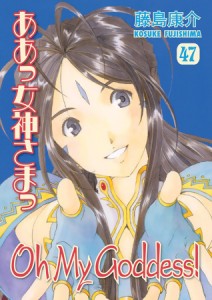
Oh My Goddess!, Vol. 47

March 24, 2015 by Sean Gaffney

By Kosuke Fujishima. Released in Japan by Kodansha, serialized in the magazine Afternoon. Released in North America by Dark Horse.

The final volume is not going to have much time for this, so it’s very fitting that this penultimate one is devoted to the greatest love affair in the entire series. No, not K1 and Belldandy, though they’re cute too. I’m referring to the love affair between Fujishima and motorcycles, one which reaches its obvious zenith here as we wrap up a mini-arc where Keiichi must justify his life and earn the right to love Belldandy by driving a really difficult motocross race, something that would sound a bit ridiculous to anyone who hasn’t read Oh My Goddess! before. In fact, ‘really difficult’ may be underselling it – Keiichi’s failure at one point leads to his limbs being broken and his organs tearing apart, something he feels every bit of.
omg47

That said, he ends up perfectly fine, even if his bike is totaled. But wait! A new arrival comes on the scene, who wants to play up the old ‘did you drop this gold motorbike or this silver motorbike’ schtick, but K1 and Bell aren’t having any of that – it’s the Lake Goddess, fresh from the tragic story of Vol. 46. Yes, she is now freed, and yes, it was due to the sheer power of the feelings Keiichi and Belldandy had for each other. This may seem like a hoary old cliche, but honestly, it’s exactly what readers of this title wanted. No one wants to read a grim and gritty Oh My Goddess where our heroes learn that life is pain and suffering.

So yes, she’s free, and able to make fun of Tyr as well. Yes, he’s still testing the couple in his guise as the Gate, even after Keiichi wins the final race, possibly due to the sheer joy of being on a motorcycle – it wouldn’t be the first time he’s won a race for that reason. But there’s one final test, and it’s one that many Oh My Goddess fanfiction writers have theorized about – Tyr offers Keiichi a chance to be a god, so he can stay with Belldandy forever, according to the terms of his deal. Naturally, though, Keiichi is never going to accept that – he is a living embodiment of all that is good about humanity. Take that away and you waste it a bit. Of course, that was a test as well.

The ‘cliffhanger’ ending has Hild explaining exactly over a game of Koi-Koi (and Skuld reading what appears to be Nakayoshi) how she managed to get pregnant with Urd despite losing the same contest that K1 and Bell are going through. But really, the real cliffhanger is knowing that this all wraps up in Vol. 48, and we’re still in the middle of Hell. Will everyone be able to get out? Will K1 and Bell live happily ever after? Is this series really as optimistic as it seems? Yes, yes, and yes. Again, what series have you been reading that these questions aren’t a surprise?
Filed Under: REVIEWS

My Week in Manga: March 16-March 22, 2015

March 23, 2015 by Ash Brown

My News and Reviews

Two more reviews were posted at Experiments in Manga last week. Only one was of a manga, but the other book does include illustrations! I’m a little behind in reviewing the series, but I finally wrote up my impressions of Fumi Yoshinaga’s What Did You Eat Yesterday?, Volume 6. (Just in time for the seventh volume to be released later this week!) There’s some really nice character development for Shiro and, as always, delicious-looking food. The second review posted last week was for Haikasoru’s anthology of short fiction Phantasm Japan: Fantasies Light and Dark from and about Japan which collects twenty-one horror-tinged stories. It has a great range of contributions and authors and is an excellent followup to the The Future Is Japanese anthology.

I’ve been busy at work and the taiko performance season is ramping up, so I’ve not had much time to pay attention to the manga news over the last week or so. (Let me know if I missed something good!) However, I did see that Manga Brog posted a translation of interviews of Inio Asano and Daisuke Igarashi from the magazine Manga Erotics F in 2012. And speaking of Asano, Vertical Comics apparently made a license announcement a couple of weekends ago—an omnibus edition of Asano’s A Girl on the Shore. Asano’s Nijigahara Holograph left a huge impression on me last year, so I’m really looking forward to reading more of his work in English.

Quick Takes

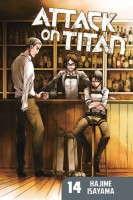
Attack on Titan, Volume 14Attack on Titan, Volume 14 by Hajime Isayama. The cover of the fourteenth volume of Attack on Titan has a Western flair to it (“Western” as in the genre) and, surprisingly enough, so do the contents. I found the introduction of the trappings of the American Old West to be a little bizarre in a setting that has largely been European-influenced, but it is what it is. I never expected there to be a guns-blazing saloon shootout in Attack on Titan, but it is an admittedly exciting scene even if it does feel a little out-of-place. Also somewhat surprising, not a single Titan makes an appearance in the volume except for flashbacks. The series’ focus has shifted from the fight against the Titans to the conflict inside of the walls as humans are pitted against each other. The Survey Corps is in the process of trying to reveal some major conspiracies to the general public, schemes that the Military Police and government would rather not come to light, so things get pretty violent. All in all, even considering the odd Western elements, it’s an excellent volume of Attack on Titan with some great action sequences, character development, and plot progression.

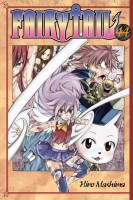
Fairy Tail, Volume 44Fairy Tail, Volumes 44-46 by Hiro Mashima. The Tartaros arc of Fairy Tail continues with these three volumes of the series. Fairy Tail is facing off with a guild of demons which is attempting to eliminate all magic except for its own curses. For the most part, it’s battle after battle without too much story development. Major sacrifices are made by Fairy Tail (sadly, some of them lose their significance and impact when Mashima doesn’t completely follow through with them), and a new antagonist is introduced, the extremely powerful King of the Underworld, Mard Geer. Reading Mashima’s afterwords at the end of each volume, it seems as though he has tried to carefully plan out the important events and battles of Fairy Tail. Even so, it feels as though the series meanders getting from one major plot point to the next, almost as if Mashima is making the story up as he goes instead of having a definite endpoint in mind. However, the fights can be exciting and the characters continue to evolve, or at least power up. I was pleased to see the forty-sixth volume turn the manga’s focus back onto Gray, though, bringing his most recent story arc to a satisfying conclusion.

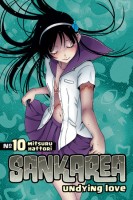
Sankarea: Undying Love, Volume 10Sankarea: Undying Love, Volume 10 by Mitsuru Hattori. There have been parts of Sankarea that I’ve really enjoyed, and parts of the series that I really have not, but overall the tenth volume frustrates me more than anything else. Mostly it’s because of the narrative structure and the fact that several important backstories are crammed into the volume. I almost wonder if Hattori realized that he was running out of time to bring the series to a proper conclusion. (There is only one more volume after this one.) It is good to finally find out more about Chihiro’s grandfather and all of his research into bringing the living back to life. And there are some great horror elements to that particular story, as well. I just really wish the revelation hadn’t taken the form of a huge infodump given by a conveniently revived zombie. However, I did like the different art styles that Hattori used to distinguish Chihiro’s memories of his mother and the story about Chihiro’s grandfather from the rest of the manga. And I am curious to see how Sankarea will end. It’s been a strange if somewhat uneven series about zombies and love, part horror manga and part romantic comedy.

Filed Under: FEATURES, My Week in Manga Tagged With: attack on titan, Fairy Tail, Hajime Isayama, Hiro Mashima, manga, Mitsuru Hattori, Sankarea

Requiem of the Rose King, Vol. 1

March 22, 2015 by Anna N

Requiem of the Rose King, Vol. 1 by Aya Kanno

I really admire the way Kanno moves from genre to genre, coming up with unique stories each time, at least with her series that have been translated into English. Blank Slate and Otomen are utterly unlike each other, and now with Requiem of the Rose King there’s an entirely different series to enjoy.

Requiem of the Rose King is a retelling of the story of Richard III, which is a topic I tend to enjoy exploring, going way back to when I first read the classic mystery Daughter of Time by Josephine Tey as a young teenager. So I was really interested in seeing how Kanno was going to tackle this story. It opens with the childhood of young Richard during the Wars of the Roses. Richard is a favorite of his father, but his mother views him as a damaged child due to his physical abnormalities. The introduction to Richard is framed with a reference to Joan of Arc’s sin of dressing like a man. Richard is cloaked, roaming through the forest alone after his mother abandoned him. One of his eyes is more prominent than the other, but his face is entirely in shadow. As Richard’s mother sits back in the castle thinking about how evil her own son is, he’s shown being trapped by vines. Richard’s older siblings are integrated into their mother’s affections, but when Richard’s father goes off to fight the Lancasters, he loses his main source of love and affection.

Richard appears to be intersex, or at least having some feminine characteristics while being raised as a boy. Richard sees visions of Joan of Arc tormenting him. He’s determined to be the best son possible for his father. I wasn’t sure exactly which gender to use to refer to him, but since in the first volume Richard clearly identifies as male, I was just going with that for the sake of this review. Richard accidentally strikes up a friendship with young prince Henry. He also meets a girl named Anne Neville. While Richard experiences battle in this volume on the sidelines, the fear and danger that he’s exposed to being left behind are very real. His mother grows even more hostile throughout the volume, which I didn’t even think was possible given how she was introduced initially.

Kanno’s art is great in this volume, and it seems like the subject matter has given her more room to be experimental. Richard’s visions of Joan of Arc keep popping up to make the events he’s experiencing even more unsettling, and there seem to be shadows about to attack lurking in the woods and in castle corners. Close up of eyes are used for dramatic effect often, showing fear, anger, and mental instability. I feel like with this series and Black Rose Alice, Viz is being a bit more adventurous with some of their current manga that might appeal to shoujo readers. While I enjoy a good romance as much as anyone, I am really happy to get a bit more variety on my shelves.

Filed Under: REVIEWS Tagged With: requiem of the rose king, viz media

Master Keaton, Vol. 2

March 22, 2015 by Sean Gaffney

By Naoki Urasawa, Hokusei Katsushika, and Takashi Nagasaki. Released in Japan by Shogakukan, serialized in the magazine Big Comic Original. Released in North America by Viz Media.

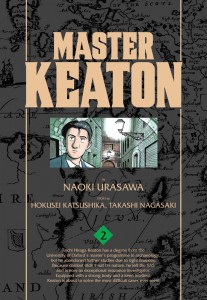
This is another solid volume of Master Keaton, with a bit more attention paid to the mysteries and a bit less to the leading man this time around. As I kept reading, though, one thing kept coming back to me. There were stories of a man stealing to try to help the poor in Italy; Olympic runners who also fell afoul of running for money so they could give to charity; old revolutionaries who have found that betraying a cause or lying for the sake of a woman doesn’t make one happy; and even Keaton’s class, unable to finish its final lesson as the school is being shut down and evil bureaucrats want the mural on the wall behind him. Only occasionally tragic, what this manga really is deep down is sad. It’s about chasing dreams, even as you realize that it destroys your life and you likely won’t succeed very well in any case.

keaton2

This is likely not a surprise to anyone who has followed the career of Urasawa, a man who wrote one of the most depressing manga ever and called it “Happy!”, or Katsushika, who wrote for Golgo 13, another series that tended to end in death and disappointment, just with less focus on the emotions involved. But Master Keaton seems to go that extra mile. it’s the tail end of the Cold War in these stories, and everyone is simply weary. Even the terrorists are giving themselves up as they’ve had enough. The bounty hunters are ex-cops who got tired of letting the criminals get away. Little girls are cynical before their time as they see adultery and cruelty in their daily lives. And even Keaton, a man who loves his ex-wife but let her go anyway because he thinks it helped him grow up.

There are moments of triumph here, but they’re less in the emotions and more in the action and deduction. You see Keaton figure out the story behind a “werewolf”-inspired serial killer, or fend off neo-Nazi assassins to save some Turks in West Germany. There’s also one emotional high point in the story, where Keaton reminisces about his old mentor, who he named his daughter after, and finds his friends and family have managed to track him down for a reunion. Even then, though, the event is muted: Professor Scott looks at Keaton and says he’s turned out well, which brings the man to silent tears. I get the feeling as I read this series that despite being an archaeologist/insurance investigator/ex-SAS soldier/detective/awesome guy, Keaton really doesn’t like himself all that much.

But for this sort of series, I think that’s OK. It’s evocative of a mood, one that fits its time: Europe in the late 80s, with the Soviet Union starting to crumble and the last vestiges of the old guard left with nothing but regrets. I will even forgive this volume for trotting out the old “a man has his dreams” cliche. Keaton is the type of series you want to read while swirling around a glass of brandy and listening to Sonny Rollins. Just don’t be surprised if you’re counting your own regrets after you finish it.

Filed Under: REVIEWS

Phantasm Japan: Fantasies Light and Dark from and about Japan

March 20, 2015 by Ash Brown

Phantasm JapanEditor: Nick Mamatas and Masumi Washington
Publisher: Viz Media
ISBN: 9781421571744
Released: September 2014

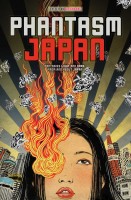
Phantasm Japan: Fantasies Light and Dark from and about Japan, edited by Nick Mamatas and Masumi Washington, is the second anthology of short fiction curated specifically for Haikasoru, the speculative fiction imprint of Viz Media. Phantasm Japan, published in 2014, is a followup of sorts to the 2012 anthology The Future is Japanese. A third anthology in the loosely-related series, Hanzai Japan, is currently being complied. I rather enjoyed The Future Is Japanese and so was looking forward to the release of Phantasm Japan. The anthology collects twenty-one pieces of short fiction, including an illustrated novella, from seventeen creators in addition to the two introductory essays written by the editors. Most of the stories are original to the collection, although a few of the translated works were previously published in Japan. Much like The Future Is Japanese, Phantasm Japan promised to be an intriguing collection.

With a title like Phantasm Japan I had anticipated an anthology inspired by yokai and Japanese folklore. And while the volume does include such tales—Zachary Mason’s “Five Tales of Japan” (tengu and various deities), James A. Moore’s “He Dreads the Cold” (yuki-onna), Benjanun Sriduangkaew’s “Ningyo” (mermaids and other mythological beings)—it incorporates a much broader variety of stories as well. The fiction found in Phantasm Japan is generally fairly serious in nature and tone and all of the stories tend to have at least a touch of horror to them, but they range from historical fiction to science fiction and from tales of fantasy to tales more firmly based in reality. Pasts, presents, and futures are all explored in Phantasm Japan. The authors of Phantasm Japan are as diverse as their stories. Some make their homes in Japan while some hail from the Americas, Europe, or other parts of Asia. Many are established, award-winning writers while others are newer voices. In fact, Lauren Naturale’s “Her Last Appearance,” inspired in part by the life of kabuki actor Kairakutei Black, marks her debut as a published author of fiction. I also personally appreciated the inclusion of both queer authors and queer characters in the anthology.

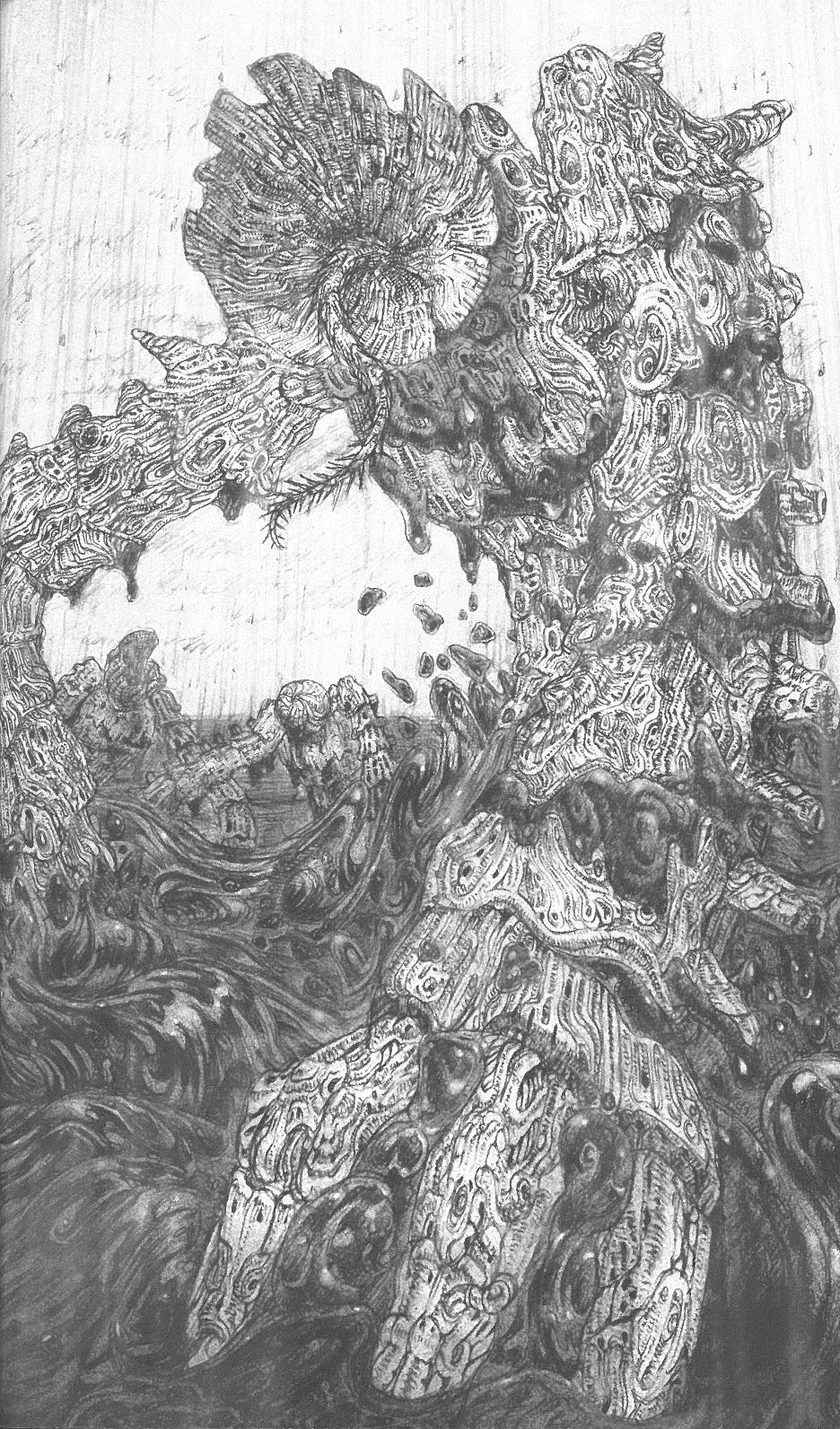
Sisyphean Other than being a collection of fantastical stories, there isn’t really an overarching theme to Phantasm Japan. However, some of the works do explore similar concepts, but use wildly different approaches and settings. In addition to the stories influenced by traditional lore, like “Inari Updates the Map of Rice Fields” by Alex Dally MacFarlane, there are those that reflect more contemporary concerns like Tim Pratt’s “Those Who Hunt Monsters” which mixes online dating, fetishism, and yokai. Ghost of various types make appearances throughout Phantasm Japan, from the supernatural haunting of Seia Tanabe’s “The Parrot Stone” to the biohazard-induced hallucinations of Sayuri Ueda’s “The Street of Fruiting Bodies.” Joseph Tomaras’ “Thirty-Eight Observations of the Self” is in part reminiscent of stories about living ghosts. Possessions are seen multiple times in the volume as well. In “Scissors or Claws, and Holes” by Yusaku Kitano, creatures are intentionally invited into a person’s body in order to exchange memories for visions of the future while in Jacqueline Koyanagi’s Kamigakari a consciousness is shared by a man and something that isn’t human as a result of an accident.

One of the recurring themes that I found particularly appealing in Phantasm Japan was the power of memories and stories to shape, create, define, and redefine reality. In Gary A. Braunbeck’s “Shikata Ga Nai: The Bag Lady’s Tale,” a tailor from a Japanese-American internment camp is responsible for passing on centuries worth of history. In “The Last Packet of Tea” by Quentin S. Crisp, an author struggles to write one last story. Project Itoh’s “From Nothing, With Love” (which re-convinced me that I need to read everything that he has written) is about a very specific cultural touchstone and the life that it has taken on. As with any short story collection, some of the stories are stronger than others and different stories will be enjoyed by different readers. Some contributions to Phantasm Japan are readily accessible to just about anyone, such as Nadia Bulkin’s “Girl, I Love You” and Miyuki Miyabe’s “Chiyoko,” but then there are more challenging works like Dempow Torishima’s exceptionally bizarre and grotesque novella Sisyphean. As for me, I enjoyed Phantasm Japan as an anthology. I liked the range and variety in the stories collected, and my reading list has certainly grown significantly because of it.

Filed Under: REVIEWS Tagged With: Haikasoru, Masumi Washington, Nick Mamatas, Project Itoh, viz media

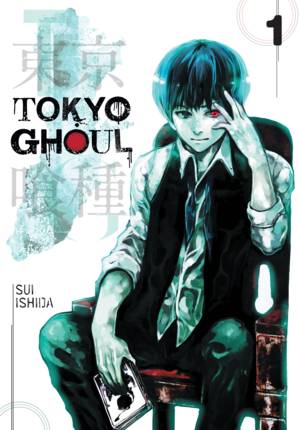
Review: Tokyo Ghoul, Vol. 1

March 20, 2015 by Katherine Dacey

tokyo_ghoul_viz_coverTokyo Ghoul, Vol. 1
By Sui Ishida
Rated T+, for Older Teens
VIZ Media, $8.99 (digital edition)

Tokyo Ghoul opens with Ken Kaneki, a mild-mannered college student, impulsively deciding to go on a date with a beautiful stranger. As Kaneki soon discovers, however, Rize isn’t even a person–she’s a ghoul, a violent predator who feeds on human corpses. A freak accident spares Kaneki from becoming Rize’s next meal, but he has a new problem: the ER doc who saved his life used a few of Rize’s organs to do so. Within days, Kaneki begins craving flesh, too, forcing him to decide whether he’ll succumb to his ghoulish impulses or cling to his humanity.

Tokyo Ghoul‘s first chapter is the strongest, thanks in part to manga-ka Sui Ishida’s crack pacing. In less capable hands, the introduction might have been a tedious information dump; Ishida, however, is sparing with details, allowing us to learn about ghouls through the unfolding of the story. Ishida also demonstrates considerable skill in creating suspense, artfully manipulating light and shadow to amplify the contrast between well-lit, “safe” spaces such as the cafe where Kaneki likes to study, with the dark, remote areas where Rize likes to hunt–you’d be forgiven for screaming “Run away!” every time Rize steers Kaneki toward a quiet, empty street.

What should have been chapter one’s most dramatic moment, however, is executed clumsily. Ishida piles on the speed lines and close-ups, but it’s almost impossible to determine what Rize looks like in her true form: an angel with charred wings? a spider? a four-legged octopus? Compounding the confusion is the lack of background detail, a shortcoming that becomes painfully obvious near the end of the scene, when a pile of I-beams falls on Rize and Kaneki. The artwork never hints at this potential outcome, cheating the reader of the opportunity to guess what happens next–Ishida seems to be making it up as he goes along, rather than deliberately preparing an important plot twist.

Kaneki’s transformation is handled in a similarly pedestrian fashion. We see Kaneki sweat, cry, scream, and vomit like Linda Blair, but his moral crisis is painted in such broad strokes that it’s hard to feel genuine sympathy for him. When Kaneki faces a terrible choice–eat his friend or starve–Ishida resorts to a deus ex-machina to save his hero from the indignity of snacking on someone he knows. Although this plot twist makes Kaneki seem more human, it blunts the true horror of his dilemma by making him too likable; our allegiance to the hero is never really tested.

Any pretense that Tokyo Ghoul might be a character study is shed in the the final pages of volume one, when Ishida introduces a secret ghoul organization. This plot development feels like the first step towards a more conventional battle manga pitting demons against humans. More disappointing still is that Ishida seems to think that splattering the reader with entrails is scarier than asking, What really makes us human? Kaneki’s liminal status between the human and demon worlds makes him a natural vehicle for exploring this question, but Ishida shies away from the tough ethical or moral issues posed by Kaneki’s new dietary needs. The resulting story reads like a low-cal version of Parasyte, stripped of the complexities and conflict that made Hitoshi Iwaaki’s body-snatching manga so compelling.

Volume one of Tokyo Ghoul is available in ebook form now; the first print volume will be released in June.

Filed Under: MANGABLOG, REVIEWS

Manga the Week of 3/25

March 19, 2015 by Sean Gaffney, Ash Brown, MJ, Michelle Smith and Anna N 4 Comments

SEAN: Oh dear.

First off, it may not be in stores yet, but Kickstarter backers have gotten their two volumes of Tezuka’s Captain Ken from DMP. One of his early 60s shonen series (though, as with most of his series for kids, there are darker undertones), it’s complete in 2 volumes.

Kodansha stuff next. Air Gear 33. Roller blading! Pretty girls! Um…

Genshiken 2nd Season has its 6th volume out. The old cast has been slowly infiltrating the new series, even after graduation. Will this continue to be the Madarame Harem Show?

ASH: I’m a bit behind in this series, but I’ve enjoyed what I’ve read so far.

sankarea11

SEAN: Sankarea comes to an end with its 11th volume. Will all end well, like a good romantic comedy? Or will everything go horribly wrong, like a good horror manga?

And Ken Akamatsu gives us a 4th volume of Negima sorta-sequel UQ Holder.

Ponent Mon has the 5th and final volume of Summit of the Gods, for those who enjoy manly seinen mountain climbing manga. As everyone should.

ASH: I am absolutely thrilled to have this entire series in English.

MJ: This, yes, this!

SEAN: Alice in the Country of Joker’s Nightmare Trilogy comes to an end with, appropriately, Vol. 3. Will Alice and Nightmare find happiness? Can they overcome obstacles? Can they overcome the poor artwork? Will this have half a volume of short stories and Crimson Empire at the end of it? Is Alice in the Country of Hearts the new vampires? Can Heironymus Merkin ever forget Mercy Humppe and find true happiness?

MICHELLE: I would be very proud of myself if I caught this reference, but alas.

SEAN: The rest of this list is Yen, despite us being nowhere near the end. Let’s start with the Yen On imprint, as they have the 3rd Accel World light novel.

MJ: I’ve fallen behind on this, but I’m looking forward to catching up.

SEAN: I tend to forget about all of Yen’s Kingdom Hearts manga releases, but they’re big hits, and now Yen On has Kingdom Hearts: The Novel.

Sword Art Online: Progressive is not just a reboot of the series with an added focus on the world of Aincrad and more POV for heroine Asuna, it’s also huge – this first volume is much longer than Yen On’s other SAO books.

MJ: Yes!

SEAN: Not only do we have the 3rd Accel World novel, but also the 3rd Accel World manga.

elhamburg

Did you like Olympos? Or at least think it was really pretty? The same author’s Angel of Elhamburg is out next week. I do enjoy josei, especially from Shodensha, but I have a feeling this will be a Depressing-O-Rama.

ASH: Pretty and depressing? I’m in.

MJ: Sounds like my cup of tea.

SEAN: Given we’ve had eight volumes of Are You Alice? and it’s still not over, I fear we’re asking the wrong question. Perhaps Why Is Alice? Or How Is Alice? Does Alice Live Here Anymore?

Big Hero 6 is not only an Oscar-winning film, it’s also a manga, with Kodansha putting out the first (only?) volume next week.

Bloody Cross has a 6th volume out as well.

MICHELLE: Already?! Man, time flies.

SEAN: I made fun of Demon From Afar’s first volume for pretending to be something other than a Kaori Yuki manga till the blood-filled cliffhanger when we see no, it is a Kaori Yuki manga. I anticipate Vol. 2 will be darker.

MJ: Aaaaah, hm.

SEAN: Finally… no, just kidding, we’re still nowhere near finally. Next, we have the debut of another light novel/manga combo license, with the manga coming first. The Devil Is A Part-Timer! has Satan working in a fast-food joint,so I suspect ‘lighthearted’ is the order of the day.

ASH: The anime adaptation was actually pretty entertaining; I’m looking forward to checking out the original novels.

SEAN: Just in time for the anime adaptation that starts in April, here’s a 7th volume of The Disappearance of Nagato Yuki-chan. Hope you like heartwarming!

I’ve been mocking the glut of vampire manga lately, so it’s only fair to say I quite enjoyed He’s My Only Vampire, and am looking forward to this 2nd volume.

karneval1

Karneval is the omnibus release of the week for Yen, covering the first two volumes. It came out from Ichijinsha’s Zero-Sum, which is sort of the GFantasy of their company, i.e. a shonen/shoujo/josei/fantasy blend. It also features circus folks! Ha, bet you thought I’d say vampires.

MJ: You had me at “Zero-Sum.”

ANNA: Oh! This wasn’t on my radar before, but I am interested now!

SEAN: Another light novel/manga license where the manga comes a month early, Log Horizon features a group of MMORPG players startled to find themselves inside the game they’re playing. I would say it sounds like it’s for fans of Sword Art Online, but from what I hear the fandoms actually have a rivalry going on.

MJ: Heh, interesting.

SEAN: A second volume of Love at Fourteen is right up my alley after this influx of fantasy and supernatural titles we’re seeing.

MICHELLE: This is literally the one thing on this list that makes me personally go “Ooh!”

MJ: Yes, yes!

SEAN: If you wanted more from the spinoff Puella Magi Oriko Magica, then Yen has an Extra Story for you.

The end! The final volume of Soul Eater, one of my favorite recent shonen titles. I will miss your surreal art and exciting battles.

Sword Art Online: Fairy Dance has its manga reach its exciting conclusion, but, spoiler, still has the stupid birdcage.

Lastly (really this time), there’s a 9th volume of Triage X, which (checks cover art) is still Triage X.

Does something here excite you? Or are you seeing this pile, throwing up your hands, and going back to bed instead?

Filed Under: FEATURES, manga the week of

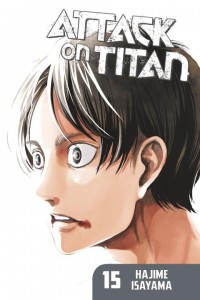
Attack on Titan, Vol. 15

March 19, 2015 by Sean Gaffney

By Hajime Isayama. Released in Japan by Kodansha, serialization ongoing in the magazine Bessatsu Shonen Magazine. Released in North America by Kodansha Comics.

This volume continues to examine the morality of our heroes and the military in general, but doesn’t quite hit all my hot buttons like the last one did, so I enjoyed it more. We start off resolving the cliffhanger from last volume, and Armin’s defense of Jean, which horrifies him so much he’s throwing up. Armin is an interesting character, balancing the ‘innocent’ Survey Corps member side we’ve seen in Jean, Sasha and Connie with his tactical genius side, where he can casually come up with horrible plans and then toss them off with a ‘just kidding’. But he’d never killed anyone before. Levi fares much better here than he did in 14, telling Armin he did what he had to in order to save Jean while also saying that this does not mean getting his hands dirty is a good thing. Sadly, I’m led to believe that Levi is kinder to Armin than to Historia as he values Armin more as a soldier.

(I do sometimes wonder if Levi and Hange have a plan for what to do when/if Eren dies. I have to think step 1 is “Kill Mikasa by any means necessary before she becomes a berserker”.)

titan15

Meanwhile, back in the city, Erwin’s on trial for his life, and everyone still believes the Survey Corps have become terrorists. Indeed, we see two of the MPs, Marlowe and Hitch, looking for Levi and company, and it’s startling how little they know given that they’re supposed to be part of the ‘bad guys’ group. (They were probably my favorite part of the volume – I love everyone talking about how Marlowe’s idealistic dumbness reminds them of Eren, and Hitch’s mourning for Annie, and subsequent horror when she finds out Annie was the Female Titan, is beautifully portrayed, a rare case where I will praise the art.) Hange’s job is to try to convince the little people of the city, those who hide in its slums and those who report on it in the newspapers, to stop doing what the government says out of fear. She offers the Survey Corps’ protection, but more importantly, Flegel Reeves finds his inner badass and becomes someone that a town can rally behind.

Erwin’s trial resolves itself in a fairly cliched way, but the fact that the government falls for the cliche so easily shows off how stupid and corrupt they’ve become. There’s several people who were simply waiting for a good time to make a move, and this isn’t so much ‘doing what’s right’ as ‘getting revenge’. Also, the town is unsurprisingly a bit dubious about the military seizing power, and no one really expects them to ever let it go. I suspect that whatever’s happening with Historia and Eren will put that on the back burner for a while – she’s seemingly been ‘converted’ by her father to their cause, and the Royal Family definitely seem to have SOME power in their bloodline, enough that touching Eren brings back some old and horrible memories.

So next time we finally get an explanation for what’s been going on with Eren’s father, and (I’m hoping) find out that Historia is playing an elaborate double bluff. Till then, I will freely admit Attack on Titan has won me back, and as long as it stops torturing for the greater good or emotionally abusing young women to get what it wants, it can stay there. Recommended.

(As a side note, Sasha is barely in this, but I loved her simply wrapping her entire body around Mikasa’s head in joy when she finds out the Corps has been cleared. And then Hitch’s as well. Sasha may not just be into food is what I’m saying.)

Filed Under: REVIEWS

What Did You Eat Yesterday?, Vol. 6

March 18, 2015 by Ash Brown

What Did You Eat Yesterday?, Volume 6Creator: Fumi Yoshinaga
U.S. publisher: Vertical
ISBN: 9781939130815
Released: January 2015
Original release: 2012

Fumi Yoshinaga’s series What Did You Eat Yesterday? is a manga that I’m very glad is being released in English. Part slice-of-life manga focusing on contemporary gay relationships, work relationships, and friendships, and part food manga, the series holds a tremendous amount of appeal for me. Plus, it’s created by Yoshinaga whose manga as a whole I tend to enjoy. I particularly appreciate the subtle and nuanced depth that many of her characters exhibit, which is certainly true of the characters found in What Did You Eat Yesterday?. The sixth volume of the series was originally released in Japan in 2012 while the English-language edition was published in 2015 by Vertical. Although this particular volume does have some translation issues—some awkward phrasing as well as questionable word choices (such as “pepper balls” instead of “peppercorns”)—generally Vertical’s release of the series has been great.

Although Shiro will soon be turning forty-seven, he still has room to grow and has only recently started to really become comfortable with his sexuality. He and his boyfriend Kenji have been living together for years but its a relationship that he has largely kept private. Shiro’s parents know he’s gay, as do a select handful of close friends, but he hasn’t mentioned it to his colleagues and he’s terrified of being found out by straight strangers. Kenji, on the other hand, is able to be much more relaxed and open about who he is. Happily, Shiro and Kenji have developed a good friendship with another gay couple, Kohinata and Wataru, which has allowed Shiro to become a little less anxiety-ridden in public. He continues to worry about appearances, and he’s still fairly reserved when it comes to outwardly demonstrating his affection, but it has become easier for Shiro to enjoy time spent with Kenji outside of the house, whether it be a major grocery shopping trip or a bento lunch picnic in the park.

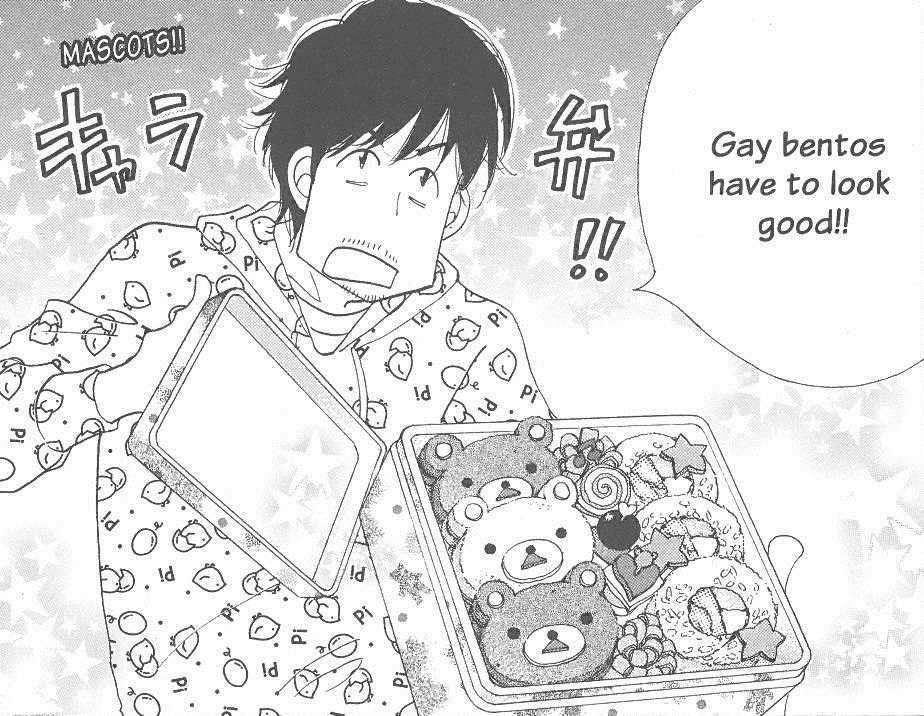
What Did You Eat Yesterday?, Volume 6, page 48Although I am a huge fan of food manga in general, and meals and their preparation are certainly a major component of What Did You Eat Yesterday?, what I find most appealing about the series is its characters and their lives. But the manga works best for me when the food and recipes tie directly into the plot and character development instead of being a more tangential element. Some volumes of What Did You Eat Yesterday? bring the characters and food together better than others, but overall the sixth is fairly successful in doing that. High-quality ingredients are given as gifts of thanks, meals are prepared as a way to offer comfort and support, recipes are modified when finances are tight, the qualities of a proper bento are debated, and more. Food is obviously important to the characters in the volume.

What Did You Eat Yesterday? tends to be fairly episodic, each chapter exploring a small part of Shiro and Kenji’s lives and featuring a recipe detailed enough that an adventurous reader or experienced cook could actually attempt to make the dish. However, recurring characters and continuing story threads do help to tie the series together as a cohesive whole. There may not be a grand, overarching plot to What Did You Eat Yesterday?, but there is still character and story development to be found. Each reappearance of an established character adds more depth to them as a person and reveals more about the complexities of their relationships with other people. Each volume of What Did You Eat Yesterday? explores more about Shiro and Kenji as well as about their families, friends, and coworkers. And with the sixth volume specifically, I’m especially happy to see Shiro becoming gradually more confident and accepting of himself.

Filed Under: REVIEWS Tagged With: fumi yoshinaga, manga, vertical, what did you eat yesterday?

Bookshelf Briefs 3/18/15

March 18, 2015 by Sean Gaffney, Anna N and Michelle Smith Leave a Comment

This week, Sean, Anna, and Michelle look at recent releases from Viz Media and Seven Seas.

d-frag4D-Frag!, Vol. 4 | By Tomoya Haruno | Seven Seas – This volume introduces the little sister of the protagonist, but fear not, for once we have no incest subtext. Instead we get some more excellent comedy, mostly as Noe turns out to be almost a carbon copy of Kazama – she too is a tsukkomi to all these bokes around her. Her presence also revitalizes Sakura, who shows off more of her magnificent troll personality here (probably to the surprise of anime fans, as the anime cut most of her out). There’s also a lot of opportunity for physical comedy, a small amount of romance (as always, kept on the back burner), and more gags about the size of Takao’s chest. Comedy is the first and most important mission with this series, and it keeps delivering. – Sean Gaffney

kiss3Kiss of the Rose Princess, Vol. 3 | By Aya Shouoto | Viz Media – Kiss of the Rose Princess seems to change direction with every volume. The first one seemed more like a goofy fantasy manga, the second took a detour into darker themes, and the third volume seems to be launching into some sort of odd Cardcaptor Sakura retread. Anise and her rose knights say what I’m guessing is a temporary farewell to the yellow rose of jealousy, but things get more complicated at school when Anise’s mysteriously possibly evil father installs himself as the new school doctor. Anise has to go on a quest to collect more cards to level up her powers, and the sudden presence of young male celebrities at school is certain to complicate things even further. I am finding myself more bemused then amused by this manga, but at the same time it is plenty diverting if I don’t think about it too hard. – Anna N

Kiss of the Rose Princess, Vol. 3 | By Aya Shouoto | Viz Media – While Kiss of the Rose Princess is still far from the best or most original series I’ve ever read, I do have to admit that it’s growing on me a little. In this volume, Anise makes a “true contract” with her knights without knowing what it entails. Turns out, she will need to romance one of them so that he will achieve his ultimate power-up as a knight. Meanwhile, her Watcher dude announces that it’s her responsibility to collect some “Arcana Cards” that are the manifestations of shards of the seal. Enemies—who apparently politely waited for Anise to learn about the cards’ existence—are going to be after them, too. So, it’s like a dating sim crossed with Cardcaptor Sakura? That’s not necessarily a bad thing, I suppose, and I am intrigued by the block on Mutsuki’s memories, so I’ll probably stick around a little while longer. – Michelle Smith

librarywars13Library Wars, Vol 13 | By Kiiro Yumi and Hiro Arikawa | Viz Media – Having built up plenty of anti-censorship principles and budding romances in the first few volumes, reading a new volume of this series feels a bit like catching up with old friends. Iku and Dojo continue to be a wonderful example of an awkwardly adorable couple. Chief Genda is back and semi-recovered from his injuries, and the reader gets a chance to check in on Komaki and Marie. The Library Forces are defending an embattled author, and Iku actually manages to come up with a brilliant strategy for ensuring his freedom of expression amidst all the odd warring censorship battles raging in Japan. This volume is on the light side, with plenty of victories to celebrate with some humorous bits of character interaction along the way. I think we’re pretty close to getting caught up with the Japanese releases, and I’m not looking forward to a long wait for the next volume. – Anna N

Nisekoi8Nisekoi, Vol. 8 | By Naoshi Komi | Viz Media – I’ve talked often about Nisekoi’s amazing skill at preserving the ‘balanced harem’. This doesn’t mean we don’t know how it will end – we know Chitoge will win – but that a mostly equal amount of time is set off to show every girl’s viewpoint and thoughts. Last volume was overbalanced toward Chitoge for plot reasons, so this one skews the other way, with Valentine’s Day providing an excuse for Onodera, Marika and Tsugumi to show off their skills (or lack thereof) and quest to try to get Raku to make a choice. Even a highly comedic character like Marika and her life-sized chocolate statues don’t get devalued – she pauses to seriously note how real her love for Raku is. This remains one of my favorite romantic comedy manga. – Sean Gaffney

oresama18Oresama Teacher, Vol. 18 | By Izumi Tsubaki | Viz Media – After a couple of comedic chapters in which Mafuyu participates in summer vacation standards like a test of courage and a trip to the beach (I love that most of the guys are oblivious to her bikini), a new semester starts and plot things actually happen! After abducting their enemy, student council president Hanabusa, at his urging, Mafuyu begins to suspect that he’s not actually working on his father’s side in the bet against Takaomi, but perhaps has a wager of his own. Could it involve rehabilitating the misfits he drafted onto the council? The most interesting stuff, though, involves Hayasaka, as Hanabusa suggests he would’ve picked him for the council had Mafuyu not come along, while Momochi seems to be systematically erasing his happy memories with the Public Morals Club. Things are getting interesting and I’m looking forward to volume 19 to see how they develop! – Michelle Smith

rin-ne17Rin-Ne, Vol. 17 | By Rumiko Takahashi | Viz Media – You know things are bad when not only can you not figure out what to say about a book to fill up a 500-word review, but it’s even hard to come up with enough for one of these briefs. Rin-Ne excels when it ties back into its main plot, but sadly, none of Vol. 17 bothers to do that. Yes, Rinne’s dad shows up, and we get the shyster brother and sister, but for the most part Rin-Ne has a very Urusei Yatsura feel to it – what’s the supernatural disaster of the chapter that will cause humorous chaos? Which is fine when Ataru and Lum are the leads, but Rinne and Sakura simply don’t have the charisma to carry it off. More plot, please!. – Sean Gaffney

Filed Under: Bookshelf Briefs

Pick of the Week: Late. Late.

March 18, 2015 by Michelle Smith, Ash Brown, Sean Gaffney, Anna N and MJ Leave a Comment

potwMICHELLE: Even though I must admit that I haven’t gotten around to reading volume one of Master Keaton yet, I’m still gonna pick volume two this week, because Naoki Urasawa is involved and I like his stuff.

ASH: Another week, another batch of interesting manga. But I’ll admit, the release that I’m most curious about technically isn’t manga. Fumio Obata is an artist who was born and raised in Japan but who currently lives and works in the United Kingdom. I believe Just So Happens may be his first North American release, but the pages I’ve seen of it are beautiful.

SEAN: I’m fairly uninspired for this week, but will go for the third volume of Kokoro Connect from Seven Seas. The first two volumes impressed me in their realistic look at teenage hangups and worries, but the third takes a decidedly darker turn, and I was really surprised. Manga that surprise the reader these days should be cherished.

ANNA: I’ll also have to pick the second volume of Master Keaton. I’m hoping to dig into it this week!

MJ: I’m on board for Master Keaton and I admit a little curiosity regarding Servamp, but I think I’m with Ash this week. Just so Happens sounds pretty terrific.

What looks good to you this week?

Filed Under: PICK OF THE WEEK

Kokoro Connect, Vol. 3

March 17, 2015 by Sean Gaffney

By Sadanatsu Anda and CUTEG. Released in Japan by Enterbrain, serialized in the magazine Famitsu Comic Clear. Released in North America by Seven Seas.

Like many series I review here, I had assumed I’d do a main page review of Vol. 1 and the rest of the series would be consigned to the Bookshelf Briefs column. This despite the fact that the second volume improved on the first. And now the third has improved on the second, taking the cast to surprisingly dark places. It still has a tendency to have people lecture other people to advance the plot, but I’d really like to see how this Heartseed thing resolves now, if it ever does. It’s also very much a manga of two halves, or rather two-thirds and one-third, as the last part of the volume involves Yui wondering if she should date another girl… which is handled awkwardly, but looks like it’s trying.

kokoro3

In the first two volumes, Heartseed was more of a plot mcguffin than any sort of villain, possessing a teacher in order to explain the bodyswapping to the cast, and then making itself scarce to watch the fallout. But the fallout isn’t good enough for them, as Taichi and Iori manage to resolve their issues a lot faster than anyone was expecting. Like Inaba, Iori’s identity crisis ends up having a solution that’s a lot less complicated than one would expect, and I hope she manages to resolve a few more things going forward. But we can’t let all the problems be resolved like that… so Heartseed literally attempts murder, by tossing Iori into the reservoir and swapping Taichi and Yui at the same time, so that he can’t save her.

What follows is a classic sadistic choice. Iori’s near death, and Heartseed says she only has a half hour to love… provided one of the others doesn’t swap out before she dies, dying in her place. Of course, it’d only be their mind dying, their body would live on with Iori in it. And mostly, this is an excuse to show off how Taichi’s ‘selflessness’ is actually a really bad case of selfishness, as seeing anyone hurt makes him feel so bad he’ll do anything to stop it. Luckily, his friends are there to punch sense into them. Also luckily, Iori gets to swap out one last time to point out that she’d never be happy with any of them sacrificing themselves for her. And also also luckily, this was all a test/game, and Iori was never really at risk after all.

After all this, it’s nice to have a lighter story (this appears to be the end of the first novel, and the rest of the volume adapts a short story from “Volume 4.5”) that focuses on nadrophobic Yui. She gets a love letter in her locker, which turns out to be from another girl. Reactions range from Aoki’s, who adamantly says that man/woman relationships are the only natural ones (I know he’s in love with Yui, but still, shut the hell up, dude) to Inaba’s (who wants to leave things up to Yui to decide, but still uses the word ‘lesbo’), to Fujishima’s (we’ve seen her lust for Iori before, so she’s the one who’s best suited to tell Yui to follow her heart. I’m not sure how this will resolve itself in the next volume (though I can guess), but so far it’s a wildly uneven handling of the issue.

Which, to be fair, fits with this series in general. It’s dealing with the emotions and feelings of teenagers in general more than most high school comedies, and kids say stupid things. Awkward emotions are the order of the day, and this volume continues to serve them up. We’ve only got two more to go, so I’m interested to see how the adaptation wraps up.

Filed Under: REVIEWS

Sparkler Monthly, New Licenses, Manhwa, and More

March 16, 2015 by Brigid Alverson

Orange-Junk-cover2-571x800

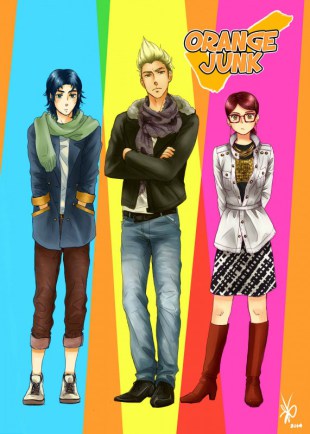
At Robot 6, I interviewed Lianne Sentar of Chromatic Press, who is serious about publishing manga-influenced comics for a female audience. Their flagship publication is Sparkler Monthly, and if you’re curious, check it out now, because the archives are available for free. And MJ breaks another bit of Sparkler Monthly news at Manga Bookshelf: They have just picked up the series Orange Junk, which formerly ran on Inkblazers.

Yen Press announced that it has licensed the Irregular at Magic High School (Mahōka Kōkō no Rettōsei) light novels and the spinoff manga Mahōka Kōkō no Yūtōsei (The Honour at Magic High School).

Sean Gaffney rounds up all the recent license announcements and tells us a bit about each title.

ICv2 declared last week Manga Week, and their coverage included interviews with Mike Richardson, Carl Horn, and Mike Gombos of Dark Horse, who said their manga line is doing well and they have plans to expand this year with more titles and omnibus editions of older works; Kevin Hamric of Viz, who also says sales are good and notes that sales of shoujo manga have gone up in comics shops; and Matt Lehman, owner of Boston’s Comicopia, who talks about selling manga in the direct market. ICv2 also analyzes last year’s manga sales, which appear to be up for the second year in a row.

A treasure trove of manhwa in an abandoned storage locker has been donated to the University of Washington, where librarian Yi Hyo-kyoung is organizing then, putting together a symposium featuring Misaeng creator Yoon Tae-ho—and reminiscing about reading manhwa on the sly when she was a child.

The Manga Bookshelf team discusses this week’s new manga and their picks of the week.

Erica Friedman updates us on all things yuri at Okazu and at Manga Bookshelf, she looks at Mangatime Kirara ☆ Magica, a Japanese magazine dedicated entirely to the Puella Magi Madoka Magica franchise.

At Heart of Manga, Laura looks at the shoujo manga that have been licensed over the past two years, notes some recent trends, and shares her own list of series she would like to see licensed. And then explains the shoujo trope of kate don.

News from Japan: The Japanese government’s Agency for Cultural Affairs has awarded Naruto creator Masashi Kishimoto their Rookie of the Year award; apparently he qualifies because Naruto is his first series, although it ran for 15 years. Attack on Titan took the top slot in the manga category of the Sugoi Japan Grand Prix, in which readers voted on the manga and anime they thought should be shared with readers outside Japan. The mayor of Yokote, in Akita Prefecture, is planning to beef up the collection of the Yokote Masuda Manga Museum to turn it into a “manga mecca” with a collection of over 100,000 works of art. A new Cardfight!! Vanguard series is in the works.

Reviews: Khursten Santos reviews Sayonara, Sorcier, a manga about Theo Van Gogh (Vincent’s younger brother) which, sadly, has not been translated. Somebody grab this one! Ash Brown rounds up the week’s manga news and offers some quick takes on new titles at Experiments in Manga. The Manga Bookshelf team check in with some short reviews of recent releases in their latest edition of Bookshelf Briefs.

Laura on vol. 2 of Attack on Titan: No Regrets (Heart of Manga)
Kristin on vols. 2 and 3 of Black Rose Alice (Comic Attack)
Lori Henderson on vols. 1-5 of Bloody Cross (Manga Xanadu)
Ollie Barder on Gundam: The Origin (Forbes)
Leroy Douresseaux on vol. 25 of Hayate the Combat Butler (The Comic Book Bin)
Sean Gaffney on vol. 1 of Maria the Virgin Witch (A Case Suitable for Treatment)
Dave Ferraro on vol. 1 of Meteor Prince (Comics-and-More)
Ash Brown on vol. 2 of Mushishi (Experiments in Manga)
Helen on Orange (Organization Anti-Social Geniuses)
Sean Gaffney on vol. 18 of Oresama Teacher (A Case Suitable for Treatment)
Johanna Draper Carlson on vol. 2 of Prophecy (Comics Worth Reading)
Ken H. on vol. 2 of Prophecy (Sequential Ink)
Kristin on vol. 1 of Requiem of the Rose King (Comic Attack)
Sean Gaffney on vol. 1 of Servamp (A Case Suitable for Treatment)
Laura on Strobe Edge (Heart of Manga)
Erica Friedman on Wakemonaku Kurushikunaruno (Okazu)
Erica Friedman on vol. 3 of Whispered Words (Okazu)
Ken H. on vols. 1 and 2 of xxxHolic Rei (Sequential Ink)
Justin on Zone-00 (Organization Anti-Social Geniuses)

Filed Under: MANGABLOG

My Week in Manga: March 9-March 13, 2015

March 16, 2015 by Ash Brown

My News and Reviews

Two reviews at Experiments in Manga last week! First up, I finally got around to reading Kouhei Kadono’s Boogiepop at Dawn. Technically the sixth Boogiepop novel, and the fourth to be released in English, it actually serves as a prequel to the entire series. I’ve really enjoyed what I’ve read of the Boogiepop series and found Boogiepop at Dawn to be particularly satisfying. I’m hoping to do a Boogiepop Adaptation Adventures post once I have a chance to read the manga and watch the anime and live-action adaptations. The second review posted last week was of Yuki Urushibara’s Mushishi, Volume 2. Mushishi is one of my favorite manga, and the second volume includes some of my favorite stories in the series. The review is part of my monthly manga review project focusing on horror manga. Next month will feature Setona Mizushiro’s After School Nightmare again.

Sparkler Monthly has been getting some good press recently, which I’m happy to see. Jason Thompson delves into the comics side of the magazine in the most recent House of 1000 Manga. Lianne Sentar was interviewed by Brigid Alverson at Robot 6 about Marketing to the Female Gaze. Sparkler has been adding a bunch of new comics lately. The most recent is actually a rescue from the closure of Inkblazers, Heldrad’s Orange Junk. More comics and more print releases will be announced in the very near future (I’m particularly looking forward to the Tokyo Demons Cherry Bomb collection), so now is a better time than ever to consider becoming a member to support the creators and the rest of the Sparkler team.

Last week was apparently “manga week” at ICv2, which included interviews with Dark Horse’s Mike Richardson (Part 1 and Part 2) and Viz Media’s Kevin Hamric (Part 1 and Part 2). The Comics Journal has been collecting and posting tributes to the late Yoshihiro Tatsumi, and Ryan Holmberg has written an in-depth article on Tatsumi for the site as well. Elsewhere online, Comics Forum posted Masafumi Monden’s article Shōjo Manga Research: The Legacy of Women Critics and Their Gender-Based Approach and Reflecting Lights has a nice publisher spotlight on Vertical Comics. Finally, Sean has a roundup of all the manga and light novel licenses that have recently been announced.

Quick Takes

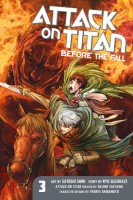
Attack on Titan: Before the Fall, Volume 3Attack on Titan: Before the Fall, Volume 3 written by Ryo Suzukaze and illustrated by Satoshi Shiki. An adaptation of a series of light novels, Before the Fall is a prequel to Hajime Isayama’s immensely popular and successful manga Attack on Titan. It takes place well before the original series, during a time in which humanity is facing the Titans, but has yet to really find a way to effectively deal with them. At this point, the Survey Corps at least knows how to destroy the Titans, but it is lacking the resources—specifically the three-dimensional maneuvering gear—that greatly aids in actually accomplishing the feat. Apparently, as the extra manga at the end of the third volume implies, Kuklo will somehow be involved in reclaiming that crucial bit of technology. However, most of the volume is devoted to the intense battle and tragic outcomes of the Survey Corps and Kuklo’s unfortunate confrontation with a Titan outside of the walls. There’s some plot and story development as well, but the action takes precedence this time around. In general, I don’t find Before the Fall to be quite as compelling as the original Attack on Titan, but it is interesting to see more of the overall worldbuilding and backstory that has been created for the franchise as a whole.

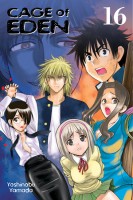
Cage of Eden, Volume 16Cage of Eden, Volume 16 by Yoshinobu Yamada. It’s been a while since I’ve read any of Cage of Eden, though the sixteenth volume seems to be pretty par for the course. I enjoy a good survival story, but the manga is just not as enthralling as I want it to be. It doesn’t help that the fanservice tends to be narratively awkward; the sixteenth volume includes not one but two naked bath scenes of buxom middle school girls that interrupt the flow of the story. As for the story itself, there have been a few interesting developments. Having split into separate groups to investigate the spire and the pyramid on the island, the survivors have been able to begin piecing together exactly where they are as they uncover more and more secrets. Considering the number of deaths in Cage of Eden so far, it’s probably a safe bet that not everyone is going to survive to the end of the series. Especially taking into account the fact that the dinosaurs and other beasts aren’t the only dangerous creatures on the island. Humans can also be extremely deadly. And manipulative, too. It’s this menacing human element that the sixteenth volume of Cage of Eden focuses on. Trying to survive on the island has definitely taken its toll on the characters both mentally and physically.

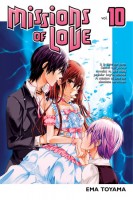
Missions of Love, Volume 10Missions of Love, Volume 10 by Ema Toyama. To be completely honest, I wasn’t expecting to enjoy Missions of Love nearly as much as I do, but here I am, ten volumes later, still completely hooked on the series’ melodrama and exceptionally twisted train wrecks of relationships. And there are some pretty momentous developments in those relationships in this volume, specifically a confession of love that can’t be mistaken or ignored. It seems as thought the time is drawing very near in which Yukina will have to choose either Shigure or Akira, but she’s only now realizing that might mean losing one of them completely. Partially in an attempt to avoid having to make an immediate decision, she challenges them both with a mission: to take her on a date as boyfriend and girlfriend. Missions of Love has always been suggestive, often skirting the edge of what would be deemed appropriate behavior and occasionally crossing over the line, and the tenth volume is no different. The relationships in the series aren’t healthy ones and never have been. Seeing as how many of them were initially based on manipulation and blackmail that probably isn’t too surprising, but it is interesting to see the characters develop legitimate feelings of affection for one another. They just don’t always go about expressing it in the best fashion.

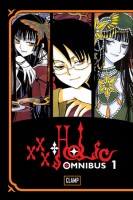
xxxHolic, Omnibus 1xxxHolic, Omnibuses 1-2 (equivalent to Volumes 1-6) by CLAMP. I read the first few volumes of xxxHolic when the manga was originally being published by Del Rey Manga but never got around to finishing the series before it went out of print, so I’m happy that Kodansha Comics is releasing the omnibuses. xxxHolic is a manga of extremes. One moment it’s ridiculously comedic and the next it’s deadly serious. The manga can be a strange mix of humor and horror; sometimes the balance between those two aspects of the series works better than others. I like the incorporation of yokai in xxxHolic since I have a particular interest in yokai. Generally, CLAMP’s renditions of the traditional stories are much more contemporary and free-form in nature. Yokai and folk tales serve more as a source of loose inspiration rather than a rigid structure for the manga to build upon. xxxHolic and Tsubasa: Reservoir Chronicle are directly related to each other, although they can be read separately without to much of a problem. So far, I find the Tsubasa references to be some of the least interesting in xxxHolic, but I do get a kick out of some of the throwaway nods to other CLAMP manga. For example, the leads from Legal Drug make a brief appearance with a minor (yet arguably crucial) role selling a hangover cure.

Filed Under: FEATURES, My Week in Manga Tagged With: attack on titan, Cage of Eden, clamp, Ema Toyama, manga, missions of love, Ryo Suzukaze, Satoshi Shiki, xxxholic, Yoshinobu Yamada

A Somewhat Belated License Roundup

March 15, 2015 by Sean Gaffney

I’ve been meaning to do this for some time, but every time I prepared to write up the new licenses, some other publisher would announce that they were going to make new announcements in a few days and I’d decide to put it off again. But they’re really piling up now, and what with the con season starting soon I thought I’d best just get in what I have right now. Let me know if I missed anything. If nothing else, we can safely assume that the manga market ‘recovery’ is in full swing.

Two new Shonen Jump licenses. The first is Kagamigami, by the author of Psyren. It’s a supernatural detective series, and thus fits nicely into the rest of what’s currently popular in Shueisha’s shonen titles. It just debuted.

Boku_no_Hero_Academia_Volume_1

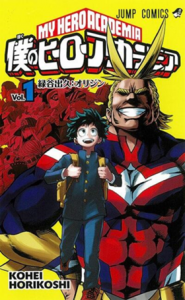
The other license is very unsurprising, as it’s the new breakout Jump hit. Boku no Hero Academia is from the author of Barrage, if anyone remembers Barrage. No? Right, moving on… it’s about a world of superheroes, and a young man who’s one of the select few who DOESN’T have them. Is he bullied? Take a wild guess. There’s a lot of over-the-top hot-blooded shouting, and the whole thing is a pile of fun.

There’s also four new Shojo Beat licenses. QQ Sweeper is a Shogakukan title from Betsucomi, by the author of Dengeki Daisy. I don’t know much about it, but the mere fact that it’s by the creator of Dengeki Daisy makes it a must buy.

Another title is from a very familiar author, it’s the latest from Arina Tanemura. 31 Ai Dream (Idol Dreams for NA) is about a woman who, regretting her choices in life and seeing her high school crush at their reunion with another woman, considers suicide. But then she gets a second chance (as one inevitably does). This is actually running in Hakusensha’s Melody (a shoujo/josei hybrid magazine) rather than her usual Ribon or Margaret stuff for Shueisha, so I suspect it may be a bit darker or more mature.

And recently they announced two more. From Kadokawa’s shoujo magazine Asuka we have Bloody Mary, which, well, vampires.

More interesting to me is Honey So Sweet, despite seeing ‘meek girl, gruff seemingly scary boy’ as the premise. It runs in Bessatsu Margaret.

Crunchyroll has a new digital license, Persona Q: Shadow of the Labyrinth. I assume this is based on the Persona series of video games, about which I know very little except that many of my friends and acquaintances are obsessed with it. There seem to be two versions, one for P3 and one for P4, that run in Shueisha’s Bessatsu Shonen Magazine and Shonen Sirius, respectively.

testament4

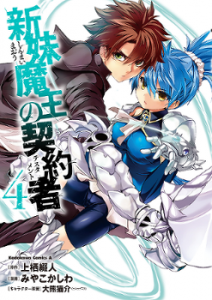
Seven Seas had a tabletop game announcement, and good luck to them. Moving on: they also announced some manga. Shinmai Maou no Keiyakusha (The Testament of Sister New Devil) is based on the light novel of the same name (no, they haven’t licensed that – you do know this company, right?), it features a young man who finds his father has remarried and he has two new sisters – only they’re a demon lord and a succubus. It runs in Kadokawa Shoten’s Shonen Ace, and will definitely appeal to those who read that description and did not roll their eyes.

Jitsu wa Watashi wa roughly translates as “Actually, I’m a…” and the cover features various characters all holding fingers to their mouths in the standard Ssssh! gesture. It apparently features a young man who is known for being unable to lie, and his run-in with various girls who all have secrets to keep, mostly supernatural. If you guessed that a harem ensues, you’re right. Hijinks also ensue. The art is very popular as well, though be warned those are some big mouths. This runs in Akita Shoten’s Weekly Shonen Champion, which rarely gets much attention over here.

Vertical had some new stuff to talk about. Ninja Slayer is a novel series supposedly created by two Americans, though many suspect this is just a cute marketing gimmick on Enterbrain’s part. In any case, it also has several spinoff manga, one of which, Ninja Slayer: Machine of Vengeance, ran in Kadokawa’s Comp Ace magazine. I believe it’s complete in one volume.

Seraph of the End is a manga series that Viz has licensed, which features, you guessed it, vampires. But it’s based on a novel series that Kodansha puts out, and Vertical have licensed the original novels. I wasn’t wild about the manga, but might give the books a try.

Lastly, and most importantly, we have Kizumonogatari, part of the long-running Monogatari series by Nisioisin, creator of Medaka Box, which you may have heard me banging on about once or twice, and Zaregoto, a series I deeply loved that did very poorly indeed over here. This is actually the third of the series, but takes place before any of the others, and the agent recommended starting with it. I absolutely cannot wait for it. By the way, Vertical have said they’ve ONLY licensed this book – they may license more if it sells well. Ergo, please buy this book. I will be pushing it hard. (And we all know how much my opinion drives sales.) I’d give you a cover image, but it’s part of the ‘Kodansha Box’ line, so the covers are all boxed art.

rosegunsdays

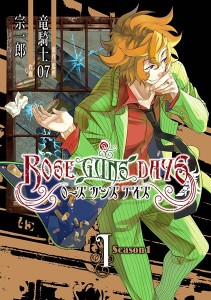
And Yen Press also has a few new things. To my delight, we have a new manga based off of Ryukishi07’s sound novels. This time it’s Rose Guns Days, which is not connected to the same universe as Higurashi or Umineko. Telling an alternate history of post-war Japan, Yen has licensed ‘Season One’, which ran in Gangan Joker. The artist is Soichiro, who also did Alliance of the Golden Witch in the Umineko series.

Final Fantasy Type-0 Gaiden: Hyōken no Shinigami could possibly be a part of the massive Final Fantasy universe. Something about the name suggests that to me. It ran in Shonen Gangan.

Horimiya has an intriguing history. There was a webcomic called Hori-san to Miyamura-kun which GFantasy picked up and released 10 volumes of, and it also spawned an anime. Now it’s getting an official manga with a different (most say better) artist, and that’s 6 volumes and counting and also running in GFantasy. The plot seems to be a sweet and sometimes angsty romantic comedy, and it has the usual ‘is this shonen or shoujo?’ feel you see in many GFantasy titles.

Lastly, Yen On had a new announcement, one many of us have been expecting for some time: The Irregular at Magic High School. This was the #1 light novel franchise over the past year, even managing to beat out Sword Art Online and Kagerou Daze. Its male lead seems to be the emotionless stoic badass, which I suspect may be part of its appeal after years of average schlubs starring in these sorts of vehicles. It’s got quite a few volumes… but honestly, after Index, nothing surprises me anymore. It has a couple of manga spinoffs… oddly, Yen haven’t licensed the Square Enix one, but have instead opted for the Dengeki Daioh version, The Honor Student at Magic High School, retelling the story from a different perspective. This might work out well – I’ve dropped a few manga adaptations that just tell the novel straight up.

That should do it for now. Which of these has you most excited?

Filed Under: NEWS, UNSHELVED

  • « Go to Previous Page
  • Page 1
  • Page 2
  • Page 3
  • Page 4
  • Go to Next Page »
 | Log in
Copyright © 2010 Manga Bookshelf | Powered by WordPress & the Genesis Framework